




Abstract
This study investigates the importance of social-ecological systems in the conservation of forest and woodland resources in a planned resettlement area in Zimbabwe. The study uses methodological integration, comprising a questionnaire survey and participatory rural appraisal that were conducted on five randomly selected farms to explore the way resettled communities interact with tree resources and the cultural and traditional practices that they employ to conserve the resources. The study concludes that forest and woodland resource conservation is a function of complex and dynamically linked processes that are not only embedded in biophysical space but also connected to socio-economic and political realms depicting the livelihoods, social needs and culture of members of the resettled communities. This knowledge is important for designing conservation strategies in future resettlement areas.
Keywords
Introduction
While the environmental impacts of rural resettlement in Zimbabwe have been widely documented, very little, if any, research sheds light on the role of social-ecological systems in forest and woodland resource conservation, especially in planned resettlement areas. Due to the economic crisis that prevailed in Zimbabwe between 2000 and 2008, the government did not have the financial resources required to sustain environmental conservation programmes in rural areas. This automatically transformed rural communities, including those in planned resettlement areas, into de facto custodians of environmental resources. Lack of financial resources severely curtailed the role of the government in monitoring forest and woodland resources or in enforcing conservation laws in rural areas, as well as in providing extension services, thus consequently leaving the important task of managing environmental resources in the hands of local communities. The purpose of this study, therefore, is to use a case study of five randomly sampled former commercial farms to investigate the role that social-ecological systems played in forest and woodland resource conservation in Zimbabwean resettlement areas in the absence of sufficient technocratic support from the government.
Social-ecological systems encompass the cultural and traditional practices that influence the complex and dynamic interactions between people and their environment (Masalu et al., 2010). Thus, social-ecological systems are systems in which social and ecological processes are coupled. The importance of cultural and traditional practices in conservation of biodiversity (and environmental conservation in general) is gradually gaining universal recognition (Gwali et al., 2012), and is increasingly being viewed as invaluable in ensuring successful utilization of natural resources (Alieu, 2010). Cultural and traditional practices are an important component of social-ecological systems. In the past, environmental conservation and social and economic development have been undermined by insufficient understanding of the feedback between conservation initiatives and social-ecological systems (Miller et al., 2012). Social-ecological systems entail ‘the ways in which conservation initiatives result in social changes that have secondary effects on the environments targeted by conservation’ (Miller et al., 2012: 218).
Background Literature on Context and Conceptualization of Forest and Woodland Resource Conservation in Zimbabwe
The Context of Zimbabwe’s Land Reform Programme
Zimbabwe’s land reform has been marred with controversy. Some literature on Zimbabwe’s land reform programme indicates that the land reform has not only contributed to loss of livelihood options and human security, but also made the savannas a centre of struggles for political rights, as well as livelihoods, posing a threat to environmental integrity (Clover and Eriksen, 2008). On the one hand land reform and resettlement have been viewed as a tool for redressing landlessness among the blacks and a tool for restoring their political rights. Before independence in 1980, ownership of agricultural land was skewed in favour of whites, even though they were the minority (Shaw, 2003). During colonial times landlessness was prevalent among the blacks despite the fact that access to land was their main means of survival, since the livelihoods of the majority of them was based on agriculture. On the other hand, the transformation of white owned commercial farms into resettlement areas has been viewed as detrimental to the livelihoods of not only the dispossessed commercial farmers but also to the farm workers who were previously employed on the farms (Shaw, 2003). However, such an argument could easily be dismissed as a pretext for justifying the racially based skewed distribution of land. It is this reason that makes it necessary to examine how the relationship between land reform and conservation of environmental resources can be conceptualized.
Conceptualization of the Environmental Impacts of Zimbabwe’s Land Reform Programme
Though there are several schools of thought that can provide a conceptual framework for analysing the environmental impacts of Zimbabwe’s land reform programme, this study draws from only two of these frameworks, namely the ‘orthodox’ framework and social-ecological theory, which are discussed in the following sections.
The ‘Orthodox’ Framework
The ‘orthodox’ framework considers environmental change from the ‘technicist’ or ‘technocratic’ viewpoint, thus placing less emphasis on the potential conservation role of local communities in resettlement areas. A considerable body of literature on resettlement characterizes resettled communities as environmentally degrading and regards resettlement as the primary cause of environmental destruction. In this approach degradation denotes a decline in rank or value and reflects ‘the loss of utility or potential utility or the reduction, loss or change of features or organisms which cannot be replaced’ (Barrow, 1991: 1). Resettlement has been shown to be the primary cause of deforestation in Zimbabwe (United Nations Development Programme [UNDP], 2002; Zimbabwe Parliamentary Debates, 2003). Literature based on the ‘orthodox’ conceptual framework portrays the relationship between resettlement and the environment as antagonistic. For instance, the environmental impacts of resettlement in Zimbabwe have been negatively highlighted and reported as the most obvious dangers of Zimbabwe’s increasingly rapid resettlement programme that have substantial long-term damage to the environment (UNDP, 2002).
Most literature that was produced in the 1980s and early 1990s on Zimbabwe’s land reform (Bojo, 1993; McIntosh, 1990; Meyers, 1990; Rudel, 1991; Tevera, 1994; Whitlow, 1988; Zinyama and Whitlow, 1986) placed considerable emphasis on the decimation of forest and woodland resources in resettlement areas. For instance, some World Bank-funded research (Bojo, 1993; McNamara, 1993) highlighted the destructive effects of resettlement of forests and woodlands in the country. Usually such claims were justified on air photo interpretation and remote sensing imagery, and occasionally aided by cursory socio-economic surveys. Oftentimes, percentages of forest and woodland cover losses would be calculated and predictions made about projected patterns and trends of forest losses. Global remote sensing-based studies have been handy in justifying these claims. In some instances it could even be argued that resettlement results in the extension of the same environmental degradation that prevailed in the communal areas where the settlers originated. Murombedzi (2005) has noted of environmental reports that have labelled settlers as ‘asset strippers’, who cut down trees, hunt wild animals and exploit other natural resources so as to open up new lands for agriculture, reduce competition and protect their livestock from predation or secure capital to invest in their new agriculture enterprise. Thus, Zimbabwe’s land reform has been largely described as destructive to wildlife, food production and the national economy (DeGeorges and Reilly, 2007).
One important question that could be raised against the ‘orthodox’ conceptual framework is: why would resettled communities wantonly destroy the same resources that they depend on for livelihood? Lack of satisfactory answers to this question has created fertile ground for alternative schools of thought. In addressing this question it would seem most studies that were moulded on the ‘orthodox’ conceptual framework underestimated the capacity of resettled communities in tree resource conservation or failed to consider the importance of the value systems, cultural and traditional practices of resettled communities, as well as the roles of these communities in resource conservation.
This has rendered ammunition to the critics of the ‘orthodox’ conceptual approach to dismiss the approach as speculative, subjective, exaggerated, and alarmist. In the ‘orthodox’ framework it is assumed that the beneficiaries of land reforms have a total lack of conservation ethics or knowhow of environmental resource conservation (Dejene, 1990; Miller, 1997; Scherr 2000; UNDP, 2002), while resettled communities are projected as ignorant people who wantonly destroy tree resources through their inappropriate methods of environmental resource harvesting and management, precipitated by poverty, thus creating a stereotype about the relationship between people and environmental resources. Consequently, resettled communities are viewed as agents of destruction rather than agents of environmental change or conservation.
Social-Ecological Approach
One dynamic that has been cited as characteristic to community adaptation entails social-ecological systems. Social-ecological systems reflect the capacity for resilience, depicting a measure of their vulnerability to unexpected or unpredictable circumstances (Walker et al., 2006). Recent research evidence has, for instance, hinted that successful conservation regulations can only be implemented by considering both ecological impacts, and local ecological knowledge and management practices (Laird et al., 2010). Though traces of research engaging the social-ecological approach in environmental assessments are evident (for instance, see Ranger, 2003) the application of this approach for assessing the role of resettled communities in the conservation of the environment in Zimbabwean resettlement areas has not yet gained prominence, judging from the dearth of literature on the subject.
In this section, we demonstrated the weaknesses characterizing the ‘orthodox’ framework as a tool for analysing the relationship between people and environmental resources in Zimbabwean resettlement areas. It is for this reason that we argue for the adoption of the social-ecological theory as a framework for this study.
Materials and Methods
Description of the Study Area
The study was conducted in Mufurudzi, a resettlement area that was founded in Zimbabwe, with the assistance of British aid in 1981. It is one of the early planned resettlement areas that were set up soon after Zimbabwe’s independence from colonial rule. Mufurudzi is located in Shamva district, at approximately 881 metres of altitude (Meteorological Services, 1978). It is situated in a woodland savannah region. The vegetation is deciduous ‘miombo’ woodland with Brachystegia spiciformis and Julber-nardia globifloraas being the dominant species (Masocha et al., 2011). The area receives an average annual rainfall of 800 mm (Kanda et al., 2013), which largely falls in summer. Irrigation is generally limited and the majority of the villagers in the resettlement area depend on rain-fed agriculture. An earlier study of Mufurudzi by Mukwada (2009) revealed that deforestation is generally considered as widespread in the resettlement scheme. Clearing of land for the cultivation of food crops, especially maize (Zea mays), which is the staple crop in Zimbabwe, and cash crops such as tobacco (Nicotiana tabacum) and cotton (Gossypium spp.), is the primary cause of deforestation.
Deforestation was most prevalent during the initial stages of resettlement when new fields were cleared and new homesteads were set up. However, while agriculture is the mainstay of the communities in Mufurudzi, some settlers earn a livelihood from off-farm strategies such as carving, weaving and rope making or gather wild fruit for sale. The most widely collected is mazhanje, fruit from the wild loquat (Uapacca kirkii), which is vented in nearby towns such as Bindura and Shamva. Some settlers engage in illegal practices such as venison venting and gold panning. Off-farm livelihood strategies such as gold panning, as well as felling of trees during fruit collection and use of fire for hunting game, are some of the activities that promote deforestation and disrupt ecological integrity. Dependence on off-farm livelihood strategies usually intensifies during drought years when crop yields are poor.
Socially, Mufurudzi is characterized by ethnic heterogeneity. The people who were resettled in the area are from different ethnic backgrounds, including the Zezurus, Kore-kores, Manyikas, and Karangas. Other settlers are of Malawian and Mozambican descent. They are former employees of the previous land owners from which land was acquired, using funding from British aid.
At farm level, deforestation is largely influenced by the accessibility of an area and proximity to where tree resources are required for specific purposes. Places where brick moulding sites or gardens were set up are also characterized by low tree densities while kopjes, river banks and more highly elevated slopes have higher tree densities. Another important cause of deforestation that was evident at the local level relates to the harvesting of non-timber forest products, especially the collection of plant tissues such as roots and bark for medicinal purposes by enthopharmacists, locally known as ng’angas. In Mufurudzi, the ecological change resulting from deforestation is closely knitted to social processes related to the expedience to eke a living, thus creating fertile ground for investigating the impact of social-ecological systems on tree resource conservation.
Methods Employed in the Study
Using the case study approach, this study employed methodological triangulation or methodological integration (Patton, 1990; Warwick, 1983) to investigate how resettled communities in Mufurudzi have interacted with forest and woodland resources since 1981. Methodological integration in this respect involved the use of questionnaire surveying, interviews and participatory rural appraisal (PRA). This requires bridging the gap between social science, natural science and humanities (Elliott and Campbell, 2002; Haberl et al., 2001).
Data were collected on five randomly selected farms using a questionnaire survey and PRA. A total of 213 household heads responded to the questionnaire survey. The survey was intended to determine how the communities that were resettled in Mufurudzi interact with forest and woodlands and the role of these communities in tree resource conservation. The questions that were included in the survey were about whether the settler households regarded deforestation as a problem in Mufurudzi, and also about the distances they now have to travel to harvest forest products compared to the distance travelled when they were first resettled in 1981. Other questions related to how the settlers used the different types of trees that they protected and left standing around their homesteads and in gardens and fields, as well as what the settlers regarded as the main solution to deforestation.
Qualitative data (Whyte and Alberti, 1983) were collected through PRA, encompassing informal interviews and participatory field observations. The participatory field observations were jointly undertaken with village elders. The settlers were asked to provide historical information about the resettlement scheme, use of different types of tree species (medicinal, food, fuel, etc.) and the cultural and traditional practices that they employ in tree resource conservation. This information was important for interpreting patterns of tree resource distribution on the farms.
Influence of Cultural and Traditional Practices on Forest and Woodland Resource Conservation
Evidence from the questionnaire survey and PRA indicates that, although there is a general tree resource decline (see Table 1), both at the farm and field levels, there are a number of cultural and traditional practices that local communities have adopted to arrest the decline. As discussed in the following paragraphs, these include deliberate retention of trees in the fields and home gardens, controlled harvesting practices and tree growing and tree care.
Historical evidence of deforestation in Mufurudzi.
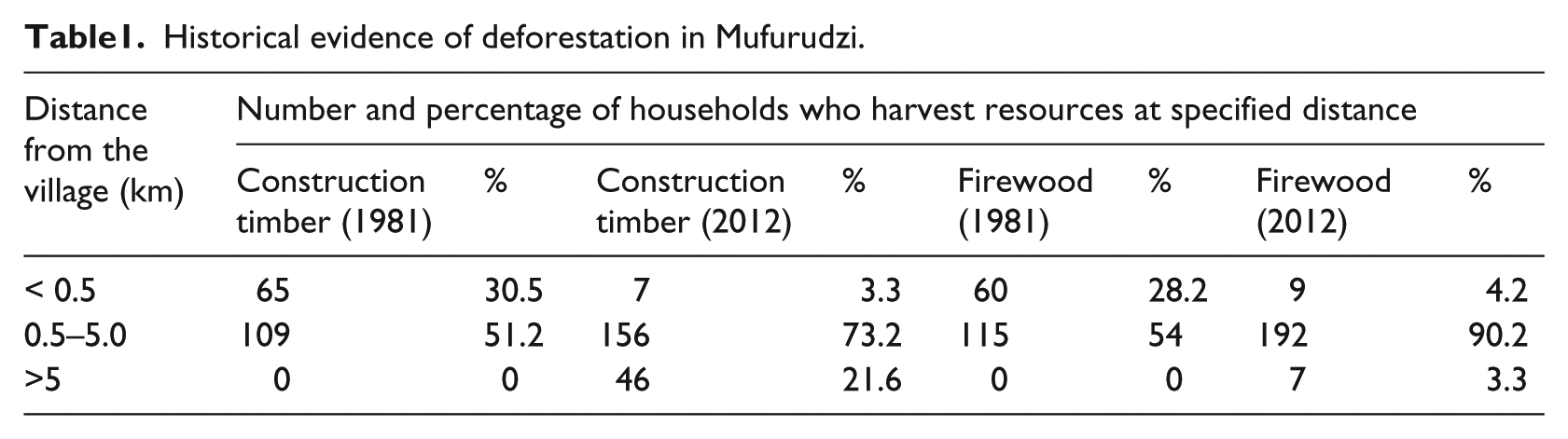
Table 1 shows that the percentage of households that can still collect construction timber and firewood in areas abutting their homesteads has decreased remarkably since 1981. To the contrary, the proportion of the settler community that depends on resources fetched from greater distances has increased over the past three decades. Members of the settler community are aware of the shortage of tree resources and the difficulties created by deforestation on their livelihoods, which explains why they deliberately retain trees in locations they have control of.
Deliberate Retention of Trees in Fields, Home Gardens and Sites of Religious Significance
While threats that resettled communities pose on forest and woodland resources are evident, results from PRA revealed that villagers in these communities make an effort to conserve the trees they consider to be most valuable. For instance, throughout Mufurudzi, even though currently cultivated areas are largely bare, useful trees were left standing in most fields. Similarly, valuable trees were also retained in home gardens and in areas around homesteads and traditional shrines. Among these trees are ‘keystone’ species, including those that are regarded as sacred, for instance, Kirkia acuminata (mutuwa) and Afzelia quanzensis (mukamba). Multiple-use medicinal trees like Gymnosporia buxifolia and Lonchocarpus capassa and trees that produce edible fruit, for example, Diospyros mespiliformis, Parinari curatelifolia, Berchemia discolor, Strychnos spinosa, Stryschnos cocculoides, Lenea discolour, Ficus spp. and Syzigium spp., to name a few, are also spared. Table 2 shows the uses of a selection of keystone species as well as the number and percentage of the household heads who indicated that they use the species.
Use of selected tree species and the number and percentage of households that uses them.

Most ‘keystones’ species are multiple-use trees that are protected by taboo because of their social and ecological significance. Taboo systems have strong roots in eco-religion, denoting that religious beliefs can have ecological implications. For instance, multiple use trees such as Lenea discolor and Diospyros mespiliformis, which are in great demand, are rarely completely destroyed. The social value of these tree species is that they are important for making tool handles, utensils, medicines, and for other uses, while their fruit is important in the local diet. Due to the fact that there is high demand for products from the two species, all trees belonging to these species and occurring within 100 metres from homesteads were only damaged rather than completely destroyed.
Thus, though villagers may exert enormous demands upon some keystone tree species, they make an effort to conserve the ‘most valuable ones’. Usually one has to seek permission from the village head when it is considered necessary to cut what are considered to be ‘keystone’ species, for example, Kirkia acuminata and Afzelia quanzensis, or fruit trees. Kirkia acuminate and Pseudolachnostylis maprouneifolia (mutoto) are used in death-related rites of passage. For instance, nearly 59% of the households use Pseudolachnostylis maprouneifolia when performing burial rituals. Kirkia acuminate is usually planted near homesteads during home-welcoming ceremonies for the spirits of the deceased. Afzelia quanzensis is the tree under which rainmaking ceremonies are usually conducted. Nonetheless, the tree has become a threatened species because of its commercial value. The wood is used for carpentry and making carvings, while its seeds are used for making curios. In Mufurudzi, cutting sacred trees is considered as taboo, because of the widely held belief that doing so evokes anger from ancestral spirits, who might unleash calamities upon the offenders. Recurrence of drought and predation of livestock by hyena (Crocuta crocuta) and jackal (Canis mesomelas), as well as destruction of crops by wild animals such as baboon (Papio ursinus) and warthog (Phacochoerus aethiopicus), or by pests such as army worm and locusts are regarded as punishment for cutting sacred and fruit trees, or for defiling sacred groves, ancestral shrines and traditional burial sites. Acts of defilement encompass the cutting of trees at sacred shrines or in sacred groves, relieving oneself in those places, making utterances that denigrate a sacred place, killing sacred animals such as python or pangolin and harvesting non-timber forest products using unacceptable means, especially those that cause extensive destruction of trees. In one of the villages tales were told of people who got lost or disappeared for a long time for having defied set taboos, only to be reunited with their families after special ceremonies had been conducted.
In Mufurudzi, while taboo systems appear not to be based on any proven scientific principles, the underlying fear of the unknown that they thrive on has served an important conservation purpose. Sacred groves, ancestral shrines and burial sites normally have the highest tree densities and are bequeathed with the highest number of species. These places are considered to be the resting places for the ancestral spirits. Such places are therefore of ecological importance because they serve as ‘gene banks’ and ‘refugia’ for future seed dispersal. Examples of these places are the burial sites that are found around most villages. However, interviews that were held with the villagers showed that the role of eco-religion in forest and woodland resource conservation is threatened by ‘modernization’ and increasing population growth. One characteristic feature of modernization is the embracing of western religious practices which has led to the shunning of traditional religious beliefs and practices, thus diminishing their influence. Villagers reported cases where followers of the various churches and religious sects that have sprouted in Mufurudzi over the years have become a major threat to cultural and traditional conservation practices. Villagers also reported that members of these churches and sects have total disregard for sacred groves and traditional shrines, which they frequently visit to conduct their own ceremonies, thus undermining traditional practices associated with ‘sacredness’ and conservation. Another threat to eco-religion is ethnic heterogeneity. Ethnic heterogeneity fragments the resettled communities, reduces social coherence and undermines the sense of community and diminishes the social capital needed for sustainable social-ecological systems
Controlled Harvesting Practices
PRA revealed a number of practices that have been adopted by villagers when harvesting woodland products. In cases where wood and non-timber forest products have to be harvested from rare trees, the trees are not completely cut but pollarded, while the root stock is maintained and ring barking prevented altogether. Pollarding is a traditional practice that is normally undertaken when harvesting non-timber forest products such as insects, for instance masinini (Lobobunaea spp.), a type of caterpillar which mostly thrives on trees such as mupfuti (B. boehmii), munhondo (Julbernadia globiflora) and musasa (Brachystegia speciformis). Instead of cutting the whole tree, the branches on which the caterpillars occur are identified and lopped during collection. Thus, this way trees are spared.
Similarly, the extraction of non-timber forest products such as bark and roots is done in such a way that minimal damage is caused to the trees. Where bark is collected for medicinal purposes, the recommended practice is to scrape the bark from the eastern and western sides of the trunk. Bark from the rest of the trunk is left intact. The only explanation that villagers could give for this practice was that the medicine would not work if the practice is not followed. From a scientific viewpoint, two inferences can be drawn about the practice. First, ring barking is prevented, thus maximizing the chances of the damaged tree surviving. Second, it can be inferred that the eastern and western sides of the tree are likely to be the ones best exposed to solar energy, and the damaged parts would dry more quickly, thereby preventing rotting, thus again maximizing the survival chances of the damaged tree.
Interviews held with the villagers during PRA revealed that these practices are part of the tacit knowledge that has been passed on from past generations. Similarly, there are taboos that control root digging. It is widely believed that the medicines that are extracted from a tree will not work effectively if the tree is completely uprooted. When digging up roots for medicinal use, the practice is that the holes that are dug must be half-filled with soil. Roots must only be dug from the same plant when the hole ceases to exist due to natural infilling processes. The ecological importance of this practice is that, when rain falls, the half-filled pits promote the formation of puddles and encourage infiltration around previously damaged trees, thereby increasing the chances of the trees recovering. The time taken for the dug hole to become completely filled up gives the damaged trees time to recover before roots are harvested from them again. Another traditional practice that is commonly upheld by villagers in Mufurudzi is the use of traditional authorities to sanction tree resource exploitation. The highest-ranking traditional authority found in Mufurudzi is the village head. Whenever large numbers of trees have to be cut the village head must be consulted. Normally village heads consult their ‘councils’ (locally known as dare) before granting permission to people who wish to open new fields or when setting up ‘by-laws’ for tree conservation. In one village, a community by-law has been instituted to forbid people from cutting all the trees they require – for instance, for tobacco curing – from a single location. This ensures that the ground is not left completely bare. Village courts are convened to try those accused of flouting set by-laws and culprits are liable to paying fines to the village council if found guilty. Fines can be paid in monetary form or in kind, including small livestock such as chickens and goats.
Protection of Sensitive Areas that Regulate Water Supply in the Environment
In Mufurudzi there are places where certain practices and developments are taboo. These include sacred groves, ancestral shrines and burial sites, as well as wetlands and places around springs. For example, the establishment of woodlots and the sinking of boreholes are examples of developments that are usually not allowed in areas that are close to springs and wetlands due to their capacity to deplete ground water. Consequently, an extensive consultation process must take place with village authorities, chiefs and spirit mediums (locally known as svikiros) before such developments take place. There are certain places where people are not supposed to plant exotic trees because doing so would anger ancestral spirits.
Some wetlands and springs are regarded as sacred drinking places for the ancestral spirits (vadzimu), as well as water spirits or mermaids, locally known to as njuzu. From a conservation point of view the restrictions imposed by the consultative process minimizes the propagation and spread of exotic species, especially those that are invasive like Eucalypts. Interestingly, it is also important to note that, due to their high affinity for water and their capacity to raise evapotranspiration rates, some exotic tree species like Eucalypts are capable of lowering the water table, which might lead to the extinction of shallow-rooted indigenous phreatophytes, some of which might be ‘keystone’ species. In the Shona culture, scared groves, shrines and burial sites are regarded as part of nyikadzimu, the spirit world, and generally perceived as a cosmos of integrated social and ecological realms.
Implications of the Role of Social-Ecological Systems in Forest and Woodland Resource Conservation
In the previous section we discussed the socio-ecological conservation practices that were revealed by this study. In this section our focus is on the overall implications of the findings of the study, as well as how they relate to the existing body of knowledge.
This study has demonstrated that social-ecological systems play an important role in forest and woodland resource conservation, confirming the view that local ecological knowledge and the traditional management practices are important for conservation (Schmidt and Ticktin, 2012). In the previous section it was shown that the coupling of social and ecological processes occurs at both farm and field levels, and at both levels these processes are linked to the livelihoods of the resettled communities. At both farm and field levels, deforestation is an ecological outcome of social processes depicting the quest for basic needs such as food, shelter, health and other livelihood requirements.
However, at the farm level deforestation is inevitable and wholesale, and largely takes place during the initial stages of resettlement when new fields have to be opened or when new homesteads have to be built at selected sites. On the other hand, at the field level deforestation is piecemeal and selective, and tends to target specific species. Similarly, at the field level conservation practices tend to target specific species as well. This knowledge is critical for policy considerations. The decline of government-based conservation efforts in Zimbabwe, particularly between 2000 and 2009 when the country experienced a serious economic crisis, relegated (if not abrogated) the responsibility of woodland resource conservation in resettlement areas to local communities, demonstrating how cultural and traditional practices and local ecological knowledge can play a central role in conservation. This suggests that social-ecological systems should be regarded as an integral component of conservation plans and policies. Due to the critical role played by traditional management practices in resettlement areas, conservation laws must be reviewed so that they promote devolution, in order to give local communities more space in conservation. Successful policies should consider not only ecological impacts but also local ecological knowledge and management practices, which unfortunately are lacking in most policies on non-timber forest products (Schmidt and Ticktin, 2012).
The results of this study have also shown that, in some cases, the link between people and forest and woodland resources is complex and subtle, indicating that the relationship between social and ecological processes is far from obvious, direct or simple.
Confounding Factors Regulating the Role of Social-Ecological Systems in Conservation
In Mufurudzi, deforestation is a manifestation of serious underlying social problems. For example, the overexploitation of rare medicinal trees by ethno-pharmacists is not just an outcome of commercialization of tree products by ‘greedy’ or ‘ignorant’ ethno-pharmacists, but a reflection of Zimbabwe’s failing health delivery system, caused by macroeconomic decline. Accordingly, the blame for tree resource overexploitation should be placed on those who depend on medicinal plants for survival or livelihood as much as it should be placed on other stakeholders, especially the politicians who precipitated the economic crisis. During the peak of Zimbabwe’s economic decline, many people in Mufurudzi were forced to turn to local ethno-pharmacists due to the unavailability of alternative healthcare options in their area.
Similarly, the cutting of trees for tobacco curing is not just a mere manifestation of thriving global tobacco markets which exert demand on flue cured tobacco, but is also a reflection of shortage of foreign currency in the country which rendered alternative sources of fuel, such as coal, unavailable for tobacco curing. Shortage of foreign currency in the country threatened the viability of the transport sector, leading to shortage of locomotives for the transportation of goods, including coal. Coupled with widespread poverty among land reform beneficiaries, another reason which rendered coal unaffordable, this problem worsened forest and woodland resource degradation in Mufurudzi, since the resettled farmers had to rely on firewood for tobacco curing. This suggests that, as much as deforestation in resettlement areas is a product of processes that are inherent in these areas, it is also a reflection of the influence of exogenous and much broader forces as well, most of which resettled communities can hardly control. These forces, in addition to the failure by the government to enforce conservation laws, have all contributed to the development of a complicated social-ecological environment.
Complexities Exhibited Within Social-Ecological Systems
Another generalization that can be drawn regarding the distribution of tree resources in Mufurudzi is that, while there is abundant evidence showing that tree resources are under immense pressure in some parts of the scheme, especially in areas where vegetation has been cleared for cultivation and in areas that abut homesteads, there is also evidence of woodland regeneration and conservation. The example of Polycrops showing an increase of woodland cover (through bush encroachment) as a result of change in land use demonstrates that resettlement does not always lead to the destruction of tree resources as often argued. The results of this research study disproves the widely held stereotypical notion that resettlement inevitably leads to deforestation, even though there is evidence of tree resource overuse and mismanagement in some areas. The notion of villagers who are completely bereft of conservation ethics therefore does not apply, especially in Mufurudzi where some villagers are even growing trees. If successfully pursued, tree growing has the potential to enhance the resilience of resettled communities since it has the potential to create a sustainable base for meeting the bio-energy needs of these communities in the future.
The methodological approach adopted in this study provided the means of identifying the role of social-ecological systems in forest and woodland resource conservation. The integration of scientific, historical and social science approaches that were employed is essential for an understanding of any process of environmental change (Beinart and McGregor, 2003). This approach highlights the complexities associated with social-ecological systems and the nature of interactions that exist between people and their environment (Masalu et al., 2010; Miller et al., 2012). Under these circumstances, the case of Mufurudzi demonstrates that quantitative and qualitative methodologies are not only compatible and complementary, but also a practical necessity (Fielding, 2010).
Data from the questionnaire survey indicate that, while essential forest and woodland products have declined over the years, there is also evidence showing that social-ecological systems are the mainstay of the conservation of tree resources. However, even though this article does not paint a glowing picture about the conservation practices of resettled communities, it highlights the importance of these practices and the need to consider their role in future interventions that could enhance sustainable use of tree resources in resettlement areas. This view is in line with the argument that research in environmental conservation should be capable of uncovering and making explicit the values and vested interests that individuals and groups hold regarding environmental issues (Blignaut, 1991). This is not to suggest that the alarmism in previous environmental research on Zimbabwean resettlement areas should be underestimated. Nevertheless, while cultural and traditional practices still seem to hold their fort, there is evidence that their influence is waning. Field observation during transect surveying indicated that trees have been cut and non-timber forest products harvested at some burial sites, demonstrating that taboos are being flouted. The waning of taboos is intricately connected to the complexity of social-ecological systems themselves, which is underpinned by the heterogeneity of the population that was settled in Mufurudzi. Strict enforcement of taboos is often difficult since each ethnic group has its own set of taboos. Co-existence between these groups would be impossible if each group had to strictly uphold customs, traditions, norms and values of the eco-religion of their places of origin. The build-up of population in Mufurudzi has not made it easier either. In areas where tree resources are generally scarce, demand for these resources has stretched supply and even led to deforestation in protected areas.
Conclusions
This article has explored the relationship between people and tree resources in Mufurudzi resettlement area using a mixed methods approach. From the foregoing discussion it can be concluded that, unless a multi-level integrated analysis is adopted in environmental research, the results are bound to be flawed and stereotypical. In Mufurudzi, the different methodological approaches that were employed have revealed that forest and woodland resource conservation is a function of complex and dynamically linked processes that are not only embedded in biophysical space but also connected to socio-economic and political realms depicting the livelihoods, social needs and culture of members of the resettled communities. As shown in this study, the socio-economic and political realms that influence tree resource conservation transcend geographic bounds.
Because of their central role in influencing tree resource conservation, social-ecological systems must receive sufficient consideration when designing forest and woodland resource conservation programmes and policies in resettlement areas. It can also be concluded that, while loss of forest cover is conspicuous at the farm level, forest transformation and conservation are evident at the field level. It can therefore be further concluded that, even though forest and woodland resource destruction is inevitable in resettlement areas, as shown by the case of Mufurudzi, resettled communities can play a very important role in tree resource conservation, suggesting that if the responsibility of managing these resources was devolved to them they could rise to the challenge. Therefore, resource conservation laws should be reviewed so that they give more power and authority to those who depend on the resources, in a manner that consolidates the future role of social-ecological systems in conservation.
Footnotes
Acknowledgements
We wish to thank Ms L. van der Westhuizen for reviewing this article before its submission to this journal. Our gratitude also goes to the Mufurudzi village communities, including community leaders, as well as officials from the Environmental Management Agency and Forestry Commission, for their willingness to provide vital information for this research study.