



Abstract
The huge amount of remittance transfers has brought migration studies to the fore in the public and private discourse on global development. Since the time migration studies occupied a space in the academe, most research has been devoted to remittances in cash and their use. Prior to the mid-nineties, the debate about the concept of migrants’ ‘remittance’ has not entailed other forms of remittances other than remittances in cash. This research explores another form of remittance, that is, biological remittance. This research firstly explores how migrant populations handle ‘biological remittance’ in their societies, and secondly compares the experiences of female migrant workers in two countries with distinct cultural and religious mores. We collected empirical information from two countries: Indonesia and the Philippines. A total of 38 respondents (17 from the Philippines and 21 from Indonesia) were selected for this study by using the snowball technique. While all the respondents, irrespective of countries of origin, face ordeals coping with their situation, Indonesians bear more psychological burden than the Filipinos. This research has crucial implications for scholars, researchers and policy-makers alike.
Background
Sending remittance home is the primary motivating factor driving migrant populations to move (Castles & Miller, 2008; Massey and Basem, 1992; Rahman and Fee, 2012; Skeldon, 2006; Ullah, 2008, 2010a, 2016). Since the last three decades, the debate about the concept of migrants’ ‘remittance’ has revolved around an important question: what does remittance entail? In order to answer this question, a number of studies attempted to categorize remittances (Alvarez, 2009; Buvinic, 2009; Curran and Saguy, 2001; Datta et al., 2006). Most studies conducted in the past considered only cash remittance as ‘real’ remittance – an important fact of analysis in migration studies. However, as research deepened, it was identified that migrants remit many other important things in addition to remittances in cash (de Haas, 2003; Skeldon, 2002, 2008; Ullah, 2010b) including social remittances (Levitt, 1996), political remittances, intellectual remittances, personal remittances, community remittances, and remittances in kind. Over the course of time, we developed an interest in researching the feminization of migration and eventually a paper was written on this particular area. This research led us to undertake another research on the command that females have on the remittances they earn and remit (see IOM, 2005; Ullah, 2013a,b).
Remittances can be viewed as a redistribution of a migrant’s income that provides recipients with an additional source of capital (Ratha, 2007). International remittance is the proportion of a migrant worker’s income from employment in the country of destination that is sent to their countries of origin. Remittance issues have intensified the debate about the theories that underlie such transfers and the role it plays in development of origin countries (de Hass, 2005; Molho, 1986; Ullah, 2017). A range of motivations work behind the intention to remit part or full of the incomes and of course this intention may be explained from the economic, social, political and psychological angles. Dominant theories of remittances in fact seem to have discounted other forms of remittances. Altruistic factors explain the motivation that underlies a migrant’s decision to remit (Stark et al., 1986). Proponents of altruism suggest that individual family members tend to help each other to make up the shortfall of family income and that this explains migrant remittent decisions (Becker, 1981; Rapoport and Docquier, 2005; Stahl and Arnold, 1986). Another explanation is that the mutually beneficial informal contractual arrangements between the migrant and the home create intention to remit. Poirine (1997) postulates that intention to invest in human capital of young family members results in remittances. Intention to return is yet another motivation for remitting funds and other resources by migrants to their country of origin (Collier et al., 2011; Delpierre and Verheyden, 2009; IOM, 2003b, 2004; Ullah, 2010a).
The feminization of migration has become an increasingly core concept in the ambit of migration research (Ackers, 1998; Hugo, 2000; Pillinger, 2006; Ullah, 2010a, 2013a). It is a revelation of the new set of global estimates that by gender, females have accounted for a very high proportion of all international migrants for a long time (Zlotnik, 2003). Between 1960 and 2015, the number of female migrants doubled. But so did the number of male migrants and the global population. The gap between females and males remained almost the same. As a proportion of international migrants, by contrast, the female share increased only slightly from 46.6% in 1960 to 49% in 2015 (Donato and Gabaccia, 2016; Zlotnik, 2003). The South East Asian countries, especially the Philippines and Indonesia have been experiencing a higher level of female migration than their male counterparts (Rahman and Fee, 2012; Ullah, 2013a). A paper based on this research was published in the Journal of International Migration and Integration (see Ullah, 2013a). All these previous researches prompted us to delve into another interesting fact of remittances which we refer to as ‘biological remittances’.
It is reported that approximately 5 million women work temporarily (mostly as foreign domestic helpers) within Asia, mostly in Southeast and East Asia (Hewison, 2006; Ullah, 2013b; 2015; Yong et al., 2014). Of them, almost all (more than 98%) migrate as a single person because they either cannot afford to bring their partners along or they are not allowed to. More than 85% of them are in the age group of 18–28 years (Ullah, 2010a). Their single status in the destination countries place them in an emotionally vulnerable state. A research conducted in 2013 on domestic helpers in Hong Kong and Malaysia (Ullah, 2013b) reveals that more than 40% of them tend to engage in another relationship (whether or not they are married back home). Estrangement from home is thus, partly responsible for their vulnerable position. For these migrants, involvement in another relationship is seen as a strategy for their survival. Sim (2009) argues that the bodies of women migrants become destabilized with increased distance from home and reduced familial supervision at their destination countries. And in fact, their agencies are circumscribed by the material possibilities of social positioning in hierarchies of class, gender, nationality and ethnicity (Sim, 2009: 3). This means that by any reckoning (gender, nationality and class) they become less empowered in destination countries which implies that their choices become limited. This may explain why most of them tend to engage in another relationship overseas.
Many female migrant workers become pregnant (in most cases, this happens out of wedlock) at some point of their continuing relationships in their destination countries and many of them eventually have to leave the country as a result (Seow, 2015; Ullah, 2010b, 2015). Unmarried motherhood in any form, whether a woman raises her child or forfeits the child for adoption, comes with many challenges and the attitudes that govern her experience have changed drastically over the past few centuries (WordPress, 2013). Babies being born out of ‘wedlock’ and their mothers often experience a damaging impact in their lives, both in the origin and destination countries. The level of impact varies, depending on the social construct of it. Being pregnant while under a contract job comes as a threat to their job. This condition may lead to a termination of their contract, and eventual repatriation. In some cases, they were forced to abort their foetus, and were often tortured. This pushes the foreign domestic helpers into a crucial predicament: whether to stay and accept the abortion and torture or to leave with the ‘baby’. This is, to all extent, an extremely difficult decision to make, given the fact that they may not know exactly the situation that awaits them in their home country. In religiously strict, socially integrated and culturally trusted societies like in Indonesia and the Philippines, a baby born out of wedlock overseas may bring havoc to the lives of the mothers.
The social dimensions of culture are based on universally accepted ethical standards – this issue may be detrimental to their normal life. In most societies in Asia, societal disapproval of non-marital children is common. Therefore, this disapproval is thought to decrease non-marital and extramarital sexual relationships. These parents are aware of society’s disapproval of non-marital children and they try to protect their children from assumptions that they are illegitimate (Suzanne, 2010).
In this paper, we use the term ‘biological remittance’ to refer to the babies born out of wedlock to female migrants. It is the non-conventional notion of remittance where the migrants bring back the child(ren) they conceived during the course of their migration. Remittance is something migrants are happy about and proud of. In this particular aspect, some mothers and would-be mothers become so overwhelmed that they often terminate their job contract and go back home with their babies. Wedlock means the state of being married. This is often called a marital tie or nuptial knot (Butler, 2002). This term in this paper is important as this paper deals with children who were born out of wedlock, that is, the parents of these children are not legally married. We use the term ‘beyond wedlock’ in the paper to mean outside marriage.
When female migrants become pregnant, they have to eventually return to their home countries. Where there is an absence of monetary assistance to support their children and legal assistance to recognize the child, migrants are left with no choice but to return to their home country (Sim, 2009). In her study, Sim also cites cases of domestic helpers in Hong Kong whose contract was terminated by their employers when they became pregnant. One of them was then arrested for being an illegal migrant after she gave birth to her child. Eventually she and her child were sent back to Indonesia. As the biological fathers often refuse to officially acknowledge the children conceived by female migrant workers as their own, these women face insurmountable challenges in acquiring official documents that would allow their children, who were conceived overseas, to have easy access to social services. This often results in these women having no other options but to bring their children back to their home country. This research is thus expected to fill in an important gap that has long existed in the study of remittances (Rahman and Ullah, 2012; Ullah, 2012).
Objectives and methodology
The primary objectives of this research are to explore how these babies are regarded (bane, boon, burden or blessing) in their mother’s home community, given each society’s specific religious norms, and the ways the mothers handle reintegration into their society with their babies. This paper on Indonesian and Filipino women as foreign domestic workers, traces the role of women’s sexuality in heterosexual liaisons. It documents the issues and conditions they face in their lives after they become pregnant, and examines the repercussions of the cultural understanding of gender in the Philippines and Indonesia that affect women migrant workers.
Both Indonesia and the Philippines were selected as the site of our research in order to compare the phenomena investigated in this study (Tables 1 and 2). Female migrants from the Philippines are most visible in many countries across the world. They constitute the majority of permanent settlers, that is as part of family migration; Filipino men are also prominent in the labour market (Asis, 2006). Migration from Indonesia has been occurring for hundreds of years but has increased exponentially in modern times (IOM, 2010). For example, in 2000 it was estimated that there were as many as 2.5 million Indonesian migrant workers living overseas (Raharto, 2002). More recent studies estimate that about 6.5 million Indonesians are currently working abroad and the majority of them are women (Malay and Axelrod, 2015).
Sample distribution.

Source: Field data, 2015–2016. Collected by the authors.
Profile of the children.
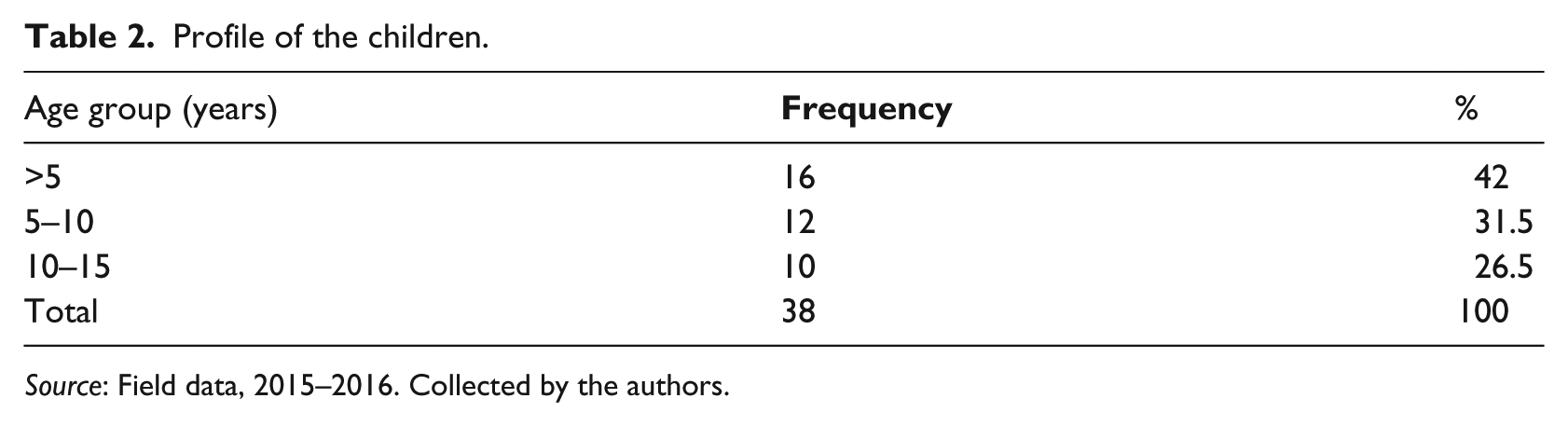
Source: Field data, 2015–2016. Collected by the authors.
Culturally, both the Philippines and Indonesia maintain collectivistic societies. Family comes first in both cultures. Marriage is important in both cultures, although Indonesians see it as more of an accomplishment, while Filipinos are content just living at home if marriage is not an option (Ullah, 2013b). Studying a common perspective in two religiously distant countries is very interesting in terms of generating fresh knowledge in the ambit of this research area. In order to collect data, we recruited eight experienced research assistants, four each from the Philippines and Indonesia. They were given special training for this particular research considering that this research deals with the sensitive issue of unwed mothers.
The respondents for this study were selected by using the snowball technique. We relied largely on the existing network we had developed earlier to conduct a previous research commissioned by the University of California, Irvine (UCI), USA. In-depth interviews were conducted using a well-developed checklist so that the responses achieve the objectives set out in the research. The American University in Cairo, Egypt ethics committee approved this research. In selecting these countries, we adopted a purposive snowball technique.
We chose the snowballing technique to pick our sample for convenience due to the lack of the sample frame. This is a technique for finding research subjects by the way that one respondent gives the researcher the name of another respondent, who in turn provides the name of a third, and so on (Vogt, 1999). Therefore, our sample size was not the same for both countries.
The rationale behind choosing the Philippines and Indonesia for our research has been explained above. As Table 1 indicates, we selected 17 (45%) respondents from the Philippines and 21 (55%) from Indonesia by applying the snowball technique. Table 2 demonstrates the age groups of the children (biological remittances) born out of wedlock. The highest number of children (about 42%) were within the age group of 5 years and under followed by the 5–10 years age group (32%) and about 27% in the 10–15 years age group.
Theoretical construct
Since the time remittances in kind have become part of a remittance bundle, some countries witnessed more remittances in kind and less in cash. For example, on average, Salvadorans living abroad send $819 a year in goods and $288 a month in cash (Central Reserve Bank of El Salvador, 2014). The term ‘social remittance’ calls attention to the fact that migrants send more social remittances (norms, practices, identities, and social capital) home than money (Levitt, 2001b). Remittance is an outcome of migration. Migration is no longer seen as an economic term rather it is a multidisciplinary field of investigation. Remittance also could not be seen only from the perspective of cash transfer.
Most countries in the world are facing an unprecedented new era of international mobility and migration brought about by globalization and knowledge of opportunities around the world and improved and cheaper means of travel (The World Bank, 2007a). With migration, the altruism hypothesis has been suggested in the literature in the attempt to explain the underlying motivations to remit. Auguste Comte (1891) coined this term as an ethical doctrine. Our argument is that babies born out of wedlock are biological remittance of the mothers overseas. For most of the respondents, these babies are the memories of their fathers. Pure altruism suggests that one must sacrifice or forego something for the benefit of another person or persons without expecting anything in return. This sacrifice in this case is in the form of biological resources (Lucas and Stark, 1985).
Research on migration and remittance is a relatively new area of academic investigation. In a relatively short span of time, this field has gained a strong position among policy-makers and scholars alike. However, many aspects of it still remain unexplored. According to Sharaf (2014) and Carling (2014), remittances are transfers of value by emigrants or their descendants to their country of origin. Levitt and Nyberg-Sorensen (2004), on the other hand, assert that remittances are not limited to financial transfers only but also involve social transfers, for instance, ideas and social assets, in addition to in-kind transfers and informal transfers. Most studies have focused primarily on the economic aspect of migration (Levitt, 2001b; Rodriguez, 1998). However, as globalization is transcending all boundaries and as changes are taking place in social, political, religious and economic landscapes, as a result, religious, political and cultural factors are now gaining space in migration studies (Sukamdi et al., 2000). This means these factors play an important role in shaping migration landscapes.
Migration has become a phenomenon today in which the entire world is involved. Some countries are taking advantage of it and some are not. The huge number of outgoing migrants (skilled, unskilled, semi-skilled, low skilled) and the size of incoming remittances have made both the Philippines and Indonesia known globally as labour-sending countries. In addition, the essence of the theory of feminization of migration is based on the qualitative changes in female migration trends in the last decades. Indonesian female workers choose to migrate due to income uncertainty and widening social disparity (World Bank, 2006). Migration is obviously seen as a provisional answer to unemployment and poverty (Bryant, 2005: 5; Chan, 2014a). The domestic economy of Indonesia is unable to generate sufficient jobs, resulting in a deficit of 1 million jobs annually (Hugo, 1995) and the Philippines, as calculated by the World Bank (2014), needs 14.6 million more and better quality jobs for the 3 million unemployed Filipinos, 7 million underemployed and the several million new entrants in the labour force until 2016 (World Bank, 2014). These facts, thus offer a context why people from these two countries seek opportunities overseas.
Framework for analysis
While gender roles are demarcated by a ‘natural’ binary – women adopt wifely roles and men assume leadership positions – gender boundaries have begun to shift gradually since the last decade (Platt, 2012). While children are not responsible for their birth, non-marital children continue to suffer legal and social disadvantages as a result of their birth status (Solangel, 2011). It is indisputable that ‘illegitimate’ children suffer significant legal and societal discrimination (Witte, 2003).
Figure 1 addresses the implications of biological remittances from different perspectives and Figure 2 demonstrates two options that migrants are left with to choose after they become pregnant. Irrespective of their countries of origin, from psychosocial, politico-religious, cultural, gender and financial perspectives, the biological remittances have implications on the life course of the mothers. This study has delved into these interlinked perspectives to better understand the difficulty they go through as unwed mothers.
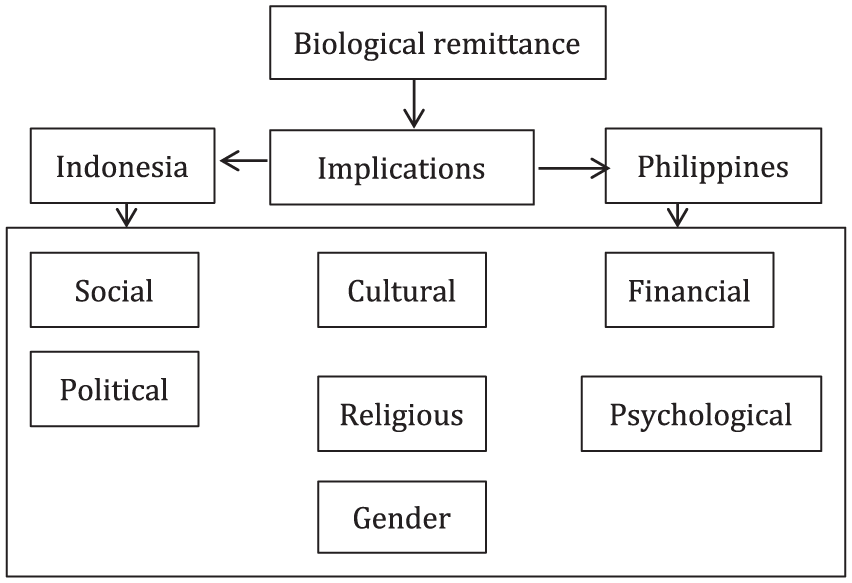
Framework for analysis.
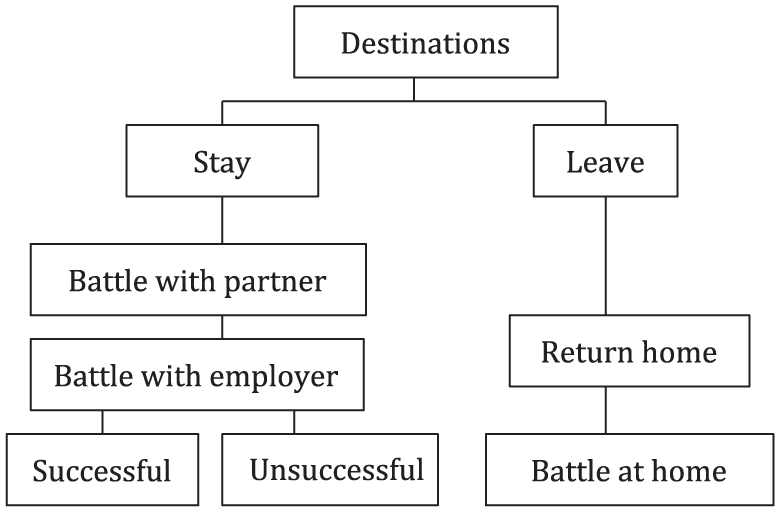
Trajectory of a migrant after getting pregnant.
Some of the questions raised by the respondents proved to be very interesting. They asked if research can be conducted on the differences in the perceptions of societies and religious systems if the migrant men were the ones to bring their children back to their home country instead of the women. The level of acceptance is thus perceived as contingent on a number of factors. The societal disapproval that non-marital families and their children experience depends on a variety of factors such as the age of the mother; the child’s race, cultural background, and socioeconomic status; the parents’ sexual orientation; and the community in which the family resides (Figure 1). Irrespective of origins, low-income mothers, whom society assumes will rely on welfare assistance to support their children, are demonized. Although this study investigates the phenomenon from two countries within the same region (Southeast Asia), each country has their own distinctive characteristics, in terms of religion and historical legacy, cultural mores and financial footing.
Gender norms in Indonesia are shaped largely by religious and social belief. In order to be a ‘good woman’, that is, not to engage in any sexual relationship with anyone out of wedlock, a married woman must not have an affair with other men, whereas in the Philippines, gender norms are in part shaped by religion. Religion of course does not allow extra or premarital relationships however, culturally it is kind of tolerated (Okin, 1999). Therefore, the level of difficulty the mothers with biological remittances face vary depending on the country they are from.
Gender roles and the status of women are one of the areas in which societies continue to differ vastly across the globe (Esposito, 1998; Inglehart and Norris, 2003). Practices around gender and sexuality are some of the most fundamental parts of a society’s normative system (Bourdieu, 2001; Okin, 1999; Prieur, 2002). Religion influences not only individual spiritual belief of billions, but also public policy.
Indonesia, a Muslim majority country, has one of the highest abortion rates in the world. As reproductive health professionals, policy-makers and politicians wrestle with the implications of this, a spirited debate within Muslim religious circles on family planning and reproductive health has led to some surprising outcomes. Meanwhile, in the Philippines, a profoundly Catholic country, the contours of the debate on contraception and abortion continue to be dominated by Vatican doctrine.
Indonesia has ratified the major international conventions that uphold principles of gender equality and the empowerment of women (ADB, 2006). Indonesia has a traditional view of gender roles for the most part. Women usually tackle the chores while men go out to work – although women hold a large part of the workforce as well (Korpi, 2000). This traditional sense most likely stems from the country’s Asian background because those are important roles in the culture. In Indonesia, in their greeting protocol, with the same sex, they are supposed to shake hands or nod (ADB, 2006). However, with men and women, physical contact is rare. This comes from the religious rites in the country. The role that the Roman Catholic Church plays in the lives of the Filipino people has been consistent and pervasive, as pastoral letters are read at Sunday Masses to comment on contemporary political and social issues (Korpi, 2000). Based on the normative role of religion and the predominantly gender conservative teachings of most of the main religions, it can be expected that individuals belonging to a religion might be less tolerant about sexual relationship beyond wedlock than people with no religious affiliation.
Geographical set of Indonesia and the Philippines
Indonesia: There are more than 300 ethnic clusters within the country and over 250 languages are spoken. The Javanese constitutes Indonesia’s largest ethnic group, accounting for roughly one-third of the total population while the Sundanese and Madurese are the second and third largest ethnic groups in Indonesia respectively (Tirtosudarmo, 2005). Islam (87%), Protestantism (7%), Catholicism (2.9%), Hinduism (1.7%), Buddhism (0.7%) and Confucianism (0.05%) are all practiced in Indonesia. Indonesia is home to the largest population of Muslims in the world. Every Indonesian is required to record their religious affiliation in official documents such as passports and identification cards (Hodal, 2012). The Islam that is practiced in Indonesia has always been regarded as relatively moderate. However, recently new laws were introduced that include banning public displays of affection and limiting the kinds of clothing women may wear in public (De Blij et al., 2014).
The social and economic diversity in Indonesia underlies a social hierarchy: upper, middle and lower class (Adeney-Risakotta, 2014). The upper class is composed of elites with a Western orientation; the growing middle class includes civil servants, teachers, and other professionals, as well as skilled workers who typically struggle to maintain their economic position; and the lower class comprises a larger number of minimally educated and unskilled labourers, traders, and other members of the informal economy who strongly identify with their villages and frequently move back and forth to engage in economic pursuits in both areas (King, 2008). This three-tiered hierarchy also conforms closely to an economic structure that is based on various government opportunities and on formal and informal business activities (Barnes, 2004).
Philippines: More than 86% of the population is Roman Catholic while 6% belongs to various nationalized Christian cults with another 2% belonging to over 100 Protestant denominations in the Philippines (Amado, 2009). Muslims are a minority (about 4%) who are mainly concentrated on the southern islands of Mindanao, Sulu, and Palawan. Scattered in isolated mountainous regions, the remaining 2% of the population follows non-Western, indigenous beliefs and practices (Ragsag, 2010). In addition, the Chinese minority has been culturally influential in the beliefs and practices of Buddhism, Taoism, and Confucianism (Carroll, 1970).
Life in the Philippines generally revolves around the extended family, including parents, grandparents, aunts, uncles, cousins, and other relatives. Many Filipinos have conservative views on social issues, some of which are strongly in line with the teachings of the Catholic Church. For example, two-thirds (67%) say that getting a divorce is morally unacceptable. Filipinos also overwhelmingly view having an abortion as immoral (93%) (Lipka, 2015). This has crucial implications for their own case.
Pregnancy and biological remittances
There are no statistics available on how many children are conceived out of wedlock by female migrant workers in their destination countries. Getting pregnant overseas out of wedlock is not uncommon. For example, during the last decade, a considerable number of Indonesian female migrants in Saudi Arabia alone have been accused of having sexual relationships with local men and about 7000 children were estimated to have been born from those relationships (Chan, 2014b). This is seen as an astounding fact as this statistic was recorded in a country where strict laws concerning adultery are enforced. It is unknown how many more were recorded from other destination countries. It is highly likely that this estimate will be far greater in other countries like in Hong Kong, Singapore, Korea and elsewhere as unlike the Middle Eastern laws, laws in Southeast and East Asia are not so hard on the maids who become pregnant out of wedlock. Once they become pregnant, however, they must be deported, with the employer paying the airfare. In the Middle East (especially in Saudi Arabia) being pregnant out of wedlock results in imprisonment or whipping or both. Most of the maids are aware of the consequences of being pregnant in the destination country. The consequences range from deportation to death sentences depending on the existing laws of the destination countries. Many still end up getting pregnant which begs the question, why?
Is it intentional or unintentional? In Qatar alone at least 100 maids annually are jailed for giving birth out of wedlock (Dohanews, 2013). Some researchers (Sim, 2009; Ullah, 2010b; 2013b) reveal that there are a number of factors that contribute to female migrant workers getting pregnant, including rape by their employers or their relatives; being engaged in relationships with other male migrants and a desire to be mothers. In her study, Sim (2009) reveals that some maids are constantly raped by their employers and got their contracts discontinued when they became pregnant. Pregnancy, as claimed by Ullah (2010b), was also utilized by the migrants to trick their partners so that the latter will marry the former. He explained that this is because the migrants were acquainted with their partners’ lack of devotion despite being together for years and to add to that, the migrants’ (il)legal status provides them with few assurances in the protection of their rights, hence causing a dilemma to them. Ullah (2010b) also asserts that pregnancy occurs due to migrants having sex without protection. The use of protection such as contraceptives is often brushed aside because they perceive that using protection would minimize sexual satisfaction. This belief is also accompanied by the negative views regarding contraceptives. Another reason leading to pregnancies abroad is because the migrants wanted to have children of men deemed as good-looking by them, in which Westerners and Pakistanis are chosen as their ideal partners (Ullah, 2013a).
Yet another factor contributing to the number of female migrant workers getting pregnant abroad is arranged marriages between them and the local men. For instance, according to Bryant (2005), there has been a growth in the number of women from the Philippines and China going to Japan for the purpose of arranged marriages with Japanese men. Most of these planned marriages are believed to end in divorce which apparently prompts the fathers to withhold paternity obligations.
Due to their failure to get child support from their children’s fathers, combined with their inability to receive financial aid, many women are left with no choice but to return to their home country with their children. Many, in fact, are not aware of the laws of their destination countries. In order to avoid prosecution, many leave the country while they await scorn, hate and neglect at home. However, according to our respondents, some of those who gave birth (Table 3) in destination countries prefer to remain there rather than deciding to leave immediately after they become pregnant, according to the most respondents. Many of them did not leave the country immediately. Some of them took some time to understand whether their employers were going to accept them being pregnant. They waited for some time too for their partners with a hope that they might change their mind and decide to stay together. Perhaps, to them a better option is to remain than facing difficult times in their home country.
Number of children born out of wedlock (to the sample population) in destination countries.
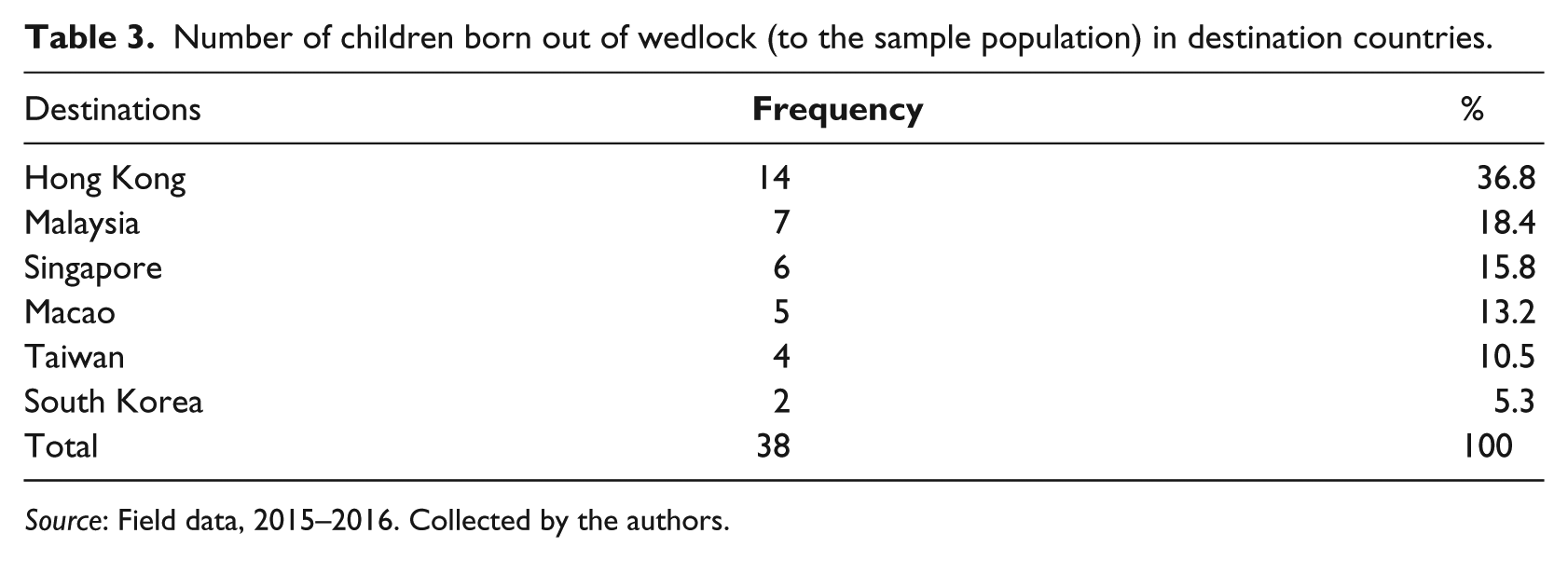
Source: Field data, 2015–2016. Collected by the authors.
Ordeals and pleasures
“The image of the unwed mother as a ‘moral lawbreaker’ changed in the 1960s to one in which the unwed mother is seen as a social problem. By the 1980s, unwed mothers were divided into two quite distinct groups: the teenage, welfare-dependent girl who made a mistake, and the economically independent, older woman who made a choice (Crawford, 1997, 1)”. Crawford’s model could perhaps be applicable only in Western societies. In Indonesian society, for example this kind of ‘mistake’ or freedom of choice is not easy to establish.
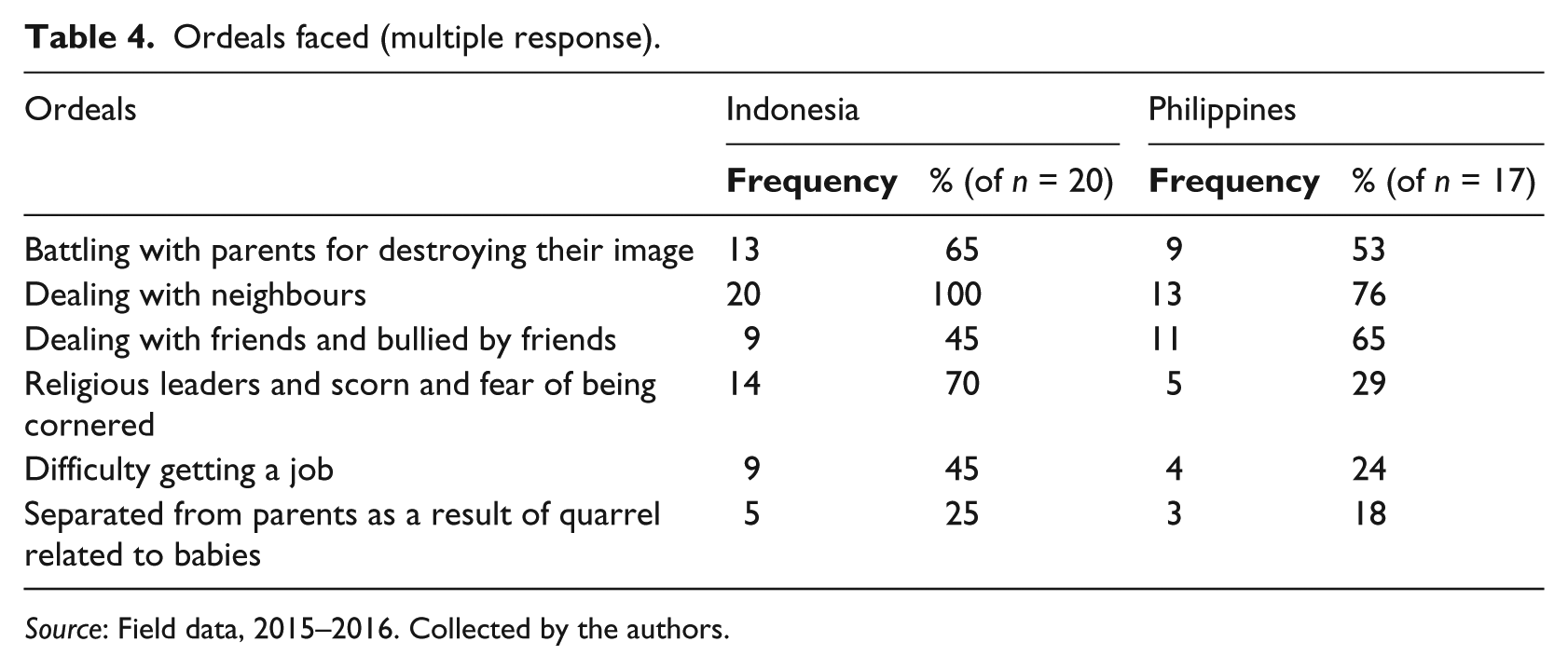
How are the unwed mothers going to deal with the situation in their respective countries of origin? Unwed mothers are considered social outcasts in many societies in Asia (Table 4). Given the value of the traditional family system and religious, cultural mores of the society, unwed mothers are viewed as social outcasts, according to many respondents. This is supported by Spicker (2011) who goes on to say that there are negative attitudes such as disapproval, dislike, contempt, aversion, repulsion, fear and mistrust; discomfort, strain, pity, censure, hostility, and isolation towards unwed mothers. Marriage in societies in the Philippines and Indonesia is described as the ‘norm’, while being a single mother without wedlock carries a social stigma because the ‘ideal type’ of woman is one who is married and has babies. This ideal type is often used to discriminate against and stigmatize women who fail to meet these criteria (Dzuhayatin, 2002). However, some societies seem to move from this hard-core position to a more liberal one. This does not mean, however, that they are accepted without any challenge. Having a child out of wedlock may be seen as a decay in social, moral, and economic values and as a result, women who are unmarried and pregnant become stigmatized in any society (WordPress, 2013).
Ordeals faced (multiple response).
Source: Field data, 2015–2016. Collected by the authors.
Figure 2 explains the ordeals the unwed mothers go through as they get pregnant. Apparently, two major options are left for them ‘to stay’ or ‘to leave’. If they decide to stay in the destination country, they have to fight a legal battle with the employers and the immigration office, and a moral battle with their partner. Being successful with a legal battle with the immigration office depends on the employer. If the employer accepts them being pregnant (which is unlikely), the immigration office allows them to stay. If they plan to leave the destination country and return to their home country, they have to fight another battle to be accepted by parents, partners back home (if any) and society. Depending on the situation and resiliency, they make their decisions to stay or to leave.
The level of ordeal that female migrant workers are subjected to after they become pregnant can be described in three steps: First, battling for recognition of the child, and marriage (legally in some cases with partners) in the destination country; second, negotiating with their employer (regarding termination, benefits, outstanding salary etc.) and obtaining legal redress, and finally, the struggle in their home country as an unmarried mother, which may prove to be the most enduring one. This range of ordeals comes with different forms of challenges and problems. The ordeal faced by these women is vividly described by one of our respondents from the Philippines:
‘… my images are stained by shame and fear. My body is distended by pregnancy. I am a fallen-woman-child who has injured herself and disgraced her family. To my society, I have many-sided anomaly: outcast, pitiable unfortunate, moral lawbreaker, social problem…’. Do you believe what you have said? ‘…I don’t in my heart but this is what I have been reduced to. As if I have committed the worst crime in the world’, she was murmuring morosely. (Interview: 12 May 2015, Manila)
Soon after they land in their own country, irrespective of origin, all of the respondents faced mild to strong resistance, hatred, and scorn from their family members. Shame in fact knows no religious and political boundaries. It is often argued by respondents (especially from the Philippines) that this shame is often related to money, or the lack of it:
… if you are solvent financially, this [being pregnant] becomes a less important matter… Parents rather start to love the babies. Neighbours and relatives care about money…this means as long as you are not a burden…. you are alright. (Interview: 18 May 2015, Manila) … my parents did not come to receive me at the airport. This happened first time ever. They sent my relatives to the airport. I realized that this was the first blow…harsher treatment is yet to come. It does not mean that I don’t understand their position. They live in a community. (Interview: 19 May 2015, Mindanao)
The accounts from our Indonesian respondents seemed to indicate that their experience is different from the Filipino respondents with regard to this matter. No matter how solvent they are, it is highly unlikely that they will be accepted by their families. In fact, they can even be physically punished by their parents for their ‘wrong’ doing.
…it seemed like I am a newcomer here in my country. As if I don’t know anyone. I see everyone’s face is pale, full of sadness, fear and shame…I brought stigma to the family…. (Interview: 11 July 2015, Jakarta) One Indonesian mother said she was advised by her parents to give her baby away: …I cried day after day. I wanted to flee somewhere. I knew I had no place to go to hide. I told my parents, I won’t go out of the house, I won’t talk to anyone, any friend, any neighbour. I begged to just let my baby live with me…. (Interview: 27 July 2015, Surabaya)
In the Philippines, we had several respondents who had children with their husbands or boyfriends before they migrated. For them, the situation was worse than others who did not have any children at home before they migrated. Some of them said it was an extremely complex situation to deal with. One respondent said that her marriage was annulled (divorce is illegal in the Philippines) primarily because her husband could not accept her child conceived during her stay overseas: ‘…I understand him. He really loved me. He was shocked at this news. I don’t blame him for his decision to get separated. I betrayed his trust. It’s my fault.’ (Interview: 11 May 2015, Manila).
According to her, she came home 3 years ago but she still feels distressed about the situation. She feels that she had committed a great blunder, one that resulted in her losing her family. However, several of the respondents reported that despite the stigma and anger, some of their relatives sympathized with their situation. When asked how did they justify raising a child without a father, and how would they explain to their children questions about their fathers, one respondent said, ‘It would be difficult for me… I’d rather say to my son, “You have no father.”’. Another Indonesian respondent said ‘I would directly let my child know that your father left us. I am not aware of his whereabouts’ (Interview: 20 July 2015, Jakarta).
How these women cope with their situation depends, to some extent, on the individual itself, no matter what the social perception is regarding biological remittances. Some respondents, irrespective of country of origin, struggle psychologically due to social forces, that is, the social element that has the capability of causing cultural change and influencing people. Some of them battle with their parents. They are deeply aware of their parents’ hurt feelings yet many answered back to their parents during arguments about the situation. A few of them also confided that they wanted to commit suicide but the sight of their children’s faces made them change their minds.
According to Court (1983), these children are often stigmatized, uncared for, physically mistreated and many suffer from emotional problems. The existence of these children can also be seen as burdens by their mothers (Crosier et al., 2007). Furthermore, the children that are left behind and grow up without their parents may suffer from critical psychosocial problems in the short, medium and long run (Ullah, 2010a). In addition, those children growing up with single parents also suffer from social problems because of the fact that they lack consistent attention from the parents hence being unable to educate their children with positive morals and integrities.
With regard to the framework of expectations – a culturally determined degree of expectation generally entails actionable behaviour and visual identity. This is a collection of assumptions about a manner expected of social beings (Jim and Julie, 2000) – returning with ‘babies’ may appear as a blow to them, thus exploring what dilemmas they go through will generate new knowledge. However, attitudes towards the stereotypical unwed mother (young, uneducated, welfare-dependent) are that they still constitute a social problem, which in fact they do. Just because a woman has the choice to keep and raise a child, does not mean that she should exercise that choice.
Sharing responsibility
As for the consequence of biological remittances, in a conservative society like Indonesia, women migrants who brought their children back to their country may be viewed as socially immoral and voracious particularly if the children they conceived were born out of wedlock (Chan, 2014a). Likewise, Ullah (2010b) contends that these biological remittances can give rise to prejudice, social expulsion and punishment towards the migrants. To add to that, he also suggests that biological remittances, especially those stemming from premarital pregnancies, can bring humiliation towards them and their families which can cause unsteady relations among the family members and lead to the migrants being deprived of a family support network.
How do societies in Indonesia and the Philippines look upon the children born to unwed mothers and what would be the long-term impact on the lives of these children? Biological remittances can have deep impacts on the psychological state of the migrants and their children (Table 4). Table 4 demonstrates the ordeals faced by the mothers who are blamed by their parents for destroying their image in society. Being bullied, scorned, cornered and isolated by parents, friends and relatives has severe psychological impact on them. Nikola et al. (2003) in their research found that bullying, isolation and discrimination have strong positive correlation with negative psychological impact. During the interview, most respondents fell apart mentally due to isolation. The impacts can be divided into four aspects: economic, social, religious and psychological.
Financial: biological remittances, particularly for those that are caused by premarital pregnancies, can impede the income flow of the female migrant workers for a certain period of time as many of them face the prospect of losing their jobs in their destination countries. Almost all of them reported being extradited before their contracts ended. This places them in a very difficult situation because many of them were not able to recoup the money they had borrowed to finance their migration. By having to leave before their contracts finish, most end up hugely indebted. Prejudice also plays a role in compounding the financial burden of many mothers. As time passes, their financial problems become even more aggravated. A few of them reported that they were turned down from jobs due to the fact that they had children out of marriage. Almost all of the women claimed that they did not receive any financial support from the fathers of their children. However, it appears that better educated and economically independent women face less stigma than those who are more financially dependent on others. This seems to be the case for respondents from both countries.
Religious and legal: in Indonesia, three legal systems, namely, Adat or customary law, civil law, and Islamic law have regulations that marginalize the rights of children born out of wedlock. In most territories of indigenous peoples, children born out of wedlock are not considered as normal and as a result, the mother and the child are strongly denounced by the society (Djamil, 1999; Elias and Clare, 2011; Irianto, 2009). Some scholars categorize extramarital and premarital sexual relationships and the birth of children out of these relationships as a breach which destructs the emotional peace of community members (Hartini et al., 2013; Ishaque and Khan, 2015). By contrast in the Philippines, the laws there provide for the rights of children, both legitimate and illegitimate, to inherit from their parents. Article 887 of the Civil Code of the Philippines enumerates the list of compulsory heirs, including illegitimate children along with legitimate children of the deceased, as among those entitled to compulsory inheritance from any property left by the deceased parents. However, the child is still considered as an illegitimate child if the mother is not married to the child’s father (Article 165, Family Code of the Philippines) (Government of the Philippines, 2010). One lawmaker filed a House Bill 2355 that seeks to treat legitimate and illegitimate children as co-equal. The bill seeks to redress a wrong and correct an injustice against millions of children who, by no fault of theirs, have been labelled by operation of law with the unsavory and odious term ‘illegitimate’ – a stigma which they are suffering and will continue to suffer for the rest of their lives. Not surprisingly, there are generational differences, that is, differences in values, beliefs and attitudes between particular generations with regard to views on whether non-marital childbearing is bad for society.
According to the majority of respondents (63%) from the Philippines, the issue of illegitimacy and legitimacy did not matter much as of the time of interviews. The legitimacy of the children is not determined by society or family. This in fact shows their resilience and strong conviction. About 72% of Indonesian respondents, however, said that their children will invariably be labelled as illegitimate by society. In the words of one woman:
…I heard it in my own ear. As soon as I arrived, my neighbours mentioned the word ‘haram jadah’ (misbegotten) loudly enough so I can hear.
Another respondent from Indonesia shared her experience that she was still (4 years after her arrival) in an uncomfortable condition. According to her, her neighbours view her as a criminal:
…I was scared when a rumour spread around my village that I would have to face a traditional justice for my ‘misdeeds’ while overseas. In some past instances, I know this was a biased system and contradict the existing judicial system. Undue punishment (ranging from fining to caning) was routinely ordered from this system…. (Interview: 14 May 2015, Manila)
‘Traditional’ justice systems play a major role in the everyday resolution of disputes and maintenance of order in communities throughout the Pacific. Legal scholars use the term ‘legal pluralism’ to describe a situation where multiple forms of law co-exist within a single environment or setting (UNICEF, 2009). ‘Traditional’ and other informal justice approaches can serve to reinforce existing power hierarchies and social structures at the expense of disadvantaged groups (UNICEF, 2009).
It is noted that Philippines society seems to be generally less concerned about the social stigma caused by unmarried mothers compared with Indonesian society. However, negative perceptions towards these women were still prevalent as unmarried mothers were often stereotyped as sexually irresponsible, lazy and unmotivated.
Psychological: it must be acknowledged that these mothers carry a huge psychological burden starting from the pregnancy period to giving birth followed by returning home after facing many legal hurdles. It is a battle that each individual woman has to face at different levels with employers, partners and family members, as evidenced in the words of these women:
…my boyfriend left when I was 6 months pregnant, taking all my savings, I dared not to disclose to the family nor to the employer. Unable to have a late-term abortion, I gave birth without my family knowing. Some friends suggested I give my son away. I decided not to, but to bring him up by myself. (Interview: 14 July 2015, Jakarta) … I remorse a few things. I chose a wrong person at wrong time. I chose a wrong time to be pregnant. I chose wrongly to trust the man. I made wrong decision not to fight legally for the job and for the seeking recognition from the father of the baby. I made wrong decision to send all my savings home. I am broke now and that my baby came. All went wrong. (Interview: 1 June 2015, Manila)
The main issues which emerged were different from what is conventionally thought of, two of which were linked crucially to questions of identity. The first concerned the position of the unmarried mother (Keating, 2001). This research revealed that the majority of the children (70%) were of schooling age. This means that more responsibilities await the mothers. Non-marital children experience greater behavioural problems and worse outcomes than marital children. Studies suggest that children who grow up in single-parent homes are more likely than children who live with married biological parents to suffer emotional and behavioural problems, be poor, underachieve academically, drop out of high school, become teen parents, and engage in delinquent behaviour (Eskridge, 2005). Many mothers were also found to have medical problems related to their pregnancies. These women reported that once the decision was made to keep their babies, the harsh reality of their situation hit them but, of course, it was too late to undo what they did then. As one of them said “…now I realize it was not a time for us to involve in fantasies”.
However, it is heartening to discover that despite the immense challenges they face on all fronts, we found many mothers who are resilient. According to them, whatever happened, happened. They have to go forward, as stated by one of our respondents
I just thought, I am an adult, and I have a responsibility to him. I held my baby, stroked his back and said: ‘No matter how hard it will be, even if I have to live by picking up rubbish, I will still raise you. Your mum brought you into the world – your mum will bring you up.’ (Interview: 14 May 2015, Manila)
Conclusion
Globally, there is a serious increase in the number of out-of-wedlock pregnancies. When a couple conceives a child outside of marriage, the consequence of that sexual relationship affects many people. These consequences can be very difficult and, in many cases, become a lifelong impairment to happiness and freedom. Implications of out-of-wedlock pregnancies varies according to the country’s socioeconomic and cultural setting. The implications of guilt and responsibility of the unwise and impractical decision to be pregnant are far reaching.
As they become pregnant out of wedlock, as migrants, not many choices are left for them. In general, in such pregnancies, a young woman has four choices: marrying, not marrying but keeping the child, having an abortion or placing the child in adoption. For migrants, however, all these choices do not apply. Their choices are to terminate the contract and get repatriated.
The feeling that the pregnancy results from sin is stronger among the Indonesians than in the Filipinos. Therefore, Filipinos suffer less psychological burden than the Indonesians. In order to choose abortion, Filipinos are quicker to decide than the Indonesians as they consider this as a serious sin. These mothers go through the uncomfortable pregnancy periods with its distress, deprivations, limitations and embarrassments, and then the pain and expense of delivery and the difficult life to come. Burden is gendered. Their would-be fathers have walked away and abandoned them to all the devastating times.
Biological remittances that are caused by out-of-wedlock pregnancies may invariably wreck the marriage prospects of these migrants in a conservative society like Indonesia while in the Philippines, their reputations will be negatively affected. To make it worse, the social stigma affects the children as they are often stigmatized, uncared for, physically mistreated and many suffer from emotional problems. The existence of these children can also be seen as burdens by their mothers. Furthermore, the children that are left behind and grow up without their parents may suffer from critical psychosocial problems in the short, medium and long run. In addition, those children growing up with single parents also suffer from social problems because of the fact that they lack consistent attention from the parents hence being unable to educate their children with positive morals and integrities.
In the aspect of religion, there are several efforts executed by the Indonesian Government, for instance, establishing Islamic marriages for those women who are involved in extramarital relationships in order to assist them in obtaining documents in Saudi Arabia before they go back to Indonesia. The major problem that troubles single mothers the most is financial problems followed by cultural barriers in both countries investigated in this study. This means that money issues were among the most significant problems which have the potential to adversely impinge on their mental health. Not only that, they suffer from the society’s lack of support, and they also face negative perceptions or social stigma. Identity issues of these children remain in the dark as long as the legal system clearly define them. In some societies, the father’s identity is crucial in order to establish one’s own identity. In this case, as they grow up, they may find it difficult to form their own identity. As a consequence, they may turn into a social burden rather than a social talent.
As borne out by many researchers, children of unwed parents are more likely to show emotional and behavioural problems than children in intact families. This means that the policy-makers of countries of origin should introduce special programmes for these children in schools. This may include various relationship skill programmes that promote a stable psychological state, as well as overall child well-being. Pre-migration training programmes should include a fresh component of unwed sex and pregnancy and its consequence on jobs and life in future. Further follow up research is important to conduct to delve into how these mothers in the long run cope with the society and to look into how differentially the children are performing in their life skills.
Footnotes
Conflict of interest
The author(s) declared no potential conflicts of interest with respect to the research, authorship, and/or publication of this article.
Funding
The author(s) disclosed receipt of the following financial support for the research, authorship, and/or publication of this article: This paper has been extracted from a research project funded by the University of Brunei Darussalam (UBD). We acknowledge UBD for the generous grant for this project.
The study was funded by the Universiti Brunei Darussalam (Grant number UBD/PNC2/2/RG/1(320).