




Abstract
This study assessed the provision of informal training offered by the Limpopo Department of Agriculture, South Africa, to agricultural extension officers (AEOs). The study used surveyed 90 public extension officers purposively sampled. There were statistically significant differences in extension officers’ exposure to climate change between their education levels and in the provision of climate change training between extension officers’ work experience (P⩽0.05). The study concluded that the majority of AEOs have not been fully exposed to climate information prior to their employment. This suggests that the information gap in Agricultural Extension and Advisory Services (AEAS) stems from the slow mainstreaming and integration of climate change information.
Introduction
Globally, reports show that about 500 million smallholder farmers live below the $2 per day poverty line (IFAD and UNEP, 2013). Worldwide, a discourse in smallholder agricultural production is observing discrepancies visible in their economic gains and food security. Approximately 70% of smallholder farmers play a vital role as world food producers (IFAD and UNEP, 2013). Yet these farmers seem neglected as they face extreme cases of socio-economic inequalities and limited access to basic agricultural services and support. Smallholder farmers bear the consequential effects of failure to implement policies adequately. Smallholder farms, defined as being 2 hectares or less, represent 80% of all farms in Sub-Saharan Africa (SSA), and contribute up to 90% of the production in some SSA countries (Livingston et al., 2011).
On a global scale, the agricultural sector is one of the sectors that contribute significantly towards the global economy. On a local scale, agriculture is the primary livelihood option for vulnerable and disenfranchised people residing in rural areas, often on marginalized lands (IFAD and UNEP, 2013). Smallholder farmers face extreme cases of socio-economic inequities, which institutionally block opportunities to access basic services and extension support that would otherwise holistically improve their farming enterprises. The effects of climate change thus far have had a devastating impact on agricultural production both globally and locally. Climate change effects include decreased seasonality, disrupted known weather patterns, increased duration and severity of extreme weather occurrences such as droughts, floods and heat waves (Ahrens and Samson, 2010; Osman-Elasha et al., 2009).
Several policies and programs to counter this effect have been developed and rolled out in most countries e.g South Africa, Malawi and Zimbabwe. Agricultural institutions such as government agencies, the private sector and non-governmental organizations (NGOs), research institutions and education centres are the custodians of Agricultural Extension and Advisory Services (AEAS), which are programs and mechanisms to build and strengthen the capabilities of smallholder farmers (Birner et al., 2009; Christoplos, 2010). Advisory services are about facilitating outreach programs at grass-roots level, aiming at improving smallholder farmers’ situation on a global, regional and local scale, which are collectively termed as Agricultural Extension and Advisory Services (AEAS) (Williams et al., 2008; Nkonya, 2009; Berman et al., 2012).
This is achieved through the promotion of access to information and technologies, enhancement of agricultural skills and practices, the capacity to innovate, offering various rural development solutions through training programs and to improve management facilitated by agricultural extension officers (AEOs) (Mbo’o-Tchouawou and Colverson, 2014; Sulaiman, 2003). AEOs play an important role in facilitating linkages with farmer-based organizations and other relevant actors such as government agencies, the private sector and NGOs, research institutes and education centres in the AEAS delivery process (Davis and Heemskerk, 2012). AEAS integrate climate change into their programs to increase agricultural sustainability, and contribute to livelihood improvement and bettering the well-being of farmers in rural areas historically (GFRAS, 2010; Saleh et al., 2015).
Despite these efforts, smallholder farmers’ adaptation, coping capacity and overall climate resilience is extremely weak and continues to deteriorate (Akpalu, 2013; Grist, 2014). This is due to the lack of capacity of AEAS to understand and disseminate climate information. The question raised in the study is why AEAS, including AEOs, are failing to address the climate change challenges experienced by smallholder farmers, especially those who reside in rural areas. There is a limited literature that looks at the suitability and appropriateness of the AEAS curriculum regarding climate education and extension approaches used to disseminate climate information to smallholder farmers.
This study explored some of the factors that hinder adequate knowledge transfer from the extension workers/officers that would otherwise benefit smallholder farmers. This would assist agricultural institutions to improve their curricula and training approaches, making them relevant to the needs of the farmer. This would immensely improve the efficient service delivery of agricultural institutions to communities, especially in their extension services and advisory roles, consequently moulding resourceful extension officers well versed in current climate information, technologies and farmer preferences. Extension officers at the ground level can apply innovative solutions in collaboration with smallholder farmers. This will invigorate the dependability of AEAS in promoting socio-economic development in rural areas.
The main objective of this study was to investigate the climate change information offered by AEAS and the extent of their failure to meet the extension needs of smallholder farmers, in the face of climate change.
Methodology
The study used an integrated research methodology, which employed both qualitative and quantitative methodologies to collect data on public AEAS and the extent of their challenge to meet the climate information needs of smallholder farmers. The study was conducted in Limpopo province over two districts in two local municipalities per district: Maruleng and Tzaneen local municipalities in Mopani district, and Mutale and Musina local municipalities in Vhembe district. The Limpopo Department of Agriculture and Rural Development (LDARD), as a public provincial agricultural institution, assisted in identifying the study areas, based on the severity of climate change impacts, predominantly drought. AEOs from crop and livestock production and their service centre heads participated in the study.
Sampling techniques
The populations for this study were both crop and livestock AEAS personnel from the public sector and one farmers’ association group per district municipality. The study used non-probability sampling using judgmental sampling commonly known as purposive sampling (Creswell et al., 2011). With this type of sampling, participants are chosen to be part of the sample with a specific purpose. For this study, identification of the sampling unit relied on their knowledge and employment as AEAS personnel, agricultural extension systems, farming systems and interactions with smallholder farmers (Latham, 2008). The sample had 90 participants consisting of both men and women. Within the sample unit, four senior managers were identified as key informants and four AEAS service centres were selected per district. Also within each district, one farmer association group was identified to participate in the study.
Data collection techniques
Qualitative approach
This study used Participatory Rural Appraisal (PRA) techniques such as semi-structured interviews, key informant interviews, questionnaires and focus group discussions and collected qualitative data.
Key informant interviews were conducted, aiming to gain a general perspective of the state of AEAS and climate change within public extension. Two key informants per study-area district were selected, making a total of eight key informants. The selection of key informants was targeted on participants with vast knowledge and/ or experience and involvement in the subject matter. The key informants further provided information about the areas most affected by climate variability and various agricultural activities of smallholder farmers within their local municipalities. The criterion for selecting municipal managers and service centre heads as key informants was based on their knowledge and experience in the field of agriculture and extension, public extension policies and their mandates and in-depth institutional challenges. Data from the key informants was collected using semi-structured interviews.
The semi-structured interview questions for the key informants were formulated before conducting the interview (Narayanasamy, 2009). According to Harrell and Bradley (2009), semi- structured interviews are a tool that is well suited for exploration of the perceptions and opinions of respondents regarding complex and sometimes sensitive issues; they enable probing for more information and clarification of the answers. Semi-structured interviews allow participants to answer freely as this type of interviewing is informal to give rich and descriptive answers that give in-depth insight on their experiences and attitudes (Harrell and Bradley, 2009).
Focus-group discussions were conducted using focus-group discussion guidelines. The aim of the focus-group discussions was to help in identifying and obtaining preliminary information about beliefs, ideas, opinions, attitudes and behaviours. The advantage of focus groups over individual interviews is that the comments of one participant can generate comments from other participants. These types of discussions can be very productive as researchers and interviewers benefit from the ideas generated (Narayanasamy, 2009). A large quantity of information can be collected often more quickly and at a lesser cost than via individual interviews.
Conducting the focus-group discussion was extremely cost effective and was advantageous, as it allowed several people to participate at once, in a short amount of time. According to Veal (2006), focus-group discussions allow the researcher to observe the interaction and non-verbal cues within the group. The participants are also able to support each other when points are discussed, which has the potential to evoke deeper conversation and views on the subject matter (Overlien et al., 2005). Key informant interviews and semi-structured interviews were all recorded on tape, and notes were taken whilst the focus group were recorded via video. This process minimized the researchers’ bias on topics within the study.
Quantitative approach
Both open and closed questions featured in the questionnaires. The questionnaires were checked immediately to ensure all sections in the questionnaire had been completed and that they were void of error. This allowed enumerators to clarify any unclear response before leaving the field.
Data analysis
The data was coded and entered into the Statistical Package for Social Science (SPSS), version 23. To test whether the proportions were different in each group, the Pearson’s Chi- square (χ2) test of independence with α = 0.005 as a criterion for significance was used, content analysis was also applied.
Results
Climate change concept coverage in agricultural extension training
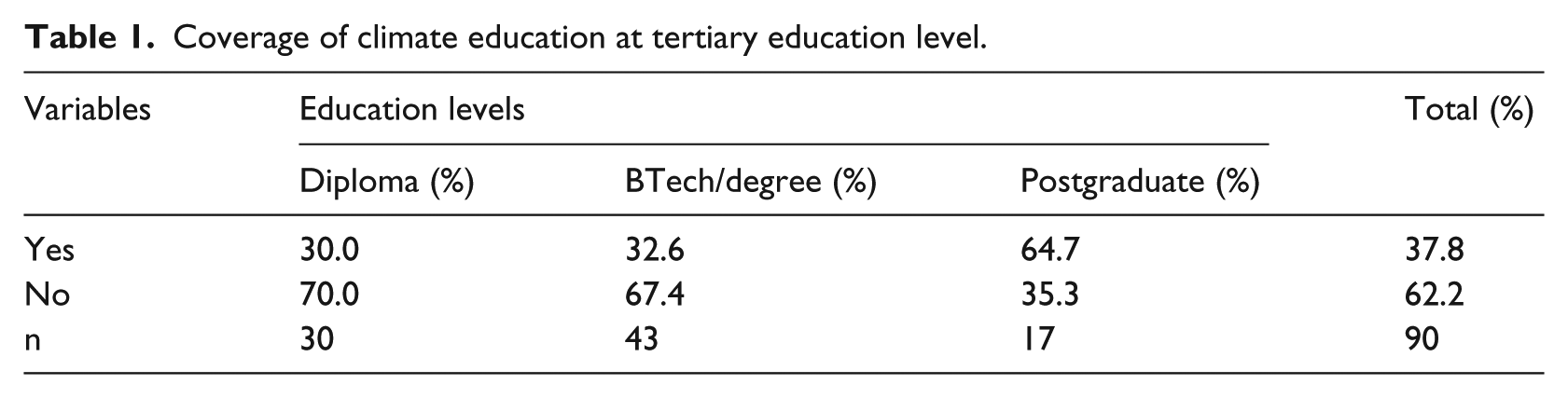
AEOs specified whether they had received climate change education within the curricula of their education levels. Table 1 shows that there were statistically significant differences in extension officers’ exposure to climate change between their education levels (P⩽0.05). AEOs with a diploma qualification were less prone to receive climate change education, whereas those with either a postgraduate or a BTech/degree qualification were more likely to receive climate education. The finding shows a significant difference (P⩽0.05) in education level and the knowledge about climate change.
Coverage of climate education at tertiary education level.
Integration of climate change education into tertiary agricultural extension-related curricula
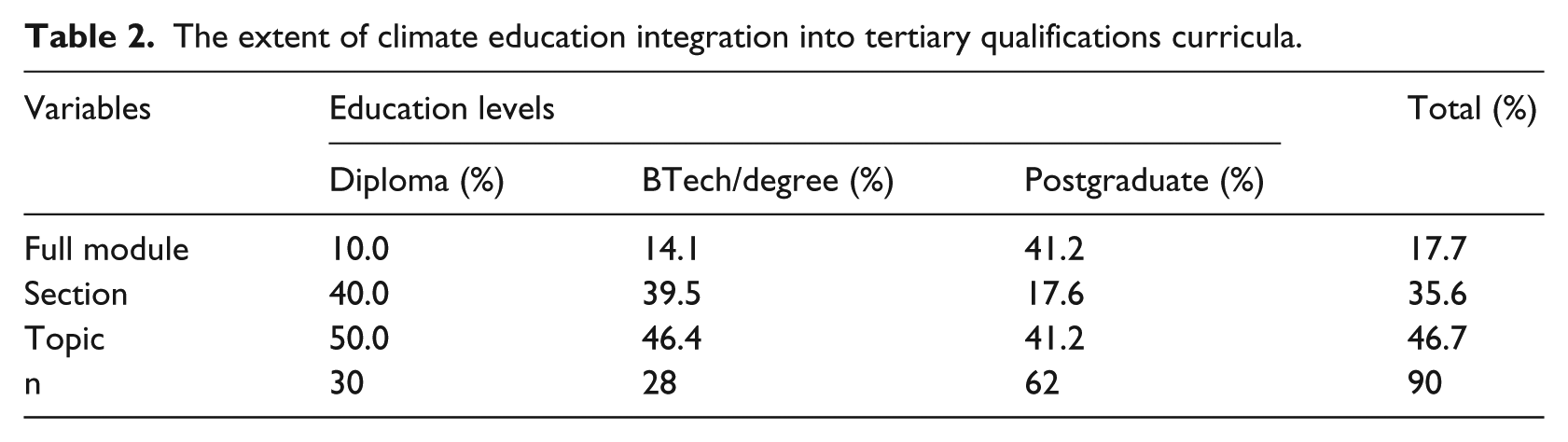
Table 2 shows statistically significant differences in the extent of integration of climate change information between AEOs’ education levels (P⩽0.05). More extension officers with diploma qualifications were more likely to indicate that climate change education was a “topic” in their curricula. Participants with postgraduate qualifications and BTech/degrees were more likely to have been taught climate change as either “full modules” or “as a section” within the module. Thus, AEOs with a diploma qualification have less theoretical knowledge of climate change as a concept, thus requiring more training.
The extent of climate education integration into tertiary qualifications curricula.
Capacity building in AEAS
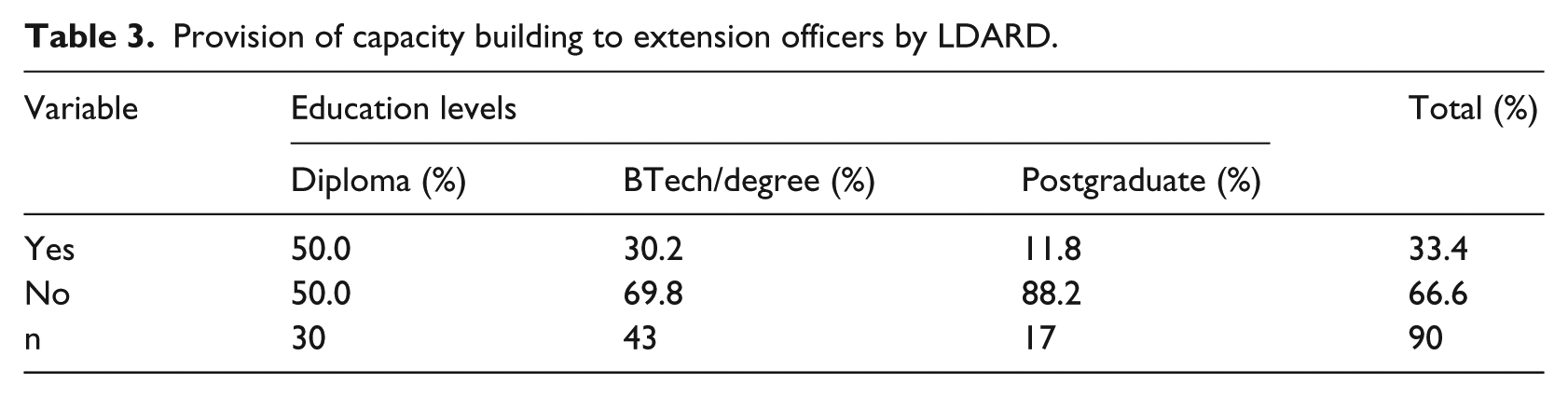
Table 3 indicates statistically significant differences in the provision of in-service training across educational levels of AEOs (P⩽0.05). AEOs with a postgraduate qualification were less prone to receive capacity building training i.e. in-service training, whereas those with either a BTech/degree or a diploma qualification were more prone to receive in-service training. However, the majority (66.6%) of AEOs in the study reported not to have received any in-service training since their employment by LDARD.
Provision of capacity building to extension officers by LDARD.
Capacity building courses in AEAS
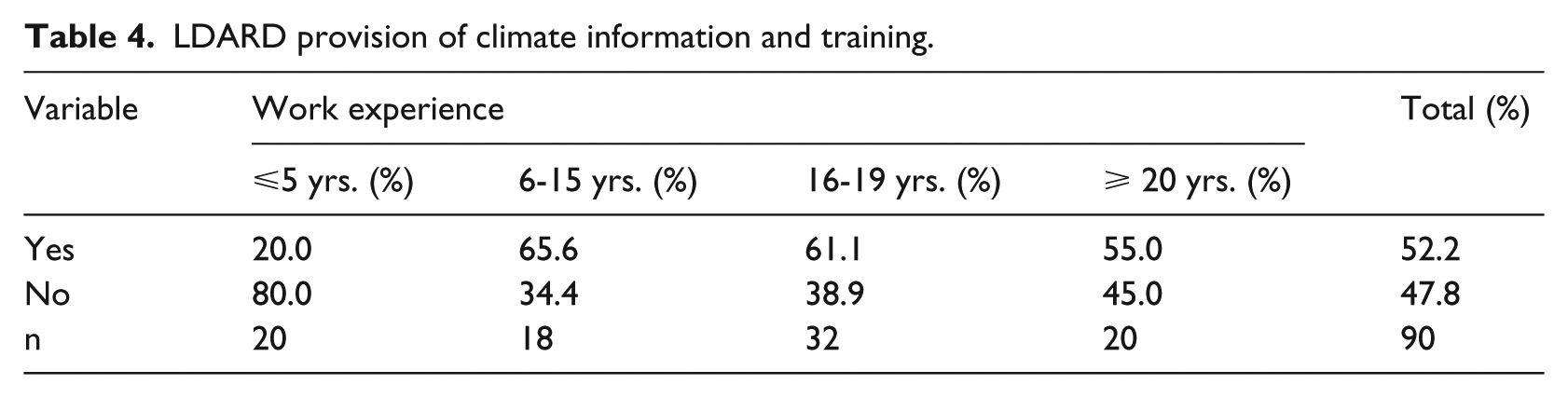
Table 4 indicates statistically significant differences in the provision of climate change training between extension officers’ work experience (P⩽0.05). Extension officers with 6–15 years of work experience were more likely to receive climate change training compared to those with either less than or equal to 5 years of work experience or greater than or equal to 20 years.
LDARD provision of climate information and training.
Frequency of climate information dispersal to extension officers
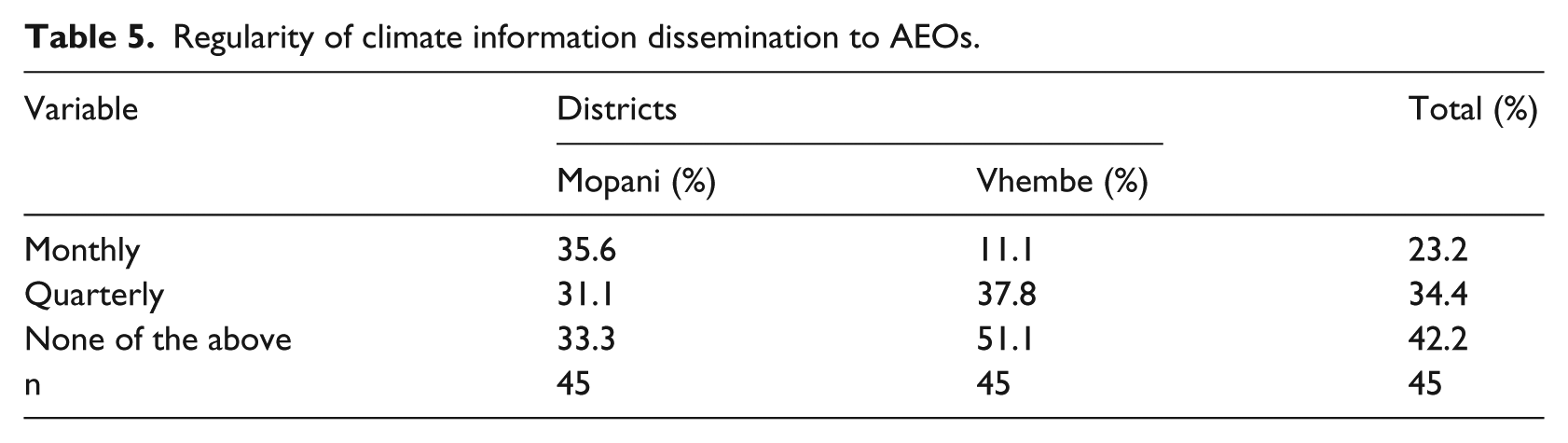
Table 5 implies inconsistency in the dissemination of climate information by LDARD, compromising the relevance of the information that informs coping capacities of farmers. There were also statistically significant differences in the frequency of climate information between Mopani and Vhembe districts (P⩽0.05). AEOs in the Mopani district were prone to receive climate education monthly, in contrast to AEOs in the Vhembe district who were more likely to report they received climate change infrequently (none of the above) or quarterly.
Regularity of climate information dissemination to AEOs.
Channels used for transferring climate change information to extension officers
Figure 1 below illustrates responses to a multiple response question that asked AEOs to indicate what channels of information their employer uses to disseminate agricultural information, particularly climate information. The results show that work email (56%) was the most popular channel through which extension officers received climate information from LDARD. Workshops, meeting and conferences (53%) were the second most prevalent channel use. Extension officers stated that the workshops and conferences were extremely informative and useful organizations such as Agricultural Research Council (ARC) speak about topics such as water, soil and land management in relation to climate change. Pamphlets and/or booklets were the third most prevalent channel of information dissemination (48%), followed by meetings (23%) and government provincial website (20%). Training manuals (18%) provided information on seasonal calendars, were least popular channels to disseminate information, which provided seasonal weather forecasts for all districts in Limpopo.
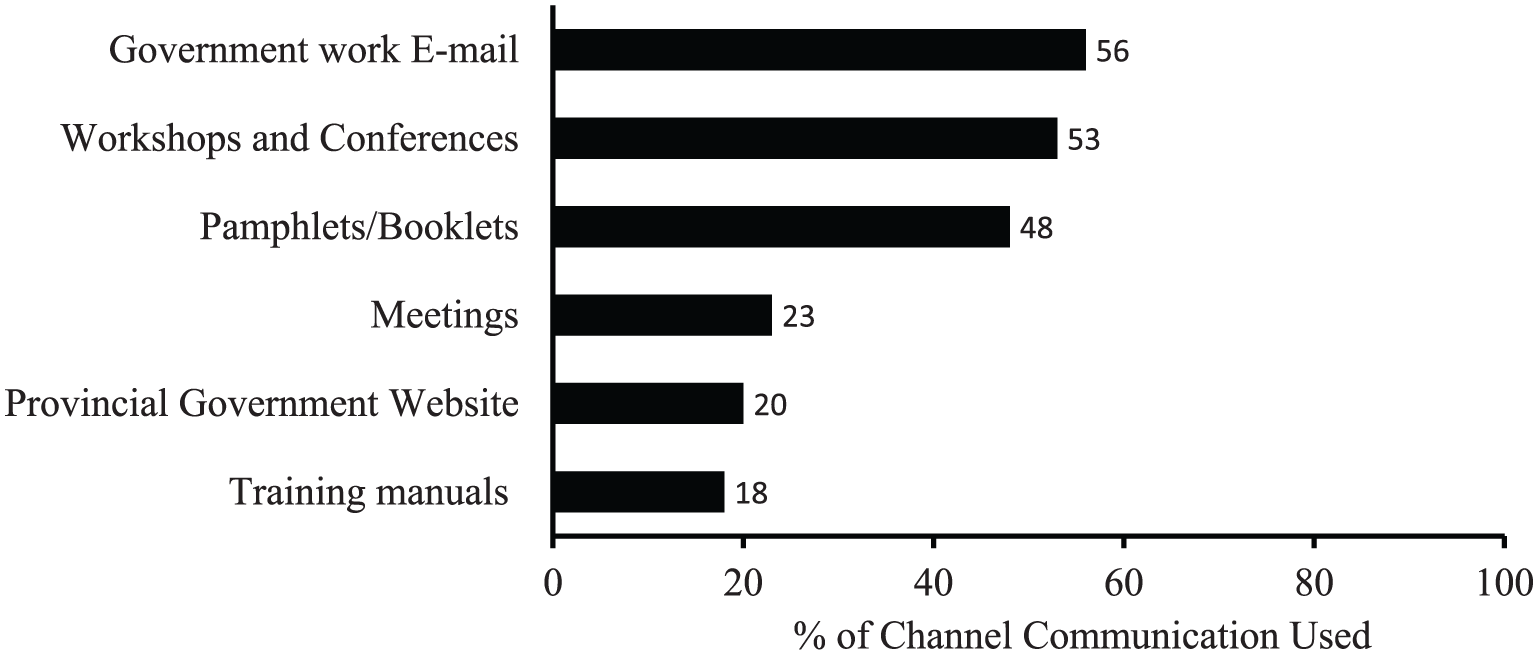
Different channels of communication used to transfer climate information to AEOs by LDARD.
Types of climate information disseminated to AEOs
Figure 2 illustrates a multiple response question on the types of climate information disseminated by their employer (LDARD), in both Vhembe and Mopani districts. The results illustrate that changes in rainfall (85%) and “average temperature” fluctuations (83%) are both of top priority, followed by “extreme weather occurrences” (77%) such as heat waves, destructive rainfall and hailstorms, and lastly “crop and livestock diseases” (50%).

Types of climate information disseminated by LDARD.
Additionally, extension officers indicated that the information received from LDARD comes in a general format that theoretically should be easy to disseminate to farmers.
AEOs’ competency in disseminating climate change information
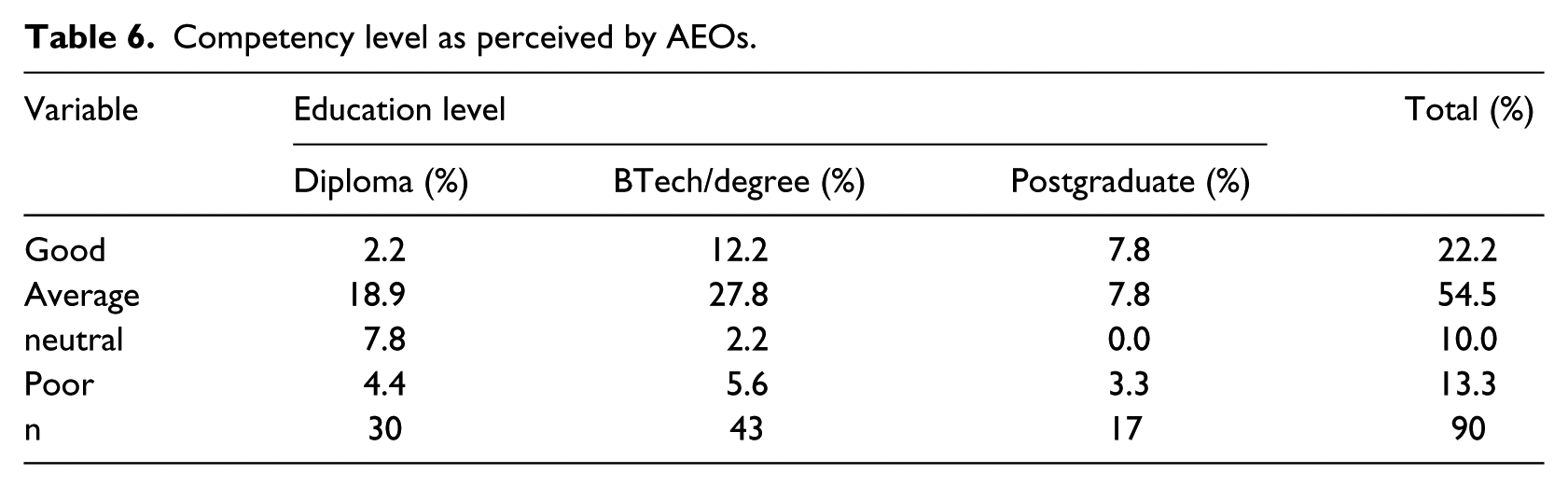
Table 6 shows results from a Likert scale-type question assessing the perceived competency level of AEOs in disseminating climate information. There were statistically significant differences in competency levels between the education levels of extension officers (P⩽0.05). AEOs with a postgraduate qualification were more inclined to report they had a “good” competency level in disseminating climate education, whereas extension officers with an undergraduate qualification were more likely to report their competency levels to be either “average” or “below average”.
Competency level as perceived by AEOs.
Discussion
Climate change coverage in curriculum
In the study, the AEOs who only had diploma qualifications seemed to have less exposure to climate change concepts when compared to AEOs with postgraduate qualifications. This is due to the nature of a diploma qualification, as it lacks specialization and focuses more on practical skills rather than theoretical knowledge. Blumberga and Klavins (2010) believe that the specialized nature of postgraduate qualifications produces “subject matter specialist” with in-depth with modules focused squarely on climate education. Undergraduate qualifications, however, give a synopsis of different topics, producing individuals with “generalist” qualifications in their field.
Several authors suggest that the lack of main streaming and integration of climate change education into agricultural fields of study is due to a lack of capacity by the educator and poor staffing at institutions to meet the desired curriculum coverage (Chakeredza et al., 2008; Lotz-Sisitka et al., 2015; Temu et al., 2003). Chakeredza et al. (2009), state that Tertiary Agricultural Education (TAE) curricula that have been used in Africa was adopted from the continent’s past colonizers. The authors go on to argue that current curricula are founded on an agricultural philosophy which was intended for the production of cash crops for consumption by the colonizing countries. This suggests that the curricula and training AEOs are exposed to are unsuitable to the current environment and socio-economic context of African farmers. As a result, indigenous knowledge systems, rural livelihood systems and climate change/variability experiences of most vulnerable farmers are ignored.
AEOs expressed that though they acquired “textbook” knowledge from their tertiary qualifications, the education did not prepare them to build skills, i.e. technology, advice and services to better interact with farmers. This is comparable to finding by Orusha et al. (2012), who stated that agricultural education teaching and learning transfer in Nigeria lacked interaction between local farming communities and students at undergraduate level. This hinders the fine-tuning of capabilities in communication, teamwork, management and transferable skills, and negatively affects the process of information dissemination on the field. The majority of extension officers go directly into the field after their undergraduate qualification, lacking the mentioned capacities, therefore weakening or even threatening the benefit of agricultural extension advisory service delivery to the farmer.
Integration
UNESCO (2015) supports these findings and states that rather than establishing environmental education as a new subject, most countries have opted to infuse environmental education objectives and strategies into the existing curricula. Focus-group discussion also revealed that AEOs better understood climate change under the concept of sustainable development rather than from an agricultural production perspective. When they started working in the field they also understood climate change in relation to agriculture. According to UNESCO (2015), in most developing countries, climate change education is incorporated into sustainable development policies. In South Africa, climate education is in the National Climate Change Response White Paper, 2010. The purpose for this is to make sure that holistic climate adaptation, mitigation strategies and solutions cover all government sectors and industries. This could explain the lack of synergy in the ability to link climate education together with agricultural extension.
Capacity building in AEAS
This finding is consistent with findings by the Department of Agriculture, Forestry and Fisheries (DAFF) (undated), which stated that very few extension officials in South Africa have ever been exposed to formal skills in in-service programs; less than 25% of extension staff had been exposed to technical training programmers since joining the public service. Only 9% of extension officers had completed training in communication, 11% had completed project management, 6% had completed computer training and 7% had completed training related to people management and empowerment.
The higher level of in-service training provision amongst extension officers with diploma qualifications could be due to the assumption that individuals with diploma qualifications require more training to reach a par with their counterparts. This is supported by the National Framework for Extension-Recovery Plan. DAFF (2011) states that extension officers without the minimum academic requirement for an extension officer, as recommended by the National Development Agency (NDA) norms and standards, are encouraged to undertake further study and training.
Several authors have identified poor training of agricultural extension staff as a factor contributing to the relative ineffectiveness in the field of agricultural extension (Tshwana, undated). According to Mashamba (2012), who assessed the effectiveness of training for extension staff in the Limpopo Department of Agriculture, training provided to the majority of extension officers was outdated as it was not relevant to current challenges extension officers and clients face. Raidimi (undated) further argues that the training functions of DAFF and NGOs generally run ad-hoc in-service training programs that do not prepare extension officers adequately to deal with the multifaceted challenges of rural agriculture. Furthermore, Masukela et al. (2013) were of the opinion that education in South Africa requires training of the workforce to be compulsory. The assumption is that it would re-orientate extension officers to new goals and values, prepare them to cope with unreliable environmental change and train them in new farming and technology methods, providing them with the knowledge and skills to inform upcoming farmers.
AEOs indicated that although training is provided, attendance is low. The workload and limited time often hinders them from effectively attending courses. They cannot decide between performing their key responsibilities and training: they said going for training “would cause backlog in the workload.” Training workshops are held in close proximity to service centres; this requires AEOs to travel away for several days. The key informant from Vhembe district stated that Besides, there is little incentives attending training, if anything there are more cons; time loss at work, transportation constraints and decreased work relationship between themselves and farmers due to the absence.
All service centre managers voiced that organizing training at sub-district level is especially unsuccessful and poorly attended. AEOs are often tasked with facilitating training or workshops after going to larger conferences, seminars, training or workshops organized at the provincial or national level. AEOs view the officers facilitating training or courses as their peers. They underestimate the AEOs facilitating the training or course as they feel the facilitator is not qualified or knowledgeable enough to disseminate knowledge to them. These results are consistent with findings by Masukela et al. (2013), who found similar constraints in training provision amongst extension officers of Department of Agriculture, Conservation and Environment (DACE) in North West Province, South Africa.
Frequency of climate information dissemination to extension workers
The results also imply a delay in the timeliness of climate information delivery, compromising the relevance of the information that informs the coping capacities of farmers. These findings are similar to Agholor et al. (2013), who measured the quality of extension services in the Eastern Cape of South Africa; farmers reported that they were specifically less satisfied with each aspect of service quality, which included timeliness of delivery, accuracy of service, relevance to farmers’ needs/situation and ease of understanding.
The key informant from the Vhembe district stated that climate information is supposed to be disseminated monthly or sometimes weekly (weather forecasts), quarterly (seasonal and extreme weather forecasts). Poor infrastructure and resources limit the regular dissemination of climate change information to rural service centres. These were the same opinions, held by extension officers in the Mopani and Vhembe district, situated in rural areas. AEOs felt their service centres were neglected in terms of resources, infrastructure upkeep, information dissemination and even water and sanitation, in comparison to head offices and main service centres. Similarly, Mashamba (2012) found that the lack of infrastructure such as office accommodation, poor technology and insufficient funds incapacitated AEOs’ ability to transfer necessary skills, information, and advisory services to farmers in Limpopo.
Service centres in Musina, Mutale (Vhembe) and Maruleng (Mopani) lacked permanent working internet access that would play a vital role in communication circulars, information, accessing the department’s Intranet and work electronic mail (email). In some cases there was a working internet connection but the computers, scanners and printers were not working due to lack of maintenance. This was not the case at Tzaneen (Mopani) service centre. AEOs stationed at the rural service centres reported that they often resort to using their own cell phone devices and tablets to access work email and websites, which is costly. AEOs added that lack of internet access at the service centres significantly limits their ability to research climate-related queries from themselves and farmers, affecting their ability to give accurate advisory services. AEOs in both districts reported they also rely on telephone communication, service centre managers or fellow colleagues from the head office to relay any important or urgent information.
These findings are similar to those of Omotesho et al. (2012), who determined that in Kawara state, Nigeria, agricultural extension officers – particularly extension agents (EAs) – have low levels of access to information and communication technology (ICT). This is despite ICT globally being vital for effective agricultural extension. Tshwana (undated) was of the opinion that access or lack of access to the internet is a major factor in determining the reduction of the information gap, or further widening. If agricultural institutions are to keep up to speed with rapid changes in science and technology, continuing education for faculty members is necessary through a commitment by institutions to improve the information infrastructure and training to ensure AEOs have access to the new information technologies and can use them efficiently.
Climate information disseminated to extension officers is similar climate information disseminated, distributed to farmers in semi-arid environments across the world (Kadi et al., 2011; Mudombi and Nhamo, 2014; Selvaraju, 2012). However, giving correct terminology in the indigenous languages proves to be challenging and explaining concepts prove to be difficult as AEOs are not aware of how to engage farmers on questions that arise on climate change. Rural farmers prefer their indigenous language to English, as the majority are uneducated. The finding is similar to findings by Kimura et al. (2012), who reported that farmers in Kenya with no formal education (100%) or primary education (65%) did not prefer English as a medium of instruction when disseminating agricultural information. A key informant added that they do their best to be sensitive to the reality in innovative ways, such as stick markings, counting stones, basic charts, nursery rhymes to ensure that farmers understand, apply information and practices given to us by the Department to dispense to our farmers.
Competency in disseminating climate information
This could be attributed to the self-confidence gained from possessing higher education levels and being reassured by the training received at that level of education. The findings are supported by Khan et al. (2011), who established that the competency level of agricultural officers in Pakistan improved with higher levels of education from BSc Honours through to PhD. Alainati et al. (2010) further argue that education and training have a direct and positive link with on job competency. Therefore, this emphasizes the need for continuous education and training to improve individual’s competency. In focused group discussions extension officers stated that they have very basic training in climate change and its impacts linked to community development, food security and nutrition. In addition, the lack of frequent training also has a negative impact on the ability to transfer knowledge and build capacities. Raza et al. (2013) stated that in-service training is an important aspect of training as it familiarizes newly recruited extension officers with the organizations’ objectives and policies; furthermore, it strengthens and upgrades the professional skills and abilities of extension workers and specialist.
Conclusion
The majority of AEOs in the study have not been fully exposed to climate change, prior to their employment in the field of AEAS. Furthermore, those who received climate education pointed out that climate change was mostly addressed in “sections” or “as topics” in their curriculum. This suggests that the climate information gap in AEAS stems from the slow mainstreaming and integration of climate change information. The findings also suggest that many AEOs have not received in-service training since joining the LDARD. However, individuals with lower levels of education were more likely to receive capacity building training than those with higher education levels.
LDARD does provide climate information such as “average temperature” and rainfall fluctuations, crop, livestock pest control and disease management. Yet the poor state infrastructure and ICT in rural service centres delays AEOs’ ability to receive this information regularly. The findings also showed a significant correlation with newly recruited (less-than or equal to five years’ work experience) extension officers reporting not to have received climate change training, in contrast to those who have served LDARD longer. Lastly, literature has stressed the importance of overall recurrent training of employees in the AEAS, which has an impact on the competency levels of extension officers. AEOs with higher education levels perceived their competency levels to be better than those of their colleagues with lower education levels.
Footnotes
Funding
The authors disclosed receipt of the following financial support for the research, authorship, and/or publication of this article: This study was funded by the National Research Foundation of South Africa through the Research Chair: Agronomy and Rural Development, University of KwaZulu-Natal, Pietermaritzburg, South Africa.
