




Abstract
Small-scale fisheries play a significant role as a source of employment, livelihood strategy and contributor to food security. However, changes in climatic variables alter the productivity and distribution of marine and freshwater fish species, negatively affecting the livelihoods of fishery-dependent communities. This study seeks to identify small-scale fishers’ livelihoods and examine the impacts of climate change on livelihoods and food security of small-scale fishing households. The study was conducted in Sanyathi fishing basin in Lake Kariba, Zimbabwe. The Sustainable Livelihood Approach framework of the Department for International Development was used to define the small-scale fishers’ livelihood assets and activities. The study employed a mixed-method approach for data collection. A pretested, semi-structured questionnaire, focus group discussions and observations were used to collect data from the small-scale fishers. The data collected were subjected to descriptive and bivariate analysis. The present results indicate that fishing is the community’s primary livelihood activity. More than 62% of fishermen stated that fishing revenue is declining, owing to declining fish catches. Of participants, 98% recognised food purchases as the primary source of food. Therefore, 78% of the small-scale fishers perceive their households to be food insecure due to declining incomes from fisheries. These findings show the need for policymakers and development agencies to formulate strategies that specifically target fishing communities whose livelihoods rely on natural ecosystems.
Introduction
Fishing is a significant source of food for humanity and a provider of employment and economic benefits (Béné et al., 2016). Bennett et al. (2018) state that fisheries support the livelihoods and food security of more than half a billion people worldwide. Cochrane et al. (2009) and Mohammed and Uraguchi (2013) argue that fisheries play a significant role in food supply, nutrition and income generation at all levels. More than 2 billion people derive at least 20% of their animal protein from fish (Lowitt, 2014; Rice and Garcia, 2011). Sustainable Development Goal number two (SDG 2) states that the world should strive to end hunger, achieve food security, improve nutrition and promote sustainable agriculture by 2030. Small-scale fisheries (SSFs) have been identified as one of the sectors that could enhance food security and reduce poverty to attain SDG 2 (Nthane, 2015). However, fisheries are climate sensitive. Hence, their production processes are likely to be affected by climate change (FAO, 2016).
Climate change is one of the major challenges to the global bio-physical and socioeconomic environment. Tiyo et al. (2015) state that climate change is one of the most important environmental threats and an impediment to development. Developing countries in tropical regions have been identified as particularly vulnerable to climate change because of their greater economic and nutritional dependence on fish and lack of access to resources that can enhance adaptability to climate change (Barange et al., 2018). Rice and Garcia (2011) state that changes in temperature and rainfall were identified as the main factors resulting in a decline in food production systems, including fisheries. The SSF sector will be affected by climate change through fluctuating water levels and flooding events (Brander, 2007).
Unlike large-scale fisheries, SSFs are of crucial importance to sustaining the livelihoods of the vulnerable and marginalised populations and they, directly and indirectly, contribute to food security as they make fish accessible and available to poor populations (HLPE, 2014). Most SSFs in developing countries, particularly in Africa and Asia, are in remote rural areas and are characterised by limited alternative sources of income and employment (Béné et al., 2007). Therefore, fisheries are an important direct or indirect source of employment, income and food (HLPE, 2014). Fish catches can be used for household consumption, which is a direct contribution to food security or can indirectly contribute to food security through income generation. This is also known as food security through income security (Ngema et al., 2018).
Food security is defined as a situation that exists when all people always have physical or economic access to sufficient, safe and nutritious food to meet their dietary needs and food preferences for an active and healthy life (FAO, 2003). The definition of food security encompasses four key food dimensions of food security: availability, accessibility, stability and utilisation. Fishing enhances food availability, generates incomes that enhances the accessibility of non-fishery products, and the nutritional content of fish promotes nutritional security. However, Béné et al. (2007) state that food insecurity has been identified as one of the problems affecting fishing communities.
In Zimbabwe, the impacts of climate change will aggravate the challenges of livelihood and food insecurity, which are already a problem in agriculture-dependent communities where poverty and hunger are widespread (Shava and Gunhidzirai, 2017). Fishing is the main livelihood activity of the Sanyathi fishing basin, however, according to FAO (2019), since the 1990s fish production in Lake Kariba has declined. Ndebele-Murisa et al. (2011) stated that declining fish catches in Lake Kariba is attributed to the impacts of climate change. Climate change modifies the distribution and productivity of freshwater species and affects fishes’ biological processes and alters food webs (Khoshnevis Yazdi et al., 2010).
There is limited knowledge on the impacts of climate change on livelihoods and food security status of fishing communities that are dependent on fisheries as their main livelihood activity and as the primary source of income specifically fishing communities of Lake Kariba. Therefore, the objective of this study is to: (a) identify the livelihood assets and strategies of the small-scale fishers in Sanyathi fishing basin of Lake Kariba in Zimbabwe, (b) assess the impacts of climate change and variability on the livelihoods of the small-scale fishers and (c) assess the SSFs’ perception of food security.
Methodology
Study area
Lake Kariba is a man-made lake on the north-western side of Zimbabwe’s capital city of Harare, which borders Zambia and Zimbabwe. The Lake Kariba catchment is one of the primary areas of wilderness and protected areas in the country, hence human and wild animals share the space and resources (Ndhlovu et al., 2017). According to Ndhlovu et al. (2017), on the Zimbabwean side, the lake is divided into five hydrological zones according to the rivers that flow into it. This study mainly focuses on Sanyathi fishing basin, which is one of the five hydrological zones (see Figure 1).
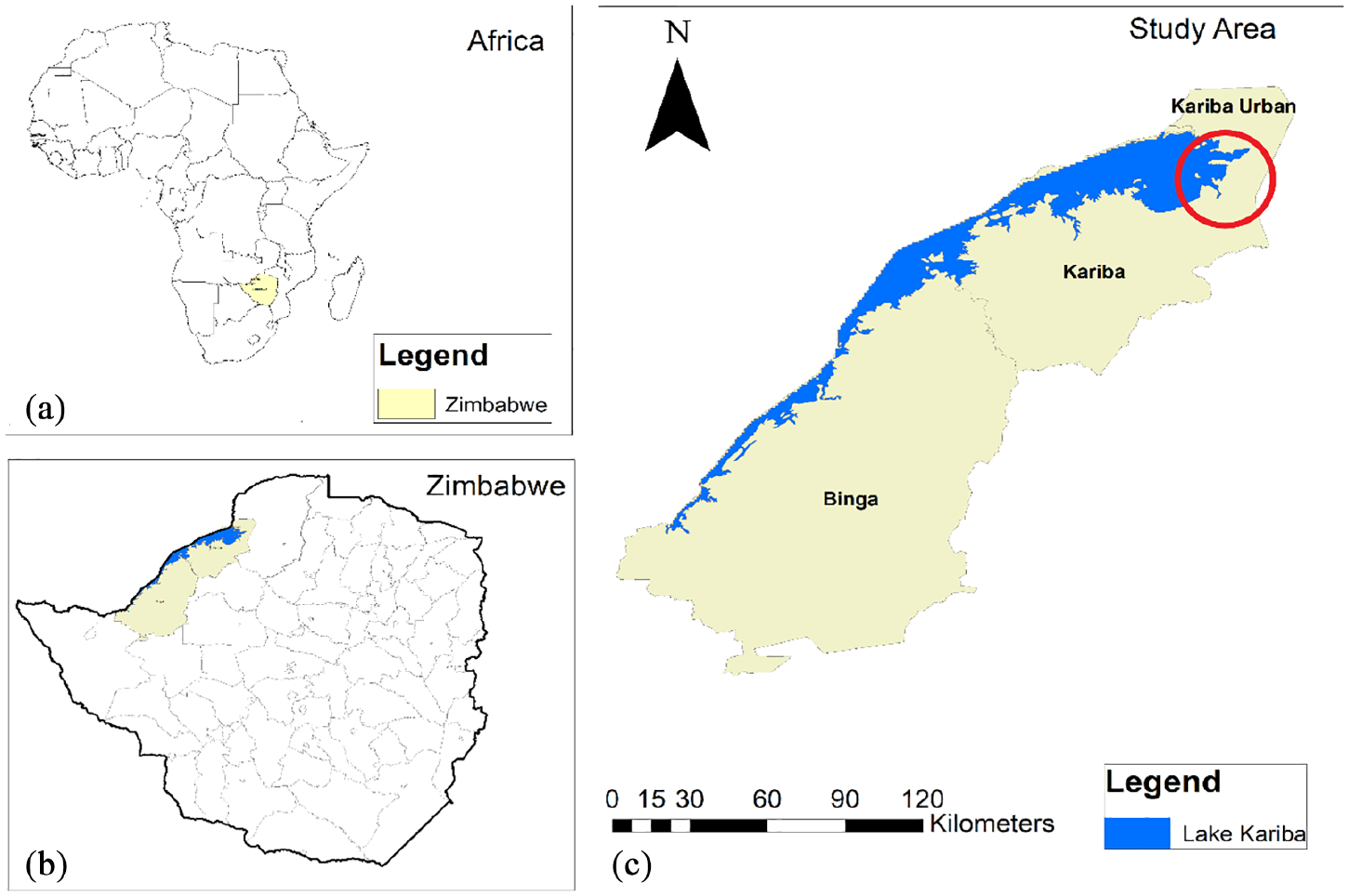
Relative location of Zimbabwe in Africa (a), the relative location of the study area in Zimbabwe (b) and study location (c).
Socioeconomic characteristics of the study area
Rural fishing communities along the shores of Lake Kariba are marginalised and isolated, therefore demographic information about the fishing communities’ populations is scarce. However, the FAO (2019) states that Lake Kariba is the largest fishery in Zimbabwe and contributes more than 90% of the country’s fish production. The majority of the people in Kariba are directly or indirectly involved in fisheries as the main livelihood, part-time activity or in the form of employment (Ndhlovu et al., 2017). Tourism activities based on water sports, wildlife resources and hospitality also play a significant role in creating employment for people from the local communities. The SSFs in the Sanyathi fishing basin are gillnet fishers. Gillnet fishing is one of the oldest fishing methods that can be dated back to the Neolithic period (Mendonca and Pereira, 2014). Gillnet fishing entails the use of nets to trap or catch fish, therefore, it is regarded as the lowest-cost fishing method (Mendonca and Pereira, 2014).
Data-collection methods
Data were collected using multiple data-collection tools, which are semi-structured questionnaires, focus group discussions (FGDs) and observations. Multiple data-collection tools were used for triangulation purposes. Triangulation refers to using multiple methods or data sources in research to develop a comprehensive understanding of phenomena and data validation (Carter et al., 2014; Heale and Forbes, 2013). The study used semi-structured questionnaires because they are an effective way to gain factual and demographic information about the desired target population (Colton and Covert, 2007). FGDs are a useful data-collection tool to acquire in-depth information about complex personal experiences, beliefs, perceptions and attitudes through moderated interaction (O’Nyumba et al., 2018). In addition, observations are an effective way to gain information about the surroundings of the respondent and immerse the researcher in their daily routine and lives (Birmingham and Wilkinson, 2003).
The study used a mixed-method approach to answer the research questions. Quantitative data were acquired using questionnaires and the qualitative data were obtained from FGDs and observations. The questionnaires and FGDs were designed based on the Sustainable Livelihood Analysis (SLA) framework. Figure 2 shows a simplified Department for International Development SLA framework that was used in this study. The SLA was used to identify the SSFs’ livelihood strategies, household livelihood assets or capital, livelihood outcomes and the vulnerability context. The interaction between these four elements was used to understand the impacts of climate change and variability on livelihoods and food security of the SSF households. According to Allison and Ellis (2001), the SLA framework originated from studies that were concerned with understanding how rural poor populations manage natural disasters such as floods, droughts, animal pests and diseases. Zacarias (2019) asserts that the SLA framework depicts the livelihood assets, the external factors that affect the livelihoods, institutions and processes and the outcomes of the livelihood activities and strategies and the relationships between them. The SLA framework has been successfully used in numerous studies related to rural livelihoods and food security (Ansoms and McKay, 2010; Xu et al., 2015).
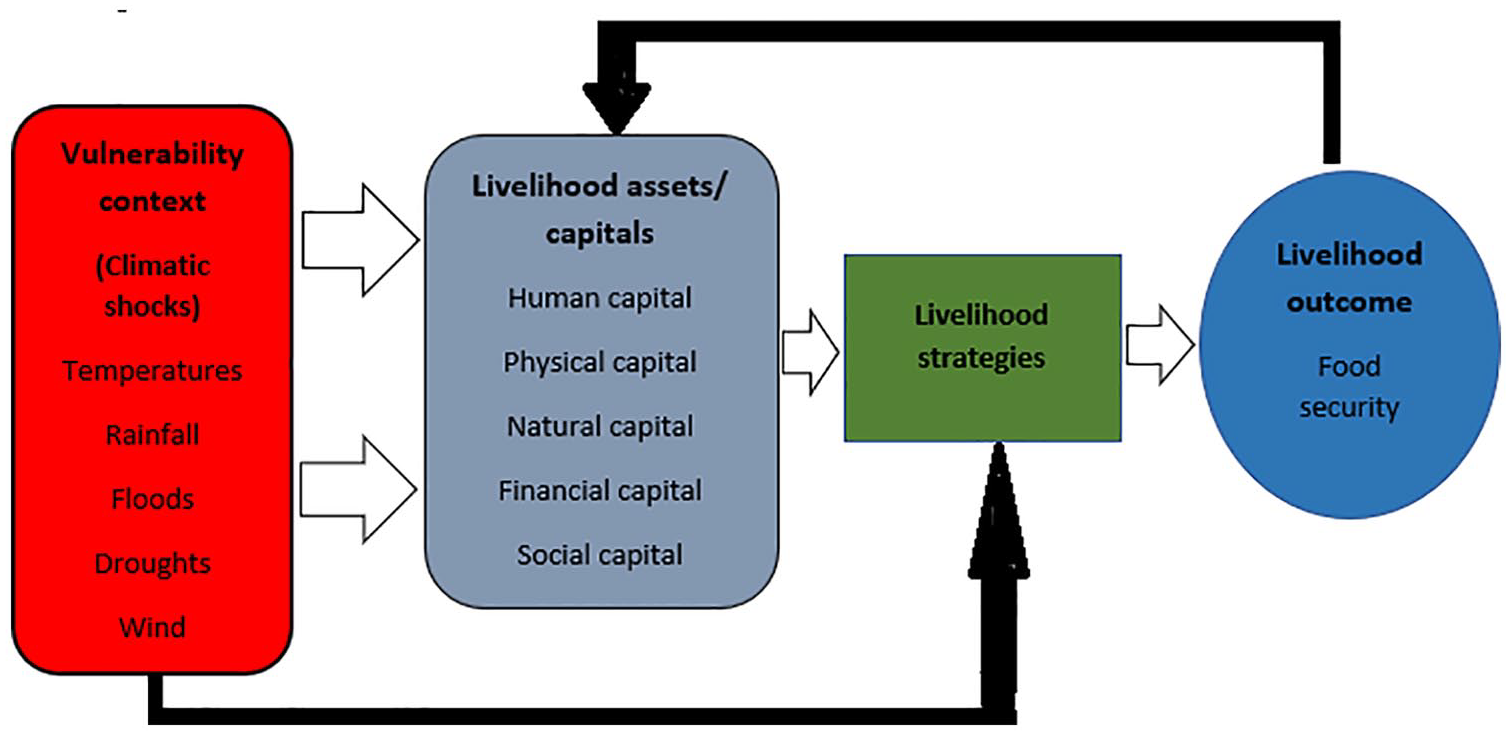
A modified conceptual framework of the study adopted from the Department for International Development (DFID, 1999).
The vulnerability context of the SLF entails the external environment in which people exist and over which they have limited or no control, including trends, seasonality and shocks (Scoones, 1998). This study focuses on the influence of climatic shocks (rainfall patterns, changes in temperature, drought, wind and floods) on livelihood assets. In this context, livelihood assets are the SSFs’ strengths that can be combined to construct a portfolio of activities to achieve livelihood goals, also known as livelihood strategies. These livelihood assets encompass human, physical, natural, social and financial assets. Livelihood strategies are the dynamic process that combines activities and choices to meet the SSFs’ various needs in a given period (Scoones, 1998). A purposive sampling technique was used to select study participants. The participants were purposively selected according to their experiences of the phenomenon under study, their availability and willingness to participate in the study. In total, 66 questionnaires were administered to the heads of fishing households in the community. The questions were streamlined to identify livelihood assets, strategies and food security. Three FGDs consisting of eight to 12 members and observations were used to validate some of the data collected from the survey questionnaire.
Data analysis
Data obtained from the survey questionnaire were coded and analysed using the Statistical Package for Social Sciences V 25.0. Descriptive statistics (frequencies, percentages and cross-tabulations) were used to analyse the data. The study results were presented in the form of tables and graphs.
Results
Household demographic profile
For this study, 66 SSFs were selected to participate. The study results (Table 1) show that 89% and 11% of the fishers were males and females, respectively. Most of the respondents were in the 26–35 years age group (41%), followed by the 36–45 group (30%). In total, seven (11%) of the fishers were below 25 years of age and the 46–55 and 56–65 years age groups each constituted 9% of the respondents. Results also show that 85% of the fishing household heads were married and 7%, 6% and 2% were divorced, single or widowed, respectively. The fishers showed high literacy levels (Table 1). Overall, 46 (70%) of the fishers had attended and completed secondary education level, 23% had completed primary school education and 6% of the fishers acquired a tertiary qualification. Only 2% of the fishers were illiterate.
Demographic information of respondents.

Small-scale fishers’ livelihood assets/capitals
Livelihood assets or capitals have been divided into five categories (human, physical, natural, social and financial).
Natural and physical assets
Table 2 shows that 74% of SSFs indicated they have access to the lake and its aquatic resources. In total, 26 (39%) have access to land for agricultural purposes, and 41% own livestock, mainly chickens. About 55% of the respondents had access to shelter in the study area. Respectively, 22 (33%), 15 (23%) and 32 (49%) of the fishers have access to fishing boats, ploughs and fishing nets respectively.
Small-scale fishermen livelihood assets/capitals.

Small-scale fishers’ sense of ownership of Lake Kariba was used to determine access or entitlements of small-scale fishers of the Lake Kariba and its aquatic resources.
Human and social assets
This study’s findings (Table 2) show that 99% of the household heads who participated in this study had access to formal education (primary to tertiary education). In total, 23 (35%) of fishers’ children have access to formal education and 35% of the fishers have access to medical facilities. About 12% of the fishers indicated they have access to skills and training institutions. Of the respondents, 45 (68%) have family members in the community and 76% have friends and colleagues within the community. About 33% of the fishers are involved with or part of social groups (fishing, credit, grocery and religious groups).
Livelihood strategies (sources of income) of the fishing community
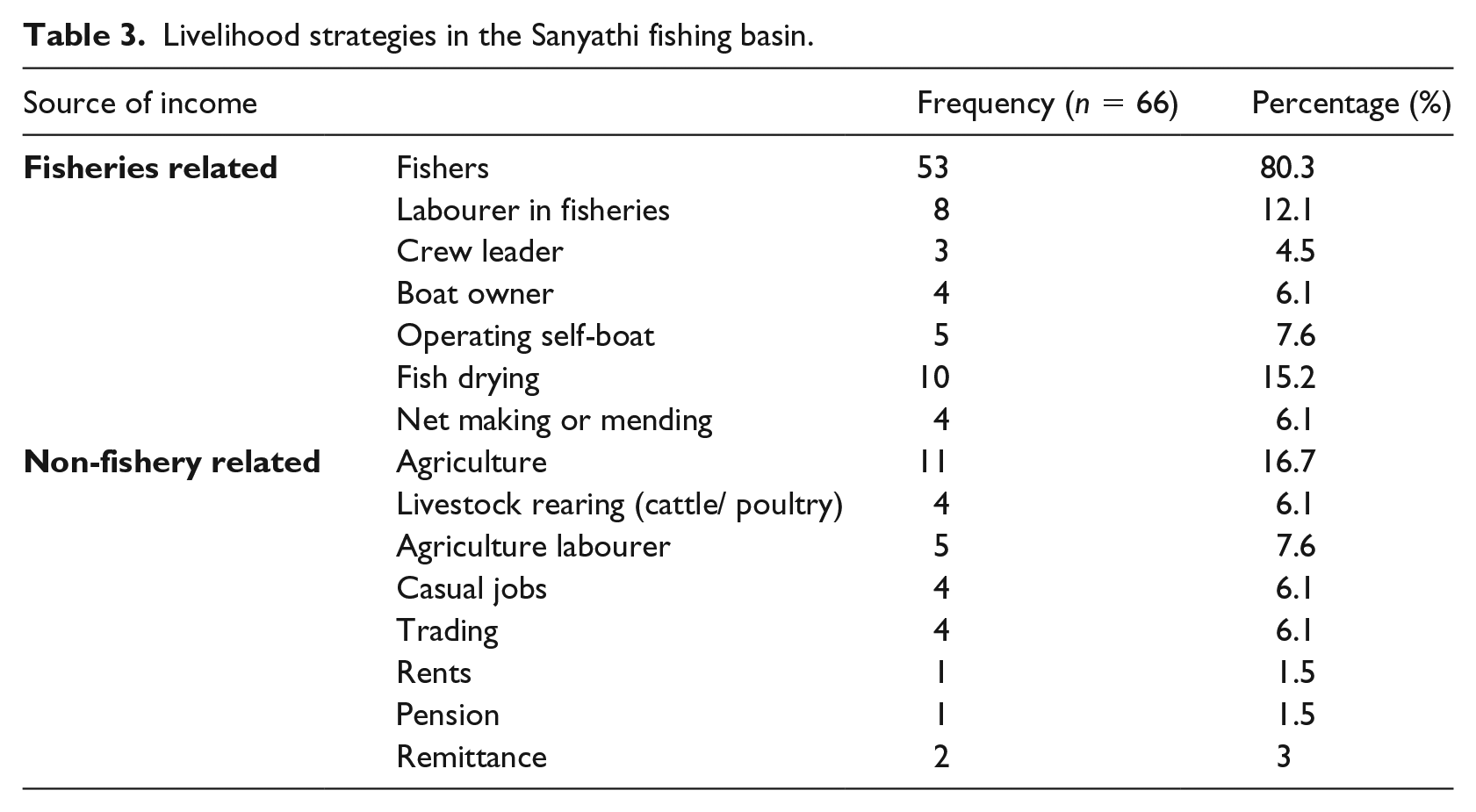
According to Table 3, the majority (80%) of the participants were SSFs. Agriculture (crop ploughing and gardening) came second to fishing, with 17% of respondents engaged in agricultural activities as a livelihood strategy. Fish drying and labouring in fisheries were also indicated as livelihood strategies for 15% and 12% of the respondents, respectively. Income from rent (1.5%), pension (1.5%) and remittances (3%) were the lowest income sources in the study area.
Livelihood strategies in the Sanyathi fishing basin.
Effects of climate change on fish catches and income
Fishers were asked about their perceptions of fish catches and the perceived role of climate change on fish catches. The responses (Table 4) indicate that 80% of the fishers stated their fish catches are decreasing and 20% indicating their fish catches are increasing. In total, 68% of respondents believe climate change is affecting fish catches. The household incomes are generated from fish sales, therefore changes in fish catches affect household incomes. Table 5 shows that more than 63% of the fishers reported that incomes from fisheries are decreasing, with 20% and 18% of the respondents stating that incomes from fisheries are increasing or not changing, respectively.
Perceived impact of climate change on small-scale fishers’ fish catches.

Trends of income from fisheries.

Livelihood outcomes (income and food security) of small-scale fishers
Fishing household income levels
The majority (43%) of small-scale fishing households earn less than US$150 per month, and approximately 5% of the participants earn more than US$550 a month (Table 6). In total, 38% of participants reported that ‘purchasing of fishing equipment’ is the most significant household expense followed by school fees, food and rentals constituting 32%, 26% and 5%, respectively. More than 59% of SSF indicated their income status is continuously deteriorating compared to 10 years ago.
Household monthly income, expenses and income status.

Fishing households’ food security
Figure 2(a) depicts that food purchasing (99%) is the primary source of food in the fishing community. Of the respondents, 39% stated that home food production is the second most important source of food, followed by hunting and gathering (11%) and food aid donations (1.5%). Figure 2(b) shows that 79% of the respondents’ households are food insecure. The perceived reasons behind household food insecurity in the study area are summarised in Table 7. A correlation was performed to determine the significance of perceived reasons underpinning food security. According to Table 7, ‘not enough money for food’ and ‘too hard to get to the store’ were indicated as the most significant (p < 0.001) reasons behind fishing households’ food insecurity. ‘Unavailability of food choices’ is also a significant factor (p < 0.05) for fishing household food insecurity. ‘Not enough time for shopping or cooking’ and ‘on a special diet’ where indicated by 6% and 2% of the fishers as reasons behind food insecurity but the chi-squared results show no statistical significance (p > 0.05).
Significance of reasons causing food insecurity of small-scale fishing households.
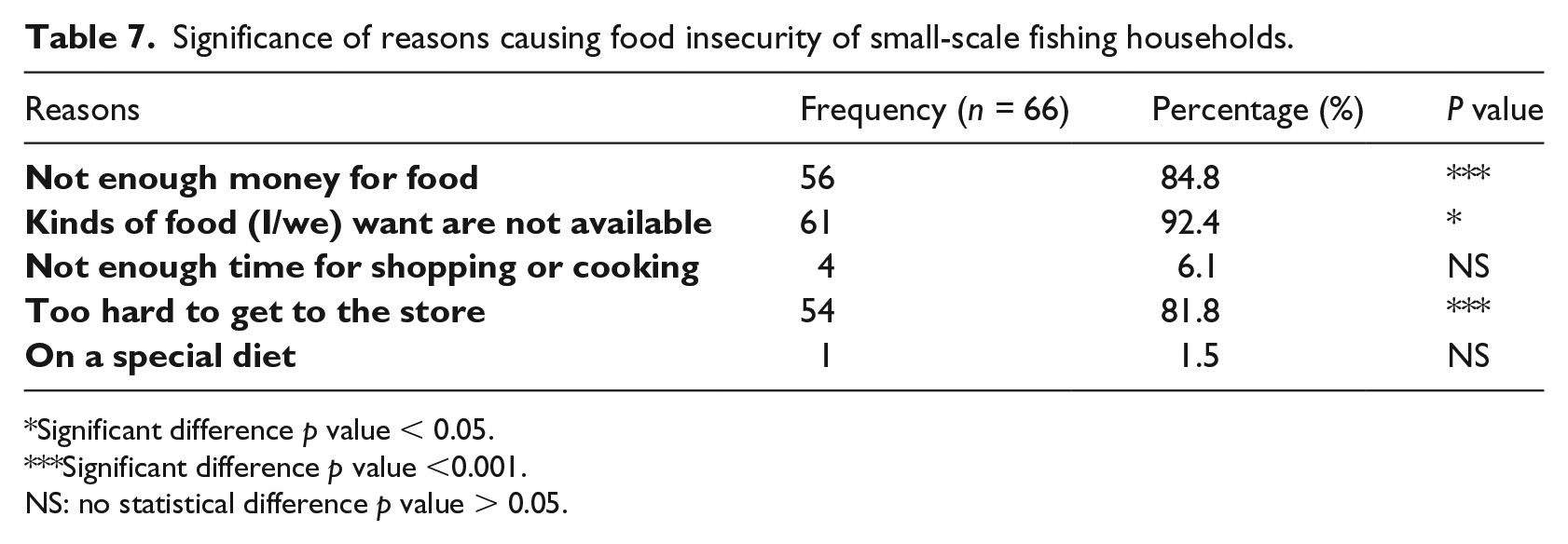
Significant difference p value < 0.05.
Significant difference p value <0.001.
NS: no statistical difference p value > 0.05.
Discussion
Small-scale fishers’ livelihood assets/capital
Household livelihood assets form the essential foundation on which households base their livelihood strategies to enhance their livelihood outcomes. Paudel Khatiwada et al. (2017) state that a livelihood encompasses a household or individual capability, assets (tangible and intangible) and activities that are combined to make ends meet. The household livelihood assets include human, physical, social, natural and financial assets (Serrat, 2017). Ownership and control of these household livelihood assets differ among fishing households in Sanyathi fishing basin. The variation in household assets indicates that households are confronted with different challenges and engage in different livelihood strategies to achieve livelihood outcomes (Aniah et al., 2016).
Morse and McNamara (2013) claim that physical capability, labour skills and good health jointly enhance household livelihoods. This study’s results (Table 2) reveal that most respondents do not have access to formal education, medical facilities and skills training institutions. Climate change is characterised by an increasing occurrence of extreme events such as cyclones, floods and drought. According to Islam (2013), climatic change exacerbates the spread of diseases such as malaria, cholera and dengue fever. Islam (2013) argue that most of the fishers in Africa live in malaria-prone areas where malaria is highly sensitive to El Nino effects. The fishers’ limited access to medical facilities might result in mortalities of SSFs or prolonged sickness that affect the SSFs’ fishing days. Lack of access to education combined with poor health can reduce the capacity of fishing households to pursue livelihood activities.
Physical assets are capital goods that can be public (roads, transport, irrigation networks, water supply and sanitation) or private (buildings, tools and machinery) and are used by households to improve their livelihoods (Kollmair and Gamper, 2002; Serrat, 2017). Shelter (houses), boats, fishing nets and ploughs were identified as vital physical assets that strengthened household livelihoods in the study area (Table 2). Extreme weather events may impact the physical assets, for instance, cyclones and floods can severely damage the infrastructure of fishing communities. For example, in 2007 and 2009, cyclones Sidr and Aila in Bangladesh damaged close to 70,000 houses in the Khulna and Shatkhira districts and destroyed 135 fishing boats (Shamsuddoha et al., 2013).
The Sanyathi fishing basin is geographically isolated from basic services such as roads and communication networks. Aniah et al. (2016) argued that in remote areas, access to communication services such as radio and television could be useful tools to access information about changing weather patterns. The vulnerability of SSFs to the effects of climate change is worsened by a lack of access to communication services. Effective communication services enhance early warning systems and encourage disaster preparedness. The study area does not have any formal roads; Zhang et al. (2007) state that the adaptive capacity of rural households can be enhanced if there is access via road networks to the market and health facilities.
Natural assets comprise of the natural flow of stocks such as land, water, forests and biodiversity etc. (Aniah et al., 2016; Scoones, 1998). From these, households can derive income-generating livelihoods, consequently enhancing household food security from natural assets. Kollmair and Gamper (2002) stated that natural assets are significant, especially for poor households that habitually derive all or part of their livelihoods from natural resource-based activities. This is the case with households within Sanyathi fishing basin that are highly dependent on natural resources for their livelihoods. Costanza et al. (2016) stated that natural ecosystems are highly sensitive to climate change and have the potential to be strongly affected by it. For instance, water resources are climate sensitive and changes in climatic variables alter marine physical and biological processes, resulting in fish habitat loss and low fish productivity (Barange and Perry, 2009).
Financial capital entails the financial resources that people use to achieve their livelihood objectives and it comprises the important availability of cash or equivalent, which enables people to adopt different livelihood strategies (Kollmair and Gamper, 2002). Hesselberg and Yaro (2006) are of the notion that financial assets include cash, savings, wages, availability of credit, pension and remittances, which play an essential role in cushioning households against climate-related livelihood insecurity. These study results show that SSFs of Sanyathi fishing basin do not have access to financial institutions, no access to credit facilities and little to no savings due to low incomes. Aniah et al. (2016) are of the view that livestock and poultry are also regarded as financial assets (liquid assets) that can be sold and offer quick cash in times of low productivity due to changes in climatic patterns. Therefore, fishers in Sanyathi fishing basin have a low adaptive capacity to cope with the impact of climate change. These findings support Ndhlovu et al.’s (2017) study, which concluded that fishers in Lake Kariba have a low adaptive capacity to climatic shocks.
Social networks entail social resources on which people draw in seeking their livelihood outcomes, such as networks and connectedness (Kollmair and Gamper, 2002). Moser (2006) defines social assets as reciprocity within communities and between households based on trust derived from social ties. Group participation, reciprocal relationships and networks and their linkages are some of the sets of social resources on which people draw their livelihood outcomes (Wang et al., 2016). Social assets are made up of both formal and informal structures such as faith-based (churches), community-based and farmer-based organisations (Aniah et al., 2016). Fishing groups, stockvels (grocery and credit groups) and religious groups were identified in the community (Table 2). The majority of the people in the Sanyathi fishing basin are members of fishing cooperatives. The fishing cooperatives identified are named after the community or village, such as Nyaodza Forthergil, Gache-gache and River-range fishing cooperatives. However, fishing cooperatives are only for monitoring compliance of the SSFs and discussing fishing methods. Fishing households cannot seek assistance from the cooperatives during times of economic crisis or adverse weather events. According to Islam (2013), increased extreme weather events may disrupt social networks by killing relatives and friends. For instance, cyclone Gorki killed 150,000 people across coastal Bangladesh in 1991, resulting in the deaths of relatives and friends of many households across the Bay. Extreme weather events such as floods, cyclones and droughts result in the displacement of SSFs, which breaks the existing social networks.
Livelihood strategies in the Sanyathi fishing basin
Livelihood strategies comprise the range and combination of activities and choices that people make or undertake to achieve their livelihood goals (Scoones, 1998). This study’s results (Table 3) show that fishing is the main livelihood activity in the study area. Limited alternative livelihood strategies characterise the fishing community because of its geographical location. The Sanyathi fishing basin is in a wildlife safari area protected under Zimbabwe Parks and Wildlife Management Authority (ZPWMA). The Zimbabwean Statutory Instrument 362 of 1990 section 97(1) of the Parks and Wildlife (General) regulations advocate that farming and livestock rearing are not permitted in the areas surrounding Lake Kariba as all camps and villages fall within the wildlife safari area and national park (Ndhlovu et al., 2017) hence, livelihood diversification of SSFs in the Sanyathi fishing basin is limited.
These study results corroborate with Ndhlovu et al.’s (2017) findings that households and individuals in Lake Kariba largely depend on fisheries as the main livelihood and source of income. This has been found to be the same with fishing communities of Singkarak Lake, West Sumatra in Indonesia, where fishing was the main livelihood for 1220 SSFs (Perret, 2010). The ability of the fishing households to diversify their livelihoods is hindered by several factors beyond the fishers’ control. Such constraints include inadequate capital assets, lack of credit facilities to provide capital to diversify livelihoods (Asiedu and Nunoo, 2013), lack of access to inputs (fishing equipment) and inadequate policies to support and enhance fishery-dependent livelihoods.
According to the information provided by the key informant (an ecologist from Lake Kariba Fisheries Research Institute), the Sanyathi fishing basin is a community made up mostly of fishers and their families, as fishing is the only viable livelihood activity in that geographical area. The law limits the ability of SSFs to diversify their livelihoods. The inability of the SSFs of Lake Kariba to diversify their livelihoods overturns Allison and Ellis’s (2001) notion that poor households in developing countries purse diversified livelihood strategies.
Therefore, the lack of alternative livelihood strategies for fishing households in the Sanyathi fishing basin makes fishing households more vulnerable to the impact of climate change and variability. According to Mustapha (2013), SSFs are tightly linked to the ecosystem processes, which are highly climate sensitive. Climate change, especially changes in temperatures and rainfall, alters fishes’ productivity processes, fish habitats, rate of growth, distribution, reproduction and fish catches (Asiedu et al., 2017; Cochrane et al., 2009; Singh et al., 2013).
SSFs perceived that their monthly fish catches are declining (Table 4) because of changes in climate and income trends (Table 5). Declining fish catches have direct negative impacts on livelihood incomes and food security of SSF households. The fishers’ perception of declining fish catches due to climate change (Table 4) concurs with Ndebele-Murisa et al.’s (2011) findings, which assert that, since the 1990s, fish catches in Lake Kariba have been declining and is possibly the result of climate change. Climate change is also believed to be responsible for declining fish catches and populations in Lake Tanganyika and Lake Malawi (Cohen et al., 2016; Weyl et al., 2010). However, climate change is not solely responsible for declining fish catches in freshwater systems. Declining fish resources could be consequences of overfishing (Blythe et al., 2014) and poor fisheries management (Asiedu and Nunoo, 2013).
Livelihood outcomes (income and food security) of small-scale fishers
Livelihood outcomes are the gains from livelihood strategies such as income, environmental sustainability and food security (Paudel Khatiwada et al., 2017). The majority (42%) of the fishing households earn less than $5 a day (Table 6) and most of the income is spent on purchasing fishing equipment. According to Table 6, the majority of the SSFs perceive their income situation to be worse than 10 years ago due to declining incomes. Declining household incomes can be attributed to the impact of climate change on fisheries. Changing environmental factors, rainfall, temperature and wind affect fish productivity (Cochrane et al., 2009; Singh et al., 2013) and consequently, fish catches. The incomes of SSFs households in the Sanyathi fishing basin are highly vulnerable to the impact of climate change because of their high dependence on fish for income and diet. Ndhlovu et al. (2017) postulated that lower incomes are attributed to low fish catches because of climate change, which affects fish productivity.
In this community, fish produce is either sold for income or household consumption. Household income is a major determinant of household food security for fishing households. Therefore, declining incomes because of low fish catches caused by climate change negatively affects the household incomes, which determine households’ food access. Purchasing food is the primary source of food for fishing households (Figure 3(a)). Therefore, households’ food security is jeopardised due to inadequate income to enable them to purchase enough nutritious food to diversify their diet. Some fishers also practice gardening to supplement household dietary diversity. However, food production systems are climate sensitive and changes in rainfall and temperature patterns will affect food production systems and food availability. Asiedu et al. (2017) stated that agriculture production systems, including fisheries and aquaculture, are prone to the impact of climate change.
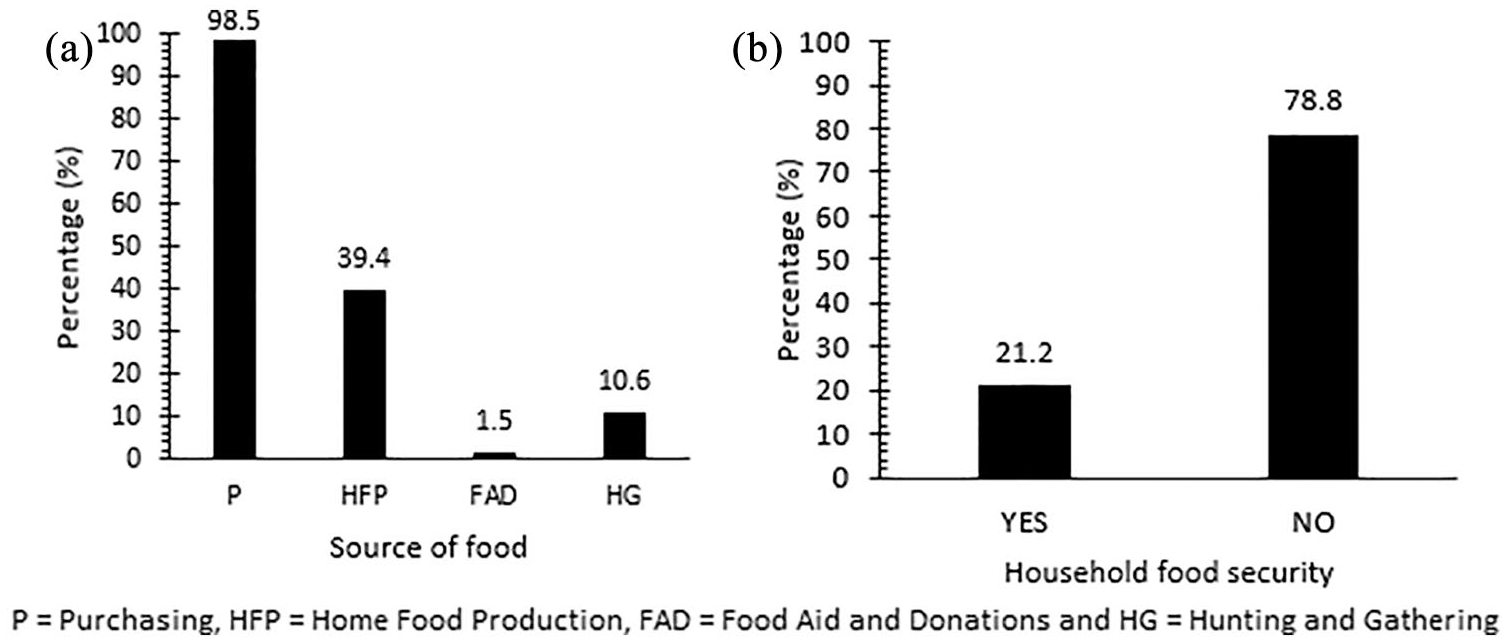
(a) The primary sources of food in the community; and (b) respondents’ perceptions of household food security.
Declining fish catches, low incomes and lack of access of various food commodities undermine (FAO, 2003) the definition of food security, which is argued to exist when all people at all times have physical or economic access to sufficient, safe and nutritious food to meet their dietary needs and food preferences for an active and healthy life. Figure 3(b) shows that fishing households in the Sanyathi fishing basin are food insecure. According to Table 7, a lack of money to buy food, limited access to grocery stores and unavailability of various foods are the statistically significant causes of household food insecurity at p < 0.001, p < 0.001 and p < 0.05 levels respectively. Purchasing is the primary source of food in the study area. Hence, a lack of money to buy food hinders the ability of the SSFs to purchase food of their choice. The study area is isolated and marginalised from basic services including grocery stores, therefore, limited access to grocery stores results in unavailability of various foods to enhance household diet diversity, which leads to food insecurity and malnutrition.
Conclusion
This study sought to identify the livelihood assets and strategies of the SSFs and assess the effects of climate change and variability on the livelihoods and food security of small-scale fishing households in the Sanyathi fishing basin of Lake Kariba in Zimbabwe. This study’s findings show that fisheries play a significant role in supporting livelihoods and food security through contributions to SSFs’ diets and income. However, the study findings reveal that the effects of climate variability and change continue to threaten the livelihoods and food security of SSFs in the Sanyathi fishing basin. Purchasing, which is the primary source of food for fishing households, is determined by income. Therefore, declining fish catches owing to climate change negatively affects the income of fishing households. Lack of disposable income compromises the ability of fishing households in the Sanyathi fishing basin to access a variety of nutritious foods of their choice. Based on the results of the study, it can be concluded that fishing is the primary livelihood in the Sanyathi fishing basin and research indicates that fisheries are highly susceptible to the effects of climate change. In addition, SSFs perceive their households to be food insecure due to declining incomes and limited access to a variety of foods to diversify their diets. Therefore, this study’s results suggest that policymakers should concentrate on enhancing alternative livelihood strategies for the fishing communities to spread the uncertainties of the risk and counter the uncertainty of income from fishing and unpredictable fluctuation of fish stocks, in addition to developing interventions that will have a minimal impact on the fishing industry. Despite new efforts to address the effects of climate change on agriculture (crops, livestock and forestry), more research effort is needed to identify potential mitigation and adaptation measures of SSFs in the study area. This study also recommends future additional research on the food security status of small-scale fishing households at a national level.
Footnotes
Author’s note
Paramu Mafongoya is now affiliated with the School of Agricultural, Earth and Environmental Sciences, University of KwaZulu-Natal, South Africa.
Funding
The authors received no financial support for the research, authorship, and/or publication of this article.
