



Abstract
Factors affecting households’ choices to participate in markets are often not disaggregated by gender, leading to policies that are insensitive to women’s needs. Using qualitative and quantitative methods, the study analysed challenges faced by male and female-headed households in goat commercialisation in the semi-arid Msinga area of South Africa. The main constraints were poor condition of goats and mortality, high illiteracy rates of women, shortage of transport to take goats to the market and limited access to information. The study recommends that women be provided with greater market access and information and for the government to avail more attractive investment opportunities to reduce the use of goats as a store of wealth.
Introduction
In most African countries, small-scale goat farming is a major source of livelihoods and has potential to contribute to household food security, yet little effort has been made to explore its full potential through commercialisation (Yesufu et al., 2017). Despite the benefits of goat keeping (Koluman and Silanikove, 2018), their productivity and offtake remain low (van Rooyen and Moyo, 2007) and hinder attempts of commercialisation. Several studies have focused on the technical and biological efficiency, and adaptability to harsh conditions (Endeshaw, 2007). Nonetheless, improved production is best sustained by an efficient marketing structure which helps to eradicate poverty and build a sustainable food security option for communities (Dube, 2015). Benefits from goat production can be improved if opportunities and challenges that farmers face in the commercialisation of goats are understood. Martey et al. (2013) pointed out that under risky conditions such as an imperfect market, a farmer’s decision to participate in the output market is utility maximisation rather than profit maximisation. Therefore, in making the decision to market or not to, households compare the utility derived from each of the decisions. Commercialisation is therefore a function of market transaction costs as explained by a set of variables which are the determinants of commercialisation.
For commercial farmers in South Africa, marketing of chevon and mohair is well organised with capital resources, infrastructure, institutions, and markets. However, for non-commercialised goat farmers, historical, institutional, market, information and research factors have been major constraints in their transformation into a formal mainstream industry (Roets and Kirsten, 2005). Goats have a potential for commercialisation as their prices on a per unit body weight basis are higher than for other ruminants (Glimp, 1995). Goat projects in some parts of the country, such as Umzimvubu, Laphum’ilanga and Kalahari Kid, have been developed with the aim of commercialising the goat sector from rural farmers (DAFF, 2012); but such projects need to be widespread. One aspect that limits the commercialisation of goats in rural areas is that they are mainly kept as financial security (NAMC, 2005) and not as a commercial commodity (DAFF, 2012). Promoting the financial value of goats will assist in changing perceptions. The main objective of the study was to determine the effect of gender on commercialisation of goat farming enterprises in the semi-arid area of Msinga, South Africa.
Conceptual framework
According to Oakley (1972), gender is a notion that humans create socially, although it relies upon biological differences between males and females. The social construction of gender is demonstrated by the fact that individuals and societies across cultures attribute certain traits, statuses, or values to individuals purely because of their sex. This creates gender roles which are often based on stereotypes which include flawed or embellished assertions about the nature of males and females. Gender is created and maintained in practice or as roles; by doing tasks associated with a specific gender perpetuates meanings that define what it means to be a man or woman (Carter, 2014).
It is important to consider gender in the marketing of goats because there are constraints that are disaggregated by gender which influence the decision-making process in goat commercialisation. Women and children are often responsible for many goat-related activities, but they own fewer goats than men and are less involved in decision-making (Webb and Mamabolo, 2004). This is a result of the cultural settings biased against women (Chukwuka et al., 2010). Women tend to lose control to men when marketing and income from livestock is high (Bravo-Baumann, 2000). The men may use the income as they wish, and in some cases not to the benefit of the household per se. A few studies on goat marketing have focused on the limits to its commercialisation and the challenges resulting from unorganised marketing of goats (Miller and Lu, 2019; Togarepi et al., 2018). However, little is known about the effect of gender on commercialisation of goat farming enterprises. Addressing this issue could play a paramount role in reducing food insecurity (Homann et al., 2007; Ngambi et al., 2013), especially in semi-arid areas where rainfall is erratic and crop farming is too risky. Gender-specific market possibilities and control of the income need to be considered.
Male-headed and literate households often own and sell more goats compared with female-headed and illiterate households (Byaruhanga et al., 2014). This implies that male literate households are in a better position to commercialise the goat enterprise. Byaruhanga et al. (2014) also showed that households with large flocks sold more goats than those with smaller flocks. Households, therefore, limit sales to maintain the potential to increase their flock size. Interventions aimed at improving the commercialisation of goats should pay attention to enhancing and having a good understanding of the characteristics of goat production as this increases the supply of goats to the market (Kosgey et al., 2008).
Reasons for rearing goats should be understood to enhance the success of commercialising goats. They have an impact on whether farmers see the need to sell goats. Hassen and Tesfaye (2014) reported cash income as the most important in goat farming followed by other tangible and intangible benefits. Income from goats can thus be used to sustain human nutrition for the farmers. On the other hand, where goats are being kept mainly for cultural ceremonies and not primarily as an economic activity, only in times of dire economic pressures do households resort to the selling of goats (DAFF, 2012). The goats may be kept for multiple functions and sales may be sporadic based on immediate cash needs.
Efforts directed at improving marketing opportunities and strengthening of goat marketing systems such as information and infrastructure contribute towards sustainable food security (Olowu, 2013). In South Africa, there are low off-take rates of goats but with a higher demand for purchases. As a result, goats are imported from Namibia to meet market demands (Togarepi et al., 2018). There is a potential to increase local production because the market already exists. However, small-scale farmers do not provide regular and adequate market supply of quality live animals, at competitive prices (Negassa and Jabbar, 2014). Reasons include low goat fertility, high mortality rates, poorly conditioned marketed goats and ownership patterns that discourage goat sales. For commercialisation of goats to be more effective, farmers need to be encouraged to farm with goats rather than just to keep them (Ramsay and Donkin, 2000). It is important to determine factors that affect a household’s choice to participate in the market. More importantly, the factors should be disaggregated by gender by taking into consideration the various constraints which may influence their decision-making process in goat commercialisation.
Research methods
Study site
The study site was Msinga Municipality (28o10’S 30o15’E) and was chosen because it produces indigenous goats. Msinga Local Municipality is one of four municipalities within the uMzinyathi District Municipality in the province of KwaZulu-Natal, on the south eastern part of South Africa (Tapela, 2011). Msinga is composed of six traditional authority areas (Dearlove, 2007).
The population of Msinga was 190,000, with two out of five of the population being under the age of 15 years (Statistics South Africa, 2016). Females make up 57 % of the population. It is one of the poorest and most underdeveloped municipalities in uMzinyathi with few economic resources and activities. Nearly 90% of the population depends on government social grants. Most of the male household members leave the municipality in search of employment in cities (Msinga Municipality IDP, 2014).
Msinga is in a semi-arid zone with erratic rainfall patterns averaging 600 mm annually, ranging between 350 and 900 mm. The area experiences warm summer temperatures that reach up to 44°C. The erratic nature of rainfall and its rocky landscape makes it risky to invest in crop production (Cousins, 2012). Goats thrive well in this environment.
Sampling and selection of households
Sample selection was done in four stages. The first stage of sampling was purposive. Mthembu and Mchunu traditional authority areas were purposively chosen because of differences in socio-economic opportunities available to them. In contrast to Mchunu traditional authority, many households in Mthembu have a source of income from the Tugela Ferry Irrigation Scheme plots. They have access to or work in irrigation scheme plots. Women are mostly involved in the garden projects. Besides government grants, the income of Mthembu households is obtained from sale of garden produce. The existence of this source of income for the Mthembu households influences their perception on the importance of goats and therefore goat sales are lower than those from Mchunu traditional area. Of the six traditional areas in Msinga, Mthembu is the only traditional area which has access to the Tugela River and therefore makes use of the irrigation scheme plots.
Only households that owned goats were targeted in the survey. A list of households who owned goats in these two tribal authorities was obtained and was found to be 2148 (GAP Umzinyathi District Census, 2017). Using Raosoft’s sample size calculator (2004) to calculate sample size (with a 90% confidence level), the sample size used in the study was 241 households. The next stage of sampling was the stratified sampling, which divided the population into two strata (each stratum representing a traditional area). Stratified sampling used a sampling fraction in each traditional area that is proportionate to the total number of households that own goats. Samples for each traditional area was therefore calculated relative to its proportion of the full sample size of 241. Sample sizes for Mthembu was calculated to be 128 and for Mchunu was 113 households. The final stage of sampling was random. There was random sampling of dip tanks in each tribal area. Each traditional authority area is divided into dip tanks based on livestock ownership. Dip tanks are institutions that keep goat statistics aimed at giving farmers permits which enable them to sell goats or cattle when the need arises. They also provide a dipping service for cattle. Households are expected to pay annual contributions to dip tank managers to maintain their membership and access to services. Three dip tanks were randomly selected in each traditional authority area. Lastly, random selection of households in each of the selected dip tanks was conducted on the ground.
Data collection
Data were collected between May and June 2019, using a structured household questionnaire, focus group discussions (FGDs) and key informant interviews. The FGDs and open-ended key informant interviews were used to generate data that complemented the structured questionnaire by providing the explanations and issues behind quantitative data. Key informants were composed of an equal number of males and females: a male and female Community Animal Health Worker (CAHW), a male extension officer, a female NGO representative, a female social worker and a male dip tank manager. Four FGDs were conducted, one with men only and the other with women only, each selected from the two traditional authority areas. Each group had 12 participants, two representing a selected dip tank area. Female participants included married, single and the widowed. Men were also categorised into married, single and the widowed. The aim of the FGDs was to better understand factors affecting sale of goats, type of goats sold and goat marketing options in the area.
During the questionnaire survey, one person was interviewed from each household. Gender of the household head was recorded, which enabled the following gender categorisation: male-headed households (MHHs) and female-headed households (FHHs). Although women come in different categories – such as married women in male-headed households, single unmarried women in female-headed households, and widowed women in female-headed households – during questionnaire surveys, the women were assumed to fall in one category of female-headed. This was due to low sample sizes. Six isiZulu-speaking enumerators administered the questionnaire, which was pre-tested. Key informant interviews were conducted to get an understanding of factors affecting sale of goats, type of goats sold and goat marketing options in the area.
Data were collected on household socio-economic characteristics, reasons for rearing goats, number of goats kept, goat marketing and challenges faced in goat production. The study illustrates the differences between male- and female-headed households, levels of education, flock sizes and proximity to markets. All ethical considerations were observed during and after the data collection period. Ethical clearance was obtained from the university.
Statistical analyses
Qualitative data from the focus group discussions and key informant was analysed by explaining the content and concepts acquired from the questions discussed from the questionnaire survey. Emphasis was given to the meanings, experiences and views of the participants. Coding was done and themes were created by identifying keywords and these were used to present explanations and interpretations. For quantitative data, t-test of SPSS (2017) was used to compare means of goat sales between gender and between traditional authority areas. The gender effect was tested by comparisons of differences between pairs of gender categories (male-headed households and female-headed households) in the marketing of goats and other socio-economic factors and these were compared to assess statistical significance using Chi-square test of SPSS (2017). Comparisons of means for reasons of rearing goats between male- and female-headed households was done by t-test. The determinants of goat commercialisation were analysed using the Tobit regression model.
The Tobit regression model was used to estimate the influence of livelihood factors on goat farmers’ market participation. The Tobit model is appropriate for analysing where independent variables are censored (McDonald and Moffitt, 1980). In this study, the dependent variable, number of goats sold, was lower censored at zero. Households considered to be more involved in commercialisation had a higher number of goat sales and those less involved in commercialisation had a lower number of goat sales. The model was analysed in STATA Version 15 software.
The empirical model for quantifying the determinants of market participation was given as:
Where
Xi = set of explanatory variables (Table 1)
ei = the disturbance term
Description of independent variables used in the Tobit model.

The model errors ei are assumed to be independent, N (0, σ2) distributed, conditional on the Xi. The observed
Independent variables used in the Tobit model:
The independent variables were the household characteristics and resources. Table 1 gives the independent variables used in the Tobit model which were hypothesised to affect number of goats sold.
The logic behind the gender variable having a negative sign is that male-headed households are expected to be more involved in goat marketing than the female-headed households. This is because of cultural settings biased against women and ownership patterns of assets that discourage women from decision-making and from owning major assets in households (Webb and Mamabolo, 2004; Chukwuka et al., 2010).
Byaruhanga et al. (2014) stated that the more literate households are, the more goats they sell. This is because more educated heads of households can understand the market structure better. Therefore, such households are expected to be more involved in goat marketing as represented by a positive sign. Households whose heads are unemployed and those that receive less income are likely to more involved in goat marketing to obtain income to buy food (Hassen and Tesfaye, 2014).
The expectation was that household size would influence the chances of a household’s involvement in commercialisation positively due to increased labour supply needed for goat production and marketing (Dube and Guveya 2016). The age of household head was expected to have either a positive or negative effect. Age of farmer may be associated with more farming experience. As farmers become more experienced, they may have more access to marketing information thus age can be positively related to commercialisation decisions (Kabiti et al. 2016). On the other hand, the elderly may be more risk averse and may not be willing to venture into goat marketing resulting in a negative relationship between commercialisation and age (Kamoyo et al. 2015). Accessibility of markets is expected to positively influence commercialisation (Goshu et al. 2012). As such, Mthembu traditional area which is closer to the market and auction facilities is expected to have a positive relationship with marketing.
Byaruhanga et al. (2014) also showed that households with large flocks sold more goats than those with smaller flocks. Therefore, households with more goat numbers are expected to be more involved in marketing and therefore are represented by a positive sign. Conversely, households which lose more goats through deaths as a result of poor nutrition, diseases, predation, and theft will limit sales to maintain the potential to increase their flock size. Therefore, such households are expected to be less involved in goat marketing and are represented by a negative sign. Households which provide goat supplementation tend to be more involved in goat marketing in anticipation of higher sale prices due to increased market weight (Megersa et al., 2013; Terefe et al., 2013). Thus, goat supplementation can be positively related to commercialisation decisions. When goat prices are high, households tend to be more involved in goat marketing because farmers will experience an increase in income (Huka et al., 2014). Therefore, such households are expected to be more involved in goat marketing, as represented by a positive sign.
Results
Socio-economic factors affecting sale of goats
Goat sales were generally low, although male-headed households sold more goats (mean of 2.1) than female-headed households (mean of 1.0) in 12 months (p<0.05). Men were categorised into married, single, widowed, but results analysis did not show differences in terms of goat ownership or sales since they were all heads of households and therefore were responsible for decision-making on goat-related activities. More households in Mthembu traditional authority area sold goats than in Mchunu traditional authority area, with mean sales of 2.1 and 1.4 respectively in 12 months (p<0.05) (Table 2).
Table showing mean goat sales.
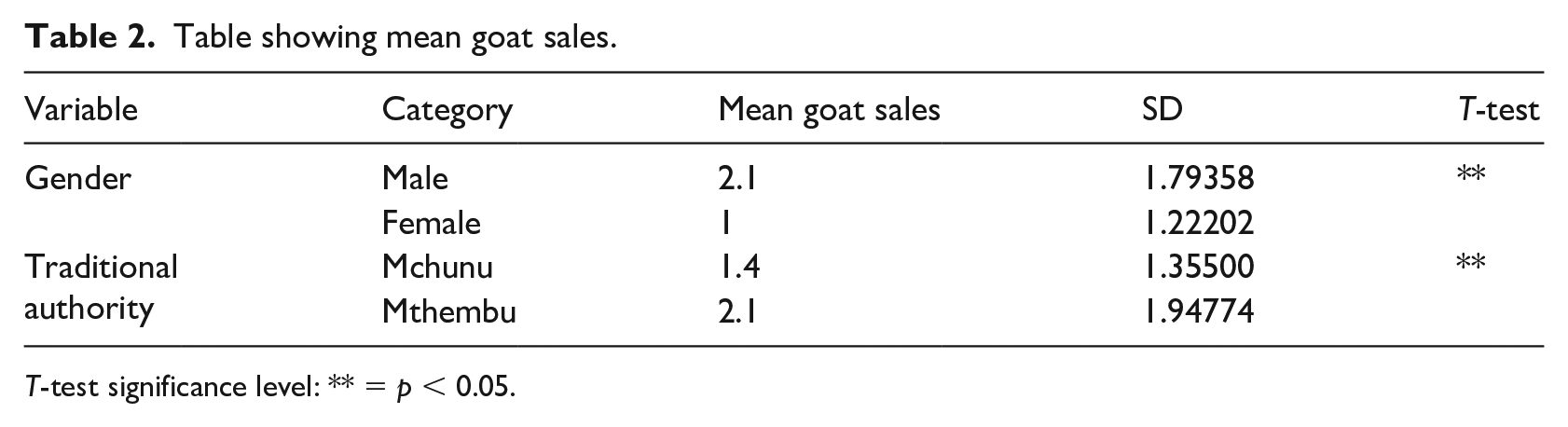
T-test significance level: ** = p < 0.05.
Education levels and marital status of the head of household affected the sale of goats. Thirty-two per cent of male-headed households had secondary schooling as compared with only 15% of female-headed households (p < 0.01). Sixteen per cent of male-headed households had no formal schooling at all as compared with 49% of female-headed households (p < 0.01) (Table 3).
Education levels of household heads as a percentage.
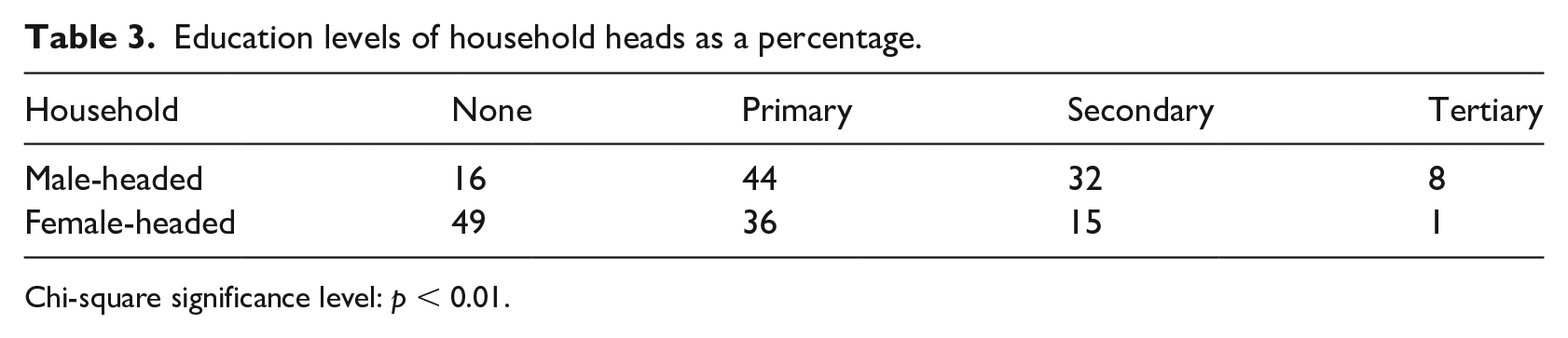
Chi-square significance level: p < 0.01.
When comparing traditional authority areas, 24% of Mchunu households had secondary schooling as compared with only 31% of Mthembu households (p < 0.05). Thirty-four per cent of Mchunu households had no formal schooling at all as compared with 19% of Mthembu households (p < 0.01). This shows that female-headed households had lower education levels when compared with male-headed households, and Mchunu residents had lower education levels when compared with Mthembu residents.
There was a relationship between goat sales and the education level of the household head. More male-headed households with higher education levels sold goats when compared with female-headed households with lower education levels (Table 4). This is because the more years spent in school increased the chances of understanding market requirements and making informed decisions. According to Adesina (2016), formal education increases chances of participating in modern agricultural technologies and innovations aimed at improving productivity.
Education levels of household heads and goats sold as a percentage.

Chi-square significance level: p < 0.01.
There was also a relationship between goat sales and marital status (Table 5). A higher percentage of married farmers sold goats when compared with single, widowed and cohabiting farmers. These results are in line with the studies by Togarepi et al. (2018), who found that goat sales are more inclined to take place in married farmers than in single and in widowed farmers as this is attributed to collective decision-making and increased household needs for income by married farmers.
Marital status and goats sold as a percentage.

Chi-square significance level: p < 0.05.
Goat ownership was higher (mean 26.7 goats per household) for male-headed households than for female-headed households (mean 16.5 goats per household) (p < 0.01). The low goat flock sizes that female-headed households have may have translated to them selling less than the male-headed households who owned more goats. This is in line with a study by Byaruhanga et al. (2014), who showed that households with large herds sold significantly more goats than those with smaller herds.
Goat mortality was one of the constraints affecting sale of goats. Both male and female farmers claimed that their goat flock numbers did not grow sufficiently due to mortality caused by poor nutrition in the dry seasons, diseases (such as heartwater and coccidiosis), inadequate housing and predation caused mainly by dogs which attacked vulnerable kids. Feed shortages caused low carcass weight, which reduced the selling price of goats as reported by Musara et al. (2013). Goat numbers were also affected by theft of goats. With flock size being positively associated with household’s choice of participation in goat sales, goat sales were limited where flock size was low (Negassa and Jabbar, 2014), as was the case with female-headed households.
Goat selling options available
FGDs revealed that although a non-governmental organisation called Mdukatshani has been encouraging farmers to sell goats at auctions, most farmers did not use this system because they did not ‘trust’ it. Community members preferred to buy or sell to people from the same area who they were most likely familiar with rather than to traders who acted as middlemen at auctions. Trusted neighbours could even pay in interest-free instalments. Most goat sales (67% and 43% respectively) were conducted privately within the communities and they considered the auction systems as immaterial to the traditional marketing systems they are used to.
Results from both FGDs and questionnaire survey revealed that a considerable number (50%) of female-headed households did not sell their goats in the past 12 months when compared with male-headed households (25%) (p < 0.05) (Table 6). The reason for this is that traditionally, married and widowed women were not allowed to sell goats in the community as it was the role of men to announce the sale of goats, which they usually did at social events. Laws that govern marriage and inheritance disallow women from owning assets (Olowu, 2013) such as goats. FGDs revealed that women in male-headed households may not own goats if the husband is still alive. In female-headed households, a widowed woman may only inherit goats if she does not have elder sons and only if the family of her deceased husband allows her to (in some instances the siblings of the deceased take ownership of the assets). However, single women (who never married) in female-headed households may have ownership of goats and may ask assistance from neighbours or male siblings when selling goats.
Sale of goats in the past 12 months as a percentage.
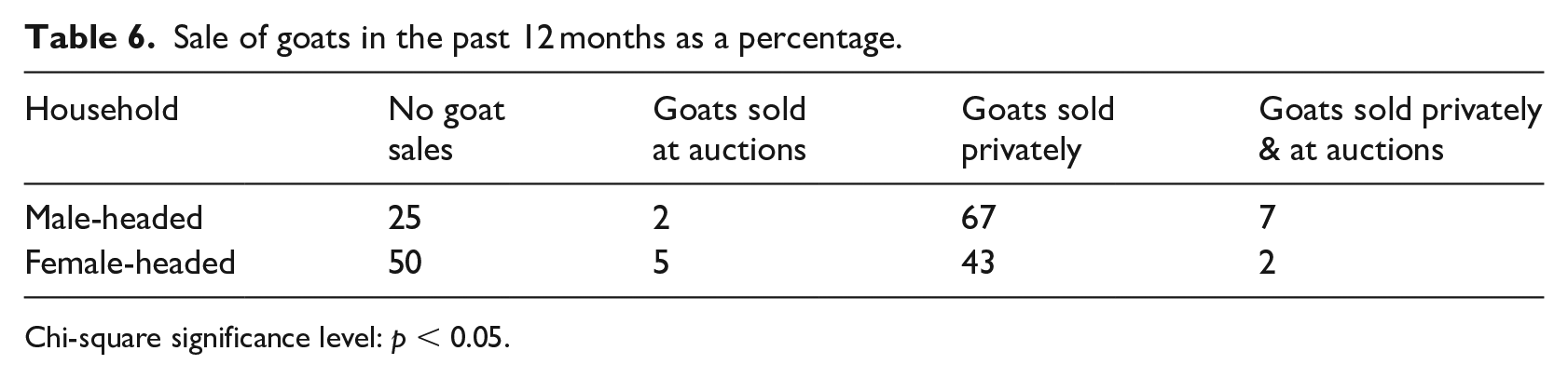
Chi-square significance level: p < 0.05.
Ownership patterns affected sale of goats because it was the role of the owner to make decisions about the sale of goats when the need arises. Elder sons in female-headed households may be the rightful owners of goats but may not have the enthusiasm of goat farming or see the need for selling. However, these results do not concur with the findings by Togarepi et al. (2018) and Musemwa et al. (2010), who found that the sale of cattle and goats was predominantly by pensioners and females who sold livestock to complement their income from remittances and government grants. This, however, corresponds with findings by Homann et al. (2007) and Tchale (2009) that heads of households in the productive age group (considered adults) and literate households tended to sell more goats than older and illiterate households.
The understanding of some households’ rearing of goats did not go beyond the social attachments associated with their rural goats. The main reason for female-headed households for the rearing of goats was for cultural ceremonies (which was an important aspect of their livelihoods) and not primarily as an economic activity (p < 0.01) (Table 7).
Reasons for goat rearing in ranks of importance.

T-test significance level: *** = p < 0.01.
ns= not significant.
Lower rank is most important reason and higher rank is least important reason.
The fact that farmers sold goats in the villages or occasionally at the auction did not turn their goat farming into a commercialised production enterprise as they sold only when there was a real need. Goat selling was usually done in cases of family emergency such as illnesses or funerals. Farmers mentioned that their flock sizes did not increase adequately due to diseases, starvation and predation; and so, they did not sell frequently or else they would be ‘left with none’. Farmers were reluctant to sell their goats for cash and then not have enough goats for their ritual ceremonies. Others even preferred to ‘keep’ goats as a sign of wealth as selling was looked down upon by others as it showed a sign of poverty and desperation.
FGDs and questionnaire survey results revealed that female-headed households found it challenging to sell their goats (p < 0.01) (Table 8). The reasons provided were that traditionally it was unacceptable for women to sell goats and so potential buyers would shy away from buying from women sellers. Women in female-headed households would not be the rightful owners of the goats and would need permission from the owner (who may be elder sons or the deceased husband’s male siblings) to sell when the need arises. More residents of Mchunu traditional authority area revealed that they faced challenges when selling their goats in comparison with residents of Mthembu traditional authority area (p < 0.05). FGDs explained that there were more households in Mchunu traditional authority area which owned goats and so the market was occasionally inundated with more sellers than buyers. In contrast to Mchunu traditional authority area, Mthembu is closer to Tugela River and has most households working in garden plots and the irrigation scheme; with Mchunu being semi-arid, the only farming activity residents resorted to was goat farming.
Easiness to sell goats.
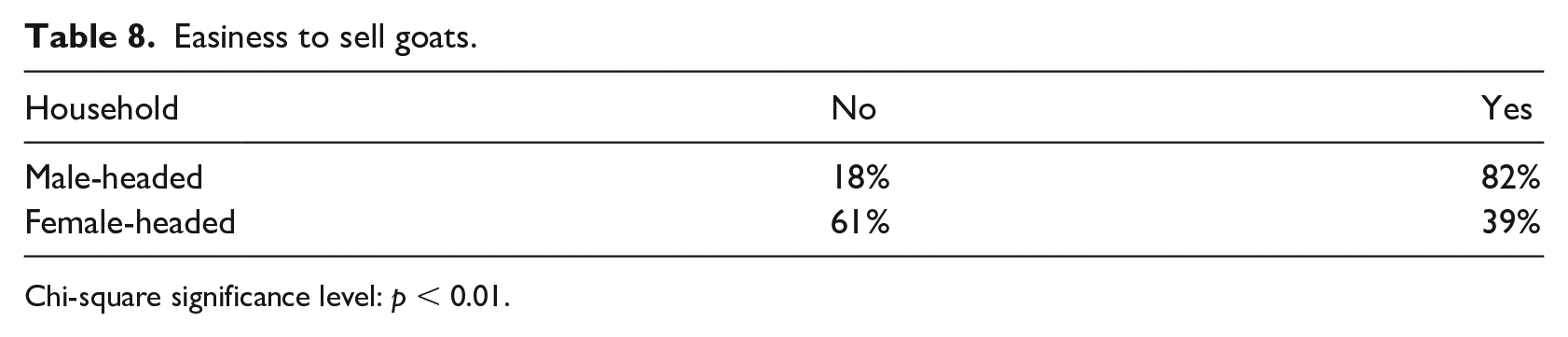
Chi-square significance level: p < 0.01.
Apart from high illiteracy rates of women, poor mobility also strongly impacted marketing possibilities, leaving men to take part in marketing (de Cardona et al., 2017). The NGO organised mini goat auctions once monthly and big auctions twice a year in order to assist farmers to sell their goats. Farmers, however, mentioned that often they were forced to sell in between auction dates for urgent money requirements and were therefore forced to sell privately. The NGO mentioned that it assisted farmers with free transport for goats to the auction, but some farmers claimed that this was not reliable because occasionally the transport was unavailable, and it would be uneconomic for them to take a small number of goats to the market. As a result, farmers would be forced to sell privately.
Most farmers mentioned that the amount of money they obtained from goat sales was adequate for them (p < 0.05), with 92% of male and 82% of female-headed households sharing the same views. NAMC (2005) also stated that farmers generally realise good prices through out-of-hand sales of goats. The few who expressed unhappiness about the goat sale price explained that goats were difficult to look after when compared with other livestock and so they preferred that they were pegged at higher prices. Goat selling prices ranged from ZAR800 (US$53) to ZAR1500 (US$100) per goat, with the average price being ZAR1000 (US$67). There were no significant differences of goat prices obtained between male- and female-headed households. The differences in price ranges were due to the size and sex of the goat. Goats with larger body frames and castrated male goats fetched higher prices. Animal attributes such as sex, live weight and body condition are known to determine goat prices (Yitayew et al., 2019). Goat prices for Mchunu traditional authority area were lower than for Mthembu traditional authority area. The reason is because there would usually be more goat sellers than buyers in Mchunu and so sellers were forced to drop prices to get quicker sales.
Type of goats sold
FGD results showed that castrated goats were generally sold for cultural ceremony purposes and often fetched higher prices. These were mostly sold privately in the communities. The middlemen at auctions preferred younger female goats and uncastrated males which could be used for breeding purposes. However, the NGO revealed that some farmers brought in poorly conditioned and much older goats than required at auctions and these were therefore downgraded and fetched lower prices. Lack of understanding of the auction marketing system made farmers market surplus animals such as those culled due to old age, unproductive or diseased, and those not well prepared as per requirements of the market.
Determinants of goat commercialisation
Table 9 provides the results obtained from the Tobit model on the variables which affected goat commercialisation levels. In the Tobit model, the reciprocal of the tolerance value which measures the impact of collinearity among variables (VIF) was below the cutoff for tolerance value of 10 (Hair et al., 2014). This means that there was low correlation among variables as the VIFs were in acceptable ranges.
Tobit estimates on influence of livelihood factors affecting number of goats sold.

Significant at * = 10%, ** = 5% and *** = 1%.
The results indicate that nine estimated coefficients were statistically significant. Results showed that location, gender, and goat losses were significantly associated with goat commercialisation at 1% significant level. Education level, household head occupation, receiving remittances, number of goats per household, goat price and total household income were significantly associated with goat commercialisation at 10% significant level. The negative coefficients point to the fact that female-headed households tend to commercialise less than males, whilst households which receive more income tend to commercialise less than those who receive less.
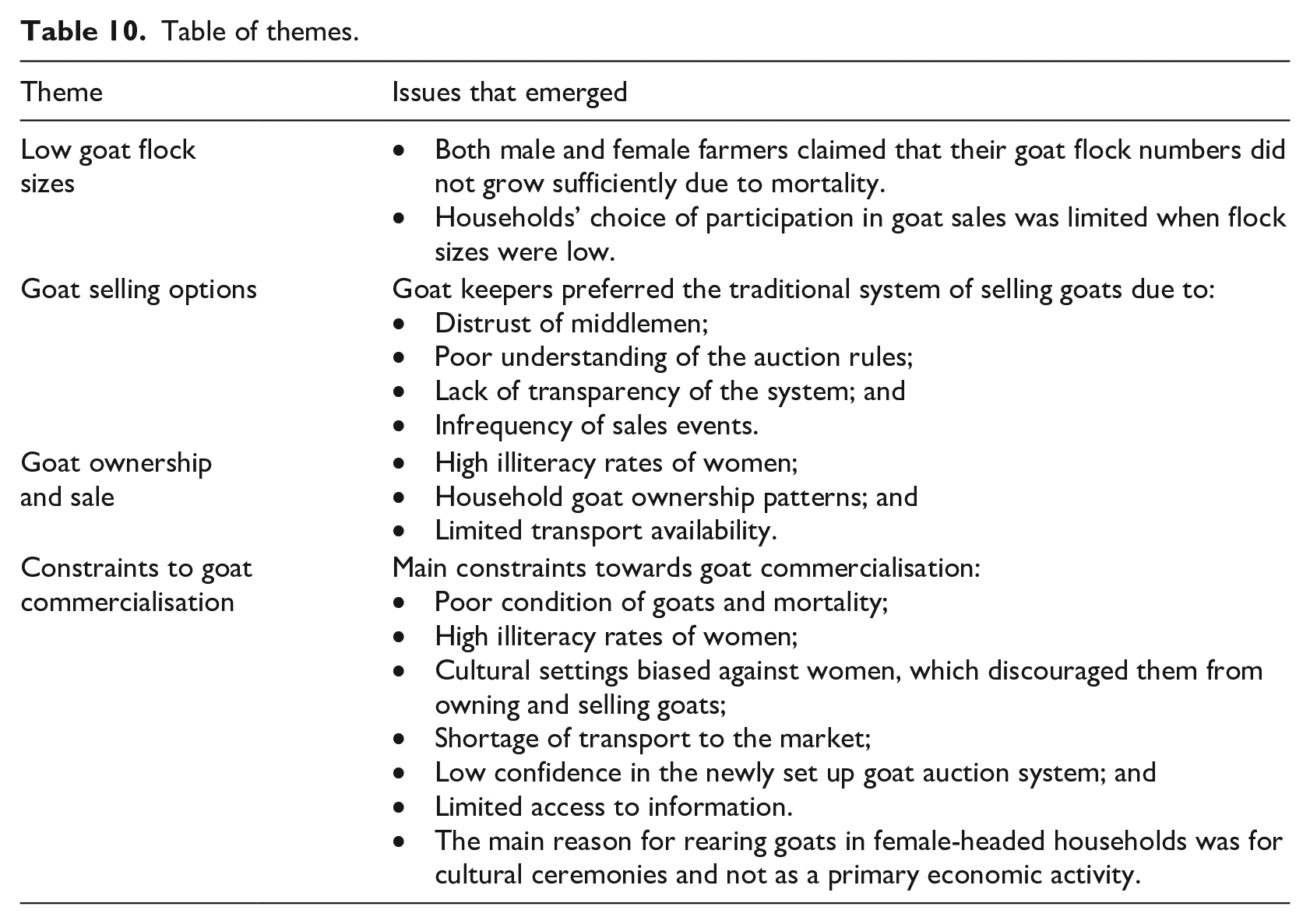
Table 10 shows the themes of the study and the main issues that emerged.
Table of themes.
Discussion and conclusions
Goat sales of mean 2.1 and 1.0 for male- and female-headed households respectively in 12 months is too low. The reason for the generally low goat sales in the study could be based on the fact that farmers found it more difficult to build up suitable flock sizes (for reasons emanating from losses through poor nutrition, diseases, predation and theft), and this made it more unlikely that they would sell goats. However, goat sales and marketing were higher in male-headed households with higher education levels than in female-headed households with lower education levels. This is because the more years spent in school increased the chances of understanding market requirements (Musemwa, et al, 2010). The difference in goat flock sizes between male- and female-headed households may also reflect the way these households are in different stages of the household life cycle (with female-headed households being older, uneducated, and having fewer resources).
Marital status affected goat commercialisation. Female-headed households faced challenges in selling their goats because, traditionally, married and widowed women were not allowed to sell goats in the community as it was the role of men to announce the sale of goats. This led women not to be actively engaged in goat marketing because buyers were less willing to purchase from women because women are not socially sanctioned to be goat sellers. Ownership patterns also affected commercialisation of goats because it was the role of the owner to make decisions about the sale of goats when the need arose. Cultural imbalance biased against women as stated by Chukwuka et al. (2010) discriminates them from owning and playing important roles on assets that are considered as belonging to men.
With only 2% of male-headed households and 5% of female-headed households using the auction system when marketing goats, it showed that there was poor confidence in the system. Farmers mentioned that the auction trading system lacked transparency and they did not understand it. Similar to observations by Togarepi et al. (2018) in their studies, the farmers obtained lower prices at auctions because they did not understand the market requirements as they would bring in goats that were not well prepared as per requirements of the market (such as the old and diseased). This was worsened by the low education levels and exposure of farmers who would not be able to use available information in making the right marketing decisions. The NGO explained that some farmers brought in poorly conditioned and much older goats than required by the auction system and these were therefore downgraded and fetched lower prices. When there was a family emergency, farmers usually marketed surplus animals such as those culled due to old age, unproductive or diseased and those not well prepared as per requirements of the market.
For female-headed households, the main reason for rearing goats was for cultural ceremonies and not primarily as an economic activity. This was also reported in Msinga Municipality IDP (2014). Goat selling was usually done in cases of family emergency such as illnesses or to fund funerals. Their understanding of goat rearing did not go beyond the social attachments associated with their rural goats. Selling of goats was done out of necessity and not because the farmers had turned into commercial goat farmers. The NGO admitted that despite the introduction of the goat auction system in the area, there has been little transformation in cultural and social meanings attached to goats. This is despite the supposed advantages of the auction system. In the study, flock size was positively associated with household’s choice of participation in goat sales, which was limited where the size was low. Similar results were reported by Negassa and Jabbar (2014).
In the study, the fact that prices realised by male and female goat sellers were similar and that farmers expressed that the amount obtained was adequate for them may be interpreted from findings by Bellemare and Barrett (2006) and Alene et al. (2008). Their reports mentioned that smallholder farmers do not necessarily consider information on prevailing price incentive when deciding to sell their livestock. In addition, the traditional system of goat sales is often based on trust, forming a mutually beneficial safety net with favours given and later returned within the community.
The Tobit analysis showed that the determinants of goat commercialisation were gender of household head, location, education level of household head, occupation of household head, total household income, number of goats a household owns, goat marketing price, goat losses through death from diseases and theft, and whether a household receives remittances. Current results were in line with findings by Osmani and Hassain (2015) that male-headed households are more market-oriented compared with female-headed households. This is due to the cultural settings biased against women which affect the decision-making process in goat commercialisation (Chukwuka et al., 2010). Results also corresponded with findings by Byaruhanga et al. (2014) that more literate households are in a better position to commercialise the goat enterprise due to better understanding of market requirements. Ele et al. (2013) documented that off-farm income was positively associated with commercialisation. Similar results were obtained in the current study, with households earning more off-farm income participating in goat marketing to a lesser extent than those who received little off-farm income. Ndoro et al. (2014) also indicated that farmers who regularly secure more unearned incomes such as remittances from their family members and friends and government grants are unlikely to participate in the livestock market. In the current study, households receiving remittances were less involved in goat marketing.
Goat numbers were also affected by theft of goats. Studies in Zimbabwe on goat value chain found that theft of goats, diseases and predation were some of the challenges in goat production (Dube et al., 2017). This is attributed to a lack of information and limited support given to goat farmers by government extension services (Kumar, 2007). Byaruhanga et al. (2014) showed that households with large flocks sold more goats than those with smaller flocks as households limit sales to maintain the potential to increase their flock size. Hence, a household’s choice of participation in goat sales is limited if the flock size is low (Negassa and Jabbar, 2014). Similar results were obtained in the study as households’ goat flock sizes significantly influenced market participation.
Jacoby (2000) stated that the cheaper the cost of transport, the more farmers are willing to sell their produce at the markets. Mthembu traditional authority residents were more likely to sell at the auction than Mchunu residents as the latter were located further from the market. For the Mchunu residents, transport unavailability was a major constraint. This affirms findings by Justus et al. (2016) that market access is positively associated with commercialisation.
Generally, the results of this study are in line with Ainslie (2005) and Vetter (2013), that commercialisation requires livelihood specialisation because households need access to adequate capital, large flock sizes and access to markets and information. Since most communal farmers do not have access to these, they only view their livestock as a risk-aversion livelihood strategy and not as an economic activity. The results also showed that goat keepers prefer the traditional system of selling goats. Reasons for this stem from distrust of middlemen; poor understanding of the auction rules; lack of transparency of the system and infrequency of sales events. A proposal to change the farmers’ livelihood strategy to a commercially oriented approach may not be suitable for the risk-averse farmers. Although a configuration of the sector by developing a marketing-oriented goat production sector and investment into commercial for indigenous goats in the area may be required, Long (2001), however, argued that for any development project, there is need to get behind the ramifications on local culture and knowledge in order to understand their beliefs. Household commercially oriented goat production goals are prerequisites for the commercialisation of goats. Understanding the knowledge base of local farmers is critical because rural livelihoods go beyond monetary gain to social satisfaction; and to them, keeping goats is not solely attached to monetary reasons but is for social and cultural satisfaction through taking part in ritual ceremonies.
The findings of the research suggest that for goat production and commercialisation to be successful, farmers need to regard goat farming as a source of income and be convinced that their standard of living can be improved through goat farming, apart from the cultural benefits derived. Transaction costs associated with the auction market system, such as market uncertainty, higher negotiation costs and transport costs, need be addressed to encourage farmers to become more commercialised. Efforts are required to improve the goat body condition, using approaches such as communal feedlots in order to reduce the gap between farmers’ expected prices and bid prices. Farmers need training to understand market trends and the importance of preparing goats for the market. Such training will help resolve the perceived lack of transparency in the goat auction system. Enhancing goat production is also important to increase flock numbers and enable farmers to make more sales. Therefore, extension personnel should assist farmers to manage and utilise goats to their full potential. Future policies should make the extension service delivery more demand-driven and provide for strategies to achieve accountability of extension personnel. Extension personnel also need to understand and take into account female goat farmers’ needs and constraints when providing training.
Footnotes
Funding
The author(s) received no financial support for the research, authorship, and/or publication of this article.
