




Abstract
Despite a notoriously high level of income inequality, public discussion about the issue in Hong Kong has been largely limited to overall trends. This is partially due to a lack of fine-grained data, especially on socially relevant inequality dimensions. This study introduces the group-based inequality data set, which provides indices on inequality within and between groups based on census surveys from 1991 to 2016. Compared with past immigrants, some recent immigrants are highly educated and/or of high socioeconomic status, which has exacerbated inequality within the immigrant groups. This study further examines whether this change in immigrant profile has contributed to the surge in property prices and finds that immigrants also suffer from increasingly unaffordable housing. Overall, the article highlights a seldom-discussed dimension of inequality with reference to social groups that is expected to be a potent source of socioeconomic tension in the future.
Introduction
The severity of income inequality in Hong Kong is well documented. Official estimates of the Gini coefficient have soared from 0.43 in 1971 to 0.525 in 2001 and 0.539 in 2016. This level of inequality is quite high by international standards, and Hong Kong is regarded as one of the most inegalitarian advanced economies. However, important discussions about inequality are restricted to overall trends and the extent of reduction achieved through government welfare provisions. A key limiting factor in the current discussions is the lack of fine-grained data from which to identify the dynamics underlying the overall levels of inequality. Although official statistics suggest that the level of inequality has stabilized in recent years and is even improving after accounting for tax and transfers (welfare), this is at odds with the general perception of worsening inequality. Studies of the trends and determinants of inequality are not lacking in the literature (e.g. Chiu and Lui, 2004; Lui, 2013), but knowledge about how the population composition affects the distribution of income is limited.
This study examines group-based inequality: that is, inequality within and between social groups. The primary rationale behind this focus is the gradual change in the profile of mainland immigrants, who are no longer solely low-skilled people dependent on welfare but now include a sizable group of wealthy and educated elites who came to Hong Kong through new immigration schemes. For example, in a shift from seeing new immigrants as a drain on social welfare, a common impression nowadays is that mainlanders (immigrants or investors) are wealthy and have contributed to (if not caused) the rise in property prices. 1 Has the influx of new, high-income immigrants widened inequality among immigrants, if not society as a whole, or have they reduced the average income gap between immigrants and locals? These subtle group-based dynamics may be important in understanding the tensions between social groups as well as political stability and social harmony.
Given its unique historical background, Hong Kong has always been regarded as a society built by immigrants. At least in earlier periods, labels such as “refugee society” (Lau, 1984) were commonly used to describe the city. It is not an exaggeration to say that population flow has always been a part of the city’s character, with generations of Chinese migrants arriving during the colonial period and in the post-handover era, punctuated by waves of emigration during the transition period (e.g. Skeldon, 1995). Although some earlier immigrants might have shared the “refugee mentality” (Wong, 1992) and planned to stay in Hong Kong only for a short time, many did eventually become Hong Kongers. Discourses about different generations of Hong Kong people (Lui, 2007) have provided important foundations for understanding the local population dynamics.
This article contributes to these discussions by investigating the economic aspect of the divide, and particularly how group-based inequality has changed over time. First, using samples of official census data, a novel “group-based inequality data set (GID)” is created containing indices of between-group (the gap between groups) and within-group (the distribution within each group) inequality. Earlier waves of immigrants were typically of low economic standing (mainly migrating for family reunions) and often perceived as a drain on Hong Kong’s welfare provisions. However, this stereotype no longer applies to some recent immigrants, who qualified for Hong Kong residence on the basis of their professional skills and/or capital (as detailed below). The resultant social tension is discussed by looking at inequality beyond the distribution of income among the population as a whole. Although overall inequality may be stable, the distribution across and within groups may be changing. These two types of inequality can also have distinct interactive effects (e.g. Houle et al., 2019). In addition to the discussion in this article, it is hoped that the introduction of the new data set can stimulate further research on the topic.
Second, this study engages with the wider literature on the integration of immigrants. Although it is well established that the successful integration of social groups is a crucial goal for policymakers, scholars disagree on the outcome to be studied: Should we focus on aspects of political integration such as citizenship, of economic integration such as labor market participation, or of social integration such as newspaper consumption (e.g. Breton, 2019; Hainmueller et al., 2017)? This divide also exists in Hong Kong, where researchers study the sociopolitical assimilation (S. Wong et al., 2018), occupational impact (Lee et al., 2017), and reliance on social welfare (Yang et al., 2020) of immigrants. By studying income inequality as a group-based phenomenon, this article suggests that these perspectives are not necessarily mutually exclusive. Labor market involvement (in the form of income) can have crucial sociopolitical implications, and the perceived fairness in resource distribution across and between groups can also affect other outcomes down the line (e.g. social integration and welfare support).
Third, in the midst of the ongoing political instability in Hong Kong, greater attention has been placed on the issue of identity. The controversial localism debate centers precisely on the distinction between local identity and national identity (e.g. Kaeding, 2017; K. Wong et al., 2020). It appears that, besides various strategies to promote a stronger national identity through education (national education reform) and punishment (e.g. the National Anthem Law), Beijing might also have hoped to rely on a continuously expanding population of mainland migrants to resolve the problem (S. Wong et al., 2018; also refer to the “New Hong Konger” discourse discussed above). Our findings emphasize the fact that immigrants are becoming a more diverse group as they grow in size. Besides the formation of different political orientations and outlooks during the process of socialization, they might also develop opposing views due to contrasting economic positions and incentives. Although the current turmoil in Hong Kong is undeniably political in nature, this perspective also suggests a potential economic dimension underlying the conflict (e.g. M. Wong, 2017).
Literature review
In-group and out-group dynamics among immigrants
In the literature, the key role of group-biased resource endowments in ethnic conflict is well established (Gurr, 1970; Huber and Mayoral, 2013). The underlying explanation is that ethnic groups react to a more polarized economic playing field by adjusting their political behavior. From a policy perspective, it is suggested that people generally feel generous or altruistic toward the poor only if they have a sense of belonging or shared identity with them, with ethnic-racial identity possibly one of the most prominent factors (Alesina et al., 2004; Gilens, 1999). Intergroup dynamics are assumed to explain this feeling, which is primarily psychological, because people tend to associate with their own group members and feel less affinity, or even hostility, toward those in an “out-group” (Allport, 1958; Tajfel and Turner, 1986). Such a perception is reinforced by stereotypes and/or misconceptions about out-group members (e.g. their deservingness and number of members on welfare), which can be seen as a form of prejudice toward minorities (Dahlberg et al., 2012; Nelson, 1999). For these reasons, the majority group (e.g. whites in America) is often less generous toward minority welfare recipients and views them as less deserving (e.g. Gilens, 1999; Winter, 2008).
This argument can be directly applied to immigrants, who are usually a minority group and at times suffer from stereotypes and biased impressions. Interest-based theories suggest that natives are more hostile toward immigrants who might compete for resources in society, such as jobs, welfare, and housing (Gibson, 2002; VanDalen and Henkens, 2005). Identity-based emotions may drive individuals to form preferences contrary to their rational economic calculations. For example, in times of rising inequality, support for redistribution does not seem to increase in many developed economies, even though more people would gain from it. One dominant explanation is that inequality undermines the level of social affinity between the poor and other classes (mainly the middle class) (Lupu and Pontusson, 2011), with this effect being exacerbated by social heterogeneity (such as that resulting from rising immigration) (Alesina et al., 2004). Newman (2014) shows that having friends suffering from economic hardship affects political views related to perceived class bias in the system. In summary, economic considerations weigh heavily on the perceptions of immigrants, and this goes hand in hand with group-based values, such as identity.
In Hong Kong, for instance, studies show that mainland immigrants are more likely to be trapped in elementary occupations and to be earning much less than the natives, and their socioeconomic status is also significantly lower (Zhang and Wu, 2011; Zhang and Ye, 2018). Fong and Ngo (2016) suggest that the unemployment rate among mainland Chinese immigrant youth is higher than local-born youth, and the differences are larger if their immigrant parents’ level is not high. It may be an obstacle to immigrant assimilation. Also, this in-group and out-group comparison may project a more negative image of the immigrant into the society which sometimes see the immigrant as free-riding on local welfare resources. Lee et al. (2016) found that local Hong Kong people exhibit exclusionary attitudes toward granting welfare benefits to the immigrants. These conflicts further encourage identity conflicts. Lee and Chou (2018) also found a similar result that the people who have a stronger local identity may have a stronger anti-immigrant sentiment. Recently, the clash of these two identities has contributed to the rise of “localism” (e.g. Kaeding, 2017; Veg, 2017) and even so-called anti-China sentiments (Ma, 2015). As a counter-discourse originating from official Chinese media, it is suggested that immigrants from the mainland have assumed a new distinct identity of “New Hong Konger” (xin Xianggang ren). 2 This group of people are reported to constitute over 40% of Hong Kong’s population and to have become the foundation of Hong Kong. Although the importance of immigrants (from mainland China or elsewhere) to the past and ongoing development of Hong Kong is undeniable, immigration has undoubtedly also become a source of potential social conflict. For example, in response to a pro-government think tank’s suggestion to expand the number of mainland immigrants (on top of the existing schemes) to tackle the problems associated with an aging population and labor deficit, critics pointed out that Hong Kong’s infrastructure and housing are already stretched by overpopulation. 3 Revealing biases in the resource distribution among immigrants will increase the complexities of this and similar debates.
However, group-based dynamics apply not only to ethnic-based intergroup inequality but also to existing and changing within the same group of people. In Hong Kong, the heterogeneity within the mainland Chinese immigrants group is even more prominent over time. Compared to earlier arrived immigrants (before 1997), the new immigrants after 1997 fared worse in employment and occupational attainment (Zhang and Wu, 2011). By contrast, Fong and Guo (2018) suggest that the endowments and income of the recent immigrants much better than the earlier mainland immigrants, as they may benefit from different immigrant policies in different periods. Tong et al. (2021) further show that the economic disparity between the high-educated (degree holder) and low-educated becomes larger. While the gap between well-educated immigrants and the local-born people rapidly narrowed, the plight of the less-educated ones persisted, with still a considerable income gap with the locals. Also, the mode of migration and the age of arrival intensified the disparity as well (Zhang and Ye, 2018). The mainland Chinese immigrants who arrived in Hong Kong a long time ago also adopted negative sentiments toward recent immigrants (Fong and Guo, 2018). The in-group disparity and exacerbating inequality of the mainland Chinese immigrants group indeed is mainly due to the variations of the cohort, arrival years, and their socioeconomic background, which formed a “Traditional” and “Elite” groups of immigrants.
Mainland immigrants in Hong Kong: “traditional” versus “elite” immigrants
Immigrants from mainland China constitute by far the largest source of population flow into Hong Kong. Indeed, although local Hong Kongers and mainland immigrants are both ethnic Chinese, 150 years of British colonial rule of Hong Kong and the current “one country, two systems” arrangement have to an extent segregated the city from the mainland, allowing for the development of differences in their identities (e.g. Baker, 1993; Sautman, 2004). Therefore, such an immigration flow should not be treated as a case of internal migration (Lee et al., 2017). This article treats immigrants from different origins separately but focuses its discussion primarily on mainland immigrants as the most dominant group.
Mainland Chinese immigrants come to Hong Kong through five main channels. First, the largest group of immigrants from mainland China come under the “one-way permit scheme” with a daily quota of 150, the majority of whom are women and young children, for the purpose of family reunions (Ngo and Li, 2016). As the background of immigrants is not a factor and the permits are issued by mainland authorities, migrants with one-way permits are generally less educated (Lee et al., 2017; Siu, 2009). Four other migration schemes target mainland investors and professionals seeking residential status in Hong Kong, namely, the Capital Investment Entrant Scheme, Quality Migrant Admission Scheme, Immigration Admission Arrangements for Non-local Graduates, and Admission Scheme for Mainland Talents and Professionals. Approximately 1 million immigrants from mainland China have arrived in Hong Kong since 1997, constituting at least one-seventh of the population (Wong et al., 2018). Mainland immigrants also account for 60% of local population growth (Siu, 2009).
Most mainland immigrants arrived for family reunions under a one-way permit: Of the five schemes, the number of migrants arriving via the first scheme exceeds those arriving via the other four by a large margin (Figure 1). Zhang and Wu (2011) point out that, as these immigrants are mainly women coming to join their husbands in Hong Kong, they are typically less economically active, less educated, and have lower incomes than the average of the overall population. Indeed, new immigrants roughly double the poverty rate of the general population (Census and Statistics Department 2017b). The influx of immigrants has raised concerns about lowering wages, increasing welfare expenses, and rising poverty and inequality (e.g. Lam and Liu, 1998). Such concerns were exemplified by a Court of Final Appeal judgment in 2013, which ruled the 7-year wait for new immigrants before they can apply for Comprehensive Social Security Assistance (CSSA) unconstitutional. Another example was the government’s HK$6,000 cash handout scheme in 2011, controversy over which was sparked by the inclusion of new immigrants who were not yet permanent residents. Indeed, Yang et al. (2020) found that citizens’ levels of support for social spending are negatively associated with the influx of immigrants. These social tensions were also felt by the immigrants. According to a report by the Central Policy Unit in 2013, more than half of mainland immigrants (55%) reported having been discriminated against. New immigrants have been subject to negative stereotypes that portray them as stealing locals’ jobs, increasing unemployment, and creating social instability (Chiu et al., 2005). They were even labeled as “locusts” because they were considered as dependent on welfare and public resources (e.g. Lee, 2016; Ma, 2015). Such discrimination can also be detrimental to the health and well-being of the immigrants themselves (Chou, 2012; Ng et al., 2015).
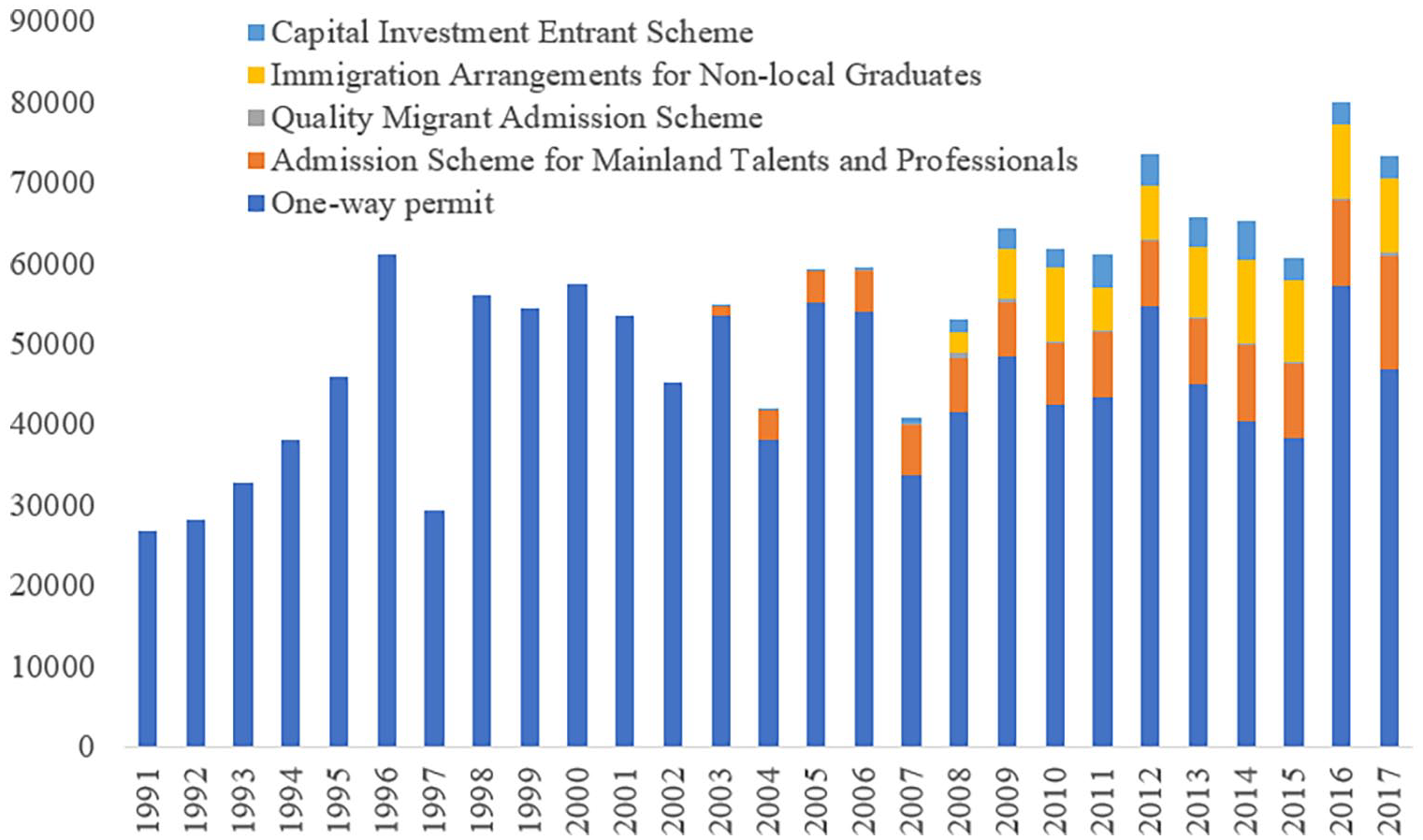
Number of mainland immigrant arrivals via different schemes.
In sharp contrast, it is obvious that the immigrants arriving through other schemes (capital investment entrant, quality migrant admission, and mainland talents and professionals) are anything but low-skilled, uneducated, and poor. These immigrants are more appropriately considered as either skilled professionals or wealthy capitalists, who are unlikely to suffer from the same difficulties as their counterparts arriving in Hong Kong via a one-way permit. Similarly, as pointed out by Chen (2018), previously, the executives of mainland Chinese enterprises in Hong Kong often returned to the mainland within 7 years. However, starting in 2013, the Liaison Office of the Central People’s Government implemented a new policy encouraging these executives to stay beyond 7 years with their family and offspring, exacerbating tension between locals and new immigrants and pushing up local property prices (Chen, 2018). For example, as much as 10% of all property purchases in December 2017 involved buyers from the mainland (although not necessarily immigrants). 4
This trend is consistent with figures showing that Hong Kong’s wealth is concentrated among the very rich. According to a report on “ultra-high net worth individuals” with assets of US$30 million or more (Wealth-X, 2018), Hong Kong overtook New York as the city with the largest population of such individuals; it also placed seventh in the country/region world rankings, above such countries as the United Kingdom and Switzerland. Although the report did not provide a breakdown of the background of the individuals, a 31% annual increase in the population hinted at an unnatural growth unlikely to be associated with the local population alone. The report likewise cited “enhanced links with mainland China” as a key to its rapid rise (Wealth-X, 2018: 1).
The influx of “elite” immigrants (as opposed to “traditional” immigrants) is very likely to bring an entirely different source of tension to society. For instance, mainland immigrants may now also be blamed for making private housing unaffordable, in addition to increasing the waiting time for public housing. The increase in diversity within the wider group of immigrants may have altered the intergroup dynamics in society, but only anecdotal evidence is available in the absence of systematic data that can enable us to understand the trends and extent of the phenomenon. This lack is what the creation of the new inequality index in this article hopes to address.
GID
To study the above issues, this article introduces a GID. To create the group-based indices of inequality, the article analyzes the official Population Census (and By-census) surveys regularly conducted by the Census and Statistics Department at 5-year intervals from 1991 to 2016. For each of the surveys, the 5% sample data are used. Although mainland immigrants constitute the largest group of population inflow and will be the focus of discussion here, people of all origins will be included for the calculation of overall inequality.
Defining groups
Despite the importance of immigrants to Hong Kong society, as an ultimately subjective issue, there is little consensus over how immigrants are to be classified, especially in relation to when (if ever) they cease to be “new immigrants” and become Hong Kongers (e.g. K. Wong et al., 2020). Legally, people become permanent Hong Kong residents after staying for 7 years; in practice, these immigrants obviously do not assume the role overnight. One group of studies has adopted static classifications. Yu et al. (2014) focused exclusively on immigrants who came for family reunion with a first-degree relative (i.e. parent, child, or spouse). S. Wong et al. (2018) simply distinguished between migrants, who are not born in Hong Kong, and “natives,” who are locally born. Of the studies making a differentiation based on the period of arrival, Ng et al. (2015) and Chou (2012) defined “new immigrants” as those who arrived on a one-way permit for family reunification and have resided in Hong Kong for 3 to 6 months. However, the above studies are cross-sectional, partially bypassing the problem of differentiating between waves of immigration and time spent in Hong Kong. 5
Another group of studies has tackled the problem of immigration timing. Ngo and Li (2016) adopted the official classification by using 7 years as a cut-off point between new and old immigrants. Zhang and Wu (2011) adopted a cohort-based classification depending on the year of arrival: pre-1987, 1988–1991, 1992–1996, 1997–2001, and 2002–2006. This method of classification allows each cohort to have fixed periods of stay in Hong Kong corresponding to each census (e.g. the 1988–1991 cohort were the most recent immigrants in the 1991 census, those who have lived for 5–9 years in Hong Kong in the 1996 census; the 1992–1996 cohort were the most recent immigrants in the 1996 census, those who have lived for 5–9 years in Hong Kong in the 2001 census).
In the census surveys, besides Hong Kong and mainland China, respondents can choose their place of birth from 19 other countries/regions. The duration of residence in Hong Kong (from less than 1 year to 20 years and over) is also recorded. In this article, reflecting the primary aim of classifying natives and immigrants over time, the dynamic cohort method is adopted. Combined with the respondent’s nationality and place of birth, the main classification method is described in Table 1. 6 “Hong Kong–born Chinese” refers to Chinese citizens born in Hong Kong, “new immigrants” are those who were born in the mainland but have resided in Hong Kong for less than 7 years; “mid-term immigrants” for 7–19 years; and “long-term immigrants” for more than 19 years. “Other Chinese” is the residual category for other types of Chinese citizens (e.g. those who were born outside of Hong Kong and mainland). Four other non-Chinese groups, namely, British, Other Western, Filipino/Indonesian (the main sources of foreign domestic helpers in Hong Kong), and Others are created.
Classification of social groups in Hong Kong.

In 1991 and 1996, Hong Kong–born Chinese include British nationalities with the right of abode in Hong Kong only (these categories were removed after the retrocession in 1997).
Measuring between- and within-group inequality
Group-based income inequality is derived from the monthly domestic household income in the census survey (capped at HK$150,000 per month). 7 The methodology for calculating between-group inequality (BGI) is borrowed from Houle et al. (2019)
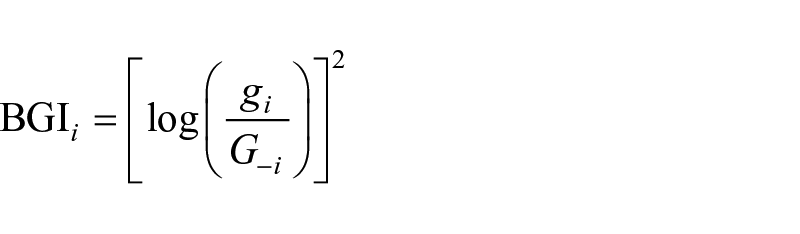
where gi refers to the average income of members of group i, and G−i is the average income of members of other ethnic groups. Within-group inequality (WGI), however, is simply measured as

Although the Gini coefficient remains a popular choice in public discussions of inequality, the Theil indices (or the general entropy (GE) measures) have the unique advantage of “decomposability,” providing information on how much inequality can be attributed to between and within units (such as within rural/urban areas and the rural–urban gap). This characteristic fits nicely with the purpose of GID, which is to compare the two types of inequality along group lines. GE(0), also known as Theil’s L, is used in this study. 8
There are two units of analysis in the data set: individuals and households. While the mapping of individuals by social group is relatively straightforward, we classify households by the same scheme by focusing only on the head of the household (i.e. a household is regarded as in the “new immigrant” group if its head is a new immigrant). For households, to account for the economies of scale of each additional member, the equivalence scale is applied (household income divided by the square root of the household size). 9 Only economically active individuals and households are included in the analyses below.
Inequality and social groups
Before we examine the inequality statistics, Figure 2 begins with an analysis of the inequality across two group-dimensions. Official figures of overall inequality are also included for comparison (as lines on the figure). Note that these are Gini coefficients, which are not directly comparable except for the changes over time. Based on our estimates (Theil indices), inequality shows signs of a slight improvement (decrease) in 2016, which is largely in line with official estimates (of stabilization and slight decline). However, as discussed, the decomposability of the index allows us to compare the share attributable to WGI versus BGI. In 1991, 81% of inequality came from the distribution within each social group (i.e. 19% was between groups). This share gradually increased over time and reached its peak of 93% in 2016. In other words, the vast majority of inequality in Hong Kong can now be put down to within-group dispersions, with as little as 7% of inequality from between groups. The dynamics behind this surge in WGI will be further analyzed below.
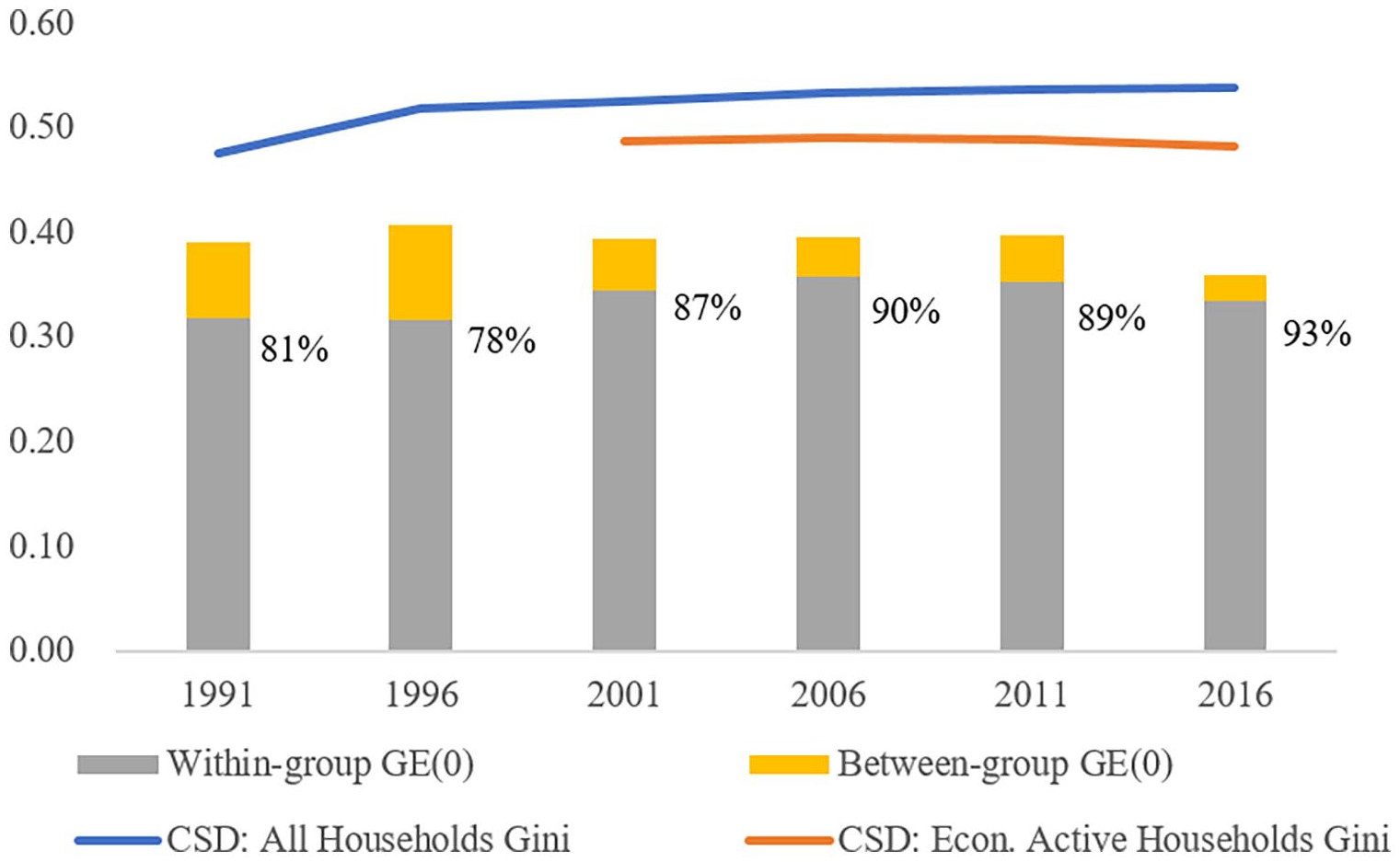
Group-based inequality and overall inequality.
Next, the overall distribution of income by social groups over time is illustrated in Figure 3 (the full set of figures and the distribution for households are shown in the Supplemental Appendix). Note that the figures exclude top-coded income for ease of presentation (above 100,000 in 1991 and 150,000 afterward). Across all major social groups, Britons living in Hong Kong had the widest income spread, which is not surprising given that many of them work as expatriates; the spread has also been rather stable over the past two decades. Other social groups (all of which are much more sizable than the British), in contrast, all demonstrate a greater divergence over time, which is in line with the population-wide trend of increasing inequality. Generally, Hong Kong–born Chinese and other Chinese became gradually more unequal over 20 years, whereas new and mid-term immigrants remained quite homogeneous in terms of income distribution and long-term immigrants were somewhere in the middle. The exception to these general trends is the sudden surge in inequality among new immigrants in 2016, which is further analyzed and discussed below.
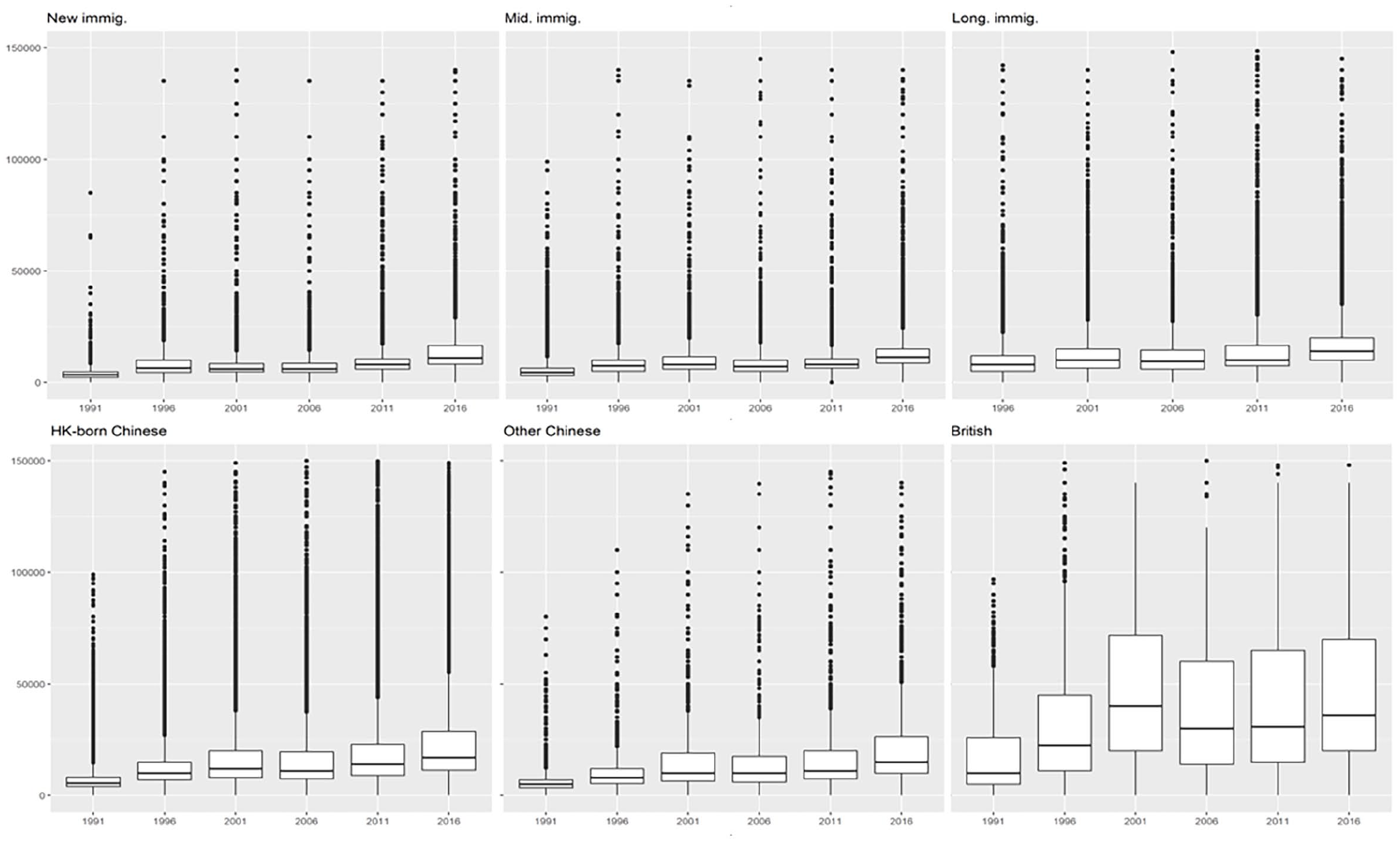
Income distribution and social groups.
The group-based inequality figures are shown in Table 2. Although the figures are Theil indices rather than the more commonly used Gini coefficients, the interpretation is essentially the same, with a higher figure representing greater inequality (a corresponding table of Gini figures is shown in the Supplemental Appendix). As the sets of figures for individuals and households are highly comparable, with the exception of two notable differences, we focus on the household figures in which the results are similar for the sake of brevity. The two exceptions are as follows. First, the inequality patterns at the individual vis-à-vis household levels do not agree at the macro level. The overall index for individuals surged from 0.33 in 1991 to 0.42 in 2016, compared with a fluctuating decline for households (0.39 in 1991 and 0.36 in 2016). This hints at the fact that the contribution of high-income individuals to inequality is compensated by their household composition (e.g. a larger household with a lower equivalent income) and vice versa, as poorer individuals form smaller or even one-person households. This is reflected in the similar changes in the group of Hong Kong–born Chinese, which is by far the majority social group in the population. As family and household structure is outside of the scope of this study, we leave this point for future studies. Second, the inequality figures for the Filipino/Indonesian group are vastly different in magnitude (averaging 0.13 for individuals but 0.45 for households). This is also understandable as the individual method includes most of the domestic helpers paid at a standard wage, whereas the household sample incorporates businessmen/investors of Filipino/Indonesian origins (as heads of households) residing in Hong Kong, who can be expected to be much more well-off than their peers.
Group-based inequality trends.
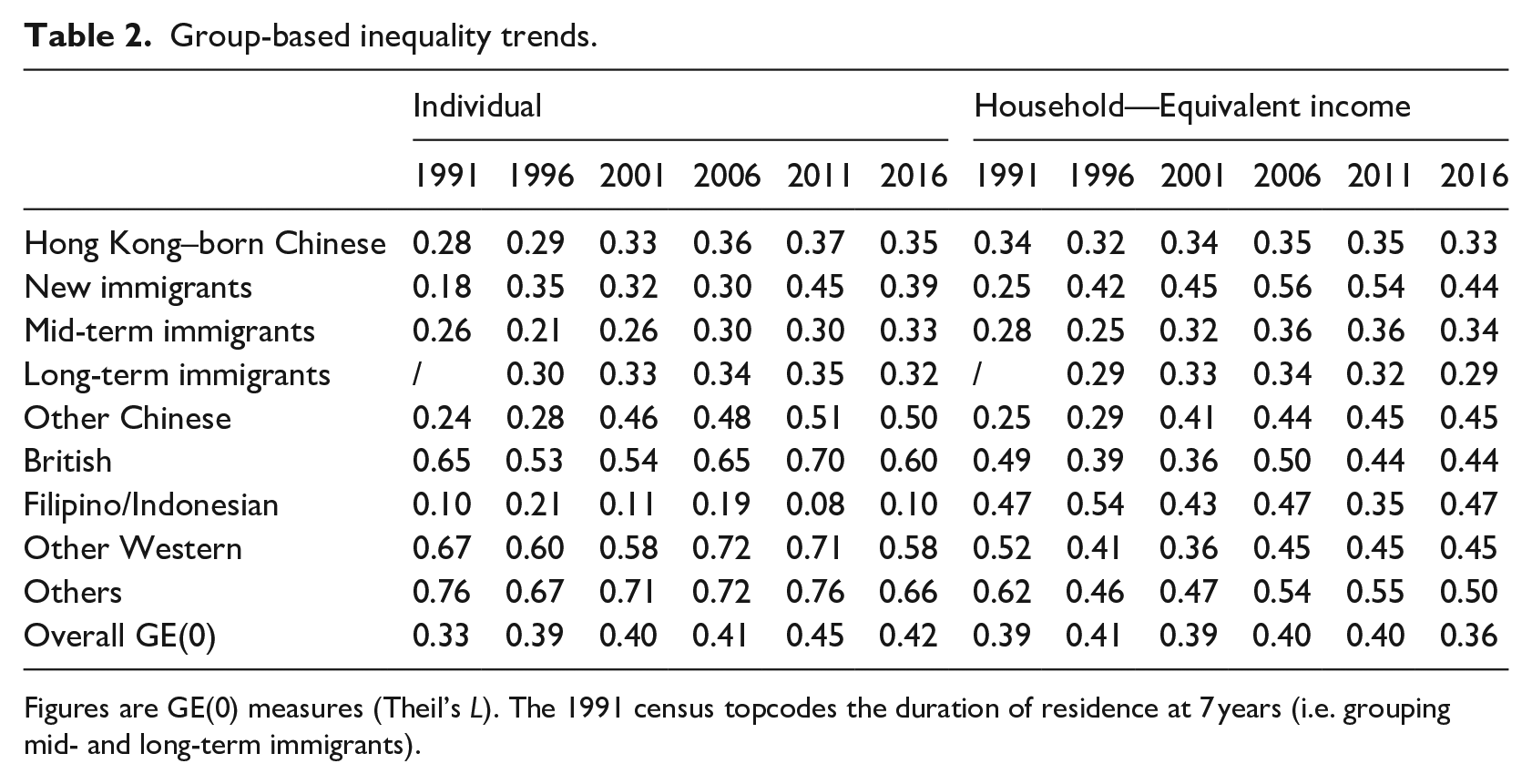
Figures are GE(0) measures (Theil’s L). The 1991 census topcodes the duration of residence at 7 years (i.e. grouping mid- and long-term immigrants).
The remarkably stable inequality level for the “locals” (Hong Kong–born Chinese households) over the course of 25 years provides an interesting point of reference for the changes in other social groups, most notably that of the new immigrants. New immigrant households formed the most egalitarian group in 1991, with a Theil index of 0.25. This more than doubled in 2006 and 2011, before slightly receding to 0.44 in 2016. 10 This still leaves them as one of the most unequal social groups, and the most unequal major group, in Hong Kong. The contrast is stark when comparing new immigrants with mid-term immigrants (for whom there was a modest increase from 0.28 to 0.34) and long-term immigrants (for whom there was a slight increase before reverting to the 1996 level of 0.29). The residual “Other Chinese” category also experienced a rise in inequality from 0.25 in 1991 to 0.45 in 2016. The other social groups (British, Filipino/Indonesian, and Other Western) have had fluctuating levels of inequality without any clear trend.
Similar to the findings in Figure 3, it is interesting to note that, even socioeconomically, the income profile of long-term immigrants is most similar to that of the locals, followed by the mid-term group. However, new immigrants and other Chinese have demonstrated a sharp rise in within-group income dispersion. This is a new trend, emerging only in the recent two decades. In the next section, we further discuss some changes associated with the surge of inequality among new immigrants and other Chinese.
Mainland immigrants, investors, and the housing market
In this section, we examine policy and economic factors of the group-based inequality patterns identified above, namely, the immigration schemes, the influx of mainland capital/investors, and changes in the property market. As this study argues, one of the factors leading to the surge in inequality in these groups (if not for the whole society) might be the various schemes for attracting immigrants, mainly from the mainland, presented in Figure 1. The first of these was the Admission Scheme for Mainland Talents and Professionals offered in July 2003, which allowed talents and professionals with “special skills, knowledge, or experience of value” to work in Hong Kong with no sectoral restrictions. This was shortly followed by the Capital Investment Entrant Scheme, effective from October 2003 to January 2015, which was aimed at investors who had substantial assets (at least HK$10 million) to invest in Hong Kong. The Quality Migrant Admission Scheme, introduced in 2006, was a point-based and quota-based system to bring in highly skilled or talented migrants from the mainland and overseas. Finally, the Immigration Arrangements for Non-local Graduates allows those who graduated from local tertiary institutions to stay or return to work in Hong Kong. Together, these schemes had admitted more than 266,000 immigrants by the end of 2019. It is noted that, although only the first of these schemes was exclusively for mainland immigrants, the supermajority of entrants under the other schemes have been from the same origin.
This group of immigrants also share another key characteristic: their socioeconomic and/or education profile. In sharp contrast to their counterparts entering through the one-way permit, they are highly skilled/talented and/or rich. There is also a growing gap between the two: taking the admission scheme as an example, as shown in Figure 4, not only is the number of people admitted through this channel exponentially increasing (from about 2000 in 2003/2004 to its peak of 14,000 in 2018/2019), the share of high-income earners is also increasing. The proportion of applicants earning less than HK$20,000 per month dropped from 60% in the early years to 40% recently, whereas those earning HK$40,000 or above rose from less than 10% to about 30%.

Salary distribution of immigrants by the admission scheme for mainland talents and professionals.
The rising number of upper-class immigrants has not gone unnoticed by local society. They also injected new capital into the market, with HK$316.6 billion invested by some 35,000 investors entering through the Capital Investment Entrant Scheme alone. Although it is difficult to discern the real effect of this capital on the local economy, local housing prices rose sharply, with one price index of private domestic housing recording a sevenfold increase from 2003 to 2019 (see Figure 5). Although 2003 was admittedly a trough in the housing market, the threefold rise is no less impressive (or terrifying) if we take 2009 instead as a reference. This phenomenon is also unusual and disproportionate to the development of the local economy, as shown by comparing the growth in house prices to the economic growth trend line in Figure 5. All things considered, the influx of foreign (or in this case, mainland) capital and immigrants thus became a logical and popular explanation for rising housing prices.
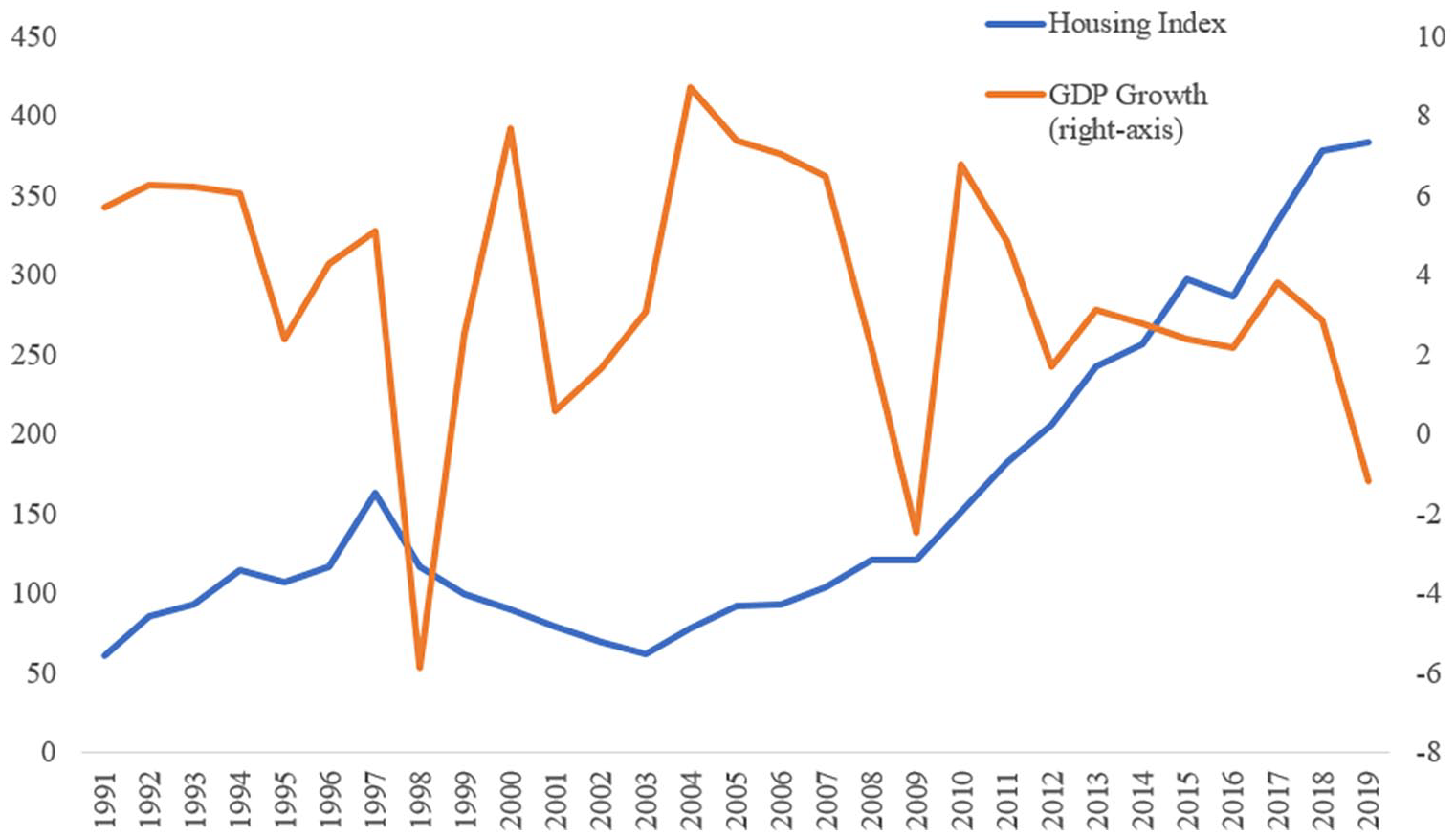
Housing price and the local economy.
In response to dissatisfaction over its apparent inability to provide affordable housing, the government introduced a special type of stamp duty in 2012 (although, as shown in Figure 5, the effect of this policy was limited). On top of the typical stamp duty levied on all property transactions, the Buyer’s Stamp Duty charges buyers of residential flats who are not permanent residents (including new immigrants residing for less than 7 years) an additional 15% of the property value. 11 Figure 6 provides an overview of the total amount and number of cases, showing that these peaked in 2012. However, the subsequent decline does not mean that less non-local capital accessed the market. In fact, in 2018, the total amount taxed was comparable to that of the peak in 2012, but came from much fewer deals. For example, in 2012 Q4, HK$129.3 million was contributed by 696 purchases, averaging $0.19 million per case. This more than tripled to $0.66 million per case in 2018 Q2 ($114.9 million from 174 cases), indicating a shift to property purchases of higher value (all else equal, buyers were buying flats more than three times the value than those in 2012). This provides some evidence to support the notion that non-local buyers contributed to the rise of the local housing market, and that there has been a tendency toward purchasing luxury units in recent years.
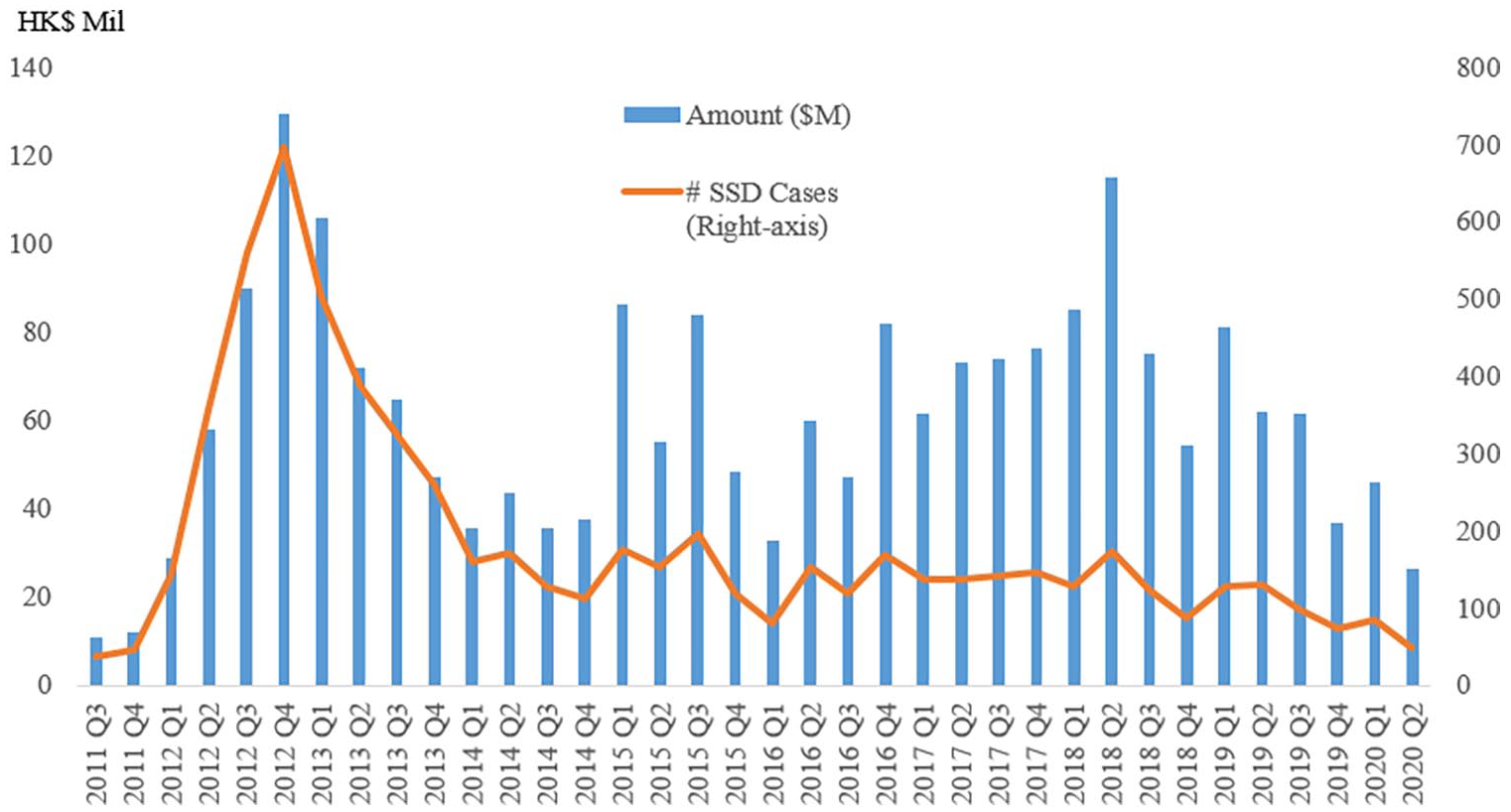
Buyer’s Stamp Duty for non-local residents.
Two outstanding issues remain, which are the uncertainty over whether the non-local buyers were from the mainland or elsewhere, and whether these investors were indeed focusing on the luxury housing market, given that the higher average might have been elevated by a few extremely expensive purchases. A related inquiry is whether the purchase decisions made by non-local buyers are driven by the desire to invest or by real residential needs over which they do not have much control. To investigate this, Figure 7 provides data on the share of mainland buyers’ contribution (in value) in different sectors of the housing market: luxury/small-medium units and the primary/secondary market. 12 It is suggested that the luxury primary market has the highest investment value, whereas the small-medium secondary market should be ideal for purchases based on utility. 13 The analysis shows that mainland buyers have consistently contributed 10%–20% of the amount of all property purchases in each year since 2010, the bulk of this capital went into the luxury primary market, at most contributing 55.5% of its entire transaction amount in 2011 Q3. Although the amount has fluctuated over time, it is clear that mainland buyers are consistently more active in this market segment than in the small-medium secondary market (on top of the fact that houses in the luxury category are much more expensive than those in the small-medium category). 14

Mainlanders in Hong Kong’s housing market.
Having established the extent to which mainland buyers contribute to the local housing market, there remains a need to establish the group to which they primarily belong: Are they new immigrants, those who are well settled, or remote investors who do not normally reside in Hong Kong? In other words, how do we interpret these findings in relation to our group classification scheme? For this purpose, we compare the homeownership status by social groups over time in Figure 8. Although it might be surprising to find that so few new immigrants reside in public housing, the waiting period that is usually imposed before being granted access to these resources must be considered. In comparison, mid- and long-term immigrants have increasingly relied on public housing in recent years, reflecting the long-term social consequences of the one-way permit scheme (e.g. mid-term immigrants in 2016 refer to those who arrived in Hong Kong from 1997 to 2009). However, returning to the previous discussion, it does not seem to be the case that members of any of these immigrant groups are gradually becoming owners of private housing units. In contrast, homeownership has become a luxury, with many renting a place to live (with nearly three-quarters of new immigrants doing so in 2016) or resorting to public housing provision (two-thirds of mid- and long-term immigrants in 2016). Even the new group of high-income new immigrants discussed above face the same situation in the housing market and often choose to rent, regardless of income. 15
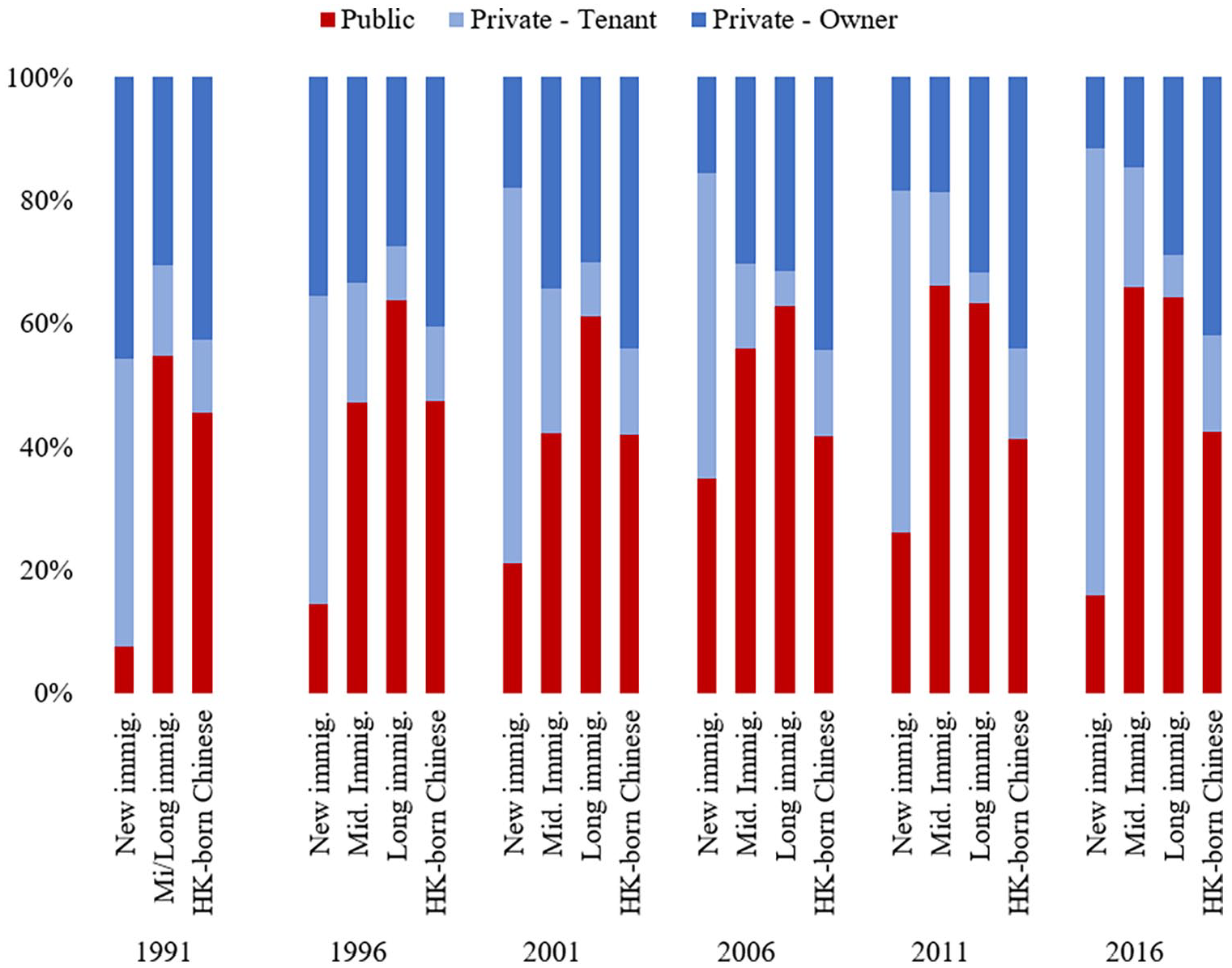
Status of homeownership by social groups.
Discussion and conclusion
By introducing the GID, this study empirically demonstrates that immigrants to Hong Kong have created a new dimension of inequality in society. Alongside a constant flow of less privileged immigrants, various schemes to attract wealthy and highly skilled people are bound to polarize the economic status of new members of society, which is exactly what the GID data show. In comparison, those who have resided in Hong Kong for longer periods do not demonstrate the same surge in income dispersion among themselves (besides the general increase in average income levels found across all social groups).
However, it would be highly premature to suggest that new immigrants (or any other group of immigrants) are the culprits for the steep rise of property prices in Hong Kong. Although much evidence points to the impact of mainland buyers in the local residential market, supplementary analysis shows that none of the immigrant groups have increased their homeownership levels, with even high-income new immigrants increasingly resorting to tenancy due to the unaffordability of housing in Hong Kong. This finding is not necessarily at odds with the picture painted by the GID data. Rather, it serves to illustrate the concern that inequality runs deeper than the indices indicate. Not only is the distribution of income becoming increasingly biased, there is an additional source of inequality in the way immigrants live, which is illustrated by the difference between mid-/long-term immigrants who are increasingly reliant on public housing (and likely to be mostly made up of those who arrived on a one-way permit) and mainland investors who stockpile luxury flats but might not be captured in the GID as (1) they might not need to work and receive a salary or (2) they do not reside in Hong Kong and are thus not included in the scope of the census. 16
The findings carry theoretical and practical importance. Economically, although there is little doubt that immigrants have greatly contributed to the development of the local economy in the past, different resources are provided by rich (capital), middle-class (skills), and poor (labor) immigrants. These differences, and the resultant tensions, are partly illustrated by the findings in this study.
Socially, although it is clear that the successful integration of immigrants is crucial for maintaining social harmony, there is a lack of collective discussion on whether (or to what extent) they have caused certain social problems. Our findings suggest that the disparity does not only exist between the overall mainland Chinese immigrants and the local-born Hong Kong natives but also led to tensions among the mainland Chinese immigrants. Studies related to immigrant integration in Hong Kong suggest that human capital and social capital are significant resources for social integration and economic assimilation (Chou and Chow, 2009; Ou and Pong, 2013). This may also positively affect the academic success of the upcoming generations (Xu and Wu, 2017). However, our study shows the diversity in terms of economic capacity among the mainland Chinese immigrants group arriving at different time periods under various policy schemes. The exacerbating inequality may further hinder integration with the natives and build up a new boundary and discrimination among the immigrants themselves. If discrimination against certain social groups has an economic origin (e.g. the impression that immigrants are welfare-reliant or pushing up property prices), the findings here can provide empirical evidence for targeted policies to reduce the bias, which can improve immigrants’ quality of life or even their health status (Chou, 2012; Ng et al., 2015).
Politically, the GID provides a unique source of data for researchers to examine group-based inequality dynamics, which can be easily linked to the political debates surrounding identity and integration with the mainland (Wong et al., 2018).
This article concludes with several limitations. First, an omission in the analysis above is the issue of who constitutes the group “Other Chinese,” which shares a similar increase in inequality to that of the new immigrants. As they serve as a residual group for the classification of Chinese (only constituting 2.4% of all Chinese households in 2016), we do not have much to say about them. 17 With supplementary analysis showing that most are not new immigrants (with the majority having resided in Hong Kong for over 20 years by 2016), an explanation for the rise in inequality among this group must be left for future studies. Second, related to the first point, whereas the present study attempts to base its analysis on a theoretical and socially relevant classification, the GID estimates are obviously dependent on the way the groups are categorized (such as whether we account for birthplace or only duration of stay). However, it is noted that the main findings discussed (i.e. a sharp increase in inequality among new immigrants) are robust to further analysis. A final limitation, inherent to all studies of income inequality, is that wealth inequality might be much more severe (and more persistent and consequential) than income inequality. However, in the absence of reliable wealth data representative of the entire population across all social groups, a focus on income inequality should be regarded as the best viable alternative.
Supplemental Material
sj-docx-1-jas-10.1177_00219096221123749 – Supplemental material for Group-Based Income Inequality in Hong Kong: An Analysis of Mainland Chinese Immigrants
Supplemental material, sj-docx-1-jas-10.1177_00219096221123749 for Group-Based Income Inequality in Hong Kong: An Analysis of Mainland Chinese Immigrants by Mathew Y. H. Wong and Kin-man Wan in Journal of Asian and African Studies
Footnotes
Funding
The author(s) disclosed receipt of the following financial support for the research, authorship, and/or publication of this article: This research project (Project Number: 2019.A5.060.19C) is funded by the Public Policy Research Funding Scheme from Policy Innovation and Co-ordination Office of the Hong Kong Special Administrative Region Government.

Supplemental material
Supplemental material for this article is available online.
Notes
Author biographies
References
Supplementary Material
Please find the following supplemental material available below.
For Open Access articles published under a Creative Commons License, all supplemental material carries the same license as the article it is associated with.
For non-Open Access articles published, all supplemental material carries a non-exclusive license, and permission requests for re-use of supplemental material or any part of supplemental material shall be sent directly to the copyright owner as specified in the copyright notice associated with the article.
