




Abstract
Using a Critical Race Theory (CRT) and Framing Theory as a lens, this study extends the literature on media representations through an examination of the framing and tone toward Black fathers illustrated in Instagram memes in 2022. Study findings indicate that Instagram offers a means for individuals to share positive messages about this marginalized group. Social media was used to offer messages of hope that framed Black fathers positively, often referencing the Black Lives Matter movement to encourage individuals to recognize the value of Black men in the lives of children and families. Memes offered counter-narratives to the traditional racist narratives that have plagued Black men historically. The findings of this study are important for advancing future research in this area and underscoring the powerful role of social media in shifting narratives about Black fathers.
Plain language summary
Using a Critical Race Theory (CRT) and Framing Theory as a lens, this study extends the literature on media representations through an examination of the framing and tone toward Black fathers illustrated in Instagram memes in 2022. Study findings indicate that Instagram offers a means for individuals to share positive messages about this marginalized group. Social media was used to offer messages of hope that framed Black fathers positively, often referencing the Black Lives Matter movement to encourage individuals to recognize the value of Black men in the lives of children and families. Memes offered counter-narratives to the traditional racist narratives that have plagued Black men historically. The findings of this study are important for advancing future research in this area and underscoring the powerful role of social media in shifting narratives about Black fathers.
Overall, representations of Black fathers have been negative across television and print platforms, despite some recent positive depictions of the group (Rambert, 2021; Ransaw, 2013; Smith, 2008). The invisibility and stereotyping of Black men have remained constant throughout various periods in mass media history (Dates & Barlow, 1993; Entman, 1992; Kumah-Abiwu, 2020). Prominent is the idea that they lack commitment and leadership skills as patriarchal heads. For instance, Tyrell and Masten (2022) note that media messages focus on absenteeism and incarceration of Black fathers, overlooking the structural inequalities and circumstances they face. Scholars also highlight the role that media messages play in proliferating the idea that fatherlessness is a distinct aspect of Black family life (e.g., Mohdin, 2017; Tyrell & Masten, 2022). Rambert (2021), for instance, notes, “the perception of Black fathers is that they are largely absent from their children’s lives, and that such absence—and the ensuing experience of growing up fatherless—is a direct cause of social issues in Black communities” (p. 324).
Previous examinations of memes indicate they offer a means of framing topics positively about marginalized groups (Harlow, 2019; Hristova, 2014). However, memes and their implications for Black social justice activism has rarely been studied, and there is little scholarship available on representations of Black fathers on social media platforms. Building on the existing body of literature and addressing the gaps in the literature, we focus on the representation of Black fathers on social media platforms. Specifically, this study employs Framing Theory and Critical Race Theory (CRT) to examine representations of Black fathers on Instagram in 2022. We seek to expand the study of memes to focus on how Black fathers are characterized through this medium.
The study of the depictions of Black men, in general, on traditional media platforms is plentiful, indicating the topic’s importance (Banks-Rogers, 2020; Gutman, 1977; Tyrell & Masten, 2022; Wallace, 2023; Watkins, 2001). The study of the representation of Black fathers in media is imperative for many reasons. First, the literature provides a powerful argument that representation matters. Hall’s (1980) seminal work describes the complex ways in which media content not only presents images for audiences to process, but also offers visual cues that may have multiple meanings regarding race and ethnicity.
Second, today’s sociopolitical climate has made the examination of Black fathers more relevant. The Black Lives Matter (BLM) movement escalated in 2019 to highlight how descendants of the enslaved have continued to contend with persistent racial injustices and negative representations. In the era of the BLM movement, social media has been used as a platform for transmitting messages of hope about Black men and fathers and changing the narrative in ways that defy persistent stereotypes. Third, Shifman (2013) stresses the importance of examining memes in political discourse and encourages further studies of the topic. These points serve as the backdrop for this study. In the next section, we present the theoretical framework that informs our study design and a review of the literature, followed by our research questions, methodology, key findings, and conclusions.
Theoretical Framework
Framing Theory
Goffman (1974) coined the term “frame” to denote a technique of organization that enables individuals to “locate, perceive, identify, and label a seemingly infinite number of occurrences into something meaningful” (p. 21). He asserted that people use similar processes to frame an event—whether a drama, dance, newspaper story, television show, or everyday conversation. Furthermore, Gamson and Modigliani (1989) adds that “framing” answers the question, “what is the basic source of controversy or concern in this issue?” (p. 165). Taken together, how issues are framed has consequences for their interpretation and evaluation of information (Chong & Druckman, 2007; De Vreese, 2005). Historically, racialized frames developed as a justification for exploiting marginalized groups, adding to the persistence of racism (Ortega & Feagin, 2016; Plous & Williams, 1995). For example, stereotypes of Black males were used to justify their mistreatment during the trans-Atlantic slave trade (Moody-Ramirez & Dates, 2014). Once freed, new depictions of Black men emerged, which continued to justify their exploitation. The premiere of the film, Birth of a Nation, in 1915 marked a change in the characterization of Black men from the happy-go-lucky Sambo to the dangerous brute to justify acts of racial violence against Black men (Boskin, 1986; Dates & Barlow, 1993).
Brooms and Perry (2016) argue that the misrepresentation of Black men, whether in our modern era or the past, has been driven by negative frames and stereotypes that “serve as the basis for worldviews and policy regimes that disproportionately disadvantage their life chances” (p. 169). Framing Theory provides a suitable lens for examining memes shared on Instagram pages. Unlike film and television content, memes are created by and for individuals who want to interact with people with similar interests. Brock (2020) noted Black digital practices are “reflective and responsive to concerns of Black everyday life even as their content is continually mediated through a racist framework” (p. 77). Our analysis assessed the types of memes shared on Instagram and whether individuals used the platform to share positive counter-narratives of Black fathers (Heryanti & Kasih, 2022). Framing and racial narratives are essential to our theoretical framework as mass media representations of Black fathers have played a role in perpetuating misrepresentations of the group.
Contextualization of Frames Through Critical Race Theory
Framing Theory and the tenets of CRT may be combined to examine media messages. CRT acknowledges race as a socially constructed and pervasive feature of the United States (Bell, 1983; K. W. Crenshaw, 1988; Ladson-Billings, 1998). Using these frameworks as lenses, scholars may examine how the ideology of racism creates and maintains a “master narrative” that is rooted in a legacy of privilege and how this script has been used to continuously amplify and sustain negative public perceptions and opinions of people of color (Solórzano & Yosso, 2002). K. Crenshaw et al. (1995) defines CRT as a legal framework that embraces a movement of scholars, most of whom were law scholars of color, whose works challenge how race and racial power are constructed and represented in American legal culture and society.
While CRT began as a branch of legal scholarship, it has been adopted by other disciplines, such as education, social work, and communication studies (e.g., Brock, 2020; Ladson-Billings, 1998; Yoon, 2016). Scholars from these disciplines use CRT to help explain how America’s legacy of racism was built on legislative harassment and discriminatory legal practices. The goal of CRT scholars is to spotlight instances of systemic racism and to explore methods used to dismantle those legacies today. In our case, we explored how social media is used to issue counter-narratives in direct opposition to historical stereotypes of Black fathers. As noted by Knight Steele (2021), Black people can change historical cultural narratives when they create and share positive content online. Knight Steele (2021) encourages Black women, in particular, to explore digital images of themselves and the Black community. In this case, we used an analysis of social media to examine how Black father-themed Instagram pages may help change the narratives of the group.
Literature Review
Framing of Black Men and Fathers in Media
In the 21st Century, the negative framing of Black men continues to transcend to representations of them as fathers. For instance, the “damaged goods” frame is a negative depiction of Black fathers that media outlets perpetuate to imply that although they try hard to be a strong presence in the lives of their families, they often fail (Borman, 2020; Coles & Green, 2010). Other narratives of Black men and fathers characterize them as hard, anti-domestic, and ill-equipped to engage in “mature emotional management, [and] responsible relationships with others, particularly women and children (Givens et al., 2016, p. 181). Dixon (2017) notes that although media reports suggest Black fathers are more likely to abandon their children and families, there is no evidence they do so at higher rates than White fathers.
In a later study, Dixon (2019) looked at more than 800 local and national U.S. news stories and opinion pieces between January 2015 and December 2016, concluding that media outlets continue to overwhelmingly depict Black fathers as absent and criminalistic. Scholars acknowledge that many of the negative depictions that plague Black fathers are inaccurate because Black family dynamics are different (Curtis et al., 2017; Fagan, 2023; Robinson, 2021). Furthermore, Black fatherhood can take on different forms “regardless of their biological or residential status” (p. 609). Likewise, Lee (2016) notes that statistics are skewed because Black fathers often define parenting in specific ways. Despite recent scholarship demonstrating that Black fathers are present and instrumental in the healthy development of their children, they are still depicted as detrimental actors in their families and communities (Jones & Mosher, 2013). We extend this vein of research by examining the framing of Black fathers in memes and how Instagram has been used to represent and promote positive frames in support of this group.
Tone Toward Black Men and Fathers in Media
Within the literature on tone, researchers have given substantial attention to distinguishing between the effects of emotional and informational aspects of tone or appeal and their impact on a variety of consumer behaviors. For example, Eckler and Bolls (2011) studied the role of three types of emotional tone (i.e., pleasant, unpleasant) in influencing the formation of attitudes toward ads and motivations to forward viral messages. Messages with an emotional tone have been found to produce greater shareability of media content (Akpinar & Berger, 2017), increase the perceived credibility of ads, and provoke more positive feelings, and in turn attitudes, toward a brand or product (Yoo & MacInnis, 2005).
By comparison, messages with an informational tone were found to boost brand evaluative thoughts and increase purchasing behaviors (Akpinar & Berger, 2017). We expand the research on tone in marketing and advertising to the literature on the internet and new media by examining the tone of memes featuring Black fathers on Instagram in three broad categories (positive, uplifting messages; neutral messages; and negative, stereotypical messages). We emphasize the emotional and informational tone of the message captured in each meme.
The Role of the Internet and New Media in Shifting Stereotypical Narratives
While theories of media domination have historically depicted mass media platforms, such as television and film, as all-powerful forces of social control, in recent years, there has been a decline in their dominance (McQuail, 2002; Meraz & Papacharissi, 2013). The advent of newer communication channels, primarily social media, has ushered in mechanisms for countering stereotypical narratives of marginalized groups. Bonilla and Rosa (2015) suggest that social media platforms are “a key site from which to contest mainstream media silences and the long history of state-sanctioned violence against racialized populations” (p. 4). Roughly a quarter (23%) of adult social media users in the United States say they have changed their views about a political/social issue because of something they read on social media in the past year, according to a Pew Research Center survey (Perrin, 2015). Overall, research suggests that social media offers a viable platform to share the thoughts and opinions of diverse groups on key social issues (Choi & Park, 2014; Meraz & Papacharissi, 2013). Instagram is noted for its ability to house visual content and to allow users to share information about events, products, and services. Instagram is an image-based social media rather than a text-focused platform.
Users may use the platform to upload photographs and videos to share them with other users, who may, in turn, comment on or “like” them. Moreover, as a new form of media, Instagram offers ideal content that can be analyzed to understand how marginalized groups are represented in society, which has implications for their everyday lived experiences. While studies have been conducted on social media’s general impact in influencing public perceptions and shifting narratives among marginalized groups, few studies have focused on Instagram specifically (Shifman, 2013). Our examination of memes and Black fatherhood is a timely addition to the Black communication scholarship, as recent Instagram statistics show there are 2 billion monthly active Instagram users, which makes it the fourth most used social media platform behind Facebook and Twitter (Zote, 2023). The highest usage is among individuals aged 18 to 34, with people within these age groups making up more than 60% of Instagram’s user base. Based on the platform’s data, there are 51.8% male and 48.2% female users.
Messages of Hope
Studies suggest hope is an emotion that has many positive psychological and sociological benefits, particularly for vulnerable populations (Lala et al., 2014). Messages of hope transmitted by the media may be used to promote well-being, counteract despair (Park et al., 2020), and inspire positive pro-social action (Oliver et al., 2021). Research suggests the 2000s introduced positive changes in the representation of Black fathers in America—particularly with the election of former President Barack Obama. Some scholars have associated the “Obama factor” with a decline in self-reported racial prejudices, rising interracial marriages, the decreasing number of Black men in prisons, and the overall progress of Black men in society (Lewis, 2011). Overall, Obama’s election inspired positive representations of Black fathers in ways that engendered hope by reflecting the vital role they play in the lives of their children and families. Furthermore, Obama’s stint in office encouraged an increase in media portrayals of Black men as fathers and family men (Lewis, 2011; Ransaw, 2013). Such positive messages are important for changing the narrative on Black fatherhood in America.
The Current Study
Our literature revealed few studies investigating narratives of hope about Black fatherhood transmitted on social media platforms. This study seeks to fill that gap. We argue that key historical events, such as the election of former President Barack Obama, and the BLM movement, have been instrumental in inspiring positive messages on Instagram that reflect healthy images of Black fathers and shifting societal perceptions of the group.
Using the following research questions, we examined the messages transmitted in Black father-themed memes shared on Instagram:
RQ1: In Instagram memes, what is the tone toward Black fathers?
RQ2: How are Black fathers framed in Instagram memes?
Method
Study Sample
We collected the memes in our sample by conducting a search on Instagram using the keywords: “Black fathers” and “memes.” We focused on posts between October 1, 2022 and November 31, 2022, as this period was removed from the months following Father’s Day, which we did not want to influence our sample. The rationale for using Instagram to collect the top memes about Black fathers is, first, it provides a means of examining messages that were commonly shared across social media platforms during the period of analysis. Second, it was one of the most popular platforms at the time we conducted our study. In addition, studies indicate digital spaces allow users to assert their racial identities online using racialized hashtags and other communication forms (Clark, 2015; Williams, 2017). Third, memes on Instagram provide a snapshot of the content people find most worthy of sharing. Finally, online groups allow people to connect and bond over common ideas.
Data Collection Procedures
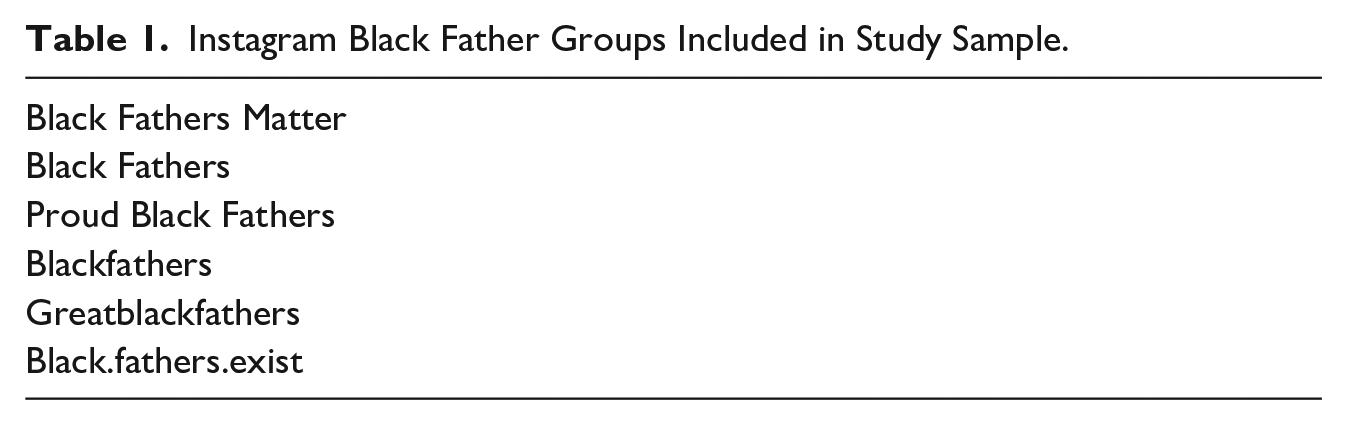
The sampled memes came from specific Instagram groups that target Black fathers and have mentioned them in their mission statements (See Table 1). For this analysis, we randomly collected 1,116 memes. Each meme was placed into a grid (12 memes per grid) for ease of analysis (See Figure 1). However, many of these memes were excluded from the sample because they were duplicates, unrelated to the study, or were included in our pilot study. The final sample included a total of 698 memes.
Instagram Black Father Groups Included in Study Sample.

Grid of sample Black father-themed Instagram memes.
Content Analysis
Employing CRT and Framing Theory, we used a content analysis to systematically code each meme, taking into considering both images and text. Specifically, we looked at how the memes in our sample framed Black fathers and the tone they used—positive, negative, or neutral. For tone, if the meme reflected negatively on Black fathers or used historically racist characterizations (i.e., absent, or uninvolved), we coded it negative. If the meme included a message of hope (i.e., encouraged Black fathers to spend time with their children), we coded it positive. Memes that included educational information, calls to action, news announcements, information on an event, or trends in parenting were coded as neutral. Next, we coded each meme for framing. An extensive review of the literature served to illuminate historical narratives used to frame Black fathers, which we gathered and used as a baseline for understanding the diverse types of frames that might be used to depict Black fathers on Instagram (Dixon, 2019).
From this, the primary investigator developed the initial codebook. Any frames that emerged during our pilot study were also included. From there, we examined each meme included in our sample for framing of Black fathers, allowing new codes to emerge throughout the process. Those memes that did not fit into any category were designated as “other,” and described in the coding instrument. We used intercoder reliability to control for biases that might have been introduced when assessing each meme. To test for intercoder reliability, the lead researcher and two co-researchers started by coding approximately 10% of the memes in the sample (n = 70) individually, looking for consistency across codes. We analyzed memes individually a minimum of three times. From this process, we were able to achieve at least 80% consistency per category. The initial coding helped identify emerging themes and ensure consistency across coders. For the final analysis, the entire research team coded the remainder of the memes in the sample. The primary investigator, two co-researchers, and a graduate student assisted in coding the memes. Three of the four coders were Black, female scholars specializing in fatherhood and media portrayals of underrepresented groups. One coder was a White female graduate student. Thus, the identities and research interests of the coders could have influenced the development of the codebook and the interpretation of memes.
Study Findings
From our content analysis, a total of eight themes emerged. Study findings were organized into categories based on tone and framing (Prinsloo, 2006). For the theme related to tone, there were three sub-themes: (1) positive, (2) negative, and (3) neutral. For the theme related to framing, there were two sub-themes: (1) framing memes and (2) non-framing memes. Below, we present the findings in each of these categories.
Tone Toward Black Fathers in Instagram Memes
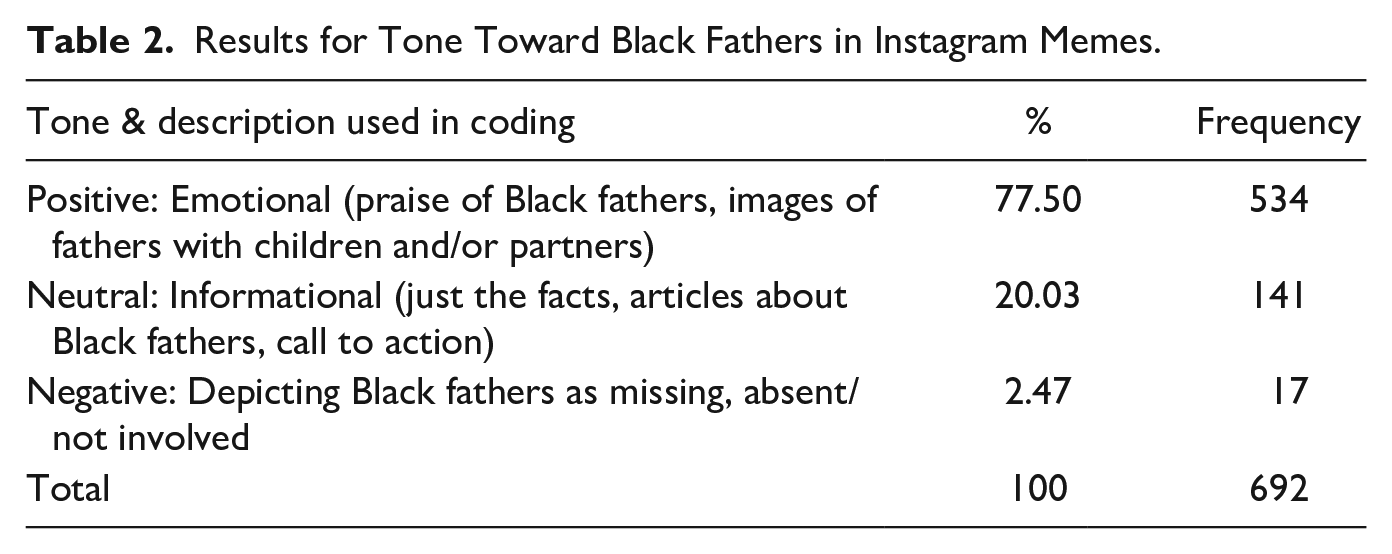
The first research question asked: In Instagram memes, what is the tone toward Black fathers? This question was posed to help understand the overall sentiment toward Black fathers in the sampled memes. In our sample, 534 were positive, 17 were negative, and the remaining 138 were neutral (see Table 2). Specifically, most (77.50%) of the memes provided a strong counter-narrative to the traditional tropes of Black fathers (i.e., absent and deadbeat), instead of perpetuating such negative stereotypes.
Results for Tone Toward Black Fathers in Instagram Memes.
Black fathers were mostly depicted as strong, playful, nurturing, caring, and responsible. For instance, many memes in this category took on a more emotional tone by showing fathers at play and lifting their child in the air. Sampled memes characterized Black fathers using upbeat content that praised and affirmed them in their role as parents. One meme included the message: “Black fathers are important. Black fathers are amazing. Black fathers are valued. Black fathers are loved. Black fathers matter!” (See Figure 2).
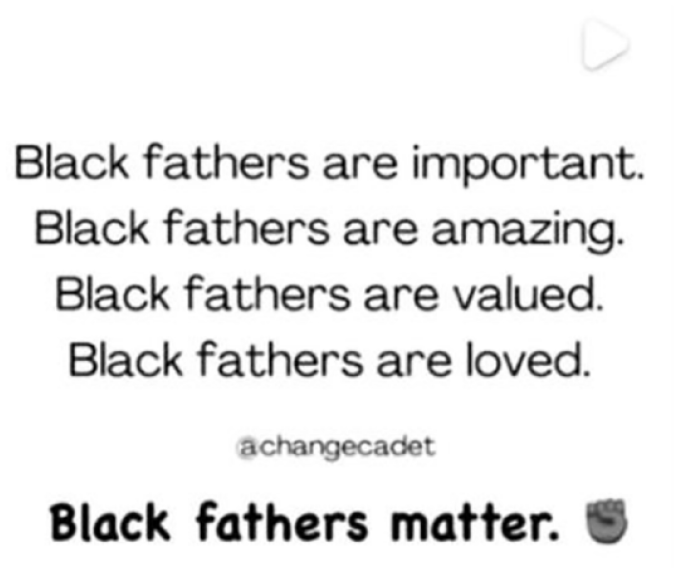
This meme features positive affirmations about Black fathers.
Other memes included Black fathers embracing or hugging their children or vice versa. Still others featured Black fathers combing their daughter’s hair, pushing their child in a baby carriage, and teaching their offspring to ride a bike, play ball, or operate a business. Specifically, one meme stated, “I pledge to be the first good man my daughter knows” (See Figure 3). In addition, several positive memes featured celebrities. One such meme presented pictures of Kobe Bryant with his family. The message in this meme is about Black wealth and highlights how Bryant’s investments have reached $800 million in profit and are still providing for his family even after he died in 2020 (See Figure 4). Other memes feature celebrities, such as Muhammad Ali, with his children and sisters Serena and Venus Williams with their father.
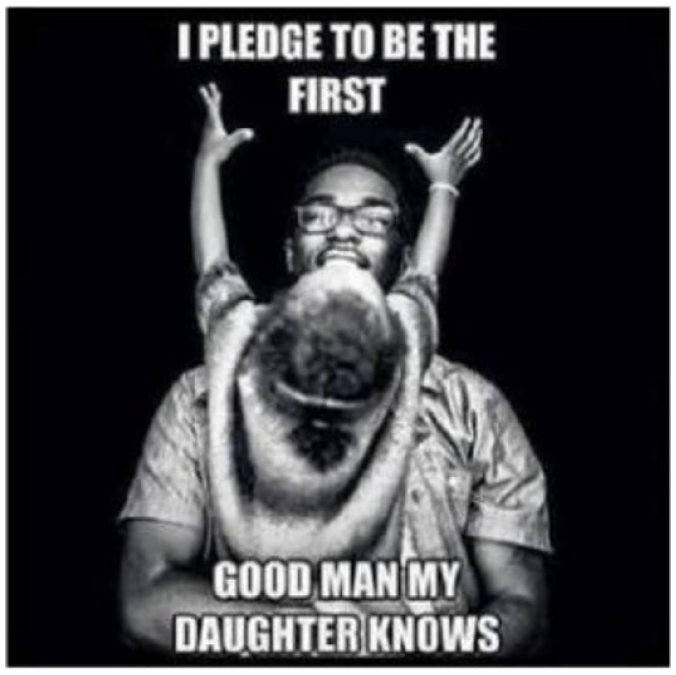
This meme features a Black father engaging playfully with his child.

This meme features Kobe Bryant and his family and highlights the importance of generational wealth in Black families.
The memes with a neutral tone focused on educational or informational content and events. For example, one meme cited a study conducted by the Centers for Disease Control (CDC), which stated: “In a 2013 study at the CDC, a higher percentage of black fathers aged 15-44 (27%) took their children to or from activities every day compared with white fathers (20%)” (See Figure 5). Other memes categorized as neutral were focused on a call to action. Specifically, the memes within this category focused on encouraging Black fathers to act by increasing their participation in their children’s lives. For example, one meme stated: “Somebody once told me someday your children are going to figure out who you are, just like you figured out who your parents are. Make sure you’re being the person they can be proud of when they figure it out” (See Figure 6).
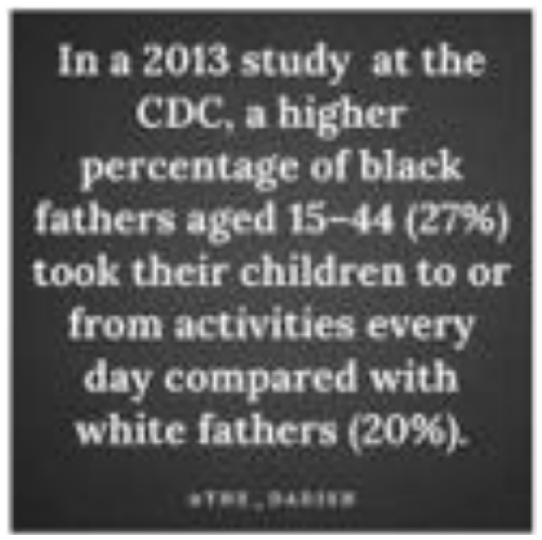
This meme features educational information about Black fathers.

This meme features an affirmation for Black fathers.
Memes that portrayed a negative persuasive message (i.e., to mock, belittle, negate, or call out) were much less common among this sample. Overall, the memes included in this study communicated two predominant messages: offering praise to active fathers and admonishing inactive fathers. Both messages are consistent with dominant cultural and social norms for fatherhood in the 21st century, as men are now expected to take on a more active role in childrearing activities, compared to past generations. The findings related to this theme are also consistent with the tenets of CRT in that they challenge and counteract the master narrative regarding perceptions of Black fathers as inactive in the lives of their children and families.
Framing of Black Fathers in Instagram Memes
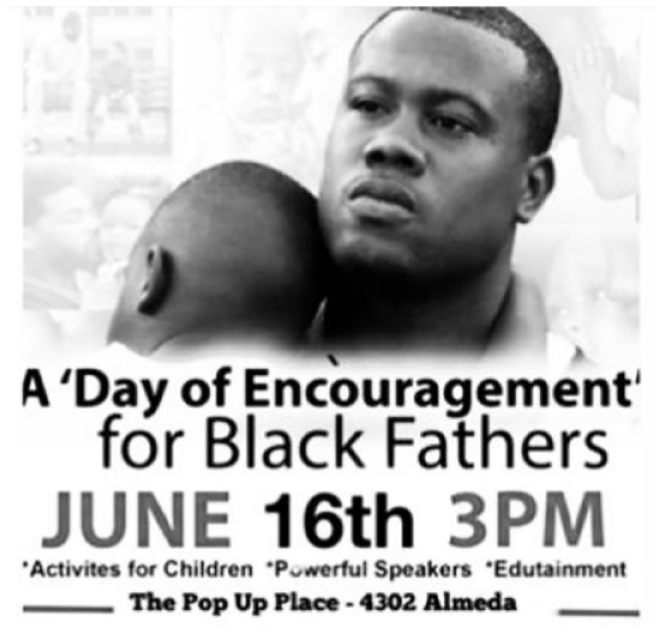
The second research question asked: how are Black fathers framed in Instagram memes? We divided this section into two categories—framing and non-framing memes (See Table 3). Most of the memes framed Black fathers using the “embracing fatherhood” frame, depicting them as caring and active in parenting their children. Specifically, the memes included images of Black fathers spending quality time with their children (50.22%, n = 346). One such meme included the following caption: “A Day of Encouragement for Black fathers.”
Results for Frames of Black Fathers in Instagram Memes.
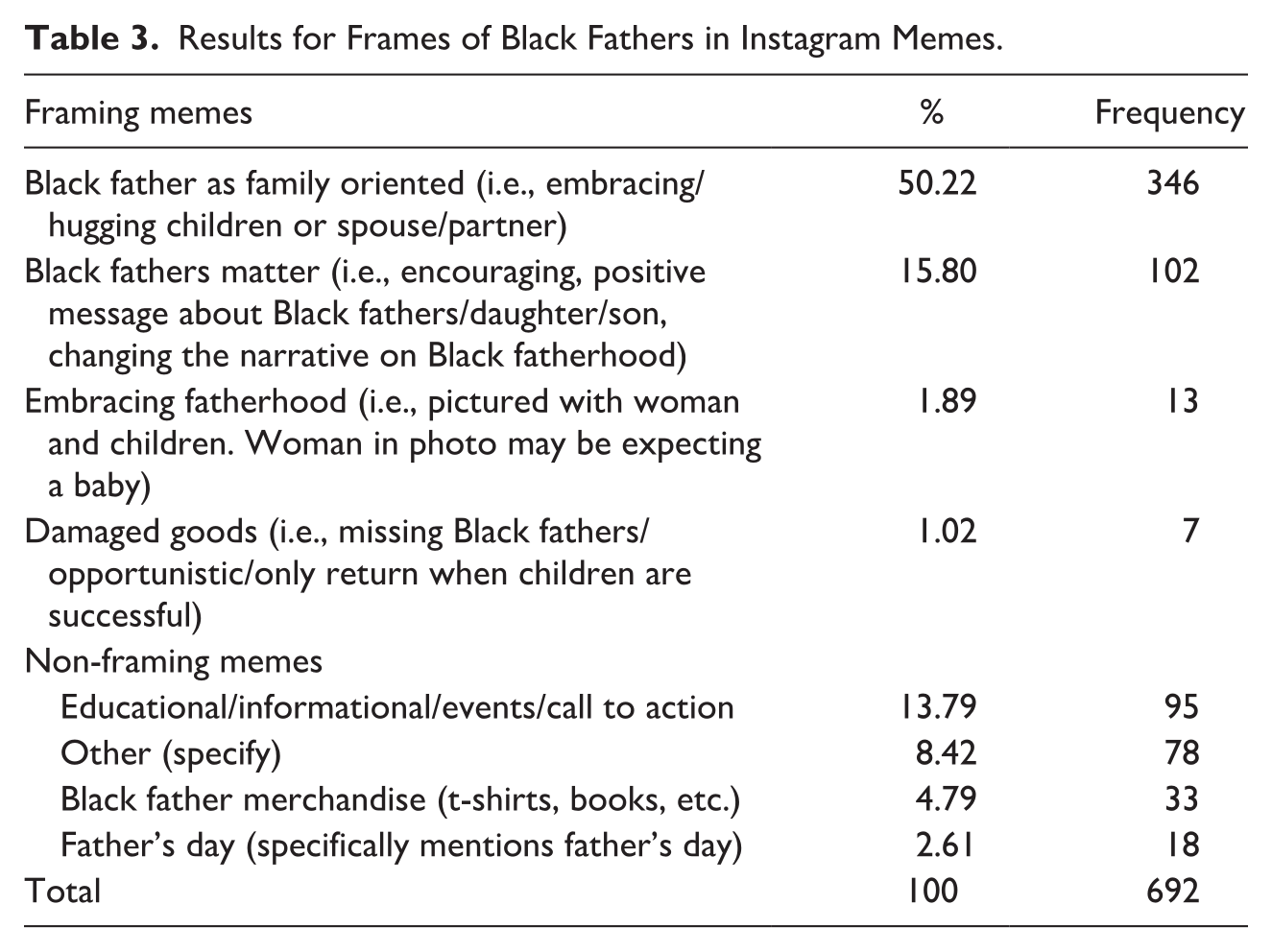
It is accompanied with an image of a Black father hugging his child (See Figure 7). In these memes, no secondary parental partners are present. Black fathers were also framed as “family-oriented,” with 1.89% (n = 13) of them featured in images with a mate or a secondary parental figure (See Figure 8). Captions along with the memes offer messages of hope regarding Black fatherhood. For example, one meme states: “Black fathers get custody of his daughter after she was secretly adopted” (See Figure 9). The “Black Fathers Matter” frame is the second most popular type of frame, with 15.8% (n = 102) of the memes falling into this category. These memes frame Black fathers using dialog derived from the BLM movement, often using the catchphrase “Black Fathers Matter” (see Figure 10). In addition, within this same category, some memes seek to change the narrative of the absent Black father, with one stating, “Contrary to belief, real Black fathers still exist” (See Figure 11).
This meme features a Black father embracing his son.

This meme features a Black father as a family oriented.

This meme offers a message of hope about Black fathers.
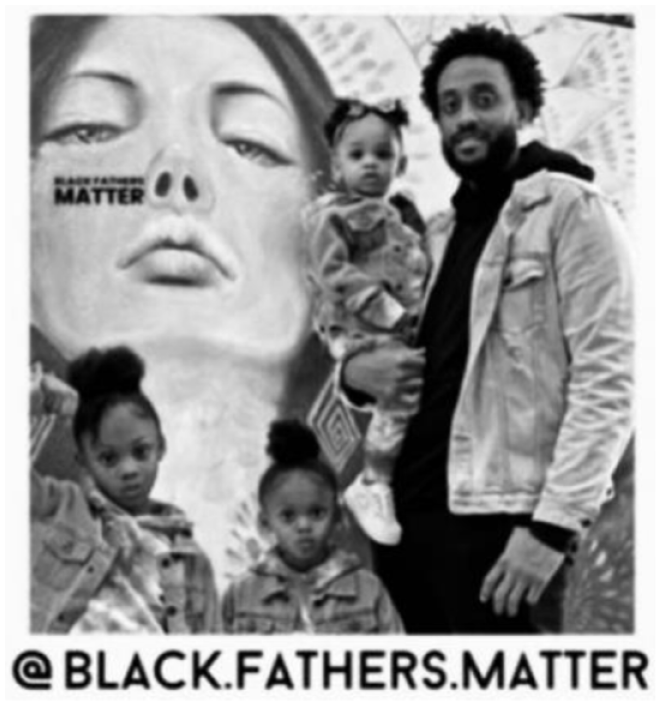
This meme features the catchphrase “Black fathers matter.”
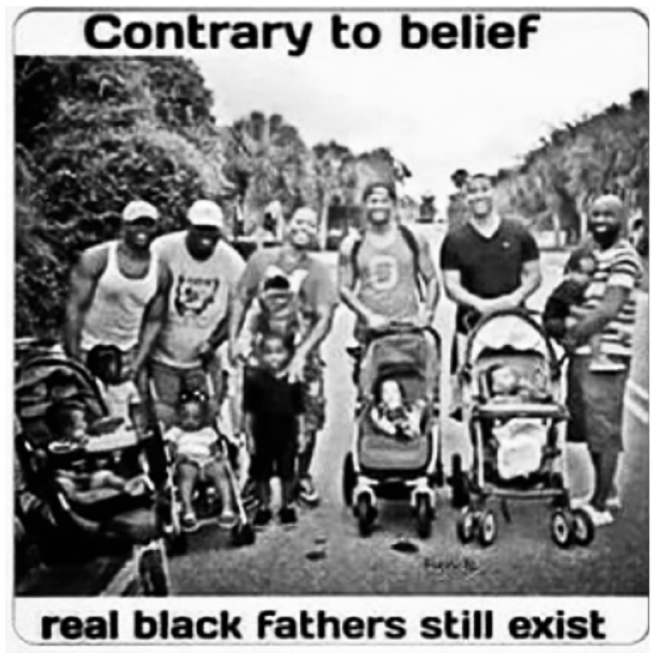
This meme features an image that seeks to change the absent Black father narrative.
Less flattering memes in our sample frame Black fathers using some of the narratives we discovered in our review of the literature—deadbeat, opportunistic, or absentee (Tyrell & Masten, 2022). For instance, memes in this category used humor and other stereotypes to depict Black fathers negatively, with 1.07% (n = 7) falling into this category. A large percentage of the memes in our sample fell in the non-frame category. These memes were less likely to depict Black fathers using a cultural narrative. Instead, they are educational or informational. Many encourage Black fathers to learn more about parenting and how to raise children, with 13.79% (n = 95) falling into this category. Overall, Instagram users leveraged the platform to form virtual groups to share ideas and organize with others with similar interests. Memes included invitations to events, such as town hall meetings, the state of Black fatherhood virtual meetings and webinars to share parenting tips and to lift one another up. One meme invited individuals to attend an event for Black fathers. The caption states, “A Healing Conversation for Fathers of Women & Girls: Just for Dads” (See Figure 12).
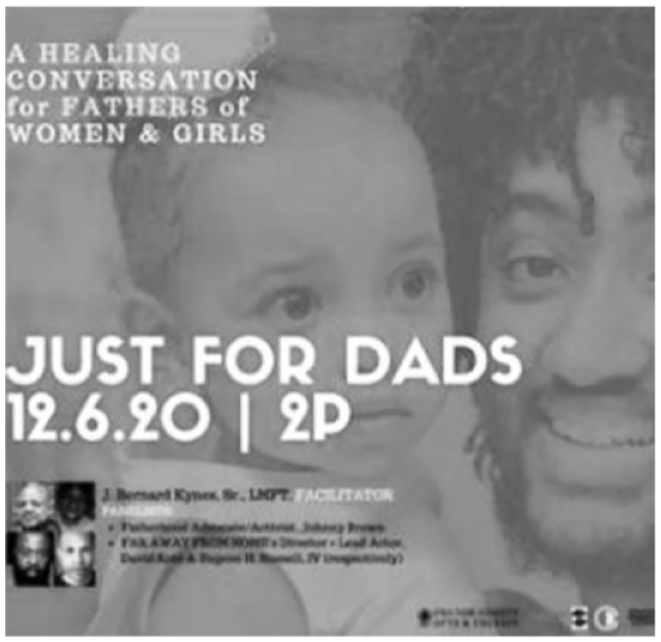
This meme features an event for Black fathers of women and girls.
Other memes featured advertisements to sell merchandise, such as t-shirts, posters, books on parenting, and accessories containing positive messages about Black fathers. This category made up 4.79% (n = 33) of our sample (See Figure 13). Black Lives Matter and Father’s Day merchandise were the most common. Merchandise also praised Black fathers, referring to them as “kings,” and encouraged them to keep pressing forward. We coded several memes as “other,” with 8.42% (n = 78) falling into this category. Overwhelmingly, these memes offered encouraging, positive messages that can help to reframe the narrative on Black fatherhood and project messages that counter historical deficit frames.

This meme features a Black fathers matter t-shirt.
Discussion
The purpose of this study was to examine both the framing and tone toward Black fathers in Instagram memes shared between October and November 2022. As highlighted in our literature review, mass media outlets have traditionally framed Black men negatively. Our findings provide an example of how social media users deploy user-generated content to address/change deficit narratives of Black fathers. Our analysis indicates Instagram has become a storytelling tool to share positive frames and messages of hope about this group. One of the advantages of social media content is that it can be used to bypass the role of the gatekeeper. In this case, memes allowed citizens to take on the role of gatekeeper and share messages widely online in a virtual group setting.
Furthermore, individuals from different geographical regions created and shared memes about Black fatherhood—which ranged from photos of fathers with children to invitations to parenting meetings. The messages shared in online virtual groups can serve to counter the prevailing stereotypes that depict Black fathers negatively (Rambert, 2021; Tyrell & Masten, 2022). Throughout history, the medium in which messages are disseminated has made a difference in the narrative constructed about marginalized groups (Prinsloo, 2006). Much of the current literature focuses on film and television portrayals of Black fathers (e.g., Carter, 2010; Kelly, 2009; Merritt & Stroman, 1993), while other studies examine representations of the group in newspapers. In each case, Black people are not in decision-making positions as there are few Black-owned publications and media outlets. However, we are now living in the era of the Black Lives Matter movement, which has elevated the role of social media in fostering positive portrayals of Black people. The notion of “Black Fathers Matter” intersects with the movement and elevates the important role that Black men play in the success of their children and the overall functioning of the family unit. The memes examined offer overwhelmingly positive representations of Black fathers.
This was most notably depicted in phrases like “Black Fathers Matter,” “Black fathers are our superheroes,” “Black Fathers Rock,” “Black Fathers Got the Juice,” and “Black King Magic.” Worth noting is also the affirming messages that appeared on merchandise (i.e., t-shirts) such as “Father Figure,” “Strong Black Fatherhood,” “Black Fathers are Essential,” and “Proud Black Father.” This analysis of positive Black father-themed memes is important for extending the literature toward an greater understanding of new trends in media representation of Black men and families. However, like any research study, ours has limitations that should be noted. One limitation of this study is the homogeneity of social media feeds. The memes we examined are likely primarily consumed by Black fathers or members of the Black community (i.e., in-groups). Specifically, the Instagram pages we examined were created, maintained and consumed by Black Instagram users, which means they may not penetrate non-Black audiences. However, Brock (2020) notes that while Black people’s online activities are visible to intended audiences, they may also be available to out-group social media users.
Future studies should assess the extent to which members of other racial/ethnic groups (i.e., out-groups) consume the content featured on Black fatherhood Instragram pages. Combining these two areas of research (i.e., in-group and out-group consumption) will help scholars assess the reach of Black-father themed memes beyond the audiences for which they are intended and any variances in-group and out-group reactions to these memes. The literature might also benefit from in-depth interviews of individuals who share and consume information on these pages to provide more insight into how the messages impact different groups of individuals. Another limitation for our study is the prevalence of algorithmic bias in social media. For example, when individuals Google Black men, negative images typically surface (Preston, 2021). For our study, we specifically chose to examine Instagram pages created by Black fatherhood groups rather than conducting a Google search to find memes created by and for Black men. Therefore, it is important to acknowledge works such as Algorithms of Oppression (Noble, 2018), which details how the creation and utilization of algorithms in nearly every aspect of our digital lives perpetuate anti-Black racism and misogynoir.
Furthermore, our analysis was limited to the role that Instagram plays in cultivating messages of hope about Black fathers. Future studies might compare Instagram memes to TV and film portrayals. The examination of messages on several different platforms can provide a more comprehensive understanding of the diverse representations of Black fathers across mediums. Our study also focused on more traditional notions of fathering. Future research might extend this examination to non-traditional notions of fatherhood and family to provide a more contemporary view of Black fathers in a variety of roles (i.e., of single and non-resident fathers) (McDougal & George, 2016). This is imperative as understandings of fatherhood and conceptualizations of family are ever-changing, both nationally and globally. Despite these limitations, the findings of this study have important implications for future studies on representations of Black fatherhood in the media. Social media is a powerful tool that may be used to make a significant difference in changing in-group narratives on Black fatherhood and Black family life.
Conclusion
This article is among the first to explore the frame and tone of Instagram memes featuring Black fathers using CRT and Framing Theory as lenses. As noted previously, prior studies related to images of Black fathers in the media have examined traditional mediums that employ a top-down approach, such as television and newspapers (Deo et al., 2008; Stamps, 2021). In these portrayals, the negative Black father stereotype remains a notable part of the narrative. Conversely, this study examined images that were generated from users of the social media platform, Instagram, with overwhelmingly positive and hopeful messages emerging from a sample of nearly 700 Black father-themed memes. Overall, the narrative rooted in the normalization of White identity (Solórzano & Yosso, 2002) and the negative portrayal of Black fathers (Brooms & Perry, 2016) was rare among this sample.
Our analysis suggests that Instagram provided an accessible alternative to TV and film for sharing messages of hope about Black fathers and an avenue for further examining and interrogating prevailing racial narratives and frames in society to gain a deeper understanding and sense of appreciation for Black fathers (Rossing, 2014). Given the ongoing popularity of social media since the founding of Facebook in 2004, its users are the new gatekeepers of the bulk of society’s media and messaging today. Memes, as part of the evolving world of social media, have the potential to counteract the influences of racialized messaging and the negative portrayals of Black fathers. Our study adds to the literature by documenting a shift toward more positive discourse of this group using Instagram as a platform. As such, our analysis advances Framing Theory, especially as it pertains to race, with an emphasis on how marginalized groups can take ownership of their own portrayals. It also challenges future researchers to continue to explore the promise of social media for changing the social discourse on Black fathers and the Black family. Finally, this study also points to ways in which Black fathers themselves can influence the discourse by using Instagram more intentionally to circulate messages of hope. The Black community, as a whole, should continue to leverage Instagram and other social media platforms as means of changing the narrative on Black fatherhood in America.
Footnotes
Declaration of Conflicting Interests
The authors declared no potential conflicts of interest with respect to the research, authorship, and/or publication of this article.
Funding
The authors received no financial support for the research, authorship, and/or publication of this article.
