



Abstract
Previous studies adopting the collective vulnerability approach have shown that condemnation of war atrocities is grounded in communal experiences of victimization and is strongest in locations where victimization was spread across ethnic boundaries. Based on a representative survey conducted in 2006 (N = 2,012) across the former Yugoslavia, we find a similar pattern for acceptance of collective guilt. While personal victimization does not have a significant impact, the acceptance of guilt is strongest in more war-affected regions. Moreover, the results show the importance of the type of communal-level victimization: acceptance of guilt is lowest in regions marked by asymmetric violence and highest in regions marked by symmetric violence. Our findings suggest that collective victimization should not be treated as a uniform phenomenon and challenge the assumption that rejection of in-group guilt is an inevitable outcome of collective victimization.
Introduction
It is widely acknowledged that postconflict reconciliation requires the impartial condemnation of human rights violations, regardless of the group membership of the perpetrators (e.g., Hewstone et al. 2004; Brown and Cehajic 2008; Wohl and Branscombe 2008). Sociopsychological studies on the condemnation of group-based atrocities frequently focus on collective guilt, an emotional reaction that stems from the belief that one’s group has done wrong (Wohl, Branscombe, and Klar 2006). Most sociopsychological studies suggest that collective victimization is conducive to rejection of collective guilt and reluctance to acknowledge and condemn crimes that are committed by in-group members (e.g., Wohl and Branscombe 2008; Bar-Tal et al. 2009). These studies, however, have rarely examined the impact of actual exposure to war violence (see Vollhardt 2012).
In this study, based on a representative survey conducted across postwar former Yugoslavia in 2006 among people who were young adults during the Yugoslav wars (Transition to Adulthood and Collective Experiences Survey [TRACES]; Spini, Elcheroth, and Fasel 2011), we examined the impact of exposure to collective war victimization on collective guilt. A further novelty in comparison to the previous studies is a multilevel approach to collective victimization, in which we aim to disentangle the impact of individual-, communal-, and societal-level consequences of warfare (Elcheroth 2006; Elcheroth and Spini 2014; Balcells and Justino 2014). A few studies have shown that at the individual-level personal victimization is associated with rejection of collective guilt (e.g., Hewstone et al. 2004, 2006; Myers, Hewstone, and Cairns 2009). Similarly, at the societal level, studies highlight the role of societal-level channels (e.g., media, political speeches, education, etc.) in shaping and transmitting politicized black-and-white narratives of in-group victimhood and out-group blame (Thompson 1999; Bilali and Ross 2012). In this article, our theoretical and empirical focus is on the intermediate communal level of analysis. Building on the collective vulnerability approach (Elcheroth 2006; Spini, Elcheroth, and Fasel 2008), we assume that communal experiences of war that occur in people’s proximal surrounding might be an important source of critical knowledge and beliefs about war events.
Deriving from this approach, we further assume that collective guilt depends not only on the level but also on the type of war violence that occurred within the regions. In particular, it matters whether the violence was asymmetric (i.e., disproportionally affected only one group) or symmetric (i.e., similarly affected members of adversary groups; see Spini, Elcheroth, and Fasel 2008). Using complementary macrolevel data from the war events data set, which pinpoints the locations of war incidents between 1990 and 2001 (Armed Conflict Location and Event Dataset [ACLED]; Raleigh et al. 2010), we computed several indicators of communal-level war violence that capture the intensity and types of war atrocities. The comparative design of our study, including the availability of the representative survey data for the entire territory of the former Yugoslavia, allows us to examine the impact of communal-level war violence on collective guilt across different countries and nations.
Is Exposure to War Violence an Obstacle to Collective Guilt Acceptance?
Most sociopsychological studies suggest that a pervasive pattern of postconflict intergroup relations involves strong out-group blame and reluctance to acknowledge and condemn crimes that are committed by in-group members (e.g., Wohl and Branscombe 2008; Jelic, Corkalo Biruski, and Ajdukovic 2013). According to Bar-Tal et al. (2009), such reactions are grounded in a sense of (exclusive) in-group victimhood, which is sometimes understood as an almost unavoidable reaction to a group’s exposure to violence. Members of groups exposed to intergroup violence tend to perceive their group as a victim in the conflict, blame the other side for perpetrated atrocities and justify atrocities committed by in-group members (Wohl and Branscombe 2008; Bar-Tal et al. 2009; Noor et al. 2012). Even in conflicts with reciprocal harm-doings, where it is not possible to draw a sharp line between the “victim” and “perpetrator” group, it is argued that most people tend to perceive their own group as a “victim” (Noor, James Brown, and Prentice 2008) and consequently reject collective guilt for the in-group’s actions (Bar-Tal et al. 2009).
However, a few studies suggest that people sometimes do acknowledge the reality of in-group crimes and experience collective guilt, despite their group’s victimization. Roccas, Klar, and Liviatan (2006) showed that even among highly identified group members, in the mid of intergroup violence, some people accept collective guilt and condemn the in-group’s atrocities. Maček’s (2009) ethnographic study in Sarajevo during the siege showed that although a nationalistic rationale explaining and legitimizing violence dominated public spaces, many people, especially in private, tended to condemn violence, even violence committed by their ethnic group members. Mazziotta et al. (2014), in a field experiment in postconflict Liberia, demonstrated that people can simultaneously remember the in-group’s victimization and the harm that the in-group members inflicted upon “others” and that such a broadened perspective on the in-group’s role in the conflict is related to positive intergroup outcomes. Thus, these studies suggest that collective victimization might not be an obstacle for collective guilt acceptance.
Multilevel Approach to Collective Victimization
To understand the impact of collective victimization, it is necessary to move beyond its common unidimensional conceptualization (see Elcheroth 2006; Balcells and Justino 2014; Schori-Eyal, Halperin, and Bar-Tal 2014). People do not form beliefs about collective victimization automatically or in social isolation. Rather, their beliefs critically depend on the type of events or information and narratives about these events to which they have been exposed. Indeed, to acknowledge and condemn an in-group’s atrocities, people first need to have knowledge about such events. We distinguish exposure to war events at three analytic levels: the individual, communal, and societal levels (see Mutz 1998; Balcells and Justino 2014). The individual level refers to personal victimization, which stems from direct exposure to war events. At the communal level, individuals who live in the communities and regions where warfare takes place can be further exposed to indirect communal experiences of victimization, obtained through observation of violent events and interpersonal communication and contact with other people in proximal surrounding. At the societal level, people are exposed to societal narratives about collective victimization, which are mediated through societal-level channels, particularly mass media (Bilali 2013; Bar-Tal, Oren, and Nets-Zehngut 2014). When personal victimization motivates the victim to distance oneself from the perceived perpetrators (Canetti-Nisim et al. 2009) and when societal narratives are strongly politicized and exclude information that challenge in-group’s morality (Bar-Tal, Oren, and Nets-Zehngut 2014), communal-level experiences of victimization can become the only systematic source of critical knowledge about a conflict, such as about events of in-group perpetration and out-group suffering.
Most studies have examined processes at the individual and the societal levels. Studies focusing on the individual level suggest that personal war victimization might be an obstacle to impartial condemnation of war atrocities. Several studies have shown that collective guilt acceptance is particularly rare among direct victims of war (e.g., Hewstone et al. 2004, 2006; Myers, Hewstone, and Cairns 2009).
Studies at the societal-level document an important role of societal narratives of conflict, which are transmitted through societal channels such as mass media, political speeches, or education, in both fomenting conflict and violence (Kurspahić 2003; Straus 2013) and contributing to intergroup reconciliation (Paluck 2009). The crucial factor is how the conflict is represented within the public sphere and what type of information about conflict events can be obtained. The studies suggest that during conflicts, even in well-established democracies, there is a low likelihood of learning about in-group atrocities or out-group members’ suffering through mainstream societal channels (Lewis 2004). These channels typically construct conflict-supportive narratives, by transmitting information about real or fabricated events that support these narratives and by marginalizing or omitting contradictory information (Bar-Tal, Oren, and Nets-Zehngut 2014). Across the former Yugoslav nations that were involved in conflicts, the mainstream media and public institutions were under direct control of powerholders and were thus consistently transmitting narratives of in-group victimhood only, together with denial, ignorance, or justification of atrocities committed by in-group members (Thompson 1999; Kurspahić 2003). As a consequence, people for whom the politicized societal-level narratives are the only source of knowledge about the conflict have a heightened likelihood of endorsing such beliefs (Bilali 2013; Happer and Philo 2013). For example, in the context of the government-sponsored collective denial and legitimization of the past mass killings of Armenians in Turkey, Bilali (2013) showed that Turkish students, for whom the official narratives are the only or the primary source of knowledge about the events, tend to endorse these narratives and consequently deny in-group responsibility.
Community-level Impact: Can War Exposure Result in Acceptance of Collective Guilt?
People living in communities where warfare took place are not exposed only to mass-mediated societal narratives, they also observe events in their proximal surroundings and communicate about them with other community members. The role of communal-level violence has rarely been considered in sociopsychological studies on collective victimization (see Vollhardt 2012). However, certain studies show that direct exposure to out-group members’ experiences and stories is likely to enhance acknowledgment of in-group’s atrocities. For example, Čehajić and Brown (2010) have shown that, in the context of postwar Bosnia and Herzegovina, good-quality contact with out-group members increases acknowledgment of the in-group responsibility for past wrongdoings by enhancing perspective taking and by decreasing a focus on exclusive in-group victimhood (see also Andrighetto et al. 2012).
More generally, in communities where warfare has actually taken place, where people could themselves witness conflict events and/or communicate about them with other group members, they are more likely to learn about concrete abuses, even when these are excluded from politicized societal narratives, for example, because they have been perpetrated by in-group members. Focusing on this particular quality of communal-level experiences of war, the collective vulnerability approach (Elcheroth 2006; Elcheroth and Spini 2014) rests on three main assumptions. First, communal experiences of victimization are an important source of critical knowledge about the conflict. Second, systematic events of violence and human rights violations generate a climate of moral uncertainty that poses a threat to social cohesion. Third, such a volatile and psychologically challenging social environment creates specific motivations to contribute to the restoration of the normal functioning of the community by addressing the problem of in-group accountability. As a consequence, in communities directly struck by war violence, where the social cost of war is the highest, people tend to be more critical of human rights violations, even when they have been perpetrated by their in-group members.
In support of this perspective, several studies conducted in various war-torn contexts, including the regions of the postwar former Yugoslavia, have shown that the condemnation of mass human rights violations perpetrated during the war is grounded in collective experiences of war (Elcheroth 2006; Spini, Elcheroth, and Fasel 2008; Elcheroth and Spini 2009, 2014). All of these studies systematically show that even when direct victims of war tend to normalize or justify violence more strongly than other community members, in communities that are heavily affected by war, the overall condemnation of human rights violations is stronger than in less affected communities. Elcheroth (2006) showed that this pattern holds even for the condemnation of violence inflicted by combatants from one’s own group to enemy victims. A similar pattern was reported by Bakke, O’Loughlin, and Ward (2009), who examined the impact of individual-level and regional-level exposure to war violence on attitudes toward forgiveness in the North Caucasus. They found that, although, individual victims of war were less inclined to forgive, the average level of forgiveness was highest in regions most heavily affected by the war.
Distinguishing Symmetric and Asymmetric Communal Violence
However, the impact of communal-level violence on collective guilt does not only depend on the intensity but also depend on the type of violence that occurred within the communities. Previous work suggests a critical difference between symmetric violence, that is, which similarly affected members of both adversary groups, and asymmetric violence, which disproportionally affected one group only. Spini, Elcheroth, and Fasel (2008) showed that across eight countries with recent intergroup violence, in contexts in which violence symmetrically affected many people across all conflicting groups, collective support for the protection of human rights was the strongest. At the local level, symmetric victimization can occur at ethnically heterogeneous locations where armed battles take place. Due to the high prevalence of armed battles, inhabitants are more likely than elsewhere to learn about atrocities perpetrated by both sides (e.g., attacking civilians, looting, and damaging properties) and, consequently, to be exposed to shared experiences of victimization. Accordingly, in this study, we examine whether the local prevalence of armed battles and shared victimization is linked to stronger acceptance of collective guilt. Following Spini, Elcheroth, and Fasel (2008), shared experiences of victimization foster a shared sense of collective vulnerability across enemy lines, which contradicts politicized narratives of exclusive in-group victimization and out-group blame. Similarly, Shnabel, Halabi, and Noor (2013) have shown that inducing a common identity among members of adversary groups through reminders of shared experiences of victimization or perpetration reduces competitive victimhood and increases forgiveness.
Most sociopsychological studies on collective memory of asymmetric violence typically document the rarity of collective guilt, even among members of groups whose role in perpetrating mass violence is relatively undisputed (for a review see Leach, Bou Zeineddine, and Čehajić-Clancy 2013). At the local level, systematic episodes of asymmetric violence, in which civilians of one side are exposed to deliberate attacks by armed forces (such as mass killings, mass incarceration or deportation, ethnic cleansing, etc.), can deeply divide previously cohesive communities and pose a severe obstacle to successful dealing with the past. Strong asymmetry in experiences of victimization can petrify the boundaries between the groups and create a sense of the impossibility of togetherness. Moreover, events of asymmetric violence can provoke retaliation by the other side, subsequently leading to cycles of violence (Schneider, Bussmann, and Ruhe 2012).
Summary
Let us now summarize the main points orienting the present study. People can be exposed to different sources of knowledge about the war events, and their beliefs about the conflict can thus vary as a function of exposure to each source (Mutz 1998). A few of studies have shown that rejection of collective guilt is associated with direct exposure to war events at the individual level (Hewstone et al. 2004, 2006; Myers, Hewstone, and Cairns 2009) or highlight the role of societal-level channels in shaping and transmitting politicized narratives of exclusive in-group victimhood (Bilali and Ross 2012).
However, in line with the collective vulnerability approach, we anticipate that the community-level impact of exposure to war violence can be very different from the impact of war exposure at either an individual or societal level. Moreover, the same approach emphasizes the importance of the type of violence, particularly whether the victimization was asymmetric or spread across the group boundaries. In the present study, we therefore perform a series of multilevel analyses which simultaneously examine the impact of individual-level and communal-level victimization on collective guilt, while controlling for the societal level (e.g., ethnic groups and countries).
We expect that in communities with a high prevalence of symmetric violence, collective guilt acceptance is stronger than elsewhere. We further hypothesize that in places that are characterized by asymmetric violence, or in places that were not affected by wars, where most people’s main sources of information about the conflicts were politicized societal narratives, the likelihood of experiencing or learning about events that contradict the dominant narrative is much lower. Accordingly, in these places, people might be more reluctant to recognize and acknowledge that crimes were committed in the name of their group.
To determine whether collective guilt is influenced by the (type of) collective experiences of war, we control for two additional communal-level variables. First, we control for ethnic homogeneity before and after the wars. Because symmetric violence occurred in ethnically heterogeneous areas, it is necessary to verify whether its impact holds after we control for ethnic diversity. Second, we control for the communal-level economic conditions in regions because their impact on conflict-related attitudes has been previously shown (Penic, Biruski, and Elcheroth 2014).
Study Context—The Wars in the Former Yugoslavia
The dissolution of Yugoslavia led to several violent conflicts: the Ten-Day War in Slovenia (1991), the Croatian War of Independence (1991–1995), the Bosnian War (1992–1995), the Kosovo War (1998–1999), including the NATO bombing of Serbia (1999), and the insurgency in the Republic of Macedonia (2001). Although the degree of war victimization and the culpability for massive violence vary considerably across ethnic groups, many members of all groups that were involved in the conflicts ultimately suffered some degree of victimization, and some members of all groups perpetrated atrocious deeds.
Not all regions of the former Yugoslavia were exposed to the same intensity or to the same type of collective violence. The majority of the regions remained intact despite the wars. Intergroup violence typically occurred in ethnically mixed regions where different ethnic groups had peacefully cohabitated for decades. Across many of these regions, warfare frequently followed the pattern of conventional civil wars, with violent confrontations between armed forces of local ethnic groups. Such events typically heavily affected the civilian members of all ethnic groups cohabitating in these regions, including the members of the conflicted groups (see Ajdukovic and Biruski 2008). Yet, in some municipalities and regions, warfare developed into genocidal violence, where external armed forces targeted civilians in order to achieve control over and even ethnically cleanse these areas (Weidmann 2009). The extreme case was genocide in Srebrenica, the Bosnian municipality where Serb armed forces massacred an estimated 8,000 Bosniaks in July 1995.
Method
To examine the impact of communal-level violence on collective guilt, while controlling for individual-level and societal-level variables, we have performed a series of multilevel analyses. In the first part of this section, we describe the individual-level predictors and outcome employed in these analyses. In the second part, we describe the methodological strategy that was employed to construct the communal-level indicators. Finally, in the third part, we present the findings of the main multilevel analyses.
Individual-level Predictor and Outcome Variables
Our data are taken from the TRACES. This interdisciplinary research project was conducted in all countries of the former Yugoslavia (Slovenia, Croatia, Bosnia and Herzegovina, Serbia, Montenegro, Kosovo, and Macedonia). Data were collected through standardized interviews in 2006 (Spini, Elcheroth, and Fasel 2011). The TRACES sample is representative of the cohort of people born between 1968 and 1974, who were young adults when the wars started, and consists of 2,254 respondents. Observations with missing values on predictor and outcome variables were deleted, resulting in a final sample of 2,012 respondents.
Dependent Variable
Collective guilt acceptance was measured using a five-item scale from a larger instrument developed by Branscombe, Slugoski, and Kappen (2004). The internal reliability of this scale is high in all national subsamples (Cronbach’s α from .85 to .93). Principal component analyses, performed separately on the national subsamples, confirm the assumed one-factorial structure. 1 The overall score on the scale is defined as the mean of all five-item ratings, ranging from 1 to 7. Typical items on the scale are “I feel regret for my group’s harmful past actions toward other groups” and “I can easily feel guilty for the bad outcomes brought about by members of my group.”
Independent Variables
Victim of war is the operationalization of personal victimization. It is a dichotomous variable for which direct victims of war were coded 1 and nonvictims were coded 0. A respondent was coded as a victim if he or she experienced at least one of the following events: being expelled, being imprisoned, witnessing the death of a family member, suffering property damage, being wounded, or being looted. Additionally, we have examined the impact of the type and the number of personally experienced events, which is described in the section on robustness checks.
Combatant is a dichotomous variable for which combatants were coded 1 and noncombatants were coded 0. A respondent was coded as a combatant if he or she reported carrying or using a weapon during combat.
Victim of economic exclusion is a dichotomous variable for which victims of socioeconomic deprivation were coded 1 and nonvictims were coded 0. A respondent was coded as a victim if he or she experienced either unemployment or poverty since 1990.
Ethnic identification was measured with the Ethnic Identification scale (Doosje, Ellemers, and Spears 1995), which includes four items with a response scale ranging from 1 (very strongly disagree) to 7 (very strongly agree). Typical items are “I identify with other (ethnic group)” and “I am glad to be a (ethnic group).” The internal reliability is high in all national subsamples (Cronbach’s α from .83 to .93). The overall score was formed as the mean of all item ratings, ranging from 1 to 7.
Ethnicity was measured by the self-declared ethnic belonging of a respondent. Seven main ethnic categories (Albanian, Bosniak/Muslim, Croat, Macedonian, Montenegrin, Serbian, and Slovenian) were treated as separate categories, and all other ethnic groups were categorized as “others.” Individual-level predictors were complemented by the sociodemographic variables: sex, age, and education level.
Descriptive Analyses of the Individual-level Indicators
Table 1 summarizes the descriptive statistics for all individual-level variables that were employed in the main analyses. The first striking feature is the heavy victimization of the respondents. Almost 90 percent of the respondents in Kosovo experienced at least one traumatic event during the war. More than every second respondent in Bosnia, every third in Croatia, and every tenth in Macedonia, Montenegro, and Serbia were exposed to war-related violence. Only respondents from Slovenia rarely reported victimization. Across all countries except for Slovenia, between 8 percent and 38 percent of the respondents participated in wars as combatants. Moreover, except in Slovenia, the vast majority of the respondents had experienced either unemployment or poverty since the beginning of the wars. These results thus clearly indicate that the dissolution of Yugoslavia and the subsequent wars heavily affected the generation of young adults (see Spini, Elcheroth, and Fasel 2014).
Means and Standard Deviations of Individual-level Predictor and Outcome Variables.
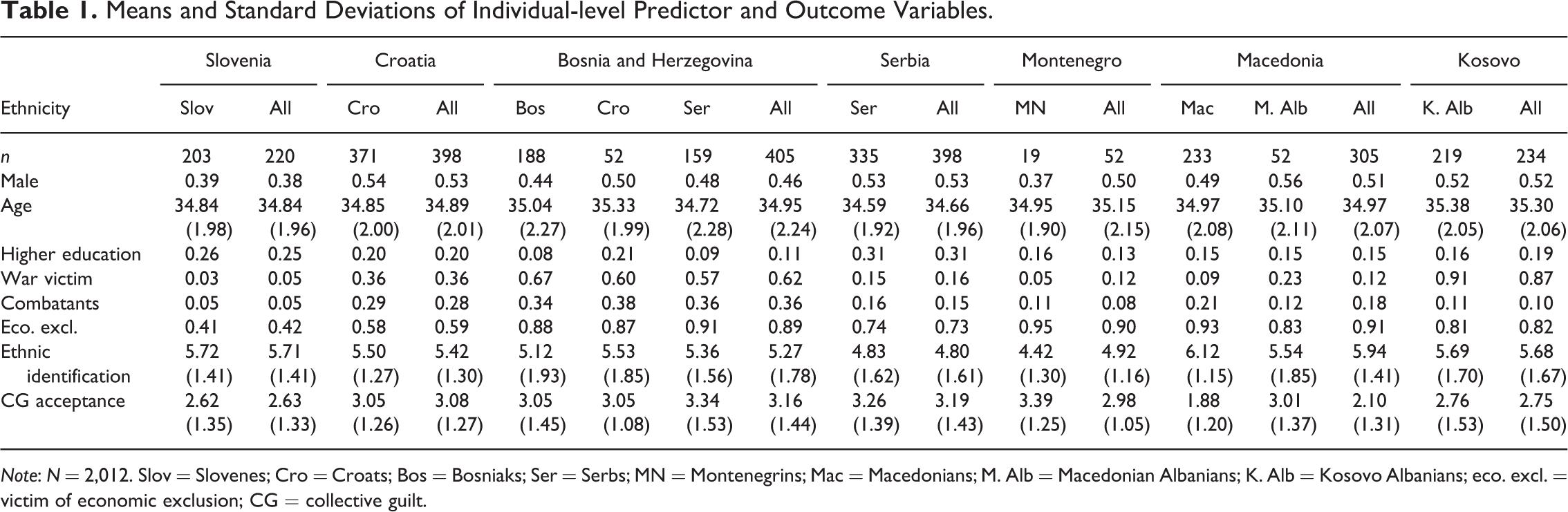
Note: N = 2,012. Slov = Slovenes; Cro = Croats; Bos = Bosniaks; Ser = Serbs; MN = Montenegrins; Mac = Macedonians; M. Alb = Macedonian Albanians; K. Alb = Kosovo Albanians; eco. excl. = victim of economic exclusion; CG = collective guilt.
Contextual Indicators
The TRACES survey followed a geographically stratified sampling design, in which the entire territory of the former Yugoslavia was divided into eighty contiguous geographic areas. The areas were defined according to state boundaries in 2006, the boundaries of political entities (i.e., the Federation of Bosnia and Herzegovina/Republika Srpska; Serbia proper/Montenegro/Vojvodina/Kosovo), and according to the regional and historical subdivisions within state boundaries. They correspond approximately to the geographical level of counties and comprise sixteen areas in Bosnia and Herzegovina, seventeen in Croatia, twelve in FYR Macedonia, nineteen in Serbia and Montenegro, eight in Slovenia, and eight in Kosovo. The communal-level indicators were operationalized on this regional geographic level.
Communal-level Exposure to War Violence
We use two sources to construct indicators of the communal-level exposure to war: the TRACES general adult population sample data set (Spini, Elcheroth, and Fasel 2011) and the ACLED (Raleigh et al. 2010). In parallel to the cohort sample survey, the TRACES project included a partially overlapping survey that was conducted on a probability sample of the general adult population born in 1981 or earlier to collect data on life events (N = 3,975). Respondents were asked about their diverse past experiences, particularly their exposure to war events, by means of life-events calendars. As with the cohort sample, for six types of war events—being expelled, being imprisoned, witnessing the death of a family member, suffering property damage, being wounded, or being looted—respondents who reported exposure to such events were asked to specify the time and location. We have used responses of the adult population sample to construct the following indicator of the communal-level intensity of victimization.
Exposure to war events was computed as a (spatially weighted) ratio between the number of experienced war events per quarter of the year within an area and the total number of observations within the same area (i.e., the sum of the three-month periods that all of the respondents spent within this area). This indicator measures the intensity of collective victimization, that is, the degree of actual exposure to war events of the inhabitants of the regions at the time of the wars.
The ACLED codes violent and nonviolent political events that occur within the context of civil wars. For each event, the ACLED provides information on the precise location, timing, and main actors. The ACLED includes data on four former Yugoslav countries/conflicts: Croatia, Bosnia and Herzegovina, Kosovo, and Macedonia. 2 Moreover, the ACLED distinguishes and codes different types of events (currently, nine types), both violent and nonviolent. Two types of events are central to the present research. The first type is battles (ACLED types 1–3), defined as “violent interaction[s] between two politically organized armed groups at [a] particular time and location” (Raleigh et al. 2010, 656). The second type is violence against civilians (ACLED type 7), defined as “deliberate violent acts perpetrated by an organized political group, typically either a rebel or government force, on an unarmed noncombatants. These acts are of a political nature, and result in the harming or death of civilians” (Raleigh et al. 2010, 656). Furthermore, the ACLED for the four Balkan states includes codes for the ethnicity of the main victims of each event. 3
We used the ACLED to compute communal-level indicators of the overall exposure to violence and of the exposure to symmetric and asymmetric violence.
Overall communal exposure to violence was measured with the indicator War events defined as the number of all war events that occurred in a region.
Exposure to symmetric violence was measured with two indicators: Battles, defined as the number of battle events that occurred in a region, and Shared victimization, defined as the number of events in which the victims were members of (at least) two different ethnic groups. 4 These two indicators measure the degree of symmetric exposure to violence among, respectively, primarily combatants or also civilians.
Exposure to asymmetric violence was operationalized with the indicator Attacks on civilians, defined as the number of events that involved intentional violence by armed forces against unarmed civilians in a region.
Because of their highly skewed distribution, all four indicators were log transformed with base 10. 5 On the original indicators, all regions from Serbia, Montenegro, and Slovenia were coded with zeros (because the ACLED does not include these countries).
The ACLED allows distinguishing asymmetric and symmetric violence at the level of single events. This is important because, for example, the same number of victims in two conflicted groups within a region could be generated by their exposure to symmetric violence but also by their exposure to cycles of asymmetric violence (i.e., sequences of events were civilians from both sides are targeted alternately). By distinguishing types of violence on the level of events, our final cumulative indicators directly measure the prevalence of shared or asymmetric exposure to war violence within the regions.
All the indicators of the communal-level exposure to war events (both the ACLED and the TRACES) were computed as a spatially weighted mean, following a novel approach to multilevel modeling, which integrates spatially weighted context data (see Elcheroth et al. 2013). Spatial weighting corrects for the unrealistic assumption of spatial independency between the contextual units and increases the precision of the contextual indicators (Elcheroth et al. 2013). It allows to treat (potentially arbitrarily defined) boundaries of the upper level units (i.e., the TRACES areas) in a more flexible manner. That is, all indicators are highly sensitive to events within the radius of a specified threshold value (here: 60 km) from the regional centroid, whereas the influence of more remote events sharply decreases with increasing distance. More precisely, the indicators were computed with the R package spacom 1.0 (Junge et al. 2013) by applying a continuous kernel function with the bandwidth value of 60 km to the matrix with geographical distances between the centroids of the TRACES areas. 6 To verify whether the described definition of the indicators affects our findings, we performed a series of additional analyses, which are described in the section on robustness checks.
Communal-level Control Variables
We operationalized three additional control variables.
Economic deprivation was computed from the TRACES general adult population sample data on two items: whether the respondent had experienced either unemployment or poverty between 1990 and 2006. Again, the indicator was computed as a ratio between the number of experienced events per quarter of year within a region and the total number of observations within the same region.
Ethnic homogeneity before the war was operationalized as the percentage of the largest ethnic group within a region. It was computed on the basis of the Yugoslav census 1991 for all countries except Kosovo. Because the majority of Kosovars boycotted the 1991 census, for Kosovo we used data from the previous census in 1981.
Ethnic homogeneity after the war was also operationalized as the percentage of the largest ethnic group within a region. It was computed from the national censuses in 2000 or later (for Slovenia, Croatia, Serbia, Montenegro, and Macedonia) or official estimates (for Bosnia and Herzegovina and Kosovo).
Correlations between Communal-level Indicators
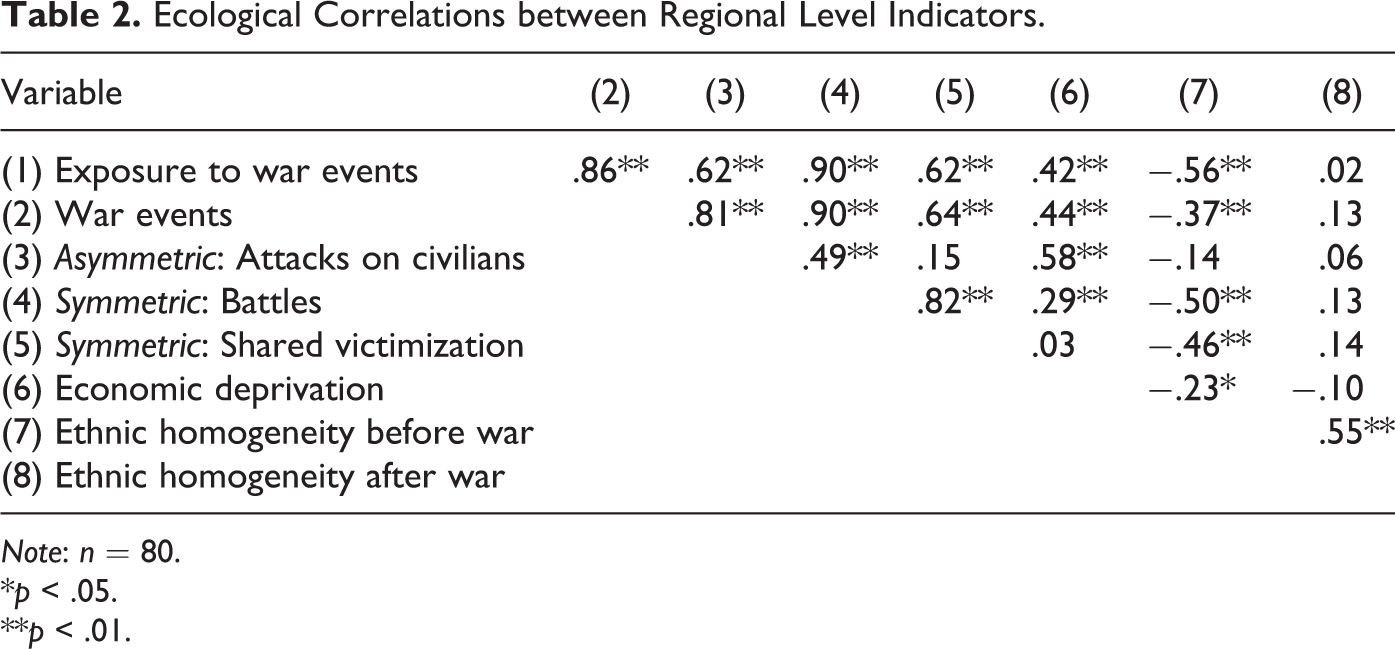
The ACLED indicators measure the frequency of war incidents that occurred across the regions. A problematic feature of the ACLED is that all events are given the same weight regardless of their severity. Thus, the massacre in Srebrenica is treated as one event, the same as, for example, a single sniper attack in Sarajevo (for a detailed critique, see Eck 2012). The ACLED data for Balkan countries does not include information on the number of fatalities per event and, therefore, does not allow computing indicators of the severity of violence. However, our findings suggest that across the regions of the former Yugoslavia, frequency of war events is a good approximation of the intensity of victimization. The ACLED indicator War events strongly correlates (r = .86, p < .01, Table 2) with the TRACES indicator of Exposure to war events, which directly measures the degree of individuals’ victimization across eighty regions: the regions with the highest frequency of war events are indeed the regions with the highest levels of exposure.
Ecological Correlations between Regional Level Indicators.
Note: n = 80.
*p < .05.
**p < .01.
Both of these indicators of overall exposure to violence strongly correlate with the three indicators of specific types of violence (see Table 2). The correlations are strongest with the Battles indicator, most likely because these types of events are the best covered and documented in the ACLED (Raleigh et al. 2010).
The correlations between indicators clearly show that war-torn regions can be differentiated by the type of local violence. This is further visible on Figure 1, in which we have mapped the distribution of different types of events across regions of the former Yugoslavia. The two indicators of symmetric violence—Battles and Shared victimization—are expectedly strongly correlated (r = .82, p < .01). Moreover, they both have a moderate negative correlation with the Ethnic homogeneity of regions before the war, indicating that these types of events frequently occurred in ethnically mixed regions. These correlations are not stronger because war violence did not occur in all ethnically heterogeneous areas. The indicator of asymmetric violence—Attacks on civilians—is moderately correlated with the Battles indicators (r = .49, p < .01). Battles typically occurred across many war-torn regions, however, only in some regions did warfare develop into mass attacks on civilians and ethnic cleansing (Weidmann 2009). Moreover, Attacks on civilians is not significantly correlated with Shared victimization or Ethnic homogeneity before the war.
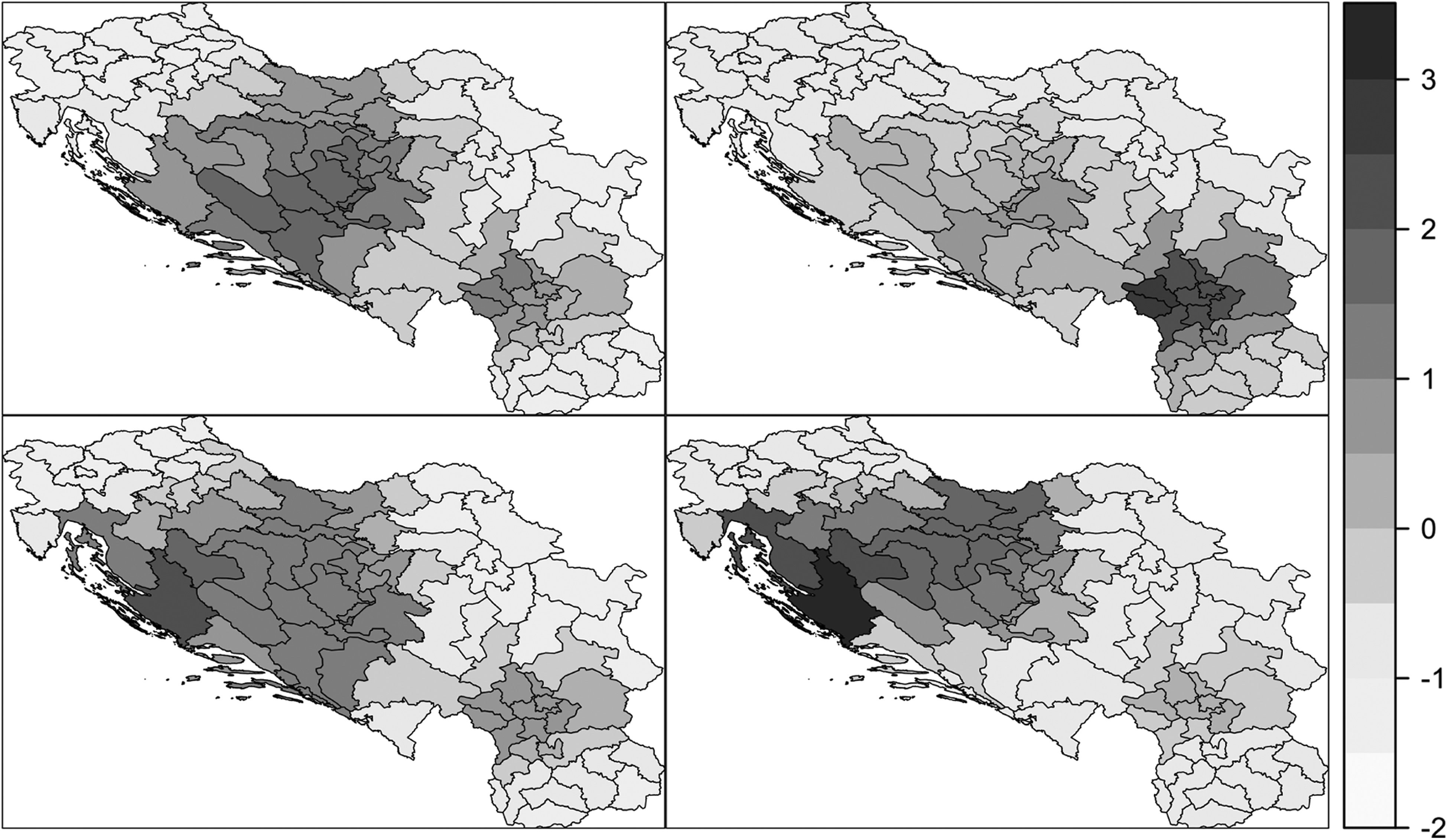
Geographical distribution of Exposure to war events (top left), Attacks on civilians (top right), Battles (bottom left), and Shared victimization (bottom right). All four variables were standardized to allow plotting on the same scale.
Furthermore, Economic deprivation in the regions is positively correlated with all war indicators except Shared victimization, indicating stronger poverty in regions that were affected by the wars. Ethnic homogeneity after the war is only moderately correlated with Ethnic homogeneity before the war, confirming the well-established fact that the Yugoslav wars caused strong demographic changes and migrations.
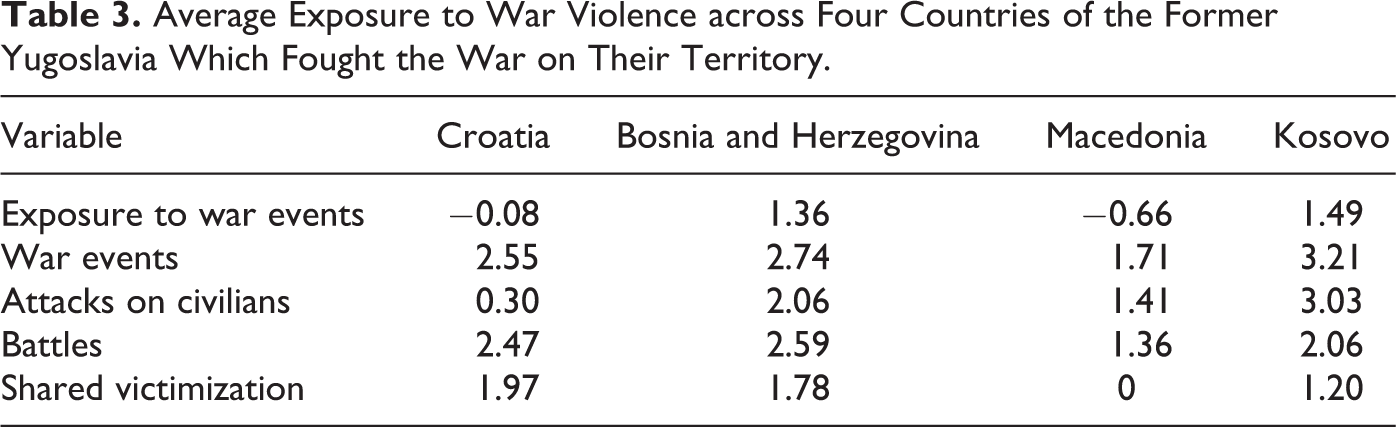
Finally, Table 3 shows the average values of war exposure indicators across four former Yugoslav states that fought wars in their territories. The two indicators of overall exposure to war-related violence (Exposure to war events and War events) confirm a well-established pattern: populations in Kosovo and Bosnia have been the most affected by war, followed by Croatia and Macedonia. The values of three indicators that operationalize the types of violence suggest significant differences across these countries. In Kosovo, Attacks on civilians were more frequent than the other two types of events. In Macedonia, Attacks on civilians and Battles occurred with similar frequency. However, events of Shared victimization were absent. In Bosnia, all three types of events were frequent. By contrast, in Croatia, Battles and Shared victimization events were far more frequent than attacks on civilians.
Average Exposure to War Violence across Four Countries of the Former Yugoslavia Which Fought the War on Their Territory.
Main Analyses: War Victimization and Collective Guilt Acceptance
To examine whether communal-level experiences of war affect collective guilt across the regions of former Yugoslavia beyond the impact of personal war victimization and other characteristics of the inhabitants, we performed a series of spatially weighted multilevel analyses. 7 All multilevel models were estimated through a stratified resampling procedure (with 1,000 resamples) described by Elcheroth et al. (2013) using the restricted maximum likelihood procedure. Analyses were performed with the R package spacom 1.0 (Junge et al. 2013). 8 All individual-level predictors were noncentered, thus controlling for composition effects.
All the main analyses were performed on a cohort sample of respondents from all countries of the former Yugoslavia nested within eighty regions. With this approach, we aimed to examine potential differences between regions exposed to war atrocities and all other regions of the former Yugoslavia. However, we performed additional analyses only with respondents from four countries that had wars on their territory (Croatia, Bosnia, Kosovo, and Macedonia), particularly because data for only these countries exist in the ACLED (see section on robustness checks).
Initial models without predictor variables corroborate the assumption that there are substantial variations between different regions in the average acceptance of collective guilt. Across all eighty regions, the intraclass correlation in the null model is .20, while in the model with only four countries (fifty-three regions), the intraclass correlations is .25.
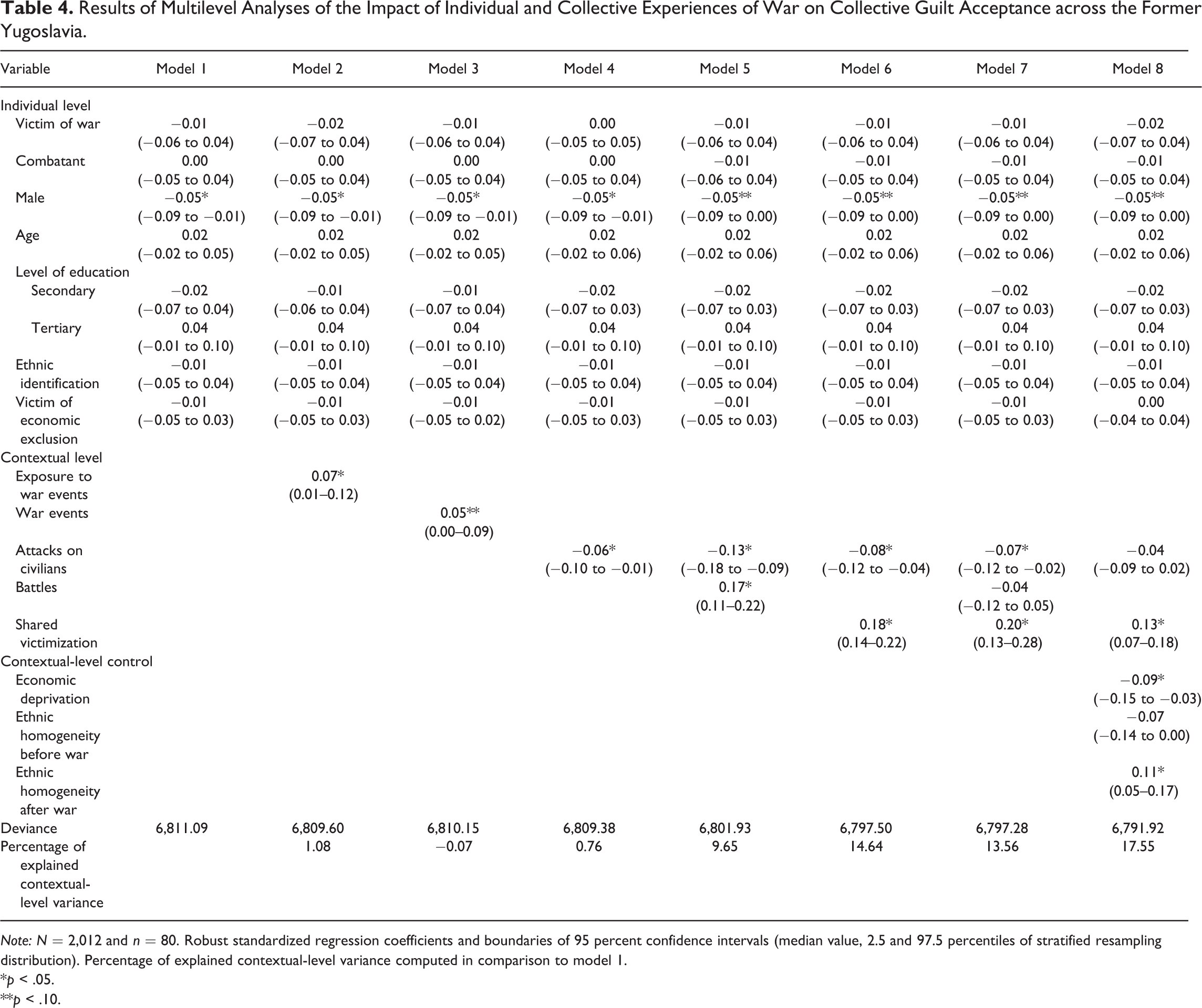
Table 4 summarizes the results of the multilevel analyses of the impact of war victimization on collective guilt. In model 1, we examined the impact of only individual-level predictors on guilt acceptance. Our results suggest that individuals’ personal victimization or participation in combat does not significantly affect their acceptance of guilt. In fact, most of the individual-level predictors are not significantly related to this outcome (only in some models, men accept guilt significantly lower than women). The results suggest that, overall, our regional-level variables are better predictors of guilt acceptance than our individual-level indicators.
Results of Multilevel Analyses of the Impact of Individual and Collective Experiences of War on Collective Guilt Acceptance across the Former Yugoslavia.
Note: N = 2,012 and n = 80. Robust standardized regression coefficients and boundaries of 95 percent confidence intervals (median value, 2.5 and 97.5 percentiles of stratified resampling distribution). Percentage of explained contextual-level variance computed in comparison to model 1.
*p < .05.
**p < .10.
Impact of the Communal-level Exposure to War Violence
Two indicators of overall regional exposure to war atrocities have a significant (model 2, Table 4) or borderly significant (model 3, Table 4) positive impact on collective guilt acceptance, thus corroborating the core assumption of the collective vulnerability approach. In other words, the acceptance of collective guilt is higher in more heavily victimized regions than in nonvictimized regions. However, further results show that the impact of communal experiences of victimization depends on the type of war atrocity.
Exposure to Symmetric and Asymmetric Violence
The results show that the communal-level exposure to asymmetric violence (Attacks on civilians) significantly reduces guilt acceptance (model 4), and its effect is even stronger after controlling for Battles (model 5). This finding follows the commonly assumed negative impact of collective victimization on collective guilt. However, a different pattern is found for the communal-level exposure to symmetric violence: controlling for Attacks on civilians, a higher frequency of both battles (model 5) and Shared victimization (model 6) significantly increases acceptance of guilt. In the model with both indicators of symmetric violence (model 7), only the impact of Shared victimization remains significant, suggesting that higher acceptance is primarily found in regions where war affected local inhabitants (and not only combatants) of both conflicted groups. Accordingly, all subsequent models were estimated only with Shared victimization as a measure of symmetric violence. Indicators of symmetric and asymmetric victimization explain about 15 percent of regional-level variance, indicating that there are other important sources of regional variations in average acceptance of collective guilt.
The significant impact of Shared victimization is found even after controlling for Economic exclusion and Ethnic homogeneity before and after the war (model 8). In contrast, the impact of Attacks on civilians ceases to be significant. Additional analyses show that Attacks on civilians become nonsignificant after controlling for regional Economic exclusion, suggesting that reluctance to accept collective guilt in these areas is driven by accumulated negative events of both war atrocities and economic difficulties.
In the next step, we control for the societal-level analysis, that is, for ethnic groups and countries (Table 5). The impact of communal-level exposure to both asymmetric (Attacks on civilians) and symmetric (Shared victimization) violence remains significant after controlling for ethnic groups (model 1). However, with the country control, only the impact of Shared victimization remains significant (model 2). The results thus suggest that the readiness to accept collective guilt is rooted in communal, not national, experiences of shared victimization. For example, after controlling for individual predictors and two types of communal-level war violence, we find lower guilt acceptance in Croatia than in Serbia, Bosnia, or Kosovo, although (symmetric) Shared victimization events were overall far more frequent in Croatia than were (asymmetric) Attacks on civilians (see Table 2). However, as these events were geographically concentrated in certain regions, higher readiness to accept collective guilt seems to be limited to these regions.
Results of Multilevel Analyses of the Impact of Individual and Collective Experiences of War on Collective Guilt Acceptance across the Former Yugoslavia.

Note: N = 2,012 and n = 80. Robust standardized regression coefficients and boundaries of 95 percent confidence intervals (median value, 2.5 and 97.5 percentiles of stratified resampling distribution). Percentage of explained contextual-level variance computed in comparison to model 1 of Table 4.
*p < .05.
Robustness Checks
We performed a series of additional analyses to verify the robustness of our findings. First, as additional measures of personal war victimization, we examined the impact of the type and number of experienced war events at the individual level on collective guilt acceptance. It was not possible to examine the independent impact of six war events, as they frequently co-occurred. For most of the events, the number of respondents who experienced only that event was too small to meaningfully conclude about its impact. To overcome this issue, we have grouped six events in two categories: material loss events (being expelled, suffering property damage, and being looted) and personal loss events (being imprisoned, witnessing the death of a family member, and being wounded). Such operationalization does not change our findings: both types of events have a nonsignificant impact on collective guilt acceptance (in models equivalent to model 1; Table 4). Furthermore, we examined the impact of number of experienced war events, as a measure of cumulative victimization (see Hewstone et al. 2004; Fasel and Spini 2010). Such operationalization of personal war victimization does not change our findings (all results available from the first author upon request).
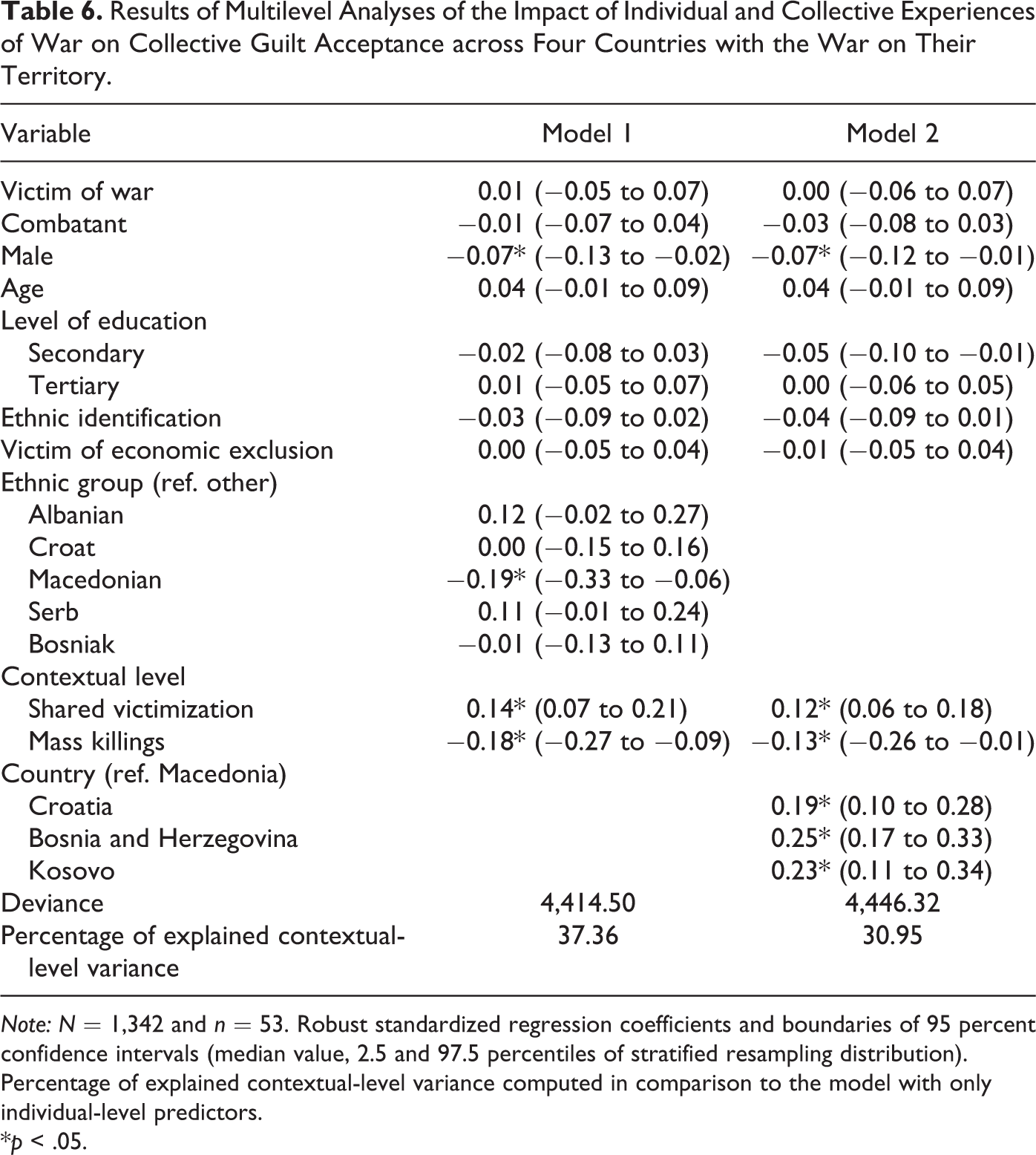
Second, we performed the previously described multilevel analyses only with respondents from four countries in which wars were fought on their territory: Croatia, Bosnia, Kosovo, and Macedonia. Table 6 summarizes the results of the final models (the equivalent results for all countries are shown in Tables 4 and 5).
Results of Multilevel Analyses of the Impact of Individual and Collective Experiences of War on Collective Guilt Acceptance across Four Countries with the War on Their Territory.
Note: N = 1,342 and n = 53. Robust standardized regression coefficients and boundaries of 95 percent confidence intervals (median value, 2.5 and 97.5 percentiles of stratified resampling distribution). Percentage of explained contextual-level variance computed in comparison to the model with only individual-level predictors.
*p < .05.
As shown in Table 6, all the main findings were mostly replicated. First, collective guilt acceptance depends on the type of communal-level violence: it is lowest in regions with a high prevalence of asymmetric violence and highest in regions with a high prevalence of symmetric violence. Moreover, with only these four countries, the impact of both attacks on civilians and shared victimization remains significant after controlling for ethnic groups and countries.
To examine whether our operationalization of the ACLED-based indicators affects our findings, we performed additional analyses (on the overall sample) with (1) all indicators defined as the frequency of events (i.e., initial indicators and before log transformations); (2) the indicators Battles, Shared victimization, and Attacks on civilians defined as the ratios between the number of specific types of events and the number of all events in regions; and (3) spatially nonweighted indicators. All of the main findings were replicated (the results are available from the first author upon request).
Discussion
The main goal of the present study was to examine the impact of collective victimization on collective guilt across the former Yugoslavia. Contrary to the assumption that rejection of collective guilt for in-group atrocities is an unavoidable reaction to collective victimization, our main assumption was that people’s beliefs about collective culpability depend on the level and the type of war experiences to which they have been exposed.
Building on the collective vulnerability approach (Elcheroth and Spini 2014), we proposed that communal experiences of victimization occurring in individuals’ proximal surroundings might be particularly relevant in shaping individuals’ beliefs about collective culpability. Our results suggest that the impact of war victimization on the acceptance of collective guilt across the former Yugoslavia follows the pattern predicted by the collective vulnerability approach (Elcheroth 2006): individuals’ readiness to condemn all atrocities, including those committed by their group members, is grounded in the communal experience of war. In regions that are more heavily affected by wars, the average acceptance of guilt is higher. However, the results further suggest that the impact of communal experiences of victimization depends not only on the intensity but also on the type of war violence.
As predicted by the collective vulnerability approach (see Spini, Elcheroth, and Fasel 2008), in regions with high prevalence of symmetric violence, that is, where violence affected members of both groups involved in the conflict, the acceptance of collective guilt is strongest. This finding thus gives credence to the assumption that people who had a heightened likelihood of learning about out-group suffering or in-group atrocities in a concrete way, for example, by directly witnessing or indirectly learning about such events through contact with out-group members, might be more ready to condemn in-group wrongdoings. Indeed, ethnographic studies conducted in places affected by symmetric violence in Bosnia showed not only that people were aware of out-group members’ suffering but also that they sometimes supported, helped, or even saved each other (Broz 2005; Maček 2009). Biro et al. (2004) showed that across three ethnically mixed, war-torn municipalities in Croatia and Bosnia, people maintained their prewar friendships with members of opposing national groups, and these people showed the greatest readiness for reconciliation.
Importantly, our findings show that the positive impact of communal-level symmetric violence on acceptance of collective guilt remains significant even after controlling for ethnic groups and countries. In other words, they suggest that in regions exposed to symmetric violence, people tend to be critical toward in-group actions despite the potentially politicized perspectives in their country’s public sphere. In the former Yugoslavia, prior to the conflicts, ethnically heterogeneous regions that were later devastated by the wars were marked by interethnic friendships, marriages, and high tolerance (Sekulić, Massey, and Hodson 2006). These were communities with strong social bonds and a commonly shared sense of belonging, where ethnic differences were perceived as less relevant (Stover and Weinstein 2004). In these places where war violence disrupted cohesive communities but affected members of all ethnic groups similarly, politicized perspectives on exclusive in-group victimhood may seem less plausible and may be accepted to a lesser degree. As our findings suggest, the inhabitants of these places are more open to a broader perspective on victimhood that includes the recognition of the suffering of “others.” Indeed, Vollhardt (2012, see also Vollhardt and Bilali 2015) has shown that people can hold inclusive victimhood beliefs that encompass the acknowledgment of similar experiences of victimization with other groups, sometimes even adversaries. Future studies should further examine the link between objective communal experiences of victimization and individuals’ subjective victimhood beliefs.
Our findings further show that the prevalence of asymmetric violence at the communal level is related to lower acceptance of collective guilt. They therefore suggest that the typically assumed detrimental effect of collective victimization on collective guilt might primarily pertain to asymmetric victimization. Importantly, we have examined the impact of the regional-level prevalence of asymmetric violence on acceptance of collective guilt among all inhabitants of the regions, and not only those who belong to the victimized groups. At the time of the survey, in some regions exposed to asymmetric violence, members of “perpetrator” groups were in the majority or in similar numbers as members of “victim” groups. A fine-grained analysis that would distinguish respondents based on their group’s status was not possible due to the small number of respondents per regions. However, we have statistically controlled for regional ethnic heterogeneity and for self-declared ethnic belonging of respondents. Our findings thus suggest that the communal-level exposure to asymmetric violence may diminish critical condemnation of in-group’s atrocities of all local community members, even among “perpetrator” groups. New studies should examine potentially different reactions, and their underlying mechanisms, to asymmetric violence among members of “perpetrator” and “victim” groups (see Vollhardt and Bilewicz 2013).
We have operationalized communal-level symmetric and asymmetric violence based on the ACLED for the former Yugoslavia. This conflict event data set allows distinguishing the types of violence on the level of single events and, thus, a more precise operationalization of the degree to which these events have been shared across the group boundaries, as compared to cumulative measures used in previous studies (e.g., Spini, Elcheroth and Fasel 2008). However, this data set also has some drawbacks for our operationalization of asymmetric violence. The ACLED data for the former Yugoslavia better cover events of symmetric violence (e.g., battles) than asymmetric violence (ACLED 2011). Even more, the ACLED for the former Yugoslavia does not include information on the number of fatalities per war events, due to which all events are treated equally regardless of their severity. The ACLED indicators thus operationalize frequency of war events in regions, which is only an approximation of the intensity of violence. This might be particularly problematic for asymmetric violence, as we cannot distinguish instances of mass killings from less severe events. Indeed, across our analyses, the impact of asymmetric violence on collective guilt showed to be less robust than the impact of symmetric violence.
While we have examined the types of violence on the communal level, our results further indicate the importance of the broader societal context. In particular, after controlling for relevant individual- and communal-level predictors, respondents from Kosovo and ethnic Macedonians from Macedonia show the lowest levels of collective guilt acceptance. This suggests that at the group or societal level, the average acceptance of collective guilt might not be directly linked to the actual exposure to violence. For example, Bosniak respondents from Bosnia and Herzegovina show significantly stronger collective guilt acceptance than ethnic Macedonian respondents, although they were exposed to war victimization six times more, on average.
In contrast to the Croatian and Bosnian wars, the Kosovo War and the insurgency in the Republic of Macedonia can clearly be classified as asymmetric conflicts. Additionally, these conflicts were characterized by particularly low contact opportunities among members of conflicted groups, due to long-term structural inequalities and economic deprivation, residential segregation, and linguistic barriers (Simkus and Ringdal 2013). These findings therefore suggest that rejection of collective guilt might be particularly prevalent in contexts where systematic episodes of asymmetric violence render plausible politicized ethnic hatred narratives and where opportunities to learn about out-group members’ experiences that contradict these narratives are chronically low. Andrighetto et al. (2012) have shown that for young adults in the highly segregated context of Kosovo, the crucial mechanism of learning about positive contact with and experiences of out-group members is intergenerational transmission. In their study, conducted on a sample of Kosovar Albanian students, knowledge about their parents’ high-quality contact with Serbs reduced their adherence to competitive victimhood beliefs.
Conclusion
Based on representative survey data from the former Yugoslavia, this study examined the impact of collective victimization on collective guilt acceptance. We have argued that collective victimization should not be treated as a homogenous construct. Rather, its impact depends on the level and the type of war experiences. Accordingly, we have proposed a multilevel approach to collective victimization, which distinguishes the impact of war experiences at three analytic levels: individual, communal, and societal levels. Contrary to the individual and societal levels, in sociopsychological studies on collective victimization, the processes at the communal level are chronically understudied (see Vollhardt 2012). However, it is obvious that postconflict social reconstruction and reconciliation is of utmost importance precisely in communities that have been directly affected by warfare.
Our findings empirically support the core assumption of the collective vulnerability approach that the communal-level experiences of victimization have an important impact on individuals’ readiness to condemn war crimes (Elcheroth and Spini 2014). However, our findings indicate that individuals’ readiness to condemn in-group atrocities and accept collective guilt is primarily determined by the type of the communal-level violence. As predicted by the collective vulnerability approach, in places where warfare deeply affected local inhabitants across enemy lines, people accept collective guilt to a greater extent than elsewhere. Thus, our study adds to the growing empirical evidence that sustains the main assumptions of this novel sociopsychological approach to collective war experiences.
Footnotes
Declaration of Conflicting Interests
The author(s) declared no potential conflicts of interest with respect to the research, authorship, and/or publication of this article.
Funding
The author(s) disclosed receipt of the following financial support for the research, authorship, and/or publication of this article: This publication benefited from the support of the Pluralistic Memories Project ( ), funded by the Swiss Programme for Research on Global Issues for Development (r4d programme). We are grateful to Eva Green, Caroline Howarth, Albert Simkus, the members of the Research Group on Collective Vulnerability and Social Change (University of Lausanne), and two anonymous reviewers and review editor Paul Huth for their helpful suggestions.
Supplemental Material
Supplementary material for this article is available online.
Notes
References
Supplementary Material
Please find the following supplemental material available below.
For Open Access articles published under a Creative Commons License, all supplemental material carries the same license as the article it is associated with.
For non-Open Access articles published, all supplemental material carries a non-exclusive license, and permission requests for re-use of supplemental material or any part of supplemental material shall be sent directly to the copyright owner as specified in the copyright notice associated with the article.
