




Abstract
This study examines associations among cyberbullying victimization, internalized homophobia, and hopelessness among South Korean LGB emerging and young adults. In doing so, the study focuses on the roles of individualistic and collectivistic self-esteem as crucial cultural-psychological processes that link these constructs. Cross-sectional data were collected via an online survey from late August 2023 to mid-January 2024. The study used 254 responses from Korean LGB emerging and young adults, the majority of whom were aged 19–29 years (65.4%). The analytical results showed that cyberbullying victimization was significantly associated with hopelessness, with collectivistic self-esteem and internalized homophobia each accounting for part of this association. Specifically, greater cyberbullying victimization was positively associated with higher levels of hopelessness, with this association operating indirectly through lower collectivistic self-esteem and higher internalized homophobia. By contrast, individualistic self-esteem was not significantly associated with any of the key variables. Based on the findings, the study suggests the importance of collectivistic cultural values in this specific population. It additionally stresses the roles of collectivistic self-esteem and internalized homophobia in understanding the psychological well-being consequences of cyberbullying victimization among this population.
Keywords
Cyberbullying victimization of sexual minority individuals is a significant issue in the present digital era (Abreu & Kenny, 2018). Although many existing studies (e.g., Abreu & Kenny, 2018; Beckerman, 2017; Gower et al., 2021; Gu et al., 2024; Llorent et al., 2016; Rice et al., 2015) have documented the heightened exposure to cyberbullying among Lesbian, Gay, and Bisexual (LGB) individuals and its adverse psychological outcomes, less attention has been paid to the underlying cultural and psychological dynamics through which cyberbullying victimization is associated with hopelessness. Drawing on a psychological mediation framework (e.g., Hatzenbuehler, 2009; Meyer, 2003), the present study investigates culturally embedded processes by which individualistic and collectivistic self-esteem and internalized homophobia link cyberbullying victimization to hopelessness among South Korean (hereinafter Korea) LGB emerging and young adults.
To date, existing research on sexual minority youth’s cyberbullying experiences has been largely concentrated in North America and other Western contexts (e.g., Cooper & Blumenfeld, 2012; Duong & Bradshaw, 2014; Kosciw et al., 2012, 2020; Sterzing et al., 2017; Varjas et al., 2013), with non-Western settings comparatively understudied. Such identity-targeted violence experiences have been linked to victims’ self-blame and a sense of guilt (Gower et al., 2021), which in turn is associated with a diminishing sense of self-worth (Cénat et al., 2014; Gower et al., 2021). Further, several studies show that these experiences may be linked to a sense of hopelessness (Abreu & Kenny, 2018; Bonanno & Hymel, 2013). Prior research also posits that self-esteem is correlated with internalized homophobia among both sexual minority youth and adults (Abreu & Kenny, 2018; Bauermeister et al., 2010; Berg et al., 2016) and that internalized homophobia has been tied to psychological distress (Frost & Meyer, 2009; Newcomb & Mustanski, 2010). Overall, these findings suggest that internalized homophobia may be associated with diminishing self-esteem and increasing feelings of hopelessness among sexual minority youth, implying that cyberbullying victimization experiences may be psychologically internalized.
Amid the expanding body of research concerning cyberbullying victimization and its psychological consequences in the modern digital era, the heterogeneity of cultural contexts structuring sexual minority individuals’ self-construal and identity development underscores the need to examine these psychological processes within non-Western settings. As cultural psychology studies have long indicated that the concept of self is highly correlated with independence in Western societies, whereas emphasis is put on interdependence and relational embeddedness in many non-Western societies (Henrich et al., 2010; H. Kim & Markus, 1999; Kitayama et al., 1997), understanding the psychological consequences of cyberbullying victimization in a non-Western context calls for attention to culturally distinct forms of self-esteem (Kitayama et al., 2009; Markus & Kitayama, 2010).
Given the increasing visibility of Western values within Eastern societies, coupled with the persistent collectivistic cultural orientations in self-construal and identity development, this study specifically aims to examine the roles of individualistic and collectivistic self-esteem, as well as internalized homophobia, in linking cyberbullying victimization to hopelessness among emerging and young adult Korean LGB individuals. While there is still no explicit agreement on the definition of cyberbullying (Bansal et al., 2024; Jang & Lee, 2019), this study uses a frequently used conceptualization in Korea. That is, cyberbullying is harmful online behavior that intentionally causes harm to others in cyberspace, ranging from cyber defamation and stalking to social exclusion, invasion of one’s privacy, or sexual harassment (B. Jeong et al., 2019). In accordance with the Framework Act on Youth in Korea, which raised the upper youth age limit to 39 years (Y. H. Choi & Park, 2023), this study follows this age definition; however, to maintain conceptual clarity for an international audience, participants are referred to as ‘emerging and young adults’ throughout this study.
Theoretical Background
Sexuality-Related Cyberbullying Victimization and Its Association with Self-Esteem, Internalized Homophobia, and Hopelessness
Cyberbullying often occurs anonymously, complicating the identification of assailants and allowing harassment to perpetuate beyond temporal or spatial limits (Tokunaga, 2010). Sexual minority individuals may be particularly vulnerable to cyberbullying (Abreu & Kenny, 2018), as online spaces often serve as key environments for their social connection and identity development. In their quest for belonging, young individuals form groups that support their developmental processes in settings unbounded by time or space. As youth connect in online spaces, they are more likely to identify with others like themselves, a process widely described in peer research as homophily (Santos et al., 2017). As a result, marginalized young people frequently experience estrangement within digital peer networks, where their unique identities may render them targets of cyberbullying (Llorent et al., 2016).
According to Minority Stress Theory (Meyer, 2003) and Hatzenbuehler’s Psychological Mediation Framework (Hatzenbuehler, 2009), these online peer dynamics may be implicated in mental health outcomes among sexual minority individuals. The former framework conceptualizes sexual minority individuals’ external experiences of violence, such as victimization experiences and discrimination, as distal stressors that give rise to proximal psychological processes (Meyer, 2003). According to this theory, proximal stressors, including internalized homophobia and expectations of rejection, in turn are theorized to shape the individuals’ mental health outcomes (Meyer, 2003). The latter psychological mediation framework further extends these dynamics by stressing how individuals’ stigma-related stressors are gradually mediated via cognitive, affective, interpersonal, and self-evaluative mechanisms into adverse well-being outcomes (Hatzenbuehler, 2009). Therefore, while minority stress theory provides a conceptual logic distinguishing distal and proximal minority stressors among the sexual minority populations, the psychological mediation framework indicates processes through which these proximal minority stressors are related to self-evaluative and future-oriented consequences. Synthesizing these frameworks together offers a conceptually integrative lens for understanding how cyberbullying victimization may function as a distal minority stressor, primarily one that is associated with internalized homophobia and shapes self-esteem and hopelessness.
Based on prior empirical works that are derived mainly from the US contexts, identity-based violence functions as a catalyst that may contribute to sexual minority individuals’ internalized homophobia (Basting et al., 2024). Given that the nature of cyberbullying transcends temporal and spatial boundaries, persistent exposure to homophobic bullying induces shame and guilt, thereby fostering a negative self-image (Blais et al., 2014). Also, studies conducted primarily on White sexual minority participants have revealed that individuals may suppress themselves to avoid further violence (Fisher & Tanner-Smith, 2016), potentially developing a harmful self-image due to limited visibility and acceptance within society (Marshall & Allison, 2019; McDermott et al., 2008). Following these findings, cyberbullying experienced by sexual minority individuals in Korean society may be linked to internalized homophobia, which may in turn be associated with poorer psychological well-being. Analogously, violence grounded in sexual orientation can significantly harm the self-esteem of sexual minority individuals (Beckerman, 2017; Ybarra et al., 2006). When attributes and characteristics that diverge from the majority’s norms are unjustly perceived as moral failings rather than recognized as contributions to diversity, a substantial risk emerges in which sexual minority individuals may experience identity erosion (McDermott et al., 2008).
Within the South Korean context, individuals identifying as sexual minorities may experience a recurring fear of being outed due to the entrenched heteronormative standards prevalent in society and the influence of discriminatory forces upon them (K. M. Choi & Oh, 2021). Consequently, sexual minority individuals within Korean society may be reticent to disclose their gender identity and sexual orientation, resulting in potential difficulties in accessing resources or assistance to mitigate experiences of cyberbullying arising from suspicions regarding their identity (S. J. Jeong et al., 2022). In instances where sexual minority individuals openly disclose their identities and subsequently encounter cyberbullying tied to their minority status, insufficient legislative safeguards against discrimination compel victims to remain silent and to cope with the aftermath in isolation (Y. J. Hwang, 2026; S. J. Jeong et al., 2022; Yi et al., 2023). A recent study on Korean LGB individuals also indicates how the lack of institutional protection, coupled with broader societal contexts that normalize conformity and silence, hinders avenues for protection and recovery from violence (Y. J. Hwang, 2026). Such structural limits within Korean society may compound stigma or minority stress-related experiences and be associated with their being particularly susceptible to cyberbullying and intensified feelings of hopelessness. In theory, this phenomenon aligns with learned helplessness, where individuals are less inclined to seek assistance or ameliorate their conditions if not addressed (Maier & Seligman, 1976), ultimately cultivating a sense of pessimism and hopelessness about the future (Joiner et al., 2002).
Internalized Homophobia and Its Association With Hopelessness
Cultural environment plays a critical role in developing and reinforcing internalized homophobia among Korean LGB emerging and young adults. Within their biological family, children are subtly encouraged to conform to parental expectations and pressures (E. Kim, 2005; E. Kim et al., 2012), which is a unique cultural phenomenon in East Asia known as filial piety. In this cultural context, children naturally learn from a young age to value group conformity and harmony; stepping outside the boundary can result in reputational harm or the loss of face for the entire group (Ho, 1976; K. Hwang, 1987; Markus & Kitayama, 1991). Such context is important for understanding the lives of Korean LGB youth and young adults, as their identities often conflict with parental desires and societal norms, thus leading to perceived dishonor and failure to fulfill parental expectations (Y. Hwang & Nam, 2022).
Moving to the broader society, deviation from the predominant social group is regarded as atypical behavior in Korea (Y. J. Hwang & Franke, 2025b), and adherence to traditional gender roles is highly esteemed (Davis & Williamson, 2019; Y. J. Hwang & Franke, 2025b; Sung, 2018; Yi et al., 2023). These cultural norms persist across all spheres of gender and sexual minority individuals’ lives, including but not limited to households, educational institutions, and workplaces (Y. J. Hwang & Franke, 2025b). Deviations from cisheteronormativity are frequently met with marginalization, linking to intensifying and reinforcing internalized minority stressors among Korean LGBs (Cho & Sohn, 2016; H. Lee et al., 2019). Consequently, LGB individuals who are navigating the familial and societal pressures in Korea may encounter an increased risk of self-rejection and self-denial, frequently accompanied by guilt and shame stemming from societal and familial discrimination (K. M. Choi & Oh, 2021). These dynamics reflect how a unique cultural background may intersect with minority stressors in a manner different from that of Western society, and they have been discussed in relation to a range of internalized mental health issues (See Y. J. Hwang, 2025; Y. J. Hwang et al., 2025; H. Lee et al., 2019; H. Lee et al., 2020).
In light of hopelessness’s potential as a risk factor for negative mental health outcomes, the association between internalized homophobia and hopelessness is particularly important to examine (Fortuna et al., 2020). Recognizing the fundamental cause of self-directed homophobia and internalizing victimhood has been framed as a part of a self-perpetuating cycle of perceived impossibility and powerlessness (Frost & Meyer, 2009; Weber-Gilmore et al., 2011). As this cycle intensifies, the expectation of a promising future diminishes, compelling LGB emerging and young adults to acquiesce to harsh realities while concurrently intensifying their pessimistic prospects for the future (Y. J. Hwang & Franke, 2025a; S. J. Jeong et al., 2022).
Self-Esteem: Individualistic/Collectivistic and Its Association with Internalized Homophobia and Hopelessness
Contextual attributes, such as culture and social expectations, constitute a crucial contextual influence on shaping individuals’ self-esteem (Rosenberg, 1965). In many Western societies, self-esteem is commonly understood as a sense of individual achievement, personal autonomy, and independence (Henrich et al., 2010; Triandis et al., 1990), encouraging individuals to evaluate their self-worth by distinguishing themselves from others and engaging in relative upward or downward comparisons (Chung & Mallery, 1999). Conversely, in non-Western cultures, including those in Asia, an individual’s self-concept is sculpted predominantly by group member evaluations rather than based on personal traits (Crocker et al., 1994; Lyu et al., 2019; Wang & Ollendick, 2001). Thus, the essence of collectivistic self-esteem is embodied by relational interactions, interdependence, and orientation toward group-centric goals and contributions (Chung & Mallery, 1999; Lyu et al., 2019).
For sexual minority youth, self-esteem is closely linked to their minority-stressors, including internalized homophobia and hopelessness regarding the future (Hatzenbuehler, 2009; Meyer, 2003; Newcomb & Mustanski, 2010; Savin-Williams & Ream, 2003). Building on these existing theoretical and empirical evidence, this study seeks to investigate how the individualistic and collectivistic dimensions of self-esteem operate as cultural psychological processes linking cyberbullying victimization to hopelessness. From the perspectives of the minority stress and psychological mediation frameworks, internalized homophobia in this study is treated as a proximal minority stressor that is associated with sexual minority identity-related cyberbullying victimization, while self-esteem is examined as a core self-evaluative process that is empirically linked to internalized homophobia and hopelessness.
Once self-esteem is understood as a self-evaluative process closely connected to internalized homophobia, its association with future-oriented outcomes, such as hopelessness, may be recognized as both theoretically and empirically contested. Despite numerous empirical and theoretical studies suggesting that lowered self-esteem is associated with higher hopelessness by diminishing self-worth and strengthening negative self-conceptions (See Gu et al., 2024; Joiner et al., 2002; Maciejewski et al., 2000; Tanaka et al., 2023), other existing works point out their mutually reinforcing relationships (See Abramson et al., 1989; Beck et al., 2006; Orth et al., 2012; Sowislo & Orth, 2013). The theoretical ambiguities in much of the existing literature and in the conceptual frameworks guiding this study reflect insufficient consideration of such cultural variation. For example, in the Korean context, an individual’s self-concept and perceptions of hopelessness may be more closely tied to interpersonal relationships and social judgments than to individual self-assessments alone (Y. J. Hwang, 2025), suggesting that there may be cultural differences relative to the existing studies based on the Western context.
Given these considerations, this study concentrates on both individualistic and collectivistic orientations of self-esteem among LGB emerging and young adults in a non-Western society, as they may provide a deeper understanding of the associations between cyberbullying victimization, internalized homophobia, and hopelessness. In doing so, this study conceptualizes both dimensions of self-esteem as proximal self-evaluative processes associated with cyberbullying victimization and internalized homophobia within the broader minority stress and psychological mediation frameworks, while not conceptualizing them as temporally preceding hopelessness, as they remain theoretically distinct. The study examines their associations with hopelessness, while also acknowledging the possibility that cyberbullying victimization may also be directly associated with hopelessness beyond these pathways. Together, this study addresses the theoretical question of how the distinct dimensions of self-esteem function as cultural psychological processes linking minority stressors, such as cyberbullying victimization and internalized homophobia, to hopelessness among Korean LGB emerging and young adults. The guiding research questions posed in the present study are as follows: In what ways are individualistic and collectivistic self-esteem, alongside internalized homophobia, associated with the pathways in the relationship between cyberbullying victimization based on gender identity/sexual orientation and hopelessness among Korean LGB emerging and young adults?
Methods
Procedure and Participants
Following receipt of a certified exemption from the Institutional Review Board of the (UCLA #23-001569), this study was conducted from late August 2023 to mid-January 2024 using an online survey created through Survey Monkey. Participants were recruited via online social media, and eligible respondents were individuals aged 19 years or older who (1) had lived in Korea for the past five years at the time of the survey, (2) were Korean nationals, and (3) identified as LGBTQ+. As a result, 329 LGBTQ+ individuals completed the survey and were given a mobile phone voucher of about $4 (5,000 KRW) for compensation. Of a total sample size of 329, this study excluded 63 who did not identify as LGB and 6 who were over 40 years of age. Then, 6 respondents who answered “other” to the gender identity question were excluded for the sake of statistical analysis and interpretation, leaving the final sample size for this study at 254 Korean LGBs in their emerging and young adult age range, 19 to 30s. Informed consent was obtained from the respondents prior to the survey.
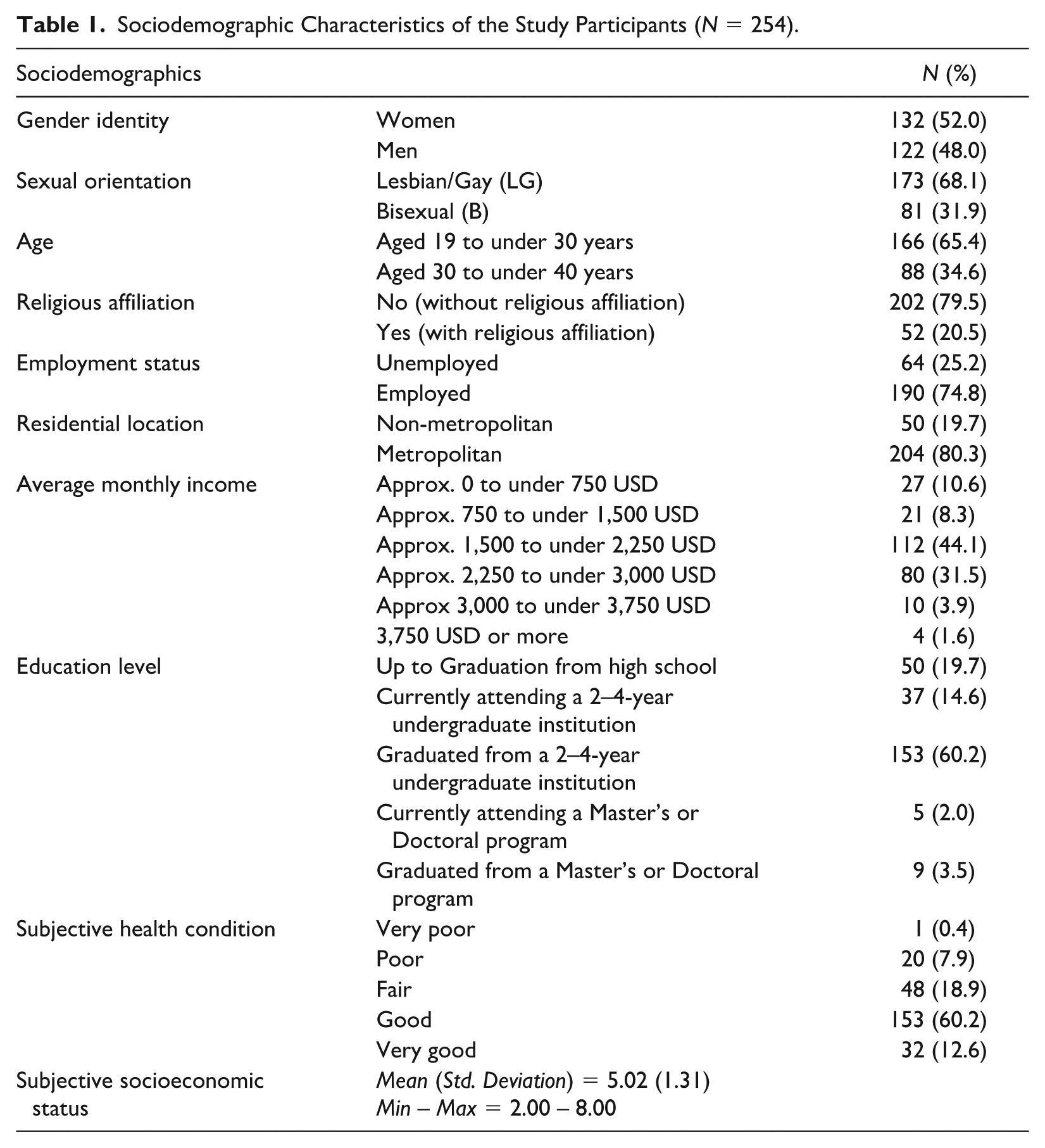
As illustrated in Table 1, 52.0% of the participants identified as women, with 68.1% as gay and lesbians and 31.9% as bisexuals. The highest proportion of participants was in their 20s (65.4%). Most of the participants reported having no religious affiliation (79.5%), being employed (74.8%), and residing in the Seoul, Incheon, and Gyeonggi metropolitan areas (80.3%). In addition, 44.1% of the respondents reported an average monthly income of approximately 1,500 to under 2,250 USD, and 60.2% were graduates of 2–4-year undergraduate institutions and reported good subjective health conditions. The mean value for the subjective socioeconomic status of the respondents was 5.02 (SD=1.31, Min – Max=2.00 – 8.00).
Sociodemographic Characteristics of the Study Participants (N = 254).
Measures
Independent Variable: Cyberbullying Victimization
Cyberbullying victimization was measured using an adapted scale developed by E. K. Kim (2012). This scale has 13 items, including nine from Patchin and Hinduja (2015), which assess cyberbullying experiences, and four from Jun and Lee (2010), which specifically evaluate cyberbullying experiences through mobile devices. It is a single-factor scale, inquiring about the experiences of respondents with cyberbullying victimization within the past year; in this study, the terminology was tailored to reference participants’ gender identity and sexual orientation. Item questions include, “I have been ridiculed in chat rooms due to my gender identity/sexual orientation,” and “I have faced exclusion or ostracism via text messages or social media due to my gender identity/sexual orientation.” Responses ranged from “Never” (=1) to “Very often” (=5) in a 5-point Likert scale. A mean score of the total items was calculated, with higher scores reflecting higher levels of cyberbullying victimization. In this study, Cronbach’s α was .91.
Dependent Variable: Hopelessness
This study used the Hopelessness scale initially developed by Beck et al. (1974) and subsequently adapted by S. R. Lee (2019) for the Korean context. An adapted Korean version of the scale was used on a 5-point scale with responses recorded ranging from “Strongly Disagree” (=1) to “Strongly Agree” (=5). A total of 20 items were asked, and examples are “It feels like it would be better if I gave up on life because I cannot make things better” and “I cannot imagine what I will be like in 10 years.” Nine of the 20 items reflect a positive outlook, such as “I am hopeful and motivated about my future” and “I have plenty of time to achieve what I desire most.” These items were reverse-coded, and the mean score was then calculated. Higher scores indicate higher levels of hopelessness about the future, and Cronbach’s α was .86.
Self-Esteem: Individualistic Self-Esteem (M1) and Collectivistic Self-Esteem (M2)
Self-esteem was measured using the Two-Factor Self-Esteem Scale developed by Han and Chung (2007) for the Korean context. This comprises two subscales (individualistic and collectivistic self-esteem) with six items each. Items that assess individualistic self-esteem include “I can achieve good results in the tasks I set for myself” and “I readily act on things I want to do.” Collectivistic self-esteem items include “I maintain good relationships with others” and “I am considerate of others.” Responses ranged from “Strongly Disagree” (=1) to “Strongly Agree” (=5) on a 5-point Likert scale. For this study, the two subscales, individualistic and collectivistic self-esteem, were treated as separate explanatory variables due to their distinct conceptual characteristics. A preliminary factor analysis based on participant responses was conducted to examine the dimensional structure of the self-esteem items; as a result, items with nonoptimal component configurations (items 5, 6, 7) and low communalities under .40 (item 8) were removed. A second round of factor analysis was then conducted with the retained items. As shown in Table 2, the refined factor solution indicated a two-component structure, corresponding to individualistic self-esteem and collectivistic self-esteem, respectively, and four items were retained for each. Mean score was calculated for each subscale, indicating that the higher the score, the higher the levels of individualistic/collectivistic self-esteem. Cronbach’s α values were .69 for individualistic self-esteem and .65 for collectivistic self-esteem.
Results of the Refined Factor Analysis on Self-Esteem.
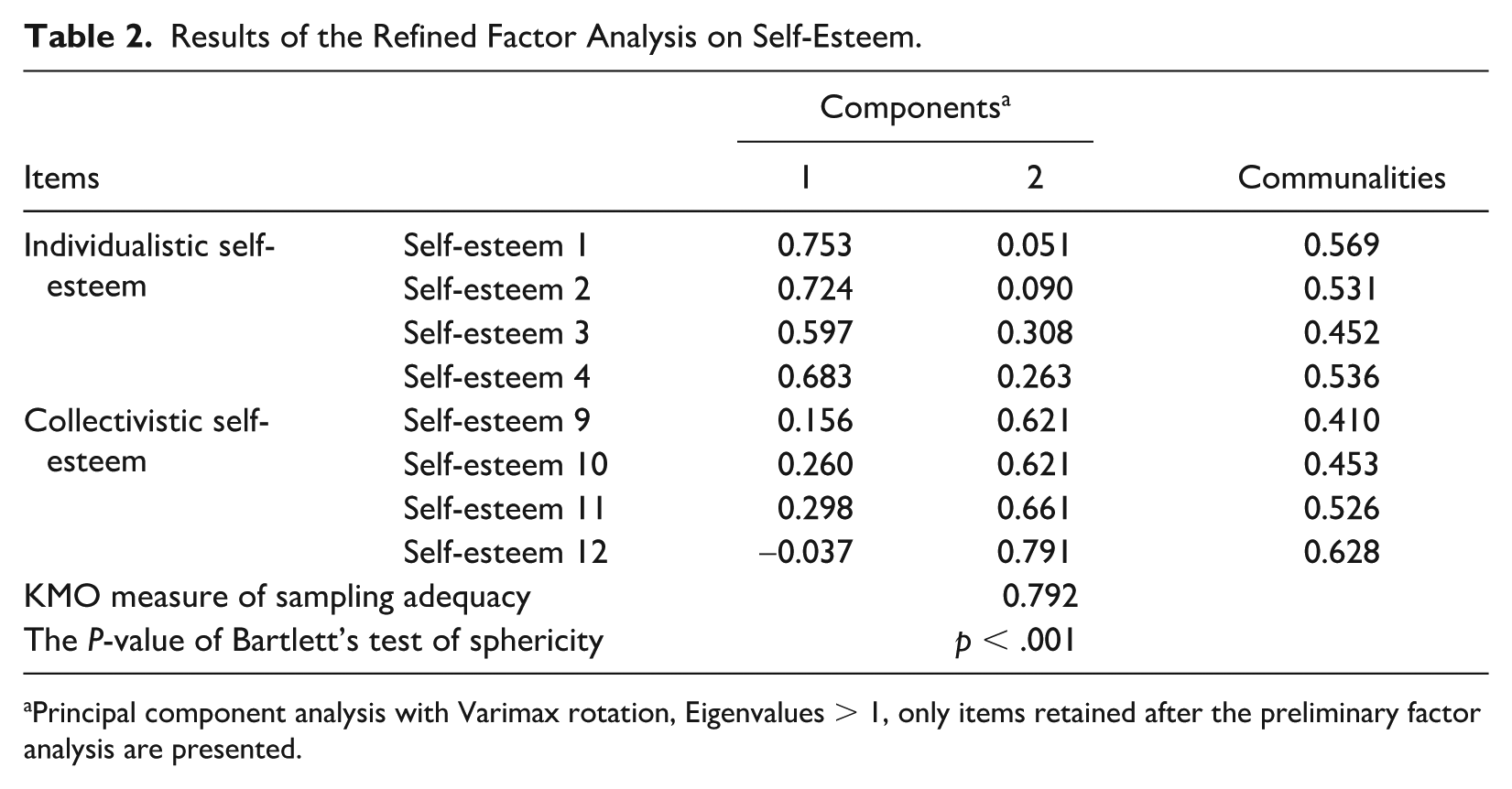
aPrincipal component analysis with Varimax rotation, Eigenvalues > 1, only items retained after the preliminary factor analysis are presented.
Internalized Homophobia (M3)
Internalized homophobia was measured using the Internalized Homophobia Scale (IHP) developed by Martin and Dean (1988). This scale consists of 9 items, including “I have generally tried to avoid feeling attracted to people of the same sex” and “If given the chance to be completely heterosexual, I would willingly do so.” Respondents assessed their level of internalized homophobia on a scale ranging from “Almost Never” (=1) to “Very Often” (=5). As no reverse coding was required, all items were assessed as a mean score prior to analysis; the higher the score, the higher the levels of internalized homophobia. In this study, the scale demonstrated strong internal consistency, with a Cronbach’s α of .85.
Plan for Analysis
Descriptive statistics and Pearson correlation analyses were first conducted, followed by a series of regression analyses using the PROCESS Macro v4.2 model 80 by Hayes (2022), installed in SPSS v29. The conceptual model for this study is displayed in Figure 1. Model 80 comprises four submodels: Submodels 1 and 2 involve the regression of M1 and M2, respectively (Path A and B); Submodel 3 pertains to the regression of M3 (Path C, D, and E); and Submodel 4 conducts the final regression of the dependent variable on the independent variable alongside the three explanatory variables (Path F, G, H, and I). Indirect paths were analyzed with 5,000 bootstrapping samples at a default 95% confidence interval, with an alpha-level defined at 0.05. If the lower and upper bounds of the bootstrap confidence interval encompass zero, irrespective of whether both bounds are positive or negative, it is concluded that the indirect association is not statistically significant at p<.05. In addition to the key variables of the research model, this study incorporated a series of control variables to account for the sociodemographic attributes. These included gender identity (ref = women), sexual orientation (ref=bisexual), age, average monthly income, education level, subjective health condition, subjective socioeconomic status, religious affiliation (ref=yes), employment status (ref=unemployed), and residential location (ref = non-metropolitan residents). Additionally, sensitivity analyses were conducted to address theoretical ambiguity concerning the ordering of cultural psychological processes, using alternative model specifications.
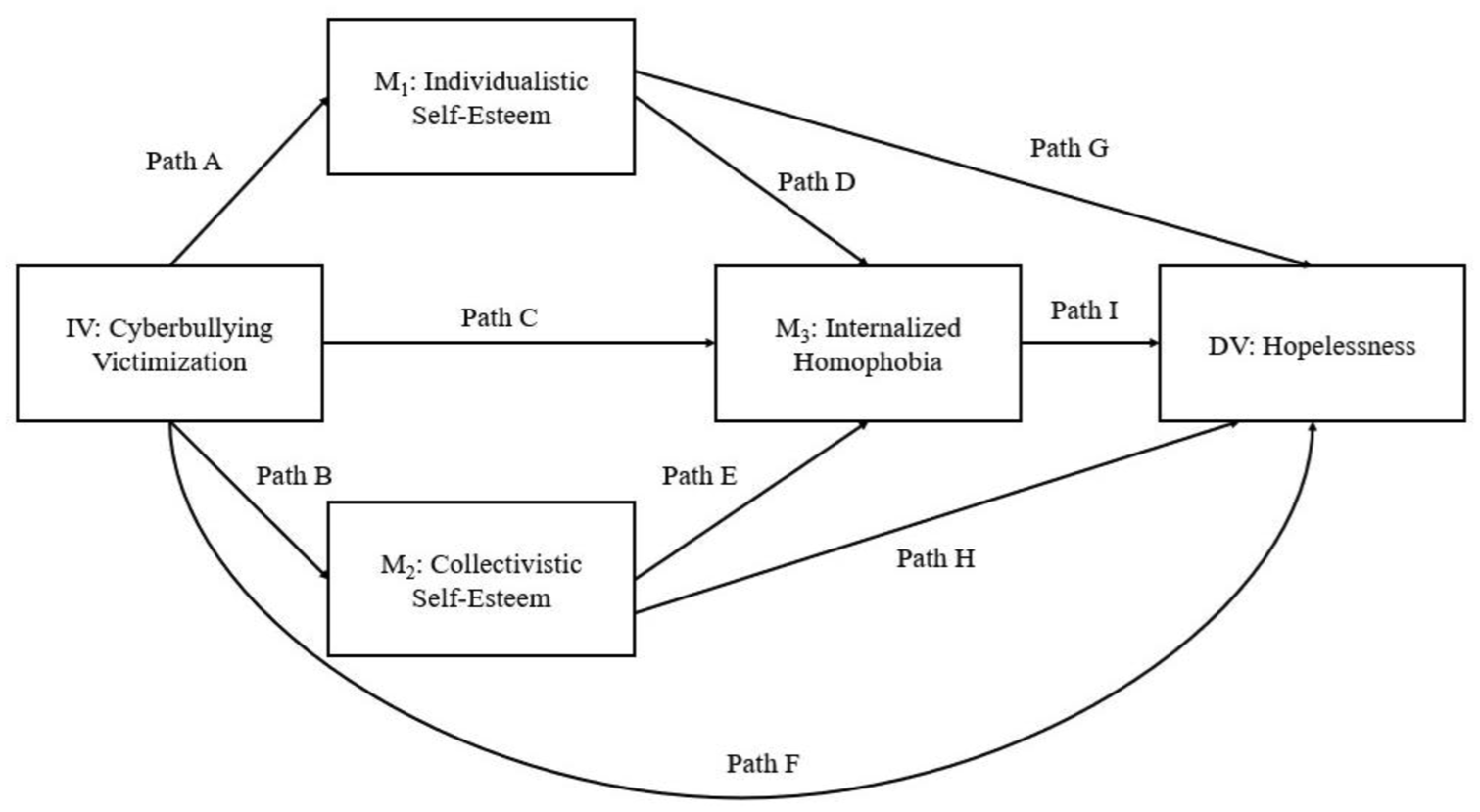
Conceptual study model.
Results
Descriptive Analysis and Correlation Results Among the Variables
Table 3 indicates the descriptive characteristics of the key variables used in this study. The dependent variable, hopelessness, had a mean score of 2.64 (SD = .58), while the independent variable, cyberbullying victimization based on gender identity/sexual orientation, exhibited a mean score of 2.25 (SD = .86). The two explanatory variables, individualistic and collectivistic self-esteem, had mean scores of 2.83 (SD = .56) and 2.95 (SD = .55), respectively. The third explanatory variable, internalized homophobia, had a mean score of 2.84 (SD = .81). Also, the correlation results among the major variables showed that hopelessness was positively associated with cyberbullying victimization (r = .25, p < .001) and internalized homophobia (r = .31, p < .001). Conversely, hopelessness was negatively correlated with both dimensions of self-esteem: individualistic self-esteem (r = −.15, p<.05) and collectivistic self-esteem (r = −.38, p < .001).
Characteristics of the Key Variables and Their Correlation.
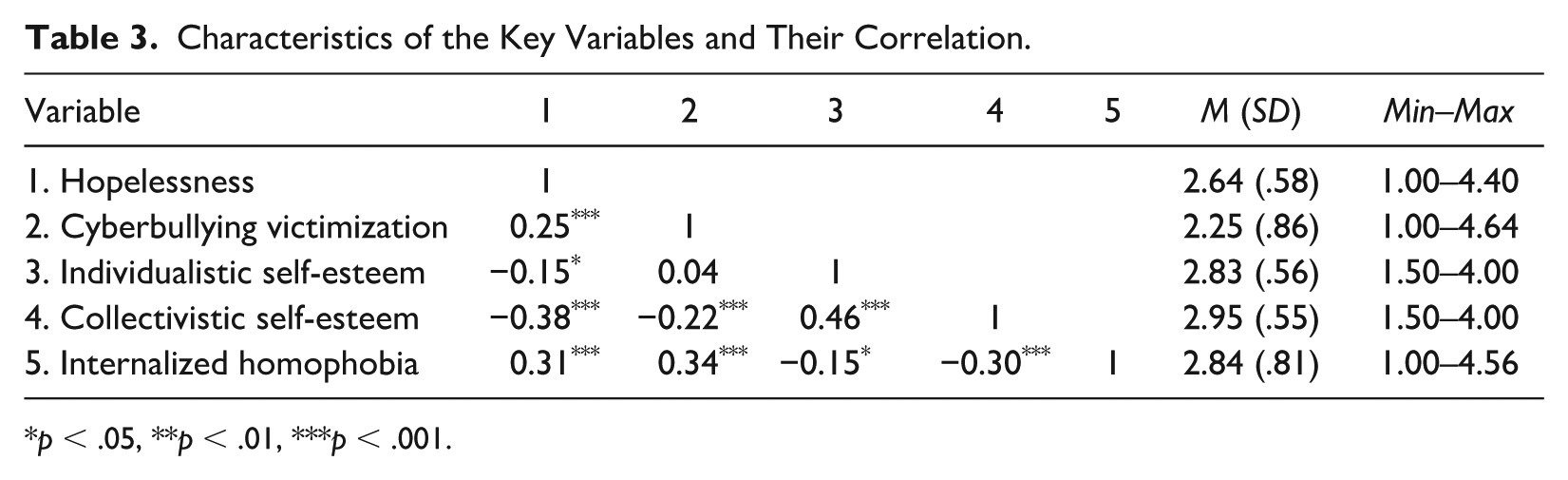
*p < .05, **p < .01, ***p < .001.
Regression Analysis Results of the Model
Table 4 shows the overall model results, including total and direct associations, and Figure 2 provides an overview of the direct associations. The total association between cyberbullying victimization and hopelessness was statistically significant (B = 0.13, p < .01). As shown in Figure 2, the direct associations for individual Paths (A through I) in the model were significant for Paths B, C, E, H, and I, even when controlling for the covariates. At the same time, Paths A, D, F, and G did not reach statistical significance. Specifically, cyberbullying victimization had a significant negative association with collectivistic self-esteem (Path B: B = −0.17, p < .001) and a positive association with internalized homophobia (Path C: B = 0.24, p < .001). Additionally, collectivistic self-esteem was negatively associated with both internalized homophobia (Path E: B = −0.24, p < .05) and hopelessness (Path H: B = −0.25, p < .001). In contrast, internalized homophobia showed a significant positive relationship with hopelessness (Path I: B = 0.11, p < .05).
Results of the Total and Direct Associations.
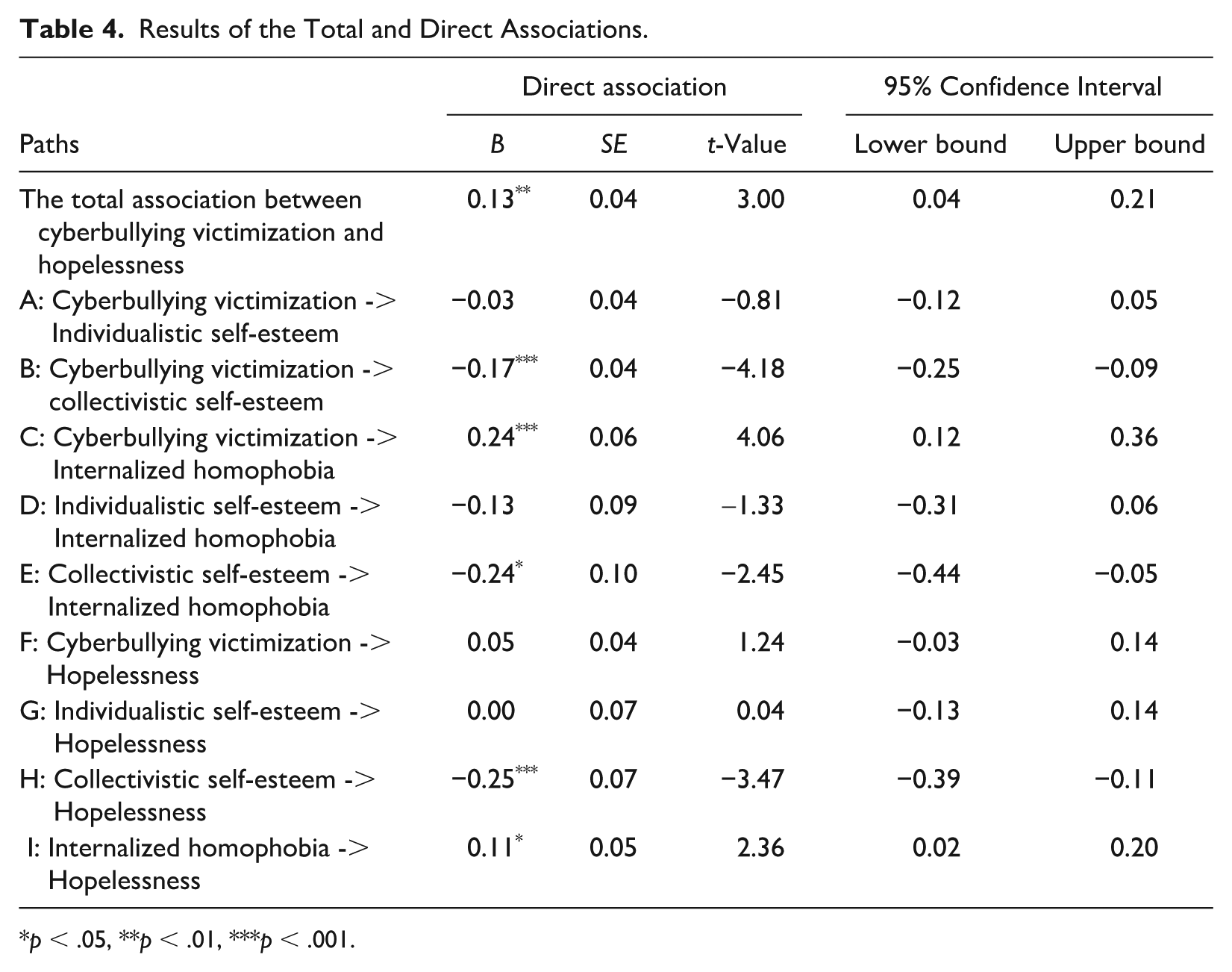
*p < .05, **p < .01, ***p < .001.
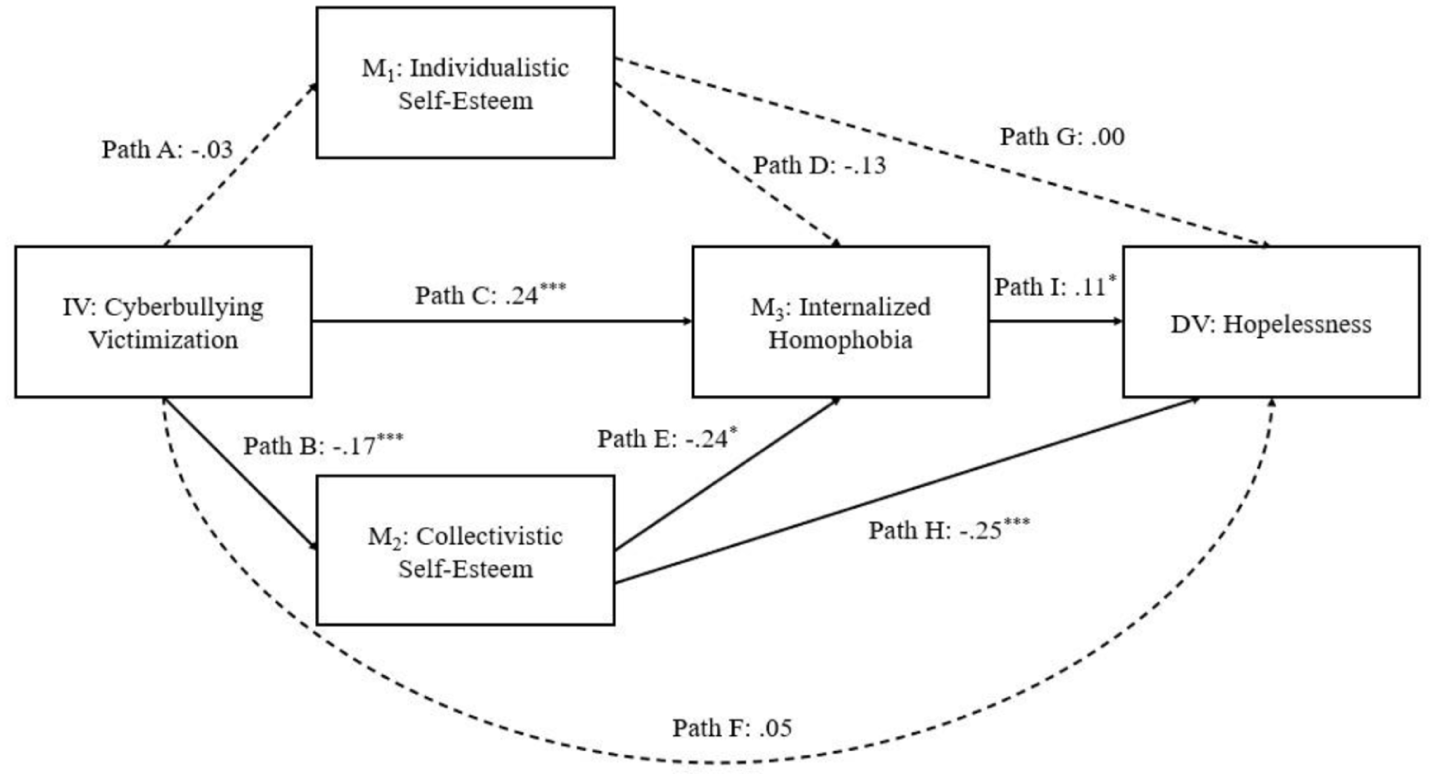
Path diagram of associations among cyberbullying victimization, individualistic/collectivistic self-esteem, internalized homophobia, and hopelessness.
Following the direct associations of each pathway, Table 5 represents the results of the indirect associations involving individualistic and collectivist self-esteem, as well as internalized homophobia, in the relationship between cyberbullying victimization and hopelessness. Among the five indirect pathways, the association between cyberbullying victimization based on gender identity/sexual orientation and hopelessness was accounted for, in part, by indirect associations involving collectivistic self-esteem and internalized homophobia (second and third pathways; See Table 5), with lower and upper bounds that do not include zero in the 95% confidence interval using 5,000 bootstrapped samples.
Results of the Indirect Associations.

aPaths indicated with an asterisk (*) did not contain zero between the lower and the upper bound of 95% confidence intervals.
Specifically, the results of the four submodels included in the overall research model are as follows. First, as indicated in Table 6, the results for Path A (the association between cyberbullying victimization and individualistic self-esteem) show that the model had statistically significant explanatory power, accounting for approximately 41% of the variance (Adj. R2 = .17; F = 4.53; p < .0001). While the key variable, cyberbullying victimization itself, was not statistically significant, several covariates demonstrated significant associations with individualistic self-esteem, including gender identity(men: B = 0.18, p < .01), employment status (B = −0.20, p < .05), subjective health condition (B = 0.18, p<.001), and subjective socioeconomic status (B = 0.07, p < .01).
Path A Output (DV: Individualistic Self-Esteem).
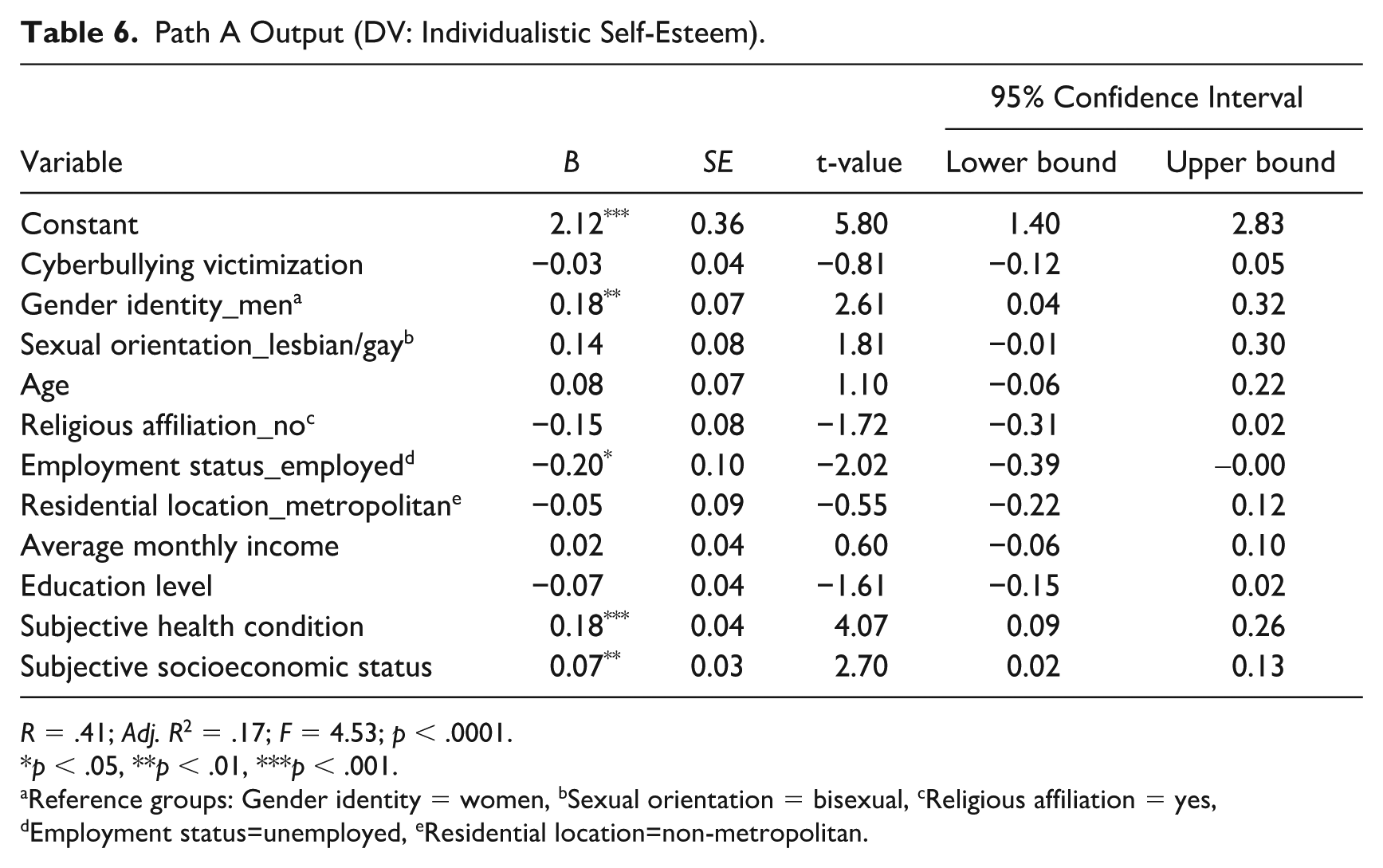
R = .41; Adj. R2 = .17; F = 4.53; p < .0001.
*p < .05, **p < .01, ***p < .001.
aReference groups: Gender identity = women, bSexual orientation = bisexual, cReligious affiliation = yes, dEmployment status=unemployed, eResidential location=non-metropolitan.
Meanwhile, the results for Path B (the association between cyberbullying victimization and collectivistic self-esteem; R = .45; Adj. R2 = .20; F = 5.64; p < .0001), as presented in Table 7, reveal that cyberbullying victimization had a significant negative association with collectivistic self-esteem (B =−.17, p < .001). Additionally, other statistically significant covariates include sexual orientation (lesbian/gay: B=.17, p<.05), religious affiliation (B = −.20, p < .05), employment status (B = −0.31, p < .01), and subjective health condition (B = 0.17, p < .001).
Path B Output (DV: Collectivistic Self-Esteem).
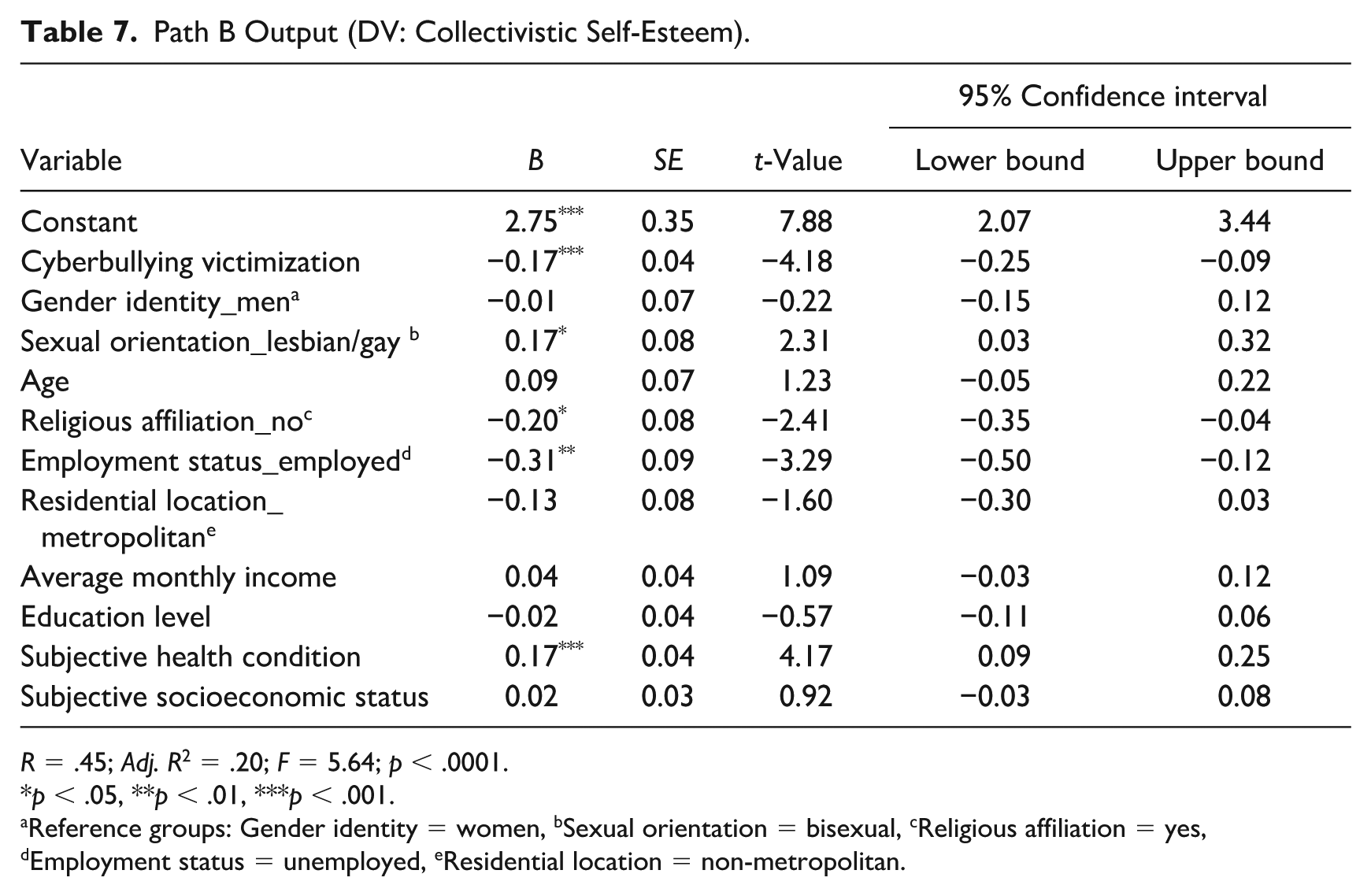
R = .45; Adj. R2 = .20; F = 5.64; p < .0001
*p < .05, **p < .01, ***p < .001.
aReference groups: Gender identity = women, bSexual orientation = bisexual, cReligious affiliation = yes, dEmployment status = unemployed, eResidential location = non-metropolitan.
Table 8 presents the results for Paths C, D, and E, examining the relationships among cyberbullying victimization, individualistic/collectivistic self-esteem, and internalized homophobia (R = .54; Adj. R2 = .29; F = 7.71; p < .0001). Among the key variables, cyberbullying victimization (B = 0.24, p < .001) and collectivistic self-esteem (B = −0.24, p < .05) showed statistically significant associations with internalized homophobia, whereas individualistic self-esteem did not. Among the covariates, employment status (B = 0.55, p < .001), education level (B = −0.16, p < .01), and subjective socioeconomic status (B = 0.08, p < .05) were statistically significant.
Path C, D, and E Output (DV: Internalized Homophobia).
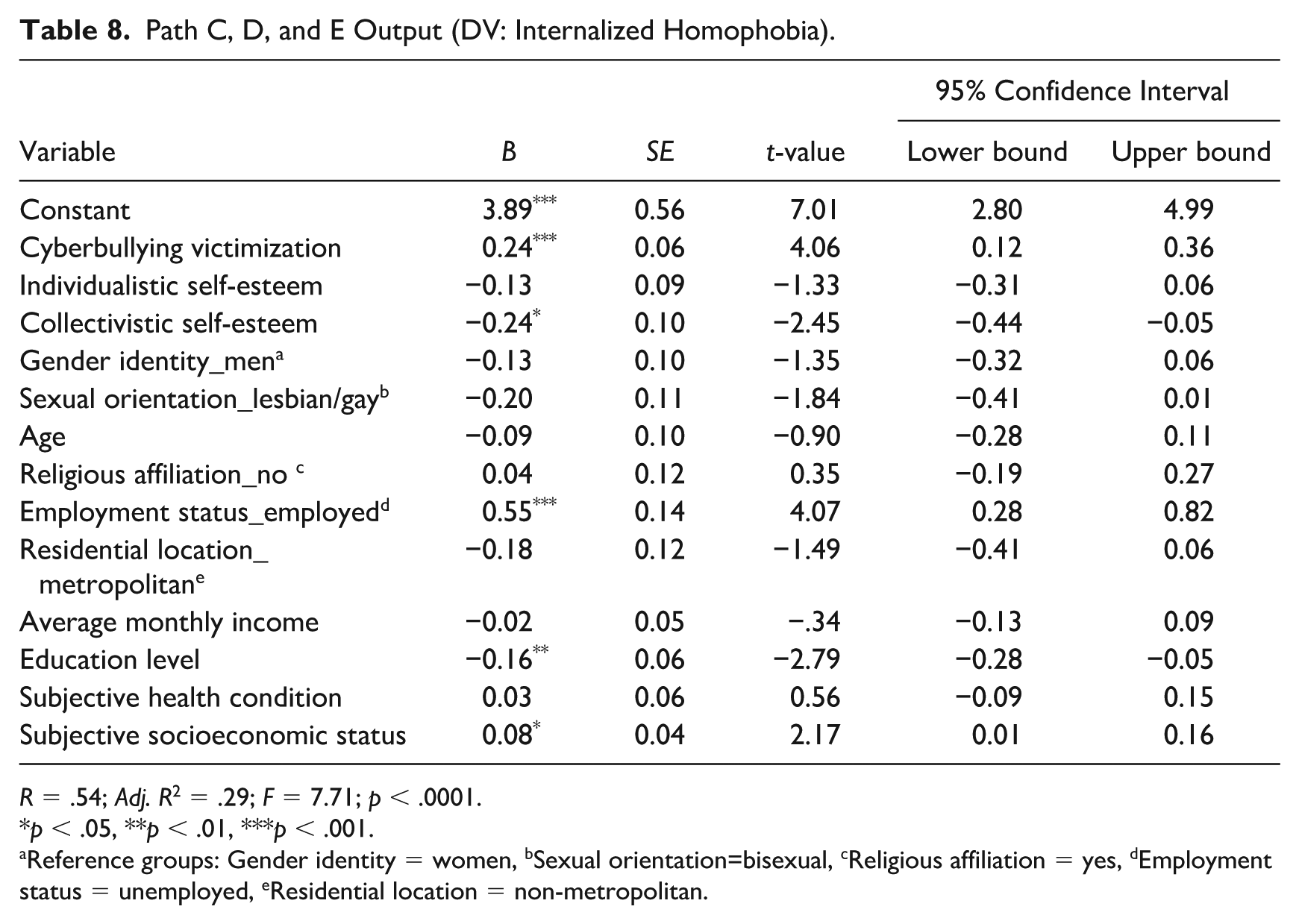
R = .54; Adj. R2 = .29; F = 7.71; p < .0001
*p < .05, **p < .01, ***p < .001.
aReference groups: Gender identity = women, bSexual orientation=bisexual, cReligious affiliation = yes, dEmployment status = unemployed, eResidential location = non-metropolitan.
Finally, Table 9 shows the results for Paths F, G, H, and I, indicating associations among cyberbullying victimization, individualistic/collectivistic self-esteem, internalized homophobia, and hopelessness (R = .55; Adj. R2 = .30; F = 7.47; p < .0001). Collectivistic self-esteem (B = −0.25, p < .001) and internalized homophobia (B = 0.11, p < .05) emerged as significant explanatory variables of hopelessness. Significant covariates included religious affiliation (B = 0.23, p < .01), average monthly income (B = −0.10, p < .05), education level (B = −.11, p < .01), and subjective health condition (B = −0.10, p < .05).
Path F, G, H, and I Output (DV: Hopelessness).
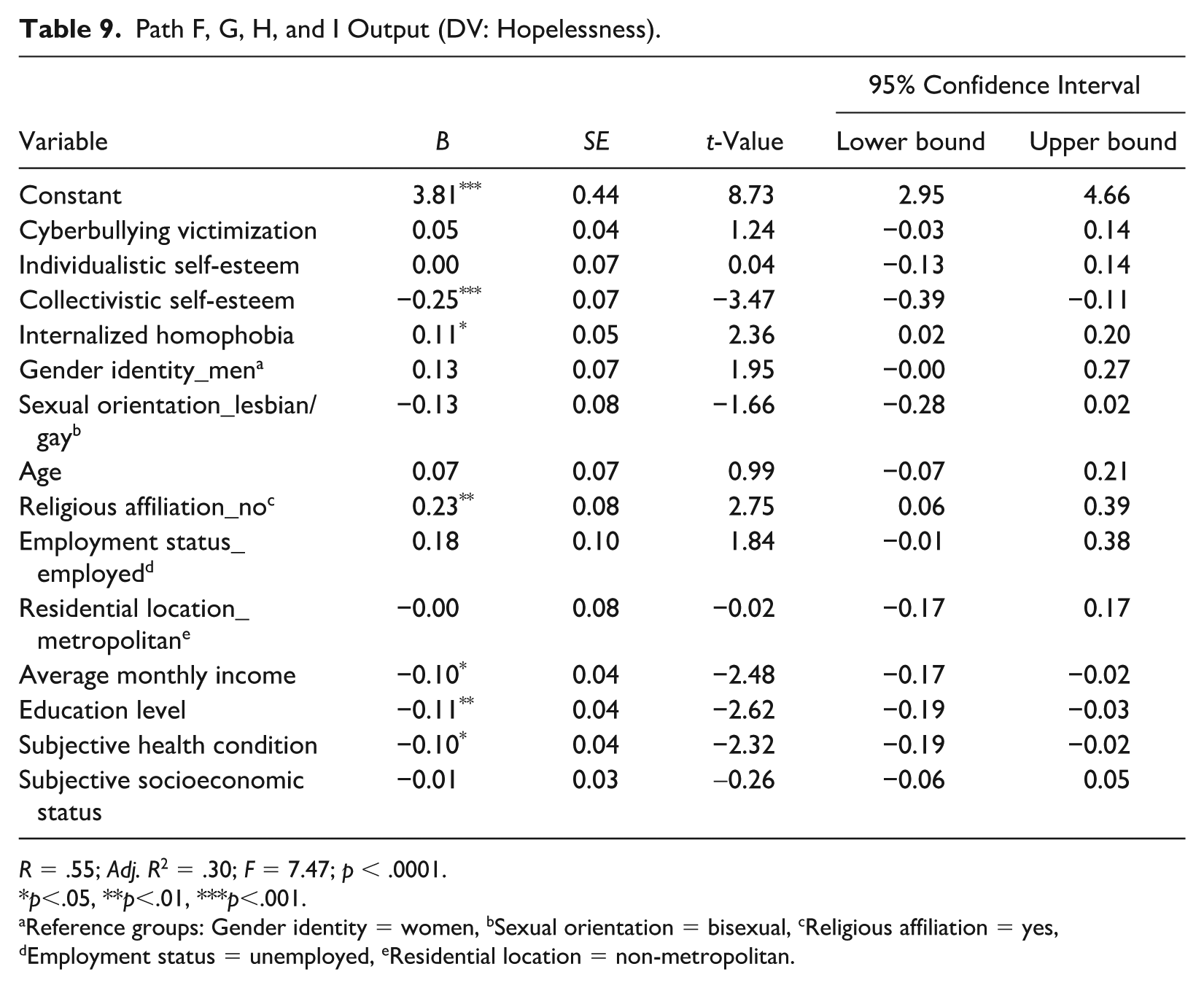
R = .55; Adj. R2 = .30; F = 7.47; p < .0001
*p<.05, **p<.01, ***p<.001.
aReference groups: Gender identity = women, bSexual orientation = bisexual, cReligious affiliation = yes, dEmployment status = unemployed, eResidential location = non-metropolitan.
Sensitivity Analyses Using Alternative Statistical Mediator Specifications
This study conducted a series of sensitivity analyses in which internalized homophobia was modeled as a focal statistical mediator linking cyberbullying victimization to its associated outcomes, such as hopelessness and both individualistic and collectivistic self-esteem (See Supplemental Table S1). This was done to examine alternative assumptions regarding psychological mediators informed by minority stress theory (Meyer, 2003) and the psychological mediation framework (Hatzenbuehler, 2009). Also, the aim of these additional analyses using alternative model specifications was to explicitly acknowledge the plausibility of bidirectionality between individualistic/collectivistic self-esteem and hopelessness in cross-sectional data. Thus, rather than treating the statistical mediators sequentially, these sensitivity models treated hopelessness, individualistic self-esteem, and collectivistic self-esteem as parallel outcomes. The results showed that across all model specifications, cyberbullying victimization was positively associated with internalized homophobia. This, in turn, was significantly associated with its corresponding outcomes. Also, indirect associations through internalized homophobia remained statistically significant across all models. Overall, the statistical significance and the direction of the associations were consistent with the primary regression analyses: that greater cyberbullying victimization is associated with higher internalized homophobia, which in turn is associated with greater levels of hopelessness, as well as lower levels of both individualistic and collectivistic self-esteem. Notably, these sensitivity analyses showed that internalized homophobia had consistent negative indirect associations with the two dimensions of self-esteem.
Discussion
As little is known about the cyberbullying victimization of Korean LGB emerging and young adults and its association with hopelessness, and the broader cultural implications of these experiences, this study aimed to examine these psychological processes under the cultural lens, using both minority stress and the psychological mediation frameworks.
One of the key findings of this study is that out of the two dimensions of self-esteem, only collectivistic self-esteem is significantly and negatively associated with Korean LGB individuals’ cyberbullying victimization, and accounts for part of the positive association between cyberbullying victimization and hopelessness. These results correspond with broader research patterns on self-esteem structure, suggesting that cultural processes may shape variations in self-esteem configurations (I. Choi & Choi, 2002; Hermann et al., 2008; Markus & Kitayama, 1991; Markus & Kitayama, 2010). As noted by numerous studies in cultural psychology thus far, non-Western cultures tend to emphasize a more group-oriented self-view than an individualistic understanding of self-concept (Brewer & Chen, 2007; Henrich et al., 2010; Jiang et al., 2019; Uskul & Oyserman, 2006). As observed among Korean LGB individuals, this cultural tendency is manifested in their assessment of self-worth as being partly based on social group acceptance and community standing, rather than independent self-evaluation alone.
Based on the findings of this study, greater cyberbullying victimization among Korean LGB emerging and young adults may be linked to lower levels of collectivistic self-worth, rooted in interpersonal relationships and community affiliations, and, in turn, be associated with a heightened level of hopelessness. Based on Leary et al.’s (1995) sociometer theory, self-esteem acts as a gauge of perceived relational value that people experience, and the feeling of being accepted by other people is closely related to one’s sense of worthiness in social situations. Within a culturally group-oriented context such as Korea, such relational aspects of self-esteem may be amplified, such that diminished self-esteem may be associated with feelings of social isolation and poorer mental health outcomes from cyberbullying victimization, including hopelessness.
Given that social evaluation and relational expectations may be central to shaping one’s self-worth, the link between cyberbullying victimization and collectivistic self-esteem may be especially salient in cultural contexts that are more group-oriented. In a practical sense, this highlights the necessity for contextually and culturally sensitive considerations when it comes to LGB emerging and young adults’ cyberbullying victimization experiences and hopelessness. Efforts that help foster the collectivistic aspect of self-esteem may serve as a protective resource against the internalization of victimization, thereby enabling victims to ensure their social bonds and hopes for the future. This study encourages educators, mental health practitioners, and counselors who work with these cyberbullied victims in such cultural contexts to incorporate its cultural considerations into practice.
In a similar vein, the current study found that the positive association between cyberbullying victimization and hopelessness is accounted for, in part, by internalized homophobia. This means that greater cyberbullying victimization is linked to heightened hopelessness via increased internalized homophobia, broadly aligning with antecedents underscoring the significant relationship between violence related to sexual identity and its adverse psychological consequences (Hatzenbuehler et al., 2009; Y. J. Hwang, 2026, Kammer-Kerwick et al., 2019; Meyer, 2003). Specific to Korea, its community or group-oriented culture may imply, at least among LGB emerging and young adults, that hopelessness may not simply be accounted for through negative perceptions of self. Instead, hopelessness may embody an internalized ethos developed in response to the prevailing cultural messages regarding homosexuality. In this context, minority stress-related life experiences, shaped by broader societal contexts in Korea, may undermine sexual minority individuals’ positive self-concept and may be connected to a more pessimistic outlook on the future.
From a contextual perspective, internalized homophobia can be seen as a reflection of how an individual perceives others’ evaluations of their identity (Meyer, 2003). That said, internalized homophobia in the Korean setting likely reflects societal rejection and disapproval of sexual minority identities. This perception resembles the formation of collectivistic self-esteem, indicating that the strong influence of relational ties in collectivist cultures may shape the observed relationship between internalized homophobia and hopelessness (Y. J. Hwang, 2025). This study suggests that for individuals in non-Western contexts, external social factors, such as community connectedness and social evaluation beyond personal attributes, may be meaningfully related to their psychological prospects for the future. The involvement of internalized homophobia in the relationship between cyberbullying victimization and hopelessness, thus, may highlight how Korean LGBs interpret and react to cyberbullying experiences and help further conceptualize related psychological well-being outcomes.
Notably, consistent with the two guiding conceptual frameworks used in this study, namely minority stress theory and the psychological mediation framework, this study did not assume a fixed temporal ordering between the two dimensions of self-esteem and hopelessness. Rather than as sequential processes, these constructs were treated as interrelated psychological outcomes, given the cross-sectional design and theoretical ambiguity surrounding their ordering. Sensitivity analyses informed by these conceptual frameworks further showed that the primary patterns of association were robust to alternative model specifications. The findings for the two dimensions of self-esteem and hopelessness, modeled as parallel outcomes, suggest that a single assumed causal ordering across all psychological processes does not drive these observed associations. In other words, although this study reflects a theoretically plausible ordering grounded in prior empirical work conducted primarily in Western contexts, alternative orderings are also conceptually and contextually plausible within the same frameworks in culturally distinct settings. When applied to collectivist settings such as Korea, self-evaluative judgements and expectations toward the future may co-occur and overlap in mutually reinforcing responses to cultural forms of stigma, making it less likely that these frameworks can be interpreted as strictly linear psychological stages.
Lastly, collectivistic self-esteem and internalized homophobia did not appear to form a statistically sequential pattern of associations; rather, they operated through distinct directional pathways. Although the two constructs did independently account for the positive association between cyberbullying victimization and hopelessness, such a discrepancy (i.e., a negative pathway reflecting a diminution of collectivistic self-esteem and a positive pathway reflecting heightened internalized homophobia) may imply that the associations connecting these constructs and hopelessness among the Korean LGB population are complex. Within the overall association, it is feasible that other potential constructs, reflecting the broader influence of culture, may exist. Therefore, more research is needed to fully unveil these interrelationships.
Limitations and Future Directions
This research’s limitations include generalizability issues and the use of cross-sectional data. Since this study was limited to Korean LGB emerging and young adults, the findings cannot be generalized to other gender identification and/or sexual orientation spectrums of Korean nationals. As non-LGB individuals’ experiences of cyberbullying victimization and their perception of hopelessness are likely to diverge, more research is necessary to examine the complicated dynamics further. In addition, the cultural context of this research, situated in East Asia, complicates generalizing the findings to Western populations and settings. Due to the differences in cultural values and frameworks, the link between cyberbullying victimization and its psychological outcomes, including those of hopelessness, internalized homophobia, and self-esteem, may vary widely across cultures. Thus, future studies might benefit from cross-cultural investigations into the extent to which they are applicable across sociocultural contexts.
Further, this cross-sectional study was conducted at a single time point using an online questionnaire. Given the increasingly noted limitations in using concurrent data to test mediation models, particularly as they do not allow for empirical evidence of causal pathways, the inherent limitations of a cross-sectional study design preclude the analysis of temporal relationships among variables, thus limiting the interpretation of the findings as evidence of causal or sequential processes. Instead, the observed indirect effects of this study are associational rather than causal. Although sensitivity analyses were performed to investigate alternative model specifications, the temporal ordering between individualistic/collectivistic self-esteem and hopelessness cannot be definitively established, and bidirectional associations between the two are plausible. Future research should utilize longitudinal data to understand how key variables change over time and provide better insight into the temporal ordering of these relationships.
Conclusions
This study provides a basis for the psychological process associated with cyberbullying victimization of Korean LGB emerging and young adults, focusing on hopelessness and the importance of collectivistic self-esteem and internalized homophobia in this context. While LGB emerging and young adults encounter various complex challenges within Korean society, there exists a paucity of research concentrating specifically on their experiences of cyberbullying victimization and hopelessness. This study offers further insights into the processes involved in these associations; future research is needed to build on these insights and propose practical measures aimed at improving the collectivistic dimensions of self-esteem and addressing internalized homophobia to mitigate cyberbullying victimization and hopelessness among Korean LGB emerging and young adults.
Supplemental Material
sj-docx-1-jcc-10.1177_00220221261455897 – Supplemental material for Individualistic and Collectivistic Self-Esteem as Cultural Psychological Processes: Linking Cyberbullying Victimization, Internalized Homophobia, and Hopelessness
Supplemental material, sj-docx-1-jcc-10.1177_00220221261455897 for Individualistic and Collectivistic Self-Esteem as Cultural Psychological Processes: Linking Cyberbullying Victimization, Internalized Homophobia, and Hopelessness by Yeon Jae Hwang in Journal of Cross-Cultural Psychology
Footnotes
Acknowledgements
I thank the participants for taking the time to complete this survey. I also thank the anonymous reviewers for their constructive feedback.

Ethical Considerations
The institutional review board’s certified exemption was obtained prior to the data collection (UCLA #23-001569).
Consent to Participate
Informed consent was obtained from the participants prior to the survey.
Consent for Publication
Not applicable.
Funding
The author received no financial support for the research, authorship, and/or publication of this article.
Declaration of Conflicting Interests
The author declared no potential conflicts of interest with respect to the research, authorship, and/or publication of this article.
Data Availability Statement
The collected data is not accessible to the public to safeguard the confidentiality of research participants’ information.
Supplemental Material
Supplemental material for this article is available online.
References
Supplementary Material
Please find the following supplemental material available below.
For Open Access articles published under a Creative Commons License, all supplemental material carries the same license as the article it is associated with.
For non-Open Access articles published, all supplemental material carries a non-exclusive license, and permission requests for re-use of supplemental material or any part of supplemental material shall be sent directly to the copyright owner as specified in the copyright notice associated with the article.
