



Abstract
Moral Foundations Theory (MFT) proposes that moral judgements arise from distinct yet universal psychological systems, shaped by multiple factors such as social learning. Personality traits also shape (and are shaped by) moral priorities. Prior research linking socially aversive traits to moral foundations has yielded heterogeneous and often contradictory results, likely due to trait-specific approaches and culturally limited samples. The present study addresses these limitations by examining the Dark Factor of Personality (D), the common core underlying all aversive traits, as a broad dispositional predictor of moral foundations across cultures. Using data from 101,433 participants across 32 countries, we tested whether D systematically undermines endorsement of moral foundations and whether these associations vary by cultural environment. D showed robust negative associations to the individualizing foundations (care/harm, fairness/reciprocity), reflecting reduced concern for others’ welfare and justice. Smaller and more variable negative associations emerged for the binding foundations (ingroup/loyalty, authority/respect, and purity/sanctity), with positive relations in some countries, suggesting that endorsement of these concerns may serve instrumental purposes for high-D individuals in certain contexts. Moderator analyses further revealed that the association between D and moral foundations was qualified by various cultural characteristics. Overall, the findings clarify the relationship between aversive personality and morality and underscore the importance of integrating personality and cultural frameworks to better understand the moral psychology of aversive traits and how it interacts with cultural aspects.
Introduction
Moral Foundations Theory (MFT, Graham et al., 2013; Haidt & Graham, 2007) provides a framework for understanding the psychological roots of moral judgements and the sources of moral disagreement across individuals and cultures. MFT has four main tenets (Graham et al., 2012, 2013): nativism (humans possess innate capacities for moral intuitions), cultural learning (social processes shape the interpretation of moral foundations), intuitionism (moral judgements are primarily intuitive rather than deliberative), and pluralism (morality comprises multiple distinct foundations).
Building on these tenets, MFT proposes five moral foundations: Care/harm reflects humans’ capacity to feel compassion and protect and care for others. Fairness/reciprocity reflects reciprocal altruism, gratitude, justice, and proportional treatment. Ingroup/loyalty reflects cooperation with one’s group, obligations to group membership, and distrust for outgroup individuals. Authority/respect reflects awe, admiration towards authorities, valuation of good leadership (indicated by fatherliness and wisdom), respect, duty, and obedience. Lastly, purity/sanctity reflects physical and spiritual cleanliness, moral nobility, and the sacred versus the profane. These five foundations are commonly grouped into two broader categories reflecting different moral foci (Graham et al., 2009). The individualizing foundations – care/harm and fairness/reciprocity – prioritize individual rights, liberties, and welfare. In contrast, the binding foundations – ingroup/loyalty, authority/respect, and purity/sanctity – prioritize group cohesion, hierarchy, and shared norms that regulate behavior in service of collective interests. Although the five-factor structure has been debated (e.g. Schein & Gray, 2015), MFT remains a central framework for examining cultural and individual variation in moral reasoning.
Personality and Moral Foundations
Given that moral foundations reflect both evolved psychological mechanisms and culturally shaped values, it is likely that personality traits – that is, stable inter-individual differences in attitudes, cognitions, and behavior (Funder, 2009) – co-evolve with moral foundations (Lu et al., 2023).
Indeed, dimensions of the five-factor model (FFM; McCrae & Costa, 1997) and the HEXACO model (Ashton & Lee, 2007) show systematic associations with moral foundations, although with some cultural variation. Conscientiousness is generally positively related to all foundations, whereas openness to experience tends to predict stronger endorsement of the individualizing foundations and weaker endorsement of the binding foundations (Alper & Yilmaz, 2019; Nejat et al., 2023; Webster et al., 2021). Agreeableness and HEXACO honesty-humility are positively linked to care/harm and fairness/reciprocity, with honesty-humility also showing negative associations with ingroup/loyalty (Ścigała et al., 2023; Webster et al., 2021).
Beyond basic personality dimensions, ethically and/or socially aversive (‘dark’; Paulhus, 2014) personality traits have received increasing attention. Individuals high in these traits disregard, distort, or selectively manipulate morally loaded values for personal gain (Moshagen et al., 2018), suggesting that aversive dispositions show associations with endorsement of moral foundations. Indeed, all components of the Dark Tetrad (narcissism, Machiavellianism, psychopathy, sadism; Johnson et al., 2019) showed meaningful relationships to moral foundations in multiple studies, albeit with sometimes strongly diverging results. A comprehensive overview of these studies with their results and meta-analytic effect sizes can be found in Table 1, with relevant studies being identified via a targeted search using keywords related to Dark Triad/Tetrad traits and moral foundations. As can be seen therein, all Dark Tetrad traits consistently show small to medium negative correlations to care/harm; yet, findings for fairness/reciprocity and especially the binding foundations are mixed. For instance, fairness/reciprocity has been shown to be moderately negatively associated to Machiavellianism, psychopathy, and sadism (Hart et al., 2024; Jonason et al., 2015; Kay & Dimakis, 2024; Petrović, 2019), but near zero or even weakly positive links have been reported with narcissism (Hart et al., 2024; Jonason et al., 2015). Further, mixed associations were found between ingroup/loyalty, authority/respect, and purity/sanctity with Machiavellianism and psychopathy, with both small to moderate positive and negative correlations reported. This heterogeneity in results is even more pronounced within each single Dark Triad trait. For instance, both positive and negative correlations were reported between psychopathy and the ingroup/loyalty, authority/respect and purity/sanctity foundations leading to average effects (across studies) close to zero, and both narcissism and Machiavellianism exhibited mixed relationships with every single moral foundation.
Overview of Correlations Between Dark Tetrad Traits and Moral Foundations.
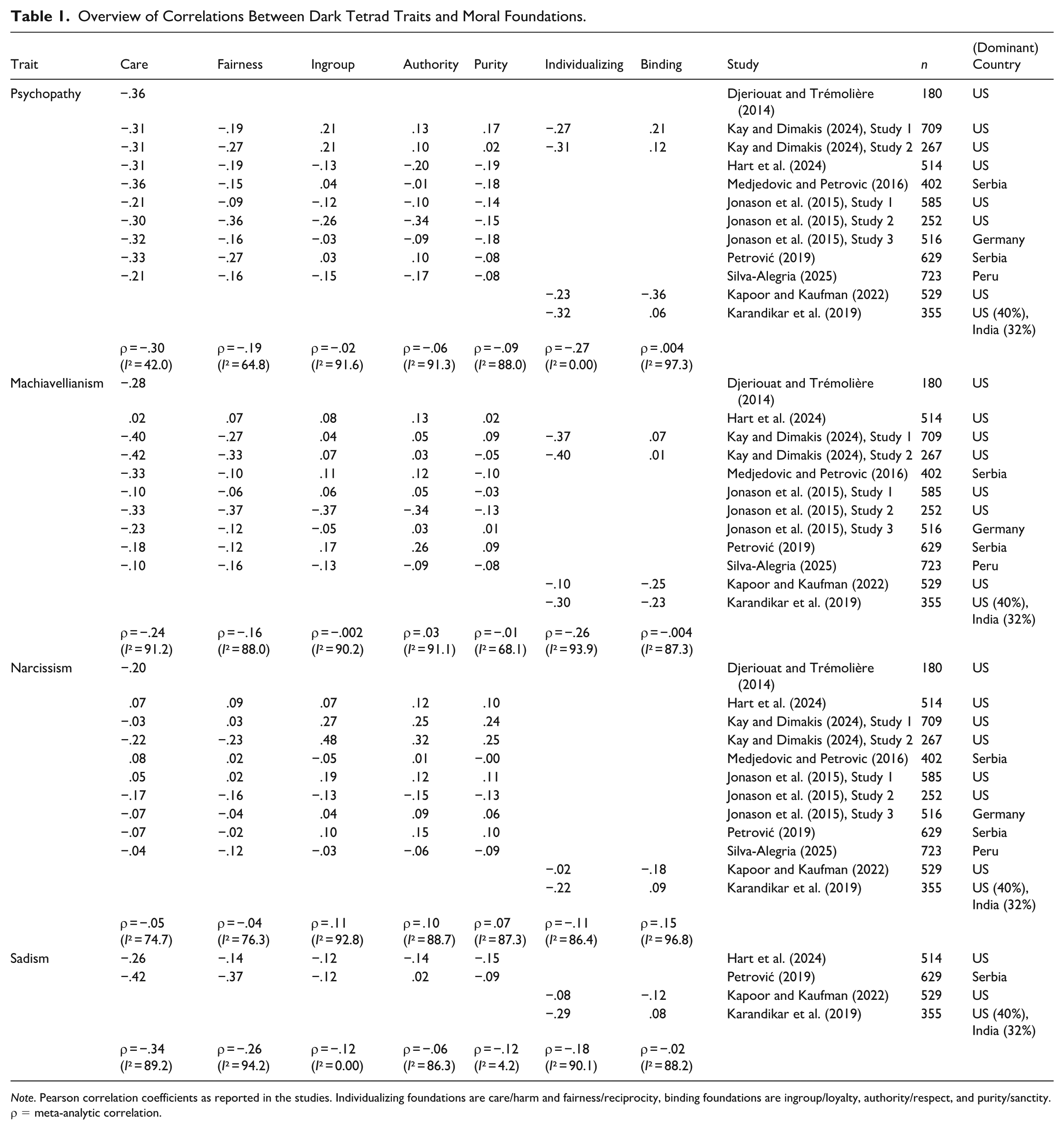
Note. Pearson correlation coefficients as reported in the studies. Individualizing foundations are care/harm and fairness/reciprocity, binding foundations are ingroup/loyalty, authority/respect, and purity/sanctity. ρ = meta-analytic correlation.
This heterogeneity could be due to at least two reasons. First, Dark Tetrad traits are inconsistently conceptualized and operationalized (e.g. Moshagen et al., 2025) and include variance that is not inherently aversive (Bader et al., 2023) which may differentially drive their associations with moral foundations. As a result, both within-trait and between-train inconsistencies can emerge. Second, substantial cross-cultural variation exists in both aversive personality traits (e.g. Jonason et al., 2022; Rogoza et al., 2021; Zettler et al., 2025) and the endorsement of moral foundations (e.g. Alper & Yilmaz, 2019), suggesting that their associations may not be culturally invariant. In what follows, we detail these issues and describe how we address them.
The Dark Factor of Personality
The first issue arguably contributing to the strong heterogeneity in previous results is that aversive traits typically blend an aversive component (which they share with other aversive traits) with essentially non-aversive aspects unique to a particular trait (Bader et al., 2023; Jones & Figueredo, 2013; Moshagen et al., 2018), thereby ‘diluting’ the expression of the shared core and thus their ‘aversive essence’ that actually links them to aversive behavior (Hilbig et al., 2023).
In turn, as specific aversive traits differ in their non-aversive, unique components (e.g. boldness in psychopathy or vulnerability in narcissism, Bader et al., 2023), it is often unclear whether any association observed is due to the aversive or non-aversive part or whether the two possibly compensate for each other. Further exacerbating this problem, Dark Tetrad traits are conceptualized and operationalized in multiple ways (e.g. Muris et al., 2017) differing in the respective unique components, which also contributes to empirical heterogenous results (Moshagen et al., 2025). Indeed, their shared core, rather than a specific ‘diluted’ trait, predicts a broad range of socially consequential outcomes such as political orientation, pro-environmentalism, pro- versus antisocial behavior in economic games, social preferences, and dishonesty (Bartolo & Powell, 2024; Hilbig et al., 2023, 2024, 2025; Hilbig & Thielmann, 2025; Moshagen et al., 2024), so that isolating this core may yield clearer associations of aversive personality with moral foundations.
A straightforward remedy is to focus directly on what is shared by all aversive traits, that is, their ‘aversive essence’ (Hilbig et al., 2023). To this end, the Dark Factor of Personality (D) was proposed as a unifying construct underlying all aversive traits (Bader et al., 2023; Hilbig et al., 2023; Moshagen et al., 2018). The theoretical framework of the D-factor assumes that any more specific aversive trait (including but not limited to the Dark Tetrad traits) arises as a flavored manifestation of D, so that any aversive trait reflects D to a certain extent, but may also comprise additional, essentially non-aversive parts.
The genuine advantage offered by considering D is that these essentially non-aversive components unique to a particular trait are removed, thereby yielding a direct assessment of how aversive personality per se predicts relevant outcomes. Correspondingly, D has been shown to predict a wide range of consequential outcomes such as cheating and dishonesty, crime, non-conformity to behavioral guidelines during the COVID-19 pandemic, out-group harm, selective prosociality, or sexism, often beyond any more specific aversive trait and beyond the entire FFM/HEXACO personality space (Bonfá-Araujo et al., 2023; Columbus et al., 2024; Hilbig et al., 2023; Moshagen et al., 2023; Rudloff et al., 2023; Schrödter et al., 2021; Ścigała et al., 2021; Yelbuz & Thielmann, 2025; Zettler et al., 2021).
Theoretically, D is defined as ‘the tendency to maximize one’s individual utility – disregarding, accepting or malevolently provoking disutility for others –, accompanied by beliefs that serve as justifications’ (Moshagen et al., 2018, p. 657). Utility refers to the extent of goal achievement, such as gains in status, monetary benefits, social power, and joy or pleasure (Moshagen et al., 2018). In the pursuit of achieving these goals, individuals high in D may not only manipulate and harm other individuals or the society, but also accept harm to themselves if it means that someone else receives no increase in utility.
A paramount aspect in the definition of D is the role of a broad set of beliefs that serve to justify malevolent behavior (Hilbig et al., 2022), in recognition of social-cognitive theories highlighting that ‘people do not usually engage in harmful conduct until they have justified to themselves the morality of their actions’ (Bandura, 2016, p. 49). These beliefs are relied on to construct a justification for aversive behavior, thereby alleviating any threat to one’s moral self-image and identity (Hilbig et al., 2022). Individuals high in D may rely on a broad range of beliefs to construe their actions as acceptable (Schrödter & Hilbig, 2026). Of particular relevance in the present context are relativism-related beliefs. That is, high-D individuals tend to view moral norms as flexible and context-dependent, treating them as instruments rather than constrains. Accordingly, they may selectively endorse moral foundations that facilitate personal goals while rejecting others as constraints.
Specifically, it is to be expected that D is negatively associated with endorsement of both the care/harm and the fairness/reciprocity foundations. Care/harm emphasizes compassion and harm prevention, which directly conflicts with a disposition towards maximizing personal utility at the cost of others. Similarly, fairness/reciprocity reflects concern for justice and equal treatment, which high-D individuals should generally reject given that they are more likely to exploit others and reject prosocial reciprocity. Concerning the remaining foundations, the D framework does not imply a particular link. For instance, high-D individuals may in certain situations draw on authority/respect or ingroup/loyalty foundations to judge the behavior of others, so that their own aversive behavior against individuals violating this norm appears justified (Moshagen et al., 2024). Yet, concerning the morality of their own behavior, adherence to authorities or the ingroup will often be unattractive – unless the latter actually call for aversive behavior. In turn, high-D individuals may rely on these foundations very selectively, namely only to the extent that they benefit themselves.
In sum, the conceptualization of D is well suited to study how aversive personality endorses moral foundations, not only because it offers an undiluted account of the tendency to maximize one’s own utility at the expense of others, but also because the justifying beliefs accompanying D highlight that moral values, and thus arguably moral foundations, are seen as non-absolute and relative.
Cultural Differences
The observed heterogeneity in previous results on the association between aversive traits and moral foundations may also reflect cultural differences. Cultural influences, such as economic development, exposure to threats, kinship structure, political systems, religious traditions, or social norms (Atari et al., 2023; Graham et al., 2016), are likely to shape both the interpretation of moral foundations (Haidt & Graham, 2007) and the development of personality traits (Briley & Tucker-Drob, 2014; Li & Zettler, 2025; Sng et al., 2018).
Indeed, both moral foundations (Graham et al., 2011; Hu et al., 2020; Iurino & Saucier, 2020) and specific aversive traits (Jonason et al., 2020, 2022) as well as their common aversive core, D, show substantial variation across countries. For instance, more aversive societal conditions (e.g. corruption or violence) have been linked to higher levels of D two decades later (Zettler et al., 2025), suggesting that such environments may normalize or incentivize self-serving behavior (Cialdini et al., 1991).
Similarly, as predicated by MFT, cultural differences are also evident concerning the endorsement of moral foundations, as reflected in Hofstede’s cultural dimensions of individualism versus collectivism and power distance, for example. More specifically, individualistic cultures emphasize personal autonomy, equal treatment, and individual rights, whereas collectivistic cultures emphasize group loyalty, role obligations, and the primacy of collective interests (AlSheddi et al., 2020; Hofstede, 2011; Hofstede et al., 2010; Yilmaz et al., 2016). In parallel, there is also evidence indicating lower levels of the Dark Tetrad traits in more individualistic (vs. collectivistic) countries (Fatfouta et al., 2021; Jonason et al., 2017) as well as that individualism moderates the relation between aversive societal conditions and D (Zettler et al., 2025).
Power distance reflects the extent to which inequality and hierarchy are accepted within a society (Hofstede, 2011; Hofstede et al., 2010). High power distance cultures emphasize obedience and deference to authority, whereas low power distance cultures value equality and participatory decision making. Although research linking power distance to moral foundations is scarce, it has been positively linked to the authority/respect foundation (Cantarero et al., 2021), that is, higher power distance relates to more importance placed on authority/respect.
Given that cultural variations are associated with both moral foundations and aversive personality traits, it is plausible that the relation between them also differs across cultures. Cultural conditions differ in the extent to which they reward, tolerate, or sanction self-serving and exploitative behavior, reflected in institutional structures, social norms, and dominant moral narratives. Thus, the cultural environment can serve as situational affordances, influencing not only the development of personality and moral foundations but also the behavioral expression of traits like D (de Vries et al., 2016; Thielmann et al., 2022). For instance, environments characterized by strong competition, weak institutional trust, or norm erosion may afford or even legitimize self-serving strategies whereas more normatively constrained contexts may suppress their expression. From this perspective, cultural context does not only shape the endorsement of moral foundations but also the extent to which dispositional tendencies such as D translate to moral judgments. In other words, the same level of D may manifest differently depending on cultural context: a high-D individual might justify emotionally harming others as necessary self-protection in an individualistic, competitive culture that values personal success. By contrast, in a collectivistic culture that emphasizes interdependence, the same individual might rationalize neglecting the well-being of outgroup members as acceptable to preserve ingroup harmony.
The Present Study
In sum, understanding the link between aversive personality and moral values requires (a) focus on the ‘aversive essence’ of personality traits and (b) studying these links in many countries to assess cross-cultural variation. To this end, we analyze data from 32 countries to examine the relationships between D and moral foundations – and how country-level characteristics may moderate these links.
Based on the theoretical frameworks and extant empirical findings, we hypothesize cross-culturally robust negative associations between D and the endorsement of (H1) the care/harm foundation and (H2) the fairness/reciprocity foundation. As there are no direct theoretical implications on the relationship between D and the remaining foundations (authority/respect, ingroup/loyalty, purity/sanctity), these are investigated in an exploratory fashion.
Additionally, we explore how cultural dimensions moderate the strength or direction of associations between D and moral foundations. Specifically, we examine individualism/collectivism and power distance, given prior findings that these cultural variables influence personality traits and/or moral values. Further, we consider education, industrialization, GDP per capita, level of democracy, and traditional versus secular-rational values, as well as the WEIRDness index (Muthukrishna et al., 2020) as a composite measure thereof.
Hypotheses and analysis method were pre-registered at https://aspredicted.org/hwsb-cmgj.pdf. Please note that we mistakenly pre-registered the MFQ20 and 33 countries even though the MFQ30 was used and data were available from 32 countries. Note that the total N was pre-registered correctly.
Method
We report how we determined our sample size, all data exclusions (if any), all manipulations, and all measures in the study. Data were collected via darkfactor.org, a website offering self-assessments and feedback on D. After completing the D questionnaire, participants could optionally complete a measure of moral foundations (see below) before receiving individual feedback on their D score. The study was run in 17 languages: Chinese (traditional and simplified), Danish, Dutch, English, Farsi, Finnish, French, German, Italian, Norwegian, Polish, Portuguese (European and Brazilian), Romanian, Russian, Serbian, Spanish, and Turkish.
Participants were included according to pre-defined criteria (e.g. fluent or native in the questionnaire language, response time of ≥3 s by item; for the complete criteria, see https://osf.io/93tw6). Additionally, participants had to correctly answer at least one of two attention check items interspersed in the moral foundations measure. Data collection was based on approval by the local ethics committee (IRB) at RPTU University of Kaiserslautern-Landau (Germany), Department of Psychology (approval #LEK-154 and #LEK-567).
We only included respondents from countries that yielded at least n = 100 participants to obtain sample sizes sufficiently large to support estimation of factor models separately for each country. For small countries, the estimated parameters are less precise which will reflect in larger credibility intervals. The final sample comprised N = 101,433 participants from 32 countries, with the largest subsamples from China (n = 57,089) and Poland (n = 12,482), and the smallest from Czechia (n = 125). Overall, 56.2% participants identified as women, and the mean age was 27.13 (SD = 11, range = 18–89) years. See Table 2 for the demographic breakdowns by country.
Demographic Variables.
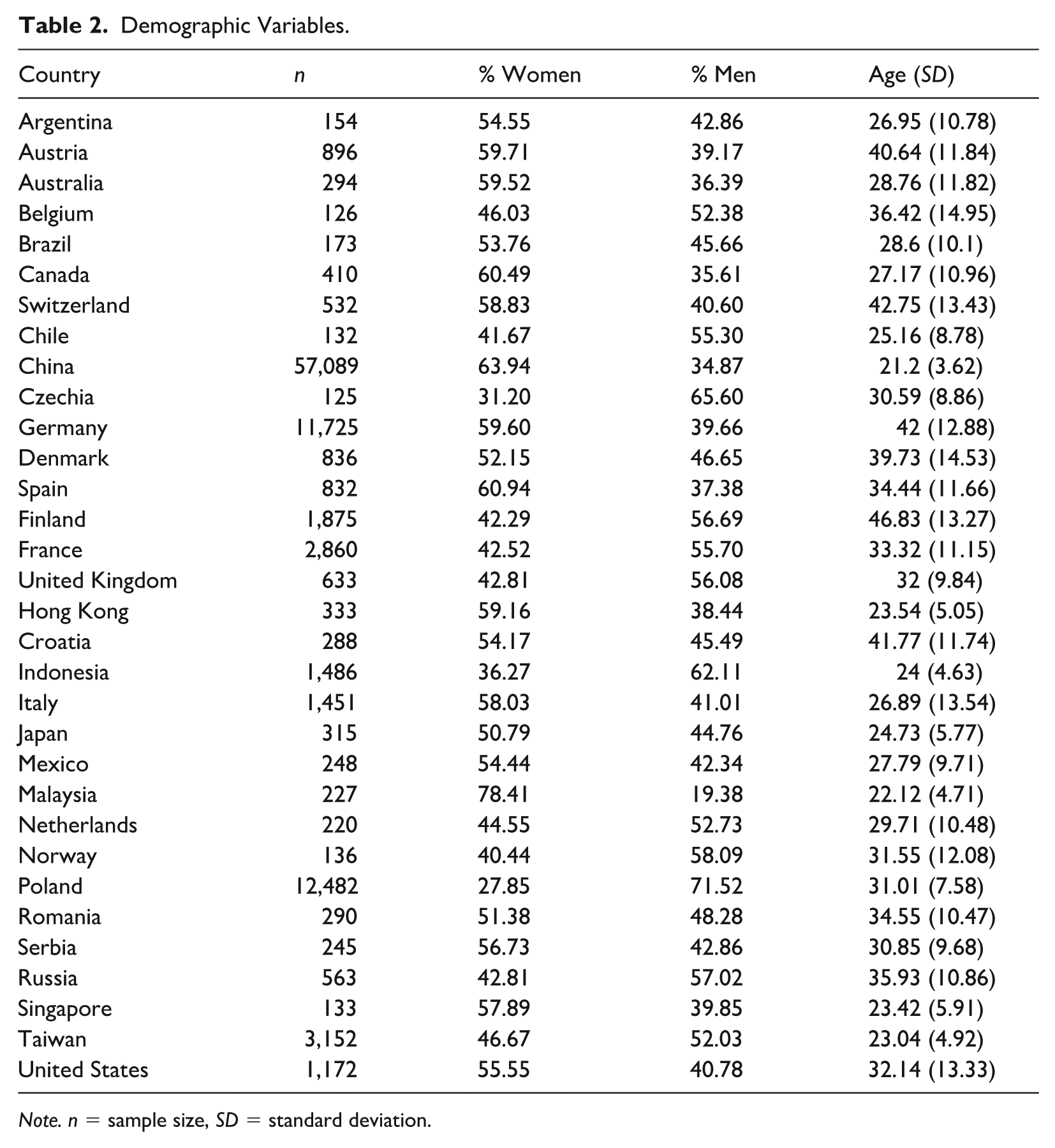
Note. n = sample size, SD = standard deviation.
D was assessed using the D35 and the D70 (Moshagen et al., 2020), comprising 35 and 70 items, respectively. Participants could choose which version to complete. Responses were given on a five-point Likert scale (1 = “strongly disagree” to 5 = “strongly agree”), with (approximately) half of the statements reversely keyed. A sample items is ‘My own pleasure is all that matters’. For consistency and to ensure identification of the factor model with random intercepts and random slopes (see below), analyses were restricted to the 16 items of the D16, which are included in both the D35 and the D70 and show strong correlations with the longer measures (for a detailed discussion of the item selection process, see Moshagen et al., 2020). Half of the D16 items are reverse-coded. McDonald’s ω of the composite (mean) score was .90.
Moral foundations were assessed using the MFQ30 (Graham et al., 2011), which measures five moral foundations using six statements each and includes two attention check items. In the first half of the questionnaire (three items per foundation), participants indicate how relevant different considerations are for their moral judgements on a six-point Likert scale (0 = “not at all relevant” to 5 = “extremely relevant”). In the second half (three items per foundation), participants rate their agreement with moral statements on a six-point Likert scale (0 = “strongly disagree” to 5 = “strongly agree”). McDonald’s ω for the foundations ranged from .70 (respect) to .76 (fairness, purity).
The WEIRDness index was operationalized as the (negative) cultural distance to the United States (Muthukrishna et al., 2020), so that higher values indicate less cultural distance to the United States and thereby more WEIRD countries. Cultural dimensions were assessed using Hofstede’s indices of individualism/collectivism and power distance obtained from geerthofstede.com (Gert Jan Hofstede, 2015). As additional moderators we used GDP per capita (World Bank Group, 2026), the education index from the Human Development Index (United Nations, 2026), the Freedom House democracy index (Freedom House, 2025), production process sophistication as a proxy for industrialization (World Bank Group, 2025), and traditional versus secular-rational values from the World Value Survey (World Value Survey, 2022).
Statistical Analysis
As pre-registered, we analyzed the data using Bayesian multilevel structural equation modeling (Asparouhov & Muthén, 2015). Each model parameter (i.e. loadings, intercepts, regression slopes, variances and residual variances) comprises a fixed and a random part, thereby estimating both the overall effect across all countries (fixed) as well as allowing for cross-country variation in the random component. This approach accounts for the hierarchical structure of the data (participants nested in countries, consistent with Moshagen et al., 2024 and Zettler et al., 2025). Although parameters might vary across countries, they are assumed to share a common mean and variance for any particular parameter, thereby estimating the latent factors on a common scale. This specification implies approximate measurement invariance as country-specific parameters are allowed to vary around a common mean (Muthén & Asparouhov, 2018). This level of invariance is sufficient for valid cross-country comparisons of regression slopes (Muthén & Asparouhov, 2018). To evaluate approximate measurement invariance, we inspected the estimated variances of loadings which reflect the degree of cross-country heterogeneity. Large variance estimates would indicate substantial deviations from invariance whereas small variances suggest that parameters are largely comparable across countries.
Models were estimated using a Gibbs sampling approach with two MCMC chains and at least 20,000 iterations. The potential scale reduction criterion used was a maximum of 1.01 to indicate convergence. Default priors as implemented in Mplus 8.3 (Muthén & Muthén, 2018) were used. Parameter estimates were considered meaningfully different from zero when the 95% credibility interval (CI) excluded zero.
D was modeled as a single latent factor with its variance fixed to one. To keep the number of estimated random effects manageable, separate models were estimated for each moral foundation, with the respective foundation modeled as a latent factor. We estimated standardized regression slopes between D and each moral foundation. Standardization followed the procedure implemented in Mplus which standardizes within clusters before averaging across clusters (Schuurman et al., 2016). Because D was the only predictor, this regression coefficient can be interpreted in a correlation metric. To test robustness, additional models controlled for gender and age, which have been linked to both D and moral foundations (Hartung et al., 2022; Jonason et al., 2015). In both cases, the regression slopes are fully standardized. Additionally, we assessed the moderating role of age and gender on the relationship between D and moral foundations. In these models, partially-standardized slopes were used (D and age were standardized).
Country-level variables were examined as moderators of the relationship between D and moral foundations. Moderators were first standardized across the full sample and then entered as level-2 predictors for the random slopes linking D to each moral foundation. As the standardization procedure implemented in Mplus is inappropriate when level-2 predictors are included (because such predictors have no within-cluster variance), moderation effects are reported as partially standardized slopes, meaning that D and the moderator were standardized whereas the moral foundation remained on its original scale. To avoid excessive model complexity and non-convergence, moderators were examined separately rather than including them simultaneously in the same model.
The data and analysis scripts are available at https://osf.io/37eht.
Results
First, we estimated a six-factor model (D plus five moral foundations) separately for each country. Model fit was acceptable with a median RMSEA of .07 (range .06–.09). Factor loadings on D ranged from .42 to .73, and loadings on the moral foundation factors from .21 to .64 (for details, see Supplemental Tables 19–24). Consistent with the assumption of approximate metric invariance, loadings on D were similar across countries with small cross-country variance (Md = 0.0028, .0015 ≤
Approximate metric invariance also held for the moral foundations with most loadings showing only small cross-country variance (Md = 0.0071, .0001 ≤
The intercorrelations between the moral foundations are shown in Table 3. Although some foundations are very highly correlated, we analyzed them separately to maintain comparability with previous results. Random effect variances further support this approach, indicating substantial cross-country differences in the strength of these relationships. For instance, whereas the (fixed effect) correlation between ingroup/loyalty and authority/respect was estimated at .967, the associated variance of .0319 indicates that this correlation varies across countries between approximately .60 and 1.0 (i.e. ± 1.96 sd), justifying the separate consideration of these foundations in at least some countries.
Standardized Slopes Between Moral Foundations and D.
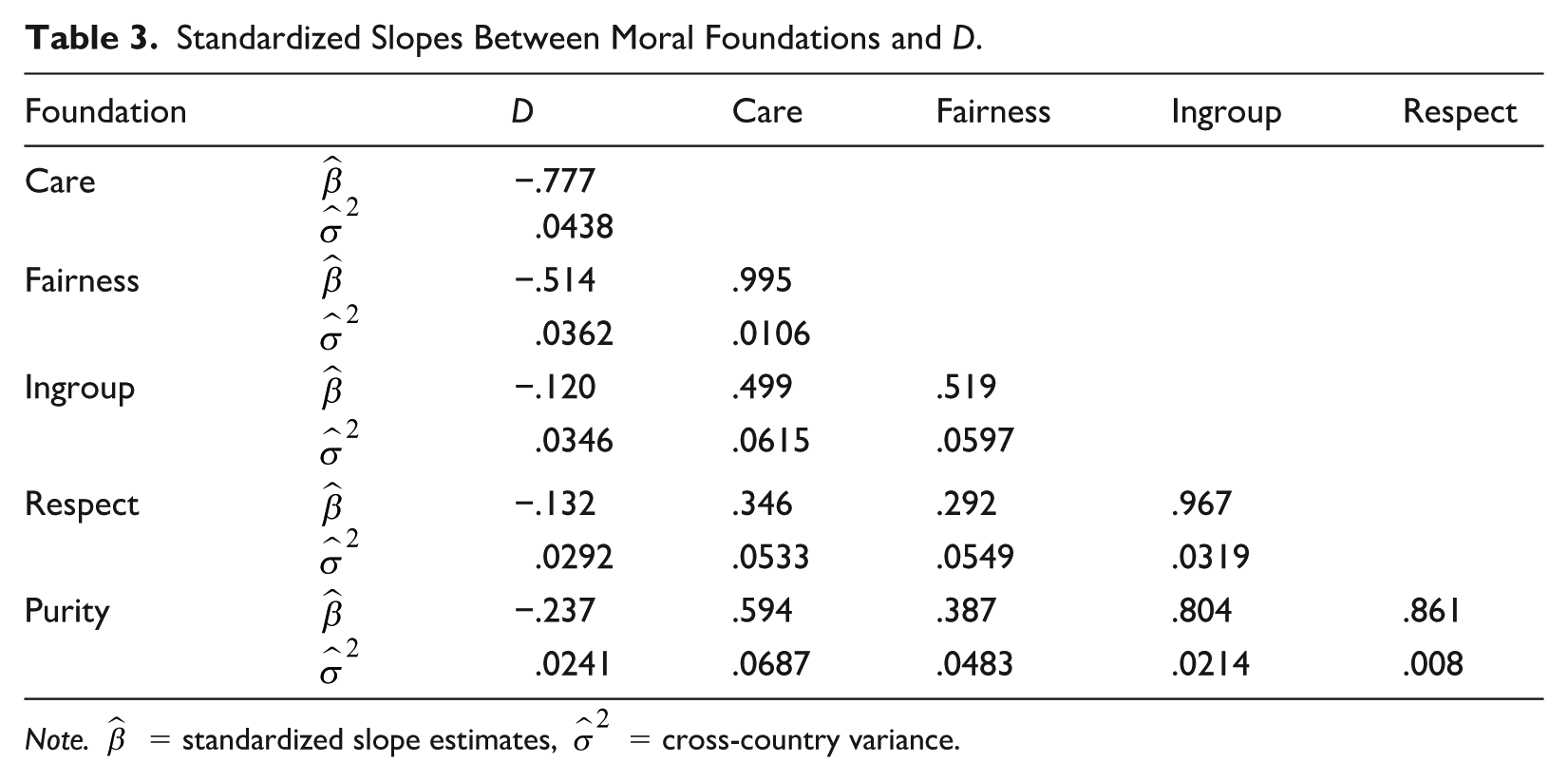
Note.
As predicted in H1, D was negatively associated with endorsement of the care/harm foundation, albeit with substantial cross-country variability (
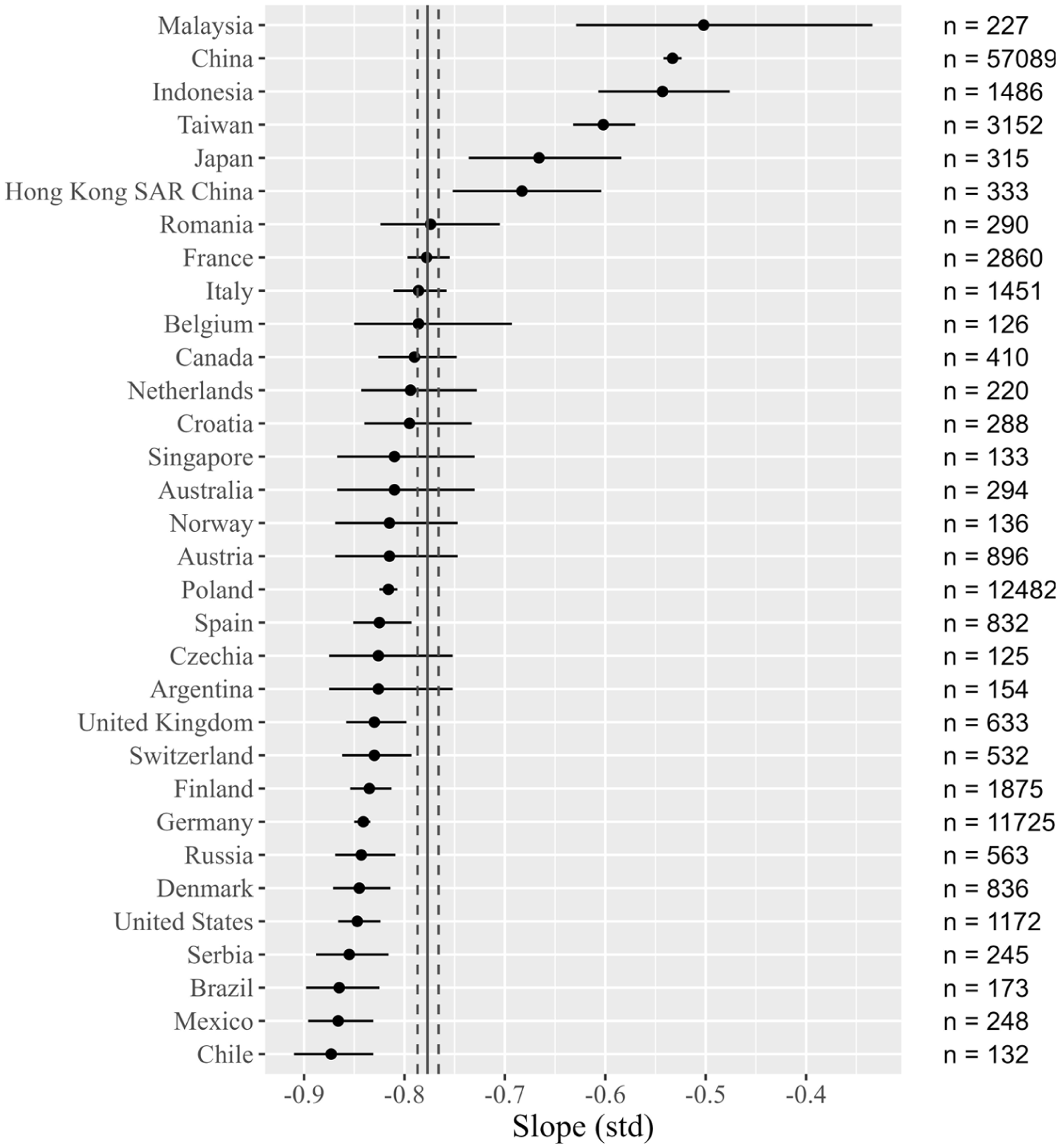
Country specific slope estimates and 95% CIs for D and care/harm foundation.
Consistent with H2, individuals high in D showed lower endorsement of the fairness/reciprocity foundation on average, again with substantial cross-country variability
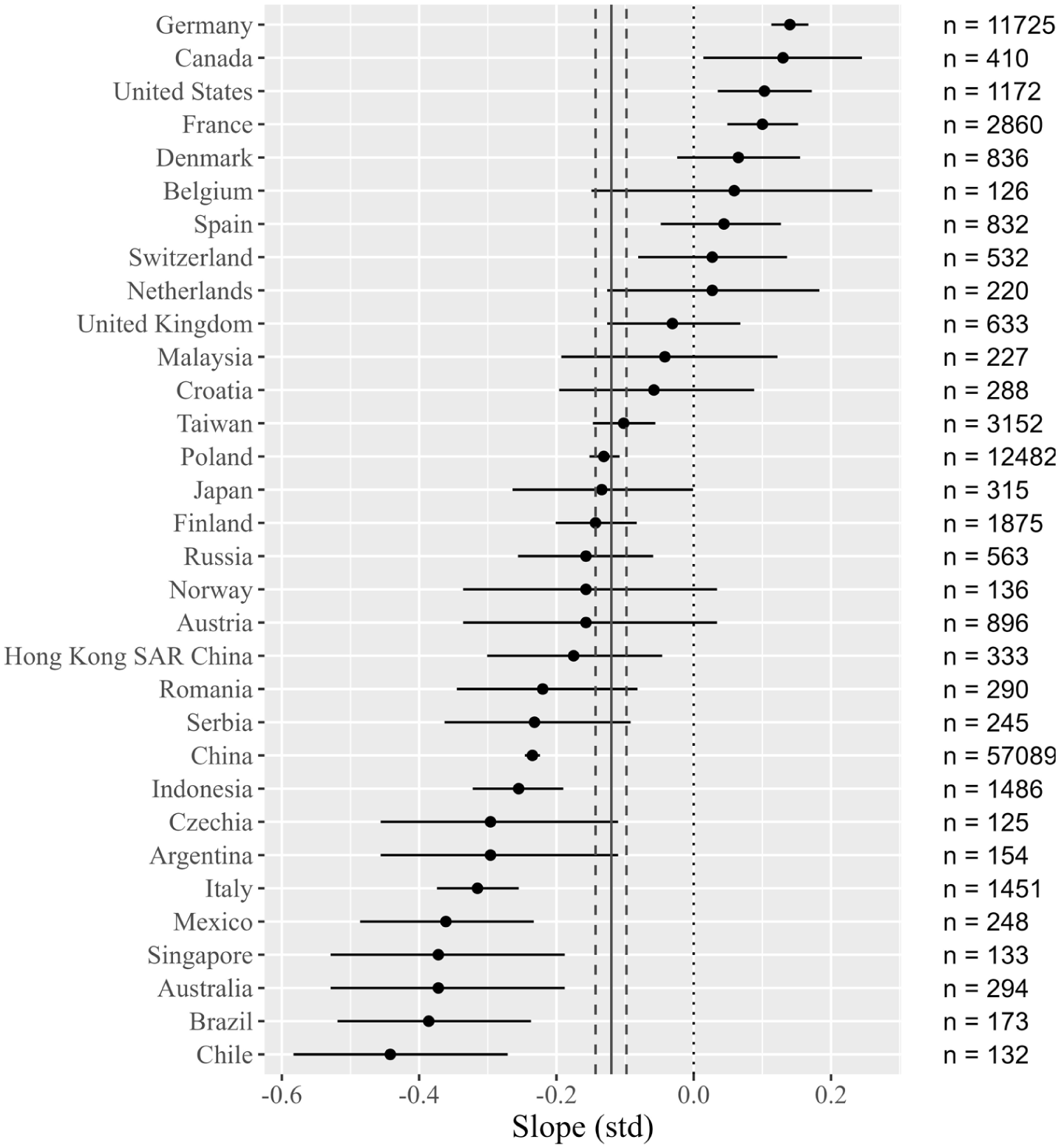
Country specific slope estimates and 95% CIs for D and fairness/reciprocity foundation.
The relationships between D and the remaining three moral dimensions were examined exploratorily. D showed weak negative associations with ingroup/loyalty
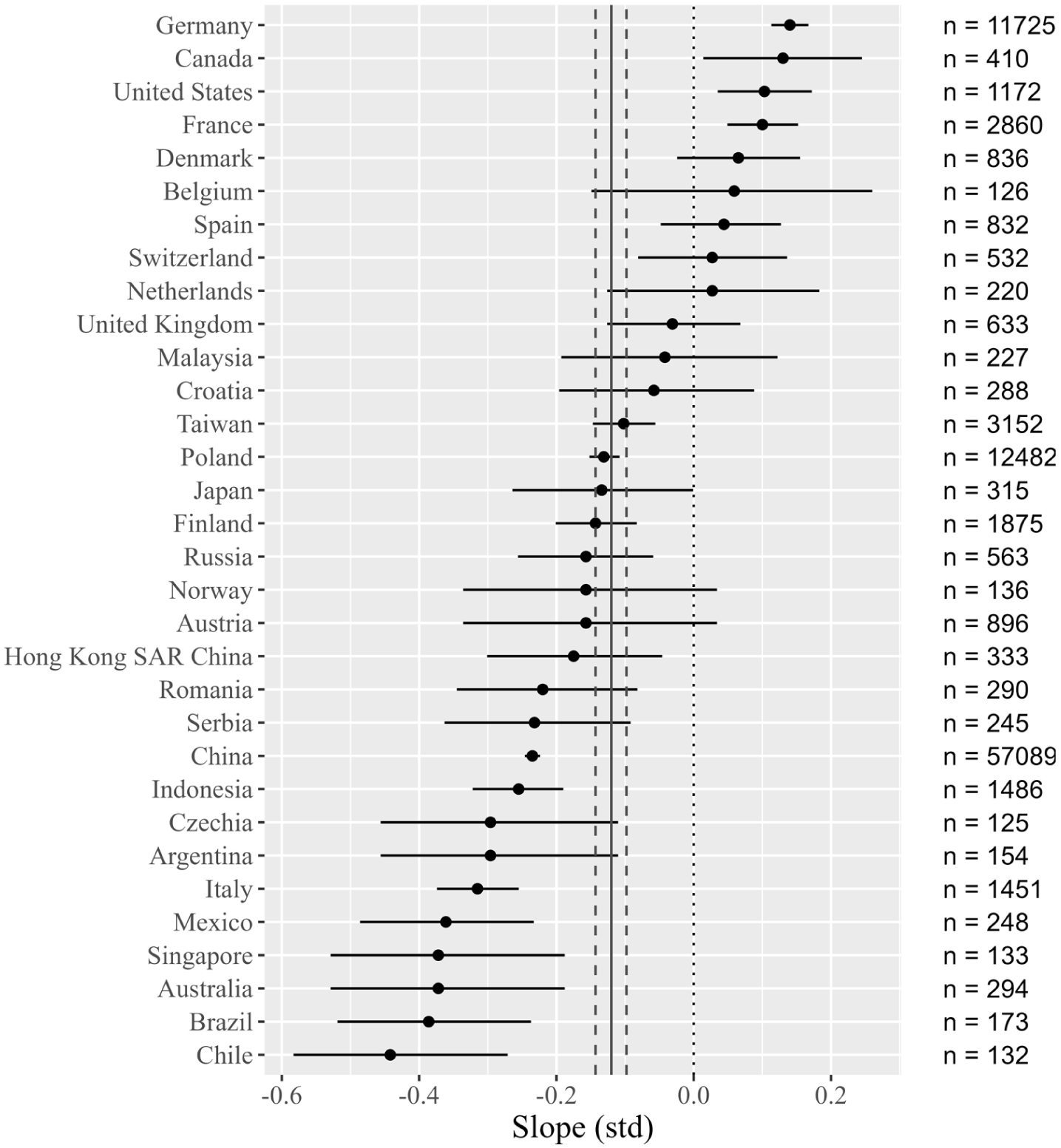
Country specific slope estimates and 95% CIs for D and ingroup/loyalty foundation.
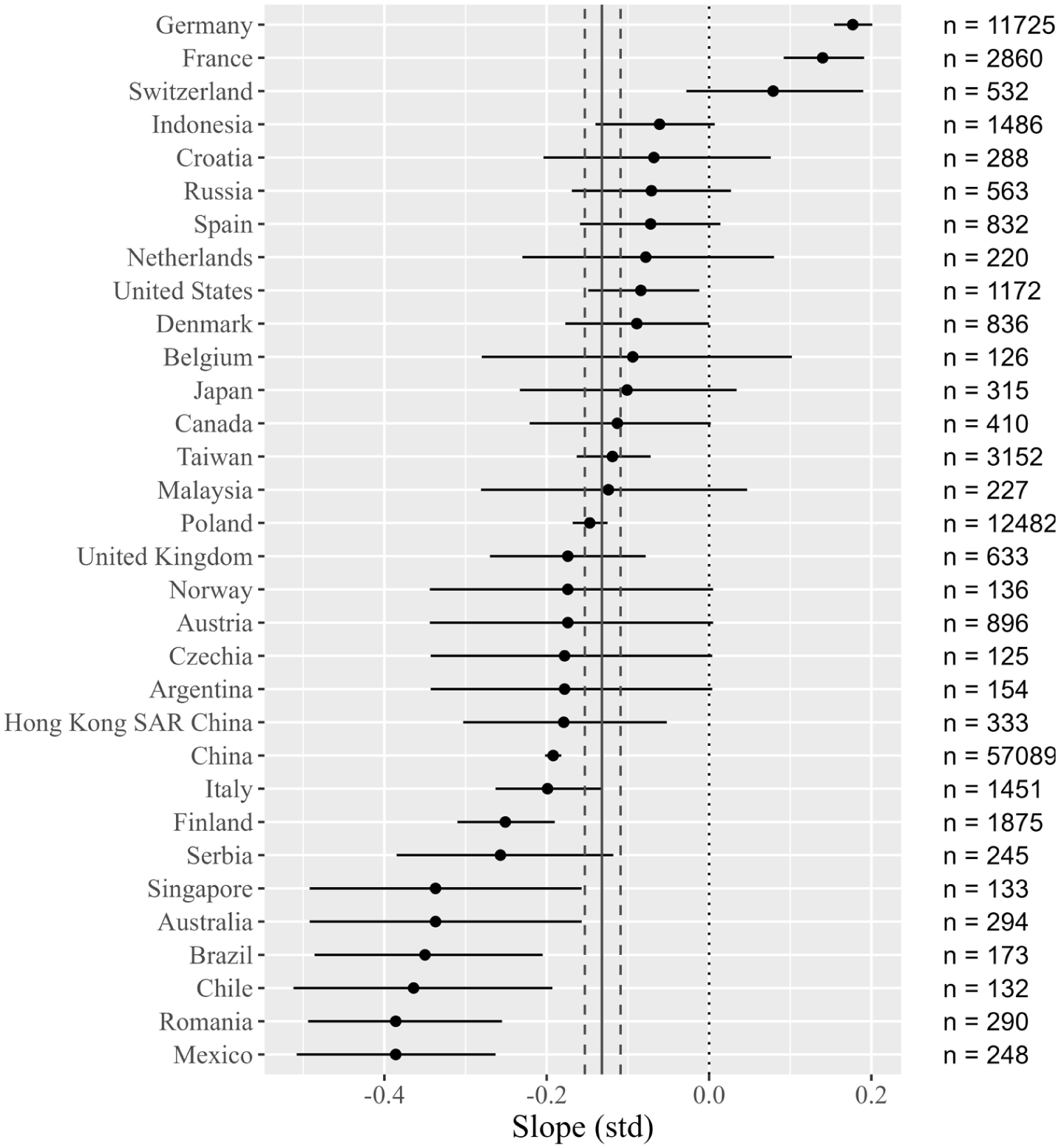
Country specific slope estimates and 95% CIs for D and authority/respect foundation.
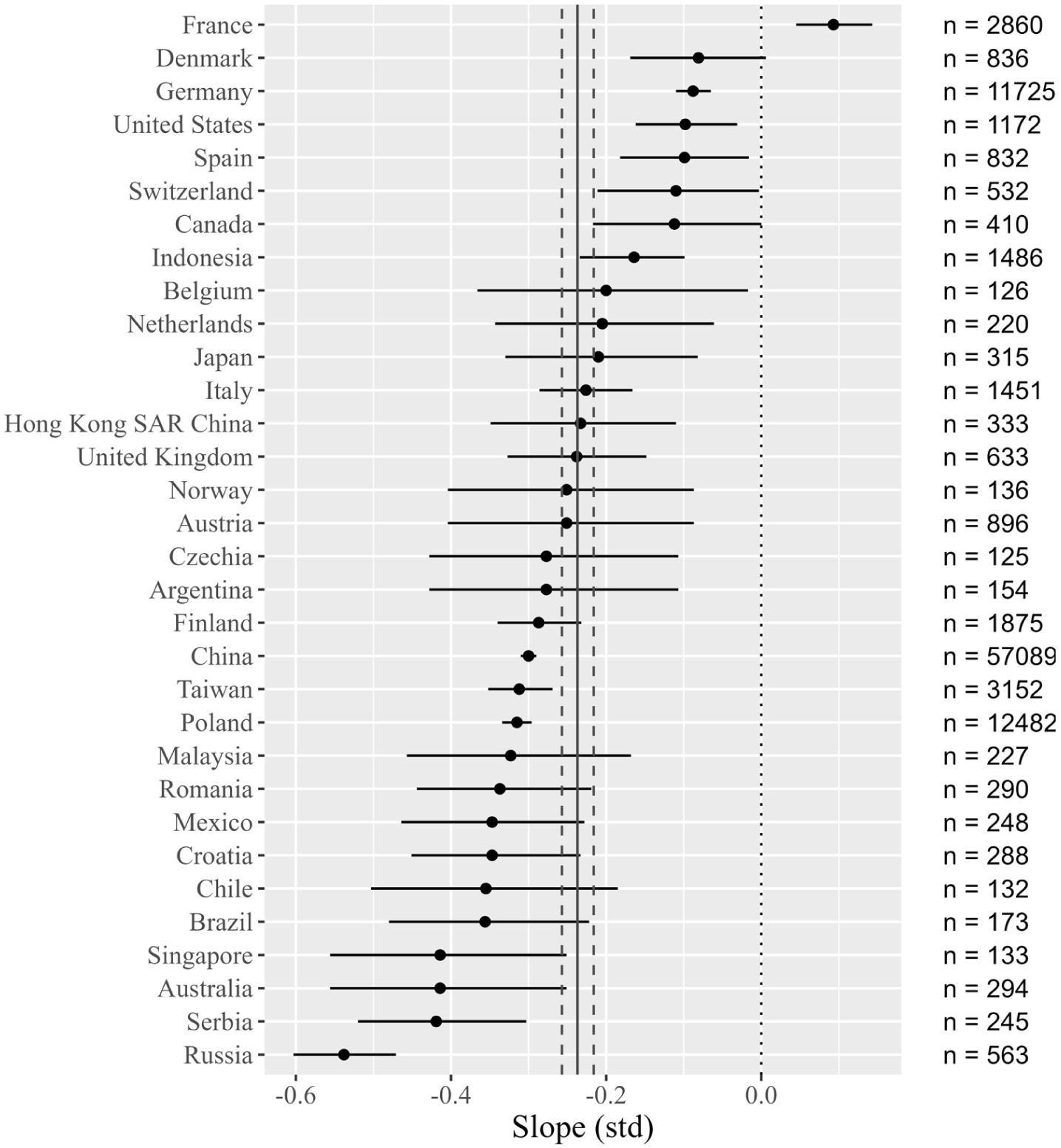
Country specific slope estimates and 95% CIs for D and purity/sanctity foundation.
Additional analyses controlling for age and gender yielded comparable results concerning the relation between moral foundations and D. However, both age and gender showed small moderating effects. For details, see Supplemental Table 25. Further, we conducted additional analyses restricting the data to the most commonly spoken languages within each country. The detailed results are reported in Supplemental Tables 26 and 27. Crucially, the findings were consistent with the primary analyses.
Moderator Analyses
Given the substantial cross-country variability in the observed effects, we investigated country-level variables as moderators. The country-level moderators were highly intercorrelated (see Table 4). The interaction effects between D and the country-level moderators are shown in Table 5. Endorsement of the care/harm foundation was moderated by WEIRDness, individualism, and education, indicating that high-D individuals endorse this foundation even less in more WEIRD, more individualistic, and better educated countries. Similar effects were shown for fairness/reciprocity with power distance being an additional positive and democracy a negative moderator. The relationship between D and ingroup/loyalty was moderated by all moderators except for WEIRDness. High-D individuals endorsed the authority/respect foundation more in more individualistic and industrialized countries and less in countries with higher power distance. Finally, the relationship between D and purity/sanctity was moderated all country-level variables we considered, except for WEIRDness and traditional versus secular-rational values. For the detailed results, see Supplemental Tables 2 to 9.
Pairwise Correlations Between Country-Level Moderators.
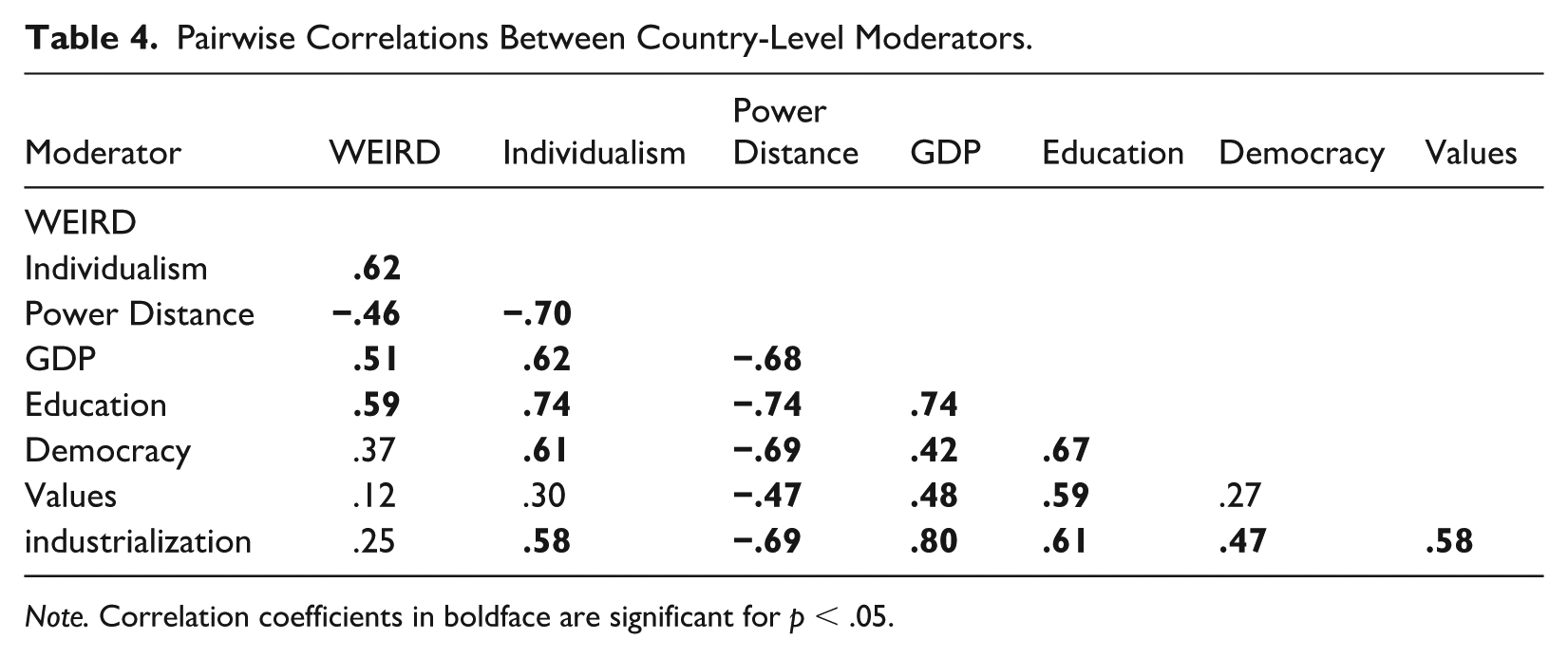
Note. Correlation coefficients in boldface are significant for p < .05.
Partially Standardized Slopes for Moderator Analyses with Moderators.
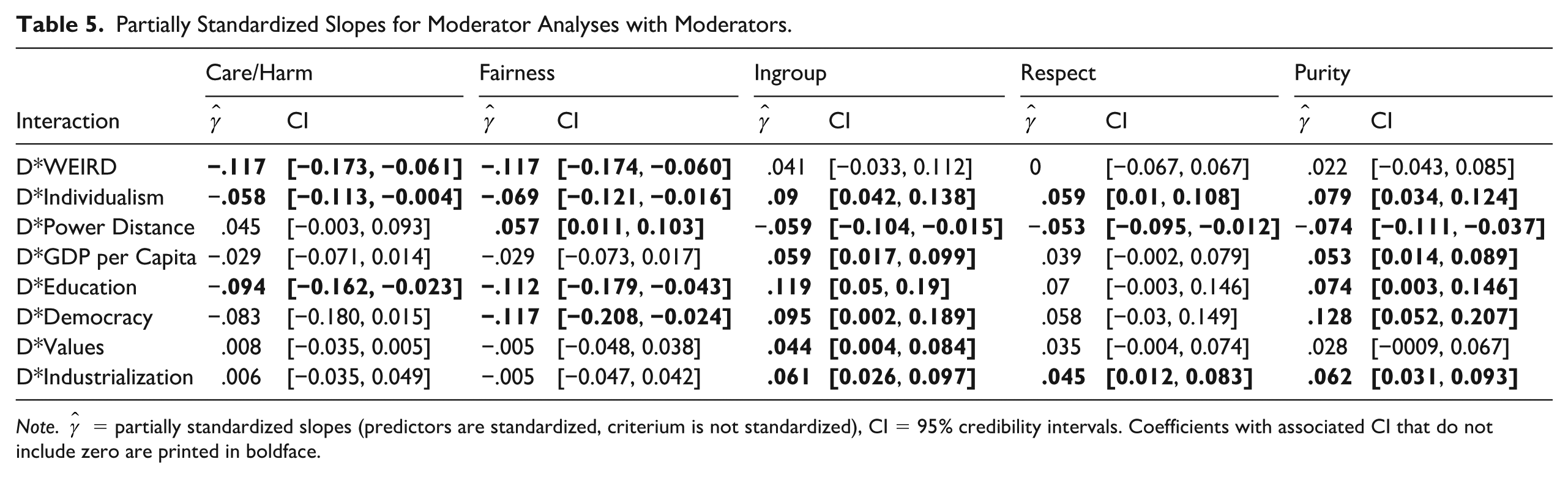
Note.
Discussion
Personality traits play a central role in shaping how individuals interpret and prioritize moral concerns, influencing both the strength and the content of moral judgements. Research on the relationship between aversive (‘dark‘) personality and moral foundations has largely focused on single-country, often WEIRD samples and/or to subsets of traits such as the Dark Triad/Tetrad components (e.g. Jonason et al., 2015; Kapoor & Kaufman, 2022; Kay & Dimakis, 2024). Although corresponding findings have provided important insights, their results are highly heterogeneous. Moreover, few studies have considered cultural variation in either moral foundations or aversive traits, despite substantial evidence that both vary meaningfully across societies (Doğruyol et al., 2019; Jonason et al., 2020; Zettler et al., 2025). This gap limits our understanding of whether associations between aversive personality and moral reasoning reflect general psychological tendencies or culturally contingent patterns.
The present study addressed this by focusing on the common core of aversive traits, the D factor (Moshagen et al., 2018), and examining its associations with moral foundations in a large cross-cultural sample. Moreover, by incorporating cultural moderators we provide an account of how socio-cultural affordances shape the moral implications of aversive personality.
Our pre-registered hypotheses (H1 and H2) were supported: D was consistently negatively related to care/harm and fairness/reciprocity across countries and thus cultures. This suggests that individuals higher in D generally endorsed the care/harm and fairness/reciprocity foundations less strongly – in line with the conceptualization of D as a dispositional disregard for others’ welfare and reduced sensitivity to justice and reciprocity (Hilbig et al., 2022; Moshagen et al., 2018).
Furthermore, D showed small, negative average associations with ingroup/loyalty, authority/respect, and purity/sanctity. Although the mean effects were negative, substantial cross-cultural variation, meant that some countries showed negligible or even positive relationships. This suggests that although D generally erodes moral concern, cultural context shapes whether high-D individuals reject, remain indifferent to, or strategically embrace these particular moral foundations. One may speculate that adopting these moral concerns may be strategically beneficial for high-D individuals depending on the normative landscape of society. For example, in countries with rigid authority structures (e.g. Mexico), rejecting authority-values may align with utility maximization, whereas in less rigid contexts (e.g. Germany, France), endorsing authority may serve self-interested goals.
To better understand the observed cross-cultural variability, we examined whether country-level variables moderated the relationship between D and moral foundations. Several patterns emerged.
Higher WEIRDness, individualism, and education were associated with a stronger negative relationship between D and care/harm, indicating that high-D individuals endorsed this foundation even less in these contexts. The same effect was found for endorsement of the fairness/reciprocity foundation, with democracy being an additional negative moderator. One interpretation is that in sociocultural contexts emphasizing individual autonomy, rights, and welfare, individuals high in D may strategically distance themselves from these dominant moral norms, either because such environments impose fewer external constrains on moral self-regulation or because the moral discourse is strategically rejected to justify self-serving behavior. Notably, the association between D and fairness/reciprocity was moderated in the opposite pattern with high-D individuals endorsing it slightly more in more hierarchical societies, potentially reflecting a more instrumental, exchange-based interpretation of fairness in such contexts.
Endorsement of ingroup/loyalty among high-D individuals was consistently higher in countries characterized by greater economic development (GDP), education, democracy, and industrialization, as well as in more individualistic contexts. This pattern suggests that rather than rejecting group-oriented morality altogether, high-D individuals may selectively endorse loyalty norms in environments where group affiliations are more fluid or strategically relevant. In such contexts, loyalty may function less as a rigid obligation and more as a flexible tool for self-advancement.
Authority/respect showed a more specific pattern. Endorsement was stronger among high-D individuals in more individualistic and industrialized countries. This may indicate that in highly structured and institutionalized environments, authority can be used as a means of navigating or exploiting formal hierarchies. However, the negative moderating effect of power distance suggests that when authority is more rigidly prescribed, individuals high in D may distance themselves from such constrains.
Similar to ingroup/loyalty, purity/sanctity was more strongly endorsed by high-D individuals in countries marked by higher GDP, education, democracy, industrialization, and individualism. This indicates that binding foundations tied to norm enforcement and social order may become particularly salient for high-D individuals in more developed and institutionally complex societies, possibly because they provide moral justification for norm-based regulation of others.
In sum, greater economic development (GDP, industrialization) and institutional complexity (education, democracy) were associated with a relative shift away from individualizing and towards binding foundations among high-D individuals. This pattern suggests that in more developed and institutional structured contexts, individuals high in D may increasingly align with group-oriented moral domains, possibly because these domains can be leveraged to maintain status, justify exclusion or navigate complex social hierarchies. These findings highlight that cultural dimensions often overlap yet exert distinct psychological influences, cautioning against treating them as interchangeable.
Beyond the relations between D and moral foundations, we also found strong intercorrelations among several of the foundations themselves. In particular, care/harm and fairness/reciprocity, as well as ingroup/loyalty and authority/respect, showed almost perfect positive correlations across countries. This raises the possibility that these foundations may function as a unitary dimension in certain societies. Indeed, the proposed five-factor structure has not been consistently found across countries (Doğruyol et al., 2019; Iurino & Saucier, 2020; Wormley et al., 2025). However, although MFT posits five distinct foundations, it also emphasizes that cultural learning shapes how foundational ‘building blocks’ are combined and interpreted (Graham et al., 2013; Haidt & Graham, 2007). Thereby, some societies may treat compassion and fairness as inseparable virtues, whereas in others they are treated as more distinct. Likewise, loyalty and respect for authority may converge in hierarchical societies where group cohesion is tightly bound to obedience. Such patterns highlight both the strengths and empirical boundary conditions of MFT: Whereas the theory captures broad moral intuitions across societies, the distinctiveness of its foundations appears contingent on cultural meaning systems.
Implications
Taken together, the findings of the present study suggest that the D-factor undermines moral reasoning across foundational domains and countries. Importantly, the strongest and most robust effects emerged for the individualizing foundations (care/harm and fairness/reciprocity), reinforcing the conceptualization of D as a dispositional disregard for others’ welfare rather than a mere tendency toward rule-breaking or norm-violation (Hilbig et al., 2023; Moshagen et al., 2018). At the same time, the observed cultural moderation effects highlight that the moral consequences of D do not manifest identically across societies. Rather, D interacts with the socio-cultural environments, indicating that morality is not entirely universal in how it is structured or expressed. This is in line with the notion of cultural aspects functioning as situational affordances which influence the development and expression of personality traits (de Vries et al., 2016; Sng et al., 2018; Thielmann et al., 2022).
Further, our findings offer clarity in the heterogenous landscape of previous associations between subsets of aversive traits (particularly the Dark Tetrad) and moral foundations. Previous studies yielded inconsistent and sometimes contradictory associations, especially for the moral foundations of authority/respect, ingroup/loyalty, and purity/sanctity (see Table 1). These inconsistencies likely arise from a blend of aversive and non-aversive components in each trait. By focusing on the D-factor, which captures the common core across all aversive traits, our results provide conceptual and empirical coherence. The negative fixed effects of D on all five moral foundations suggest that the aversive essence of personality consistently undermines moral concern, even when non-aversive, trait-specific aspects might inflate endorsement of certain moral domains in prior research. However, the negative associations found in previous work are supported by our present results and are likely due to the aversive essence being more prominent in these traits. The positive associations observed in prior studies, however, might reflect the non-aversive aspects of traits, such as self-enhancement or need for admiration in narcissism.
Nonetheless, our findings also indicate that the relationship between D and moral foundations is not culturally uniform. Despite the overall negative pattern, we observed substantial cross-country variation, with some countries showing null or even positive associations between D and specific moral foundations, especially the binding foundations. This suggests that cultural affordances and normative expectations can modulate whether the expression of aversive dispositions translates into overt moral disengagement or strategic moral alignment. Thus, the present results both reconcile prior inconsistencies and highlight the importance of the cultural context.
Limitations
Apart from its contributions, this work has some limitations. First, the sample was unevenly distributed across countries with approximately half of participants drawn from China. Although supplementary analyses excluding the Chinese sample (Supplemental Tables 10–18) yielded essentially equivalent results, suggesting that the main findings are robust, future research would benefit from more balanced cross-national sampling.
Second, the assessment of moral foundations relied on the MFQ30, which has known psychometrical limitations, particularly lower internal consistency in less Western and lower-income countries (Atari et al., 2023). While some country-level reliability estimates were modest (McDonald’s ω .58 for care/harm and fairness/reciprocity, both Indonesia), average reliability across countries was acceptable (McDonald’s ω between .70 and .76).
Third, the samples were not nationally representative and were based on participants’ country of residence at the time of assessment. In addition, the measure of D was not always available in all official languages (e.g. Czech language for Czechia), resulting in participants choosing a different language they were sufficiently proficient in. However, supplementary analyses restricting the data to commonly spoken languages produced highly similar results, supporting the robustness of the findings (for details, see Supplemental Tables 26 and 27). More generally, although we controlled for age and gender, other potentially relevant individual-level variables (e.g. education, employment status, migration background) were not assessed.
Finally, the set of country-level moderators examined was necessarily selective and other factors (e.g. support for the death penalty, corruption, or social inequality) may also shape the relationship between D and moral foundations. As we make our data public, we encourage future research projects to test additional moderators. The cross-cultural scope of the dataset remains incomplete, with limited representation of lower-income regions, particularly African countries, and a predominance of higher-income countries. Moreover, the cultural moderators were derived from country-level aggregates which may obscure within-country variations. These limitations could be accounted for in future studies.
Conclusion
The present work demonstrates that the core of aversive personality, the D factor, reliably undermines endorsement of moral foundations, most strongly those emphasizing concern for others’ welfare and fairness. At the same time, the results show that these associations are not uniform across cultural contexts. By integrating the D factor with MFT in a large cross-cultural sample, the present study provides evidence that the moral insensitivity linked to aversive personality is both general and contextually bound. These findings highlight the importance of considering socio-cultural affordances when studying the moral consequences of personality: cultural environments not only shape the meaning of moral foundations but also the extent to which aversive disposition translates into reduced moral concern. In short, D consistently erodes concern for others but the way this moral disregard unfolds depends on the cultural context.
Supplemental Material
sj-docx-1-jcc-10.1177_00220221261461520 – Supplemental material for Aversive Personality and the Moral Mind: Cross-Cultural Links Between the D-Factor and Moral Foundations
Supplemental material, sj-docx-1-jcc-10.1177_00220221261461520 for Aversive Personality and the Moral Mind: Cross-Cultural Links Between the D-Factor and Moral Foundations by Lea C. de Hesselle, Benjamin E. Hilbig, Ingo Zettler and Morten Moshagen in Journal of Cross-Cultural Psychology
Footnotes
Ethical Considerations
Data collection was based on approval by the local ethics committee (IRB) at RPTU University of Kaiserslautern-Landau (Germany), Department of Psychology (#LEK-154 and #LEK-567).
Consent to Participate
Participants provided informed consent via an online form.
Consent for Publication
Not applicable.
Author Contributions
LCDH: Formal analysis, Conceptualization, Methodology, Writing – original draft, Project administration.
BEH: Conceptualization, Investigation, Writing – review & editing.
IZ: Conceptualization, Investigation, Writing – review & editing.
MM: Conceptualization, Writing – review & editing, Supervision, data collection/curation.
Funding
The authors received no financial support for the research, authorship, and/or publication of this article.
Declaration of Conflicting Interests
The authors declared no potential conflicts of interest with respect to the research, authorship, and/or publication of this article.
Data Availability Statement
The hypotheses and analysis method were preregistered at: https://aspredicted.org/hwsb-cmgj.pdf. The raw data and analysis scripts are available at:  .
.
Supplemental Material
Supplemental material for this article is available online.
References
Supplementary Material
Please find the following supplemental material available below.
For Open Access articles published under a Creative Commons License, all supplemental material carries the same license as the article it is associated with.
For non-Open Access articles published, all supplemental material carries a non-exclusive license, and permission requests for re-use of supplemental material or any part of supplemental material shall be sent directly to the copyright owner as specified in the copyright notice associated with the article.
