



Abstract
Self-regulated learning (SRL) has gained increasing interest in educational research. Although SRL models agree on the dynamic interplay between forethought, performance, and self-reflection processes, they differ in the subprocesses implied at each phase. The main objectives of this study were to develop and test an SRL model by integrating main contributions of social cognitive career theory and Zimmerman’s SRL model in a sample of undergraduates in Argentina. Structural equation modeling showed that three models fitted well to the data, explaining between 21% and 34% of the variance. The results of this study provide theoretical and empirical support for the SRL model.
Keywords
Introduction
Self-regulated learning (SRL) has demonstrated to be a key concept in explaining the initiative, persistence, and adaptive capacity of students, facilitating the acquisition of knowledge and capabilities (Bembenutty, 2008; Zimmerman, 2000) and the use of study time, which have been related to an increase in retention rates and academic persistence (Broadbent & Poon, 2015; Dörrenbächer & Perels, 2016; Patterson et al., 2014; Sitzmann & Ely, 2011). In broad terms, SRL emphasizes that learning is a proactive activity instead of an activity that happens reactively when learning situations arise (Zimmerman, 2015).
In this context, several works stand out in the literature where SRL models have been developed, for example, Zimmerman (1986, 2000, 2013), Boekaerts (1988, 1991, 1992, 2011), Winne and Hadwin (1998, 2008), Pintrich (1999, 2000), Efklides (2011), and Hadwin et al. (2018), studies that highlight the cyclical character of SRL, which is composed of three large phases (forethought, performance, and self-reflection). Despite the model proposed by Zimmerman (2000) being considered as a reference framework, the constructs involved in each one of those processes are not exhausted in its original formulation (Greene & Azevedo, 2007; Perry, 2002; Schraw et al., 2002).
As observed, the subprocesses involved in each SRL phase can be enriched considering another set of variables not considered initially by Zimmerman, focusing on those constructs that have presented solid empiric evidence in regard to its importance to explain the self-regulation process. Indeed, the social cognitive theory of careers (SCCT; Lent et al., 1994) constitutes one of the explanatory frameworks that has received particular attention in education literature (Medrano & Orlando, 2008; Lent, 2005; Sheu & Bordon, 2016). Thus, based on existing models and the evidence highlighted in the local literature, the purpose of this work consisted in proposing an SRL integrative model.
Self-Regulated Integrative Learning Model
As stated by Zimmerman and Moylan (2009) and Lent et al. (1994), in the forethought phase (see Figure 1), self-efficacy beliefs have a direct and indirect effect, through academic outcome expectations over academic goal progress (Paths 1, 2, and 3). That is, those students who perceive themselves to be competent for the performance of a task (self-efficacy) expect positive results (expectations) and establish more demanding goals. However, SCCT has emphasized that those students who perceive that the environment provides resources for the achievement of objectives shall increase their self-efficacy (Path 4), and develop more favorable expectations (Path 5; Lent, 2004). According to the studies related to SCCT, it is presumed that those students who possess greater self-efficacy beliefs and higher goals shall select the most adequate learning method in terms of the task to be performed and the characteristics of the environment (Paths 7 and 8, respectively).
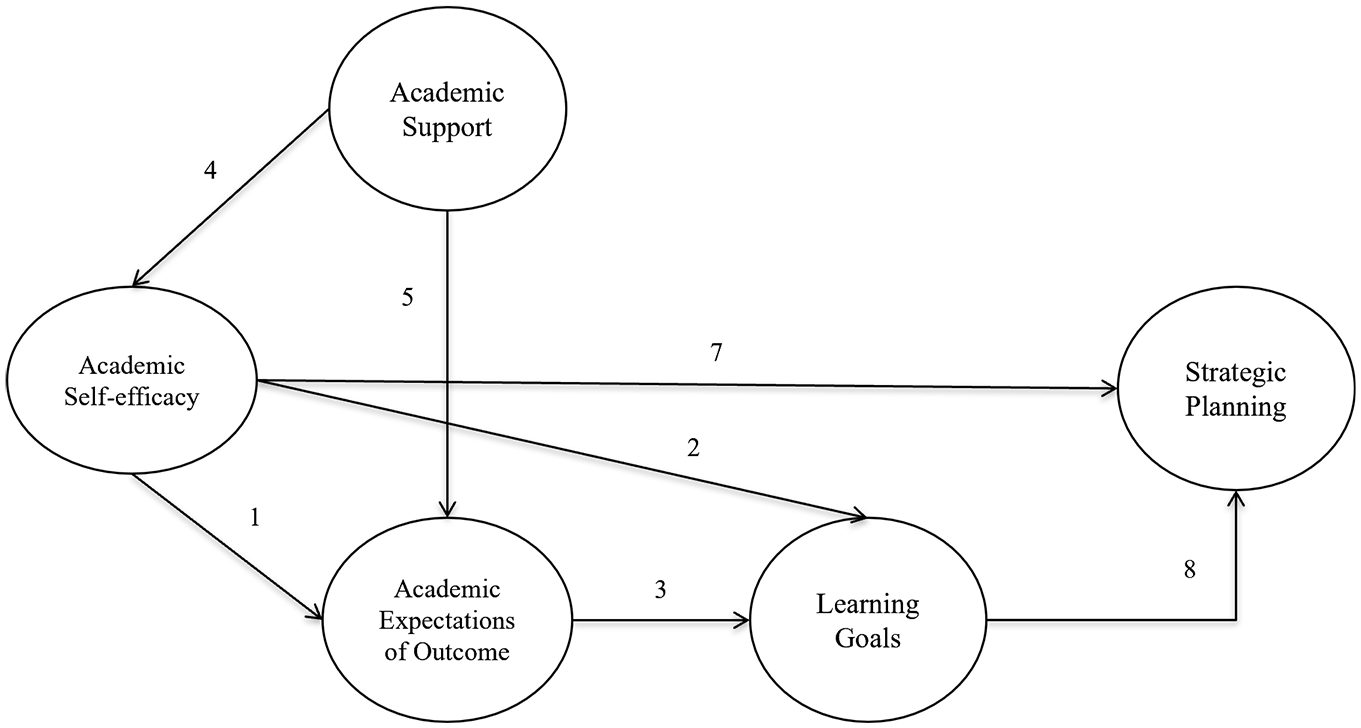
SRL integrative model proposal, forethought phase.
The goals deserve particular attention. In the literature, learning goals are usually weighed against achievement goals and approach goals are weighed against avoidance goals. However, different works (Elliot & McGregor, 2001; Linnenbrink & Pintrich, 2002) have proposed a combination of them, that is, learning–approach goals (centered on comprehending and learning), learning–avoidance (tries to elude incompetence), achievement–approach (relative capacity of the participant compared with fellow students and seeking to surpass them), and achievement–avoidance (tendency to avoid failure and avoid negative judgment of others). In this work, the measures of learning–approach and learning-avoidance were used.
In regard to the performance phase (see Figure 2), different studies (Martínez & Salanova, 2003; Salanova Soria et al., 2005) have highlighted that university students are exposed to different academic requirements, which on occasion can lead to a certain level of exhaustion or lack of personal efficacy, an aspect that emphasizes the role that emotional regulation can play in academic achievement. This is why certain difficulties to concentrate or carry out tasks while going through a negative emotion (emotional interference) do not allow for retaining information, affecting performance on exams (Bembenutty et al., 2002; Gargurevich, 2008; Masten et al., 2005), an aspect that can favor procrastination behavior (Path 1) and reduce persistence behavior (volitional control, Path 2). However, Zimmerman and Moylan (2009) highlighted environmental structuring as a self-control method to increase the efficacy of the work environment. It has been reported that surroundings that are calm, ordered, and relatively free of distracting factors favor volitional control (Path 3; Pintrich et al., 1993). In addition, it is presumed that those students who evidence greater effort levels and persistence shall show less procrastination levels (Path 4).
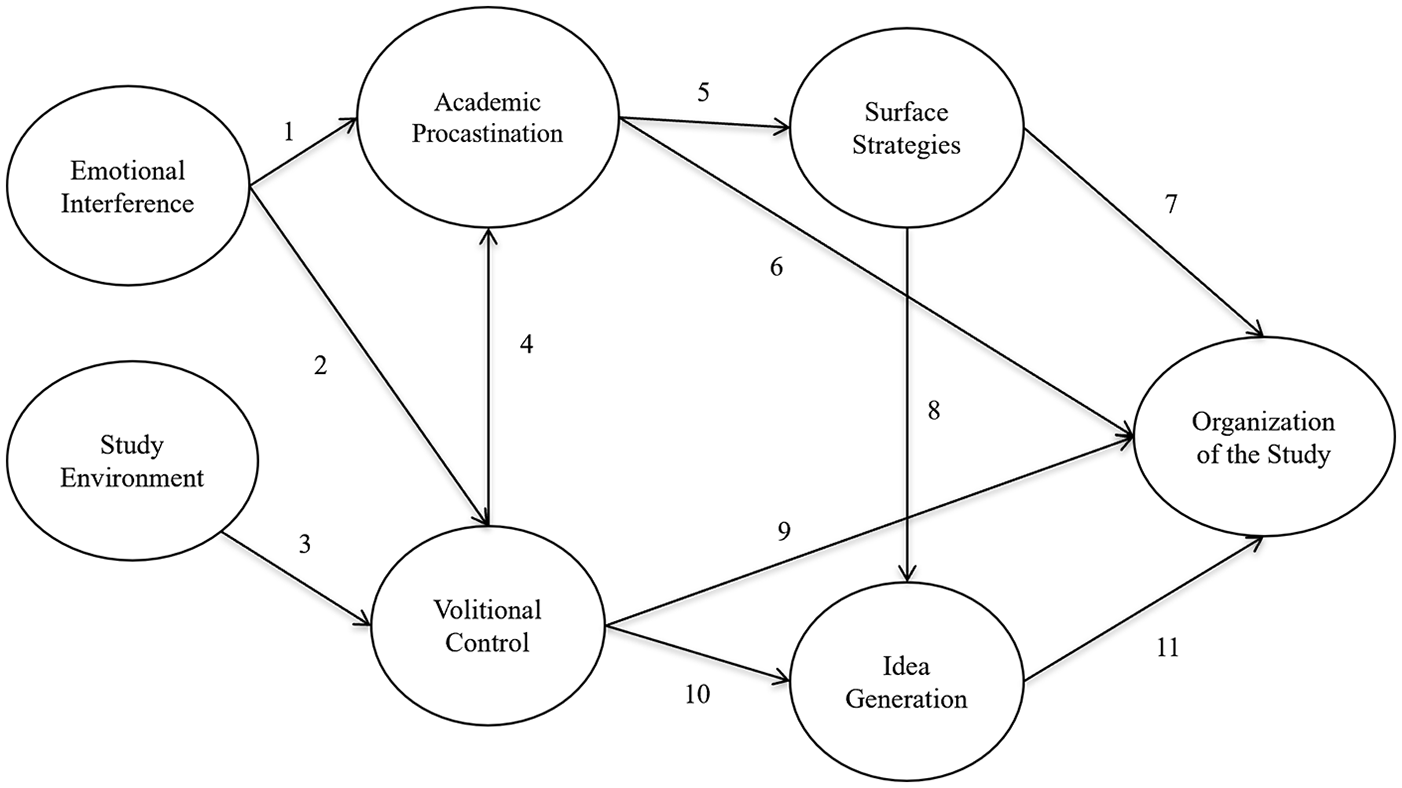
SRL integrative model proposal, performance phase.
As mentioned in several works (e.g., Elliot & McGregor, 2001; Greene et al., 2004), the way in which students approach the study material constitutes an important indicator. An optimal learning process can be carried out through the implementation of deep study strategies, which imply a process characterized by two aspects: (a) analysis and relation of what has been studied with previous knowledge (idea generation) and (b) elaboration of summaries, concept maps, and key concepts (organization of the study). Meanwhile, the study surface strategies are focused on memorizing and reproduction of the information, without achieving one’s own elaboration that allows significant learning (Biggs, 1987; Fredricks et al., 2004).
As evidenced, the tendency to postpone or delay the end of an activity (procrastination) is an obstacle for academic progress and evidences a deficient self-regulation (Steel, 2007), a behavior that promotes the implementation of study surface strategies (Path 5) and a deficient organization of the study (Path 6). In turn, techniques based on the mere reproduction of information are related in a negative manner with the deep study strategies (organization of the study, Path 7, and idea generation, Path 8). However, it is hypothesized that volitional control is related positively with deep study strategies. That is, higher effort levels contribute directly to the organization of the study (Path 9) and indirectly through the display of analysis of the study material (Paths 10 and 11).
In regard to the self-reflection phase (see Figure 3), it is presumed that those students who evaluate the knowledge achieved (study assessment) carrying out questions about the comprehension of what was studied, questioning the ideas, and rereading the most difficult passages shall establish higher goals (Path 1). Both constructs, study control and goals, are important self-evaluation indicators. That is, the more the student perceives progress in the academic achievements, the more favorable self-evaluations shall be made on their own performance, and this is a critical factor in the elaboration of academic satisfaction judgments (Path 2; Lent et al., 2009). The importance of academic satisfaction consists in the evaluation that the students carry out, who orient the conduct direction processes, investing energy and resources on a particular behavior (Zalazar-Jaime, Losano, Moretti & Medrano, 2017).
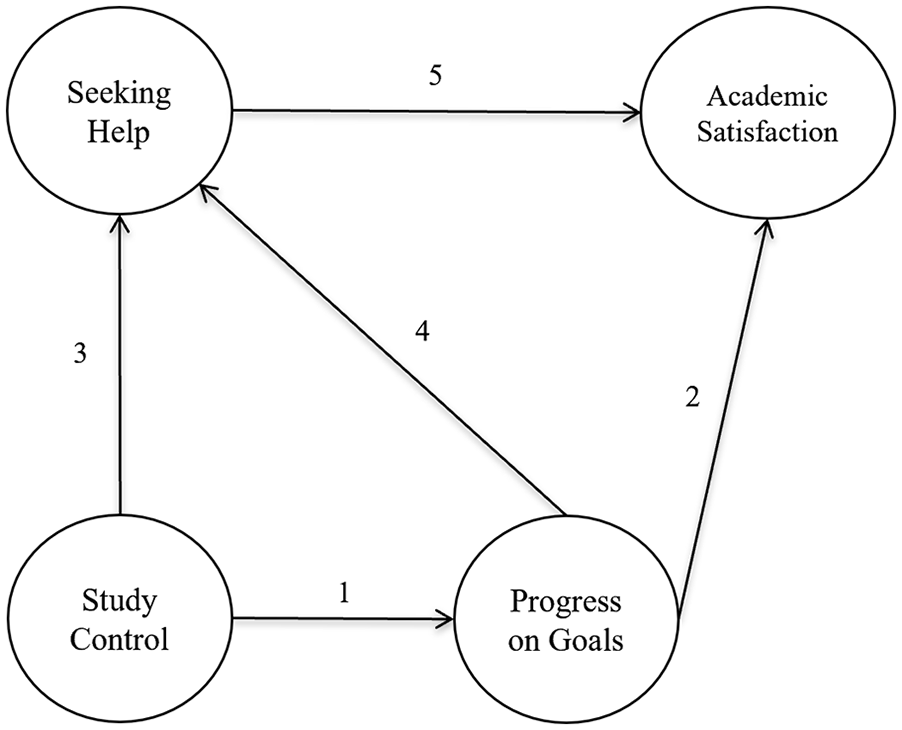
SRL integrative model proposal, self-reflection phase.
However, Zimmerman and Moylan (2009) emphasize that the search for help constitutes a self-control method of the performance phase. It is frequent that students tend to seek help when they find difficulty in the comprehension of study material (Path 3), and when they do not progress in their goals (Path 4). In such situations, students usually speak to teachers and peers to more effectively address their difficulties, increasing their self-directed learning in the future (Karabenick, 2004; Ryan & Pintrich, 1997), and their judgments of satisfaction (path 5), which are positively related to persistence and academic performance (Graunke, & Woosley, 2005; Lent et al., 2013).
Material and Method
Participants
Four thousand three hundred thirty-four university students participated in this study, of which 2,353 (54.3%) were female and 1,981 (45.7%) were male, aged between 16 and 69 years (M = 33.1 years; SD = 8.87 years) who were studying different undergraduate degrees (see Table 1) at Universidad Siglo 21. It should also be noted that the participants came from different geographical regions of Argentina, namely, Patagonia (9.9%), Coast (15%), Northern Region (14.1%), Middle Region (14.1%), and Cuyo (8.4%); only 2.4% of the participants did not mention their origin.
Participants’ Majors.

Instruments
Forethought phase
Academic self-efficacy
This instrument evaluates the trust that students possess to achieve their goals and accomplish different academic activities (Medrano, 2015). The participants must respond using the Likert-type scale with five options (never to always) to statements such as “I feel I can do my academic tasks well even if I have to solve difficult problems.” Psychometric studies informed by Medrano (2015) show a satisfactory internal consistency (α = .84) and a one-dimensional structure.
Academic support
This instrument assesses to what extent the near context gives the student support in achieving their academic goals (Lent et al., 2007). Participants must show their level of agreement in every statement (e.g., “my friends encourage me to continue with my studies”), using a Likert-type scale with five options (from I totally disagree to I fully agree). Psychometric studies informed by Lent et al. (2007) show a satisfactory internal consistency (α = .84) and a one-dimensional structure.
Learning goals
To assess the goals of achievement, the Achievement Goals Questionnaire (AGQ; Elliot & McGregor, 2001) was used, which was adapted for the general academic field by Finney et al. (2004). The questionnaire evaluates the learning–approximation goals (α = .77; e.g., “I want to learn as much as possible this four-month period”), learning–avoidance (α = .84; e.g., “I am afraid I will not to be able to understand syllabuses of the subjects as well as I would like”), performance–approach (α = .88; e.g., “It is important for me to do well this four-month period, compared to my peers”), and performance–avoidance (α = .75; e.g., “My goal in this four-month period is to avoid a performance that is lower than that of other pupils”). For this study, we used the subscale of learning–approach and learning–avoidance. Participants must answer using a Likert-type scale with seven options (not true at all to very true).
Academic outcome expectations
This instrument evaluates the expectations or consequences perceived by the students at the time of getting their bachelor’s degree (e.g., “when I graduate I will get a well-paid job”; Lent et al., 2007). Participants must show their level of agreement using a Likert-type scale of 10 positions from 0 (I strongly disagree) to 9 (I strongly agree). The original psychometric studies show that this instrument has a one-dimensional structure and a high internal consistency (α = .91; Lent et al., 2007).
Strategic planning
The Planning subscale of the Questionnaire for the Evaluation of Learning Strategies in University Students (Gargallo López, 2009) was used. This subscale considers usual student behaviors at the time of study planning (e.g., “I plan how long it will take me to study the syllabus”). Participants must answer by using a Likert-type scale with five answerable options from 1 (never) to 5 (always or almost always). In relation to the psychometric properties, this scale studies the structure and internal consistency (α = .77; Gargallo López, 2009).
Performance phase
Volitional control
The Self-Regulation Control subscale of the Questionnaire for the Evaluation of Learning Strategies in University Students (Gargallo López, 2009) was used. This subscale considers students’ efforts to control effort and attention against distractions, noninteresting tasks, or difficult ones (e.g., “I continue studying even though it is boring”). Participants must answer by using a Likert-type scale with five answerable options from 1 (never) to 5 (always or almost always). Gargallo López (2009) reported a satisfactory study of the internal structure and internal consistency (α = .79).
Emotional interference
The Interference subscale in Goal-Directed Behavior (Gratz & Roemer, 2004) was used. This subscale refers to difficulties to concentrate or perform tasks when someone is experiencing a negative emotion (e.g., “When I feel upset . . . I find it hard to finish studying”). Participants must answer by using a Likert-type scale with five answerable options from 1 (never) to 5 (always or almost always). In relation to the psychometric properties, this subscale has reported satisfactory results of internal consistency and internal structure (Gratz & Roemer, 2004).
Academic procrastination
This instrument evaluates the tendency to waste time, postpone, or do things that should have already been done (e.g., “I unnecessarily delay finishing work, even when it is important”; Furlan et al., 2012). Participants must answer by using a Likert-type scale with five answerable options (from never to always). Furlan et al. (2012) reported a satisfactory study of validity (internal structure and test criterion) and internal consistency (α = .87).
Surface study
The Information Processing–Related Strategies subscale of the Questionnaire for the Evaluation of Learning Strategies in University Students (Gargallo López, 2009) was used. This subscale inquires about the use of study techniques focused on the memorization and reproduction of information (e.g., “When I study . . . I reread the text but without stopping to think critically”). Participants must answer by using a Likert-type scale with five answerable options from 1 (never) to 5 (always or almost always). In relation to the psychometric properties, this scale has satisfactory studies of structure and internal consistency (α = .84).
Idea generation
The Strategies of Development subscale belonging to the Motivated Strategies for Learning Questionnaire (MSLQ; Pintrich et al., 1993) was used. This subscale investigates the use of strategies of development by students (e.g., “I relate different ideas in the text”). Participants must answer by using a Likert-type scale with five answerable options from 1 (never) to 5 (always or almost always). Pintrich et al. (1993) reported a satisfactory study of validity (internal structure) and internal consistency (α = .76).
Organization of the study
The Strategies of Organization subscale belonging to the MSLQ (Pintrich et al., 1993) was used. This subscale highlights the ability to point out concepts in a text and structure them in concept maps, and select main ideas in one text, among others. Participants must answer statements such as “I develop concept maps” using a Likert-type scale with five response options from 1 (never) to 5 (always or almost always). Pintrich et al. (1993) reported a satisfactory study of validity (internal structure) and adequate internal consistency (α = .64).
Study environment
The Time Management and Study Environment subscale belonging to the MSLQ (Pintrich et al., 1993) was used. This subscale alludes to the way in which students organize their time and study environment, for example, “I study in a quiet place.” Participants must answer statements such as “I develop concept maps” using a Likert-type scale with five response options from 1 (never) to 5 (always or almost always). Pintrich et al. (1993) reported a satisfactory study of validity (internal structure) and internal consistency (α = .76).
Self-reflection phase
Academic satisfaction
This instrument examines the welfare and enjoyment that students perceive in carrying out experiences linked to their role as students (e.g., “I enjoy my classes most of the time”; Lent et al., 2007). Examinees must use a Likert-type scale with 10 options to show their level of agreement (or disagreement) with each assertion. The original psychometric studies suggest that the scale has a unidimensional factorial structure and a high internal consistency (α = .94).
Academic goal progress
The scale that assesses the progress that students perceive in their academic goals was selected (Lent et al., 2007). To do this, students must show, using a Likert-type scale of five options (from I have not progressed at all to I have made excellent progress), to what extent they have overcome every goal set out in the different items. In relation to the psychometric properties, the original studies conducted by Lent et al. (2007) highlight a one-dimensional structure and an adequate internal consistency (α = .81).
Help seeking
The Perceived Benefit of Seeking Help (BBA, Pajares et al., 2004) Scale was used. This scale allows assessing the positive consequences of seeking academic help (“asking questions in class helps me to learn”). Participants must answer using a Likert-type scale with five options (from I do not agree at all to I completely agree). In regard to the psychometric properties, this scale has satisfactory internal consistency studies (α = .82).
Study control
The Metacognitive Self-Regulation subscale belonging to the MSLQ (Pintrich et al., 1993) was used. This subscale assesses the knowledge and control the student has over their own cognition (e.g., “I stop to think if I understand what I read as I am doing it”). Participants must answer by using a Likert-type scale with five answerable options (from never to always or almost always). Pintrich et al. (1993) reported a satisfactory study of validity (internal structure) and internal consistency (α = .84).
Procedure and Data Analysis
The survey server of the university was used to send an email to all the students inviting them to participate. The purpose of the study was indicated in the email content, as well as the voluntary character of participation. The indications of Sánchez-Fernández et al. (2012) were followed to obtain the highest possible answer rate. These authors highlight the personalization of the invitation (address the participant by name and not in an anonymous manner) and sending reminders (warn with certain frequency that the survey has not been finished, or encourage the student to start it). Even though Sánchez-Fernández mention the use of some type of incentive (financial or symbolic), in this study, the students did not receive any kind of payment for their participation. The survey was sent in the month of April 2018 and two participation reminders were sent every 15 days. The data collection ended in the month of June.
Through the SPSS software, the mean, standard deviation, skewness, and kurtosis were calculated. Univariate atypical cases were identified through the calculation of Z scores (Z > ±3.29 scores were considered atypical), and multivariate through Mahalanobis distance (D2). The Mplus 6.12 statistical software was used to evaluate the adjustment to the models and the weighted least square mean and variance (WLSMV) adjusted estimator was used. Different statistics were used to evaluate the adjustment of the model: chi-square, the comparative fit index (CFI), the Tucker–Lewis index (TLI), and root mean square error of approximation (RMSEA). The values between .90 and .95 or higher for the CFI and TLI are considered to be acceptable to excellent adjustments, values between .05 and .08 are expected for the RMSEA (Hu & Bentler, 1999; Yu & Muthén, 2002). The composite reliability (ρ) was estimated as well. Values equal to or higher than ρ = .70 are considered acceptable (Nunnally, 1978).
Results
Data Preparation
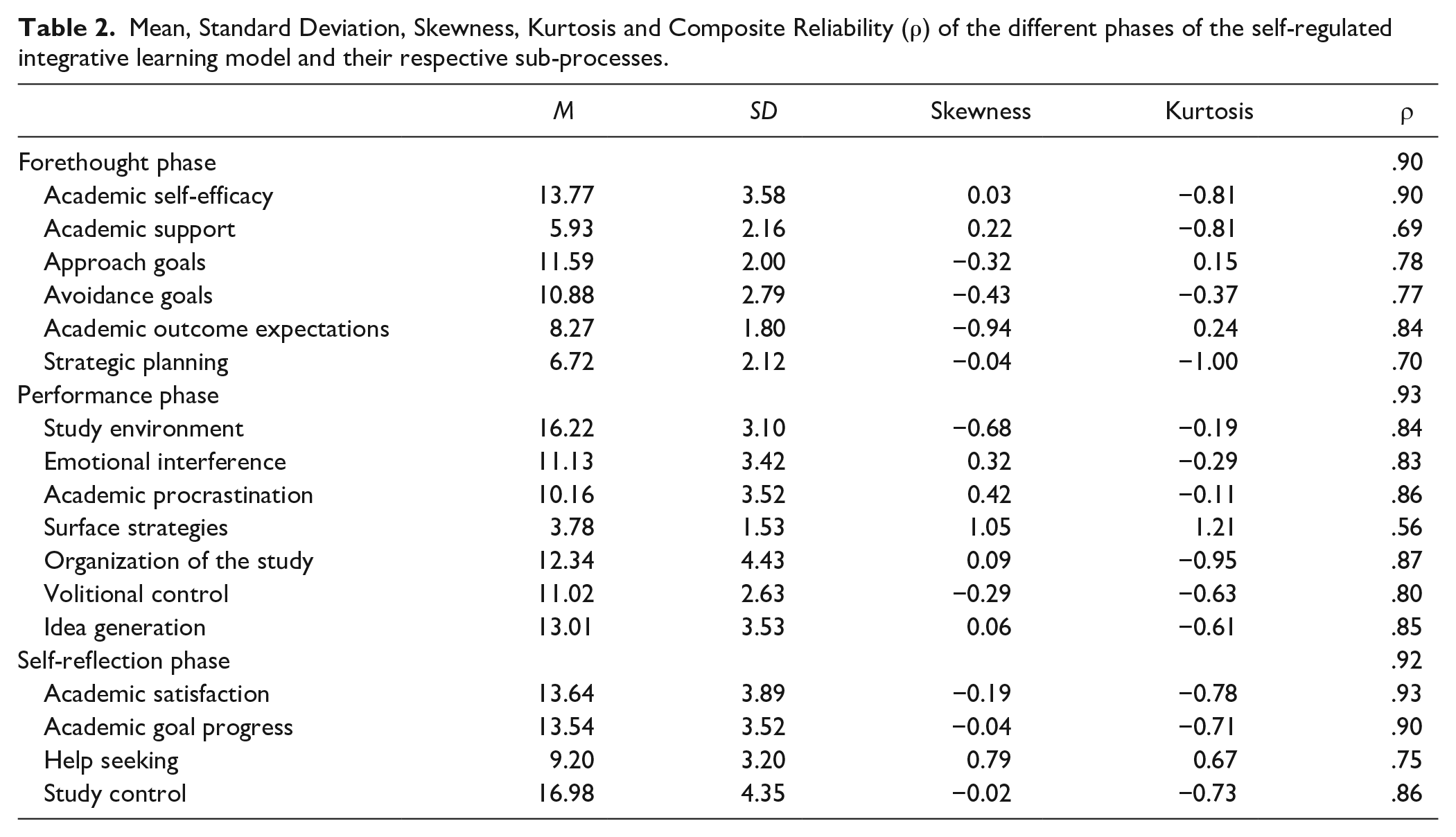
The values of skewness and kurtosis of the different scales were found within the expected range (±2.00; see Table 2). Atypical cases were seen on all scales, but it was decided to keep them because the elimination of these could mean a limitation in the generalization of the results (Hair et al., 1999).
Mean, Standard Deviation, Skewness, Kurtosis and Composite Reliability (ρ) of the different phases of the self-regulated integrative learning model and their respective sub-processes.
Internal Consistency
The analysis of internal consistency, considering phases of the SRL, was higher than .70. However, some of the subscales involved at each stage (Academic Support and Surface Strategies) gave a value below the established cutoff point (ρ < .70).
Fit of the Models of Forethought, Performance, and Self-Reflection by Structural Equation Modeling
In the forethought phase, the results indicated a satisfactory adjustment (χ2 = 7,395.006, gl = 199, p = .000, CFI = .917, TLI = .903, RMSEA = .091, 90% interval confidence interval [IC] = [0.090, 0.093]), explaining a variability of 32%. Consistent with the sociocognitive reports, the support perception (academic support) increases the self-efficacy beliefs and academic outcome expectations. Even though Bandura (1986) highlights the interactionist triad where the students who trust their capabilities to perform different academic activities anticipate successful results (expectations), and maintain their conduct until they reach certain progress in their achievement (goals), there was no significant relation between self-efficacy and expectations, while the relation between expectations and progress goals was evidenced. However, those students who possess high self-efficacy beliefs and evidence a gradual progress in their studies showed better planning of their studies (see Figure 4).
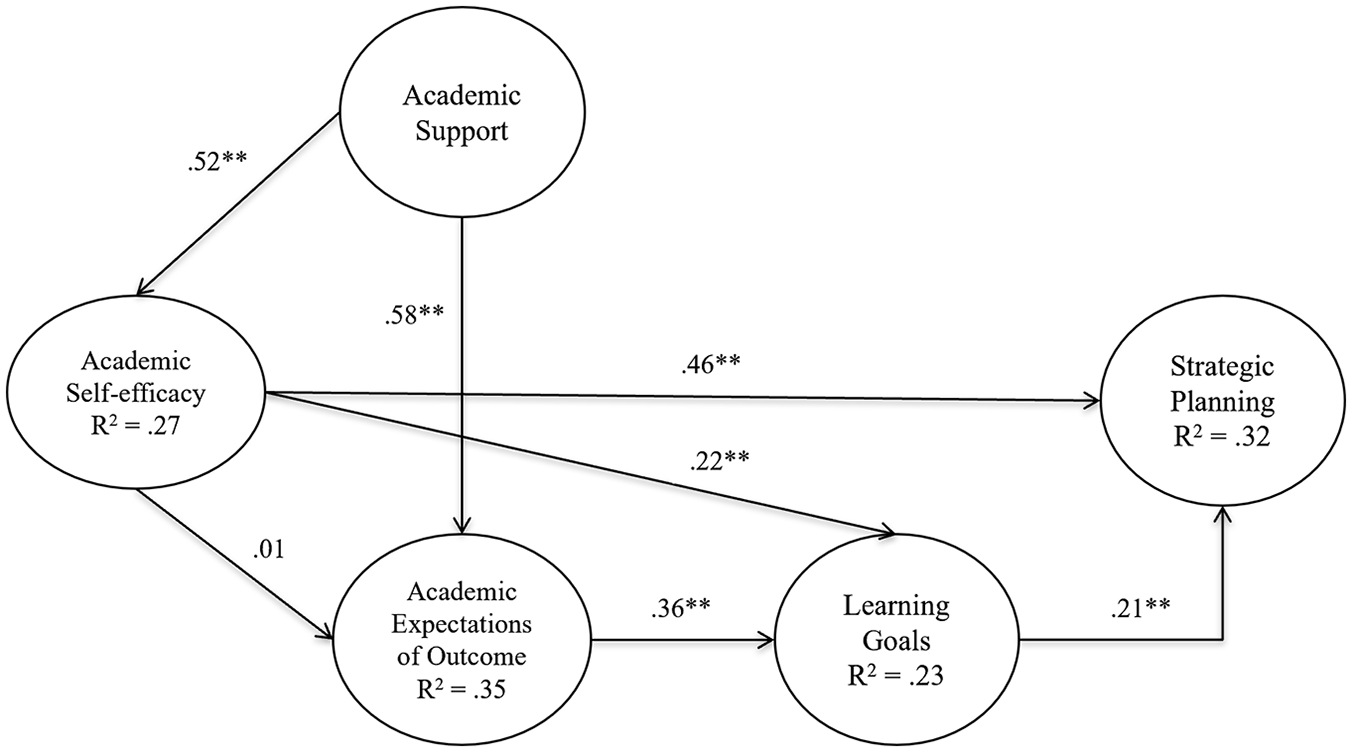
Forethought model.
In addition, the indirect effects were estimated (Table 3). When examining the magnitude of the total effects, the variables that influence the most upon the strategic planning are the self-efficacy beliefs (β total = .51) and academic support (β total = .31), whereas the academic outcome expectations had a small effect, though significant over planning (β total = .07).
Total Effects, Direct and Indirect, of the Forethought Model.

p ≤ .01.
For the performance model (Figure 5), results also showed a satisfactory fit (χ2 = 7,507.178, gl = 286, p = .000, CFI = .919, TLI = .908, RMSEA = .076, 90% IC = [0.075, 0.078]), accounting for 24% of the variance of deep study strategies (organization). Particularly, those students who showed difficulties in concentrating showed higher procrastination levels (.45), and were more prone to use surface study techniques (e.g., memorization, .55), and be less organized with the academic work (−.08). Also, the use of surface techniques presented a negative relation with the development of elaboration competences before the study material (−.12), whereas this presented a positive contribution with the capacity to indicate concepts in a text, select main ideas, and structure them in concept maps (organization of study, .28).
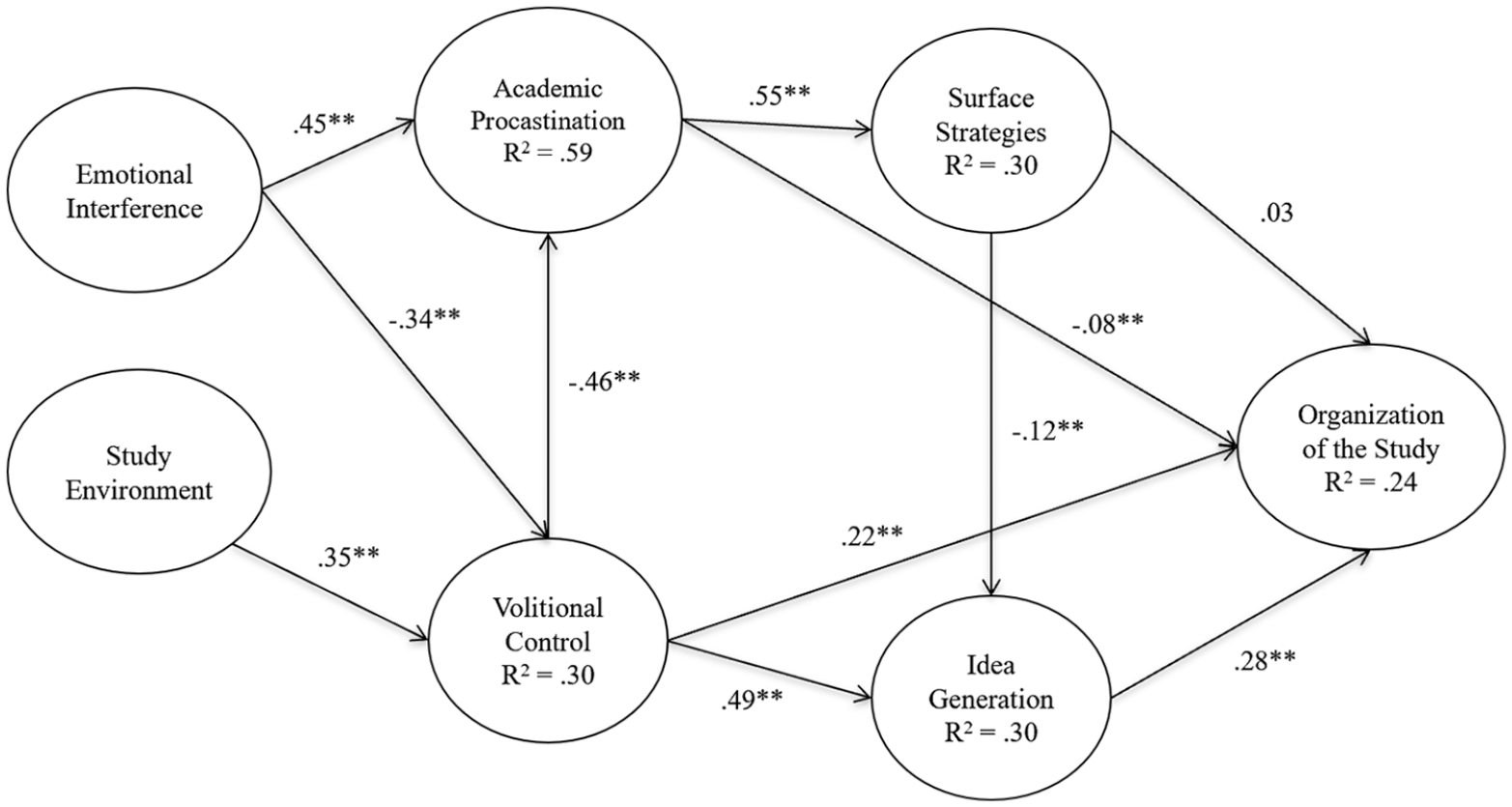
Performance model.
In addition, academic activity in a distraction-free environment with few emotional interferences contribute to effort regulation (.35 and −.34, respectively), which in turn decrease procastination (−.46) and increase deep learning behaviors (idea generation, .49; and organization of the study, .22). There was no evidence of a significant contribution between surface strategies and organization of the study. While examining the magnitude of the total effects, it is observed that the variables that contribute the most over the organization of the study are volitional control (β total = .40), emotional interference (in a negative manner, β total = −.17), the study environment (β total = .14), and in a smaller measure, academic procrastination (β total = −.09; see Table 4).
Total Effects, Direct and Indirect, of the Performance Model.

p ≤ .01; *p ≤ .05.
Finally, satisfactory results were obtained for the self-reflection model (χ2 = 2,714.888, gl = 114, p = .000, CFI = .974, TLI = .969, RMSEA = .073, 90% IC = [0.070, 0.075]; see Figure 6), which explained a 31% of the variance of academic satisfaction. It was observed that the students who evaluate their knowledge and seek help from fellow classmates or professors when facing a question and/or difficulty (.35) evaluate their progress with their goals (.46). At the same time, the progress goals presented a direct contribution with academic satisfaction (.46), while those students who perceived some difficulty in the achievement of their goals sought help (.20), and this contributed in a lesser degree to academic satisfaction (.18) in regard to progress goals. The inspection of the total effects indicated that the progress goals (β total = .50) and, in a smaller measure, the study control (β total = .29) presented the largest contributions (see Table 5).

Self-reflection model.
Total Effects, Direct and Indirect, of the Self-Reflection Model.

p ≤ .01.
Discussion
Students before an academic activity tend to be motivated and willing to implement a series of strategies to solve the problem. To this end, they plan the steps to follow, assess their capabilities, set goals, and carry out the activity evaluating their performance, the goals achieved, and attribute possible causal explanations (Zimmerman, 2000). These aspects characterize the self-regulation of learning, allowing students to increase their autonomy and performance in the learning process (Broadbent & Poon, 2015).
Despite the different SRL theoretic frameworks, the model proposed by Zimmerman is one of the models that has received more attention in the literature. However, currently, an increasing tendency can be observed toward integrative models that incorporate, in the case of SRL, specific constructs according to the domain or the population being observed with the purpose of maximizing learning processes. For example, Sitzmann and Ely (2011) reported that goals, persistence, effort, and self-efficacy beliefs constitute the most important predictors in university students. Thus, the objective of this work consisted in proposing an SRL integrative model that takes into account the model proposed by Zimmerman (2000) as well as its own constructs of the sociocognitive theory of the degree (SCCT; Medrano, Pérez & Fernandez, 2014; Lent et al., 1994).
In general terms, the results were satisfactory. Trust indexes were satisfactory for all the measures used, except Academic Support and Surface Strategies scales, which present values smaller than .70. However, when considering the self-regulatory process phases, the values obtained were higher than the previously mentioned criteria. One aspect to be highlighted is that the test of self-regulation is not an inarticulate sum of psychological variables. On the contrary, the variables referred to in the present study were selected based on what is reported in empirical studies and the relevance they have in our environment. On this basis, it was noted that the models of forethought, performance, and self-reflection conducted through the analysis of structural equations presented an adequate fit to the data, highlighting the theoretical and empirical contents.
In fact, the forethought model showed that, according to the literature, the academic support students perceive increases the beliefs of self-efficacy and, in addition, encourages the development of expectations of outcome (Lent et al., 1994, 2000; Wettersten et al., 2005). Even though in the SCCT original formulation (Lent et al., 1994), the authors establish that the higher the trust that the students possess in their capabilities (self-efficacy), the more they will expect positive consequences as a result of the involvement in certain academic activities (expectations), in this study, that relation was not confirmed.
In the literature, there are contradictory results in regard to self-efficacy and expectations (e.g., Ezeofor & Lent, 2014; Navarro et al., 2014). This discrepancy of results could be due to two motives: (a) the temporal distance of the statements used in this study (e.g., graduating from this university will probably lead to a good job offer) and (b) nondifferentiation between intrinsic expectations (related to subjective experiences such as interest and satisfaction; “have a job that gives me satisfaction”) and extrinsic expectations (external or tangible reinforcing consequences such as money and respect toward others; “earn a good salary”; Lent et al., 2005). However, the relation established in the literature (Lent et al., 1994) between self-efficacy and academic outcome expectations over learning goals was proved (Lent et al., 2005, 2007), thus increasing the tendency to plan their studies. As stipulated by different studies in regard to the heuristic value of the self-efficacy beliefs (Barry & Finney, 2009; Friedman & Mandel, 2009; Lent et al., 1986; Vuong et al., 2010), in this study, it was found that this construct was the main contributor toward academic planning of the students.
Regarding the performance model, students who had some difficulty regulating their emotional state showed procrastination behavior and, as expected, little regulation in their efforts to study (Trógolo & Medrano, 2012; Richardson et al., 2012). Maintaining behavior postponement also involved deficiencies in strategy study, by surface techniques, and a lack of organization in the content related to the study material (e.g., making a list of key concepts). However, when the student uses surface strategies of study, these qualities mentioned above (e.g., relating ideas in a text with previous knowledge) affect the development of deep study strategies, particularly the development of ideas (Pintrich et al., 1993). In addition, the place where the student carries out their academic activities presented a positive relationship with the regulation of the efforts, which would emphasize that a quiet and stimulus-free environment should allow to remain temporarily in the academic behavior, permitting at the same time, the development of deep cognitive strategies (preparation and organization of ideas; Pintrich et al., 1991).
In regard to the self-reflection model, students who evaluate their understanding of the material of the study process review the concepts, wonder about their own ideas (study control), and have a greater perception of progress on their goals (Lent et al., 1994). As pointed out in the literature (Karabenick, 2004; Ryan & Pintrich, 1997), in the cases where the students present certain difficulties in regard to the evaluation of their own study or the establishment of goals, seeking help from a certain teacher and/or tutor is a key aspect of the self-regulatory behavior, which enables them to identify possible obstacles in the student’s academic career, and once this is overcome, it increases the academic level of satisfaction of the student (Lent et al., 2009; Lent & Brown, 2008).
In accordance with what is reported by Sitzmann and Ely (2011), it is observed that the self-efficacy beliefs, volitional control, and progress goals (the latter from the self-reflection phase) constitute the most important predictors in university students. However, in this study, the contribution of the academic support (planning model), emotional interference, study environment (performance model), and study control (self-reflection model) was evidenced. On this basis, it is necessary that professors receive SRL training with the purpose of maximizing the learning of the students and identifying difficulties in one of the self-regulatory phases, and also, develop academic environments based on SRL.
In regard to limitations, the broad set of instruments used to evaluate the constructs of every SRL phase is highlighted, which caused difficulties in management (abandonment of participants). In this context, it would be convenient in future studies to reduce the number of items in each instrument and generate then a screening test that allows detecting difficulties based on a limited set of reactants in the learning process.
Footnotes
Declaration of Conflicting Interests
The author(s) declared no potential conflicts of interest with respect to the research, authorship, and/or publication of this article.
Funding
The author(s) received no financial support for the research, authorship, and/or publication of this article.
