



Abstract
The social, economic, political, and civil unrest surrounding the COVID-19 pandemic, the 2020 United States election, and the increased activity of the racial justice movement has seemingly divided not just the nation but the world. Thoughts and behaviors are guided by ideological beliefs—collections of ideas or philosophies associated with power structures. I examined the overlap between positions on controversial topics and identified how ideological alignment, values, and identity characteristics influenced the holders’ views. I found significant relationships among the variables categorized as social, political, health and medical, and safety, security, and legal ideologies. The results indicated that participants’ views in one ideological category were similar to those in the other ideological categories. Finally, the current study presents models of integrating worldviews in which ideological viewpoints in the various categories align, supported by the Moral Foundations Theory, Ideological-Conflict Hypothesis, and the Rigidity-of-the-Right Hypothesis.
Keywords
The widespread social, economic, political, and civil unrest in the United States, stemming from the lingering effects of the COVID-19 pandemic, the 2020 election, and heightened racial justice movements, has not only divided the nation but reverberated globally. Divergent perspectives, rooted in lived experiences and shaped by values, ethics, morals, and ideologies (Kubin et al., 2021), play a crucial role in influencing group beliefs, knowledge, and attitudes, impacting how individuals make sense of the world and subsequently think and behave.
Individual and public opinions, molded by social conditioning, lived experiences, and reflections, contribute to the rise and fall of ideologies. Associated with social influence, biases, and stereotypes, ideologies also influence social policy (Weber, 2019). They encompass various ideas on topics like politics, economics, social issues, and education (American Psychological Association, 2022), closely tied to power structures, such as political ideologies shaping governments’ power allocation.
Modern ideologies are intertwined with social justice issues, with some considering social justice reform its own ideology. The present study adopts a humanistic psychology lens to explore unique lived experiences within situational roles. Buss (1979) argued that humanistic psychology aligns with liberal ideology, rooted in Maslow’s self-actualization theory. Saleem et al. (2021) further posit that humanistic psychology supports social justice efforts. Therefore, this research analyzes social and political ideologies divided into distinct categories.
The Ideological Landscape
Our beliefs, actions, and perceptions evolve with society, influenced by various ideologies. This review explores four ideology categories: political, social, health and medical, and safety, security, and legal. Each section explores how these ideologies shape our responses to social issues. While some may view health and medical and safety, security, and legal ideologies as subsets of political and social ideologies, this research separates them for a nuanced analysis of the unique challenges associated with these topics. This approach allows for a deeper understanding of the forces shaping human behavior and societal responses to social justice issues.
Political Ideologies
Political beliefs influence views on government functioning, shaping societal dynamics. Jost et al. (2003) argue that political ideologies reflect motivated social cognitions, varying based on geography, predispositions, and early exposure (Jost, 2017). Labels range from specific, like Republican or Democrat, to broader categories such as liberal, moderate, or conservative. Beyond the United States, political systems like Communism and Monarchies impact social issues like public goods distribution, including welfare and education (Rothmund et al., 2016).
Political ideologies significantly impact behavior, shaping attitudes and actions regarding social justice. Political identity influences how individuals perceive and interpret social issues, leading to diverse responses and approaches. Political beliefs guide thinking and shape the perception of social inequalities (Collins et al., 2021). Studies on object preference and message agreeability reveal that liberals favor quality-based objects and messages, while conservatives prefer hierarchical social constructs (Kim et al., 2018). Recognizing the influence of political ideologies on social interactions and actions related to social justice is crucial.
Social Ideologies
Social ideologies influence our social lives, perceptions, beliefs, and behaviors within society, existing at the intersection of social interaction and culture. They encompass critical issues like race-based ideologies (e.g., racism, bigotry, and supremacy), feminism, individualism versus collectivism, religion, work ethics, matriarchy versus patriarchy, and more.
Devine’s (2015) study on ideological social identity reveals a strong psychological connection to ideological in-groups. Despite political polarization, Americans exhibit varying degrees of social attitude divergence. For example, attitudes related to race, sex, and gender, crime and justice, and political bipartisanship have witnessed reduced polarization (DiMaggio et al., 1996). However, Evans (2003) notes that polarization primarily centers on morally significant topics (e.g., sexuality and abortion), particularly among politically active religious conservatives.
Movements like Black Lives Matter (BLM) and All Lives Matter (ALM) offer distinct frameworks for understanding and addressing social issues related to race, inequality, and justice. The BLM movement, often dubbed the “new Black civil and human rights movement,” emerged in 2013 after George Zimmerman’s acquittal. Initially seen as an internet hashtag, it gained momentum online, supported by Black Twitter, and through physical protests against police brutality, White supremacy, and violence, rooted in anti-racism and allyship (Hoffman et al., 2016; Jones, 2020).
Conversely, the ALM stance emerged as a counter to the BLM movement. While seemingly unifying, its underlying meaning has been criticized as divisive, undermining the BLM focus on violence and social injustice within Black communities. Scholars classify ALM as anti-identity rhetoric, aligned with color-blind ideologies that overlook systemic racism (Paul, 2019; West et al., 2021).
In addition, the Blue Lives Matter movement, prominent since December 2014, is another social ideology contrasting BLM. Advocates emphasize alleged attacks on law enforcement and push for stricter sentencing laws (Smith, 2019), while scholars argue it underscores systemic racism within the United States (Thusi, 2020). Analyzing social ideologies offers insights into their impact on attitudes, societal dynamics, and social justice, demonstrating how these movements shape responses to social issues and societal progress.
The Intersection of Political and Social Ideologies
Political and social ideologies converge, molding human behavior, values, beliefs, attitudes, and actions regarding societal issues. They impact political engagement, social interactions, and the creation of echo chambers. Research indicates consistent patterns in support for movements like BLM, with Democrats favoring and Republicans opposing (Drakulich & Denver, 2022). Online discussions highlight contrasting perceptions between left-leaning and right-leaning individuals. #AllLivesMatter tweets are deemed racist by the left, while #BlackLivesMatter tweets evoke similar reactions from the right (Powell et al., 2022). The Blue Lives Matter movement garners more support within conservative circles (Solomon & Martin, 2019). These findings demonstrate how intertwined political and social beliefs influence individual perspectives and responses to societal challenges.
Health and Medical Ideologies
Health and medical ideologies shape beliefs and behaviors regarding health care policies, impacting social justice issues related to health equity and public health outcomes. These beliefs encompass topics like health care access, end-of-life decisions, abortion, mask preferences, vaccinations, and breastfeeding. According to Bodenheimer and Grumbach (2020), health care’s political and legal aspects in the United States are influenced by factors such as the government’s political ideology, the legal framework governing health care, and the impact of interest groups. Ideologies like religious freedom and individual responsibility play crucial roles in shaping the U.S. health care system, particularly in debates over issues like abortion and health care reform. These ideologies can influence opinions on health care access, the government’s role in providing health care services, ethical debates surrounding medical practices, public health policies, and health disparities. Health and medical ideologies can either perpetuate social inequalities or contribute to health equity and social justice.
Safety, Security, and Legal Ideologies
This final category focuses on decisions impacting societal safety, justice, and security, considering the complex interplay of sociopolitical considerations. These ideologies center on public policy issues related to legislation on social and political topics, like gun violence, mass incarceration, and immigration policy. Legal and policy decisions regarding safety and security significantly affect social justice outcomes. Simon (2007) argues that safety and security have become critical political issues, often framed regarding individual rights and responsibilities, but also significantly impacting social and political institutions. Argyriadis et al. (2023) found that gender discrimination and socio-cultural factors are significant barriers to accessing quality health care, leading to mental health issues such as depression, anxiety, post-traumatic stress disorder, and suicidal thoughts or self-harm. These studies demonstrate that culture and public policy shape safety, security, and legal ideologies. For example, the stigmatization of LGBTQIA+ people is a product of cultural norms and values reflected in public policy, such as laws restricting equitable access to health care.
To understand how ideologies affect human behavior, it is necessary to explore the underlying morals and values that shape them. These principles and ethical beliefs delineate our perception of right and wrong, influencing our attitudes and actions toward others and our stance on social and political matters.
Theoretical Foundation: Morals, Values, and Ideological Division
Ideological divides are thought to stem from political identity, morals, and values. The moral foundations theory (MFT) posits that individuals’ moral foundations, as outlined in Table 1 (Graham et al., 2018), inform their moral judgments, leading to ideological division and conflict. Emerging foundations include liberty vs. oppression (Haidt, 2012), equity vs. need/merit (Meindl et al., 2019), and honesty vs. lying (Graham, 2015).
Moral Foundations and Associated Characteristics.
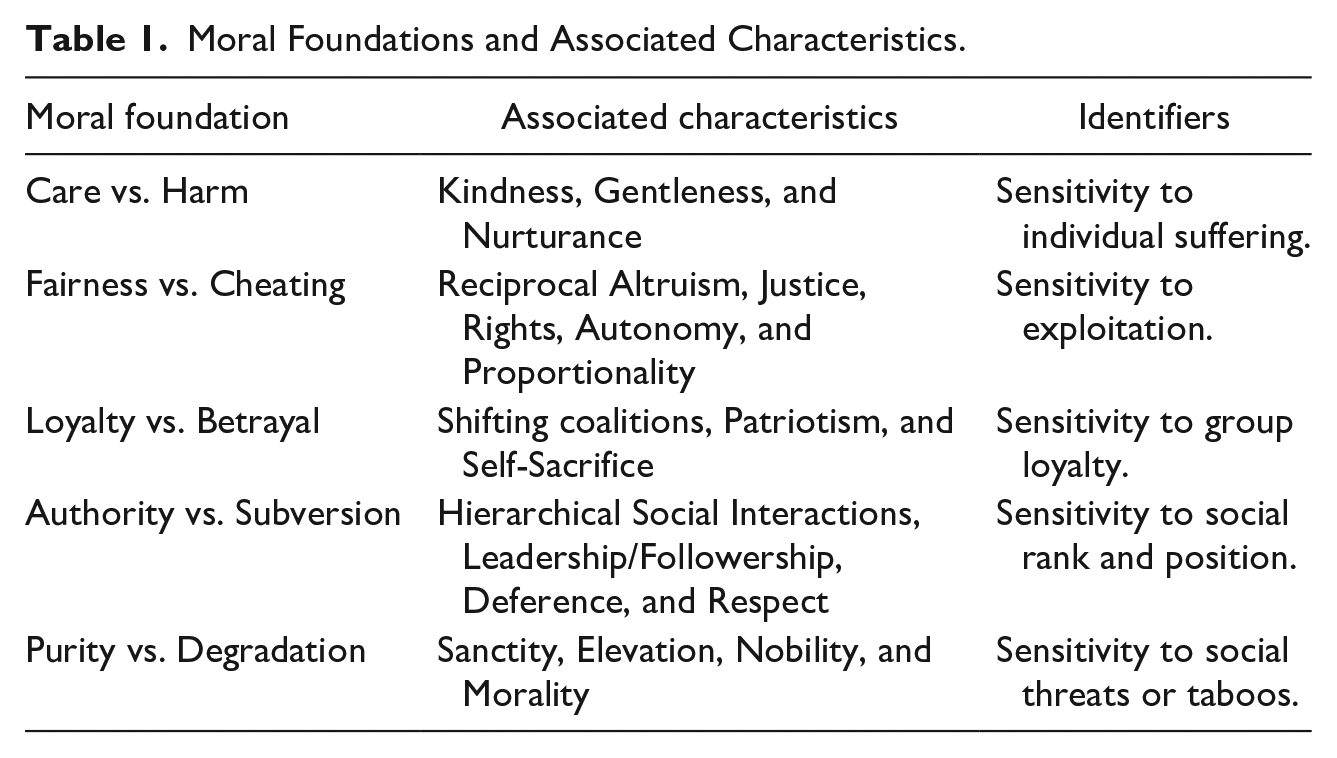
Liberals and conservatives employ distinct moral foundations in making ideological judgments. Liberals mainly rely on the individualizing foundations of care vs. harm and fairness vs. cheating, while conservatives favor the binding foundations of loyalty vs. betrayal, authority vs. subversion, and sanctity vs. degradation (Graham et al., 2009; Voelkel & Brandt, 2019). Research on social justice foundations supports a positive relationship between vaccinations/immunizations and MFT foundations of authority vs. subversion and liberty vs. oppression (Heine & Wolters, 2021). Conversely, Republican governors used binding foundation arguments against Medicaid expansion, while opponents cited liberty vs. oppression arguments (Rozier & Singer, 2021).
Liberals and conservatives, with their diverse perspectives, often clash, displaying intolerance toward groups with differing values. The ideological-conflict hypothesis posits that both exhibit equal intolerance toward groups with differing values, utilizing strategies such as motivated information processing and worldview defenses against out-groups (Bal & Van den Bos, 2019; Brandt et al., 2014). The intensity of these responses depends on the group’s identity. Political liberalism is associated with flexibility, tolerance, acceptance, openness, cultural competence, inclusive mindset, and social and economic equality. Conservatives are more likely to discriminate against out-groups like ethnic and racial minorities, non-Christians, LGBTQIA+ communities, etc. (Jost et al., 2003). Robust correlations exist between conservative ideals and racism (Enders, 2021), sexism (Austin & Jackson, 2019), sexuality prejudice (Hoyt et al., 2019), rejection of scientific research (Gabel et al., 2021), and opposition to public aid, affirmative action, and social welfare (Wetherell et al., 2013). Brandt et al., (2014) summarize the conservative ideology as being rooted in “ethnocentrism, intolerance, and opposition to equality” (p. 658).
The rigidity-of-the-right hypothesis (RRH) suggests a psychological component to right-wing ideologies related to security and certainty, explaining certain conservative traits (Brandt et al., 2014; Costello et al., 2021). Individuals on the political right are characterized by increased cognitive and perceptual rigidity, a desire for group-based dominance, and a tendency to reject differing beliefs and view other ideologies as inferior. Cognitive rigidity is related to ideological extremes, partisanship, and dogmatism, regardless of political identity, with higher rates reported among conservatives (Jost et al., 2003; Jost, 2017).
Identity Politics
This review discusses various ideological theories, emphasizing the significance of individuals’ identification within their groups and the motivations that drive them, influencing these ideologies. Identity politics involves political activities shared by non-dominant groups comprising marginalized individuals based on specific factors like religion, ethnicity, gender, social background, sexual orientation, and nationality. These activities contribute to a sense of belonging and othering within society, which is crucial in the ideological landscape. Women, sexual and ethnic minorities, and others identified by their social identity are more vulnerable to injustice and social oppression (Heyes, 2020). However, changes in social dynamics and rhetoric have shifted identity politics from inclusivity to divisiveness. First, it becomes an effect of social and political polarization, leading to harmful outcomes like dehumanization and resulting in hostility and violence (Moore-Berg et al., 2020). Second, identity politics contributes to political polarization as marginalized groups form exclusive political alliances, moving away from traditional dominant party politics. L. Mason (2018) found that political identity was a stronger predictor of polarization than actual social and political issues on both sides of the partisan spectrum.
The Present Study
The United States has experienced heightened social, cultural, and political divisions stemming from issues like CDC regulations in the COVID-19 pandemic, differing opinions on movements like “Black Lives Matter” and “All Lives Matter,” debates about the legitimacy of “Blue Lives Matter,” and the 2020 Presidential election. These divisions extend to areas such as abortion, drug laws, legal sentencing, vaccinations, health care, and immigration. This heightened polarization offers an opportunity to explore the link between worldviews and behavior. Values shape ideologies, which, in turn, influence individual and group behavior, impacting social models and laws. Threatened worldviews often lead to more negative reactions, particularly toward out-group members. Examining worldviews on current events and policy can enhance our understanding and prediction of potential behaviors.
This study aimed to investigate the influence of values and personal characteristics on people’s ideological beliefs, focusing on Political, Social, Health and Medical, and Safety, Security, and Legal categories. It was hypothesized that conservatives would exhibit rigid and oppressive views while liberals would demonstrate more open-mindedness and equity. In addition, it was proposed that views within one category would likely extend to others. Figure 1 illustrates the relationships between analyzed variables, presenting integrated models of worldviews aligning across different ideological categories.
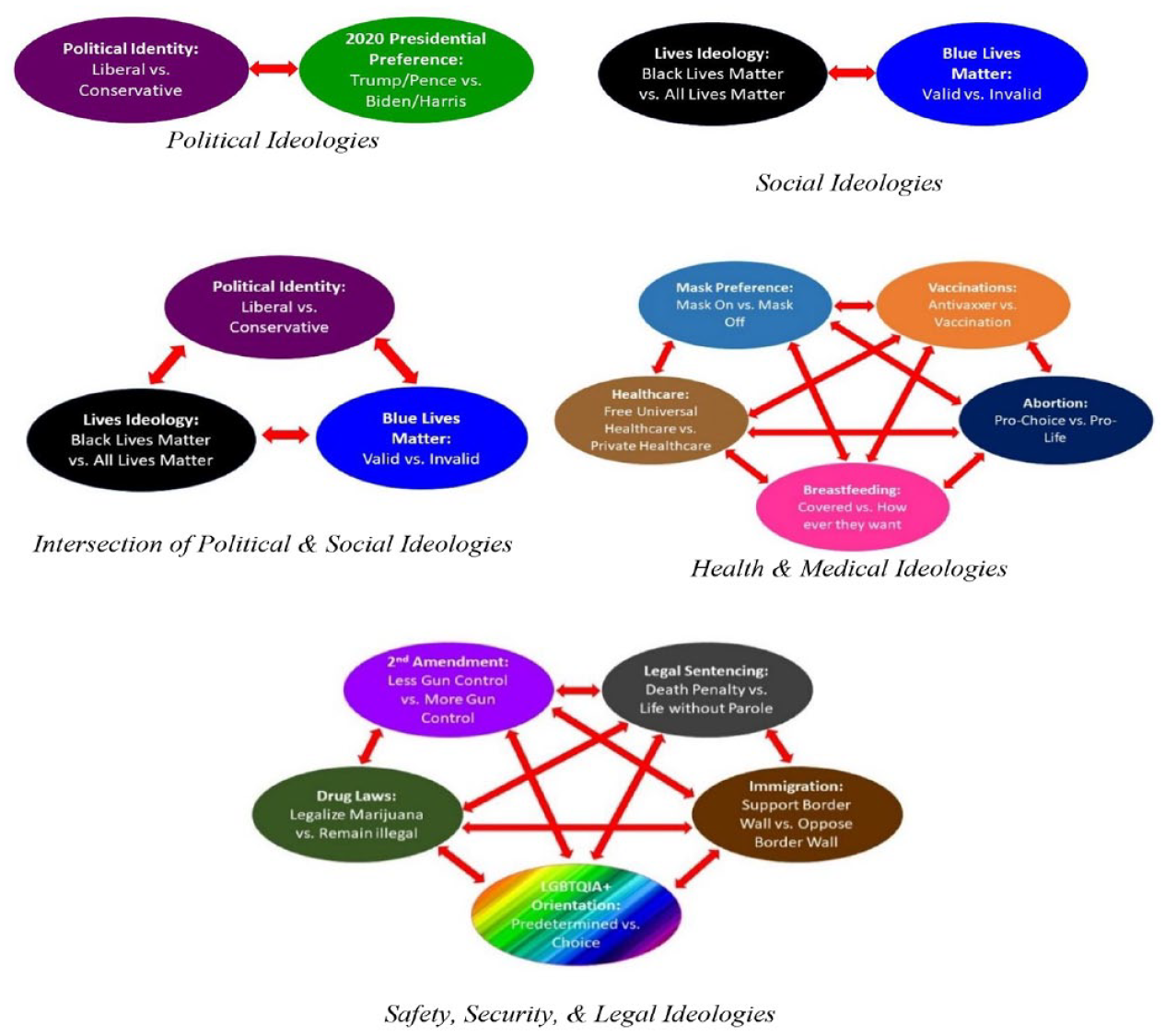
Relationship Models for Political, Social, Interaction of Political and Social, Health and Medical, and Safety, Security, and Legal Ideologies.
Researcher Positionality
As a woman of color in the United States, I am aware of the controversies surrounding sensitive topics such as BLM, Blue Lives Matter, and women’s rights. As an academic and applied social psychologist guided by humanistic principles, I am aware that this group is more liberal identifying (Eitan et al., 2018) and that this political imbalance could lead to biased research methods (Duarte et al., 2015; Jussim et al., 2016). The intersection of politics and prejudice is of utmost concern to social psychologists (Brandt & Crawford, 2020) and humanistic psychologists (Benjamin, 2021).
Ideologies significantly concern both social psychologists (Saucier, 2000) and humanistic psychologists (Raskin, 2020). Despite a pervasive notion that higher education aims to indoctrinate students, this remains unsubstantiated (Shields & Dunn, 2016). While social and personality science tends to report more liberally and politically charged, trustworthy research is crucial (Hawkins et al., 2018; von Hippel & Buss, 2017). Quantitative data analysis helps mitigate biases, and I have employed tactics such as randomizing questions and answers, avoiding leading questions, and using theory to guide hypotheses and data interpretation.
Method
Participants
Statistical power analysis using the G*Power program 3.1.9.7 suggested a sample size of 88 participants was needed to detect a moderate effect size of .03 with 80% power at α = .05 (Faul et al., 2009). The final sample consisted of 1,746 adult participants, as six out of 1,752 participants who accessed the survey did not consent. Table 2 provides a full descriptive breakdown of participants’ demographic identifiers. Participants aged 18 and above were recruited through word of mouth and electronic communication channels (e.g., email, social media, professional organization communication boards, and learning management systems). The study was approved by Fort Hays State University Institutional Review Board (IRB) (Project # 1654249-2).
Descriptive Participant Statistics.

Procedures and Measures
Participants completed a Google Forms survey called This or That, choosing between two scenarios or items. The software protected their anonymity and let them skip uncomfortable items. The participants consented, gave a pseudonym, answered demographic questions, and finally played the This or That game. The term game was deliberately used in the study instead of survey to make it more enjoyable for the participants and enhance the credibility of the findings. Participants were instructed to read each set of items and pick the most relevant or preferable item from the pair. Scenarios ranged from lighthearted topics like taste buds (sweet vs. savory) to critical research factors such as ideology (BLM vs. ALM) and abortion (pro-choice vs. pro-life). The complete game questionnaire is available in Table 3.
This or That Game Questions.
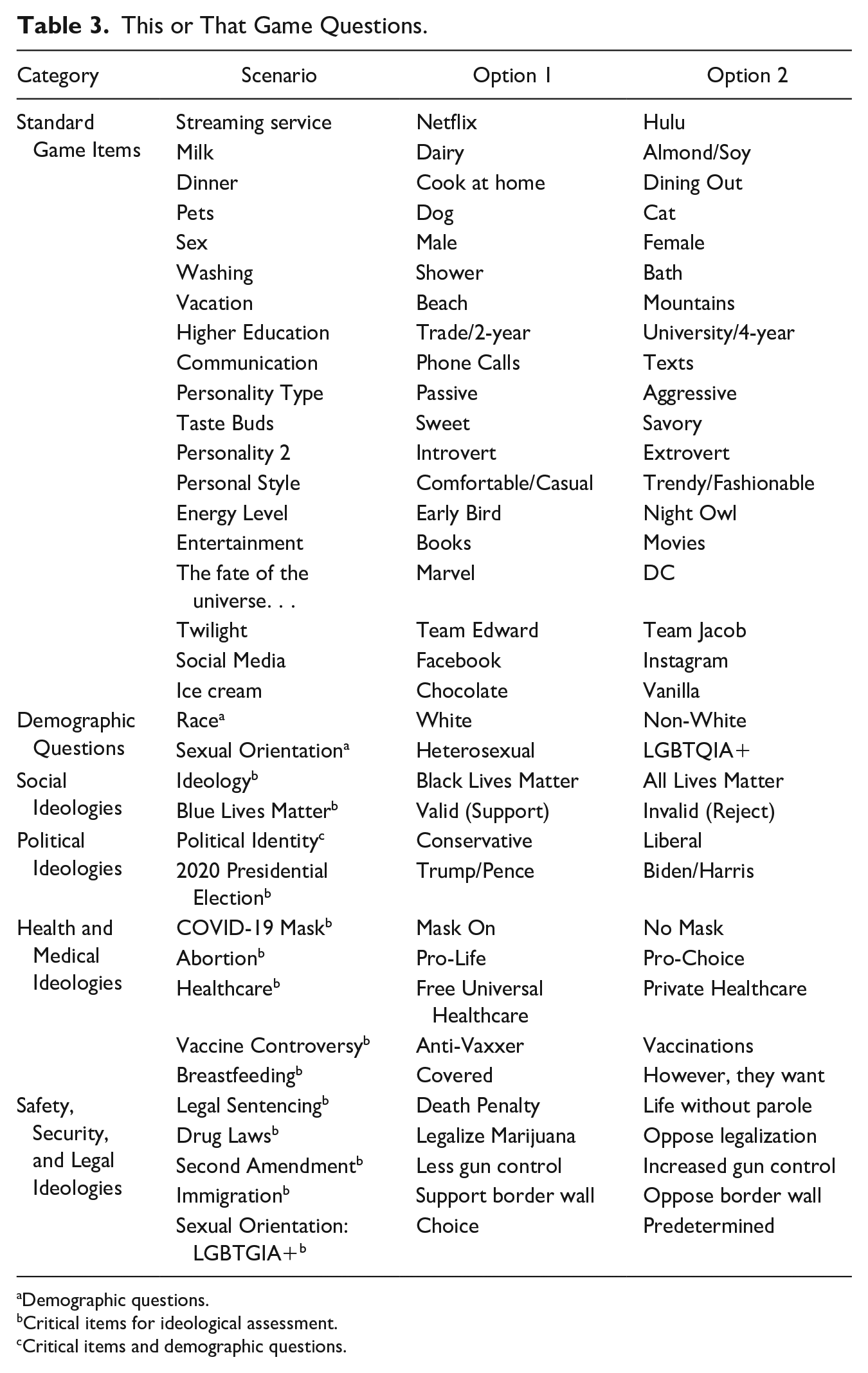
Demographic questions.
Critical items for ideological assessment.
Critical items and demographic questions.
The game items were randomized to reduce order bias. After the game, participants were fully debriefed about the researcher’s intention to explore the relationship between viewpoints and ideologies for academic and scholarly purposes. If the participants were uncomfortable using their answers for research purposes, they could choose not to submit the materials.
Data Analysis
Data were collected using a multivariate correlational research design. All analyses were performed using SPSS v. 28.0. Descriptive statistics were used to provide a concise and meaningful overview of the data set’s essential characteristics, patterns, and trends. Pearson Chi-Square tests were employed to investigate the relationship between variables with two categories, whereas Log-linear analysis was used for categories with more than two variables.
Results
Sociopolitical Ideologies: The Influence of Political Identity
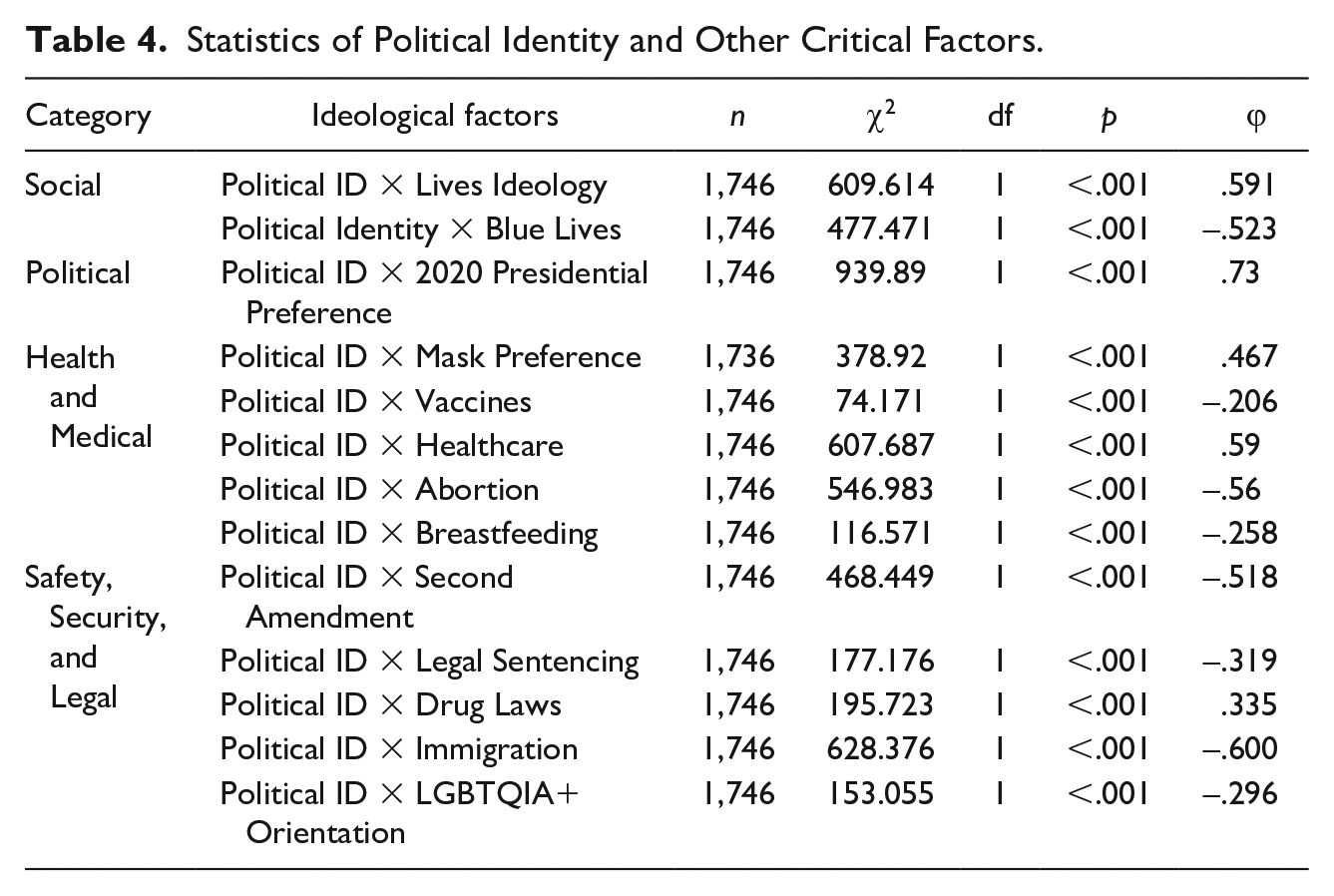
Political identity is strongly linked to all the factors in the four ideological categories at the p ≤ .01 level (Table 4). Table 5 presents the frequencies of the participants’ political identity and their views on the ideological categories. The hypothesis that liberals would hold more flexible and equitable views while conservatives would have more rigid and oppressive ideals was supported across all political identity variables with slight variations on certain levels.
Statistics of Political Identity and Other Critical Factors.
Frequencies and Percentages of Ideological Categories for Liberals and Conservatives.
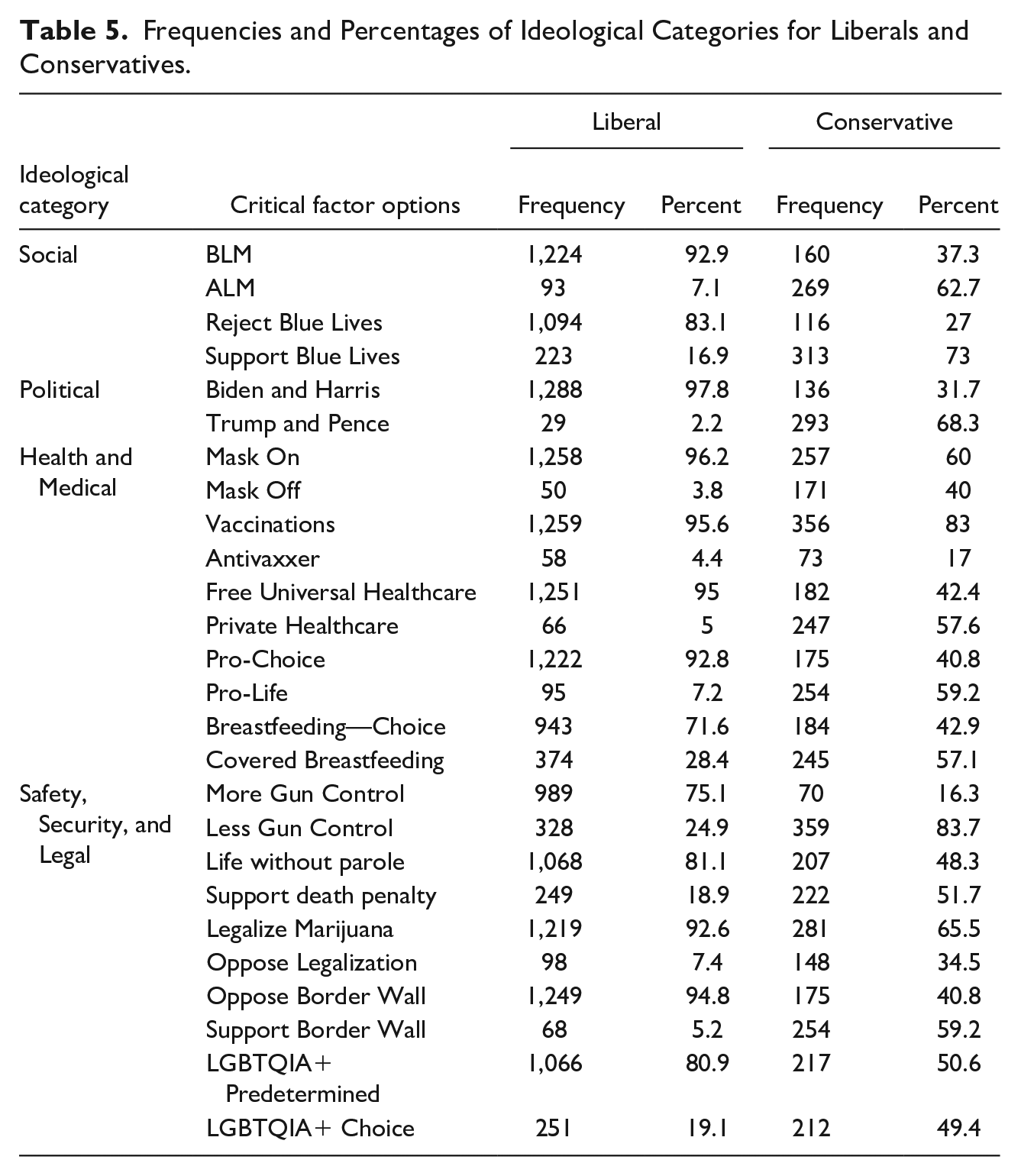
Political identity significantly impacts Social Ideologies. Liberals predominantly supported Black Lives Matter (92.9%) and rejected Blue Lives Matter (83.1%), while conservatives leaned toward All Lives Matter (62.7%) and Blue Lives Matter (73%). This influence extended to the 2020 Presidential Preference, where 91% of conservatives preferred Trump/Pence, and 90.4% of liberals chose Biden/Harris. In the realm of Health and Medical Ideologies, both liberals (96.2%) and conservatives (60%) largely preferred mask-wearing during the COVID-19 pandemic, with more conservatives (77.4%) opting not to. Similarly, liberals (95.6%) and conservatives (83%) supported vaccines, though more conservatives identified as anti-vaxxers (55.7%). Liberals largely supported free universal health care (95%) and were pro-choice (92.8%), while conservatives favored private health care (57.6%) and were pro-life (59.2%). In terms of breastfeeding, a higher percentage of liberals (71.6%) support women breastfeeding freely, while conservatives (57.1%) lean toward the view that women should be covered. Finally, regarding Safety, Security, and Legal Ideologies, conservatives advocated for less gun control (83.7%) and the death penalty (51.7%), while liberals favored stricter gun control (75.1%) and life without parole (81.1%). Both groups supported legalizing marijuana, with more conservatives opposing it (60.2%). Most participants believed LGBTQIA+ orientation is predetermined, with more liberals (80.9%) than conservatives (50.6%) agreeing. Among those who believe it is a choice, more identified as liberal (54.2%). Finally, most liberals (94.8%) opposed the border wall, while most conservatives (59.2%) supported it.
Social Ideologies
The analysis showed that 79.3% of participants supported BLM, while 20.7% believed in ALM. In addition, 69.3% disagreed with the concept of Blue Lives, while 30.7% supported Blue Lives Matter. A significant association was found between these views, with 82.3% of BLM supporters rejecting Blue Lives Matter and 80.4% of ALM supporters endorsing it, χ2 (1, n = 1,746) = 529.98, p < .001; w = .55.
The Intersection of Political and Social Ideologies
A hierarchical log-linear analysis on ideology of lives, Blue Lives Matter, and political identity yielded a significant relationship, χ2 (1, n = 1,746) = 17.220, p < .001. See Table 6 for the detailed specific statistical relationships between these factors, excluding those already discussed in the political ideologies results. Similarly, Table 7 displays the alignment of participants’ political and social ideologies as predicted. Most participants who support BLM reject Blue Lives Matter and identify as liberal (61.1%). Conversely, those who support ALM, endorse Blue Lives Matter, and identify as conservative make up 12.9% of participants. While two-way interactions are noteworthy, the focus is on the highest-order terms of the three-way model.
Statistics of Social and Political Ideology Factors.
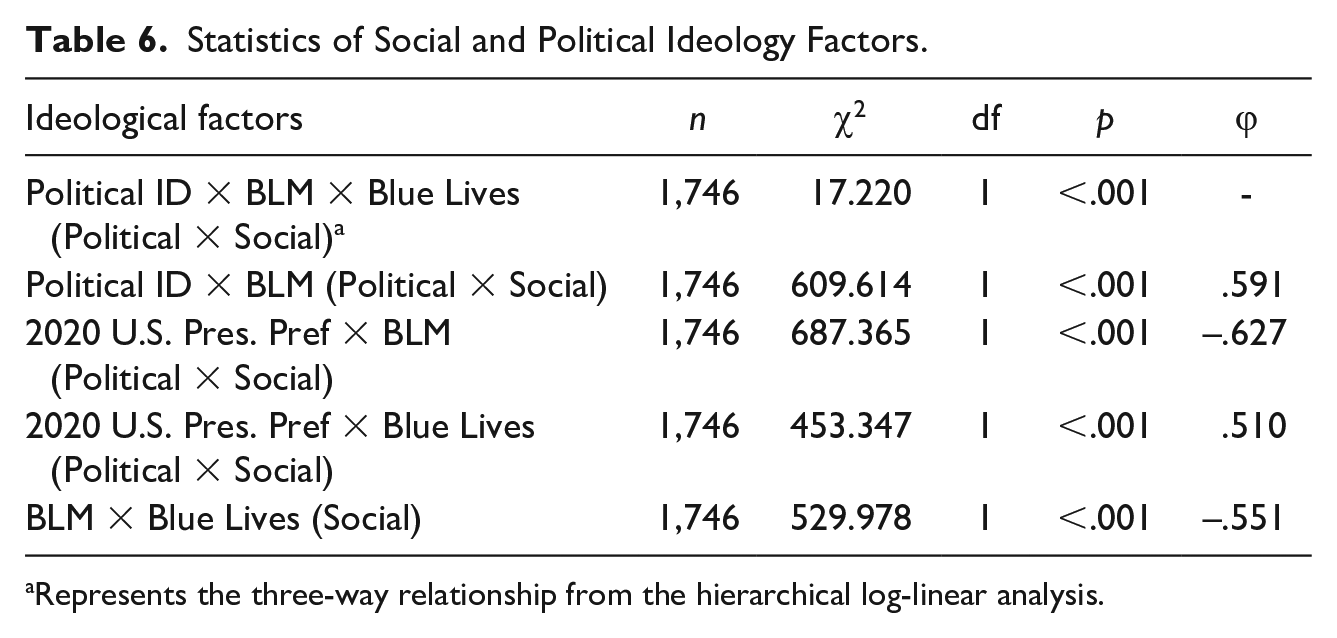
Represents the three-way relationship from the hierarchical log-linear analysis.
Political and Social Ideologies Counts From the 3-Way Hierarchical Log-Linear Analysis.
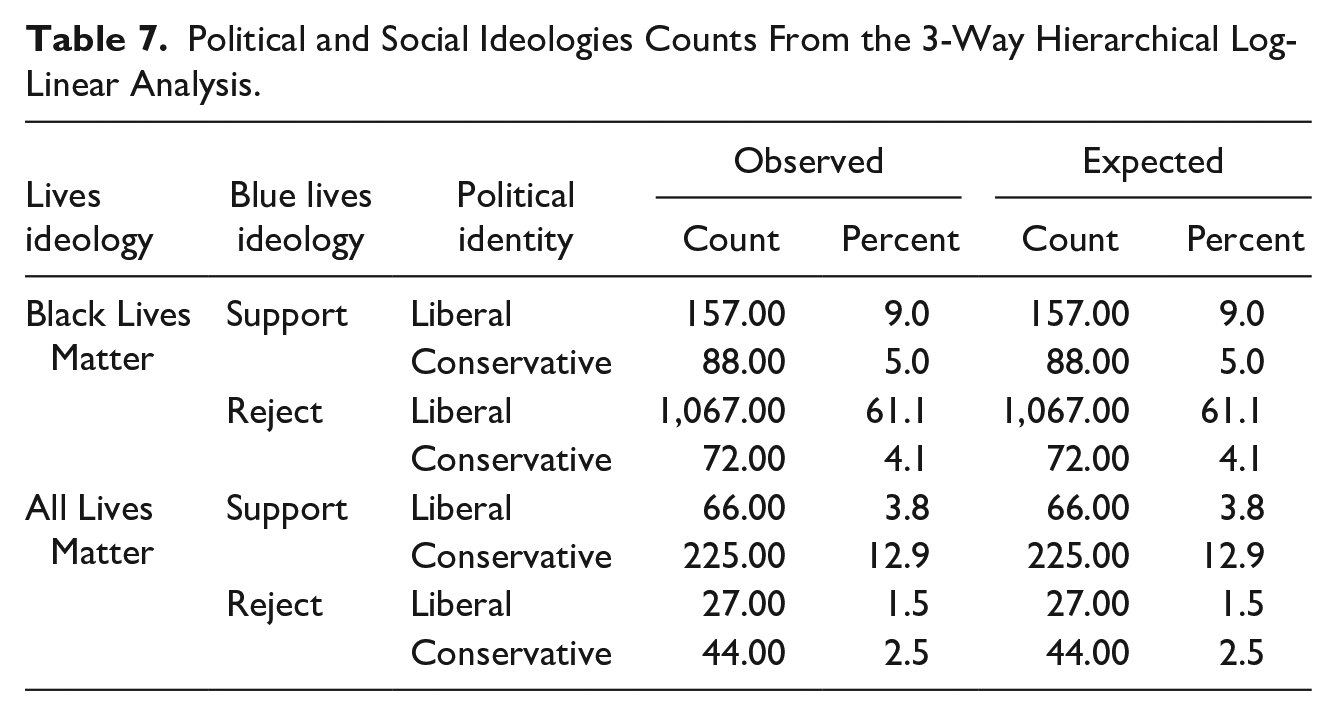
The 2020 U.S. presidential preference did not fit in the hierarchical log-linear analysis. However, chi-square tests showed a significant association between participants’ presidential preference and their views on BLM vs. ALM and Blue Lives Matter. More Trump and Pence supporters believe in ALM (74.2%) and Blue Lives Matter (80.1%). In contrast, Biden and Harris supporters overwhelmingly support BLM (91.4%) and reject Blue Lives Matter (94.7%).
Health and Medical Ideologies
Regarding Health and Medical Ideologies, participants’ views were notably skewed. Most participants (86.8%) reported wearing masks during COVID-19, 80% identified as pro-choice, 82.1% supported free universal health care, and 92.5% supported vaccines. A three-way interaction between mask preference, abortion, and health care was significant (p = .024). The data presented in Table 8 indicate that participants who wore masks were also more likely to be pro-choice and support free universal health care (69.9%), whereas those who refused masks were more likely to be pro-life and support private health care (5.6%), χ2 (1, n = 1,736) = 7.765, p = .05.
Health and Medical Ideologies Counts From the Three-Way Hierarchical Log-Linear Analysis.
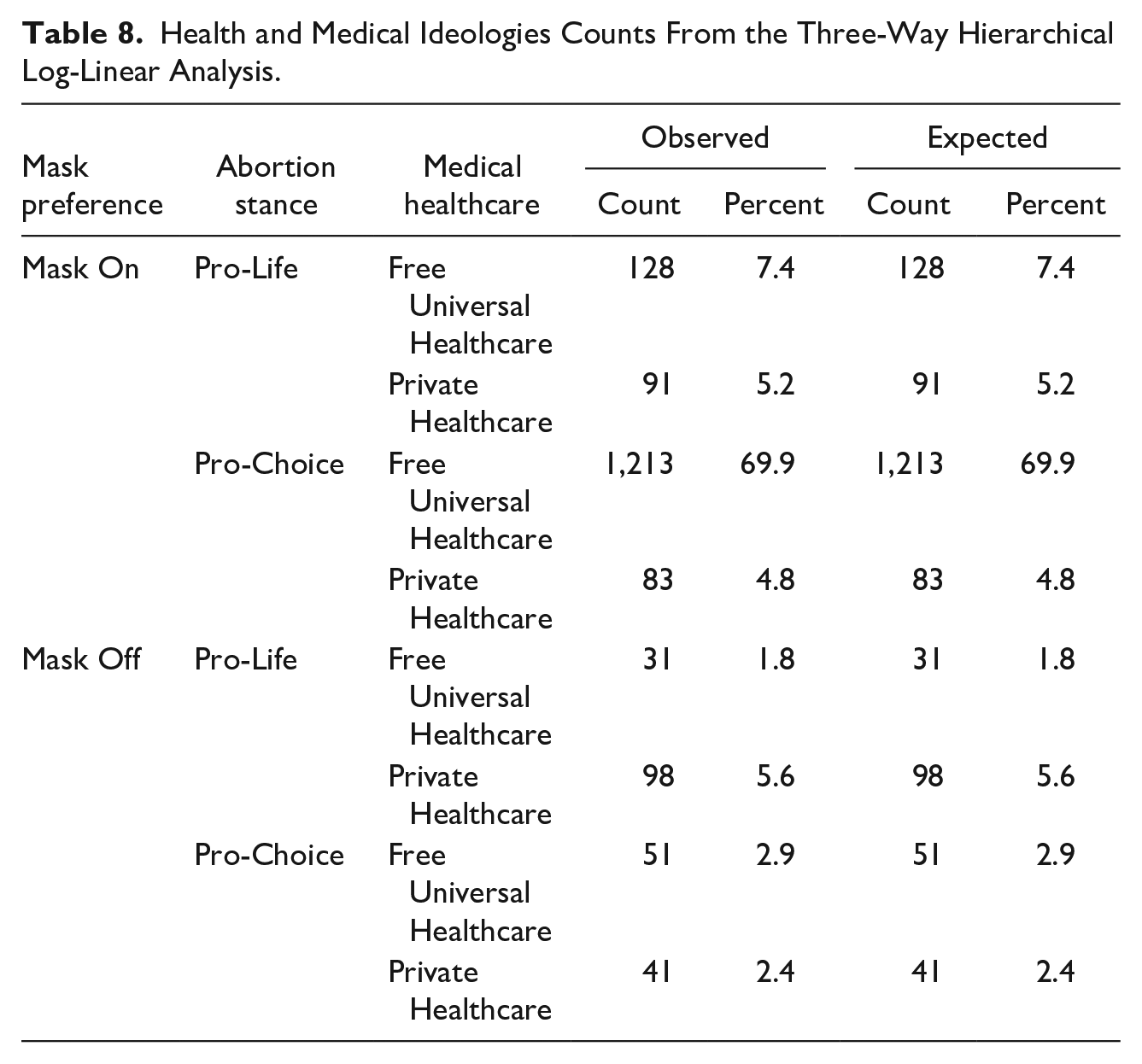
Table 9 displays significant relationships between health and medical factors. Mask preference was significantly associated with abortion, χ2 (1, n = 1,736) = 232.07, p < .001, with pro-life views more common among those rejecting masks (58.4%) and pro-choice views prevalent among mask-wearers (85.5%). Mask preference also correlated with health care expectations, χ2 (1, n = 1,736) = 344.92, p < .001, with mask-wearers favoring free universal health care (88.5%) and most mask-off participants preferring private health care (62.9%). Health care views significantly correlated with abortion views, X2 (1, n = 1,746) = 389.1, p < .001, with pro-life participants supporting private health care (60.4%) and pro-choice participants favoring free universal health care (88.8%).
Statistics of Health and Medical Ideology Factors.
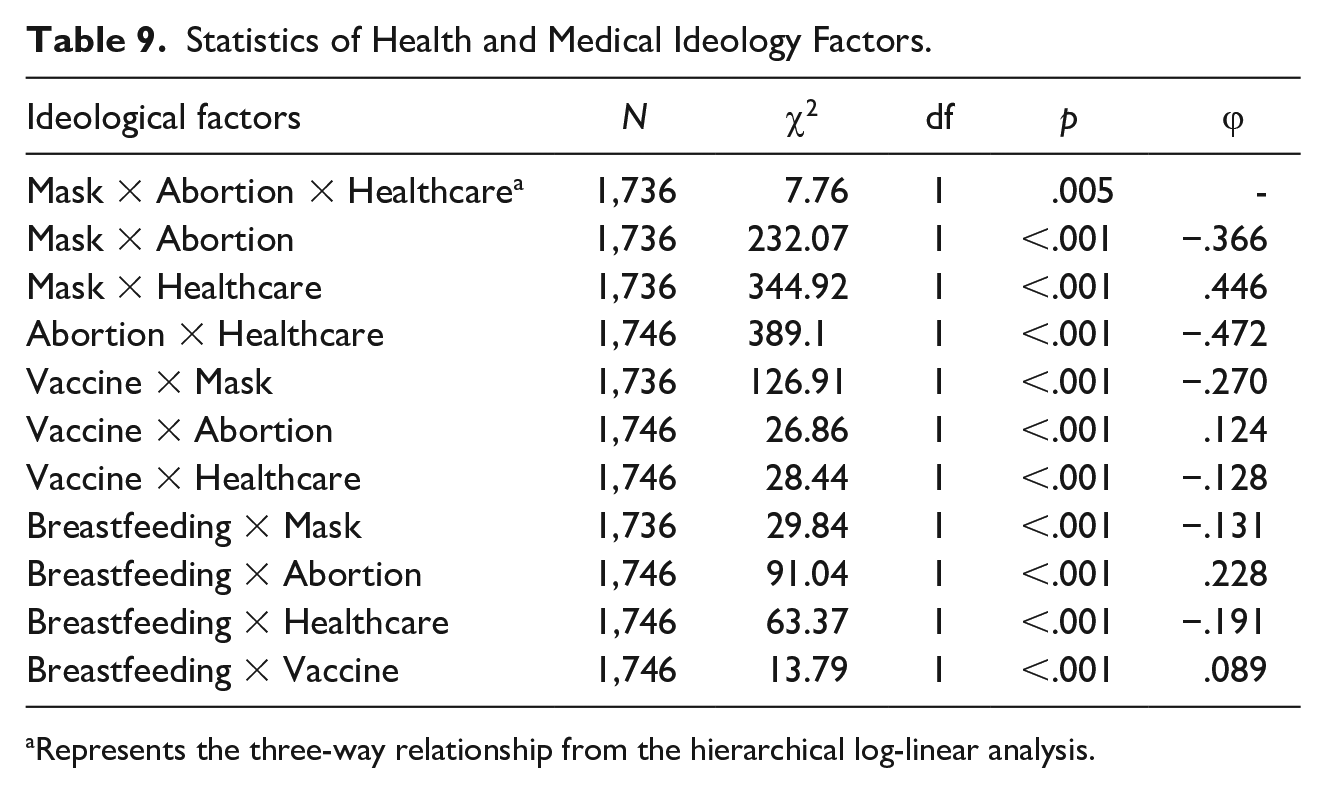
Represents the three-way relationship from the hierarchical log-linear analysis.
Vaccination views also correlate with opinions on public breastfeeding. Most participants believe women should breastfeed however they want (64.5%), and among them, 94.2% support vaccines. Among those who believe women should be covered when breastfeeding (35.5%), a large proportion also support vaccines (89.3%). Other health and medical factors further influence views on breastfeeding. For instance, a small proportion of participants who prefer not to wear masks also believe women should cover when breastfeeding (18.6%), while a large proportion of mask-wearing participants believe women should breastfeed however they want (90%). Interestingly, this group is comfortable with others being covered but not themselves. Those who believe women should feed freely are also predominantly pro-choice (86.8%) and support free universal health care (87.5%).
Safety, Security, and Legal Ideologies
A five-way model of Safety, Security, and Legal Ideologies did not yield a significant relationship; however, removing the Second Amendment factor improved the model fit. A four-way log-linear analysis testing the associations of legal sentencing, drug laws, immigration, and LGBTQIA+ orientation produced significant results, χ2 (1) = 4.660, p = .031 (Table 10).
Statistics of Safety, Security, and Legal Ideology Factors.

Represents the three-way relationship from the hierarchical log-linear analysis.
Based on cell counts and residuals (Table 11), the largest proportion of participants support life without parole (legal sentencing), marijuana legalization (drug laws), oppose the border wall (immigration), and believe LGBTQIA+ orientation is predetermined (49.3%, n = 861). Marijuana legalization was not a major point of contention, with 85.9% of all participants supporting it. When analyzing the other factors and folding drug laws in, we see that about 5% of participants who support the death penalty also support the border wall and believe that LGBTQIA+ orientation is a choice.
Safety, Security, and Legal Ideologies Counts From the Four-Way Hierarchical Log-Linear Analysis.
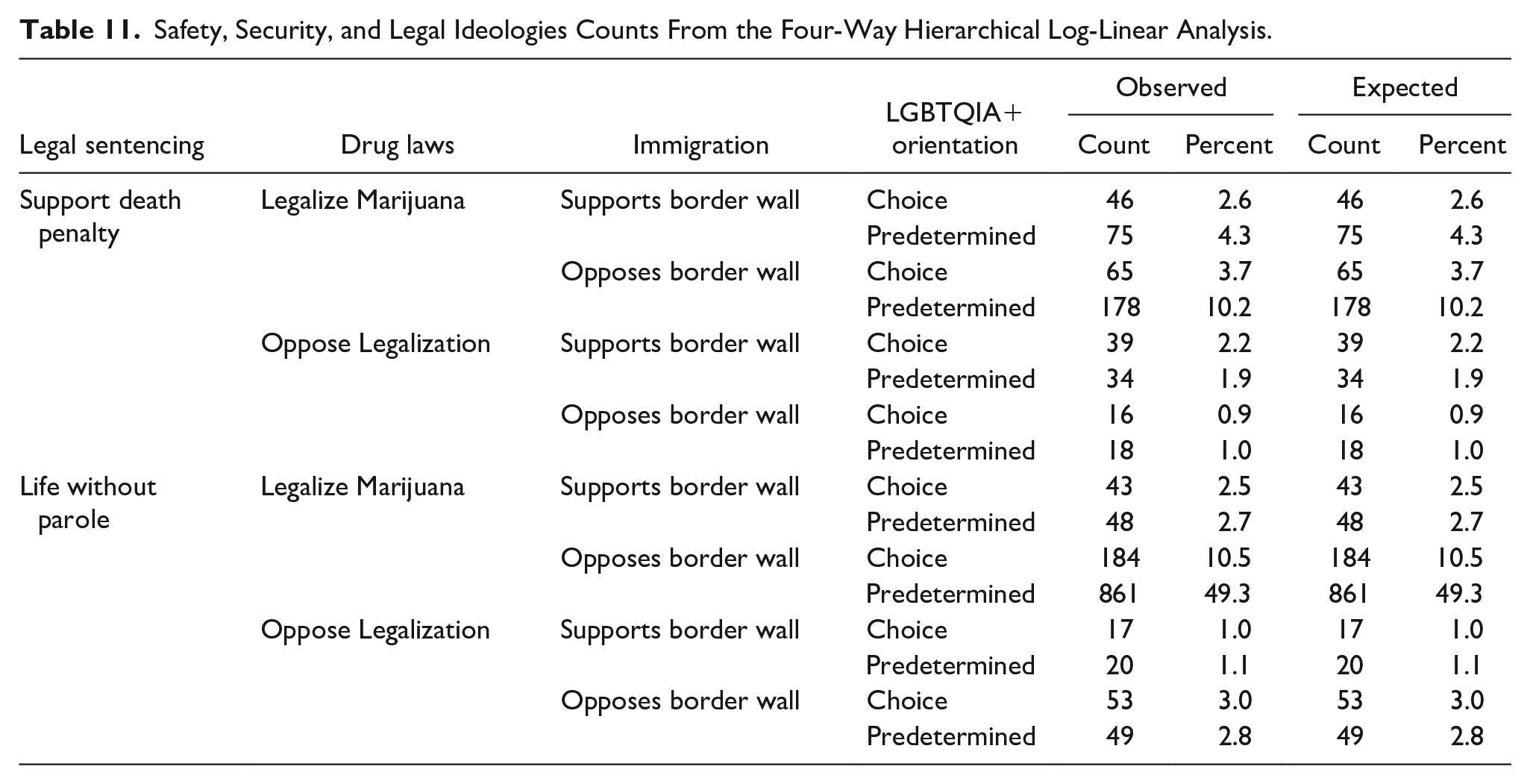
Chi-square tests revealed significant associations between all factors. Legal sentencing views were significantly associated with drug laws, χ2 (1, n = 1,746) = 39.67, p < .001, views on immigration regarding the border wall, χ2 (1, n = 1,746) = 221.88, p < .001, and LGBTQIA+ orientation, χ2 (1, n = 1,746) = 25.206, p < .001. Participants supporting life without parole were more likely to support marijuana legalization (89.1%), oppose the border wall (90%), and believe that LGBTQIA+ orientation is predetermined (76.7%). Regarding LGBTQIA+ orientation, participants who believe that sexual orientation is predetermined also support marijuana legalization (90.6%) and oppose the border wall (86.2%).
Discussion
This research aimed to assess the consistency of ideological views across various categories drawing on three influential theoretical foundations: the Moral Foundations Theory, Ideological-Conflict Hypothesis, and Rigidity-of-the-Right Hypothesis. As anticipated, attitudes aligned—political identity significantly shapes individuals’ positions on current topics, with conservatives leaning toward more rigid, intolerant, and oppressive ideologies, while liberals endorse flexible and equitable ideologies, supported by. This study supports Kubin and Brandt’s (2020) findings of significant ideological differences in politics, figures, values, threat, complexity, morality, religion, and harm. Although Brandt et al. (2014) argue that opposing policies do not always reflect ideological dogmatism, this assertion might be less valid now. These results also underscore the crucial role of identity politics in people’s decision-making (Heyes, 2020).
Supporting a Converging Trifecta of Theories
In line with MFT, evidence indicates that liberals lean toward individualizing foundations (such as individual rights and autonomy), while conservatives align with binding foundations (including collective good, coherence, and hierarchy) (Graham et al., 2009; Voelkel & Brandt, 2019). This suggests that variations in ideological beliefs between liberals and conservatives are grounded in their moral foundations. While causation remains unestablished in this study, there is support for predicting beliefs based on political identity. Liberals tend to support compassionate, fair, and equitable views, whereas conservatives tend to favor in-group loyalty, respect for authorities, and physical/spiritual purity. For instance, liberals often back BLM and oppose Blue Lives, while conservatives support ALM and Blue Lives Matter—a pattern consistent with findings on protest evaluations (Goff et al., 2022; Richardson & Conway, 2022).
In health and medical ideologies, liberals are more likely to endorse masks, vaccines, pro-choice, and free universal health care, while conservatives tend to be anti-mask, anti-vax, pro-choice, and prefer private health care. These findings align with MFT, indicating that liberals are more progressive on health topics, while conservatives prioritize personal freedoms. In the breastfeeding category, there is a less distinct divide, with more liberals than expected supporting covered breastfeeding, and a slight conservative majority sharing this view. Public opinion, influenced by morality, suggests discretion during public breastfeeding due to the hypersexualization of breasts (Bresnahan et al., 2019), varying with cultural and social norms. Opposition to public breastfeeding is mainly rooted in hostile sexism toward women, violating traditional gender roles (Huang et al., 2020).
In safety, security, and legal ideologies, liberals mostly support increased gun control, life without parole, marijuana legalization, and oppose the border wall. Conversely, conservatives favor less gun control, capital punishment, marijuana prohibition, and the border wall. Cook (2015) found that supporters of gun control often emphasize the individualizing foundation of care, while opponents lean on binding foundations of liberty, loyalty, and authority. Silver and Silver (2017) found that conservatives, being more punitive, align with MFT’s binding orientation, supporting findings on capital punishment. Roy and Goldwasser (2021) found that Republicans used more binding moral foundations terminology in congressional tweets on gun control and immigration. Regarding marijuana policy, Dias (2017) found that conservative opposition was partly due to reliance on binding foundations of authority and purity.
Views on LGBTQIA+ orientation were unexpected. A Pew Research Center poll (2013) showed that 52% of Republicans and 39% of Democrats believed homosexuality was a choice, while 28% of Republicans and 48% of Democrats believed it was predetermined. While political identity predicts LGBTQIA+ views, other factors may influence right-leaning views. Research links moral foundations to attitudes toward homosexuality, with conservative opposition to same-sex marriage rooted in binding foundations and liberal support in individualizing foundations (Barnett et al., 2018; Haidt & Graham, 2007).
The findings further align with the ideological-conflict hypothesis. For example, Crawford (2014) found political intolerance between conservatives and liberals. This hypothesis also suggests that groups dislike conflicting views and use strategies like motivated information processing to maintain their worldview. Consider the alignment of views in social ideology outcomes, where BLM supporters oppose Blue Lives Matter and vice versa. Each group shows intolerance and uses tactics like deflection and denial to support their views (Robinson, 2021). Solomon and Martin (2019) report that ALM and Blue Lives Matter advocates use whataboutism, a tactic that disputes others transgressions, by “choos[ing] not to address the structural discrimination and violence and instead deflects attention away from police violence onto another topic that focuses blame back on the Black community” (p. 19).
People also defend against worldview-violating groups by derogating and denigrating those with differing ideologies, which can manifest as prejudice and discrimination (Bal & Van den Bos, 2019; Brandt et al., 2014). Examples include the devaluation of anti-vaxxers by vaccine supporters or verbal attacks on immigration policy supporters by those advocating for more inclusive reform, such as describing people with opposing worldviews as insane, immoral, unintelligent, etc. Furthermore, these responses have been found “to improve one’s own self-views or group-views, just as other forms of prejudice can boost self-esteem” (Brandt & Crawford, 2020, p. 3).
Finally, the RRH is supported by the study’s outcomes. The data indicate that conservatives hold more rigid views on issues like ALM, Blue Lives Matter, public health care reform, abortion stance, breastfeeding options, gun policy, capital punishment, and immigration, as argued by Costello et al. (2021) and Zmigrod (2020).
Limitations and Future Research
There are a few important limitations associated with the current study. First, the dichotomous design of the measure may marginalize participants or lead to identity erasure. For instance, demographic questions asking participants to identify as White or Non-White, or Heterosexual vs. LGBTQIA+, might induce discomfort or forced misrepresentation. Future studies could enhance inclusivity by expanding variable levels. Second, the sample was predominantly liberal due to researcher access. Future studies should strive for more diverse participant groups to validate observed divides. Third, the sample size limited log-linear analysis models where no significant relationships were found in the five-factor models. Future studies with larger samples may better support these relationships. Fourth, the gamified design may have trivialized complex issues like BLM, health care access, and gun reform policy. Future research should explore alternative presentation methods. Finally, the cross-sectional design and data collection during a politically charged period may not fully capture the complexity of ideological shifts in response to major events. Longitudinal or historical analyses would enhance understanding, as would exploring the role of media and communication in shaping ideological responses.
While prior research has linked sociopolitical issues to conservative or liberal leanings in the United States, this study extends that by demonstrating the same pattern through a unique measure. This measure incorporates emerging topics such as BLM, ALM, Blue Lives Matter, mask preferences during the COVID-19 pandemic, and the immigration protection border wall. These issues, not previously part of such discussions, intersect with contentious topics like abortion, vaccinations, breastfeeding, health care, gun rights, the death penalty, and drug laws, marking a novel approach in empirical research.
The study’s outcomes align with Brandt et al.’s (2014) suggestion that future research should draw firmer conclusions about the scope and variability of ideological conflicts in the real world. It is insufficient to presume that individuals with oppressive ideological views on traditional issues would hold the same views in humanity-based arguments such as BLM and ALM without empirical evidence.
Conclusion
Diverse views on social and political ideologies can foster creativity and innovation, but interventions become imperative when these attitudes result in harm to out-groups. Instances like Teri Hill’s violent and racist reaction at a Home Depot in July 2020 for being asked to wear a mask underscore the potential dangers. She further threatened to cough and spit on patrons stating she could act like that because “. . . because [she’s] a White woman . . . [she] believe[s] in White power . . .” (ABC 7 Chicago Digital Team, 2021). Another incident involved a self-proclaimed Trump supporter berating a Starbucks barista in October 2020, yelling “F*** black lives matter” and dismissing the COVID-19 pandemic as a “hoax” after being asked to keep her mask on (Meeks et al., 2020).
Concerns escalate when negative attitudes lead to discriminatory and dangerous behaviors, as seen in vehicle ramming attacks during social justice protests and the U.S. Capitol insurrection on January 6, 2021 (Jenkins & Butterworth, 2020; Lonsdorf et al., 2022). Contentious issues like abortion and gun policy have also resulted in harmful outcomes, with pro-life extremists resorting to harassment and violence against pro-choice advocates and stricter gun control proponents facing hate speech and opposition (Cortese, 2012; C. Mason, 2002).
Reed and Aquino (2003) note that people justify harming out-group members if beneficial to the in-group or directed by an authority figure, emphasizing the need for further research on factors contributing to ideological conflicts and their harmful consequences. The findings stress the importance of investigating psychological mechanisms leading to radicalization within ideological groups and exploring preventive measures against extremist behavior. Understanding the complexities of ideological divisions is crucial for developing strategies to foster positive discussions and promote social harmony. Policymakers and activists must consider potential risks in polarizing issues and take steps to ensure the safety and well-being of all parties involved. This research highlights the necessity of handling ideological conflicts with care and diligence to cultivate a more inclusive and peaceful society.
Footnotes
Declaration of Conflicting Interests
The author(s) declared no potential conflicts of interest with respect to the research, authorship, and/or publication of this article.
Funding
The author(s) received no financial support for the research, authorship, and/or publication of this article.
