



Abstract
The purpose of this phenomenological photovoice study was to explore the lived experience of coping among 58 Canadian youth diagnosed with an anxiety disorder. A youth advisory committee was actively engaged throughout the project. Two phases of interviews were conducted more than a period of 4 years (2012–2016), supplemented by photovoice in the second interview. Data analysis was informed by van Manen’s hermeneutic phenomenology approach and his “Lifeworld Existentials” of embodiment, spatiality, relationality, and temporality served as a framework for organizing the data. Coping with anxiety was experienced as difficult: Anxiety was challenging to control and youth reported looking for something they could do to give them a break from their anxious thoughts and feelings. Youth reluctantly accepted their condition, and some adopted a new perspective of their experience. Coping strategies reported by youth fall along the lived experience domains of embodiment (body), spatiality (space), relationality (relations), temporality (time) and include expressing feelings and emotions, naming anxiety, bringing their attention to the present moment, distraction, going to a familiar space to calm down, going outdoors, reaching out to someone who could “be there” for them, and being with a pet. This study contributes to the emerging lived experience research in anxiety.
According to the Diagnostic and Statistical Manual of Mental Disorders (5th ed., DSM-5; American Psychiatric Association [APA], 2013), anxiety disorders are characterized by excessive anxiety, fear, and worry (apprehensive expectation) that is out of proportion to the actual danger and persist over a prolonged period. Essential features include subjective feelings of distress, catastrophizing, autonomic arousal symptoms (e.g., increased heart rate), avoidance of stimuli or situations, and can cause impairment in important areas of functioning (APA, 2013). Among the diagnoses outlined in the DSM-5, anxiety disorders are the most prevalent among children and adolescents, with a global prevalence rate of 6.5% (Polanczyk et al., 2015). The coronavirus disease-19 (COVID-19) pandemic has affected anxiety levels in young people, and the prevalence rates for anxiety symptoms and anxiety disorders in children and youth during the pandemic have been estimated at 26.5% and 13.0%, respectively (Panchal et al., 2023). In Canada, anxiety disorders are more frequently diagnosed in children and adolescents than any other mental health condition, with recent prevalence estimates of 12.9% (Wiens et al., 2020). Anxiety disorders frequently co-occur with other disorders, including both internalizing (e.g., mood disorders) and externalizing conditions (e.g., conduct disorder, oppositional defiant disorder) (Rapee et al., 2023) and if left untreated, can persist well into adulthood (Costello & Maughan, 2015).
The experience of anxiety in youth is compounded by the critical period of development between adolescence and young adulthood where biological and psychosocial growth occurs rapidly (Erikson, 1968). Although this period is characterized by a sense of possibility and exploration (Arnett, 2014), youth during this stage are also confronted with matters of personal identity and instability (Erikson, 1968). Given these existential changes and challenges, youth are bound to inevitably encounter anxiety (May, 1977). Thus, during this transitional period, youth may experience higher levels of stress as they learn to garner resources to meet the pressures that confront them. For youth living with anxiety disorders, there may be a greater need to garner resources in their efforts to cope with anxiety and the developmental challenges of emerging adulthood (Schaffer, 2006). How youth contend with this reality may have lasting implications for their development into adulthood. As such, understanding how youth live with, confront, and cope with anxiety cannot be understated (May, 1977). Using a phenomenological approach to explore youth’s lived experience of coping with anxiety would facilitate the exploration of the intentions, purposes, and meanings of coping as perceived by youth. Insights in this regard would be valuable for informing those who work with youth and interventions that target coping skills among youth. However, to our knowledge, phenomenological research exploring youth’s coping with anxiety is limited.
Although various conceptualizations and definitions of coping in children and adolescents have been proposed (Compas et al., 2017), a widely used definition views coping as “conscious and volitional efforts to regulate emotion, cognition, behavior, physiology, and the environment in response to stressful events or circumstances (Compas et al., 2001, p. 89). Most of the research on coping and psychopathology in children and youth has been quantitative in nature and relied on the use of questionnaires (Compas et al., 2017; Schäfer et al., 2017). Although this work has generated important information about the coping strategies used by children and youth (Compas et al., 2017; Schäfer et al., 2017), lacking is a qualitative research that examines youth’s subjective, lived experiences of coping (Boyle, 2018; Weitkamp et al., 2016). There is a lack of Canadian and international data in this regard (Boyle, 2018).
To access youth’s subjective mental health experiences, researchers have turned to participatory arts-based methods (ABM) (Abdulah et al., 2021; Atayero et al., 2020; Nathan et al., 2023). ABM can facilitate exploration of experiences by allowing for creative expression through artistic methods, such as visual methodologies including photography (Austin & Forinash, 2005; Gerber et al., 2022). Although visual methodologies have been used to examine youth’s experience of anxiety (Woodgate et al., 2021, 2017a, 2017b; Woodgate et al., 2020), to our knowledge, the use of visual methodologies, such as photography, to explore Canadian youth’s experience of coping with anxiety has received less research attention. The purpose of this hermeneutic phenomenological photovoice study was to explore the lived experience of coping among Canadian youth diagnosed with an anxiety disorder. The findings emerged from a larger study that explored the lived experience of Canadian youth living with anxiety.
Method
Design and Framework
This research follows Max van Manen’s (1990) approach to hermeneutic phenomenology, which aims to understand human experience as it is lived. Hermeneutic phenomenology is both a descriptive method (phenomenological) that seeks to describe phenomena as they are, and interpretive (hermeneutic) as it is based on the position that phenomena can be meaningfully interpreted (van Manen, 1997). In hermeneutic phenomenology, the goal is to capture the personal meaning of a person’s experience including what was experienced and how it was experienced (van Manen, 1990, 1997).
To understand a person’s lived experience or “lived meaning,” van Manen (1997) highlights the importance of reflecting on the four lifeworld existentials of (a) embodiment, (b) temporality, (c) spatiality, and (d) relationality. According to the work by van Manen (1990), “lived meaning” prioritizes subjectivity and refers to “the way that a person experiences and understands their world as real and meaningful” (p. 183) while “lifeworlds” refer to “the lived world as experienced in everyday situations and meanings” (p. 101). Embodiment (lived body) refers to bodily experience in everyday life including how we feel, reveal, conceal, and share (Husserl, 1925; van Manen, 1997). The notion of spatiality (lived space) refers to individuals’ subjective experience of the spaces they find themselves in and includes the ways in which space affects one’s subjectivity and how one’s subjectivity can affect the way spaces are experienced (van Manen, 1997). Relationality (lived relations) refers to the subjective experience of relations made and maintained with others in our lifeworld (van Manen, 1997). Finally, temporality (lived time) can be understood as the subjective (rather than “factual”) experience of time or the way in which individuals temporally experience their lifeworld (van Manen, 1997).
Phenomenological research often involves interviews and artistic data sources, such as photographs (van Manen, 1990). To extend and enhance the understanding of youth’s lived experience of coping and to empower youth, we used photovoice, a participatory visual methodology where participants use cameras to reflexively explore their experiences through taking photographs and describing them (Wang & Burris, 1997; Woodgate et al., 2017a). Thus, we used a youth-as-expert approach where youth were viewed as experts in their own experiences and research methods that help youth speak about their experiences were used (Darbyshire et al., 2005).
Participants
Participants included in this study were 58 Canadian youth living in Winnipeg, Manitoba who had a primary diagnosis of one or more anxiety disorders. This included separation anxiety, specific phobias, panic disorder, agoraphobia, social anxiety disorder, and generalized anxiety disorder. For this study, “youth” included early to late adolescents (10–18 years) and emerging adults (19–25 years). We adopted an inclusive age of 10–25 years to capture diverse experiences and developmental differences (Patton et al., 2016). The majority of youth self-identified as female (n = 44). Of the female youth, the majority (n = 31) reported being White. Other ethnicities reported by female youth include African (n = 1), Filipino (n = 2), Indigenous (n = 9), and Spanish (n = 1). All female youth were between the ages of 10 and 22 (M = 14.7) years. Of the youth who self-identified as male (n = 14), 9 were White, 4 were Indigenous, and 1 was African American. All male youth were between 10 and 18 years of age (M = 13.8). For additional information about the study sample, see the work by Woodgate et al. (2020) and Woodgate et al. (2023).
To capture a wide range of experiences, we used the maximum variation technique of purposive sampling (Sandelowski, 1995). Youth were recruited via (a) invitation letters from hospital-based programs that specialize in the treatment of anxiety disorders, (b) posters located at youth centers, teen clinics, and schools, and (c) sharing the study flyer through social media (e.g., twitter).
Data Collection
Data collection took place more than a period of 4 years from 2012 to 2016. Each youth first participated in an open-ended, face-to-face interview. The open-ended interview method helped to elicit detailed responses deemed relevant to the study aim and afforded youth the opportunity to use their own words to discuss what mattered to them, allowing interviewers to remain close to the youth’s experience. (Morse & Field, 1995). Participants were treated as “experts,” or knowledgeable persons (Darbyshire et al., 2005) about the phenomenon of anxiety. The interview began with the question, “Please tell me what it is like to be a youth living with anxiety?” An interview guide that included questions related to how anxiety shaped their day-to-day lives, the type of challenges faced by the youth, how the youth coped with their anxiety, and the types of support that helped them to cope was developed. However, questions were only asked when necessary to facilitate youth’s descriptions.
An important aspect of hermeneutic phenomenology is repeated interviews as they allow for follow-up questions that add to the descriptions revealed in the initial interview. Accordingly, two phases of interviews were conducted. The second interview was conducted 6 weeks following the first interview (to ensure the first interview was fresh in youth’s minds), with photovoice supplementing the second interview. Youth were given a digital camera and asked to take pictures that represented their experience of living with anxiety and to provide a description of the photographs (Keller et al., 2008). The SHOWeD method was used to guide the photovoice interviews by asking youth to describe the image and reflect on what it meant to them (Dahan et al., 2007). All interviews were digitally recorded and transcribed, and field notes were recorded after each interview detailing the interview context. Interview length ranged from 1.5 to 3 hr.
Data Analysis
Guided by the hermeneutic phenomenological approach, the data analysis process was both descriptive and interpretive. Data analysis occurred concurrently with data collection resulting in an iterative process that allowed young people to have ongoing input into theme development. Both text (i.e., interviews, field notes) and visual data (i.e., photographs) were used to inform the analysis. The process involved delineating units of meaning from the data, clustering units of meaning to form thematic statements, and extracting themes.
The analysis involved five steps: (a) prolonged engagement with the data and line-by-line reading of interview data and field notes to identify significant sentences or sentence clusters representative of youth’s lived experience of coping, (b) grouping the significant sentences and sentence clusters into categories through analytic discussions, (c) reducing the phrases and sentence clusters until themes emerged from the analysis, (d) viewing each photo and accompanying caption, developing youth’s interpretations of the photos by adding researchers’ perspectives, reflecting on all the photos as a whole and identifying associations to the corresponding data (Woodgate et al., 2017b; Woodgate & Skarlato, 2015), and (e) further analyzing and positioning the findings within van Manen’s (1997) four lifeworld existentials. By engaging in the circular process of reading, interpreting, and reflecting on the emerging themes, a narrative description of the essence of youth’s experiences emerged. Engaging in a circular process, which has been described as the hermeneutic circle and characterizes the act of interpretation by understanding the whole text by understanding its parts (Heidegger, 1996), involved a circular movement between the part and whole of the texts, the words and sentences, and the research interviews and photos. Data were analyzed using the highlighting and comments function in Microsoft Word and organized into a table of contents. Analysis was undertaken by the first author (study’s principal investigator and distinguished professor known internationally for youth engagement in research, integrated knowledge translation, and qualitative arts-based research methods), second author (psychologist and psychotherapist), and third author (doctoral researcher with a focus on human rights and qualitative research). All authors discussed the analysis and interpretation of the data.
Youth Engagement in This Study
A Youth Advisory Committee (YAC) was established prior to study commencement and consisted of 14 youth with lived experience of anxiety. The majority of the youth were female (2 male youth), White (1 was Indigenous), with a median age of 16 years (age range of 10–22 years). The youth were recruited through the first author. The YAC was actively engaged and contributed during each phase of the project: preparatory phase (e.g., feedback on interview guide), data collection (e.g., ideas about how and where to recruit, such as social media), data analysis and interpretation (e.g., feedback on interpretation and themes), evidence dissemination (e.g., participated in the creation of a photovoice book [https://www.ingauge.ca/article/youth-voices-of-their-lives-and-experiences-of-living-with-an-anxiety-disorder] and vignettes [https://www.ingauge.ca/article/metaphors-of-youth-experiences-of-living-with-anxiety] depicting a day in the life of youth living with anxiety; participated as youth panelists at an event displaying ABM created through this project). Youth also attended team meetings throughout the length of the project.
Ethical Considerations
The study was approved by the Education/Nursing Review Ethical Board at the University of Manitoba (approval no. E2011:094). Written informed consent was received for participants above 18 years of age, and parental written consent and assent for youth below 18 years of age prior to enrollment in the study. An ongoing process of verbal consent was also part of the project and youth received an honorarium in appreciation of their time and expertise.
Findings
One overarching theme and four subthemes were identified. The overarching theme is youth’s lived experience (lived meaning) of coping with anxiety. The four subthemes fall within van Manen’s (1997) Lifeworld Existentials of embodiment (lived body), spatiality (lived space), relationality (lived relations), and temporality (lived time). Within these subthemes, we present the strategies youth reported using to cope with their anxiety (see Table 1).
Study Findings: Overarching Theme, Sub-Themes, and Youth’s Coping Strategies.
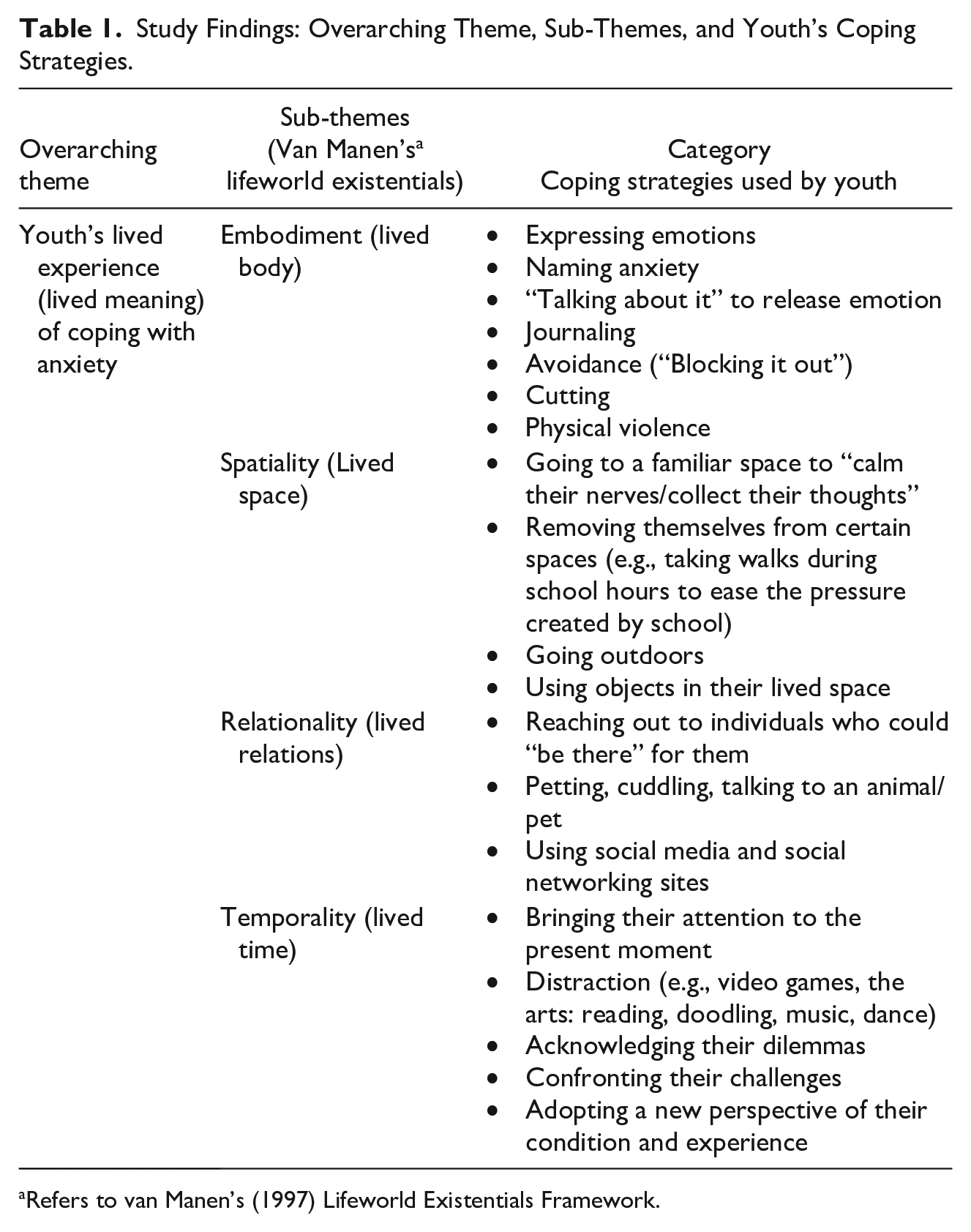
Refers to van Manen’s (1997) Lifeworld Existentials Framework.
Youth’s Lived Experience (Lived Meaning) of Coping With Anxiety
This overarching theme refers to how youth experienced coping (e.g., challenging) and to the intentions, purposes, and meanings of the coping strategies they used (e.g., coping gives them a break from anxious thoughts, gives them a sense of ease, creates time for their anxiety to pass, and helps them make sense of their condition). Youth experienced coping with anxiety as difficult. Their everyday life was characterized by anxious feelings and thoughts that were difficult to control. Although youth found it challenging to deal with their anxiety on a daily basis, they reluctantly accepted their condition. One youth shared: My life isn’t excellent. I don’t have a bad life, only a challenged life. My anxiety has improved over the years, but it still impacts my life in different ways, every day. (13 years old)
The coping strategies youth reported using to deal with their anxiety gave them a “break” or release from their anxious thoughts and feelings. One youth shared: I feel anxiety is very much rooted in your mind. It’s rooted in how you’re thinking at least for me. So, not focusing on the negative or not focusing on what’s going wrong or anything like that and you focus on something that can be solely entertaining, relaxing, calming. Yeah, and it gets your mind focused onto something else enough for the anxiety to pass. (18 years old)
Viewing their condition and experience differently, or adopting a new perspective, helped youth make sense of their anxiety. In the words of one youth: It depends on your experience you know. If you have OCD you’re going to be way better at design and stuff and how things look. You’re going to be really, I don’t know, really good at knowing where things should go and how to make things look nice. And sometimes you’re not. Sometimes things look nice to your brain and to other people they look messy, but to you they’re like beautiful and sometimes it works, sometimes it doesn’t. (11 years old)
Contemplating both the vastness and subtleties of life around them also allowed youth to experience some degree of ease within and adopt a new perspective. For instance, youth could see the significance or insignificance of their anxiety (and of themselves) as they encountered the larger world. A photovoice submission (see Figure 1. Just Breathe Screenshots) shows two screenshots from the internet of nature scenery and someone looking out into a lake. Reflecting on the screenshots (Figure 1) she submitted, the youth shared: [This photo], it’s just like the idea of how sweet that would be to stop and be at this view and be on the water and have those views. To just breath and be able to appreciate the little things. Your problems will seem so irrelevant and minute in an environment like that. . .like this vast huge space that’s encompassing me. (18 years old)
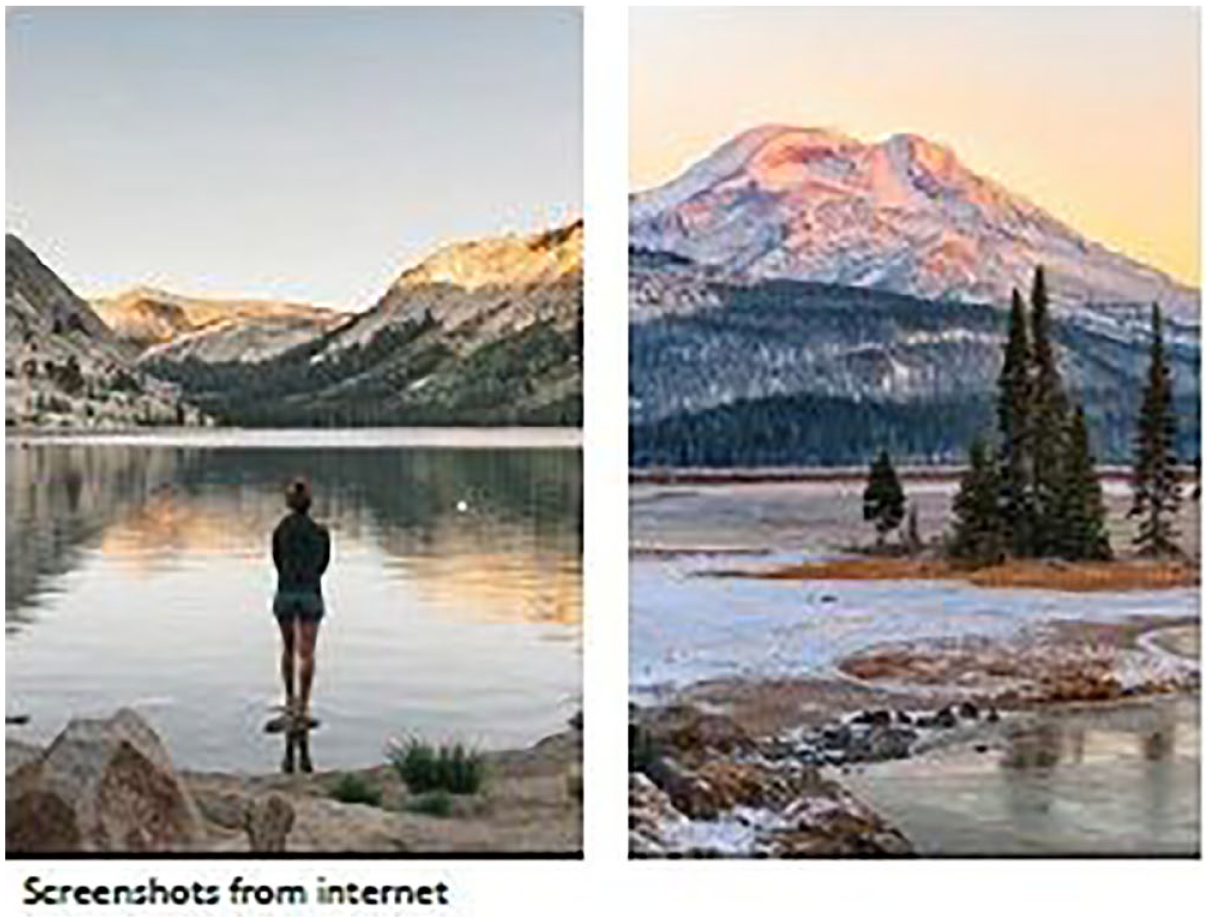
Just Breathe Screenshots.
Embodiment (Lived Body)
Youth reflected on their anxiety and their lived bodily experiences. Life with anxiety was characterized by anxious thoughts and feeling, excessive worry, overthinking, feeling stressed and depleted of energy, and experiencing emotional outbursts (e.g., crying, anger) when things on the inside became too much to bear. One youth shared: Sometimes I just can’t handle what’s going on in the inside and I’m just like, I just can’t deal with it and, most of the time I can. I have those bursts and I think it’s when things just go all at once. (19 years old)
Expressing emotions and naming anxiety emerged as an important coping strategy. Youth indicated this allowed them to move heavy emotions outside of their body and into the world. One youth shared: “When I’m at home, crying, helps. I can just cry for hours. I think it changes my perspective” (16 years old). As participants discussed the expression of feelings, anger was reported frequently and emerged as intimately connected to and inseparable from anxiety. Youth reported that expressing anger eased their anxiety. One youth described: Sometimes I can’t control it [anger] so much that I, I just freak out. . . But I don’t hurt anybody. I just freak out, throw stuff around and I punch walls. . .I yell my loudest until my throat hurst. It calms me down a little bit. (16 years old)
Youth also reported that “talking about it” to release feelings and thoughts was helpful. As one youth described it: Sometimes you just need to talk about it [anxious feelings and thoughts] and it doesn’t mean that I need to go back to therapy. It doesn’t mean that I need to see a doctor. It doesn’t mean that I’m going to do anything extreme. It’s just, I need to talk about it. (18 years old)
Talking about their anxiety helped youth release anxious thoughts and feelings. One youth reflected on how “talking about it” was helpful: I don’t know. It might be the fact that I feel like I’m being listened to. Or it could be just to get kind of the words out and just not have them kind of trapped inside my body anymore. (13 years old)
Journaling also helped youth move anxious feelings and thoughts out of their system. Youth noted that journaling was a good way to vent and that they wrote about anything that was bothering them (e.g., a conversation that made them anxious, their illness: why they were anxious, why the anxiety kept coming back). One youth shared: “It’s just a good way to vent. It’s okay if there’s no action after. Sometimes it feels better when there’s no action after” (18 years old). One photovoice submission shows a journal (Figure 2). The youth noted that if she experienced anxiety on a given day, she would write about what happened and would note the positives and the negatives of what had happened.
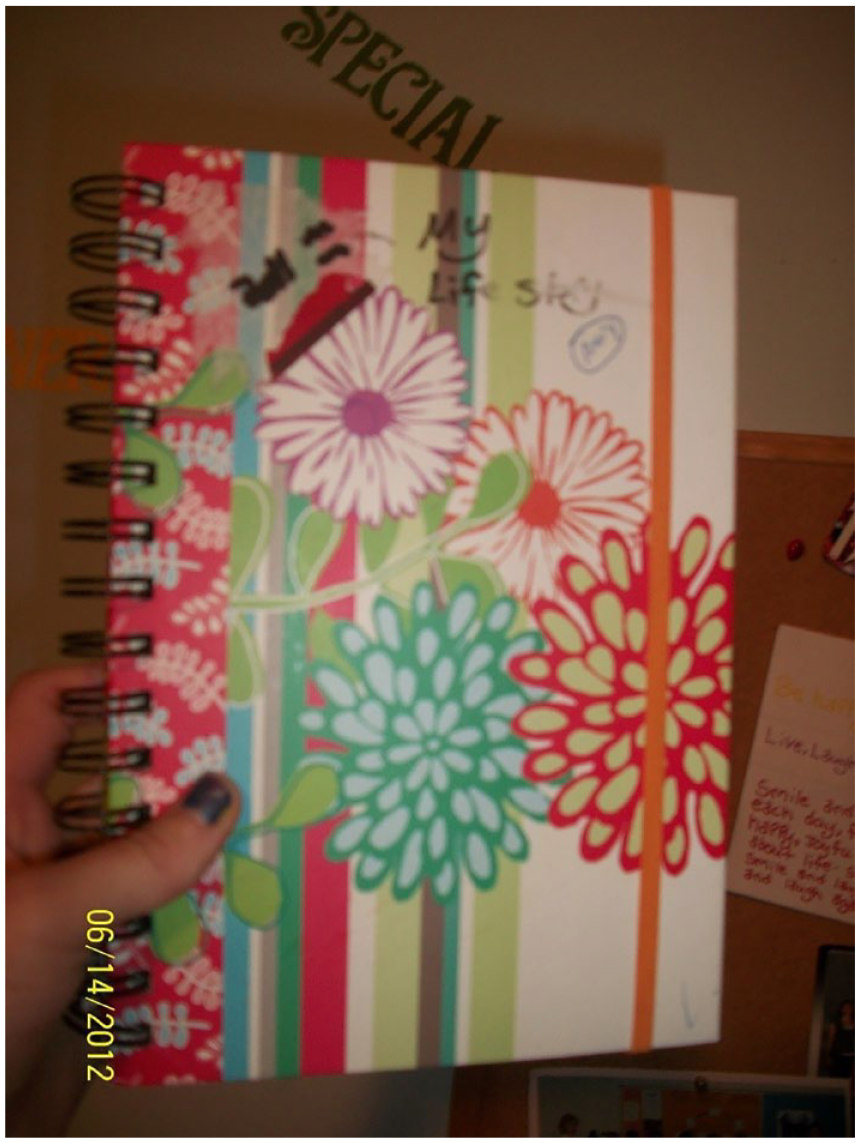
Journaling.
Youth also spoke about strategies they currently used or had used in the past to get relief from painful feelings. These included avoiding those feelings by “blocking it out,” cutting behavior, and physical violence:
And what was it about cutting that provided you relief?
I just felt like the scars they kind of expressed how I was feeling.
Okay. And what made you stop?
I don’t know. Kind of just did. (17 years old)
Another youth shared: It helps me if somebody’s being mean to me because I don’t even have to move. It’s just my brain takes care of it and then somehow, they’re lying on the ground with a bleeding nose. It just happens which scares me. (11 years old)
Youth were aware that while helping them in the moment, these were not constructive coping strategies that could become addictive and only made things worse.
As noted by these two youth: Some people scratch themselves or they may cut themselves with knives. They nearly just injure themselves and it’s like you’re trying to control anger. You just throw everything around. You try to punish yourself so that you’d stop doing that but then when you’re done you realize that it’s just creating everything worse. . .. But you don’t realize that when you’re in the phase. (10 years old) Yeah, I think self-harm feels like it, like its short-term positive but really, it’s not at all, but another thing could be just kind of hiding the feelings away, like it would be positive for just this little while but afterwards you’re going to be like a raging monster! (19 years old)
Spatiality (Lived Space)
Youth in this study reported that places with lots of people and instances where they found themselves alone were anxiety-provoking. One youth shared: When I’m home alone I’m so paranoid that someone’s going to break in. Like every time my dog barks I freak out and I grab the, what’s it called? I close all the blinds, the drapes, turn the lights off so it looks like no one’s home. (11 years old)
When coping with anxiety, space mattered. Youth reported needing space when experiencing anxious thoughts and feelings.
What do you need in those moments [when you feel anxious]?
Space. . .. Just basically trying to calm my nerves down cause I get shaky. So I just want to calm my nerves down. My girlfriend had to tell me to slow down a couple of times, like to eliminate that thought process before I go out and socialize and try to act like a normal human being for like forty-five seconds (chuckle). . . It’s just trying to calm my brain down a little bit. (18 years old)
Youth engaged with their lived space in several ways to reduce their anxiety and increase the feelings of comfort. Confining themselves to a familiar space was described as useful for “calming their nerves” or “collecting their thoughts.” Youth also reported removing themselves from certain spaces to reduce anxiety, such as taking bathroom breaks to excuse themselves from stressful situations. Going outdoors to be out in nature was also helpful. Youth noted that the elements of nature nourished their physical and spiritual selves. The intimacy of youth’s relationship to nature is poignantly described in one youth’s account of industrialization and its effects on nature (Figure 3):
I just kind of thought it [photograph] was real representative of nature sort of being trapped, and that it was like a tree, and it was surrounded by all that industrialization.
Interesting. And then why do you think it’s important to point that out or to discuss the idea of nature being trapped?
Because I think nature is a really important aspect in our life, that’s where we come from and I think nature has often helped me with depression and anxiety, so yeah. (16 years old)
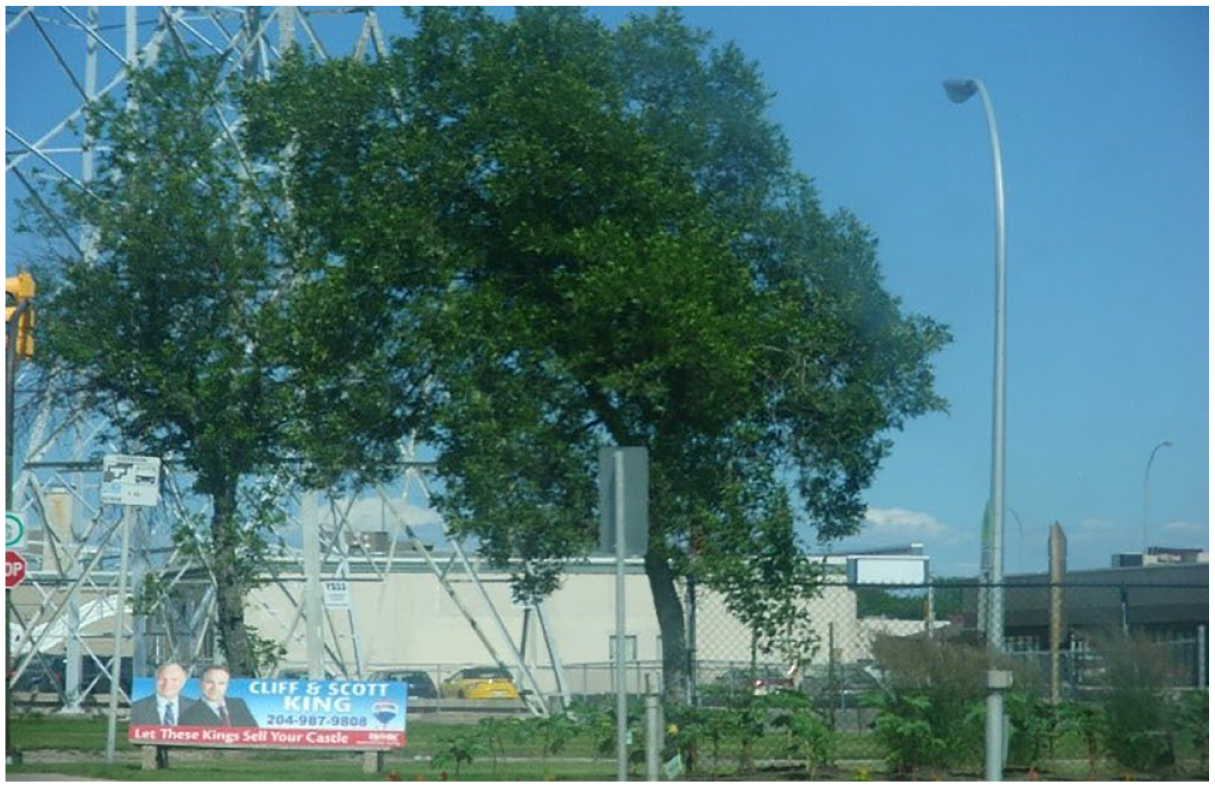
The Industrialization of Nature.
Some youth also reported using objects in their lived space to reduce anxiety. One youth shared: The only times I walk through crowds on my own is if it’s in school hallways and everyone’s moving. So, we’re all going in the same direction but what I have to do is while I’m walking through a crowd, I have to find someone who is walking in the same direction as me and walk directly behind them. . .. I can’t just be a part in the crowd. I have to follow someone specifically and if they move, I have to find someone else to follow and I keep my head down. (14 years old)
Relationality (Lived Relations)
Youth reported that certain people (e.g., best friend, family members) offered a presence that proved invaluable as they contended with feelings of anxiety. Those who could “be there” for youth allowed them to experience a greater sense of ease within. “Being there” included listening to their worries with compassion, without judgment, and without trying to problem-solve or offer solutions. Youth reached out to these individuals and noted how important these individuals were to them: They matter so much. They’re probably at the center of your recovery or whatever you’re going through. I feel like they’re the symbol of hope. And so, the way I do cope is for my family, is for my friends, the people who look you in the eye and say I’m here to help you, I’m here for you. . .. Yeah, they’re here. They do care about me and they’re my hope. (22 years old)
Reaching out to others who could “be there” for them also offered youth important opportunities for learning to cope with their anxiety. Youth articulated how encounters with these individuals positively influenced their lives, whether it was through normalizing their experience, providing gentle reminders to breathe, or putting up a mirror so they could reflect on underlying influences: I think it’s [relationship with mother] probably better on a day that I’m anxious because I’ll just feel like I need to talk to her about everything that’s going on. Cause sometimes I’ll just have a panic attack about something, and I just don’t even know what it is and so she’ll be like: “Oh what did you do at school today? Is there anything that you think might be the root of the problem?” And so, I’ll just kind of tell her a whole bunch of stuff. (13 years old)
Youth also described how petting, speaking to, or cuddling an animal (e.g., pets) was very soothing and helpful. Youth noted that pets were great listeners, offered love, and never criticized. One youth shared: “I would talk [with pet] about family issues. I would talk about anything and everything that was bothering me.” (16 years old). A photovoice submission shows a cat sitting on a bed (Figure 4). The youth explained that when she felt anxious, the only thing that would help her calm down was snuggling her cat.
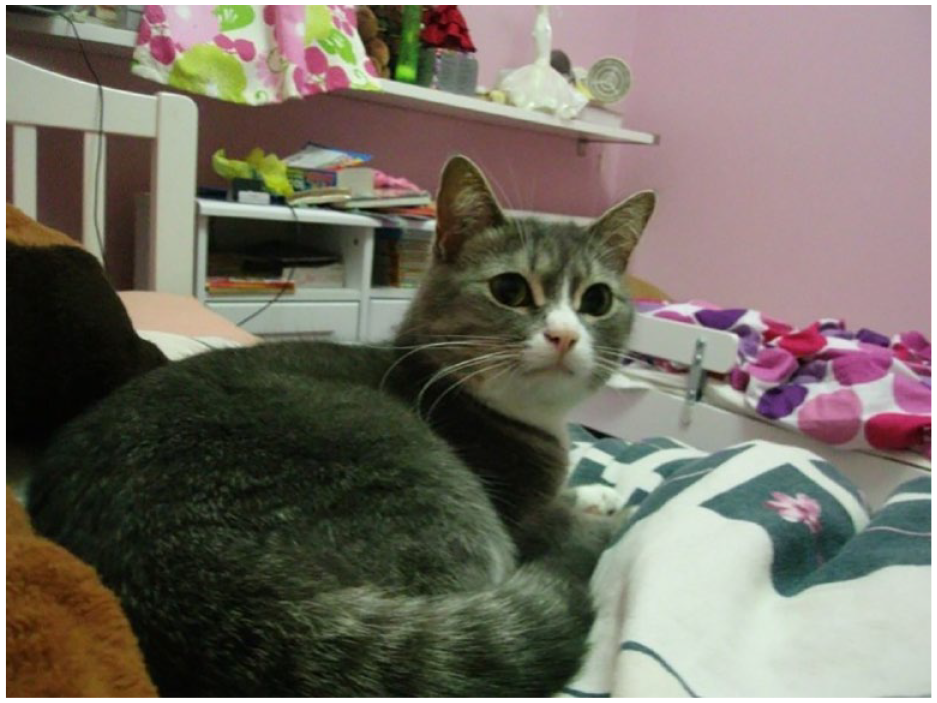
Pet.
Youth also used social media (e.g., Facebook, Instagram) and social networking sites (e.g., Tumblr, blogs) to interact with others and cope with their anxiety. These platforms provided an anonymous forum for discussing emotional difficulties and concerns, accessing others experiencing similar challenges and providing advice to those struggling in similar ways. One youth shared his thoughts about Tumblr: And then there’s like websites, Tumblr in my opinion is great cause you can have an ask box where people ask you questions. And so, they’ll say, if you ever need advice feel free to talk to me, you can go on anonymous or not, you can come and talk to me, and I will not judge you for anything. So that’s one of the reasons I really like Tumblr. There’s a bunch of blogs that help people that have problems with cutting and that want to stop. And so, if you feel like you’re going to cut, you can go and message them and be like: “Hey I feel like I’m going to cut, please help.” And then they’ll respond to you, and they’ll be like “Okay, well, you can do this and there’s this, and they give you like a bunch of options.” So, Tumblr’s really helpful. (14 years old)
Although internet communities offered opportunities for interaction and getting help, youth noted challenges associated with online communities, such as bullying and becoming dissatisfied with their own life when compared to others in social media. One youth shared: I play a lot of video games [virtual community]. When I do really badly, I don’t know the best way to the community of people I play with that it’s toxic [the environment]. If you do badly, they’re really rude about it. (17 years old)
Temporality (Lived Time)
Time was central to youth’s experience of anxiety as many worried about the past and the future, with forward and backward shifts in temporality serving to exacerbate their anxious state. Life with anxiety was characterized by excessive worry and coping entailed learning to manage this worry. Some youth reported bringing their attention to the present moment which was effective in easing their anxious state: I feel like also having anxiety you worry about the next day a lot. Like when my boyfriend left my house, I’d say, well when am I going to see you next? which is absolutely just freaky. I mean, that’s judgment but you worry about the next day and now I don’t. I don’t, I just kind of let it be. What you have to do is kind of just realize, okay this is this day. Don’t worry about the next day, like don’t. (19 years old)
Youth further described the experience of worry as a tendency to become fixed in a mind-set characterized by circular and repetitive thinking. They reported distracting themselves from worry by drawing on mediums, such as video games, reading, and the arts (e.g., music, dance, drawing) which created some time for their “anxiety to pass” so they could regain focus. A photovoice submission shows a piano (Figure 5). The youth explained that playing the piano helps her relax and that she would play the piano for 5 min to calm down.
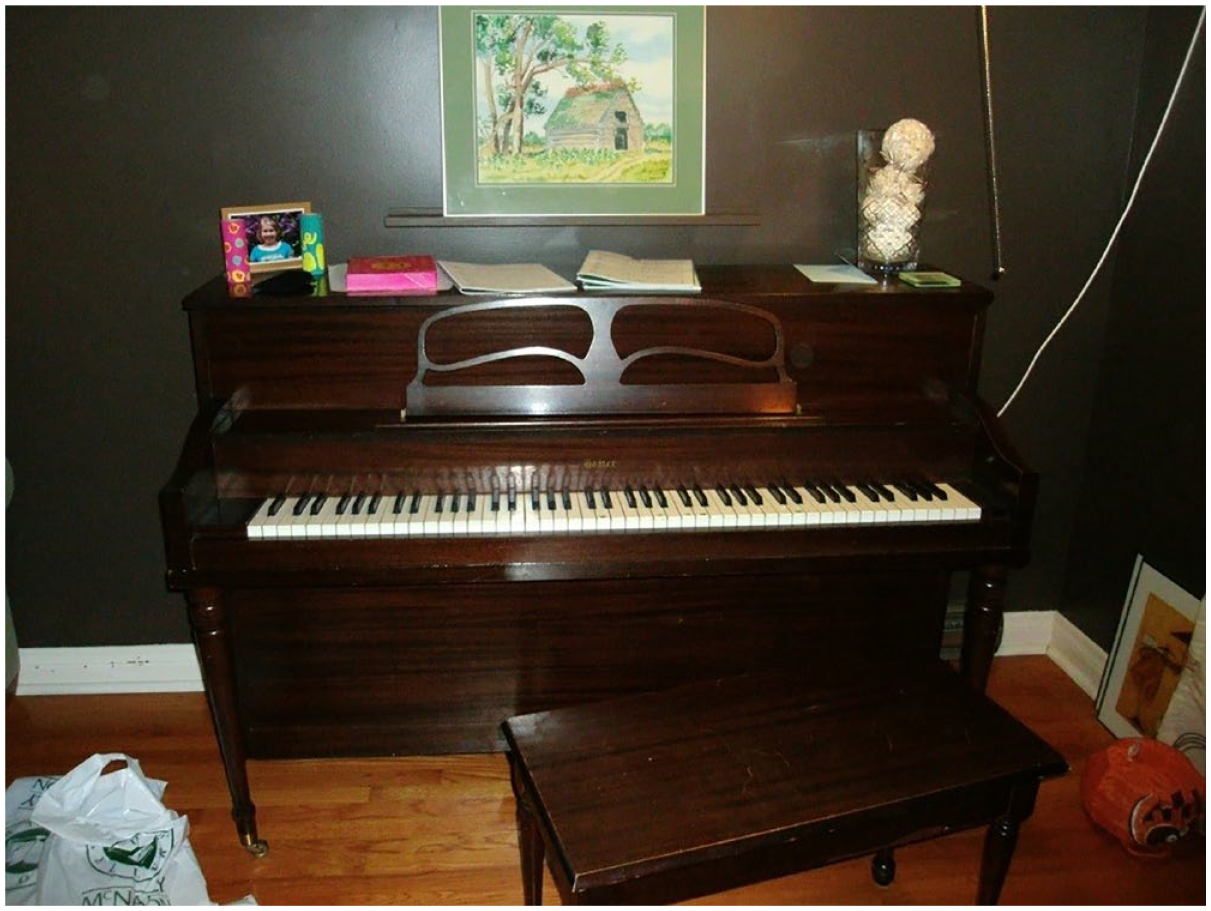
Playing the Piano to help “Anxiety Pass”.
However, youth were aware that distraction was a temporary solution for managing their anxiety: Sometimes music, you know, you can listen to a certain song, and it makes you forget and feel good at the moment. But a song’s like three minutes, four minutes long and then that’s it. All of a sudden, it’s like, it’s kind of like seeping back again. It’s like a mist coming back. (22 years old)
Given that distraction provided short-term relief from their anxiety, youth noted how important it was to be weary of the easy way out (e.g., distraction). They reported using other strategies, such as acknowledging their dilemmas, confronting their challenges, and adopting a new perspective of their condition and experience. One youth noted the importance of facing fears: Just face your fears in order to get rid of them. . . “cause like my friend she hates avocados,” but we were making something with avocados “cause we did French cooking class.” And then we were making an avocado wrap thing. And she hates avocados and she’s like: “Oh get it away from me,” but actually when she ended up trying her wrap with avocado, she’s like: “Oh my goodness, this is great.” And then so you know, she kind of like faced it sort of like hating avocados to actually liking them more. So, you got to face it. (11 years old)
Some youth noted the utility of adopting a new perspective (e.g., “anxiety as a challenge to overcome”) in coping with anxiety. Adopting a new perspective helped youth make sense of their anxiety. One youth shared: You can go through hard times, and you’ll take things away from it and the things you did take away from it they never go away. They’ll they help you, kind of make you into who you’re going to be, things like that. (17 years old)
Discussion
Using phenomenological and participatory visual methods that allowed for the meaningful engagement of youth participants and the youth advisory council, this study explored the lived experience of coping among Canadian youth diagnosed with an anxiety disorder. To our knowledge, this is the first Canadian study to document youth’s lived experiences of coping and strategies used to manage their anxiety using photovoice and van Manen’s (1990, 1997) Lifeworld Existentials framework. Youth reported that coping with anxiety was difficult as anxiety was challenging to control, and they often needed something they could do to give them a break from their anxious thoughts and feelings. However, many youth reluctantly accepted their anxiety and adopted a new perspective of their experience. The coping strategies reported by youth fall along the four Existentials domains: (a) Embodiment (lived body): expressing feelings and emotions, naming anxiety, “talking about it” to release emotion, journaling, avoidance, cutting, physical violence; (b) Spatiality (lived space): going to a familiar space to “calm their nerves,” removing themselves from certain spaces, going outdoors, using objects in their lived space; (c) Relationality (lived relations): reaching out to individuals who could “be there” for them, petting their pet, using social media and social networking sites, and (d) temporality (lived time): bringing their attention to the present moment, distraction, acknowledging their dilemmas, confronting their challenge, and adopting a new perspective.
Our findings regarding youth’s experiences of coping with anxiety resonate with international work on the lived experience of socially anxious youth (Boyle, 2018). The strategies youth in this study reported using have been previously documented in the literature (Bentley et al., 2015; Cauberghe et al., 2021; Garakani et al., 2021; Lehrbach et al., 2023; Mathews et al., 2016; Plener et al., 2018; Schäfer et al., 2017; Simpson et al., 2018; Szabo & Lovibond, 2004; Travagin et al., 2015; Walsh et al., 2018). Our findings extend previous research by exploring the lived experience of youth with a wide range of anxiety disorders (as opposed to one specific anxiety disorder—see Boyle, 2018) and by documenting Canadian youth’s accounts of coping with anxiety as experienced in everyday bodily experiences, spaces youth find themselves in, human relations they make and maintain, and youth’s subjective experience of time.
To deal with the bodily experiences arising from their anxiety (e.g., anxious thoughts and feeling, excessive worry) and to create time for their anxiety to “pass,” many youth turned to the arts (e.g., writing or journaling, reading, drawing, music, dance). This highlights the importance of self-expression, meaningful reflection, and creative expression in the healing process. This finding contributes to the body of research that has documented that engaging in the arts can be beneficial for mental health and well-being (Huang et al., 2018; Jensen & Bonde, 2018; Smriti et al., 2022). It would thus be helpful to encourage youth living with anxiety to participate in arts-based programs.
Youth in this study used spaces (e.g., going outdoors, going for walks, going to a familiar space, removing themselves from anxiety-provoking situations) to develop grounding and obtain relief from anxiety symptoms. This finding contributes to the body of research that has documented the positive effects of natural environments, quiet places, and outdoor activities on mental health (Cox et al., 2017; Mygind et al., 2019; Richardson et al., 2021; Vanaken & Danckaerts, 2018). Support from relations with others who could “be there” (person or animal) was identified as helpful by youth in this study. The importance vulnerable youth place on others who can “be there” for them, others who can listen without judgment or trying to problem-solve, has been previously documented (Ångström-Brännström et al., 2008; Woodgate, 2006). Our finding regarding the importance of support in coping with anxiety corroborates past research on the positive impact of social support (Chu et al., 2010; Ringdal et al., 2021; Zhou & Cheng, 2022) and animal-assisted interventions (Hoagwood et al., 2017; Jones et al., 2019; Wilkie et al., 2016) on mental health and well-being. Online social support (e.g., social media, social networking sites) was noted as helpful by some of the youth in this study. More research is needed to determine the impact of support sources (e.g., online friend or stranger) and functions (e.g., informational, emotional) on perceived utility of online support in coping with anxiety.
An unexpected finding in this study was that youth indicated that expressing anger eased their anxiety. Although the co-occurrence of anger and anxiety has been previously documented (Deschênes et al., 2012; Johnco et al., 2015; Walsh et al., 2018) as has the association between anger and more severe symptomatology and psychopathology (Johnco et al., 2015; Storch et al., 2012; Townsend et al., 2022), youth’s accounts of how anger eases their anxiety has not received much research attention and deserves further qualitative inquiry. Many youth also noted the utility of adopting a new perspective (e.g., anxiety as a challenge to overcome) in coping with anxiety. Viewing their condition and experience differently helped these youth make sense of their anxiety and better manage their condition. This finding adds to the literature that has documented meaning making as an effective coping skill and constructive response to trauma (Bushkin et al., 2021; Fauk et al., 2021; Guerrero-Torrelles et al., 2017; Park & Baumeister, 2017). This finding suggests that encouraging youth living with anxiety to search for meaning in their experience may prove beneficial and provide a foundation for resilience.
Implications
Our findings have implications for anxiety intervention and prevention programs. It is important to learn from youth about the coping strategies they use and find helpful to manage their anxiety before integrating these strategies into existing programs. The strategies used by youth in this study suggest that youth may benefit from programs that employ more than one strategy. These may include mindfulness (bringing youth’s attention to the present moment), frequent soothing places (e.g., being outdoors), the arts (e.g., music, art, dance), making meaning of their condition and experience, and reaching out for support to those who can “be there” for them (in-person or online). In terms of theoretical implications, Van Manen’s (1997) Lifeworld Existentials Framework proved useful in understanding youth’s lived experiences of coping with anxiety. This framework allowed us to explore the multidimensionality of youth’s lived experience of coping (lived body, lived time, lived space, and lived human relations) and the meaning they assigned to the experience (lived meaning). Thus, this framework can be used when the goal is to attain a rich and nuanced understanding of lived experience.
Our findings also have implications for those who work with youth. In this study, youth reported that expressing anger eased their anxiety. It is important for clinicians to listen closely for anger in youth’s stories, identify the causes of anger, encourage youth to honor their feelings, and assist youth to safely and constructively experience, express, and manage their anger. Time was central to youth’s experiences of anxiety as many worried about the past and the future. Paying attention to temporality in youth’s stories and shifts in time (past, present, future) and their association to expressed anxiety levels can help individuals who work with youth better understand youth’s experiences and inform strategies and skills that might be most helpful for youth. Youth in this study were aware that some strategies that they used (e.g., cutting), although helpful in the moment, were harmful in the long run. This reinforces the need to work with youth to use strategies that have no negative consequences. Youth also reported that reaching out to individuals who could “be there” for them was helpful. This highlights the importance of offering one’s presence to youth living with anxiety through listening and an attitude of openness and nonjudgement.
Strengths, Limitations, and Future Research
A youth-as-expert approach was a useful medium for accessing the coping strategies used by youth. To ensure trustworthiness, we used methodological triangulation (used interviews, field notes, photographs), allowed for member checking (youth provided feedback on data interpretation), and ensured two researchers engaged with the data and other team members were available to verify interpretation and resolve discrepancies. Our sample was largely White, middle-class, and included a higher proportion of female participants. Documenting the lived experiences of youth who are male and from diverse sociodemographic backgrounds is warranted. Youth in this study had a diagnosis of one or more anxiety disorders. Documenting the coping experiences of youth from community samples (have not received a diagnosis) and examining the relationship between coping strategies used and changes in anxiety symptoms would be informative. Finally, given comorbidity is the characteristic of youth diagnosed with an anxiety disorder, future research should consider the co-occurrence of mental disorders to capture the complex and dynamic nature of how youth cope with mental illness.
Conclusion
Research on coping and mental health disorders in children and youth has relied almost exclusively on quantitative approaches. It is important to build on this body of knowledge using other methods, such as qualitative and arts-based methods, that empower youth and give them space for reflecting and sharing their lived experiences. Using phenomenological and participatory arts-based methods (photovoice), we have documented youth’s lived experiences of coping with anxiety and contributed to the emerging lived experience research in this area.
Footnotes
Acknowledgements
The authors thank the youth who participated in the study and who shared their time and their experiences.
Declaration of Conflicting Interests
The author(s) declared no potential conflicts of interest with respect to the research, authorship, and/or publication of this article.
Funding
The author(s) disclosed receipt of the following financial support for the research, authorship, and/or publication of this article: The research was supported by a Canadian Institutes of Health Research (CIHR) Operating Grant (grant no. CIHR MOP-119277). R.L.W. is supported by a Tier 1 Canadian Research Chair (CRC) in Child and Family Engagement in Health Research and Health care (CIHR—Canadian Research Chair—950-231845).
Author Biographies
 ). Using innovative and qualitative arts-based participatory research methods, she researches the perspectives and lived experiences of young people across a wide range of life experiences with the aim to improve their health and social outcomes. She has embraced a human rights-based approach that views the highest attainable standard of health as a fundamental human right and promotes young people’s right to participate and freely express their opinions and experiences.