




Abstract
This study explores procedural preferences in the historical development of labour dispute resolution systems at the national level and employees’ pre-experience preference to resolve disputes at the individual level. Drawing on two datasets – one from national public statistics and one from China’s employer–employee matched data – we find that mediation has fluctuated in its use and efficacy, and it has re-emerged as an important method to stabilize labour relations. Employees choose internal mediation only if they feel that the enterprise’s mediation committee is selected fairly. Organizational structure factors, such as the enterprise’s size and the effectiveness of the Staff and Workers Representative Congress, moderate the relationship between employees’ perceptions of justice and procedural preferences. This study contributes to the dispute resolution literature by highlighting the interactions between individual perceptions of justice and organizational factors of procedural preference. Additionally, practical implications are offered to aid in the design of dispute resolution systems and improve organizational justice.
Keywords
Introduction
In recent years, labour relations in China have experienced significant changes because of the country’s transition to a market economy as well as globalization (Chan and Nadvi, 2014; Chung, 2016; Friedman and Lee, 2010). The Labour Contract Law, which took effect in 2008, provides the legal regime for China’s adjustment to individual labour relations (Chang and Brown, 2013). While individual workplace rights in Western countries have attracted more attention recently, limited research has focused on individual labour dispute resolution in China (e.g. MacDermott and Riley, 2011). However, determining how to prevent and resolve disputes within enterprises is critical for enterprises and the government to establish harmonious labour relations in China. Thus, this article addresses the procedural preference for mediation, arbitration and litigation in the resolution of individual labour rights disputes arising under contract or statute in China.
Alternative dispute resolution (ADR) procedures (e.g. ombudspersons, mediation and arbitration) provide myriad alternative mechanisms for resolving disputes in the workplace and other settings (Shestowsky, 2014; Shestowsky and Brett, 2008). It is essential to select the appropriate procedure because different ADR procedures might have different outcomes for different parties in a dispute. Much of the past research on ADR has focused on the efficiency of resolutions and the perceived satisfaction of disputants (Bollen and Euwema, 2013; Wall and Dunne, 2012). However, it is more important to note whether and under what conditions the disputants choose ADR before evaluating the outcome. ADR systems are typically used far less often than grievance systems in unionized organization in the US (Feuille et al., 1992). In contrast, mediation is the traditionally preferred means to resolve labour disputes in China. However, according to recent statistics, the number of cases in the intra-enterprise pre-arbitration process, specifically those that remain in mediation, is lower than that in the arbitration process (Brown, 2014). This relatively low rate raises questions about what factors influence the individual use of mediation within work organizations.
In the prior literature, researchers have examined the individual procedural preference between adjudicative procedures (e.g. arbitration and litigation) and non-adjudicative procedures (e.g. mediation and negotiation) (see e.g. Shestowsky, 2014) and produced conflicting results. Some studies suggested that people tended to prefer more adjudicative procedures over less adjudicative ones (LaTour et al., 1976), while others contended that people tended to prefer less adjudicative procedures (Brett, 1996). The inconsistency in these research findings might derive from how and when the studies were conducted (Shestowsky and Brett, 2008). Most pre-experience studies (mainly laboratory studies) have found a preference for adjudicative procedures, whereas most post-experience research (primarily field studies) has suggested a preference for non-adjudicative procedures (e.g. Shestowsky and Brett, 2008). Laboratory studies used laypeople (usually graduate students) to examine preference ratings of various procedures for addressing a hypothetical dispute before resolving it. It may be difficult to generalize the findings to a real context. In addition, most research was conducted in Western countries, and cultural norms were a factor that influenced the perceived fairness of selection procedures and the preferred ways of resolving disputes (Bollen and Euwema, 2013). For instance, Chinese and Dutch employees preferred different types of help from third parties: Chinese employees preferred relational help, whereas Dutch employees preferred emotional help (Giebels and Yang, 2009). This controversy further highlights the need for more contemporary research on dispute resolution preferences through field studies rather than laboratory studies across different countries.
In terms of the determinants of procedural preferences, most studies focused on procedural justice-related perceptions regarding the ADR system itself (e.g. Goldman et al., 2016; Shestowsky, 2014). If employees perceived the ADR system as fair, they were likely to be more willing to use it (Folger and Cropanzano, 1998). Participants in one study were found to prefer a high level of decision control and a high level of process control over information presentation without the help of a representative (Shestowsky, 2004). According to fairness heuristic theory, we posit that whether the third party is chosen by a disputant may influence the perception of process control, which in turn affects the procedural choice. Furthermore, Nowakowski and Conlon (2005) noted that there are potential moderators of justice–outcome relations, such as contextual factors and individual factors. Research has demonstrated that organizational contextual factors, such as an organization’s size, culture, strategy and human resource management practices, interact with a variety of factors to influence individual decisions (Ambrose and Schminke, 2003; Mowbray, 2016). For instance, enterprise size has a contextual effect on individual options of voice and grievance handling (Cooke et al., 2016). Thus, structure provides a natural choice to consider in exploring context effects. As Behrens et al. (2017) and Colvin (2016) have pointed out, it was important to identify and account for the power of the parties when analysing dispute resolution systems. We argue that the size of an enterprise and work voice mechanisms (influencing bargaining power) moderate the relationship between perceptions of justice and procedural preferences.
This study contributes to the existing literature in several ways. First, we analyse disputants’ procedural preferences in the historical development of labour dispute resolution systems in China and their underlying mechanisms, and we also examine their current preferences in pre-experience field studies. This study responds to the call to conduct research on procedural preferences before the resolution of disputes in field studies (Shestowsky, 2014), and it promotes the cross-cultural study of the preference for ADR (Bollen and Euwema, 2013; Wall and Dunne, 2012). Second, it confirms that disputants value participation in the process (Colvin, 2013). They prefer to self-represent rather than to accept the help of a representative (Shestowsky, 2004). When they select a mediation committee themselves, employees are more likely to choose internal mediation than external adjudicative procedures. Finally, there is limited research considering the effects of organizational structural factors on perceptions of fairness in dispute resolution. This study pays attention to enterprise size and workers’ representative congress, which influence the effects of procedural justice on employees’ decisions. In practice, our research can help improve enterprise mediation committees and the relevant organizational institutions to enhance employees’ trust.
Procedural preferences in the historical development of Chinese labour dispute resolution systems
China’s labour dispute resolution system was described as ‘one mediation, one arbitration and two court rulings’ (Hwang and Wang, 2015). Mediation is the initial voluntary procedure that is usually conducted by the enterprise mediation committee. If attempts at mediation fail, one of the two parties can proceed to an arbitration procedure (Walker and Hamilton, 2012). However, labour arbitration is a compulsory procedure that must be exhausted before parties can file a claim in court. If either party challenges the arbitration award, they can appeal to the local court. After the first trial, an unsatisfied party can appeal to courts at higher levels (Article 50, Labor Dispute Mediation and Arbitration Law, LDMAL). According to the nature of the procedure, we define the procedure of arbitration and litigation as external adjudication and enterprise mediation as internal mediation.
Most official statistics on labour disputes in China come from the statistical yearbooks by the Ministry of Statistics. We also use statistics from the All-China Federation of Trade Unions (ACFTU), the Labour Bureau and the court from 1995 to 2014 to analyse procedural preferences in the development of the labour dispute system.
As Figure 1 indicates, enterprise mediation committees (EMCs) accepted a higher number of labour disputes than did labour arbitration committees (LACs) and the courts before 1998. The role of mediation then started diminishing in the late 1990s. Recently, however, mediation has again become a key means of stabilizing labour relations. Mediation does not occur exclusively in EMCs; LACs and the courts are also required to mediate before formal hearings (Article 42, LDMAL). Thus, apart from arbitral award and court ruling, mediated settlement is also one of the important resolutions in the arbitration and litigation process. The percentage of mediated settlements in EMCs, LACs and the courts has been increasing since 2006 (see Figure 2). However, the percentage of mediated settlements in LACs and the courts has exceeded that of EMCs since 2006. In other words, disputants are more likely to reach mediation agreements through external adjudicative procedures than through internal mediation.
The number of labour disputes accepted by EMCs, LACs and courts in China. The percentage of mediated settlements in EMCs, LACs and the courts, 1992–2014.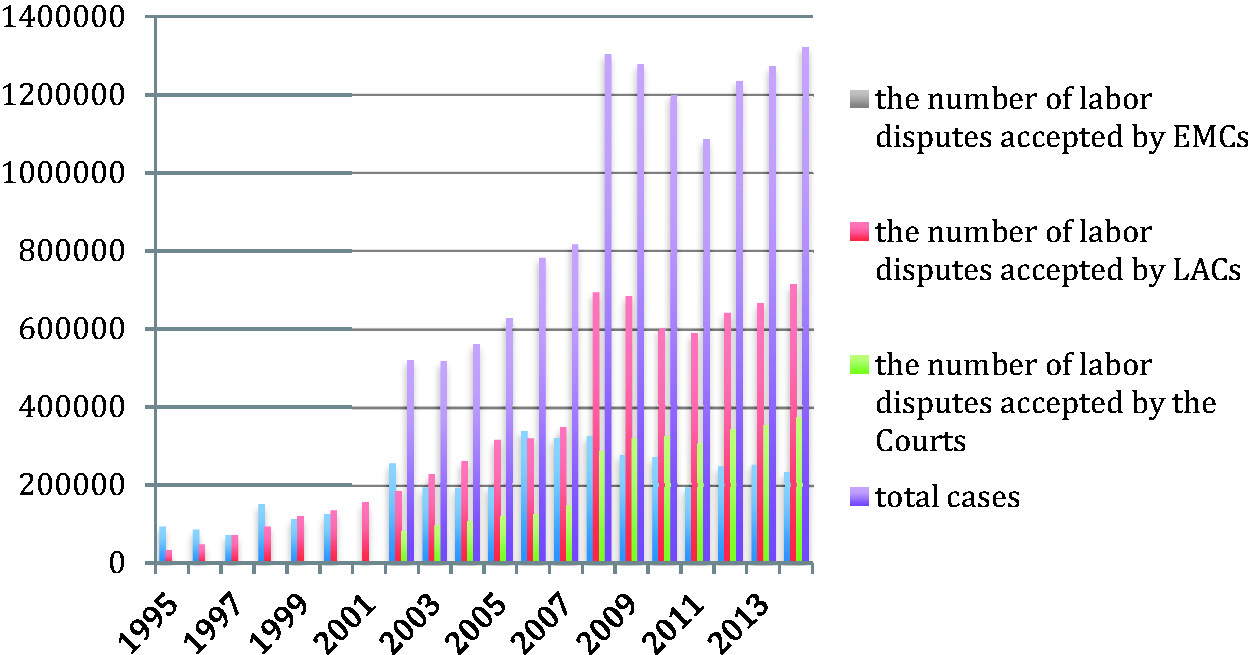
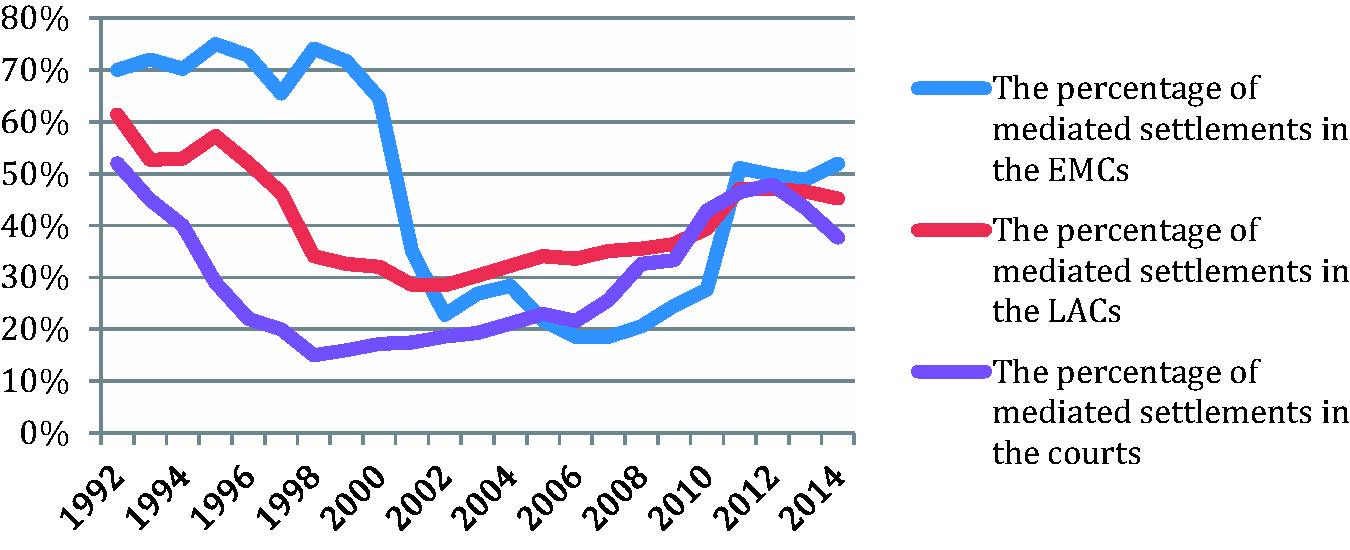
The changing pattern of procedural preference can be attributed to several factors, such as institutional context and the preference of workers. First, institutional contexts, which reflect government policies, affect the prevalence of dispute resolution procedures. In 1987, the Regulation for Labour Disputes Resolution in state-owned enterprises stipulated that labour disputes in state-owned enterprises (SOEs) should first be mediated by EMCs before arbitration and litigation. During this period, mediation was a more flexible method for the government to persuade workers into yielding to the SOE reform (Zhuang and Chen, 2015). In 1993, the State Council enforced the Labour Disputes Resolution Regulation, which expanded the scope of labour dispute resolution to all kinds of enterprises and demonstrated compulsory arbitration procedures (Shen, 2007). Due to the lack of EMCs in private and foreign enterprises, mediation lost its way, and labour disputes began to be channelled through arbitration and litigation. However, the Labour Contract Law and Labour Dispute Mediation and Arbitration Law in 2008 led to a surge in the number of labour arbitration cases, resulting in the institutional dilemma of overcrowded dockets (Brown, 2014; Gallagher et al., 2015). Therefore, the government began to facilitate mediation at all stages through more institutions. For instance, the Provisions on Enterprise Labour Dispute Consultation and Mediation were issued to reassert the efficacy of internal, intra-enterprise labour dispute settlement procedures in 2011. In addition, the court has directly responded to central-level mediation incentives by enhancing its overall mediation rate (Li, 2016).
Second, workers’ perceptions of justice affects their procedural preference. Whether the EMC can resolve labour disputes neutrally and independently affects workers’ choice of this institution. Before market-driven reform, all labour disputes in SOEs were regarded as ‘internal contradictions among people’. Workers thought that inside mediation committees could protect their rights. However, with the reform of SOEs, the neutrality and autonomy of EMCs were challenged given the managerial dominance of enterprise unions and workplace governance (e.g. Liu, 2010; Liu and Li, 2014). Although the government encouraged the establishment of EMCs, those institutions did not fully play their role. For instance, as shown in Figure 3, the number of EMCs dramatically increased from 257,544 in 2006 to 1,026,642 in 2014, but the average number of cases handled by each mediator per year was less than one.
The received mediation cases by enterprise mediation committees and the success rate from 1995 to 2014.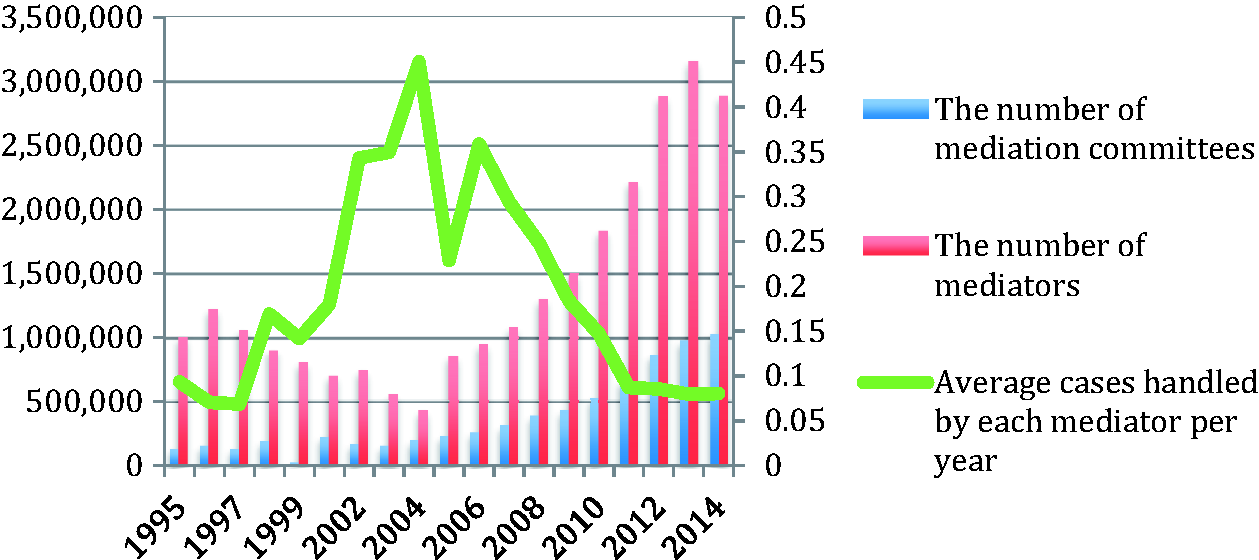
Although official statistics on collective labour protests are unavailable, there are indications suggesting an increasing trend of collective workers' struggles in the new millennium (Elfstrom and Kuruvilla, 2014; Lee, 2016). In addition, collective disputes changed from disputes of rights to disputes of interest for higher pay and for better and fairer treatment (Chang and Brown, 2013). In response to the rise in collective disputes and labour protests in the early 2000s, the government enacted several new laws, including the Employment Promotion Law, the Labour Dispute Mediation and Arbitration Law and the Labour Contract Law (Chan and Nadvi, 2014; Cooke, 2011). However, these laws were based on ‘individual rights' and widely neglected collective labour disputes, especially interest-based ones (Friedman, 2014a). Thus, the labour unrest continuously increased after 2008, especially with the wave of vigorous labour protests and strikes in 2010 (Elfstrom and Kuruvilla, 2014; Pringle, 2017). Since then, the government has tried to develop a collective rights-based regulatory regime (Pringle and Meng, 2018). For example, government-led collective consultation was used to prevent the recent rise in labour unrest (Kuruvilla and Zhang, 2016). Recently, some local ACFTU branches have attempted direct elections of union chairpersons and worker representatives by workers without interference from management (Hui and Chan, 2015).
The efficacy of mediation for solving individual disputes in China has fluctuated. The Chinese government has urged the renewed use of mediation, especially for EMCs, in recent years. However, the question remains regarding how to encourage disputants to choose internal mediation. Thus, the remainder of this article will explore under what conditions employees prefer internal mediation to resolve individual disputes.
Theory and hypotheses
We proposed our hypotheses based on fairness heuristic theory and uncertainty management theory. These two theories are derived from organizational justice theory explaining the specific formation of justice perceptions. The core viewpoint of the fairness heuristic theory is that the effect of procedural justice is stronger when employees are uncertain about the trustworthiness of the authority rendering the decision (Hollander-Blumoff, 2017; Lind and Van den Bos, 2002; Tyler and Lind, 1992). Procedural justice refers to the fairness of the procedures used to make decisions (Thibaut and Walker, 1975). In the process of selecting labour dispute resolution procedures, procedural justice judgements are important for employees (Lind et al., 1993). EMC is the third-party intervention as an authority figure in the process of dispute resolution, and serves to facilitate negotiations between aggrieved workers and management (Liu and Li, 2014). When employees are not sure whether the EMC can protect their rights, they will judge it by the fairness of EMC.
Impressions of the process and procedures used by authorities are typically available to the perceiver, forming the heart of the fairness heuristic (Lind et al., 1993). Individual judgements of fairness on authorities can shape their willingness to accept authority and their compliance with the authority’s decisions (Hulst et al., 2017). Among the many sources of information available to employees, none is more visual than the method of the appointment of representatives in EMCs. Representation means that the procedure must ensure that all affected parties have an opportunity to state their concerns and opinions. According to the LDMAL (Article 10), the labour dispute mediation committees of an enterprise shall comprise employee representatives and enterprise representatives. Employee representatives shall be trade union members or persons recommended by all employees. When employees are uncertain about the neutrality and autonomy of EMCs, they will take the appointment method of employee representatives to EMCs as an important substitute for standards of justice information judgements (e.g. Liu, 2010; Liu and Li, 2014).
When employee representatives are recommended by all employees or appointed by a trade union according to the law, employees prefer to choose impartial EMCs inside the enterprise rather than external adjudication (e.g. arbitration and litigation) to resolve labour disputes. First, employees treat the law-abiding appointment method as a kind of procedural justice because it means that to some extent, employees can control the process of dispute resolution. Shestowsky (2004) confirmed that disputants preferred to present the facts and evidence themselves, without the aid of representatives. The procedural justice of the appointment method gives employees a feeling of ‘telling their story’ (exerting process control and decision control) and the impression that they are being ‘heard’ (Sela, 2018). In organizational justice research, studies consistently report that people perceive procedures that allow them to have a voice as fairer than those that do not give them the opportunity to be heard, even when decisions are unfavourable to them (Harlos, 2001). Furthermore, it costs too much in terms of time and resources to protect employees’ interests through arbitration and litigation (Halegua, 2008); internal mediation is more efficient (Fells, 1999; Xie et al., 2017). Therefore, if employees think EMCs are procedurally fair, they will prefer to resolve disputes inside the enterprise rather than through external adjudication (e.g. arbitration and litigation).
In contrast, some studies found that the appointment of employee representatives by enterprise managers was perceived as an injustice because employees perceived a lack of process control. In addition, adjudicative procedures were perceived as more just than EMCs because of their independence and neutrality (Hollander-Blumoff, 2017). Different from mediation, where mediators sometimes provide ideas, suggestions or formal proposals for settlement, arbitrators listen to the arguments of both sides, review whatever evidence has been presented, and make a decision (Shen, 2007). Therefore, under circumstances where employee representatives are appointed by enterprise managers, employees prefer to trust the arbitrators and judges rather than mediators. We thus proposed the following: Hypothesis 1: The preferred strategy to resolve labour disputes is significantly influenced by the appointment method of employee representatives to EMCs. Hypothesis 1a: When employee representatives are appointed by the trade union rather than by enterprise managers, employees are more willing to choose internal mediation over external adjudication. Hypothesis 1b: When employee representatives are elected by all employees rather than appointed by enterprise managers, employees prefer internal mediation over external adjudication.
Some researchers have suggested that enterprise size has a contextual effect on individual choices regarding voice and conflict management (e.g. Cooke et al., 2016). In accordance with uncertainty management theory, we argue that employees are more likely to trust EMCs in smaller enterprises than in larger enterprises when all employees or the trade union elect representatives of employees. First, in the employment relationship, the employer is more powerful than the employee (Zhu and Warner, 2005), particularly in larger enterprises. Because large enterprises control more financial and labour resources than small enterprises, employees in large enterprises perceive a greater power imbalance in the relationship (Rousseau and Schalk, 2000). It seems reasonable to assume that the bargaining power of employers in EMCs is stronger in larger enterprises than in smaller enterprises. When confronting opponents with more power, disputants are well advised to opt for formal adjudication rather than mediation because less adjudicative procedures offer less protection and worse outcomes for less powerful disputants compared with more adjudicative ones (Shestowsky, 2004). Therefore, in large enterprises, employees perceive that the power of employer representatives is much greater than the power of employee representatives in EMCs. Employees in large enterprises are less likely to believe that their rights and interests can be guaranteed by employee representatives. Thus, procedural fairness is diminished in large enterprises, although employee representatives’ election is based on the law, according to the research of De Cremer and Tyler (2007).
Second, the organizational structure in larger enterprises is mechanistic, rigid, tight and hierarchical, while it is more organic, loose, flexible and decentralized in smaller enterprises. Nowakowski and Conlon (2005) pointed out that the relationship between procedural justice and perceived organizational support is stronger in mechanistic organizational structures than in organic ones. Accordingly, the relationship between procedural justice and perceived support from EMCs is stronger in larger enterprises than in smaller enterprises when employees select dispute resolution procedures. If employees perceive some support from EMCs, they will tend to view it as a good way to resolve disputes. It seems reasonable to conclude that the procedural justice of the appointment method to EMCs probably matters more in larger than in smaller enterprises.
In contrast, when the enterprise is small, the bargaining power between employers and employees is relatively balanced. Employees think that employee representatives in the EMC may be able to contend with the employer’s representatives. Thus, employees are more likely to believe that the EMC has the ability to protect their legitimate rights and interests in smaller enterprises. In this situation, employee representatives elected by just procedures will have more influence in the EMC on the preferred choice in the labour dispute resolution system, which in turn leads them to resolve labour disputes within the enterprise. From the above, we propose the following: Hypothesis 2: The impact of employee representatives elected by trade unions on employees’ preferred choice of internal mediation is weaker in larger enterprises. Hypothesis 3: The impact of employee representatives elected by all employees on the preferred choice of internal mediation is weaker in larger enterprises.
According to uncertainty management theory, a fair atmosphere reduces employees’ concerns about uncertainty and stimulates their willingness to choose EMCs. In addition, when information about one type of justice is ambiguous, clear information about other types of justice can serve as a judgement-simplifying heuristic device (Qin et al., 2015). When individuals perceive high interactional justice and procedural justice, their willingness to choose internal mediation becomes more salient (Luo, 2007). The Staff and Workers Representative Congress (SWRC) is defined as the ‘organ by which the workers and staff members practice their authority to form democratic management’ (Huang et al., 2016). In China, the SWRC is not only one type of voice mechanism that enables workers to participate in business administration but also an important interactional channel for employees to express their opinion to employers. It is expected that the SWRC could provide modern democratic management on the premise that its function is to provide a dialogue between management and employees (Tsang, 2017). When employees perceive that the workers’ representative congress could protect their legitimate interests, they will show a higher degree of trust in the workers’ representative congress and perceive a high degree of interactional justice from the employer. Moreover, the EMC is often under the leadership of the workers’ representative congress (Liu and Li, 2014). This interactional justice reinforces the procedural justice of employee representatives in EMCs being elected by all employees or the trade union. Thus, employees are more willing to choose the internal resolution of labour disputes. On the contrary, if employees do not perceive that the SWRC could protect their rights and interests, they will perceive a low degree of interactional justice. This perception reduces the procedural justice of EMCs, which are under the leadership of the workers’ representative congress. Therefore, employees will tend to choose external resolution of labour disputes. Based on the above description, we proposed the following: Hypothesis 4: The impact of union-elected representatives on employees’ preferred choice of internal mediation is stronger when employees perceive the workers’ representative congress as able to protect their rights and interests. Hypothesis 5: The impact of employee-elected representatives on employees’ preferred choice of internal mediation is stronger when employees perceive the workers’ representative congress as able to protect their rights and interests.
Method
Sample
This study used the China’s Employer–Employee Matched Survey data (2013), covering 12 cities in China. There were 444 enterprises, which included 4532 employees. The regional distribution of the sample enterprises was first based on the eastern, middle, western and north-eastern regions of China's economic territory. One provincial capital city and one general prefecture-level city were selected in each region. Beijing is the representative of the municipality directly under the central government. In addition, another provincial capital city in the south of China was included in the 12 cities. The distribution of 444 enterprises among cities is 50 enterprises in Beijing; 40 enterprises in five provincial cities – Fuzhou, Jinan, Chengdu, Changchun and Zhengzhou; 25 enterprises in four prefecture-level cities – Qiqihar, Xianyang, Suzhou and Xiangyang; 44 enterprises in Taiyuan and 50 enterprises in Guangzhou. The range of the sample size in each enterprise was 5–20 employees. The sampling process adopted a systematic approach with a three-step scheme. First, according to China’s diverse geographic and urban composition, 12 cities were selected as representatives. Second, the enterprise samples were chosen in each city by a process of stratified sampling in a sampling frame that was constructed using a business directory based on the 2008 National Economics Census. Finally, employees at each enterprise were recruited via population proportion sampling, controlling for the proportion of front-line workers, skilled workers and managers.
Descriptive statistics of sample characteristics.
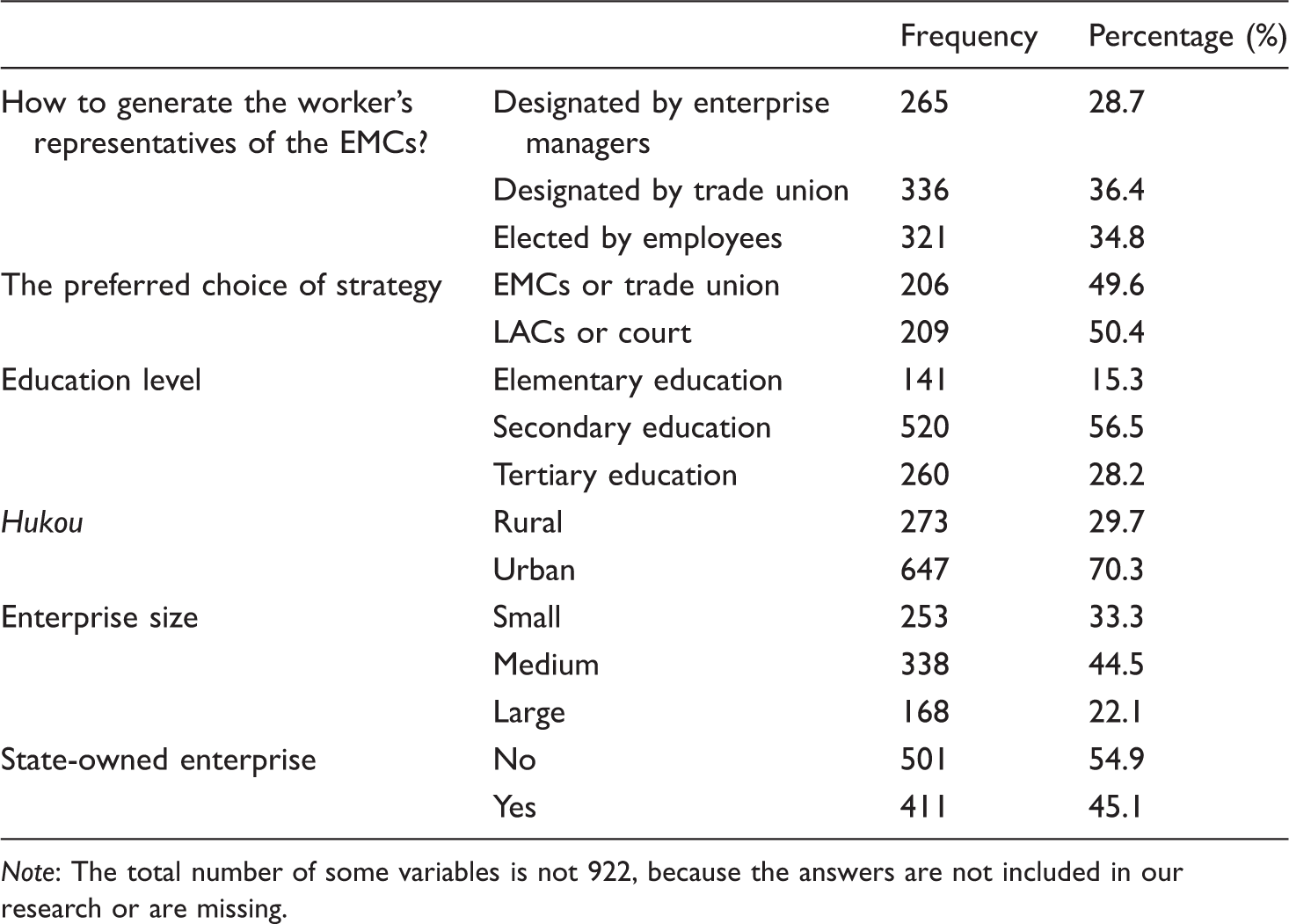
Note: The total number of some variables is not 922, because the answers are not included in our research or are missing.
Measures
Dependent variables: The preferred choice of strategy
In the employee survey, employees were asked ‘If you had a labour dispute with the enterprise, which one is your preferred choice for seeking help?’. Response options included ‘Negotiate with the enterprise by myself’, ‘EMC’, ‘Enterprise union’, ‘LAC’, ‘court’, ‘government relevant department’, ‘media’ and ‘friends’. Because EMCs in China are positioned administratively under enterprise trade unions in practice (Liu, 2014) and enterprise trade unions have the right to participate in enterprise labour dispute mediation (Article 28, Trade Union Law), we combined the choice of ‘EMC’ and ‘Enterprise union’ as internal mediation. The choice of ‘Labour arbitration committee’ and ‘court’ represented external adjudication. We created a dummy variable based on the answers (1 = Enterprise labour dispute mediation committees or unions; 0 = Labour arbitration committees or courts). We deleted enterprises that chose other strategies.
Predictor variables: The appointment method of representatives to the EMC
In the employer survey, respondents were asked ‘How do you generate the employee representatives on the EMC?’. Response options included ‘Appointed by enterprise managers’, ‘Appointed by the trade union’ and ‘Elected by employees’. Therefore, we recoded two dummy variables taking ‘Appointed by enterprise managers’ as a reference.
Size of enterprise
The options for the size of the enterprise included small, medium and large. We used this as a continuous variable.
Staff and Workers Representative Congress
In the employee survey, respondents were asked ‘Do you think the Staff and Workers Representative Congress system is able to protect the legitimate rights and interests of employees?’. Answers were given on a 5-point Likert scale. We used this as a continuous variable.
Control variables
The hukou and education level of employees and the ownership of the enterprise (i.e. whether it was a SOE) were controlled in this research.
Results
Correlations.

p < .05; **p < .01.
Hierarchical regression modelling results.
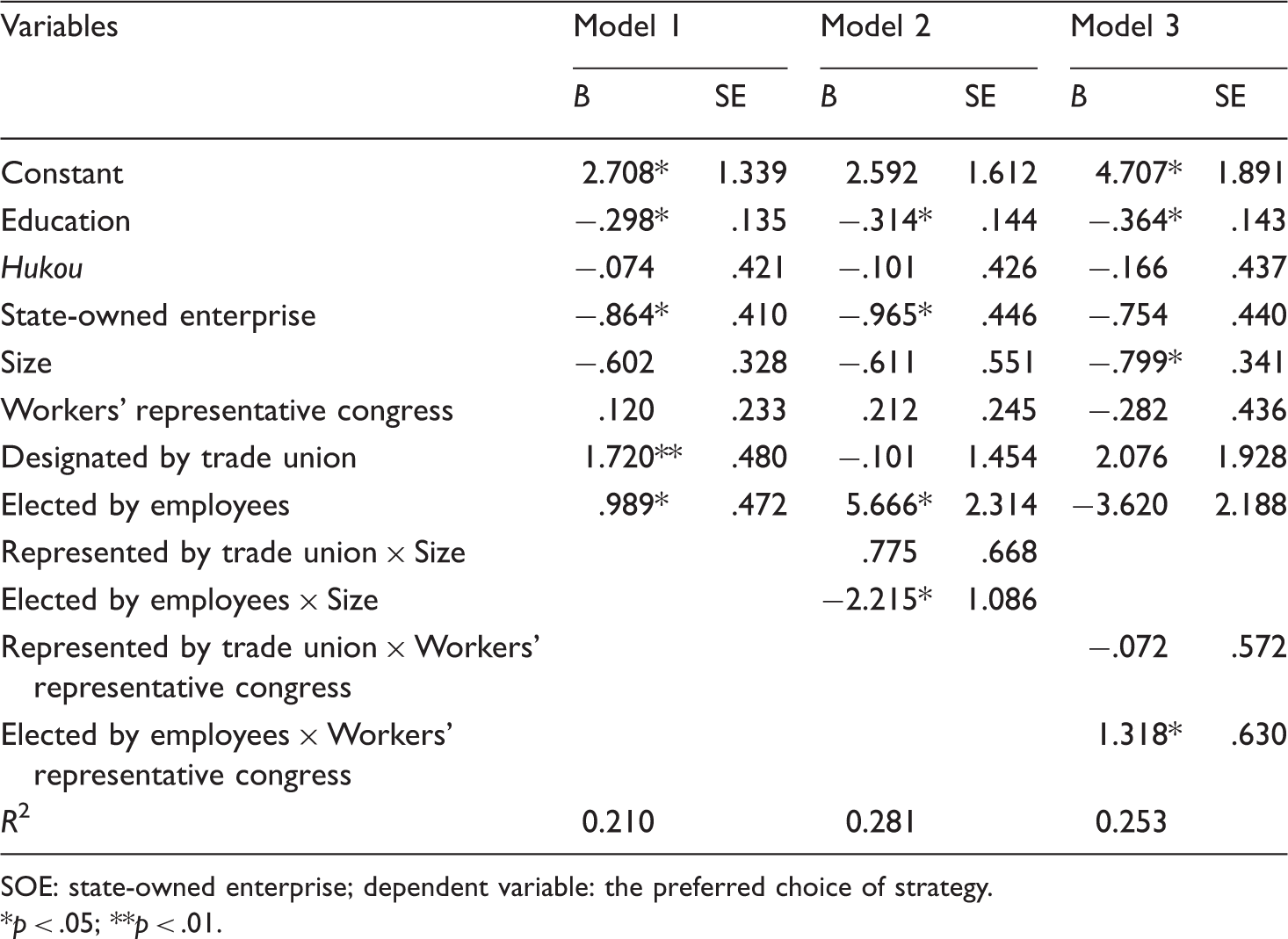
SOE: state-owned enterprise; dependent variable: the preferred choice of strategy.
*p < .05; **p < .01.
In model 2, we tested the moderating effect of size by entering the interaction term (Appointed by trade union × Size, Elected by employees × Size). As shown in model 2, the results revealed that the interaction term Appointed by trade union × Size was not significant (β = .775, p = .246 > .05): enterprise size did not significantly moderate the relationship between the appointment of employee representatives by the trade union and preference for internal mediation. Therefore, Hypothesis 2 was not confirmed. The results in model 2 showed that the interaction term Elected by employees × Size was significant (β = −2.215, p = .041 < .05): enterprise size negatively moderated the relationship between the election of employee representatives by all employees and the preference for internal mediation. As shown in Figure 4, compared to large enterprises, in small enterprises where employee representatives were elected by employees only rather than by enterprise managers, employees were more willing to seek help through internal mediation. Thus, Hypothesis 3 was confirmed.
The moderation effect of enterprise size.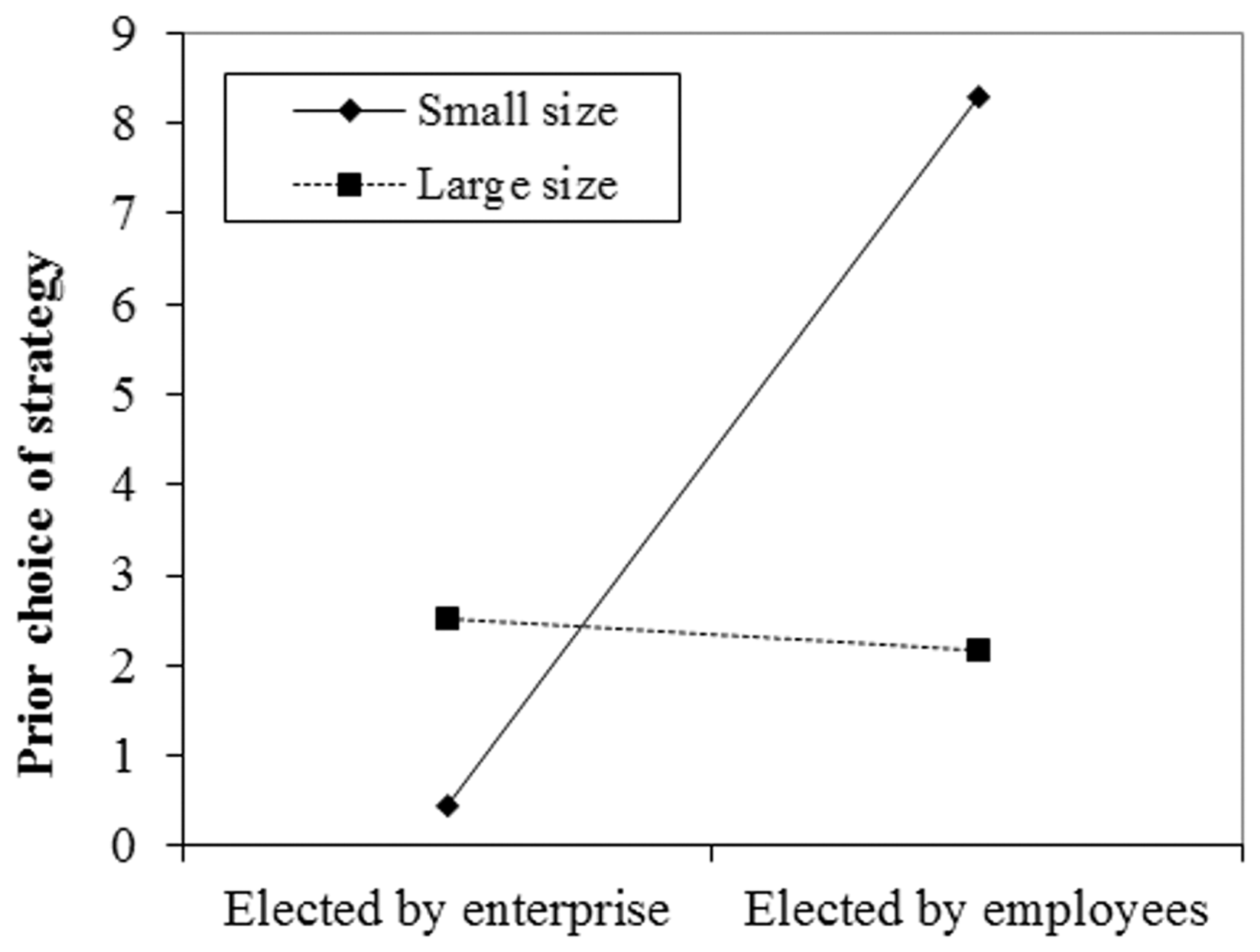
In model 3, we tested the moderating effect of the perceived SWRC by entering the interaction term (Appointed by trade union × SWRC, Elected by employees × SWRC). As shown in model 3, the results presented that the interaction term Appointed by trade union × SWRC was not significant (β = −.072, p = .900 > .05): the perceived SWRC did not significantly influence the relationship between the appointment of employee representatives by the trade union and the preference for internal mediation. Therefore, Hypothesis 4 was not confirmed. However, the results in model 3 showed that the interaction term Elected by employees × SWRC was significant (β = 1.318, p = .036 < .05) for the perceived SWRC by all employees and the preferred choice to internal mediation. As shown in Figure 5, when employee representatives were elected by all employees rather than by enterprise managers, the employees were more willing to seek help from internal mediation, especially when they perceived that the SWRC could protect their legitimate rights and interests. In contrast, the employees refused to seek help from internal mediation when they perceived SWRC was less likely to protect their legitimate rights and interests. Therefore, Hypothesis 5 was confirmed.
The moderation effect of workers representative congress system.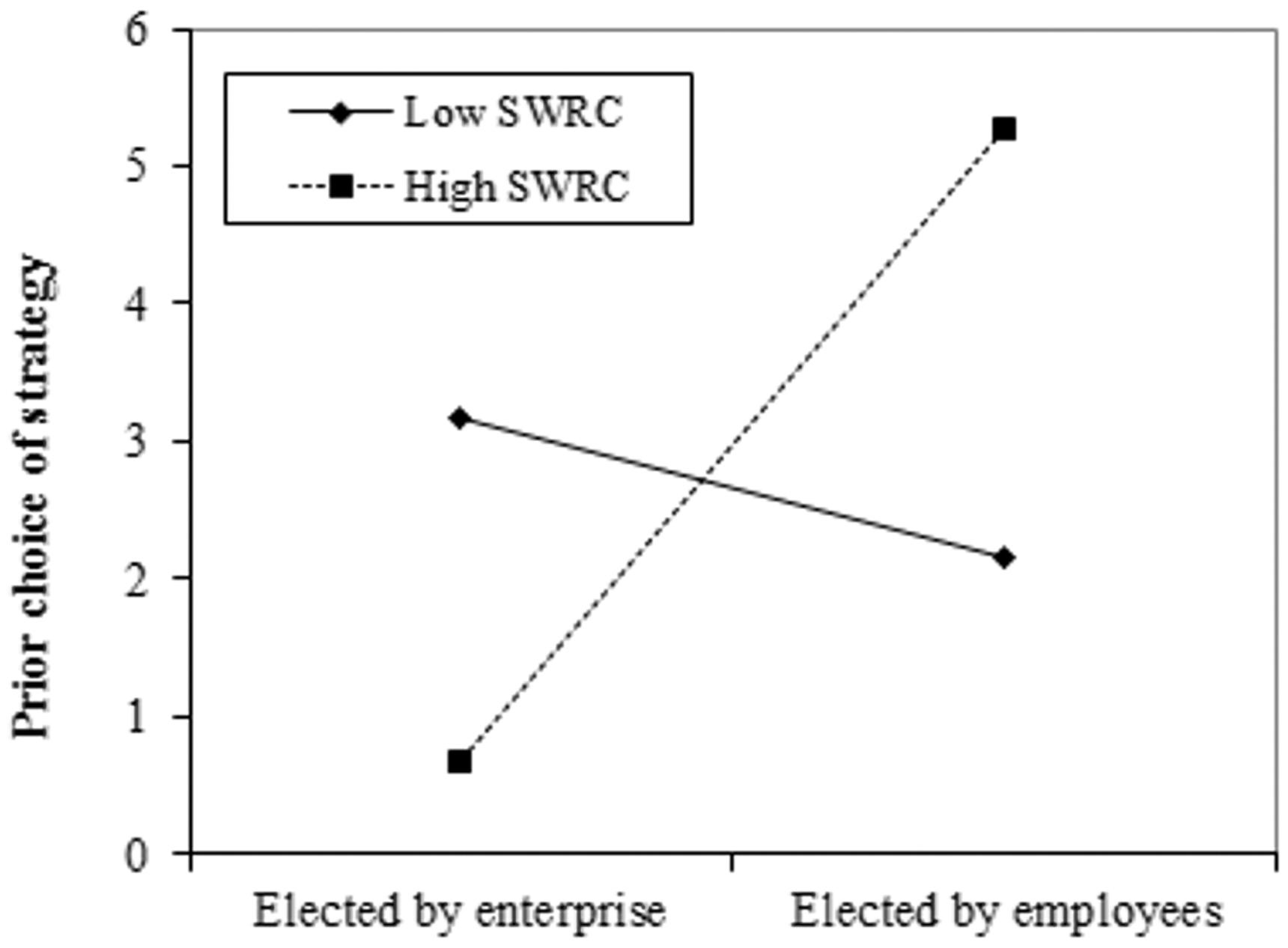
Discussion
The results of this research suggest that mediation in the Chinese labour dispute resolution system has undergone fluctuations in terms of its efficacy and use, and it is now back as a key means of stabilizing labour relations. However, in recent years, employees have been more likely to reach mediation agreements in LACs or courts than in EMCs. This phenomenon reflects the promotion of mediation during arbitration and litigation (Li, 2016; Zhuang and Chen, 2015). From the employees’ perspective, only when they can perceive the fairness of internal mediation will they prefer to choose internal mediation rather than external adjudication. Specifically, when employee representatives on the mediation committee are elected by all employees or by the trade union than by enterprise managers, employees are more willing to choose internal mediation rather than external adjudication procedures. The relationship between the appointment method of representatives and employees’ preference is weaker in larger enterprises or when employees perceive a lower effectiveness of the workers’ representative congress system.
The results of this study extend the dispute resolution and organizational justice literature in several ways. First, they enhance our understanding of procedural preference in labour dispute resolution in China, especially the preference for mediation, which is consistent with some previous studies (e.g. Cooke, 2008; Zhuang and Chen, 2015). The high value placed on harmony and stability in China may account for the promotion of different procedures in different periods (Chen, 2002). In addition, most studies focus on comparing ADR mechanisms among different countries at the national level (Brown, 2012). This article explores the individual preferences for ADR, laying the foundation for cross-cultural studies at the individual level.
Second, it explores under what conditions employees prefer to mediate inside the enterprise according to a pre-experience field study. Our employer–employee matched data showed that the number of disputants who preferred internal mediation was almost the same as the number of disputants who preferred external adjudication (see Table 1); this finding was different from previous studies (Brett, 1996; Shestowsky, 2014). We also found that employee representatives on the mediation committee were important determinants of procedural preference. This is consistent with Colvin’s (2013) findings that participation is more important than procedure. Employees prefer to self-represent rather than have the help of a representative (Shestowsky, 2004).
Third, this study enriches the organizational justice theory by highlighting enterprise size and workers’ voice mechanism as moderators that interact with the perception of fairness to influence procedural preference. Previous studies on individual decision-making have paid more attention to individual psychological factors (LaTour et al., 1976; Shestowsky, 2014), but organizational-level factors may be an important environmental context. Our results suggest that enterprise size and the workers’ voice mechanism are also essential organizational factors in the justice–outcome relationship; thus, our study answers the recent call to study potential moderators (Nowakowski and Conlon, 2005). Additionally, this research analysed the interactive effect between procedural justice and interactional justice on employees’ behaviours, even though Harrison (2007) suggested that perceptions of procedural, interactional and distributive justice might separately influence employees’ choices. This study found that the appointment method of representatives to EMCs, as procedural justice information, interacted with the effectiveness of the workers’ congress system as interactional justice on employees’ preferences.
However, the moderating effects of enterprise size and the SWRC on the relationship between the representatives appointed by the trade union and procedural preference are not significant. The reasons may mainly be attributed to the constraints on trade unions in China. First, the ACFTU is unable to represent and defend workers’ interests (Taylor and Li, 2007). The ACFTU has a double institutional identity: it is a state corporatism and a labour organization nominally representing the interests of workers (Chen, 2003; Gallagher et al., 2015). However, the ability of unions to represent workers effectively is limited. On the one hand, they are in a subjective position with regard to the employer, and on the other hand, union leadership cadres see union organizing as a bureaucratic exercise to meet the targets suggested by the state (Kuruvilla and Zhang, 2016). Second, workers do not trust trade unions on the grounds that many trade union officials at the enterprise level are typically not elected but appointed (Hui and Chan, 2015; Taylor and Li, 2007). The funding of enterprise trade unions mainly comes from employers (Liu and Li, 2014). Unions as labour organizations in enterprises are deprived of the capacity to independently represent their members (Chin and Liu, 2015; Gallagher et al., 2015) and mostly depend on management (Pringle and Meng, 2018). The activities of trade unions at the firm level are concerned about human resources and enhancing the sector’s performance rather than the representation of employee interests (Tsang, 2017). Therefore, employees prefer to trust themselves and self-represent in dispute resolutions. Recently, the workplace unions have been becoming more democratic and more actively protecting workers’ interests, promoting workers’ personal development and intervening in labour disputes (Friedman, 2014b; Sun and Bray, 2014). Recent experiments in union reform, such as direct elections of workplace union chairs and professionalization of union cadres at the community level, may contribute to the future emergence of representative workplace unions (Howell, 2008; Li and Liu, 2018).
The present study also indicates some practical implications regarding the mediation of labour disputes. First, the determinants of individual preferences can be used to improve the attractiveness of enterprise mediation procedures. Recognizing the features of employees’ preferences will benefit the government by relieving the caseload of arbitration and litigation. One way is to ensure the neutrality and autonomy of mediation institutions, especially by the reform of trade unions in the workplace. Second, a mediation committee should be composed of employee representatives, and the method of appointment of representatives should comply with the regulations to enhance employees’ feelings of participation. This is a more promising way to ensure that the representatives on mediation committees are selected by employees themselves rather than by the trade union to enhance the possibility that internal mediation is selected. Third, regardless of how large an enterprise is, it should obey the regulations to elect employee representatives. It can thus reduce the imbalance of power between employees and managers and build trust in employees. Finally, the SWRC should actually become a voice mechanism for employees and protect their rights and interests so that employees can trust institutions and then increase their trust in employee representatives on EMCs.
Limitations and future directions
In spite of the contributions above, this study has some limitations. First, we should be careful when generalizing the findings because of the context of the study. Fortunately, the main dispute procedures (e.g. adjudicative and non-adjudicative procedures) and psychological processes of perceived procedural justice are consistent with most research (Shestowsky, 2004; Thibaut and Walker, 1975). In the future, cross-cultural studies can be performed to analyse whether culture impacts the preference for dispute resolution procedures. Second, we may overlook other possible determinants of preference, such as temporal urgency, relative cost, and the relative probability of using each procedure, which have been mentioned in previous studies (LaTour et al., 1976; Shestowsky, 2014). In terms of the limitations of the data, we cannot empirically test whether there are other indicators of fairness of information and interpersonal justice between employees and employers and between disputants and interveners. Finally, this study focuses only on preferences for dispute resolution procedures and does not analyse the outcomes of different resolution procedures. Procedural justice and interactional justice affect not only the choice of procedure but also the perception of distributive justice. More attention should be paid to exploring distributive justice, satisfaction and compliance with different resolution procedures.
Conclusion
This study extends our understanding of procedural preference in the historical development of labour dispute resolution and under what conditions employees prefer internal mediation. Our findings enrich the analysis of the intrinsic mechanisms of labour dispute resolution preferences from the perspective of micro-level employee preferences. The results suggest that the EMC is not effective in mediating labour disputes from the perspective of employees; thus, they prefer to reach agreements in LACs or the court. Our results also suggest that the appointment method of employee representatives, which interacts with the size of the enterprise and the SWRC, affects the choice of internal mediation. The underlying mechanism is that the appointment method of EMCs serves as heuristic fairness information that impacts the perception of procedural justice. Empowering employees to elect their representatives and strengthening the role of the workers’ representative congress system are important strategies for improving the effectiveness of internal mediation.
Footnotes
Declaration of conflicting interests
The author(s) declared no potential conflicts of interest with respect to the research, authorship and/or publication of this article.
Funding
The author(s) disclosed receipt of the following financial support for the research, authorship, and/or publication of this article: The research was supported by the National Social Science Foundation of China (grant number 18CGL029).