



Abstract
Collective bargaining remains an important yet underexplored mechanism in the pursuit of workplace gender equality. Through gender equality bargaining efforts, unions seek to address the lack of equity for working women. Yet little is known of the extent of equality bargaining provisions, or about where provisions and the factors that influence their availability occur. Contributing to this disparity is a lack of data measuring gender equality provisions in collective agreements. This article analyses key trends in the collective regulation of flexible work provisions in Aotearoa New Zealand from 2007 to 2019. Results show modest growth in the scope and coverage of flexible work provisions, the majority of which have occurred in the public sector. Marked differences across sectors and industries suggest the influence of factors such as women’s rising labour force participation and feminisation of union membership and its leadership, particularly within industries where union density has grown. Findings underscore the need for contextualisation of collective regulation in opportunity structures and the ongoing frailty of women’s access to gender equality.
Keywords
The importance and consequences of workplace gender equality are globally endorsed, yet how best to achieve them remains an ongoing challenge (International Labour Organisation (ILO), 2019). On the one hand, statutory regulation and legislative reforms, through the codification of employer responsibilities, play an important role in the pursuit of gender equality but, in isolation, they are regarded as ineffective ‘if not accompanied by support from collective agreements and with changes in the work organisation’ (Organisation for Economic Cooperation and Development (OECD), 2016: 14). On the other hand, workplace regulation in the guise of policy and guidelines is often a matter of credibility, reliant on organisational support and management knowledge and agency. Unions, as the ‘largest collective organisation of women across the world’, play a critical collective regulatory role in promoting and advancing gender equality at work (Pillinger and Wintour, 2019: 2). Through collective bargaining, especially gender equity bargaining, 1 focused on ‘the collective negotiation of provisions that are of particular interest or benefit to women and/or are likely to facilitate gender equality’ (Colling and Dickens, 1998: 390), unions seek to address gendered workplace and structural inequities. Stimulating, legitimising, formalising, enforcing and at times extending statutory regulation, gender equality bargaining provides women with a collective voice that links organisational strategies with wider labour markets (Dickens, 2000) – a link that is under increasing threat from individualised employer strategies and legal rights. In this regard, gender equality bargaining is a form of collective regulation, in which interrelated levels of the employment relations system, including the legislative framework, collective bargaining, workplace policy and management cultures, interact to shape opportunities for progressing gender equality (Donnelly et al., 2018; Kaine, 2012; Parker et al., 2012; Tomlinson et al., 2018).
The tension between statutory, organisational and collective regulation is particularly marked in relation to flexible work. Flexible work arrangements, including non-standard work arrangements that vary when, where and for how long workers engage in work-related tasks (Hill et al., 2008), are key levers with which to progress workplace gender equality. Such work arrangements can encourage labour market participation, help workers retain full-time and/or permanent employment, maintain work/life balance and ensure better career outcomes (Brown and Dallimore, 2015; European Institute for Gender Equality, 2019; Gibb et al., 2013). Indeed, as working women continue to undertake higher levels of unpaid primary caregiving and household labour than men (particularly during Covid-19 lockdowns – Ascher, 2020), and organisations continue to promulgate standard work patterns and career pathways based on the ‘ideal’ unencumbered male worker (Acker, 2006), bargaining for flexible work becomes pivotal to women’s ability to reconcile paid and unpaid work commitments and their ongoing labour market participation and career progression (Gregory and Milner, 2009; ILO, 2019).
Despite growing international attention, the role of equality bargaining in advancing gender equality is underexamined in scholarship (Baird et al., 2009; Pillinger and Wintour, 2019), particularly with regard to flexible work (cf. Charlesworth, 2013). Studies tend to focus on individual and organisational factors involved in the accessibility and outcomes of flexible work arrangements, highlighting gender disparities in accessing flexible work, and obstacles to translating policies and laws into workplace practices (Cooper and Baird, 2015). By contrast, less attention is paid to the collective regulation of these processes and, particularly, unions’ role and gender equality bargaining in addressing ‘implementation gaps’ in workplaces. This study thus examines the collective regulatory role of gender equality bargaining in extending access to flexible work by asking: (1) to what extent have flexible work arrangement provisions featured in collective agreements over time?; (2) where do collectively-bargained flexible work arrangement provisions feature most? and (3) what factors might shape wider provisions and more favourable conditions for gender equality bargaining more broadly?
In addressing these questions, this article considers ‘where we are now’ in respect to gender equality bargaining and the collective regulation of the flexible work environment within employment relations literature and the provision of flexible work arrangements within collective agreements. Analyses regarding the influence of legislation, collective bargaining and union activities, and sectoral impacts on collectively-negotiated provision of flexible working arrangements, then inform a discussion about ‘where to next’ to best harness the potential opportunities of gender equality bargaining for improving women’s working lives.
Gender equality bargaining
Collective bargaining is a critical component ‘of the regulatory toolkit for tackling gender-based inequalities in pay and working conditions’ (Milner et al., 2019: 276). Despite its capacity to improve workplace provisions, the influence of collective bargaining on progressing gender equality and/or achieving family-friendly provisions was largely absent from employment relations research literature until the 1980s (Williamson and Baird, 2014), highlighting a dearth of data with which to assess measures that might promote and support gender equality through collective bargaining (Pillinger and Wintour, 2019). Growing female participation in paid work, a slow increase in female leadership in unions, and shifting social mores regarding gendered labour have increased interest in the power of collective bargaining for advancing gender equality (e.g. Briskin, 2006; Cockburn, 1989; Dickens, 2000; Heery, 2006). Consequently, gender equality bargaining in several industrialised countries including Aotearoa New Zealand began to focus on women’s workplace needs around issues of paid maternity and parental leave provisions, gender pay equity, working time and, with the #MeToo movement, gender-based violence leave provisions (e.g. Baird et al., 2014; Pillinger and Wintour, 2019). The power of gender equality bargaining in developing countries and global supply chains also emerged within international guidelines to promote gender equity (e.g. Ethical Trading Initiative, 2018).
Theorising of gender equality bargaining has developed in endeavours to identify how greater progress towards gender equality might be made within the collective regulation of employment relations. Research focuses on three main levels of factors which influence the shape, process and outcomes of gender equality bargaining: macro-level features, including the legislative, economic and social context (Heery, 2006; Milner et al., 2019); union features, such as bargaining cultures, claim-setting processes and the negotiating personnel involved (Parker et al., 2012; Williamson and Baird, 2014); and organisational/local factors, including industry, sector and workforce characteristics (Milner et al., 2019; Rigby and O’Brien-Smith, 2010). With macro-level factors, features of national employment relations systems are observed to shape the extent, form and content of equality bargaining (e.g. Milner and Gregory, 2014). Early work by Dickens (1998) argues that collective bargaining can play a mediating role wherein collective agreements work to translate and extend legislation, while gender equality legislation acts as a lever for collective bargaining. Others similarly describe national legislative frameworks as a tool for setting gender equality agendas in collective bargaining and bringing legitimacy to workplace equality issues (e.g. Briskin and Muller, 2011). Heery (2006: 539) highlights the influence of the broader institutional context by observing that ‘co-ordinated systems of industrial relations are more receptive to progress on equality’. Others emphasise the mediated relationship between legislation and collective bargaining of equality provisions. For example, research by Williamson (2012) found the development of national legislation for progressing gender equality dampened efforts for inclusion of that provision in enterprise bargaining. Legislative provisions in some cases thus appear to remove the urgency for unions to push for such provisions through collective bargaining. More recently, Milner and Gregory (2014) noted the vulnerability of the relationship between statutes and collective bargaining, pointing to the often weak position of unions in translating legislative requirements into collectively-bargained work and conditions that can be monitored and enforced.
Union factors are identified as important influences on the centralisation or otherwise of gender equality bargaining in the negotiation of terms and conditions. As Colling and Dickens (1998: 390) argued, equality bargaining includes equality awareness on the part of negotiators in handling commonplace bargaining agenda items such as pay and pay opportunities (‘gender-proofing’), and the injection of an equality dimension (specifically, addressing gender disadvantage) to the negotiation of change, for example, reforming a grading structure.
Sectoral, organisational and local considerations also influence gender equality bargaining. Drawing on qualitative analysis of union initiatives to progress family-friendly issues, Rigby and O’Brien-Smith (2010) showed that industry-specific structural issues (e.g. patterns of work, power structures, pay structures, the business environment, the gender profile of workforces) influence union approaches to work–life balance issues. Similarly, research in Aotearoa New Zealand found that collective agreements covering largely female administrative and professional workforces tend to have more favourable family-friendly policies (Ravenswood and Markey, 2011). In France, Milner et al. (2019) identified significant variations in gender equality practices related to sectoral structures and local bargaining cultures, highlighting the ‘generational effects’ produced accumulating local, sectoral and economic factors that shape successive rounds of bargaining. They showed how organisations progress gender equality through iteratively building on previous agreements, or alternatively seeking to rescind previously-secured gender progressive provisions, citing economic pressures.
Milner et al.’s (2019) work underscores the integrated relationships of multiple levels and parties within the collective regulation of gender equality and points to the need for a nuanced analysis and responsive planning of gender equality bargaining strategies by unions (also Dickens, 1998; Kaine, 2012; Parker et al., 2012). It has long been recognised that different levels of factors work in concert to create the pre-conditions or opportunity for gender equality bargaining (Pillinger and Wintour, 2019). The notion of an ‘opportunity structure’ is used to describe the multi-level framework that supports the development and effectiveness of gender equality bargaining (Gregory and Milner, 2009). Analysing the Australian context, Williamson (2012: 158) identified an opportunity structure involving ‘national policy promoting family provisions; female union leaders and union policies enshrining bargaining for family provisions; and organisational dynamics that include a high-trust bargaining relationship’. Similarly, Baird et al. (2014) developed a comparable tool for investigating the achievement of domestic violence leave clauses in Australia. Their key dimensions include environmental factors (economic, legislative, employment and social); the collective bargaining relationship; negotiators’ characteristics; and organisational characteristics. Moreover, economic conditions, legislative and policy development for gender equality, and decision-making structures within unions were noted for facilitating or undermining the potential beneficial outcomes of gender equality bargaining (Williamson and Baird, 2014). This raises the question as to what is known about the collective regulation of flexible work.
Collective regulation of flexible working arrangements
As noted, analyses of gender equality bargaining approaches tend to acknowledge multiple elements and tiers within the collective regulatory system, and their dynamic interaction (e.g. Kaine, 2012; Parker et al., 2012). Drawing on extant research, we note two key interacting dynamics involved in securing flexible work arrangement provision: (1) the sphere of organisational control – whether the provision of such arrangements lies inside or outside organisational control (e.g. Donnelly et al., 2012; Hegewisch, 2009) and (2) negotiability – whether negotiation processes (individual or collective) are involved in flexible work arrangement provision or such arrangements are mandated by legislation and/or organisational policy (e.g. Hornung et al., 2008; Kelly and Kalev, 2006).
Negotiated access to flexible work arrangements within the organisational sphere of control is agreed by a worker and their manager. This form of provision may align with organisational policy but is largely at the discretion of line managers and falls outside collective or legislative rights and protections. It is therefore vulnerable to line managers’ idiosyncrasies and changes, signalling from senior managers and the dynamics of the work team culture (Cooper and Baird, 2015; Donnelly et al., 2012; Hornung et al., 2008). Research suggests that how organisations manage flexible work arrangements is central to the quality of outcomes for workers (Putnam, Myers and Gailliard, 2014), with poorly-managed flexible work arrangements associated with work intensification, job insecurity and weakened bargaining power (e.g. Giesecke and Groß, 2003; Kelliher and Anderson, 2010).
Mandated provision through organisational policy is similarly subject to organisational control and contingent on the will of senior managers and/or human resource advisors. Organisational policy and practices that support flexible work arrangements often derive from strategies to ‘manage diversity’, facilitate organisational needs for internal operational flexibility, and form part of wider ‘talent management’ efforts or business continuity plans (Allen et al., 2013; Donnelly and Proctor-Thomson, 2015; Kröll et al., 2018). Such people management policies and practices are mutable and ultimately used for organisational ends rather than to facilitate more balanced, satisfying or sustainable work lives (Ravenswood and Markey, 2011). Consequently, when organisational objectives shift, financial resources diminish, or work is restructured, employee access to and benefit from flexible work arrangements can be de-prioritised. Moreover, if left to organisational policy and managerial implementation, gender, ethnicity, occupation, workplace and organisational status can conjointly shape who can access flexible work arrangements. For example, Golden’s (2008) study found that women, African Americans and less educated workers in the United States have less access to flexible work arrangements, even after taking account of industry and occupational factors. Furthermore, even when flexible work arrangements are secured by workers, the job, life and career outcomes can often be mixed (Allen et al., 2013; Kelliher and Anderson, 2010). Given the tensions created by diverse individual and organisational interests, flexible work can thus be depicted as a paradoxical phenomenon (e.g. Cañibano, 2018).
Due in part to growing evidence that flexible work arrangements are not universally available and thus result in unequal outcomes, global pressure has increased to ensure fair and equitable outcomes for workers through mandated provision of employee-driven flexibility in legislation and state regulation which is beyond organisational control (Donnelly et al., 2012). In response, various countries have legislated for greater access to flexibility for workers with caring responsibilities (particularly parenthood), with more recent regulation to expand provision to all workers. Between 2003 and 2016, ‘right to request’ flexible work arrangements legislation was passed in the UK, Aotearoa New Zealand, Australia and Canada (Heathrose Research Ltd, 2010). However, this legislation is deemed relatively weak insofar as workers are merely guaranteed the right to request, rather than to access, flexible work arrangements, with organisations retaining the right to refuse requests on reasonable business grounds. By contrast, legislation providing a ‘right to work’ flexibly introduced in several Scandinavian countries commonly provides stronger material access to flexible work arrangements (Donnelly, 2018; Hegewisch, 2009).
Finally, collectively-negotiated provision of flexible work arrangements in collective agreements (i.e. outside the sole control of organisations) may make provision more accessible to a wider range of workers; provide enhanced provisions beyond those which are legislated; protect against diminishing provision arising from organisational change or managerial prerogative; and ‘have a legitimacy which may lessen resistance to them’ (Dickens, 1998: 196). When flexible work provisions exist, those agreements have the potential to act as an educational device to inform workers of different ways of working that may be available; provide a communication tool to inform line managers about forms of flexible work arrangements and processes to manage flexible work; and make organisations responsible for building flexibility into jobs and creating supportive policy. Such agreements can also provide benchmarks in the terms and conditions of employment for other workers who are not covered by a collective agreement, many of whom may be women working casually or on short fixed-term contracts.
As noted, while the benefits of collectively-negotiated provisions of flexible work arrangements are widely acknowledged, few have examined the extent and nature of gender equality bargaining provisions in collective agreements, largely due to difficulties in accessing relevant data. This research seeks to understand the factors that influence negotiated provision of flexible work arrangements between organisations and unions, thereby helping to set an agenda for future gender equality bargaining initiatives. It asks: (1) to what extent have flexible work arrangement provisions featured in collective agreements over time?; (2) where do collectively-bargained flexible work arrangement provisions feature most?; and (3) what factors might shape wider provisions and more favourable conditions for gender equality bargaining?
Method
Our data are drawn from the New Zealand Employment Institution’s (EI) Project database of collective employment contracts and agreements compiled by the Centre for Labour, Employment and Work (CLEW), formerly the Industrial Relations Centre (IRC). This comprehensive database was established following the enactment of the Employment Contracts Act 1991 and designed to monitor trends in employment conditions determined through collective bargaining and changes in union membership. Since then, the Centre has compiled and maintained a record of the details, terms and conditions of collective agreements concluded in Aotearoa New Zealand, providing a rich tranche of employment relations scholarship (Blumenfeld et al., 2010). Today, the database holds information on over 7,530 collective agreements, comprising 40,000 records from over 300 registered unions, making it the most comprehensive longitudinal data series on employment conditions in Aotearoa New Zealand (CLEW, 2021). 2 Individual data are strictly confidential and the database is not publicly accessible. Once agreements are received, the Centre records the coverage and terms of agreements, wage details, working hours, overtime and penal rates, and union representation, alongside leave, redundancy, health and safety and training clauses. Data collected by the Centre have expanded over time to reflect changes in work conditions and wider employment context, including changes to working time.
In 2007, the Centre began recording flexible work arrangement clauses in collective agreements in anticipation of the Employment Relations (Flexible Working Arrangements) Amendment Act 2007. Since then, it has recorded employee-driven forms of flexible work arrangements, including:
Change of work status: where an agreement contains a clause stating whether or not an employee has the ability to move from full- to part-time employment or vice-versa. Flexible working hours: where an agreement contains a clause stating whether or not an employee can reorganise their hours of work to suit personal circumstances. Job sharing: where the agreement contains a clause stating whether or not an employee can share a full-time position. Working from home: where an agreement contains a clause stating whether or not an employee can request work from home arrangements. Extended leave without pay: where an agreement contains a clause stating whether or not an employee can take extended unpaid leave for personal commitments. Domestic violence leave: where an agreement allows for domestic violence leave provisions.
In anticipation of the enactment of the Domestic Violence Victims’ Protection Act effective from 1 April 2019 which provides for up to 10 days additional paid leave and short-term flexible work arrangements, CLEW began recording domestic violence leave clauses from 2018. As has been the case with flexible working hours since 2012, the degree of specificity (e.g. where provisions extend legislation) is also recorded for domestic violence leave clauses.
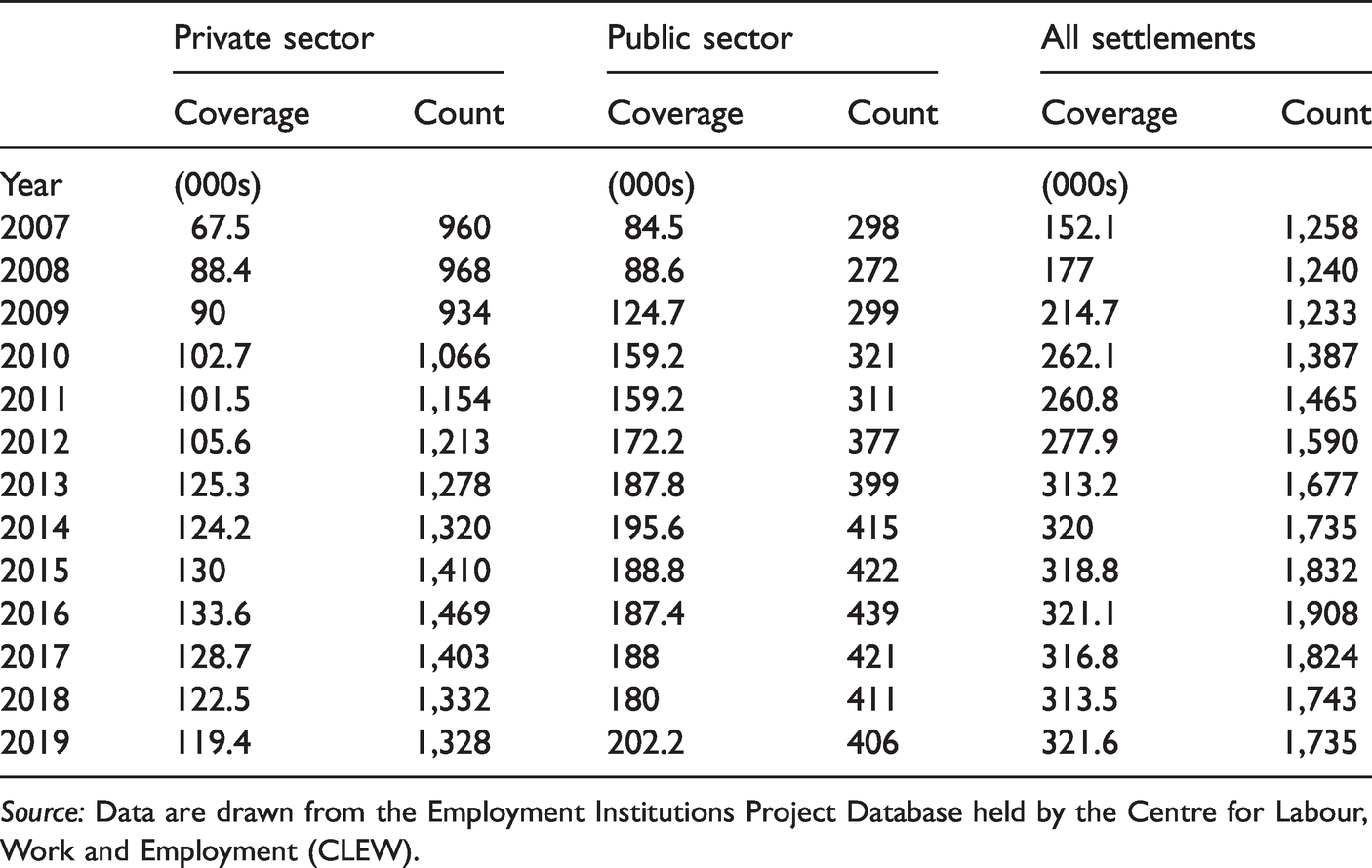
To measure trends in the collective regulation of flexible work arrangements in Aotearoa New Zealand and highlight where provisions might feature most prominently, data on the incidence and coverage of collectively-bargained -- for flexible work clauses by sector and industry for 2007–2019 were drawn from the database. Table 1 provides annual details of the sample, including the number and coverage of collective agreements by sector for each year from 2007 to 2019. In keeping with CLEW practice, the database annually reports on the total number of agreements concluded and received by 1 June of each census year. As a result, collective agreements effective in the 12 months previous to 1 June in a current collection year are analysed; that is, only agreements settled within that time period are included in each census year. 3
Collective agreements coverage and number by sector, 2007–2019.
Source: Data are drawn from the Employment Institutions Project Database held by the Centre for Labour, Work and Employment (CLEW).
As Table 1 shows, 1,735 collective agreements covering 321,613 unionised workers were concluded in 2019. This number represents approximately 17.4% of all workers employed that year, or 8% of those employed in the private sector and 55.1% of those employed in the public sector (Stats NZ, 2019). 4 Between 2007 and 2019, the number of collective agreements concluded grew by 27.4% and the number of workers covered by agreements more than doubled from 152,098 to 321,613. The proportion of private sector workers covered by a collective agreement dropped to 37.1% while coverage in the public sector grew to 62.9%. Finally, data are reported using the Australian New Zealand Standard Industry Classification (ANZSIC), specifically for sector (ANZSIC06) and industry (ANZSIC08) levels. 5
Analysis of trends in negotiated flexible work arrangement clauses for 2007 to 2019 was conducted to measure Aotearoa New Zealand’s collective bargaining patterns of six forms of flexible work provision. Industry and sectoral data were examined to identify changes in flexible work provisions and coverage rates. Where drops in provisions were significant, collective agreements within affected industries were examined to understand the wider bargaining context (e.g. where provisions move on and off agendas; where multi-employer employment agreements were formed).
Findings
The stated aims of this research are to map the provision of flexible work arrangement clauses within collective agreements from 2007 to 2019; to identify sectoral and industrial patterns of flexible work arrangement provisions; and to examine the factors that shape their provision so as to inform the role of gender equality bargaining in progressing gender equality in Aotearoa New Zealand. The intention here is not to prove causality but to rather provide greater context to the role (or lack thereof) of gender equality bargaining in securing flexible work provisions.
Flexible work arrangement provisions: Incidence and coverage
The results show that collective bargaining for flexible work arrangement provisions in Aotearoa New Zealand is low and limited in scope (Figure 1). Of the total number of collective agreements concluded by 1 June 2019, just 17.4% include an extended unpaid leave clause, 14% include a clause for flexible work hours, and 10% include a domestic violence leave clause, while fewer than 5% include clauses relating to job sharing, working from home or ability to change work status. Despite low provision rates, the number of agreements with flexible work arrangement clauses increased from 2007 to 2019. Agreements with extended unpaid leave clauses grew from 171 to 302, and agreements with flexible work hours clauses increased from 227 to 245, suggesting gains from unions’ bargaining efforts.
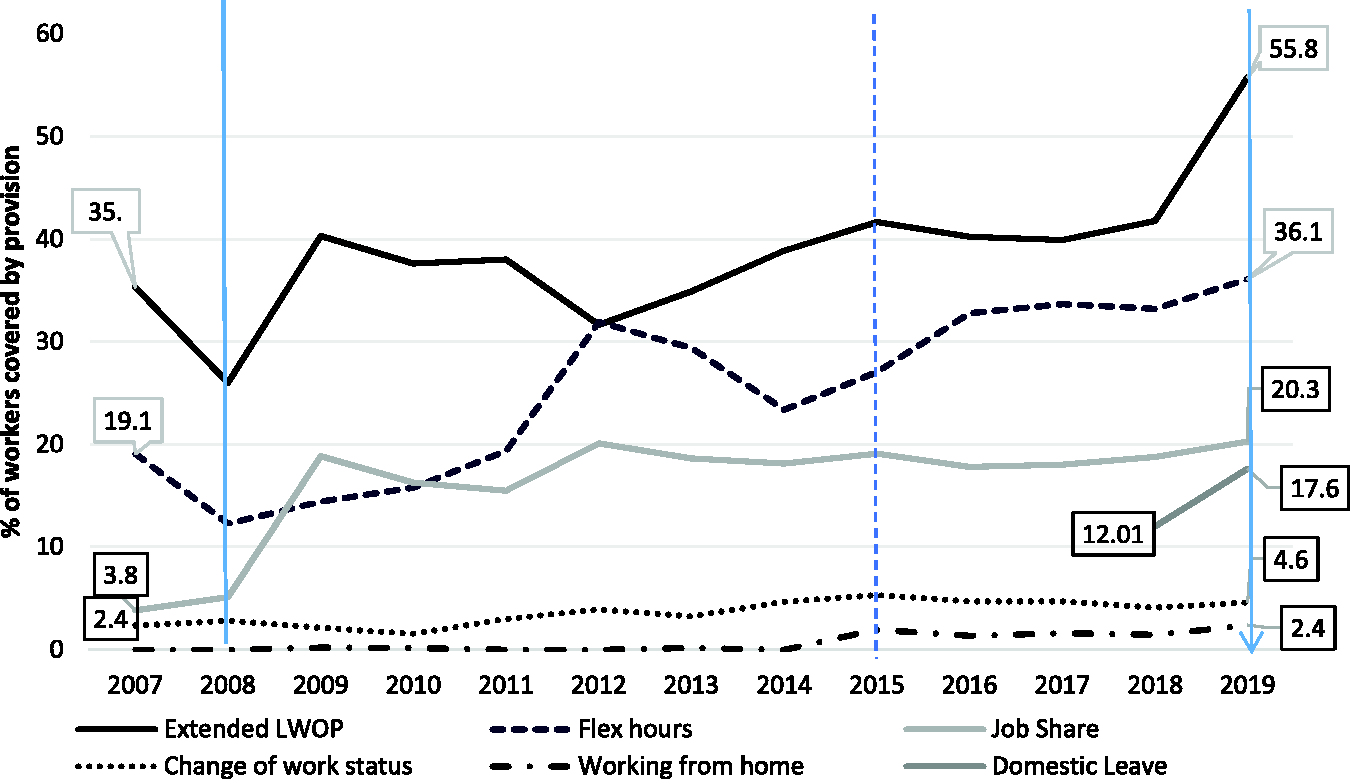
Flexible work provisions within collective agreements, 2007–2019.
For workers with bargained access to flexible work arrangements in their collective agreement, similar trends emerge (Figure 1). In 2019, just over half (55.8%) of unionised workers were covered by an agreement with provision for extended unpaid leave; a third had flexible work hours provisions, almost a fifth had access to job-sharing provision (20.3%) and domestic violence leave (17.6%) in their agreements; while less than 5% had provisions to change their work status and work from home. Again, despite low access, improvements in coverage occurred across the 12-year period, albeit in relation to just three forms of flexible work arrangements: workers’ access to extended unpaid leave (where the share of workers grew by 20.5%); flexible work hours provisions (where coverage increased by 17%); and job sharing provisions (where the share of workers increased by 16.5%). Aside from these bargained gains, few advances were secured in the provision of other forms of flexible work arrangements, particularly in terms of workers’ ability to change their work status or work from home. This is surprising given the legislation that provides workers with caring responsibilities the ‘right to request’ has existed since 2008 and its extension to all workers in 2015. This limited scope could be explained by employers’ preference for managing flexible work arrangements within their organisational sphere of control. Indeed, research looking at work–life balance policies in Aotearoa New Zealand found that employers prefer to offer and manage flexible work hours through organisational policies, while provisions for extended unpaid leave were more likely to be included in collective agreements (Chipindiku, 2012). Despite this, low incidence of working from home provisions could also highlight what others note – that ‘right to request’ legislation places a burden on the individual to manage the day-to-day operational issues of flexible work arrangements and has thus largely been ineffective in helping workers to access this form of flexible work arrangement (also Cooper and Baird, 2015, Donnelly, 2018; Donnelly et al., 2012).
Also noteworthy is that not all forms of flexible work arrangements are equally beneficial to workers. While extended unpaid leave may provide a ‘de facto’ safety net for workers who fail to meet eligibility criteria, are unable to meet legal requirements for other forms of flexible work arrangements, or have exhausted all other available leave, the financial costs in this instance are borne by the worker while the costs of other forms of leave (e.g. domestic violence) tend to be covered by employers.
While flexible work provisions have increased, Figure 1 shows several fluctuations in their incidence and coverage. The first major drop in flexible work arrangements coverage occurred in 2007–2008. By June 2008, the share of unionised workers with flexible work hour provisions dropped by 6.8% due to a decline in the share of private sector manufacturing coverage (down from 20% to 10.2%) and a drop in the share of private sector workers in health services and in central government (which fell by 11.4% 6 and 4.2%, respectively). During that time, there was a sharp decline in extended unpaid leave provisions where coverage in central government, specifically in health services, fell from 70.9% to 14.7%. This was followed by an increase in coverage in education (from 38% to 82%) and in health services from 4% to 36.1% in 2009.
By contrast, coverage of flexible work hour provisions in collective agreements remained low until 2011–2012, when the share of workers with access through their agreement rose again to 31.9%. These gains can be explained by increases of provision in three large sectors: (1) the inclusion of flexible work hours clauses in agreements within financial and insurance services and food manufacturing; (2) the introduction of flexible work hours provision into the collective agreement for Inland Revenue workers; and (3) the consolidation of flexible work hours clauses for health services workers during the merger of seven city and district local authority councils into one unitary authority responsible for all local government functions – the ‘supercity’ Auckland Council (provision coverage rose to 36.1% of health service workers). 7 A later drop in total coverage (from 33.4% to 23.3%) between 2012 and 2014 was the result of a loss in the share of private sector workers (down from 24.2% to 12.8% in 2014) and central government workers (a drop of 8.8% down to 29.3%). Finally, the sharp increase in extended unpaid leave coverage in 2018–2019 again reflects advances in public sector provisions, particularly in transport, postal and warehousing, where coverage rose from 20.3% to 41.6%.
Overall, it is clear that collectively-bargained gains have been secured, particularly in relation to extended unpaid leave. However, the variability in provisions points to the notable decline in private sector union membership density and rising public sector density over the last decade. Since 2008, public sector union membership has increased by 12%, while private sector union membership has declined by 18% (Blumenfeld and Ryall, 2020). Today, most union members (over 80%) in Aotearoa New Zealand belong to the 10 largest affiliates of the New Zealand Council of Trade Unions, reflecting union amalgamations to amass resources, and legislative developments (Parker and Alakavuklar, 2018). Moreover, patterns of flexible work arrangements coverage show evidence of equality bargaining items moving on and off bargaining agendas, as seen with the amalgamation of local government multi-employer collective agreements when Auckland City Council was formed and when flexible work hour provision fell in health services in 2007–2008, suggesting exclusion with the renegotiation of the nurses’ multi-employer collective agreement at that time.
Flexible work arrangement provisions across industry sectors
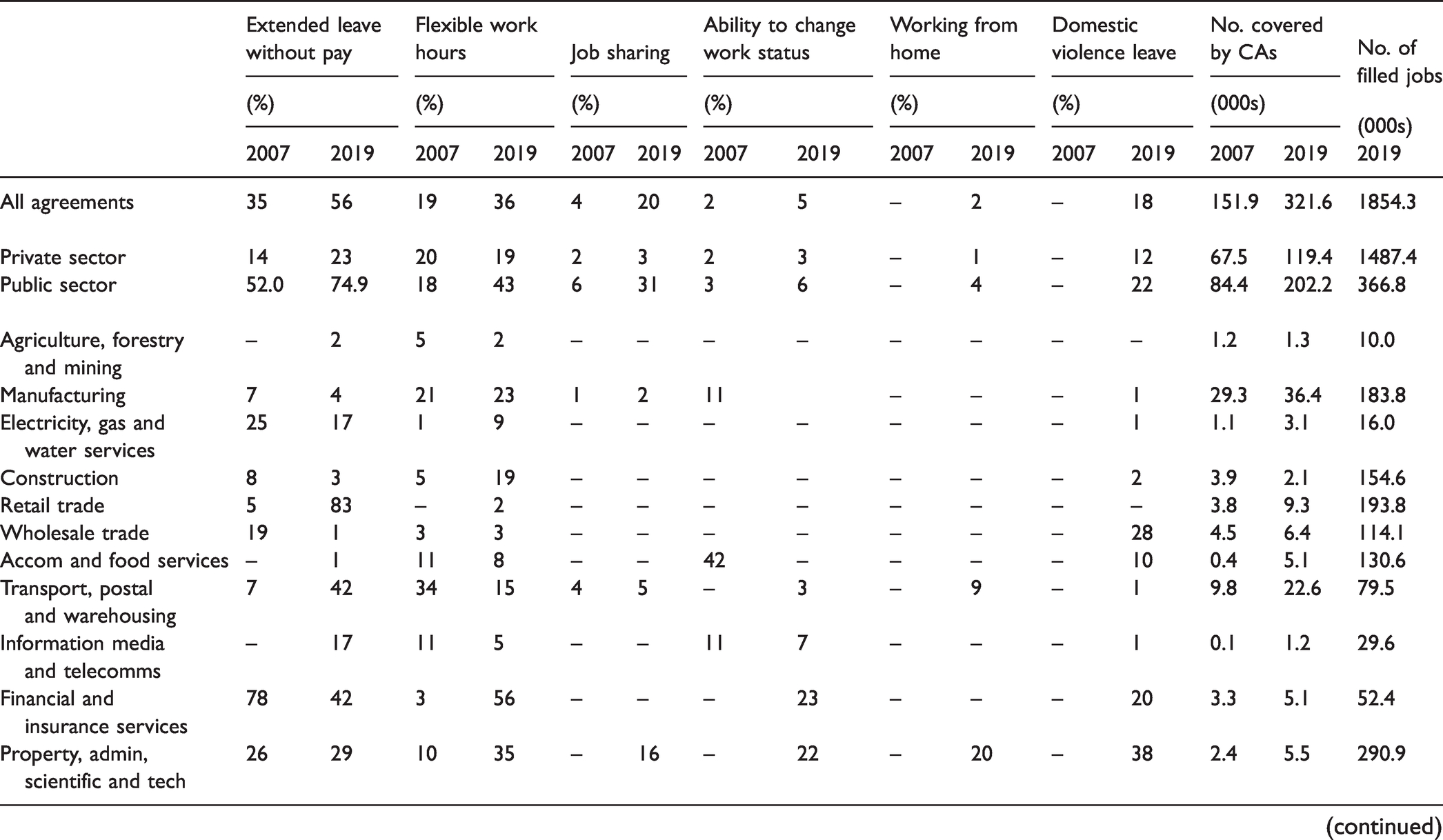
Table 2 shows the strong sectoral and industrial patterns associated with the provision of flexible work arrangements. The largest gains were secured for public sector workers, especially in provisions for extended unpaid leave and flexible work hours where coverage rose by 22.9% and 24.4%, respectively. In addition, by 2019 a third of all public sector workers had jobsharing provisions in their collective agreement. By contrast, private sector worker coverage of extended unpaid leave provisions increased just 8.9%, suggesting greater bargaining outcomes across the public sector. In examining the share of workers with extended unpaid leave provisions, a more nuanced picture emerges. Over half (52.3%) of all agreements with such a provision in 2019 were settled in the private sector, covering 15.5% of private sector workers, 83.2% of workers in central government and just 1.3% of workers in local government, pointing to greater gains in the public sector, especially for public services or central government workers. Higher provisions of flexible work arrangements (and broader scope) in the public sector highlight what others have argued has been the case since 2004: that collective bargaining in Aotearoa New Zealand is essentially a public sector phenomenon (Blumenfeld and Donnelly, 2017), with 73% more workers in the public sector covered by a collective agreement than in the private sector in 2019, when less than 20% of Aotearoa New Zealand’s labour force was employed in the public sector (Blumenfeld et al., 2019).
Flexible work provisions in collective agreements by sector and industry, 2007–2019.
Source: Data are drawn from the Employment Institutions Project Database held by the Centre for Labour, Work and Employment (CLEW).CAs: collective agreements.
Table 2 shows strong industrial patterns associated with flexible work arrangement provisions. In particular, analysis reveals that few in-roads have been made in bargaining for flexible work arrangements across primary industries over the last decade. This is particularly the case for workers in agriculture and mining where just 2% of unionised workers have agreements with flexible working hours clauses, and perhaps explained by both the high proportion of males employed in these industries (69.1% in 2019) (Stats NZ, 2019) and low unionisation (just 2.4% of all agreements concluded in 2019 were in these industries). Secondly, collective bargaining efforts within construction and retailing – industries characterised by seasonality and casual employment – have largely been confined to extended unpaid leave and flexible hours provisions (Table 2). Of note, the percentage of unionised workers in the retail sector who had collectively-bargained access to unpaid leave provisions leapt from 5% to 83% between 2007 and 2019, while provision of other flexible working arrangements remained almost non-existent. Finally, a significant retrenchment of flexible work arrangement provisions is evident across some industries. Of note, for workers in accommodation and food services and in manufacturing, the ability to change work status through their agreement was lost (a loss of 42% and 11%, respectively, in 2019) (Table 2). Industrial variations suggest that few bargained outcomes have occurred within male-dominated industries (including primary industries, utilities and construction), where the proportion of males is 69.1%, 83.4% and 85.1%, respectively (Stats NZ, 2019) – and in industries where union coverage is low (including primary industries, utilities and construction, where the percentage of those covered by collective agreements in 2019 stood at 0.4%, 1% and 1%, respectively) (Table 2).
By contrast, workers with higher provision across a greater range of flexible work arrangements through their collective agreements were employed in the public sector, including public and community services, education and training and arts and recreation services – industries with larger proportions of women and rising levels of female membership (Public Service Commission (PSC) Te Kawa Mataaho, 2019). This suggests that flexible work provisions may align with women’s rising labour force participation and feminisation of union membership. As Figure 2 demonstrates, women have comprised the majority of all union members since 2001, with their share growing steadily from 55% in 2008 to just over 60% in 2018 – significantly higher than their labour force share of 47.7% (Blumenfeld and Ryall, 2020; Ryall and Blumenfeld 2019), reflecting ongoing feminisation of a more densely unionised public sector. Moreover, significant gains, especially in flexible work hours provisions, have been secured for unionised public sector workers. Interestingly, Stats NZ (2019) notes that, within health care and social assistance, and education and training industries, ‘fixed working hours are largely unavoidable’, and these industries have lower rates of employees working flexible hours, suggesting the importance of bargaining for flexible hours provisions in industries where perceptions of rigid work patterns exist.
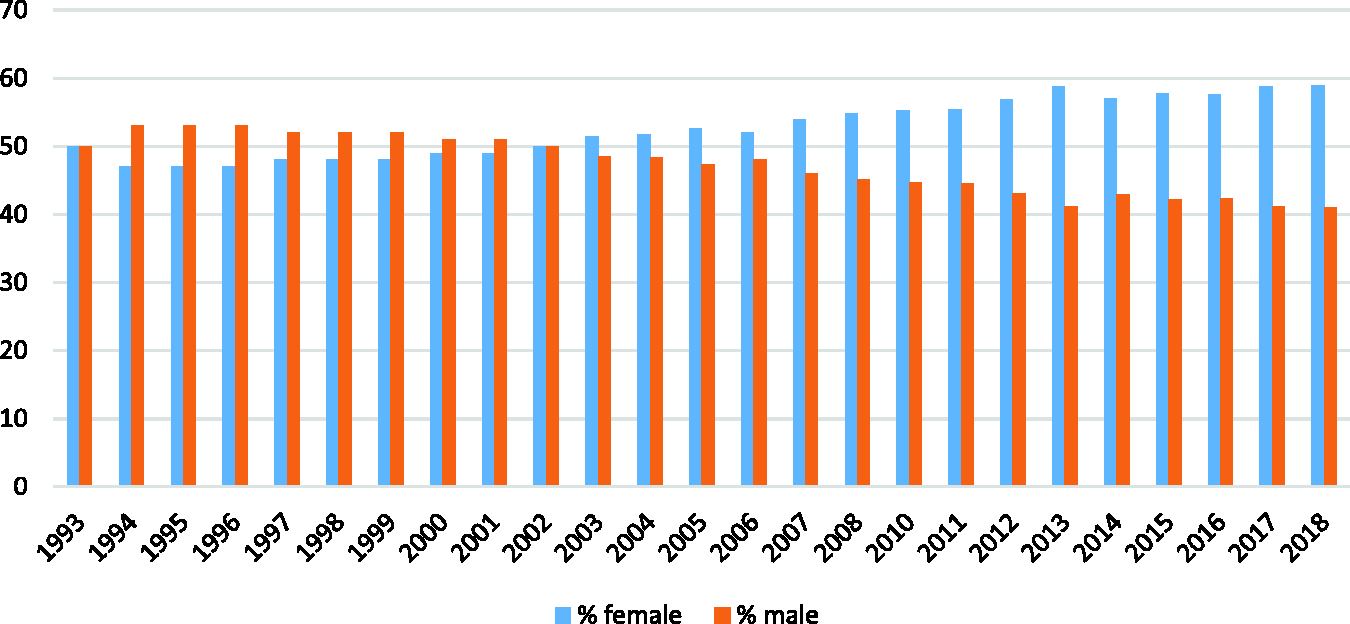
Female and male union membership in New Zealand 1991–2018. (Based on Ryall and Blumenfeld (2019) and data drawn from the Employment Institutions Project Database held by the Centre for Labour, Work and Employment (CLEW).
Statutory and collective regulation of flexible work arrangements
Much progress in the provision of flexible work arrangements has been the product of joint work by unions and policy-makers. According to government reports, the main driver of the first flexible work arrangement statute, the Employment Relations (Flexible Working Arrangements) Amendment Act 2007, was the need to enhance family well-being by lifting the quality and experience of work for working parents, especially women (Families Commission, 2008). Politically, the move was desirable as it was seen to redress the imbalance of employer-driven workforce flexibility which had arisen during radical labour market deregulation under the Employment Contracts Act 1991. The Labour government formed in 2000 was more willing to support participatory and conciliatory models of tripartite relations and, by the early 2000s, strong coalitions of unions alongside community groups had developed around key gender equality issues including gender pay equity, paid parental leave and flexible work hours (Parker et al., 2012).
The Employment Relations (Flexible Working Arrangements) Amendment Act 2007 extended eligibility to all carers but, as noted, like other ‘right to request’ laws, did not oblige employers to provide access. While the Employment Relations Amendment Act 2014 extended the ‘right to request’ to all workers, it did little to change employer obligations to provide flexible work arrangements. Research indicates that workers’ knowledge of the legislation and use of it to request flexible work arrangements was very low and that significant cultural impediments to workers’ access existed for some years after its enactment (Donnelly et al., 2012). In this respect, state regulation and organisational policy have been unable to fully close gender-based equality and flexible work implementation gaps. This highlights the need for a better understanding of the interrelationships between levels of flexible work provision and the role that gender equality bargaining plays in extending such a provision in relation to and beyond relatively weak legislative remedies.
While state regulation for flexible work arrangements existed in Aotearoa New Zealand from 2008, collective regulation of flexible work arrangements remains low, particularly in relation to working from home clauses. In total, just 2.4% (7,660) of unionised workers had work from home provisions in their collective agreement in 2019, with most of them located in property, administration, scientific and technology and finance and insurance industries. The sharp drop in flexible work hour provisions in 2007–2008 suggests that legislation may in fact remove the urgency to bargain for provision (also Williamson and Baird, 2014), suggesting that flexible work arrangements legislation has had little impact in shaping collective regulation of flexible work arrangements in Aotearoa New Zealand.
This, however, does not appear to be the case with domestic violence leave. In contrast to flexible work hours and working from home provisions, provision for domestic violence leave through collective agreements has recently been introduced across all industries – again with the exception of agriculture, forestry and mining and, surprisingly, retail trade. Table 2 reveals a sharp rise in coverage between 2018 and 2019, suggesting significant awareness and support for this legislation. Research shows that the introduction of the domestic violence legislation was the result of unions actively working together from 2009 through the New Zealand Council of Trade Unions and with other NGOs and employer groups for the elimination of violence against women (Weatherall et al., 2021). In this, unions’ and employers’ readiness to collectively prioritise flexibility to support victims in collective bargaining is notable.
The findings thus far highlight the forms of flexible work arrangements that have been bargained for over a 12-year period and, through an analysis of the fluctuations in the data, begin to outline the union factors involved in their collective regulation. However, aside from extended unpaid leave provisions – where the employee incurs the full financial cost of the work arrangement – progress in the collective negotiation of flexible work arrangements has tended to be slow and incremental, raising questions as to why, and more broadly, what role gender equality bargaining can have in progressing gender equality in the future.
Gender equality bargaining: Where are we now?
Analysis of collective agreements enables the mapping of collectively-negotiated provision of flexible work arrangements during a dynamic legislative, socio-economic and employment relations period. It also highlights growing evidence of the various factors shaping gender equality bargaining for flexible work arrangements, enabling consideration of the implications for union strategies in the collective regulation of working conditions that could facilitate gender equality. As indicated, collectively-negotiated flexible work arrangement provisions for unionised workers have grown modestly since 2007, aligning with women’s rising labour force participation and union membership feminisation in the public sector.
Legislation has been described as either providing a critical opportunity component for progressing gender equality bargaining (Dickens, 2000) or removing the urgency for bargaining over such provisions (Williamson and Baird, 2014). This analysis suggests that changes following the enactment of flexible work arrangement legislation in 2007 were incremental, providing initial minimal evidence of a regulatory effect. That said, the passage of the Employment Relations Amendment Act 2014 aligns with a notable increase in references to flexible work arrangement legislation within collective agreements, and in the provision of flexible work arrangements by 2015. With broader applicability to all workers and a related growing flexible work profile, legislative reforms in 2014 appear to have provided a stronger lever to including flexible work arrangement provision in bargaining claims and collective agreements. As Hyman (2015) claims, general policy and legislation written to improve wages and conditions covering all workers may encourage greater progress towards gender equality than legislation targeted at groups predominantly constituted by women. Furthermore, the sharp increase in domestic violence leave provision across sectors following the passage of legislation in 2018 highlights how a regulatory effect of collectively-mandated provision may be mediated by widespread public understanding, coalition-building around gender equality provisions, union advocacy, collective bargaining efforts and political will – or, aggregately, Aotearoa New Zealand’s brand of a multi-level ‘opportunity structure’.
Less anticipated trends also emerged. More than a decade after legislative changes relating to flexible work hours and work location, provisions for working from home across collective agreements have advanced little, which is surprising given the demand for such options that would fit with many households and women’s work–life balance needs. More widely, the overall share of workers with flexible work arrangement provisions remains low (under 40%), with the exception of extended unpaid leave. Arguably, the growth in extended unpaid leave provision indicates a formalisation of flexible work arrangements beyond normal entitlements (in effect, a firming up of legal requirements) and/or concerns over balancing flexibility with job security demands. Nevertheless, this last resort, ‘catch-all’ provision ensures that workers assume the economic costs of flexibility, even when there might be mutual benefits for the organisation and individual. Presumably, as organisations contend with post-Covid implications, they may promote extended unpaid leave more to encourage greater labour market flexibility while ensuring employment sustainability. The evidence thus points towards a mediating and protective effect of legislation on existing flexible work arrangement provision. The finer detail of gains and losses of bargained provisions reflects a more nuanced and dynamic collective bargaining, industry- and sector-based picture.
Indeed, following extant scholarship, significant variation in worker access to flexible work through collective agreements was found in relation to sectors, industries and over time (e.g. European Institute for Gender Equality, 2019; Milner et al., 2019; Ravenswood and Markey, 2011). In particular, flexible work arrangement provision has grown and widened for public service workers while private sector workers have experienced either minimal growth or significant loss (e.g. flexitime) in coverage, indicating a less widespread or coordinated approach to gender equality bargaining or a shift towards informal, mandated provision via organisational policy (e.g. Chipindiku, 2012). Stats NZ (2019) notes a much higher rate of access to flexitime according to employee self-reports across many sectors, with the highest rates of access to flexible work arrangements found in the private sector. This indicates that a significant section of Aotearoa New Zealand workers have access to flexible work arrangements only within the sphere of organisational control through organisational policy or managerial agreement. By contrast, this study tracked the growing provision of collectively-negotiated flexible work arrangements for core government public service workers, suggesting a more sustainable form of flexible work arrangement that is less subject to the precariousness of internal and external organisational dynamics.
In contrast to various private sector industries and local government, marked gains across most forms of flexible work arrangement provision were shown in agreements in central government, public administration and safety, property, scientific and technical, finance and insurance, health care and education sectors. Public sector unions also have an array of often long-running union women’s structures (e.g. Parker and Douglas, 2010). In parallel, the largest, collectively-negotiated gains in flexible work arrangement provision can be traced to negotiations involving large, centralised unions within the public sector. This supports research that showed the increased likelihood of provision where centralised co-ordination and structures exist (Brown, 2018; Nolan, 2018). In 2018, the government explicitly mandated for flexible work arrangements to address gender pay gaps via the introduction of a ‘flexible-by-default’ policy across public services (State Services Commission, 2020). While no significant increases have yet been observed, such sector-wide policy, while organisationally mandated, may provide a key tool in expanding future provision. A closer examination revealed that collective bargaining dynamics also impact the provision of flexible work arrangements in collective agreements via their slipping on and off union agendas, aligning with Milner et al.’s (2019) ‘generational effects’ hypothesis. A key instance is the loss of flexible work hours provision during the settlement of a multi-employer collective agreement for nurses in the health sector. The findings thus highlight the importance of a sustained, centralised and explicit gender equality agenda for unions to maintain the prioritisation of gender progressive claims.
Clearly, gender equality bargaining can provide a firmer edge to flexible work arrangements than legislation alone, and remains a more useful path for protecting access and standards relating to the management of flexible work arrangements. As many note, statutory regulation in Aotearoa New Zealand grants a right to request, not access, flexible work arrangements – even its wider availability does not necessarily yield access for workers. Collective bargaining as gender equality bargaining can help to develop ‘regulatory teeth’ to ensure greater access to and management of flexible work arrangements. Also, equality bargaining for flexible work has been more effective in larger unions with centralised equality agendas, a finding that supports previous research (e.g. Berg et al., 2013; Heery, 2006; Parker et al., 2012). However, our analysis also suggests that there is greater scope to broaden the range of flexible work arrangements that are pursued and to seek greater specificity around their implementation and management in workplaces.
Gender equality bargaining: Where to next?
This study suggests that the collective regulation of flexible work arrangements plays a critical role in ensuring worker access to flexible work, and that gender equality bargaining agendas are pivotal to ensuring their sustained provision. However, it also reveals the need for greater coordination within and between unions on the provision and uptake of flexible work arrangement via these means. The research provides examples of the three main levels of factors that could constitute an opportunity structure for gender equality bargaining of flexible work arrangements in Aotearoa New Zealand. While our analysis highlighted various approaches by which workplace gender equality has been pursued, it also revealed variations in the provision of different flexible work arrangement types via collectively-bargained collective agreements. Feminisation of union membership, particularly in public services, has often been an important pre-condition to raising working women’s voices to platforms from which to seek workplace change, but it has not generally translated into a strong shift in the power relations within unions and union–employer relationships. Many Aotearoa New Zealand unions retain ‘male heavy’ leadership, and while women’s membership of union bargaining teams has grown, they often lack numerical parity with men or equivalent influence in senior roles in masculinised union and workplace settings (e.g. Dickens, 2000). These are two obvious areas within unions where members can keep pushing for greater change while seeking male union members’ support with this.
Furthermore, in their relationship with employers, some unions in Aotearoa New Zealand have increasingly pursued a partnership model or ‘routine corporatism’ 8 approach involving unions and employers at local levels, so as to achieve mutual gains for the bargaining parties. Approaching gender equality bargaining thus may encourage a more inclusive agenda than would be likely via traditional, distributive approaches. There is scope for more progressive sectors to set the standard for others in terms of both gender equality bargaining processes and outcomes.
There is also much need to explore why job sharing and other forms of flexible work arrangement are under-utilised in Aotearoa New Zealand workplaces, as well as the business case in terms of the efficacy (and agency) of current labour flexibilisation in the pursuit of decent work and living standards for all. More research on the factors that influence flexible work arrangement provision and uptake by workers across industries, sectors and organisations is also needed. With the former, detailed contextualised qualitative analyses of the wording and breadth of flexible work arrangement provisions within specific collective agreements with broad coverage could help to tease out the industry and sector specificity of gender equality bargaining strategies. This type of analysis, married with case study data regarding actual access to worker uptake and the management of flexible working arrangements within related organisations, would contribute to a more holistic picture of flexible work provisions in Aotearoa New Zealand.
Another avenue of inquiry might examine the rationales for and possible remedies to varying differentials between collective agreements, as well as differing organisational provision and uptake. Furthermore, economically-challenging periods often see the narrowing of union and workplace agendas to focus on so-called core business.
The ongoing pandemic context, like prior crises, underscores the frailty of many women’s access and attachment to and experience of the workplace over time, and a need for genuine social dialogue to protect equality progress and mutually-beneficial flexible work arrangements. There may also be scope for unions to develop stronger coalitions with civil and other partners to advance gender equality bargaining. While much union coalition-building has been framed as instrumental (i.e. for union survival and revitalisation), recognition is growing of its role in advancing justice and wider socio-economic aims (Parker et al., 2021). Gender equality bargaining could further both instrumental coalition (e.g. by encouraging more (women) workers to join unions) and qualitative coalition (e.g. by highlighting interconnections between the equality of women’s workplace and wider life experience and self-realisation) purposes. Given that activities led by union women and external women’s organisations have long sought to progress gender equity at work and beyond, wider union engagement in coalitions to (re)shape the processes and outcomes of gender equality bargaining seems worth greater consideration.
Also emphasising nexus points between different analytical levels in an opportunity structure in Aotearoa New Zealand are the shared interests for and activities involving unions, women’s groups and wider society around a significant new statute, the Equal Pay Amendment Act 2020. Gender inequalities within work organisations reflect and refract structural, cultural and attitudinal discrimination in society. As this study indicates, collective bargaining in terms of gender equality bargaining may work in tandem with, and encourages the development of, legislative and other developments seeking flexible work progress. However, relationships between equity-seeking parties and measures are also nuanced (e.g. Gregory and Milner, 2009). Moreover, statutory regulation and policy development take comparatively longer than other initiatives aiming for equity advances via more flexible means, and lag current equity priorities in the workplace. A tripartite agency with oversight of such and subsequent research might usefully longitudinally examine the complementarity of these initiatives.
Supplemental Material
sj-pdf-1-jir-10.1177_00221856211025574 - Supplemental material for Bargaining for gender equality in Aotearoa New Zealand: Flexible work arrangements in collective agreements, 2007–2019
Supplemental material, sj-pdf-1-jir-10.1177_00221856211025574 for Bargaining for gender equality in Aotearoa New Zealand: Flexible work arrangements in collective agreements, 2007–2019 by Sarah Proctor-Thomson, Noelle Donnelly and Jane Parker in Journal of Industrial Relations
Footnotes
Acknowledgements
We would like to thank Susan Ryall and Dr Stephen Blumenfeld of the Centre for Labour, Work and Employment for their assistance in accessing data from the Employment Institutions Database.
Declaration of conflicting interests
The author(s) declared no potential conflicts of interest with respect to the research, authorship, and/or publication of this article.
Funding
The author(s) received no financial support for the research, authorship, and/or publication of this article.

Notes
Biographical notes
References
Supplementary Material
Please find the following supplemental material available below.
For Open Access articles published under a Creative Commons License, all supplemental material carries the same license as the article it is associated with.
For non-Open Access articles published, all supplemental material carries a non-exclusive license, and permission requests for re-use of supplemental material or any part of supplemental material shall be sent directly to the copyright owner as specified in the copyright notice associated with the article.
