



Abstract

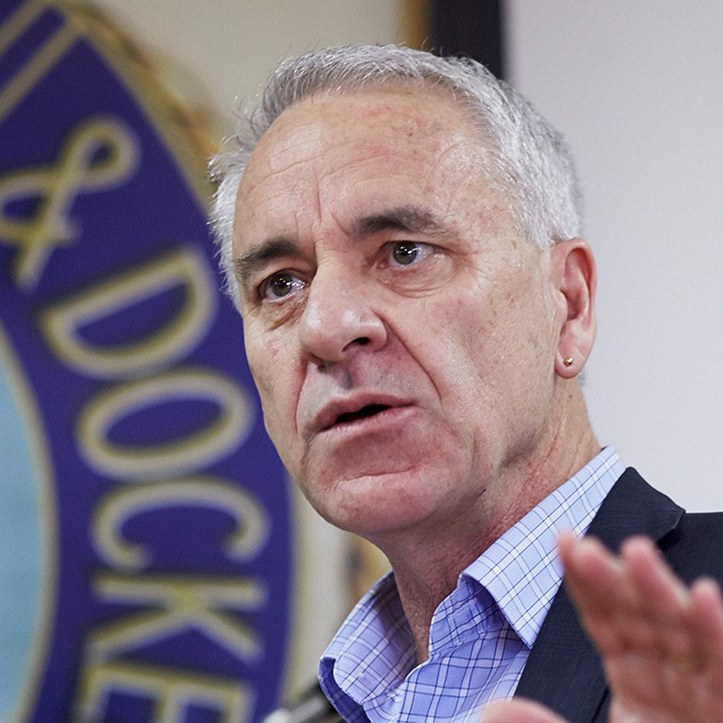
This issue of the Journal of Industrial Relations is dedicated to the outgoing Joint Editors-in-Chief, Professor Bradon Ellem and Professor Marian Baird. Here we pay tribute to Bradon's work and contribution to the Journal and to the wider field of industrial relations scholarship.
Bradon's achievements as Joint Editor-in-Chief are considerable. To put these achievements in context it is important to first outline Bradon's academic career and the strength and quality of his character, which he has brought to bear in his outstanding work with this Journal over a period of 25 years, including 16 years as Joint Editor-in-Chief.
Bradon's academic career began as a student in the United Kingdom in the late 1970s during a tumultuous period for that country's industrial relations. He witnessed first-hand the collapse of the Social Contract between the Wilson-Callaghan Labour governments and the Trades Union Congress, the Winter of Discontent industrial disputes and the dawn of the Thatcher-led neoliberal revolution and assault on unions. Against this backdrop, Bradon completed his Bachelor of Arts (Honours) at the University of Southampton followed by a Master of Arts at the University of Warwick. Bradon then returned to Australia where he commenced his doctoral studies, or “apprenticeship” to use his words, at the University of Wollongong in the early 1980s under the supervision of Professor Jim Hagan, a leading labour historian. Jim imparted upon Bradon many lessons that would come to characterise Bradon's own work: the importance of addressing “big questions” that were worth asking and worth answering, and developing strong and articulate narratives shaped by context and informed by theory (Ellem and Sheldon, 2010). Throughout his career Bradon bestowed these lessons upon the next generation of scholars whose careers he has nurtured.
After completing his apprenticeship, Bradon gained academic appointments at UNSW where he worked from 1988 to 1997, first in the School of History and then in the School of Industrial Relations and Organisational Behaviour. He then moved “across South Dowling Street” to the University of Sydney to work in the Department of Industrial Relations. There he joined colleagues including Professor Russell Lansbury who would become a good friend and close colleague. Bradon was promoted to Professor in 2012 and served two terms as Chair of Discipline, which by this time had changed its name to Work and Organisational Studies, from 2011 to 2015. He also held visiting positions at Cardiff University and the University of Western Australia during this time.
Bradon is a leading international expert in the industrial relations field, having made major contributions to scholarship on trade unions, labour history, industrial relations in the resources sector, industrial relations policy and comparative industrial relations. Drawing upon his training and expertise in history and geography has allowed Bradon to redefine the boundaries of industrial relations scholarship by bringing together different literatures to investigate critical questions around worker agency, economic justice and social change. This is exemplified in the research monographs that Bradon has authored. The Pilbara: From the Deserts Profits Come (UWA Publishing, 2017) brings together two decades of major research on the mining industry and has been described as “a veritable master-class in industrial relations history” (Sheridan, 2017: 175). In Women's Hands? A History of Clothing Trades Unionism in Australia (UNSW Press, 1989) is a significant union history which emerged from Bradon's doctoral research, and which covers women's labour and gender relations at work, themes Bradon carried through his career and contributions. Bradon has also edited and co-edited several books including one on peak unions, another investigating the post-war split in the NSW labour movement and a four-volume series covering major scholarly works in the industrial relations field. Bradon's research has been published in leading journals including British Journal of Industrial Relations, Regional Studies, Work, Employment and Society, European Journal of Industrial Relations, Comparative Labour Law and Policy Journal, Economic and Industrial Democracy and Labor History (US), among many others.
Bradon's research has been impactful, as reflected in the grants he has received from the Australian Research Council and various Australian and international unions. He was invited as an expert witness to several government inquiries including the Attorney-General's Industrial Relations Working Group in 2020 and several parliamentary inquiries.
Bradon has been a celebrated and captivating teacher for his entire career. He brings zeal to this work, which has proved infectious to the thousands of students he has taught. Bradon's education excellence has been formally recognised through several major teaching awards. He has supervised over a dozen doctoral students and countless honours students to completion.
Bradon has taken on important leadership roles in the industrial relations academic and practitioner communities, serving as President of the Association of Industrial Relations Academics of Australia and New Zealand from 2009 to 2010 and undertaking the role of Associate Editor of Labour History from 1998 to 2016. He was an Executive Committee Member of the NSW Industrial Relations Society from 2006 to 2020 and of the Australian Labour and Employment Relations Association from 2016 to 2019.
Notwithstanding the magnitude of these contributions and achievements, we wish to draw particular attention to Bradon's service to the JIR. Bradon's tenure as Joint Editor-in-Chief from 2006 to 2021 and before then as Book Review Editor from 1990 to 1999 makes him the longest serving editorial team member in the Journal's history. His generous character is reflected in the always supportive and encouraging feedback which he has provided in equal measure to authors of rejected articles as to those whose work is published. Under Bradon's joint custodianship, first with Professor Russell Lansbury and then with Professor Marian Baird, the JIR's standing and reputation have been significantly enhanced. This is evident through continually improving article citation metrics and the internationalisation of the JIR's readership, authorship and editorial board.
Above all else, Bradon is an outstanding person and a brilliant mentor. Many of Bradon's former students credit him with their decisions to undertake honours and doctoral studies and later to become academics. His passion for industrial relations, decent work and labour rights inspired them towards careers as industrial relations practitioners working in trade unions, government or employer association roles. Bradon spends countless hours each week reading the work of emerging scholars and collaborating with less experienced researchers, most often insisting that they take lead authorship. All of this work is done with grace and good humour: Bradon is one of the funniest people we know, who can always be relied upon to tell a good joke and a brilliant story.
Bradon has facilitated the careers of colleagues with young children, including members of the JIR editorial team. He has gone out of his way to support their work, create opportunities to aid their academic and personal development and make sustainable careers and parenthood possible. Bradon is the quintessential leader by example: a role model for how to be a good person, a good academic and a good editor.
The JIR could not have asked for more in an Editor-in-Chief. We thank Bradon for his leadership and service.