



Abstract
The main objectives of this study were to examine the type of adaptations made by Grades 1 through 3 primary school teachers working with children who are poor spellers of a transparent language such as Spanish and to analyze whether these adaptations were determined by the grade taught by these teachers. Using the total population of primary school classroom teachers in the Autonomous Community of the Canary Islands as a base, the authors took a random sample that was stratified by level, resulting in a representative sample of 300 teachers. For data collection, the authors employed an online questionnaire containing a list of specific teaching activities or procedures the teachers used to work on spelling. Results revealed that regardless of the grade taught, the teachers made a variety of adaptations in these teaching activities or procedures when working with weaker spellers, as compared to when working with stronger spellers. Furthermore, the results provide information on Spanish language spelling practices for these specific grades.
An understanding of the set of rules and conventions regulating the written language system is fundamental to written communication, and its importance is common knowledge as it relates to the social use of language. This set of rules or conventions, known as spelling, has been mainly considered to be a linguistic skill permitting the written codification of linguistic forms (phonological units, morphemes, and words; Perfetti, 1997). In this codification, cognitive and linguistic processes intervene in terms of the recovery, assembly, and selection of the orthographic representation (Delattre, Bonin, & Barry, 2006). In fact, when teaching students to write, teachers tend to address spelling proficiency as one of the main processes (Jiménez et al., 2008). This comes as no surprise, considering that spelling difficulties may affect student performance in numerous academic activities.
There is considerable evidence regarding how the inability to master spelling may affect writing in different ways (see Graham et al., 2008). Recent Spanish language studies have revealed that differences in spelling performance lead to differences in reading skills (Cuadro & Costa, 2014). A close relationship has been found between spelling skills and reading comprehension (Elosúa et al., 2014), confirming that spelling measures are good predictors of reading comprehension in Spanish primary school students (López-Escribano, Elosúa, Gómez-Veiga, & García-Madruga, 2013). It has also been confirmed that supplementary spelling instruction decreases the reading and writing difficulties occurring for many children, particularly in the case of weaker spellers (Berninger et al., 1998; Graham, Harris, & Fink-Chorzempa, 2002). These studies highlight the importance of spelling instruction beginning in the early school grades.
Despite efforts made by teachers to address spelling in their classrooms, many students continue to be weak spellers (Fresch, 2003). Clearly, teachers play an important role in both the prevention and the correction of these spelling weaknesses. In the latter case, adaptation of instruction proves to be a fundamental didactic element for the improvement of weak spelling performance. The few studies that have examined the adaptations made by teachers working with weak spellers (see, e.g., Graham et al., 2008) have been conducted in the English language. However, there are no known studies that explore whether these adaptations are made by teachers working in other spelling systems; therefore, studies such as ours are necessary. We have explored the type of adaptations made by teachers of early grades when working with weak spellers in a more transparent spelling system than English, such as Spanish.
It is well known that writing systems vary considerably in the consistency of their orthographic code (Alegría & Carrillo, 2014; Seymour, Aro, & Erskine, 2003; Treiman & Kessler, 2005). Languages with transparent spelling systems, such as Spanish, are characterized by their very regular orthographic code and consistent grapheme–phoneme correspondence (GPC). This is not the case with languages having opaque spelling systems, such as English, where the GPC rules are not as easily predicted and where spelling simultaneously transmits phonological and morphological information. In English, the ratio of phonemes to graphemes is 1.7:1, whereas in Spanish the proportion is considerably lower at 1.5:1 (Caravolas, 2004). This suggests that spelling difficulties may occur in a different manner in Spanish, as opposed to in English, therefore leading to the need for different instruction methods.
Evidence exists to suggest that the degree of transparency of a word—that is, whether the GPC is unequivocal—correlates with spelling performance (Defior, Jiménez-Fernández, & Serrano, 2009). In Spanish, many words have regular phonological schemes, permitting the correct writing of many words through the mere application of the GPC rules. However, Spanish orthographic code also contains morphophonemic properties that require instruction (Defior & Serrano, 2014). Unlike English, the Spanish language does not have identical letter sequences with differing pronunciations; however, there are inconsistent grapheme–phoneme relationships that affect the spelling of the consonants. That is, certain words contain phonemes that may be represented by a variety of graphemes, with no phonological rule specifying the appropriate grapheme for the correct word spelling. For example, the phoneme /b/ may be represented by v or b (e.g., vaca [vaca] and baca [baca], with both being pronounced /baka/). In other cases, the transcription of a consonant phoneme depends on the sound of the vowel that accompanies it. So when the phoneme /k/ is followed by the vowels /a/, /u/, it is written as C (for example, cama [cama]/kama/), but if it is followed by /e/, /i/, it is written as QU (for example, quemadura [quemar]/kemadura/; see Defior & Serrano, 2014, for the classification of the Spanish orthographic code rules).
The existence of Spanish words having arbitrary spellings in which inconsistent selection of the grapheme for the phoneme may be determined by the orthographic knowledge of the word or by the application of a rule is proof that the GPC is not sufficient for the correct spelling of all words. The Spanish language, although characterized by its high degree of consistency in the grapheme–phoneme direction, has a high degree of opacity in the phoneme–grapheme direction (Defior et al., 2009). This opacity may in part explain the spelling difficulties experienced by many students. Thus, the generalized belief that transparent orthographies have an advantage over the opaque orthographies is limited in the Spanish case to the transparent spelling system allowing for good performance on phonological mechanisms of writing during the early grades (Carrillo, Alegria, & Marin, 2012). However, when the writing requires lexical, morphological, and prosodic knowledge, acquisition is considerably slower.
Studies analyzing spelling errors suggest that the development of children’s spelling in Spanish does not differ qualitatively from learning to spell in opaque writing systems (Defior et al., 2009; Sánchez, Diuk, Borzone, & Ferroni, 2009). The mastery of inconsistent spelling and orthographic rules is not acquired early on, and children commit numerous errors when writing irregular words and words subject to specific spelling rules (Defior et al., 2009; Jiménez et al., 2008). The results of these studies reveal that due to its difficulty, learning Spanish spelling conventionality is problematic for many students. This is mainly due to the fact that the writing difficulties experienced by children during the early grades tend to continue throughout their school years (Gaintza, 2005).
In the official Spanish curriculum (Organic Law for the Improvement of Educational Quality; Ley Orgánica 8/2013, de 9 de diciembre, para la mejora de la calidad educativa, LOMCE, 2013), spelling is studied continuously throughout the mandatory schooling years. Starting in Grade 1, the acquisition of writing conventions are included, and it has been specified that by developing decoding skills, children may begin to apply the natural spelling rules (consistent and arbitrary not ruled). By the end of the second year, the explicit teaching of spelling rules is initiated, progressively incorporating these rules into each of the subsequent primary school grades (Order 89/2014). However, this does not guarantee that schools will place the necessary emphasis on spelling instruction or that sufficient instruction time will be given to improving the progress of all students (Pérez-Cañado, 2004). Furthermore, at a national level, specific instructions, such as how to work on spelling in the classroom, are not provided; therefore, a great deal of variety may exist in teaching approaches and practices used to improve spelling performance (Camps, Milian, Bigas, Camps, & Cabre, 2006; Díaz & Manjón, 2010). Although a debate exists regarding the most appropriate approach to take when working on spelling in Spanish (Díaz, 2008), typically, a traditional approach predominates, based on the memorization of isolated words and spelling rules (Díaz & Manjón, 2010; Pérez-González, Cañado-Gómez, & Pérez-Cañado, 1999). This coincides with findings from other contexts (Fresch, 2003; Johnston, 2001). In classroom practices, commercial materials for spelling support proliferate for the different school grades. Very few of these instructive activities have been evaluated for research in Spanish; however, the use of these materials by teachers indicates that spelling is not considered to be a skill that is acquired naturally, through informal procedures or the spelling-is-caught approach (Graham, 2000). Although there are no data regarding student spelling levels at a national level, there is a generalized concern over the spelling difficulties currently faced by many students. Many teachers are thus making a special effort in this area (Díaz & Manjón, 2010). However, as Graham et al. (2002) suggested, the success of these efforts depends in part on adapting instruction to individual student needs. In Spain, general education teachers are responsible for adapting their teaching methods to the different learning rhythms of the students in their classroom. In the Spanish research literature, some teaching recommendations and practices have been included to assist in improving children’s spelling skills (Camps et al., 2006; Díaz & Manjón, 2010), but it is unknown whether these are effective for weaker spellers. Overall, very little is known regarding how spelling is taught and whether individual differences in the learning of this skill are taken into consideration.
Currently, we have information on primary school teaching practices and procedures used in spelling instruction, as well as the type of adaptations made by teachers when working with weak spellers, since some researchers have addressed these areas (see, e.g., Fresch, 2003, 2007; Graham, Harris, Fink-Chorzempa, & MacArthur, 2003; Graham et al., 2008; McNeill & Kirk, 2013). In all of these studies, only the research conducted by Graham et al. (2008) focuses on adaptations. Using a national questionnaire completed by a sample of 168 randomly selected primary school teachers from across the United States, the authors collected information on spelling instruction practices and adaptations. They presented 20 specific spelling instruction activities or procedures recommended for spelling instruction during the early grades. The authors asked the teachers to indicate the frequency with which they used these practices in the classroom with children who were weaker and stronger spellers. They believed that “if a spelling activity or procedure occurred more often with weaker spellers than stronger spellers, then it represented a departure from the general teaching routine and was considered an adaptation” (p. 799). They also asked the teachers to identify any additional adaptation that they might make for the weaker spellers. Results revealed that all of the teachers reported that they taught spelling and the large majority did so using different teaching activities and procedures. As for the adaptations, the authors concluded that “some teachers are sensitive to the needs of weaker spellers, making a variety of adaptations for these students. A sizable minority of teachers (42%) reported making few or no adaptations” (p. 796).
The results of this study have advanced our comprehension of spelling instruction and the type of adaptations made by primary school teachers of the English language when working with weak spellers. However, in the Spanish language, we are unaware of studies that have analyzed these adaptations made by teachers when working with weak spellers; therefore, the main objective of this study is to examine the type of adaptations made by Grades 1 through 3 Spanish teachers working with weak spellers. Our focus was similar to that of Graham et al. (2008), although in this study we did not request that the teachers identify additional adaptations made when working with weak spellers. Due to the lack of previous research in the Spanish language regarding the specific teaching activities and procedures for teaching spelling to primary grade students, we decided to use the list of practices offered by Graham et al. (2008). However, we conducted an initial examination of how the specific spelling teaching activities or procedures are grouped. This was carried out to (a) provide a generalized view of the components used to support spelling instruction in these grades and (b) analyze the nature of the adaptations made by teachers.
On the other hand, we wanted to explore whether the adaptations made by teachers when teaching weak spellers were determined by the grade that they teach. Based on the findings obtained with the early grade Spanish children regarding early acquisition of the alphabetical code (Defior & Serrano, 2005) and the type of spelling errors committed by children at these early ages (Defior et al., 2009; Jiménez et al., 2008), it may be expected that Grades 1 and 2 teachers would make similar adaptations for weak spellers that differ from the adaptations made by Grade 3 teachers.
Method
Participants
Based upon the entire population of primary school teachers across the Canary Islands, Spain, school centers, a random sampling procedure, stratified by level, was used to identify Grades 1 through 3 teachers. The maximum errors in estimations of the parameters were calculated, with an alpha error of 5%. From a population of 2,373, with a confidence level of 95%, a sample of 331 teachers was obtained. To guarantee the random selection of the teachers, precise and detailed instructions were sent to the centers. Of the 331 identified teachers, 90.6% (n = 300) agreed to participate. The response rate in this study was much greater than those obtained in previous studies using questionnaires to request information from primary school teachers. For example, in the study conducted by Graham et al. (2008), the response rate was 68%. One potential reason for this difference is that Graham et al. requested that teachers respond by mail, whereas in our study teachers responded to an online questionnaire and received the support of the educational administration.
Table 1 presents information on the principal demographic characteristics of the survey participants. Collectively, all of the teachers were Spanish speakers, having an average age of 43.1 years (SD = 14.3). The majority were female (79.7%); only 20.3% were male. The sample was uniformly distributed across the three grades as well as across the urban, suburban, and rural regions. A greater variability was found for years of professional experience of the teachers in these grades. When information was requested from the teachers regarding their training, the majority (74%) responded that over the past years they had received training courses related to the specific difficulties related to learning to write. The chi-square test revealed that there were no statistically significant differences between teachers of the three grades based on gender, χ2(2) = .776, p = .678; school location, χ2(4) = 5.045, p = .283, and training received in learning disabilities in writing, χ2(2) =. 274, p = .872.
Demographic Characteristics of Study Participants.
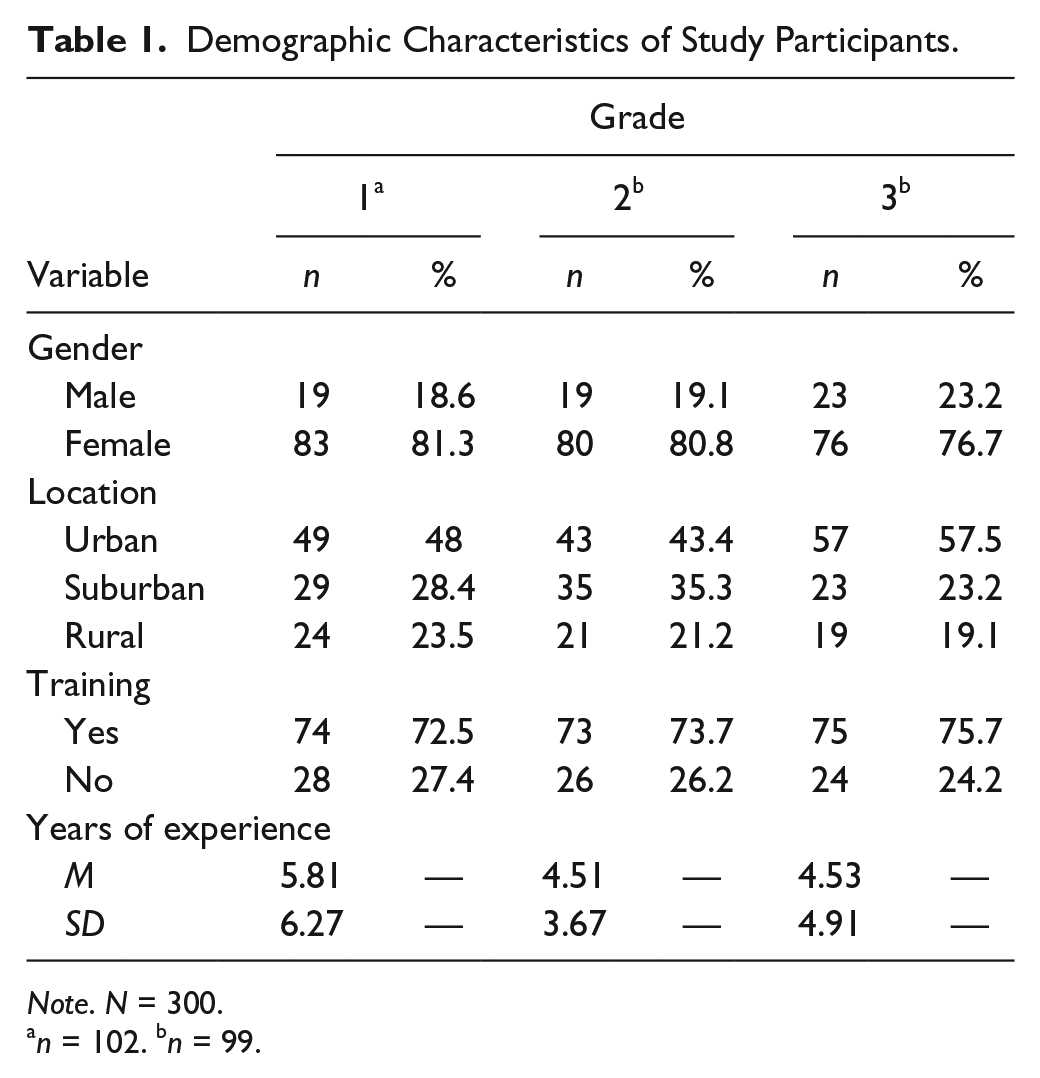
Note. N = 300.
n = 102. bn = 99.
Instrument
Data collection was conducted through an online questionnaire, using the SurveyMonkey (Version 19) tool. This instrument contained two sections: The first asked the teachers to offer information on some demographic characteristics (e.g., age, gender, center location, years of experience) as well as whether they received any type of training on working with students with writing difficulties. To analyze the type of adaptations made by the teachers working with weak spellers, the second section included a Spanish language adaptation of the Likert-type scale used by Graham et al. (2008). To adapt the instrument to Spanish, first an analysis was carried out on the commercial materials that are most frequently used when working on spelling in these grades. Later, various collective sessions were held with the researchers and three teachers having considerable experience in these grades. Feedback was sought in order to (a) verify the connection between the activities and the proposed procedures in the original scale of Graham et al. (2008) and those used by the Spanish teachers of these grades when working on spelling and (b) to adjust the clarity and wording of the items based on the application context. Minor adjustments were made in accordance with the observations made by these teachers (e.g., a definition of phonetics was included in one of the items to remove any ambiguousness). In the Spanish version, the scale presentation format, the number of items referring to the frequency of the spelling activities and instruction procedures, and the content of the same were maintained, except for the previously described clarification. The internal consistency of the scale was analyzed using data from this study. Cronbach’s alpha was .88.
The scale measured the frequency with which the 20 specific spelling activities or instruction procedures were applied in the classroom with students who were weak and strong spellers. For each specific spelling activity or instructional procedure, we used two independent scales ranging from 0 to 6 (0 = never, 1 = a few times a year, 2 = monthly, 3 = weekly, 4 = a few times a week, 5 = daily, 6 = a few times a day). The study participants were asked to first indicate the frequency with which an activity or procedure was used with the strong spellers and then the frequency with which it was used with weak spellers. The higher the score (0–6 points), the more often the activity or instruction procedure was used by the teachers. In accordance with the proposal of Graham et al. (2008), we considered that an adaptation was produced when there was a greater difference between the frequencies with which the teachers claimed to use a spelling activity or an instructional procedure with children who were weak spellers as compared to strong spellers.
Procedure
An email was sent from the Canary Islands’ Department of Education to all of the selected schools. This email included precise and detailed instructions, indicating the classroom teacher who should complete the survey, in accordance with the statistical procedure. Also, it briefly included the study objective, acknowledgments, contact information, and a link to the complete online questionnaire. Data collection was conducted between the months of May and June.
Results
Data Analysis
To explore the response patterns of the Spanish teachers regarding the 20 specific spelling activities or the instructional procedures based on the Likert-type scale, we first conducted a principal components analysis (PCA) with orthogonal (Varimax) rotation. Second, we examined whether the magnitude of the relationships between the specific spelling activities and informative procedures carried out by the teachers with weak and strong spellers differed significantly. For this, we used Pearson’s correlation coefficient (r). Finally, to determine the type of adaptations made by the teachers working with weak spellers and to check whether these adaptations were affected by the grade that a teacher taught, we carried out multivariate analysis based on the general linear model (MANOVA). If the overall Wilks’ lambda was significant, a posteriori contrasts were conducted (using factors found in the PCA as dependent variables and the group and grade as the independent variables). The partial eta squared (ηp2) was used as an effect size index.
In these last analyses, the Grades 1 and 2 teachers were considered collectively and compared with the Grade 3 teachers, based on our examination of previous data. Initially, it was found that the average frequency with which the Grades 1 and 2 teachers reported carrying out the spelling activities or instructional procedures was greater than that of the Grade 3 teachers, except for one item. Later, the average frequencies were analyzed using the PCA factors. Significant differences were also found for the means of the responses of the Grades 1 and 2 teachers as compared to those of the Grade 3 teachers for all of the items grouped in each of the PCA factors. MANOVA was used as a third alternative, and once again, significant differences were found (F > 1). ANOVA (with type of speller as the independent variable and the activity or procedure as the dependent variable) revealed that as for the frequency with which the Grades 1 and 2 teachers claimed to use the activities and procedures, significant differences were found for only two items (teaching of phonetics for spelling, p < .05; praising students when they spell correctly, p < .001). Therefore, when analyzing the type of adaptations that teachers reported, we consider the responses of the Grades 1 and 2 teachers collectively.
Principal components of spelling instructional practices
To ensure that the data were appropriate for the factor analysis, prior to factor extraction, the Kaiser-Meyer-Olkin Measure (KMO) and Bartlett’s Test of Sphericity (BTS) were conducted. The KMO measure of sampling adequacy was .901. The BTS (χ² = 4,564.58, df = 190, p < .001) indicated that the correlations between items were sufficiently large for the PCA. An initial analysis was carried out to obtain values for each of the data factors. The four factors that had distinctive values on the criteria of 1 Kaiser and that, collectively, explained 55.89% of the variance are show in Table 2.
Eigenvalues, Percentages of Variance, and Cumulative Percentages for Components of the Likert-Type Scale.
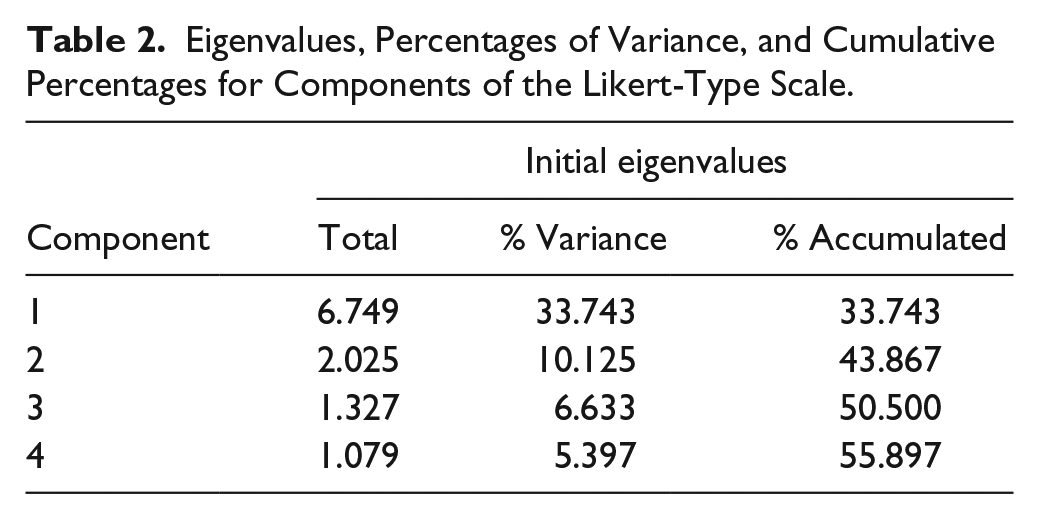
Table 3 displays the factorial matrix following the Varimax rotation in which the saturation of each of the scale items is presented. Based on these data, four factors or principal components were found (only two items—5 and 7—were saturated in more than one factor). Of all of the items presented, precisely half (n = 10 items) were grouped together in Factor 1. It was found that the items having the greatest saturation in this factor were those referring to the following instructional activities: the use spelling games (0.725) and word sorting (0.693), followed by specific skills such as phonetics (0.687) and phonological awareness (0.659), group work (0.649), and the strategy of motivation and reinforcement (0.555). This factor also included, although with a lower degree of saturation, the activity based on spelling rules (0.486). It was found that the instructional activities having the greatest saturation in this factor were more directly related to the phonological processing underlying writing. Factor 2, consisting of five items, was mainly defined by the following instructional activities: mini-lessons (0.859), reteaching of spelling strategies (0.845), student conferences (0.797), and with a lower saturation, the strategy to determine the spelling of unknown words (0.484) and teacher feedback on misspellings (0.421). One common denominator found in the activities grouped together in this factor was the reinforcement of spelling to address the students’ individual differences. In Factor 3, the following instructional activities had the greatest saturation: error correction using computers (0.840) and the use of computer programs (0.730); also included in this factor, although with a lower saturation, was encouraging invented spelling (0.453). The underlying component refers to the use of computers as means of facilitating spelling instruction. Finally, Factor 4 consists of two instructional activities: dictionary skills (0.743) and allowing students to correct their spelling mistakes (0.670). In this case, the use of visual procedures such as spelling correction media is of special note.
Factor Loadings From Principal-Components Analysis With Varimax Rotation.
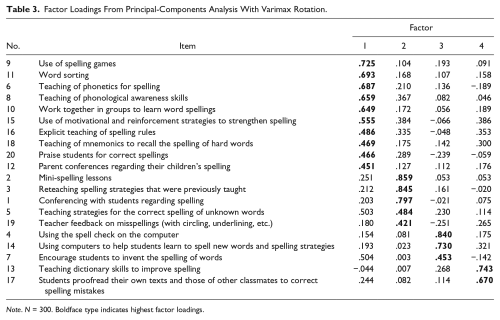
Note. N = 300. Boldface type indicates highest factor loadings.
Relationship between specific activities or instructional procedures and weak versus strong spellers
The significant relationships found to exist between the group and the spelling activities or instructional procedures that teachers claimed to use were of special interest. The results, presented in Table 4, reveal that when the teachers reported on the activities or procedures that they used with weak spellers, their responses were highly related with those that they claimed to use with strong spellers (r average = .90, p < .001). However, when relating the responses of the teachers for the activities and procedures used with strong spellers with the other activities or procedures used with weak spellers, the mean correlation decreased (r average = .27, p < .001). This leads us to believe that although the teachers responded to each of the spelling activities or procedures in accordance with the two independent scales (one for weak spellers and one for strong spellers), they did not consider the type of speller as two independent groups. Therefore, in the successive analyses, we considered the speller variable as an intragroup independent variable (of repeated measures).
Correlations Matrix.
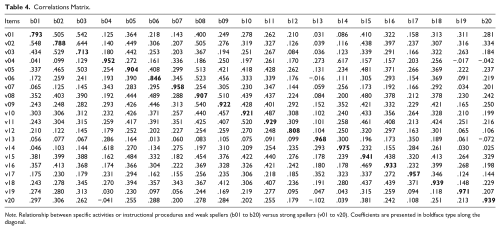
Note. Relationship between specific activities or instructional procedures and weak spellers (b01 to b20) versus strong spellers (v01 to v20). Coefficients are presented in boldface type along the diagonal.
Adaptations to instruction for children who are weak spellers
To analyze whether the type of adaptations made by teachers working with weak spellers was dependent upon the grade taught, a MANOVA was conducted with type of speller as the independent variable and grade (1 and 2 vs. 3) as the intersubject independent variable. Results reveal no significant interaction between the group and the grade taught by the teachers, F(1, 279) = 1.42, p = .113, ηp2 = .092. However, a main effect was found based on group, F(1, 279) = 11.56, p < .001, ηp2 = .453, and on grade, F(1, 279) = 11.35, p = .001, ηp2 = .449. For each of the main effects found, we present first the results of the adaptations made based on the group and second the type of practices or instructional procedures that the teachers reported to use based on the grade taught.
The results of a posteriori contrasts, using a MANOVA for each of the principal factors of PCA, revealed statistically significant differences in Factor 1, F(1, 289) = 12.23, p < .001, ηp2 = .298, and Factor 2, F(1, 294) = 42.72, p < .001, ηp2 = .421. On the contrary, no significant differences were found in the activities or procedures grouped in Factor 3, F(1, 296) = 1.60, p = .189, ηp2 = .016, and Factor 4, F(1, 297) = 0.50, p = .603, ηp2 = .003.
Table 5 presents the means, standard deviations, and significance levels for the activities or procedures grouped in the four factors based on group. Intrasubject effect tests (i.e., a different ANOVA for items grouped in each factor) revealed significant differences in all spelling practices (n =10) grouped in Factor 1 (F > 1). Unlike the strong spellers, teachers reported that with the weak spellers they tended to practice specific activities with a greater frequency, such as teaching phonetics for spelling, teaching phonological awareness skills, teaching spelling rules, and using mnemonic rules to recall the spelling of difficult words and word sorting. Furthermore, the teachers reported that with these children they carried out the following instructional activities more frequently: providing motivation and reinforcement to strengthen spelling, praising students when they spelled correctly, using educational games to learn to spell words, conducting group work to learn to spell words, and holding parent conferences regarding their children’s spelling.
Means, Standard Deviations, and Significance Levels for Stronger and Weaker Spellers.
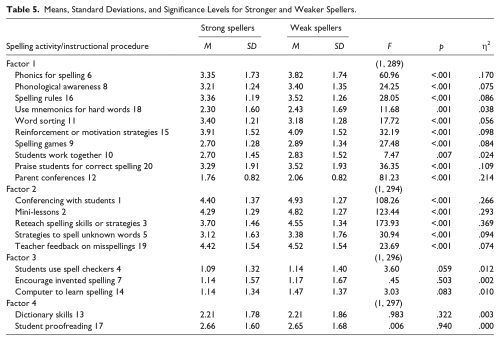
Statistically significant differences were also found in each of the procedures and strategies grouped in Factor 2 (F > 1). Teachers of the early grades reported that with weak spellers, unlike strong spellers, they implemented the following spelling support strategies more frequently: conferencing with students about their spelling, offering mini-lessons on spelling, reteaching spelling strategies, and providing teacher feedback on misspellings and strategies for spelling unknown words.
When analyzing the differences in the frequency with which teachers of Grades 1 and 2 and teachers of Grade 3 used the activities and procedures to teach spelling, a posteriori analyses (a MANOVA for each factor of the PCA) revealed significant differences in Factor 1, F(1, 289) = 3.20, p < .001, ηp2 = .100, and in Factor 4, F(1, 297) = 75.44, p < .001, ηp2 = .337. On the other hand, the analyses did not reveal significant differences in Factor 2, F(1, 294) = 1.887, p = .096, ηp2 =. 031, or in Factor 3, F(1, 296) = 1.482, p = .219, ηp2 = .015.
Table 6 presents the means, standard deviations, and significance levels of the specific activities or procedures that are grouped together in each factor, in function of the grade taught by the teachers. An ANOVA for each of the items grouped together in Factor 1 revealed that significant differences existed between teachers of Grades 1 and 2, as opposed to those of Grade 3, in 7 of the 10 activities or instructional procedures presented. Unlike the Grade 3 teachers, Grades 1 and 2 teachers reported that when working on spelling with their students, they dedicated more time to the teaching of specific strategies such as phonetics for spelling, phonological awareness skills, and word sorting. Similarly, they reported more frequent use of instructional procedures such as spelling games, group work, praise for students when they spelled correctly, and parent conferences regarding their children’s spelling.
Means, Standard Deviations, and Significance Levels Based on Grade Taught.
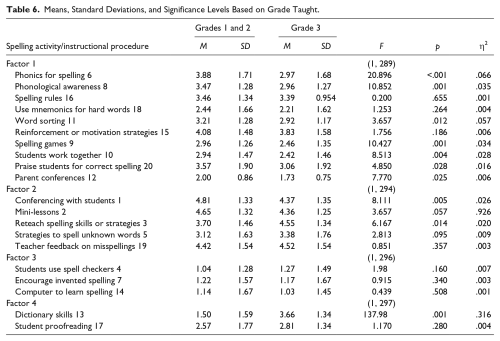
Finally, an ANOVA for each of the items grouped together in Factor 4 revealed that significant differences existed only in the teaching of dictionary skills. In this case, Grade 3 teachers reported teaching dictionary skills to improve spelling more frequently than did teachers of the other grades.
Discussion
The main objectives of this study were to examine the type of adaptations made by primary school teachers when working with children who are weak spellers and to determine whether the use of these adaptations depended on the grade being taught. To determine how the spelling instruction activities are grouped, we used a PCA that revealed the existence of four main factors, defined respectively as “use of phonology,” “spelling and reinforcement,” “technology and autonomy,” and “use of visual media to correct spelling.”
Specific spelling activities (e.g., teaching phonetics, phonological awareness skills, word classification, spelling rules) that were grouped together in Factor 1 revealed that spelling instruction relates closely to the linguistic skills that are necessary for the mastery of GPC. The procedures and strategies grouped together in Factor 2, on the other hand, suggest that teaching spelling skills based on the rules of GPC is not sufficient to correctly write all words in the Spanish language. It is also necessary to reinforce instruction that promotes the formation of orthographic representations of words. This differentiation may be justified by the fact that in order to learn to write in Spanish, not only a domain of phonological skills permitting the use of PGC mechanisms is necessary but also the use of orthographic strategies that allow for the correct spelling of arbitrary words that, due to their difficulty, require more instruction time (Cuetos, 2009; Defior et al., 2009; Jiménez et al., 2008).
Results revealed that significant differences existed between the spelling activities and instructional procedures that are grouped together in Factors 1 and 2. Of the 20 spelling activities or instructional procedures, significant differences were found in 15 of them. This result exceeded our initial expectations, primarily because in earlier studies a considerably lower number of adaptations were made by teachers (Graham et al., 2008).
A detailed analysis of the type of adaptations made by teachers according to the study revealed that when working with weak spellers, teachers dedicated more time to the instruction of linguistic skills (phonological and orthographic) that underlie the development of spelling. In other words, teachers devoted more time to (a) instructional procedures that supported the reinforcement of that which was taught previously (e.g., conferencing with students about spelling, conducting mini-lessons, reteaching spelling strategies, providing teacher feedback on misspellings) and (b) teaching spelling strategies for the correct writing of unknown words. This finding is in line with that described for children with spelling difficulties, unlike those who are strong spellers, as fewer spelling strategies were used and, therefore, more of these types of adaptations should be made by teachers (Darch, Kim, Susan, & Hollis, 2000; Defior et al., 2009; Jiménez et al., 2008; McNeill & Kirk, 2013).
The importance of reinforcement for spelling instruction was found in other adaptations made by teachers in this study. This suggests that motivation and reinforcement were the most frequently used practices to strengthen spelling in weak spellers. Also, teachers reported that for the weak spellers they devoted more time to offering praise for correctly spelled words, using games, and working in groups to learn how to spell words. These adaptations are consistent with the theory of making spelling fun and interesting for students (Graham, Harris, & Loynachan, 1996), but they may also be explained by the specific nature of the strategies that are grouped together in Factor 1 of the PCA. Thus, for example, working with phonetics, using phonological awareness, or teaching spelling rules generally demands group classroom practices and the use of motivating activities with children of these ages, especially when they are weak spellers.
It was particularly interesting to find that teachers adapted instruction for weak spellers when teaching phonetics and phonological awareness. Current research on interventions in spelling suggests the importance of these strategies in the development and improvement of spelling for students in general and, specifically, for weak spellers (Berninger, Abbott, Nagy, & Carlisle, 2010; Ehri et al., 2001; Graham, 1999). This is of particular importance in a transparent language such as Spanish, as the mastery of these skills allows not only for the correct writing of many words but also for the spelling mechanisms to be used at an earlier age (Alegría & Carrillo, 2014). Children who have not achieved automaticity and fluency in writing based on phonological mechanisms will have fewer spelling representations and, therefore, greater difficulties in developing spelling skills for the correct spelling of inconsistent or ruled words. As previously indicated, in Spanish, acquiring phonological knowledge is not sufficient for mastering spelling; it is also necessary to learn the language’s spelling rules. Several researchers found that students have greater difficulty in acquiring correct spelling of words that follow spelling rules (Defior et al., 2009; Jiménez et al., 2008); therefore, teachers should spend more time on the instruction of these rules (Gaintza, 2005). The results of this study support this finding, as teachers reported that they tended to work more frequently on the explicit teaching of spelling rules when working with weak spellers.
However, in order to learn the spelling pattern of inconsistent words in Spanish, students must also learn the language’s spelling rules (Defior et al., 2009; Jiménez et al., 2008). It has been found that students have greater difficulty correctly spelling words that follow spelling rules; therefore, teachers should spend more time on the instruction of these rules (Gaintza, 2005).
Finally, it appears that teachers in this study did not feel that it was relevant to adapt their teaching by using other strategies and practices that also have been found to be effective in spelling instruction (see Graham, 1999). No significant differences were found in any of the strategies or procedures that were grouped together in Factor 3 (n = 3) or Factor 4 (n = 2) of PCA. Specifically, for weak spellers, as compared to strong spellers, teachers did not report an increased use of computers for spelling instruction or mistake correction. This result supports previous findings (Graham et al., 2003; Graham et al., 2008) and confirms that for many teachers the use of new technology is not considered to be as attractive a tool as other spelling instructional strategies. However, the fact that teachers also failed to encourage invented spelling or student error correction as a means of support for these students seems to be related to the frequency with which they practiced these activities in their classroom. This interpretation may be confirmed by the highly significant relationships found between activities that teachers carried out with weak spellers and those that they used with strong spellers. Except for three procedures or strategies (i.e., classifying words that are more used with strong spellers; dictionary skills and error correction by students used with the same frequency in both groups), a trend was found to exist in which all of the activities or procedures presented on the scale were used slightly more with weak spellers.
The type of adaptations reportedly used by the teachers also offers an idea of the strategies and practices that are considered to be more important (in function of frequency) for spelling performance. Curiously enough, the activities and procedures that required more autonomous work on the part of the students (e.g., correcting their own errors, supporting invented spelling), as opposed to others that demanded more directed instruction (e.g., working on phonological awareness, holding parent conferences, conducting mini-lessons), were less frequently implemented and were adapted by the teachers when working on spelling.
This may also be indicative of how teachers work on spelling in these grades. Results reveal that the type of adaptations made was not determined by the grade being taught by the teachers. However, the results indicated that Grades 1 and 2 teachers, as compared to Grade 3 teachers, were more likely to use spelling activities and grouped instruction procedures, primarily in Factor 1 and, to a lesser extent, in Factor 2 of the PCA. These results may be related to the contextualization of the teaching of spelling within literacy learning. This is due to the relationship between the instructional practices for teaching literacy and those used to improve spelling performance based on Spanish curricular demands for these grades (consistent and inconsistent nonruled spelling; Decree 89/2014).
Conclusion
This study extends the findings on the type of adaptations made by teachers working with children struggling with spelling in Spanish. It was found that the teachers of the early grades made adaptations to many of the presented spelling activities and instructional procedures, mainly those demanding more direct support on their part. Although this seems to suggest the sensitivity of Spanish teachers of these grades to the individual differences existing in spelling, one limitation of this study should be considered before making any generalizations of the findings. The lack of observation of the direct practice of these teachers prevents us from solidly affirming that their opinions are a reflection of what they actually do in their classrooms when teaching spelling. Future studies should complement these results with direct observations of the teachers or should contrast these findings using a combination of these two procedures. Despite this limitation, this study provides additional information regarding the activities and procedures that may be common to the instruction of spelling in two languages that differ in their spelling systems, as suggested by other authors (Pérez-Cañado, 2005). Thus, it may be expected that the effectiveness of these practices for improving spelling performance is related to the frequency with which teachers of this study reported using the practices. Although further examination is necessary, the results may help to guide spelling instruction in the early grades and specifically for those Spanish-speaking children having difficulties with spelling.
Footnotes
Acknowledgements
Grateful thanks to the support of Steve Graham in providing us the original scale that we adapted to Spanish in the present study.
Declaration of Conflicting Interests
The author(s) declared no potential conflicts of interest with respect to the research, authorship, and/or publication of this article.
Funding
The author(s) disclosed receipt of the following financial support for the research, authorship, and/or publication of this article: This research was supported by Agencia Canaria de Investigación, Innovación y Sociedad de la Información, ref. ProID20100030 from the Government of the Canary Islands.