



Abstract
Including students with learning disabilities (SWLDs) in general education classrooms is a priority nationwide. Consequently, now more than ever before in our nation’s history, university teacher education programs face increased responsibility to ensure general education teaching candidates receive adequate preparation to educate SWLDs. Many stakeholders believe that edTPA—a performance assessment used as a credential requirement—can be an important tool in helping to fulfill this goal. Utilizing survey data from a large, research university, the authors investigated how perceptions of preparation programs, including edTPA, related to general education teacher candidates’ perceptions of their preparation for educating SWLDs. Candidates reported feeling more prepared for disability policies if they believed their program was cohesive in its goals and expectations. Candidates who rated edTPA as beneficial for entering the teaching profession also believed that edTPA improved their abilities to educate SWLDs.
Educating students with learning disabilities (SWLDs) in general education classrooms has become a prominent federal educational priority under the Individuals With Disabilities Education Act (IDEA; 2004). With recent reauthorizations of this federal law by Congress and still more recent affirmation of districts’ obligations to students with disabilities by the U.S. Supreme Court (Endrew F v. Douglas County School District, 2017), the federal government has expressed a strong commitment to improving educational opportunity for these students. A key tenet of this commitment, as stated by Congress, is that “[E]ducation of children with disabilities can be made more effective by having high expectations for such children and ensuring their access to the general education curriculum in the regular classroom, to the maximum extent possible” (IDEA, 2004). This commitment to educating students in the Least Restrictive Environment (LRE) has resulted in a particularly dramatic change in the inclusion of SWLDs into general education classrooms. In 1989, only 11% of public school SWLDs spent the majority of their school day (more than 80% of total instructional time) in a general education classroom (Snyder, de Brey, & Dillow, 2016). By 2015, that figure had jumped to 68% (Snyder et al., 2016). Of all students with disabilities, SWLDs have experienced the largest shift based on the total number of students who have moved into the general education class from other placement settings (McLeskey, Landers, Williamson, & Hoppey, 2012; Snyder et al., 2016).
In addition to disability-specific legislation like IDEA, educational policy such as that mandated in the No Child Left Behind (NCLB) Act and its recent reauthorization, the Every Student Succeeds Act (ESSA), has established and maintained accountability expectations for SWLDs by incorporating metrics of their academic progress into teacher and school evaluations (Horowitz, Rawe, & Whittaker, 2017). For example, the ESSA maintains that only students with the most significant cognitive disabilities—approximately 1% of the student population—are allowed to take an alternative assessment (ESSA, 2015). Within this accountability framework, SWLDs are expected to learn and master the same content as their classmates (Karger & Hitchcock, 2003; Yell, Shriner, & Katsiyannis, 2006). Given these mandates, state education agencies are responsible for ensuring not only that SWLDs are being included to the maximum extent possible in general education classrooms but also that classroom educators are prepared to address the academic needs of these students. As a result, teachers in general education classrooms now hold a greater responsibility for educating SWLDs than ever before. This means, in turn, that teacher preparation programs for general education teachers have an increased responsibility to ensure that their general education teacher candidates receive appropriate preparation to educate all students, with and without learning disabilities (Stayton & McCollum, 2002). In other words, training teacher candidates to work with SWLDs can no longer be strictly the province of special education programs. Given that research suggests that achievement gaps for SWLDs are holding steady (National Assessment of Education Progress [NAEP]; National Center for Educational Statistics, 2013), more evidence about ways in which classroom settings might be helping or inhibiting the success of SWLDs is needed (Fuchs et al., 2015).
Beyond these changes in special education law and their implications for the preparation of general education teachers, there have been concurrent policy developments aimed at improving new teacher quality by creating higher standards for entry into the profession. One key mechanism for this has been the implementation of more rigorous licensing requirements. Among the most prominent of these new licensure requirements is edTPA, a subject-specific performance assessment that requires teacher candidates to videotape themselves teaching a lesson and write a series of essays, in response to subject-specific prompts, explaining the thinking behind the planning, instruction, and assessment of the videotaped lesson. edTPA is currently in use at 837 teacher preparation programs in 41 states and the District of Columbia; thus, achieving a passing score on the edTPA assessment is a requirement for program completion and/or licensure from these states (http://edtpa.aacte.org/state-policy).
Proponents and critics of edTPA agree that its rigor and high-stakes accountability exert considerable influence on teacher preparation programs. Supporters argue that it provides a framework to “guide the development of curriculum and practice” (http://edtpa.aacte.org/about-edtpa#Overview) in teacher preparation programs while critics decry the totalizing effect of edTPA’s vision of good teaching and argue it comes at the cost of crowding out other values and educational aims from teacher preparation programs (e.g., Au, 2013; Dover & Schultz 2016; Madeloni & Gorlewski, 2013; National Association of Multicultural Educators, 2014). The limited research on edTPA implementation likewise suggests that although implementation can vary within and across programs, it has become a prominent feature of the programs in which it was implemented, with some programs going so far as to have had students do “mock-TPAs” (J. Cohen, Cohen, West, & Aiken, 2013; Ledwell & Oyler, 2016; Ratner & Kolman, 2016).
Given the high stakes associated with edTPA and its prominence in teacher preparation programs in which it is implemented, we believe that edTPA is a key mediating factor in the effort to train new general education teachers to meet the needs of SWLDs in their future classrooms. The state of California, where our study was conducted, has made this link between teacher performance assessments and the preparation of candidates for educating SWLDs explicit, with the credentialing board stating that it has set “an expectation that both tasks and rubrics have a focus on teaching students with disabilities placed in the general education classroom” (Sandy, 2016).
Although the board has established this expectation, it is unclear concerning the extent to which preparation for the state’s performance assessments has furthered the goal of preparing teachers to teach in inclusive classrooms. That is, in order for the state board to fulfill its policy goals through this directive, it must spur teacher preparation programs to conduct their training in a way that prepares all educators to meet the needs of all students.
Ideally, empirical research is needed to examine program factors, such as edTPA, and their influence on the development of best practices to support inclusive classrooms and educate SWLDs. Such studies would track candidates in their programs and later in full-time teaching by measuring different perceptions of teachers and program characteristics to evaluate what factors related to effective practices for SWLDs. However, such study should draw from a baseline for what candidates perceived in their training and preparation programs before entering the classroom, especially given the rhetoric and concern that pre-service training and professional development do not relate to later outcomes in the classroom (Harris & Sass, 2011).
The purpose of our study therefore was to develop this baseline by assessing the views of teacher candidates regarding their preparation before they enter the classroom. An ideal study design would involve tracking students from their entrance into a teacher preparation program, through their training, and finally into the field to see how they perform in the classroom. Key to that kind of study is the ability to establish some kind of baseline for what prospective teachers think about their training and preparation before they enter the classroom. This is particularly true given the concerns that teacher education via certification is generally ineffective and that prospective teachers do not retain the messages imparted during that training (Harris & Sass, 2009, 2011; Koedel, Parsons, Podgursky, & Ehlert, 2015). Our study begins to develop this baseline—and lay the foundation for future work on practicing teachers—by assessing teacher candidates’ views on preparation immediately after they have completed the credentialing requirements and before they enter the classroom. We investigated the perceptions of general education teacher candidates regarding graduating from their programs and feeling prepared to teach. This is probably the first study to examine this issue of perceptions of preparation at the nexus of two issues—teacher licensure through edTPA and preparedness for educating SWLDs—given the traditional separation between university preparation programs for general education and special education teaching candidates (Brownell, Ross, Colon, & McCallum, 2005). There are many unexplored questions regarding whether teachers feel prepared to teach SWLDs in their general education classrooms, what factors are associated with teacher candidates’ feelings of preparedness, and how these feelings might be associated with specific practices of teacher preparation programs. Given the importance that edTPA has as a gatekeeper for entry into the profession for a growing number of prospective teachers, and its current prominence within preparation programs, we believe this is a useful avenue to explore prospective general education teachers’ sense of whether these teachers are prepared to teach SWLDs. In conducting this study, we sought not only to extend the prior work on edTPA but also to contribute to the on-going conversations about how to prepare teachers more effectively to meet the needs of all students in their classrooms.
Research Background on edTPA
Studies that have examined the perceptions of teacher candidates regarding their training need to be understood in the broader context of two decades of teacher education policy that has sought to improve teacher quality by creating more rigorous standards for entry into the profession (Darling-Hammond, 2016). Although reformers have disagreed on the philosophy behind these reforms—some arguing for increased professionalization and others increased deregulation (Cochran-Smith & Fries, 2001; Darling-Hammond, 2016; Cohen, Hutt, Berlin, Mathews, McGraw, & Gottlieb, 2018)—they have argued for a view that traditional credentialing mechanisms involving standardized, multiple-choice tests lacked validity in assessing whether teacher candidates were prepared to be effective teachers. The creation of edTPA, and its California predecessor, the PACT (Performance Assessment of California Teachers), were in response to this call for more authentic, performance-based assessments of what teacher candidates are actually capable of doing in the classroom, and these assessments received broad-based support as a result (Cohen et al., 2018; Reagan, Schram, McCurdy, Chang, & Evans, 2016).
Although explicitly modeled in the fashion of other professional licensure examinations, such as the U.S. Bar examination for lawyers and the medical boards for doctors, edTPA differs in that it is expressly designed to be incorporated into the curriculum of teacher preparation programs, with accreditation bodies even stating that teacher candidates’ edTPA performance can be considered a standardized assessment of program quality (http://caepnet.org/accreditation/caep-accreditation/caep-accreditation-handbook; see also: http://edtpa.aacte.org/about-edtpa#Goals-1). Both proponents and detractors of edTPA agree that once implemented, it becomes a central organizing framework for the work of teacher preparation programs (e.g., Au, 2013; Darling-Hammond & Hyler, 2013). Similarly, researchers suggested that even when faculty members try to decenter edTPA’s place in the program, the high stakes associated with it remain central to teacher candidates’ preparation experiences (J. Cohen et al., 2013; Madeloni & Gorlewski, 2013; Ratner & Kolman, 2016).
In light of these arguments and findings, we think student perceptions of their teacher preparation programs, particularly as it relates to their experience in being prepared to complete the edTPA, are central to understanding their overall perceptions of preparedness for the classroom—a view consistent with edTPA proponents’ claim that the assessment is designed to ensure that teacher candidates are able “to meet the academic needs of all students” and are “ready to teach . . . from the first day they enter the classroom” (http://edtpa.aacte.org/about-edtpa#Overview). Although there is limited research on edTPA’s effectiveness in making candidates feel prepared to teach or actually being effective teachers (Goldhaber, Cowan, & Theobald, 2016), the research has suggested there is inconsistent and uneven messaging about edTPA as an obstacle to teacher candidates’ perceptions of the usefulness of their training. For instance, Okhremtchouk and colleagues (2009), Margolis and Doring (2013), and Meuwissen and Chopin (2015) found that inconsistent messages and support between candidates’ fieldwork experiences and their preparation at the university hindered teacher candidates’ success on teacher performance assessments. The researchers found that when cooperating teachers—licensed, full-time teachers who mentor candidates’ fieldwork in their classrooms—lacked knowledge of the performance assessment within the preparation program, the candidates had less success in completing it.
Additional research has documented a potential disconnect between the professional development that candidates receive in their programs based on notions of best practice and placement observations. Specifically, researchers of prior studies have noted that university supervisors (i.e., university-affiliate staff members who observe and give feedback to candidates based on their fieldwork) have had different opinions about whether specific instructional practices and quality aligned with suggestions from PACT (e.g., Sandholtz & Shea, 2012). Ledwell and Oyler (2016) and Ratner and Kolman (2016) found that these differing perspectives also extended beyond university supervisors to faculty members within teacher preparation programs. In the context of studying faculty support for teacher candidates’ preparation for edTPA, Ratner and Kolman found considerable variability in the kind and quality of support provided by faculty members. Although they differed in the extent to which they provided explicit guidance and help in completing edTPA, all the faculty members demonstrated active attempts to support candidates in passing the edTPA and efforts to adapt their instruction in light of the high-stakes demands of the test. Ledwell and Oyler likewise found that despite divergent perceptions of the value of edTPA, it nevertheless was a spur for curricular change within programs. They found that programs “reported making edTPA-related curriculum changes with a range of reactions from pride and satisfaction to distress and regret” (p. 130). In both cases, the studies highlighted not only the extent to which edTPA has been a major driving force within programs but also that the varied approaches of faculty members have conveyed discordant messages to teacher candidates. Indeed, the largest study of edTPA implementation found that teacher candidates’ perceptions of edTPA were associated with faculty messages about it and the levels of support they received from faculty in preparing for it (J. Cohen et al., 2013).
This disconnect between the concepts of best practice delivered via preparation programs and candidates’ experiences in their placements and later as full-time teachers is particularly poignant when discussing preparation to teach in inclusive classrooms. Gehrke and Cocchiarella (2013) surveyed 125 elementary, secondary, and special education teacher candidates to examine consistency between candidates’ knowledge of inclusion based on their field-based experiences and their coursework. Their findings suggested a lack of consistency in the knowledge communicated to candidates via their coursework in their preparation programs and the real-world field experience candidates observed in their placements. As a result, candidates reported feeling a greater lack of confidence in their abilities to educate in inclusive classrooms (Gehrke & Cocchiarella, 2013). In reporting on a follow-up study, Gehrke, Cocchiarella, Harris, and Puckett (2014) noted such disconnect may be due to philosophical difference among programs, candidates, and school districts. In the results from a mixed-methods study relying on survey data and interviews with candidates, the authors concluded that candidates perceived inclusion as being operationalized differently in their school districts compared with the discussions of inclusion in their programs.
It should be noted that while the proposed study sought to establish a baseline of if/how edTPA related to the perceptions of new teachers regarding their preparedness to teach SWLDs, to date not enough evidence exists to establish whether edTPA is an effective tool for preparing new teachers (Goldhaber et al., 2016). As a result, the purpose of the current study was to examine what aspects of preparation relate to perceptions of readiness to teach SWLDs. There is no doubt that performance assessments such as edTPA are major aspects of teacher education programs and, in the case of our study site, that passing the edTPA determines whether candidates can receive their license to teach. Therefore, we included a focus on edTPA as one potential factor related to preparation to teach in inclusive classrooms alongside the numerous other dimensions involved in a teacher education program.
Preparation for Teaching SWLDs
To begin, there is evidence of programs promoting greater efficacy of teachers to support inclusion and educate SWLDs by instilling evidence-based practices. Evaluating the Collaborative Teacher Education program in New Jersey, Wang and Fitch (2010) suggested that modeling co-teaching—having general education and special education candidates teach one class together—was important for fostering skills in collaboration and relationship-building, two critical challenges these teachers face upon becoming full-time teachers. In fact, Brownell and colleagues (2005) reviewed existing literature on successful general teacher preparation and concluded that the skill of collaboration was a key component for fostering inclusive classrooms. This is largely due to the need of cross-collaboration between all school staff for educating SWLDs in inclusive schools (Burstein, Sears, Wilcoxen, Cabello, & Spagna, 2004). Multiple parties are responsible for these students’ success, namely, through their involvement in designing and updating students’ Individualized Education Programs (IEPs).
Other researchers suggested the importance of critical coursework and self-reflection that challenges the old paradigm of exclusion and promotes advocacy for SWLDs among pre-service teachers (Peters & Reid, 2009; Ware, 2008). As Forlin (2010) argued, however, courses in teacher education that are entirely removed from authentic field-based experiences are weak in preparing pre-service teachers for inclusion. A remarkable number of programs that have emphasized teacher preparation for working with students with disabilities note the vitality of these field-based experiences and the roles of supervisors (Burstein & Sears, 1998; Ludlow, 1994; Ruhl & Hall, 2002). Boe, Shin, and Cook (2007) surveyed recent program graduates about their preparation and found that new teachers believed content-based preparation related to pedagogy as well as practice teaching was more useful than content knowledge alone. In essence, the field-based experiences for teachers learning to work with SWLDs are the arenas for experimenting with new learning strategies and general management practices for future teachers, which underscores the importance of aligning coursework with classroom practices and ensuring that candidates have on-site support from their programs (Burstein & Sears, 1998). These experiences guided pre-service teachers’ trajectories for developing the capacity to work with SWLDs in general education classrooms.
Another key factor in the quality of preparation is whether a teacher education program has a coherent vision articulated across its faculty. With rapid and radical changes in expectations for public schools in regard to educating students with disabilities, it is no surprise that many teacher education programs have lacked a coherent vision for how to best prepare teacher candidates for educating SWLDs. For example, Smith and Edelen-Smith (2002) surveyed 28 department chairs at universities with teacher education programs and found that there was an overall lack of agreement from faculty on the appropriate integration of expectations and competencies for teacher candidates in their programs. Based on these results, the authors speculated that these institutions would experience significant obstacles fostering collaboration between departments in schools of education to improve the training for candidates learning how to teach in inclusive classrooms.
Sharma (2010) proposed that programs and teacher educators emphasize reflection as a tool to prepare candidates to support inclusion. Specifically, having candidates reflect on their own teaching philosophy, establish routines of investigating their practice through inquiry (i.e., “What happened during my lesson plan?”), and adapting their practice to include evidence-based strategies (Sharma, 2010). Amid changing classroom compositions, edTPA may be an important factor to consider, given its large claims to professionalize teaching and improve classroom practices, with reflection on one’s practice being a critical component of the assessment. edTPA is a subject-specific assessment that does not expressly include elements in its scoring rubrics for students with special needs. The handbooks do, however, include recurring prompts that encourage teacher candidates to “consider the variety of learners in your class who may require different strategies/support (e.g. students with IEPs or 504 plans)” and to explain in their lesson plan the “instructional strategies and learning tasks . . . that support diverse student needs” (SCALE, 2015). Given edTPA’s gatekeeping function for new candidates as well as the assessment’s explicit prompts to consider the needs of diverse learners, we believe it is important to explicitly explore teacher candidates’ perceptions of this nexus of preparing to become professional teachers and supporting SWLDs in their future classrooms.
Research Questions
In general, implementation studies of performance assessments like edTPA highlight the importance of cohesive systems for addressing key changes (Peck, Galluci, Sloan, & Lippincott, 2009; Peck & McDonald, 2013; Whittaker & Nelson, 2013). This perspective is particularly relevant in studying edTPA and its implementation in California, given heightened priorities for educating SWLDs in general education classrooms. Notably, as states like California continue to rely on edTPA to certify the preparedness of general education teachers for educating SWLDs, there is a need to evaluate how these general education teaching candidates view their experience with edTPA in the context of their preparation for educating SWLDs.
As mentioned previously, very little empirical or conceptual work exists that addresses how best to prepare new general education teachers for teaching SWLDs, and, to our knowledge, there is no work dedicated to understanding how this preparation might be related to new program and licensure requirements linked to teacher candidates passing edTPA. This is concerning given the increase of SWLDs in general education classrooms, as well as the widespread implementation of edTPA as a streamlined tool in which to prepare and assess teaching candidates. To aid in this pressing effort, our study aims were to contribute new insights by gathering and analyzing survey data about how general education teacher candidates view preparation activities in regard to edTPA’s impact on the ability to educate SWLDs. Specifically, this study investigated the following research questions:
To inform these questions, we drew from research on policy implementation that examined how implementation agents interpret changes to policy and practice. For this study, we considered whether agents (i.e., general education teachers) feel equipped to address the needs of SWLDs, given the policy context of teacher education programs preparing all teachers to address the needs of SWLDs in general education classrooms. Research discussed later in this article would suggest that policy changes are more likely to be implemented as they were intended—in this case, edTPA’s framework for educating SWLDs is more likely to be aligned with broader program objectives and support the development of candidates’ practice—when local actors have both clear goals and usable procedures.
Two primary components made up the idea that we applied in our study. First, Spillane, Reiser, and Reimer (2002) and D. K. Cohen and Hill (2008) noted that clear goals and internal consistency within programs are important prerequisites for the rational implementation of reforms. Moreover, Spillane and colleagues stressed that to understand implementation fully, researchers must analyze how agents reconcile their existing practice with the practices required for reform implementation. This approach necessitates taking seriously the range of identities and beliefs that shape perceptions of reforms such as edTPA. As such, we investigated numerous aspects of program cohesion as well as the potential mediating identities inherent within a group of teaching candidates.
Second, general education teaching candidates understand and apply messages about teaching in inclusive classrooms in ways that are situated within broader professional communities (Coburn, 2001; Spillane, 1998). In this sense-making framework, teacher educators are likely to construct understandings of edTPA within the context of the priorities of inclusion, and, in turn, align their practice to edTPA’s frameworks for “good teaching” for SWLDs in ways that are contingent on their preexisting practices and identities. Thus, to complement previously discussed research on the variation across preparation program faculty, university supervisors, and cooperating teachers, we added to our study contexts about whether teacher candidates perceive receiving supports for educating SWLDs and whether they perceive this support as consistent across areas of their preparation.
Method
Site
All data came from a single research-focused state university in Southern California with a history of using edTPA, and this study received approval from the Institutional Review Board at the institution. The university has both undergraduate and graduate programs with a student population close to 25,000 students. Approximately 25% identified themselves as Chicano/Latino, 25% identified themselves as Asian/Pacific Islander, and 40% identified as White.
Statewide, there are 44 institutions that use edTPA as the assessment tool that dictates whether general education candidates can receive their teaching credential upon graduation. Our study site began implementing edTPA in August of 2014 and was one of the initial adopters of this assessment in California. Both Multiple Subject: Elementary and Single Subject: Secondary teaching credentials require a passing score standard for candidates to receive a license to teach. This institution prepares on average of 70 teaching candidates a year, and all candidates participate in edTPA as a prerequisite for licensure. We surveyed the teaching candidates in the 2016–2017 licensure cohort and had an exceptional response rate of 97%.
The preparation program serving as the site of our study is a 13-month graduate program, in which individuals apply to receive a teaching credential and a master’s in degree in education (MEd). All candidates in this program had obtained a bachelor’s degree prior to enrollment. The program also requires a minimum of a 3.0 undergraduate grade point average (GPA) for admission, with few exceptions granted by program administrators. Moreover, the structure of the program is most similar to a cohort model in which fewer candidates on average are admitted to maintain smaller class sizes and emphasize a learning community among teaching candidates. Upon entering the program, candidates complete foundational coursework before beginning their student teaching in the following months. During the fall of the school year, candidates are in their part-time field placement 3 days a week, with evenings dedicated to coursework as part of the preparation program. In the spring, candidates are full time in their field placements, and they complete the edTPA, the remaining coursework, and their thesis for the master’s degree. As such, there are multiple foci during the preparation program that include feedback to candidates via their field experiences as well as their written work.
As part of the coursework, fall courses include one dedicated methods course designed to help candidates teach SWLDs. This course is taught by a former special education teacher and current lecturer in the program and utilizes the Response-to-Intervention framework. Course topics include differentiation strategies for students with language impairments, classroom management, special education policies, and use of data/assessments. While this course is the only course dedicated to the education of SWLDs, it should be noted that all methods courses across the program are required to account for potential learning differences within a classroom, including learning differences of SWLDs. In fact, the program is held accountable for embedding this specific preparation to work with SWLDs via a biannual report to the California Commission on Teacher Credentialing, with the program submitting syllabi and reports on the specific courses that include preparation to work with students with learning differences. This accountability structure ensures that the program meets requirements listed under the California Teaching Performance Expectations (TPEs).
For field placements, the program matches candidates with two cooperating teachers’ classrooms—one per semester—based on previous relationships established with schools in the community and alumni associations. It should be noted that although the program tries to ensure that candidates gain experience teaching in inclusive classrooms, it is not an explicit requirement of a candidate’s placement.
As seen in Table 1, respondents in the year of our study were representative of statewide demographics based on available statewide data from the California Commission on Teacher Credentialing (Suckow & Lau, 2017). Perhaps one observable difference between the study candidates and all teaching candidates in the state of California was the greater percentage of candidates who identified as Other for race and a lower percentage of candidates who identified as White in our sample, a difference of about 5% to 6% compared with state averages. This difference was not statistically significant.
Teacher Candidate Demographics.
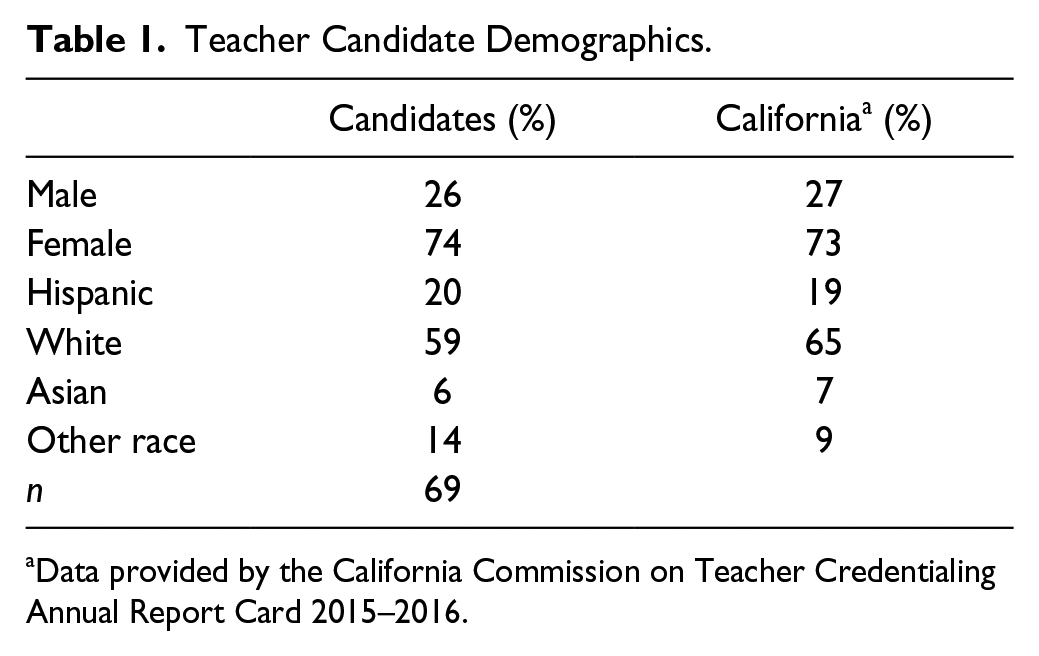
Data provided by the California Commission on Teacher Credentialing Annual Report Card 2015–2016.
Data
We surveyed the 69 general education teaching candidates who were assessed by edTPA in this teacher education program (note that edTPA is not a requirement for licensure for candidates pursuing a special education credential). The researchers were not involved in the preparation program, and the only contact between the candidates and the researchers was via email to distribute the survey. Surveys were 15 to 20 min in duration and focused on the relevant issues regarding preparation of general education teacher candidates for educating SWLDs and their perceptions of preparing for and being assessed by edTPA. The surveys asked questions about the alignment between edTPA and other aspects of candidates’ preparation, the role of edTPA in the broader scope of preparing to become full-time teachers, and the connection between edTPA and preparing to teach in inclusive classrooms. All survey questions were answered on a 4-point Likert-type scale (strongly agree, agree, disagree, or strongly disagree). Candidates could also mark questions as not applicable.
Questions were derived from surveys previously validated by J. Cohen et al. (2013). During the validation process, surveys were piloted with several teaching candidates from other universities (in other states) that used edTPA. J. Cohen et al. used cognitive interviews during pilot testing to ask participants if they understood each question, felt that questions were fair and accurate in capturing relevant content of candidates’ preparation and their views of edTPA, and believed that the survey encompassed a majority of aspects of their teaching preparation. These conversations were recorded and discussed among all the research team members. Based on these conversations and the thoughts expressed by pilot participants, the surveys were modified to address concerns and clarify the meaning of specific survey questions. After data collection, Cohen et al. (2018) conducted an exploratory factor analysis (EFA) to ensure reliability and internal consistency of the survey. Factors that emerged from this analysis were used in the confirmatory factor analysis (CFA) described below.
Outcomes
The first outcome considers the extent to which candidates believe they have sufficient knowledge and preparation regarding disability policy and procedures. Candidates were asked to what extent they agreed or disagreed with two separate statements regarding general disability policy:
I have sufficient knowledge of special education policies and procedures as mandated under IDEA and
I am receiving adequate preparation through my coursework on special education policies and procedures.
Second, an additional scale was factored to assess perceptions of preparation to work in classrooms with SWLDs. This scale, “Learning Disabilities” (α = .97), contained four items that described whether candidates believed edTPA prepared them to educate SWLDs. The questions asked candidates to what extent they agreed or disagreed with the following:
edTPA better prepared me to teach in classrooms that include SWLDs;
edTPA better prepared me to plan and/teach lessons for SWLDs;
edTPA better prepared me to use IEPs for SWLDs; and
edTPA helped me design assessments and use information from assessments in instructional planning for SWLDs.
The scale was first used as one outcome in Table 4, and then the individual items were used as final outcomes in Table 5.
Perceptions of Preparation Scales
Based on the scales from J. Cohen et al. (2013), CFA was used to reduce the number of variables and to construct normalized scales for perceptions of preparation while also removing the possibility of multicollinearity between the variables. CFA was used to refine these existing scales as well as to validate new scales measuring edTPA’s preparation for educating SWLDs. The items on our survey were factorable based on our sample size (Kaiser–Meyer–Olkin [KMO] = 0.62). Ranging from 0 to 1, the KMO statistic is a measure of sample adequacy evaluating the factorability of an assessment based on the number of items and the sample size. A value of 0.60 or greater indicates that the sample size is sufficient to factor the items on the survey (Mulaik, 2009).
The following scales, further outlined in Supplemental Appendix Table A1, were used as our key independent variables for our analysis: Helpfulness (α = .96) describes whether candidates viewed their preparation for edTPA as useful or beneficial in regard to becoming a classroom teacher. Alignment (α = .90) describes whether candidates believed that edTPA associated with other aspects of their preparation (e.g., teaching placement, coursework). University Supervisor (α = .86) is a scale of the support that candidates felt their supervisors in the program provided. Program Coherence (α = .73) describes candidates’ perceptions of whether their teacher education program was unified in its goals, mission, and expectations. Placement (α = .85) describes candidates’ perceptions of whether their placement was in line with their expectations and desires for future classroom placements. Note that these alpha scores were similar to those found in the study Cohen et al. (in press), who surveyed teacher candidates in a different state and region of the country. The alpha scores from the Cohen et al. (in press) study were as follows: Helpfulness (α = .96), Alignment (α = .88), University Supervisor (α = .90), Program Coherence (α = .80), Placement (α = .91; loadings for each factor are listed in Supplemental Appendix Table A2). Each factor was evaluated for fit using three common fit statistics: comparative fit index (CFI), root mean square error of approximation (RMSEA), and the standardized root mean square residual (SRMR). For each of the above factors, the CFI ranged from 0.98 to 0.91, the RMSEA ranged from 0.10 to 0.00, and the SRMR ranged from 0.08 to 0.00. The one fit statistic that was marginally out of range was the RMSEA of the Alignment factor, which was 0.10. Otherwise, each of these statistics suggests good model fit given the sample size (Hooper, Coughlan, & Mullen, 2008; Kline, 2015).
Control Variables
Table 2 presents all control variables utilized in this study. In addition to the outcomes and perception variables of interest described previously, candidates also reported several demographic characteristics in their surveys, including candidates’ gender, race, undergraduate GPA (4.0 scale), highest level of parents’ education (lowest = high school degree/GED; highest = degree beyond bachelor’s), whether they attended a private school in K through Grade 12, and whether they were pursuing a multiple-subject (elementary) or single-subject (secondary) credential.
Descriptive Statistics for Main Study Variables.
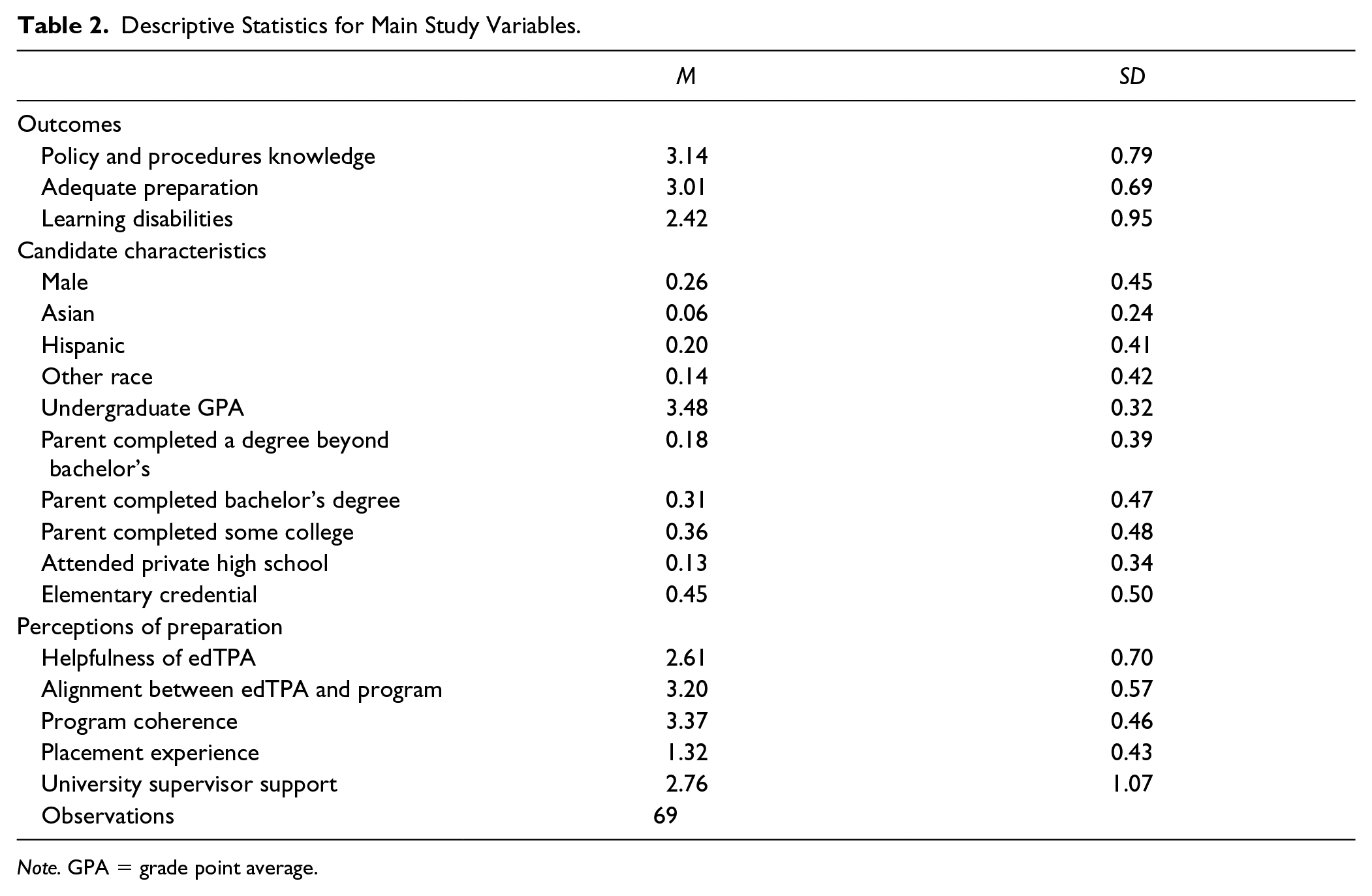
Note. GPA = grade point average.
Analytic Approach
A series of multivariate regressions were used to examine associations between the various perceptions of candidates’ preparation and their perceptions of whether edTPA helped them feel prepared to educate SWLDs. Employing a standard ordinary least squares regression, this study used the following model:

where Y notes the dependent variables of scaled ratings regarding general education teacher candidate i’s perception of the program’s impact on his or her ability to educate SWLDs. As described above, these outcomes included whether candidates believed they had sufficient knowledge of disability and special education policies as well as whether candidates perceived the qualities of their program (including edTPA) as helpful in preparing them to educate SWLDs. The independent variables in the model included the scales for the various perceptions of preparation in their program (P), background characteristics (B), and whether the candidate was pursuing a multiple-subjects (elementary) credential (E). The final term is a standard error term. In sum, this regression model would be used to illustrate which variables associated with higher ratings of perceived preparation and readiness to lead an inclusive classroom with SWLDs.
Results
Knowledge of Disability Policy
Our first research question asked which perceptions of preparation (including edTPA) associated with whether candidates believed they possessed sufficient knowledge of disability policy and procedures. Table 3 presents empirical models in which we examined the association between the perceptions of candidates regarding their preparation and their knowledge of IDEA and of special education policies in schools, presented in columns 1 and 2, respectively. Regression coefficients are presented with corresponding standard errors in parentheses. To ease interpretation of findings, we then standardized all variables to produce standardized beta coefficients, which are comparable effect size estimates with that of Cohen’s d (J. Cohen, 1992; J. Cohen et al., 2013).
Estimates of Preparation for Inclusion Policies.
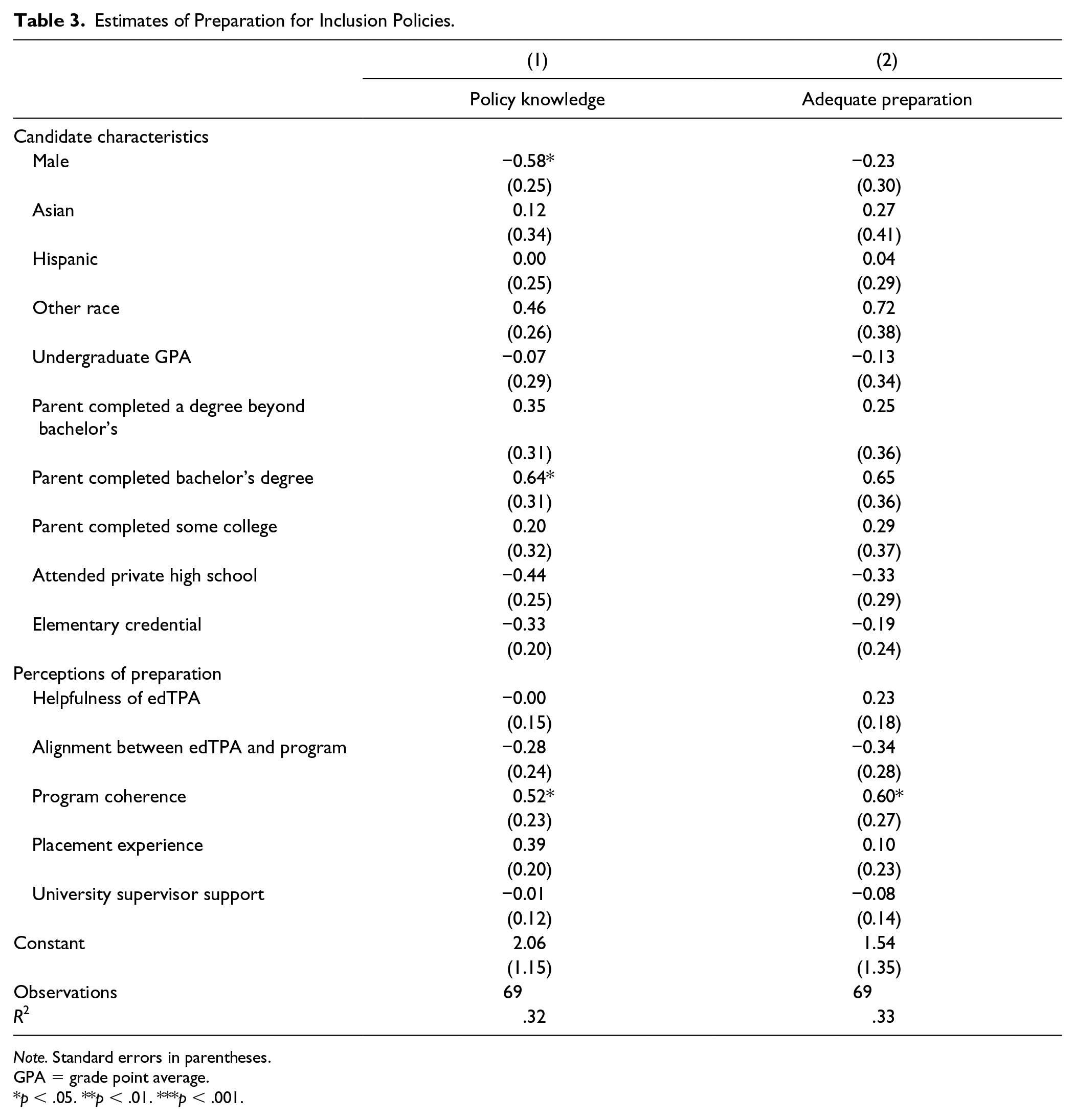
Note. Standard errors in parentheses.
GPA = grade point average.
p < .05. **p < .01. ***p < .001.
The upper portion of columns 1 and 2 list the various candidate characteristics. One key finding was that no background characteristic consistently predicted our outcomes across both models; that is, no single characteristic of our sample significantly predicted both knowledge of IDEA or feeling prepared to address special education policies. There are some, but few, differences between columns. In column 1, males tended to report having less knowledge of the policies and procedures of IDEA, with an association of −0.58 (ES = 0.23σ), while candidates whose parents completed a bachelor’s degree tended to report having greater knowledge of IDEA, with an association of 0.64 (ES = 0.30σ). No other background characteristics associated with these outcomes. Generally speaking, then, teacher candidates’ backgrounds did not significantly predict knowledge of IDEA or of special education policies across multiple measures.
Unlike the background characteristics, we did see consistency across models with regard to perceptions of preparation. The lower portion of columns 1 and 2 in Table 3 present associations among perceptions of preparation, which include the various scales regarding edTPA, program characteristics, and other preparation experiences. Only one factor—program coherence—was statistically significant, and it was significant across both models. As noted previously, program coherence was a scale that referred to the perception that the teacher education program (a) articulated a clear vision of teaching, (b) showed that similar views of teaching were expressed across courses, and (c) evaluated candidates in a way that was consistent with the program’s expectations.
In column 1, candidates who believed that their program was coherent tended to believe they possessed sufficient knowledge of IDEA, with an association of 0.52 (ES = 0.26σ). Similarly, in column 2, candidates who reported that their program was coherent also reported feeling prepared for special education policies at school, with an association of 0.60 (ES = 0.30σ). According to Keith (2006), these effect sizes are considered to be reaching a moderate level in educational research. Again, no other perceptions of preparation associated with these outcomes.
Perceptions of Feeling Prepared to Educate SWLDs
We address our second research question in Table 4, which presents findings for the perceived impact of background characteristics and program perceptions on candidates’ preparation for educating SWLDs. Regression coefficients are provided, along with standard errors in parentheses. Column 1 presents coefficients only for candidates’ background coefficients. As seen in this column, no associations were found between teaching candidates’ background characteristics and whether they believed edTPA was helpful in preparing to teach SWLDs. Column 2 adds the credential variable to test whether there was a difference between elementary and secondary credentialing programs. The findings did not show an association between the type of credential a candidate was pursuing and their perception of edTPA as aiding in preparation to educate SWLDs. Candidates’ demographic characteristics were also not predictive in this model.
Estimates of edTPA’s Impact on Preparation for Working With SWLDs.
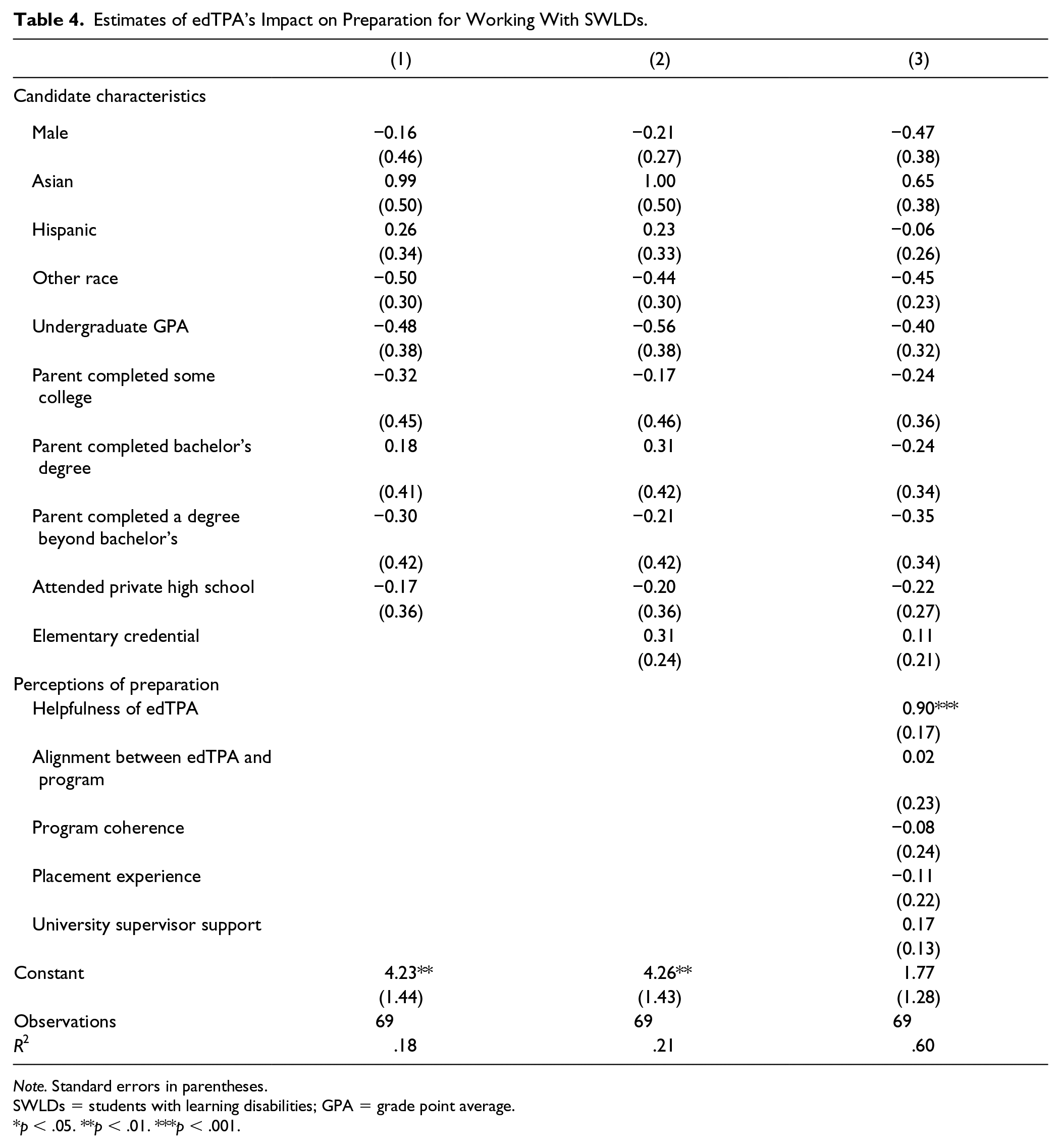
Note. Standard errors in parentheses.
SWLDs = students with learning disabilities; GPA = grade point average.
p < .05. **p < .01. ***p < .001.
Finally, column 3 adds the perceptions of preparation while still controlling for all background characteristics and type of credential. With regard to the first listed perception scale, Helpfulness had an association of 0.90 to the scaled perception that edTPA was beneficial in preparing to educate SWLDs. The 0.90 association found for Helpfulness translates to an effect size of 0.68σ, which is considered a moderate effect size in educational research (Keith, 2006). This means that candidates who believed edTPA was generally helpful to them in preparing to become a classroom teacher tended to believe that edTPA was useful in preparing to educate SWLDs. No other associations were found between perceptions of preparation and perceptions of edTPA in preparing to educate SWLDs. Again, candidates’ demographic characteristics were not predictive, meaning that no matter what model was used, candidates’ demographics did not associate with feeling prepared to educate SWLDs.
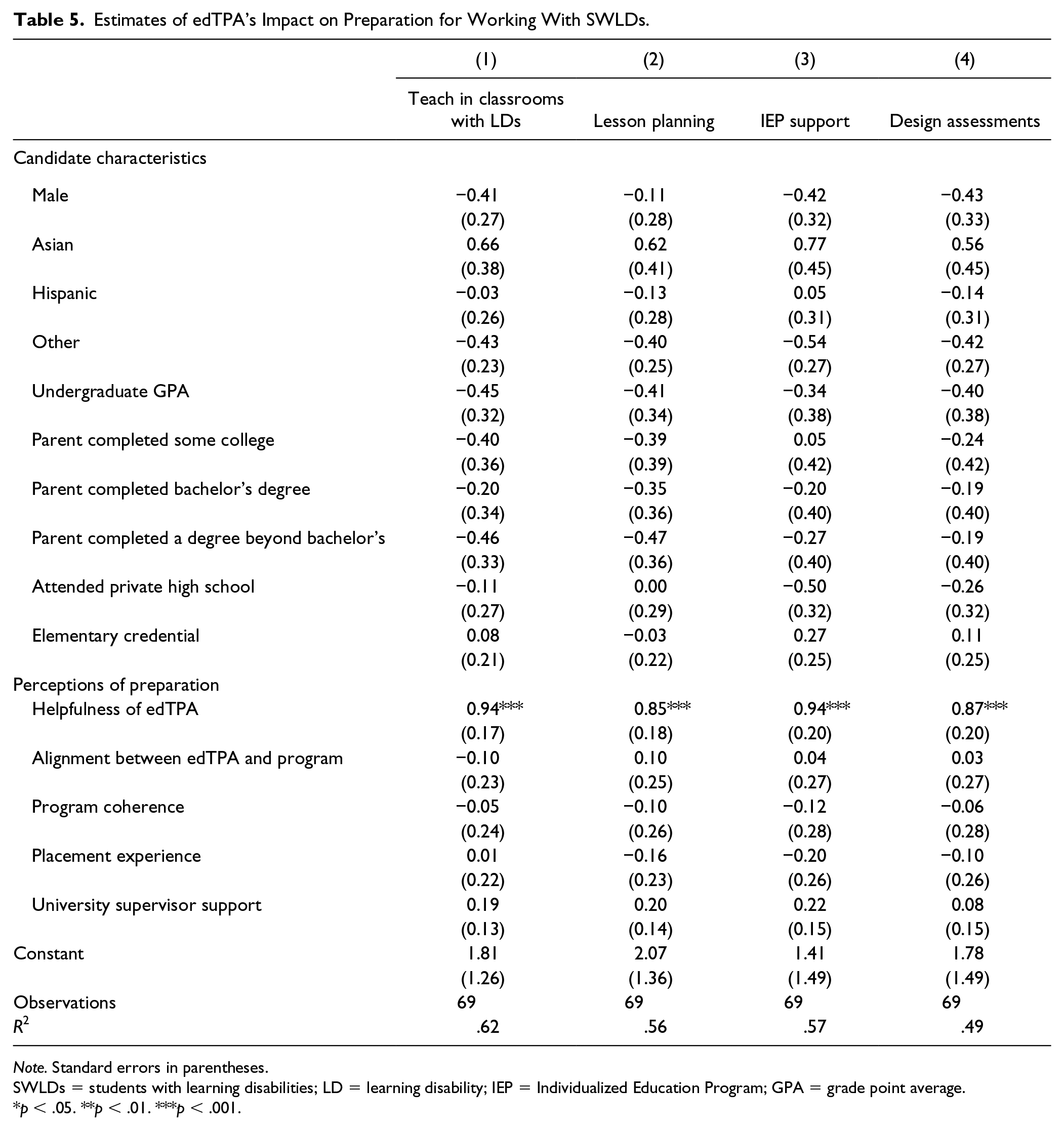
Delving deeper into our outcome scale in Tables 4 and 5 presents separate regression estimates for each individual survey item from the Learning Disability scale. As seen in columns 1 through 4, Helpfulness consistently associated with each aspect of educating SWLDs. Candidates who found edTPA helpful in preparing to become a teacher also believed that the assessment helped them (a) teach in inclusive classrooms with SWLDs (ES = 0.70σ), (b) plan lessons for SWLDs (ES = 0.65σ), (c) use IEPs to support learning for SWLDs (ES = 0.63σ), and (d) design assessments for SWLDs (ES = 0.61σ). No other association emerged for any outcome in this scale, including demographic and background characteristics.
Estimates of edTPA’s Impact on Preparation for Working With SWLDs.
Note. Standard errors in parentheses.
SWLDs = students with learning disabilities; LD = learning disability; IEP = Individualized Education Program; GPA = grade point average.
p < .05. **p < .01. ***p < .001.
Note that the effect sizes are similar for each of the individual survey items of the Learning Disability scale. Thus, all items that make up the Learning Disability scale seemed to be equally important as a measure as opposed to one or two items driving the results. Also reassuring in regard to the consistency of the results in Table 3 and overall reliability of the Learning Disability scale, no other association from the rest of the independent variables emerged in any regression as shown in Table 4. Whether measured with one scaled outcome or the individual survey items, it is clear that candidates who believed that edTPA was helpful in the process for becoming a teacher felt that the assessment helped them learn how to educate SWLDs.
Discussion
The purpose of our study was to examine which perceptions of general education teacher preparation associated with candidates’ knowledge of special education policies and inclusion, as well as how these candidates perceived their program’s impact on their ability to educate SWLDs. To our knowledge, this was the first study to assess how policy-meets-practice in addressing teacher candidates’ perceptions regarding feeling prepared to graduate and educate SWLDs in the context of their teacher preparation program, including edTPA.
Interpretation of Research Findings
Research Question 1
This study’s results illustrate that several key characteristics related to the perception about which program characteristics were beneficial to general education teacher candidates’ perception of general disability policy and educating SWLDs. The responses of candidates to this question indicated that their perceptions regarding the coherence of their preparation program was positively related to their knowledge of and preparation for disability policy and procedures. Program coherence refers to consistency in messages to and expectations of candidates throughout their coursework, field placements, and assessments. Candidates who believed that all these sources were connected in their goals and purpose also believed they were equipped with adequate knowledge of special education policies and procedures.
Researchers of prior studies noted how having a clearly articulated and stable mission across aspects of the preparation program is important for candidates to become effective teachers (Darling-Hammond et al., 2000). While some research has suggested that programs have little effect on candidates’ beliefs about inclusion and SWLDs (see White, 2007), there is no doubt that new teachers are expected to know disability policy to the extent that it affects their teaching—using IEPs, their respective liabilities as governed by IDEA, and the rights and expectations of SWLDs. Our survey data suggest that when candidates reported feeling higher coherence throughout the preparation process, they also reported having sufficient knowledge of disability policies. If future research could possibly attribute causality to this finding—perhaps through a randomized control trial—this could ultimately have implications for addressing school policy and practices that relate to inclusion and instruction.
Research Question 2
In addressing this question, the responses of candidates indicated that if they generally believed edTPA was useful in their preparation to be a teacher, they also believed that the assessment was useful for preparing them to educate SWLDs. This indicates that the adoption of edTPA’s framework for educating SWLDs may be dependent on the general usefulness of edTPA as a tool for adequate preparation for becoming a teacher. That is, perceiving edTPA as a useful assessment for learning to educate SWLDs is not dependent on perceptions of the general preparation program but instead is related to the messages and perceived utility of edTPA more generally. This finding is in line with the results of prior research on the successful implementation of performance assessments, which illustrates that this reform depended on agreement from faculty on the assessment’s purpose such that it aligned with program goals as well as their quality of support of preparing candidates for the assessment (Ledwell & Oyler, 2016; Ratner & Kolman, 2016; Smith & Edelen-Smith, 2002).
Implications
Research implications
Given the multidimensional purpose of edTPA as both a framework for good teaching as well as a tool for reflecting on practices, the findings from this study should be contextualized within the larger conversations about whether the edTPA should/and to what extent be used as a tool for training and reform of the next generations of teachers. Our study neither purports to assess the effectiveness of edTPA nor argues for the adoption of edTPA as a primary factor in preparing new teachers to teach SWLDs. Rather, this study explored numerous factors involved in teacher education programs and whether there were specific characteristics that were tied to the perceptions of teacher candidates regarding their knowledge and ability to work in inclusive classrooms. These findings yield implications for researchers concerned with edTPA and inclusion as well as policymakers and programs at the forefront of implementing these reforms in practice.
For researchers, our study provides new insights for how a wave of policy changes to promote more inclusive practices might be related to teachers’ reported perceptions of readiness-to-teach after being prepared in a long-standing institution of higher education. As state policymakers across the country continue to (a) require that programs’ rubrics for teacher preparation consist of the new policy goals for inclusive instruction and classroom settings, and (b) utilize teacher performance assessments like edTPA to measure whether teaching candidates have been adequately prepared to fulfill such goals, our findings illustrate that having coherence across the preparation program is related to the beliefs of candidates that they have received sufficient knowledge and preparation regarding special education policy at the federal and school levels. This is a unique contribution of scholarship to the literature of teacher preparation and institutional change in the face of this educational change.
In addition, this study is the first known research to assess whether general education teaching candidates view teacher performance assessments as effective tools for preparing them to educate SWLDs. However, our finding illustrates that edTPA may be considered universally helpful to some teacher candidates, including preparation for working with SWLDs. Although it is encouraging to see that views of edTPA were related to readiness to teach SWLDs, there is, of course, a potential downside: We cannot assess how effective the framework is in practice. The expressed confidence of candidates in educating SWLDs may have stemmed from direct experience—reflection of practices in their placements—or may be a manifestation of the “unrealistic optimism” known to exist for new teachers in believing that they would face less challenges in their first year of teaching (Weinstein, 1988). Given concerns expressed by special educators about whether edTPA aligns with current goals and efforts to address the needs of students with disabilities (Bartlett, Otis-Wilborn, & Peters, 2017), future research will need to address its effectiveness for teachers in their future classrooms.
Policy and practice implications
There are also important takeaways for policymakers and practitioners involved with edTPA and inclusion. As state policymakers across the country continue to align teacher preparation with these teacher performance assessments and simultaneously prioritize inclusion of SWLDs, our findings uncover important insights that may help avoid pitfalls and hurdles. Specifically, our analysis sheds light on how the perceptions of candidates regarding their preparation aligns with these more general policy expectations of inclusion—essentially, general education teacher candidates must internalize edTPA’s framework and believe that the assessment is effective for becoming a teacher before such a framework can assist them in learning how to teach SWLDs. Therefore, if educational stakeholders agree that edTPA is a necessary tool to include in the preparation process for new teachers, it is important that the implementation of edTPA is robust across programs such that candidates understand and apply the various components of the assessment.
Limitations
Although this study was novel in being the first to examine general education teachers’ perspectives with regard to educating SWLDs, there are some limitations that can be used as a starting point for future research. First, our research was based on a survey of teacher responses and therefore did not include direct assessments or observations of teachers. Our study was not able to directly assess teachers’ coursework or knowledge of educating SWLDs, nor were we able to observe teacher practice. Future research might consider expanding on this study through assessment and observations. Second, our site and sample was from a single program in one state. Although our response rate was certainly high, generalizability is limited. Future work might consider expanding across the entire state as well as expanding to other states, where there may be different credentialing requirements. Third, our work was descriptive, implying that the findings here do no suggest causality. Thus, this research should be evaluated within this scope, rather than in regard to being an impact study. Fourth, the alpha value for the scale of Program Coherence, a key independent variable in this study, was below .80. Although this alpha value would be considered by some methodologists as satisfactory in meeting standards for reliability (Bland & Altman, 1997), it is (a) the lowest alpha value of all scales included in this study and (b) below the commonly accepted threshold of .80. Future research might draw from this study’s scales and further test reliability measures. Fifth, the RMSEA for one of the three fit statistics reported for the Alignment scale was marginally out of the recommended range of 0.00 to 0.08 (Kline, 2015). Future research with richer data could enhance the ideal model utilized for evaluating the relationship between perceptions of preparation and perceptions of readiness to educate SWLDs.
Conclusion
Given the traditional separation between university preparation programs for special education and general education teachers (Brownell et al., 2005), the learning needs of SWLDs were historically considered strictly the purview of special education teachers. In light of recent shifts in federal and state policies, this bifurcation of responsibility in the preparation of educators who are trained in address the needs of students with disabilities is no longer acceptable or appropriate. This change—along with new heightened academic requirements for students with and without learning disabilities—makes it imperative that programs that train new general education teachers adapt those programs to ensure graduates are prepared to meet the needs of their students. Although states like California have assumed that the alignment of licensure examinations with these expectations will likewise lead to an alignment within teacher preparation programs, this assumption has yet to be investigated. Moreover, prior research points to the potential for divergent responses, even within a single teacher preparation program, in response to new licensure recommendations (e.g., Ratner & Kolman, 2016).
In sum, our study represents a next critical step in understanding key issues in developing the teaching workforce to educate SWLDs. Policy decisions surrounding successful teacher preparation will need to understand how teacher programs affect teachers being able to address all children, and we cannot exclude children with disabilities from this consideration. Therefore, it is important to understand what particular teacher and program characteristics facilitate rising cohorts of the education workforce to feel equipped to foster the educational needs of SWLDs. In a wave of important policy change, the hope is that assessments like edTPA are a catalyst for the facilitation of best practices for new teachers. More work is needed to best understand the ways in which these reforms meet practice through their implementation in teacher education programs.
Supplemental Material
supplement_material – Supplemental material for New Teachers’ Perceptions on Being Prepared to Teach Students With Learning Disabilities: Insights From California
Supplemental material, supplement_material for New Teachers’ Perceptions on Being Prepared to Teach Students With Learning Disabilities: Insights From California by Michael A. Gottfried, Ethan L. Hutt and J. Jacob Kirksey in Journal of Learning Disabilities
Footnotes
Authors’ Note
Ethan L. Hutt is now affiliated with University of North Carolina Chapel Hill.
Declaration of Conflicting Interests
The author(s) declared no potential conflicts of interest with respect to the research, authorship, and/or publication of this article.
Funding
The author(s) received no financial support for the research, authorship, and/or publication of this article.
Supplemental Material
Supplemental material for this article is available online.
References
Supplementary Material
Please find the following supplemental material available below.
For Open Access articles published under a Creative Commons License, all supplemental material carries the same license as the article it is associated with.
For non-Open Access articles published, all supplemental material carries a non-exclusive license, and permission requests for re-use of supplemental material or any part of supplemental material shall be sent directly to the copyright owner as specified in the copyright notice associated with the article.
