



Abstract
Early literacy skills serve as the best precursors of reading success and risk indicators of the double deficit and triple deficit hypotheses according to the spelling consistency of languages. Our study analyzes the predictive value of phonological awareness, naming speed, and orthographic skills for early reading in Spanish. Participants included 362 Spanish children aged 4 to 5 years. We used data analysis to examine the relationships between these precursors and fluency through a structural equation model and investigated the risk indicators of poor reading performance according to the double deficit and triple deficit hypotheses using binary logistic analysis. Our research delimits a model for the Spanish language that emphasizes the predictive value of phonological awareness, letter-naming fluency, and knowledge of graphemes in early reading. Letter-naming fluency is the best precursor to early reading experiences, and poor early reading performance in children is explained by deficits in phonological awareness, naming speed, and visual orientation. Our findings confirm the risk indicators of the triple deficit hypothesis in the early learning of reading in Spanish.
Numerous skills serve as precursors to reading, such as phonological and phonemic awareness, letter-naming fluency, sound-blending, and “word-play.” Studies of early reading have frequently related the role of certain early literacy skills to future reader development (Schaars et al., 2017). Studies on reading precursors seek to evaluate which skills serve as the strongest predictors of future reading ability and determine preventive measures at pre-reading phase (Ozernov-Palchik et al., 2016), as well as to analyze the effects of these precursors in different languages (Caravolas et al., 2012). The study of precursors in different languages has been motivated by the particular characteristics of spelling systems depending on their degree of consistency. These characteristic conditions, the lexical or sub-lexical patterns, strategies, and processes in the development of reading skills differ by language (Arango-Tobóna et al., 2018; Davies et al., 2007).
A review of existing explanatory models shows differences among various languages. Linguistic diversity in the field of phonetics and spelling allows us to find similarities in Finnish and Hungarian models (based on the grapheme/phoneme correspondence) and profound differences in languages with spelling systems with a lower degree of consistency, such as French (Ziegler et al., 2010), Arabic (Gharaibeh et al., 2019), Sinhala (Wijaythilake et al., 2018), Bulgarian (Shtereva, 2014), and Chinese (Wang et al., 2015; Yang et al., 2019).
The singularity of the Spanish language comes from its consistent spelling, which corresponds to an alphabetic system. This implies that the spelling has high fidelity in the graphic representation of phonemes. Most spellings have a biunivocal correspondence with graphemes, with the exception of some digraphs (such as “ll” or “rr”), spellings that represent several phonemes (such as “c,” “g,” or “y”), sounds represented by various spellings (such as /b/ and “b,” “v” and “w,” /k/ and “k,” and “qu” and “c,” among others), and spellings without the sound “h” (Real Academia Española [RAE] & Asociación de Academias de la Lengua Española [ASALE], 2010). As a result, children who learn to read in Spanish tend to prioritize sub-lexical strategies, such as phonemic awareness (Suárez-Coalla et al., 2013).
Research on predictive models of future reading has adopted two different approaches. Some studies have underscored certain early literacy skills as the best precursors to reading from a perspective focused on reading success (Alegría, 2006; Kirby et al., 2008; Lepola et al., 2016; Weiser & Mathes, 2011). Other studies have analyzed the stability of distinct groups of readers (i.e., phonological deficits, naming speed deficits, students with double deficits) from kindergarten to primary education (Steacy et al., 2014; Wolf & Bowers, 1999). Our research addresses the predictive variables of reading performance from this dual perspective. In particular, this article studies the prediction of reading performance in Spanish among children growing up in Spain in a monolingual Spanish-speaking context. Thus, our research studies the role of early literacy skills in the prediction of fluency according to these two strands, with particular attention paid to the Spanish language involved in the reading process.
Early Literacy Skills With the Greatest Predictive Value for Reading Performance
The improvement of reading performance in school requires interventions to develop early literacy skills with greater predictive value (Gutiérrez-Fresneda et al., 2017). Existing scientific literature has identified phonological awareness (particularly for phonological languages) and naming speed as the early literacy skills that best predict future reading performance (Manis et al., 2000; Puolakanaho et al., 2007; Ziegler et al., 2010). Phonological awareness is the ability to manipulate speech segments, and naming speed is the rapid denomination of familiar stimuli (i.e., automaticity). Several studies have underscored the predictive role of phonological awareness at an early age. De Jong and Van der Leij (1999) concluded that 47% of the variance in the fluency of words and pseudowords at the end of the first year of primary school could be attributed to phonological awareness in Dutch. Lonigan et al. (2000) found an R2 of .63, indicating that phonological awareness determines the word decoding measures of children around age 5 in English. Georgiou et al. (2008) found that phonological awareness-related skills explained 35% to 42% of the variance in the pseudoword decoding of Greek and English first graders. In conclusion, phonological awareness in initial readers is considered to have the greatest predictive power in the determining of word and pseudowords reading speed and accuracy across languages with different levels of phonological consistency.
In contrast, naming speed has also been noted as an early predictor of reader development trajectories beyond initial literacy (Cronin, 2013). Some studies have emphasized only the importance of naming speed and, specifically, letter-naming fluency (Georgiou et al., 2014, 2016; Moll et al., 2014). The integration of visual components and verbal skills explains the effects of naming speed on the prediction of fluency. The prediction of fluency is stronger when languages have alphabetic spellings with different degrees of consistency (Landerl et al., 2018). Letter-naming fluency has shown particularly strong predictive value for subsequent reader development. Schatschneider et al. (2004) attributed 43% of word fluency to letter-naming fluency in English children in the first year of primary school. Although this study was conducted in English (phonological alphabet), this finding is still compatible, as it is a good predictor of decoding skills in word reading and/or pseudowords in logographic alphabets (Yang et al., 2019).
Letter-naming fluency tasks likely mirror letter knowledge, which is also a good predictor of word decoding measures in alphabetic spelling (Bowey, 2005). The results of Snel et al. (2016) showed that letter knowledge alone is an important predictor of fluency in Dutch first graders. In fact, findings from an earlier study by Catts et al. (2001) had already revealed that early letter knowledge is the best predictor of learning difficulties at age 7, and Hogan et al. (2005) subsequently showed that early letter knowledge explained 44% of the variance in word decoding measures in English. In the same way, De la Calle et al. (2018) emphasized letter knowledge as an early predictor of word and pseudoword decoding measures in Spanish. Fricke et al. (2016) revealed that skills related to letter knowledge and naming speed among 5-year-olds are the best precursors of word and pseudoword fluency in German first graders (R2LetterKnowledge-Fluency = .36, R2NamingSpeed-Fluency = .29). These investigations have corroborated letter knowledge as a strong predictor of initial reading development across languages with varying degrees of spelling consistency.
These studies’ findings demonstrate that these variables (phonological awareness, naming speed, and letter-naming fluency as a subskill of naming speed) are important in developing the alphabetic principle in different languages. Massonnié et al. (2019) demonstrated that these variables predict 85% of decoding skills (word reading, pseudowords, and text reading fluency) in the first grade (6 years of age on average) in a study of French children. These findings have been supported by studies in other languages, such as English (Clayton et al., 2019), Danish (Poulsen et al., 2015), and Sinhala (Wijaythilake et al., 2018). Similarly, various studies have examined how the moderating component of spelling consistency within a language predicts reading performance. For example, the results of Caravolas et al. (2012, 2013) showed that phonological awareness, letter-sound knowledge, and naming speed did not differ in importance as predictors in reading development among four languages (Czech, English, Slovak, and Spanish).
Finally, studies have analyzed the relationships among the three reading precursors described previously. These relationships establish how variables can work in an explanatory model as mediators of other variables. Kirby et al. (2010) analyzed the role of phonological and orthographic processes as mediators of the relationship between naming speed and reader performance. In addition, Poulsen et al. (2015) and Papadopoulos et al. (2016) showed that phonological awareness and letter knowledge mediate naming speed effects on fluency during early reading experiences in both English and Greek. Onochie-Quintanilla et al. (2017) revealed that phonological awareness and visual processing to recognize nonlinguistic signs mediate the relationship between naming speed and word decoding measures in Spanish children up to 9 years old. These findings demonstrate that these predictive relationships might be present regardless of language.
Double Deficit and Triple Deficit Hypotheses
Individual differences in reading acquisition indicate that children with deficits in these early skills might have future reading difficulties (Puolakanaho et al., 2008; von Goldammer et al., 2010). Children’s difficulties in reading learning are related to deficits in various precursors that act as universal risk indicators. Wolf and Bowers’ (1999) double deficit hypothesis asserts that children with deficits in phonological awareness and naming speed have the greatest difficulties learning to read. This hypothesis was corroborated in a later study, indicating that children in Grades 2 and 3 who were English readers with both deficits were the most impaired in word identification, word decoding measures, and passage comprehension (Wolf et al., 2002). Deficits in naming speed and phonological awareness are persistent in different languages, and naming speed as a risk indicator shows a stronger reading effect than phonological awareness across languages with different consistencies. Naming speed is a stronger risk indicator of fluency, and phonological awareness is a stronger risk indicator of accuracy regardless of the language’s spelling consistency (Furnes et al., 2019; Torppa et al., 2012).
The classification of subjects according to the number of deficits allows researchers to identify which subjects have a greater difficulty in reading learning in different languages, such as Spanish (López-Escribano & Katzir, 2008), Finnish (Torppa et al., 2013), Greek (Papadopoulos et al., 2009), and Portuguese (Araùjo et al., 2010). Children with a double deficit performed significantly poorer than children with a single deficit or children without deficits in decoding measures and fluency in different languages (Steacy et al., 2014; Torppa et al., 2013). In particular, some studies have shown that children have the greatest difficulties in reading when the deficits occur in phonological awareness and letter-naming fluency (Schatschneider et al., 2002; Torppa et al., 2013).
Children with deficits in phonological awareness and naming speed might also present deficits in orthographic skills and, consequently, greater difficulties in the process of reading acquisition (the triple deficit hypothesis). Badian (1997) analyzed the relationships among naming speed, phonological awareness, orthographic skills, and different reading performance profiles in English children aged 6 to 10 years. She explored the triple deficit hypothesis introducing the deficit in visuospatial orientation as an indicator of reading failure which was later discarded on the double deficit hypothesis of Wolf and Bowers (1999). Badian (1997) analyzed the presence of errors in the visual discrimination of graphemes and concluded that children with poor decoding measures have double or triple deficits in phonological awareness, the visuospatial orientation of graphemes, and naming speed. In a subsequent study, Badian (2005) analyzed triple deficits in typically reading English children (ages 8–10) based on their performance on a visuospatial orientation task. The study concluded that skills other than phonological awareness and naming speed are also important to reading development. In fact, basic visual-orthographic skills, such as recognizing the orientation of a letter, are also relevant because progress in reading is hampered by problems in orthographic memory in the orientation of graphemes and numbers.
The existence of a third risk indicator in the description of the triple deficit (Badian, 1997) occurs independent of the spelling system. Cho and Ji (2011) identified that phonological awareness, naming speed, and visuo-perceptual deficits caused most reading problems in Korean. Similar findings were reported for Arabic by Asadi and Shany (2018), who also identified spelling processing as a deficit. Correspondingly, our research has sought to confirm the existence of the triple deficit in Spanish at an early age.
Research analyzing reading deficits has examined skills in early grades when formal reading instruction begins (Manis et al., 2000; Papadopoulos et al., 2009; Torppa et al., 2013). However, some longitudinal studies have shown that deficits identified at an early age remained stable across time (Lepola et al., 2016; Torppa et al., 2012). Ozernov-Palchik et al. (2016) demonstrated that delineating risk profiles in reading difficulties from an early age is possible. In their study, phonological awareness and naming speed performance, which determine risk profiles in English children, remained stable from an average age of 5.5 to 7.2 years in 100% of cases. However, research on double and triple deficits requires new studies on risk profiles in Spanish children. Approaches in other languages have focused mainly on the double deficit (Heikkilä et al., 2016; Torppa et al., 2012; Vukovic & Siegel, 2006). Our research uniquely focuses on determining the risk profiles of Spanish children at early ages through the triple deficit hypothesis.
The Present Study
This study analyzes relationships among phonological awareness, naming speed (especially letter-naming fluency), orthographic skills (i.e., grapheme knowledge and visuospatial orientation of graphemes), and early reading performance to answer the following research questions with regard to the Spanish language:
We analyzed the predictive value of early literacy skills (4- and 5-year-old children) for the risk indicators of the double deficit and triple deficit hypotheses. First, we analyzed the predictive value of early literacy skills for fluency using a structural equation model in the sample set. Second, we studied the risk indicators of reading failure for children in the 25th percentile for precursor skills and reading abilities.
Method
Participants
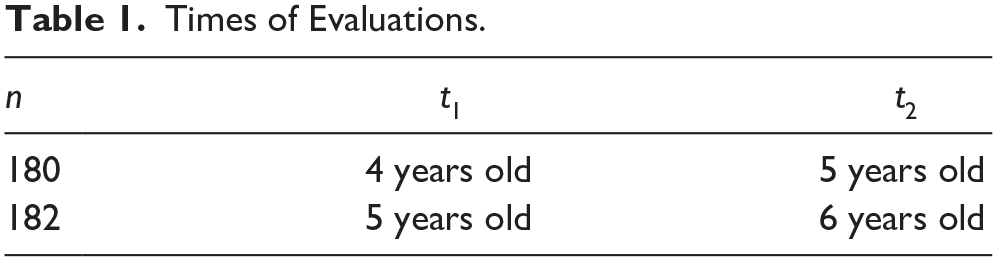
Participants consisted of 362 Spanish students in early childhood education (mean age = 5.2, 47.2% girls). We separated the sample into two cohorts (groups) according to students age. Cohort 1 consisted of 180 4-year-old students (mean age = 4.7, 45.6% girls). Cohort 2 consisted of 182 5-year-old students (mean age = 5.7, 48.9% girls). We studied each cohort over two school years (t1, t2) (see Table 1). Participants were native Spanish speakers, and none had an immigrant background or was bilingual. They lived in an urban context with 220,000 inhabitants and attended three public schools in an average socioeconomic and cultural environment. In this phase of instruction, a first approach to literacy is undertaken without formal instruction in reading and writing methods for students of 4-year-olds. The participants did not present specific educational needs. We controlled for these factors prior to participant selection according to institutional guidelines. In addition, the Test de Vocabulario en Imágenes (TVIP; Dunn & Arribas, 2006) confirmed that all participants scored within normal limits for their ages on a test of receptive vocabulary.
Times of Evaluations.
Student selection was also dependent on the informed consent of the students’ parents or guardians. All participants, teachers, and parents were informed about the nature of the study. Information use was restricted exclusively to research purposes, and the participants’ anonymity and confidentiality were ensured. This study followed internal regulations for social sciences of the Ethical Committees of Experimentation of the authors’ universities.
Measures
Phonological awareness
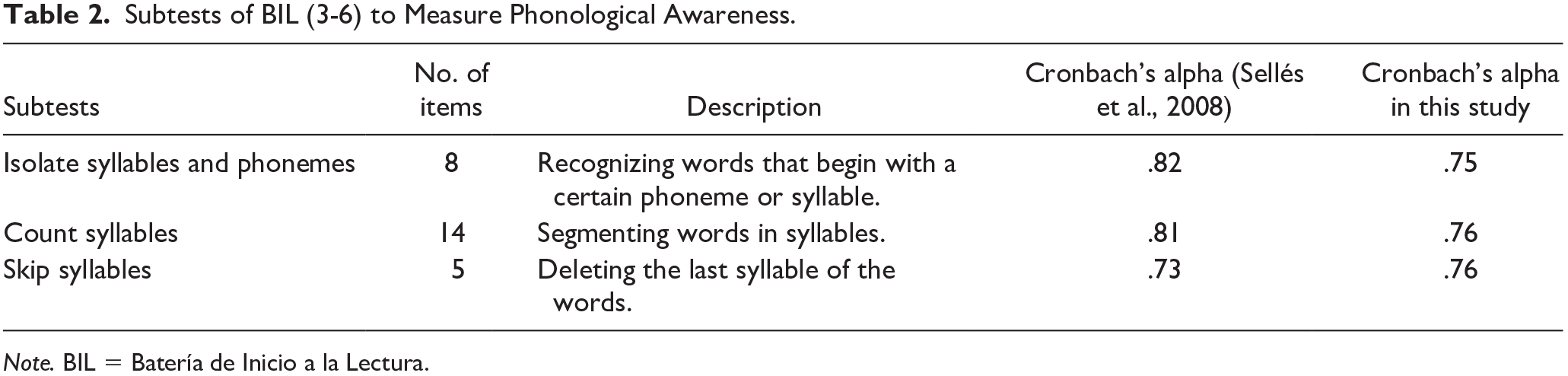
We evaluated children’s phonological awareness using three subtests of the Reading Initiation Battery (Batería de Inicio a la Lectura, BIL 3-6) (Sellés et al., 2008), which are described in Table 2. Sellés et al. (2008) determined the content validity of the BIL 3-6 with the Reading and Writing Analysis Test (Test de Análisis de la Lectoescritura, TALE) and performed correlational analysis. Sellés et al. (2008) found a Cronbach’s alpha coefficient greater than .70 for each of the phonological awareness subtests used. In this study, the Cronbach’s alpha coefficient was also greater than .70.
Subtests of BIL (3-6) to Measure Phonological Awareness.
Note. BIL = Batería de Inicio a la Lectura.
Orthographic skills, visuospatial orientation, and knowledge of graphemes
In addition, through the BIL, we examined the orthographic abilities of visuospatial orientation through a subtest of visual perception. This subtest consisted of nine items related to the visual recognition of graphic signs identical to the model. Students had to identify a specific sign among a sequence of seven signs that were visually similar or that varied in their visuospatial orientation in relation to the model. Scores were calculated by subtracting errors from hits (maximum score = 22, minimum = 0). The test authors reported a Cronbach’s alpha coefficient of .87, which we also found.
We used the letter-naming fluency subtest of the Evaluation Battery for Reading Processes (Batería de Evaluación de los Procesos Lectores, PROLEC-R) (Cuetos et al., 2007) to evaluate another orthographic skill: knowledge of graphemes. Specifically, we measured children’s knowledge of 20 of the 27 graphemes in Spanish (19 consonants and one vowel) that correspond to simple letters associated with a single grapheme (all except “a,” “e,” “i,” “o,” “h,” “k,” and “w”) and knowledge of 20 simple letters of the 30 letters of the Spanish alphabet (RAE & ASALE, 2010). The answer was correct if the child identified the letter name, the letter phoneme, or the phoneme within a syllabic phonological structure. The study of the syllabic phonological structure is motivated by the characteristics of the Spanish language that allow for the early development of syllabic awareness (Defior & Serrano, 2014).
Cuetos et al. (2007) performed a confirmatory factor analysis with these adjustments: goodness of fit index (GFI) = .979, adjusted goodness of fit index (AGFI) = .933, and root mean square error of approximation (RMSEA) = .075. The predictors with the greatest predictive value were word reading, grammatical structure, and reading of pseudowords. Although the test authors (Cuetos et al., 2007) reported a Cronbach’s alpha of .49, in this study, we found a higher coefficient of .76.
Naming speed
We assessed naming speed using the Rapid Automatized Naming (RAN) test (Wolf & Denckla, 2003), which consists of four quick naming subtests (digits, letters, colors, and drawings), each containing 50 stimuli. Scores are computed as hits per second. Wolf and Denckla (2003) used the two-halves method to calculate the reliability of the test and obtained a value of .80; we obtained a Cronbach’s alpha coefficient of .82.
Fluency
We measured fluency through two subtests of the Reading Processes Assessment Battery (Batería de Evaluación de los Procesos Lectores Revisada, PROLEC-R) (Cuetos et al., 2007). These subtests consist of reading 40 words and 40 pseudowords in lowercase, which must be read in isolation. Each subtest was timed. We obtained a score for word fluency and another for pseudoword fluency according to the number of hits and the time spent. Although the test authors (Cuetos et al., 2007) reported a Cronbach’s alpha of .74 for word fluency and .68 for pseudoword fluency, in this study, we found a higher coefficient of .91.
Receptive vocabulary
We assessed receptive vocabulary and listening comprehension using the TVIP (Dunn et al., 2006), which requires respondents to point to the picture that best matches a word spoken by the assessor. The alpha coefficients of the different groups ranged between .91 and .93. Accordingly to Dunn et al. (2006), the TVIP is also highly correlated with measures of IQ and has a correlation of .91 and .92 with the verbal IQ score of the Wechsler Intelligence Scale for Children (WISC-III).
Assessment Procedures
Tests were administered individually to all participants at two different times, and evaluations were performed in a private and suitable space. T1 refers to the second quarter of the school year, whereas T2 refers to the beginning of the next school year (6 months after T1). In the T1 session, which lasted approximately 35 min, we administered the BIL (to evaluate phonological awareness and visuospatial orientation), the PROLEC-R test (to assess knowledge of graphemes), and the RAN test (to measure naming speed). The T2 session lasted approximately 35 min. At this point, we used the PROLEC-R test to examine children’s decoding skills on word reading and pseudowords subtests (T2 addressed the measurement of reading efficiency), and we administered the TVIP to confirm that the students’ receptive vocabulary was within normal parameters.
Data Analysis
We then analyzed the data through a structural equation model using the AMOS statistical software package and through binary logistic analysis using the SPSS statistical software package. Our analyses were intended to identify precursors and indicators (predictors) of the risk of reading failure in early reading. First, we performed descriptive and correlational statistical analyses. Second, we conducted a multiple regression model based on structural equations in accordance with the maximum likelihood (ML) method, considering all cases, and we examined the direct and indirect effects of precursors on reading performance. Considering the results of children performing in the first quartile on all tests (25th percentile and below), which has been used as a cut-off point in similar studies (Manis et al., 2000), we hypothesized which children would demonstrate poor reading performance based on their deficits in reading precursors (phonological awareness, naming speed, and orthographic skills) and percentiles were adjusted according to age; otherwise, younger students would have been classified as those with the worst performance. For this reason, the decision was made to divide the sample into two cohorts according to biological age.
Subsequently, we performed binary logistic regression analysis between poor reading performance and the different profiles of risk deficits, including phonological awareness deficit, naming speed deficit, letter-naming fluency deficit, grapheme knowledge deficit, and visuospatial orientation deficit. Finally, we examined children who were susceptible to reading failure once risk indicators were determined.
Results
This study’s results differentiate between the precursors of reading and risk indicators (performance scores with high predictive value for subsequent reading struggles) in Spanish. The results are structured in two sections. In the first section, the results show the predictive value of phonological awareness, naming speed, and orthographic skills for subsequent fluency. In the second section, the results show the early literacy skills that act as risk indicators for deficits in reading performance.
Predictive Value of Phonological Awareness, Naming Speed, and Orthographic Skills
First, we analyzed the measures assessing early literacy skills and fluency. Table 3 shows the mean values, standard deviations, and ranges of the scores on phonological awareness, naming speed, letter-naming fluency, knowledge of graphemes, visuospatial orientation, and fluency tasks, for each cohort (Cohorts 1 and 2) and the whole sample (n).
Descriptive Analysis of the Data (Direct Scores) for Cohort 1, Cohort 2, and all Students (n).

Note. SD = standard deviation; PA = phonological awareness; NS = naming speed; LNF = letter-naming fluency; VO = visuospatial orientation; KG = knowledge of graphemes; F = fluency.
We converted the data set to z scores to analyze the results within a normal distribution. The z scores express the distance between the direct scores and the average in terms of the standard deviation, allowing for the comparison of scores expressed in different scales (see Table 4 for z scores). These scores show that Cohort 1 scores higher on naming speed and phonological awareness tests, and Cohort 2 scores higher on visuospatial orientation. Children’s mastery is similar between the age groups, although results for each cohort are found on opposite sides of the distribution. The differences between the results of each cohort are more pronounced in naming speed, as shown in Table 4.
Means of the Data (z Scores) for Cohort 1, Cohort 2, and all Students (n).
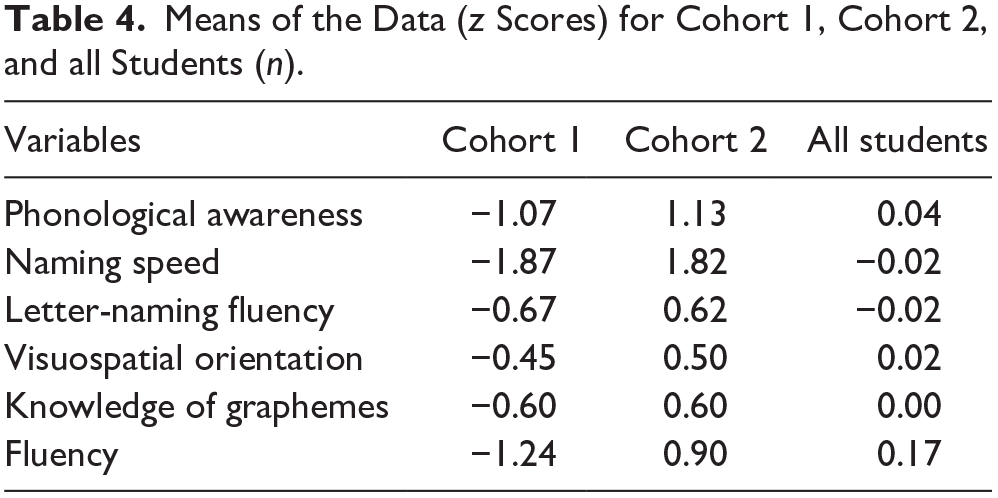
Table 5 shows the analysis of the correlations between the predictor variables and the fluency. The highest correlations involve knowledge of graphemes and/or naming speed. Most correlations are significant with a value of p = .01. The predictive value of early literacy skills for fluency is higher in Cohort 2 than in Cohort 1, and predictive value increases when the whole sample is considered.
Correlational Analysis of the Data.
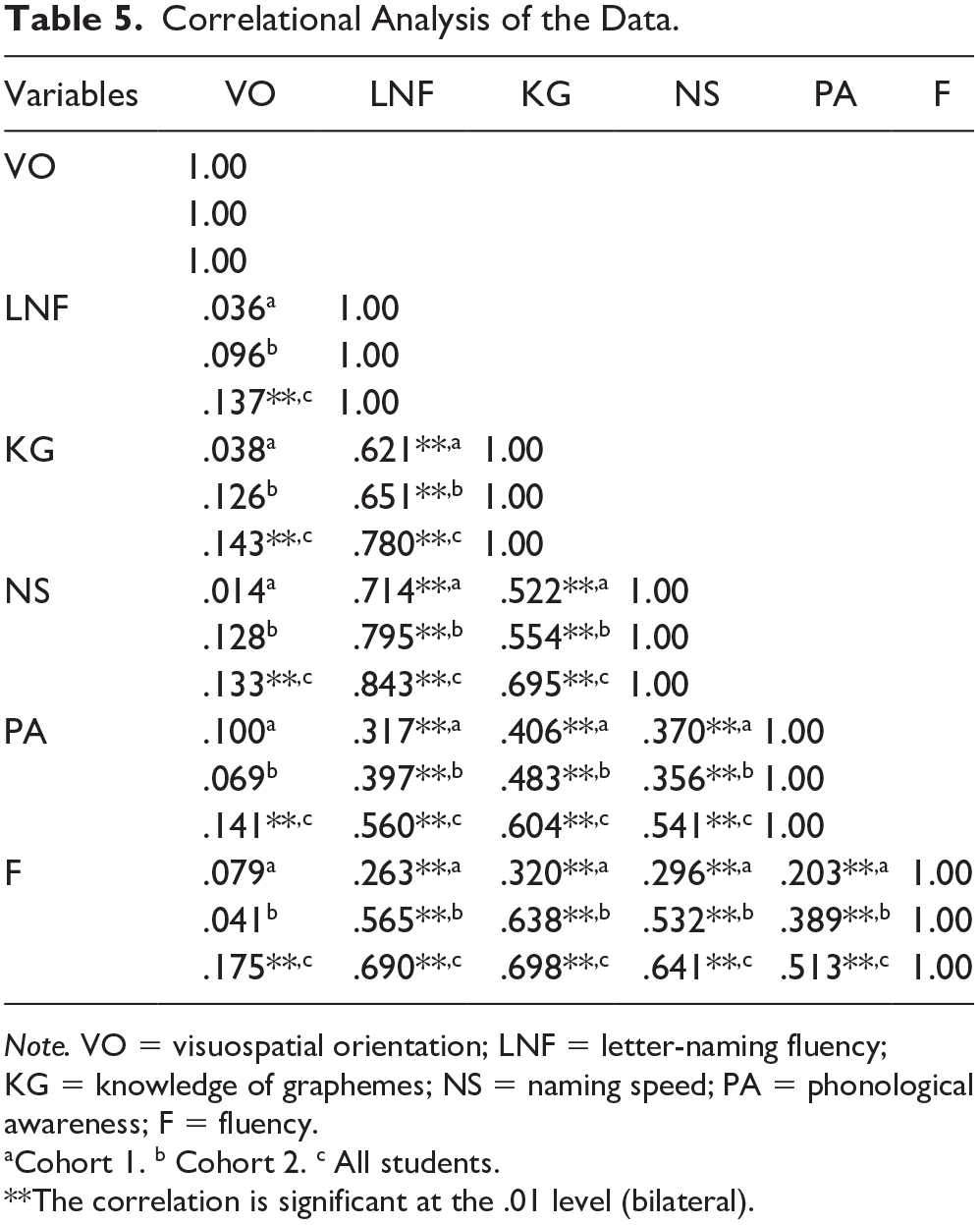
Note. VO = visuospatial orientation; LNF = letter-naming fluency; KG = knowledge of graphemes; NS = naming speed; PA = phonological awareness; F = fluency.
Cohort 1. b Cohort 2. c All students.
The correlation is significant at the .01 level (bilateral).
Table 5 shows the relationships between variables in pairs. To address a more complex relationship analysis, predictive variables and fluency were analyzed by path analysis in Figure 1. The precursors of early reading with the greatest predictive power were delimited by a structural equation model with a good fit, χ2 = 14.378, degrees of freedom (df) = 8, p = .072, normed fit index (NFI) = .990, relative fit index (RFI) = .974, Tucker–Lewis index (TLI) = .988, comparative fit index (CFI) = .995, and RMSEA = .047. This model reveals that phonological awareness, letter-naming fluency, and grapheme knowledge are precursors of early reading in terms of fluency. Figure 1 represents the observable variables with squares and the latent variables with circles, as well as the estimation errors. These three early literacy skills have particular predictive relevance in the model, although the relationships are different in nature. Letter-naming fluency and knowledge of graphemes predict fluency directly and predict phonological awareness both directly and indirectly.
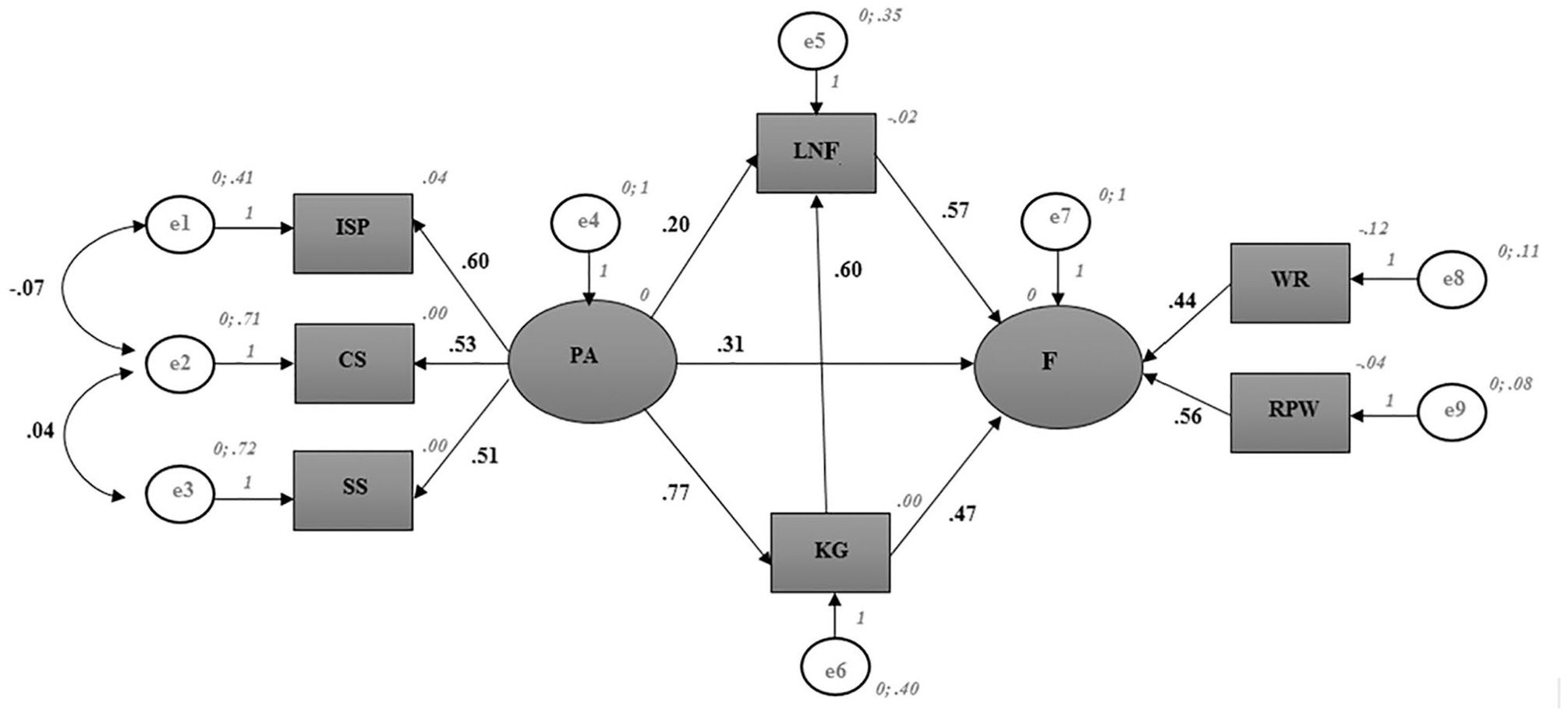
Structural equation model.
Figure 1 shows that letter-naming fluency is the best precursor of fluency (
An independent t-test was calculated to determine whether there are differences between 4-year-old (Cohort 1) and 5-year-old (Cohort 2) children in the variables included in the structural equation model. Statistically significant differences were found between the groups of children in all the variables (p = .001) in favor of Cohort 2. Consequently, SEM estimations were calculated in each cohort, and good fits of the model were obtained:
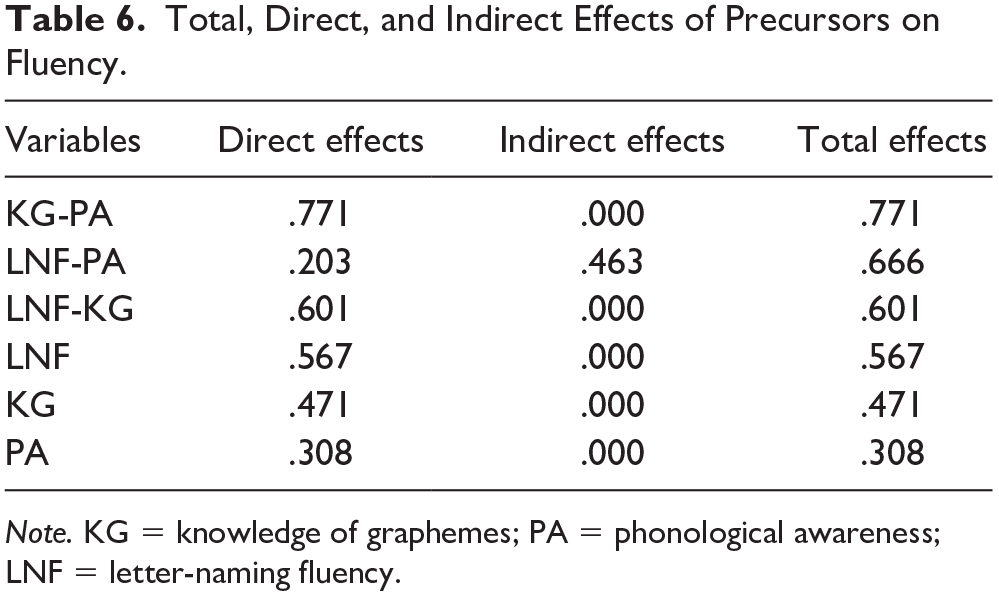
We then aimed to examine which precursor (letter-naming fluency, phonological awareness, or grapheme knowledge) accounts for the most variance in reading to better identify and explain the mechanisms that underlie the relationships between precursors and reading. Table 6 presents the total, direct, and indirect effects of the precursors on fluency.
Total, Direct, and Indirect Effects of Precursors on Fluency.
Note. KG = knowledge of graphemes; PA = phonological awareness; LNF = letter-naming fluency.
As indicated by the estimates, the direct effects show that grapheme knowledge explains most variance in phonological awareness (approximately 80%), and letter-naming fluency explains more than 60% of the variance in grapheme knowledge. However, the indirect effects reveal that letter-naming fluency explains approximately half of phonological awareness variance.
Phonological Awareness, Naming Speed, or Orthographic Skills as Risk Indicators
The structural equation model allows us to understand the precursors of fluency separately from the results obtained for the entire sample. However, the relationships among phonological awareness, orthographic skills (knowledge of graphemes and visuospatial orientation), naming speed (especially letter-naming fluency), and poor reading performance should also be studied to delimit the indicators of the risk of early reading failure. Using samples of students in the 25th percentile of each cohort as the criterion, we used a simple binary logistic regression analysis to delimit the risk indicators. Table 7 shows that deficits in phonological awareness, naming speed, and visuospatial orientation are precursors of poor reading performance. Deficits in letter-naming fluency and grapheme knowledge were excluded as risk indicators of early reading failure because they do not explain poor reading performance (pLNFDR = .893; pKGDR = .416).
Deficit Risks in the Precursors of Poor Reading Performance in the Simple Regression Analysis.

The risk indicators predicting overall poor reading performance were obtained by multiple regression analysis. Table 8 highlights how phonological awareness deficits, naming speed deficits, and visuospatial orientation deficits predict poor reading performance.
Deficit Risks in the Precursors of Poor Reading Performance in the Multivariate Analysis.
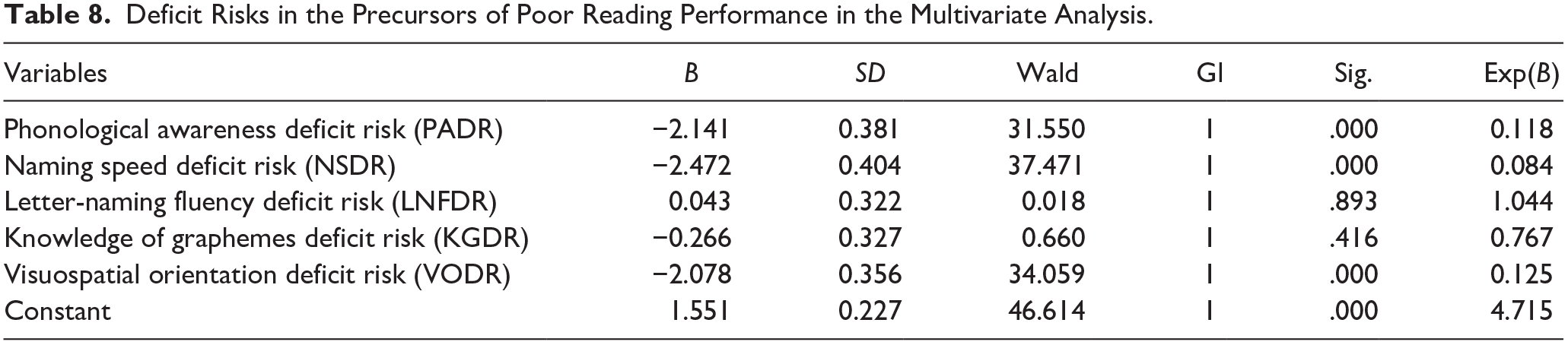
Note. SD = standard deviation; PADR = phonological awareness deficit risk; NSDR = naming speed deficit risk; LNFDR = letter-naming fluency deficit risk; KGDR = knowledge of graphemes deficit risk; VODR = visuospatial orientation deficit risk.
The delimitation of the risk indicators allowed us to address the descriptive analysis of these variables. The use of contingency tables enabled the identification of the number of cases associated with each risk indicator and their representation in poor reading performance. Figure 2 shows the relative value of each deficit studied in the precursors of poor reading performance: 91 of 362 children have a phonological awareness deficit (45.1% of whom have poor reading performance), 90 of 362 children have a naming speed deficit (45.7% of whom have poor reading performance), and 96 of 362 children have a visuospatial orientation deficit (46.3% of whom have poor reading performance).
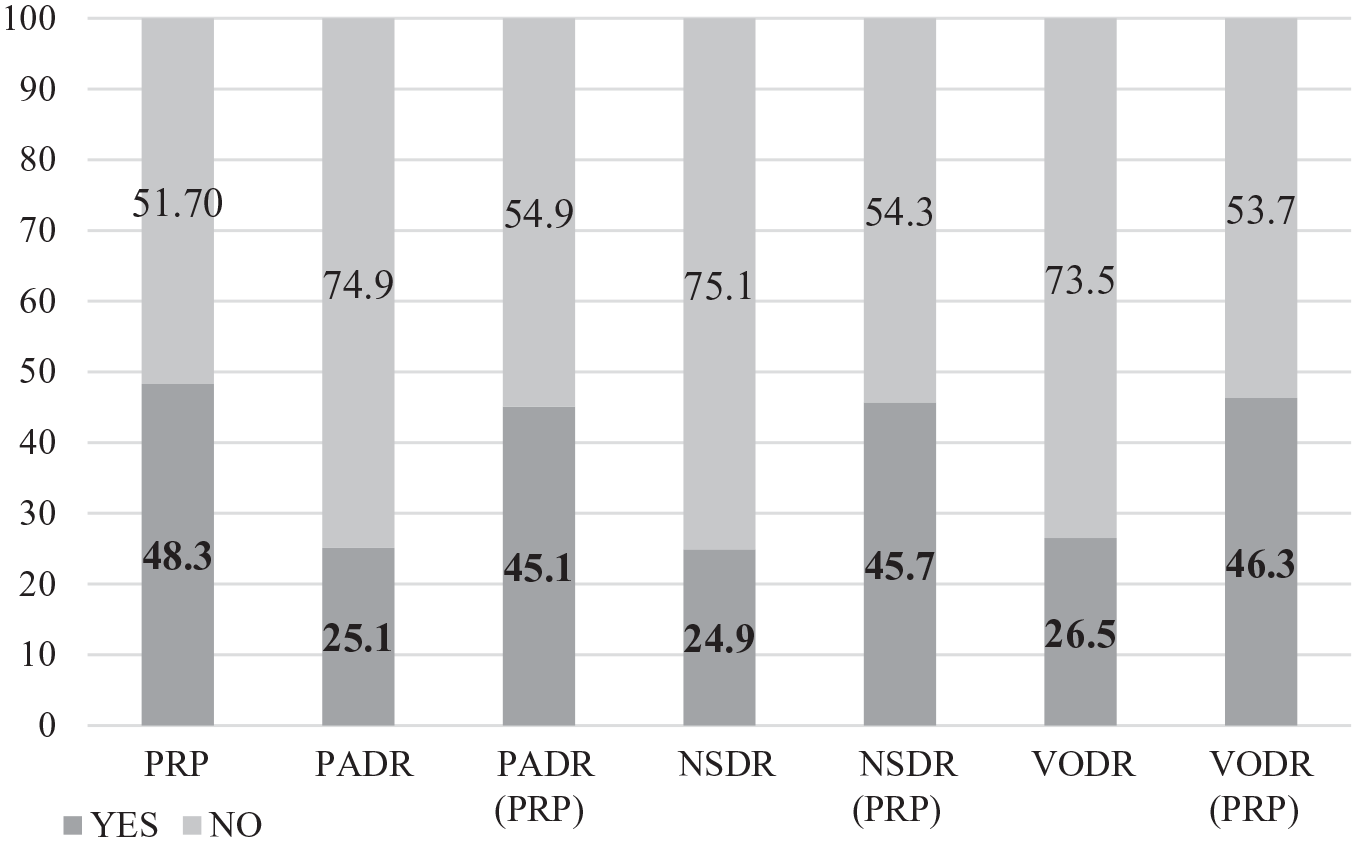
Frequency of deficit risks in the precursors of poor reading performance (PRP).
The study of the double or triple deficit required an analysis of the coincidence of the different risk indicators in the subjects (comorbidity). The results reveal that comorbidity occurs more frequently between two deficit indicators than among three. Table 9 shows that fewer than 20% of students present comorbidity among two or three deficit indicators. Moreover, 21.7% of students have only one deficit, and 16.6% have no deficit.
Cases of Deficit Risks and With Poor Reading Performance.

Note. PRP = poor reading performance; VODR = visuospatial orientation deficit risk; NSDR = naming speed deficit risk; PADR= phonological awareness deficit risk.
There are children with poor reading performance in all cases of deficits, although the probability decreases in cases of no deficits. The percentages for single and double deficits in an ability are similar. In this sense, there is no one skill (of the three) that has the best predictive value for the risk of early reading failure.
Discussion
Corroboration of the Predictive Value of Reading Precursors
The model developed in our study confirms the predictive value of phonological awareness, knowledge of graphemes associated with simple letters, and letter-naming fluency in Spanish. These three early literacy skills are relevant in predicting reading at the beginning of schooling in terms of fluency (Caravolas et al., 2012, 2013). Our findings corroborate that phonological awareness acquires value as a precursor to reading at an early age regardless of the degree of spelling consistency of the language (Georgiou et al., 2008). In addition, naming speed is shown to be the most relevant precursor in Spanish. The degree of linguistic consistency of Spanish could explain why naming speed is found to be a better precursor for reading than phonological awareness, as other studies in languages with consistent spelling have found (Frijters et al., 2011; Landerl & Wimmer, 2000). In addition, fluency might have interfered with the results since naming speed is more closely related to fluency (Poulsen et al., 2015; Song et al., 2016).
In particular, letter-naming fluency is presented as the most predictive precursor among the naming speed tasks tested. The outstanding predictive value of this task over the other naming tasks can be explained by the belief that the letter-naming fluency tasks mirror letter knowledge (Bowey, 2005). Therefore, grapheme knowledge associated with simple letters is presented as a good precursor to reading in Spanish and in other languages (Fricke et al., 2016; Snel et al., 2016).
Our findings agree with those of previous studies in different languages, highlighting the role of the three early literacy skills as universal precursors in the explanatory model of the prediction of reader success (Clayton et al., 2019; Massonnié et al., 2019). Our research shows that letter-naming fluency has the greatest predictive value for fluency in early Spanish readers (R2 = .57), as demonstrated by Schatschneider et al. (2004) in English. Moreover, our model emphasizes the importance of letter knowledge, which we found to explain 47% of the variance in early reading; this percentage is similar to the findings of Hogan et al. (2005) and Catts et al. (2001) with 7- and 8-year-olds in English, respectively. In addition, phonological awareness explains approximately 30% of the variance in early reading, as found by De Jong and Van der Leij (1999) and Georgiou et al. (2008) in word and pseudoword decoding measures and speed in Dutch, Greek, and English. Consequently, the predictive role of these skills is not conditioned by the degree of spelling consistency of languages, as evidenced by Caravolas et al. (2012, 2013).
Our results reveal that the direct and independent effects of letter-naming fluency, phonological awareness, and grapheme knowledge have the greatest predictive power for early reading. Our findings warn of the existence of mediating relationships between these skills and reading as other studies have found in consistent orthographies (Papadopoulos et al., 2016; Poulsen et al., 2015). The types of relationships found coincide with those presented in prior studies. We found that the direct effects of letter-naming fluency explain the variance in knowledge of graphemes, and the indirect effects of letter-naming fluency explain the variance in phonological awareness. Therefore, phonological awareness and knowledge of graphemes can be understood as mediating variables between letter-naming fluency and reading (Kirby et al., 2010). In conclusion, our research develops a predictive model in Spanish analogous to those developed by Clayton et al. (2019) in English, and Poulsen et al. (2015) in Danish and Wijaythilake et al. (2018) in Sinhala. Our model has confirmed the predictive value of the early literacy skills of phonological awareness, naming speed, and orthographic skills for subsequent reader development.
Triple Deficit as Risk Indicators of Reading Failure
The model’s predictive value for early literacy skills is modified when the deficits in phonological awareness, orthographic skills, and naming speed (particularly letter-naming fluency) are considered as criteria. Our study shows that phonological awareness deficit, naming speed deficit, and visuospatial orientation deficit are risk indicators of reading failure. Grapheme knowledge deficit and letter-naming fluency deficit are devalued as indicators of the risk of early reading failure. Accordingly, our findings oppose those emphasizing the predictive value of letter-naming fluency for double deficit risk in different languages, such as English or Finnish (Schatschneider et al., 2002; Torppa et al., 2013). The deficits in letter-naming fluency did not show that knowledge of the letters was an additional risk or support factor for reader development in Spanish. The consistency of the language would not be an indicator of the difference found.
Our results show that poor performance in fluency is related to the presence of deficits in phonological awareness, naming speed, and visuospatial orientation. The regression analyses show that a triple deficit maximizes the risk of early reading failure. Consequently, the presence of deficits in more than one skill increases the probability of poor reading performance (Steacy et al., 2014). This study corroborates the risk indicators highlighted in the triple deficit hypothesis (Badian, 1997, 2005) in early reading acquisition in Spanish, as other studies have for other languages (Asadi & Shany, 2018; Sho & Ji, 2011). The existence of the triple deficit in Spanish confirms its apparent independence from the spelling system. Similarly, the identification of the triple deficit at an early age reveals the opportunity to prevent reading difficulties when formal instruction in reading has not yet begun. In addition, the delimitation of these risk indicators in children also allows for early attention to learning difficulties in the area of reading in dual-language programs with Spanish speakers (Boyle et al., 2015).
Conclusion
This study enables the distinction between precursors that determine early reading and those that act as risk indicators of reading failure among native Spanish-speaking children. Given that the study was conducted with Spanish speakers contributes to existing literature since the volume of Spanish studies is not comparable with the volume of studies in other languages, such as English, German, or French. In addition, this study places value on prevention from very early ages through the explanation of a prediction model of initial reading and, as an innovative contribution, the delimitation of the risk indicators based on the double and triple deficit hypotheses.
Our research has identified the triple deficit as an indicator of risk in reading performance in Spanish children at an early age. This research allows us to anticipate the difficulties involved in reading learning in the Spanish-speaking child population, creating the possibility of developing early care programs targeting this risk group.
Our research also highlights the role of orthographic skills in early reading acquisition. Poor performance in the knowledge of simple letters associated with graphemes is compensated for more quickly than poor performance in visuospatial orientation, naming speed, and phonological awareness. On one hand, early compensation for the level of knowledge of letters could explain why letter-naming fluency is not a specific indicator of the risk of reading failure (Schatschneider et al., 2004).
On the other hand, visuospatial orientation is an indicator of risk that, as such, detects latent difficulty in the correct recognition of written signs according to their visuospatial connotations at an early age and alerts us to the possible detection of learning difficulties in reading and writing. However, it should not be understood as a determining factor for early intervention to prevent or minimize possible future difficulties.
Limitations and Prospective Studies
Our study’s main limitation is that the predictive value and indicators of reading failure are analyzed in young children. Consequently, deficits in phonological awareness, orthographic skills, and naming speed are defined at early ages, but they should be confirmed at older ages, as should reading fluency (e.g., see Ozernov-Palchik et al., 2016). In addition, future research should include other measures, principally orthographic processing, to reach conclusions that will be comparable with those of the most recent studies, such as those of Papadopoulos et al. (2016), and to deepen our understanding of the relationships among orthographic processing, orthographic skills, phonological awareness, and naming speed in the later stages of learning to read. We should perhaps determine why some studies have emphasized the predictive value of letter knowledge for double deficit risk.
Our study delineates early literacy skills with predictive value for early reading and encourage the development of programs to stimulate written language and prevent early risk factors in reading acquisition. Training students to name letters quickly might not yield better readers; it will be necessary to implement experimental programs based on the model and analyze the results. Our future research will focus on the predictive value of early literacy skills examined in students with dyslexia. A new research line is necessary to investigate the group of children with the greatest difficulties in reading and to confirm the double and triple deficit hypotheses.
Footnotes
Declaration of Conflicting Interests
The author(s) declared no potential conflicts of interest with respect to the research, authorship, and/or publication of this article.
Funding
The author(s) received no financial support for the research, authorship, and/or publication of this article.
