



Abstract
This article examines sending state compliance with arms embargoes. Arms embargoes are one of the most frequently used types of economic sanctions but they are perceived as one of the least effective. One major problem with arms embargoes, many argue, is sending states’ failure to implement them. Yet studies tend to focus on cases of arms embargo violations, not compliance in the context of arms export practice more broadly. Using a series of new arms embargo variables, I conduct a statistical analysis of the relationship between arms embargoes and small and major conventional arms transfers from 1981 to 2004. Contrary to popular expectations, I find that arms embargoes on average restrain sending states’ arms exports. If arms embargoes do indeed have difficulty changing targets’ behavior, or achieving other measures of ‘success’, additional explanations must also be considered. I suggest that arms embargo target selection and the intractable challenge of cutting off illicit arms flows are two important plausible alternatives. This finding also provides optimism for compliance with international commitments in the absence of institutionalized enforcement mechanisms. Major exporters overall appear to implement sanctions, despite strong economic incentives to ignore them and a lack of formal accountability mechanisms to punish violators.
Introduction
For major weapons exporting states, the 1991 Gulf War was eye-opening. In addition to signaling changes in the causes and conduct of post-Cold War conflict, the war showcased states’ non-compliance with their own arms embargoes and export restrictions, and the adverse consequences of arms transfers to an unstable region. Desert Storm coalition members fought Iraqi soldiers armed with weapons produced in their own or allied countries and unearthed evidence of weapons programs furnished with their own equipment and materials. After the war, inspection teams and government inquiries discovered that these weapons and technology transfers had often proceeded with governmental consent, despite a plethora of embargoes against Iraq during its war with Iran. By 1989, the United Kingdom, Spain, Italy, and Germany, among others, had violated their export prohibitions against Iraq. 1 In doing so, they provided Iraq with the firepower to invade Kuwait and build its weapons programs. It could easily be argued that the 1980s embargoes did not succeed by any standard, and that the blame should fall to the embargoing states themselves. 2
Events like this have contributed to intense debates about the effectiveness of sanctions in general and arms embargoes in particular. Nevertheless, when it comes to punishing states for offending behavior – nuclear weapons development, human rights abuses, conflict, and more – arms supplies are often (at least on paper) the first to go. Arms embargoes are symbolic gestures of disapproval, as well as practical measures to deny parties the means by which they perpetrate offenses. This connection seems straightforward, but while some experts advocate the use of arms embargoes, others question their ability to alter target behavior. Many agree that arms embargoes would be more effective if senders’ implementation were improved (e.g. Bondi, 2001; Boucher & Holt, 2009; Cortright & Lopez, 2001, 2002; Hufbauer et al., 2009; Kaempfer & Lowenberg, 1995; Tierney, 2005). Better enforcement, from this perspective, means better compliance and therefore more effective embargoes. Yet important empirical questions about sender practice remain; namely, whether senders implement the embargoes to which they commit.
This article uses new arms embargo variables – long missing from quantitative models of sanctions or arms exports – to systematically analyze sending states’ arms embargo compliance from 1981 to 2004. I argue that investigating whether senders suppress arms transfers to targets is a necessary empirical component of the sanctions debate. Policy adoption does not ensure policy implementation. Sanctions success cannot be attributed to sanctions that have not been implemented, just as their failure cannot be blamed on senders’ non-compliance, if they do indeed comply. After outlining the sanctions debate and its link to the compliance literature in international relations, I detail the hypotheses, variables, and statistical models. I find that embargoes generally repress arms exports, despite economic incentives to do otherwise. Sender compliance did not depend on costly formal enforcement, though it is possible that such mechanisms could further strengthen compliance. If arms embargoes are indeed unable to achieve their goals – a policy outcome I do not measure here – explanations beyond sender non-compliance must be found. I conclude by suggesting that target selection and the persistence of illicit arms flows may be two plausible alternatives.
The sanctions debate
As sanctions have become a more common feature of international governance since 1990, so too have debates about their utility. Some argue that sanctions are valuable for changing (or helping to change) target behavior when properly specified and implemented (Bondi, 2001; Brooks, 2002; Hufbauer, Schott & Elliot, 1990; Kirshner, 1997; Lektzian & Souva, 2007). By imposing material costs on an actor, sanctions can compel changes in its policies or practice. They are also a means by which the international community can signal disapproval, demonstrate resolve, and punish a target without using force (Baldwin, 1985; Guimelli, 2011; Wallensteen, Staibano & Eriksson, 2003). Others, however, are pessimistic about the ability of sanctions to achieve their goals (Kaempfer & Lowenberg, 1995; Tierney, 2005; Tsebelis, 1990). Skeptics contend that sanctions cannot generate sufficiently high costs to compel a target to change course (Galtung, 1967; Pape, 1997). Targets may adapt, new suppliers can be found, and citizens may consolidate support around their governments. Some consider ‘smart’ sanctions more effective than comprehensive sanctions, because they can hit a regime where it hurts, without necessarily harming its general population. Yet even among smart sanctions supporters, questions persist about effectiveness (Brzoska, 2001; Cortright & Lopez, 2002; Gordon, 2011; Tostensen & Bull, 2002).
Sanctions' success can be assessed by different measures, including whether the sanctions achieve, or contribute to achieving, senders’ policy goals; whether they create costs that influence targets’ decisionmaking processes; or whether they coerce targets to comply with senders’ demands (Baldwin, 1985; Brzoska, 2009; Giumelli, 2011; Hufbauer et al., 2009). In turn, estimates of sanctions’ performance vary dramatically. Hufbauer, Schott & Elliot (HSE, 1990) and Hufbauer et al. (2009: 49) find that sanctions had a 34% success rate, based on ‘the extent to which the policy result sought by the sender country was in fact achieved and the contribution to success made by sanctions’. Although this has been cited as evidence of sanctions’ effectiveness, Drezner (1999) contends that HSE underestimate the success rate by excluding threats of sanctions that achieved target compliance before being imposed. In contrast, Pape (1997: 93) responds that many of those ‘successful’ HSE sanctions were actually resolved by military force, were not technically economic sanctions, or did not lead to target concessions. Instead, he argues that sanctions success – target policy change directly attributable to economic sanctions 3 – is less than 5%. For others, focusing on characteristics of the target regime and its support networks helps to account for variation in success, by explaining when and why sanctions are costly to the target (Brooks, 2002; Escribà-Folch & Wright, 2010; Kirshner, 1997; Lektzian & Souva, 2007; McLean & Whang, 2010).
However, there is another side to sanctions compliance: whether senders follow through on their commitment to cut off supplies of sanctioned goods to the target. Once senders adopt a sanction on paper, they must implement it, if it is to have any chance of achieving its goals. Effectiveness ‘depends greatly on swift comprehensive implementation and rigorous enforcement’ (Cortright & Lopez, 1999: 113; Gowlland-Debbas, 2001). Otherwise, senders may not be compelled to pay the costs of implementation, making targets likely to ‘dismiss the measures along with the need to change their behavior’ (Wallensteen, Staibano & Eriksson, 2003: 9). Poor implementation may also undermine attempts to signal disapproval to targets or other actors. Yet multilateral sanctions are not typically subject to enforcement by the institutions that impose them and depend on senders to translate them into national practice (Gowlland-Debbas, 2001; Biersteker et al., 2005). 4 Similarly, unilateral sanctions depend largely on the sender’s willingness to implement them, which may be weak when imposed merely as a favor to an ally or as window-dressing to appease domestic groups. Political pressures, security concerns, or economic gain can provide stronger incentives for states to skirt their legal or political obligations. From this perspective, poor implementation is vital to explaining poor sanctions performance.
Among targeted sanctions, many perceive arms embargoes to have the worst record of implementation and effectiveness (Bondi, 2002; Durch, 2000; Cortright & Lopez, 2001; Moore, 2010; Tierney, 2005). Yet they are also the most frequently used type of sanction, on their own or in conjunction with more comprehensive sanctions packages (Charron, 2011; Cortright & Lopez, 2002). In addition to their symbolic and coercive value, arms embargoes can reduce a target’s military effectiveness and limit its access to weapons with which it can commit offenses (Crawford, 1999). Arms embargoes are therefore commonly used in cases of war, human rights violations, support for terrorism, or nuclear weapons development. In such cases, they are meant to carry out their full range of functions: punish the target, send it – and other offenders, actual or potential – a message about acceptable behavior, and lessen its ability to wage war, repress its population, support terrorism, or acquire sensitive technology. Arms embargoes' ability to do so in practice, however, has often been questioned (Bondi, 2002; Durch, 2000; Cortright & Lopez, 2001; Hufbauer et al., 2009; Tierney, 2005; Vines, 2007).
One of the major charges against arms embargoes is senders’ unwillingness to implement them. Cortright & Lopez (2001: 29) note, ‘Arms embargoes have been frequently imposed but seldom enforced’, making them ‘the least effective of UN sanctions over the past decade’. Even as major powers have imposed embargoes, they have also sought to ‘promote, or at least not restrain, arms exports by their own producers’ (Cortright & Lopez, 2002: 167). Thus, despite the popularity of embargoes on paper, embargo-busting practices by sending states coupled with a lack of international enforcement are believed to fundamentally undermine embargo success (Bondi, 2001; Boucher & Holt, 2009; Kaempfer & Lowenberg, 1995; Staibano, 2005; Tierney, 2005). 5 Therefore, one key solution may be to improve sender compliance by creating better verification and enforcement mechanisms (Cortright & Lopez, 2002: 172). 6
From this rational actor perspective, states comply with commitments that are in their material self-interest (e.g. Simmons, 2010). Senders implement the sanctions that are the most beneficial and least costly to them. Yet sanctions that are not costly to a sender – those that would not jeopardize a valuable arms trade relationship, for example – may not be costly to a target, either. Material punishment for non-compliance can shift senders’ cost–benefit analysis in favor of better implementation, making embargoes more costly for targets and sending a stronger signal to other actors. Other models emphasize normative obligation to explain compliance (e.g. Chayes & Chayes, 1993). While rationalist models expect non-compliance for costly commitment absent enforcement, normative perspectives expect compliance even without costly enforcement. Embargo implementation should therefore not depend on enforcement by domestic or international institutions.
Whether multilateral or unilateral, arms embargo implementation falls on individual sending states. During the Cold War, barriers to cooperation on the UN Security Council and a lack of EU foreign policymaking capacity meant that unilateral arms embargoes were more common. Multilateral embargoes have become standard fare since the end of the Cold War. 7 Nevertheless, arms transfers remain highly statist. The United States, Russia, France, Germany, and the United Kingdom export 80% of the world’s major conventional arms (SIPRI, 2008: 293). Small arms exports are led by the United States, Russia, Germany, Belgium, Italy, and others (SAS, 2006: 65, 67). Moreover, legal arms transfers require the consent of the state to go forward, even if the sale is commercial. States approve or deny arms export applications, whether embargoes are unilateral or multilateral. Yet states are often reluctant to impose limitations on their arms transfers, and ending an existing arms-export relationship can be economically and politically costly. Instead, they have long viewed the choice of arms trade partners and export promotion to support their arms industries as matters of sovereignty, national security, and economic necessity.
In the UN arms embargo against apartheid South Africa, for example, producers’ ‘readiness to sell was sometimes coupled with the respective government’s willingness to ignore the identity of the buyer’, as well as government sales of weapons and defense technology (Landgren, 1989: 231). Case studies of UN arms embargoes show this trend time and again. 8 However, in the absence of a comprehensive arms embargo variable, broader patterns of compliance have been difficult to examine, creating potential selection bias and the assumption that non-compliance is the norm. Moore (2010) designed his study of UN arms embargo violations, for example, with the assumption that all arms embargoes are eventually violated. Nevertheless, he finds no evidence of legal major conventional arms transfers to Afghanistan, Ethiopia, Iraq, Liberia, Rwanda, and Sierra Leone while under UN embargoes. 9 Clearly, neither senders’ compliance nor their non-compliance can be taken for granted. It is therefore necessary to understand sender compliance before assumptions can be made about the causal relationship between compliance and success. In the remainder of the article, I examine senders’ small and major conventional arms export patterns to embargoed and non-embargoed recipient states, using new arms embargo variables.
Hypotheses
Experts commonly anticipate a low degree of sender compliance with arms embargoes. Suppliers often have both economic and political motivations for embargo-busting: sanctions increase profits from selling embargoed goods and convey support to favored groups on the ground, whereas implementing them can be costly in a competitive arms market and may deprive existing orders of their intended customer. Multilateral and unilateral sanctions alike depend on the will of individual senders to impose them, which may be weak as long as the costs of non-compliance remain low. Without institutionalized enforcement, senders may avoid external punishment for non-compliance with multilateral sanctions, while unilateral sanctions may be undermined by uneven (at best) domestic accountability.
Hypothesis 1: Arms embargoes will not affect sending states’ arms transfer practices.
Despite the widespread conclusion that arms embargoes are rife with non-compliance, some research on UN arms embargoes has found depressed arms supplies to targets, during and after UN sanctions (Craft, 1999; Fruchart et al., 2007). Similarly, Brzoska (2009: 207) estimates that UN, EU, and US arms embargoes decrease targets’ arms imports by 39%. 10 Although this focus on targets’ arms imports cannot indicate whether the parties to an embargo or non-participating exporters are the source of the decline – or continued supplies – it nevertheless indicates that overall arms supplies to targets decline. This analysis specifically seeks to understand whether senders in particular reduce their exports to targets. 11 From a normative perspective, this would not be surprising: normative obligations will motivate senders to comply, even without formal enforcement. Senders may also comply with sanctions motivated by security concerns.
Hypothesis 2: Arms embargoes will negatively affect senders’ arms exports.
I contend that it is necessary to weigh the empirical evidence with regard to sender compliance as a part of the broader sanctions debate assessing sanctions success. I examine the relationship between legal (state-authorized) arms exports and arms embargoes. The dataset includes new arms embargo variables and annual dyadic small and major conventional arms transfer data for 22 top supplier states to 189 potential importing states from 1981 to 2004. 12 Absent an existing comprehensive arms embargo variable (Harkavy & Neuman, 2001; Smith & Tasiran, 2005), I compiled a list of sanctions demanding the full or partial cessation of arms sales to a country or actors within it. Because embargoes may be imposed by governments, multilateral organizations, or both, I include formal mandatory and voluntary embargoes by the UN, EU, and other multilateral organizations, as well as unilateral embargoes by the 22 exporting states to the extent that records enable. 13 Only official policies to cease conventional arms transfers declared by a multilateral organization or a state (or reported in the press as such) are included in the dataset. From this list, I code variables for the presence/absence of an arms embargo, the level of arms embargo, and the type of arms embargo, which I detail below.
This dataset is broader than other arms embargo datasets, which largely focus on UN arms embargoes. Fruchart et al. (2007) analyze mandatory UN arms embargoes (1990–2006), while Moore (2010) covers both mandatory and voluntary UN arms embargoes (1978–2002). Similarly, 26 of the 27 mandatory UN sanctions regimes in Charron’s (2011) study (1946–2010) included an arms embargo. Brzoska (2009) broadens his study by including multilateral arms embargoes from four sources (UN, EU, OSCE, and one ‘regional’) and unilateral embargoes from the United States (1990–2005). These datasets concentrate on whether arms imports to targets are reduced. 14 However, they do not examine senders’ export behavior, which is critical to understanding implementation, especially when moving beyond UN embargoes. For embargoes whose sending state populations are less global, target arms imports alone cannot convey whether those imports are coming from sending states or states without embargo obligations.
Data and model
Since arms transfer data are annual, I code embargoes starting in the first full year and ending in the last full year a dyad is embargoed. Partial years allow for some legal exports to proceed, which annual data cannot distinguish from embargo-busting exports. I therefore exclude embargoes that do not last at least one full calendar year. First, the dichotomous embargo variable is coded as 0 (no embargo in the dyad-year) or 1 (some type/level of embargo in the dyad-year). Second, the level of embargo variable is coded as 0 (no embargo); 1 (partial: embargo explicitly permits arms transfers to some parties in the target state while prohibiting transfers to others, or permits some types of weapons to the target while prohibiting others 15 ); or 2 (full: no arms transfers permitted to any party). For dyad-years in which a sender is committed to more than one embargo, I use the most restrictive level of embargo the sender is expected to implement. Finally, the type of embargo variable is coded as 0 (no embargo); 1 (unilateral); 2 (multilateral); or 3 (overlapping unilateral and multilateral embargoes). 16 I then create dummy variables to examine the effects of each embargo category in the regression analyses. 17
Two types of legal arms transfers serve as the dependent variable: small arms and light weapons (SALW) and major conventional weapons (MCW). 18 The data for both variables are annual and dyadic, meaning they cover yearly transfers from each exporter/sender to each potential importer/target. Dyadic data are necessary to capture whether senders are transferring weapons to embargo targets (see also Moore, 2010). Target import data cannot indicate whether arms have been received from sending states or from states that are not party to an embargo. Indeed, the focus on senders’ arms embargo compliance requires explicit attention to their arms export activities. Moreover, because all arms embargoes – whether unilateral or multilateral – are implemented by senders directly, state-level data are necessary to assess the relationship between arms embargo participation and export behavior.
Given the lack of policy attention to SALW until the mid-1990s, state practices may vary for the two types of transfers. Since then, SALW transfers have been spotlighted in multilateral fora and mentioned in arms embargoes. SALW include weapons designed for use by an individual or small crew, such as revolvers, machine guns, rifles, and explosives (UN, 1997: 11). The raw data on SALW transfers assembled by the Norwegian Initiative for Small Arms Transfers (NISAT) 19 are rough and must be coded as a dichotomous variable: 1 for each dyad-year in which there is a record of a transfer and 0 for each dyad-year in which there is no record of a transfer. NISAT records are collected from non-uniform sources, which irregularly provide information about price and/or volume, making it impossible to create a variable based on either. 20 A single dyad-year may also contain multiple records, which may be multiple records of the same transfer or in fact multiple transfers. 21 Data aggregation is therefore impossible and unwise. It is also important to note that NISAT relies on public sources and therefore likely underestimates states’ SALW exports. 22 Nevertheless, small arms are worth including in the analysis as they are particularly linked to internal conflict and human rights.
Major conventional arms transfers data come from SIPRI, which is considered ‘the most painstakingly researched database’ available on annual cross-national arms transfers (Brzoska & Pearson, 1994: 20). Although SIPRI also uses public sources and may underestimate states’ transfers, sources relating to larger and (once) more politically prominent weapons tend to be more complete and have longer been subject to political scrutiny and transparency measures. 23 Governments have increasingly participated in data provision since the 1990s. Most prominently, the UN Register of Conventional Arms went into effect in 1992, 24 with 1,221 reports submitted between 1993 and 2004 (UNODA, 2011). National reports have also become more common, especially among democratic exporters facing inquisitive legislatures and publics.
The continuous MCW variable includes aircraft, armored vehicles, artillery, sensors, air defense systems, missiles, ships, engines, and other large weapons with a military purpose (SIPRI, 2008: 330–331). In order to facilitate cross-national comparisons over time and accommodate the variety of modes of gift and payment, SIPRI uses standardized dollar-based Trend-Indicator Values (TIVs) to measure weapons’ core prices and value as military resources, instead of actual price paid – which would complicate cross-national comparisons by gifts, aid, and other discounts. 25 Sanjian (1999: 649) also notes that SIPRI data approximate well the annual ‘intensity’ of states’ arms transfer activities.
I carefully limit the control variables to avoid distorting and obscuring the effects of the variables of interest with problems such as collinearity and non-linearity (Achen, 2005). Results from models including unnecessary variables can be fragile and hinder the ability to explore the relationship of interest. I therefore include only controls with potentially confounding effects on both arms embargoes and arms transfers (Kadera & Mitchell, 2005; Ray, 2003). 26 Democracies are more likely to comply with international rules and norms (e.g. Simmons, 1998), and therefore less likely to be targeted by sanctions. Democracy may also positively influence arms transfers (e.g. Blanton, 2005). States are more likely to transfer arms to allies, to signal and to enable a close security partnership (e.g. Sandler & Hartley, 1995), and may be reluctant to embargo them (e.g. Drezner, 1999). Oil-producing states have more income to purchase arms and the security interest in doing so (e.g. Chapman & Khanna, 2006). And, because they produce a valuable commodity, other states are more likely to export arms to them, in order to cultivate good relations, than to impose embargoes against them (e.g. Klare, 1984). As a rough measure of wealth, GDP per capita can also indicate states’ ability to purchase arms (e.g. Pearson, 1989). Moreover, wealthier states are less likely to become embargo targets (Erickson, 2010).
Each control variable is therefore thought to positively affect arms transfers and negatively affect arms embargoes, by providing incentives that encourage exports and discourage sanctions. Excluding them risks biasing the findings. Each independent variable is lagged one year to allow time for information about recipient conditions to reach decisionmakers in exporting states so they might adjust their behavior accordingly (Meernik, Krueger & Poe, 1998). Finally, a non-lagged Cold War variable is included to account for possible differences in practice before and after 1990.
Results
I present three sets of results for the relationship between arms embargoes and arms transfers: (1) descriptive Number of embargoed dyads each year 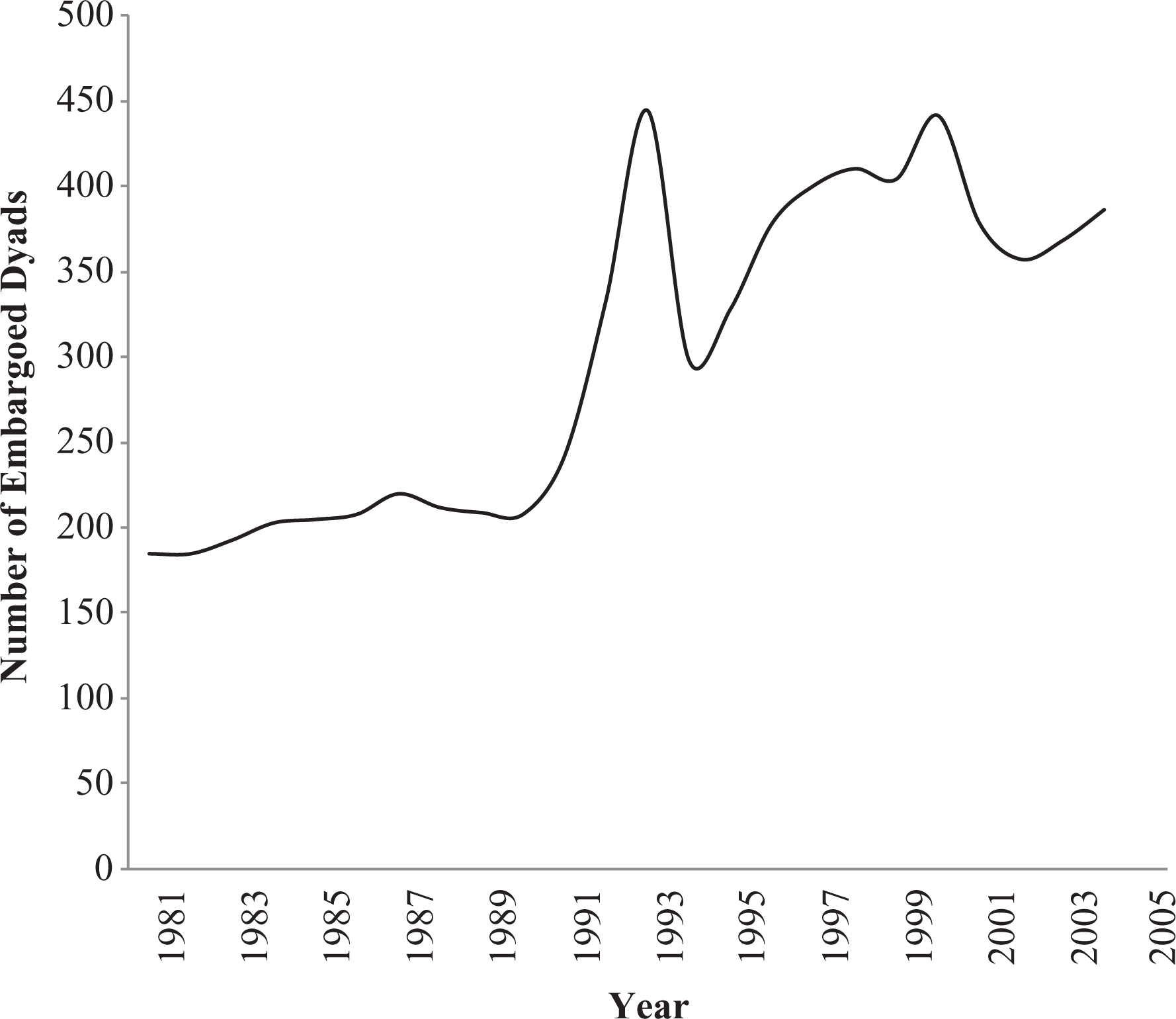
Figure 2 illustrates the percentage of dyad-years with small and major conventional arms transfers within each level of arms embargo.
28
For example, approximately 33% of those dyad-years without an arms embargo had SALW transfers (67% did not) and approximately 7% of those dyad-years without an embargo had MCW transfers (93% did not). The figure demonstrates that embargoes fail to fully stop the flow of arms,
29
but that dyad-years with transfers are lower than the ‘no embargo’ category. In the partial embargo category, 20% of dyad-years had SALW transfers; in the full embargo category, Percentage of arms transfers by level of embargo
The regression analyses more thoroughly explore these relationships. The results in Tables I and II reveal a picture generally favorable to Hypothesis 2, which expects that arms embargoes will have a repressive effect on arms exports from sending states. 30 Moreover, restricting the analysis to states more likely to be embargoed (poor human rights, conflict, nuclear weapons proliferation, or support for terrorism) produces similar results in terms of the significance and direction of the coefficients for either type of arms transfer. First, the results in Table I show that all levels and types of arms embargoes have a significant negative effect on SALW exports, with the exception of unilateral embargoes (negative but insignificant). 31 These results are quite robust. 32 The direction and significance of the arms embargo variables remain consistent with different constellations of the control variables. The inclusion of additional controls for military expenditures, conflict, or population also does not change the direction or significance of the embargo coefficients.
Because it is difficult to glean information from logit coefficients about the magnitude of their effects, the changes in predicted probabilities listed in Table I are especially instructive. 33 Holding all other variables constant, a change from no embargo to any embargo significantly decreases a dyad’s chances of trading small arms by 6.4%. Moreover, there is a stronger effect for full embargoes (5.8% decline) than partial embargoes (3.4% decline), and multilateral embargoes (5.7% decline) than unilateral embargoes (3.6% decline).
Similarly, the OLS results in Table II reveal a significant constraining effect of arms embargoes on MCW transfers. 34 Here, full embargoes have a larger effect than partial embargoes, and unilateral embargoes have a larger effect than multilateral embargoes (all but overlapping embargoes are significantly negative). Again, the results are robust: different configurations of the control variables produce strongly significant and negative embargo coefficients, which do not change significantly in size or significance with the inclusion of additional controls for military expenditures, conflict, or population in the model. 35 In sum, the results for both types of transfers suggest that embargo compliance, not embargo-busting, is generally the norm.
Influence of embargoes on small arms transfers

* Significant at the .05 level; ** significant at the .01 level.
To save space, coefficients for dummies for all years in the analysis have been excluded from Tables I and II. Table I includes additional lines for changes in predicted probabilities (italicized), which are not variables in the models but are calculated for the logit models to provide information on the substantive effects of the embargo variables. See note 33.
Influence of embargoes on major conventional arms transfers
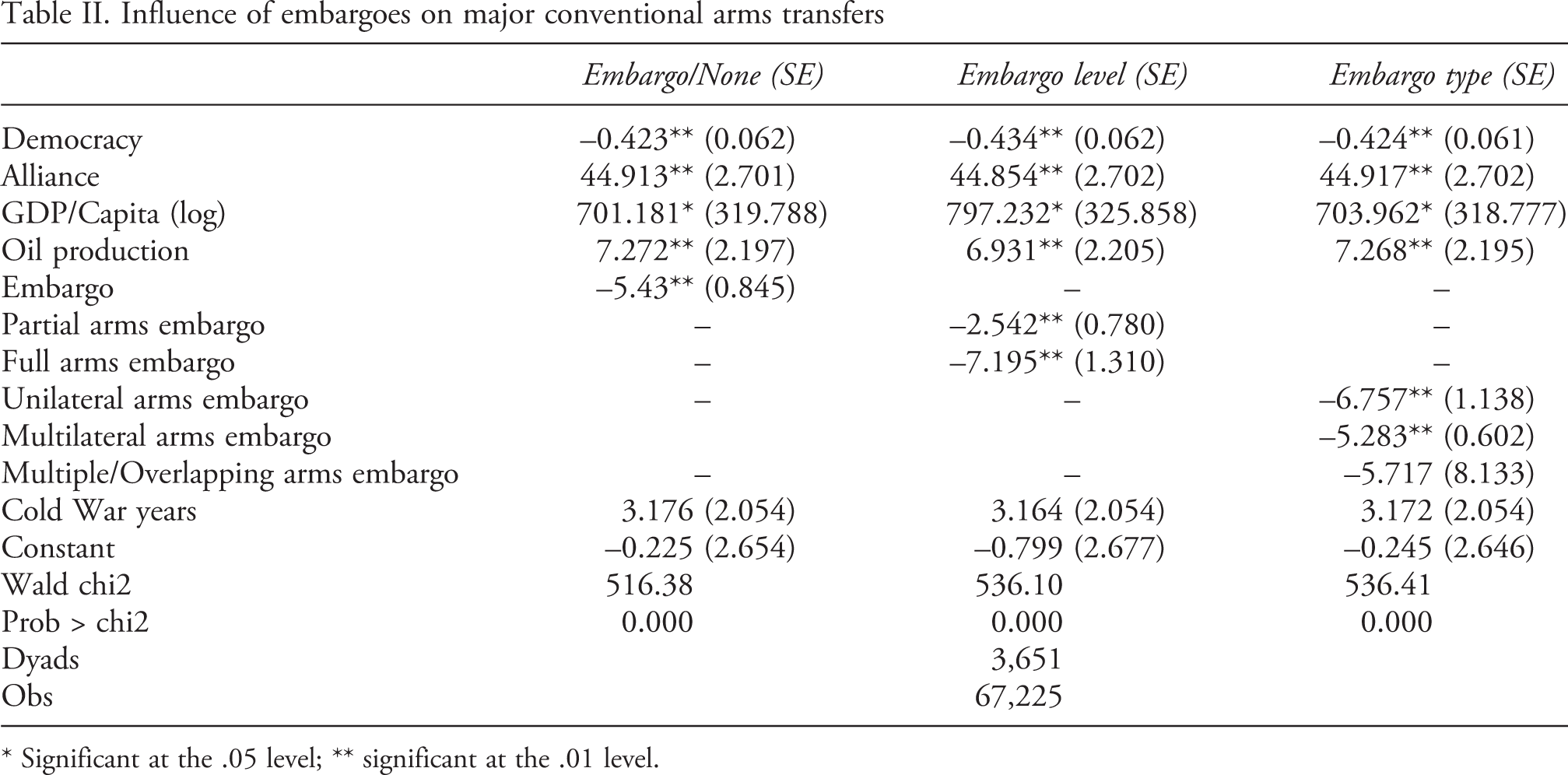
* Significant at the .05 level; ** significant at the .01 level.
Finally, the moving regression (or moving windows) analyses provide a more fine-grained picture of these patterns over time (Beck, 1983; Swanson, 1998). I use the same control variables with the models for the SALW and MCW dependent variables. However, instead of covering all years at once as in the tables, the moving Full arms embargoes and small arms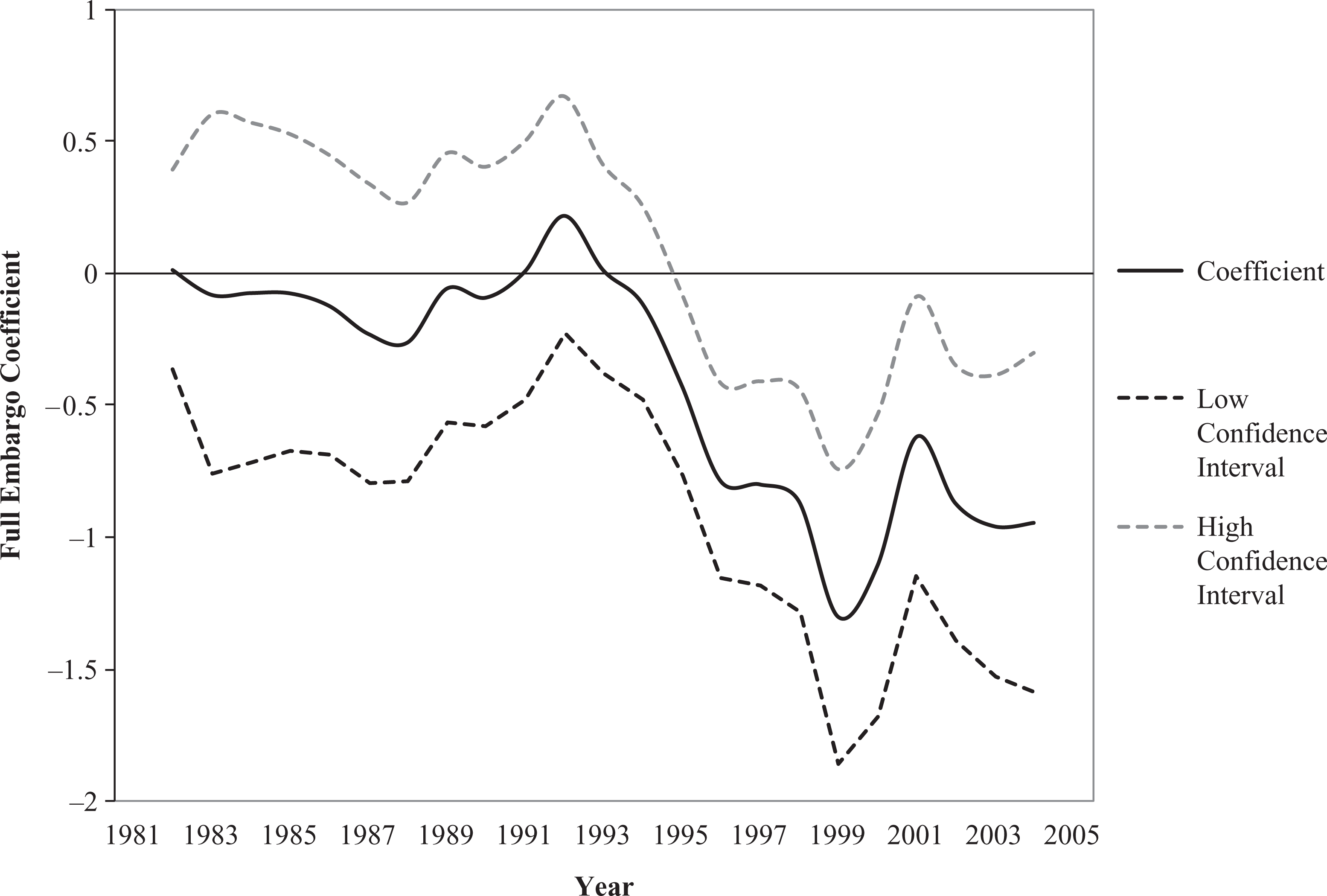
The coefficients of interest – full arms embargoes – and their 95% confidence intervals from the results for the moving regression analyses are shown in Figures 3 and 4. The points at which the entire 95% confidence interval (both upper and lower) sits below zero indicate when embargoes significantly restrict exports. I focus on the full arms embargo results as a clearer measure of sender compliance, since partial embargoes permit some transfer of arms to a target. With SALW (Figure 3), the transformation is dramatic. Starting in 1995, small arms flows to fully embargoed participants become significantly restricted. With MCW (Figure 4), the relationship with full embargoes is significantly negative since the 1980s, providing further evidence in favor of Hypothesis 2. Nevertheless, the influence of arms embargoes on MCW transfers – while still exercising a significant negative effect – seems to have weakened slightly since 2001.
Discussion
In absolute terms, the results show that embargoes generally restrain senders’ arms transfers, despite strong economic incentives otherwise. Instead, compliance may be motivated by normative pressures in international or domestic politics, security concerns, or domestic accountability. For multilateral embargoes in particular, this also suggests that external enforcement mechanisms are not required for sender compliance. Moving regression analyses reveal repressive effects of full arms embargoes on MCW transfers over all years. During the Cold War, strong foreign policy consensus, security concerns, and behind-the-scenes pressure from a powerful sender, like the USA in CoCom, might account for compliance with some unilateral or multilateral embargoes. Since the late 1990s, international arms export standards referencing an obligation to obey multilateral arms embargoes might also motivate compliance, particularly among democracies more sensitive to normative pressures. After 1994, SALW transfers also become restricted by full arms embargoes. This coincides with the appearance of Full arms embargoes and major conventional weapons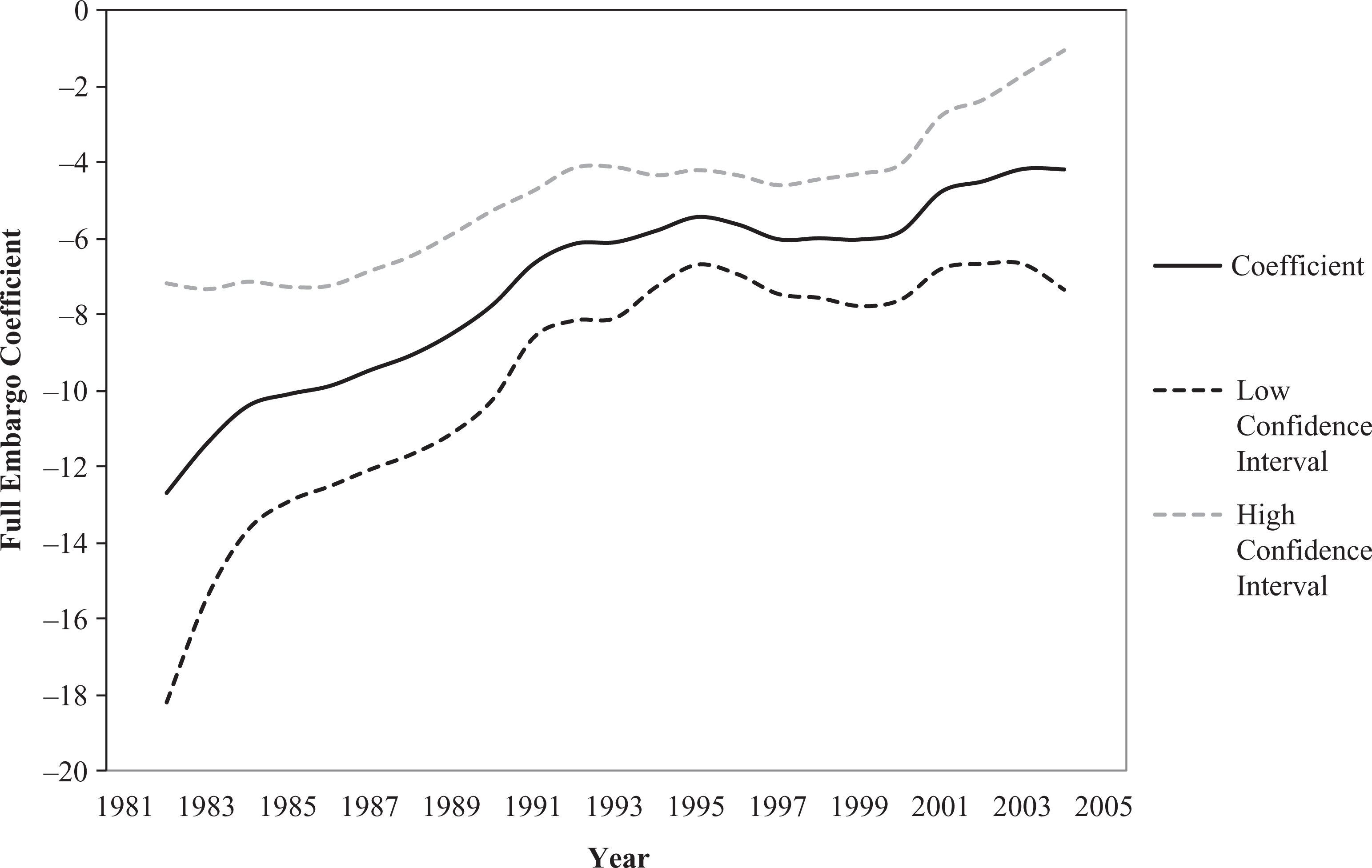
In relative terms, however, the restrictive effects of embargoes may be smaller over time than Hypothesis 2 might anticipate. In particular, the moving regression analysis shows a weakened negative effect of full embargoes on MCW transfers after the Cold War. As arms embargoes became more common, more often multilateral, and less constrained by bipolar political affiliations, senders’ commitments to them may have become less uniform. The effect decreases again slightly after 2000, perhaps due to less restrictive arms export practices during the War on Terror, observed with US attempts to cement strategic relations with key allies (Garcia, 2003; Hartung & Berrigan, 2008; Stohl, 2006). 38 Allies or potential allies – whatever their behavior – may therefore be less likely to face sanctions or more likely to get arms despite an embargo. And, as top global arms suppliers loosen unilateral or multilateral restrictions, others may follow, whether to maintain market competitiveness or because standards of acceptable behavior appear to be changing.
Finally, the findings for two control variables, democracy and oil production, deserve mention. Democracy positively influences SALW transfers, but negatively influences MCW transfers, while recipients’ oil production is insignificant for SALW transfers but positively influences MCW transfers. This suggests that major exporters may be more willing to overlook recipients’ internal politics to sell more profitable, big-ticket items like major conventional arms, especially where oil can provide resources for recipients and incentives for suppliers. SALW, in contrast, are a small portion of the global defense market, typically cheaper to buy and sell, and less seen as prestige items among potential buyers. Still, these findings would require more careful investigation with models explicitly designed to examine the relationships between arms transfers and democracy and oil production. 39
Conclusion
From 1991 to 2003, major exporters halted legal arms transfers to Iraq – on paper and in practice. 40 But was the embargo successful? Armed with better evidence about sender compliance, such questions deserve further research and debate. The persistence of the Iraqi regime despite severe sanctions might suggest failure (Pape, 1997). Yet the embargo seems to have ‘successfully restrained [the regime’s] military capabilities’ (Cortright & Lopez, 2002: 155), easing the 2003 invasion that contributed to Saddam Hussein’s downfall. What seems clear is that this time, senders complied. Explanations for the outcome – whether the embargo was effective or ineffective, however defined – must take supplier compliance into account. Indeed, this analysis shows that, on average, major exporters do restrict arms to embargoed recipients, although the effect has weakened somewhat in recent years. Policies concentrated on enhancing supplier compliance may therefore only go so far to improve embargo effectiveness. And despite their potential value, material penalties for embargo violations at the international or regional level seem unlikely to become institutionalized in the near future and are dependent on the interests and ability of political groups at the domestic level. Consequently, it is worth considering two additional points I do not test here to potentially explain and improve arms embargo success.
First, identifying the conditions under which arms embargoes might be most effective and efficient could allow senders to impose arms embargoes when they are the most appropriate tools, rather than a catch-all punishment for misbehaving targets. Scholars find that sanctions’ success in general is often higher against targets – whether democracies or dictatorships – with active oppositions, or when targets and senders have close trade or alliance relations (Drezner, 1999; Escribà-Folch & Wright, 2010; Hufbauer et al., 2009; Lektzian & Souva, 2007; McLean & Whang, 2010). Understanding these characteristics and relationships of targets as they relate to embargo onset, as well as targets’ views of the costs and benefits of compliance, should enable senders to craft more meaningful sanctions and select targets that may be more responsive to them (Erickson, 2010; Hufbauer et al., 2009; Wallensteen, Staibano & Eriksson, 2003). This may require senders to put valuable arms transfer relationships on the line and exercise export restraint, in order to inflict higher costs on targets and send more credible signals to other potential targets. Moreover, arms embargoes specifically have been found to succeed in reducing target imports and changing target behavior more often when combined with more comprehensive sanctions packages (Brzoska, 2009: 214).
Second, a better understanding of how illicit sales undermine embargoes may also be useful. For example, during the May 1948 Arab–Israeli Security Council arms embargo, Israel used its superior illicit supply chains to maintain a flow of arms during the conflict and turn the tide in its favor (Tierney, 2005). 41 Embargoes may increase demand not only from available legal suppliers, but also from black market sources (Tierney, 2005). This becomes especially relevant in the post-Cold War era as embargoes have become increasingly multilateral and former Soviet weapons have made their way to the black market. Additionally, when unilateral embargoes are implemented by a target’s major suppliers, the black market may also provide replacement parts for existing weapons that alternate legal sources may not be able to offer.
Targets are often located in regions with highly porous borders, exacerbating the problem (Hufbauer et al., 2009; Vines, 2007). Moreover, a lack of end-use monitoring and the falsification of end-use certificates enable brokers to circumvent embargoes by sending goods under the guise of another recipient (Cortright & Lopez, 2002). Shutting black markets down completely is an unrealistic aspiration. 42 Nevertheless, national and international laws on brokering, and capacity-building at all levels of governance to implement export and border controls, may enhance the capacity of embargoes to slow the flow of arms and inflict costs on targets. Multilateral efforts to dampen illicit arms sales have grown in size and scope since 1997. 43 As agreement implementation improves, so too may embargo effectiveness by creating conditions better able to stop illicit-arms flows to targeted areas.
This does not imply that concerns about embargo-busting are wholly unfounded or that punishing embargo-busters could not further strengthen supplier compliance. Iraq in the 1980s is just one example of states circumventing their own export restrictions. In some cases, the terms of the embargo allow senders to choose less stringent interpretations. For example, the EU arms embargo to China avoids specifying the scope of weapons it covers, leaving EU members to decide for themselves how to define it. Consequently, France, Germany, Italy, and the UK have continued some defense-related sales to China, which they argue do not violate the embargo. Precision of embargo terms may therefore affect compliance, introducing possible trade-offs between increasing the number of states willing to impose an embargo (simpler, perhaps, when an embargo’s terms appear more flexible) and the clarity by which compliance can be objectively assessed by supplier states and others.
This article finds that sender compliance with arms embargoes can occur without the threat of costly material punishment for non-compliance. As such, it presents a clear call for further research on explanations for embargo performance. In addition, it contributes to debates on compliance in the absence of institutionalized enforcement mechanisms and leaves an opening for explanations relying on social pressure and obligation at home and abroad. While important questions clearly remain, these findings may help advance these debates and instill cautious optimism about senders’ willingness to regulate their own behavior in response to their commitments.
Footnotes
Replication data

Acknowledgements
The author would like to thank Matthew Evangelista, Michael Herron, Peter Katzenstein, Jonathan Kirshner, Sarah Cleeland Knight, Stephen Nelson, Peter Romaniuk, Christopher Way, and participants in research colloquia at Cornell University, as well as Michael Brzoska and five anonymous JPR reviewers, for their comments and advice. An earlier draft was presented at the 2010 International Studies Association conference. The analysis was conducted using STATA 9.2. Any mistakes are the responsibility of the author.
Notes
Appendix
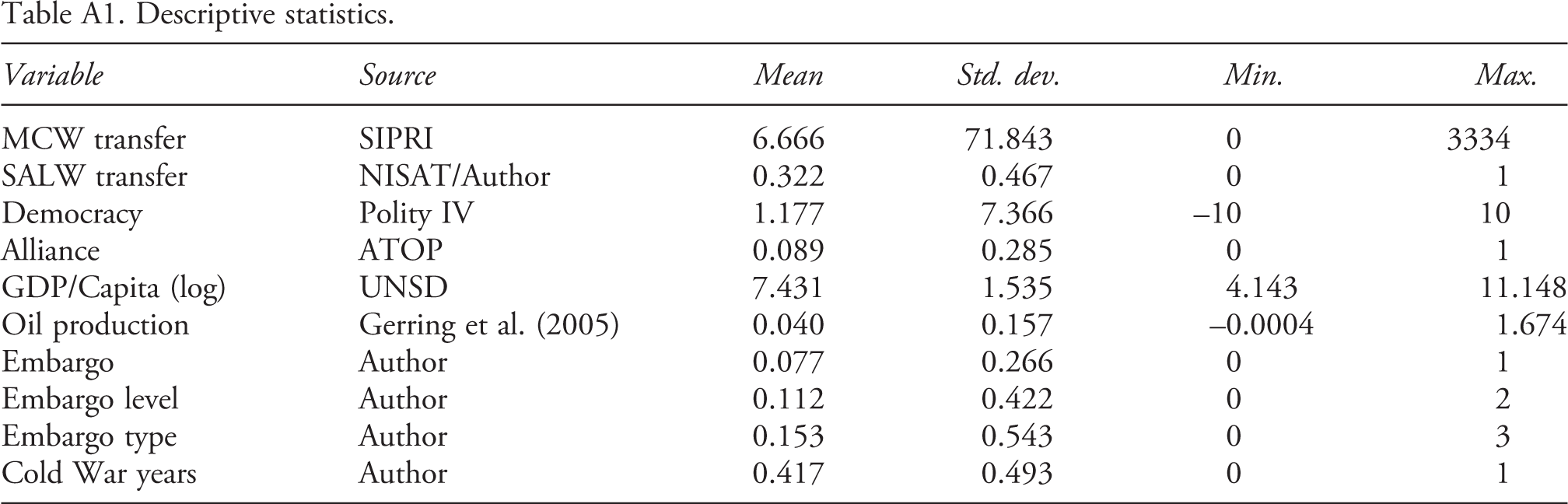
Descriptive statistics.
| Variable | Source | Mean | Std. dev. | Min. | Max. |
|---|---|---|---|---|---|
| MCW transfer | SIPRI | 6.666 | 71.843 | 0 | 3334 |
| SALW transfer | NISAT/Author | 0.322 | 0.467 | 0 | 1 |
| Democracy | Polity IV | 1.177 | 7.366 | –10 | 10 |
| Alliance | ATOP | 0.089 | 0.285 | 0 | 1 |
| GDP/Capita (log) | UNSD | 7.431 | 1.535 | 4.143 | 11.148 |
| Oil production | Gerring et al. (2005) | 0.040 | 0.157 | –0.0004 | 1.674 |
| Embargo | Author | 0.077 | 0.266 | 0 | 1 |
| Embargo level | Author | 0.112 | 0.422 | 0 | 2 |
| Embargo type | Author | 0.153 | 0.543 | 0 | 3 |
| Cold War years | Author | 0.417 | 0.493 | 0 | 1 |
References
Supplementary Material
Please find the following supplemental material available below.
For Open Access articles published under a Creative Commons License, all supplemental material carries the same license as the article it is associated with.
For non-Open Access articles published, all supplemental material carries a non-exclusive license, and permission requests for re-use of supplemental material or any part of supplemental material shall be sent directly to the copyright owner as specified in the copyright notice associated with the article.
