



Abstract
Existing studies of intergovernmental organizations (IGOs) and militarized conflict focus on dyadic counts of shared IGO membership. However, dyadic approaches are inconsistent with the basic properties of IGOs. Because IGOs are multilateral organizations, shared membership necessarily involves ties to third parties. This article employs network analytics to develop a novel explanation of how third-party IGO ties reduce militarized conflict. The analysis first examines the ‘structural similarity’ of states, defined by the extent to which states share similar patterns of IGO membership with relevant third parties. High levels of structural similarity indicate that states interact with a common set of IGO collaborators. The analysis then shows that micro-level changes in IGO membership effect changes in structural similarity, leading to the macro-level phenomenon of ‘network convergence,’ wherein states increasingly collaborate with the same third parties over time. Substantively, convergence results in increased overlap and integration between states’ respective local networks of IGO partners. Because network convergence is costly, involving a combination of IGO-based accession, sovereignty, and alignment costs, it is unlikely to be pursued by purely exploitative state types. Consequently, convergence provides cooperative types with a mechanism for signaling a preference for cooperation over conflict. These credible signals in turn establish mutual trust among cooperators and effectively reduce the risk of militarized conflict. Extensive empirical analysis shows that, in fact, network convergence strongly correlates with a decline in militarized dispute initiations. The more that states collaborate with one another’s IGO partners, the less likely they are to fight.
Keywords
How might intergovernmental organizations (IGOs) affect militarized conflict? This question represents a longstanding puzzle in international relations (Singer & Wallace, 1970). Early studies concluded that mutual collaboration in IGOs reduces dyadic conflict (e.g. Russett & Oneal, 2001), but more recent research finds substantial variation in the effects of IGO membership (e.g. Boehmer, Gartzke & Nordstrom, 2004; Pevehouse & Russett, 2006). Existing studies typically adopt a dyadic framework, where the influence of IGOs is defined in terms of the number of memberships shared by given pairs of states. While this dyadic approach has yielded valuable insights, it is incompatible with basic IGO properties. Membership in IGOs is rarely, if ever, dyadic, but instead necessarily involves multilateral commitments. 1
Some scholars have begun using network analysis to better capture the multilateral aspects of shared IGO membership (Dorussen & Ward, 2008; Hafner-Burton & Montgomery, 2006; Maoz et al., 2006). This emerging literature argues that analysis of shared IGO membership must explore the qualitative properties of those memberships, particularly with regard to how IGO co-memberships connect states to politically salient third parties. This article adopts a similar perspective. Specifically, I use IGO data to identify states’ main IGO partners or networks of collaborators, and I then determine, for given pairs of states, the degree of overlap in their respective networks – i.e. the extent to which states share ties to the same third parties. This ‘friends of friends’ conceptualization of IGO membership, which is rooted in the network principle of structural similarity, emphasizes memberships that are more inclusive of states’ key partners. Changes in these networks over time engender ‘network convergence’, a macro-level or structural process wherein states’ respective IGO portfolios grow increasingly similar, such that even states who previously occupied highly dissimilar political spheres come to mutually collaborate with the same third parties. At the micro level, network convergence depends on concrete choices by states to increase IGO collaboration both with one another and with one another’s partners. These micro-level dynamics, while seemingly monadic or dyadic in orientation, implicate macro-level shifts in multilateral commitments.
Network convergence is costly for states. IGO membership often involves restrictions on accession, losses of sovereignty, and risky political realignments. For individual IGOs, these costs are generally quite small; but network convergence aggregates and amplifies membership costs across multiple states and organizations. The costliness of restructuring one’s IGO portfolio credibly signals an interest in cooperation over conflict, specifically with regard to those states most directly targeted by convergence processes. Ultimately, only a state with a genuine interest in cooperation should be willing to trade the potential benefits of enhanced multilateral collaboration for the costs of convergence. By acting as a costly signal of trustworthiness, convergence lowers the risk of conflict. As states grow more similar in their IGO portfolios over time, they should become increasingly less likely to initiate disputes against one another.
This analysis contributes to emerging research on the informational role of IGO networks (Dorussen & Ward, 2008). While others have identified a signaling role for strong IGOs (e.g. Boehmer, Gartzke & Nordstrom, 2004), this article de-emphasizes institutional capacity and focuses instead on the informational content of macro-level shifts in patterns of IGO membership. Changes in states’ unique membership patterns reveal, in part, whether those states have an interest in cooperation – and, if so, with whom. These structural considerations are analytically distinct from questions of whether IGOs possess the strength and resources to independently mediate disputes or intervene in conflicts directly. Instead, I identify an instrumental aspect of IGO membership, where the costs and multilateral consequences of IGO membership itself convey strategically valuable information to prospective partners. This dynamic structural approach highlights oft-ignored avenues of indirect, third-party signaling, while also allowing a role for weak or otherwise inefficacious IGOs.
The article proceeds in four parts. First, I review prior literature and articulate the network approach to IGO membership. Second, I construct a theory linking network convergence to credible signaling, and I generate testable hypotheses. Third, I subject the hypotheses to empirical analysis over the 1970–2000 period, the results of which strongly support the hypotheses and confirm that network convergence is a powerful suppressor of conflict. The fourth section concludes.
IGO membership and network convergence
The network characteristics of IGO membership are now widely recognized (Cao, 2009; Dorussen & Ward, 2008; Hafner-Burton & Montgomery, 2006; Ingram, Robinson & Busch, 2005; Maoz et al., 2006). In network terms, IGO membership is an affiliation network, where ‘nodes’ in one group (e.g. states) share ties to nodes in a second group (e.g. IGOs). Figure 1(a) illustrates such a network using eight countries (circular nodes) and four organizations (square nodes). 2 Figure 1(b) projects these affiliations into a social network, where the number of IGO memberships shared between a given pair of states defines the strength of their corresponding network tie. Ceteris paribus, stronger network ties indicate greater dyadic collaboration.
Much recent work on IGO networks focuses on the ‘structural equivalence’ of states (Cao, 2009; Hafner-Burton & Montgomery, 2006; Ingram, Robinson & Busch, 2005; Maoz et al., 2006). Two nodes are structurally equivalent if ‘they have exactly identical patterns of ties sent to and received from all the other network actors’ (Knoke & Yang, 2008: 76). That is, if two states have identical ties to the other states in the system, they occupy structurally equivalent positions in the network. Structural similarity in an IGO network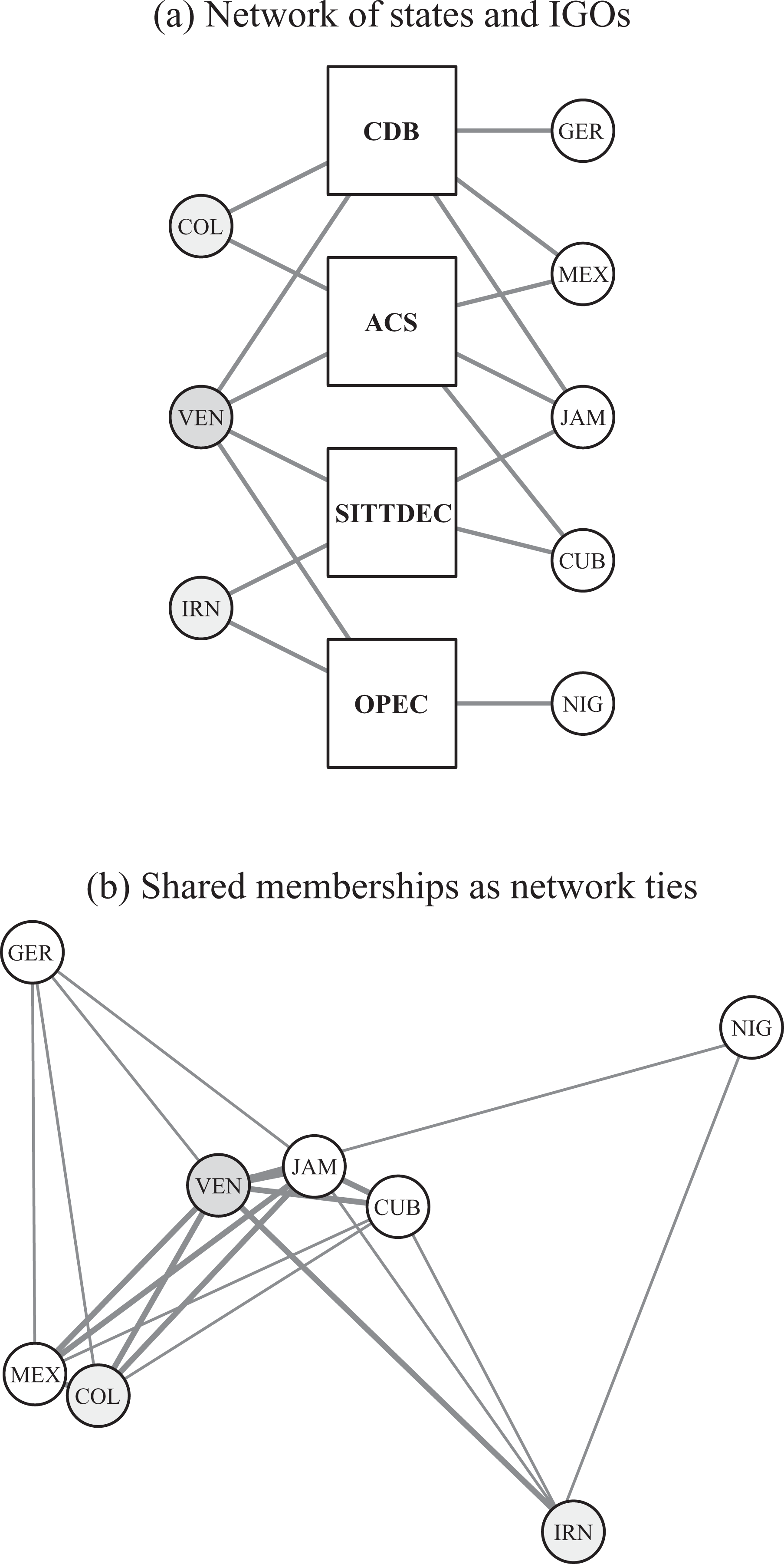
Structural similarity captures multilateral implications of IGO membership that go unnoticed by dyadic counts. In Figure 1(a), Venezuela and Colombia share membership in two IGOs – CDB and ACS. Venezuela and Iran also share membership in two IGOs – SITTDEC and OPEC. By dyadic standards, the VEN-IRN and VEN-COL pairs collaborate at equal levels and are thus functionally equivalent. However, these dyads differ substantially in how their respective co-memberships engender multilateral connections to the five ‘target’ states on the right side of Figure 1(a). Because Venezuela is a member of all four IGOs, it collaborates to some degree with all five target states. Colombia collaborates with four of these states (Germany, Mexico, Jamaica, and Cuba), while Iran collaborates with only three of them (Nigeria, Jamaica, and Cuba). Further, Colombia not only collaborates with all three of Venezuela’s most frequent collaborators – Mexico, Jamaica, and Cuba – but does so via two IGOs (CDB and ACS). In contrast, Iran collaborates with only two of Venezuela’s main collaborators, and only via a single IGO membership (SITTDEC). In short, by virtue of its IGO memberships, Colombia shares ties not only with Venezuela, but also with Venezuela’s major partners. Iran’s memberships, on the other hand, substantially limit its third-party ties.
These structural patterns are also reflected in Figure 1(b). Colombia’s strongest ties (the thicker lines) extend to countries that also have strong ties with Venezuela (e.g. Jamaica and Mexico), while Iran has weak or non-existent ties to these countries. The node positions in 1(b) are in fact determined by structural similarity, such that more proximate nodes are more similar in their ties to third parties. 3 (For example, Colombia and Mexico’s close proximity reflects their high structural similarity; without jittering, they would be plotted at precisely the same point.) Assessing node placement reinforces the above intuition; Venezuela and Colombia are substantially more structurally similar in their shared IGO memberships than are Venezuela and Iran, despite these dyads having an equal number of co-memberships.
Hafner-Burton & Montgomery (2006) use structural similarity to analyze the distinctive social groups or ‘clusters’ created by IGO membership, arguing that in-group dynamics reduce conflict among states that share similar membership patterns. However, their empirical results are inconsistent; structural similarity reduces conflict in some model specifications but proves insignificant in others (Hafner-Burton & Montgomery, 2006: 20). Maoz et al. (2006) also address structural similarity in IGO membership, and they too find inconsistent results; the effects of similarity vary by model type, sample selection, and years of analysis. These inconclusive results are due in part to the fact that scholars have not yet linked network analytics to prevailing theories of conflict, especially those derived from bargaining models of war. For example, Maoz et al. (2006) frame their argument in terms of traditional realist/liberal paradigms, while Hafner-Burton & Montgomery (2006) invoke realist concepts of power and prestige, supplemented by social-psychological insights.
I instead connect IGO networks to asymmetric information, which Fearon (1995) identifies as a primary cause of war. I further shift emphasis from static measures of structural similarity to network convergence, a process whereby states’ respective networks of collaborators merge over time, such that they increasingly collaborate with the same third parties. Network convergence is defined, for a given
Mechanistically, network convergence involves two closely related micro-level behaviors. First,
Second,
As these micro-level behaviors accumulate across the network, they generate observable shifts in structural similarity. These macro-level shifts – rather than the micro-level decisions to join, establish, or abandon IGOs – are the focus of this analysis. Taken individually, IGOs are blunt instruments for signaling cooperative intent. But macro-level patterns in membership – aggregated across hundreds of IGOs, dozens of partners, and multiple years of analysis – reveal which states are most frequently and deeply targeted for collaboration, and by whom.
The logic of network convergence and credible signaling
Network convergence reduces conflict by revealing credible information about state preferences. In developing this argument, I first discuss the logic of costly signaling. I then discuss three types of costs in IGO membership and show how the dynamics of network convergence aggregate and amplify these costs, generating credible signals. Finally, I consider how IGO heterogeneity conditions the effect of convergence.
Conflict and costly signals
To understand how IGOs affect conflict, we first require a theory of contests (Boehmer, Gartzke & Nordstrom, 2004). Bargaining models of war emphasize information asymmetry as the primary cause of conflict, where states use costly signaling – mobilizations, movements, public statements, etc. – to credibly convey resolve and clarify the range of acceptable bargained outcomes (Fearon, 1995). This logic is readily apparent in crisis escalation, where bargaining over some disputed good carries a non-trivial risk of militarized force. However, as I argue below, network convergence is more likely to affect conflict initiation than escalation. And in the context of initiation, uncertainty about resolve or willingness to fight matters less than uncertainty about trustworthiness. Kydd defines trust as the belief that one’s opponent would rather cooperate than exploit one’s cooperation for its own benefit (2005: 6). To cultivate trustworthiness and forestall militarized confrontations, a state must convince others that it is a cooperative rather than exploitative type. As in crisis bargaining, conflict avoidance requires credible information, conveyed via costly signals; but in the longer-term cooperative scenarios of trust-and-reassurance games, costly signals are not shows of resolve, but small, incremental actions that reassure others of one’s benign intentions. These signals must be costly enough that exploitative types would be unwilling to send them, but not so costly as to make cooperative types overly vulnerable (Kydd, 2005: 186–187).
Successful costly signaling allows potential partners to reliably separate cooperative from exploitative types (Kydd, 2005: ch. 7). Dispute initiations between cooperative states thus represent a failure of trust and reassurance, and should occur only if state preferences are not signaled with sufficient credibility. Indeed, given systemic anarchy, costly signaling is one of the few available means of promoting cooperation. Accordingly, in order for IGOs to affect conflict, ‘they must impinge on the causal processes that lead states to fight’ – that is, they must provide novel avenues for sending credible, informative signals (Boehmer, Gartzke & Nordstrom, 2004). Network convergence fulfills two essential conditions of credible signaling: it generates costliness by aggregating the costs of IGO membership across a wide swath of institutions, and, through membership, it directs those costs toward specific targets. I now turn to a discussion of the costs inherent to network convergence.
The costs of IGO membership
Prior scholarship identifies at least three types of costs in IGO membership. First, IGO membership depends on a variety of adjustment, bargaining, and other accession costs. These include such basic costs as dues-paying and providing support for official delegations, as well as more substantial ex-post costs – for example, extending aid or assistance to third parties, providing resources for election monitoring, participating in sanctions regimes, or contributing forces to multilateral coalitions. Strongly institutionalized IGOs, such as the EU and WTO, condition membership on costly political and economic adjustments, which may involve lengthy negotiations and require leaders to expend political capital in mobilizing domestic support (Moravcsik & Vachudova, 2003; Pelc, 2011). Indeed, rejection of membership incurs reputation costs from both domestic and international audiences. Given that IGO accession often requires unanimous consent from member states (Schneider & Urpelainen, 2012), the pursuit of membership poses non-trivial risks for leaders. For example, failure of the Czech Republic’s bid to join NATO almost certainly would have led to a collapse of the Czech coalition government (Szayna, 1999: 127)
IGO membership also imposes sovereignty costs, defined narrowly as the delegation of decisionmaking authority to intergovernmental bodies (Bradley & Kelley, 2008), or more broadly as constraints on the unilateral pursuit of state interests (Abbott & Snidal, 1998). These restrictions span diverse issue areas, from prosecution of war criminals (Simmons & Danner, 2010) to regulation of trade barriers (Guzman, 2004). The severity of sovereignty costs depends on the centralization and independence of IGOs (Abbott & Snidal, 1998). While many of these costs are known to states ex ante, others emerge only ex post – for example, through punitive decisions by judiciary bodies or arbitration panels. Indeed, with strong compliance mechanisms, states face both constrained policymaking and potential punishments for noncompliance (cf. Chayes & Chayes, 1996).
Finally, because IGO portfolios act as a form of de facto political alignment, IGO membership also imposes alignment costs. Club-like groups of states, integrated by particular sets of IGOs, are a recurring feature of international politics (Hafner-Burton & Montgomery, 2006). Soviet-bloc states clustered around the Warsaw Pact, the Council for Mutual Economic Assistance, and the Communist Information Bureau. Third-world countries favored the Nonaligned Movement and the Group of 77. Today, highly developed states favor the OECD, the Bank for International Settlements, and ‘club organizations’ like the G20. As Abbott & Snidal argue, states ‘consciously use IOs…to create information, ideas, norms, and expectations; to carry out and encourage specific activities; to legitimate or delegitimate particular ideas and practices; and to enhance their capacities and power’ (1998: 8). A state’s IGO partners provide a stable reference group of collaborators. Substantial shifts in IGO portfolios are costly insofar as they signal support for new norms and principles, or suggest declining support for the ideas and practices of the reference group.
Network convergence as signaling
These membership costs are directly implicated by network convergence. Positive trends in convergence reflect both the increased number of
Convergence increases accession costs because
The
Of course, IGOs also perform practical functions; otherwise, states would not join them (Abbott & Snidal, 1998: 5). Nonetheless, IGO membership is a calculated risk. States make a bet that the promised benefits of membership will outweigh the costs. As states increase their mutual interdependence in IGO networks, these costs and prospective benefits accumulate, such that defection not only disrupts the provision of benefits, but also forfeits the sunk accession, sovereignty, and alignment costs. Exploitative types may be willing to accept limited costs in order to exploit the cooperation of others, but the long-term, deeply embedded costs of network convergence should be anathema to those only interested in exploitation. Network convergence credibly signals trustworthiness and separates exploitative from cooperative types, thus reducing the probability of conflict.
Hypothesis 1: Network convergence between two countries reduces the probability of militarized conflict between them.
Consider the case of post-Cold War Georgia. Upon gaining independence, Georgia inherited Soviet-era leaders and the Russian sphere of influence. Nonetheless, Georgia has strongly pursued collaboration with the West. It acquired memberships in the NATO-sponsored Euro-Atlantic Partnership Council (EAPC) and Partnership for Peace, and in organizations like the Council of Europe, the Organization for Security and Cooperation in Europe (OSCE), and the European Bank for Reconstruction and Development (EBRD). Although these organizations also include Russia and other post-Soviet states, they are dominated by Western powers. Thus, while dyadic counts of IGO co-membership would imply that the EAPC, OSCE, and EBRD increased direct collaboration between Russia and Georgia, the heavily European composition of these organizations in fact shifted Georgia’s IGO portfolio strongly toward the West.
Georgia also favors cosmopolitan organizations like the International Centre for the Study of the Preservation and Restoration of Cultural Property (ICCROM), the International Organization for Migration (IOM), the International Fund for Agricultural Development (IFAD), and the International Criminal Court – all organizations that espouse uniquely Western ideals but are ignored by Russia and most pro-Russian republics. Perhaps most conspicuously, working in concert with a handful of neighbors, Georgia established organizations that provide alternatives to the Russian sphere of influence, such as the GUAM Organization for Democracy and Economic Development (GUAM) and the Community of Democratic Choice. Both organizations include Western-oriented post-Soviet states but deliberately exclude Russia and its allied republics; GUAM in fact exists primarily as an alternative to the Russia-dominated Collective Security Treaty Organization (CSTO).
Finally, Georgia has deliberately ignored – or, in some cases, exited – organizations dominated by Russian interests. These include CSTO, which Georgia left in 1999 (in preparation for its NATO bid), as well as organizations intended to facilitate cooperation among the Commonwealth of Independent States (CIS), including the Eurasian Patent Organization, the CIS’s Inter-State Bank, and the Eurasian Economic Community. Georgia’s trajectory stands in sharp contrast to, say, Belarus, which, despite inheriting a strategic position similar to Georgia’s, co-founded multiple CIS organizations and continues to shun even benign IGOs like ICCROM, IOM, and IFAD. Measures of network convergence capture this trajectory well. Over the 1995–2005 period, Russia and Georgia’s number of shared IGO memberships increased from 32 to 36, but their structural similarity decreased by 47% – an exceptional case of network divergence. (In contrast, Belarus and Russia’s structural similarity held steady this entire period.) At the same time, Georgia increased in structural similarity (by as much as 50–70%) with major powers like the USA, UK, France, and Germany, and with small integrated states like Belgium, Netherlands, and Norway. These trends reflect deliberate Georgian efforts to signal an interest in cooperation with the West.
IGO heterogeneity
IGO heterogeneity can affect signaling in numerous ways. For example, accession, sovereignty, and alignment costs may vary according to the strength of IGOs (cf. Abbott & Snidal, 1998). Or states may be uncertain of or unable to foresee the full costs of membership. For some IGOs, prospective partners may simply not view membership as costly. While these concerns readily affect individual organizations, the macro-level perspective subsumes institutional variations by emphasizing the overall IGO activity of states. As the case of Georgia illustrates, deep convergence involves myriad institutions. Even minimally institutionalized IGOs involve some costs; when aggregated, these costs can accumulate rapidly. As well, convergence typically occurs over periods of many years, which allows states to continually focus and reinforce the credibility of their signals through regular adjustments to their IGO portfolios. I thus anticipate a statistically significant pacific effect even for convergence in weak organizations.
Nonetheless, IGO heterogeneity may affect how strongly convergence impacts conflict. Ingram, Robinson & Busch (2005) – following the typology of Boehmer, Gartzke & Nordstrom (2004) – categorize the structure of IGOs as either minimalist, structured, or interventionist, depending on size and scope of bureaucracy, extent of formal rules and procedures, and strength of enforcement and coercion mechanisms. The authors further define IGO function as general purpose, economic, military/political, or social/cultural. In determining the relationship between IGO heterogeneity and convergence, I consider two possibilities. First, the effects of convergence may increase as IGO membership becomes more costly. This possibility is consistent with evidence that strongly institutionalized security IGOs most affect conflict (Boehmer, Gartzke & Nordstrom, 2004). Because the membership costs of such organizations are high, convergence sends a more credible signal of cooperative intent. On the other hand, most IGOs in this category are formal military alliances, and, like other strong IGOs, alliances erect substantial entry barriers and require high ex ante levels of trust. If membership presumes trust, then network convergence provides no novel information, and the impact of convergence on conflict will be weak. A second possibility, then, is that convergence in middle-range IGOs – structured and/or economic IGOs – has the strongest influence. These organizations, when compared to weaker minimalist or social/cultural varieties, exhibit entry barriers that are formidable but not so high as to limit access only to already trusted states. Instead, they create opportunities for potential partners to signal trustworthiness by accepting the costs of membership.
Hypothesis 2: The effects of network convergence are strongest among interventionist IGOs, security IGOs, and interventionist-security IGOs.
Hypothesis 3: The effects of network convergence are strongest among structured IGOs, economic IGOs, and structured-economic IGOs.
Theoretical clarifications
Some clarifications are in order. First, while I treat structural similarity as a source of cooperation, similarity may also presage competition. In trade networks, for example, structurally similar states occupy comparable market positions and may therefore compete over access to export markets (Cao, 2009; Ingram, Robinson & Busch, 2005). The impetus behind this competition is the potential substitutability or ‘redundancy’ of structurally similar nodes (Burt, 1992). If
Second, IGO scholars often treat organizations themselves as independent actors, capable of providing strategic information, acting as mediators, or directly intervening in disputes (e.g. Boehmer, Gartzke & Nordstrom, 2004; Dorussen & Ward, 2008). My argument is complementary to this scholarship. I focus on membership dynamics, rather than IGOs themselves, because the underlying theory of contests – information asymmetries – places unique emphasis on costly signaling. Even when provided by a neutral mediator, information alone has a negligible effect on conflict (Boehmer, Gartzke & Nordstrom, 2004). In order to fundamentally alter bargaining dynamics, information must be credible, and credibility requires costly signaling. This emphasis on signaling also addresses a related concern – that the effects of network convergence are in fact epiphenomenal to shared preferences. Again, in an environment characterized by asymmetric information, signaling is essential to conflict avoidance. While preferences matter, they are inherently opaque. Uncertainty about the intentions of others, combined with the risks of being suckered by an exploitative type, can lead to conflict even between states with uniformly cooperative preferences (Jervis, 1978; Kydd, 2005). Preferences are irrelevant without credible information.
A final concern is that the effects of convergence are driven by selection bias. Those countries that employ IGO membership as a form of signaling may simply be more pacific in general. 5 This possibility is not so much a threat to inference as a direct reflection of the argument. The fact that cooperative types are more likely to select themselves into IGO-based forms of signaling (and pay the associated costs) is precisely what separates them from exploitative types. While some states may, in principle, join IGOs simply out of a more pacific disposition, with no intention of signaling, such actions nonetheless have the impact, in practice, of differentiating cooperators from exploiters – the latter of whom should always be skeptical of deep cooperation. Network convergence captures this dynamic by identifying large-scale shifts in states’ IGO portfolios. Ceteris paribus, greater convergence reflects a more concerted effort at credible signaling, or a stronger selection effect. Directly incorporating the selection mechanism into the model not only avoids selection bias but also directly measures the impact of selection itself.
Empirical analysis
I first describe the measure of network convergence, and I then estimate a series of dispute initiation models. The online appendix contains results for numerous robustness checks and alternative model specifications.
Measuring structural similarity and network convergence
Data for the IGO network come from Pevehouse, Nordstrom & Warnke (2004) and are structured for a given year as a dichotomous, asymmetric
The measure of network convergence is derived from
Figure 2 illustrates structural similarity in Europe at two time periods. In 1965, similarity is highest among Eastern Bloc states such as Russia, Romania, Hungary, Bulgaria, and Czechoslovakia, and, separately, among Western European states such as Belgium, Italy, Netherlands, France, United Kingdom, and West Germany. By 2000, similarity scores show strong evidence of Bulgaria, Hungary, Romania and even Russia converging toward West European states. Notable outliers, such as Albania and Iceland, are also well represented. Figure 3 graphs the five-year measure of convergence,
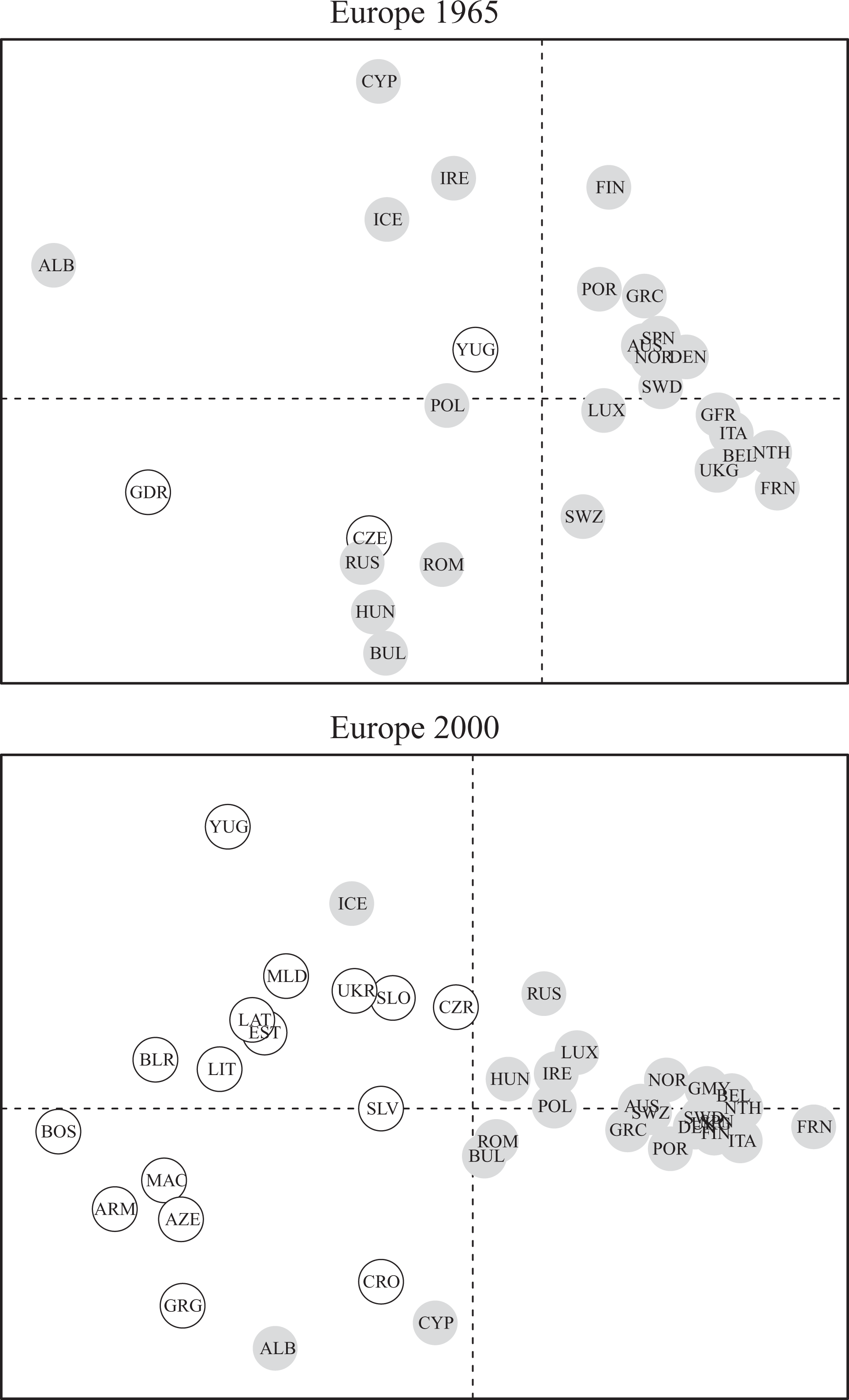
Structural similarity in Europe
IGO convergence and dispute initiation
Data on militarized interstate disputes are drawn from Maoz (2005) and include all independent states in the international system. The unit of analysis is the directed dyad-year, which distinguishes between initiators and targets of conflict. The dependent variable, MID Network convergence from 1995 to 2000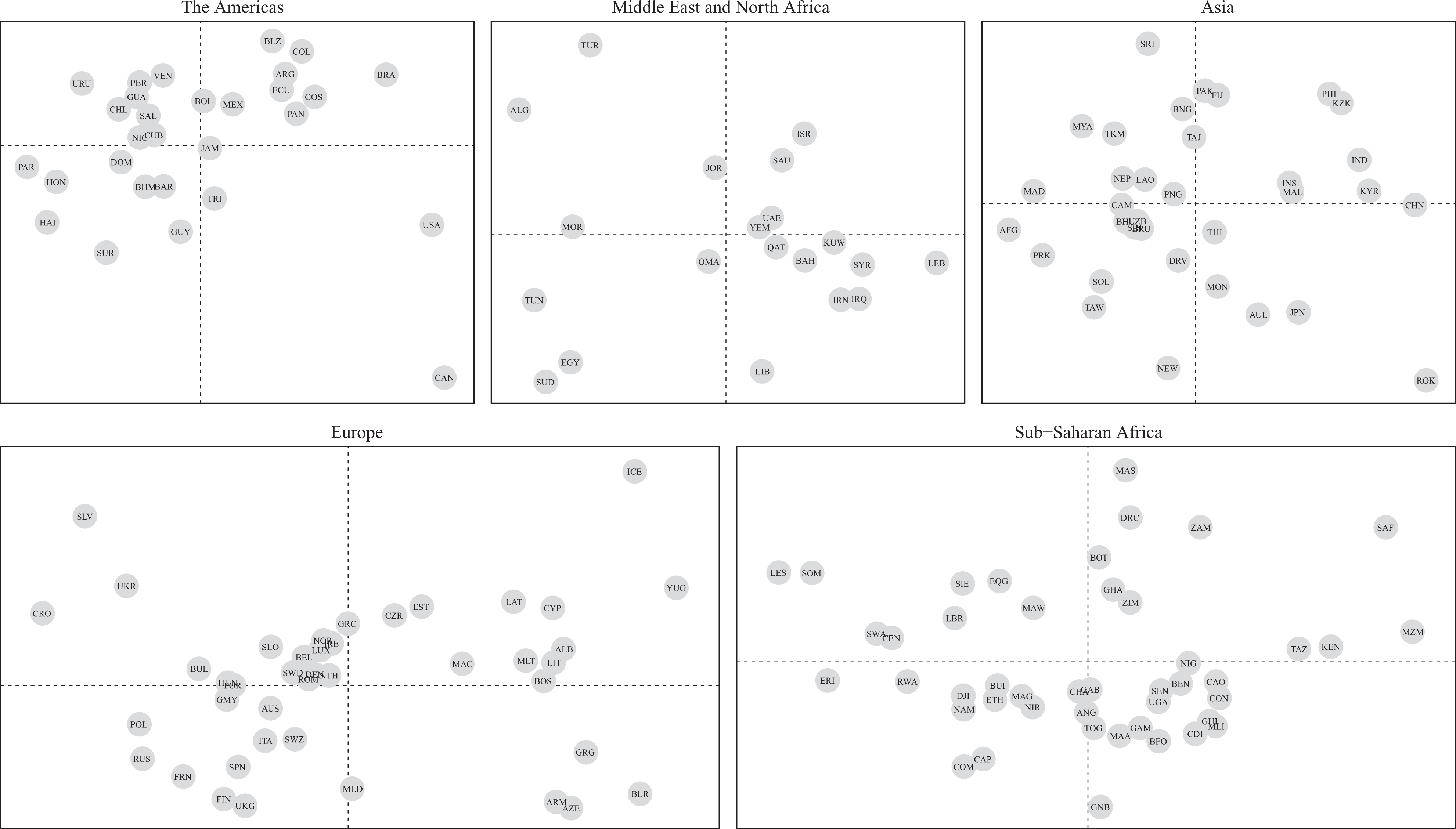
Methodologically, the analysis uses descriptive network statistics (i.e. structural equivalence) to model extradyadic aspects of an exogenous covariate (i.e. IGO membership). However, IR scholars increasingly recognize that dyadic conflict data themselves are rife with complex dependencies, and these dependencies may lead to biased estimates in traditional logit or probit models (Ward, Siverson & Cao, 2007). While this critique is fundamentally correct, a consensus method for modeling dependencies in MID data has not yet emerged. I thus conduct the main analyses according to current standards in the field – binary logit with clustered standard errors and controls for duration dependence. To assess robustness, I also estimate a series of alternative specifications, including fixed- and random-effects models,
To accommodate lags of up to five years, the analysis begins in 1970. The first column of Table I shows the results for the baseline logit model, which are generally unsurprising. The estimated effect of dyadic shared IGO membership is significant but positive, which is puzzling but consistent with Dorussen & Ward (2008), Boehmer, Gartzke & Nordstrom (2004), and others. Preference similarity and shared democracy both reduce the probability of conflict initiation, as does distance. Military capabilities and geographic contiguity increase the probability of conflict initiation. Alliances and trade dependence have no effect.
Effect of IGO network convergence on MID initiation, 1970–2000
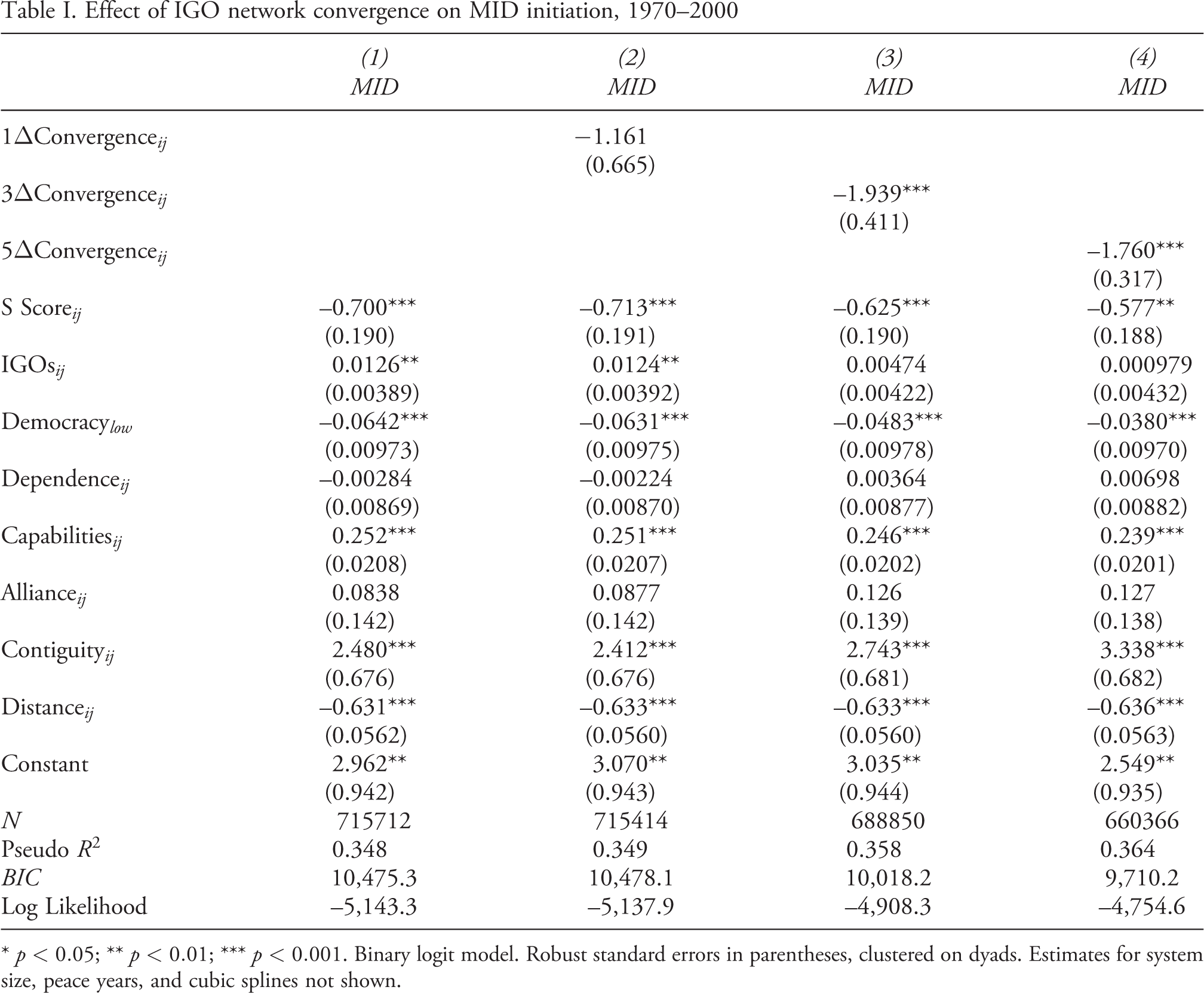
*
While the results thus far support Hypothesis 1, they also raise numerous questions. Most importantly, if the effects of IGO convergence are time sensitive, what is the optimal time span over which to assess their impact? We are interested not merely in the statistical significance of estimates, but in the substantive impact of convergence on the probability of conflict. Using predicted probabilities from Models 2–4, Figure 4 illustrates variation in the probability of conflict for each
I next estimate a series of models that measure convergence over spans of one to 20 years. I restrict analysis to a Effect of convergence on probability of dispute initiation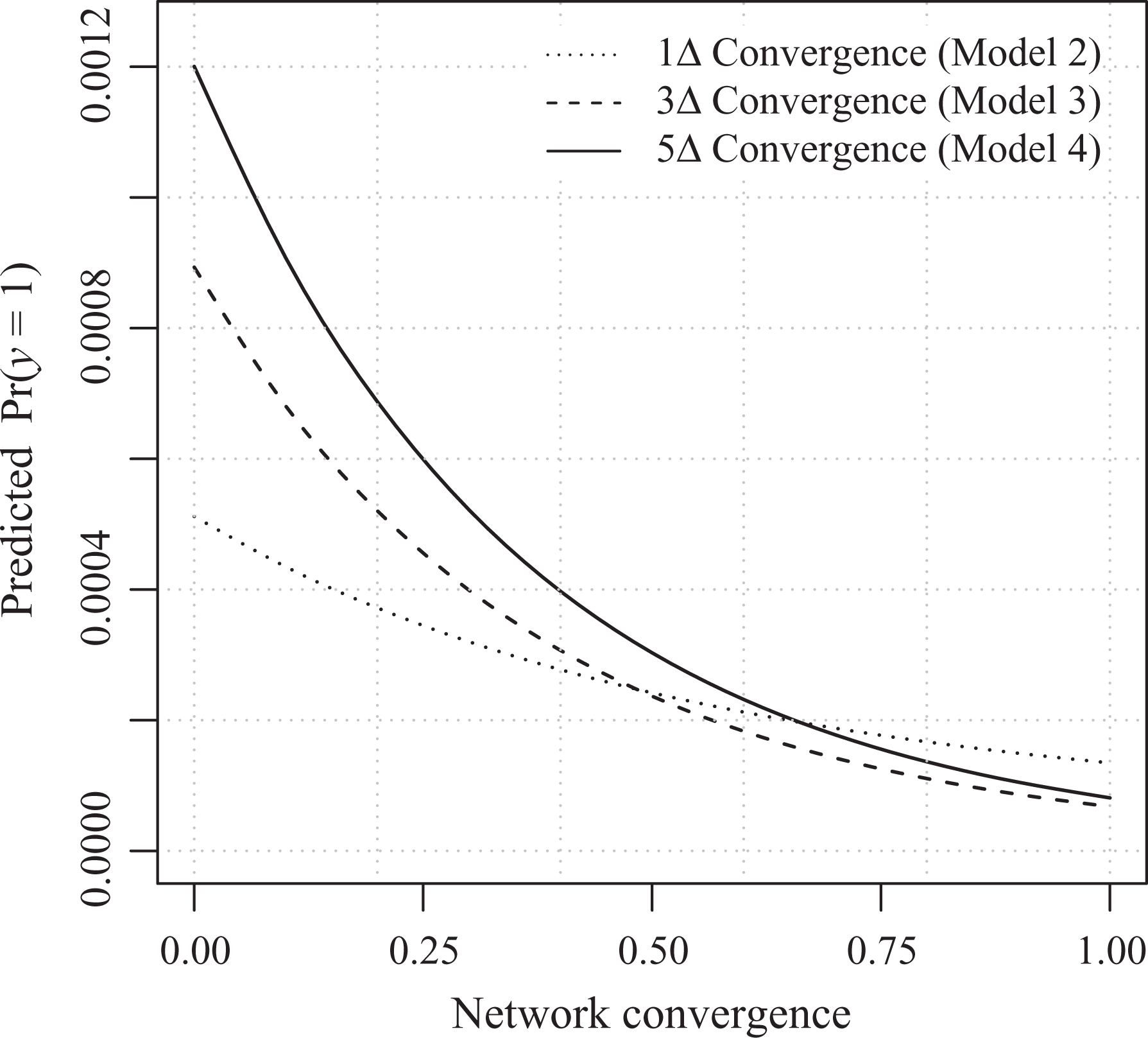
The special significance of the eight-to-ten-year mark is perhaps not surprising. Such a time span exceeds the tenure of most democratic leaders and many autocratic leaders (Bueno de Mesquita et al., 2003). Since leadership turnover potentially undermines international commitments (Leeds, Mattes & Vogel, 2009), processes of convergence that outlast individual leaders are likely to be especially credible. As well, for newly emergent regimes, periods of consolidation may last a decade or longer. Indeed, scholars often use the ten-year mark as a threshold for stable transition. IGO-based mechanisms of credible signaling may be especially important to new regimes, as such states often lack well-established means – for example, strong diplomatic ties – for sending credible signals to potential partners. Whatever the case, a decade-long Effect of network convergence over 20 years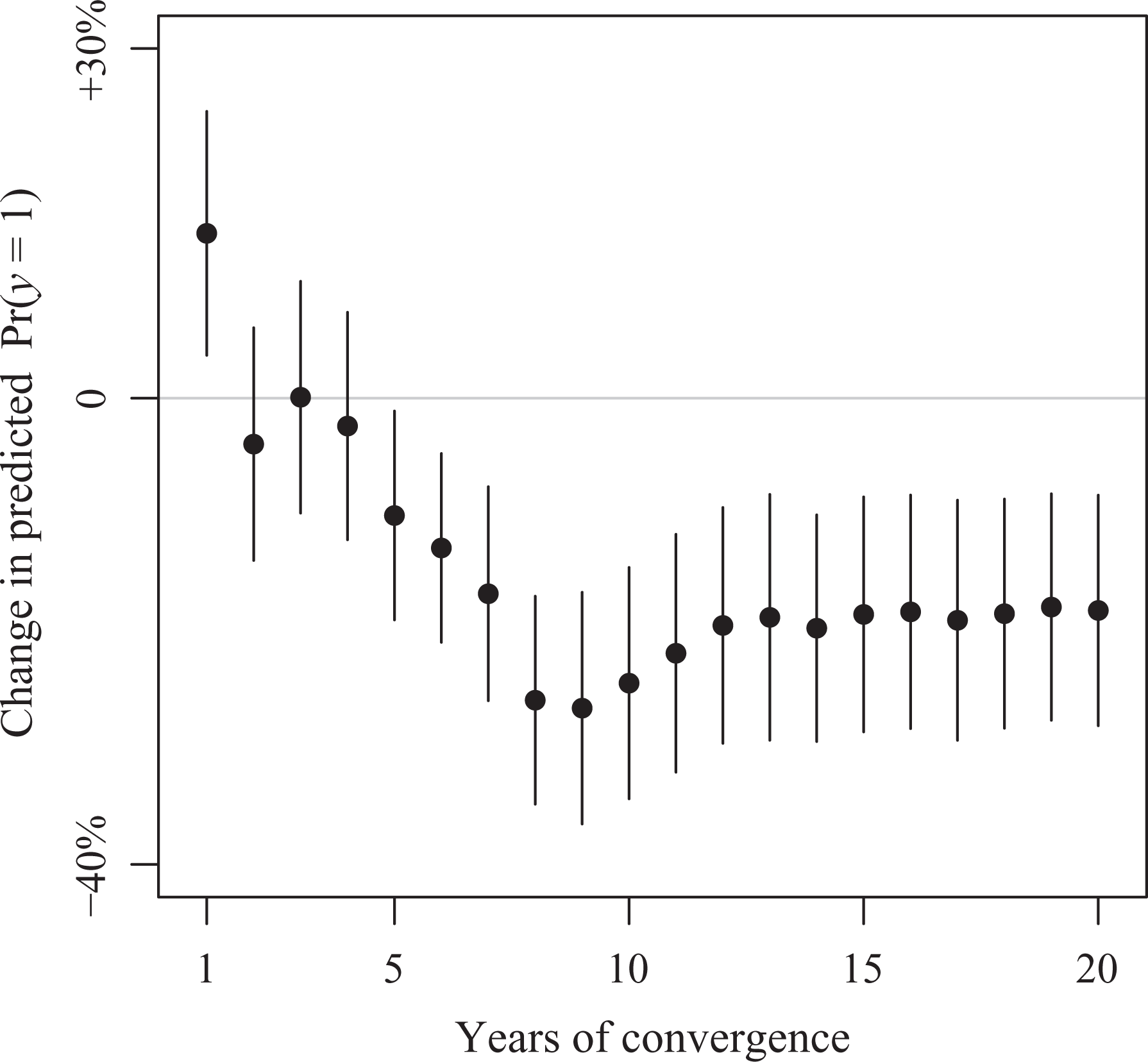
Dependencies in dyadic conflict data
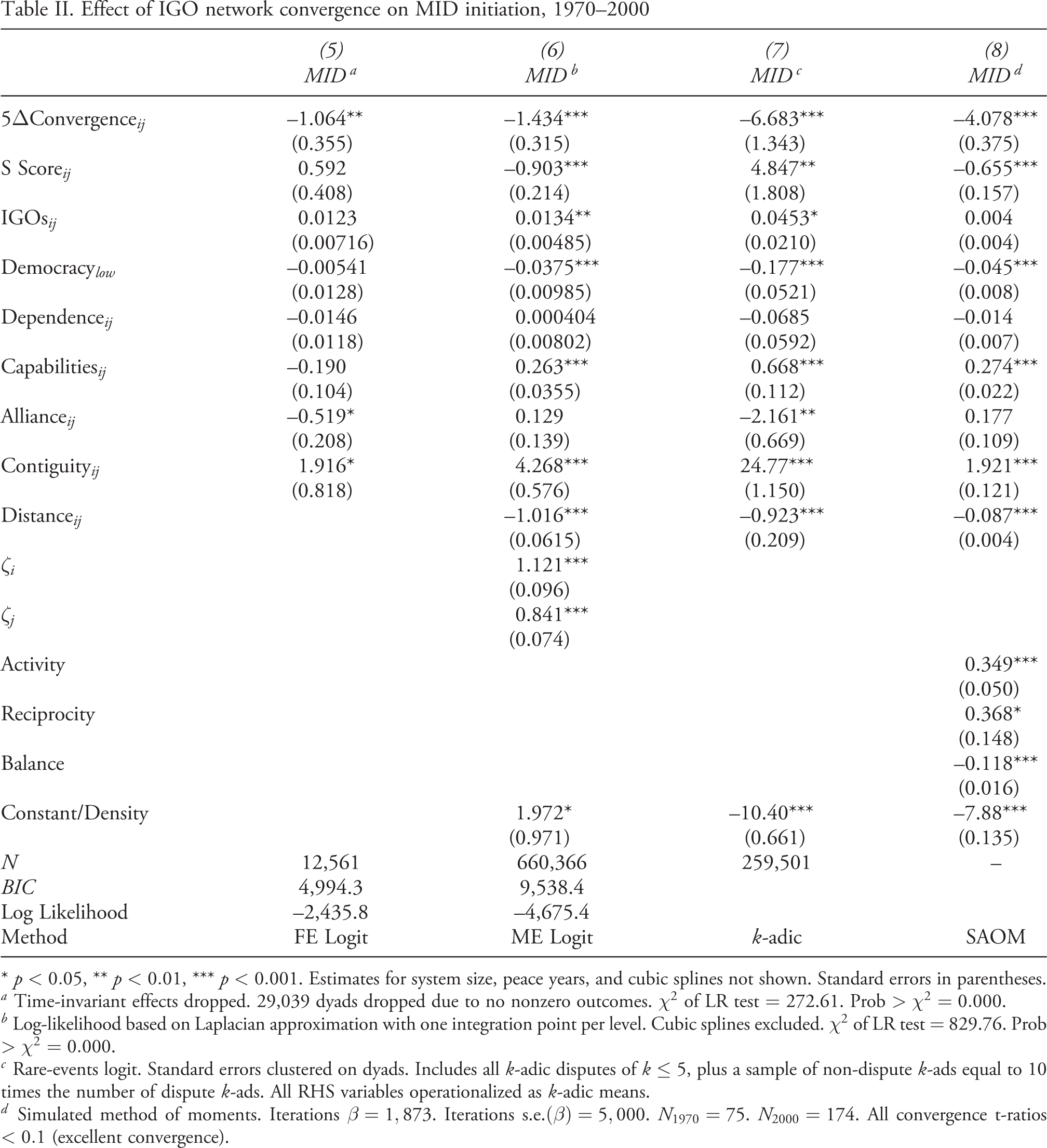
To address the complex dependencies of dyadic conflict data, I employ a number of alternative model specifications, focusing on the
Effect of IGO network convergence on MID initiation, 1970–2000
*
Models 7 and 8 (Table II) consider two additional complications of MID data. Given the complexity of these models, I discuss only the main results, reserving a full discussion of model assumptions and estimation procedures for the online appendix. First, many conflicts are not dyadic but ‘
Effects of IGO heterogeneity
To test Hypotheses 2 and 3, I use data from Ingram, Robinson & Busch (2005). I derive alternate versions of the
I also estimate the effects of convergence across IGO structures, without regard to function. As illustrated in Figure 6(b), while all three categories reduce the probability of conflict, structured IGOs exert the strongest effect. Finally, I estimate the effects of convergence across IGO functions, without regard to structure. As shown in Figure 6(c), military IGOs again have no statistically significant effect on conflict initiation. Cultural and economic IGOs, however, both significantly reduce conflict initiation, with economic IGOs exercising, by far, the strongest effect. These results strongly support Effect of IGO heterogeneity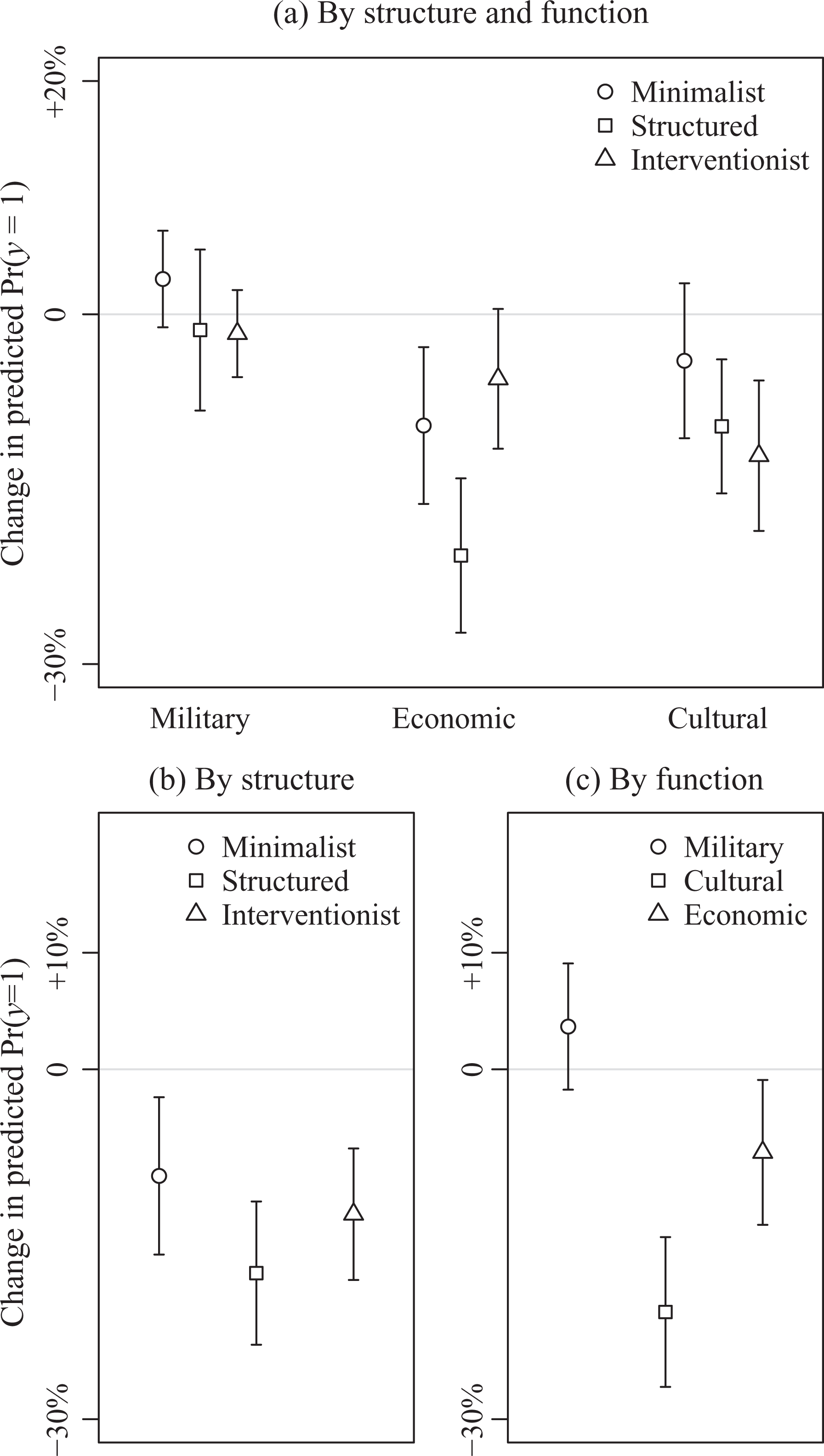
Convergence versus preferences
Correlation between network convergence and preferences
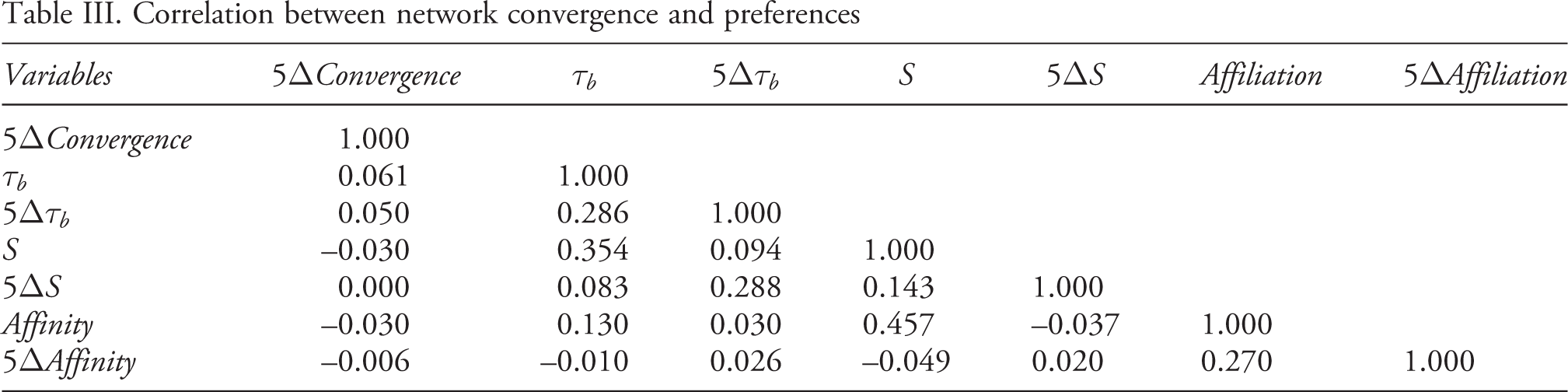
I estimate six different versions of Model 4, one for each of the preference measures. Figure 7 uses predicted probabilities from these models to precisely illustrate the relationship between preferences and network convergence. Note, first, that the estimates for
Conclusion
Overall, the results strongly support the hypothesis that network convergence credibly signals trustworthiness. Additional robustness checks in the online appendix show that the effect of convergence cannot be explained by regional heterogeneity, economic development, or alternative model specifications. The evidence shows simply that as states converge in their IGO memberships, they become increasingly less likely to initiate disputes against one another. This pacific effect emerges definitively around the five-year mark and is strongest over periods of eight to ten years, where it is best positioned to corroborate a state’s preference for cooperation over conflict.
The theory and empirics developed here offer a unique take on the IGO–conflict relationship. Rather than grounding the pacific influence of IGOs in their capacity to serve as neutral mediators or to intervene in conflicts directly, this analysis locates IGO influence in macro-level membership patterns, where a state’s IGO portfolio acts as an instrument for credibly signaling cooperative intent. The positions of states in the global IGO network – and the micro-level changes they effect in order to alter their positions – reveal strategically valuable information about how those states see themselves in the international system and how they relate to others.
This analysis carries numerous implications. It allows a role even for weak and seemingly inefficacious organizations, the existence of which often puzzles orthodox approaches to IGOs. It also emphasizes membership – and not just institutional characteristics – as a distinctive and strategically valuable characteristic of IGOs. Also, the theory identifies avenues of credible communication that are often ignored. The possibility of signaling trustworthiness indirectly, through structural ties and network convergence, creates new signaling opportunities for states that lack direct means of sending credible signals to potential partners, such as newly emergent or Effect of network convergence versus effect of shared preferences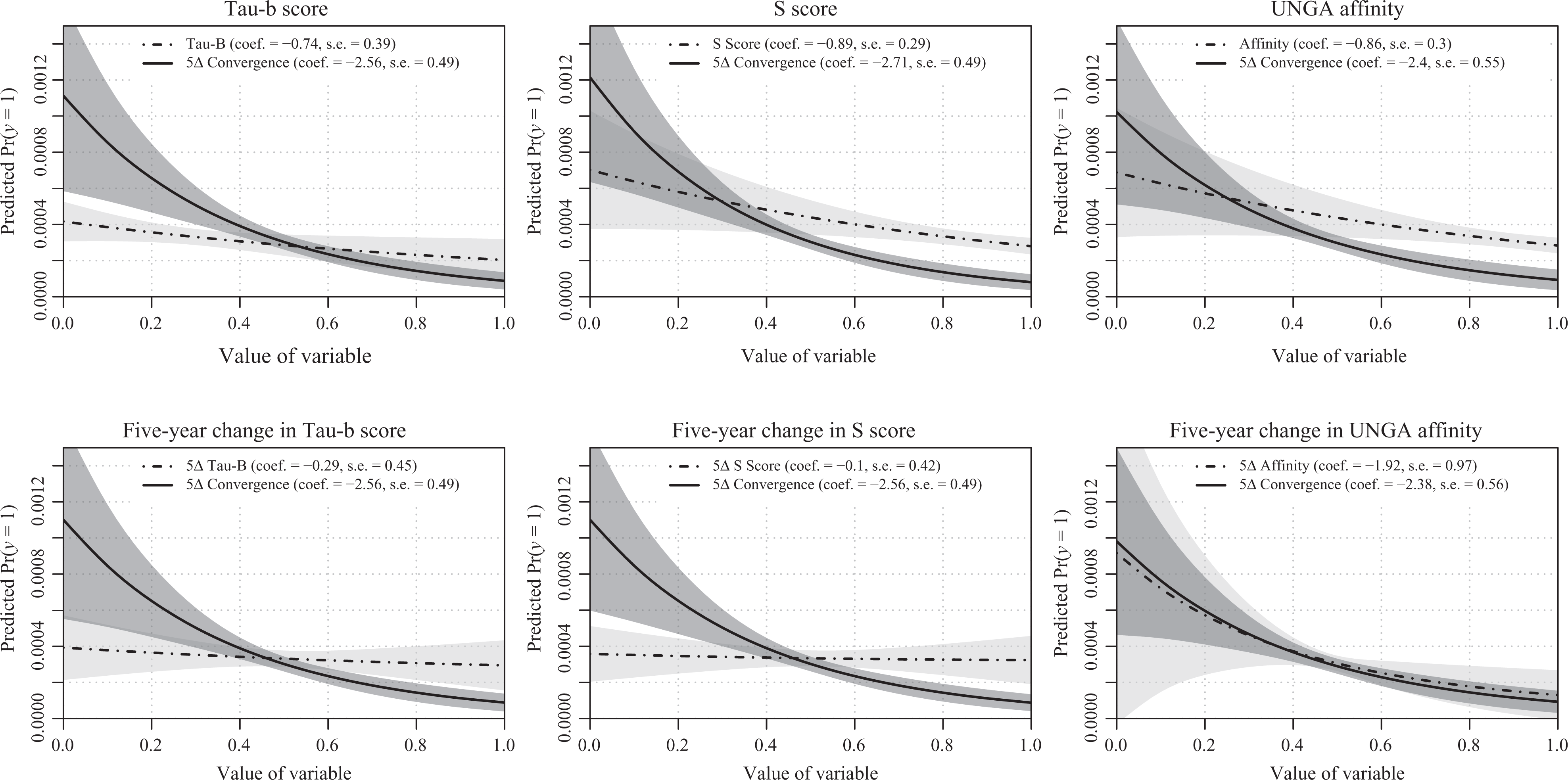
Footnotes
Replication data
An online appendix and replication files can be found at http://www.prio.no/jpr/datasets and at  . The analysis was conducted in Stata MP 11.2 and R 3.0.0.
Acknowledgements
For comments, I thank Renee Buhr, Susan Hyde, Kelly Kadera, Nikolay Marinov, Alex Mintz, Clint Peinhardt, Bruce Russett, two anonymous referees, and the JPR editors. I also thank Paul Ingram for generously sharing data on IGO heterogeneity. A prior version of this paper was presented at the 2010 International Studies Association Convention in New Orleans, LA. Any errors are my own.
Notes
References
Supplementary Material
Please find the following supplemental material available below.
For Open Access articles published under a Creative Commons License, all supplemental material carries the same license as the article it is associated with.
For non-Open Access articles published, all supplemental material carries a non-exclusive license, and permission requests for re-use of supplemental material or any part of supplemental material shall be sent directly to the copyright owner as specified in the copyright notice associated with the article.
