




Abstract
Previous literature has shown a link between violent victimization and pro-sociopolitical behavior. This study asks why victimization is shown to increase the likelihood of political participation in regions of ongoing armed conflict. I argue that previous answers to this question have overlooked a key variable for predicting civilian behavior: individual-level social context. As a step forward in connecting social networks to behavior outcomes, I present the kinship network as a novel measure for proxying an individual’s valuable and private social interactions. Building on previous victimization literature, I suggest that to comprehensively understand the effects of victimization, scholars should account for social context. Specifically, I examine the hypothesis that as kinship ties strengthen, victimization positively influences the likelihood of political participation. To test this argument, I turn to the Mexican criminal conflict. I use original survey data of 1,000 respondents collected in July 2012 from the ongoing drug war in Mexico, and in doing so, I find that kinship plays a key role in motivating political participation during armed conflicts in that survivors of criminal violence with strong ties to kinship networks are the most likely to participate in political groups; these results are robust to state-level fixed effects and are unlikely to be driven by victimization selection bias.
Nepomuceno Moreno Nuñez was a 56-year-old sidewalk seafood vendor before he became one of the most well-known activists in the anti-crime movement in Mexico; he was inspired to take action after his 18-year-old son Jorge Mario disappeared in July 2010. Nuñez participated in the Dialogue for Peace with President Felipe Calderón at the Castle of Chapultepec and gave the president documents about his son’s case, telling the president that he feared for his own security and the safety of his family. Tragically, in November 2011, Nuñez was shot dead as he was crossing a street in Sonora, Mexico (CNN, 2011). Nuñez’s experience with violence motivated his dedication to activism but ultimately cost him his life.
A wide range of disciplines have approached the question of whether victimization increases the likelihood that individuals like Nepomuceno will demonstrate social or political engagement. Political Science has a growing collection of literature on strategies of violence against civilians (Eck, 2009; Hultman, 2012; Wood, 2010; Wood, Kathman & Gent, 2012) and diverse disciplines have approached the question of how civilian victimization changes an individual’s likelihood of social or political engagement – for example, Clinical Psychology (Walsh, 2003); Psychology (Goldbaum et al., 2003; Ullman et al., 2007). Recent literature has made progress in this area of study by incorporating more detailed measures on household attributes (Blattman & Miguel, 2010) and individual exposure to violence. While these analyses have shed light on the conditions linking victimization and behavior, further research is still required to explain why it is that surviving a violent experience encourages political participation at the individual level. I address these gaps and improve the literature in three main ways: (1) I focus not only on the variation in political participation between victims and non-victims but also on the variation in the participation of victims; (2) I present social structure, as captured by kinship ties, as a previously overlooked variable for predicting civilian behavior; and (3) I utilize empirical evidence from an ongoing, evolving criminal conflict rather than post-conflict data in order to address participation in areas of protracted and prolonged violence.
I first examine the question of whether criminal victimization increases the likelihood of civilian participation in political, community settings. Drawing on literature from political behavior, psychology, and sociology, I suggest that political scientists have overlooked individual social structure as an important variable in predicting survivors’ political behavior (Goldbaum et al., 2003; Litrownik et al., 2003). Literature on trauma survivors, war-torn communities, and post-traumatic stress disorder (PTSD) suggest that social support influences individuals’ behavior following a traumatic event (King et al., 1998; Coker et al., 2002; Ullman et al., 2007). Specifically, I suggest that social support via kinship networks positively influences victims’ willingness to participate. I argue that civilian political behavior is conditional on the social support gained from kinship networks and that by examining individuals’ kinship networks we can investigate how social context plays a role in predicting behavior. 1
Following a violent experience, social connectivity can foster a sense of purpose and security that motivates individuals to become involved in organizations and groups which have the potential to alter the conditions that led to the traumatic events those individuals experienced. While demographic variables such as age, gender, political orientation, and socio-economic status are all shown to be influential factors predicting when an individual chooses to become more or less politically active following a traumatic event, no study has yet to incorporate more nuanced behavioral measures of social context or family life. Existing studies in political science have yet to measure these attributes of individual social behavior and thus overlook a key variable that influences political outcomes. I present kinship networks as a novel measure of social context that helps to predict civilian behavior within regions where the potential for future violence is high. I investigate how criminal victimization in a civil war-like criminal conflict influences individual-level political participation. In doing so, I first test the empirical finding from the literature: survivors of criminal victimization are more likely to be politically active than non-victims. I then test the argument that victims who are more connected to their kinship networks will be more likely to participate than those victims with lower kinship connectivity. I use an original cross-national survey in Mexico, designed by myself and Sandra Ley Gutiérrez, to investigate civilian response to violence at the individual level; the findings from this survey support the argument that an individual’s social interactions and personal networks are critical conditions affecting responses to conflict. 2
Victimization and political action
Conventional wisdom suggests that a traumatic event – such as being assaulted or losing a loved one to murder – instills fear in victims, producing insecurity, distrust, and a feeling of detachment towards one’s community. A common narrative is that survivors of violence or crime are more scared to go outside of their home or trust others. Take for example the basic brochure that the FBI circulates, entitled ‘Coping with crime victimization’, which walks through the potential effects of trauma related to crime, listing ‘fear, anxiety, wanting to withdraw or hide, difficulty making decisions’ as common effects.
In contrast to this conventional wisdom, political scientists have found that direct experience with wartime violence leads individuals to be more likely to vote and take political action within their community (Blattman, 2009; Shewfelt, 2009; Bellows & Miguel, 2009). Using survey data, Blattman (2009) investigates the long-term effects of exposure to violence on the political behavior of ex-combatants. He finds that an increase in witnessed violence is associated with an increase in the ex-combatant’s involvement in community leadership. Relatedly, Voors et al. (2012) find that individuals exposed to violence exhibit more altruistic behavior towards their neighbors and are more likely to take risks.
Studies focusing on civilian life after wartime also suggest that war experience influences political identities via polarization (Balcells, 2012). Notably, Bateson (2012) utilizes cross-national survey data on criminal victimization of civilians to link individual victimization to collective action and political participation. Bateson (2012) suggests that criminal victimization is a cause of political participation, wherein victims are more likely to attend marches, political meetings, and community meetings. Yet other studies find that people who have first-hand experience with violence, such as ex-combatants, experience difficulty re-entering daily life, and are only partially reintegrated into society during postwar periods. Gilligan, Samii & Mvukiyehe (2013) find that rebel reintegration programs are effective in economic reintegration but fall short in political and social reintegration.
Much of this literature examines the puzzle of why survivors of violence or crime are more likely to become politically engaged than others. However, the literature overlooks the central question of why some victims of violence turn inwards, withdrawing from their normal activities and social lives (Marks & Goldsmith, 2006), while other victims seem emboldened by such violence, turning victimization into a cause for political participation and social engagement (Blattman, 2009). Thus these studies focus on explaining variation between the two groups (those who self-identify as survivors versus those who do not) but fail to acknowledge differences within groups – that is, what makes some victims more likely to participate than others.
When addressing the implications of victimization and personal resiliency, research from across disciplines paints a more complex picture, suggesting that pro-social behavior is not necessarily homogenous across all survivors of trauma. Research suggests that these outcomes are actually dependent on the social environment of the victim, whereby social support structures, from networks such as the family or the community, condition the survivor’s response to violence. For example, in studies on gender-based medicine and women’s health, researchers find that social support protects against the negative effects of partner violence on mental health (Coker et al., 2002). Studies on PTSD show that severe experiences such as war leave survivors with serious adjustment disorders and grief (Horowitz, 1997; Dyregrov, Gjestad & Raundalen, 2002), but that social support diminishes these deleterious effects (Seginer, 2008). For example, Johnson & Thomas (2008) point to social and family support as a key determinant for minimizing symptoms of PTSD and enabling survivors to reintegrate into their community.
In psychology, a long history of research has assessed the social and developmental challenges faced by survivors of physical and sexual abuse (Gold, 1986; Beitchman et al., 1992; Goldbaum et al., 2003; Litrownik et al., 2003). Gold (1986) finds that social support is a key variable predicting healthy social behavior in adults who experienced trauma in early childhood. In work on the determinants of trust, Alesina & La Ferrara (2002) find that the most important factors associated with low trust include a recent history of traumatic experiences and belonging to a minority group. These studies echo findings from research on how social context influences political behavior, which demonstrate that family and friend networks condition electoral participation (Abrams, Iversen & Soskice, 2010; Ames, García-Sánchez & Smith, 2012). These studies suggest that conflict scholars too must capture individual-level social dynamics in order to effectively model the relationship between victimization and civilian political behavior.
Similarly, social cohesion tends to influence the impact of violence and crime on a community. In his early work on crime, Durkheim argues that individuals band together against a common enemy, a violator of the law, which increases the solidarity and strength of their network and often decreases overall perception of threat. Villarreal & Silva (2006) examine the effects of social cohesion and neighborhood disorder on crime using data from a survey of neighborhoods in Brazil. They find that pre-existing levels of social cohesion in neighborhoods predict individuals’ perception of crime in those neighborhoods. Ross & Jang (2000) find that individuals who live in neighborhoods with high crime exhibit higher levels of fear and mistrust than those who live in low crime areas, but that strong ties with neighbors can help buffer the negative consequences of such crimes. It is evident that the way in which individuals respond to crime and violence is affected by social factors.
Interpersonal relationships are relevant to everyday life and characterize the ebb and flow of social interaction, discourse, and development. Social support is inherent to dense and reciprocal social networks. Social support via interpersonal networks encourages resiliency, enabling survivors of violence to cope, create mechanisms of protection in their insecure environment, and ultimately find ways to channel their experience into productive and meaningful outlets. Studies on individual resilience have pointed to the ability of kin, close mentors, and friends to influence an individual to overcome difficulty from trauma. 3 Taking political action can be one such outlet because it enables individuals to reclaim political space, attempt to decrease the likelihood of future victimization in their community, and gain empowerment in a situation where their agency has been directly violated by a violent action.
Furthermore, there is broader evidence that family networks specifically play a critical role in how individuals respond to insecure environments. Historiographies on the role of elite families in Latin America demonstrate that family networks in the 19th century grew stronger as a way to fill the gaps of the weak and insecure state system (Kuznesof & Oppenheimer, 1985; Balmori, Voss & Wortman, 1984). At a more individual level, sociologists have described the family as a source of identity and solidarity that fosters a unique ‘cultural subsystem’ in which individuals can participate and find security (Kuznesof & Oppenheimer, 1985).
This study is the first of its kind to incorporate kinship networks as a predictor of political behavior using data from a current case of armed conflict. Much of the research on kinship and family networks uses ethnographic or survey approaches to construct the network of interest (Schweizer & White, 1998). I suggest that measuring how often an individual survey participant communicates with each member in his or her family is a useful way to capture kinship dynamics and the importance of kinship relations to the individual. Given the evidence provided by literature on the dynamics of survival, I expect that when victims communicate often with their families, they engage in a process of sharing their experience of victimization and are more likely to turn their experience into action. By processing with their loved ones about the traumatic event, individuals feel supported and motivated to participate in their community and to be a part of changing their environment, instead of remaining a victim of it. Thus, I posit that kinship networks moderate the effect of criminal victimization on political participation. In my analysis, I first test the finding from current literature that victimization is associated with increased participation in political groups. Second, I test the central hypothesis of this study: survivors of victimization who have higher connectivity to their kinship networks will be more likely to engage in political community groups.
4
Hypothesis: As kinship connectivity increases, victimization positively influences the likelihood of political participation.
Empirical strategy
Over the past seven years Mexico has witnessed an unprecedented surge in violence. Competition among drug cartels has left thousands dead; according to several conservative estimates, the number of dead during the Felipe Calderón presidency (2006–12) is around 70,000; in addition to this devastating number, it is estimated that close to 26,000 have disappeared (Lee, 2014). Mexico is a member of the North American Free Trade Agreement and shares a critical, 2,000-mile border with the United States. Mexico’s National Council for the Evaluation of Social Development Policy reports that over 40% of the country’s population is poor, while close to 10% is extremely poor.
The tens of thousands of citizens killed in the last several years include drug cartel members, security forces, and innocent civilians. The ongoing violence is gruesome: kidnappings, beheadings, and rapes continue to take place in communities all over the country. According to the Trans-Border Institute’s 2012 report, on average for each day in 2011, 47 people were killed (Molzahn, Ríos & Shirk, 2012). Furthermore, violence against families routinely occurs and there is evidence that drug trafficking organizations (DTOs) force children and young women into their trafficking operations. 5
While many are hesitant to label Mexico as a ‘failed state’ or to characterize the ongoing violence there in terms of civil war, it is clear that the situation in Mexico is not unlike a war zone. Indeed, the Mexican conflict is often referred to as a ‘criminal insurgency’ (Sullivan & Elkus, 2008) or ‘narco-insurgency’ (Brands, 2009), labels which adequately capture on-the-ground dynamics where territorial disputes run deep and DTOs operate as a parallel state. Because of these different dynamics of violence and competition, Mexico provides an appropriate setting to examine the implications of criminal victimization for political behavior during a conflict and contributes to a growing field of research on victimization which has often focused on post-conflict analysis. 6
Survey data
This study utilizes a national survey of 1,000 respondents collected in Mexico in July 2012. The survey was implemented in coordination with a survey team based in Mexico City, Mexico. This survey investigates the social habits, political views, criminal victimization, daily life, and kinship networks of the 1,000 respondents interviewed through a stratified random sample. 7 The survey was stratified according to urban and rural areas as well as on levels of violence. This design was implemented to insure that the sample was not biased by surveying only the safest locations in Mexico.
The structure of the survey was informed by data on organized crime related homicides provided by the Mexican newspaper, Reforma. These are the most recent data available on violence and are some of the only data available that code violence as related to DTO activity. Data covering violence in Mexico have presented a challenge for researchers. While many consider the time frame of the conflict to begin in 2005, the most dramatic increase in violence was in 2008 when organized crime related homicides spiked to 6,873 killings, a surprising 142% increase from the year before (Ríos & Shirk, 2011). Other jumps in violent activity have occurred: from 2009 to 2010 the number of killings associated with organized crime increased by 59%, reaching 15,273 deaths that year. Due to this variation, many sources often provide different estimates. According to this author’s analysis as well as that of Ríos & Shirk (2011), the Reforma data provide an appropriately coded and generally conservative estimate of violence.
The survey utilized herein was conducted from 5 July to 8 July 2012 through face-to-face interviews with structured paper-and-pencil questionnaires administered by trained interviewers. The population sampled was adults 18 years of age or older residing in housing units within the national territory of Mexico. The sampling frame is an area frame based on a listing of geographical units called electoral sections (secciones electorales), our primary sampling units, or PSUs. All land area in the country is divided into electoral sections, which constitute the basic territorial unit of single-member electoral districts for the registering of citizens to enroll as voters (padrón electoral). The sampling frame is based on electoral sections because the padrón electoral is the most updated and complete data readily available. The most recent release date was May 2012 and, according to official figures, the nominal list represents roughly 95.4% of the population 18 years of age or older in the entire country. The average respondent was 40 years old with a monthly household income of less than 5,040 pesos (roughly 387.64 USD). The sample consisted of 480 men and 520 women, with 31% of the respondents living in a rural area and 69% living in an urban area. The geographical distribution of the sample is shown in Figure 1. 8
Dependent variables
Several different dependent variables will be used to assess the effect of victimization on participation in collective, political groups. I specifically examine attendance at meetings for neighborhood associations, political parties, unions, and local NGOs. Similar to other surveys, such as the Latin American Barometer, this measure is a binary variable that captures respondents’ attendance at such meetings. 9 The question is worded: ‘I am going to read a list of groups and organizations. Please tell me how frequently do you attend meetings of these organizations: once or more times a week, once or twice a month, once or twice a year, or never. How frequently do you attend meetings of […]?’ Then the respondent is asked about each organization. The meetings focused on in this study – attendance at meetings for political parties, neighborhood association, NGOs, and unions – capture a variety of aims, but typically address political concerns such as security issues, the needs of the neighborhood, worker safety, and public good provision. In all models, attendance is coded as a binary variable where 1 represents having any attendance at meetings and 0 represents a respondent who reports no attendance. 10
Independent variables
Victimization and kinship are the key independent variables in the study. Victimization measures criminal victimization in a binary format. It is obtained by asking the respondent to respond ‘yes’ (1) or ‘no’ (0) to whether or not she or he has been a victim of the following crimes in the last 12 months: burglary, business robbery, theft of vehicle, theft in public transportation, gunshot wound,
Geographical distribution of survey sample Victimization data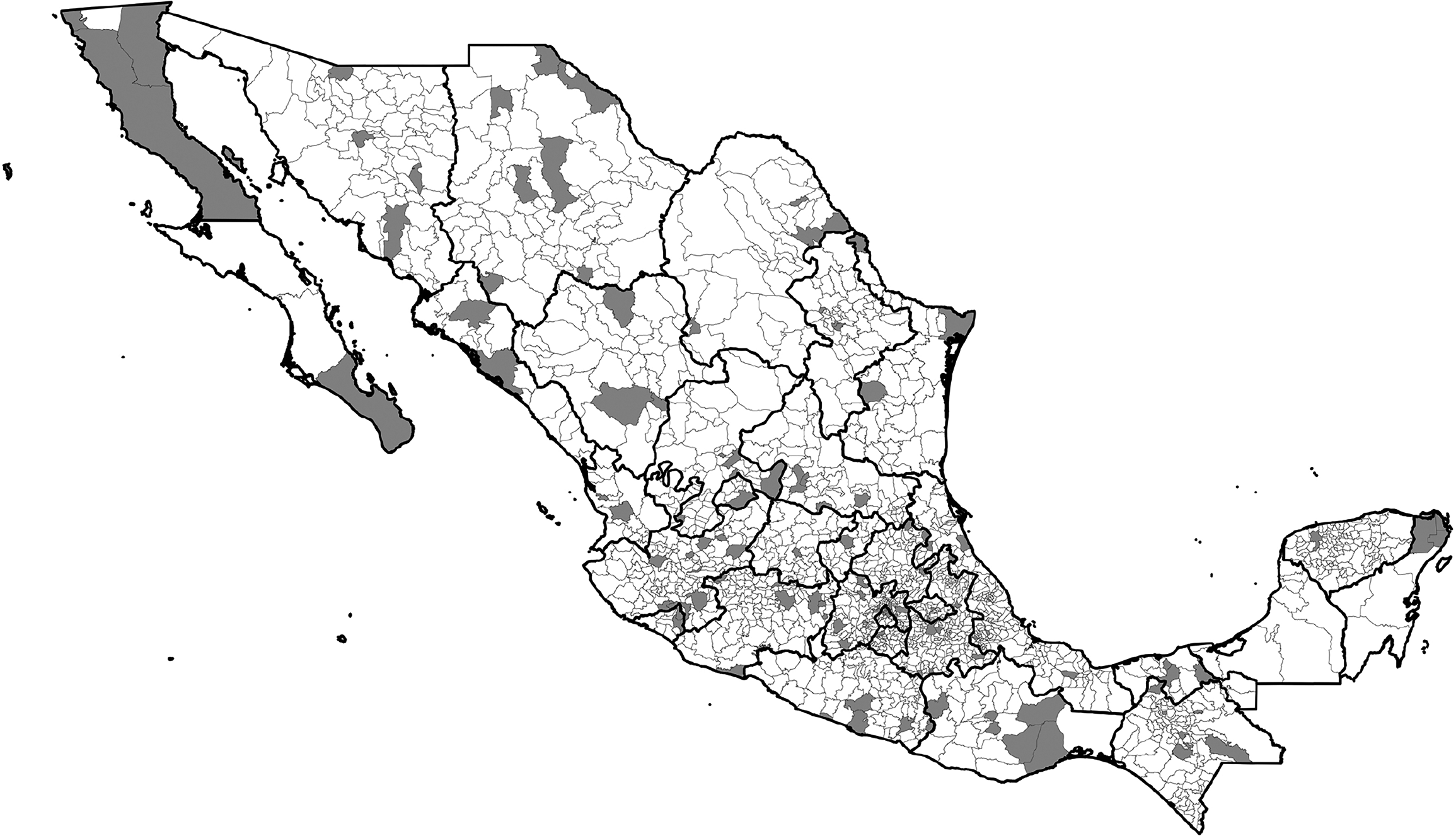

Kinship connectivity is a variable constructed to capture individual-level social context. It measures how often an individual communicates in person with each family member in their kinship network. To control for living dynamics versus communication, the respondent is asked about whom they share a home with. The respondent is then asked to list how frequently he or she talks face-to-face with each member in their family. The respondent is asked these questions for their mother/stepmother, father/stepfather, sibling(s), children, grandparent(s), aunt/uncle, and cousin(s). The respondent can communicate with each family member on a level from 0 to 6, with 0 being no communication and 6 indicating daily communication. From this survey question, I then construct an additive index that captures how much communication each individual has with his or her entire
Three illustrations of kinship networks from low connectivity to high (shown left to right) according to the minimum, median, and maximum index densities Histogram of Kinship Index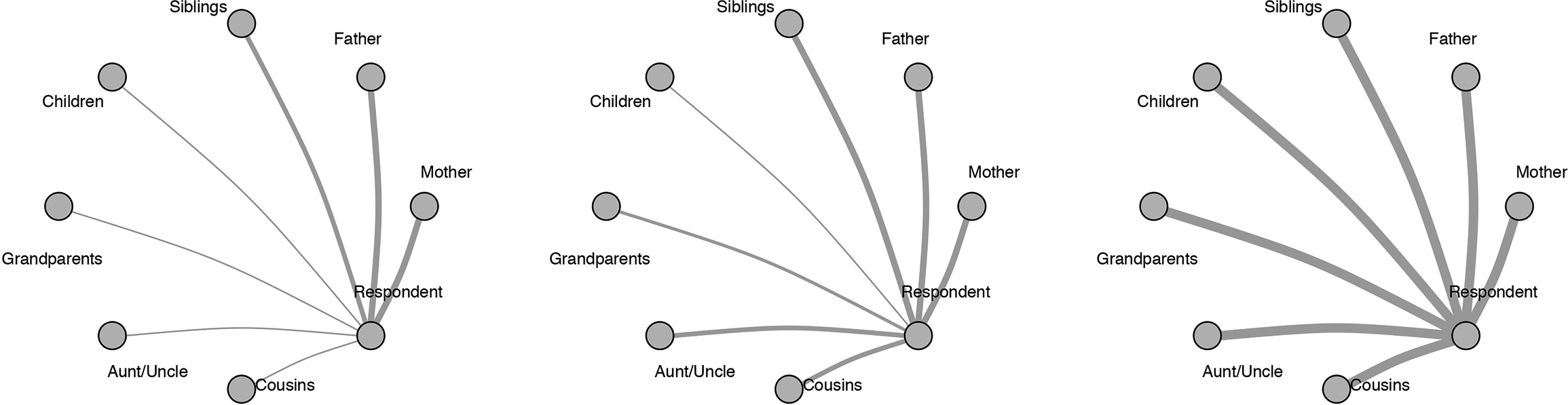
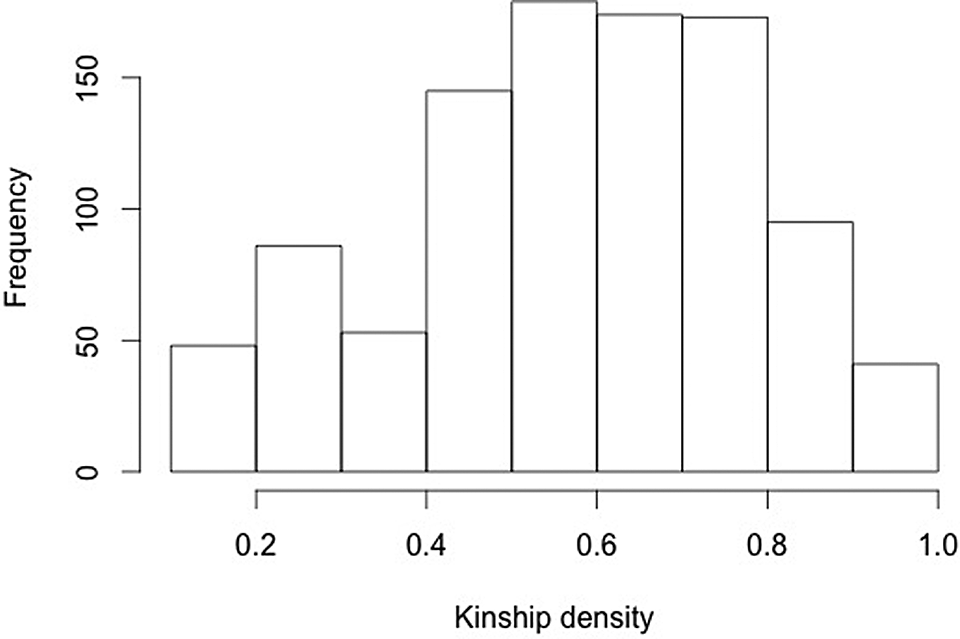
While this dataset is not a perfect network measure of all social interactions the respondent engages in, or a measure of all possible relationships relevant to the respondent’s life, it serves as an approximation for network connectivity within the family group, a key social group. The distribution of the resulting kinship index is shown in Figure 3.
Sociodemographic controls
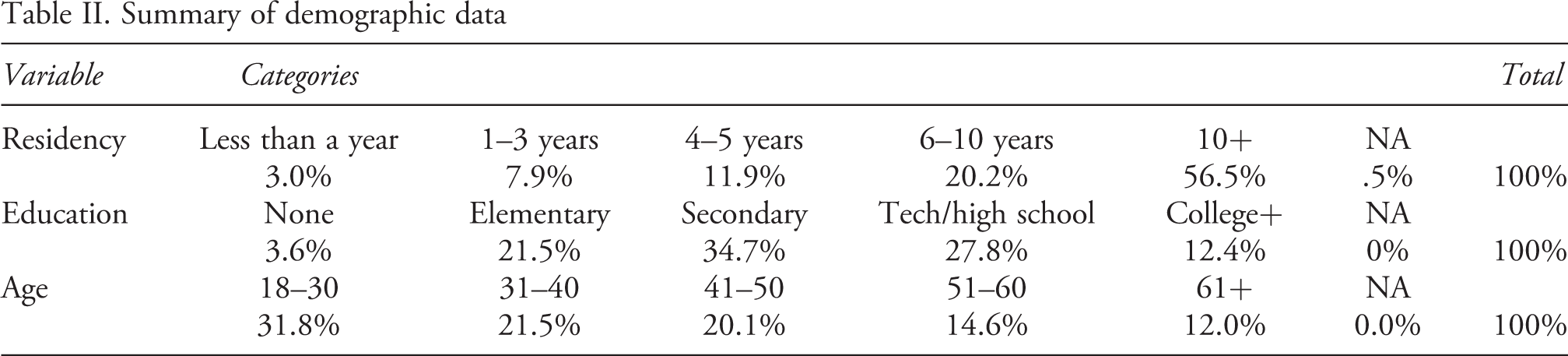
Age is recorded simply by asking the respondent his or her age and recording the number: the average age is 40 years. The variable, Residency, measures how long the respondent has lived in their current residency. This is a categorical variable with five categories: less than a year, 1–3 years, 4–5 years, 6–10 years, and over 10 years. A summary of these data can be found in Table II. I also account for levels of education: Education is an ordinal variable from low to high with five categories: no education, elementary, secondary, technical institute/high school, and college/more than college. Another demographic control variable, Gender, is measured as a binary, self-reported variable where 1 = female and 0 = male. There were 480 men and 520 women in the study. The variable Income is recorded as monthly income in pesos.
Political controls
Political associations is a variable created to control for party affiliations; to record this I include a binary variable on whether the respondent identifies with the PAN (Partido Acción Nacional) party, which is generally considered to be a right-wing party in Mexico and held power from 2000 to 2012. 14
Summary of demographic data
Finally, to control for whether attendance is correlated with voter turnout, I include the variable Turnout which measures whether the respondent voted in the previous election. Because turnout is often over-reported due to social desirability bias, we conducted the survey as close as possible to the election in order to reduce over-reporting. We adapted the most recent questions from the National Electoral Study (NES) and asked voters the following question: ‘Sometimes, people don’t go out to vote because they don’t have a valid voter ID, they are sick, they work and don’t have time to go to the polling station, or they simply want to express their discontent against political parties. Please tell me which of the following statements best describes you.’ The respondent could choose one of these options: (1) I didn’t vote in the past presidential elections on 1 July 2012; (2) I considered voting in the presidential elections on 1 July 2012, but I didn’t; (3) I usually vote, but I didn’t vote this time; or (4) I am sure I voted in the past presidential elections on 1 July 2012. This specific wording was intended to reduce social desirability bias. Nevertheless, considering only those who chose the last option, the turnout rate is equal to 81%. This is well above the actual turnout rate of 61% in the 2012 presidential elections. Thus, I turn to a second measure of voter turnout that we collected from a later question in the survey: the respondent was asked to choose the statement that best described him or her, regarding electoral participation: (1) I always vote, (2) Most times I go out to vote, (3) Sometimes I vote, sometimes I don’t, and (4) I rarely go out to vote. Only 60% said they always vote which is only a 1% difference from the level of turnout reported nationally by the Mexican government. Thus, this question is used to construct the final turnout variable used in the model.
Estimation
Because the dependent variable in this study, Participation, is a binary variable, I estimate logit models for all dependent variables. To calculate the likelihood of participation for respondent i, the general model specification is: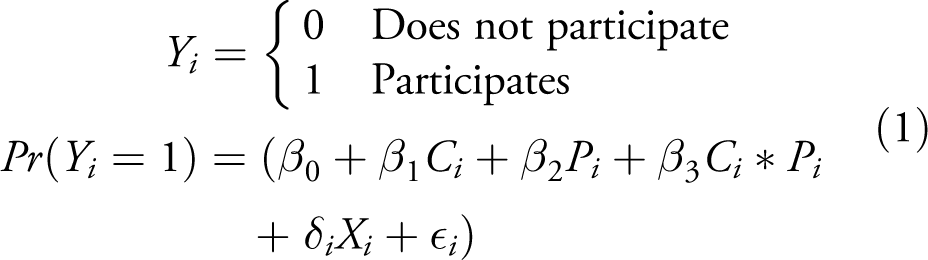
where Yi is a dummy variable taking on a value of 1 if the respondent participated in the meeting and 0 otherwise; Ci is binary indicator where 1 represents a respondent who has been a victim of crime, 0 otherwise; Pi represents the kinship index variable; and Xi is a vector of control variables. The coefficient of interest is β 3, which captures the interaction between being a victim and level of kinship connectivity. I expect that this variable positively influences the likelihood of participation whereby a victim with strong family ties will be more likely to participate than a victim with weak ties.
Main results
Table III reports the results from the first set of models, which are included simply to confirm the general finding from the literature that victims are more likely to participate than non-victims. These models do not include any measure of social context. The purpose of these models is to underscore those findings from the literature that victimization is a strong and significant predictor across models even after controlling for demographic and political variables. Table III demonstrates that even with political control variables included in the models, the victim variable remains a significant predictor of attendance in all forms of meeting attendance. These models serve as a comparison point to test how the results are affected by the inclusion of individual-level social context.
Logit models predicting attendance across all meeting types to demonstrate the commonly identified relationship between victimization and participation
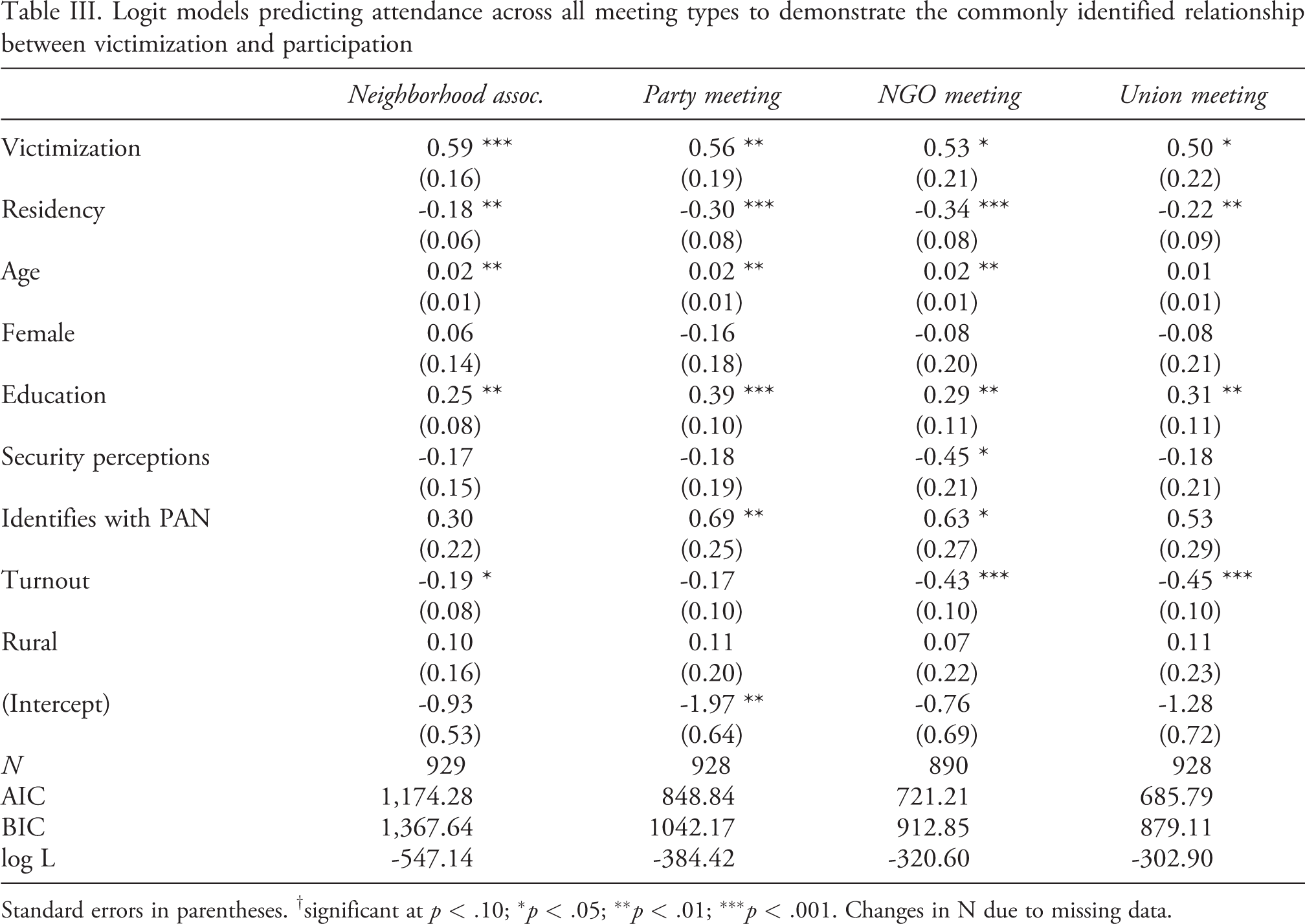
Standard errors in parentheses. †significant at
Next we turn to the central hypothesis from this study: survivors of victimization who have higher connectivity to their kinship networks will be more likely to engage in political community groups. To test this, I include an interaction term in the models of Table IV. The table has the same layout as the Table III and shows the results across four different dependent variables. These models include those political control variables that we would expect to influence an individual’s willingness to participate, such as the respondent’s perceptions of security in their area, whether the individual voted or not in the previous election, political interest, and party identification.
Surprisingly, the control variable Residency – the measure of how long the respondent has lived in the area – is significant across different outlets of participation, which suggests that the longer someone has lived in their neighborhood, the less likely they are to participate in local, collective political meetings. This is in contrast to the work of Gilligan, Pasquale & Samii (2014) which suggests that variation in respondents’ community investment affects participation. Perhaps in this case, living in an area longer decreases an individual’s perception of personal efficacy. Also surprising is that respondents who vote regularly are less likely to attend local collective meetings, potentially suggesting a substitution effect whereby those who vote feel they have no other sociopolitical obligations. Age and Education are also significant predictors across the models implying that a slight increase in age is associated with participation. Similarly, those with higher education are more likely to participate. Notably, in the models of meetings for parties, NGOs, and unions, respondents who politically identify with the PAN party are more likely to participate. 17
Logit models predicting attendance at meetings for neighborhood associations, political parties, NGOs, and Unions. Models test the key interaction between kinship connectivity and victimization

Standard errors in parentheses. †significant at
While assessment of ‘significant’ effects is useful, it does not portray a full picture of these results and tells us little about the variation in participation across victims. Furthermore, effects of interaction terms are difficult to interpret within a logit context. To further explore these results, I present predicted probabilities given a set of covariates and explore substantive effects. To illustrate, I focus on predicted probabilities for attending political party meetings. These predicted probabilities, of course, are contingent on the selected covariate values. Thus, it is of special interest to analyze specific ‘real world’ scenarios that can highlight the implications of the model.
The results of these models are made clearer by Figure 4, which shows the predicted probability of attending a party meeting for four different scenarios. I vary the scenarios by age, gender, and education (holding other variables at their respective medians and means). The first scenario, depicted in the upper-left quadrant of Figure 4, represents a scenario where the respondent is a self-reported victim of a criminal and/or violent action, and is a middle-aged (45-year-old) highly educated woman. For this case, we see that moving from the lowest level of kinship connectivity (0) to the highest level (1) results in an increase of about 47% in the likelihood of participation in a party meeting (the predicted probabilities increase from .40 to .61 The second scenario shown in the upper-right quadrant represents the case of a 25-year-old self-reported victim male with low education. Here we see a 100% increase (from predicted
The effect of victimization and kinship networks on the probability of participation at political party meetings for victims in four different scenarios
These results show that there is an important and influential interaction between the two conditions of victimization and close kinship ties. Victims do not just turn inward to the institution of family, but use it as a launching point to engage in pro-social political behavior outside of their family network. These findings support the idea that social context matters for understanding the behavior of civilians during an armed conflict and suggest that families act as support groups for individuals and enable them to become engaged within society, instead of turning away from it. To demonstrate that kinship ties do not simply capture pro-social behavior, I also show the predicted effect of participation for non-victims with strong ties. As Figure 5 demonstrates, strong kinship ties for non-victims have either a limited or negative effect on the probability of participation.
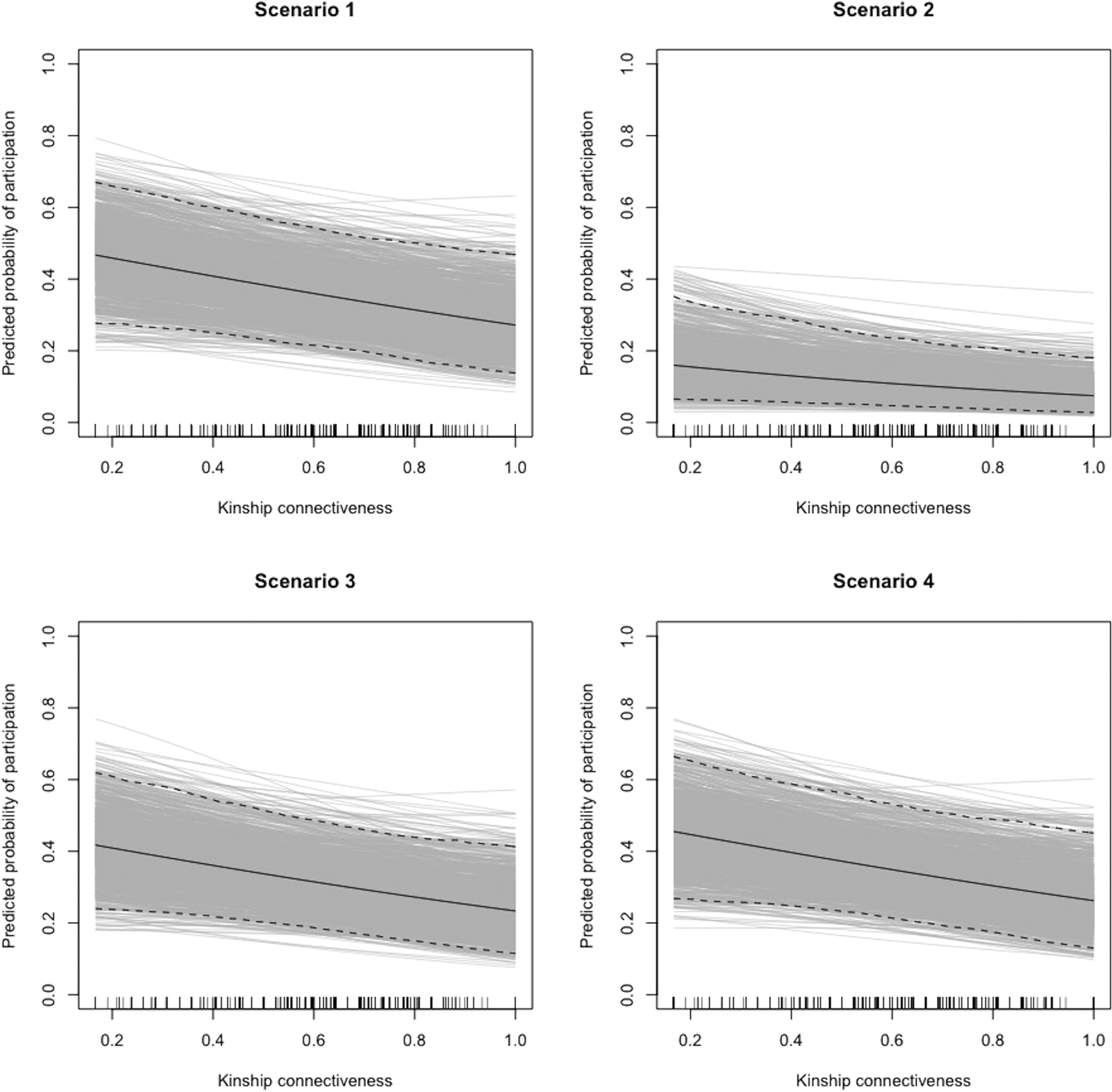
The effect of kinship networks on the probability of participation at political party meetings for non-victims in four different scenarios
Finally, to directly assess the interaction term it is important to evaluate the effect of victimization given varying levels of kinship connectiveness. I plot this relationship in Figure 6. In this figure we observe strong support for the key hypothesis of this study; the plot shows that the effect of victimization is actually negative for low levels of kinship connectivity and is positively increasing at higher values of kinship connectivity. The graphic is generated using the full model including state-level fixed effects.
To assess whether dynamics of violence that vary heavily across the Mexican territory could alter the interaction between victimization and kinship, I evaluate models with state-level fixed effects and find that these key results hold. 18 Furthermore, I find that selection into victimization is unlikely to drive these results. As shown previously in Table I, a basic group-level comparison yields no significant difference between age, gender, length of time lived in current household (i.e. Residency), or education for non-victims compared to victims.
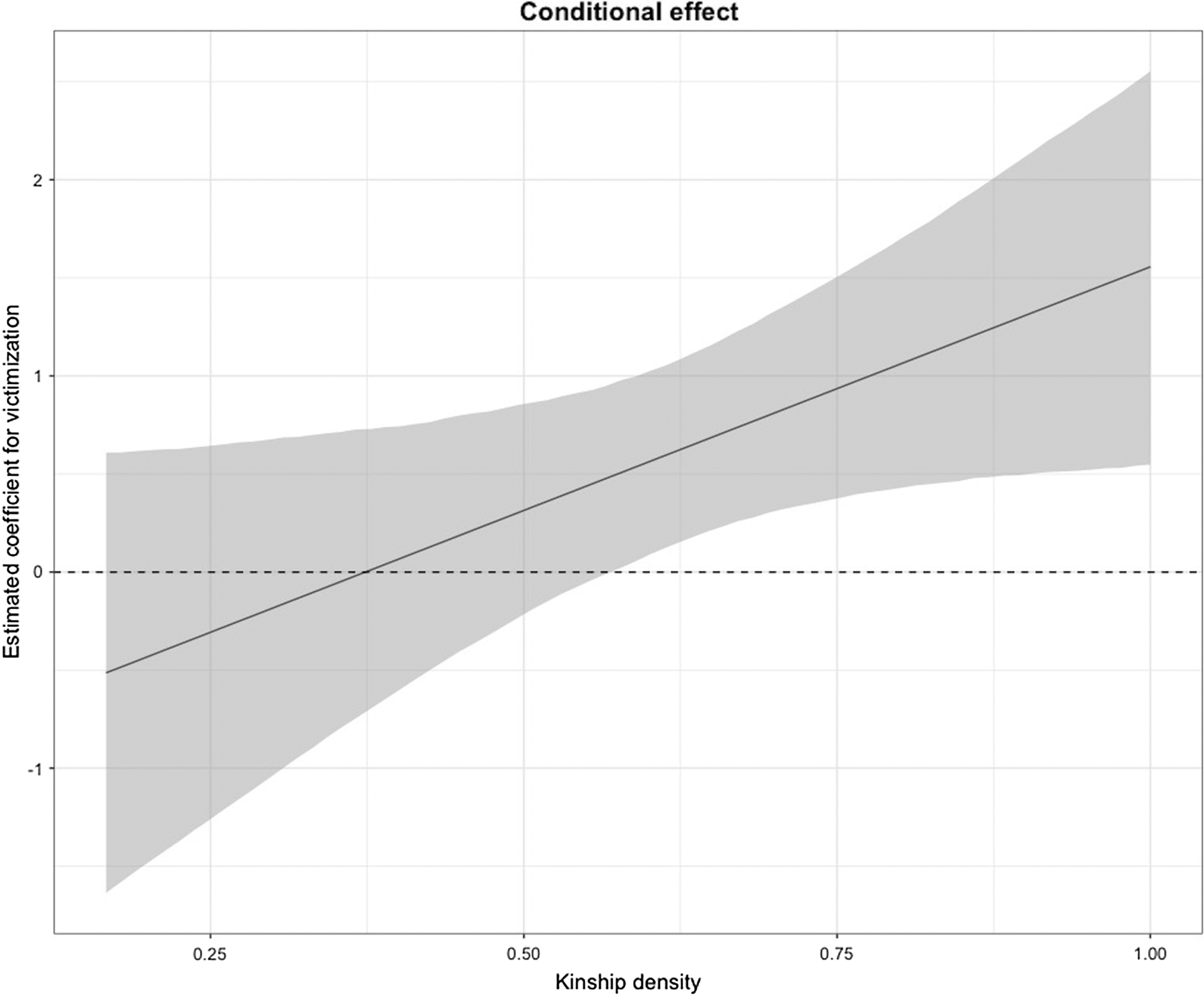
Estimated coefficient of victimization on participation by kinship density
Discussion
While this article offers support of a theoretically and empirically understudied component of civilian reaction to violence, there are limitations. Namely, I cannot empirically identify a distinct temporal causal story. While I argue that family matters in that it can offer support and encourage action, I am unable to show whether the kinship network itself changes before or after exposure to violence, but I can claim that those victims with stronger networks (i.e. individuals with strong kinship ties post-victimization are more likely to have higher levels of average participation). 19 Whether these ties exist before victimization, or are strengthened immediately after it, is a question for further, more extensive investigation. Future research using panel data would be the most appropriate way to identify whether there are critical changes in the network that are unobserved by this one-shot survey design. However, I can argue that kinship importantly influences the political participation of survivors of criminal victimization while remaining agnostic about identifying in what ways the networks are influenced by the criminal event itself. The counter-argument might be that violence strengthens the network, and thus victimization itself still drives participation. Yet the story highlighted by predicted probabilities demonstrates that for lower levels of kinship connectivity, participation is still lower for victims, indicating that kinship moderates the effect of victimization. Furthermore, if victimization altered the status of most kinship networks, we would expect more clustering in the upper bounds of the data for this measure. As we can see from the distribution shown by the x-axis of Figure 4, we do not see this. Thus, while this article confirms previous findings in the literature, it moves the discussion forward by contributing a new concept for future researchers to include in observational survey studies on victimization. Specifically, my results show that there is a positive link between victimization and political participation following (Bellows & Miguel, 2009; Blattman, 2009; Blattman & Miguel, 2010), but that lower-level social structures can significantly moderate this pro-social behavior.
Conclusion and implications
In her Preface for Development in States of War, Deborah Eade opens with the statement: ‘It is now almost routine to begin an essay on conflict-related emergencies by stating that contemporary wars are fought not on demarcated battlefields, but in the towns, villages, and homes of ordinary people’ (Eade, 1996). Today’s political and criminal conflicts are characterized by mass violence against civilians. Efforts to understand recovery and resilience within different types of conflict zones cannot afford to ignore this fact. Humanitarian aid workers enter conflict zones with the complex, dangerous, and daunting task of attempting to support populations that have been subjected to great tragedy. Family and community networks can be an essential resource in trauma recovery and for mobilizing resilience in war-torn regions (Walsh, 2007).
The findings of this study suggest that recovery and political mobilization in these violent environments is contingent upon moving past individually focused recovery programs and towards programs that utilize the networks that are fundamental to political life. This study also has meaningful implications for understanding which populations are most at risk after a traumatic event: those without close family ties, or those whose families have, perhaps, been torn apart. While research investigating the causes of political violence is clearly important, the implications of violence on civilian life cannot be overlooked. Civilian behavior is intrinsically linked to important outcomes for healthy, stable societies and states: community collective participation, social capital, local market economics, functioning institutions, and fair democracy. Civilians create the critical mass behind each of these outcomes.
Previous political science literature has consistently linked victimization to ‘positive’ outcomes like increased political involvement. Yet not all victims behave this way or take on the immense activism of those like Nepomuceno Moreno Nuñez, referenced in the introduction of this article. Research in this field has thus far been unable to measure relevant contextual variables that uncover why some individuals are ultimately encouraged to join political groups or become more politically active following a traumatic experience. By drawing on research from psychology and sociology, I demonstrate the importance of social context in understanding political life.
Though the type of armed conflict currently ongoing in Mexico may differ from many others in that the violence is decentralized in nature, the implications of this research extend elsewhere. The Mexican case shares many similarities with other conflicts in the region, such as those in Colombia and Peru, which have also experienced various waves of decentralized criminal violence. Findings from this study would apply to those cases, but they also encourage a deeper consideration of how civilians live and survive in weak states. In other regions of high human insecurity, such as Nigeria or Southern Thailand, policy is often aimed at altering structural-level conditions linked to conflict. However, this article’s findings suggest a refocusing of resources towards household and community-level demands to foster civic engagement at the individual level. Additionally, it is important to note that this study presents an important and easily implemented new framework for future surveys across different insecure environments. The essential idea – that social context matters for understanding political behavior during armed conflicts – can be extended to a variety of cases and will alter the field’s current notions about the link between victimization and participation in armed conflicts. In sum, this study encourages researchers to explore the moderating effects of social environments when studying the effects of political violence on political action.
Footnotes

References
Supplementary Material
Please find the following supplemental material available below.
For Open Access articles published under a Creative Commons License, all supplemental material carries the same license as the article it is associated with.
For non-Open Access articles published, all supplemental material carries a non-exclusive license, and permission requests for re-use of supplemental material or any part of supplemental material shall be sent directly to the copyright owner as specified in the copyright notice associated with the article.
