



Abstract
This article introduces new event data on violence against peacekeepers deployed to conflict-affected countries in sub-Saharan Africa between 1989 and 2009. While the practice of peacekeeping is often described as fraught with risk, a shortage of data has left scholars poorly equipped to study this important phenomenon. The Peacemakers at Risk (PAR) dataset records reported incidences of violence resulting in direct peacekeeping personnel fatalities, injuries and kidnappings. Information on the timing, location, outcomes and actors implicated is provided for each recorded event, including information on the nationalities of violence-affected peacekeepers. The dataset also charts reports of fatal violence by peacekeepers. This enables the study of peacekeepers’ use of force and provides a new lens for examining wider questions related to peacekeeping effects and conflict dynamics. Peace operations deployed by the UN as well as other peacekeeping actors are included, allowing for a rich dataset that reflects today’s diverse peacekeeping landscape. The PAR dataset makes possible the evaluation of reigning assumptions regarding peacekeeping intervention and risk, and allows scholars to pose research questions regarding the causes, characteristics and consequences of peacekeeper violence, within and across interventions. This article introduces the criteria and procedures guiding the data collection and presents the data. The article also highlights key patterns emerging from the dataset and identifies a number of potential applications and avenues for future research.
Introduction
Violence against third-party actors such as peacekeepers and aid workers is often noted as increasingly common (e.g. UN, 2015: 90). In the face of attacks, third parties sometimes restrict their activities or withdraw altogether. In Rwanda the brutal killing in 1994 of ten Belgian peacekeepers led to the withdrawal of the Belgian contingent of the United Nations Assistance Mission for Rwanda, leaving only a limited peacekeeping force that proved powerless to curtail the unfolding genocide. In August 2013 Médecins Sans Frontières withdrew its operations from Somalia, a decision motivated by the high levels of security risks posed to its staff (MSF, 2013). Clearly, violence against third-party actors can entail a range of serious consequences for directly implicated individuals and organizations, as well as for conflict-affected populations, by adversely affecting the provision of security and humanitarian relief. This article introduces the Peacemakers at Risk (PAR) dataset, which will facilitate study of the causes, characteristics and consequences of a form of violence prevalent within and across intervention settings.
Scholars have only recently begun to directly address this important dimension of international interventions. Violence targeting aid workers has received growing academic attention (e.g. Fast, 2014; Hoelscher, Miklian & Nygård, 2017). For violence involving peacekeepers, inquiry is sparser. While studies on peacekeeping often note the problem such violence poses in contexts of intervention, the violence peacekeepers experience has until recently mainly featured indirectly in the academic literature; for instance, as an indicator of peacekeeping failure (see Bratt, 1997). A set of recent systematic studies focusing on violence against UN peacekeepers specifically makes important contributions to our understanding of its possible determinants (Salverda, 2013; Morgan, 2015; adding to an early exception, Seet & Burnham, 2000). 1 Yet our understanding of when and why conflict parties target peacekeepers, and with what consequences, remains piecemeal. Available data sources are limited in terms of scope and levels of aggregation, 2 shortcomings that have hampered scholars’ ability to study these important phenomena.
The PAR dataset addresses existing gaps in three main ways. The first central contribution is the dataset’s comprehensive coverage. The PAR dataset includes a wide range of peace operations deployed by UN and other actors, a long time series (1989–2009) and a broad conception of violence to record both fatal and non-fatal outcomes to peacekeeping personnel. The dataset also charts reports of fatal violence by peacekeepers, which makes possible the study of peacekeepers’ own use of force in intervention settings. Second, the dataset is presented in an event format and each recorded incident contains information on the actors, outcomes, timing and location of violence. Third, the PAR dataset has been developed in collaboration with the Uppsala Conflict Data Program (UCDP) and is compatible with existing UCDP datasets on organized violence. Together these features enable the study of new research questions and provide opportunities for comparisons previously not possible, including studying how violence involving peacekeepers relates to other types of armed conflict violence and dynamics. The fine-grained nature of this information, moreover, allows for rigorous analysis of the circumstances surrounding violence against peacekeepers, including how it may vary over time and across space.
The article proceeds as follows. The first section introduces the PAR dataset scope and criteria. The second section describes the data collection procedures, including efforts undertaken to mitigate potential sources of bias. The third section draws on the PAR dataset to present key patterns on the reported occurrence of violence involving peacekeepers. To conclude, the article develops on research uses for the data to situate the dataset’s contribution to the research field.
The PAR dataset: Scope and criteria 3
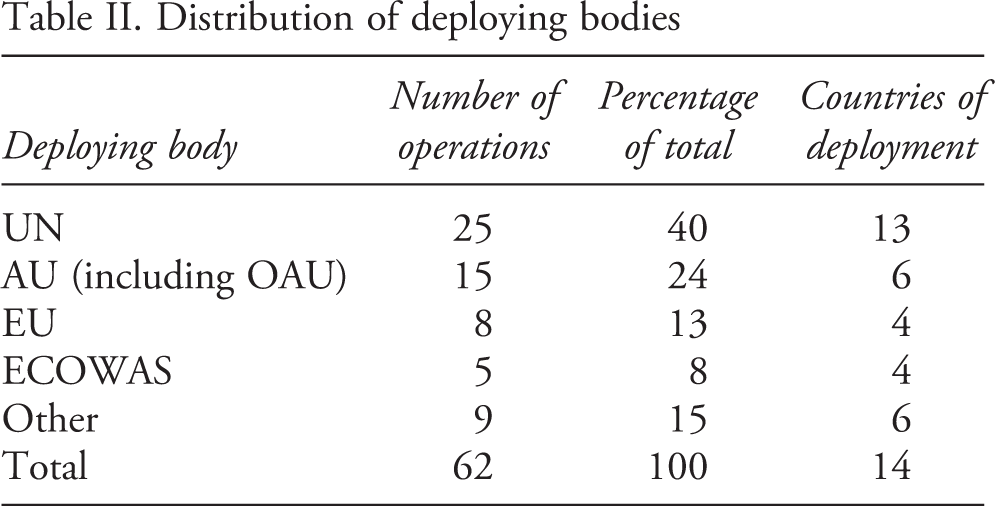
The PAR dataset records reported incidences of violence directly involving peacekeepers. The current dataset version covers peacekeeping interventions to sub-Saharan Africa between 1989 and 2009, provided that the country of deployment has experienced intrastate conflict during the time period (see Melander, Pettersson & Themnér, 2016). Delimiting the focus to sub-Saharan Africa is motivated by three main considerations. First, countries in the wider region have experienced a considerable number of recorded armed conflicts as well as peacekeeping interventions in the post-Cold War period. Half of UN operations deployed worldwide since 1989 have, for instance, been to sub-Saharan African countries (UN, 2014). Second, peace operations deployed thereto have been varied in form and deploying body, drawing heavily on regional actors’ involvement and exhibiting different operational arrangements and partnerships. Peace operations to Africa have moreover often represented the forefront of peacekeeping policy and doctrine (Tardy & Wyss, 2013). Finally, Seet & Burnham’s (2000: 601) study found UN operations deployed to Africa to exhibit far higher rates of peacekeeper fatalities from hostile causes than deployments elsewhere. Hence, the PAR dataset’s geographical focus is further motivated by key findings regarding the phenomenon of interest.
Dimensions of violence involving peacekeepers
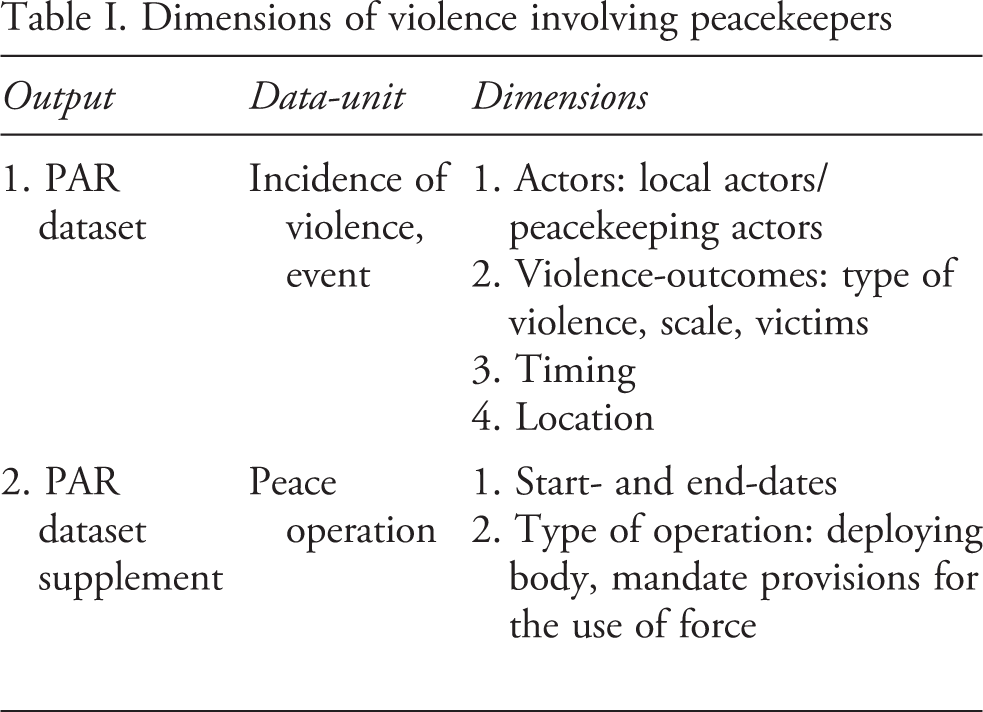
The PAR dataset provides data on an event basis, which, in line with the current UCDP data structure, implies an incidence of fatal violence occurring at a given time and space (Sundberg & Melander, 2013). For each included event, the PAR dataset records detailed information along a number of key dimensions, displayed in Table I. Notably, the PAR project expands the conception of violence to record also two types of reported non-fatal outcomes to peacekeeping personnel: peacekeeper injuries from direct attacks and kidnappings (or forcible detainments). The inclusion of injuries and kidnappings seeks to better capture levels of, and variations in, risk facing peacekeepers. Indeed, targeted attacks with non-fatal outcomes may indicate the same – or different but of similarly high relevance – level or type of hostile intent, and entail the same (or distinct) operational and strategic effects as those resulting in fatalities.
Two key criteria are imposed on events included in the dataset. First, for an incidence of violence to be included it must be reported to directly implicate a peacekeeping actor. 6 The focus on direct, hostile incidences of violence excludes outcomes to peacekeepers from, for instance, traffic accidents, illness and crossfire. The dataset thus captures a specific subset of violence implicating peacekeepers rather than reflecting the full spectrum of third-party risk in intervention contexts. Second, for an incident to be included in the dataset, information on the timing, location and outcome of the incident is required. The adherence to strict definitions leads to high theoretical validity and means that users can be confident that events in the dataset meet these criteria (Sundberg & Melander, 2013). In order to allow for studying interlinkages between violence involving peacekeepers and other conflict dynamics, PAR is made compatible with other UCDP data on organized violence in terms of both format and content. 7
Data collection
Data collection for the PAR dataset largely follows the standard coding procedures used for producing other UCDP datasets (see e.g. Eck & Hultman, 2007). In brief, the data are generated by filtering out a set of relevant news reports and extracting information on incidences of violence that meet the criteria set forth. 8 Relying on reported incidences of violence, as this and many related datasets do, introduces the possibility of different forms of bias. The potential for bias deriving from the use of news media specifically is important and is increasingly discussed (e.g. Öberg & Sollenberg, 2011). While problems may stem from the contents of the reporting, which can be incomplete or inaccurate (Weidmann, 2014), the main source of bias appears to be introduced by how much reporting there actually is (Sundberg & Melander, 2013).
The focus on peacekeeping events is expected to lessen the susceptibility to potential biases for two main reasons. First, information access to areas of conflict is likely to improve following the intervention of peacekeepers. The deployment of peacekeepers often facilitates journalists’ access to areas previously too insecure or remote by improving security, providing transportation or supporting the development of infrastructure. Second, journalists often closely monitor peacekeepers, and peacekeepers’ activities are likely to interest domestic and international audiences. These features may inhibit both underreporting and distortions to news content in contexts where peacekeepers are present.
Notwithstanding the ‘newsworthiness’ of peacekeepers and the salience of peacekeeping activities, any effort to track violence on the basis of reported events remains susceptible to biases. Bias over time, for instance, appears to affect most datasets spanning a longer time period. For PAR we may expect peace operations deployed early in the time period to be less well covered in the news media. Some intervention cases may see reporting hampered by a reluctance on the part of deploying bodies or contributing countries to share information related to casualties (for an illustration, see Williams, 2015). Violence affecting some peacekeeping staff categories – locally contracted peacekeeping staff, in particular, compared with international staff – may also be less well captured in reporting (Seet & Burnham, 2000). Finally, detection rates for non-fatal outcomes to peacekeepers are expected to be lower than for fatal outcomes, with some incidences expected to go unreported. Data on injuries specifically are likely to be more difficult to retrieve on a systematic scale (Schneider & Bussmann, 2013). While users should be aware of this and other potential limitations, the inclusion also of events with non-fatal outcomes is nevertheless an important contribution.
Steps have been taken to mitigate the impact of potential biases. Chiefly, this has involved consulting multiple sources, including sources other than the news media, both to provide event-specific information and to more broadly corroborate accounts in the coding. 9 Such additional sources have included UN and NGO reports, case studies and open-source mission-specific reports. Other sources of data on peacekeeping fatalities have also been consulted. While available only for some operations and outcomes and chiefly in aggregated formats, such sources have added important quality checks, particularly at the early stages of the data collection process, for purposes of refining definitions and developing article-search schemes.
Efforts have also been taken to mitigate those potential forms of bias that can be introduced by the coding process. First, coding was carried out by professional and remunerated researchers with prior experience with data generation and coding, as well as a close familiarity with UCDP methodology. Second, coders underwent training and attended regular coding meetings to discuss difficult and ambiguous coding cases. Third, all events in the dataset have been examined manually as well as through automated testing. Finally, recognizing that intercoder reliability checks ex post can help identify systematic biases and improve data quality (Ruggeri, Gizelis & Dorussen, 2011), a randomly selected subset of event reports recorded in the PAR dataset was coded anew by two separate coders, in a parallel process. Results confirmed high levels of reliability from the coding process along key dimensions. 10
Descriptive statistics
The current PAR dataset version includes 62 peace operations deployed to 14 countries in sub-Saharan Africa, spanning the time period 1 January 1989 to 31 December 2009. The dataset includes 935 unique incidences of violence directly involving peacekeepers with 9,630 fatalities recorded, 2,011 of which are peacekeepers. 11 In addition, the dataset includes reported numbers of 1,460 individual peacekeepers injured and 1,764 forcibly detained. Figure 1 displays the violence recorded for individual peacekeepers differentiated by type of outcome over time, overlaying the number of peace operations deployed during each year, and suggests at least two observations.
First, levels of violence vary considerably across types of recorded outcome and over time, indicating ostensibly salient variations that the data allow for examining. Notably, a single operation, ECOMOG in Sierra Leone, drives the large spike in fatalities recorded between 1997 and 1999, with just over 1,500 peacekeeper fatalities. The intervention also makes up a considerable portion of the total number of fatalities, with around 6,230 reported fatalities included in the dataset. For forcible detainments, as indicated by sharp peaks in 1992 and 2000, a few incidences of large-scale kidnappings influence the data.
12
Particularly so as it constitutes a relatively rare event overall with only 47 separate incidences recorded in the dataset. Second, if violence against peacekeepers is indeed becoming more commonplace over Types of violence recorded for peacekeepers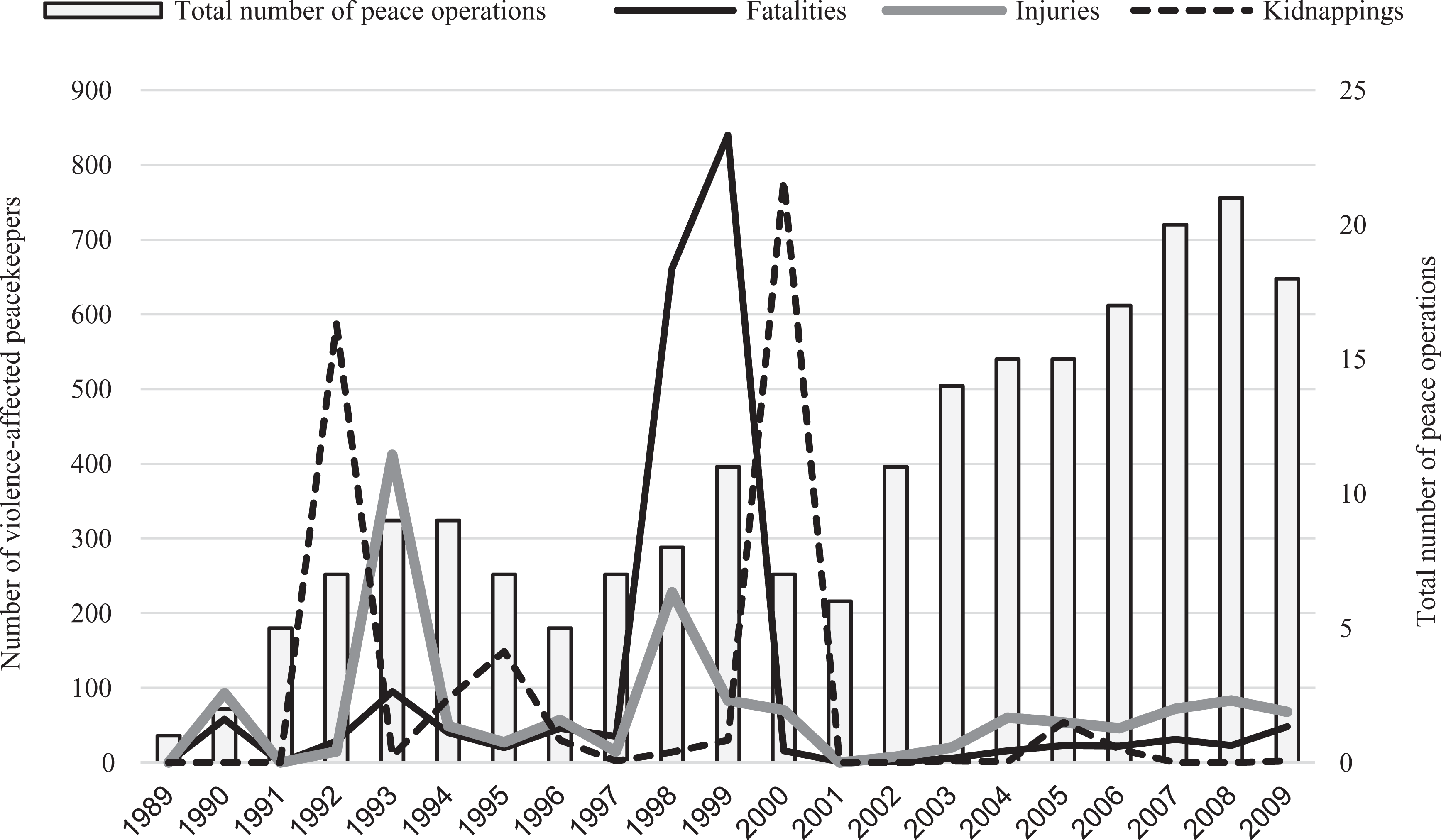
While data collected for the PAR dataset appears to support prevailing expectations – that violence against peacekeepers is sensitive to spikes and with a few particularly violent cases driving trend lines (e.g. Blood, Zhang & Walker, 2001; van der Lijn & Smit, 2015) – peacekeepers nevertheless experience violence in many and diverse intervention contexts. Figure 2 shows the geographic distribution of all violence involving peacekeepers recorded by country of deployment. It shows that of 14 countries included, 13 recorded violence events directly involving one or more peacekeeping actors.

Number of PAR events by country of deployment, 1989–2009
The data also exhibit variations within intervention contexts that could be interesting to study. Presenting the data on an event basis is expected to contribute to new areas of inquiry. Micro-level analysis, drawing on disaggregated data, allows scholars to get closer to the mechanisms underpinning violence that may otherwise be obscured by relying on a higher level of resolution, and closer to the dynamics at play (Weidmann, 2014). In the PAR dataset, violence-affected peace operations often exhibit variation in exposure over time. Over the course of its over six-year long deployment to Sierra Leone, for example, UNAMSIL experienced nearly 95% of recorded incidents in a period of six consecutive months, occurring during the mission’s first year of deployment. Scholars may use the PAR dataset to examine whether violence involving peacekeepers is more prevalent in some phases of the conflict or peace process, or at certain critical junctures, such as during negotiations or leading up to elections.
The PAR dataset also provides detailed information on the geographical characteristics of violence involving peacekeepers. 15 Recognizing that peacekeeping effects are often localized (Autesserre, 2014), scholars are affording increased attention to the location of peacekeeping deployment and their subnational effects (e.g. Beardsley & Gleditsch, 2015; Ruggeri, Dorussen & Gizelis, 2017). A fruitful direction for research building on the PAR dataset includes examining whether peacekeeper risk varies subnationally within deployment countries. The locations of violence may moreover reveal important information about the involved actors and their aims. Figure 3 provides a visualization of Sudan, overlaying PAR data on fatal and non-fatal outcomes to peacekeepers, on data from UCDP GED. 16 Of the five peace operations present in Sudan during the time period, three experienced violence (AMIS, UNAMID and UNMIS). The figure shows that violence involving peacekeepers was concentrated in the western parts of the country and that there were areas of the country experiencing conflict-related violence but where peacekeepers were either not present or not reported to be directly involved in violence. Superimposing other geo-referenced datasets – such as data on the location of peacekeeping deployments or activities, or more broadly data on strategically importance sites, such as rebel bases or areas rich in natural resources – opens further opportunities for studying associations between violence involving peacekeepers and other features related to conflict.

Violent incidences recorded for peacekeepers in Sudan, 2004–09
Distribution of deploying bodies
Peace operation characteristics
Peace operation months with violence involvement, by deploying body and type

In Africa, regional and subregional organizations have taken on an important role in peacekeeping, but their effectiveness vis-à-vis other types of operations is the subject of debate. Factors used to explain the relative effectiveness of different peace operations – such as considerations related to local legitimacy, perceptions of partiality and peacekeeper capabilities – may affect not only a peace operation’s conditions for success but also its susceptibility to violence. Table III provides a simple test of the association between peace operation deploying body and violence exposure, contrasting UN operations with regional operations. 18 The table displays for comparison the number of months each type of peace operation is and is not directly involved in violence, and shows that both operation types display a large proportion of mission-months with no recorded violence. Nevertheless, regional operations experience a somewhat greater number of violence-affected months than do their UN counterparts relative to their total number of months of deployment, a difference that applies also for the set of operations coded as deployed with the mandated capacity to use force. A number of factors identified in works to date may account for this result. For instance, regional operations have often been deployed as ‘first-responders’, deployed quickly to stabilize a challenging situation (Wiklund & Ingerstad, 2015). Regional operations are also sometimes perceived as less risk-averse than UN operations. Factors related to the peace operation and intervention context may certainly be important for understanding the variation exhibited, and future studies can draw on the PAR dataset to explore more closely variations in risk between different peacekeeping actors or partnerships.
The dataset also provides event-level information on the reported nationalities of violence-affected peacekeepers. 19 Data on this key peacekeeper characteristic can be used to explore potential variations in risk for different personnel contributors. These data may be used to complement recent work studying various dimensions related to the make-up of peace operations, focusing for instance on peacekeeping personnel commitments (Kathman, 2013) and the impact of internal mission composition for mission effectiveness (Bove & Ruggeri, 2016). Studies on aid worker security, moreover, suggest there may be particular risks facing national staff, which have been poorly understood and the focus of less attention (see e.g. Stoddard, Harmer & Haver, 2011). This is another question the data could be used to speak to.
Variations in local actor types
PAR is the first provider of event-level data on the local actors (non-peacekeeping actors) involved in direct violent interaction with peacekeepers. Figure 4 presents the proportion of events in the dataset by local actor type. About 63% of events are attributed to named, organized groups. The remaining events subsume incidents attributed to mobs or protestors (4% of total), civilians (2% of total) and unknown actors, including unidentified groups (31% of total). 20 In terms of overall lethality by actor type, noted in parentheses, events implicating known and organized groups yield 92% of fatalities, all categories.

Proportion of events by local actor type (lethality by actor type)
The data further suggest that violence involving peacekeepers is a non-state actor phenomenon: less than 2% (15 of 935) of events included are directly attributable to a government actor. 21 Given that peace operations often intervene on the side of the government and mostly with the explicit consent of the government, this is not unexpected. Since many peace operations intervene with an expressed purpose to support, prop up or rebuild government institutions, governments are likely to have greater incentives than rebel groups to cooperate with peacekeepers (Ruggeri, Gizelis & Dorussen, 2013: 393). Governments may opt for alternative methods to express dissatisfaction with peacekeepers, such as non-cooperation (Ruggeri, Gizelis & Dorussen, 2013) or withdrawing consent (see Tull, 2013).
On the non-state side, the dataset records events for 60 distinctly identified armed groups. At the country level, peacekeepers deployed experienced violence in interaction with anywhere from one (e.g. Comoros) to 15 (DRC) separate armed groups. The number of armed groups featuring in the dataset reinforces the point that, while a relatively rare event, violence against peacekeepers constitutes a broader phenomenon that cannot be reduced to an idiosyncratic feature of a particular group, conflict or peace operation. Key identifying information, such as UCDP-congruent actor codes, allows for tracing known groups across other datasets on organized violence, in order to study armed actors’ wider conflict behaviour.
Research uses of the PAR dataset
The PAR dataset can be used to shed light on the conditions under which peacekeepers work and allows for studying the causes, consequences and characteristics of violence involving peacekeepers from different vantage points. Characteristics related to the intervention itself are, for instance, likely to be important for understanding variation exhibited in the dataset, and scholars may opt to use information from other data-gathering efforts with similar coverage to complement PAR data (such as Mullenbach, 2013). Detailed information about the timing, location, outcomes and actors for each recorded incident enables the study of specific causal mechanisms to gain insights about particular processes related to conflict and interventions. The timing or location of violence may, for instance, be closely linked to causation, and high-resolution data allow scholars to study such relationships with greater precision. As such, the dataset contributes to an emerging research agenda on the micro-dimensions of peacekeeping. 22
While fruitfully studied as a unique set of phenomena, peacekeepers’ involvement in violence also provides a new frame with which to understand peacekeeping practice, thus allowing broader applications with potential to contribute to ongoing debates in the peacekeeping literature. The data could support the study of wider questions related to peacekeepers’ use of force, interaction with local conflict actors, or peacekeeping effectiveness, including intended or unintended consequences stemming from peacekeepers’ performance.
Designed to be compatible with other UCDP data on organized violence, the PAR dataset can also be used to study links between violence involving peacekeepers and other conflict processes. The combined analysis of violent conflicts is recognized as an important new field of inquiry for peace and conflict scholars (Cunningham & Lemke, 2013). A recent article leverages this data feature to study the association between conflict-related battlefield outcomes and attacks on peacekeepers, underlining the importance also of the surrounding and dynamic conflict environment for understanding risks facing peacekeepers (Fjelde, Hultman & Lindberg Bromley, 2016). The compatibility feature thus allows for studying interlinkages between different forms of violence systematically, including shedding light on civil war actors’ wider repertoires of violence in contexts where peacekeepers are present.
Conclusions
This article presents new event data on violence involving peacekeepers in sub-Saharan Africa and suggests a number of paths for future research. The PAR dataset enables researchers to develop and test new research questions related to the causes and consequences of violence involving peacekeepers, and to analyse the empirical patterns the data exhibit. The data show that, while widespread, violence involving peacekeepers is not ubiquitous in intervention settings. Better understanding the sources of variation should be a priority for scholars, but also for policymakers and peacekeeping practitioners. Access to systematically collected and comprehensive data for such analyses is arguably all the more important in light of ongoing debates on the tasks and principles of peacekeeping, and the risks peacekeepers face during deployment. A more systematic approach to assessing risk, and to tracking developments and trends, can ultimately inform evidence-based strategies to prevent violence but also to safeguard the effectiveness of operations.
Footnotes
Replication data

Acknowledgements
Nynke Salverda, Maria Greek and Christian Altpeter provided excellent research assistance. The author thanks also Henrik Urdal and three anonymous reviewers for helpful comments, the UCDP team, Mihai Croicu, Desirée Nilsson, Stefan Döring and Emma Elfversson. For valuable input, thanks also to members of the FBA Working Group on Peacekeeping Operations.
Funding
The research was funded by grants from the Swedish Research Council and Folke Bernadotte Academy (FBA).
Notes
References
Supplementary Material
Please find the following supplemental material available below.
For Open Access articles published under a Creative Commons License, all supplemental material carries the same license as the article it is associated with.
For non-Open Access articles published, all supplemental material carries a non-exclusive license, and permission requests for re-use of supplemental material or any part of supplemental material shall be sent directly to the copyright owner as specified in the copyright notice associated with the article.
