




Abstract
Objectives
The purpose of this study is to examine social learning theory (SLT) and teen dating violence (TDV) perpetration. This study aims to determine which predictors have the largest effect sizes, whether they vary for males and females, and whether they differ based on research design and sample characteristics.
Methods
This study uses hierarchal meta-analytic methods to examine both within- and between-dataset differences in relationships between a variety of SLT predictors and TDV outcomes. Both bivariate and multivariate effect sizes are computed for a sample of n = 1,157 effect sizes nested in n = 116 studies that used n = 88 unique datasets.
Results
Findings indicate that a variety of SLT predictors can explain TDV perpetration. Predictors with the largest effect sizes include anticipated benefits of TDV (Bivariate: r = .254; multivariate: r = .308) and peer TDV perpetration (Bivariate: r = .279; multivariate: r = .205). While most predictors show similar effect sizes for males and females, peer TDV perpetration appears to be a stronger influence for males. Several significant moderators are found.
Conclusions
SLT should continue to provide a theoretical framework for TDV research and practice. Future research should examine same-sex teen relationships and sexual minorities.
Keywords
Teen dating violence (TDV), which is defined as physical, sexual, psychological, and cyber violence that occurs in adolescent dating relationships (Centers for Disease Control and Prevention 2019), is a pervasive problem in adolescence. While most violence in adolescence is perpetrated by males, TDV differs, as males and females have similar rates of involvement (Puzzanchera 2020). Estimates of the extent of TDV vary, as there is no standard method of measurement. Nationally representative data consistently report about 8% - 12% of high school students being involved in TDV (Centers for Disease Control and Prevention 2019; Puzzanchera 2020) but estimates of individual studies range from 1% to 61% (Wincentak et al. 2017). However, sex differences in TDV perpetration do exist, with males more likely to perpetrate serious physical and sexual forms of violence and females more likely to perpetrate psychological and minor physical forms of violence (Wincentak et al. 2017). TDV is often bi-directional, with participants serving as both perpetrator and victim (Giordano et al. 2010).
Adults may perceive teenage relationships to be fleeting and insignificant, but dating is considered an important part of social life for many teens. Both positive and negative behaviors learned during these formative relationships have been found to be influential in adult relationships (Collins 2003). One of the behaviors that may be carried into adulthood is using violence towards partners during conflict. While adolescents generally “age out” of other types of violent behavior, perpetrating violence against romantic partners in adolescence is likely to be continued in adult relationships (Leadbeater et al. 2014). Since TDV perpetration is often experienced alongside victimization, negative outcomes might include physical and mental health problems, poor academic achievement, and suicide ideation (Exner-Cortens, Eckenrode, and Rothman 2013).
TDV is usually explained using risk factors in a variety of ecological domains, including the individual, family, school, and community (Garthe, Sullivan, and McDaniel 2017; Park and Kim 2018; Spencer et al. 2021). General theories of crime have also been found to be useful in explaining TDV perpetration. While some studies have found that these risk factors and theories are predictive of TDV for both males and females, sex differences have also been found (Reyes et al. 2019). Social learning theory (Akers 1998) is commonly used to explain intimate partner violence in adulthood (Cochran et al. 2016) and has increasingly been used to explain dating violence in adolescence as well. While each of the four dimensions of differential association, differential reinforcement, imitation, and definitions have been found to explain TDV (Foshee, Bauman, and Fletcher Linder 1999), they have had varying success depending on which dimension is used and whether others are controlled for in the same model. Therefore, comparative research is needed to determine whether each dimension is equally important in explaining TDV or whether one has a greater influence than the others. Additionally, some studies have found sex differences in the relationship between social learning theory and TDV perpetration, which is imperative to explore since this issue affects male and female adolescents equally. Because prior research is mixed, a meta-analysis that “takes stock” of the prior research is needed. This study uses hierarchal meta-analytic methods to explore the four dimensions of social learning theory, sex differences, and TDV perpetration.
Literature Review
Theoretical Framework
The main premise of Akers’ (1973, 1998) social learning theory is that criminal behavior is learned through social interactions. Building on Sutherland’s (1939) differential association perspective, Akers suggested four dimensions of social learning that could help explain crime. Differential association asserts that attitudes and methods for criminal behavior are learned through social interactions with primary (peers, family) and secondary (school, church, other activities) sources. Whether or not individuals adapt deviant behaviors depends on the frequency and duration of exposure, as well as how close the individual is to the one committing the behavior. Definitions are the individuals’ personal perceptions on whether the behavior is morally acceptable. If definitions are approved of or if they provide justification for deviance, these behaviors are more likely to occur. Differential reinforcement asserts that criminal behavior is more likely to continue when it is rewarded, either by tangible rewards or avoidance of discomfort, rather than punishment. Imitation simply states that criminal behaviors are learned by modeling. If an individual is close with and respects the one modeling the behavior, it is more likely to occur.
SLT is one of the most tested criminological theories and is empirically supported for a variety of offending behaviors, including substance use, property crime, and violence, in both adolescent and adult samples (Akers and Jensen 2006). However, tests of social learning theory tend to examine one dimension of the theory instead of all four (Cochran et al. 2017). When a relationship is found between one of the four dimensions and offending, it is inferred that social learning theory can explain offending, even though the full theory was not tested. Additionally, these dimensions have had differing success in explaining offending, with differential association having the most empirical support and imitation having the least (Pratt et al., 2010). Previous meta-analyses have found that findings depend on crime type, demographics of sample, location, and research design (Kruis et al. 2020; Pratt et al. 2010).
Empirical Status of SLT on TDV
SLT provides a framework in which to study risk factors for TDV perpetration. Simply put, adolescents who are exposed to relationship violence in family or peer settings will learn how to perpetrate these acts themselves (Sellers, Cochran, and Branch 2005). The four dimensions of SLT have been applied to TDV with varying success. Differential association has been operationalized by asking teens about their peers’ TDV behaviors as well as their peers’ general violent behaviors. Prior findings are mixed, and some studies have found that those with peers that engage in TDV and violence against same-sex peers (Ali, Swahn, and Hamburger 2011; Foshee et al. 2013) were more likely to perpetrate TDV themselves. It is important to note that these results are plagued with potential measurement issues, as adolescents that are asked about their friends’ behaviors may project their own behaviors onto their friends (Bauman and Ennett 1996). However, this may not be an issue, since scholars have noted that it is perceptions of peer behavior, not actual peer behavior, that helps explain dating violence (Shorey et al. 2018).
Differential reinforcement has been measured using perceived costs and benefits of committing TDV, as well as expected parental and societal reactions of TDV perpetration. If someone is rewarded for perpetrating TDV (positive reinforcement) or avoids consequences (negative reinforcement) the act is more likely. These rewards are usually in the form of positive reactions from peers, parents, or society, and consequences include disapproval from ones’ social group, damaged reputation, criminal justice system involvement, and conflict within the relationship (Akers 1998). Prior research has found that those who perceive that they will benefit are more likely to perpetrate TDV (Archer, Fernandez Fuertes, and Thanzami 2010), and these effects are stronger than the potential for negative consequences (Fernandez-Fuertes et al. 2019). Parents are powerful socialization agents during the teenage years, and verbal support for aggressive solutions to problems, as well as modeling violent solutions of their own, have been found to influence adolescent violence (Akers and Jennings 2009). Perceptions of acceptance have been found to be more influential than the actual beliefs of the parent, and adolescents who perceive that their parents would support them if they perpetrated violence against a partner during a conflict are more likely to perpetrate partner violence in adolescence (Miller et al. 2009), but not young adulthood (Kim, Macy, and Wretman 2021). Some research has found that parental beliefs were not predictive of TDV perpetration over time, and other parental learning mechanisms, such as modeling, may be more influential (Garthe, Sullivan, and Farrell 2018).
Definitions of TDV are often measured as the beliefs surrounding gendered violence, including violence being an acceptable solution for problems in a relationship, patriarchal gender role beliefs, and sexist attitudes (Reyes et al. 2016). Acceptability of male-perpetrated violence has been found to be a stronger predictor of TDV than female-perpetrated violence, since violence perpetrated by women tends to be more socially accepted and has less serious consequences (Molidor and Tolman 1998). While males perpetrating violence against female romantic partners is stigmatized, females committing acts of violence such as slapping or hitting are romanticized in the media (O’Keefe 1997). Acceptance of violence by males against females, but not females against males, explained cyber dating violence perpetration in a sample of pre-teens (Peskin et al. 2017). However, other research has found that attitudes about gendered violence were not predictive of TDV perpetration once other explanations, such as acceptance of general aggression, childhood adversity, and negative affect were controlled for (Daff, McEwan, and Luebbers 2020; Kidman and Kohler 2020).
Family risk factors have been examined extensively in research on TDV, and recent meta-analyses found that witnessing family violence was a risk factor for TDV perpetration (Park and Kim 2018; Spencer et al. 2021). The imitation dimension of Akers’ SLT (1973, 1998) is consistent with intergenerational transmission of violence in the family. If an adolescent witnesses someone close to them engaging in a behavior, they may start to model that behavior. Simply put, children who grow up around relationships characterized by violence may think that abuse is a normal feature of romantic relationships. The effect of imitation on behavior may depend on whether the father or mother is imitated. Since mothers are usually the primary caregiver, her behaviors have been found to have a greater influence than those of fathers (Doherty and Feeney 2004; Temple et al. 2013b). Similarly, violence may be modeled after parent-child relationships as well, with those being victims of child abuse themselves more likely to perpetrate TDV (Beckmann 2020; Spencer et al. 2021). Along with family violence, witnessing violence in the community has also been found to be a risk factor for TDV perpetration (Black et al. 2015).
SLT, TDV, and Sex Differences
Akers (1999) noted that girls and boys are socialized differently, and social structure and social learning can explain the higher crime rates for males. He posited that girls are socialized to be more conforming, whereas males are socialized to be more individualistic, with associations with deviant peer groups being more accepted. Although Akers (1999) called for future research to examine sex, social structure, and social learning, he was criticized by feminist scholars for not explicitly outlining the how social learning mechanisms may work different for males and females (Morash 1999). TDV researchers who used SLT as a framework have examined sex differences in the four dimensions. While sex differences have been found for each, some empirical tests have found that social learning mechanisms explained offending similarly for males and females (Foshee, Bauman, and Fletcher Linder 1999).
Since males are more likely to have deviant peer groups than females (Chapple, Vaske, and Worthen 2014), differential association suggests that males should be more likely to perpetrate TDV. However, most estimates have found that females perpetrate TDV at equal or higher rates relative to males (Wincentak et al. 2017). In one study, having pro-social friends reduced TDV perpetration for females but did not have a protective effect for males (Foshee et al. 2013). In another, perceiving that peers engaged in TDV increased involvement for males, but not females (Shorey et al. 2018). However, Pusch and Reisig (2021) found that peer involvement in general delinquency had a significant effect on TDV perpetration for females but not males. Not all research examining peer involvement and TDV have shown sex differences, with some finding similar effects for males and females (Miller et al. 2009).
Along with differential association, differential reinforcement mechanisms have shown sex differences. Female-to-male TDV perpetration is seen as more accepted by adolescents than male-to-female TDV (Reeves and Orpinas 2012), and thus the social costs may be greater for males than for females. Additionally, females have been found to receive greater benefits for perpetrating TDV (Archer, Fernández-Fuentes, and Thanzami 2010). For example, prior research has found that females received benefits in the form of an improved relationship for perpetrating sexual TDV while males did not (Pöllänen et al. 2021). However, not all examinations of differential reinforcement have found gender differences, with benefits being equally predictive of TDV for both males and females (Archer et al. 2010).
Although beliefs that violence is acceptable has been found to explain TDV perpetration for males and females, sex differences have been detected. For example, while beliefs that general violence is acceptable predicted TDV for males, only acceptance of relationship violence (Daff et al. 2020), and more specifically, female-perpetrated relationship violence (De La Rue et al. 2017) predicted TDV for females. Beliefs surrounding gender norms and equity have been found to influence male TDV perpetration. Males who had sexist attitudes and adhered to traditional or patriarchal gender norms were more likely to perpetrate TDV (Cava et al. 2020; Rostad et al. 2019), especially sexual forms of violence (Shen, Chiu, and Gao 2012). Generally, these beliefs were important for explaining TDV victimization for females, but had no relationship with perpetration (Boyce, Deardorff, and Minnis 2020). However, not all tests of definitions that are favorable towards violence have found sex differences, with attitudes accepting of female, but not male, violence predictive of physical TDV perpetration regardless of sex (Niolon et al. 2015).
Finally, empirical tests of the imitation proposition of SLT have been found to have sex differences as well, but again, findings are mixed. For example, Pusch and Reisig (2021) found that witnessing family violence was predictive of TDV perpetration for males only. This may be due to females being more sensitive to the harms caused by interparental violence, whereas males may see it being instrumental to the aggressor (Kinsfogel and Grych 2004). This may differ by type of TDV, as witnessing parental conflict has been found to be more influential for psychological TDV perpetration for males and physical TDV perpetration for females (Fosco et al. 2016). However, other research has found that witnessing parental violence only predicted TDV perpetration for girls (Jouriles et al. 2012; Ruel et al. 2020).
Current Focus
Despite the large volume of research that has examined SLT and TDV perpetration, there are still unanswered questions. Most research has examined one of the four dimensions of SLT rather than comparing them to see if they are equally important in predicting TDV. Additionally, it is unclear if there are sex differences in the relationships between each of these dimensions and TDV perpetration. Since the consequences of TDV are numerous and can be lasting, it is imperative that this phenomenon is more fully understood. Meta-analyses are useful when there are inconsistent findings of a relationship between two variables, as an average effect size can be computed. Additionally, they can aid in theoretical development. Most criminological theories do not have standardized propositions to be tested, and scholars have conceptualized and operationalized theoretical components in a variety of ways (Pratt and Cullen, 2000; Pratt, 2010). Meta-analyses allow scholars to examine these differences together. For example, meta-analyses undertaken on the relationships between ADHD and deviance, as well as maternal cigarette use and deviance (Pratt et al., 2002, 2006) sparked additional theoretical debates and inspired research that moved the field forward.
While scholars have completed several meta-analyses on TDV (Garthe et al. 2017; Park and Kim 2018; Spencer et al. 2021; Wincentak et al. 2017), they have limitations which the current study aims to address. First, prior meta-analyses on TDV do not use criminological theory, but rather, examine risk factors in different domains, such as individual, community, and societal. While it is useful to specify which risk factors may be linked with TDV perpetration, it does not necessarily tell us why associations with family and peers may increase risk. Social learning theory can fill this gap and explain the processes linking risk factors and TDV perpetration. Second, prior meta-analyses do not include separate effect sizes for males and females. Since males and females are equally at risk for TDV perpetration and there is no agreement as to whether SLT processes are sex-neutral, this is an important area to explore. Prior meta-analyses examining adolescent offending and victimization have found sex differences in predictors (Pusch and Holtfreter 2021; Scott and Brown 2018) but did not specifically examine TDV perpetration. In order to fill this gap in the literature, this study will calculate separate effect sizes for males and females in addition to overall effect sizes. Third, this study improves upon the standard meta-analytic techniques by using a hierarchal design that examines mean effect sizes both within- and between- datasets. Using a traditional meta-analytic design can mask important moderating differences, while the hierarchal design can determine if effect sizes differ according to characteristics of the sample and research design. Ultimately, this study aims to answer three related questions: 1. Which variables related to each SLT domain have the largest effect size when predicting TDV perpetration? 2. Are there sex differences in SLT predictors? 3. Do sample characteristics and research design moderate these relationships?
Methods
Sample of Studies
The search for relevant studies occurred between March 2021 and May 2021 and involved two steps. First, the following electronic databases were searched: Academic Search Premier, Criminal Justice Abstracts, Family Studies Abstracts, National Criminal Justice Reference System, Proquest Theses and Dissertations Global, PsychArticles, PsychInfo, SocINDEX, Sociologial Abstracts, and Women's Studies International. Searches were restricted to abstracts and used the following Boolean search terms: “teen OR juvenile OR adolescent OR youth” AND “dating OR intimate OR partner” AND “violence OR abuse OR assault” AND “differential + association OR “deviant + peers OR delinquent + peers OR differential + reinforcement OR reward* OR cost* OR benefit* OR imitation OR witness OR intergenerational OR definition* OR attitude* OR belief* OR value* OR norm* OR social + learning.” Search materials were limited to peer-reviewed articles, technical reports, theses, dissertations, and conference papers, although the final sample only included peer-reviewed journal articles, theses, and dissertations. Next, the reference lists of previous meta-analyses that examined TDV (Garthe et al. 2017; Johnson et al. 2017; Hébert et al. 2019; Park and Kim 2018; Spencer et al. 2021; Wincentak et al. 2017; Zych et al. 2021) were examined to see if any relevant studies were missed in the first search. In total, 1,516 unique items were identified from the first strategy, and an additional 24 were found during the search of reference pages. From these, 1,223 were eliminated when it became clear by the title and/or abstract that it did not fit the criteria for inclusion. 317 full articles were accessed. From these, 81 were eliminated because the study did not include an independent variable consistent with social learning theory. 36 were eliminated because the dependent variable measured victimization, a mixed measure of victimization and perpetration, or a program evaluation, rather than TDV perpetration. 25 were eliminated because the study used an adult or mixed youth and adult sample. 59 were eliminated because the study used a methodology inconsistent with inclusion, including latent class analysis and group-based trajectory modeling, or did not contain enough information to standardize beta coefficients. In total, 116 studies were retained for coding which used 88 unique datasets. A flowchart of the search is depicted in Figure 1. A list of included studies is included in Table 1.
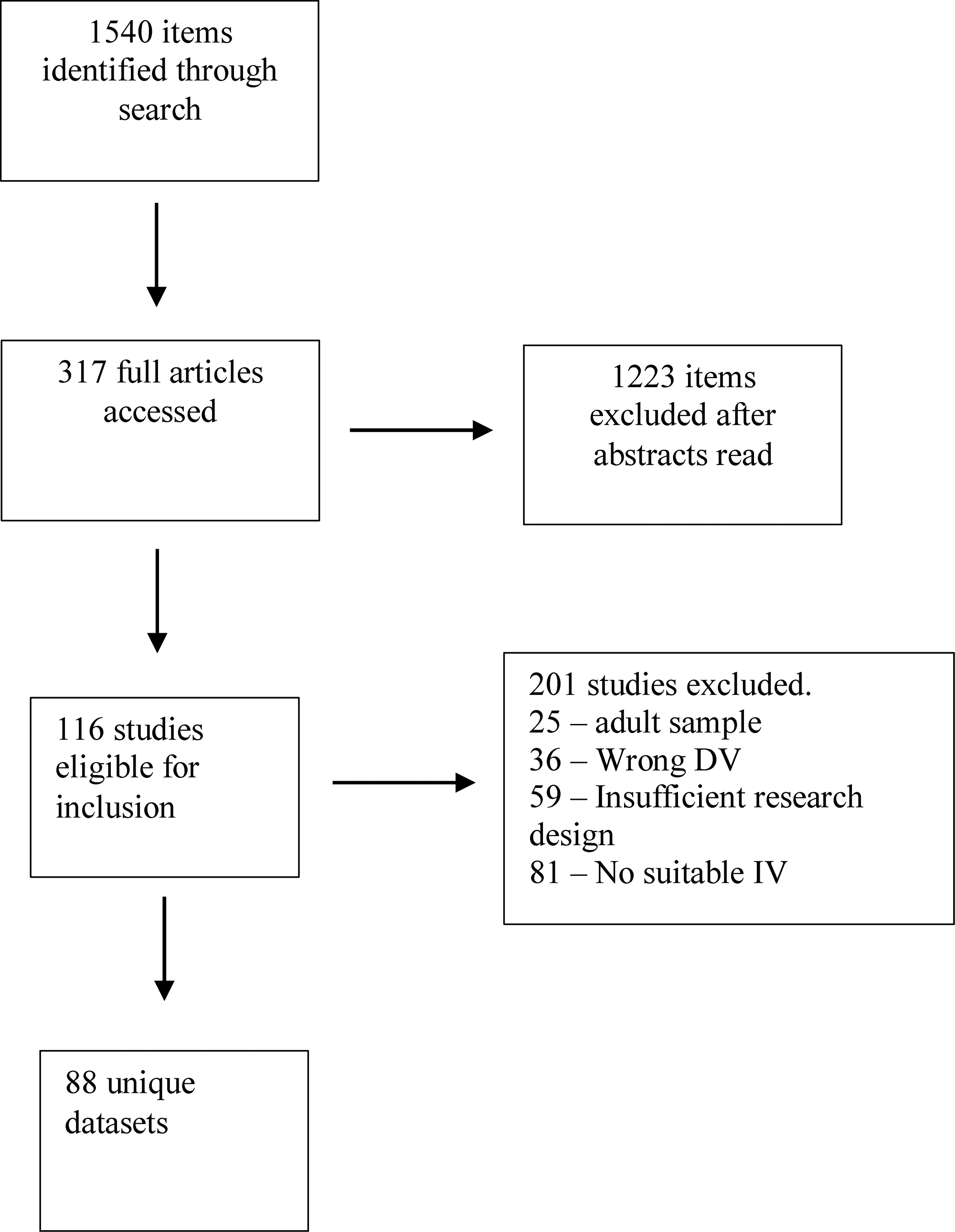
Flowchart of Literature Search
Details of Included Studies
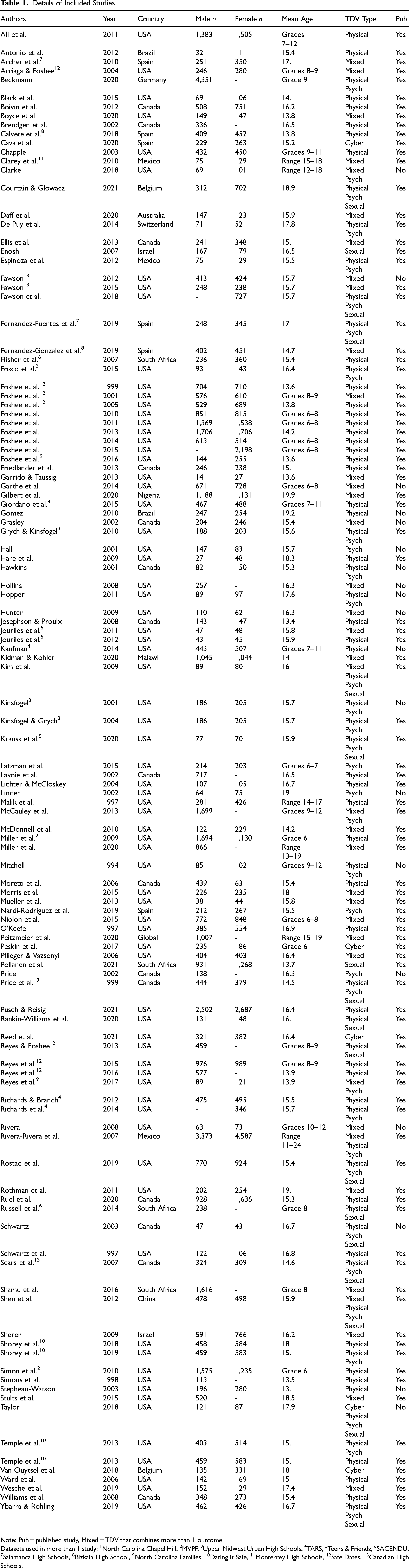
Note: Pub = published study, Mixed = TDV that combines more than 1 outcome.
Datasets used in more than 1 study: 1North Carolina Chapel Hill, 2MVPP, 3Upper Midwest Urban High Schools, 4TARS, 5Teens & Friends, 6SACENDU, 7Salamanca High Schools, 8Bizkaia High School, 9North Carolina Families, 10Dating it Safe, 11Monterrey High Schools, 12Safe Dates, 13Canadian High Schools.
Criteria for Inclusion
Prior to the literature search, several criteria of inclusion were developed based on best meta-analytic practices. Because a goal of meta-analyses is to examine the full body of literature on a topic, the criteria were kept as broad as possible, with attempts made to include rather than exclude studies (Glass 2015; Turanovic and Pratt 2021). First, the study had to use quantitative methods and examine the relationship between a social learning predictor variable and dating violence perpetration. Both bivariate (correlation coefficient) and multivariate (regression coefficient) effect sizes were coded. However, it is problematic to include both bivariate and multivariate effect sizes in the same meta-analysis, as bivariate effect sizes do not include covariates and are often inflated compared to multivariate statistics (Turanovic and Pratt 2021). To guard against this, bivariate and multivariate effect sizes were analyzed separately, and covariates were included as moderating analyses. Next, the sample had to be composed of adolescents. There is a disagreement on what age range TDV encompasses, with some previous meta-analyses using the more conservative range of 13–18 (Wincentak et al. 2017), some including those as young as 10 (Garthe et al. 2017) and some including those as old as 21 (Zych et al. 2021). To remain as inclusive as possible while still retaining the focus on teenage relationships, studies were included that used a sample with a mean age that was greater than 13 and less than 20. However, college-only samples were excluded, as contextual factors that may explain college relationship violence may differ from those in middle and high school (Kaukinen 2014). Next, the dependent variable had to be a form of dating violence perpetration. Studies that only examined victimization or a mixed measure of perpetration and victimization were eliminated. The third criteria was that the study had to contain an independent variable consistent with one of the four dimensions of social learning theory. There were no limits on time period or geographical area, and studies from 1994 to 2021 were included. 84% of the included studies were published, while 16% were not.
Predictor Domains
Independent variables consistent with SLT were separated into four predictor domains.
Imitation
The imitation domain includes several variables consistent with witnessing and experiencing violence in the home and in the community. Witnessing interpersonal violence includes intimate partner violence in the home that does not differentiate between violence perpetrated by the father and the mother. Some studies did differentiate between the two, and these were coded as witnessing interpersonal violence perpetration by father and witnessing interpersonal violence perpetration by mother. Experienced family violence includes physical and/or sexual violence inflicted on the respondent by someone in the immediate family. Exposure to family violence includes effect sizes for studies that did not differentiate between witnessing and experiencing violence in the home. Exposure to community violence includes witnessing both IPV and other types of violence in the community and/or school.
Differential association
Effect sizes in this domain focus on the social network. Peer TDV perpetration includes effect sizes for associations with peers that perpetrate TDV. Peer delinquency includes effect sizes for associations with peers that commit general acts of delinquency.
Differential reinforcement
The predictor variable social acceptability of TDV captures perceptions of peer, family, and/or societal acceptance of TDV perpetration. An insufficient number of effect sizes were available to create separate predictor variables for each, so they were aggregated. Anticipated rewards for TDV captures beliefs that TDV perpetration will result in positive benefits. Several studies included effect sizes for negative costs associated with perpetrating TDV. These were reverse-coded and included.
Definitions
This domain includes predictor variables consistent with attitudes and beliefs surrounding TDV. Acceptance of TDV captures beliefs that violence is an acceptable method of dealing with conflict in relationships. Some studies contain separate measures for male and female violence, thus acceptance of male TDV and acceptance of female TDV are also included. Acceptance of violence captures beliefs that violence is an acceptable way of dealing with conflicts in general. Gender role beliefs captures acceptance of gender inequality, such as traditional and patriarchal beliefs as well as sexist attitudes.
Moderating Variables
Each study was coded for several moderating variables. These include sample characteristics, research design characteristics, and covariates that are commonly used to explain TDV. Studies were coded for whether they used a general sample (the majority used school samples) or a high-risk sample (justice-involved, homeless, or maltreated youth). Study location was coded and indicates whether the study occurred in North America (USA and Canada) or Non-North America. TDV outcomes were separated into several types. Physical TDV includes non-sexual violence including hitting, punching, and kicking. Psychological TDV includes non-physical acts such as emotional and verbal abuse, stalking, manipulation, and controlling behaviors. Sexual TDV includes sexual contact without consent. Cyber TDV includes abuse using the internet, such as put downs on social media, controlling online behaviors, and using smartphones to keep track of locations. A measure of mixed TDV was included for studies that combined several types of TDV. Studies were coded for whether they used two popular scales to measure TDV: any version of the Conflict Tactics Scale (CTS) and the Conflict in Adolescent Dating Relationships Inventory (CADRI). Those that did not use one of these two scales were coded as “other.”
Studies were also coded for differences in research design, including whether they were published in a peer-reviewed academic journal or unpublished, whether they used a cross-sectional or longitudinal design, whether the dependent variable was measured as a dichotomous, a count, or a continuous variable, and whether the length of time between the independent and dependent variable was less than a year or a year or more. Multivariate effect sizes vary widely depending on what controls are included in the model. Multivariate studies were coded for whether they include more than one variable consistent with SLT and for whether they controlled for each of the following: self-control, alcohol use, general offending, TDV victimization, family socio-economic status, parental supervision, parental attachment, and negative affect.
Effect Size Estimates
Effect sizes derived from individual studies represent the strength of the relationship between SLT predictor variables and TDV. Individual studies used a variety of statistical methods including correlation coefficients, standardized regression coefficients, and odds ratios. These were converted to r correlations and then Fisher's z using standard formulas (Borenstein et al. 2021; Peterson and Brown 2005; Pratt et al. 2014), consistent with common meta-analytic practices. Unstandardized regression coefficients were standardized using the formula provided by Rosenthal (1986). While some caution against combining regression coefficients from OLS and non-linear models, others argue that limiting the studies included to only linear or non-linear models would introduce more bias (Borenstein et al. 2021). To address this concern, the current meta-analysis includes effect sizes from linear, negative binomial, and logistic models and includes the measurement of the dependent variable (continuous, count, dichotomous) as a moderating variable. Variance for Fisher's z of bivariate models was calculated using the formula provided by Lipsey and Wilson (2001). If the multivariate effect size did not contain a standard error to compute the variance, these were converted using p-values or confidence intervals (Pratt et al. 2014). Eleven percent of the multivariate effect sizes did not contain enough information to calculate the standard error. To prevent eliminating these effect sizes from analysis entirely, these missing standard errors were imputed using mean substitution (Pigott 2001) 1 .
Analytic Strategy
An assumption of meta-analyses is that each effect size is independent of each other (Lipsey and Wilson 2001). However, most individual studies contain multiple models, which results in multiple effect sizes derived from each study. Additionally, some studies use the same dataset, meaning that multiple effect sizes are derived from each sample. Traditional meta-analytic methods involve taking a mean effect size from each study and/or dataset, so that each sample is only represented once in the analysis. However, there are two caveats to this method. It reduces statistical power and masks important moderating differences for effect sizes from the same study (Assink and Wibbelink 2016; Pratt et al. 2010). To correct this issue, a mixed-effect, multi-level meta-analytic design was used. This method codes each effect size separately and then assesses variance between the sampling variance of individual effect sizes (level 1), effect sizes within the same dataset (level 2), and between datasets (level 3). Analyses were completed using the metaphor package in the R environment (Viechtbauer 2010). First, mean effect sizes were estimated for the entire sample and for males and females separately for each of the predictor variables. Next, likelihood-ratio test were completed to determine if there was significant variance at level 2 (effect sizes within a dataset) and level 3 (between datasets) and to determine the percentage of variance at each level. If there was significant variance at level 2 or 3 or less than 75% variance at level one, moderator analyses were completed.
A concern when estimating meta-analyses is publication bias, where published research is not representative of the population of completed studies (Rothstein, Sutton, and Borenstein 2016). It is likely that studies with null findings are less likely than those with significant findings to be published. Because published studies are more likely to be detected and included in a meta-analysis, this may artificially inflate the actual mean effect size of a meta-analysis (Borenstein et al. 2021). Trim-and-fill funnel plots (Duval and Tweedie 2000) were estimated for each predictor variable to correct this issue. This method imputes studies that may be missing to make the funnel plots more symmetrical. When funnel plots are filled with imputed studies on the left side, it means that studies included may be biased upwards, and when studies are imputed on the right side, it means that included studies may be biased downwards.
Results
Sample Composition
As stated earlier, 88 unique samples were included in analyses. Seventy-eight percent of the samples were derived from North America, 9% from Europe, 3% from South and Latin America, 5% from Africa, 3% from Asia, and 1% each from Australia and those that included more than one country. Most of these samples used general youth samples, and 11% used high risk samples of justice-involved, homeless, or maltreated youth. Most of the samples included both males and female respondents, 13% were male-only, and a single study contained only female respondents. For the 98 individual studies that contained multivariate effect sizes, 34% included measures of social learning from more than one domain. Forty-three percent of these studies contained a control variable consistent with another criminological perspective, including self-control, general strain, social bonds, and risky lifestyles. Approximately 40% of these studies only controlled for demographics.
Bivariate Mean Effect Sizes
Overall, 642 bivariate effect sizes from 61 studies using 49 unique datasets were included in the analysis. For the mixed-sex effect sizes, the relationships between SLT and TDV were significant for each predictor variable except general violence. The largest effect sizes were for peer TDV perpetration (mz = .279, p <.001) and anticipated rewards of TDV (mz = .254, p <.001). The male-only and female-only mean bivariate effect sizes were similar, and every effect size was significant except for witnessing IPV perpetrated by either the mother or the father. The only sex difference was that gender roles were not significant for female-only effect sizes. The largest effect sizes for male-only samples were peer TDV perpetration (mz = .234, p <.01) and acceptance of male TDV perpetration (mz = .241, p <.001). The largest effect sizes for the female only samples were peer TDV perpetration (mz = .230, p <.001) and acceptance of TDV perpetration (mz = .229, p <.001). Mean bivariate effect sizes are presented in Table 2.
Bivariate Effects.
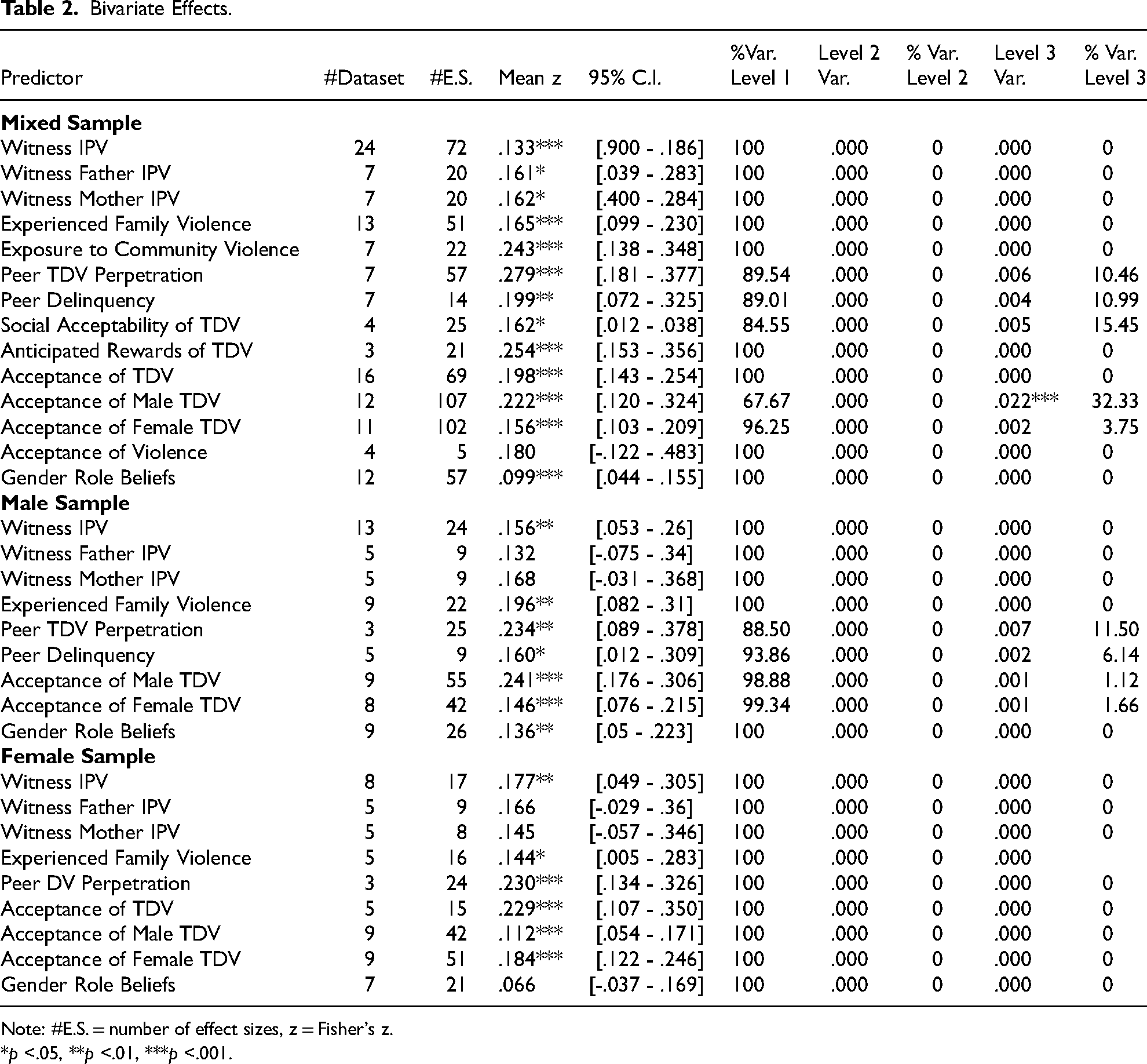
Note: #E.S. = number of effect sizes, z = Fisher's z.
*p <.05, **p <.01, ***p <.001.
Multivariate Mean Effect Sizes
Overall, 515 multivariate effect sizes from 98 studies using 75 datasets were included. For the mixed-sex samples, findings were similar to the mean bivariate effect sizes in that most of the relationships between SLT predictors and TDV were significant. Witnessing father IPV, peer delinquency, and acceptance of general violence did not reach significance. The largest effect sizes were the same as the bivariate analyses and included anticipated rewards of TDV (mz = .308, p <.001) and peer TDV perpetration (mz = .205, p <.01). The male-only and female-only samples also had similar findings in both the bivariate and multivariate analyses. For the male-only samples, each predictor was significant except social acceptability of TDV, peer delinquency, and acceptance of male TDV. The largest effect sizes were for peer TDV perpetration (mz = .395, p <.001) and acceptance of TDV (mz = .213, p <.05). For the female only effect sizes, all predictors were significant except peer TDV perpetration, social acceptability of TDV, and acceptance of male TDV. The largest effect sizes for the female-only samples were smaller than those of males, with acceptance of TDV (mz = .158, p <.05) and acceptance of female TDV (mz = .156, p <.05) being the largest. Mean multivariate effect sizes are presented in Table 3.
Multivariate Effects
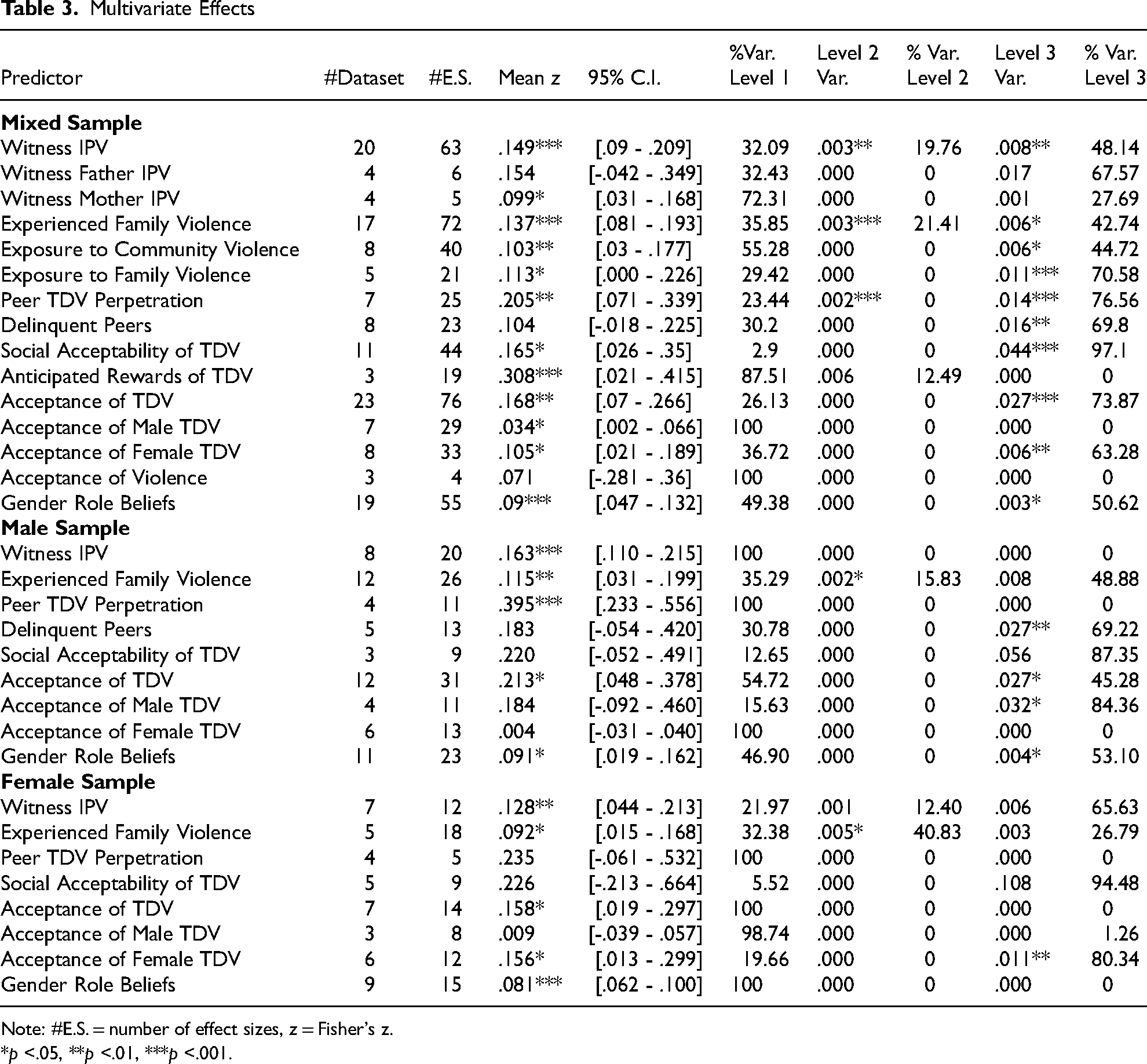
Note: #E.S. = number of effect sizes, z = Fisher's z.
*p <.05, **p <.01, ***p <.001.
Moderating Analyses
Each moderator for predictor variables with sufficient variance was tested using an omnibus test (Assink and Wibbelink 2016). This was done to determine if the relationships between SLT predictors and TDV depended on sample characteristics, research design, and which controls were included in multivariate models. For the bivariate effect sizes, these moderators were largely unimportant. The only predictor that showed a significant difference was acceptance of male TDV, where the relationship between the predictor and TDV was dependent on whether a cross-sectional or longitudinal design was used, as well as which TDV scale was used. Many more significant moderators were detected for the multivariate effect sizes. In some cases, whether the model controlled for alternative social learning dimensions as well as other criminological theories such as social bonds and risky lifestyles determined whether the relationships between SLT predictors and TDV were significant. Several other moderators were significant for some of the predictor variables, including whether the sample was a general or high-risk sample, how TDV was measured, type of TDV, and geographical location. It appears that while moderators did not seem to matter for the bivariate relationships, research and sample characteristics, as well as covariates included in the models, were important when examining the multivariate relationships between SLT and TDV. Moderator analyses are presented in Table 4.
Moderating Analyses
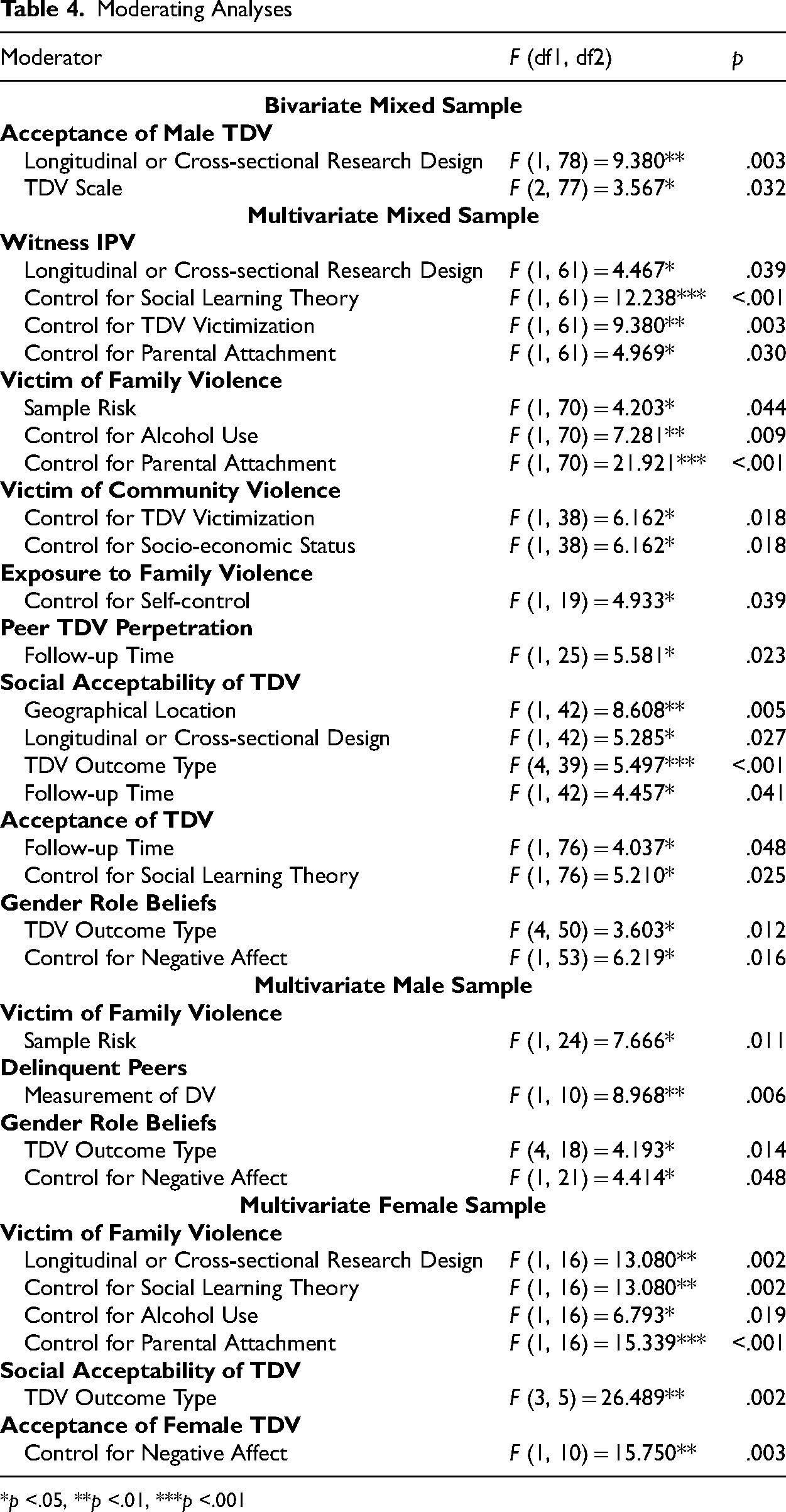
*p <.05, **p <.01, ***p <.001
Publication Bias
To determine the effects of publication bias, funnel plots were estimated for each of the predictor variables. For the bivariate mixed-sex sample effect sizes, funnel plots estimated for witnessing father IPV, experiencing family violence, exposure to community violence, social acceptability of TDV, acceptance of female TDV, and gender role beliefs showed missing studies on the left side. The remaining funnel plots did not show publication bias. For the male-only bivariate effect sizes, the funnel plots estimated for witnessing IPV, witnessing mother IPV, experiencing family violence, acceptance of male TDV and acceptance of female TDV showed studies missing on the left side. The remaining did not show publication bias. For female-only bivariate effect sizes, the funnel plots estimated for witnessing mother IPV, experiencing family violence, and gender role beliefs showed studies missing on the left side. Peer TDV perpetration, acceptance of violence, and acceptance of female TDV showed studies missing on the right side. The remaining predictor variables did not show publication bias.
For the multivariate mixed-sex sample effect sizes, funnel plots estimated for experiencing family violence, exposure to family violence, peer TDV perpetration, peer delinquency, acceptance of male TDV, and acceptance of female TDV showed studies missing on the left side. Anticipated rewards of TDV showed studies missing on the right side, and the remaining predictor variables did not show evidence of publication bias. For male-only multivariate effect sizes, funnel plots estimated for experiencing family violence, peer delinquency, acceptance of male TDV and gender role beliefs showed studies missing on the left side. Peer TDV perpetration and social acceptability of TDV showed studies missing on the right side, and the remaining predictor variables did not show publication bias. For female-only multivariate effect sizes, funnel plots estimated for witnessing IPV, experiencing family violence, peer TDV perpetration, acceptance of TDV, and acceptance of female TDV showed studies missing on the left side. Social acceptability of TDV showed studies missing on the right side, and the remaining predictor variables did not show evidence of publication bias. Due to space constraints, the funnel plots are not included here, but may be requested from the author.
Discussion
Teen dating violence is a pervasive problem in adolescence that has deleterious effects that last into adulthood, including continued violence against intimate partners (Leadbeater et al. 2014). TDV is commonly explained using social learning theory, however, prior research on TDV, SLT, and sex has been mixed. Because of these discrepancies, a meta-analysis was needed to “take stock” of the previous literature and generate an average effect size for predictors consistent with each of SLT's four dimensions. While there are other meta-analyses that examine TDV, most of these focus on family and peer risk factors more generally, rather than a specific criminological perspective. This study used hierarchal meta-analytic methods to answer three questions: 1. Which variables related to each SLT dimension have the largest effect size when predicting TDV perpetration? 2. Are there sex differences in SLT predictors? 3. Do sample characteristics and research design moderate these relationships?
To address the first research question, this study found that at least one predictor related to each social learning dimension significantly predicted TDV. Having peers that perpetrated TDV predicted TDV perpetration for most of the models and had among the largest effect sizes. Although the intergenerational transmission of violence hypothesis is widely accepted (Kwong et al. 2003), in this study, peer associations were more important than witnessing intimate partner violence between parents, which had smaller, and often non-significant, effect sizes. Acceptance of using violence to address relationships problems also predicted TDV in many of the models and had larger effect sizes than the predictors that measured violence more generally.
To address the second research question, most of the predictors of TDV perpetration did not vary between boys and girls. However, several sex differences were detected. Gender role beliefs were not significant for females for the bivariate effect sizes. However, they were for the multivariate. Similarly, peer TDV perpetration was not significant for females for the multivariate effect sizes like they were for males, and acceptance of female TDV perpetration was not significant for males in the multivariate model. Given that these predictors were all significant for each sex in at least one of the models, these findings support the use of SLT to predict TDV for both males and females. To address the third research question, this study found that every moderator tested was significant for at least one predictor variable, suggesting that the sample and methodology can influence findings. Implications for theory, research, and practice are discussed below.
Implications for Theory
SLT is purported to be a general theory of crime, or one that explains a variety of crime types for a variety of sample characteristics. While most research using SLT examines adult relationship violence, the findings of this current study suggest that SLT can also explain violence in teen relationships. This justifies the use of SLT despite differences in sample age, as good theories should be able to explain outcomes regardless of variations in sample characteristics and measurement (Shadish, Cook, & Campbell, 2002). When establishing causal relationships between predictors of crime and outcomes, it is vital that measures have construct validity, or are measuring what we think they are measuring (Sullivan & McGloin, 2014). Since most theoretical concepts in criminology are not standardized and have been conceptualized and measured in a variety of ways, a meta-analytic methods are useful in examining these discrepancies and can aid in theoretical development. One way of determining whether social learning theory can be used to explain TDV is by using a pattern matching approach (Trochim, 1989). Social learning theory assumes that four dimensions: differential association, differential reinforcement, beliefs, and imitation can explain offending (Akers 1973, 1998). One can then take the findings from the meta-analytic data to form an observed pattern, which can then be matched to the theoretical pattern of the four dimensions. While significant relationships support each of the dimensions, findings were dependent on measurement. For example, for the differential association dimension, peers who also perpetrated TDV was a stronger predictor than merely having delinquent peers. Similarly, for the belief dimension, effect sizes that captured the support for using gendered violence, rather than violence in general, better predicted TDV perpetration. This suggests that while the dimensions of SLT match the pattern of these meta-analytic data, the causal mechanisms of the theory might only work when the measurements of these dimensions specifically include TDV, rather than violence in general. While this provides some support for using learning theories to explain TDV, it is the predictors that specifically capture gendered violence, rather than general offending, that best explain TDV.
The generality-specificity debate of whether explanations of offending are different for males and females or sex-neutral has long been contested amongst criminologists. In the current study, similar mean effect sizes for males and females support similar rather than different effects of SLT mechanisms on TDV. This is consistent with other examinations of social learning theory, delinquency, and youth populations (Heimer and De Coster 1999). Relatedly, a meta-analysis on a risk assessment tool based on SLT found that the tool equally predicted recidivism for adolescent males and females, further supporting sex-neutral effects of SLT (Pusch and Holtfreter 2018). One explanation for this finding may be that sex differences of offending are more pronounced in adult, rather than adolescent, samples. Some contextual risk factors are unique to the experiences of adult women (Daly 1992), and previous research has found that sex differences of explanations of offending are more apparent in adult rather than adolescent samples (Jung et al. 2017; Neff and Waite 2007). However, the current study shows several sex differences. For example, peer TDV perpetration is significantly related to TDV for males, but not females in the multivariate studies. This is consistent with findings that peer effects seem to be a better predictor of delinquency for adolescent boys than adolescent girls (Piquero et al. 2005). Another difference that came to light for the bivariate effect sizes is that traditional gender role beliefs were important in predicting TDV for males, but not females. It is likely that females holding these beliefs also believe that it is unacceptable for females to be violent, as it goes against traditional gender stereotypes, therefore making it less likely that they would perpetrate TDV.
Implications for Research
A unique feature of meta-analyses is that they not only “take stock” of the research that has already been completed, but they also point to areas where more research is necessary (Pratt 2010). Significant moderator analyses in the current study reveal that SLT has differing success in explaining TDV depending on research and sample characteristics, and future research should focus on examining these nuances. For example, many of the significant moderators in the multivariate analyses pertain to what was included as a control in the individual studies. Scholars examining TDV in the future should be cognizant on how their research methodology and what they include as controls affect their outcomes.
While this meta-analysis offers some insight into social learning theory and TDV, it is important to note that studies that examine TDV tend to assume heterosexual relationships and a cis-gendered sample. A recent systematic analysis on IPV victimization found that less than 10% of studies included those who were LGBTQ + or sexual minority (Laskey, Bates, and Taylor 2019). This is concerning, as gender and sexual minority individuals have been found to be at greater risker for intimate partner violence (Walls et al. 2019; Whitton et al. 2019). There is a particular lack of research that examines youth populations. In the limited number of studies that have examined this topic, sexual and gender minority youth have been found to be more likely to experience dating violence, possibly due to discrimination and stress that may make them more vulnerable to victimization and perpetration of violence. Bisexual individuals have found to have a particularly high risk (Kiekens et al. 2021; Martin-Storey, Pollitt, and Baams 2021). Unfortunately, most of the individual studies included in this meta-analysis either do not include those in same-sex relationships, or do not control for it. Therefore, the limited number of same-sex studies made it impossible to differentiate between opposite-sex and same-sex relationships in the analyses. Additionally, studies often did not include if they were measuring biological sex or gender identity and assumed that respondents were cis-gendered. None of the individual studies included separate analyses for those that did not fit into the male/female binary, presumably due to the low prevalence of sexual minority gender identities in general youth samples. Future research should examine these nuances in adolescent populations, as previous research has focused on violence among LGTBQ + and sexual minority adult populations.
Implications for Practice
Findings from the current meta-analysis support using TDV prevention programs that use SLT as a theoretical framework. Currently, prevention programs are targeted in early adolescence, before dating is normative, and implemented universally in school settings. Programs such as Safe Dates and Dating Matters use a multi-pronged approach and address a variety of risk and protective factors to promote healthy relationships. Both programs include a social learning component to achieve program goals that include changing gender role norms and beliefs surrounding dating violence, and teaching prosocial ways of dealing with conflict in relationships (Foshee et al. 1998; Tharp 2012). Although social learning components were not able to be isolated, meta-analyses on the effectiveness of TDV prevention and intervention programs found that they were successful at changing attitudes related to TDV. However, mean effect sizes for the effectiveness of these programs at changing behavior were much smaller (De La Rue et al. 2017; Lee and Wong 2020). While findings from the current study support using SLT as a framework for prevention programs, some differences in effect sizes and significant moderator analyses suggest that there may be some nuances for effectiveness of SLT-based programs. While most TDV prevention programs are universally implemented, effectiveness varies by sex, with some studies finding better results for males, and some finding better results for females (Debnam and Temple 2021; Wolfe et al. 2009). The current study finds stronger peer effects for males than females, suggesting that sex specific TDV prevention programs that put a greater emphasis on peer relationships for males could be implemented. The current study also found that the relationship between being a victim of family violence and TDV perpetration differed depending on the risk level of the sample. This suggests that prevention programs focusing specifically on family violence and targeted high-risk populations might also be beneficial.
Limitations
Despite contributions to theory, research, and practice, this study has limitations. While many significant predictors in this meta-analysis suggest that SLT is valuable for explaining TDV perpetration, these predictors do not represent a complete test of the theory. It is possible that some of the predictors used span more than one element of SLT or other criminological perspectives entirely. Additionally, these predictors emphasize the learning that is brought into relationships, rather than the dynamics within the relationship themselves, and future research should focus on the integration of both social learning and contextual factors (Giordano et al. 2010). Of course, a meta-analysis is only as valid as the individual studies themselves. Including unpublished work means that studies of varying rigor are included in the meta-analysis, as these unpublished works have not been through the peer-review process. However, since a goal of a meta-analysis is to “take stock” of the entire body of research and be inclusive as possible, including unpublished work is still preferrable to leaving it out (Turanovic and Pratt 2021).
A related concern with the validity of individual studies concerns reporting violence perpetration. Since acts of violence committed by girls against their male partners may not seem as serious, and therefore more socially accepted than violence perpetrated by males against females, this may lead to inaccurate reporting of TDV involvement. Males may be hesitant to report participation in violence due to the stigmatization of violence against women, and girls may be more attentive to what constitutes interpersonal violence, and therefore report a wider range of behaviors (Hamby and Jackson 2010; Wincentak et al. 2017). Although self-reports of violence by adolescents are usually found to be relatively accurate (Huizinga and Elliot 1986), the potential for over-and under-reporting means that findings should be interpreted with this in mind.
Conclusions
Dating violence committed in adolescence is more than a fleeting teenage issue. It has real consequences that last well past the teen years and sets the stage for future adult relationships. The current meta-analysis supports the use of predictors derived from the four dimensions of SLT to explain dating violence perpetration in adolescence, and suggests that SLT elements are useful as a prevention strategy. While there is an ongoing debate about whether general criminological perspectives can explain offending for both males and females, this study supports sex-neutral effects of learning mechanisms. Hopefully, findings from the current study aid in the development of policies and programs that could help to reduce TDV perpetration rate.
Footnotes
Declaration of Conflicting Interests
The author(s) declared no potential conflicts of interest with respect to the research, authorship, and/or publication of this article.
Funding
The author(s) received no financial support for the research, authorship, and/or publication of this article.
