



Abstract
The purpose of this study was to determine whether students’ practice efficiency, flow during practicing, and self-efficacy for self-regulation varied as a function of their practice tendencies, their tendencies toward self-evaluation, their self-regulatory tendencies to be self-reflective when practicing, tendencies to exhibit grit in their learning, and their teachers’ methods of instruction in practicing. Participants were 52 studio lesson teachers and 241 of their students from 25 large collegiate music programs in the United States. Both the teachers and students represented a diverse range of instruments: flute, oboe, bassoon, clarinet, saxophone, French horn, trumpet, trombone, euphonium, and tuba. The data for this study were self-reports collected via online questionnaires. Findings indicated that of the five predictor variables examined, only two—students’ tendencies to exhibit grit in their learning and their tendencies to be reflective about their practicing—were consistently related to the three outcome variables. Furthermore, all outcome variables were significantly related to one another.
The research base regarding musicians’ practice has grown tremendously in recent years (Miksza, 2011b). The tendency for musicians to devote an immense amount of time toward individual, self-directed practice throughout their careers has been well documented (Ericsson, Krampe, & Tesch-Romer, 1993; Sloboda, Davidson, Howe, & Moore, 1996; Sosniak, 1985). Although musicians who accumulated more practice time generally have outperformed others who practice for relatively less time (Jørgensen, 2002), researchers have shown that it has been the quality of one’s practice that ultimately was the best indicator of achievement (McPherson, 2005; Williamon & Valentine, 2000). Furthermore, researchers also have found that music students’ practice effectiveness tends to be positively related to their self-beliefs regarding their musical competence and degree of commitment to music studies (McPherson & Zimmerman, 2011). It is clear that research regarding how to instruct musicians to maximize the time they spend practicing is a worthwhile endeavor.
Researchers studying practice have found that learners begin as unsophisticated practicers and slowly acquire a broader repertoire of practice strategies and metacognitive or self-reflective tools as they mature and gain experience (Hallam et al., 2012; Leon-Guerrero, 2008; McPherson, Davidson, & Faulkner, 2012). In addition, intentional, goal-directed strategies (e.g., chunking, whole–part playing, skipping to critical sections, using a metronome, slowing) have tended to be correlated with performance achievement (Duke, Simmons, & Cash, 2009; Miksza, 2011a). Results from experiments suggest that the incorporation of a model, mental rehearsal, and structured routines can be beneficial for one’s practice (Miksza, 2011b), while studies of memory suggest that practicing with attention to hierarchical structural cues in the music (Chaffin & Imreh, 1997) and strategic rest is beneficial (Duke & Davis, 2006).
Examinations of practicing from the social cognitive perspective of self-regulation have provided insight into potential means by which individuals can become independent learners (McPherson & Zimmerman, 2011). Self-regulated learners have been characterized as “metacogntively, motivationally, and behaviorally active participants in their own learning process” (Zimmerman & Martinez-Pons, 1988, p. 284). They also are able to successfully negotiate the continually interacting learning phases of forethought (goals, self-beliefs), performance (observation of the self in the moment, application of strategies), and self-reflection (self-evaluation/awareness, self-judgment, attribution) (McPherson & Renwick, 2011; Zimmerman, 2000). Researchers in general education have determined that self-efficacy beliefs can play a particularly important role in the development of self-regulated learning since they have been found to predict goal-setting tendencies, effort expenditure, and persistence (Zimmerman, Bandura, & Martinez-Pons, 1992). Similarly, researchers studying the practicing of intermediate (McCormick & McPherson, 2003; McPherson & McCormick, 2006) and advanced (Nielsen, 2001) instrumentalists have found significant relationships between self-efficacy beliefs and practice strategy use and time spent practicing. Furthermore, Zimmerman et al. (1992) have discovered that one’s efficacy beliefs regarding the ability to be self-regulated can predict self-efficacy for academic achievement and, by extension, achievement outcomes.
Despite the growing body of research on practicing, studies of relationships between what a teacher teaches about practicing and how his or her students go about practicing are rare. Barry and McArthur (1994) found that the practice strategies collegiate and precollegiate music teachers recommended to their students were not necessarily those that researchers have determined to be effective. Kostka (2002) found that while university studio teachers and music majors tended to agree on the relative importance of particular music objectives for practice (i.e., striving for musicality above all), they tended to disagree on expectations for time spent practicing and whether one should use a routine. The teachers in Kostka’s study expected approximately one third more practice time than students reported engaging in. In addition, 100% of the teachers claimed to teach specific approaches to practice, whereas only 41% of students claimed to have discussed practicing with their teachers.
Barry (2007) investigated the lessons of three collegiate studio faculty and 12 of their students. The researcher collected data via video observations of lessons and practicing, questionnaires, and participants’ narrative descriptions of how to practice. Barry’s findings were consistent with Kostka’s (2002) in that there was little agreement in responses to questionnaire items pertaining to following a practice routine and whether teachers discussed specific techniques with students. Similarly, the students’ descriptions of how they would practice were much less detailed and sophisticated than their teachers’. Furthermore, the strategies the teachers wrote about in their narratives did not appear in the teaching captured in the video-recorded lessons. Koopman, Smit, de Vugt, Deneer, and den Ouden (2007) conducted a similar study of relations between university studio teachers’ approach and their students’ practicing. The data for their study consisted of four lesson videos from each teacher, 3 weeks of student practice videos, student logbooks, questionnaires, and interviews. Overall, students reported having a better understanding of what to practice rather than how, only one of six students felt that how to practice was emphasized in their lessons, and the students frequently did not demonstrate their teachers’ advice on how to practice. The homework given by the teachers seemed to lead to the clearest connections between teachers’ intentions and students’ practicing. The students were focused on the topics their teachers had assigned as homework and chose practice goals based on feedback they received for previous homework assignments.
The construct “grit,” defined by Duckworth, Peterson, Matthews, and Kelly (2007) as “perseverance and passion for long-term goals” (p. 1087) also is relevant to practice research. An individual who is “gritty” not only completes short-term tasks but also works toward long-term outcomes. Grit has been found to be predictive of academic outcomes, retention in the U.S. Military Academy, and performance at the National Spelling Bee (Duckworth, Kirby, Tsukayama, Berstein, & Ericsson, 2010). Given that long hours of practice over extended periods of time are required for instrumentalists to achieve technical proficiency, it is reasonable to expect that gritty individuals may engage in more effortful, focused, and deliberate practice than nongritty individuals, which may in turn predict expert achievement (e.g., Ericsson, 2006; Sloboda et al., 1996).
Similarly, Csikszentmihalyi, Rathunde, and Whalen (1993) have drawn on research findings to suggest that people who achieve success do so through perseverance and commitment to long-term goals. They have posited that those with high levels of music achievement tended to find music activities intrinsically rewarding and enjoyable—a psychological state termed by Csikszentmihalyi (1990) as flow. People who attain flow while being engaged in an activity experience a state of effortless absorption and intense concentration. They lose their sense of self-consciousness, feel in control, have clear goals, and enjoy the activity for its intrinsic value (Csikszentmihalyi, 1990). Flow experience in the context of music tasks has been studied among young children (Custodero, 2005), adult singers (Matthews, 2003), and student performers (Diaz, 2013; Sinnamon, Moran, & O’Connell, 2012). Bakker (2005) observed positive relationships between the experience of flow by music teachers and their students, while Fritz and Avsec (2007) found that flow positively related to measures of subjective well-being of 84 Slovenian music students, suggesting that the experience of flow is a predictor of emotional well-being.
The purpose of this study was to examine whether students’ reports of practice efficiency, flow during practicing, and self-efficacy for practicing self-regulation varied as a function of reports of (1) their own tendencies toward self-evaluation, (2) their knowledge of practice strategies, (3) their tendencies to exhibit grit, (4) their self-regulatory tendencies to be self-reflective when practicing, and (5) their teachers’ methods of instruction in practicing. Qualitative descriptions of the types of practice approaches the students and their teachers reported also were sought.
Methodology
The volunteers for this study were 52 faculty studio teachers and 241 of their students from 25 large collegiate music programs in the United States. The studio teachers were instructors of wind instruments: flute (9.6%), oboe (7.7%), bassoon (11.5%), clarinet (7.7%), saxophone (7.7%), French horn (15.4%), trumpet (13.5%), trombone (11.5%), and tuba/euphonium (15.4%). All had undergraduate degrees in music, 51.9% had earned a master’s degree, and 42.2% had earned a doctorate. The studio teachers reported a wide range of experience teaching private lessons across their careers (M = 26.28 years, SD = 10.48; range 8 to 46 years) and had been teaching at their current institution for an average of 13.79 years (SD = 9.64). The length of the lessons they taught ranged from 30 to 60 min with a mean of 55.86 min (SD = 5.91).
The studio teachers’ students who volunteered to participate were similarly representative of instrument emphases: flute (10.4%), oboe (10.4%), bassoon (12.4%), clarinet (9.5%), saxophone (5.8%), F horn (16.2%), trumpet (8.7%), trombone (8.3%), and tuba/euphonium (18.3%). The student sample was 56% female and 44% male with a mean age of 20.97 years (SD = 3.39). The average age the students reported starting on their instruments was 11.31 years (SD = 1.68), and the age they reported beginning private study was, on average, 13.83 years (SD = 2.65). The degree programs the students reported being enrolled in were as follows: BA (4.6%), BM (36.5%), BME (30.3%), BM/BME double (3.7%), MM/MA (10.4%), DMA/PhD (10.3%), nonmusic (3.3%), and performer certificate (0.4%). The students’ reports of average practice minutes per day were extremely varied (M = 121.93 min per day, SD = 62.50, range 0 to 360) and the number of reported practice sessions per day varied as well (M = 2.06 sessions, SD = 0.87, range 0 to 6).
We selected large collegiate programs as a sampling frame in order to increase the likelihood of achieving a sufficient sampling of students that could be matched with studio teachers. We restricted our sample to U.S. schools given the fairly consistent cultural expectations of applied studio instruction that likely would emphasize the Western art music tradition. The volunteer sample we achieved of 52 teachers and 241 students was considered sufficient for generating statistical power for examining the hierarchical relationships specified in the purpose statement (Raudenbush & Bryk, 2002).
Measures
The data were collected for this study via online questionnaires disseminated through SurveyMonkey.com. Initial versions of the questionnaires were pilot-tested with a modest sample of music students and teachers (n = 31) to (a) assess the face validity of the questionnaire and identify any problems with administration of the measure, (b) assess the reliability of the rating scale measures for the student questionnaire, and to (c) develop a coding procedure for quantifying the open-ended items.
The teacher version included a section pertaining to background information as well as an open-ended item in which they described how they would teach a typical student to practice. This latter item was worded to refer to a specific étude (see Appendix A in the online supplemental materials available at http://jrme.sagepub.com/supplemental) embedded as an image within the survey (“Given the étude below, what are the types of practice strategies you would teach in order for your student to learn the piece efficiently over a period of seven days?”). This particular étude was chosen due to the inherent challenges in the music and the observed opportunities for technical and expressive growth among advanced collegiate wind players demonstrated through empirical measures of performance achievement in previous research (e.g., Miksza, 2011a). The student version of the questionnaire included items requesting (a) background information and practice habits, (b) open-ended responses based on interpretations of the same étude their studio teacher saw (Appendix A, http://jrme.sagepub.com/supplemental) regarding their self-evaluation tendencies (“Given your current abilities, what are the technical/musical elements in the étude that would be challenging for you?”) and their practice habits (“Given the étude below, what are the practice strategies and behaviors you would engage in in order to learn it over a period of seven days?”), and (c) measures of the constructs practice reflection, grit, flow, practice efficiency, and self-efficacy for self-regulation.
The quality of the studio teachers’ open-ended responses pertaining to practice approaches and the students’ open-ended responses pertaining to self-evaluation and practice approaches was assessed via ratings scales on dimensions of breadth (i.e., types) and depth (i.e., idiomatic specificity, variation/detail), with higher scores indicating greater quality of response (see Appendix B in the online supplemental materials available at http://jrme.sagepub.com/supplemental). One of the authors scored all of the responses, whereas the other independently coded 50%, yielding sufficient interrater reliability across the rating scale categories (r = .70 to .81). A content analysis also was completed for the teacher and student open-ended responses pertaining to practice approach. Each statement of each response was considered a potential datum and was assigned descriptive, in vivo codes for the purpose of summarizing the primary topic (Saldaña, 2013). The codes then were grouped into emergent patterns in order to identify themes. An independent coder audited the accuracy and conceptual fit of the codes. The independent coder was a graduate student in music education with more than 4 years of experience teaching. As a result of the audit, several codes were revised to better fit the data, and several reassignments of codes within categories were made.
Students’ reports of practice reflection and practice efficiency were gathered via 10-item and 12-item researcher-constructed measures, respectively. For both measures, participants responded to each item using Likert scales ranging from 1 = not at all true of me to 7 = completely true of me. The items for the practice reflection measure were based on the characteristics of the self-regulatory phase of self-reflection proposed in McPherson and Zimmerman’s (2011) model of the self-regulated music learner. As such, the items were designed to capture tendencies toward thoughtfulness (e.g., “When I’m practicing I stop playing and think about the best way to work out a problem”), metacognition (e.g., “I reflect on my practicing to determine if the strategies I’ve chosen are suitable for my practice goals”), and self-awareness (e.g., “I monitor myself when practicing to make sure I’m mentally fresh”) while practicing. The items for the practice efficiency measure were based on the approaches to time use and management of practice goals that are typical of a self-regulated music learner (McPherson & Zimmerman, 2011). As such, the items were designed to reflect issues of time use (e.g., “Time does not typically go to waste in my practice sessions”) and meeting goals in a timely manner (e.g., “I can achieve practice goals expediently”). The internal consistency of both scales was good (practice reflection, α = .81; practice efficiency, α = .91).
An adaptation of Zimmerman et al.’s (1992) measure of self-efficacy for self-regulation with wordings adjusted for the context of music practice also was included on the student questionnaire. The measure included a prompt of “How well can you . . .” that was followed by a list of typical self-regulatory activities, such as “concentrate while practicing,” “organize the tasks you pursue while practicing,” “arrange for a place to practice without distraction,” and so on. The participants were prompted to respond to each of the 13 items on this measure using Likert scales ranging from 1 = not at all to 7 = very well. The internal consistency of this scale was excellent (α = .90).
Students’ tendencies to exhibit grit in practice were measured with an adaptation of the Short Grit Scale (see Duckworth & Quinn, 2009). This measure has been validated as a predictor of educational outcomes in previous research (Duckworth & Quinn, 2009). The wording of each of the eight items was modified to make this measure relevant to practicing. For example, “New ideas and projects sometimes distract me from previous ones” was modified to “New practice targets sometimes distract me from previous ones.” Ratings were made using Likert scales that ranged from 1 = not like me at all to 5 = very much like me. The internal consistency of this scale was α = .73.
Students’ tendencies to achieve flow while practicing were measured with an adaptation of Jackson, Martin, and Eklund’s (2008) Short Flow Scale with wordings changed to fit the context of instrumental practice when necessary. The nine items of the Short Flow Scale were based on Csikszentmihalyi’s (1990) nine dimensions of flow: clear goals, concentration on task at hand, challenge–skill balance, action–awareness merging, sense of control, unambiguous feedback, loss of self-consciousness, autotelic experience, and transformation of time. Participants responded to each item using Likert scales ranging from 1 = never to 5 = always. This scale is an abridged version of the 36-item Flow State Scale 2, which was found to have reliable and valid psychometric properties in the context of music (Wrigley & Emmerson, 2013). The reliability of the scale in the current study was good (α = .78).
Procedure
All publicly available, valid e-mail addresses (355 e-mail addresses) were gathered for the applied-lesson studio teachers from the music programs within 34 colleges and universities from four major (NCAA Division I) conference groups as well as four independent institutions known for having a large music program. The teachers were sent an e-mail invitation to complete the final versions of the questionnaires, and two follow-up e-mails were sent as reminders at weekly intervals. Individual e-mails were written for each potential participant that included unique links for their response as well as for the students in their studio, allowing the researchers to pair the teachers’ responses with their students’ responses while maintaining student anonymity. The study protocol was granted approval by the corresponding authors’ institutional review board.
Results
Descriptive analyses of all student- and teacher-level variables are presented in Table 1. Means for the ratings of students’ open-ended practice self-evaluation responses and practice strategy responses were notably low at 5.11 and 5.10, respectively, out of a possible range of 3 to 15. In addition, there was a slight indication of positive skew among the ratings of the students’ practice strategy responses. All other variables demonstrated means near the center of the possible range of scores and skew and kurtosis values that suggested normal distributions.
Descriptive Statistics for All Quantitative Variables.
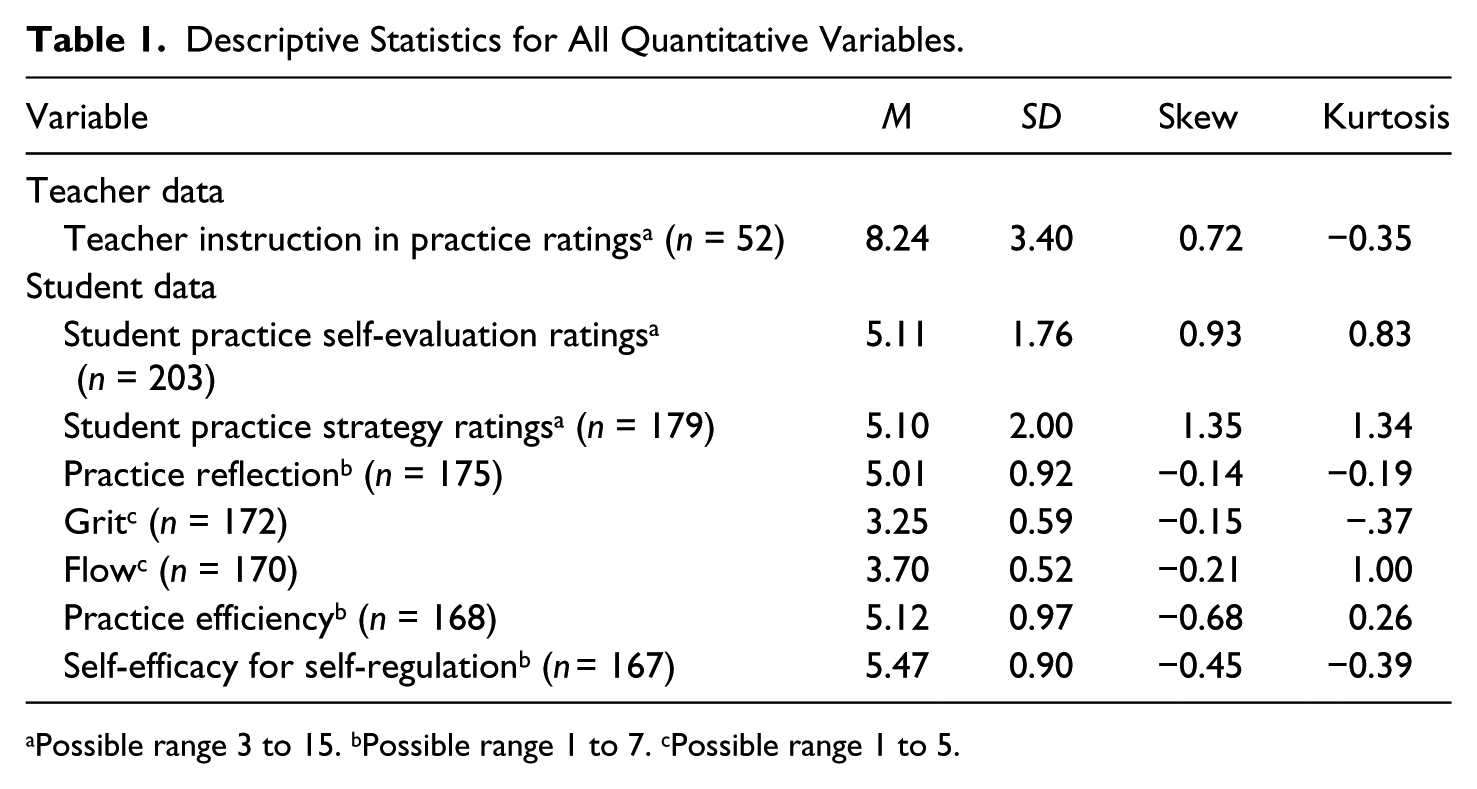
Possible range 3 to 15. bPossible range 1 to 7. cPossible range 1 to 5.
Correlations among the student-level variables revealed significant relationships (p < .001) between the ratings of students’ practice self-evaluation responses and practice strategy responses but not between these two variables and any of the outcomes in question (i.e., flow, practice efficiency, self-efficacy for self-regulation; see Table 2). Reports of practice reflection and grit were significantly related to each other as well as with all outcome variables (p < .001) with variance shared between variable pairs ranging from 18% to 40%. Moderate, positive correlations (r = .70 to .75, p < .001) were also found among the three outcome variables: reports of flow, practice efficiency, and self-efficacy for self-regulation. Correlations between the students’ predictor and outcome variables and their reported practice habits also were examined, indicating small, positive significant relationships between reports for practice minutes per day and grit, flow, practice efficiency, and self-efficacy for self-regulation (r = .28 to .40; see Table 3). A very small, yet significant, positive correlation also was detected between reports of grit and practice sessions per day. No significant correlations were found between the ratings of the teachers’ responses and any teacher background characteristic.
Correlations Among Student-Level Variables.
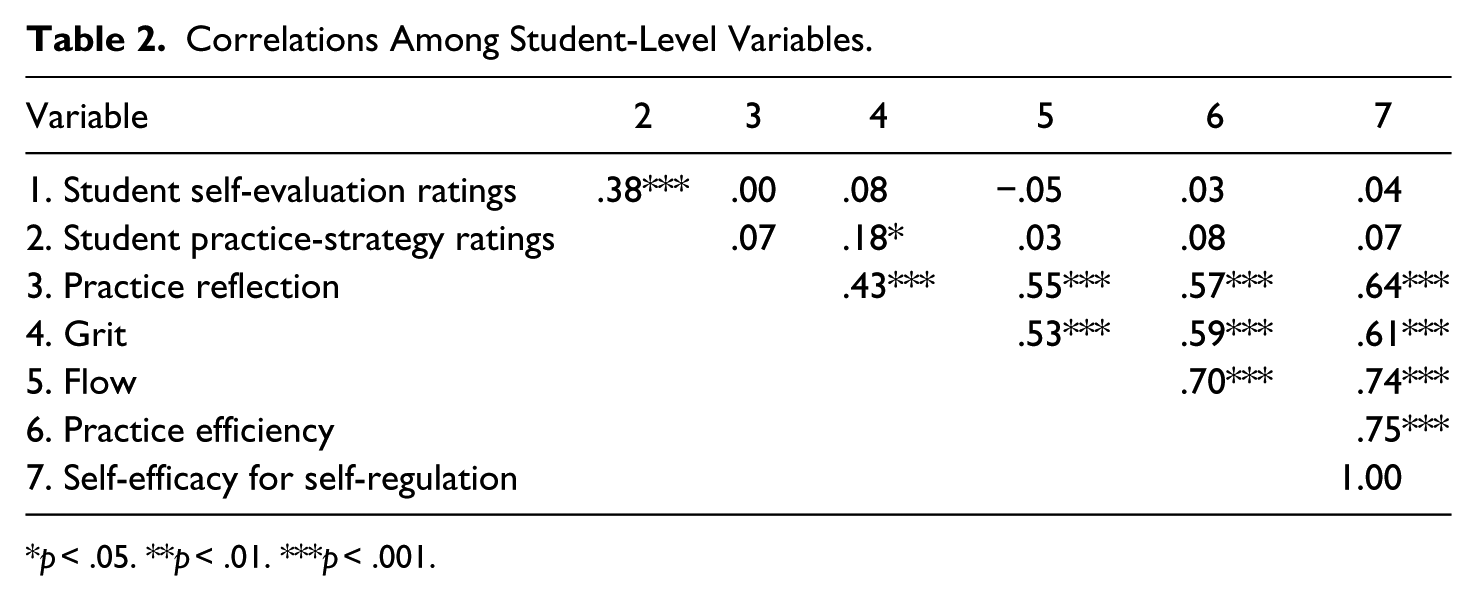
p < .05. **p < .01. ***p < .001.
Correlations Between Student-Level Variables, Background Characteristics, and Practice Habits.
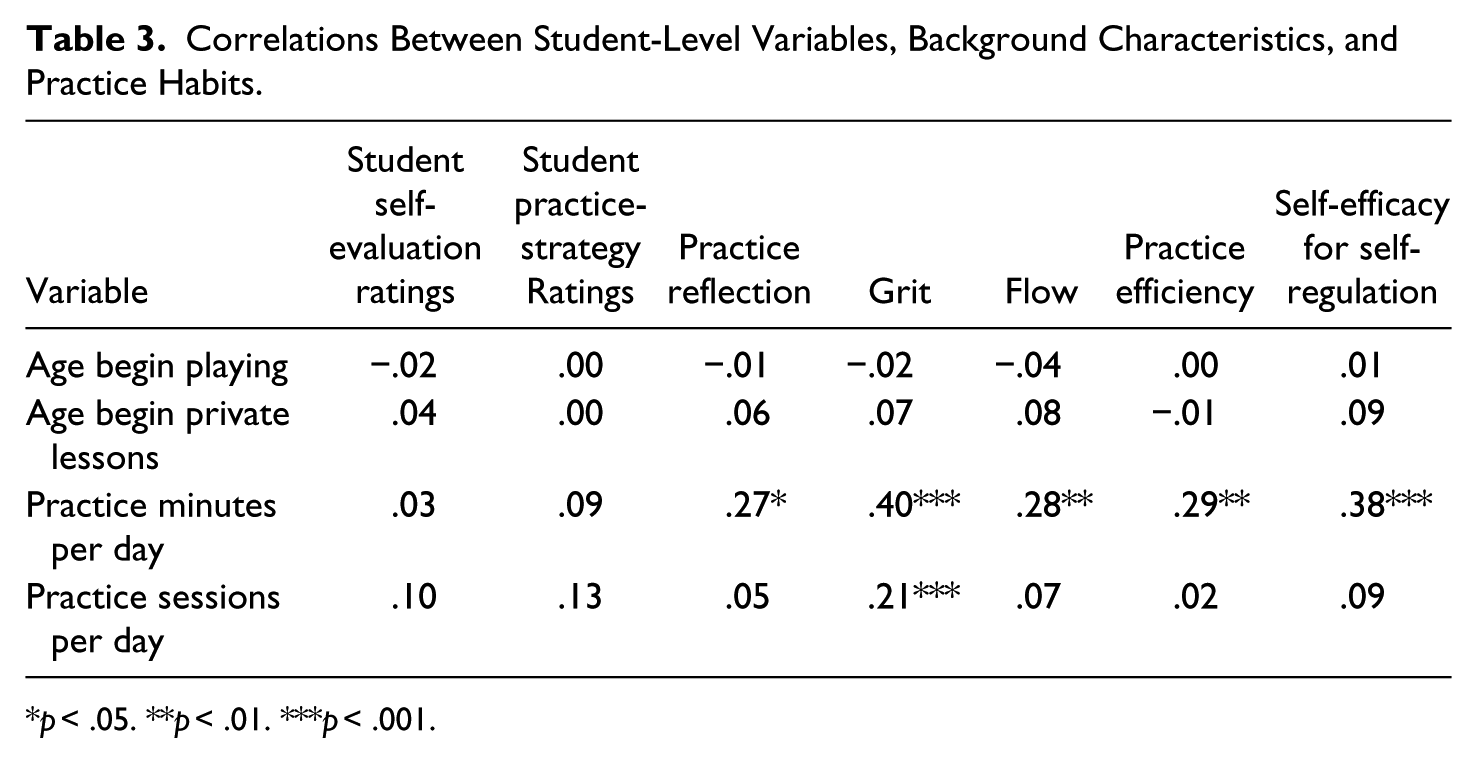
p < .05. **p < .01. ***p < .001.
Given the nested nature of students within particular studios, we used hierarchical linear modeling in order to address the potential relationships between teacher-level characteristics, student-level characteristics, and student-level outcomes. However, initial analyses determined that there was practically no variation in student-level outcomes that could be attributed to teacher-level effects (i.e., grouping according to studio). Intraclass correlations indicating the proportion of variance attributable to teacher-level groupings for the student outcomes flow, practice efficiency, and self-efficacy for self-regulation were .0004, .003, and .0003, respectively. As such, multiple regression analyses of only the relationships between student-level characteristics and outcomes were conducted.
We conducted stepwise regression models for each of the outcomes (i.e., flow, practice efficiency, and self-efficacy for self-regulation) with the following set of predictor variables: status as graduate or undergraduate student, reports of practice minutes per day, reports of practice reflection, reports of grit, ratings of students’ practice strategy responses, and ratings of students’ self-evaluation responses. Basic assumptions regarding normality, outliers, multicollinearity, and inspections of residuals were examined and met for each set of analyses. We found reports of grit and practice reflection to be significant predictors in the final models for all outcomes (p < .001), whereas practice minutes per day was also a significant predictor of self-efficacy for self-regulation (p < .05) (see Table 4). No additional variables were significant predictors of any of the outcomes. Total variance explained ranged from R2 = .40 to .55 across the three outcomes. Grit was the strongest predictor of the reports of flow and practice efficiency, whereas reports of practice reflection was the strongest predictor of self-efficacy for self-regulation.
Final Regression Models for Stepwise Models Predicting Flow, Practice Efficiency, and Self-Efficacy for Self-Regulation.
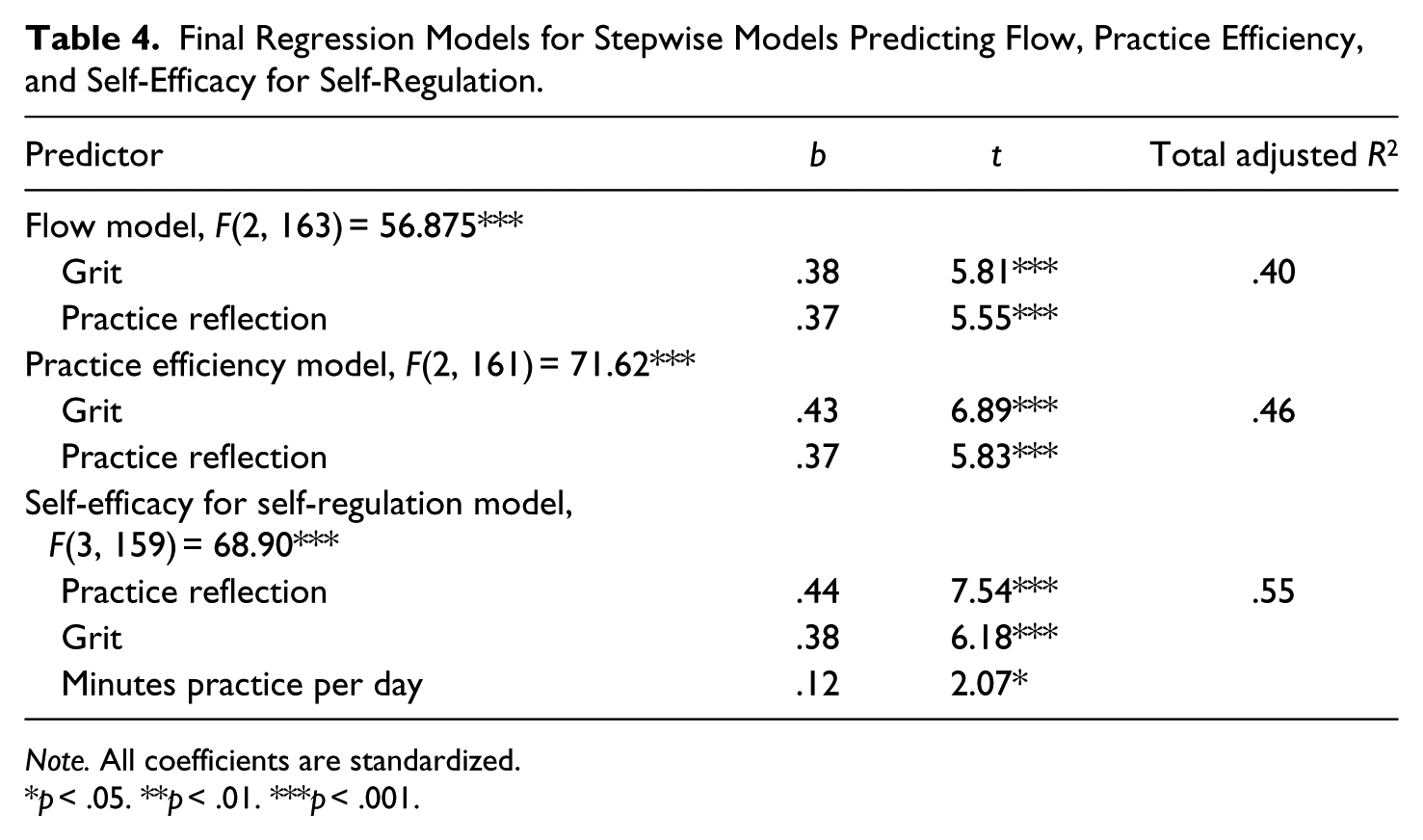
Note. All coefficients are standardized.
p < .05. **p < .01. ***p < .001.
The qualitative content analysis of the teacher and student open-ended questionnaire responses pertaining to practice methods yielded five emergent categories of practice processes: (a) analysis prior to practicing (e.g., analyzing compositional elements of the étude, pattern identification, prioritizing goals), (b) practice techniques to enact (e.g., repetition behaviors, variation behaviors, mental strategies, use of tools), (c) positive habit forming (e.g., working until errors were eliminated), (d) self-evaluation during and after practicing (e.g., being mindful as to errors that are being made, recording oneself and listening back), and (e) performing as a culminating activity (e.g., performing for others). The teachers and students emphasized practice techniques to enact the most in their responses (25 emergent codes) and performing as a culminating activity the least. Five separate codes were grouped into the category analysis prior to practicing, whereas three codes were grouped into the category positive habit forming and only two codes were grouped into each of the remaining categories (see Table 5).
List of Codes From Open-Ended Student and Teacher Responses Organized by Category.
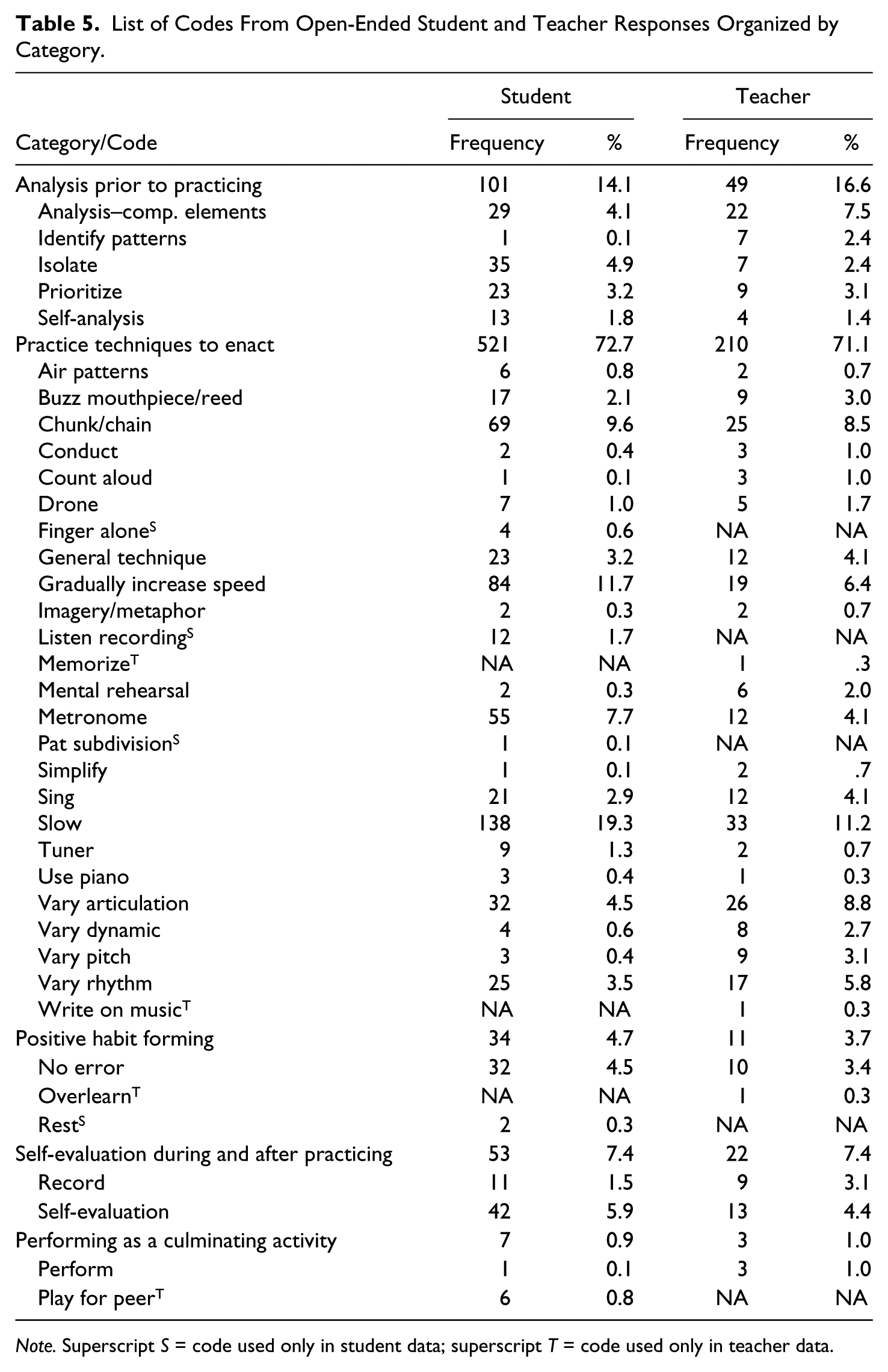
Note. Superscript S = code used only in student data; superscript T = code used only in teacher data.
Many comments reflected the respondents’ awareness of the need to plan and strategize their practice of the étude presented. These emphases are reflected in descriptions of how to analyze the étude for structural cues and isolate and prioritize material to be practiced.
[Teacher response coded as analysis of compositional element] Do preliminary work without the horn before working it. i.e.: Who is the composer? When was it written? For anyone in particular? What is the style or style characteristics? Do you understand all the tempo and expressive markings (if not, get translations)? At all times: understand what you are playing. Know the scale, the key, the scale degree of any note. [Student response coded as isolate and prioritize] . . . Focus on the passages I would know I would have more difficulty with first. E.g. working on sections of the Allegro Moderato before the Andante for the most part. Also, parts similar to bar 6 in the Andante. Break up the piece into smaller segments based on the phrases, and isolate those. Then start working on the following section . . .
Among the most common practice techniques described were chunking the music into sections, slowing it down, and gradually building back up to tempo. These techniques also often were described in conjunction with the use of a metronome: [Teacher response] I would suggest approaching the technical section at 17 slowly with a metronome, concentrating on repetitions of the more challenging parts in very short segments. After bringing a segment up to speed by increasing the metronome one beat-per-minute at a time, I’d have the student add surrounding notes, one at a time, to incorporate the segment into the surrounding section.
Approaches for varied repetition of musical material also commonly were described: [Student response] “I would change the rhythms, do note groupings, add slurs, take away slurs, all to get comfortable with the fingers.” Although much less frequent, participants also occasionally would cite the importance of making sure their performance was error free while enacting practice techniques. See, for example, this teacher’s response regarding building strong neural connections through repeated, accurate trials: [Teacher response] Start working through the étude slowly, trying to get everything—it all must be correct (rhythm, pitch, notes, articulation, etc.) including the musicality. One has to go very slowly to get all that, but in order to build, and reinforce, the proper neural circuitry . . . one has to establish precision and repeat it. Over and over. How slow one goes is dependent on comfort—it has to remain comfortable and competent through all at the same tempo; if there is a part that isn’t comfortable, then it’s too fast. When it’s comfortable, the tempo can move up—this is true for fingerings, notes, technical passages, pitch, rhythms, tone, crescendos, etc. Basically, everything—that’s why it has to be slow.
There were several ideas offered by teachers that were not reported by students and vice versa. There was one comment among the teachers’ responses pertaining to memorization as a practice technique and the value of writing on one’s music. In addition, one teacher comment emphasized the value of developing automaticity and overlearning, specifically. Several student comments were offered regarding practice techniques that dealt with fingering only, listening to professional recordings, patting subdivisions to attain rhythmic precision, and the value of performing for peers as a culminating activity. Two student participants cited plans to incorporate rest in their practicing for the sake of maintaining healthy playing habits.
Discussion
The purpose of this study was to determine whether students’ reports of practice efficiency, flow during practicing, and self-efficacy for self-regulation varied as a function of their reports of approach toward self-evaluation, knowledge of practice strategies, tendencies to exhibit grit in their learning, tendencies to be reflective about their practicing, and their teachers’ methods of instruction in practicing. Findings indicated students’ reported tendencies to exhibit grit in their learning and tendencies to be reflective about their practicing were significantly related to the three outcome variables. However, practically none of the variation in any of the student outcomes could be explained by studio grouping, and as a result, it was not possible to estimate relations between teachers’ methods of instruction and their respective students’ outcomes. In addition, qualitative analyses of the open-ended responses indicated that several approaches to practicing described by the teachers were not reported by their students. This disconnect between what teachers and students report in regard to practicing is somewhat consistent with previous research (e.g., Barry, 2007; Koopman et al., 2007; Kostka, 2002).
We found correlations between students’ open-ended survey responses regarding their self-evaluation and reported practicing approaches in that those who tended to report more depth and breadth of evaluation approaches also reported more depth and breadth of practice strategies. However, neither of these student-level variables was predictive of reported practice efficiency, flow during practicing, and self-efficacy for self-regulation. Nonsignificant or trivial relationships also were found between students’ reported practice approaches, self-evaluation approaches and practice reflection, and grit. Taken together, this lack of significant relationships may suggest that students’ content knowledge regarding how to practice and the degree to which they typically self-evaluate does not necessarily vary according to their perceptions of psychological dispositions toward practicing. This may imply a practical disconnect between what students know about practicing and the degree of psychological engagement they bring to their practicing. Consistent with previous studies (e.g., Ericsson et al., 1993; Sosniak, 1985), however, the amount of time spent practicing did seem to be of some importance. Individuals who practiced more in terms of minutes spent per day were more likely to report being more efficient, being in flow, and having self-efficacy for self-regulation, although it is worth noting that these relationships were very small.
More crucially, students who reported greater tendencies to exhibit grit and reflection in their practice also reported being more efficient, more likely to be in the flow, and having greater self-efficacy for self-regulation. In particular, grit was the strongest predictor of practice efficiency, suggesting that how efficient one is during practice is to some degree a function of how one is able to complete short-term tasks and persevere toward long-term goals. Reports of grit were also significantly related to flow. Csikszentmihalyi’s (1990) notion of challenge–skill balance may account for the link between flow and grit: As gritty individuals are likely to practice more (a point empirically supported in this study), they may increase their skills, which in turn leads to flow as their level of skill matches the challenge of the task. Students’ reported levels of grit in this study were also related to their reports of self-efficacy for self-regulation. This is consistent with Zimmerman et al.’s (1992) observation that self-efficacy beliefs predict persistence. In addition, students reporting greater degrees of practice reflection in this study also were found to be grittier, although that relationship was somewhat weak.
The relations found among grit, practice reflection, flow during practice, practice efficiency, and self-efficacy for self-regulation are also reflective of some of the essential theoretical components of self-regulated learning. For example, self-regulated learners typically are described as being able to successfully negotiate the cyclical processes of forethought, performance, and self-reflection while engaged in self-directed study (McPherson & Renwick, 2011; Zimmerman, 2000). The determination to accomplish short- and long-term goals that is a central feature of the measure of grit employed in this study is emblematic of the forethought phase, whereas the measure of practice reflection is associated clearly with the self-reflection phase. In addition, flow can be interpreted as an ideal state for perceiving the self in the moment, which pertains to the performance phase of the cyclical processes. The significant relationships found between each of these variables and reports of practice efficiency and self-efficacy for self-regulation also support the theoretical conception of self-regulation since it is logical to assume that those who have a sense of mastery over the three-phase cyclical process (i.e., exhibit more grit, flow, and practice reflection) also would be more confident in their ability to be self-regulated in general and likely to perceive themselves as more efficient in their practicing (McPherson & Zimmerman, 2011; Zimmerman et al., 1992).
The breadth of practice processes that emerged from the qualitative analyses of the student and teacher open-ended responses seems consistent with previous research reporting that advanced musicians tend to acquire a wide range of strategic behaviors and metacognitive tools over time (McPherson et al., 2012). The emphases on intentional, goal-directed techniques, such as analysis strategies, chunking, slowing/building back up to tempo, use of a metronome, and varied repetition, are consistent with existing observational research of advanced musicians’ practicing (e.g., Chaffin & Imreh, 1997; Miksza 2007, 2011a, 2011b) as well as theoretical conceptions of deliberate practice (e.g., Ericsson, 2006). Similarly, reports of the use of self-recording are consistent with research regarding the effectiveness of a model (Rosenthal, 1984) and a model combined with self-evaluation approaches (Hewitt, 2001; Puopolo, 1971). Though prominent in the literature (e.g., Duke & Davis, 2006), there was unfortunately little mention of approaches to incorporating periods of rest or recovery among the open-ended responses. Likewise, imagery and mental rehearsal were mentioned rarely despite the prominence of studies addressing such practice techniques (see Miksza, 2011b).
The findings of this study hold several practical implications for music educators. To begin with, teachers should encourage reflection in their instrumental lessons. Fostering a reflective disposition toward practice could help to nurture self-directed learners who habitually can “step back” and evaluate the effectiveness of their practicing. Teachers also may begin to think of ways in which they may foster grit in their students. This may include encouraging them to stay committed to whatever they are working on and not to get distracted, reminding them not to get discouraged by setbacks, and ensuring that they finish whatever they begin. Furthermore, helping students to identify and create systematic practice plans that include well-defined short- and long-term goals could help students remain persistent in their work.
The findings also suggest a potential, practical disconnect between the instruction that teachers deliver and the practice approaches or psychological dispositions toward practice that their students might internalize. It is important that teachers take the time and care to model the behavioral and metacognitive approaches they deem important for effective practicing. The categories and lists of specific ideas/strategies yielded from the qualitative analyses of the teachers’ and students’ open-ended responses could serve as a valuable resource for teachers as they work to expand their students’ ideas toward practice. It also could be valuable for teachers to make efforts to assess their students’ practicing to determine if they truly are incorporating and adapting the practice approaches they are taught.
Several limitations of the present study also must be acknowledged. The data in this study were generated using self-report methods and, as such, may not be entirely reflective of how the participants would actually act. For example, teachers may furnish reports of what they think they teach rather than what they actually teach; this may be one possible reason why no links between teacher activities and student outcomes were found. Research incorporating observational approaches with teachers in actual teaching situations across substantial periods of time may reveal different results. Similarly, students’ reports of self-evaluation ability and practice behavior likely could be captured more accurately with an observational task. However, studies incorporating such methods by Barry (2007) and Koopman et al. (2007) yielded somewhat similar findings, and observational research could be impractical when investigating large samples of students and teachers.
This study also is limited in its generalizability by the characteristics of the sample employed. The sample for this study consisted of volunteers and, as such, may have yielded biased estimates of true population parameters. However, the characteristics of both the teacher and student samples varied a good deal, and the anonymous nature of the data collection process could have served to reduce response bias. Research with secondary students, among vocalists or other types of instrumentalists, and in non-Western cultures could result in contrasting findings. For example, it may be that the practice strategies most commonly endorsed by other types of musicians would be different from those endorsed by this sample of wind players. In addition, the teacher and student responses pertaining to evaluation and practicing were based on their analyses and ideas regarding the mastery of a single étude. Varying the music learning outcome (e.g., memorization, improvised performance, playing by ear) and the musical idiom (e.g., other than Western art music études) also may impact the nature of the results.
It is common knowledge that practicing is essential for achieving success in music performance and that developing musicians typically commit a great deal of time toward practicing. As such, it is important that researchers continue to explore the nature of effective and efficient practice as well as the manner in which teachers can help their students to become more sophisticated practicers. It appears that cultivating dispositions of grittiness and reflection would be particularly valuable when helping students be more efficient, achieve flow in their practicing, and be more confident as independent learners.
Footnotes
Declaration of Conflicting Interests
The authors declared no potential conflicts of interest with respect to the research, authorship, and/or publication of this article.
Funding
The authors received no financial support for the research, authorship, and/or publication of this article.

Author Biographies
References
Supplementary Material
Please find the following supplemental material available below.
For Open Access articles published under a Creative Commons License, all supplemental material carries the same license as the article it is associated with.
For non-Open Access articles published, all supplemental material carries a non-exclusive license, and permission requests for re-use of supplemental material or any part of supplemental material shall be sent directly to the copyright owner as specified in the copyright notice associated with the article.
