



Abstract
This investigation examined the effects of video modeling on the fine and gross motor task performance by three students with a diagnosis of moderate intellectual disability (Group 1) and by three students with a diagnosis of autism spectrum disorder (Group 2). Using a multiple probe design across three sets of tasks, the study examined the effectiveness of video modeling across differing types of motor response requirements (fine and gross motor) and whether effects would differ across disability groups. Results indicate an increase in the number of fine and gross motor tasks correctly performed following the introduction of video modeling. As a whole, students across both groups performed more gross motor than fine motor tasks independently correct and students in Group 1 performed more tasks independently correct than those in Group 2. Implications are discussed concerning evaluation of task requirements and the development of video models.
Keywords
There appears to be consensus within the field of special education and related fields that video-based intervention (VBI; Rayner, Denholm, & Sigafoos, 2009) is a promising instructional tool when working with students with disabilities. Rayner et al. (2009) defined VBI as a broad term which includes video modeling, video prompting, video self-modeling, and computer-based video instruction. Numerous studies and literature reviews (Ayres & Langone, 2005; Delano, 2007; Hitchcock, Dowrick, & Prater, 2003; McCoy & Hermansen, 2007; Mechling, 2005; Rayner et al., 2009; Shukla-Mehta, Miller, & Callahan, 2010) support the overall use of VBI for teaching students with disabilities and have deemed video modeling and video self-modeling as an evidence-based practice for teaching students with autism (Bellini & Akullian, 2007). Through this research, and reviews of the literature, reports are beginning to surface that provide guidelines for the effective use of video instruction (Shukla-Mehta et al., 2010). However, questions still remain as to which students it may or may not be effective for, which types of skills (i.e., communication, social, and functional skills) it may be more effective with, and which individual components of VBI may be more critical when developing instructional programs (Ayres & Langone, 2007; Rayner et al., 2009; Shukla-Mehta et al., 2010).
The majority of these studies have focused on teaching social, communicative, and appropriate behavior skills to students with autism whereas a more limited number have examined VBI to teach functional skills, such as, purchasing (Alcantara, 1994); putting away groceries (Ayres & Langone, 2007); use of a fax and copy machine, packaging first aid kits, and preparing family packs of eating utensils (Cihak & Schrader, 2008); grocery shopping (Mechling & Gast, 2003); extinguishing cooking-related fires (Mechling, Gast, & Gustafson, 2009); iPod use (Hammond, Whatley, Ayres, & Gast, 2010); rolling, sorting, and sanitizing silverware within a restaurant setting (Van Laarhoven, Van Laarhoven-Myers, & Zurita, 2007); folding clothing, sandwich making, and juice making (Murzynski & Bourret, 2007); pet care, table setting, and preparing letters for mailing (Shipley-Benamou, Lutzker, & Taubman, 2002); and locating books and DVDs in a library (Taber-Doughty, Patton, & Brennan, 2008). The primary purpose of the studies evaluating VBI to teach functional skills has been to teach a multistep task. Within these tasks, fine and gross motor skills were required components of the task (i.e., walking to the dog bowl to feed the dog; opening the bag of dog food); however, the primary focus was not to teach a specific fine or gross motor skill. The purpose of this study was to examine the effectiveness of video modeling to teach fine and gross motor tasks, and to determine if the effects would differ across disability groups (students with moderate intellectual disability [MOID] and students with autism spectrum disorders [ASD]). For the purpose of this study, fine motor skills are defined as those involving the small muscles of the hands, as in handwriting, cutting with scissors, and eating with a spoon, and gross motor skills are those involving the large muscles of the body, as in walking, jumping, and kicking a ball.
Method
Participants
Three elementary-age students (Group 1) with a diagnosis of MOID and three elementary-age students (Group 2) with a diagnosis of ASD participated in the study. The students were enrolled in the same public school classroom. The three students with ASD were also participants in a previous study that evaluated the effects of screen size when presenting video modeling (Mechling & Youhouse, 2011); however none of the tasks were repeated across the two studies. Table 1 provides information about each student. No overall cognitive functioning could be obtained for Chris due to significant behavioral difficulties, including high degrees of refusal and noncompliant behavior during testing. It was also reported that he did not correctly respond to items on the Kaufman Survey of Early Academic and Language Skills (K-SEALS; Kaufman & Kaufman, 1993), and no standard score was obtained. All students were imitative and were screened for their ability to follow a video model and to attend to a computer program for 3 to 5 min. Students were also screened for the fine and gross motor skills to complete the tasks (i.e., grasping, pulling string to activate objects, pulling objects apart, pincer grasp, alternating wrist supination and pronation, standing on one foot, tandem walking, and jumping).
Student Characteristics.

Note. ID, intellectual disability; PDD-NOS, Pervasive Developmental Disorder–Not Otherwise Specified.
Differential Abilities Scales–Second Edition (DAS-II). bAdaptive Behavior Assessment System–Second Edition (ABAS-2). cWechsler Intelligence Scale for Children–Fourth Edition (WISC-IV). dBayley Scale of Infant & Toddler Development–Third Edition. eVineland Adaptive Behavior Scale Jackie, Andrea. fChildhood Autism Rating Scale (CARS). gBattelle Developmental Inventory. hWechsler Preschool and Primary Scale of Intelligence (WPPSI-III). iGilliam Autism Rating Scale–Second Edition (GARS-2).
Of the students with a diagnosis of a MOID, Melanie was the only student who demonstrated fine and gross motor delays. She walked at a slower pace than her peers but was able to run short distances without falling and climb stairs alternating her feet. She was able to jump on a trampoline while holding hands and walk 6 feet on a balance beam without stepping off. She was working on jumping and balancing skills. She could hold a pencil with emerging prewriting strokes, string 1-inch beads, stack 1-inch cubes, and unzip a coat zipper.
Regina was able to write her first name independently, copy letters and numbers, and enjoyed drawing pictures. She was able to use a computer to type sentences and cut shapes in half and in fourths. She could run, jump, and walk on a balance beam alternating her feet. Likewise, Chris was able to string beads, pick up small objects with a pincer grasp, fold paper, cut ½-inch to 1-inch lines, button, unbutton, and manipulate a zipper. Although he did not demonstrate delays with his gross motor skills, he was described as having hyperactivity.
Of the students with an ASD diagnosis, Carlton was the only student who demonstrated delays with gross motor skills. He walked on his toes but was able to run and jump without difficulty. He wrote his first name, copied letters, and cut on a ¼-inch line. Devon and Tobby’s fine and gross motor skills were described as being within normal limits, although Devon was often distracted when using manipulatives, and Tobby was physically overweight and hesitant to perform some gross motor tasks.
Settings, Materials, and Equipment
Nine commercially produced fine motor tasks (three per set) and nine gross motor tasks (three per set) were included in the study (Table 2). Tasks were selected that sampled a range of stimuli and responses (i.e., turning, holding, squeezing, bouncing, balancing), addressed fine motor skills commonly taught to young children, and used materials (i.e., Shoebox Tasks) frequently found in classrooms for students with disabilities. Five of the fine motor tasks were presented with distracting materials. The tasks “Turn on the Vibrating Bee” and “Pull the String on Frog” consisted of two other toys on the table which could have been activated. The task “Pull Apart Beads” contained beads both on and off of the pipe cleaner and “Pull Apart Stars” contained stars which were assembled and additional stars which were loose on the container. For the task, “Place Ants: Picnic Counting Box” students were required to discriminate between objects to place on a card (plastic ants), and those which were not to be placed on the card (plastic candy pieces). Three of the gross motor tasks were adapted by requiring skills not typically performed with the materials. The Hoola Hoop was rolled rather than placed around the waist, the jump rope was placed on the floor and jumped over, and the balance beam was straddled while walking rather than walking on it.
Fine Motor and Gross Motor Tasks Used During Video Modeling.

School Specialty. bWalmart. cShoeBox Tasks. dLakeshore Learning Company.
A Canon ZR 830 digital video camcorder was used to make all video recordings which were made using an adult model unfamiliar to the students. Because the type of model (peer, adult, or self) has not been shown to affect student performance (Shukla-Mehta et al., 2010), an adult model was used to reduce the need for video editing when developing the videos. Video recordings of gross motor tasks included the entire body of the adult model; whereas, video recordings of fine motor tasks included only the hands and upper body of the adult model. Voice-over was included in each video recording whereby the model provided verbal cues for task completion (i.e., “take off the beads”). Video recordings were downloaded through the fire wire port of the camera and laptop, edited using Windows Movie Maker, and saved on the hard drive of a Dell Latitude D620 laptop. PowerPoint was used to present individual models of each task during the video modeling condition, and the instructor advanced the computer program to the next slide which contained an inserted video model of the next task. Fine and gross motor tasks were intermixed during each session, and three different PowerPoint presentations were made for each set to control for order effects. Video models ranged from to 6 s to 19 s.
Individual sessions were conducted in an isolated room next to the library where the video models were presented to each student on the laptop, which was placed on a table directly in front of the student. Materials for the fine motor tasks were placed on the table in front of the laptop, and gross motor tasks were placed on the floor or handed to the student at the completion of the video model. The instructor sat to the left of the student and the reliability data collector, when present, sat to the right of the student.
Experimental Design
A multiple probe design across three sets of tasks (three fine motor tasks and three gross motor tasks per set), and replicated with three students, was used to determine the effects of video modeling (Gast & Ledford, 2010). Sessions were conducted individually across all conditions in the afternoons 3 days per week. The order of task presentation varied across sessions so that tasks were not presented to students in a consistent order. Experimental conditions occurred in the following sequence: probe without video modeling (three sets of tasks), video modeling (Set 1), probe without video modeling (Sets 2 and 3), video modeling (Set 2), video modeling probe (mastered Set 1), and so forth until video modeling was evaluated across all three sets. The initial probe condition served to demonstrate student performance on the 18 motor tasks prior to the introduction of video modeling. Subsequent probe sessions with video modeling for previously introduced sets of tasks were conducted to evaluate any change in performance.
Dependent Measure, Response Definition, and Data Collection
During each condition, data were recorded for each task completed independently correct. Because the purpose of the study was to evaluate the effects of video modeling across fine motor and gross motor tasks, no instructor prompts were provided for task completion. Data were calculated and reported for the percentage of tasks completed independently during each session, and data were separated and reported according to the type of task (fine or gross motor). Student responses were recorded as correct, incorrect, or no response. A correct response occurred when a student initiated a task within 5 s of watching the video (video modeling) or delivery of the task direction (probe) and completed the task independently within 1 min. Task duration was determined prior to the start of the study by observing a student without disabilities completing the tasks and adding 30 s to that time to ensure ample completion time. An incorrect response occurred when a student (a) failed to initiate the behavior within 5 s of watching the video or delivery of the task direction (no response), (b) incorrectly completed a task (topography error), or (c) started the task but failed to complete the task within 1 min (duration error).
Probe Procedures: No Video Modeling
Prior to introduction of video modeling, students were individually evaluated on their ability to complete the fine and gross motor tasks. Task materials were placed, one at a time, on the table in front of the student for fine motor tasks. Gross motor tasks were placed on the floor in front of the student or handed to the student. Students were given a general task direction, such as, “Do your work” or “Time to work” when each new set of materials was presented. Students were given 5 s to initiate the task and 1 min to complete the task. If the student emitted an incorrect response or no response behavior, the instructor removed the materials and presented the next set of task materials. Students received verbal praise for attending to task materials on an average of every third task and for correct responses. They also received a reinforcing toy at the end of each session. All 18 tasks (9 fine motor and 9 gross motor) were presented in random order during each session and fine motor tasks were interspersed with gross motor tasks. Probe sessions were conducted for a minimum of three sessions or until data stabilized across fine and gross motor tasks. Subsequent probe conditions without video modeling were conducted for sets which had not received video modeling (Probes 2 and 3).
Fine and Gross Motor Video Modeling Task Procedures
Immediately following the first probe condition, video modeling sessions were completed with the first set of three fine motor and three gross motor tasks. Tasks were intermixed, as they were during probe sessions and each task was presented one time during the session. During video modeling sessions, task materials were presented individually to the student one task at a time. Materials were positioned identically to probe sessions. In addition to these materials, the laptop computer was placed on the table. The instructor advanced the computer program to a PowerPoint slide corresponding to the materials, activated the video model and at its completion, gave a general task direction, such as, “Do your work” or “Work time” and waited 5 s for students to initiate the task and 1 min to complete the task. If an incorrect or no response behavior occurred, the instructor removed the materials, presented the next task materials, and advanced the computer program to the next slide. Reinforcement was delivered identically to the procedures used during probe sessions. Video modeling sessions continued for a minimum of six sessions, or until data levels stabilized (i.e., showed no improvement), or a decrease in level was observed (i.e., deterioration in performance). During the final sessions of each set, previously introduced sets were again evaluated (one session) using video models to determine maintenance of performance over time.
Reliability
Interobserver agreement data were collected by the independent evaluator for student responses, as well as procedural fidelity, on 33% of all probe and video modeling sessions. Interobserver agreement was calculated by dividing the number of agreements on student responses to the fine and gross motor tasks by the sum of the agreements and disagreements and then multiplying this number by 100. Interobserver agreement across all conditions and participants was 99% (range = 83.3%–100%) for Group 1 and 100% for Group 2.
Procedural fidelity was calculated by scoring instructor behavior across probe and video modeling sessions. The behaviors included (a) placing the fine motor materials, one at a time, on the desk and the gross motor materials on the floor or in the student’s hand; (b) delivering the general task direction; (c) advancing the PowerPoint slides; (d) waiting the appropriate amount of time to allow for task initiation; (e) waiting the appropriate amount of time for task completion; (f) delivery of reinforcement; and (g) providing no prompts for task completion. The number of correct instructor behaviors was divided by the sum of correct and incorrect responses and multiplied by 100 (Billingsley, White, & Munson, 1980). Procedural fidelity was 99.8% across all conditions and participants for Group 1 with a range of 97.6% to 100%, and 99.7% for Group 2 with a range of 97.2% to 100%. The procedural errors occurring most frequently were waiting past 1 min for students to complete a task they had started, and PowerPoint slides being repeated (failing to advance the PowerPoint slide).
Results
Figures 1 to 6 show student performance data for probe and video modeling sessions, which are separated to differentiate between responses for fine and gross motor tasks. Visual inspection of the graphs indicate that prior to video modeling intervention, students from both groups were unable to perform most of the fine and gross motor skills presented to them. Although individual differences did occur, overall, students in both groups demonstrated an increase in their ability to perform both types of tasks when using video models.
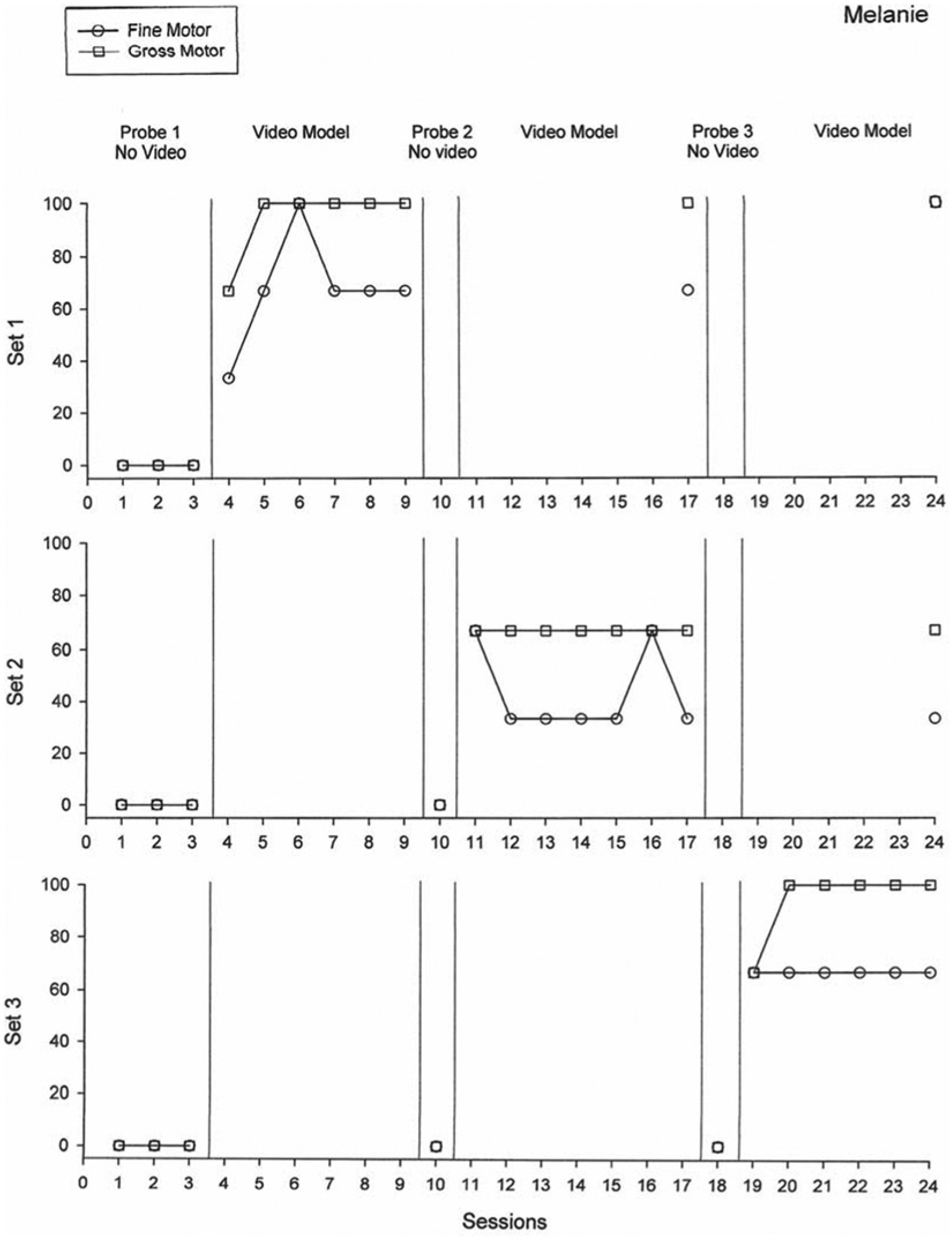
Percentage of fine motor (open circle) and gross motor (open square) tasks completed independently correct by Melanie using video models.

Percentage of fine motor (open circle) and gross motor (open square) tasks completed independently correct by Regina using video models.
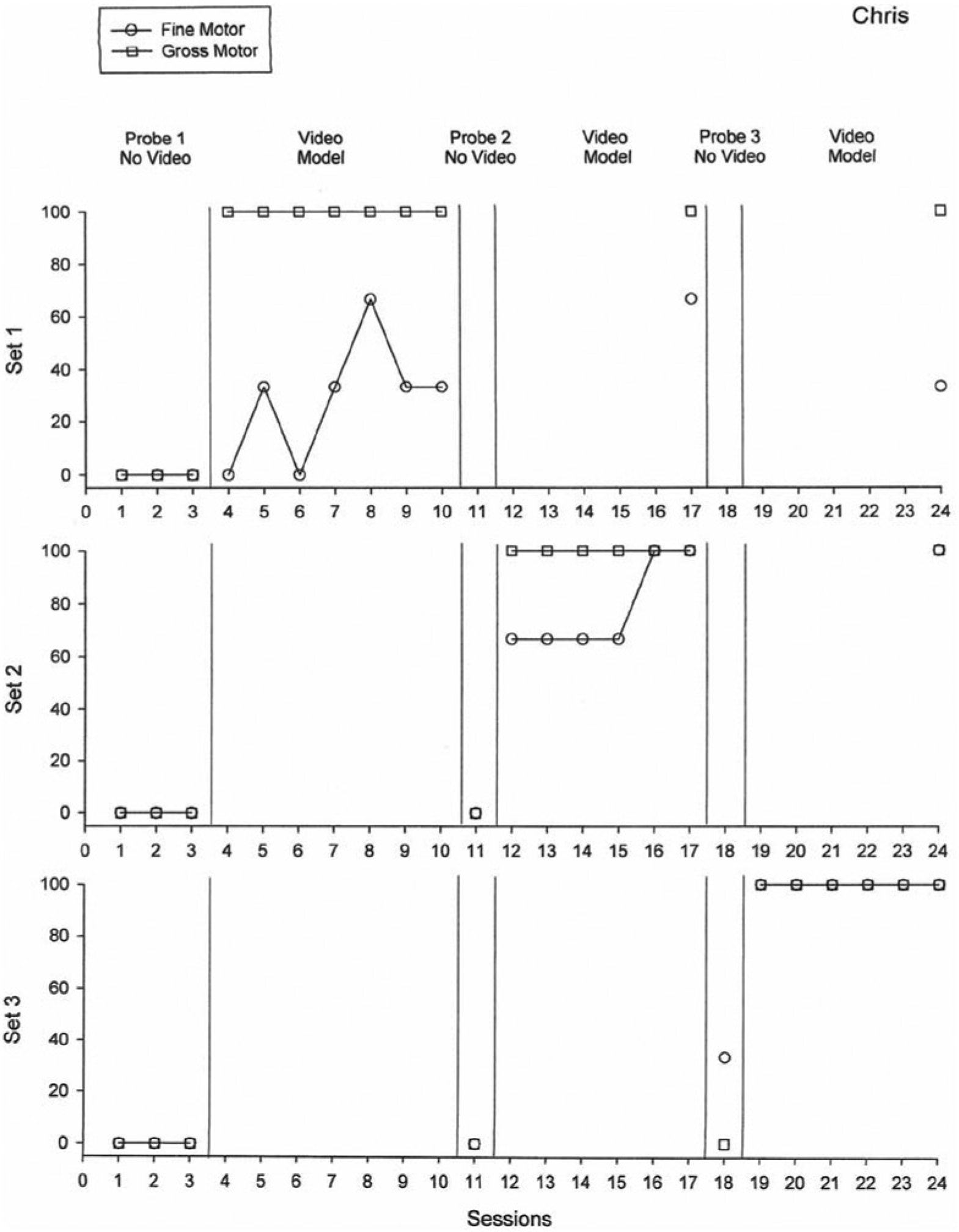
Percentage of fine motor (open circle) and gross motor (open square) tasks completed independently correct by Chris using video models.
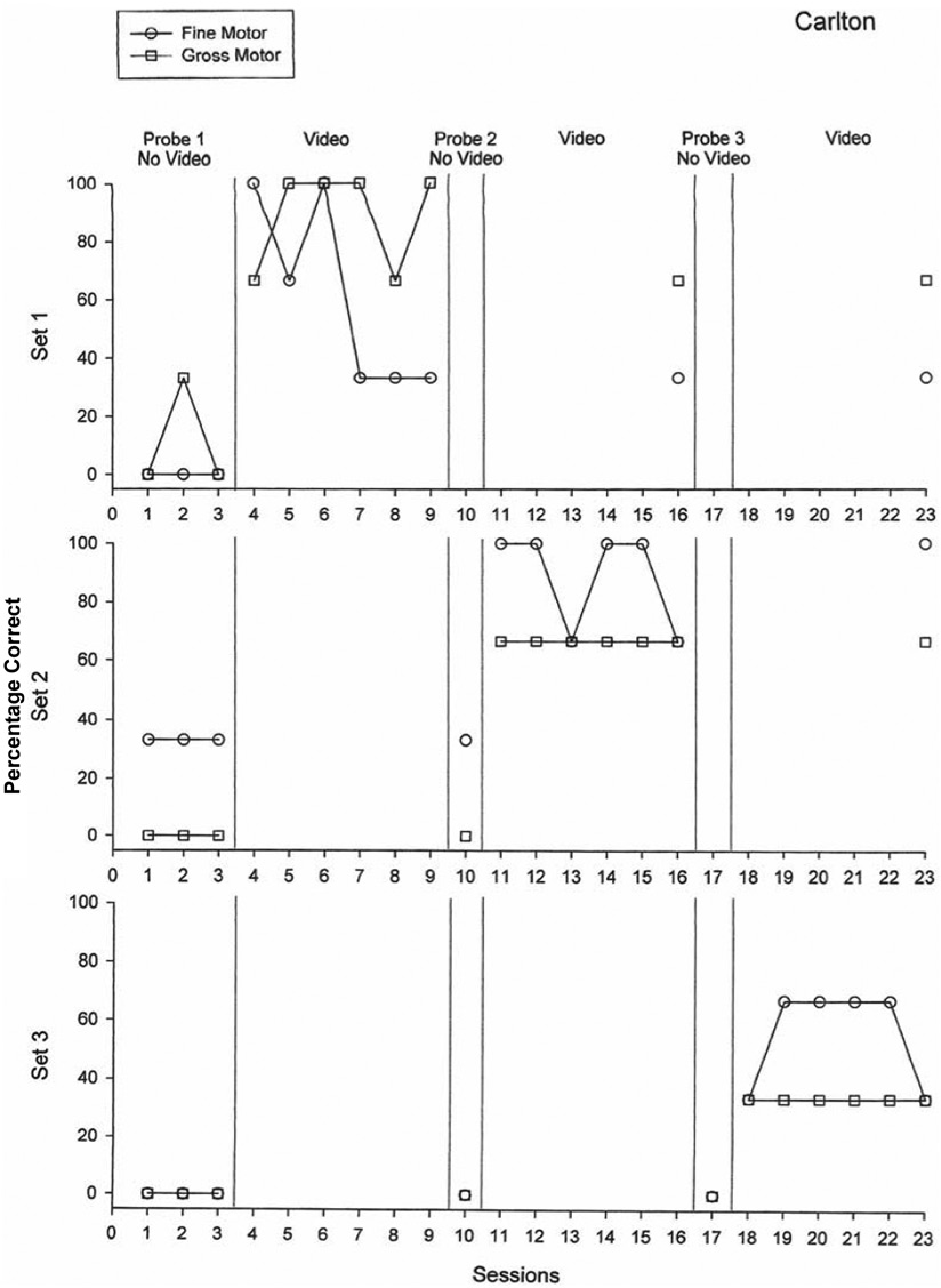
Percentage of fine motor (open circle) and gross motor (open square) tasks completed independently correct by Carlton using video models.
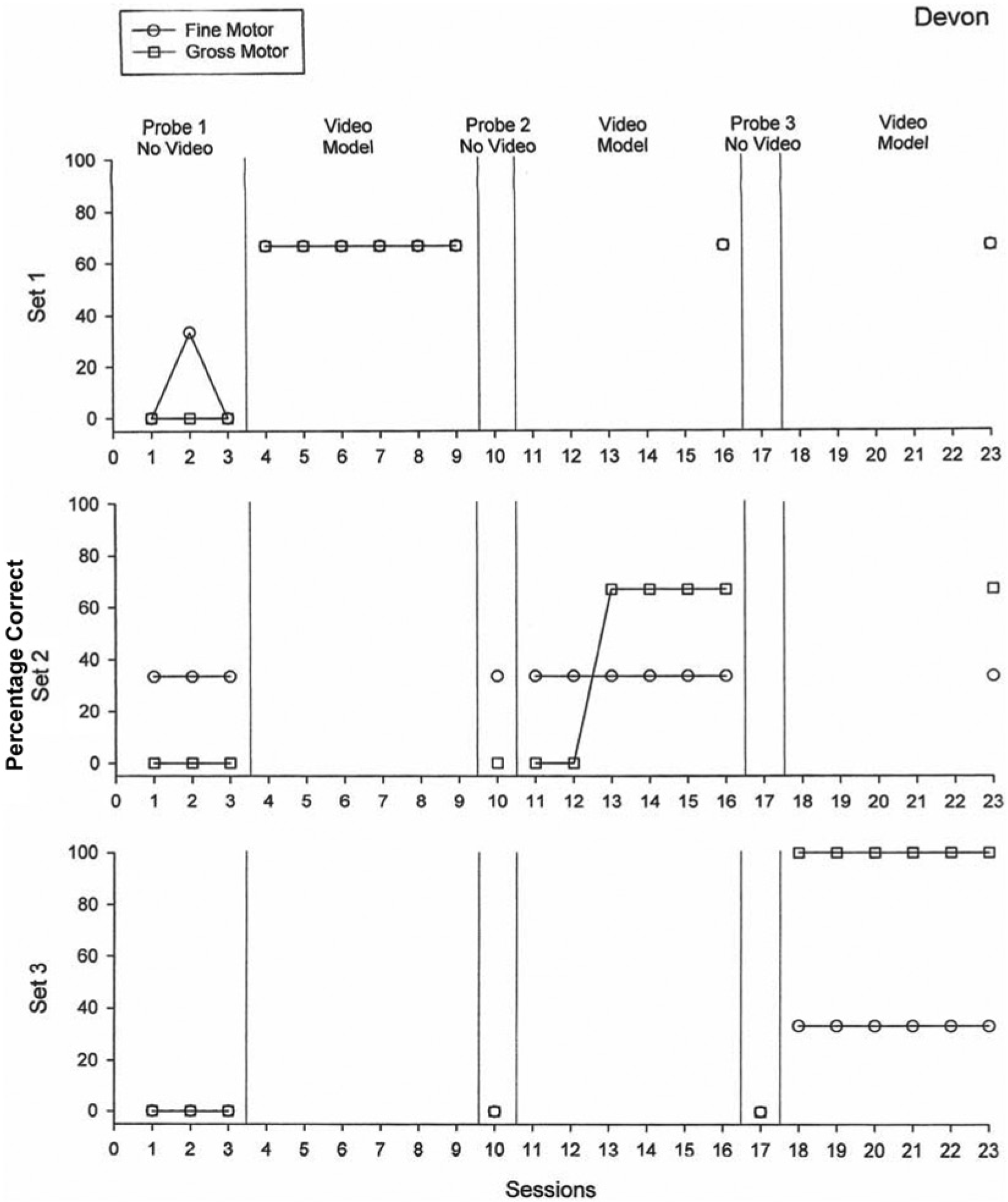
Percentage of fine motor (open circle) and gross motor (open square) tasks completed independently correct by Devon using video models.
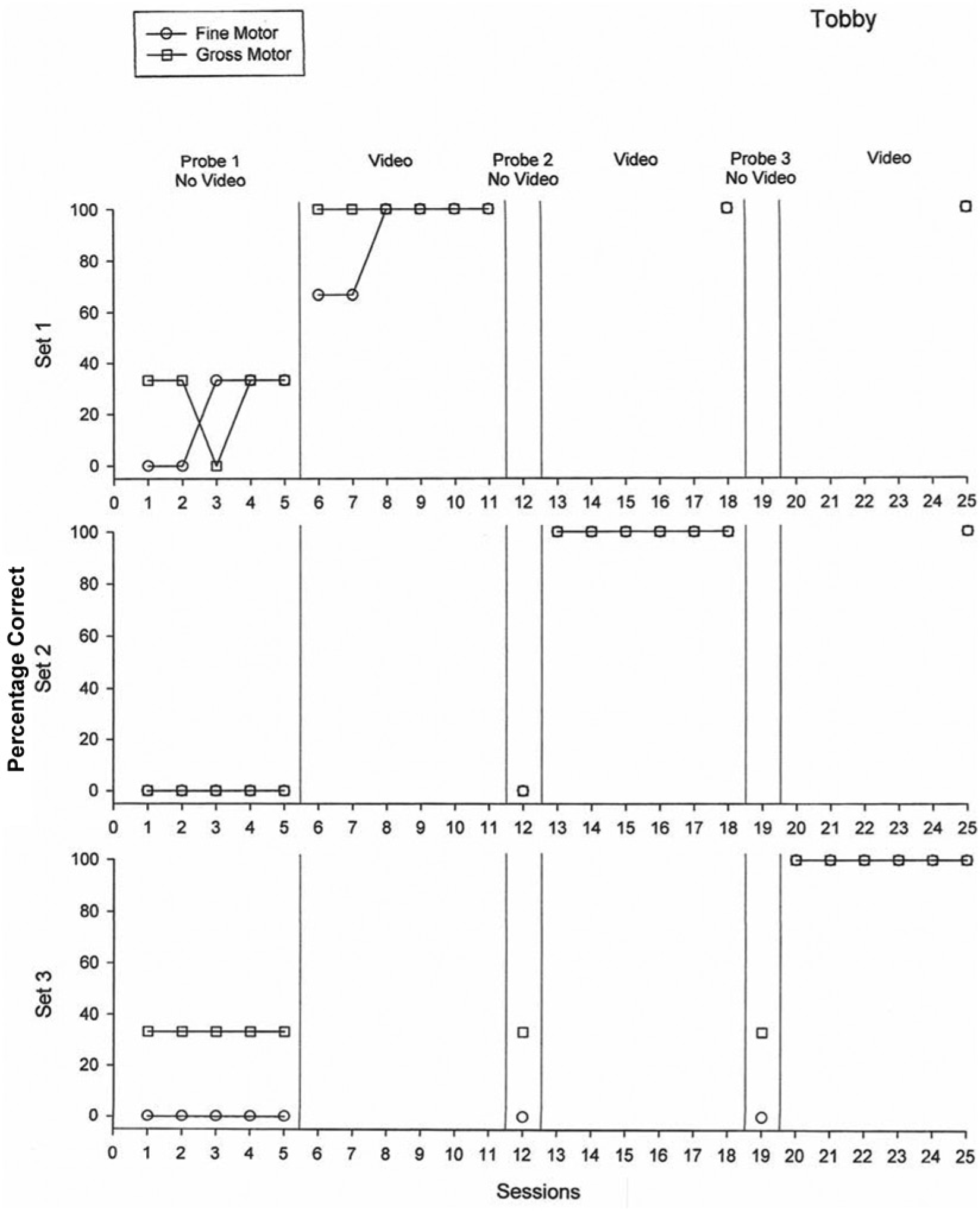
Percentage of fine motor (open circle) and gross motor (open square) tasks completed independently correct by Tobby using video models.
As a whole, students in Group 1 performed a greater percentage of gross motor tasks independently correct (M = 94.6%) than fine motor tasks (M = 71.4%; Table 3). Individual differences across tasks was most pronounced for Chris (fine motor tasks, M = 66.7%; gross motor tasks, M = 100%) followed by Melanie (fine motor task, M = 57.9%; gross motor tasks, M = 84.2%). Regina completed the gross motor tasks 100% correct across all three sets and an average of 90.7% of her fine motor tasks.
Mean Percentage of Fine and Gross Motor Tasks Performed Independently Correctly.

Note. ID, intellectual disability; ASD, autism spectrum disorders.
Similar to Group 1, as a whole, students in Group 2 performed a greater percentage of gross motor tasks independently correct (M = 77.8%) than fine motor tasks (M = 69.8%). Individual differences across tasks was most pronounced for Devon who performed fine motor tasks an average of 44.4% correct and gross motor tasks with an average of 70.4% correct. He was only able to complete one fine motor task from Sets 2 and 3. Minimal differences were found between Tobby’s performance (fine motor tasks, M = 96.3%; gross motor tasks, M = 100%), and Carlton’s performance (fine motor tasks, M = 68.5%; gross motor tasks, M = 63.0%) across tasks. Carlton was the only student from either group who completed a greater mean percentage of fine motor tasks than gross motor tasks. Chris and Carlton’s completion of fine motor tasks demonstrated variability across Set 1. Reinforcement was provided for correct responses, but each failed to maintain high levels of performance. Incorrect responses were not corrected by the instructor, so it is possible that each student thought that his performance was correct.
Social Validity
Social validity was measured using a five-question survey presented to the students’ teachers (n = 2) following analysis of the data. A 5-point Likert-type scale was used (1 = strongly disagree, 5 = strongly agree) to measure teacher perceptions of using video modeling to teach fine and gross motor skills. Results supported elementary school as an appropriate time to use video modeling (5), and teachers reported that they would use video modeling to teach fine motor skills (5) and gross motor skills (5). Teachers also felt that students enjoyed using the video modeling and that it was a motivating tool (5).
Discussion
The purpose of this study was to examine the effectiveness of video modeling to teach fine and gross motor tasks to students with MOID and students with ASD. The two most noticeable results were that overall (a) students with MOID performed better on fine and gross motor tasks than the students with ASD and (b) with the exception of Carlton, each student completed a greater number of gross motor skills independently correct than fine motor skills. All students demonstrated improvement in completing fine and gross motor tasks during video modeling sessions compared with probe conditions when no video models were used.
However, it should be noted that the use of video modeling did not produce errorless performance for the majority of the students. Across all tasks, students were able to complete 78.5% of the tasks independently correct. A possible explanation for the differences in performance across tasks may have been the cognitive challenges of the tasks. To evaluate why these differences may have occurred, an analysis of errors across tasks was performed (Table 4). It appears that the fine motor tasks, which presented distracting materials and a discrimination component (which materials to use), may have posed a greater challenge to students. The task “Turn on the Vibrating Bee” (two other toys that could be activated were present) resulted in more errors across the fine motor tasks (24.7%) whereas the task “Place Ants: Picnic Counting Box” (plastic candy present in addition to the plastic ants) resulted in 17.5% of the errors across the fine motor tasks. The possibility of some tasks presenting a greater cognitive challenge seems to be further supported by the errors on the task “Tangle” (twist a plastic tube in a precise pattern), which resulted in 18.6% of the fine motor errors compared with no errors across students on the tasks of “Stretchy String,” which was simply pulling ends of a pliable string in opposite directions, and “Pull Apart Beads.” The two gross motor tasks producing no errors across all students were “Jump Over Jump Rope” and “Balancing Balls” (placing a ball on a rod and carrying it) whereas the gross motor task of straddling the balance beam while walking (rather than walking on it) produced the greatest number of errors for gross motor tasks across the two groups (28.9%) followed by “Stand on One Foot Inside Circle” and “Wave Hopper” (put foot through ring and jump over rotating ball). Each of the two tasks resulted in 18.6% of the total gross motor errors.
Error Analysis: Percentage of Errors Across Groups for Each Fine Motor and Gross Motor Task.

While the cognitive functioning of the children in the study may have influenced their motor performance (Qu et al., 2008; Seitz et al., 2006), cognitive ability alone does not explain the differences in performance across the two groups of students. When examining the data across the two groups, the students with a diagnosis of MOID, who had lower cognitive abilities, performed better (83%) than those with a diagnosis of ASD (73.8%) across all tasks. This difference in performance was demonstrated across both types of tasks. The students with MOID performed a slightly greater percentage of fine motor tasks (M = 71.4%) than the students with a diagnosis of ASD (M = 69.8%) whereas the difference between the groups was more notable for gross motor skill performance (MOID, M = 95.6%; ASD, M = 77.8%).
Limitations
A limitation of the study, when trying to analyze the results, was the inclusion of only six students (three from each group). Caution must be taken when generalizing the performance, for example, of the three students with ASD whose characteristics may be very different from others with this same diagnosis. The small number of students also poses a limitation when trying to analyze the errors that occurred across tasks. When one student committed errors across 100% of one of the tasks (i.e., Melanie and the balance beam) it greatly influenced the overall percentage of errors for that task. The limited number of tasks per set (three fine motor and three gross motor) may have also influenced the overall percentage of correct responding per session. One error resulted in a 33.3% change in performance.
In addition to these limitations, it should be recognized that no mastery level of performance by students was included in the design of the study. Because the intent was to compare performance on fine and gross motor tasks solely based on students following a video model, no error correction or adult prompting was used. Therefore, it was determined prior to the study that students might be unable to reach a preset mastery level in response to video modeling alone. Future research should consider use of an error correction procedure to prevent students from making the same error repeatedly and to improve student performance when needed.
Directions for Future Research
The limitation of the small number of students and tasks in the current study should be considered when interpreting results of the overall performance of the two groups of students across fine and gross motor tasks. While these results suggest that students may be able to more accurately follow video models when completing gross motor tasks, and that students with a diagnosis of MOID may have completed more tasks correctly than those with a diagnosis of ASD, further studies are needed with additional students and tasks.
In addition, the evaluation and analysis of the cognitive as well as motor requirements of tasks being presented to students through video modeling should be closely examined. Students in the current study were screened for prerequisite skills needed to perform each of the fine and gross motor tasks; therefore, it is likely that the cognitive challenges of some of the tasks influenced incorrect performance.
Characteristics of groups, as well as individual students, should be further considered when evaluating the effectiveness of VBI. Melanie had the lowest IQ of all of the participants and demonstrated fine and gross motor delays. As might be expected, she completed fewer tasks correctly than the other two students with a diagnosis of MOID. Yet, she correctly completed more gross motor tasks than Carlton and Devon and more fine motor tasks than Devon, all of whom had higher levels of intelligence. Likewise, Tobby had the lowest IQ and adaptive behavior scores among the students with ASD, but overall he completed his tasks with minimal errors (98.1% correct). Characteristics, such as visual motor abilities and distractibility may contribute to task performance. In the current study, Devon demonstrated high levels of inattention to the tasks and verbal perseveration of past events. These behaviors appear to have contributed to his levels of performance.
While VBI is supported in the literature as effective interventions, more research is required to determine which tasks may be better suited for video modeling (i.e., motor and cognitive requirements), and student characteristics that may influence performance (i.e., intelligence, adaptive skills, attention span). In addition, features of video captions that promote correct task performance (i.e., zooming, voice-over, video perspective) and effective forms of video presentation (i.e., screen size, length of the video, continuous playing of the video, number of repetitions) warrant further investigation.
Footnotes
Declaration of Conflicting Interests
The author(s) declared no potential conflicts of interest with respect to the research, authorship, and/or publication of this article.
Funding
The author(s) received no financial support for the research, authorship, and/or publication of this article.