




Abstract
Paraprofessionals are increasingly being hired to support students with special needs in schools and are key implementers of behavior interventions for students. However, research is limited on how paraprofessionals perceive the management of student behavior. Using a mixed-methods design approach, the current investigation assesses paraprofessionals’ perceptions of common student behavior problems in elementary school classrooms. Results indicate coached paraprofessionals had a greater likelihood of reporting operationally defined behavior concerns than those in a control group. A qualitative constant comparative method of analysis of paraprofessionals’ behavior reports revealed themes of disruptive academic behaviors (off task, peer/verbal interactions, physical interference), aggressive behaviors (physical aggression toward people/objects, verbal aggression), noncompliance (physical/verbal refusal), and “other” behaviors (unclear/opposite or positive actions). Implications for practice and future research are discussed.
Students with disruptive behavior disorders (DBDs) exhibit inattention, hyperactivity, and difficulties with aggression and conduct (Hinshaw, 1992; Lau et al., 2018) and display disruptive behaviors including defiance, impulsivity, disruptiveness, aggression, and overactivity (Hinshaw, 1992; Reddy et al., 2009b). These challenging behaviors frequently result in students with or at risk of DBDs being referred to child study teams (DBDs; Allen, 2015) where personnel are assigned to support them through interventions. Paraprofessionals are among personnel most often tasked with providing intervention for children with DBDs (Reddy et al., 2020). DBDs including Attention Deficit Hyperactivity Disorder, Oppositional Defiant Disorder, and/or Conduct Disorder fall into the school-based diagnostic category of Emotional Disturbance (August et al., 1996; Individuals with Disabilities Education Improvement Act, 2004; Muratori et al., 2017). Although they are often called upon to provide support, little is known about paraprofessionals’ perceptions and operationalization of student behaviors. Additional research is needed in this area.
The Role of the Paraprofessional and Knowledge of Student Behavior
The hiring of paraprofessionals in special education has substantially increased over the past decade (Chopra et al., 2011; U.S. Department of Education, Institute of Education Sciences, [IES] National Center for Education Statistics, 2009). In 2016 alone, 1,308,100 paraprofessionals were employed in the United States and this number is expected to grow 8% by 2026 (U.S. Department of Education, National Center for Education Statistics, Statistics of State School Systems [2017]). Often, paraprofessionals are tasked with preparation of academic materials; implementation of behavior interventions; and provision of academic instruction at the individual-, small-, and whole-group levels (e.g., Fisher & Pleasants, 2012; Hall et al., 2010; McKenzie & Lewis, 2008; Riggs & Mueller, 2001; Sobeck et al., 2020), though the majority of paraprofessionals report spending the largest amount of time each day engaging in behavior management (Fisher & Pleasants, 2012; Sobeck et al., 2020).
Although paraprofessionals are often tasked with behavior management of students with or at risk of DBDs, professional development (PD) for paraprofessionals is often lacking. Paraprofessionals seldom receive formal PD, rather their job-specific training needs are met through in vivo support by a teacher or paraprofessional peer (Douglas et al., 2016; Giangreco & Doyle, 2002). When asked about their PD needs, paraprofessionals reported having limited knowledge and training on daily tasks related to their jobs, including behavior management (Dudek et al., 2018). Given the increased needs of students with DBDs, the lack of knowledge on behavior management by paraprofessionals can result in inadequate interventions that can exacerbate negative outcomes for students with DBDs.
Addressing Needs of Students With or At Risk of DBDs
In working with children with or at risk of DBDs, paraprofessionals are often confronted with a myriad of student challenges. Children with DBDs experience below grade level performance in all major academic subject areas, including reading, writing, and mathematics (Falk & Wehby, 2001) and are more likely to repeat a grade than their peers (Barkley et al., 2006). Outside of the classroom, children with DBDs are at an increased risk for substance abuse, suicide, interpersonal relationship problems, driving accidents, and teenage pregnancy (e.g., Barker et al., 2010; Reddy et al., 2009a).
Students with DBDs may also negatively impact the ability of teachers to deliver effective classroom instruction. A survey led by the Education Advisory Board (2019), found that 1,400 elementary school teachers reported on average losing 2.5 hr of instructional time per week due to students’ disruptive and aggressive behaviors (Walker et al., 2004). Loss of instruction in the classroom not only impacts the learning and development of students with or at risk of DBDs, but also their classroom peers. Likewise, disruptive behaviors can negatively affect the functioning of school personnel such as poor physical and mental health, job retention, and perceived school safety (Burke et al., 2008; Reddy et al., 2018). The implementation of less-effective classroom management practices is particularly problematic in under-resourced schools that have 3 times the rate of student externalizing behaviors than resourced schools (Humphrey & Root, 2017). Furthermore, when student needs are not addressed, these students are more likely to drop out of school and subsequently are at risk of unemployment, incarceration, and health problems (Janosz et al., 2000; Schutter et al., 2011; Webster-Stratton & Reid, 2010). Without proper intervention for students with disruptive behaviors, all members of the classroom community may be negatively impacted.
Perceptions About Students With Disruptive Behaviors
Students with or at risk of DBDs, particularly students displaying high rates of externalizing behaviors, can negatively impact the student–teacher relationship. Fowler et al. (2008) found that poor student–teacher relationships have been linked to lower academic ratings. Teachers also report moderate levels of confidence in classroom management, reporting that students with disruptive behaviors (i.e., aggression, defiance) are challenging. As a result, classroom teachers implement inadequate or inconsistent behavior management strategies that may lead to increased student disruption, negative teacher–student interactions, and teacher assigning negative attributions to student behaviors (Butler & Monda-Amaya, 2016). When considering the importance of bolstering the learning environment for all students, it is key to consider paraprofessional and teacher use of behavior management practices and perceptions of student behavior.
Purpose of Study
Understanding paraprofessionals’ perceptions about behaviors of students is important for determining how to train and support paraprofessionals in meeting the behavior needs of the students they serve. However, there is little to no research highlighting the paraprofessionals’ perceptions about the behaviors of students with challenging behaviors including those with DBDs. This study examined paraprofessional conceptualizations of student behavior concerns and if concerns differ between paraprofessionals who received job-specific behavior management training and those who have not, as part of an IES-funded coaching study (Reddy & Glover, 2017). Research questions addressed include: (a) What student behavior concerns do paraprofessionals report in elementary schools for students with or at risk of DBDs? and (b) Do the behaviors of concern for students with or at risk of DBDs reported by paraprofessional receiving behavior coaching differ from those not receiving behavior coaching? The authors hypothesized that paraprofessionals receiving job-embedded coaching would have an increased likelihood of logging student behavior concerns that are operationally defined and more suited for behavior interventions and supports than those who are not receiving support.
Method
Participants
This sample is part of a larger randomized control trial (RCT; funded by IES) measuring the efficacy of a job-embedded coaching model for paraprofessionals. Participants consisted of 86 paraprofessionals in 36 schools in urban and suburban communities in the Northeast area of the United States. All paraprofessionals worked in kindergarten–fifth grade classrooms supporting students with or at risk of DBDs. The sample represented a diverse set of individuals, including 81 females and 5 males, reporting mixed ethnicity and races including; African American (n = 29; 34%), Asian or Pacific Islander (n = 4; 5%), Hispanic or Latinx (n = 21; 24%), White/Caucasian (n = 25; 29%), and Other/not reported (n = 7; 8%). The mean participant age was 44 with a range of 23–69 years, with participants of varying educational levels including high-school degree (n = 19; 22.1%); some college (n = 33; 38.4%); Associate’s degree (n = 9; 10.5%); Bachelor’s degree (n = 19; 22.1%); Masters’ or graduate degree (n = 1; 1.2%); and not reported (n = 5; 5.8%). Participants reported varying years of experience with 14% (n = 12) reporting 0–2 years’ experience, 27.9% (n = 24) reporting two to five years’ experience, 11.6% (n = 10) reporting 5–10 years’ experience, and 46.5% (n = 40) reporting more than 10 years of experience.
The schools represented in this article represent a subset of the RCT, with participants from cohort one and two of a four-cohort study. Of the 36 schools, 67% served a student population of economically disadvantaged students (i.e., 50% or more of students receiving free and reduced lunch) as defined by the Richard B. Russell National School Lunch Act (1946) and other poverty measures under Title 1, Part A of Elementary and Secondary Education Act (2001; see 113 [a][5]; 20 U.S.C. 6313 [a][5]) that were used to set requirements for the tax increment financing (TIF) Program (1946).
Measures
A modified version of the Behavior Observation of Students in Schools (BOSS; Shapiro, 1996) was used to guide the qualitative data analysis for the current study. The behavioral categories included in the modified BOSS were used as an initial coding scheme to categorize behavior occurrences per student. Behavior logs were selected to address the research questions as a self-report measure to highlight the paraprofessionals’ perception of student behaviors on a daily basis. Paraprofessionals were encouraged to complete the logs for every behavioral occurrence during the study. The behavior logs were collected across both conditions at multiple time points.
BOSS
Systematic observations were collected using a modified version of the BOSS (Shapiro, 1996; Sheridan et al., 2012), which measures student classroom behavior. Previous use of the BOSS found high levels of inter-rater agreement (κ = .93–.98; DuPaul et al., 2004) and it is widely accepted as a useful measure to systematically observe student classroom behaviors (Volpe et al., 2005). The modified BOSS behavioral codes used for this study included academic engaged time (active engagement and passive engagement) and student disruptive behaviors, including inappropriate physical, inappropriate verbal, noncompliance, and disruptive academic (passive off-task). Observers were trained to proficiency by an expert in the modified BOSS. Interobserver agreement was consistently above 85%. Agreement above 85% is considered adequate, and consistent with research using the unmodified BOSS (DuPaul et al., 2004; Volpe et al., 2005).
Paraprofessional behavior logs
Behavior logs were designed to assess paraprofessionals’ perceptions of student behavior concerns in elementary classrooms. Paraprofessionals were asked to log student behavior concerns across several weeks of school. Logs included an open-ended response option for paraprofessionals to report unique behaviors of concern per student.
Procedures
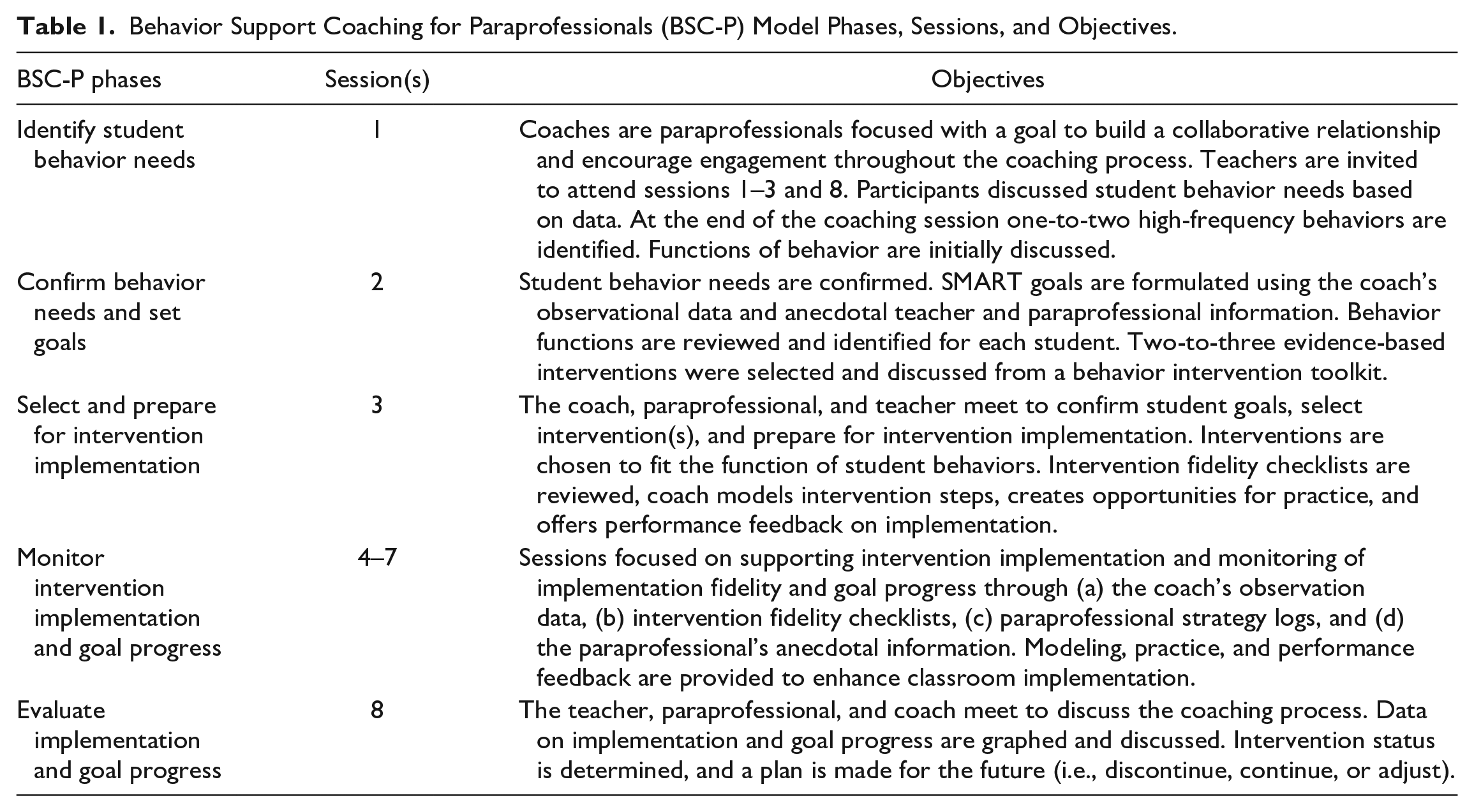
Schools included in this study are part of an IES-funded RCT that evaluated the efficacy of a job-embedded behavior coaching model for paraprofessionals. Once recruited, paraprofessionals met with research staff for informed consent which was approved by the university Institutional Review Board. Participants agreed to take part in the study, which included completing the behavior logs. Schools were randomly assigned to condition at the school level. Participants assigned to the wait-list control condition were encouraged to conduct business as usual with respect to identifying and addressing the behaviors of students with DBDs. Paraprofessionals assigned to the coaching condition attended a 5-hr PD workshop on foundations of behavior, importance of using data to identify functions of behaviors and evidence-based classroom wide interventions. Following the workshop, these paraprofessionals participated in eight 45-min coaching sessions (see Table 1, Reddy & Glover, 2017). Paraprofessionals in both conditions were asked to complete a minimum of 10 logs. For participants in the coaching condition, this began as they were introduced to behavioral intervention planning. Control participants were asked to complete the logs at the same point in time. All participants were encouraged to complete as many logs as possible based on their students’ behaviors. Logs were completed throughout the length of the study.
Behavior Support Coaching for Paraprofessionals (BSC-P) Model Phases, Sessions, and Objectives.
Data analytic approach
Data were analyzed using a mixed-methods design approach. Qualitative analysis included the use of the constant comparative method (Glaser & Strauss, 1967) and multiphase coding procedures rooted in grounded theory. For quantitative analyses, descriptive and inferential analyses were used to answer the second research question regarding the differences in reported behaviors of concern between paraprofessionals who received job-embedded coaching and those that did not receive coaching (wait-list controls). Frequency counts were completed to further understand the break-down of behavior log data completed across all paraprofessionals and logged responses. Fisher’s Exact Test was used to compare reported behavior concerns between conditions. See Table 2 for coding phases.
Coding Phases.
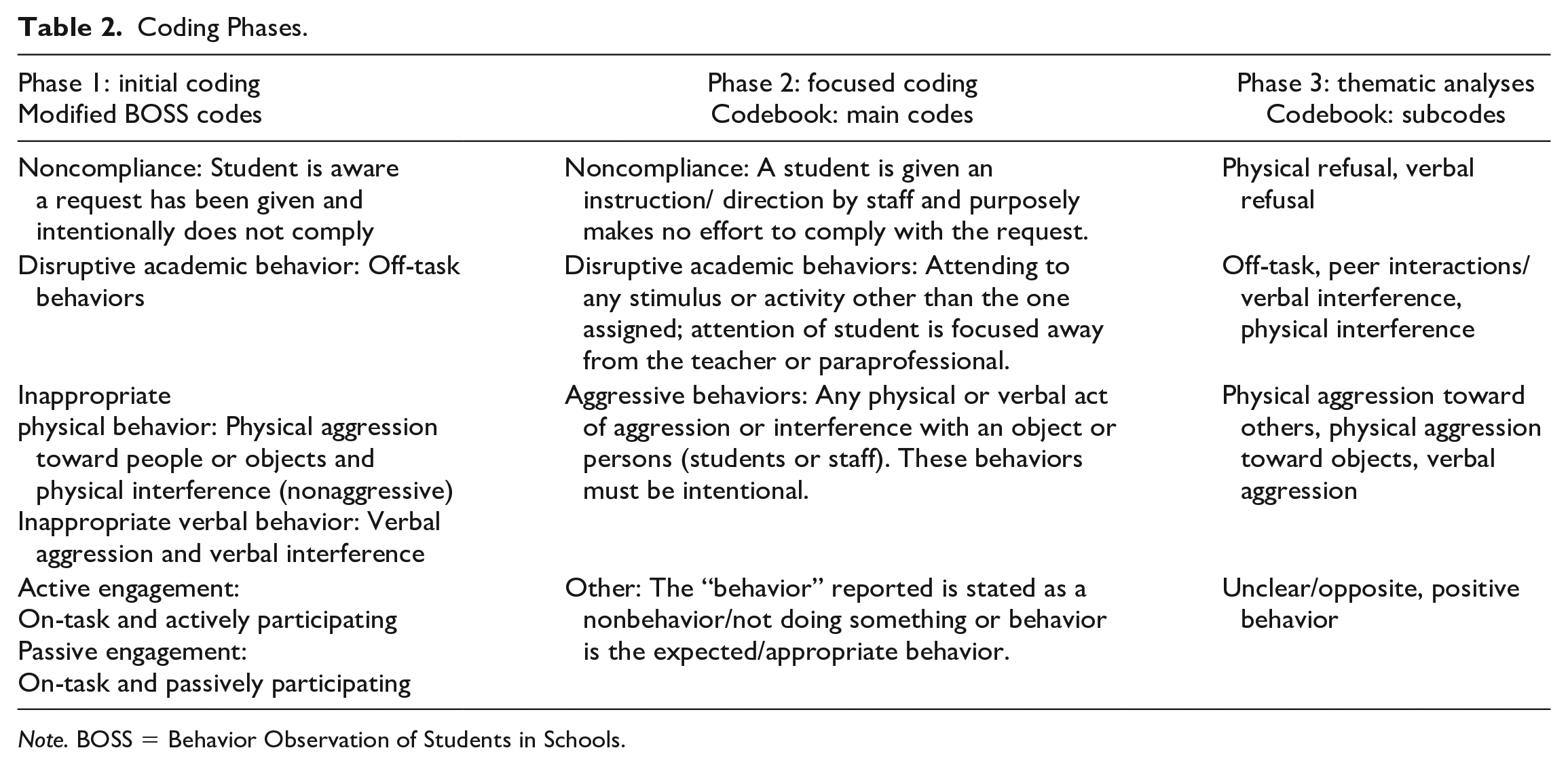
Note. BOSS = Behavior Observation of Students in Schools.
Phase 1: Initial coding
Initial coding consisted of matching the reported behavior concerns to categories used in the modified BOSS observation tool to align paraprofessional responses. The BOSS observational tool has previously been modified in large coaching RCTs for this student population (Sheridan et al., 2012). The modified BOSS categories included noncompliance, disruptive academic behaviors, inappropriate physical behavior, inappropriate verbal behavior, and active/ passive engagement. Given the broad terms used in the BOSS as an observational measure, the generalization of these terms did not allow for further exploration for coding. The modified BOSS terms do not require behaviors to be reported in behavior analytic terms (i.e., measurable and objective), therefore, this leaves for subjectivity in coding.
Phase 2: Focused coding
As a result of the initial coding, the researchers conducted a second round of coding due to the misalignment of logged responses by paraprofessional to the BOSS categories. Data collected from the paraprofessional logs were then coded using an open and axial coding system, through the use of the constant comparative method of analysis (Glaser & Strauss, 1967). The constant comparative method consists of four stages of coding, including: (a) codes, (b) concepts, (c) categories, and (d) theory. The authors of this study followed the above stages by first creating a codebook based on an initial screening of the data using axial coding (Glaser & Strauss, 1967).
Phase 3: Thematic analyses
Four themes emerged from the data and were used to create the codebook. Once the initial codebook was created, two independent coders reviewed and coded a subset of the data. Next, the coders compiled all data and created subcodes based on the initial codebook. The completed codebook consisted of four main codes and eight subcodes. The codebook was used throughout the coding process and included examples of each.
Codes included noncompliance (e.g., putting head down, refused to get up from chair, refused to put on shoes, refused to pick up item, said “I’m not doing it”), disruptive academics (e.g., calling out, playing with objects, running out of classroom, making noises, talking, getting out of seat, looking around the room, crying, laying on floor, singing out loud), aggressive behaviors (e.g., fighting, cursing, yelling, throwing objects, pushing another student, self-harm, punching, slapping, spitting, kicking), and “other” which included nonbehaviors and/or positive behaviors (e.g., does not stay in his seat, disrespectful, not paying attention, acting out, upset, defiance, avoids work, keeping hands to self, rude, anger, not working, shutting down, sitting properly, had a good day, staying on task).
Twenty percent of the data were coded by both coders, yielding adequate inter-rater reliability (r = .88). Consensus coding was used for any discrepancies between the coders. Consensus coding was completed by coders meeting to discuss the discrepant codes and mutually agree on a code selection, after reviewing the code definition and examples.
Results
Research Question 1: Paraprofessional-Reported Behavior Concerns
Qualitative analysis Phase 1
Research Question 1 aimed to identify the perceived behavior concerns of students with DBDs reported by paraprofessionals in elementary school. To quantify the reported behavior concerns, frequency counts were created based on the initial coding using the modified BOSS coding scheme. Behaviors coded were aligned to the modified BOSS categories and each behavior listed was assigned a code. Approximately 1,170 reported behavior concerns were reported. The most frequently reported behavior by paraprofessionals was inappropriate physical behavior consisting of 432 (37%) reported behaviors, followed by inappropriate verbal behavior with 361 reported behaviors (31%). Paraprofessionals also reported 204 instances of noncompliant behaviors (17%) and 116 disruptive academic behavior occurrences (10%). The initial coded data were used as a preliminary finding to then create a codebook based on themes that emerged. Based on the initial data analysis it was noted that many of the behavior concerns did not fit in the modified BOSS categories.
Qualitative analysis Phase 2
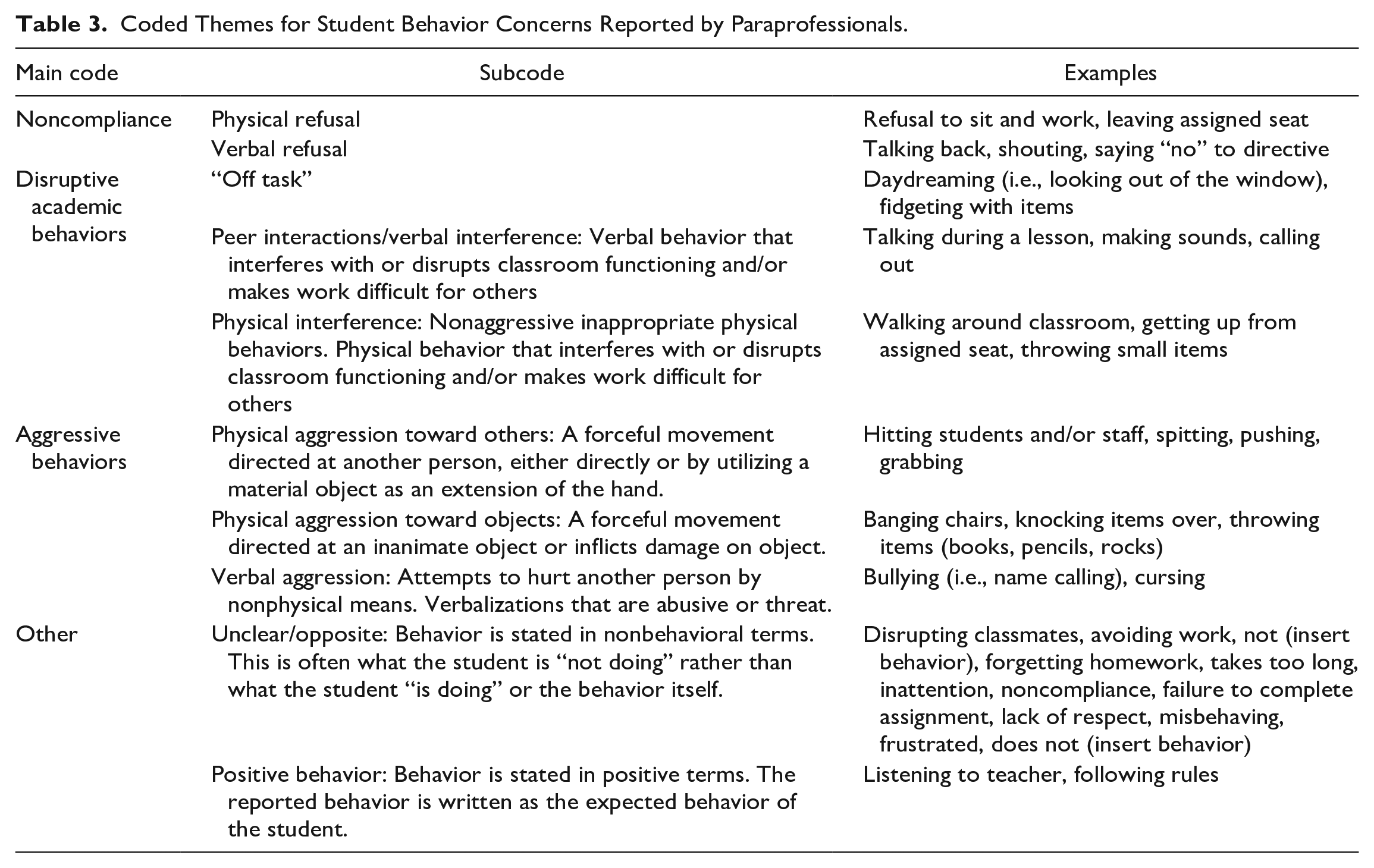
A second round of data analysis was completed to develop the codebook (see Table 3). Two rounds of coding and descriptive analysis of reported behaviors found several themes. The most commonly reported student behavior concerns by paraprofessionals were disruptive academic behaviors (35%), followed by aggression (17%), and noncompliance (5%). Through the coding process, it was found that 43% of behaviors reported were “nonbehaviors” which is defined as a nonbehavior/not doing something, such as “not following directions,” “not attending,” “unfocused,” “lack of focus,” “not participating.” Some reported behaviors that were coded as “other” also included desired behavior rather than student behavior concerns, such as “behaved well,” “did good work,” “followed directions,” and “focused.”
Coded Themes for Student Behavior Concerns Reported by Paraprofessionals.
Qualitative analysis Phase 3
Disruptive academic behaviors
Disruptive academic behaviors were defined as attending to any stimulus or activity other than the one assigned or not directing focus toward instruction. Three types of disruptive academic behaviors were included in the analysis: (a) off-task—daydreaming, fidgeting with items; (b) peer interactions/verbal interference—verbal behavior that interferes with or disrupts classroom functioning and/or makes it difficult for others to perform their work such as talking during a lesson, making sounds and noises, calling out; and (c) physical interference—nonaggressive inappropriate physical behaviors. Physical behavior was defined as a behavior that interferes with or disrupts classroom functioning and/or makes it difficult for others to perform their work such as walking around the classroom, getting up from an assigned seat or throwing small items.
Disruptive academic behaviors were the most commonly reported student behavior of concern (224) among paraprofessionals. Traditionally, using the modified BOSS assessment measure, behaviors were coded as off-task, which may leave subjective interpretation of the behavior. This study included the term “off task,” but also included peer interactions/verbal interference and physical interference. Off-task behaviors reported by paraprofessionals included “fidgeting with hands,” “fidgeting with small things like paper clips,” “off task,” and “playing with a fidget toy.” Peer interactions/verbal interference was also a common behavior reported by paraprofessionals. Examples include “talking and yelling out,” “talking out of turn,” “whistling,” “making noises,” “making sounds,” and “calling out.” Physical interference included behaviors such as “running around the classroom,” “walked out of class,” “hiding under tables,” “moving in seat,” “out of seat,” “walking around classroom,” and “crawling across the room.”
Aggressive behaviors
Aggressive student behaviors were defined as any physical or verbal act of aggression or interference with an object or persons (students or staff). These behaviors had to be intentional. Three subcategories of aggressive behaviors emerged including (a) physical aggression toward others—a forceful movement directed at another person, either directly or by utilizing a material object as an extension of the hand; (b) physical aggression toward objects—a forceful movement directed at an inanimate object or inflicts physical damage on an object; and (c) verbal aggression—attempts to hurt another person by nonphysical means including verbalizations that are abusive or a threat. Paraprofessionals reported a total of 107 aggressive behaviors with behaviors meeting one of the three subcategories. Physical aggression toward others was reported throughout the behavior strategy logs with examples including “hit another student,” “hit teacher,” “kicking,” “spit at teacher,” and “pushing.” Using physical aggression toward objects was frequently reported by paraprofessionals. For example, “throwing pencils,” “ripped paper,” “threw books across the classroom,” “slamming laptop,” “kicked chair over,” and “throwing items.” Finally, verbal aggression was also commonly reported by paraprofessionals as an inappropriate behavior. Examples of verbal aggressive behaviors include “bullying peers,” “calling peers names,” “wishing people were dead,” “verbally threatening to harm peers and teachers,” “yelling curse words,” and “inappropriate language.”
Noncompliance
Noncompliance was defined as a student purposely making no effort to comply with the request when given an instruction/direction by staff. Two types of noncompliance were included in the analysis: (a) physical refusal—refusal to sit and work, leaving their assigned seat, dropping to the floor; and (b) verbal refusal—talking back, shouting, saying “no” when given a directive. This theme emerged in the coding and was reported as an inappropriate or maladaptive behavior by paraprofessionals. Often, the word refusal was used in the reported behavior on the strategy log. Paraprofessionals frequently stated that the student refused to do an assigned task, for example, “refused to do the classwork,” “refused to complete writing assignment,” “noncompliance, would not do his math work,” “was asked numerous times to sit down but refused,” “refused to move,” “refusal to sit and work,” “defiance, refusal to do work,” “refusal to speak,” or “putting head down and refusing to do work.” Although the reported behaviors did not always include the behavior in which the student was engaged, the paraprofessional reports were clear in stating the child refused a directive.
Other
This category was defined as a student “behavior” of concern reported as a nonbehavior/not doing something or as the expected/ appropriate behavior. The other category had the largest count in the paraprofessional strategy logs (281). The two subthemes (a) unclear/opposite and (b) positive behavior emerged through the coding process as the behaviors were analyzed and themes and codes were created. Unclear and/or opposite behavior was defined as an action stated in nonbehavioral terms. Some examples include “not paying attention,” “not listening,” “not trying,” “disrespectful,” or “doesn’t understand.” Positive behavior was defined as a behavior stated in positive terms, with paraprofessionals often providing a narrative of expected behaviors the student complied with (i.e., “student listened” or “student tried to behave”).
Research Question 2: Reported Behavior Concerns by Coaching Versus Control Conditions
Research Question 2 examined the differences in reported behaviors of paraprofessionals receiving behavior coaching from those who did not receiving behavior coaching. Descriptive results revealed a minimum of one and maximum of 25 log entries completed by paraprofessionals (M = 10.2). It was hypothesized that paraprofessionals who received coaching would have an increased likelihood of logging student behavior concerns that are operationally defined and more suited for behavior interventions and supports than controls. Results indicate coached paraprofessionals had a greater likelihood of reporting operationally defined behavior concerns than controls (odds ratio = 8.41, p = .035).
Discussion
The present investigation examined elementary school paraprofessionals’ identification and conceptualization of student behavior concerns in classrooms. The ability to identify and report challenging behaviors in observable terms is imperative for all school staff members, and it allows for proper identification of behaviors and appropriate intervention. A mixed-method design study was conducted to identify the behavior concerns reported by paraprofessionals for students they serve with challenging behaviors. Findings indicated that paraprofessionals receiving job-embedded coaching were more likely to identify behaviors using observable terms. Results of this study suggest that job-embedded behavior support coaching focused on the identification and reporting of behaviors for students with disruptive behaviors may increase the knowledge of observable and measurable behaviors reported by paraprofessionals. As their knowledge of behavioral terms develops, paraprofessionals may be able to better select and implement behavior interventions and supports that meet student needs.
Several important findings transpired in this study, including emerging themes of reported challenging behaviors from the perspective of paraprofessionals. The main themes noncompliance, disruptive academic, aggressive behaviors, and nonbehaviors/positive behaviors were used to guide the coding process and develop subthemes. Although the logs were initially intended to track student behavior, it was found that many paraprofessionals observe and report student behaviors in nonbehavioral terms. “Other” behaviors were the most commonly reported on behavior logs (281 reported), with two subthemes emerging (a) unclear/opposite behaviors and (b) positive behavior. This finding is especially noteworthy and supports the need for ongoing job-embedded coaching and PD training for paraprofessionals.
Although “other” behaviors (i.e., nonbehaviors and positive behaviors) were the most commonly reported in the paraprofessional strategy logs, it was noted that paraprofessionals in the coaching condition had higher odds of reporting behaviors in operationally defined terms (odds ratio = 8.415, p = .0355). Overall, paraprofessionals who were coached reported a total of 107 aggressive behaviors, 34 noncompliant behaviors, and 224 disruptive academic behaviors, totaling 664 unique behaviors.
Several other themes emerged including, disruptive academic behaviors (224 reported) with three subthemes: (a) off-task, (b) peer interactions/verbal interference, and (c) physical interference. Aggressive behaviors (107 reported) were also frequently reported with three subthemes emerging, (a) physical aggression toward others, (b) physical aggression toward objects, and (c) verbal aggression. Noncompliance (34 reported) was the least commonly reported behaviors with two subthemes: (a) physical refusal and (b) verbal refusal.
Defining student behavior is critical for school-based staff to adequately address the needs of students and appropriately plan instruction. Given the importance of operationalizing possible behaviors of concern for intervention in classroom settings, it is essential to explore how paraprofessionals conceptualize and identify student behavior needs that warrant support. This study found that paraprofessional often reported behaviors in “nonbehavioral” terms, reflecting in many cases what students were not doing. Using “nonbehavioral” terms is common in classroom-based settings, specifically when staff receive limited training on behavior principles. By definition, behavior is something that a person does that can be observed, measured, and repeated (Cooper et al., 2007). Ideally, behavior logs would be written in terms of what the student is doing, rather than what they are not doing. By stating the behaviors of concerns in this manner, it would allow appropriate instructional planning.
Noncompliance was the least reported due to this nonbehavior category. Many of the nonbehaviors reported, could be considered noncompliant, but given the language of the reported behavior of concern, it did not meet the definition of a noncompliant behavior. Noncompliant behaviors can be subjective to the observer and are often reported in nonbehavioral terms. Paraprofessionals often used the term “refused” in the reported behavior.
Implications for Practice
Paraprofessionals are often tasked with providing behavior support for school-aged students (Reddy et al., 2020; Sobeck et al., 2016). Results from the present study suggest that paraprofessionals are often able to identify a students’ inappropriate behavior, but, at times, struggle with operational definitions of behavior. Individuals trained in behavior management may have a better understanding of behavioral principles and define behaviors in observable terms. In the current study, nonbehaviors were reported by paraprofessionals in 43% of the behavior logs. Given the frequency of nonbehaviors reported, it is likely that paraprofessionals may not have a clear understanding of the operational definition of behaviors and warrants increased access to ongoing PD and support.
Reported nonbehaviors included opposite behaviors, or what the student is not doing from the view of the paraprofessional. One of the most common opposite behaviors, “not paying attention,” describes what the paraprofessional would have liked to see the student doing—paying attention—instead of the behavior that occurred. With paraprofessionals tasked with addressing student behavior, they are also often in charge of completing behavior tracking forms for school personnel. However, when paraprofessionals do not report the behavior that is seen, instead opting to state the opposite behavior, creating a behavior intervention plan (BIP) is difficult. BIPs address the antecedents and consequences of a target behavior to reduce the chance of behavior occurrences. Without proper identification of the behavior, behavior specialists are unable to accurately create an intervention plan. To assist the behavior specialist, paraprofessionals need behavior management training.
Paraprofessionals receiving job-embedded coaching were more likely to report a specific, observable student behavior of concern than paraprofessionals in the control condition. When coaches support paraprofessionals’ use of behavior-specific definitions and opportunities to practice operationalizing behavior, paraprofessionals may be more likely to understand the difference between behavior that is seen, and antecedents and consequences of behavior. Thus, findings suggest that job-embedded coaching targeting behavior management may provide paraprofessionals with the support and training that they need to appropriately operationalize student behaviors of concern in preparation for intervention.
Research is limited on the efficacy of behavior support coaching with paraprofessionals (Reddy et al., 2020). Preliminary results from the larger coaching RCT using Behavior Support Coaching for Paraprofessionals (BSC-P) revealed promising results of students of coached paraprofessionals yielded greater improvements in engagement (d = . 67), adaptive skills (d = .48), social skills (d = .39), and academic competence (d = .32) than controls. In comparison with controls, students of coached paraprofessionals exhibited greater reductions in inappropriate physical and verbal behaviors (d = .42–.66) and school problems (d = .29). Results from the present study provide additional support for the use of behavioral coaching to increase paraprofessional’s skills to identify and operationally define student behaviors concerns in elementary school classrooms.
Limitations
The present study has several limitations. First, the generalizability of the findings is limited to the sample of paraprofessionals that volunteered for the study who worked with specific students with DBDs in elementary schools. Second, findings of how paraprofessionals conceptualize and identify behavior concerns in this study may not apply to other students eligible for special education services and represent other disabilities in schools. Third, the participating paraprofessionals had more than 10 years of experience in schools, thus may not be representative of paraprofessionals employed in other districts, regions, and states.
Directions for Future Research
The present study offers directions for research. First, studies examining changes in paraprofessionals’ perceptions of student behaviors prior to and after behavior coaching would be beneficial. Second, investigations that assess common behavior strategy use for these vital staff would be beneficial. Third, research that examines supervisors of paraprofessionals (e.g., classroom teachers) and paraprofessionals PD needs in elementary, middle and high schools are limited. In addition, the quality of paraprofessional and teacher relationships, and the influence of these relationships on behavior practices and student behavior are understudied.
Conclusion
Paraprofessionals are important members of all schools and classrooms across the nation, tasked with the behavior management of students with challenging behaviors, with little to no training. It is important for paraprofessionals to be able to appropriately conceptualize and identify student behavior concerns in a manner that is appropriate for intervention. To best support students with disruptive behaviors, it is imperative to provide training and support to paraprofessionals. Given limited research highlighting the needs of training for paraprofessionals, specifically for those supporting students with DBDs, this study contributes to a needed field of research. It also advances an understanding of perceptions of student behaviors in elementary school settings. Findings from this study highlight the varying degrees of paraprofessional knowledge and perception of behaviors for students with DBDs. This study suggests that receipt of coaching supports may be instrumental in promoting effective conceptualization of behavioral targets for student intervention. Findings highlight the importance of paraprofessionals receiving ongoing training in the classroom to enhance their knowledge of student behaviors and supports to meet their student needs.
Footnotes
Declaration of Conflicting Interests
The author(s) declared no potential conflicts of interest with respect to the research, authorship, and/or publication of this article.
Funding
The author(s) disclosed receipt of the following financial support for the research, authorship, and/or publication of this article: The research reported here was supported by the Institute of Education Sciences to Rutgers University (R324A170069, Reddy & Glover). The opinions expressed are those of the authors and do not represent views of the IES.
