




Abstract
Using contemporary journalism and archival material, this article is concerned with the construction of the Canton–Hankow (Hankou) Railway, a strategically important route and a product of international competition and influence. It argues that the line's construction between 1898 and 1937 witnessed a transition from speculative to bilateral investment, the latter comprising Britain's share of the Boxer Indemnity fund. It details China's keenness for the fund to be directed towards completing the railway and proposes that the opportunity to reduce the overcapacity of British manufacturing industries in a depressed market through exports has parallels in contemporary China's international railway construction projects.
Introduction
The modern Chinese railway network's scale, scope and ambition have captured global attention. At the end of 2015, the country boasted 60 per cent of the world's high-speed railway mileage. 1 Indeed, the development of China's railways has been rapid since the implementation of the Eighth Five-Year Plan between 1991 and 1995 to establish the conditions for sustaining economic growth; by 2001, 28,012 km of track had been laid. 2 Development focused upon improving service quality after decades of shifting government priorities, and provided the foundation for China's subsequent high-speed revolution, which has since become a totem for “national rejuvenation” under Xi Jinping. That the railways have become embedded within Chinese national consciousness is nothing new; indeed, the technology may be considered a useful barometer of political and social, as much as economic progress. Over the course of the twentieth century, the Chinese railway network has gradually been extended, drawing geographically disparate territories together, and helping to generate the idea of modern China. The scale and scope of railway development have also had an impact upon global industries supplying the raw materials required for construction.
The expansion of China's railways reflects a wider construction boom, itself generated by the improvements in local and national connectivity, thus, for the time being, creating something akin to a self-perpetuating cycle of development. Thomas Campanella's account of urbanisation in China notes that the resources absorbed by the construction boom had included nearly half of the world's steel and concrete output by 2008. 3 Equally, China has internalised the training of expertise, evidenced by the fact that 80 specialist railway colleges provided courses in civil, mechanical and electrical engineering in 1996. 4 The net result is not only the ability to field ample Chinese expertise for domestic railway projects, but also to extend China's sphere of diplomatic and economic influence in a global market as part of its “Belt and Road” trade initiative. Overseas railway construction has been key to China's ability to exert diplomatic influence abroad through bilateral agreements and investment; also, it has provided a sink for China's economic overcapacity across various industrial sectors, including manufacturers of railway materials and equipment. 5
China's interest in railway diplomacy bears some similarities with that practiced by the Western powers over a century earlier, which itself attracted global attention. In 1898, China was an untapped market for railway technology, and international interest focused upon speculation surrounding the railway concessions being issued by the Qing government – a subject of much subsequent historiographical debate. 6 Western perceptions of the application of railway technology emphasises its “important role in a nation's cultural and national progress”, a metaphor for technology's potential to stimulate economic growth. 7 Roberta Dayer and Elisabeth Köll have considered the role of international investment banking in developing China's transport infrastructure, a crucial factor in opening-up any nation's interior to global commerce. 8
The subject has also received attention from historians of empire including Ben Marsden and Crosbie Smith, and Norman Miners – railways were “tools” for establishing economic and political spheres of interest. 9 Conversely, China's experience of railway technology was markedly different to that in Europe; far from “literally building and binding a nation” in economy and identity, the grafting of railway technology upon the landscape was instead an agent of division, a product of the malign influence of external trading interests and even a source of humiliation for the Qing government. 10
Whilst not scholars of Chinese history, the authors have developed an interest in the Canton–Hankow (Hankou) Railway through the personal archives of British engineer Kenneth Cantlie held at the National Railway Museum, York. This publication therefore forms part of ongoing research which they hope to augment through the development of research networks in China. It should be noted that much of the source material consulted here is English language and thus heavily favours British, or Western, perspectives. The authors have introduced railway companies and places by their historic romanised names; Pinyin romanisation is used thereafter except for Guangzhou, as its familiar historic romanised English name, Canton, has been retained. 11
The Canton–Hankou Railway formed part of China's first north–south railway trunk route and was international in two senses. First, it was one of several Chinese railway projects proposed by foreign syndicates and second, it was associated with the geopolitical machinations of Belgium, Britain, France, Germany and the United States at various points in its existence. The article argues that the hard-bargaining and jockeying for control that plagued the original concession obtained by the American China Development Company in 1898 had, by 1937, given way to a collaborative, bilateral enterprise with the British that was directed by the Chinese Railway Ministry. This change coincided with China's transition from Imperial to Nationalist government. Using a combination of contemporary accounts, Parliamentary debates and press, Britain's participation in the route's construction before and after the civil war is examined with attention given to the period following the 1922 announcement that its share of the Boxer Indemnity Fund would be made available to finance development projects in China.
The article also details how the fund was used to equip the route for everyday operation. In doing so, it highlights the checks and balances put in place to prioritise where investment would be directed, such as the appointment of British trustees in China. The result was the completion of a major international engineering undertaking that improved the connection between Peking (Beijing) and Southern China, although the completed Canton–Hankou Railway came under immediate strain upon the outbreak of the Second Sino-Japanese War in 1937. The development of a more bilateral, customer–proprietor relationship between China and Britain contrasts with the previous situation where China exercised only nominal control over international syndicates. Furthermore, it has parallels with China in the present century, which has itself made loans available internationally to finance construction and the purchase of Chinese-manufactured railway infrastructure and equipment.
Laying the foundations: Foreign commercial interest in China and the Boxer Indemnity
The Canton–Hankou Railway was crucial to the development of a trunk railway that connected Beijing with Canton in southern China. Norman Miners' account of the Kowloon–Hankou line, of which the Canton–Hankou Railway formed a significant part, notes the challenges associated with early railway construction in China by highlighting the diplomatic manoeuvrings taking place in the background. 12 Equally important was growing Chinese dissatisfaction with foreign political and commercial interests, which spawned a series of geopolitical tussles between Western powers vying for influence over trade and resources. In the case of China, Western encroachment upon sovereignty had taken place since the Treaty of Nanking, signed in 1842, which marked the conclusion of the First Opium War with Britain. 13 The treaty ceded control of Hong Kong, paved the way for treaties with other powers including France and Russia, and resulted in a network of Chinese ports being ceded or leased as treaty-ports with trading rights and privileges to develop trade with the hinterland. Such “Unequal Treaties” prised open China's internal market without expending resources on territorial gain; however, the imbalance in the relationship between China and foreign commercial interests fanned the flames of Chinese nationalism.
The Chinese railway network emerged within this hostile commercial and geopolitical environment. The contemporary commentator Percy Kent summarised the prevailing attitude within the Chinese Imperial government, which asserted that railways would only be beneficial to China when undertaken by the Chinese themselves, … that grave objections existed to the employment of numerous foreigners in the interior; [and] that the people would evince great opposition to being deprived of their land for that purpose.
14
This took the form of diplomatic intervention by Russia, France and Germany on China's behalf in 1895, which secured the return to China of land ceded to Japan under the Treaty of Shimonoseki. 16 The situation was used to consolidate commercial spheres of influence, with railways, in their capacity to speed the movement of goods, a key objective to this end. Responding to this interest, an Imperial Chinese Railway Administration headed by Sheng Hsuan-huai was established to oversee construction and manage negotiations in January 1897; indeed, the historian Lee En-han has noted that “the time had come when a grand trunk railway, putting the capital in rapid communication with the central and southern provinces, was not only commercially but strategically necessary”. 17
The use of concessions in the development of China's railway network served different purposes for each side of the agreement, with China seeking to prevent the emergence of a single, foreign monopoly. However, whilst the vision was to assert Chinese control, the reality was that a lack of indigenous capital forced the Imperial government to rely almost entirely upon international finance and engineering. 18 This took the form of a scramble for concessions by banking syndicates backed by France, Russia and Britain between 1897 and 1898, rendering the development of China's railway network a hostage to fortune.
To the foreign power, the railway concession represented a scion of informal empire; its commercial interests were advanced as syndicates raised finance through bond issues. Bond security was the completed railway, and was amortised, with interest, from revenue over a fixed period. Furthermore, railway construction presented opportunities for domestic expertise to be employed in China, resulting in lucrative contracts for products produced by the power concerned. 19 Another right attached to the railway concession was the extraction of mineral resources found either side of a proposed route, with connecting lines permitted to stimulate traffic. Ostensibly granted to develop the economy along a route, it allowed syndicates to control further lucrative income streams. 20 The disadvantages associated with the concession system are therefore obvious; once granted, the syndicate could operate unilaterally with only nominal oversight by Chinese officials. 21
At the end of the nineteenth century, the combination of the Qing dynasty's visible weakness in the face of external pressure and anti-foreign sentiment spilled into open aggression with the outbreak of the “Boxer Rebellion” in 1900, which disrupted railway construction. Its origins and the international response have received analysis elsewhere; however, the arrangements made in its aftermath were of long-term importance to China's railways and are worthy of brief comment. 22 The relief of the besieged international legations in Beijing by an alliance of eight nations in 1901 marked the end of the rebellion, and efforts were directed towards extracting reparation for the losses sustained by governments, businesses and individuals.
The Boxer Protocol of September 1901 imposed an indemnity of 450 million taels of silver upon the Imperial government (equivalent to 10 billion today's US$), an amount which had clearly been “determined in anger”. 23 The financial burden was severe; with China unable to effect immediate settlement, an advance was issued by the governments of each of the eight nations. The loans would be repaid annually from customs revenue and taxation for 39 years, with interest charged at a rate of 4 per cent per annum. 24 However, once direct rebellion losses had been adjusted, the question of what to do with the remainder would later afford the British government an opportunity to become closely associated with the construction of China's trunk railway.
A tangled web: The Canton–Hankou Railway and railway concessions before 1921
The Canton–Hankou Railway formed the southern section of the Beijing–Canton trunk route, which comprised two concessions split by the geographical barrier of the Yangtze (Yangzi) river at Hankou. The 1,212 km northern section of route between was granted to a Franco-Belgian syndicate and is described elsewhere; the rights to construct the southern section were let to the American China Development Company in May 1898. 25 The American syndicate was granted the southern concession because the Imperial government believed that the “contractors represented a bona fide industrial undertaking for the development of American interests, and because no suspicion of territorial ambitions was attached to the United States Government”. 26 Consequently, the concession was a clear attempt by the Imperial Government to frustrate the monopolistic ambitions of other powers sponsoring commercial railway interests.
The terms of the contract authorised the American company to issue a loan worth $19,400,000 (equivalent to 591 million today's US$) secured by the Imperial government through 5 per cent Imperial Bonds, which were themselves secured by a first charge on railway assets. 27 These would amortise after 50 years, during which time the company retained an option to redeem them at any time: they would receive 5 per cent of the value of construction costs upon completion for expenses and receive a fifth of operating profits for a specified time. Progress was immediately hampered by exogenous factors; soon after the signing of the original agreement in 1898, the Spanish-American War delayed detailed surveys, which themselves faced local opposition and revealed that construction would cost more than estimated. 28 A supplementary agreement authorised further borrowing and stipulated that the Development Company must not transfer its interests to another foreign power. Progress was further stifled by the Empress Dowager Cixi's coup, which coincided with a period of anti-reform and anti-foreign sentiment that culminated in the Boxer Rebellion. Consequently, only a 45 km section of track was operational in 1904 before the entire project was consumed by a crisis of corporate governance. 29
Detailing the course of events, Kent reported that the death of USA Senator Calvin Brice in December 1898, under whose direction the Development Company had won the concession, had created inertia at the top of the syndicate. 30 In this environment, Belgian investors backed by a Russian bank purchased company shares on the New York Stock Market and established a controlling interest by 1903. This was seen to violate the clause attached to the supplementary agreement; indeed, the wider implications for international law are concisely described by Kent. 31 However, of greater importance for the future of the project was the Viceroy of Wuchang, Chang Chi-tung's agitation for the transfer of rights to a new Chinese joint stock company, thus internalising the governance and financing of construction. 32 Mitigating the Development Company's ineptitude and frustrating Belgian and Russian ambitions was costly; China agreed to pay a £1,350,000 (equivalent to 189 million today's US$) indemnity in September 1905.
This was financed by a bridging loan provided unilaterally by the Governor of Hong Kong in anticipation of future concessions to secure the colony's future as the entrepôt for South China.
33
However, these concessions failed to materialise, and Chinese interests were protected from British encroachment in the short-term.
34
Indeed, The Times concisely summarised the situation thus: The net result of the whole matter is … that after nearly seven years, this important concession is annulled, a score of American and Belgian capitalists make substantial profits, and the Chinese get some 20 miles of railway for £1,350,000 and a practical working knowledge of civilized finance.
35
The unilateral decision to centralise control through nationalisation stirred resentment amongst the population. In the case of the Sichuan–Hankou railway project, insufficient shareholder compensation sparked the formation of a Railway Protection Movement to protest the Imperial government's policy. 38 The unrest meant that the finance promised under the Huguang Loan agreement was not forthcoming, and the government's use of force was a contributory factor in the outbreak of the 1911 revolution, which witnessed the overthrow of the Qing dynasty and the emergence of a fragile Republican government. Whilst new sections of the Canton–Hankou Railway were opened in 1915 and 1917 and another four-power consortium established in 1921, completion would take another two decades. However, taking the long view, Hong Kong's role in financing the line's purchase from its American owners had paved the way for later British involvement.
The bilateral agreement with Britain
The profound political changes experienced in China appear to have prompted a break from the convention of authorising new syndicates and the adoption of a new model for railway construction – investment by bilateral agreement – that parallels China's programme of investment and development of overseas railways in the twenty-first century. The move towards a joint enterprise was possibly motivated by a fall in British manufacturing output in 1921–22. This prompted the government to inform China's Beiyang government that it “had decided to devote the proceeds of the British share of the Boxer Indemnity to projects mutually beneficial to China and this country”. 39 The annual receipts and associated interest were consequently paid into a suspense account held by the Hong Kong & Shanghai Bank. This was confirmed by Act of Parliament in 1925, which permitted the Secretary of State for Foreign Affairs to decide which projects would benefit from investment. 40
This was not uncontended; the fund's distribution became the source of heated inter-departmental debate within the British government, and an advisory committee was established under the Chairmanship of Lord Buxton to assist the Minister of Foreign Affairs in selecting projects that supported Britain's economic interests. A sub-committee led by Lord Willingdon and consisting of two British and three Chinese representatives was dispatched to China. 41 It noted that the Chinese had expressed “a strong desire for investment in railways”, particularly as a railway network was a crucial asset for reinforcing government control over the country. 42
Improving connectivity and hence strengthening the economy had become a project of fundamental importance at the Chinese Ministry of Communications, yet progress was delayed by subsequent events. 43 Dr Sun Yat-sen's death in March 1925 was followed by a period of political instability that culminated with Chiang Kai-shek's anti-communist purge and civil war in 1927. This had ramifications for British plans as the tensions delayed the release of funds until after the emergence of a Nationalist government in 1928. However, the onset of the Great Depression meant that it was not until 1931, during the final months of Ramsay MacDonald's second Labour administration, that a parliamentary Bill granting the Chinese government equal status in determining how the Boxer Indemnity money should be invested was passed into law. 44 Railway construction and development in China by bilateral agreement had commenced.
Under the 1931 Act, half of the fund was transferred to London to finance educational placements. 45 The rest would be allocated to major infrastructure projects in the form of a loan, with expenditure controlled by a jointly administered Chinese Purchasing Commission chaired by the Chinese Ambassador in London. 46 The Chinese Minister of Railways would direct investment of “the accumulated sum in the improvement and reorganisation of Chinese Railways”; indeed, the “sum will be spent on railway materials manufactured in this country”, although interest on the loan was to be retained for more placements. 47 Despite the emphasis upon education, the potential fillip to British industry is clear when considering that the economy was in the throes of a deepening depression. Whilst the indemnity could have provided a longer-term stimulus to the British economy, securing export markets for goods could provide short-term benefits for industry in the face of intense international competition; however, this will be considered in further detail later.
The press followed the quickening pace of progress in China; however, it was not until December 1932 that the Railway Gazette announced that £2,400,000 (equivalent to 151 million today's US$) from the Boxer Indemnity Fund would be made available to complete the Canton–Hankou Railway.
48
A 370 km gap remained between Samshui (Sanshui) and Chuchow (Zhuzhou) because of the mountainous terrain, as it required capital-intensive engineering works such as cuttings, tunnels, viaducts and retaining walls. Temporary arrangements included joint rail-road tickets for passengers travelling between Hankou and Canton; however, the lack of modal continuity meant that freight had to be transhipped. Consequently, freight continued to be conveyed by river, and one correspondent reporting on arrangements between the two districts provides insight into the challenges associated with pre-railway transport arrangements in China by suggesting that: everything following this trade route must go in shallow boats, 20ft. long, which are rowed or punted from both ends. When the river runs high the boats shoot down the rapids and accomplish the journey in eight hours. In the low-water season it took two and a half days.
49
The challenge of constructing and completing the Canton–Hankou Railway, of which a later map can be seen below in Figure 1, highlights a contradiction in the process of establishing China's railway network. In the short-term it is possible to recognise that the railway concession presented a thin end of the wedge – their management gave due regard to foreign shareholders rather than the needs of the Chinese nation. This clearly created a negative Chinese perception; not necessarily relating to railway technology per se, but more directed towards the motives of the overseas parties involved with its implementation. Indeed, H. Lin Cheng's 1935 survey of China's railway history expressed the point that the technology had been “forced upon China by the Western Powers, who were interested in the construction of railways in China because it afforded them a good take off for their flight of exploitation”.
53
Extract from a post-1958 sketch map hand-drawn by Kenneth Cantlie illustrating the route of the Canton–Hankou Railway. The dashed lines denote lines planned or under construction. Copyright: National Railway Museum, Search Engine, ALS3/39/B/6, Kenneth Cantlie Archive.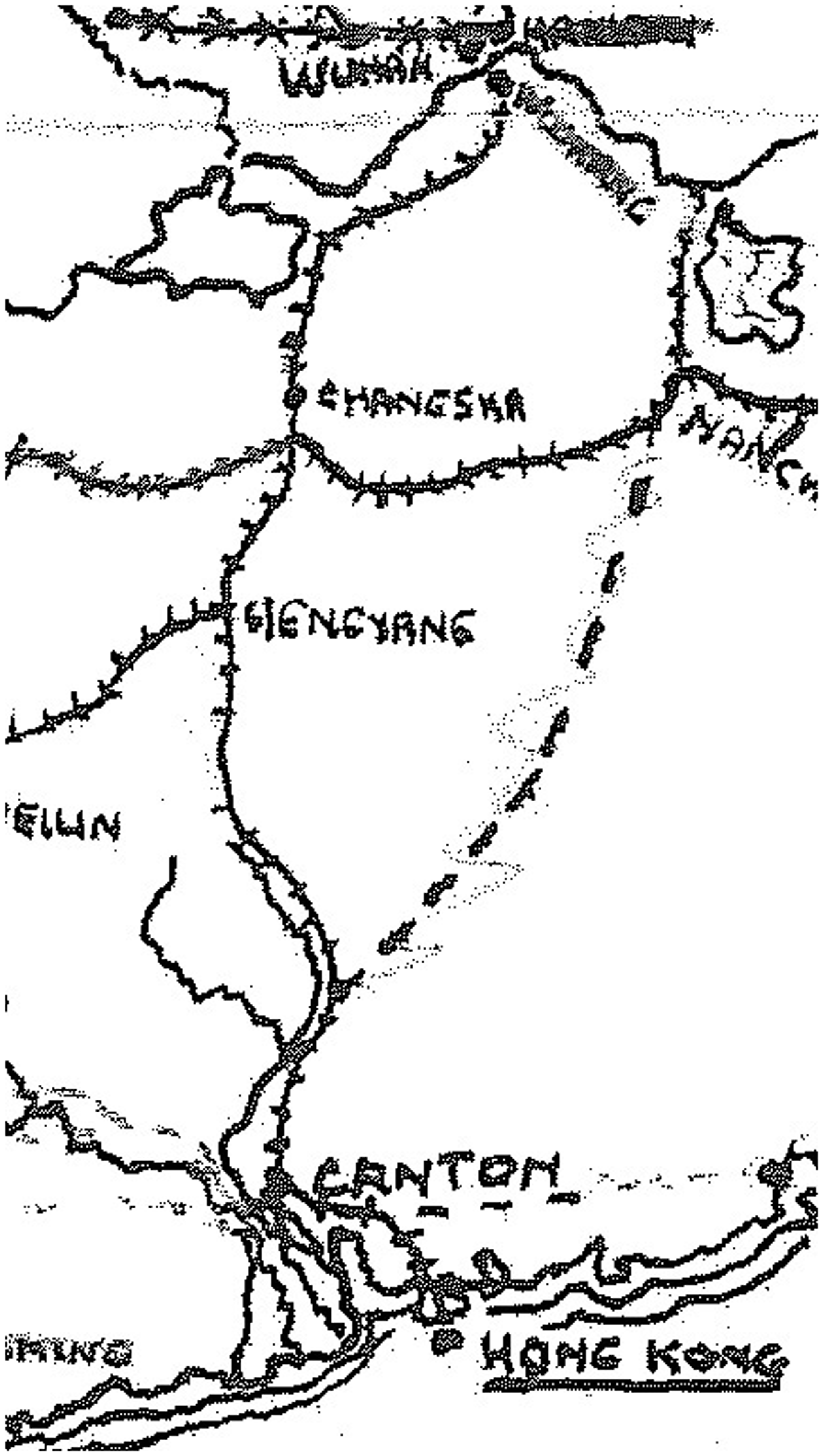
On the other hand, the Imperial government had made tentative steps towards taking matters in hand in the decade following the Boxer Rebellion. The purchase of the Canton–Hankou Railway concession from its American owners is proof that the government did not view the concession system as fait accompli. Furthermore, whilst the combination of Revolution, civil war and lack of finance delayed its completion, it is possible to suggest that the Nationalist government's drive towards greater autonomy in determining and managing its infrastructure projects was simply the continuation of a long-standing desire to assert control. The minimising of foreign intervention thus underpinned the bilateral agreement with Britain, which enabled China to exercise governance over Indemnity expenditure. How the Indemnity was used to support railway operation is a subject of equal importance that forms the basis of the next section.
Completing the Canton–Hankou Railway
British newspapers followed progress closely because of the project's importance to British industry. As early as October 1933, The Times reported that an order for approximately 4,064 tonnes of rails and several small bridges for approximately 80 km of route had been made through the Chinese Purchasing Commission. 54 A subsequent order for approximately 30,481 tonnes of rails was put out to tender in June 1934. 55 Financing the route's completion formed only part of the arrangement made between Britain and China; another item covered by the remittance of the Boxer Indemnity Fund was rolling stock. With the railway's length increased to 1,126.5 km, there was a pressing need to re-equip with standardised vehicles capable of withstanding the rigours of long-distance running and hill climbing.
The civil war and general maintenance arrears had taken their toll on railway efficiency, and efforts to address the situation could only commence once political stability was achieved. Overtures towards taking the situation in hand were initiated as early as 1929 when the Chinese Minister of Railways in Nanking, Dr Sun Yat-sen's son, Sun Fo, sought a Consulting Expert for the Standardisation of Equipment to advise on improvements. The post was given to Kenneth Cantlie and is evidence of an acceptance that the rehabilitation of China's railways required external assistance at planning level. 56 Otherwise, the Chinese government, having appointed its own Trustees to the Board of the Indemnity Fund, was free to request funding for its own projects; indeed, the promotion of Chinese independence in the decision-making process is evidence of a transition in international relations regarding investment in China's railways. 57 Nevertheless, British industry stood to benefit; in another parallel to China's current economic situation, the bilateral agreement created a guaranteed market to absorb overcapacity in Britain's mechanical engineering sector.
Figure 2 indicates that the passing of the China (Indemnity) Act in 1931 coincided with a decline in mechanical engineering output, which included locomotive construction, because of intense global competition and economic depression since 1929. With the Chinese presenting a choice of projects for investment, British interests would be maintained through a Board of Trustees in China.
58
The Trustees were employed to scrutinise the Railway Ministry's proposals and establish which engineering projects should be targeted for investment with reference to financial viability. Such checks and balances were considered necessary because the Indemnity Fund was prime security for investment loans. Proposals meeting this criterion were subsequently passed to the London-based Purchasing Commission, which made the necessary arrangements with suppliers.
Mechanical engineering in Britain: Production tends, 1920–37 (1924 = 100). Source: K. S. Lomax, “Production and Productivity Movements in the United Kingdom Since 1900”, Journal of the Royal Statistical Society. Series A (General) 122 (1959), Table 1.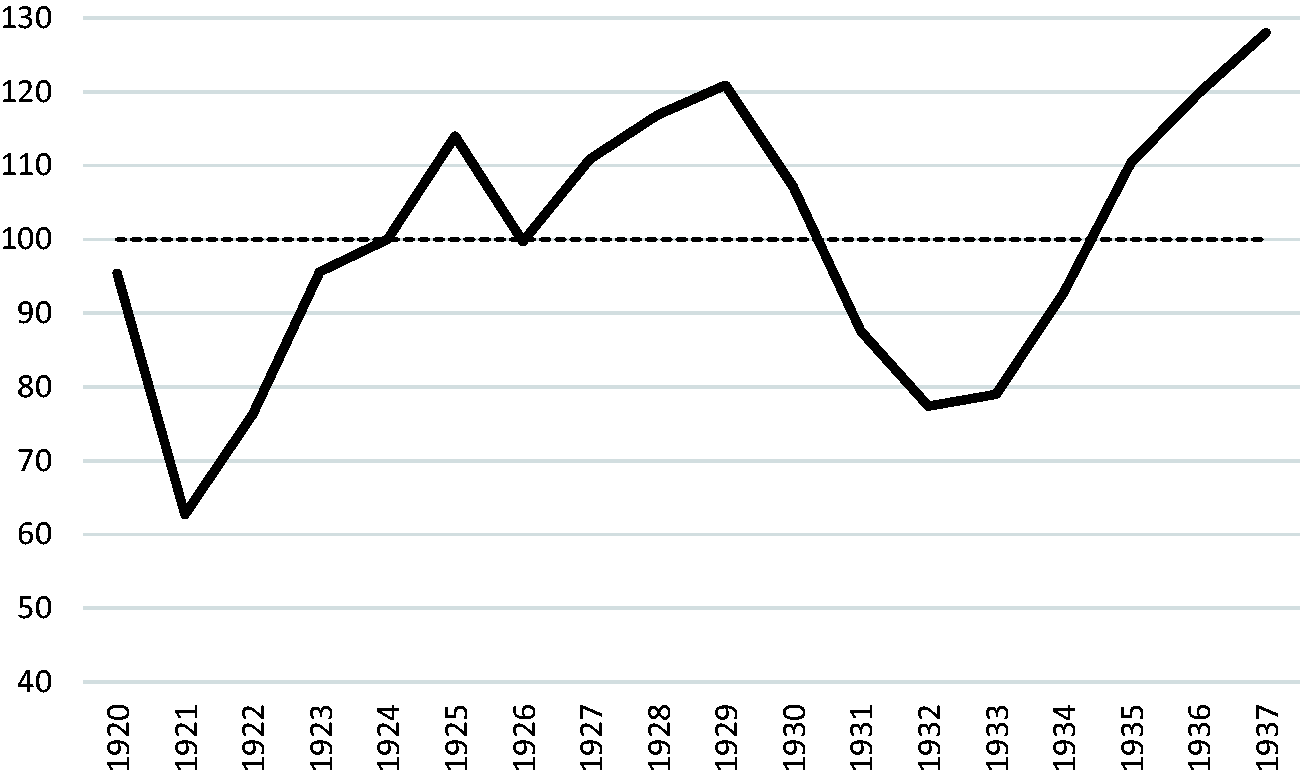
Progress was immediately hampered by the Japanese annexation of Manchuria following the Mukden Incident of September that year, which was the result of unilateral actions undertaken by the Japanese Army. Consequently, it was not until 1934 that serious efforts were made to address China's dire rolling stock situation. This included the design of a new fleet of carriages that would help to reduce the maintenance burden through the standardisation of parts, as well as a new fleet of locomotives specially designed for use on the still-incomplete Canton–Hankou line. 59 A basic specification was drawn up by Cantlie and his Chinese engineering assistants that accounted for the design challenges posed by the route; its reverse curves, steep gradients and lightly built bridges had to be taken into account, necessitating the production of a locomotive powerful enough to start trains on heavy gradients yet could operate within strict weight restrictions. 60
After approval by the Chinese Ministry of Railways, the specification was communicated to the Purchasing Commission, which initiated a tendering process by advertising the requirements in various newspapers and the technical press. Indeed, the activities of the Trustees and the Purchasing Commission were deemed newsworthy because of its potential benefit to British industry, and the Financial Times announced in May 1934 that “important orders for railway material for the Canton-Hankow Railway are to be placed with British manufacturers”. 61 The Chinese Government Purchasing Commission had received instructions from Nanking (Nanjing) “to order 14 of the most powerful freight-and-passenger engines, two shunting engines and 170 forty-ton steel trucks”. 62 Several commercial locomotive manufacturers tendered for the locomotive contract, with Vulcan Foundry of Newton-le-Willows in Lancashire winning the order because they had promised to construct a locomotive that was lighter than Cantlie's specification. 63
However, the completion of an initial batch of what became the long-lived KF Class 4-8-4 locomotives coincided with the outbreak of further political turmoil in China following Chiang Kai-shek's attempted encirclement of the Chinese Red Army and its subsequent retreat from the south east of the country. The route of the Red Army's “Long March” of 1934–35 crossed the Canton–Hankou Railway, prompting the decision to divert the new locomotives to Shanghai for final assembly and trials away from any threat of damage or loss. 64 Construction of the Canton–Hankou Railway was complete by 1 September 1936, 32 years after it commenced. The first through train reportedly took 44 h to traverse the entire 1,126.5 km route, a vast improvement on the 10–15 days by road or river. 65 The Chinese government had used the resource of the British share of the Boxer Indemnity Fund to finance its own priorities; indeed, the bilateral agreement between both nations had succeeded where commercial interests had failed, ensuring that for the “first time people are able to travel by rail between China's Northern and Southern frontiers”. 66
The opening of the Canton–Hankou Railway as a through route in 1936 was followed by an immediate demonstration of its potential as a means of binding China together through military coercion, as it was requisitioned for the transport of troops to quell a revolt in the south. 67 Furthermore, it would also prove of immense strategic value after the outbreak of the second Sino-Japanese War on 7 July 1937 as it provided an important artery for the conveyance of munitions and other military traffic from Hong Kong. 68 This made both the line and the towns and villages it passed through vulnerable to repeated Japanese aerial bombardment. Indeed, the Economist reported that the line had experienced a heavy raid in October 1937, although it also commented that “it is repaired as frequently as it is damaged”, thus demonstrating the robustness of railways as a mode of transport in wartime. 69
Conclusion
The history of China's “international” railway tells us much about the financing and management of bilateral infrastructure projects in the early twentieth century. It is an example of a space where international and domestic economic and political factors converged to dictate the character of infrastructure development. The Canton–Hankou Railway reveals the extent to which the longer-term geopolitics of Western trade in China played an important part in shaping the emergence of railways. Indeed, the early history of China's railway network is deeply rooted in the country's relationships with foreign powers and therefore represents an extension of principles that underpinned the Unequal Treaties of the mid-nineteenth century: trade, influence and national prestige. In this vein, the country's first trunk lines were products of international commerce rather than a concerted effort to establish national connectivity.
The railway also provided a space where the rules of the geopolitical game gradually changed. It presents a case where the disruption caused by the “Boxer Rebellion” of 1901 marks the demarcation of a period of haphazard railway construction with another where China played an increasingly assertive role in the undertaking. The cancellation of the American Canton–Hankou concession and the establishment of a Chinese-owned railway company is evidence of this; however, subsequent events and a lack of finance conspired to hamper the establishment of Chinese autonomy in railway network planning, construction and operation. The disruptive influences of the 1911–12 revolution and the civil war of 1927 are clear; yet railway development had become synonymous with the creation of a modern and united China. The onset of relative political stability thereafter allowed thoughts to be directed towards rehabilitating the railways.
The need to raise money to complete the Canton–Hankou line and to further develop indigenous railway engineering expertise paved the way for further foreign assistance. The difference, as emphasised by contemporary journalism, was that such assistance was increasingly granted on China's terms. China's lead in defining the scope of international investment is clear in the years following the British government's decision to release funding from its share of the Boxer Indemnity. However, the resulting demand for materials and equipment appealed to the economic interest, or self-interest, of international partners such as Britain, as it would directly benefit British manufacturers experiencing intense competition with competitors.
This article has broadly presented the British experience of building the Canton–Hankou line. The authors acknowledge and assert that much more needs to be done to develop an understanding of the Chinese experience of railway construction by international investors between 1920 and 1937. However, the foregoing has suggested that the granting of British government support in 1931 marked the beginning of the shift towards a model of mutually beneficial, international bilateral agreements for infrastructure investment. Indeed, such a model has parallels in China's more recent involvement in railway projects across the globe, which would suggest that it is following the path that Britain took to address its industrial overcapacity in the 1930s.
Footnotes
Acknowledgements
The authors would like to acknowledge the assistance of staff at the National Railway Museum, particularly from Leena Lindell, Cantlie Project Archivist at Search Engine. Responsibility for any errors and omissions in this article rest with the authors alone.
Declaration of conflicting interests
The author(s) declared no potential conflicts of interest with respect to the research, authorship, and/or publication of this article.
Funding
The author(s) received no financial support for the research, authorship, and/or publication of this article.
1
Haoran Yang, Frédéric Dobruszkes, Jiaoe Wang, Martin Dijst and Patrick Witte, “Comparing China's Urban Systems in High-Speed Railway and Airline Networks”, Journal of Transport Geography 68 (2018), 233–44, here 233.
2
Zhenhua Chen and Kingsley E. Haynes, Chinese Railways in the Era of High Speed (Bingley: Emerald Group, 2015), 4.
3
Thomas J. Campanella, The Concrete Dragon: China's Urban Revolution and What It Means for the World (New York NY: Princeton Architectural Press, 2008), 15–16.
4
Chen Guanmao, “Railway Colleges of China”, Japan Railway & Transport Review 7 (1996), 22–5, here 24.
5
See Tai Wei Lim, Henry Chan, Katherine Tseng and Wen Xing Lim (eds), China's One Belt, One Road Initiative (London: Imperial College Press, 2016), 3–18, here 3.
6
Lee En-han, China's Quest for Railway Autonomy, 1904–1911. A Study of the Chinese Railway-Rights Recovery Movement (Singapore: Singapore University Press, 1977); Linda Tjia Yin-nor, Explaining Railway Reform in China: A Train of Property Rights Rearrangements (London: Routledge, 2016).
7
The notion that importance was accorded to “new” technology as a driver of national modernity and advancement is considered in the following: Tiina Päivärinne, “‘If Only We Had a Railway!’ The Role of the Finnish Railway Network in the Nation's Technological Progress”, in Heli Mäki and Jenni Korjus (eds), Railways as an Innovative Regional Factor (Helsinki: University of Helsinki, 2009), 126–34, here 132.
8
Roberta Allbert Dayer, Bankers and Diplomats in China, 1917–1925 (London: Routledge, 1981); Elisabeth Köll, Railroads and the Transformation of China (Cambridge MA: Harvard University Press, 2019), 30–1.
9
Ben Marsden and Crosbie Smith, Engineering Empires. A Cultural History of Technology in Nineteenth-Century Britain (London: Palgrave Macmillan, 2005), 11; Norman Miners, “The Kowloon-Canton-Hankow Railway”, Journal of the Royal Asiatic Society Hong Kong Branch 46:1 (2006), 5–24.
10
Marsden and Smith, Engineering Empires, 3; H. Lin Cheng, The Chinese Railways: A Historical Survey (Hong Kong: China United Press, 1935), 116; Xiaoli Wu, “The Presentation of an Ambivalent History: A Chinese Railway Museum's Perspective”, in Heli Mäki and Jenni Korjus (eds), Railways as an Innovative Regional Factor (Helsinki: University of Helsinki, 2009), 30–42, here 33.
11
Currency conversions are in USA Dollars (henceforward US$) for illustrative purposes and are deflated to today's US$ using the Consumer Prices Index. Sources: Lawrence H. Officer, “Dollar-Pound Exchange Rate From 1791”, MeasuringWorth, http://www.measuringworth.com/exchangepound/ (accessed 6 September 2018) and Samuel H. Williamson, “Seven Ways to Compute the Relative Value of a U.S. Dollar Amount, 1774 to present”, MeasuringWorth,  (accessed 6 September 2018).
12
Miners, “The Kowloon-Canton-Hankow Railway”, 5–24.
13
Köll, Railroads and the Transformation of China, 20.
14
Percy Horace Kent, Railway Enterprise in China (London: Edward Arnold, 1907), 2.
15
Chang Jui-te, “Technology Transfer in Modern China: The Case of Railway Enterprises in Central China and Manchuria”, in Bruce A. Elleman and Stephen Kotkin (eds), Manchurian Railways and the Opening of China. An International History (London: M. E. Sharpe, 2010), 105–7. The Treaty of Tianjin was signed in 1858 and ratified by the Qing Emperor in 1860. Signatories included Russia, France, Britain and the United States, and the Treaty was to have ramifications for future relations between China and the other powers. The treaty had secured each of the powers the right to establish legations in Beijing, thus giving access to the heart of Imperial Government.
16
Kent, Railway Enterprise in China, 43–44.
17
Lee, China's Quest for Railway Autonomy, 17–20; Kent, Railway Enterprise in China, 91.
18
Köll, Railroads and the Transformation of China, 31.
19
Lin, The Chinese Railways, 58.
20
Lee, China's Quest for Railway Autonomy, 23–24.
21
Lin, The Chinese Railways, 59.
22
For example, Joseph W. Esherick, The Origins of the Boxer Uprising (Berkeley CA: University of California Press, 1988) and Paul A. Cohen, History in Three Keys: The Boxers as Event, Experience and Myth (New York NY: Columbia University Press, 1997).
23
Frank H. H. King, “The Boxer Indemnity: ‘Nothing but Bad’”, Modern Asian Studies 40:3 (2006), 663–89, here 665.
24
See Boxer Protocol, Peace Agreement Between the Great Powers and China. Article VI (Peking 7 September 1901).
25
The history of the former route is considered in: Robert Lee, “French Finance and Railway Construction in China”, in Ralf Roth and Günter Dinhobl (eds), Across the Borders. Financing the World's Railways in the Nineteenth and Twentieth Centuries (Aldershot: Ashgate, 2008), 241–55.
26
Richard F. Hamilton, America's New Empire. The 1890s and Beyond (London: Routledge, 2017), 174; “The Comedy of the Han-Kau-Canton Railway”, The Times 4 September 1905, 6.
27
Kent, Railway Enterprise in China, 110.
28
Ibid., 114.
29
“The Comedy of the Han-Kau-Canton Railway”, 6.
30
Kent, Railway Enterprise in China, 114. For a full account of China's reclamation of the Canton–Hankow Railway concession from the American firm, see Lee, China's Quest for Railway Autonomy, 50–84.
31
Kent, Railway Enterprise in China, 117–9.
32
Dayer, Bankers and Diplomats in China, 18.
33
Roberta Allbert Dayer, Finance and Empire: Sir Charles Addis, 1861–1945 (London: Macmillan, 1988), 58.
34
The Canton–Kowloon line was kept off the loan agreement, whilst China's acceptance of any other form of assistance, whether in terms of expertise or infrastructure was conditional. Miners, “The Kowloon-Canton-Hankow Railway”, 13–15.
35
“The Comedy of the Han-Kau-Canton Railway”, 6.
36
Kent, Railway Enterprise in China, 120.
37
Werner Levi, Modern China's Foreign Policy (Minneapolis MN: University of Minnesota Press, 1953), 123–6; “The Hukuang Imperial Railways Loan – A Declaration of Policy”, Economist 1 July 1911, 13. For an account of British–China relations and railway construction during this period, see Hirata Koji, “Sino-British Relations in Railway Construction: State, imperialism and Local Elites, 1905–1911”, in Robert Bickers and Jonthan J. Howlett (eds), Britain and China, 1840–1970: Empire, Finance and War (London: Routledge, 2016), 130–48.
38
See Mary Backus Rankin, “Nationalist Contestation and Mobilization Politics: Practice and Rhetoric of Railway-Rights Recovery at the End of the Qing”, Modern China 28:3 (2002), 317–25.
39
House of Commons Debate (hereafter HC Deb.), 20 January 1931, vol. 247, col. 97.
40
China Indemnity (Application) Act, 1925, 15 & 16 Geo. 5, c. 41.
41
HC Deb. 20 January 1931, vol. 247, col. 97.
42
Ibid., col. 101.
43
The Republic's Ministry of Communications had charge of the railways from May 1912 until November 1928, when a Ministry of Railways was established.
44
HC Deb. 20 January 1931, vol. 247, col. 98.
45
China Indemnity (Application) Act, 1931, 21 & 22 Geo. 5, c. 7.
46
“The Boxer Indemnity”, Railway Gazette 17 April 1931, 626.
47
HC Deb. 20 January 1931, vol. 247, col. 100.
48
“Boxer Indemnity Advances for Railway Construction”, Railway Gazette 16 June 1933, 817.
49
“Changing China”. The Times 26 November 1934, 13.
50
Ibid., 13–14; Chang, “Technology Transfer in Modern China”, 112.
51
“By Train to Hong-Kong”, The Times 1 May 1936, 7.
52
“The Canton-Hankow Railway”, Railway Gazette 7 February 1936, 249.
53
Lin, The Chinese Railways, 116.
54
“Railway Order from China”, The Times 26 October 1933, 20.
55
“Chinese Orders”, Financial Times 27 June 1934, 9.
56
National Railway Museum, Search Engine (hereafter NRMSE), ALS3/39/C/3, Kenneth Cantlie Archive, “Jodhpur Railway Locomotive Superintendent's Office”, 29 April 1929. Cantlie's appointment was no coincidence as he was one of Dr Sun Yat-sen's Godchildren. There was a close friendship between Dr Sun Yat-sen and Cantlie's father, Sir James Cantlie, a medical practitioner and researcher who taught at the Hong Kong College of Medicine for Chinese. In 1896, Sir James was instrumental in securing the release of Dr Sun from detention at the Chinese embassy in London for agitating against Qing rule.
57
Arthur N. Young, China's Nation-Building Effort, 1927–1937: The Financial and Economic Record (Stanford CA: Hoover Press, 1971), 368.
58
“China Indemnity Trustees”, Financial Times 21 April 1931, 6.
59
NRMSE, ALS3/39/A/2, Kenneth Cantlie Archive, “Chinese National Railways: Specification for 4-8-4 Locomotives for Yueh-Han Line”, June 1933. The Yueh-Han Line refers to one of the two spurs that would eventually form the complete Canton–Hankou Railway.
60
See G. Collingwood, “Paper 358. New Locomotives for the Chinese National Railways”, Journal of the Institution of Locomotive Engineers 27 (1936), 595–626.
61
“£250,000 of Rolling Stock”, Financial Times 18 May 1934, 5.
62
Ibid., 5.
63
NRMSE, ALS3/39/A/2, Kenneth Cantlie Archive, “Chinese National Railways: Specification for 4-8-4 Locomotives”. See also ALS3/39/A/2, Kenneth Cantlie Archive, “4-8-4 Locomotives”, 10 April 1934.
64
NRMSE, ALS3/39/A/2, Kenneth Cantlie Archive, letter from Kenneth Cantlie to Mr. Tseng Yang-Fu, Political Vice Minister, 4 July 1936.
65
“The Canton-Hankow Railway”, 252.
66
“Canton-Hankow Rly Opened”, Financial Times 2 September 1936, 7.
67
“China's Rail Communications”, Economist 21 August 1937, 379.
68
“The War in China”, Economist 9 October 1937, 61.
69
Ibid., 61.