



Abstract
Antimicrobial resistance (AMR) is a major global threat to human health, animal welfare and sustainable development. Whilst resistance can arise naturally, inappropriate antimicrobial exposure accelerates its emergence. Recognizing this risk, international One Health initiatives emphasize reducing antimicrobial use, especially of drugs considered critical for human medicine. Much of the evidence guiding these efforts comes from food-producing and companion animals, but antimicrobial use in laboratory animals, particularly rodents, remains poorly described. To address this gap, we surveyed all veterinarians certified by the American College of Laboratory Animal Medicine in the United States (921) and Canada (10). A total of 157 veterinarians completed the survey, resulting in a 16.9% overall response rate. The response rate was 16.6% for participants in the United States and 40.0% for those in Canada. Despite a strong response, the small number of eligible veterinarians restricts data extrapolation in the Canadian context. Survey results showed that antimicrobial use is common and routine in rodent vivaria. Overall, 91.7% of respondents reported regular antimicrobial use. Applications included both clinical treatment and research purposes such as induction of microbiome dysbiosis, prophylaxis in immunocompromised rodents and gene induction. Reported drug classes included fluoroquinolones and third-generation cephalosporins, with some use of glycopeptides and carbapenems, all considered critically important to human health. Disposal practices often involved release into sewerage or landfill without inactivation, raising environmental concerns. These findings suggest that antimicrobial use in laboratory rodents may represent an underrecognized contributor to AMR and highlight the importance of targeted stewardship.
Introduction
Antimicrobial resistance (AMR) is escalating rapidly, posing a serious threat to global health, prosperity and animal welfare. The discovery of antimicrobial compounds revolutionized medicine, enabling cures for previously fatal infections, yet their widespread use has triggered an accelerating arms race between microbes and the agents designed to eliminate them. 1 The World Health Organization recognizes AMR as a public health emergency, with at least five million deaths attributable to AMR in 2019, and projections estimating up to ten million annual deaths by 2050.2 –4 Beyond human health, AMR threatens food security and animal welfare, and imposes mounting economic burdens. 5
Resistance to antimicrobial substances arises within microbes, inevitably, via spontaneous gene mutations or horizontal gene transfer, whether driven by natural exposure to microbial metabolites or human-derived compounds.6,7 However, human activity has vastly accelerated the pace at which AMR has arisen and spread. Injudicious use of antimicrobials in medicine, veterinary practice and agriculture has intensified selection pressures, fuelling the proliferation of resistant pathogens across ecosystems.1,5 The presence of resistant organisms leads to delays in diagnosis, ineffective empirical therapy and limited treatment options, which together drive worse clinical outcomes and increased healthcare costs. 8
Efforts to curb AMR have focused on antimicrobial use in humans, agriculture, aquaculture and companion animals. In contrast, antimicrobial practices in laboratory rodents – an animal population exceeding 120 million globally – remain poorly characterized.3,9 This gap is concerning given the zoonotic risks posed by resistant microbes,10,11 and the essential role veterinarians and researchers play in safeguarding antimicrobial efficacy through stewardship.12,13 Historical concerns have been raised over antimicrobial use in rodent vivaria,3,14,15 particularly regarding the common practice of in-water administration, resulting in subtherapeutic exposure. In addition to occupational health concerns for vivarium staff, 16 widespread antimicrobial use may alter the gut microbiota of research animals, potentially confounding in vivo data and impairing reproducibility and translational validity.
Here, we present the first empirical data on antimicrobial use in research rodent vivaria across North America. Building on prior work in Australia and New Zealand (ANZ), 14 we hypothesized that antimicrobial use would be widespread, with frequent administration in-water and a majority of fluoroquinolone, tetracycline and sulphonamide classes. We sought to characterize the prevalence of use, indications, drug classes and disposal practices associated with antimicrobial use in vivaria through a cross-sectional survey. Additionally, we assessed awareness of AMR risks and the presence of formal stewardship programmes. By addressing this knowledge gap, our study contributes critical data to inform One Health strategies aimed at mitigating global AMR.
Methods
Study population and survey distribution
The study population comprised 931 active Diplomate laboratory animal veterinarians eligible at the time of the survey, with 921 based in the United States and 10 in Canada. All eligible Canadian veterinarians were invited to participate in the survey. The eligible study population was identified using a list provided by the Executive Director of the American College of Laboratory Animal Medicine (ACLAM), as available on the ACLAM website at the time of survey distribution. Diplomates holding honorary status and individuals not engaged in work with rodents were excluded from the calculation of the eligible population size.
The survey was conducted between 3 March 2021 and 3 May 2021. Respondents chose to participate, with the survey administered online using the Qualtrics™ platform, and this was distributed via the ACLAM member email list. The questionnaire collected data on participant demographic, including respondent location and eligibility, and information regarding use of antimicrobials: prevalence by antimicrobial route and duration of administration, drug class, sourcing, disposal practices, and antimicrobial stewardship knowledge and attitudes.
Sample size calculation
Sample size calculations were performed assuming a 50% prevalence estimate with finite population correction, employing the Australian Bureau of Statistics Sample Size Calculator. Completion of 167 surveys provided a margin of error of 7.1% at a 95% confidence level, and power of 85%.
Data analysis
Data were analysed using an Excel-based statistical calculator (The Statistical Consulting Centre, University of Melbourne, Australia). Proportions were calculated as the total number of survey respondents selecting a specific answer, divided by the total number of respondents, for each question. Missing data and responses of ‘do not know’ were excluded from analysis. For improved interpretability, some response categories were merged. Free-text responses were collected for selected complex questions.
Ethics approval
Given that the study involved surveys of human participants, research was conducted in adherence to the Declaration of Helsinki. Ethics approval was granted by the Human Research Ethics Committee of the Melbourne Veterinary School, Faculty of Science, The University of Melbourne, Australia (Ethics ID: 1955621.1). Completion of the survey implied consent, after participants reviewed a Plain Language Statement describing the anonymous and voluntary nature of survey participation and the irretrievability of identifying information.
Results
Survey response rate and location of respondents
A total of 931 eligible ACLAM-certified laboratory rodent veterinarians were sent the online survey, comprising 10 Diplomates based in Canada and 921 in the United States. At the time of the survey, these figures included all active ACLAM-certified veterinarians in both countries, except for those holding honorary status or those whose practice focused solely on non-rodent species. In total, 157 veterinarians completed it, yielding a response rate of 16.9%. Seven respondents lacked specialist certification and nine submitted incomplete surveys and were excluded. Most eligible respondents, 97.5% (n = 153), were based in the United States, with 2.5% (n = 4) in Canada. This corresponded to a 16.6% response rate among US-based respondents and a 40.0% response rate within the Canadian subset.
Institutional affiliation of respondents, vivarium types, and rodent housing
Approximately a quarter of respondents (26.8%; n = 42) reported working across multiple, separately located vivaria. Most respondents (61.4%, n = 97) reported employment at vivaria associated with human hospitals, some of which were also linked to universities. A similar proportion (61.1%, n = 96) worked in vivaria affiliated with universities, followed by government institutions (16.6%, n = 26). Among those affiliated with human hospitals, 93.8% (n = 91) reported that hospital clinicians and medical students routinely worked with research rodents, and 61.9% (n = 60) indicated that the vivaria were co-located within the hospital building. Fewer respondents reported employment in vivaria associated with pharmaceutical companies, non-teaching hospitals, private research institutes, contract research organizations, veterinary schools or rodent production facilities. Notably, 18.5% (n = 29) of respondents described vivaria that met multiple criteria for type or affiliation (Figure 1).

Institutional affiliation of survey respondents.
Rodent housing systems varied across vivaria: approximately half (54.9%, n = 79) housed rodents in individually ventilated cages (IVCs). A further 41.0% (n = 59) used filter-top cages and 12.1% (n = 19) of respondents reported using open-top conventional cages.
Research disciplines
Nearly all respondents (98.7%, n = 155) reported involvement in research spanning multiple disciplines. The most common fields included neuroscience (80.9%, n = 127), oncology (79.6%, n = 125), infectious disease and immunology (72.0%, n = 113), metabolic disease (69.4%, n = 109), cardiovascular disease (63.7%, n = 100) and microbiome research (56.1%, n = 88). Additional research areas included genetics (48.4%, n = 76), biologics and vaccine production (48.4%, n = 76), bioengineering and orthopaedics (39.5%, n = 62) and production, storage and rederivation of transgenic mice (36.3%, n = 57). Rodents were also used for toxicology and product testing (33.1%, n = 52) and in anatomy and physiology teaching (26.1%, n = 41). A minority of respondents reported breeding rodents for commercial supply (4.4%, n = 7) or use in organ transplantation and space biology studies (<1%, n = 1).
Prevalence of antimicrobial use
Overall, 91.7% of respondents (n = 144) reported routine antimicrobial use within their vivaria.
Antimicrobial use by institution type
University vivaria accounted for the greatest proportion of total respondents that reported routine antimicrobial use (60.4%, n = 87), followed by government institutions (15.9%, n = 23) and human hospital-associated vivaria (14.6%, n = 21). Lower rates of routine use were reported by private research institutes and contract research organizations (8.3%, n = 12), with veterinary schools (3.5%, n = 5) and rodent breeding and supply facilities (2.1%, n = 3) reporting the least use.
Reasons for antimicrobial use
Most vivaria reported multiple indications for antimicrobial use (Table 1). Among the 102 respondents conducting microbiome research, 31 (30.4%) reported using gnotobiotic or defined microbiome rodents. The remaining 69.6% (n = 71) used non-gnotobiotic animals, necessitating microbiome manipulation through the concurrent administration of multiple antimicrobial classes.
Indications for antimicrobial use reported by survey respondents (n = 144 (US = 142; Canada = 2)).
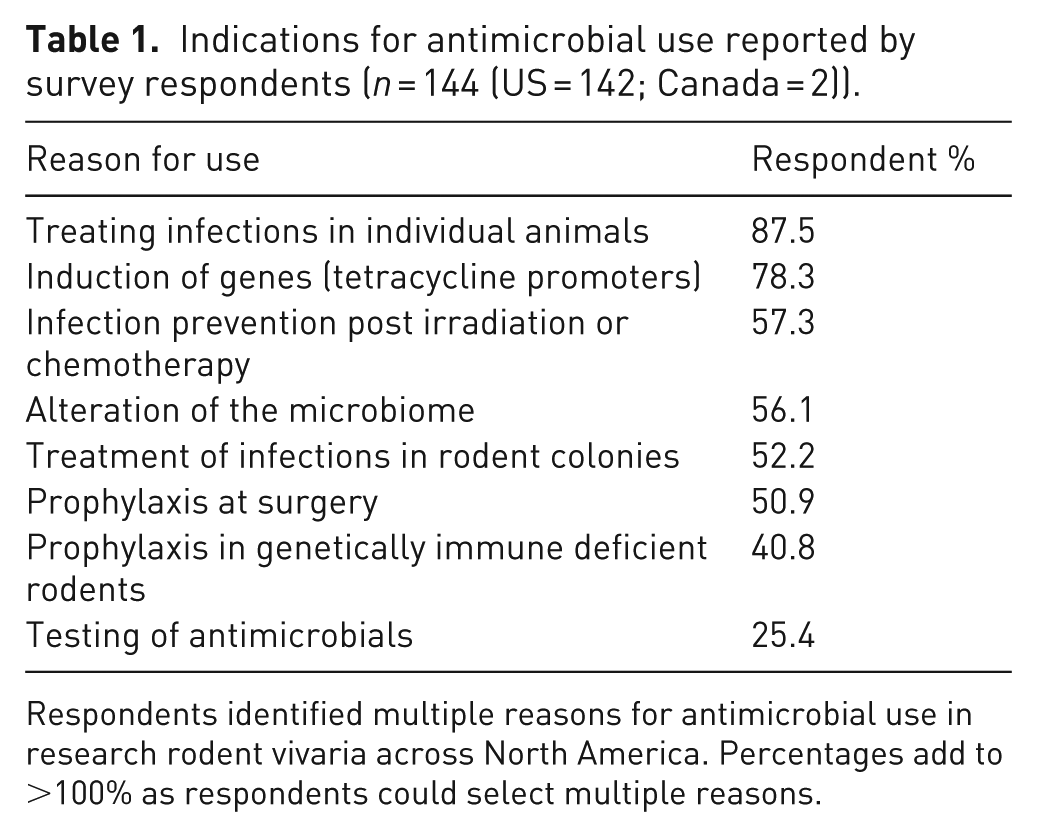
Respondents identified multiple reasons for antimicrobial use in research rodent vivaria across North America. Percentages add to >100% as respondents could select multiple reasons.
Microbial culture and antimicrobial susceptibility testing
When treating infections in rodent colonies, 66.7% (n = 96) of respondents reported occasional use within the past 24 months of microbial culture and antimicrobial sensitivity testing (AST) to inform therapy. A smaller proportion (9.3%, n = 9) reported performing AST in every case, whereas 40.6% (n = 39) never performed AST. Among those performing AST within the 24 months prior to the survey, 12.5.% (n = 12) reported isolation of resistant microbes.
Routes of administration for antimicrobials
Many respondents reported using several routes for administration of antimicrobials. Most commonly, respondents reported topical application, delivery in drinking water, incorporation into commercially formulated chow, injection (including subcutaneous, intravenous or intraperitoneal injections) and oral gavage. Less common routes included in-vivarium addition of antimicrobials to food and administration via deposition forms such as surgically implanted devices or minipumps (Figure 2).
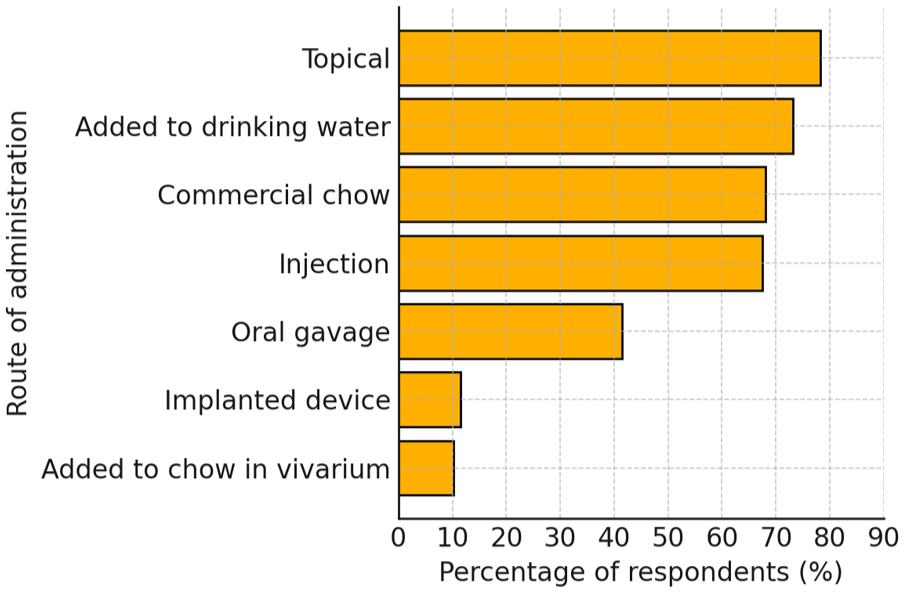
Proportion of survey respondents reporting specific routes of antimicrobial administration (n = 144 (US = 142; Canada = 2)).
Antimicrobial use by drug class
Fluoroquinolones were the most administered class of antimicrobial, with enrofloxacin use reported by 81.0% (n = 116) of respondents as the predominant agent used. Most respondents delivered fluoroquinolones via injection, followed by administration in drinking water. Prevalence of antimicrobial use by route of administration and drug class is detailed in Table 2.
Antimicrobial class usage and administration routes in reported in vivaria (n = 144 (US = 142; Canada = 2)).

Co-administration of antimicrobials
Co-administration of multiple antimicrobials simultaneously was reported by 38.2% (n = 55) of respondents.
Disposal of antimicrobials
Respondents reported multiple methods for disposal of antimicrobials and contaminated materials. Water containing antimicrobials was commonly discarded into wastewater without prior inactivation. Bedding and medicated chow from treated animals were frequently disposed of in landfill or collected by specialist medical waste contractors. Carcasses were primarily managed through contractor collection or incineration. See Figure 3.

Disposal methods for antimicrobial-contaminated solid and liquid waste reported by survey respondents (n = 144 (US = 142; Canada = 2)).
Sourcing of antimicrobials
Antimicrobials were primarily sourced from veterinary wholesalers (93.1%, n = 134) and research suppliers (41.0%, n = 59), with smaller contributions from livestock stores, private veterinarians, compounding chemists and food compounders (⩽4.0% each, n = ⩽5). Administration involved researchers (33.3%, n = 48), laboratory animal technicians (34.0%, n = 49) and veterinarians (32.6%, n = 47). Sourcing of prescription-only antimicrobials was authorized by veterinarians (52.8%, n = 76), Institutional Animal Care and Use Committees (36.8%, n = 53) or institutional Drug Enforcement Administration registrants (9.7%, n = 14). Two respondents (1.4%) indicated that prescriptions were not required for research use.
Standard operating procedures for the use of antimicrobial use and their disposal
Fewer than half of respondents (41.7%, n = 60) reported that their vivaria had formal standard operating procedures or defined work protocols for the use of antimicrobials. Only 24.3% (n = 35) reported the existence of standardized protocols for antimicrobial disposal, while 75.7% (n = 109) reported that they had none.
Antimicrobial stewardship
The following definition of antimicrobial stewardship (AMS) was provided to respondents:
‘Antimicrobial stewardship is the practice of activities that promote responsible antimicrobial use to minimise microbes developing resistance. Practices in laboratory rodent research could include: only using antimicrobials when absolutely necessary, e.g. not for routine soft tissue surgeries, ensuring aseptic technique for managing immune compromised colonies etc.; basing choice of drug on culture and sensitivity; using narrow spectrum antimicrobials; using drugs of low importance to human and animal health; choosing a route of administration in which appropriate plasma levels are achieved (e.g. injection versus in-water delivery); and, inactivating antimicrobial containing water, substrates and materials before disposal.’
Following this, 19.4% (n = 28) reported the existence of institutional policies or guidelines promoting responsible antimicrobial use. A further 13.2% (n = 19) were unsure whether such policies existed, and 67.4% (n = 97) reported that no stewardship policies or guidelines were in place.
Discussion
The survey showed that antimicrobial use as reported by Diplomates is widespread across laboratory rodent vivaria in North America, and routine use includes at least 16 drug classes, including those designated essential to human and animal health. The overall response rate was 16.9% (n = 157); however, this likely underestimates the relative response, as a percentage of total eligible respondents, given that some proportion of the 931 Diplomates listed specialize exclusively in non-rodent species. Whilst the latter were included within the source population size calculation, they were ineligible to participate and should not have been counted within the source population. Exclusion of incomplete responses and replies from non-Diplomate veterinarians reduced the total calculated response rate further.
The response rate of 157 completed surveys resulted in data with a margin of error of ± 7.1%, at a 95% confidence level. This response rate (16.9%) yielded a power of 85%, which is considered statistically adequate to detect medium or larger effects. Power values exceeding 80% are considered robust and sufficient for publication of clinical, social and behavioural research. 17 However, given uncertainties about true source population size, the power of the survey data is likely higher than calculated.
Antimicrobial use in North American vivaria (91.7%, 144 of 157 complete responses) substantially exceeded that reported in ANZ (71.0%; 67 of 95 complete responses). 14 Although nearly all vivaria across surveys hosted multidisciplinary research programmes, the factors accounting for these regional differences in antimicrobial practices remain unclear. While Canadian representation within total respondents was low (2.5%, n = 4), a proportional representation was maintained when accounting for the relative number of medical institutions between countries. In comparison, Canada has 1.7% the total number of medical institutions that the US has. 18 However, owing to the relatively limited number of eligible Canadian respondents, conclusions can be confidently drawn only for US based vivaria.
Treatment of individual rodents was the most reported indication for antimicrobial use, followed by gene induction in tetracycline-inducible animals and infection prevention in irradiated rodents. This partially diverges from the ANZ survey, where prophylaxis in genetically immunodeficient rodents and perioperative prophylaxis predominated. 14 These variations likely reflect regional differences in husbandry, surgical practices and AMS. Notably, prior studies demonstrate that strict aseptic husbandry, sterilized bedding and chow, and acidified water obviate the need for routine antimicrobial administration in immune deficient animals. 19 It might be that there are higher standards of surgical practice with use of strict asepsis in North American vivaria, obviating the need, or perceived need, for post-surgical antimicrobials.
Topical application was the most common route of antimicrobial administration, followed by in-water administration and injection. The high prevalence of ulcerative dermatitis in laboratory mice accounts for the widespread use of topical bacitracin-neomycin sulphate-polymixin B sulphate (‘triple antibiotic’) ointment. 20 In addition, povidone–iodine ointment plus silver sulfadiazine cream are commonly used, and recent data show that antiseptics such as 0.005% sodium hypochlorite are more effective than antimicrobials and these antiseptics. 21 Given that mice auto- or allogroom extensively – up to 40% of their waking hours – topically applied antimicrobials are ingested, potentially altering the composition of the gut microbiota.22,23 Topical antimicrobials might be more commonly in use in North America as post-surgical treatments rather than other routes when compared with ANZ.
In both North American and ANZ surveys, around 70% of vivaria reported administering antimicrobials via drinking water, a method that commonly achieves only subtherapeutic plasma concentrations. 15 Factors such as water acidification, feed formulation, rodents’ diurnal drinking patterns, illness, and chemical or light mediated degradation contribute to rodents consuming subtherapeutic doses. 24 Chronic subtherapeutic exposure is a recognized driver of AMR development in pathogens and the microbiome. 25 Interaction between resistant and sensitive bacteria, within the host microbiome, can lead to increased abundance of resistant strains when sensitive competitors are eliminated. 26 Oral delivery of enrofloxacin, doxycycline, amoxicillin and trimethoprim-sulfamethoxazole rarely achieve therapeutic plasma concentrations in rodents. 15 The pharmacokinetics of orally administered antimicrobials are further complicated by degradation in light and acidified environments. 27 For instance, amoxicillin concentrations halve, and clavulanic acid becomes undetectable in acidified water. 28 Such subtherapeutic exposures are problematic, promoting the development of cross-resistance and multidrug resistance. 29 Fluoroquinolones were the most frequently reported antimicrobial class used, typically administered via drinking water. However, over half of respondents did not protect medicated water bottles from light. Light has been shown to accelerate fluoroquinolone degradation and reduce the effective dose. 30 Exposure of bacteria to subinhibitory concentrations of fluoroquinolones has been shown to induce resistance not only to quinolones but also to beta-lactams, amphenicols and macrolides. 31 For example, subinhibitory exposure to ciprofloxacin (which is biotransformed to enrofloxacin) can induce resistance to nafcillin in methicillin resistant Staphylococcus aureus strains. 25
Several antimicrobial classes are known to induce cross-resistance, all of which were reported as being used commonly in research rodents. In addition to quinolones, these include β-lactams (including penicillins and cephalosporins), aminoglycosides, macrolides and tetracyclines. 32 Routine use of 16 different drug classes was documented in this survey, with 38.2% (n = 55) of respondents reporting co-administration of classes. Consistent with these findings, studies have demonstrated that antimicrobial treatment in mice induces a sustained decline in gut microbiota diversity, while selectively enriching for antimicrobial resistance genes (ARGs). Exposure to one class of antimicrobials can promote resistance to unrelated classes and mobile genetic elements, including transposases, increase markedly, particularly in response to ciprofloxacin treatment. 31
Approximately a quarter of respondents (23.6%, n = 34) reported routine administration of cefovecin, by injection. A study of the pharmacokinetics of this drug, administered at five-fold the dose used in companion animals, showed that it maintained therapeutic plasma concentrations for just 0.84 h, as opposed to approximately 140 h in dogs and cats, rendering it unsuitable for treatment of any infections in mice. 32 Use of glycopeptides, specifically vancomycin, was reported by 18.8% (n = 27) of respondents, whereas colistin sulphate was reported by 9.8% (n = 14). Both antimicrobials are designated as being of critical importance to human health and are considered drugs of last resort reserved for treatment of resistant infections. 33
Disposal practices were suboptimal. Disposal of antimicrobials included discharge into wastewater, mostly without heat or chemical inactivation, with a significant number of respondents reporting disposal of soiled bedding and nesting material, or substrate, from treated animals along with medicated feed, into landfill without prior inactivation. This is contributing to environmental contamination with active antimicrobials, and microbes that have been exposed to antimicrobials, and might have resistant phenotypes, and carry antimicrobials resistance genes (ARGs). Environmental contamination with antimicrobials and resistant microbes is an established and significant driver of AMR. 34 Existing wastewater treatment processes fail to neutralize antimicrobials, allowing their persistence in surface water and promoting AMR proliferation across wildlife, vermin and human populations. 35 Medicated chow in landfill is providing a direct source of nutrition, and antimicrobials, to terrestrial animals, creating an AMR selection pressure in the environment and their microbes. Vermin and wildlife are established sources and distributors of AMR and ARGs. Landfill and the rodents that inhabit them are considered ‘hotspots’ for AMR. 35
The high rate of co-location of vivaria and human hospitals, with most respondents reporting clinicians and medical students handling rodents, represents a possible source for transfer of resistant microbes or genes from rodents to humans (including hospital patients). Transfer of resistant microbes from humans to laboratory rodents is well documented, including MRSA in laboratory rats, associated with co-located hospitals and vivaria. 36 Laboratory mouse and rat-adapted S. aureus strains have arisen from human contact, traced to laboratory animal vendors, and spread globally, highlighting the transmission of microbes between humans and rodents. 37 Environmental microbiome surveys have confirmed consistent microbial exchange between vivarium workers and laboratory rodents, despite stringent personal protective equipment, environmental controls and containment measures, such as IVCs and cage change stations. 16 Approximately half of the survey respondents in the current study reported use of open top or filter top caging, both of which carry greater risk of aerosolization and microbial cross-contamination than IVCs. Vivaria may therefore represent an underrecognized reservoir of antimicrobial resistant organisms and ARGs, and a potential occupational health hazard.
This survey has shown that antimicrobials of all classes are sourced predominantly from research catalogues and wholesalers, and much administration falls outside of the prescription-only model of supply inherent to other animal sectors. Antimicrobials of critical importance to human health may be purchased without prescription for research purposes. The degree of veterinary oversight is unclear, and there is less likelihood of veterinary prescription and oversight in research-specific and non-therapeutic use cases such as gene-promotion, microbiome dysbiosis models, and routine housing and husbandry of immune-deficient animals.
Whilst regulations govern the use of antimicrobials in humans and other animal sectors in the United States and Canada, these rules are not generally applied in biomedical research settings. In the United States, the Animal Medicinal Drug Use Clarification Act of 1994 permits extra-label use of drugs by licensed veterinarians under defined conditions, which must comply with FDA requirements and occur within the context of an established Veterinarian–Client–Patient Relationship (VCPR).38,39 In Canada, most medically important antimicrobials were added to the Prescription Drug List in 2018, thereby requiring a veterinary prescription. 40 In contrast, antimicrobial use in laboratory animals is considered extra-label and does not legally require a veterinary prescription, allowing administration of a broad range of antimicrobials, including those critical for human medicine, under institutional protocols. Notably, reported laboratory rodent use often does not conform to typical legal prescribing standards for a VCPR or clinical justification for prophylactic administration of medically important antimicrobials in either country. Consequently, stewardship in biomedical research settings relies primarily on professional guidelines and institutional oversight rather than statutory regulation, highlighting a potentially unregulated source of antimicrobial exposure.
Fewer than 20% of respondents reported the existence of institutional antimicrobial stewardship programmes, and there are several ways in which the reported use of antimicrobials in North American rodent vivaria is injudicious. Despite the importance of microbial culture and antimicrobial sensitivity testing, only 11.8% (n = 17) of respondents reported routinely performing these diagnostics, with 59.7% (n = 86) conducting them occasionally. This rate is comparable to the reported rate (13.4%) of routine culture and AST used in first-opinion US companion animal practice. 41 The ANZ survey did not assess diagnostic confirmation rates, leaving inter-regional comparisons difficult. Survey data highlight the ways in which standard usage is not aligned with principles of AMS. Routine use of antimicrobials in immune-deficient animals and animals undergoing surgical procedures may be replaced with institution of strict aseptic husbandry and handling practices and aseptic surgical technique and best practice perioperative support. Administration of antimicrobials in water is technically simple and economical, and less stressful for individual animals; however, it is, at best, ineffective and, at worst, is actively promoting the generation of resistant microbes.
There are significant opportunities to improve antimicrobial use within North American rodent vivaria. Active AMR surveillance work is required to define, through regular clinical case and environmental antibiograms, the resistomes (or patterns of AMR and types of ARGs) of vivaria. In addition, efforts are needed in promoting appropriate and judicious use of antimicrobials, with particular emphasis on inactivation of antimicrobials prior to their disposal. This requires a significant investment to support training of all staff and researchers and fund the additional costs associated with heat or chemical inactivation on site or through medical contractors. From an ethical viewpoint, institutions have a responsibility to mitigate the risks to public health of improper disposal practices and to safeguard animal welfare by preventing the development of antimicrobial resistance within colonies and vivaria. There is a moral imperative to ensure the integrity of research data by minimizing the confounding effects of antimicrobials on rodent microbiomes and physiology. Further, institutions, as workplaces, have a duty of care to their employees, to reduce risk from exposure to antimicrobial resistance microbes or their ARGs.
Despite considerable progress in agriculture, aquaculture and companion animal medicine, antimicrobial use in laboratory rodents remains poorly regulated. We believe this is the first study defining antimicrobial use in laboratory rodent vivaria in North America. A key limitation of this study is the small number of eligible respondents based in Canada, which restricts the generalizability of the findings to non-Diplomate laboratory rodent veterinarians and the broader Canadian population. Nonetheless, among eligible Canada-based respondents, the high response rate supports the significance of the data, with the important caveat that the study population was limited to Diplomates. Future research could expand eligibility criteria to include all veterinarians working with rodents in Canadian vivaria to more comprehensively characterize antimicrobial use in this context.
Within the eligible population, the data indicate pervasive and elevated rates of routine antimicrobial use, accompanied by significant departures from established best practices – such as unwarranted prophylactic treatments, subtherapeutic dosing, and improper waste management. Advancing antimicrobial stewardship will necessitate comprehensive institutional reforms, including mandatory implementation of microbial diagnostics, optimization of administration routes, effective decontamination of contaminated waste and enhanced training for both researchers and technical personnel.
Footnotes
Acknowledgements
We would like to express our gratitude to ACLAM, Diplomates and the laboratory animal veterinary community broadly, in Canada and the United States of America, for their voluntary participation in the survey. We also wish to thank the ACLAM Secretariat for distributing the survey and providing valuable insights on participant eligibility and numbers. We would also like to acknowledge the support provided by the Statistical Consulting Centre, The University of Melbourne, for assistance with data analysis.
Consent for publication
Not applicable, given the anonymous nature of the survey.
Consent to participate
Completion of the survey implied consent, after participants reviewed a Plain Language Statement describing the anonymous and voluntary nature of survey participation and the irretrievability of identifying information. The requirement for individuals to provide consent to participate was waived by the Human Research Ethics Committee of the Melbourne Veterinary School, Faculty of Science, based on the implied nature of consent.
Data availability
Further data are available in online data repository, Figshare. Raw data and the survey are available here: 10.6084/m9.figshare.29948834 The Plain Language Statement for the survey is available here: 10.6084/m9.figshare.29948855
Declaration of conflicting interests
The authors have no conflicts of interest to declare.
Ethical considerations
Ethics approval was granted by the Human Research Ethics Committee of the Melbourne Veterinary School, Faculty of Science, The University of Melbourne (Ethics ID: 1955621.1).
Funding
The authors disclosed receipt of the following financial support for the research, authorship, and/or publication of this article: This work was supported by Australian Government Research Training Program Scholarship.
