



Abstract

Sexual mutilations are a frequent part of conflict-related physical mutilations. Here, we present and discuss the diagnosis of a 38-year-old male from the Ivory Coast presenting acid-related anal lesions, with both anatomical and anthropological consequences.
This patient was examined as part of a medico-anthropological/forensic consultation for refugees. 1 He presented with numerous ancient cutaneous lesions related to acts of torture in his home country: various hypertrophic, hyper-pigmented scars at the level of the four limbs, trunk and face. He also complained of continuous anal pain with acute exacerbations and anal incontinence. This clinical picture was subsequent to an attempt of mutilation with an improvised acid enema (a bottle of water filled with acid, pierced at the level of the plastic stopper by a hollow BIC pen serving as a cannula, as illustrated in Figure 1). The importance of the anatomical damage was reduced by the pressure and resistance reflex contracted by the victim. Otherwise, a direct macroscopic examination of the anal region showed a rectal prolapse and old scars at both the mucosa and skin level, with very likely subsequent muscular lesions, which may explain the patient’s clinical lesions.
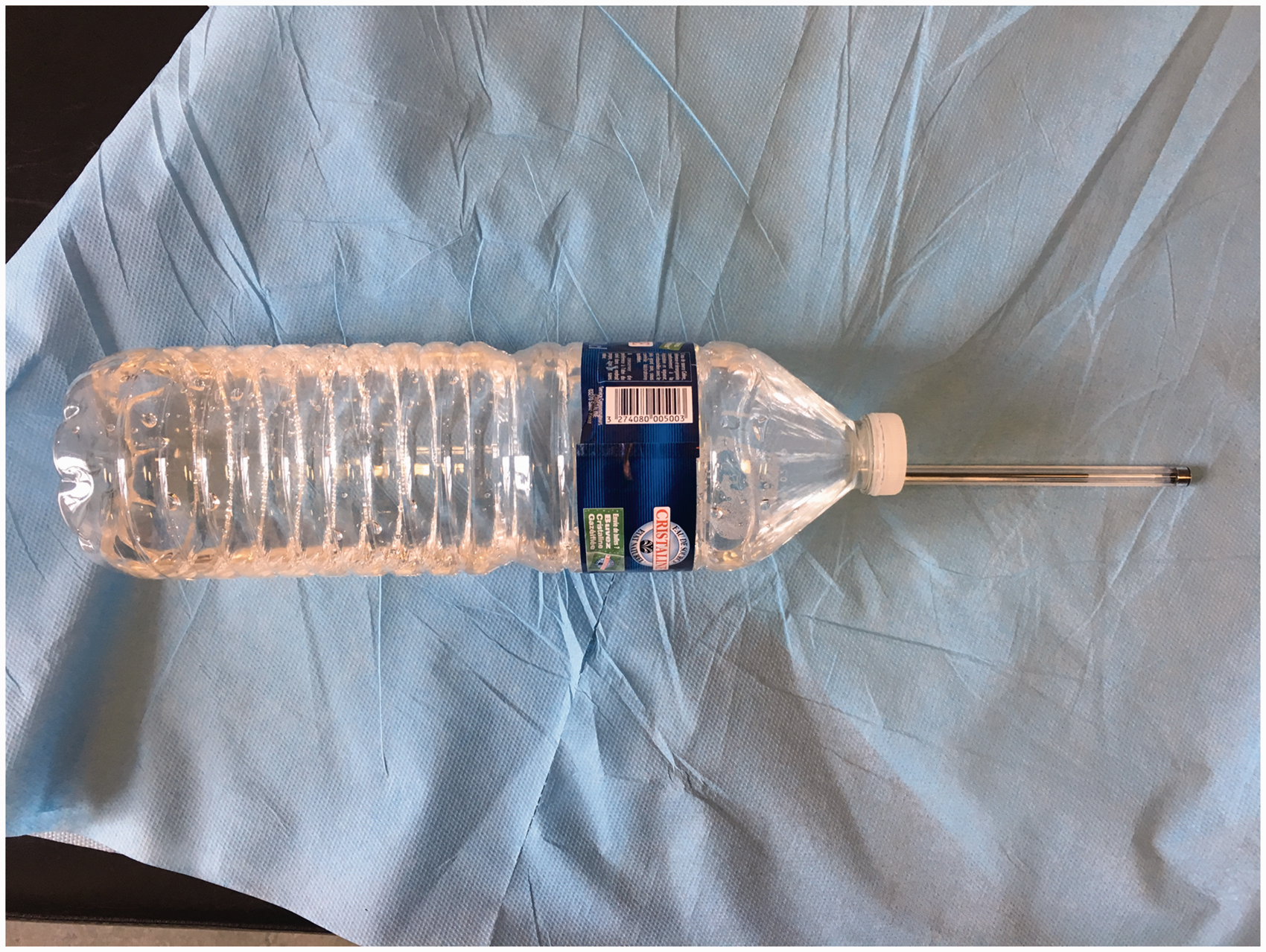
Reconstitution of the improvised material for the acid cannula.
A defecography (two years after the event) revealed, at rest, an anorectal junction at 1.5 cm below the pubococcygeal line. The anorectal angle was measured at 120°. The anal canal was closed, and the bladder was in a physiological position. During restraint, there was a clear closure of the anorectal angle and an ascent of the anorectal junction. Under the effect of abdominal thrust (Figure 2), there was a lowering of the anorectal junction 6 cm below the rest position, with rapid rectal emptying and evidence of high-grade circumferential recto-anal intussusception, at the limit of an externalisation, without associated enterocele. Recto-anal intussusception is to be considered as an invagination of the rectal wall into the lumen of the rectum, and the direct cause of constipation, incomplete evacuation and incontinence for this patient. 2
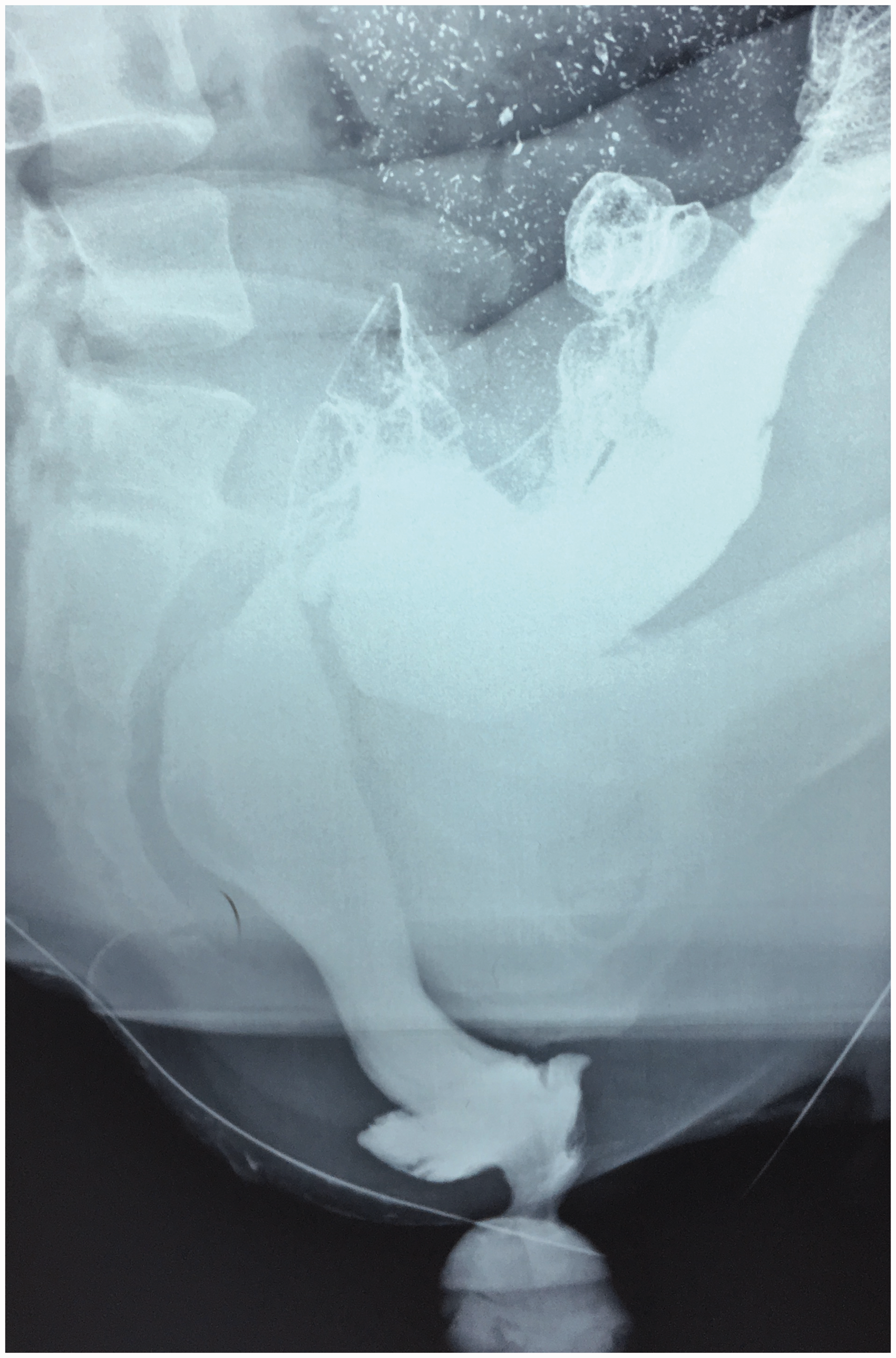
Defecography under the effect of abdominal thrust.
Acid is frequently used in the context of physical abuse on victims of torture, as well as by some refugees to ‘blur the tracks’. 3 Anthropologically, this gesture was aimed at reducing the victim’s masculinity, physically hurting him in his private parts. It would have been more direct to burn his genitals with acid, 4 but his aggressors preferred the insidious character of creating a handicap in terms of the autonomy of defecation. He is now obliged to wear toilet paper in his pants permanently due to almost continuous anal incontinence. The goal is to make the victim dirty, undesirable or abject in the eyes of others, particularly women. In sub-Saharan Africa, a single man who does not attract women and who does not have any children has no utility or any reason for existence (phallocracy or, at the very least, phallocentrism).5,6 The psychosexual and psychosocial effects of sexual (and assimilated) torture is mainly represented as concerns about the survivor’s masculinity (i.e. any sexual dysfunction becomes equivalent to a loss of identity). 7 Even if the lesion does not directly involve the penis and/or testicles, due to a destruction of intimacy and physical integrity, sexual dysfunction is the rule: ‘All those suffering from impotence were convinced that the problem was physical and caused by the torture. In each case, it was not until a urologist was able to show them that they were capable of an erection that the therapists were able to discuss psychological causes’. 8 As a consequence, unless they receive surgical intervention associated with psychological therapy, victims frequently feel isolated, afraid and unable to make contact with others. Suicide may occur. 9 A strong psychological follow-up has been organised for this patient, along with future surgery for recto-anal reconstruction.
Footnotes
Declaration of conflicting interests
The authors declared no potential conflicts of interest with respect to the research, authorship and/or publication of this article.
Funding
The authors received no financial support for the research, authorship and/or publication of this article.