



Abstract
The incidence of fatal staircase accidents in Japanese households has remained consistent for several decades, with staircase dimension regulations seeing minimal revisions since their inception. Studies concurrently investigating the influence of staircase factors and user factors on staircase accidents, particularly in terms of severity, are lacking. This study examined how these factors influence the severity of accidents by means of an Internet-based questionnaire survey. A private company was tasked with conducting the survey, and logistic regression analysis, encompassing both staircase and user factors, was performed on 165 individuals in the mild injury group and 129 in the severe injury group from a pool of 6945 responses. The odds ratio (OR) of the severe injury group to the mild injury group was assessed. For staircase factors, the OR of severe injury was 2.16 (95% confidence interval (CI): 1.23-3.79) for straight stairs, with increased OR observed with a higher number of steps and wider staircases. Regarding user factors, the OR was 3.80 (95% CI: 1.29-11.14) for individuals with visual disturbance, with the OR escalating with age. This study suggests that in Japan, among the legally defined factors for stairways, limiting the installation of straight stairways and setting limits on stairway width can reduce the impact on the severity of accidents. And, of course, it is crucial to promote the use of alternatives, especially among high-risk users.
Background
According to vital statistics in Japan, over the last few decades, the incidence of fatalities resulting from staircase accidents at home has remained generally consistent (Figure 1). 1 Although design standards for staircases in Japanese residences are established in the Order for Enforcement of the Building Standards Act enacted in 1950, notable revisions regarding staircase design have been infrequent, except for the mandatory installation of handrails in 2000. In 2006, the Act on Promotion of Smooth Transportation, etc. of Elderly Persons, Disabled Persons, etc., commonly referred to as the Barrier-Free Act, was enacted, and the accompanying enforcement order included new staircase provisions. However, these standards were mainly applied to public facilities, including hospitals and department stores, and no corresponding update had done for staircase design in private residences.

Trends in the incidence of fatalities from unintentional staircase accidents in Japanese households. The vertical axis represents the percentage of deaths from staircase accidents relative to deaths from accidents in the home, calculated by dividing the annual number of deaths from unintentional staircase accidents in the home by the annual total number of unintentional accidents in the home. The horizontal axis indicates the year. The steep decline in 1995 could be attributed to the update of the cause of death classification code from the International Statistical Classification of Diseases and Related Health Problems 9th Revision (ICD-9) to ICD-10 in the same year.
Given the lack of change in both the law and the number of deaths, the legal standards may not be in line with accident prevention. In addition, previous studies on staircase accidents have pointed out the possibility that they can be attributable to user inattention.2–4 However, studies that concurrently evaluate both structural and user factors in relation to residential staircase accidents, particularly from the perspective of accident severity, are lacking. The possibility of accidents that do not immediately result in death but can still disrupt daily life is conceivable, and identifying potential characteristics in such accidents could offer valuable insights.
Therefore, we conducted a questionnaire survey to conduct an exploratory study of possible factors contributing to the severity of staircase accidents in Japanese residences.
Materials and methods
This study is an exploratory cross-sectional observational study, which focused on residential staircase accidents across Japan.
No similar studies that conducted detailed surveys on the circumstances of staircase accidents was available, thus the questionnaire questions were independently developed with reference to national laws and regulations. The questions were designed to comprehensively include both staircase and user factors that could be implicated in accidents. The English translation of the survey questions is presented in the supplementary materials (S-Table 1).
The implementation of the questionnaire was outsourced to a company specializing in online surveys (ASMARQ Co., Ltd, Tokyo, Japan). The company has a large track record of market and academic research for governments, companies, and research institutions, and has acquired international standards for product certification (ISO20252, 2019).
The survey was distributed in March 2021 to 911,794 monitors registered with the company at that time. Respondents were first asked screening questions regarding baseline characteristics and the presence of accidents. Individuals with accidents prior to 1990 or stair remodeling after the accident were excluded from further investigation. Following the screening questions, respondents were stratified based on the number of hospital visits related to injuries sustained in the accident. Specifically, Level 0 was assigned to those with no injury; Level 1 to those with an injury but no or only one visit; Level 2 to those requiring two or more visits; and Level 3 to those necessitating hospitalization. Subsequently, a detailed survey was conducted on a first-come, first-served basis, targeting 100 respondents for each of the four severity levels. Indeed, at Level 3, the most severe category, the intended target of 100 respondents was not achieved. Consequently, the response quotas for other severity groups were augmented, and responses were collected until the overall number of respondents reached 400. A consent confirmation question was included before asking details about the accident. Since the study relied on a questionnaire survey of respondents who remained anonymous and pertained to past staircase accidents without any invasion or intervention on humans, ethical review by the institutional committee was deemed unnecessary.
The accident severity was dichotomized into two groups; Levels 0 and 1 were classified as the mild group, while Levels 2 and 3 were considered the severe group. The assessment of the impact of staircase and user factors on accident severity was conducted using odds ratios (ORs) of the severe group to the mild group and 95% confidence intervals (CIs), derived through logistic regression analysis. Additionally, categorical variables used as explanatory variables were similarly dichotomized to facilitate the interpretation of the results. To mitigate recall bias and enhance analysis accuracy, responses indicating more than one staircase in the residence and those with “cannot remember” for any question were excluded from the analysis. Adhering to the logistic regression criterion of a minimum of 10 events per variable, 5 the number of explanatory variables was set accordingly. The explanatory variables encompassed both continuous and categorical factors, including number of steps, width, treads, risers, staircase style (straight stairs or not), presence of handrails, and presence of anti-slip measures as staircase factors (See Figure 2 for dimensional terminology). Additionally, age, sex, presence of visual disturbance, whether the user was descending, and whether the user required handrails on a daily basis were considered as user factors. Multicollinearity was assessed using the variance inflation factor. Mann–Whitney's U test was performed for continuous variables, while Fisher's exact test for categorical variables. All statistical tests were two-sided at the significance level of 5%. Given the exploratory nature of the study, no correction for the multiplicity of tests was undertaken. All statistical analyses were performed with EZR (Saitama Medical Center, Jichi Medical University, Saitama, Japan) version 1.63. 6
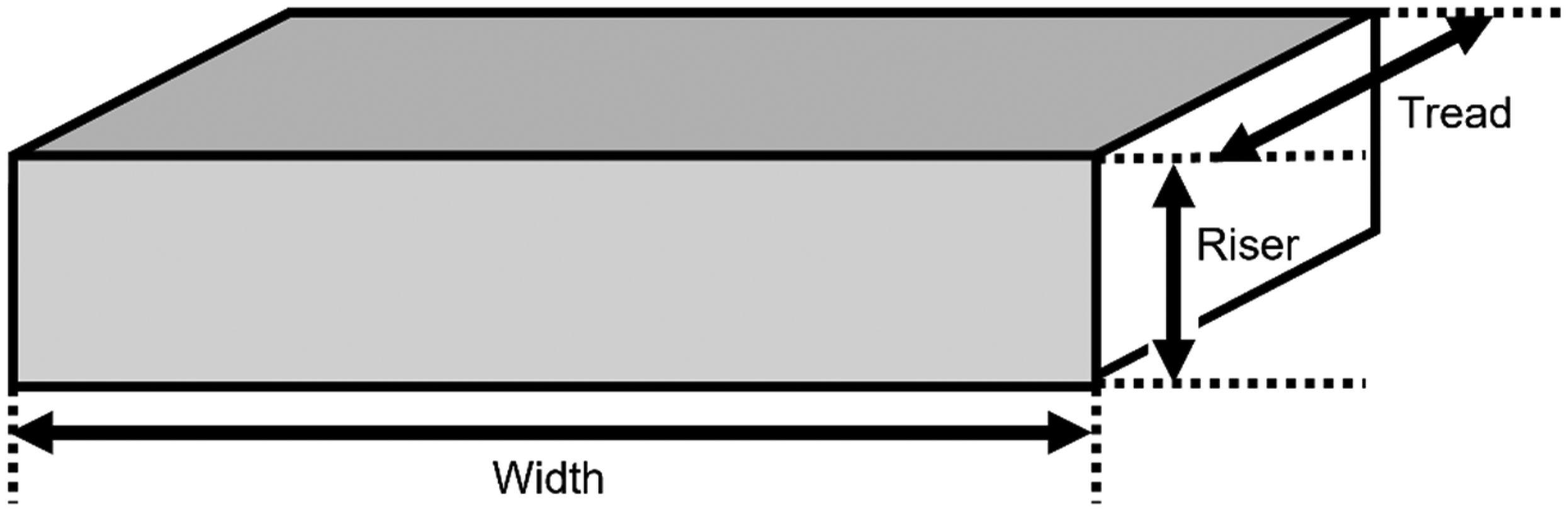
Terminology for the dimensions of a single step in this study. “Width” indicates the length, “tread” indicates the depth and “riser” indicates the height of one step, respectively.
Results
Following the distribution of the questionnaire, screening questions were answered by 6945 individuals. Subsequently, 211 respondents with mild cases and 189 with severe cases provided responses to questions about the details of the accident. The final analysis included 165 cases in the mild group and 129 cases in the severe group (Figure 3). Respondents in the severe group were older than those in the mild group, and the year of the accident was earlier in the severe group (Table 1).
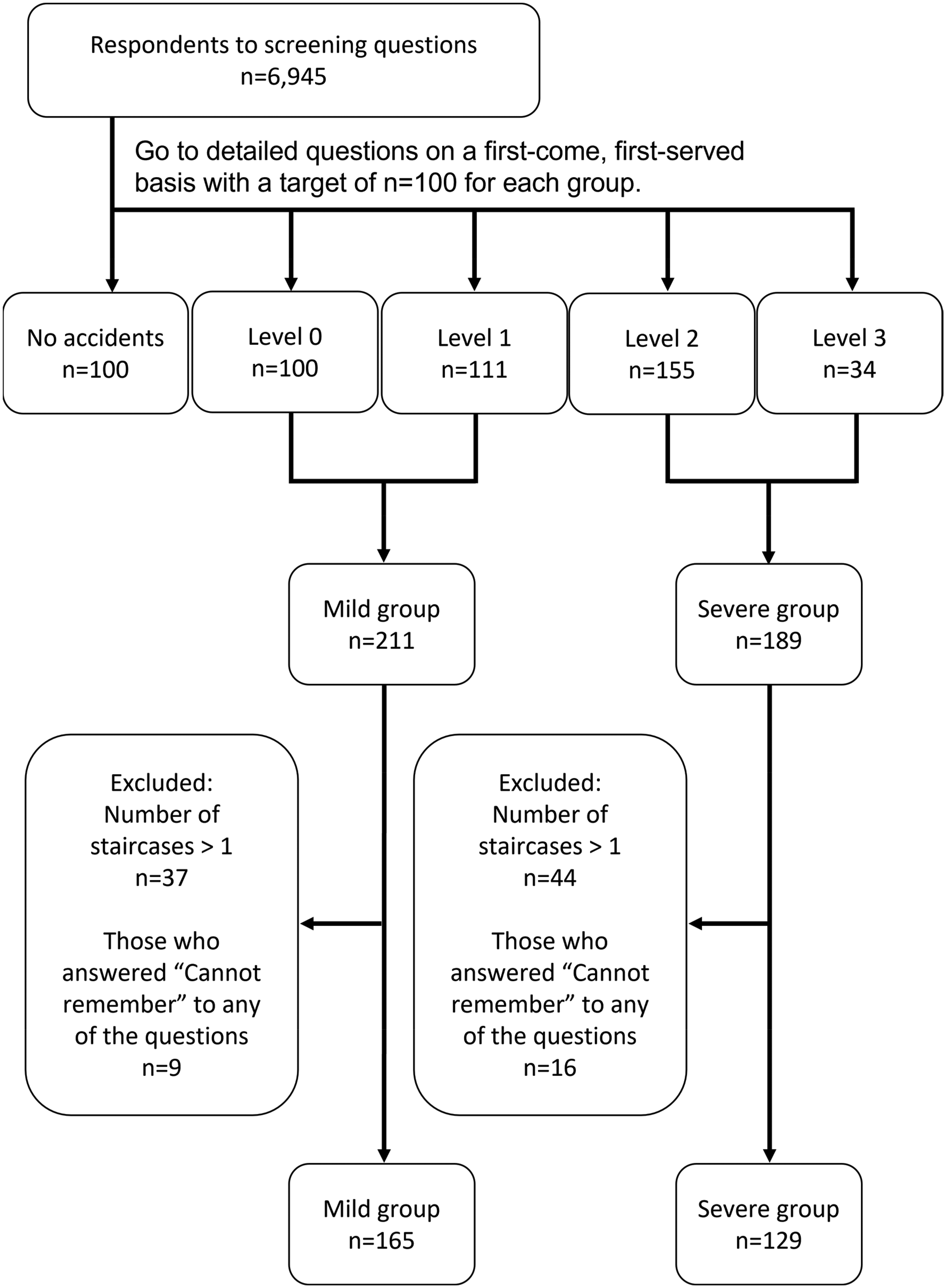
Flow of analysis target selection.
Characteristics of respondents and accidents.
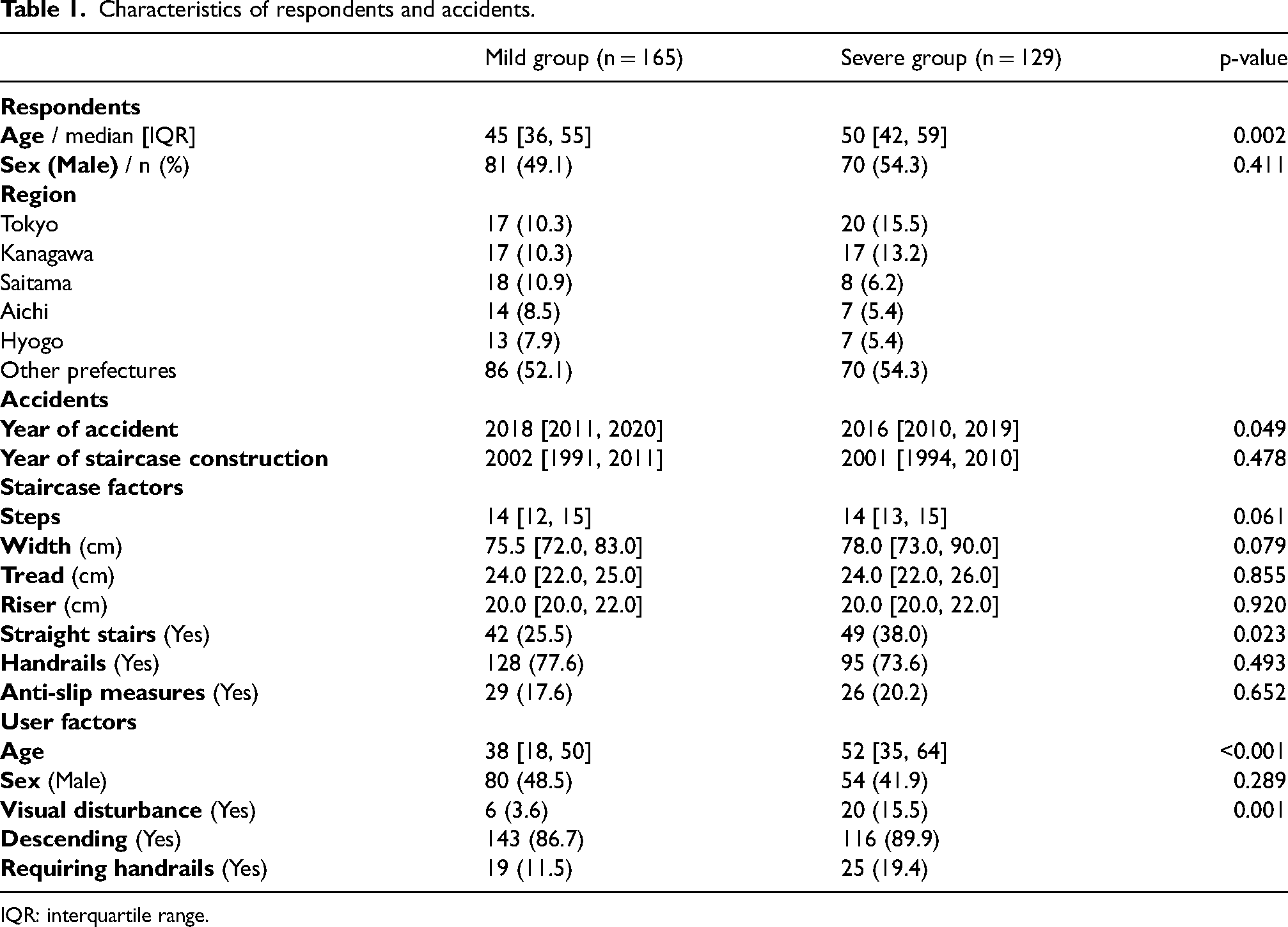
IQR: interquartile range.
The logistic regression analysis demonstrated that, for the stair factor, the OR for severity was 2.16 (95% CI: 1.23-3.79) for straight stairs compared to other styles (Table 2, Figure 4). Additionally, the odds of severity increased as the number of steps and the width of the staircase increased (Table 2, Figure 4). Regarding the user factor, the OR was 3.80 (95% CI: 1.29-11.14) in the presence of visual disturbance, and the odds of severity increased for older patients (Table 2, Figure 4).
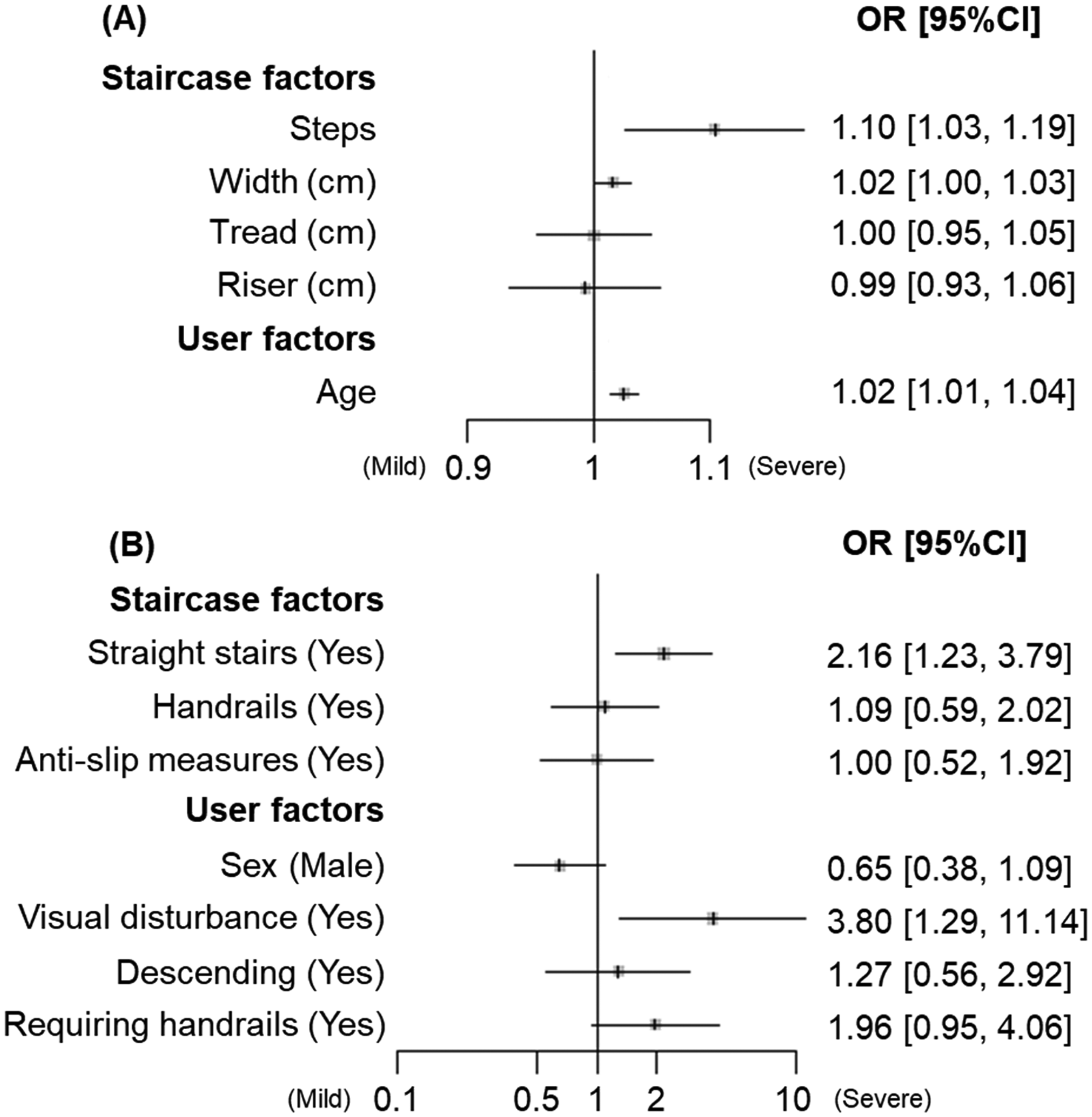
Forest plots of OR of the severe group to the mild group in accident severity. (A) It shows OR per unit for continuous variables; (B) It shows OR for categorical variables. OR: odds ratio.
Or of the severe group to the mild group in accident severity.
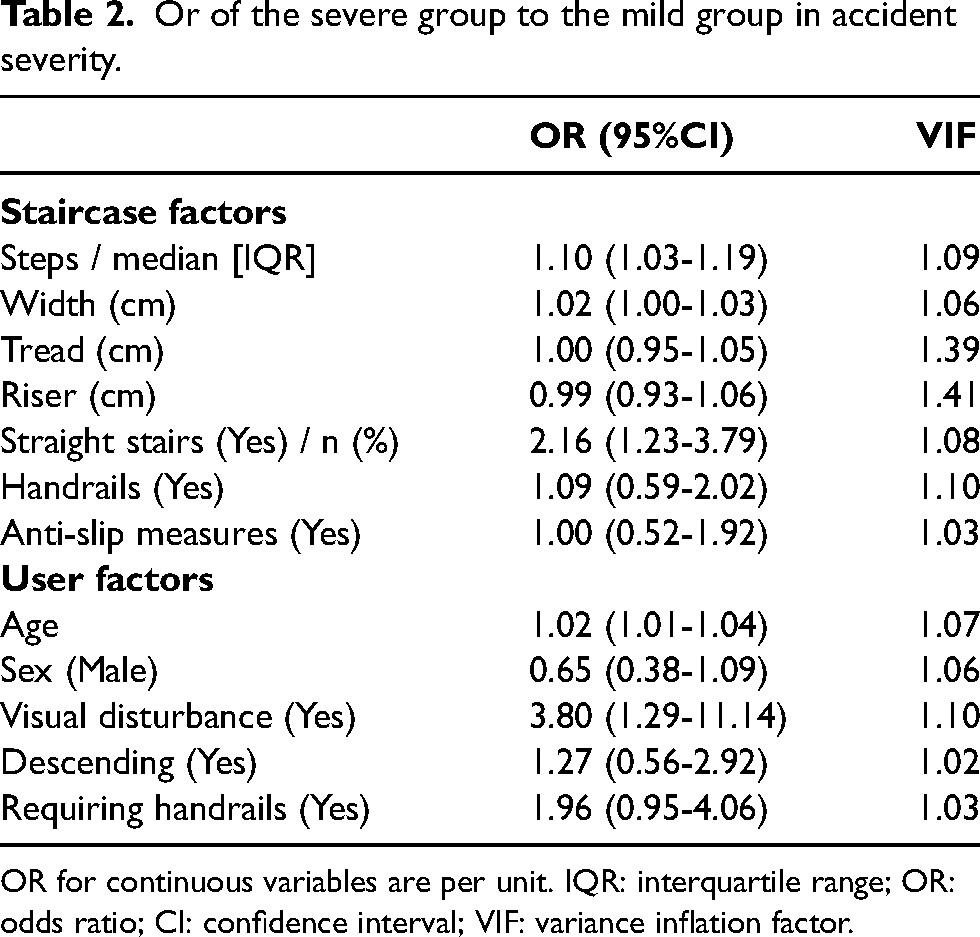
OR for continuous variables are per unit. IQR: interquartile range; OR: odds ratio; CI: confidence interval; VIF: variance inflation factor.
Discussion
In this study, staircase accidents were likely to be severe when the user was older or had visual disturbances. Furthermore, the presence of more steps, wider staircases, or straight staircases was associated with severe accidents.
Staircases with a large number of steps or those that are straight inevitably pose a higher risk of a significant drop from the point of collapse to the lowest step, which is likely to influence the severity of the injury. In accordance with a study on analysis of drawings from work accident sites in Tokyo, long, straight staircases were considered to be among the factors multiplying the severity of accidents, which aligns with these findings. 7 Regarding the width of the staircase, provisions typically establish a lower limit, which paradoxically resulted in wider staircases increasing the odds of severe injury. The severity of injury due to stair width may be due to the difficulty in reaching handrails and walls. Furthermore, while visual disturbances may be influenced by aging, no multicollinearity with age was identified in the present analysis. When considering the severity of the accident rather than the incidence, vision problems, as well as wide stairs, might hinder successful recovery actions, such as grabbing the handrail at the moment of a loss of balance. In terms of age, this result may be attributed in part to the decreased shock tolerance typically seen in older individuals. Several previous studies have indicated a rise in accident rates with advancing age,8,9 and this increased frequency may be associated with the severity of injuries sustained.
Staircase accidents often result from human error,2–4 such as tripping, and can be influenced by both user and staircase factors, potentially leading to severe injuries. Therefore, considering the public nature of stairways, it is better to make them accessible to everyone and error-free, but it is an important issue to consider a structure that is unlikely to lead to serious injury if an error should occur. However, due to the limited space available for staircases in Japan's narrow living quarters, 10 limitations will arise in imposing strict architectural constraints on staircases. While Japanese legislation mandates certain dimensions for width, treads, and risers, as well as the installation of handrails in stair design, these factors had minimal impact on severity in this study, except for width. Therefore, when considering the prevention of severe accidents, it is important in stair design to avoid straight staircases as much as possible and to make staircases as narrow as possible. Furthermore, as user factors, it may be more important to encourage high-risk users, such as those with visual disturbances, those who cannot climb without handrails, and the elderly, to use alternative means of stairs.
This study has several limitations. As this study utilized an online survey with questionnaire administration outsourced to a private company, respondents were selected from individuals who could register as monitors with the questionnaire company online. Thus, although respondents and accident victims do not necessarily coincide, the responses are potentially susceptible to bias. Moreover, considering the exploratory nature of the study, no prior sample size estimates or adjustments for multiple testing were conducted. This should be noted when interpreting the results. Additionally, the severity of accidents was evaluated based on the number of hospital visits related to the accident, which may not fully reflect the severity of clinical trauma. Further research is necessary to validate the reduction in serious injury accidents and assess the impact on livelihoods of alternative stair means.
In conclusion, this study suggests that in Japan, among the legally defined factors for stairways, limiting the installation of straight stairways and setting limits on stairway width can reduce the impact on the severity of accidents. And, of course, it is crucial to promote the use of alternatives, especially among high-risk users.
Supplemental Material
sj-docx-1-msl-10.1177_00258024251362543 - Supplemental material for Exploring the factors contributing to a severe injury in a domestic staircase accident
Supplemental material, sj-docx-1-msl-10.1177_00258024251362543 for Exploring the factors contributing to a severe injury in a domestic staircase accident by Takumi Minamiyama and Hiroshi Ikegaya in Medicine, Science and the Law
Footnotes
Acknowledgements
We thank Kaoru Inoue for his assistance in conducting the survey.
Declaration of conflicting interests
The authors declared no potential conflicts of interest with respect to the research, authorship, and/or publication of this article.
Funding
The authors received no financial support for the research, authorship, and/or publication of this article.

Supplemental Material
Supplemental material for this article is available online.
References
Supplementary Material
Please find the following supplemental material available below.
For Open Access articles published under a Creative Commons License, all supplemental material carries the same license as the article it is associated with.
For non-Open Access articles published, all supplemental material carries a non-exclusive license, and permission requests for re-use of supplemental material or any part of supplemental material shall be sent directly to the copyright owner as specified in the copyright notice associated with the article.
