



Abstract
Deaths caused by animal attacks in urban as well as rural areas are rising. With dwindling forest cover and with more interaction of animals with humans in day-to-day life, we need to understand the reasons, manner and causes of these fatal events. We studied 151 cases of fatal animal/human conflicts and in particular, the manner and mechanism of causation of injuries with respect to different types of animals. In this region there were more fatal snake bites followed by cattle attacks. Humans are at some risk while in the vicinity of animals whether in the wild or in human settlements. Human/animal conflicts occur due to reducing habitat for animals and the demands of humans. One must be aware of the potential dangers from animals and as a health care provider it is our duty to educate the public at large. They need to be cautious when around animals, seek medical care after an animal injury and wear protective equipment when working around or with animals.
Introduction
Animals whether wild or domesticated have a sizeable population in our ecosystem. Their presence has great implications for the maintenance of the food chain and the surrounding environment. The Vidarbha region of Maharashtra in India is known for its forest and population of tigers in India. Nagpur city has been rightly declared as the tiger capital of India. The increase in the number of tigers, leopards, bears, wild boar, etc in Vidarbha may be heartening for animal activists but the rise in human deaths due to incidents of human/animal conflicts concerns the authorities.
News of people dying due to animals entering human settlements are increasing. Dwindling green cover, unabated encroachment of forest fringe areas and irregular monsoons have led to growing human/animal clashes in the Vidarbha region of Maharashtra. Recently, local people in forest areas demanded the killing of tigers and leopards that stray into their settlements. Similarly, there is a rise in the population of stray animals in both rural and urban areas while domestic and pet animals form a significant percentage of the animals that interact with humans in their daily lives. When handling such animals humans may get injured and some even die. The purpose of this paper was to evaluate the current situation of human fatalities caused due to animals, particularly higher animals whether wild or domesticated like tiger, leopard, bear, boar, dog, bull, etc.
Material and methods
The present study was carried out in the Department of Forensic Medicine and Toxicology at Govt. Medical College, Nagpur, Maharashtra, India from 2009 to 2014. It was an observational study. Cases subjected to medico-legal autopsy and which met the criteria for human/animal conflicts were studied. Human fatalities caused by animals, particularly larger animals, whether wild or domesticated like tigers, leopards, bears, boars, dogs, bulls, etc were studied. Details of the manner and cause of death were taken from the police records, relatives’ histories and the relevant medical records.
Results
A total of 16,059 cases were subjected to autopsy between 2009 and 2014. Out of these, 151 cases fulfilled the criteria for human/animal conflicts.
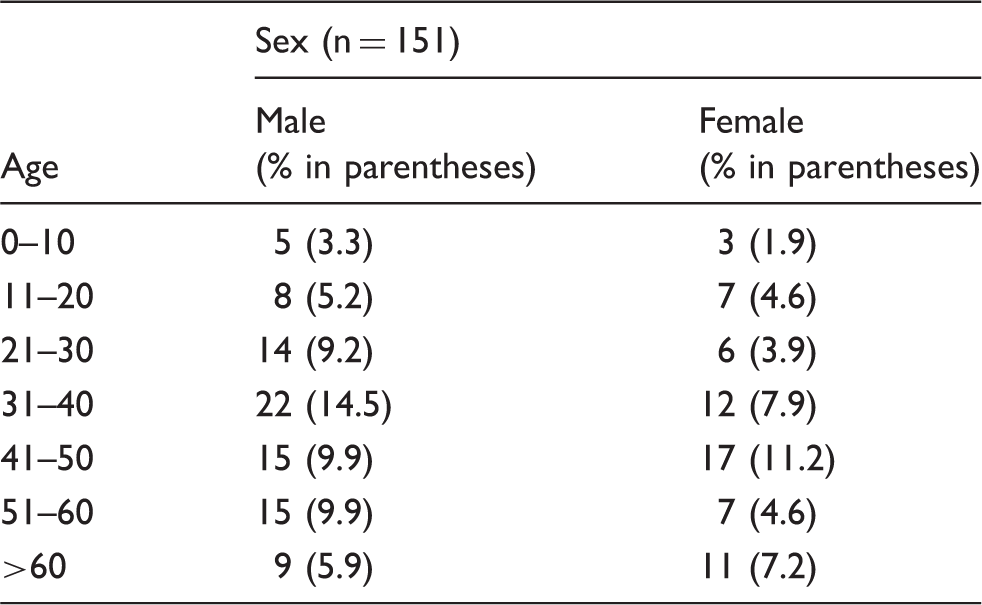
Age and sex distribution of cases of human fatalities in animal attacks.
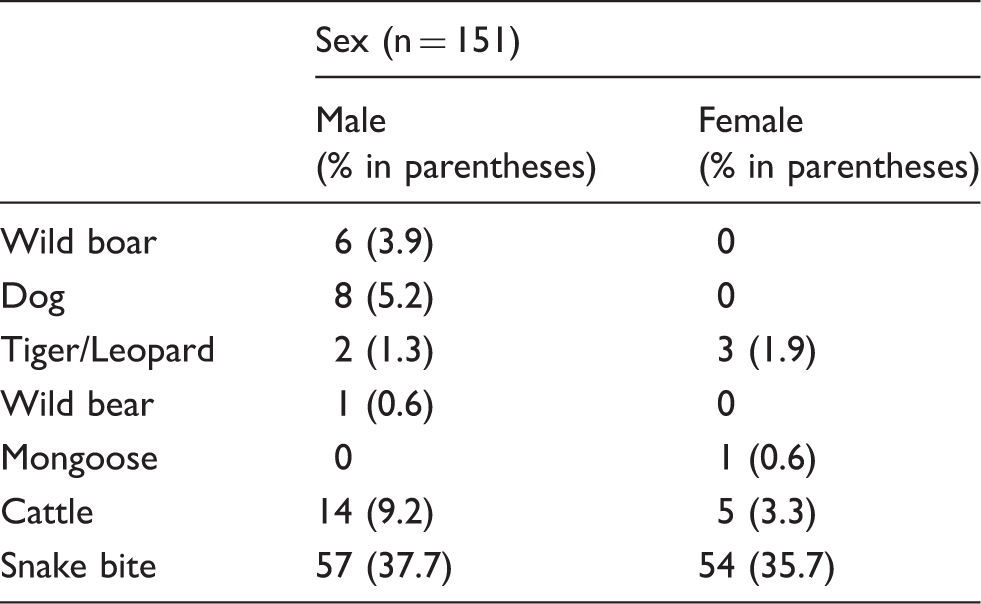
Animal involved in attacking humans.
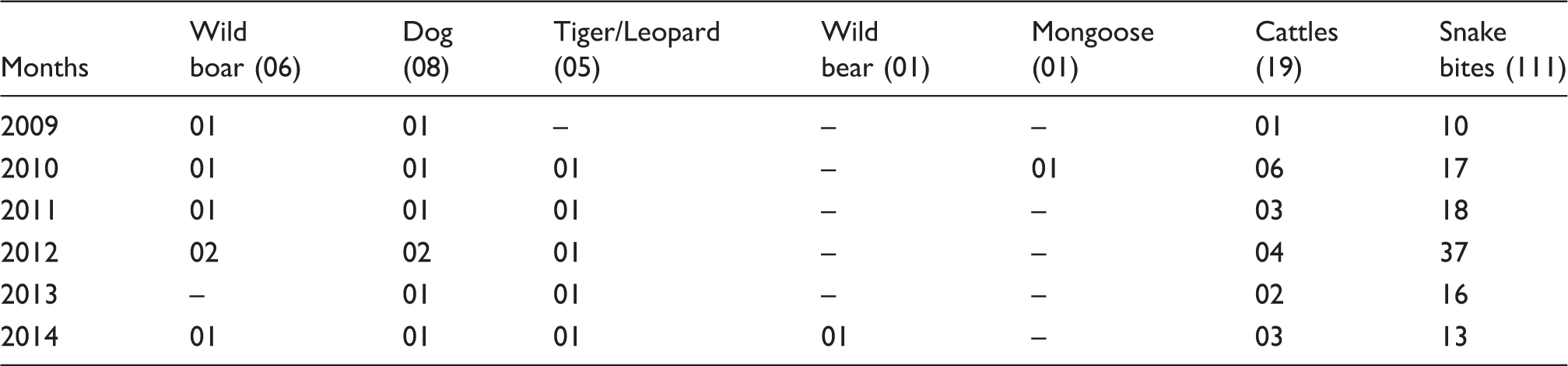
Year wise distribution of cases of animal attacks.
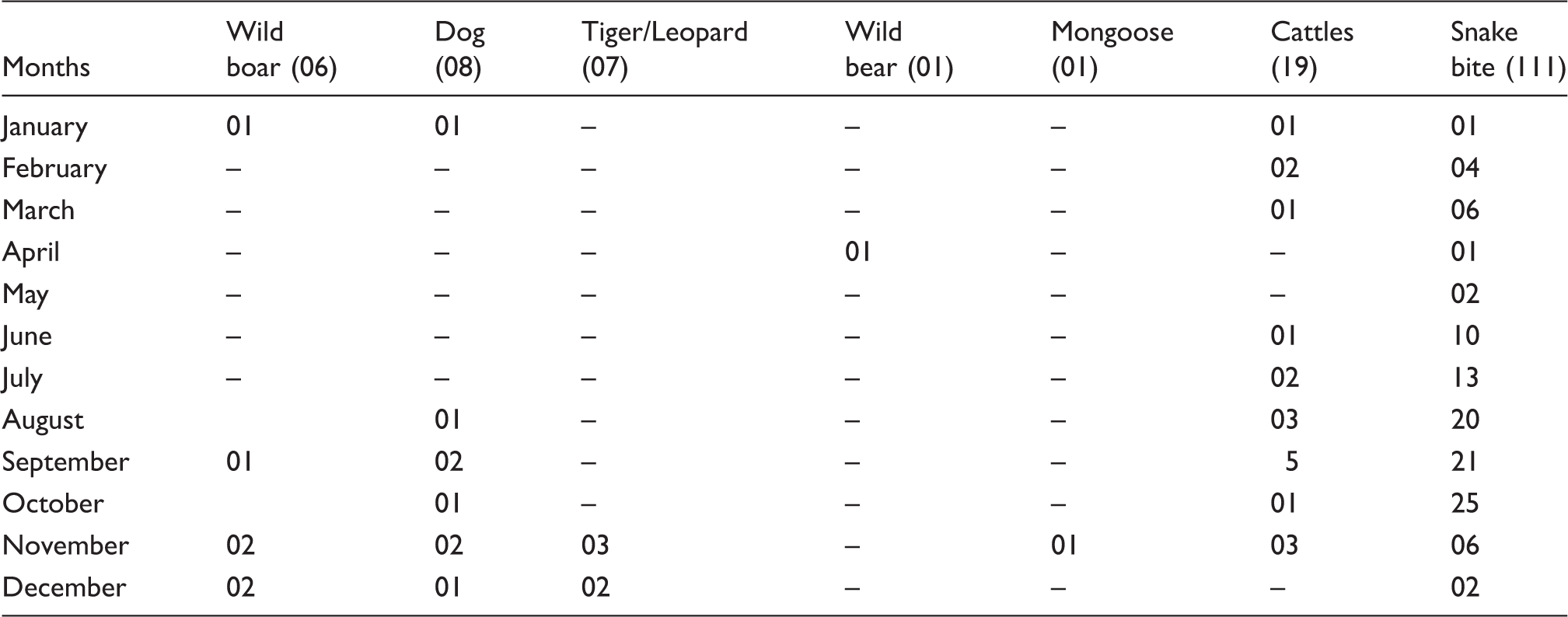
Seasonal distribution of animal attacks.
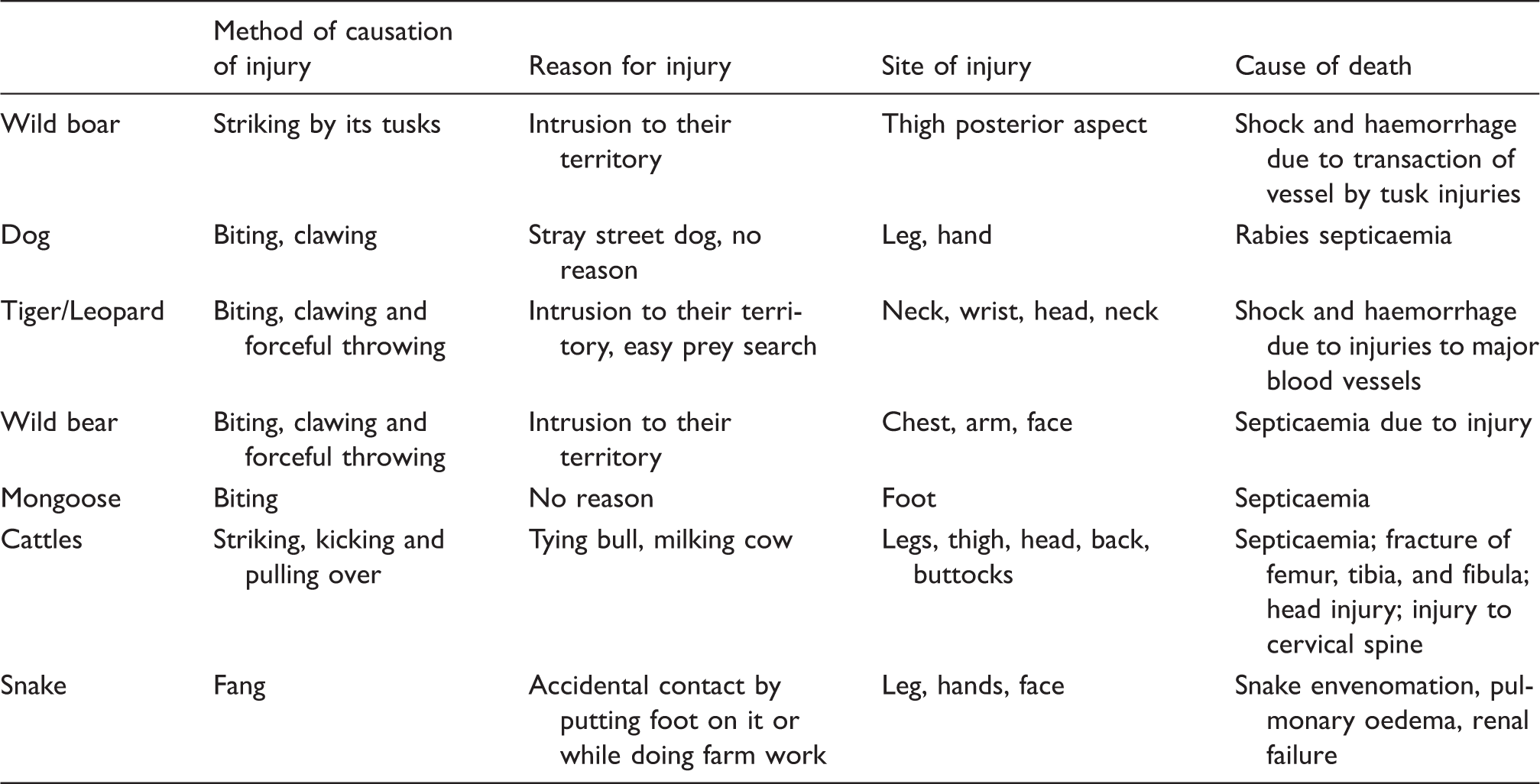
Evaluating the reasons for animal attacks it was observed that intrusion into their territory was the commonest reason followed by routine tying or milking of domestic animals. The snake bites occurred accidentally due to stepping on a snake or while carrying out farm work.
Place of occurrence of animal attack.

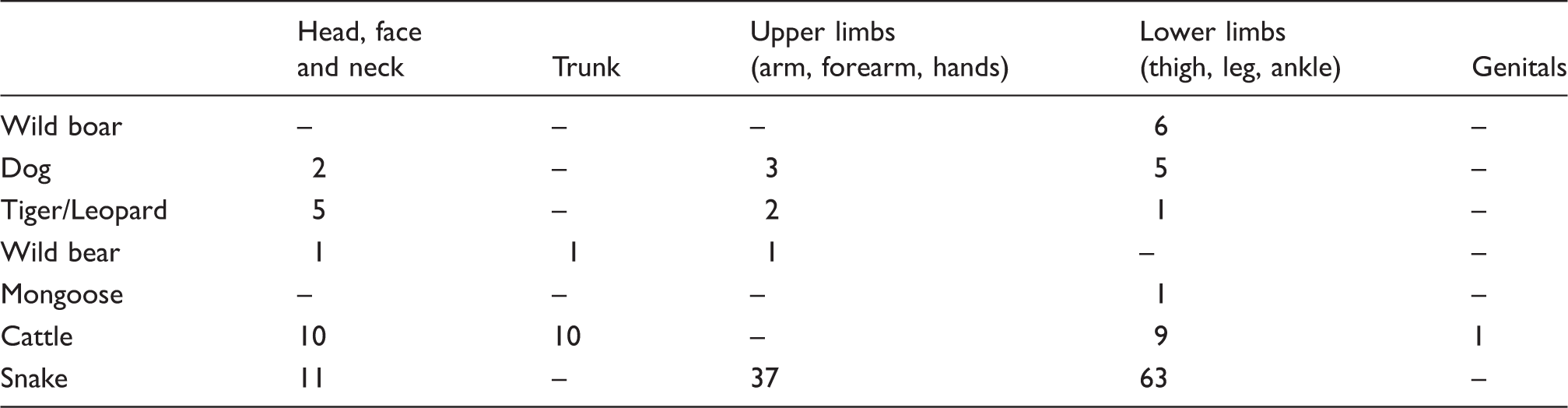
Body parts involved in animal attacks.
Mechanism of animal attacks to human.
Discussion
The Nagpur region is well known for growing oranges and cotton. Vidarbha has two-thirds of Maharashtra’s mineral resources and three quarters of its forest resources and is a net producer of power. Vidarbha has many wildlife sanctuaries and projects like Tadoba Tiger project, Melghat Tiger Project, Pench Tiger Project, Boar Wildlife Sanctuary, Nagzira wildlife sanctuary and Navegaon National Park, near Gondia district.
It has a considerable population residing in rural as well as urban areas. Most of these areas are surrounded by forests and are under cultivation. Man to animal contact arises right from his household to the vicinity where they go. Domestic and farm animals from the household as well as wild animals constitute a major share of attack on human beings.
Animals are defensive of their homes and territory and will probably attack if they feel threatened.
The reason for the particularly high number of deaths in people aged over 30 may be due to their more active working pattern and both men and women work together in rural areas, farming and/or collecting wood for fuel, etc. However, men are more likely to be herding large animals than women and hence more likely to suffer injuries. Langley 1 observed that men and children younger than 10 had the highest rate of death from dog attacks.
Lathrop 2 found that the most of the dead were male, and these included deaths of jockeys and ranch workers. However, Quiles et al. 3 found equal distribution of cases by gender, and people aged 18 years or more had the highest incidence of animal bites and attacks.
Most of the fatal attacks in our study were from snakes followed by cattle and dogs. Ornehult et al. observed most fatalities in cases where horses were involved, followed by cattle and one case each of a moose, a lion, a dog and a ram. In the horse-related fatalities, the most common cause of the accident was due to the horse being scared or rearing and causing the rider to fall off his horse or off the cart. All the cattle-related fatalities were due to aggressive animal behaviour. 4 Similar observation was seen by Lathrop who found that horses were the most frequently implicated animals, with 68% of deaths due to a person being thrown from, crushed, dragged or kicked by a horse, followed by cattle (14%) and dogs (5%). Venomous reptiles caused three deaths, whereas a bear was responsible for one death. 2 Forrester et al. 5 observed that the largest percentage of animal-related fatalities was attributable to farm animals. There was an increase in the number of deaths attributable to Hymenoptera species like hornets, wasps and bees. Similarly, there was an increase in dog-related fatalities, accounting for around 28 fatalities per year and 13.9% of the total animal-related fatalities. 5 Quiles et al. 3 also observed that dogs were reported to be involved in most cases of animal bites (81.1%). In a study done by Drudi 6 the risk that cattle pose to workers was proportional to their share of farm mammals overall. In contrast, horses were involved in some 3% of fatalities, but account for two-fifths of the work-related fatalities involving farm mammals. Not surprisingly, pigs and sheep on farms pose a low risk proportional to their numbers. 6
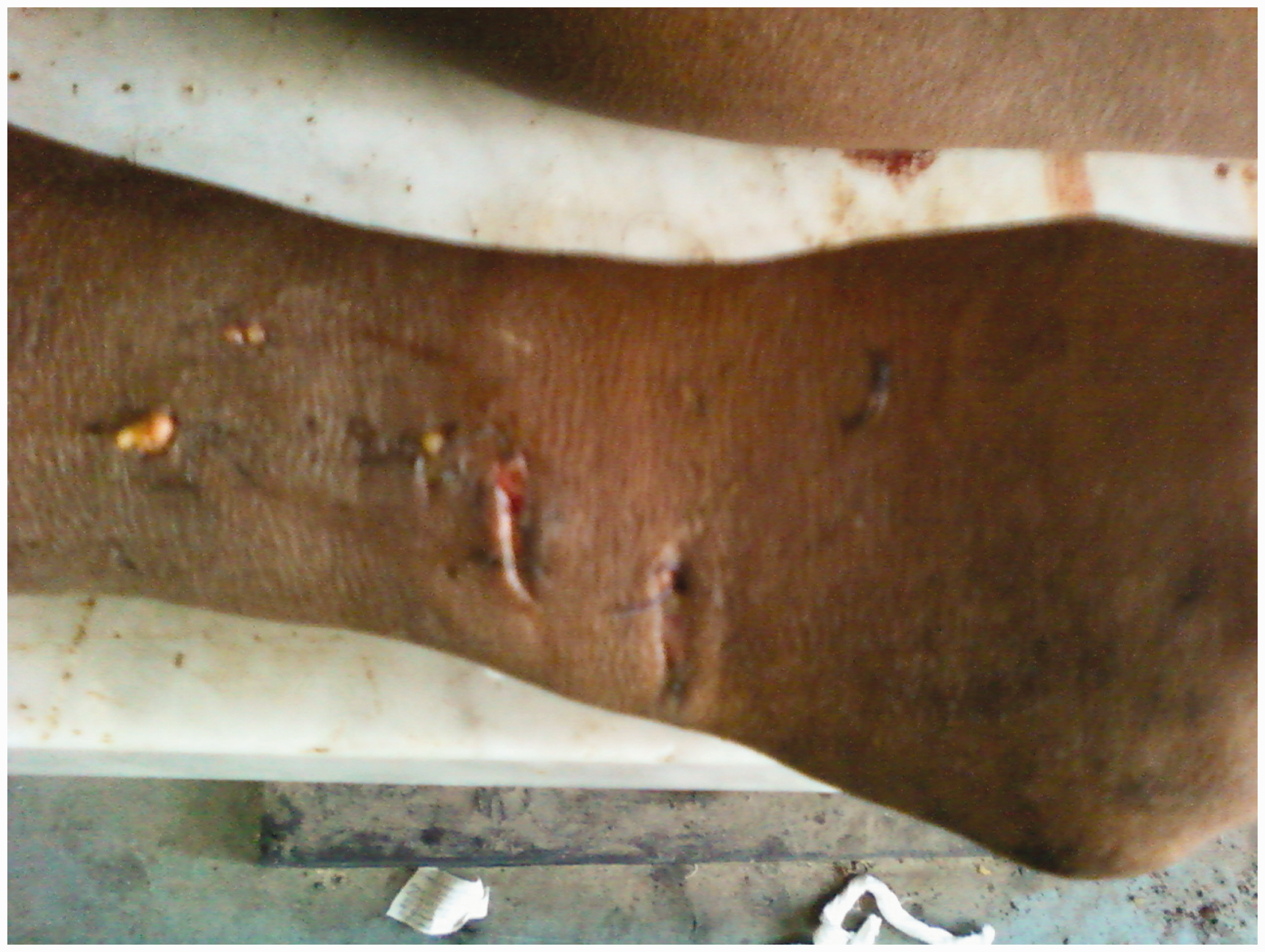
In the present study, wild boar and dogs were found to have attacked men while they were in fields where their animals were grazing (Figure 1). The wild boar that attacked had piglets with it. In cattle-related cases, where the cause of accidents was known the attacks resulted from aggressive behaviour of the animals.
Wound caused by wild boar attack.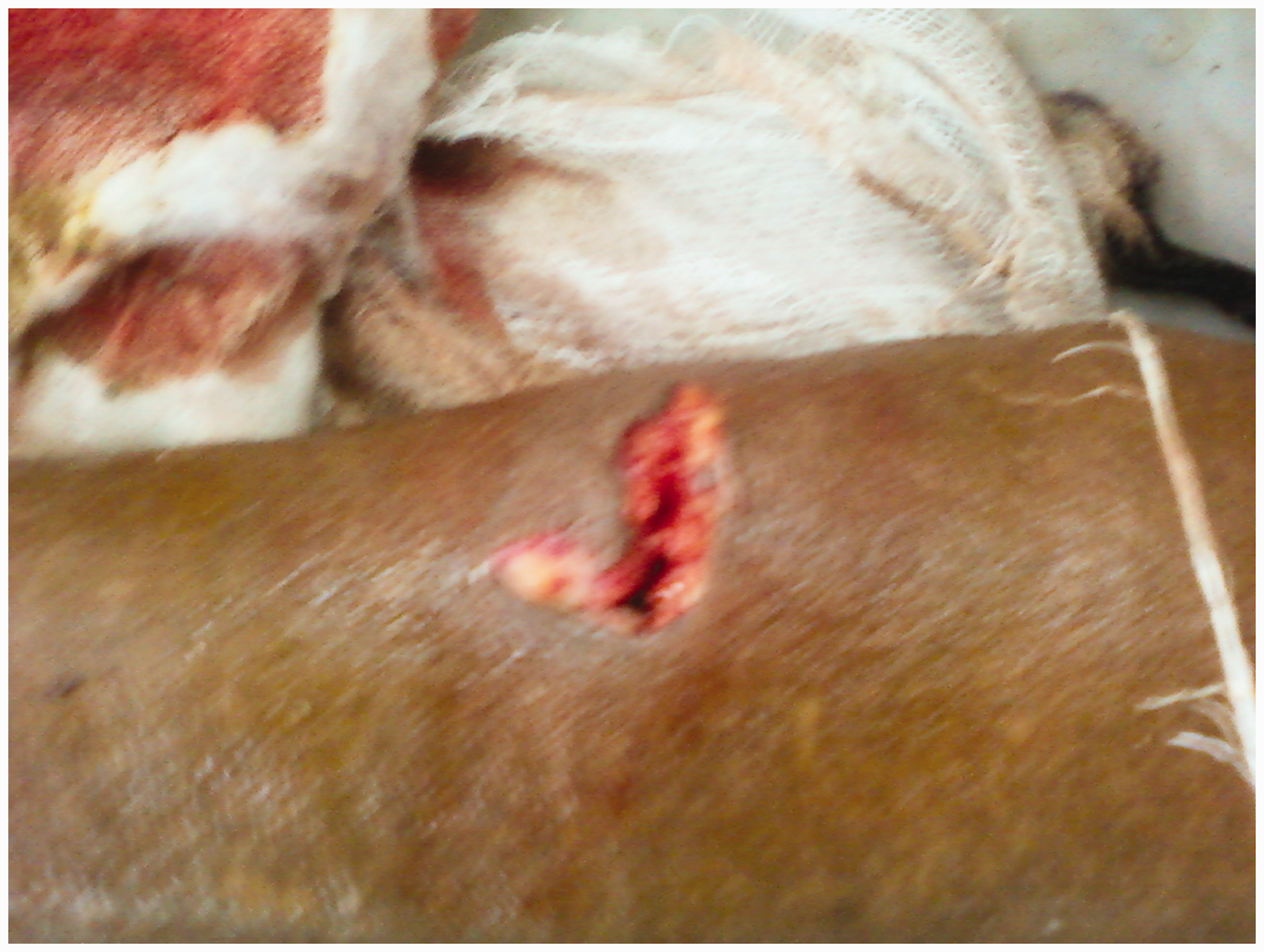
In attacks by tigers, the head, neck and face along with the upper and lower limbs were involved (Figures 2 and 3). This is due to the grabbing and pouncing hunting techniques used by large carnivorous animals. By contrast, in cattle-related incidents, injuries to the head and chest were equally common and the handling of untethered bulls in the presence of cows is very dangerous and should be avoided.
3
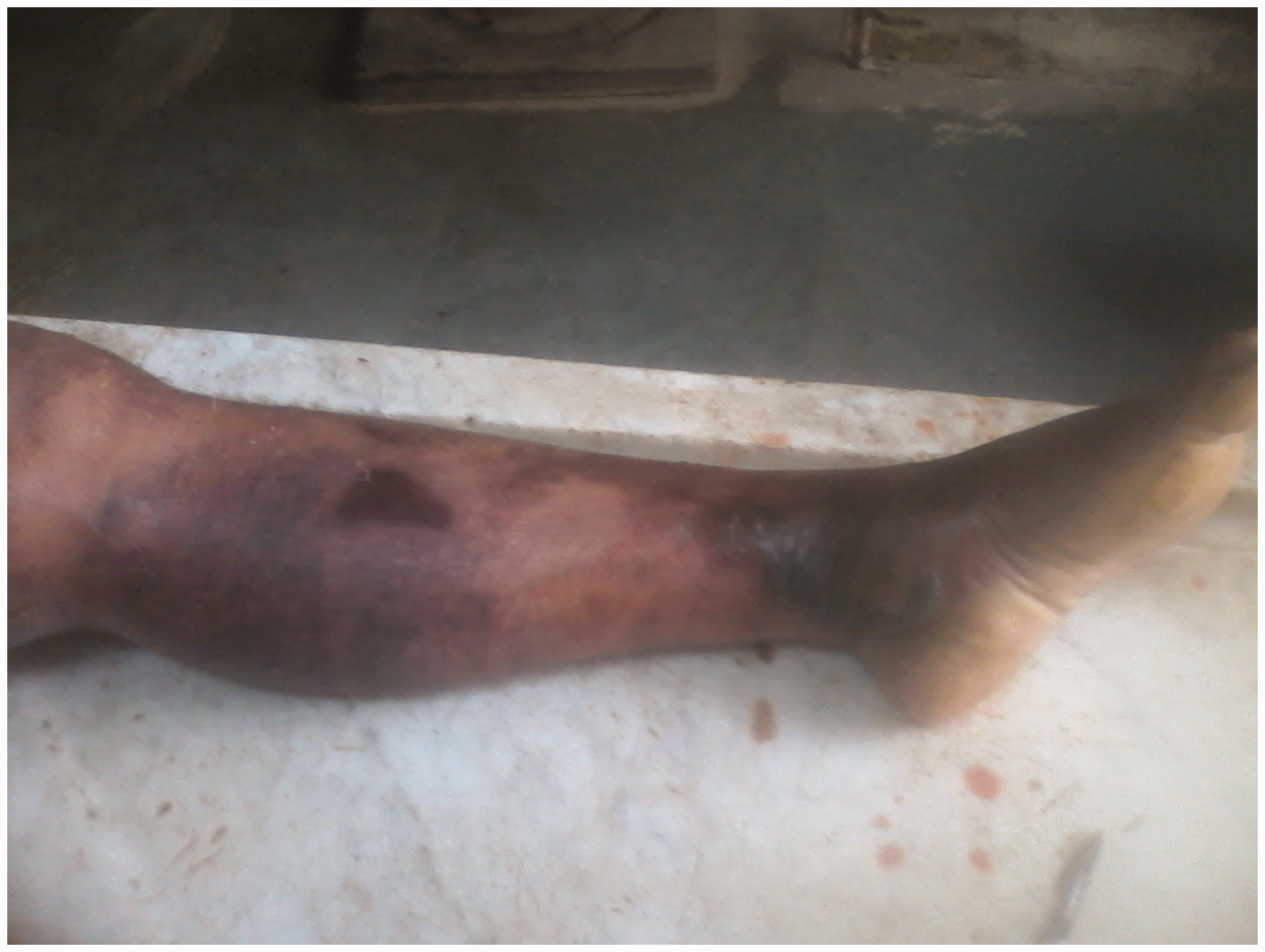
Snakes exclusively bite lower and upper limbs (Figure 4). This may be due to the natural reach of the snake while its victim was engaged in a farming activity or due to the person accidentally stepping on it.
Evidence of tiger bites on neck. Tiger bite marks on limbs. Vasculotoxic snake bite.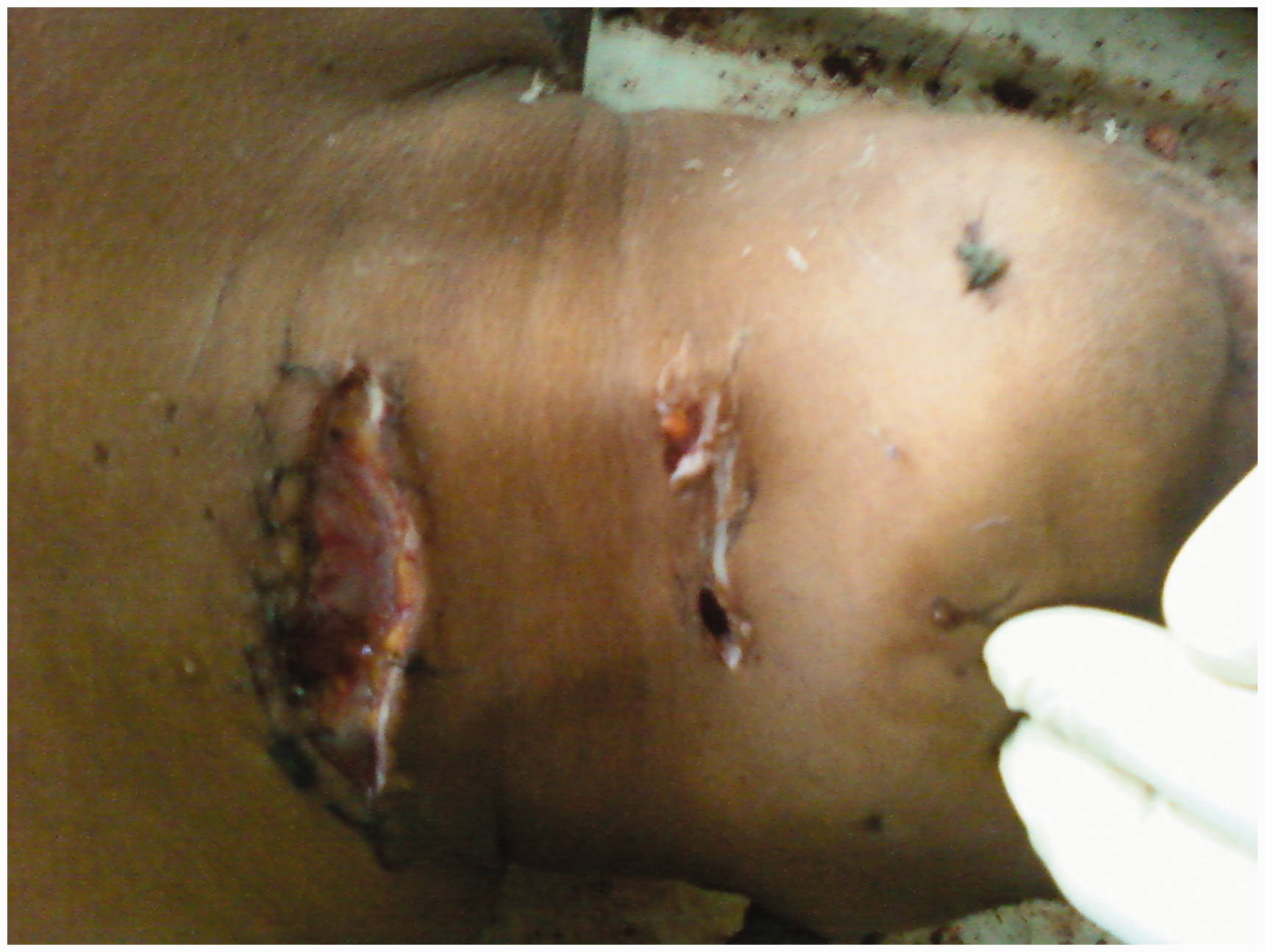
Horse-related accidents often resulted in head injuries while in cattle-related accidents head and chest injuries were equally common. 4 Quiles et al. 3 found that upper extremities were involved in 43% of these injuries. Around 41% of bites and attacks by dogs and 75% of bites and attacks caused by other animals were documented as having been provoked. In children of < 13 years, head, face or neck injuries accounted for more than 75% of cases whereas 65.9% of the injuries in the upper extremities were seen in adults (>18 years). Animal bites and attacks in the upper extremities were more common among injuries caused by an animal other than dogs (71%). 3 Internal and intracranial injuries comprised more than two-thirds of work-related fatalities involving cattle and horses. Intracranial injuries are a major cause of death in accidents with horses but not with cattle. By contrast, internal injuries play a major role in fatal injuries involving cattle but not horses but they both involve a high percentage of injuries to the trunk other than the back or shoulder.
The number of fatal and non-fatal injuries involving dogs is great demonstrating this as a larger work hazard. Outdoor workers account for three-quarters of fatal insect injuries. Attacks by animals or stings or bites by venomous animals or reptiles involved three-fifths of the animal-related work fatalities and there were few work-related fatalities involving snakes or other reptiles, sheep, pigs or rodents. 7
Most of the attacks in our study occurred at work – on farms or in jungles while people were collecting wood for fuel. There were cases where cattle injured victims while they were being milked or the person suddenly moved behind them causing them to feel threatened. Due to the residential pattern in rural areas of India, Kutcha Houses (i.e. huts made of mud or bushes), a snake or a mongoose can find places to hide and if they feel threatened they will attack people. Most animal/human attack deaths happened at home 7 with 67% in remote locations, which caused delayed access to treatment. 2
There was a marked seasonal variation with most animal/human attacks occurring in the mid-monsoon to mid-winter seasons when animals are breeding and will be guarding and feeding their young; at these times a person approaching may cause alarm and so prompt an attack.
Each year demonstrated a more or less similar pattern of animal attacks save for 2012 when there was heavy flooding in our area due to heavy rains.
Human/animal conflicts occur where there is competition for habitat and in areas of decreasing flora and fauna for animals to eat. People need to be sensible and sensitive to the potential dangers animals can cause both in the wild and when working with and around them. They should wear protective clothing or helmets where this is appropriate and have first aid equipment readily available. It is important to seek prompt medical care and advice after an animal injury.
Footnotes
Authors’ contributions
All authors were actively involved in the preparation of manuscript, data collection and review.
Declaration of conflicting interests
The author(s) declared no potential conflicts of interest with respect to the research, authorship, and/or publication of this article.
Funding
The author(s) received no financial support for the research, authorship, and/or publication of this article.