




Abstract

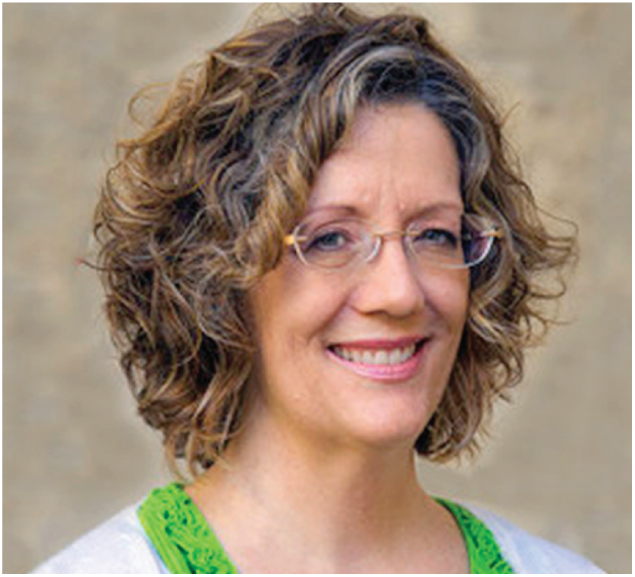
Photo of Teryl Dobbs from the Mead Witter School of Music, courtesy of Mike Anderson.
Kevin was one of the best teachers I ever had. I got to know Kevin (not his real name) because I was his choir teacher for a year in middle school. Kevin joined choir because he needed an extra class to fill his schedule; I taught choir because I loved singing and working with middle school adolescents. Kevin was one of those guys who loved attention, especially from the girls in choir. He had a keen, dry sense of humor coupled with a huge grin that drew us to him. What was not to like?
Kevin was also that choir member whose music folder was a complete disaster—octavos jumbled over the place in all kinds of disarray with markings scribbled up, down, all around . . . when he remembered his pencil. Sometimes I thought Kevin was intentionally disorganized to get one of us to help him so that he could flirt with those big brown eyes of his. Being a choir newbie, Kevin took a while to get the hang of things, but he gradually found his groove from warm-ups to repertoire. As was true of many of the young men who were in middle school choir, I didn’t know from one day to the next where his voice would land, and neither did Kevin, but believe me, he was stoked when his voice started getting lower—he was loud. Matching pitches was never Kevin’s strong suit, but then, for many of us, in-tune signing can be an aural game of hide and seek. But he had an excellent ear from his years of listening to music on his own: If one of us missed a pitch, rhythm, or part of the text, Kevin was sure to let us know.
Kevin left choir after a year to attend high school; I really missed his funny and caring self and his dependability—he was always there for us. I hope that he knew that we were there for him. I never found out.
Kevin was in eighth grade, and up to that point, he had spent most of his school career segregated in the special education resource room 1 due to what colleagues had labeled as his profound disabilities. Apart from participating in what was then called adaptive music and physical education classes, Kevin interacted very little with students outside the special education classroom. Kevin used a wheelchair powered by Doreen, his aide. He could articulate sounds, but combining those sounds to create words was beyond him at that point. Kevin could not write or feed himself. He needed Doreen to assist him in those activities as well as using the toilet. The special education teacher had heard that I “was good with those kind of kids” and asked if I’d “take him on.” The only choir that fit into Kevin’s schedule was the seventh-grade girls’ choir rather than the young men’s choir. My arguments about Kevin’s place in the young men’s choir could not dent the ironclad supremacy of the school’s course schedule, so we became a girls’ choir plus Kevin. The girls grew to adore him, and he adored them in return.
Kevin and Doreen usually arrived early for our class and waited in the hallway outside the choir room. One day as I rounded the corner to the choir room, I heard Kevin vocalizing—loud and proud, nonstop: This kid for whom speaking was a challenge was singing our vocalises and warming up for class. As the rest of the choir arrived, Kevin demonstrated his vocal knowledge, and as expected, the girls loved it, showering him with high fives and hugs (maybe it was part of his plan). He began vocalizing each day in the hallway before class, and the rest of us followed his lead, often segueing directly into the day’s singing. Kevin never knew that he had become a key component of my lesson planning.
That year, this choir of thirty-five middle school girls and one boy taught me about community, equity, and radical acceptance; 2 embracing difference as a valued and regular part of life; and enjoying individuals for who they were and not for what we wanted them to be. Most important, I learned about what it means to truly see the human being in front of me. Sometimes it was incredibly challenging, but our good days as a community outnumbered our bad days. I began to wonder about disability in relation to what I understood and valued about ability: Where was it? What was it? Was it in Kevin? In the environment of my classroom? In my attitude? In the school’s and community’s attitudes toward him?
These questions have continued to follow me for my entire career. What I know now from my work in Disability Studies (DS) 3 is that the choir and I fumbled our way into making our classroom a bit more inclusive for Kevin and moreover, for each one of us. Kevin’s differences completely stymied me at first—I had agreed to “take” him into the choir, but my gut reaction was that of “What am I going to do with this child?” From a DS perspective, I know now that my response emerged from my closely held, enculturated beliefs about what I considered as normal and able—that difference was a deficit and that individuals who were “different” had to be “fixed.” But there was no fixing Kevin; he was who he was, just like every other child in that choir.
My initial response to Kevin—that his differences were deficits needing repair—can be best understood through the lens of the medical model of disability. The medical model situates individuals outside what is accepted as the norm or “normative” because differences—disabilities—reside unequivocally in the body. 4 As a result, a disability is all too often understood as a personal issue—a viewpoint that stigmatizes individuals who are marked as different. The medical model to which so many of us were attached at the time allowed my colleagues and me to marginalize Kevin on multiple levels: He was kept apart from the school population at large because of his embodied differences and was viewed from the perspective of limitations—what he could not do as opposed to what he could do.
The medical model is hard to shake and remains robust. We know this from our everyday experiences as well as based on how disability is reflected in laws like the Individuals with Disabilities Education Act (IDEA) and the Americans with Disabilities Act (ADA), which are intended to assist individuals with disabilities. However, over the past twenty years or so, new theories emerging from Disability Studies have begun to disrupt the medical model’s hold on thinking about human difference. The following concepts present alternative ways of thinking about disability and more important, to transform how we see, interact with, learn from, and value and cherish human differences:
Recognizing and understanding ableism—our preferences for the nondisabled body over the disabled body. 5
Considering disability as a social construct: “Social attitudes and institutions determine, far greater than biological fact, the representation of the body’s reality.” 6
Thinking of disability as complex embodiment: 7 It is an intersectional, cultural identity that extends throughout the course of our lives and embraces race, gender, sexuality, class, aging, and illness.
Acknowledging that disability occurs in specific social and cultural locations: Spaces of daily interaction that include schools and music classrooms or anyplace where disability is perceived as something that must be repaired or is a problem to solve. 8
These ideas encourage us to think kaleidoscopically about human difference: If we slightly shift the axis of our thinking about disability, without qualification, doing so will help all students and educators move beyond the medical model of disability as deficit. In that way, we gain opportunities to understand disability as a rich, complex, interactive sociocultural dynamic that embraces human relationships, perceptions, and beliefs. The big question then becomes, “How do I do this?” By asking ourselves the following questions, we can begin to take positive steps to accomplish an equitable and radically accepting environment for human difference through music education:
Where is the disability is located? In the physical environment, our beliefs and attitudes, and those of our colleagues and students?
Who gets to define disability? Is it those of us who are—for the time being—normative and neurotypical or those whom we consider to be different? Labeling difference is powerful, and all too often, it is those of us who identify as nondisabled who get to do the labeling.
What can we learn from disability? What new ways of thinking in sound might we discover? What new pedagogical strategies might we create that will benefit all students within the musical experience? What about human difference might be transformative for each one of us but, even more important, for our students?
How might we use alternative notions of disability to create music classrooms that have the potential to serve as social, cultural, and equitable locations of musical experiences?
Kevin taught me that disability is a form of diversity and that when we acknowledge it as a multifaceted, intersectional asset, everyone wins. Thank you, Kevin.
Resources for Further Exploration
Martin Buber, I and Thou, trans. W. Kaufmann (New York: Touchstone, 1996; original German publication, 1923).
Emmanuel Levinas, Collected Philosophical Papers, trans. A. Lingis (Dordrecht, The Netherlands: Martinus Nihoff Publishers, 1987).
Arthur Green, Radical Judaism: Rethinking God and Tradition (New Haven, CT: Yale University Press, 2010).
Teryl Dobbs, “Disability,” The Collaborative Music Ed Series: Sharing Scholarship, http://www.musicedseries.org (Note: This series, produced by Ann Clements of the Pennsylvania State University School of Music, contains a number of videos helpful to music educators at all levels and in various teaching areas.)