



Abstract

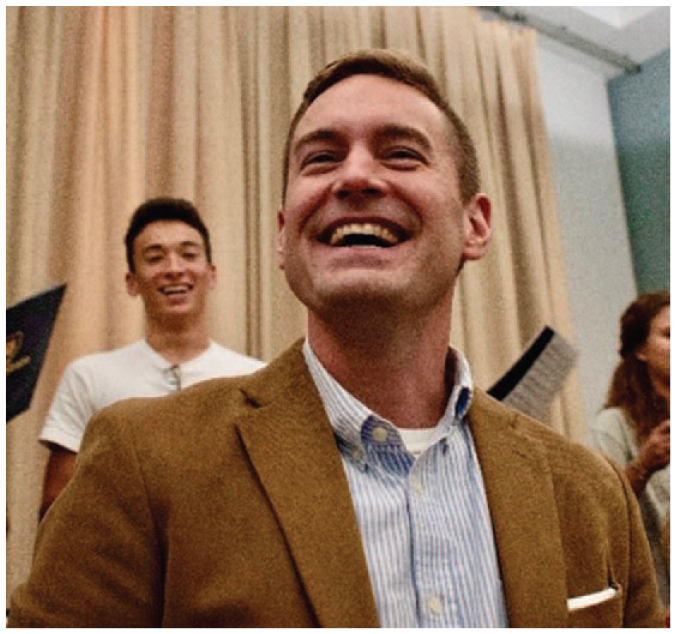
Photo of Bryan E. Nichols is courtesy of the author
A study of secondary students in the United States indicated music was the highest out-of-school subject of interest but the lowest subject of interest in school. 1 Music may be an important curricular offering based on our society’s idea of educating the “whole” person, but this finding should prompt us to ask some uncomfortable questions. Are the curricula we have traditionally designed and perpetuated injuring students’ potential for making music after high school? And are we bringing about our own obsolescence by failing to respond to the ways that young people are in effect going rogue from the institutional music outlets that we have constructed for them? My own sense is that our love for classical music hinders our encouragement of pursuing music in any other way. I support the promotion of opportunities for “autonomous” music learning in schools that would incorporate students’ own musical interests and that presumably should lead to more satisfying musical engagement after PK–12 schooling, sometimes called “lifelong participation.”
Ensemble offerings in a school typically reflect teacher expertise, curriculum priorities by the teacher, and, less so, student interest. 2 I suggest that every school can engage students in traditional ensembles and add new classes that extend the secondary music student population to include students marginalized by the mainstream ensemble curriculum. Solo instruments, like guitar, ukulele, and keyboard, and vocal genres, like spoken-word styles—particularly in genres that might promote students’ musicianship after the formal PK–12 years of schooling—are deserving of inclusion in the curriculum.
On Popular Music
Students in the twenty-first century need the opportunity to work individually 3 and in small groups 4 with varying levels of collaboration among the members to practice like professionals and learn from peers. This is achieved in chamber music in much the same way as it is in popular music, and students must learn to lead themselves and others in reading and exploring new pieces if they are to continue making music after the school years come to an end. Students in every ensemble should know in which key they best sing or how to play the national anthem or other songs commonly asked of musicians, but I fear only the “best” musicians are asked or taught to do this. I am reminded of that every time I complete an audition form without taking the time to show my evaluation to the student: There are missed opportunities to teach students about their own voice ranges and to hear students on their own music. My final exam is not the concert; it’s a solo submission.
The modern band movement, 5 including Little Kids Rock (now Music Will) pedagogy, 6 has underpinnings in earlier methods that sometimes emphasize playing over traditional music notation at first. While many secondary ensemble students have already achieved some level of proficiency in music reading, one parallel between modern band and other self-directed methods is found in some chamber-music practices. Both espouse self-directed learning—the kind that could lead to increased musical interest and participation now and after the high school years. After all, many students do not participate in ensembles after high school. 7
Traditional Limitations
Selective audition processes too often mean that only high-achieving students will receive individualized attention. Students commonly elect to participate in marching band, musicals, madrigal, barbershop or spiritual ensembles, and more. 8 However, sometimes small and large extracurricular ensembles require an audition that limits participation to the “better” performers. In those cases, only the “best” students are afforded opportunities for small ensembles or self-directed learning.
All students in ensembles must be provided an individualized learning program where they are asked to make musical decisions, lead their own and others’ learning, or create new music. Yet chamber music as a part of ensembles participation may tend to limit this experience to upper-level ensembles (curricular) or to advanced students after school (extracurricular). Furthermore, students in ensembles can be guided to success in doing so if there is both (1) a positive musical self-concept and (2) motivation to continue music participation after schooling, two important variables identified in previous research. 9
Playing Multiple Instruments
Ensemble members may be avid consumers of many different types of music, from classical and popular styles, but may not get to combine these interests or display them at school. 10 Students should be encouraged rather than discouraged to take piano or guitar classes or other music electives, when offered, in addition to or instead of large-group ensembles. Also, teachers might consider whether and how to incorporate opportunities for popular music performance at the end of class, online, or in preconcert or postconcert venues. To learn the keys on the piano or to play chords on a string instrument adds—not detracts—from a musical education.
Moving Ahead
For the inclusion of popular music courses, teachers have cited these highest four limitations: (1) workload, (2) available equipment, (3) funding, (4) accepted hierarchy of styles. 11 Furthermore, teachers who were more comfortable teaching popular music were more likely to offer it in schools. University programs can revise or augment traditional piano requirements with other harmonizing instruments to promote a workforce able to teach multiple styles. Music teachers can and should revise the curriculum, including content within courses as well as new courses. Individual learning activities can take place on band or orchestra instruments or voices, or equally on popular music instruments such as electric guitar, piano or synthesizer, bass, and drums, 12 in addition to acoustic guitar and ukulele, drum circles, AI and mixers/loopers, jazz genres, and more. Students should have opportunities to perform individually in a positive environment as they would in any other class at school, and vocal music teachers in particular need to be aware of other factors such as voice change, range, and gender expectations. 13 It can be said that few things in education should be as they were a century ago, and music in the curriculum as an academic subject must not be counted among them.
Footnotes
Notes
Bryan Nichols is an associate professor at Pennsylvania State University, University Park, and a choral conductor. He can be contacted at