



Abstract

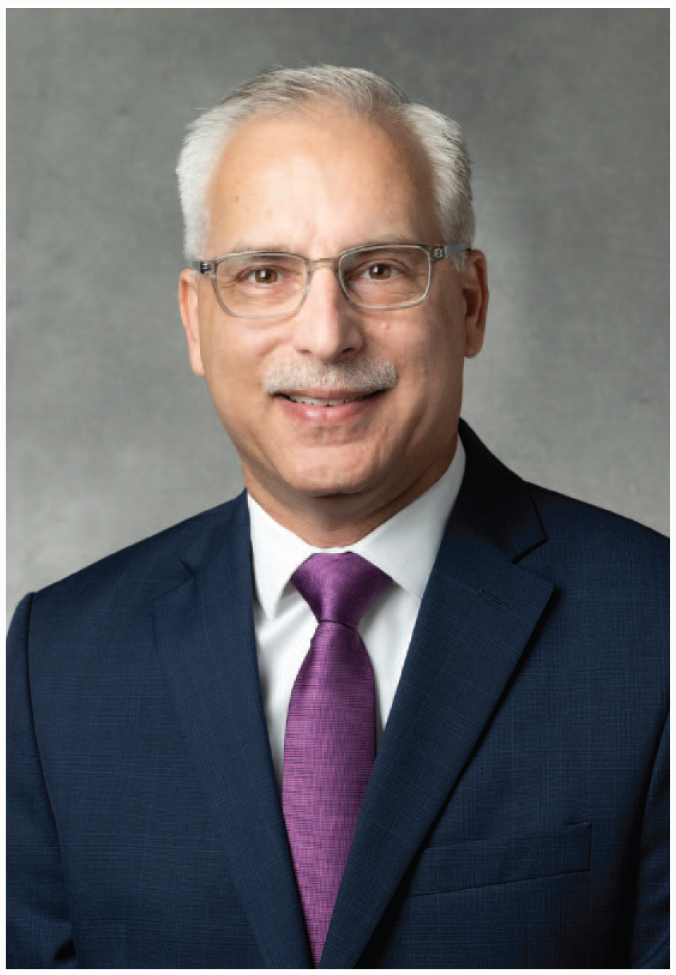
Photo of Douglas C. Orzolek by Mark Brown
I have been reflecting on the mission statement of the National Association for Music Education (NAfME), which is part of our organization’s new Strategic Plan, found at https://nafme.org/about/mission-and-goals/. The statement reminds us that “NAfME is a collaborative community that supports music educators and advocates for equitable access to music education.” I fully support this call for a more just, diverse, equitable, and inclusive music education, and I intend to do everything I can to bring it to fruition. In order to establish the kind of music education that is outlined in the Strategic Plan as well as one that is deeply rooted in the needs of our students, then we need to work as one profession to make that happen. We need to collaborate.
Many educators report that collaborating on a project, serving on schoolwide committees, or team-teaching in a classroom can be one of the most rewarding or one of the most challenging experiences of their career. At their best, these experiences can foster a genuine enthusiasm and excitement for being a part of a vibrant learning culture full of creativity, fun, and new understandings. At its worst, it can nurture a hostile environment in which strong, uncompromising opinions undermine the capacity for anything to happen at all. Liora Bresler, professor emerita of curriculum and instruction at the University of Illinois in Urbana-Champaign, concurred. She wrote: “Like all transformative relationships, professional collaborations are never easy. They push us out of our comfort zones. They take time and energy. And they are not always successful. But they can offer tremendous opportunities to grow and be effective in new and different ways.” 1 I could not agree more.
Having regularly team-taught in an interdisciplinary classroom setting for more than twenty years, I can share that my experiences as a collaborator have been mixed. Sometimes things have gone very well, and sometimes there has been a lot of frustration. I can also report that some of those experiences, both good and bad, have been the best form of personal growth and professional development I have encountered in my thirty-four years as an educator. For example, over the past several years, I have been part of an interdisciplinary research group that works to create engaging, hands-on learning experiences for PK–12 students and educators in all sorts of disciplines. 2 I view learning and even music through a very different lens after working with engineers, physicists, entrepreneurs, mathematicians, visual artists, and those from many other areas who sometimes see education in a different way than I do. All of it has impacted the things I do in my rehearsals, my courses, and especially with the music educators I encounter in my classrooms.
Besides its ability to help us learn and grow individually, collaboration is highlighted by many researchers and thinkers as an essential component of creative and innovative problem-solving. 3 Bresler agreed with that, too, and shared that “different perspectives [can] contribute to different ways of meaning making.” 4 But how do we make sure we are gathering the most innovative and creative solutions to our problems? As author David Epstein reminds us in his book titled Range: Why Generalists Triumph in a Specialized World, it is very important to collaborate with others to consider things from a variety of angles. Epstein wrote: “Everyone is digging deeper into their own trench and rarely standing up to look in the next trench over, even though the solution to their problem happens to reside there.” 5 There have been many instances where I have been surprised to learn about a colleague who is doing interesting work on my own campus or in my community. When I have reached out to those people, they are often quite eager to get involved with a project or concern in my area. The hallmark of collaboration is working on and (I hope!) finding new and creative solutions to a variety of problems. 6 And to be most effective in those efforts, I have found that a variety of voices works best.
Unfortunately, as Bresler noted, “collaboration has not been part of the American educational system. U.S. schools are the epitome of individualism, reflecting larger cultural values. Independence is cherished, often the number one priority from kindergarten onward.” 7 Bresler also pointed out that “of all school disciplines, the arts and the academics, music . . . and its practitioners [were] consistently least collaborative.” 8 It is actually somewhat puzzling to me that music educators find the collaborative process to be so taxing. At its core, collaboration is simply a process of working with others to accomplish something—this is a skill that I think is well developed in musicians via our experiences of performing with others. In fact, many of the challenges related to collaborative work are the same ones faced by anyone who has participated in a small music ensemble. But, teaching, learning, and musicking are also very personal and quite contextual. Music educators are deeply passionate about each one of these things—as we should be—but sometimes that passion can get in the way of our ability to consider things from a new perspective. And, in my opinion, that is what collaboration requires of us.
What does strong collaboration require? How can we make it effective and avoid some of the difficulties and frustrations that we have all experienced in the past? In 1992, the Amherst H. Wilder Foundation commissioned researchers to complete a literature review to determine the necessary components of good collaboration. The researchers found six primary categories for successful collaborative experiences: a safe and strong working environment, the right membership in the group, a clear process and structure for the work to be done, an approach to communications that works for all involved, a sense of purpose that is known to all, and the resources needed to bring the ideas to fruition. 9 In my opinion, those who are entering into collaborative working groups should address all of these before beginning the process. Making sure each of these areas is covered will not guarantee success, but it can go a long way to ensuring that it might be possible to meet our challenges.
I think there are many terrific examples of successful collaboration models to be found within our own profession. Some of them, in fact, have been working on specific issues and challenges that face our profession for several years. Among them are the Areas of Strategic Action and Planning (ASPAs) from the Society for Music Teacher Education that work to develop and implement action plans related to current critical issues in music teacher education. These groups meet at conferences and over the internet to examine and address many of the things facing the preparation of teachers. 10 In a similar way, Special Research Interest Groups within the Society for Research in Music Education promote and develop collaborative research and work on specific areas of interest and needs of the profession. 11 And, of course, there are many working groups, committees, and subcommittees that bring together a variety of people together to talk about advancing our work as a profession. I am also quite pleased to see an increase in music education articles that have multiple authors. For me, these are great signs that our profession has the capacity to collaborate in ways that can help us meet NAfME’s mission. Now we just need to get down to work!
What can happen when people decide to collaborate in a meaningful and productive way? Amazing things! I was recently involved with a very special collaboration that involved well over 15,000 musicians, students, and artists from more than 35 states and 21 countries. During the early days of the COVID-19 pandemic, OK Go released the song “All Together Now,” which was created by the band members working from their own home music studios. The video was viewed more than 1.4 million times and raised money for Partners in Health, an organization dedicated to frontline health workers. And with help from the Playful Learning Lab (PLL) at the University of St. Thomas in St. Paul, Minnesota, it inspired six other videos of the song. If you are interested in seeing what a large collaboration can accomplish, please check out https://www.youtube.com/watch?v=i7va3BbNoSk&t=6s. I think it is very powerful!
NAfME’s new Strategic Plan also includes a vision statement that nicely summarizes what is required of our profession as we work to meet the new mission. It says that “NAfME is an association where all people are heard, seen, and feel they belong throughout their lifelong experiences in music.” If each of us can keep that in mind as we work toward a better music education, then I see a bright future for our profession and those who will benefit from it. After all, this plan and the outlined actionable items were developed by a breadth of music educators who worked together to guide us forward. Their collaboration should be a model for all of us.