



Abstract

Photo of Jian-Jun Chen-Edmund by David Edmund

Photo of Marc Harroo courtesy of the author

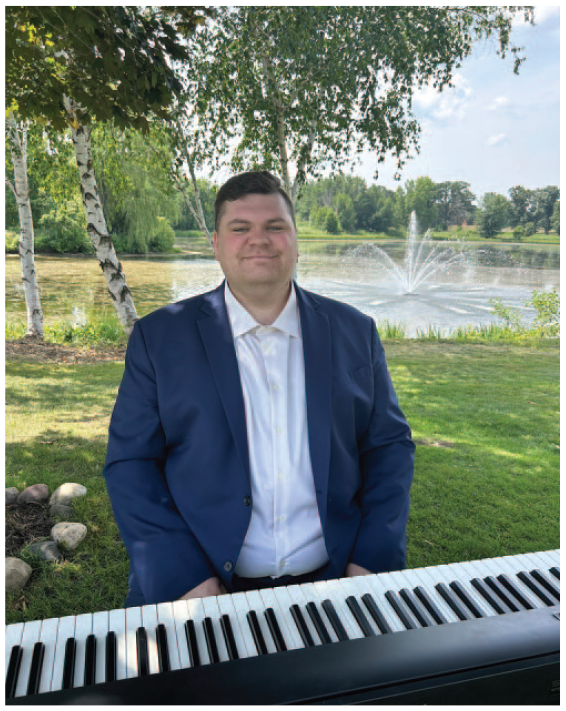
Photo of Dylan Reed-Fuglestad by Tony Reed-Fuglestad
Online learning has become one of the most important new trends in the past few years, and there is increasing demand for music teachers to adapt. According to a survey conducted by Quality Matters and Encoura’s Eduventures, over 90 percent of chief online officers anticipated that traditional undergraduate students would take hybrid courses by 2025. 1 Many officials at American colleges indicated that they are planning for long-term growth in online education. At all levels, there has been a substantial push to optimize the ways in which educators use online platforms. Educators in every discipline are spending time and effort learning how to best utilize the technology at their disposal in an equitable way that attempts to recreate the social and academic learning that happens during a school year.
Current research regarding online music-learning (OML) environments, however, reveals accessibility issues, lack of engagement, and limited social interaction. 2 In this article, accessibility refers to the ease with which students and teachers can utilize an online platform to share and understand classroom content. Accessibility limitations can increase feelings of frustration, inadequacy, or even disenchantment, all of which are threats to students’ well-being and academic health.
Motivation and engagement pertain to the ability to capture a student’s attention with the course content. 3 In an OML environment, teachers can assess this with a simple question: How interesting does this topic seem to my students? Educators should acknowledge that students spend a significant portion of their lives plugged into the internet through streaming services, social media, and gaming platforms. Face-to-face instruction can complement the lecture delivery format because students have limited opportunities to be distracted from the professor, but online environments are different. Altogether, the important consideration is whether we can harness student motivation in our delivery to keep them interested in the content through a computer screen.
Finally, the spontaneous nature in which human beings interact in a classroom during face-to-face instruction can feel synthetic in online environments. But educators can embrace online platforms as excellent opportunities for social interaction. One may argue that deviating from the standard lecture delivery and adopting student-led processes create more platforms that promote interaction. 4
OML has presented many challenges for teachers and students. 5 However, there is comfort in knowing that there are many examples of schools with effectively functioning online courses and programs. 6 Music educators make great efforts to foster classroom environments where their students feel comfortable and supported. To this end, we have compiled a series of practical suggestions for increasing accessibility, promoting engagement, and boosting social interaction within an OML environment and preparing for successful online performances.
Enhancing Accessibility
Identify Different Online Accessibility Needs
Instructors could survey students’ needs confidentially prior to the beginning of each semester. Inviting students to identify their accessibility needs and potential OML challenges will help instructors to plan and structure their courses to improve learning outcomes and experiences for the students.
Understand and Maintain Disability Support Policies and Procedures at Your School
Create accessible OML environments for registered students with disabilities. When our students provide accommodation letters at the beginning of a semester, we work with the students and their consultants directly to establish accommodation strategies. For instance, incorporating screen readers for students with visual impairments and providing organized headings in course websites and documents for students with dyslexia will assist them to navigate the content.
Universal Formatting across Multiple Devices
Some students may have a computer or tablet, while others may have a smartphone as their primary OML device. Ensuring that the online content is well organized and easy to navigate regardless of the device promotes a seamless user experience and encourages students to engage with online course material.
Time Zone Accommodation for International Students
OML environments, accessible from the comfort of home, also welcome students from different geographical locations. Understanding your students’ various time zone differences is a key step that informs the extent to which you can hold synchronous classes in an online environment.
Technological Proficiency Tutorials and Guides
OML involves a variety of software tools, the most common being videoconferencing, word processing, and data and file management. Video tutorials and guides can be useful tools to help students and teachers feel like they are in control of their online environment with the same proficiency as they would have in their regular classroom. 7
Fostering Connection
Social Engagement and Peer Collaboration Magnify Successful OML Experiences
Teachers may use class interaction support, including discussion boards, breakout rooms, group activities, Zoom pools, chat forums, and collaborative learning groups, to foster student connection.
Incorporate Differentiated Instruction for Group Activities and Breakout Rooms
Provide opportunities for students to learn from their peers. Group students according to strengths and weaknesses in areas such as learning styles, learning paces, and comprehension. Keep the group size small. Before sending students into groups, students should have a clear understanding of their tasks. Throughout the process, the teacher monitors group activities. When collaborative learning is complete, the teacher may create a class Google folder containing documents where students can share their learning outcomes. This enables the students to access class Google files anytime and anywhere.
Create Social Platforms for Students outside of Classroom-Based Programs
Social media platforms such as Discord and Reddit allow students to interact in a more organic, informal way similar to how they would interact during face-to-face classes. It also promotes student engagement that is peripherally related to the class and may create opportunities for peer-led learning. 8 Designate class leaders and support teams to check in with students, and offer emotional support and resources when necessary.
Engaging Students
Regular Progress Checks of Student Work
It is easy for students to fall behind, or between the cracks entirely, in an OML format. That said, many students feel that teachers give more work in OML than in face-to-face learning. Provide fewer, higher-quality assessments rather than busy work. This will save time and stress for both the teacher and the student and help to keep students engaged in the learning process.
Promote Student-Led Activities
Consider alternating and portioning time for students to share something with the class related to their field of study. Students report that consistent openness and ability to share their experiences motivate them to continue working with the same diligence in an online environment.
Use Creative Video Filters
An OML environment comes with many tools that can help students and teachers release the tension and monotony of staring at a screen. For example, FaceTime and Zoom have animal filters that mimic the movements of the person who enables them. Students would love to hear about Mozart coming from the face of a cow, or from the Mona Lisa.
Preparing for a Successful Online Performance
Virtual Performance Technologies Enable Students to Practice and Record Music outside of the Classroom
Flip (formerly Flipgrid), Kaltura, Opus recorder, and Acapella are technologies that allow students to record their performances and share them with their classmates and teachers. Students establish ownership through the creation of their videos. This process may encourage their motivation for practice and stimulate higher-order thinking skills via self-evaluation. Class instruction time is extremely valuable. If Flip is used, teachers may provide individual assessment and comments outside of the instruction and rehearsal time.
Choose Appropriate Literature
Because of the COVID-19 pandemic, many arrangers and composers became invested in creating more “flex-instrumentation” arrangements of pieces. Instrumental music teachers may find that these pared-down arrangements are appropriate choices for online performance selections. This can ensure that the director will not have to focus as much on the mix of the recording, which can be a daunting prospect for music teachers who are unfamiliar with video- and sound-editing software.
Appropriate Use of Recording Technology
Digital Audio Workstations (DAWs) are effective tools for recording, editing, and producing online performances. DAWs excel at routing audio for online streaming and offer a variety of processes for correcting mistakes (e.g., background noise) when recording a virtual ensemble. Effective miking is also a significant factor in producing a high-quality online performance. Learning standard miking techniques (e.g., X-Y patterns for ensembles) facilitates a capture of sound close to live listening.
Conclusion
Educators continue to seek effective practices and resources to inspire and influence students. Our goal is to provide a quality learning environment for students to be successful and achieve their potential. Online music learning furnishes opportunities for students to learn, explore, and make music.
Supplemental Material
sj-docx-1-mej-10.1177_00274321241260420 – Supplemental material for Developing Musical Expression in Instrumental Ensembles
Supplemental material, sj-docx-1-mej-10.1177_00274321241260420 for Developing Musical Expression in Instrumental Ensembles by Marina McLerran in Music Educators Journal
Footnotes
Jian-Jun Chen-Edmund (
Marc J. H. Harroo (
Dylan Reed-Fuglestad (