




Abstract
Today every aspect of our life is published and shared online, including grief. The virtual cemeteries and social networks’ use could be considered as a new modern mortuary ritual. Starting from the keyword stillbirth, 50 videos published on YouTube since 2008 have been analyzed qualitatively. The videos, 70% published by the mother, with an average length of 5.52 minutes, a mean of 2,429,576 views and 2,563 of comments, follow a sort of script: the second part with black and white photos, background music, and religious references. Could the continuous access to the child’s technological grave encourage a complicated grief or be a support, given by the interaction with users, limiting the sense of isolation. The parent shows his or her own conceptions about death and, as a modern baptism, presents the child to the whole society. Videos keep child’s memory alive and fuel a process of personalization and tenderness in the user.
Introduction
Little Z. is a 10-day-old dead baby on January 21, 2014, due to a rare genetic disease, trisomy 18 (or Edwards’ Syndrome). His story was told in a video posted on YouTube on February 7, 2014. It currently has reached 723,970 views and 501 comments [15].
Our team consists of three psychologists and researchers working on perinatal mourning in the Department of Clinical Psychology of the University of Strasbourg. From an initial concern shown by bereaved parents with whom we work and from the visualization and the study of the little Z.’s testimony, we started to be interested in the modern rituals that accompany the bereaved parents, such as the use of Internet and different social networks.
Following the death of a child, bereaved parents are at greater risk of developing psychiatric disorders such as depression, anxiety, and complicated grief (Lannen, Wolfe, Prigerson, Onelov, & Kreicbergs, 2008; Li, Laursen, Precht, Olsen, & Mortensen, 2005; Rogers, Floyd, Seltzer, Greenberg, & Hong, 2008; Wijngaards-de Meij et al., 2005).
In addition to symptoms such as sadness, depersonalization, disbelief, isolation, and intrusive thoughts, complicated grief disorder is associated with various dysfunctional comorbidities, such as sleep disorders, behavioral disorders, drug and alcohol addiction, self-harm, and suicidal ideation (Bacqué, Merg, & Romano, 2015; Lombardo et al., 2014).
Furthermore, parents who have lost a child have a higher risk of mortality, even 35 years after the child’s death (M. Harper, O’Connor, & O’Carroll, 2011; D. Harper & Thompson, 2011) and major health diseases, especially at the cardiovascular level (Rogers et al., 2008; Wijngaards-de Meij et al., 2005).
The relationship and the quality of the relationship established with the deceased following death are some of the fundamental processes that constitute the work of mourning. Contact with the deceased is something that changes individually and among different cultures (Finlay & Krueger, 2011).
In our current society, one of the most used and widespread communication methods is the use of the Internet, which has inevitably marked and touched even the sphere of grief and mourning. This assumption can be confirmed by the use of private virtual cemeteries and social networks, which are taking on an increasingly important and numerous roles in our modern society, reflecting the practical and emotional needs of bereaved people.
It is precisely from practical necessities that virtual cemeteries were born: In a China characterized by a population of over 1,385 billion people and by the difficulty and impossibility of placing the body of the deceased in a physical cemetery, since 1992, the government began to establish virtual, practical and eternal, cemeteries.
Some Chinese sites also offer the opportunity to sweep the tomb of the deceased, in particular on the corresponding All Saints’ Day, for which it is common custom for family members to clean the tomb. Many people in China are unable to physically reach the tombs, due to geographical distances or logistical problems, and for this reason, virtual cemeteries also try to offer memorial services for mourners, according to customs and traditions (Julliard, 2016).
Starting from the Chinese ones, virtual cemeteries have then found their diffusion on a global scale, reaching countries of different cultures and traditions. There are numerous examples of virtual cemeteries, such as findagrave.com (USA), deceasedonline.com (UK), cemetery.org (Canada), cimiteronline.org (Italy), apreslamort.net (France), pazeterna.com (Argentina), elcielo.com.mx (Mexico), begraafplaatsenonline.n (Netherland), and so on.
These are private websites, where people can go in and presumably remember, write, and share memories about the deceased.
Social networks are more recent and their form of interaction of sharing is mainly free and accessible to everyone. Their use is democratic, without restrictions of age, time, and space, and they could be considered as a mirror or magnifying glass on our life, where everything is idealized, shared, and shown, as well as grief.
Facebook, one of the most famous and used social networks on a world scale, in first months of 2018 had almost 2.2 billion active users each day and 30 million Facebook profiles belong to the deceased (extrapolation calculated with the data of the Center for Disease Control), assuming a commemorative function (Nombre d’utilisateurs de Facebook dans le monde, 2018). Through the announcement of death through the personal profile of the deceased, Facebook can act as an obituary and become a memorial profile. In other cases, the profile can remain simply active, providing the possibility of interaction not only between followers but with the deceased himself, commenting on old posts, photos, and send greetings on special occasions (birthdays, Christmas, etc.) (Julliard & Georges, 2018; Willis & Ferrucci, 2017).
In addition to Facebook, other social networks have taken on other functions, not only as a place for interaction between the livings but also with and in memory of the deceased. YouTube could indeed be classified as a public virtual cemetery, a place of exchange and meeting between bereaved parents of stillbirth children.
Starting from the curiosity that emerged after watching the video dedicated to the little Z., 50 videos published on YouTube from 2008 about stillbirths’ testimonies were analyzed.
The data were extrapolated and analyzed in a qualitative study, with the aim of trying to identify and evaluate the goals and needs that motivate parents to publish video memories of their children. The videos on YouTube dedicated to stillbirth children can, therefore, be considered as a new form of modern manifestation of mourning, such as support groups, special rites, and tattoos.
Methodology
The research started by typing the keyword death child on YouTube, from which 22,700,000 results appeared. Subsequently, after a first unsatisfactory and too dispersive search, we used the term stillbirth as the keyword, from which 53,000 results emerged.
Starting from the first video, the visualization and analysis from the other testaments followed a sort of line of succession, by selecting the recommended videos from the side of the page.
Compared with virtual cemeteries which are private and that we can considerate as specialized websites where people could come with a specific purpose or address, YouTube works like a sort of public virtual cemetery. It is a social network where all videos are accessible and reachable using just some simple keywords or through some suggestions determined by the latest personal choices selected or general popularity.
We have searched and investigated other websites where it is possible to find videos about stillbirth children, such as Dailymotion. In this video sharing website, there are much more inquiries, stories, and interviews made to bereaved parents than memorial videos. YouTube is therefore ranked as the most popular social network with the highest incidence of commemorative videos for stillbirth children.
We have tried typing simple keywords relevant to our search topic but without using the keyword stillbirth, just to see how it is simple and easy changing upon on stillbirth children’ memorial videos.
The keywords, always used in different sequences and orders, were Mother, Baby, Accident, Newborn, Birth, Angel, Death, Illness, and Disease.
Using the Mother-Baby-Accident-Newborn combination, with 126,000 results, the first memorial is placed at 35th positions [6] and the following at the 56th [56].
Even typing the keywords Mother-Baby-Newborn-Death (371,000 results), the first video is only on 44th place [6].
The use of Mother-Baby-Accident (3,280,000 results) and Mother-Baby-Birth-Accident (1,160,000 results) as keywords did not produce any selection of memorials.
On the contrary, the keywords that have had a bigger impact were as follows: Mother-Baby-Birth-Accident-Angel (221,000 results), with which the memorials begin already from the 2nd video [44]; Mother-Baby-Birth-Accident-Disease (1,160,000 results), starting with the 4th video [12]; Baby-Newborn-Death-Angel (20,800 results) and Newborn-Death-Angel (19,300); Baby-Death-Angel (3,760,000 results) after the 7th; Baby-Newborn-Death-Illness (32,000 results), from the 12th; Baby-Newborn-Death (922,000 results), from the 17th [6], followed by the video for the little M. A. [56] at 31st place, and later at the 38th [18], 81st [13], 88th [19], and so on.
According to these simple attempts, we can see that it is important not to use vague keywords’ combinations (such as Mother-Baby-Accident) but at least including some details (i.e., death, angel, disease, etc.).
Nevertheless, even without using the keyword stillbirth it looks like it is quite simple selecting and watching memorial videos for children, even for those people who probably did not type those words with this determinate purpose.
After selecting the videos, the 50 testimonies were distributed between the three researchers and psychologists who composed the work team. Starting from a historical study on funeral rites from antiquity to the present day (Bacqué, Sani, Rauner, Losson, Merg, et al., 2018; Bacqué, Sani, Rauner, Losson, Merg-Essadi, et al., 2018), the parameters of the survey have been established, shown in Figure 1. These were the parameters that determined the qualitative analysis of the selected videos.
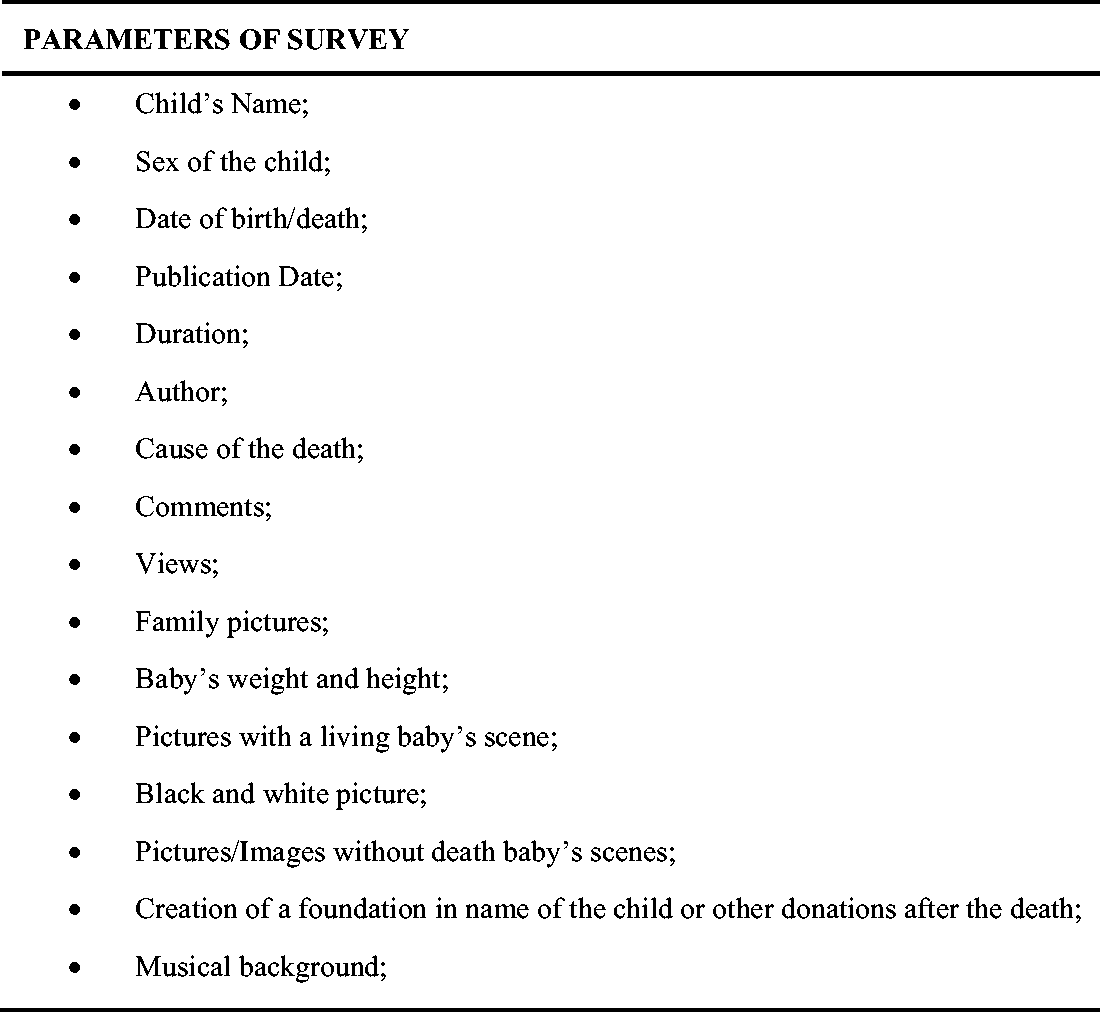
List of survey’s parameters.
Ethics
Aware that the material found on YouTube is available, free, and accessible to all users, for privacy and ethics’ reasons we have chosen to anonymize, through numerical classifications and use of initials, babies’ names, videos, and authors. The list of anonymized and numbered references can be found in the online Appendix.
The complete bibliography of the sources, the tables, and descriptions of analyzed video are available and published on the SuLiSom website, the research unit of Department of Clinical Psychology of the University of Strasbourg, where it is possible to view all the detailed data (see Supplemental Online Material).
In any case, it is possible to view an example of the Table 1, where it is possible to see the qualitative data of the first nine videos.
Example of Data Collected and Analyzed by Nine Videos.

Note. aPictures/Video with baby alive’s scenes.
bPictures/Video without death baby scenes.
cNone black and white picture.
Results
Qualitative Analysis
Parents' testimonies about their pain and about the existence of their child are numerous. The majority of the analyzed videos were posted by the children’s mothers, and captions below the video were generally a brief presentation and summary of the testimony that has been posted.
Parents affect
Parents describe their pain and mourning, not diminished even after years from baby’s death, wondering how his or her character and aspect would be and recognizing their parenthood, declaring how video is a useful therapeutic way to overcome the grief [3, 8, 17, 27, 44, 55].
The existence of the child despite the death
In some cases, both the caption and the messages in the video appear to be a sort of letter, some messages directed to the child, narrating what happened after his or her death or expressing the suffering to not have him or her close [1, 7, 44, 50]. In one video, the writings and descriptions appear as if they were written directly by him or her, a story that the baby tells the viewer [29].
The script of the video
In most of the cases, videos are divided into two parts: before and after the baby’s birth. A sort of topos can be found, a recurring element often used in the memorial. The pictures that represent the expectation of birth usually portray the pregnancy test, the mother’s belly growing, and the ultrasounds. In some cases, there are other details: pictures of the whole family; the baby shower; and holidays during the baby’s expectation (Halloween, Christmas, etc.). The pictures portrait the dressed child at the hospital—few of them are at home—in the arms of the desperate parents and of the family. In this second section, the photos are often black and white.
Music background
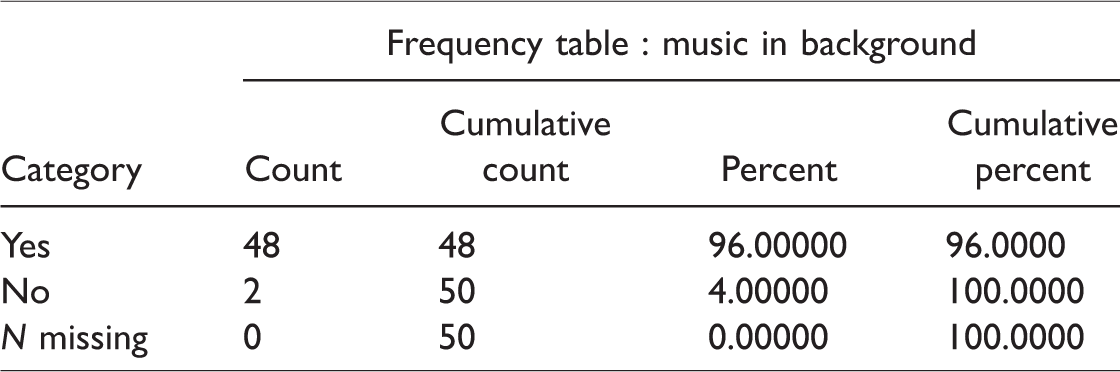
Furthermore, all the videos propose a musical background, as the songs “Precious child” by Karen Taylor Good [22, 27] and “A new day has come” by Celine Dion [50, 53]. The first song explicitly talks about the death of a child and the pain caused by this loss. Celine Dion’s text refers instead to overcome a great suffering.
Religious references
In addition, in many parents’ videos and comments, there are many religious references: balloons that reach the sky [8, 27, 40, 47, 53]; a quote from the gospel according to St. Matthew [55]; the rosary around the neck and the presence of a priest close to the parents and child in the hospital [44]; baby’s hands in the praying position [29]; and images of Jesus [46, 47].
Yet, religious rituals seem to be rarely represented in the videos: Only one shows a baptism of a stillborn baby [4], one shows a stillborn baby on an altar for praying [20], and another shows the baby being blessed by a chaplain in the hospital [24].
Comments of the users
At the bottom of the page, below the video, there are often numerous comments from people who want to express their condolences and their affinity to parents’ mourning. There are also many cases where people briefly talk about their personal experiences, activating an interactive and supportive dialogue. In other few cases, someone has instead expressed some cynical judgment or criticisms to the parents or to the children [32, 22, 38, 40, 42], or some questions about the unclear death’s causes or medical advice [22, 32].
Quantitative Analyses
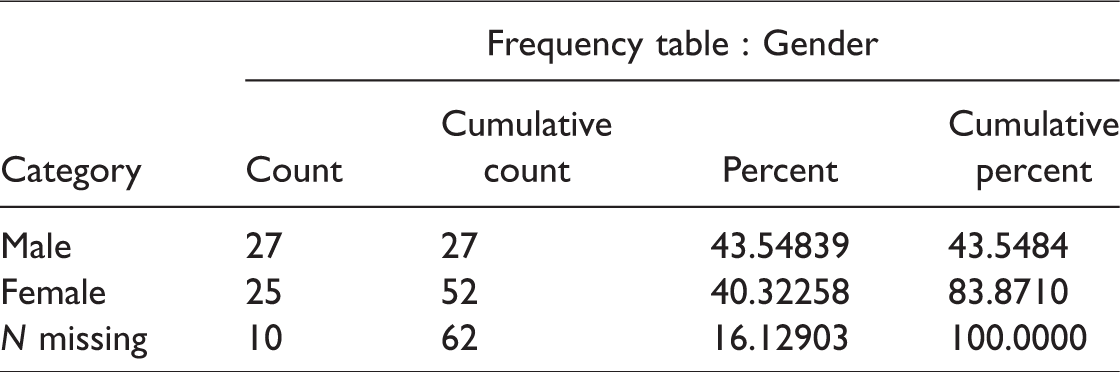
We have analyzed a total of 50 consecutive commemorative videos of stillbirth children posted on YouTube. Of 50 videos, 25 protagonists are females (40%) and 27 are males (43.5%), for a total of 52 children, because two videos are dedicated to two couples of twin sisters (Table 2).
The Frequency of Children’ Sexual Gender.
In total, the average length is 5.52 minutes (SD 2.99) (Table 3), with a mean of 2,429,576 views (SD 5,386,874) (Table 4) and 2,563 of comments (SD 4,976,542) (Table 5).
Descriptive Statistics of Duration’s Variable of Videos.

Descriptive Statistics of Views.

Descriptive Statistics of Comments Published Below Videos.

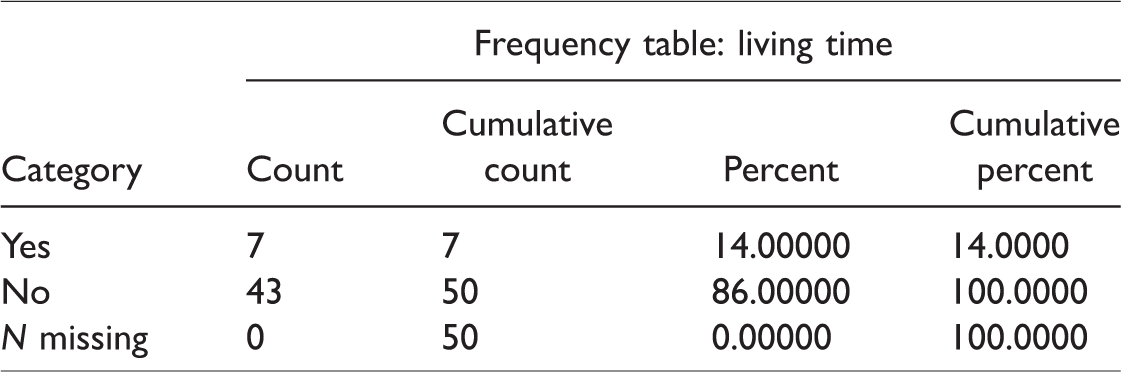
Analyzing the 50 videos, most of the children are stillbirth (86%), and only 7 have lived a few days (14%), as indicated by the birth and death dates in captions below the video or during the narration (Table 6).
The Frequency of Stillbirths and Children Who Lived Some Days.
As we can see from Tables 7 and 8, the mean weight and height of children, measured in kg and cm, are 2.54 kg and 43.89 cm, respectively.
Descriptive Statistics of Babies’ Weight Shown Into the Videos or Written in the Captions.

Descriptive Statistics of Babies’ Height Shown in the Videos or Written in the Captions.

Seventy percent of the authors—those who created and published the videos online—consist of the mothers of children, while fathers account for 8%, brothers of the mothers for 4%, and unidentified people, of which the degree of relationship or kinship with the child is not clear, for 18% (Table 9).
The Frequency of Authors Who Posted the Video Online.

As noted in Table 10, in the 64% of videos, the cause of baby’s death is not explained and clarified. In the remaining 18 videos (36%), the causes that led to the death of the child are different, such as Edwards’ Syndrome, transposition of the great arteries, hypoxia, critical aortic stenosis, and so on.
Frequency of Explanations in the Video or in the Caption About Child’s Death Cause.

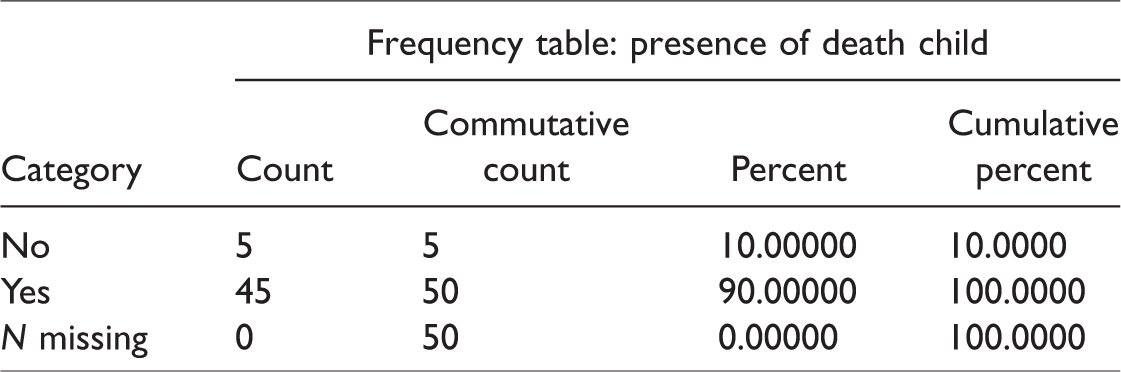
Table 11 shows that 90% of the photos portray only the dead child, while for the 10% of cases, there are also photos or videos of the baby alive.
Presence of Death Children’ Pictures Into the Videos.
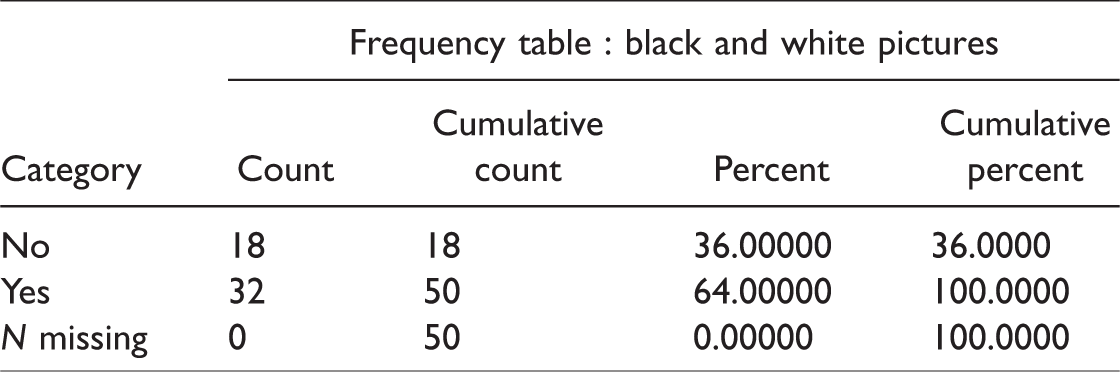
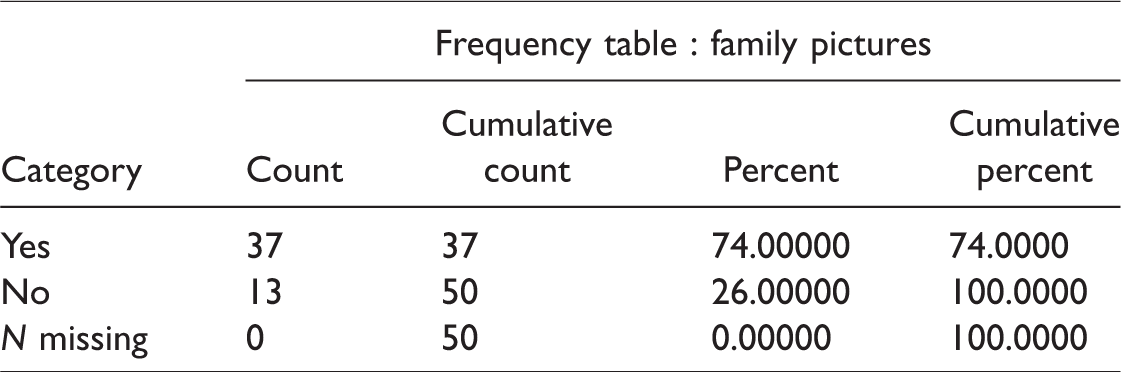
In videos, 64% of photos are black and white (Table 12) and in 74% of cases, there are pictures of the babies with all family and friends, not just with their parents (Table 13).
Presence of Black and White Pictures in the Videos.
Presence of Child’s Pictures With Relatives and Friends.
Only two videos (4%) did not play a song or melody in the background, as it appears in the remaining 48 videos (96%) (Table 14).
The Frequency of Music in Background.
From the captions placed below the videos, only 20% were published with the purpose of promoting or just making known the foundations that parents have created in the name of the child after his or her death or for some charity cause (Table 15).
The Frequency of Foundations Created in Name of Child From Parents or Some Charity Cause Promoted in the Videos’ Captions.

Discussion
Except for some videos posted from fathers, uncles, and unclear authors (i.e., in one video, in the end, it is noted that this was a sign of support to the mother), all the other analyzed videos were posted by the children’s mothers (Table 9). This percentage can further confirm that the mothers have more and durable expression of their sensibility due to young child mourning than fathers, thus generating an increased and explicit need for support and sharing (Wijngaards-de Meij et al., 2008; Wing, Burge-Callaway, Rose Clance, & Armistead, 2001). This theory could also be confirmed by the data in Table 16 where it is possible to see the supremacy of percentage of mothers and the only significant value that is between mothers as authors and the production and publication of videos of stillbirth children.
Frequency About the Different Authors and the Publication of Videos With Stillbirth and Alive Children.
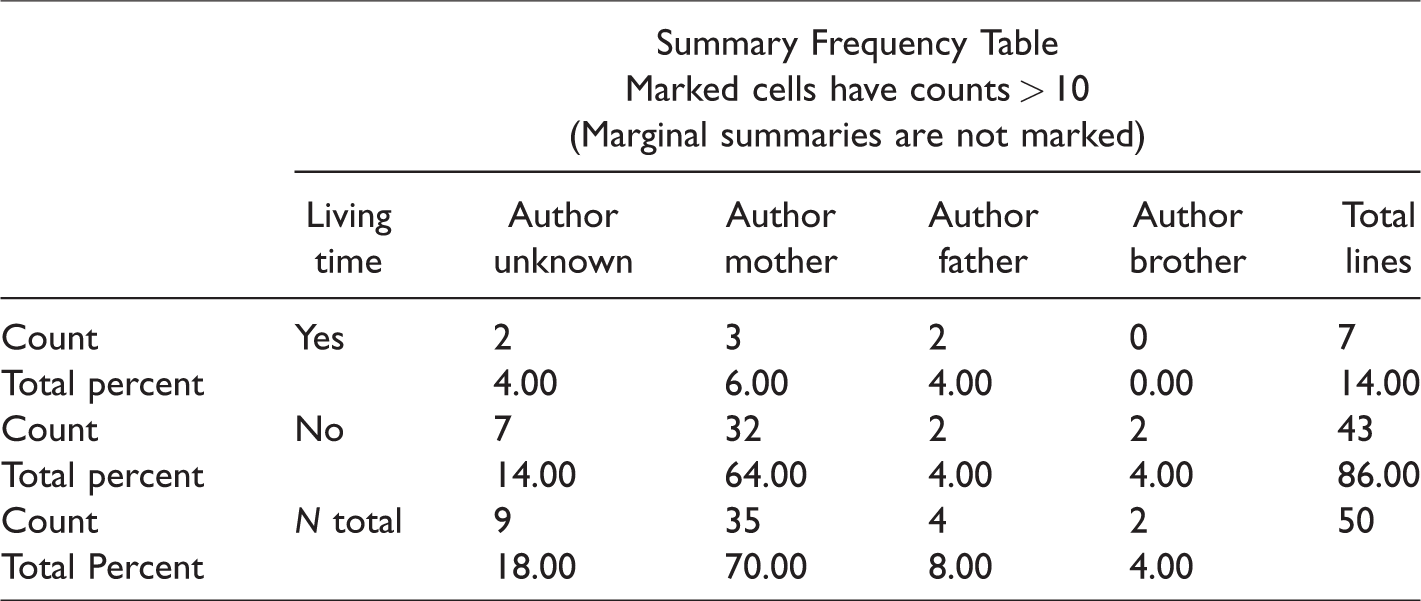
The percentage is obviously weaker, but it is also interesting to note that fathers as authors have published the same number of videos about stillbirths and children who have lived a few days.
Through the use of the Anglo-Saxon unit of measurement and clear references to the Christian religion, it is clear that the authors of the videos originate from North America. The only exception is a Scandinavian father who chose to write the caption and the internal video’s messages in English, probably aware of gaining a greater diffusion and sharing of his story and that of his child.
The videos have an average length of about 5 minutes and 52 seconds (Table 3). This temporal extension can be considered the result of the adaptation to the synthesis and incisiveness of the modern world. Probably, the photos of the video are also the most or the only photos of the child owned by the parent who decided to share with the rest of the ether.
As we have seen, there are many pictures of the baby with parents, relatives, and friends (Table 13) and black and white photos (Table 12), which is a technique that helps to focus the attention on the subject of the photo. According to the conformist script used in the videos, the use of the colors of the photos follows a precise sequence of life initially full of hope, in color, as opposed to a second one, in black and white. Probably, it has been used to give a sort of resonance to pain, giving a melancholic and dramatic veil and a tone of immortality at that instant, a sort of an evocative echo, as well as the use of commemorative songs (Table 14). In addition, from the caption of the videos, it can be understood that in three cases, the photos of the child were taken by professionals in the hospital. In the same way, it is not so clear if the parents called the photographer before knowing about the child’s death.
In 2007, after viewing a hundred memorial sites, Godel (2007) carried out a sociological analysis on this modern common use in the United States and in England to request professional photography services for stillbirths. According to the author, this new practice aims to help the parents’ grieving process and rebuild a family biography including the child.
Also, most videos relate to stillbirths or children who have survived only a few days. In fact, the photos represent above all the children in the hospital and rarely (only in three videos, which corresponds to 6%) the images of them at home. As we have seen through the video search and the use of keywords, most of the videos posted on YouTube are in fact stories about stillbirth compared with dead children at an older age.
In addition, from the number of visualizations, it is clear that the videos have been watched numerous times (Table 4). Compared with the number and type of comments that users have posted, it is likely that the largest audience was other bereaved parents or family members. The comments at the bottom of the page were numerous and dynamic, with an active interaction between the other users and the authors of the video (Table 5). Those who commented on the video shared and expressed condolences, advice, and personal experiences.
There is an active and constant interaction, not just between parents and commentators but also with the child himself. For example, a grandmother commented the video each year on the day of baby’s birth and death, wishing a happy birthday to her grandson, as a possible grief reactivation in the anniversary’s day and a form of contact with the deceased (Hume & Bressers, 2009).
Only in 26 and 18 videos (which correspond respectively to an average of 2.54 and 43.8; Tables 7 and 8), the authors provided indications regarding the weight and height of the child. The videos usually do not provide detailed information on medical or physical origin, only 36% of the authors have in fact explained the reasons and the medical causes of child’s death (Table 10).
In these few cases, we can also see very medical and accurate descriptions about the event and causes of death, as a sort of rationalization, a defensive mode to protect oneself and resize the too much distressing overwhelming of pain.
However, as seen in the most of cases, the medical causes of death or other more specific details about the child and his or her health are not provided. One possible explanation could be the lack of medical information at the time of publication of the video, awaiting the results of a hypothetical autopsy.
The emotional and affective aspects seem to be the only dimension of the video as if the real and rational aspects are banned from the memory of the child’s existence and the author just wants to represent the sensations felt. This possible denial of the reality of death’s cause could also be the result of a (especially maternal) sense of guilt or responsibility for the death of the child which does not want to be faced or remembered at the time of commemoration.
After the child’s death, 20% of the parents created a foundation or publicized some charity causes within the video (Table 15) [10. 11, 22]. Creating foundations or associations in memory of the child or his or her illness could represent a need for a sense of justice experienced by the parent who feels him or herself distant and unsupported in his or her pain or who simply tries through other ways to prolong and keep alive the memory of the child at the social and community level (Bogensperger & Lueger-Schuster, 2014; Cacciatore, 2007; Geron, Ginzburg, & Solomon, 2003; Rossetto, 2014).
Research shows how comfort in faith and religion is considered by parents as support sources and help to overcome a perinatal death (Greeff, Vansteenwegen, & Herbiest, 2011). Those researches are reflected in the videos. Faith seems to bring support to the parent: “It is the hardest road we’ve traveled so far—we are heartbroken. Yet in this time we keep praising God and He fills us with a peace that surpasses all understanding” [45]. Giving the stillborn baby a destination and a meaning of its death may be a way for the parents to make the loss more bearable, as J.’s mother wrote below her video: “J. was called Home by the Angel before taking his first breath” [20].
Religious rituals have always responded to bereaved parents’ emotional needs, comforting them through funeral rites for the body and spiritual concepts such as the idea of paradise. They, therefore, assume a supporting and preventive role in possible psychological diseases related to loss (i.e., complicated grief disorder, depression, posttraumatic stress disorder (PTSD), etc.).
The videos on YouTube provide direct, private but at the same time social and interactive, contact with the child and to his or her grave. The space of the dead is now physically and emotionally accessible, reachable, and present at all times (Gamba, 2008).
A typical symptom of complicated grief is remaining crystallized in an acute phase of work of mourning (Carmassi et al., 2016). A hypothesis could be that in some subjects, this continued availability of contact may prolong and condition the complicated grief or the unsuccessful elaboration, impeding its resolution and determining the development of possible disorders (depression, anxiety, substance abuse, etc.).
On the other hand, video therapy could be considered as a form of psychological support for bereaved parents. The interaction and exchange of information and experiences could produce a positive and supportive effect given by sharing, limiting the sense of isolation, and stoking a closeness and emotional understanding (Finlay & Krueger, 2011; Maddrell, 2012).
On a social level, parents often perceive their pain as minimized and the child as forgotten. This attitude can affect the entire social context of the parent, including the microcosm of the health sector. For example, many parents say that the choice to see and hold the child after death is strongly influenced by the attitude of health workers in the hospital (Bennett, Litz, Maguen, & Ehrenreich, 2008; Cacciatore, 2013; Shakespeare et al., 2018; Zeanah, 1989).
With respect to this issue, there are many debates about the benefit of meeting the child. According to some studies, holding the child can have a negative effect and favor the development of depression and PTSD, especially in the 3 months following the event (Hennegan, Henderson, & Redshaw, 2018; Hughes, Turton, Hopper, & Evans, 2002; Robinson, 2014). According to others, however, seeing, touching the child, and saying goodbye are associated with lower levels of anxiety and depression for the 2 years following death (Cacciatore, Rådestad, & Frøen, 2008; Kingdon, Givens, O’Donnell, & Turner, 2015; Reynolds, 2004; Wijngaards-de Meij et al., 2008). Having known the real child and being in contact with him can therefore mitigate the levels of grief, providing a comfort and comparison in the process of recognition and acceptance of death (Wijngaards-de Meij et al., 2008).
At the same time, parents who have decided to know the child are more at risk of developing anxiety, depression, and PTSD during the subsequent pregnancy but only for a transitory period (Cacciatore et al., 2008; Hughes & Riches, 2003; Molinié & Hureaux, 2012).
Probably, parents may have difficulty accepting and expressing their needs under the external influence and pressure. Moreover, many women have stated that they often felt forced by the social pressure of having to forget, to move on and to immediately have another child, perceiving their grief ridiculed and minimized (Cacciatore, 2013). In general, the social expectations placed on the parents influence their grief’s reactions. Often they do not feel free to express themselves, inhibited by the community’s requests (Markin & Zilcha-Mano, 2018).
It is important to remember that, despite the risks and the attachment to the child increase with the age of the latter and the experiences lived with it, stillbirth is a unique loss (Wijngaards-de Meij et al., 2005). It is an emotionally complex situation in which different, determinant and risk factors for the parent come into play at the same time, such as the sense of impotence, the total dependence of the child, the sense of guilt, doubts and torments, and an enormous sense of loneliness (Barr & Cacciatore, 2008; Schaap, Wolf, Bruinse, Barkhof-van de Lande, & Treffers, 1997). Even in cases where the pregnancy is interrupted for medical reasons, the guilt of the parent is a fundamental aspect that characterizes the grief (Hanus, 2001).
Research works have shown how attachment to the child develops from the prenatal period. According to several authors, the phases that constitute the beginning of mother’s attachment to the child are summarized in nine stages: the planning of pregnancy and the decision to have a child, the confirmation of being pregnant and of becoming a mother, acceptance of pregnancy, feeling the baby’s movements in her belly, the acceptance of the fetus as a single and separate entity, the birth, seeing the child with her own eyes, knowing him, and holding him and taking care of him (Bennett, Litz, Lee, & Maguen, 2005; Peppers & Knapp, 1980). Thanks to new technologies, the modern ultrasounds, that look like real pictures and immortalize the child in a clear and detailed way, help also the father to know the child, to associate own fantasies, feelings and kinesthetic sensations to a real person (Leon, 1996).
Furthermore, the absence of social recognition also implies the lack of rituals around the child’s death. The rites are a symbol of loss’s recognition and they help the bereaved to say goodbye to the deceased and to change the relationship with him (Markin & Zilcha-Mano, 2018; Stirtzinger & Robinson, 1989). The bereaved parents are deprived of this recognition, making even more difficult to accept the loss and the legitimization to cry their child (Côté-Arsenault, Brody, & Dombeck, 2009; Markin & Zilcha-Mano, 2018).
Currently, the rituals and modern manifestations that are starting to develop around stillbirths (such as memory boxes supplied by hospital, pictures, groups on social networks, and YouTube videos) could reflect the response to a need perceived by parents. As rites, they have the function of expressing, through an explicit and clear demonstration, the feelings experienced by parents toward the deceased.
The possibility of taking the memory box, pictures, and spending time with the child indicates how the professions with which the bereaved parents come into contact try to understand the needs of the parent. Professionals must try to respect the culture of belonging and the requests of the parents, without imposing any decision.
Conclusions
Our era seems to have become a technological Pangea, a place where everything is reachable and shared, including the grief. Social networks could be considered as necropolises in the computerized age, determining a global sharing, contact, and cybernetic proximity into the ether.
The videos published on YouTube assume the function of an introduction to society—as baptism was once ago—a reception, and presentation of the child to the family and to the whole world. It allows fixing an immortal memory of the child and of his or her existence as if the baby continued to stay in remembrance, announcing his or her death to the whole world.
Moreover, through a process of personalization, the viewer sees in the video the image of his or her own child, associating to its thoughts, fears, and memories. The succession of child’s pictures thus arouses a feeling of compassion toward the child, his or her parents and family.
In addition to expressing the pain and describing the events before and after death, the author of the video also shows what are his or her own ideas and conceptions about death, such as through the numerous religious references, and therefore also about the afterlife.
After searching and analyzing the 50 videos, we also searched for memorial videos that concerned older children and adults, a research that was later revealed to be unsatisfactory. In fact, it was not possible to find commemorative videos in which deceased older children and adults’ images were projected, unlike the children.
Even with respect to history and iconographic representations, the child’s body has always been considered more familiar, neither macabre nor object of fear, but rather of tenderness and compassion.
Videos could be considered as an initial elimination of the Death taboo, an open and constant representation of their grief and pain and a source of support for other bereaved parents.
Through the videos, the parent’s tears do not have a fixed term. It is an indelible mark that does not need words and makes understandable the pain of the parent, at a social and community level, even after many years.
The qualitative analysis of the videos published on YouTube has therefore confirmed its role within our contemporary society, characterized by synchronicity and computer disclosure. In addition to using websites as YouTube, this study allowed us to reflect about the development and function of new rituals around the death of the child of our modern age.
The unchangeable images and narrative provide an eternal recognition of the existence of the child and of parents’ grief, not only on an intimate and family level but on a social level, managing to reach unlimited countries and people of different ages and cultures.
Limitations
Our research is based on a qualitative study, including all the limitations and issues that this type of research presents and, in particular, the limits derived from a small size as 50 videos. A quantitative research could be proposed through the administration of tests to evaluate the actual psychological feedback given by the use, publication, and participation in stillbirth children’s videos on YouTube.
Furthermore, what we could propose is to analyze a larger size and a longer time of videos and evaluate more variables with a more structured and analytic procedure or realizing some further research about the subject and then a meta-analysis of the different studies and results.
Supplemental Material
Supplemental Material1 - Supplemental material for Angels in the Clouds: Stillbirth and Virtual Cemeteries on 50 YouTube Videos
Supplemental material, Supplemental Material1 for Angels in the Clouds: Stillbirth and Virtual Cemeteries on 50 YouTube Videos by Livia Sani, Anne-Charlotte Laurenti Dimanche and Marie-Frédérique Bacqué in OMEGA-Journal of Death and Dying
Supplemental Material
Supplemental Material2 - Supplemental material for Angels in the Clouds: Stillbirth and Virtual Cemeteries on 50 YouTube Videos
Supplemental material, Supplemental Material2 for Angels in the Clouds: Stillbirth and Virtual Cemeteries on 50 YouTube Videos by Livia Sani, Anne-Charlotte Laurenti Dimanche and Marie-Frédérique Bacqué in OMEGA-Journal of Death and Dying
Footnotes
Declaration of Conflicting Interests
The author(s) declared no potential conflicts of interest with respect to the research, authorship, and/or publication of this article.
Funding
The author(s) disclosed receipt of the following financial support for the research, authorship, and/or publication of this article: The research was totally funded by of SuLiSom (Subjectivité, Lien Social et Modernité), the laboratory of the Department of Clinical Psychology at the University of Strasbourg.
Supplemental Material
Within the website of SuLiSom (Subjectivité, Lien Social et Modernité), the laboratory of the Department of Clinical Psychology at the University of Strasbourg, the more detailed descriptions of the analyzed videos from YouTube and the tables with the reported and analyzed data through a qualitative study are published.
Author Biographies
References
Supplementary Material
Please find the following supplemental material available below.
For Open Access articles published under a Creative Commons License, all supplemental material carries the same license as the article it is associated with.
For non-Open Access articles published, all supplemental material carries a non-exclusive license, and permission requests for re-use of supplemental material or any part of supplemental material shall be sent directly to the copyright owner as specified in the copyright notice associated with the article.
