



Abstract
The aim of this research was to conduct a risk assessment and management of psychological, structural, social and economic determinants (PSSED) in a suicide attempt. The sample consisted of 353 individuals who had a recorded history of suicidal attempt; and 20 professional individuals by purposive sampling method within a descriptive cross-sectional design. Worksheets for RAM and AHP were used for data collection in this study. The rate of suicide attempt was 7.21 per 100,000 population in this study. Analysis showed that depression and mental disorders; personality disorders; family problems; socio-cultural and economic problems; lack of awareness; and low level of education have a high level of risk for suicide attempts. Psychiatric and psychological services; awareness and knowledge of life skills; medical services to dysfunctional families; development of community-based planning for PSSED of suicide; and employment and entrepreneurship services may lower suicide attempt risk.
Over the past three decades, suicide rates have increased across the globe and is currently the third leading cause of death among adolescents and young adults and is the eighth leading cause of death in the general population (Rezaeian et al., 2012). Kiadaliri et al. (2014) estimated the suicide rate to be between 6.8% and 9.1% in the general population while suicide attempts varies from 8.11% to 8.16% per 1,00,000 population in the country. Hassanian-Moghaddam and Zamani (2017) reported an average suicide rate of 9.9 per 1,00,000 in the population. However, World Health Organization (WHO; 2019) reported that suicide rates for males and females in all ages is 4% per 1,00,000 in Iran.
Studies have shown significant relationships exists between suicide attempt and mental disorders such as depression, ineffective psychosocial skills, lack of awareness and knowledge, insufficient social support, history of suicide among family members and friends, poor living conditions, singleness, gender, family separation, unemployment, poverty, recession, multiple sexual partners and illegal sex, and other risk behaviours such as drug abuse (Bakhtar & Rezaeian, 2017; Barr et al., 2012; Shilubane et al., 2012; Smith et al., 2019). Therefore suicide prevention requires both a global plan with national strategies and local actions at all systems levels (Doost Mohammadi & Rezaeian, 2020).
The first model of suicide prevention is the conventional classification of suicide prevention which is a three-tiered level (Khadem Rezaiyan et al., 2017; Rezaeian, 2013, 2018; Silverman, 2011). The second model represents three levels of global preventive strategies which include: (a) training general practitioners to empower them to timely manner diagnose and treat patients with depression and suicidal ideation in the general population; (b) specific or selective strategies such as implementation of event-based preventive programs in high-risk groups for suicide attempt; and (c) targeted prevention strategies such as identifying and treating of individuals with symptoms of suicide (Khadem Rezaiyan et al., 2017; Rezaeian, 2013, 2018).
Therefore, the development of a comprehensive national and local strategy to prevent suicide attempt and draw a long-term management involves the evaluation and prioritization of different psychological, structural, social and economic risk factors which influence suicide attempts. Afterwards, it becomes necessary to identify decision-making strategies with regard to a multi-objective decision making environment in risk assessment method (RAM; Fine, 1971) and analytic hierarchy process (AHP). Gul et al. (2018) proposed that this method makes it possible to evaluate the value of the risk by taking into consideration the parameters of the consequence of an accident (C), the exposure or frequency of occurrence of a hazard (E) and the probability of a hazardous event (P). This approach implements decision-making strategies to assess hazards by evaluating C, E and P. There are two questions to this search: (1) identifying suicide risk factors in a sample of people who attempted suicide; and (2) to clarifying the consequences of suicide risk factors, and exploration of risk management strategies with expert ratings for potential approaches to reduce risks for those who attempt suicide. For the fisrt question, this study looks at suicide risk factors in a sample of individuals who attempted suicide using a retrospective approach. For the second question, an expert group using Delphi's procedure has identified the consequences of suicide risk factors and risk management strategies for potential approaches to reduce risk for those who attempt suicide. First, this study would try to estimate the rate of suicide attempts among individuals with regard to their demographic variables. Second, this study would to assess and prioritize different psychological, structural, social and economic determinants of suicide attempts according to risk consequence, risk exposure and risk probability in Fine’s method (Fine, 1971). Third, the present study would to identify risk management strategies by using the analytic hierarchy process (AHP).
Method
Design and Participants
The present study consists of a descriptive cross-sectional study for risk assessment and management of psychological, structural, social and economic determinants of suicide attempts and prioritization of risk management decision-making strategies. In the first stage, 353 participants with a history of suicide attempt in 2019 were identified from their personal records in Fars Province Social Emergency Centres (FPSEC). In the second stage, 20 professionals were selected by a purposive sampling method for determination of risk assessment and identification of management strategies for prevention of suicide attempt. This sample included 5 experts from Fars Social Emergency Centres and 15 university professors in the fields of psychiatry, clinical psychology, social sciences and law. In order to comply with the ethical principles, the participants entered the study with informed consent and were guaranteed the privacy and confidentiality of personal information by the project executives. Also, individuals in the expert group completed the worksheets after informed consent and with a double-blind approach.
Measures, Tools and Procedure
In the first stage, demographic variables recorded for individuals with suicide attempt, the demographic sheet was included: age, gender, educational status, marital status, employment status, how to refer, how to suicide attempt, number of suicide attempts, suicide results, family history of suicide, and history of psychiatric disorders. In the second stage, the required data collected with using of direct observation and field evaluation techniques and using special checklists for Risk Assessment Method (RAM) (Fine, 1971) and Analytic Hierarchy Process (AHP) in this study (Saaty et al., 1980).
Risk Assessment Method (RAM; Fine, 1971). The RAM is a procedure developed to determine environmental risk and health management used by health professionals (Ebrahimzadih et al., 2015; Omidvari, 2017). This technique helps managers to take obvious action for prioritize risk control programs and to determine urgency and control plans to expedite the achievement of specific goals. The basis of this method is the calculation and evaluation of the risk consequence (C), risk probability (P), risk exposure (E) and the ranking of the total risk score (R = C × P × E) for means of appropriate management strategies (Halvani et al., 2017; Jozi et al., 2015). Risk consequence indicates the impact of each risk factor on the rate of damage, impairment of health by the risk factor, impact of risk factor on energy consumption and economic resources (i.e., short-term, medium-term and long-term effects of any risk factor that can be compensated or irreparable). Risk probability shows the chances of any health and environmental hazards occurring following the activation of the risk factor in the time (i.e., daily, weekly, monthly, multi-month and annually). So, risk exposure is depending on the duration of the person's contact in a daily to annual period with the risk factor and its consequences, and it is determined intermittently (i.e., continuous, high, medium, low and rarely). Then, degree of risk (DR) using the multiplication of risk score in the hazard factor is rated according to the Pareto principle (also known as the 80/20 rule, the law of the vital few, or the principle of factor sparsity) and divided into three levels of normal, abnormal and high risk (Tables 2 and 3). The Pareto principle states that, for many events, roughly 80% of the effects come from 20% of the causes (Bunkley, 2008; Newman, 2005). Mathematically, the 80/20 rule is roughly followed by a power law distribution for a particular set of parameters, and many natural phenomena have been shown empirically to exhibit such a distribution (Newman, 2005). Also, corrective costs justification was done using the following formula and according to cost factor rate (CF) and degree of correction rate (DC) in this study (Table 4).

CF: Cost factor
DC: degree of correction
Description and Rating of Principal Consequences, Probability and Risk Exposure for Psychological, Structural, Social and Economic Determinants of Suicide Attempt.

Estimation of Exposure to Hazard Factor.

Rating of Risk Level in Risk Assessment Method (Fine, 1971).

Corrective Costs Justification.

Analytic Hierarchy Process (AHP; Saaty et al., 1980). The AHP is one of the most efficient techniques for multi-criteria decision-making (MCDM). The AHP is a structured procedure for organizing and analysing of complex decisions which based on mathematics. The AHP represents an accurate approach for quantifying the weights of decision criteria. Professional experts’ experiences are utilized to estimate the relative magnitudes of factors through pair-wise comparisons in the AHP. Each of the respondents has to compare the relative importance between the two items under special designed questionnaire. The AHP's questionnaire is adopted the nine point Likert scale from 1 to 9 (Ghodsipoor, 2016; Li et al., 2019). The AHP begins with identifying and prioritizing decision-making elements. These elements include possible goals, criteria, and options that are used in prioritization. In this process, identifying the elements and the relationship between them in the first step leads to the creation of a hierarchical structure in which the goals, criteria, options and communication between them are shown in the same structure. The next steps in the AHP include calculating the weight of the criteria and sub-criteria, calculating the weight of the options, final calculation of the options, and examining the logical consistency of the judgments (Mühlbacher & Kaczynski, 2013; Triantaphyllou, 2000). Turning the subject or problem into a hierarchical structure is the most important part of the AHP, because in this part, by analysing of complex problems into minor elements that are hierarchically related, problems become simple with the mind (Tavakoli et al., 2009). After determining the overall goals, expressing the goals, planning and preparing different options to achieve the goals and objectives of the planning, evaluation is done to select the optimal option to enter the analysis hierarchy based on the relative competence of each option (Tavakoli et al., 2009). The AHP requires breaking the decision problem with several hierarchical indicators of levels (Delbari & Davoodi, 2012). The AHP involves the observance of four principles: the inverse condition, the principle of homogeneity, dependence, and expectations. In addition, based on the comparison of a pair that facilitates judgment and calculations, it shows the degree of compatibility and incompatibility of the decision, which is one of the excellent advantages of this technique in MCDM (Ghodsipoor, 2016).
Therefore, the respondent only measures two factors and does not pay attention to other factors; so it provides valuable information for the problem under consideration and rationalizes the decision-making process which requires four major steps: (1) modeling, (2) preferential judgment or pairwise, (3) comparison of relative weights in the process of hierarchical analysis comparisons, and(4) integration of relative weights. At the first step, the issue and purpose of decision-making is presented in a hierarchical manner of decision elements including “decision indicators” and “decision options”. At the second step, the decision maker should create a set of matrices that numerically measure the relative importance or preference of the indicators relative to each other and each option of the decision according to the indicators relative to the other options. At this step, all calculations related to the process of hierarchical analysis should be based on the initial judgment of the decision maker and in the form of a matrix of couple comparisons; and control any errors and inconsistencies in comparing. Therefore, if the incompatibility rate is equal to and less than 0.1, the compatibility of the comparisons is acceptable, otherwise the comparisons must be reconsidered. At the third step, the summary of mathematical operations at this step is as follows: calculate the sum of the numbers of each column of the pairwise comparison matrix, and divide each element of the column by the sum of the numbers in that column; the new matrix thus obtained is called the “normalized comparison matrix. Then can calculate the average numbers of each line of the matrix of normalized comparisons to obtain the relative weight of the decision elements in the matrix lines. At the forth step, in order to rank the decision options at this stage, the relative weight of each element must be multiplied by the weight of the higher elements to obtain its final weight (Changizi et al., 2014; Delbari & Davoodi, 2012).
Altogether, this study is a 3-round Delphi process with 20 professional experts in suicide prevention with anonymity. All rounds were conducted via email. In this study using the Delphi method first the quseitinare for suicide risk assement invented. Then expets invited to determine the risk consequence (C), risk probability (P), risk exposure (E) and the ranking of the total risk for a given issue about suicide. After analysis of responses from round 1 questionnaire the second round questionnaire is provided. Following an analysis of the replies to the second questionnaire, the third questionnaire is provided. Succeeding each round, the agreed percentage for each item about suicide is calculated and provided in the next round. At the end of the third round, the answers to the questionnaire were analyzed and presented. Issues with over 70% of expert votes (either agree or disagree) were considered to achieve consensus in this study.
Statistical Analysis
Statistical analysis of the data was performed using Excel (Lapponi, 2005; Martelli & de Barros, 2018) and Expert Choice Software (ECS) in the present study (Brunelli, 2014; Ishizaka & Labib, 2009; Mu & Pereyra-Rojas, 2017). The ECS is one of the strongest and most reliable software for evaluating multi-criteria, which has the ability to calculate relative weight, final weight and calculate the inconsistency coefficient of judgments in choosing options and decision criteria (Erdogan et al., 2017; Mu & Pereyra-Rojas, 2017).
Results
In the first nine months of 2019 in Fars province, a total of 353 individuals who attempted suicide that based on population estimates in the last census in the province (4,85,274); the suicide rate in the province was 7.27 per 1,00,000 population. Also, due to the diversity of demographic characteristics; age-range 18 to 39 years (4.18%), education less than diploma (4.69%), being single (3.99%), unemployment (2.45%), previous suicide attempts (2.46%), history of suicidal thoughts (1.87%), history of mental illness (1.95%) and family history of suicide attempt (0.76%); was among the most important risk factors of rising of suicide attempt rates in the 1,00,000 population (Figure 1). Also, in this study drug abuse with 70.25% was the most widely common method of suicide attempts in this sample (Figure 2). The estimation of risk factors by the RAM is used to calculate the degree of attention that should be paid to the different risks and it is implemented by health centres. In this model, the factors influencing the score calculation and risk ranking are identified. The RAM showed that psychological, structural, social and economic risk factors have “high risk level” in six categories for suicidal attempt in this sample (Table 5).

Incidence rate: estimation of suicide incidence and its trend in general population covered by social emergency center of fars province in the first nine months during 2019 (per 1,00,000 population).

Method and Type of Suicide Attempt.
Psychological, Structural, Social and Economic Determinants of Suicidal Attempt by Risk Assessment Method (Fine, 1971) and Corrective Costs Justification.

On the other hand, considering the formula of relation 1, because the values of J (Costs justification) for all six risk factors: psychotic and neurotic disorders (j = 33.33); personality disorders; (j = 25); family issues (j = 33.33); cultural, social and economic problems (j = 30); educational problems and lack of knowledge (j = 25) and individual and family history of suicide attempts (j = 20); it is greater than 10, the amount of control cost can be justified (Table 5). Also, the three factors of age (age group 18 to 39 years); lack of immediate and timely access to mental health services and marital status (being single) according to RAM method had an “abnormal risk level” for suicidal attempt. So, it is an emergency condition in these factors and necessary measures must be undertaken as soon as possible; that according to J values obtained from the calculation of Formula 1, the corrective cost for these factors is reasonable and justifiable (j ≥10) (Table 5).
After evaluating and prioritizing the risk of psychological, structural, social and economic hazard factors on suicidal attempts using RAM; according to sub-criteria: (1) cost of initial investment; (2) cost of implementation method; (3) ability to use method; (4) efficiency; (5) ease of using method; (6) update of method; and (7) satisfaction of use the model; eleven solution to the overall goal of risk control and suicide reduction were selected using the AHP and their final weights were calculated. The results of this study showed that five strategies: (A) provide psychiatric and psychological treatment services to people at risk of suicide (0.169); (B) promoting awareness and knowledge of life skills (0.141); (C) providing the necessary measures and facilities to provide treatment services to dysfunctional families (0.129); (D) development of community-based planning and culture building to reduce and eliminate the risk of cultural, social and economic factors (0.112); and (E) providing employment and entrepreneurship services for vulnerable individuals (0.082); respectively, are the best management strategies for controlling and reducing suicide risk (Table 6 and Figure 3). Altogether, in the present study the decision inconsistency rate was reported to be 0.09. So, given that this value is less than 0.1, it can be concluded that the study assumptions are not in conflict with the results of the model and the management strategies presented in this research have acceptable validity and desirability for risk control and suicide reduction (Figure 3).
The Final Weight of the Selected Strategies for the Overall Goal of Risk Control and Suicide Attempt Reduction Using the Analytical Hierarchy Process Method (AHP).

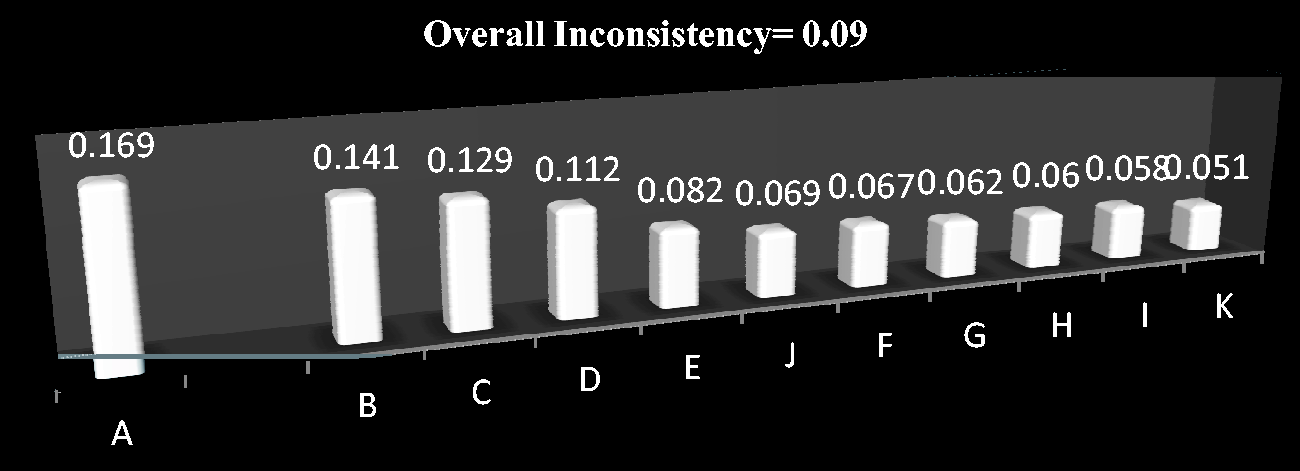
Assessment of Risk Control and Suicide Reduction Strategies.
Discussion
The results of this study showed that the total suicide attempt rate in Fars province is far lower with 7,27 per 1,00,000 population in comparison with Hamedan (13.5), Ilam (13.4) and Lorestan (11.5) provinces (Sekhavati et al., 2017).
This study showed the highest suicide attempt among the age group of 18 to 39 years which is confirmed by previous studies (Mirahmadizadeh et al., 2020; Rezaeian et al., 2012; Shakeri et al., 2014; WHO, 2017; Zarenezhad et al., 2015). The current literature demonstrated that suicide is the second leading cause of death among adolescents and young people (McKinnon et al., 2016; Mirahmadizadeh et al., 2020; Mortier et al., 2018; Nock et al., 2013). In compatibility with the results of this study, evidence indicated that suicide attempt is a major global concern and the second leading cause of death for 15 to 29 years old people (Evans et al., 2017; WHO, 2014).
While investigations have reported that 8% of high school students in the United States have committed suicide in the past 12 months, that 2.7% of them needed medical treatment (Berríos-Torres et al., 2017). While in this study, more than double that figure (18.69% in a 353 person sample) was reported. Also, weak living skills in creating individual and interpersonal adjustments such as dishonesty, low self-esteem, low self-efficacy, dysfunctional coping styles, defective documentary styles, lack of understanding or inappropriate behaviour by parents and others and many more; all of them can be the cause of mental and psychological tensions among young individuals that one of the consequences of which is suicide.
Also, given that adolescence and youth play an important role in achieving to individual and social success; academic and job failures during this period are among the other factors that can increase the risk of suicide attempts. In this study, people who had less than diploma degree of education most had suicide attempt. This finding is consistent with the results of previous studies (Eghbali & Mastyani, 2015). This study suggesting that people with low levels of education have a low socioeconomic status, they are more prone to psychological and social harm. Furthermore, people with low education due to insufficient knowledge, they are more likely to use inefficient coping methods and they have lower levels of self-efficacy and life skills which when problems arise, they are more likely to suicide attempt. Really, life skills are the skills people need to get the most out of life. These are coping skills and positive behaviors that allow humans to respond effectively to the demands and challenges of life (WHO, 1994). In this study, more single men attempted suicide that this finding is consistent with the results of previous studies (Bakhtar & Rezaeian, 2017; Eghbali & Mastyani, 2015; Mirahmadizadeh et al., 2020; Mohammadinia et al., 2012). In explaining these findings, it can be said that the characteristics of being single in men and women have different impact on suicide attempts, but the fact that the prevalence of suicide attempts and suicidal thoughts in singles is higher than in married people may be due to the fact that single people. They have more mental problems, feel less committment to life, and are also deprived of an important support system such as a spouse (Lee et al., 2020; Smith et al., 1988; Tang & Curran, 2013). In addition, due to economic problems and the lack of suitable jobs due to inflation in the country, young people are hoping for a low future that will lead them to suicide attempt.
Unemployment is another factor associated with the increase in suicide rates in this study, so that suicide ideation and suicide attempt reported higher in the unemployed than in other occupational groups. This finding is consistent with the results of previous studies (Arya et al., 2018; Kerr et al., 2017; Milner et al., 2013; Milner et al., 2013; Norström & Grönqvist, 2015). Also, in line with the results of this study, Feizpour and Lotfi (2015) reported that there is a positive and significant relationship between suicide incidence rate and unemployment rate in different regions of the country. Unemployment reduces a person's mental health due to serious problems in meeting daily living expenses and inability to provide health, recreational, educational and economic needs (Batic-Mujanovic et al., 2017; Paul & Moser, 2009).
Furthermore, the results of this study showed that people with a history of suicide, people with a history of mental illness and people with a history of suicide among family members had the highest rates of suicide; that is consistent with the results of other studies (Bakhtar & Rezaeian, 2017; Hashemifard et al., 2015; Huertas et al., 2020; Iemmi et al., 2016; Mehrabi & Sheikh Darani, 2013; Sedaghat et al., 2017). Also, drug abuse was the most important method and type of suicide attempt in this study. In general, with regards to the earlier evidence (Mirahmadizadeh et al., 2020); this study suggest that abuse of the drug may be due to easy access and less pain due to the use of drug poisoning.
With regard to psychological, structural, social and economic risk factors determinants of suicide attempt and the three components of risk assessment (i.e., risk consequence, risk probability and risk exposure), the results of RAM in this study showed that six factors had high risk levels of suicidal and needed immediate corrective action: (1) psychotic and neurotic disorders; (2) personality disorders; (3) family issues (i.e., acute family conflict, divorce, bad supervision, spousal abuse, child abuse, parental abuse, sibling violence and other domestic violence); (4) Cultural, social and economic problems (i.e., financial problems, unemployment, poverty, ethnic and racial discrimination, issues relating to sexuality, gender discrimination, alcohol or drug abuse, gambling problems and etc.); (5) educational problems and lack of knowledge (i.e., the level of education less than diploma) and (6) individual and family history of suicide attempts. These results are consistent with the results of other studies (Bantjes et al., 2016; Huertas et al., 2020; Iemmi et al., 2016; Najafipour et al., 2019; Nazarzadeh et al., 2013; Sekhavati et al., 2017). In general, the results of extensive studies showed that these determinants are the most important independent risk factors for suicide attempt (Huertas et al., 2020; Indu et al., 2017; Smith et al., 2019). Thereby, this study suggests that health care systems at three levels of local, national and global must integrate the psychological, structural, social, and economic risk factors of suicide attempt; and pay close attention to decisions to take any precautionary measures and reduce suicide risk. Obviously, decision-making processes for successful programs in preventing, controlling and eliminating of suicide risk factors are depending on the risk consequence (C), risk probability (P) and risk exposure (E) in the cultural context of the study area. Overall, this study shows that the RAM helps mental health policy makers to make the best decision to control risk and reduce suicide by quantifying risk factors for suicide attempt and assessing their importance.
Finally, using the AHP, Delphi decision making process and pairwise comparison matrix (PCM), the final weight of different solutions to the overall goal of choosing the most appropriate method of controlling and reducing the risk of suicide was calculated in this study and the priority of the existing solutions was announced based on the desirability and the final weight. Therefore, according to the opinions of professionals in a Delphi decision-making environment, five ways to manage suicide risk reduction were introduced as priorities, which are: (1) provide psychiatric and psychological treatment services to people at risk of suicide (such as patients with depressive disorder, bipolar disorder, personality disorders and other mental illnesses that effective in predicting suicide) and treatment of psychopathological disorders in victims of suicide and their families; (2) promoting awareness and knowledge of life skills (development of life skills in education and higher education; provide of life skills training services and risk management to people with a history of dropout in order to empower them cognitively; using of e-media and cyberspace-based educational programs to promote mental health and the development of knowledge of life skills of the community, especially for high-risk target groups; (3) providing the necessary measures and facilities to provide treatment services (psychotherapy, cognitive-behavioural therapy, treatment based on acceptance and commitment, gestalt therapy, schema therapy, family therapy and etc.) to dysfunctional families who are involved in problems related to divorce, acute family conflict, spousal abuse, child abuse, parental abuse, sibling violence and other domestic violence; (4) development of community-based planning and culture building to reduce and eliminate the risk of cultural, social and economic factors that lead to suicidal ideation in individuals (such as financial problems, unemployment, poverty, ethnic and racial discrimination, sexual harassment, sexual orientations, gender discrimination, alcohol or drug abuse, gambling problems and etc.) with the participation of government agencies and non-governmental organizations (NGOs); and (5) providing employment and entrepreneurship services to alleviate poverty and financial empowerment of the injured or vulnerable individuals who are members of low-income economic deciles
These findings are consistent to the previous literature that supported the roles of mental health interventions (Awenat et al., 2018; WHO, 2017, Zalsman et al., 2016), life skills training (Lafromboise & Lewis, 2008), psychological services to dysfunctional families (Frey & Cerel, 2015; Ohtaki et al., 2019), community-based and cultural oriented programs (Bean & Baber, 2011; Goldston et al., 2008; Zalsman et al., 2016), and employement and workplace-based programs in suicide prevention (Blakely et al., 2003; Feizpour & Lotfi, 2015; Milner et al., 2015). These results show that the method used in this study has been able to identify solutions as evaluated by experts for suicide risk management and based on the degree of relative importance of these strategies, to introduce the suitable strategies according to priority. In fact, the AHP is one of the most comprehensive systems designed for multi-criteria decision making, which allows the problem to be formulated in a hierarchical manner; and allows considering different quantitative and qualitative criteria in decision making. This process involves different options in decision making and can analyse the sensitivity of criteria and sub-criteria.
In conclusion, the present study adds to the current literature for identification of suicide risk factors and the management strategies for suicide prevention. Mental health professionals can consider the psychological, structural, social and economic risk factors in suicide attempt and use these findings as basic information when planning for prevention and treatment strategies to control and eliminate risk and minimize suicidal behaviours. Also, health officials and policymakers can use the RAM and the AHP to assess suicide risk and prioritize cost-effective solutions. Because using these methods they can choose the best decision-making criterion and the best risk control method to control and reduce the risk of suicide. However, this study is limited because it was a cross-sectional study that doesn't allow causal conclusions. Also, clinical sample and experts were slected from an eastern culture. Perhaps future research could include religious service attendance (VanderWeele et al., 2016) and personal values system as two potential variables in suicide risk assessment in different cultures.
Footnotes
Declaration of Conflicting Interests
The author(s) declared no potential conflicts of interest with respect to the research, authorship, and/or publication of this article.
Funding
The author(s) disclosed receipt of the following financial support for the research, authorship, and/or publication of this article: This study was conducted with the support of the Social Emergency Centres of the Welfare General Bureau of Fars Province; and using the data of these centres, so all its material and intellectual property belong to the Welfare General Bureau of Fars Province.
