



Abstract
Seeking to provide more systematic information on treatment-seeking and those not seeking help after a suicide, we investigated demographic, experiential and grief problems related correlates among recently suicide bereaved adults, conducting an on-line survey of a sample of U.S. 1,132 adults who lost a loved one to suicide during the last six years. Focusing upon first-degree relative loss survivors (n = 222) we hypothesized those not seeking help would be more likely to report conventional religiosity, greater social support and more use of alternative treatment modalities. Instead, we found those not seeking help were almost twice as likely to not attend religious services, compared to help seekers. Social support enhanced the bereaved individuals’ pursuit of treatments and those who did not obtain help appeared reluctant to getting non-traditional treatment support. Help seekers were more likely to experience post-traumatic growth and less likely to see suicide loss survivorship as stigmatizing.
Keywords
Introduction
Despite spectacular rises of new contributions to the suicide bereavement literature emerging over the last two decades, bringing the number of articles on this subject into the thousands from its previous position of in the hundreds, there has been woefully little written to systematically delineate the social characteristics of this population. We know very little about how many suicide bereaved there may be, how many may be getting supportive help, and how many do not get such aid and what may be the correlating demographic and other characteristics associated with getting compassionate support or not getting this aid. Much of the past literature on the suicide bereaved has been diminished by the presence of convenience samples, drawn from the ranks of former or current counseling patients, taken from the membership rosters of support group affiliates, or from social media sites where these same help-seeking bereaved are found, over-representing those who have been receiving traditional grief helping supports. With such samples it often has been impossible to gauge the numbers of those disinclined to gaining support from the commonly utilized grief helping supports.
Only a handful of studies of the suicide bereaved stand out as being drawn from the community-at-large in such a way that they might yield systematic information on the diverse characteristics and actions of these bereaved. Examples of such studies drawn from the population-at-large include the following: the Crosby and Sacks study (2002) based on randomly selected national telephone records, the Cerel, et al., (2013) study, based on randomly selected telephone records from the state of Kentucky; Provini, Everett, and Pfeffer’s study, (2000) based upon coroner’s records of suicide deaths in New York City, the Murphy et al. (2003) study based upon coronary death records from Seattle, Washington, or Bolton, et al.’s, (2010), study based upon provincial health records from the Manitoba province in Canada. In 2016, Feigelman and colleagues were able to add 11 questions on suicide bereavement into the 2016 General Social Survey, administered by the National Opinion Research Center to a representative sample of over 1,500 adult American householders (Feigelman, et al., 2018). From this first-ever systematic survey of the adult American public on suicide bereavement, it was possible to establish that one-half of the adult population had known someone who died by suicide, and one-third of all respondents had indicated being bereaved, or emotionally affected by someone’s suicide. It was also found that the largest single group of affected persons were friends of the deceased, accounting for 40% of all suicide bereaved; 10% were first-degree relatives of the deceased, and the remainder were a combination of neighbors, acquaintances, co-workers or other relatives. These suicide bereaved respondents averaged 14 years since their losses and still showed signs of poorer mental health, with a greater number of reported poorer mental health days during the past month compared to the non-bereaved. From this study, it became apparent that little systematic knowledge exists on how widely professional and peer group care is available for the suicide bereaved, and how bereaved people, lacking such care, thrive mentally in its absence. In the present study we sought to investigate these important neglected questions, drawing our sample from the ranks of members of the community-at-large, enabling an investigation into those, who for one reason or another, have not experienced traditional grief helping supports, following their loved ones’ suicides.
It is an unexamined question what percentages of the suicide bereaved remain without the help of a therapist, grief counselor or support group after a loved one’s suicide. Another important unanswered question resides in identifying the commonly shared demographic and other social characteristics of those who remain without traditional grief helping supports. It is also an open question whether those who do not seek out help from respected grief helping agents whether they used non-traditional helping agents such as psychics, their own medical doctors, or some other non-traditional helping agent for gaining compassionate support. Last, is the disinclination to getting counseling or support group help associated with any more grieving problems and life adjustment stresses, compared to other similarly impacted suicide bereaved adults that availed themselves of counseling and support group aid?
For more than two decades, grief experts have been questioning whether grief counseling and support actually matter in alleviating the adjustment problems associated with a loved one’s death. Stroebe and colleagues (2005) questioned whether counselee beneficiaries were any better off in their adjustments to loss, compared to those bereaved who had not gained such counseling support. And there also was an important controversy between those claiming that grief counseling can sometimes be harmful (Bonanno & Lilienfeld, 2008) and those denying this assertion (Larson & Hoyt, 2007) claiming that counseling is not harmful, but is as effective as other forms of psychotherapy.
In the area of suicide bereavement, little doubt appears to exist in the value of counseling and peer helping in alleviating the multifold grieving problems associated with a suicide loss, namely: PTSD associated with the shock of either witnessing the occasionally violent death or finding the body, prolonged or complicated grieving, stigmatization of the suicidal deceased and their family members and the shattering of one’s assumptive world with this death (Feigelman, Jordan and MacIntosh, 2011; McMenamy, et al., 2008; Young, et al., 2012).
The present investigation does not attempt to address this important question of gauging the helping value of counseling and peer support in alleviating the grieving problems of the suicide loss survivor. Only with a longitudinal study design, entailing matching samples of suicide bereaved individuals, with some exposed to treatments and others not similarly exposed, will it be possible to examine such a question adequately. In the present study, with our cross-sectional design, we hope to better illuminate the correlates associated with getting or not getting help after a suicide to gain to a better descriptive grasp of the diverging mental health outcomes associated with each alternative.
We also began this investigation with a few preliminary hypotheses about what might explain why some suicide bereaved, and not others, would avail themselves from widely available professional and peer support. We expected male survivors less likely to avail themselves of professional counseling and peer support after a suicide loss. Numerous studies have found men reluctant to seek professional counseling and support (McCusker & Galupo, 2011; Wimer & Levant, 2011). We also expected that suicide loss survivors living in isolated, rural areas less able to find therapists and support groups to help them cope with their loved ones’ losses. In addition, we also anticipated that loss survivors reporting they had ample compassionate support and help from friends and family members would feel less impelled to seek professional aid and support, as well as peer helping. We also expected that highly devout members of all major faiths, who were more religiously active, compared to those less religiously affiliated, would feel less impelled to gain professional and peer helping for their suicide losses. We also anticipated that less well-educated and racial minority members, would be more likely to rely upon non-traditional helping agents, and anyone relying upon such agents as psychics, family doctors, fellow church members or any other non-traditional helping sources, would be less likely to seek professional of peer support. All these hypotheses seemed highly plausible, but without any specifically directed previous research on this population, we realized any one or all of these hypotheses might be readily disproven by not fully understanding all the relevant associated factors impinging on people’s decisions to gain or remain without care and support.
Method
Study Subjects and Data Collection
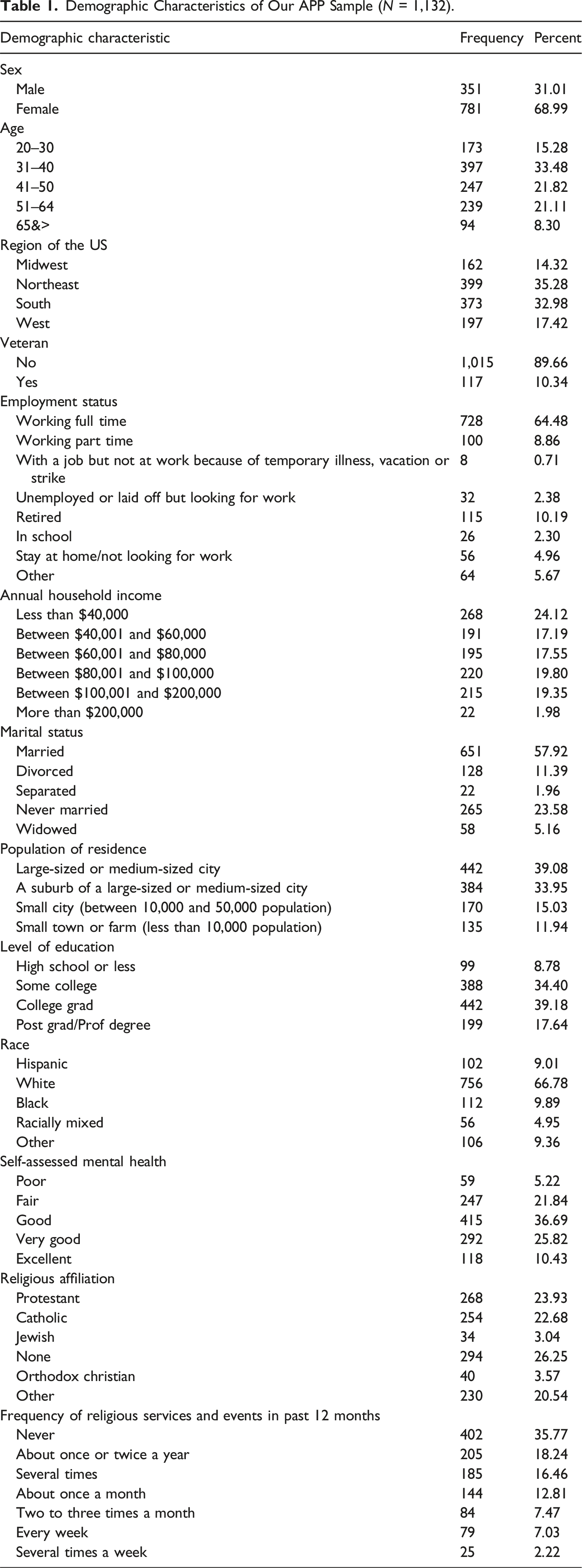
This report is based on an on-line survey collected from a sample of 1,132 U.S. adults. We contracted with the American Population Panel (APP) at The Ohio State University to collect the survey data. APP maintains a nation-wide listing of approximately 50,000 American adults willing to take surveys on various subjects who are paid for their survey-completion time. We engaged them to help us design our survey instrument, to complete the IRB review process at The Ohio State University, and to collect surveys for us from their large and diverse reservoir of potential respondents. Each respondent was paid $25 for their time. On average, the survey took approximately 30 minutes to complete. We initially planned to collect 1,000 surveys from APP’s respondent pool who met our three survey eligibility criteria: (1) known one or more persons dying by suicide, (2) the death caused moderate to severe emotional distress and (3) the death occurred during the last six years. A six year cutoff was selected for consistency with previous research. One study based on 575 bereaved parents, 462 of whom were suicide loss survivors, who were found to show evidence of abating grief difficulties, trauma, and depression within a period of 5–7 years after their losses (Feigelman et al., 2012). Within this same study 30–40% of the bereaved parents had sought counseling help during the first 5 years after their child’s three years after the loss. Yet, within the next 5-10 year period after the child's death the rate of counseling seeking fell to the 20 percent range. Another review article summarizing several studies found most mental health symptoms experienced by suicide loss survivors usually subsided after the first three years after the loss (Pompili et al., 2013). Various other studies offer consistent information regarding the adaptations of the suicide bereaved. Disparities in adjustment results in the above mentioned studies may be explained by the extreme closeness of the parent-child relationship.
The survey was introduced to potential respondents that the survey focused on suicide bereavement and their responses would help to better understand the grieving process and how to better help these bereaved. Once people consented, they were also told their responses would be kept completely confidential and only identified anonymously, that they could skip over any questions they felt inclined not to answer. They were also all told if certain parts of the survey caused them any emotional distress, they could seek help from the Suicide Crisis Lifeline by calling 988. They were also told that the overall benefit of the survey might provide them with an opportunity to reflect on their experiences of suicide loss.
When our survey was posted on the American Population Panel website in early September, 2023, 33,625 potential respondents were offered the opportunity to complete it. Only a small portion of this large number could conceivably qualify to participate in this research which was focused upon suicide loss survivors who were recently bereaved. Previous research from a representative American population sample suggests that less than 15% of any general population sample would have met our study eligibility criteria (Feigelman, et al., 2018). In addition, the survey was only available for four days before it was closed off because we had exceeded our targeted sample size. Beyond this, other potential respondents were excluded because their death losses exceeded the six-year since loss time for eligibility, their surveys remained incomplete or the respondent had submitted a fraudulent response. Fraudulent surveys were defined as those that took less than 10 minutes to complete or those that reported nonsensical answers to the one open-ended question. (See Figure 1) In all, 1,132 surveys were authenticated as valid. Enrollment into survey.
When we received the survey data, we further investigated it with R testing for careless responses, (Yentes & Wilhelm, 2023). This testing yielded no evidence of careless response behavior. We excluded missing data cases from all analyses and available case numbers were reported for all variable measurements.
Demographic Characteristics of Our APP Sample (N = 1,132).
Measures
The Grief Experience Questionnaire (GEQ; Barrett & Scott, 1989) originally consisted of 55 items. Following Bailley, Dunham and Kral (2000), whose factor analysis of the scale identified eight distinct factors, we selected the two highest factor-loaded items for each of the eight factors to form our abbreviated 16-item scale. Each of the 16 selected scale items like feeling a social outcast during the last two months, was evaluated on a five-point scale from (1) Almost Never to (5) Always. Our abbreviated scale yielded a Cronbach’s alpha coefficient of .88. The brief GEQ scale was answered by 1,002 respondents, yielding a mean of 41.4 (SD = 11.6) with a range of scores from 16 to 74.
The PTSD Checklist, Civilian Version (PCL-C) is 17 items of the DSM-IV diagnostic criterion for PTSD symptoms severity (Wilkins, Lang, & Norman, 2011). The PCL-C uses a five-point Likert scale ranging from 0 (never) to 4 (extremely) measured PTSD symptoms experienced during the past month. This scale yielded a Cronbach’s alpha of .94 with a mean of 22.47 (16.2 SD) and a range from 0 to 68.
The Patient Health Questionnaire depression module (PHQ-DEP9; Spitzer, Kroenke & Williams, 1999), was designed as a self-report form for primary care patients and is applicable to general populations and includes nine questions. We used eight questions from this scale appearing on a four-point Likert scale, ranked on their occurrence from (0) Not at all to (3) nearly every day of the respondents’ experience of depression symptoms during the past two weeks. This scale yielded a Cronbach’s alpha of .89. 1,109 respondents furnished complete data on this scale, showing a mean of 8.9 (6.2 SD) with a range of responses from 0 to 24.
The Brief Perceived Social Support Questionnaire consisted of six-items (e.g., “If I am very depressed I know who I can turn to”) measured on a five-point Likert scale from (1) Strongly disagree to (5) Strongly agree (Klien et al., 2015). The Cronbach’s alpha score for this scale was .86 based on 1,106 respondents whose mean score was 23.2 (4.9 SD), ranging anywhere from 6 to 30.
Treatment exposure was defined from affirmative answers to a series of ten questions on whether the respondent had ever sought help, since their loved one’s death, from various mental health service providers and support group resources. Any respondent mentioning they had ever sought help from a bereavement counselor, social worker, psychiatrist, psychologist, psychiatric nurse, other mental health provider, pastoral counselor, or had any support group participation from all the types listed, such as a survivor of suicide support group, general bereavement support group, or an online support group was scored as a one response (present) and those not claiming to have received such care were counted as a zero (absent). Respondents were also asked whether they had utilized various non-traditional grief helping resources, the frequency and whether they found their use of that service helpful or not on a five-point Likert type scale.
Years since death, based on the responses of 1,121 respondents, showed a mean of 2.96 years after their loss (1.8 SD). Time since loss ranged from less than a year to six years after the death as this was the cutoff for participation. Closeness to the deceased at the time of the death was measured on a five-point Likert scale from 1 to 5, with 1 signifying not at all close and 5 signifying very close (Cerel et al., 2013). All 1,132 respondents answered the closeness question, yielding a mean of 3.7 (1.16 SD). Kinship status included whether the deceased was a first-degree relative to the respondent including parents, children, siblings and spouses/significant others. 222 or 21% of 1,063 respondents reported themselves as first-degree relatives of the deceased.
Our self-blaming scale was based on two inter-related questions from a previous investigation (Feigelman & Cerel, 2020) where the questions were as follows: “People losing loved ones sometimes blame themselves about things they think they could have done and didn’t do that might have contributed to the person’s death. (1) Did you blame yourself in the first weeks after the deceased’s death? (2) Do you blame yourself now?” We only employed the second question in our analyses. Answers to both questions were given in a five-point Likert scale format from (1) Almost completely to (5) Almost not at all. The second question pertaining to one’s present state of self-blaming was answered by 1,123 respondents with mean of 3.68 (1.27 SD) and answers ranged from 1 to 5.
Perceived suicide stigma was derived from The Stigma Towards Suicide Survivor Scale (STOSASSb) (Scocco et al., 2012) that consists of 12 statements presenting general public attitudes towards suicide, persons who die by suicide and suicide loss survivors (e.g., “Most people think less of a relative of a person who died by suicide”); participants indicated their agreement on scales from 1 (strongly disagree) to 5 (strongly agree). Items were reverse coded when necessary. 969 respondents completed all scale questions, yielding a mean of 42.3 (10.25 SD) with a score range of 16 to 60. The STOSASS-b has shown validity and reliability among the general population, clinical populations and suicide loss survivors (Scocco et al., 2012).
We employed the 10-item PTGI-SF the Post-Traumatic Growth Inventory Short Form (Cann, et al., 2010), consisting of agreement or disagreement questions pertaining to the post-traumatic growth experienced by the respondents as a result of their loss. 1,100 respondents completed the 10-item scale, yielding a Cronbach’s alpha of .92 and a mean of 22.3 (12.7SD) where scores ranged from 0 to 50.
Suicide risk was assessed by the Suicide Risk Questionnaire Revised (SBQ R) (Osman, et al.,, 2001) The scale consists of four inter-related questions displaying increasing levels of suicide risk potential; did the respondent ever think of attempting to kill himself, did he or she think of doing this during the past 12 months, have they ever told someone they were going to die by suicide and how likely did the respondent think they will attempt suicide someday. This scale was answered by1,114 respondents yielding a .72 Cronbach’s alpha, and a mean of 5.62 (3.07 SD) with a range of scores from 3 to 17.
Data Analysis Plan
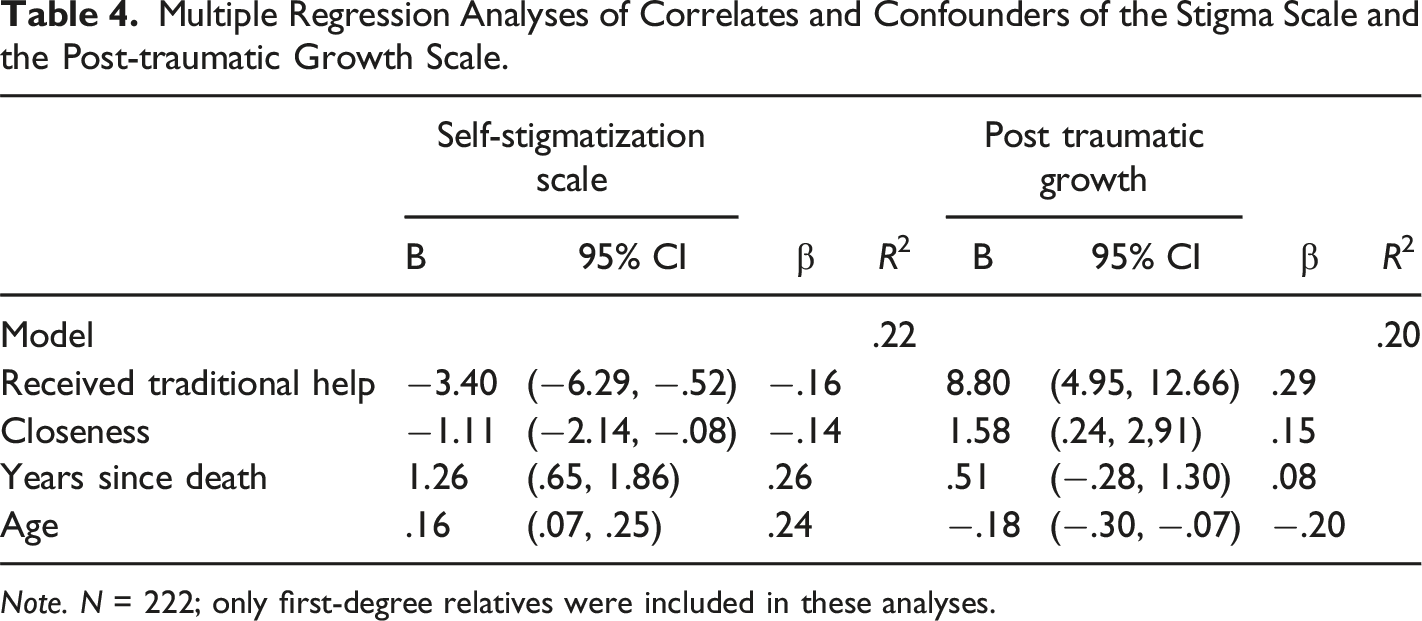
In the first part of the data analysis we investigated patterns and associations in the utilization of the many diverging grief helping aids, such as counseling help, support groups, psychics, etc., examining use frequencies, perceived helpfulness and overlapping use patterns. Next, we focused on the 222 first-degree relative members in our sample, who normatively would be expected to seek grief help after a suicide and we investigated their demographic, experiential and grief problems attributes comparing those availing themselves of grief helping aids, with those not engaged in help seeking, utilizing chi-square and t-tests to evaluate these associations. As a final piece to this investigation we employed multiple regression analysis to discern whether several patterns associated with getting grief help--post traumatic growth and reduced stigmatization---revealed in this investigation, were independently associated with getting grief help, or were confounded with other known correlates of getting help, closeness and years since loss.
Results
Percentage Using Divergent Help Agents.

When we examined and compared the mean values of helpfulness, each evaluated on a five point scale, for each of these listed grief helping resources there was little variability noted, with all mean values clustered narrowly between 3.4 and 3.7. The only type of grief helping aid that stood out from all the others was an endorsement for pastoral counselors, which was rated helpful or very helpful by 60% of its users. Informal chat groups, by contrast, were the least endorsed alternative, rated as helpful or very helpful by only 40% of its users. Generally, there was slightly better helpfulness ratings shown for counselors (51%), SOS support groups (52%), psychics (51%), and religious community groups (52%), with these four types showing somewhat higher ratings of helpfulness than all the other types of helping aids. We anticipated that the higher help satisfaction levels shown for pastoral counseling and its use, might be related to the religious affiliations of its users. This appeared to be the case. At least 10% more Protestants (48%) had utilized this method than Orthodox Christians (37%), with Catholics (35%), then Jews (26%), going down to as low as 3% for those with no religious affiliation, significant at the .001 level of probability. Religious community help too, was at least 10% higher for Protestants and Orthodox Christians than it was for Catholics, Jews, people of other faiths and those who were unaffiliated from any faith, again, statistically significant at the p = .001 level.
Perhaps the most common experience was for respondents receiving traditional grief help of either professional counseling or support group help, widely experienced by the members of our community-at-large sample at 70% for all respondents and at 84% for all first degree-relatives (n = 222) in the sample. We would expect higher utilization rates for first-degree relatives, who would usually be more closely affiliated with a deceased, before the death. Few would expect that the death of a friend, neighbor, acquaintance, co-worker, or a distant relative would often prompt such a person to seek professional or support group assistance. But when a child or parent dies, a brother or a sister, or a spouse or a former spouse dies, in these cases seeking professional counseling or peer support seems altogether necessary and essential. It was especially puzzling that for 35 first-degree relatives, 16%, reported not seeking professional counseling or support group within the six-year past loss time frame of this investigation. Next, we focused on why these 35 respondents did not seek professional or peer help.
Use of Non-traditional Grief Helping Resources Differences Among First Degree Relatives Receiving or Not Receiving Traditional Grief Help (n = 222).

When we examined the demographic contrasts between those gaining traditional grief help or those not using it, we found those not using grief support tended to be older, with an average age of 51, compared an average age of 42 for those availing themselves of traditional grief supports. Fifty-four percent of those not seeking treatments were over the age of 50, compared to only 27% for those receiving traditional grief help (p = .003).Contrary to our hypothesis of males being over-represented among those not employing grief help, females predominated among those who passed on getting traditional grief help, with 20% not getting such care, compared to only 6% for the males who did not avail themselves of help, significant at the p = .006 level. Whites predominated among those not gaining traditional grief support with 74% not seeking help, compared to only 59%, for those gaining traditional help, significant at the p = .03 level. (Whites were not seeking help at a 19% rate, compared to a 11% rate for all other minority members.) Contrary to our expectations of finding rural residents less likely to avail themselves of traditional grief help we did not find this. Instead, we found no association between getting or not getting traditional grief help and whether one lived in large or small city, suburb, or a rural place. There was a statistical trend between not seeking traditional grief help and being more likely to have no religious affiliation, but almost twice as many of those not getting traditional care never attended any religious services during the past year, compared to those getting traditional grief help, 60% as compared to 38%, significant at the p = .02 level. Importantly, those who gained traditional grief help, over-represented bereaved parents, children or spouses and those not employing it over-represented bereaved siblings and ex-partners, with a significance probability of p = . 04.
Sharply contrasting patterns were noted when we investigated the grief problems differences between those not seeking traditional grief help and those pursuing it. Our findings consistently showed the recipients of traditional grief help more problem-prone. On the abbreviated GEQ scale, those pursuing traditional grief help scored on average six points higher than those who had not gained grief help, significant at the p = .02 level. On the PTSD scale, the mean scores were nearly doubled for those pursuing traditional grief help, compared to those who did not to it, 30 vs. 18, significant at the p = .001 level. The depression scale showed scores for those pursuing traditional grief help more than 20% higher compared to those who did not use treatments, with means of 11 as compared to 8, on the scale, at a p = .03 significance level. On our self-blaming scale those pursuing traditional grief treatments showed significantly higher self-blaming (3.2) scores compared to those without treatment (3.7)on the scale where higher numbers meant lower levels of self-blaming, with a statistical significance probability of p = .04 The four question suicide risk scale also showed those pursuing traditional grief help treatments at a significantly higher suicide risk compared to those did not receive treatments, with means of 6.1 as compared to 5, significant at the p = .04 probability level.
As a final piece to this inquiry we investigated other associated differences impacting grief problems differences, such as the time since the loss, closeness to the deceased, traumatic exposures, post-traumatic growth and suicide stigma. Time since loss did not differ appreciably between those embracing traditional grief help compared to those who did not. Those pursuing traditional grief help rated themselves as significantly closer to the deceased, compared to those who did not utilize care, significant at the .04 probability level. More than twice as many of those who embraced traditional grief help rated themselves as more traumatized at the death scene by either witnessing the suicide or being present when the body was discovered, compared to those who did not get care, with significance levels ranging from the p = .005 to the p = .001 levels. First-degree relative suicide bereaved respondents who pursued traditional grief help scored significantly higher on the post-traumatic growth scale compared to those who did not get care, showing striking mean differences of eleven points between one another, significant at the p = .001 probability level. And finally, those who pursued traditional grief supports were significantly less likely to hold stigmatized views of being a suicide loss survivor compared to those did not get care who scored significantly higher on the stigmatization scale, at the probability level of p = .001.
Multiple Regression Analyses of Correlates and Confounders of the Stigma Scale and the Post-traumatic Growth Scale.
Note. N = 222; only first-degree relatives were included in these analyses.
Discussion
This first-ever investigation into the social characteristics associated with those not availing themselves of traditional counseling and support group help for suicide bereaved adults has uncovered numerous interesting and surprising findings. First, we found that getting help from grief counselors and support groups is generally widespread with over two-thirds of all suicide bereaved adults gaining this kind of help shortly after their loss. Approximately 84 percent of first-degree relatives seek professional counseling or support group help soon after a loved one’s suicide, leaving very small numbers in this group without this kind of support. Although we expected strong social support from friends and family to discourage or deter a suicide bereaved from seeking professional counseling and peer help, we found the exact opposite trend. For most suicide bereaved, strong social support especially from friends and family increased and encouraged the bereaved to engage professional and peer help after a loved one’s suicide. Many of the first-degree relatives that did not seek professional or peer help might not have felt inspired to do so because their grief problems appeared to be of a smaller magnitude than those who sought care. They felt less traumatized or depressed from the deaths, they had lower levels grief difficulties and experienced less self-blaming after the deaths. They also presented themselves at a lower risk of suicide by virtue of their reduced suicidal ideation.
There also appears to be considerable and significant mental health benefits available to the suicide bereaved counseling patients and support group members in their higher levels of post-traumatic growth associated with experiencing such care. In addition, the experience of traditional grief helping and support experiences was also associated with a diminished sense of being stigmatized as a suicide survivor. For those not experiencing such grief help and support, they felt that being a loss survivor was highly stigmatizing. Consistent with previous research, completed with another sample of first-degree relatives, (Oexle, Feigelman, & Sheehan, 2020) it was found that those scoring high on this same perceived stigma scale tended to be secretive about their losses, agreeing that “the best thing to do with a suicide is to keep it a secret,” eliciting a .49 correlation between the stigma scale scores and this response. From the present data, this suggests that for such suicide bereaved not availing themselves of counseling or support group assistance they will remain with highly stigmatized views of suicide and will tend to keep it a secret. These associations between suicide stigma and secrecy may explain why these same respondents who never sought professional counseling and support group help, never pursued non-traditional help sources such as gaining help from religious communities, social media, or death doulas or from any other alternate source.
Our predictions were mistaken on a number of the demographic associations we had anticipated about those who would be pursuing or disinterested in gaining traditional grief counseling and support. We predicted rural residents might often find barriers to getting help but tele-health counseling and virtual support group memberships, emerging during the Covid pandemic, may have erased many previous barriers to getting care. We had expected more men, racial minority members and the less well-educated would be disinterested in getting professional and peer help. But none of these associations were supported, though education differences trended in the predicted direction. But in our sample, more white women were among those that did not pursue traditional care and support. The American Population Panel’s recruitment procedures may under-represent lower class, racial minority and white males. In our sample, we noted that 65% of the males had a college degree or a higher education. For the females it was only 43%. This suggests that the sample may not be fully representative in including all those sub-segments of the population who might be disinterested in gaining counseling and support group care.
We were also completely mistaken about the religiously devout being less available and interested in seeking traditional grief counseling and peer support. Like those with ample social supports, we found the religiously devout and those attending religious services more often utilizing traditional counseling and peer support. People disaffiliated from conventional faiths, who did not attend religious services regularly were over-represented among those not utilizing traditional professional counseling and peer support resources.
Another interesting finding showed suicide bereaved parents, children and spouses on the front lines of being casualties to trauma, associated with witnessing the death or finding the body after the suicide and experiencing more profound stressors as a result, leading them to pursue counseling support while other first-degree relatives, who felt less close to the deceased, who were siblings or ex-partners of the deceased were more likely to pass on taking up traditional counseling and peer support.
Limitations
This study enlisted the participation of a wide variety of American adults from the community-at-large, who were ready to share important personal information about themselves and their suicide losses, feeling safe to do so in this confidential and anonymous survey. Most had sufficient facility with computers, tablets or cell phones, enabling them to complete this survey relatively quickly, minimizing data collection costs. Yet, had more ample research funds been available, a household based survey, representing all residentially domiciled U.S. adults, would have been preferred to better include the computer-illiterate, those less well-educated and those in the lower classes who were not well represented in this sample.
An additional limitation of the present study its reliance on APP affiliates who might be described by some as ‘professional survey takers’, and might not be truly representative of the general population. Andrade (2020) claims that surveys, drawn from some online populations, may suffer from two serious methodological limitations: the population to which they are distributed cannot be described and respondents with biases may select themselves into the sample. Wright (2005) suggests only by conducting multiple online surveys with the same or similar types of internet communities can researchers gain a reliable picture of the characteristics of these online survey participants. More future research on these very same questions, with comparable online respondents, will be needed to replicate these findings.
Additionally, in retrospect, we feel we should have asked our survey respondents whether they had been in treatment with counselors prior to the suicides of their loved ones mentioned in this survey. Had we asked such a question in our survey we would have been better able to distinguish between those respondents initiating counseling help after a loved one’s suicide, and those that had been prior mental health patients, which could show important contrasting differences.
Ideally also, a longitudinal study design would have helped us to better track changes in respondents’ behavior over time as they had utilized professional counseling or peer support and it would have been possible to measure changes in the various surveyed aspects of grief distress, post-traumatic growth, suicide stigma, and other important issues investigated. In addition, a longer time than the six-years after loss time frame of the study would have helped to more accurately measure changes taking place over the longer time span of suicide survivorship. Any of these features would have driven up research costs exponentially beyond the capabilities from our limited research budget. Yet, we feel that the present study adds importantly to better understanding the experience of suicide bereavement as it experienced most broadly in the society at large, including those who up until now, have been excluded from bereavement research--those not pursuing professional counseling and peer support help, investigated here for the very first time.
Conclusion
This study provides abundant evidence that the vast majority of suicide bereaved adults, over two-thirds of all recent loss survivors and 84 percent of the first-degree relatives, whose burdens of grief distress remain considerable, have found much solace and support from professional counseling and peer support group participation. Our survey evidence suggests that their experiences of support are associated with higher post-traumatic growth and diminished feelings of being stigmatized as suicide loss survivors. Within this supportive context they also more readily find supportive assistance for their heightened suicidal ideation.
For a small minority of the suicide bereaved, 16 percent of the first-degree relatives, who did not seek traditional grief helping support, though they reported diminished grief distress, they did not appear free from mental health problems. These data indicated that those not pursuing traditional grief help were more likely to share stigmatized views of being a suicide loss survivor and also avoided alternative non-traditional grief helping resources. The data we collected also suggested these bereaved may remain at higher risks for social isolation owing to their estrangement from conventional religious participation and their diminished levels of social support from friends and family. This first-ever study of those not seeking traditional grief support calls for much more research on this less well understood population.
Footnotes
Declaration of Conflicting Interests
The author(s) declared no potential conflicts of interest with respect to the research, authorship, and/or publication of this article.
Funding
We gratefully acknowledge the generous support from these benefactors who helped finance this research project: The Baton Rouge Crisis Intervention Center, SAVE Organization.
