



Abstract
This study evaluates the Persian version of the Utrecht Grief Rumination Scale (UGRS), developed to assess grief-related rumination. The UGRS, originally validated in Western and Eastern cultures, had not been examined in a Iranian context. The research involved translating the UGRS into Persian, followed by a thorough psychometric evaluation involving 325 bereaved Persian-speaking adults. The Persian UGRS demonstrated strong internal consistency (Cronbach’s alpha and McDonald’s ω = 0.92) and test-retest reliability (ICC = 0.85). Confirmatory factor analyses supported a second-order hierarchical model of grief rumination. Concurrent validity was affirmed through significant correlations with depression, anxiety, prolonged grief, and PTSD. Known-groups validity highlighted higher rumination levels among individuals with lower education, those who lost close family members, and women. These findings underscore the Persian UGRS’s reliability and validity, offering a robust tool for assessing grief-related rumination in the Iranian population.
Introduction
Grief is one of life’s stressors associated with an increased risk of mortality and a decline in physical and psychological health (Stroebe et al., 2007). While most people can effectively adapt to loss over time, research has shown that 10% of grieving individuals experience a type of prolonged grief that impairs their functioning, known as complicated grief or prolonged grief disorder (American Psychiatric Association, 2022). Prolonged grief reduces life expectancy, increases the risk of death, leads to severe behavioral symptoms, and is associated with other mental disorders such as depression (Ashouri et al., 2024; Ashouri & Yousefi, 2023; Morowatisharifabad et al., 2020; Yousefi & Ashouri, 2023). These individuals struggle to adapt and continue to face the challenges of grief for an extended period.
After experiencing a loss, most individuals are compelled to redefine their goals, plans, responsibilities, and roles to find meaning and satisfaction in life (Morowatisharifabad et al., 2020). One way to bridge the gap between the cognitive model of the world before the loss and the information acquired after the experience of grief is post-loss rumination; however, rumination is a maladaptive coping style that offers no solutions. Grief-related rumination is a repetitive, passive, and negative process that focuses on the negative emotions of grief and the outcomes of the loss (Michael & Snyder, 2005), preventing acceptance of the loss and delaying adaptation to it (Boelen & van den Hout, 2008; Stroebe et al., 2007). The content of grief-related rumination often includes thoughts of the injustice of the loss and comparisons between the current state and the previous state (Eisma et al., 2014). Rumination is a risk factor for the development of depression and complicated grief following the loss of a loved one (Eisma et al., 2022).
It is crucial to distinguish grief rumination from depressive rumination. Depressive rumination primarily focuses on depressive symptoms and their causes and consequences (Nolen-Hoeksema, 1991). Although depressive rumination is linked to symptoms of depression, PTSD, and prolonged grief by amplifying negative thoughts, reducing beneficial behaviors, disrupting problem-solving, and alienating social support (Nolen-Hoeksema, 2001; Tang et al., 2019), grief rumination is a stronger predictor of grief symptom severity compared to depressive rumination (Eisma et al., 2015).
Identifying individuals at risk for enduring mental health consequences early on allows for timely prevention and intervention. To this end, Eisma and colleagues (2014) developed the 15-item Utrecht Grief Rumination Scale (UGRS) to assess rumination related to grief. The UGRS is informed by theories of depressive rumination, trauma-related rumination, and grief-specific rumination (Doering et al., 2018). The confirmatory factor analyses indicated that the correlated five-factor structure provided the best fit for both the English and German versions of the scale (Eisma et al., 2014). However, validation studies conducted in Sweden and China offered stronger support for a hierarchical model with a second-order factor (Sveen et al., 2019; Tang et al., 2019). Additionally, the results of these studies provided robust evidence for the scale’s validity and internal reliability (Araujo et al., 2023; Doering et al., 2018; Eisma et al., 2014). The UGRS has provided insights into how different types of grief rumination contribute to the persistence of post-loss difficulties. For instance, rumination about the perceived injustice of the loss and others’ reactions was found to be maladaptive, predicting a higher likelihood of prolonged grief and depression, whereas rumination focused on understanding emotional reactions was adaptive, predicting a decrease in prolonged grief and depression over a 12-month period (Eisma et al., 2015).
To better differentiate between the potentially beneficial and harmful aspects of rumination throughout the grieving process and to elucidate its role in the onset and persistence of mental health issues, particularly prolonged grief, further international research is essential (Doering et al., 2018). Grief’s frequency, progression, and its association with extended distress can vary across cultures (Bonanno, 2004). Although the UGRS has been examined in both Western and Eastern cultures, it has not yet been studied within the cultural context of the Iran. Considering the role of culture in grief-related studies, particularly in Iran, is crucial. The Iranian culture, with its unique characteristics, including strong religious values and familial traditions, can significantly influence the experience and management of grief. In these cultures, specific rituals and ceremonies are observed to cope with loss, which may play a role in either sustaining or alleviating the psychological impact of grief. Therefore, examining different cultures, especially the Iranian Culture, can provide a deeper understanding of the mechanisms underlying prolonged grief (Nasri el al., 2023; Yousefi & Jafari, 2023; Yousefi et al., 2022). Therefore, it is crucial to thoroughly assess the validity and reliability of the UGRS before applying it in studies involving bereaved Iranian individuals. This study aims to evaluate the psychometric properties of the UGRS, including its reliability, factor structure, and to examine its Concurrent validity by investigating its relationship with symptoms of depression, anxiety, prolonged grief, and PTSD.
Method
Participants and Procedure
This psychometric study investigated the Persian version of the UGRS in a sample of bereaved Persian-speaking adults. Prior to translating the scale into Persian, permission was obtained from Martin Eisma, the scale’s creator, to translate and examine its psychometric properties in the Persian language. The translation followed the standard model of the translation-backtranslation process. Initially, the questionnaire was translated into Persian by two English translators independently. These two translators then collaborated to create a single version, which was subsequently translated back into English by a different translator. The back-translated version was reviewed by experts, including two PhDs in clinical psychology, two psychiatrists, and one PhD in English translation, who compared it with the original text. After reaching consensus on the final English and Persian versions, the Persian version was finalized. To ensure its cultural relevance, the final version was piloted with 25 participants through interviews. The pilot study involved interviews with 25 participants to assess the content validity and ensure the questionnaire’s suitability for the Iranian culture. Feedback from these interviews confirmed the appropriateness of the questionnaire, leading to the final Persian version approved for psychometric evaluations without any required adjustments.
The sample was selected using a convenience sampling method. Following the recommendations of Comrey and Lee (2013) for a sample size of 300 in psychometric studies and considering a 10% attrition rate, an initial sample size of 330 was targeted. Of the 330 participants, 325 completed the study, resulting in a dropout rate of 1.5%. The primary reason for dropout was incomplete questionnaire responses, and participants with incomplete submissions were excluded from the study. Given the low dropout rate and its effective management, the final analyses were conducted on the data from 325 participants (200 women).
Data collection occurred between November 20th, 2023, and March 2nd, 2024. The online questionnaire, which took approximately 15 minutes to complete, was disseminated through social media platforms (Telegram, Rubika, Eita, Soroush, Bale, WhatsApp, and Instagram) and through psychology-related websites to individuals who expressed interest in participating. Additionally, to recruit participants, we utilized specialized websites for grief support groups and counseling centers, and disseminated information through these platforms. We also conducted extensive advertising through Google Ads, specifically targeting Iranian users who had experienced loss. These advertisements and notifications briefly outlined the study’s objectives and procedures. Interested individuals accessed the online questionnaire by clicking on the provided links or sending emails to the researchers. Prior to starting the questionnaire, participants were given comprehensive information about the study and provided informed consent before participating. Initially, 330 volunteers were recruited, each assigned a unique identifier. Two weeks later, these individuals were invited to participate in the second phase of the study, with 69 accepting the invitation. In this phase, the same scales were completed online using the previous identifiers. No incentives were provided for participation in the study. To ensure data quality, various control measures were implemented. These measures included monitoring the time taken to complete the questionnaire and checking for possible response duplication from a single device. The results of these controls indicated that the data collection process was sufficiently valid. Additionally, to address any potential issues, participants had access to the researcher’s phone number and email.
Inclusion criteria included being 18 years or older, experiencing the loss of a significant person (e.g., parent, child, sibling, spouse, friend, or grandparent) within the past three years, being able to read and write in Persian, and providing informed consent. Exclusion criteria involved the submission of incomplete questionnaires.
Measures
Basic Information
Participants were asked to report their age, gender, and education. Participants were also asked to report their relationship to a significant person in their life who had died, the cause of death and how long ago it occurred.
Grief Rumination
The UGRS consists of 15 items detailing various types of thought about the causes and consequences of the loss; participants indicate how frequently they have experienced each of these in the past month. Answers are rated on a five-point scale ranging from 1 (never) to 5 (very often). Item scores are summed to generate an overall grief rumination score. Furthermore, five subscales can be computed, consisting of three items each. ‘Reactions’ (items 6, 7, 13) measures how frequently participants analyse their emotional reactions to the loss (example item: ‘How often in the past month did you try to analyse your feelings about this loss precisely?‘) The subscale ‘Injustice’ (items 5, 11, 12) captures thoughts about the injustice of the loss (example item: ‘How often in the past month did you wonder why this had to happen to you and not to someone else?‘). ‘Counterfactuals’ (items 4, 8, 10) assesses counterfactual thinking about the events leading to the loss (example item: ‘How often in the past month did you analyse if you could have pre-vented the death?‘). The subscale ‘Meaning’ (items 1, 2, 15) measures thoughts about the meaning and the consequences of the death (example item: ‘How often in the past month did you analyse what the personal meaning of the loss is for you?‘). The subscale ‘Relationships’ (items 3, 9, 14) assesses thoughts related to reactions from the social environment (example item: ‘How often in the past month did you think about how you would like others to react to your loss?‘). Eisma et al. (2014) showed that the internal consistency was excellent for the UGRS (Cronbach’s α = .90), and reliability measures of the subscales were good to excellent (Reactions, Cronbach’s α = .84; Injustice, Cronbach’s α = .88; Counterfactuals, Cronbach’s α = .89; Meaning, Cronbach’s α = .84; Relationships, Cronbach’s α = .74) (Eisma et al., 2014).
Patient Health Questionnaire-9
The Patient Health Questionnaire-9 (PHQ-9) is a nine-item self-report instrument designed to detect Major Depressive Disorder (MDD) based on the criteria outlined in the DSM-IV (Kroenke et al., 2001). The PHQ-9 scores are calculated based on the frequency of depressive symptoms experienced, with response options ranging from “not at all” (scored as 0) to “nearly every day” (scored as 3), resulting in a total score range from zero to 27. Higher scores indicate more severe symptoms of MDD. The psychometric evaluation of the Persian version of the PHQ-9 demonstrated excellent internal consistency, with a Cronbach’s alpha of 0.856. The intraclass correlation coefficient (ICC) was 0.869, indicating high test-retest reliability. Exploratory factor analysis revealed that all items loaded onto a single factor, explaining 47.59% of the total variance. Confirmatory factor analysis further supported the unidimensionality of the scale. The PHQ-9 also showed strong convergent validity, with significant positive correlations with the BDI-II (r = 0.769), the Neuroticism subscale of the NEO-FFI (r = 0.508), the Depression subscale of the DASS-21 (r = 0.647), and the Negative Affect subscale of the PANAS (r = 0.430). Additionally, the PHQ-9 exhibited discriminant validity with a significant negative correlation with the Positive Affect subscale of the PANAS (r = −0.444). The PHQ-9 has been validated for use among the Iranian population, making it a reliable and valid tool for assessing the severity of depressive symptoms in this cultural context (Farrahi et al., 2021). In the current study, the PHQ-9 demonstrated good internal consistency, with a Cronbach’s alpha of 0.845.
The International Anxiety Questionnaire
The International Anxiety Questionnaire (IAQ) is a self-report measure designed to assess Generalized Anxiety Disorder (GAD) according to the ICD-11 diagnostic criteria (diagnostic code 6B00). The questionnaire consists of 8 items, with severity scores generated by summing the item scores, resulting in a total score range of zero–32. While no specific cut-off score is provided, the diagnosis is determined using the ICD-11 diagnostic algorithm. The psychometric evaluation of the Persian version the IAQ demonstrated strong psychometric properties. The Cronbach’s alpha coefficient was 0.93, indicating high internal consistency, while the intraclass correlation coefficient (ICC) was 0.84, reflecting excellent test-retest reliability. Confirmatory factor analysis further supported the unidimensionality of the scale, confirming that all items on the IAQ relate to a single factor (Yousefi & Mayeli, 2023). In the current study, the IAQ demonstrated excellent internal consistency, with a Cronbach’s alpha of 0.927.
Prolonged Grief Questionnaire
The PG-13-R is a 13-item self-report scale designed to assess Prolonged Grief Disorder (PGD) based on the criteria of DSM-5-TR. The questionnaire includes items scored on a Likert scale from 1 (not at all) to 5 (very much), with items 3 to 12 focusing on various grief symptoms. Item 1 assesses whether the respondent has experienced the loss of a significant other, item 2 inquires about the time since the loss, and item 13 evaluates bereavement-related dysfunction. The psychometric evaluation of the Persian version of the PG-13-R was conducted with a sample of 347 individuals (209 women and 138 men) recruited through convenience sampling. Confirmatory factor analysis supported the unidimensional structure of the scale, confirming its construct validity. The Persian PG-13-R demonstrated excellent internal consistency reliability (omega coefficient of 0.93) and test-retest reliability over a 6-week interval (r = 0.89). Convergent and divergent validity were also confirmed through significant correlations with measures of depression, PTSD, functional impairment, and hope. Overall, the Persian version of the PG-13-R exhibited robust psychometric properties within the Iranian population (Ashouri et al., 2024). In the current study, the PG-13-R demonstrated excellent internal consistency, with a Cronbach’s alpha of 0.927.
The International Trauma Questionnaire
The International Trauma Questionnaire (ITQ) is an 18-item self-report measure designed according to the ICD-11 guidelines, focusing on the assessment of PTSD and Complex PTSD (CPTSD). The questionnaire asks respondents to briefly describe a traumatic event they have experienced and when it occurred. The first nine items assess PTSD symptoms, such as re-experiencing and avoidance of current threats, while the next nine items evaluate symptoms related to Disturbances in Self-Organization (DSO), including affective dysregulation, negative self-concept, and relationship disturbances. Responses are scored from zero (not at all true) to 4 (extremely true), with a score of ≥2 indicating the presence of a symptom or functional impairment. PTSD is diagnosed when only the PTSD criteria are met, while CPTSD is diagnosed when both PTSD and DSO criteria are fulfilled. No diagnosis is made if only the DSO criteria are met. The study evaluating the Persian version of the ITQ confirmed that it maintains the same factor structure as the original version. It demonstrated excellent internal reliability (α = 0.89) and good reliability for the PTSD (α = 0.83) and DSO (α = 0.88) subscales. The one-month test-retest reliability was also strong, with an ICC of 0.868 for the total score and 0.847 to 0.854 for subscale scores (Yousefi & Abdoli, 2024). In the current study, the ITQ demonstrated good internal consistency, with a Cronbach’s alpha of 0.884.
Data Analysis
The study utilized Google Forms for collecting data. To evaluate internal consistency, reliability analysis was performed using Mean Inter-Item Correlations (MIIC). Test-retest reliability was assessed with a two-week interval between tests. For internal consistency, both McDonald’s ω and Cronbach’s alpha were calculated, with values of α and ω above 0.80 deemed satisfactory (Raykov & Hancock, 2005). The recommended range for MIIC is between 0.15 and 0.50. McDonald’s ω is regarded as a more robust measure of internal consistency than Cronbach’s alpha, as it is based on factor loadings and is less influenced by sample size and the number of items (Revelle & Condon, 2018). Unlike Cronbach’s α, MIIC provides additional insights into internal consistency, as it remains unaffected by the number of items. The test-retest reliability of the UGRS and its subscales—Reactions, Injustice, Counterfactuals, Meaning, and Relationships—was examined using data from 69 participants who completed the UGRS twice over a 2-week interval. The intraclass correlation coefficient (ICC) was used to measure this reliability, employing a two-way mixed-effects model.
Pearson’s correlations were utilized to evaluate concurrent validity with the PHQ-9, ITQ, PG-13-R, and IAQ measures. To assess the impact of background characteristics (such as gender and education) and situational factors (like the relationship to the deceased and cause of death) on the severity of grief rumination, t-tests for known-groups validity and correlation analyses were conducted. Confirmatory factor analyses (CFA) with maximum likelihood estimation were performed to test two previously reported models for the factorial structure of the English and Dutch versions. The first model (Model A) hypothesized five correlated factors (subscales), while the second model (Model B) suggested a hierarchical model with a second-order factor explaining the five subscales. The goodness of fit was evaluated using several indices: chi-square test, root mean square error of approximation (RMSEA), standardized root mean squared residual (SRMR), comparative fit index (CFI), and parsimony-adjusted comparative fit index (PCFI). The following criteria were used to indicate a good fit: a χ2/df ratio of ≥2, RMSEA <.05, SRMR <.06, and CFI ≥.95 (Schreiber et al., 2006). The Akaike Information Criterion (AIC) was also calculated to compare the two models, with lower AIC scores indicating a better model fit when comparing multiple models.
Results
Characteristics of the Sample
This study involved 325 participants with a mean age of 33.42 ± 9.75 years. Of these, 200 (61.5%) were female, 125 (38.5%) were male, 110 (33.8%) were single, 190 (58.4%) were married, and 25 (7.8%) were divorced. Regarding educational level, 91 (28%) had a high school diploma or lower, while 234 (73%) had an associate’s degree, bachelor’s degree, master’s degree, or higher. The average time since the loss of a significant person was 14 months. Of the participants, 28% had lost a spouse or fiancé, 21% had lost a parent, 25% had lost a child, 16% had lost a sibling, 5% had lost a close friend, and 5% had lost a grandparent.
Reliability
Internal Reliability of UGRS and its Subscales and Correlations With the Other Indices of Psychopathology.
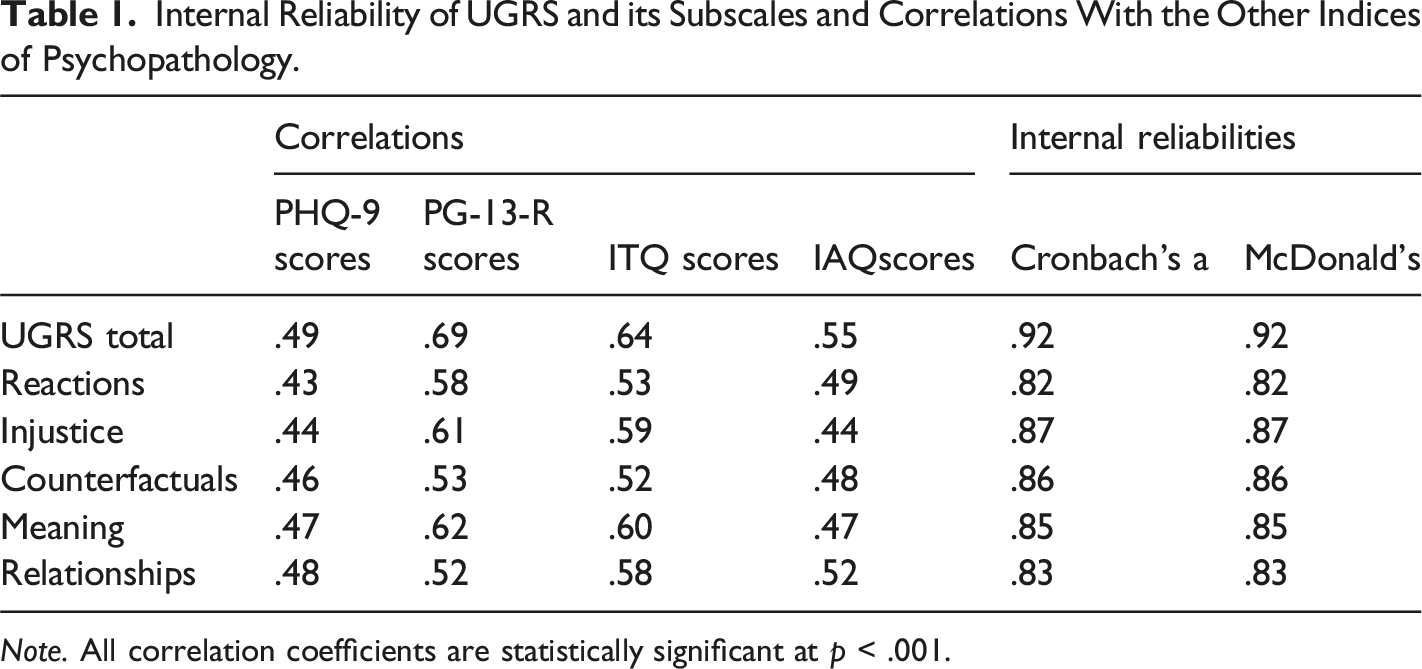
Note. All correlation coefficients are statistically significant at p < .001.
Concurrent Validity
The concurrent validity of the UGRS and its subscales was evaluated by comparing them with other measures, revealing statistically significant correlations with all. The correlations between the UGRS and the PG-13-R, PHQ-9, ITQ, and IAQ were 0.69, 0.49, 0.55, and 0.48 (p < .001), respectively (see Table 1). These results support the concurrent validity of the UGRS.
Known-Groups Validity
Sociodemographic and Loss-related Correlates of grief rumination.
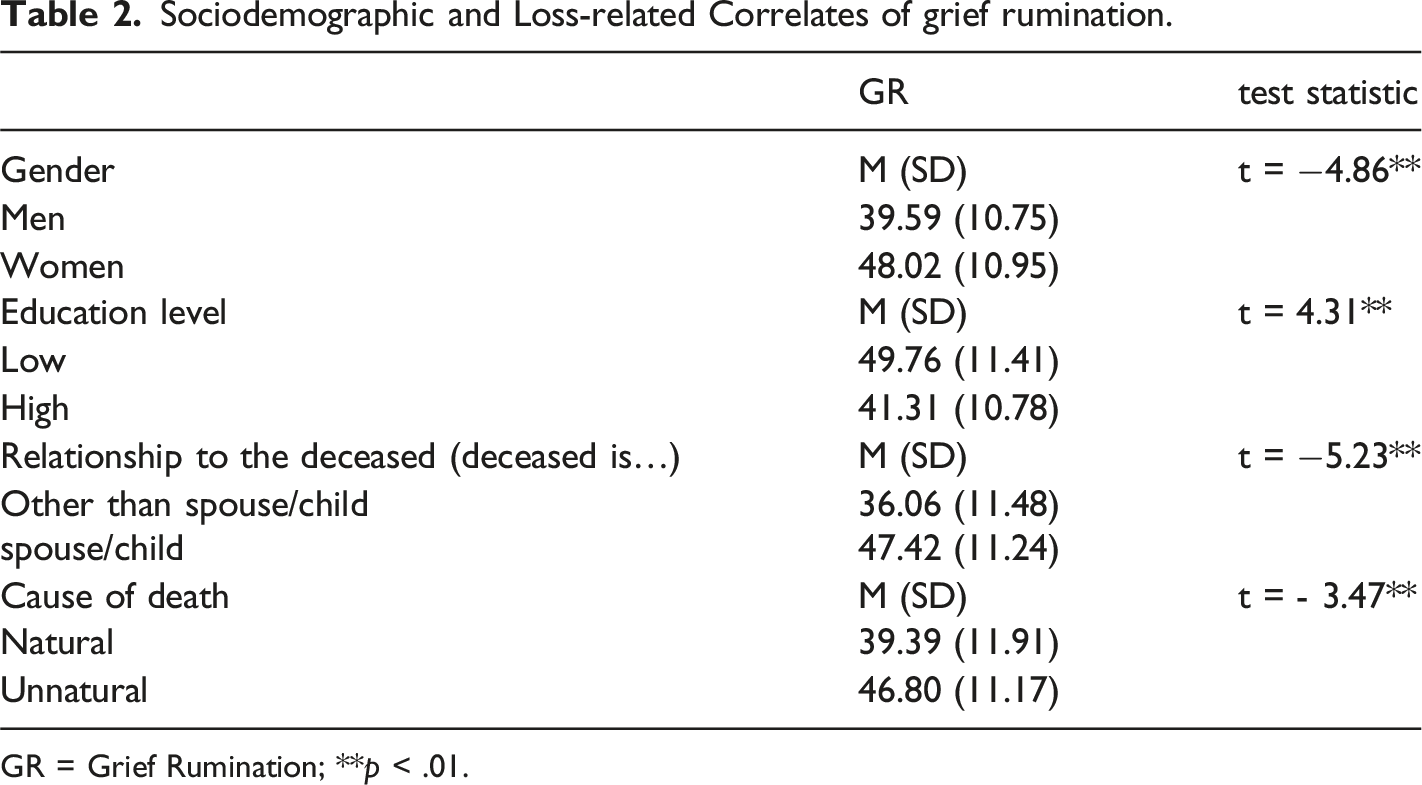
GR = Grief Rumination; **p < .01.
Confirmatory Factor Analysis
Fit Indices for the Models for the UGRS Tested in the confirmatory factor Analysis.
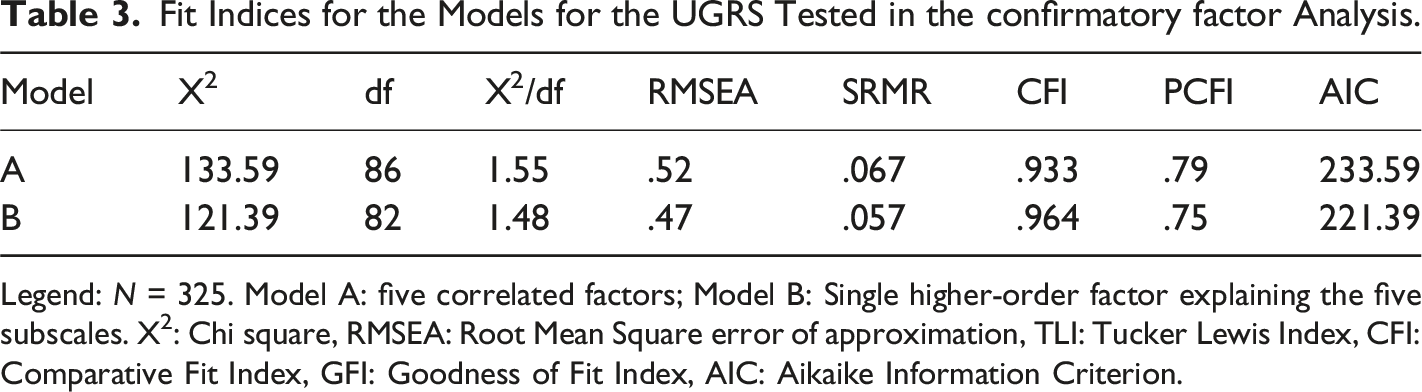
Legend: N = 325. Model A: five correlated factors; Model B: Single higher-order factor explaining the five subscales. X2: Chi square, RMSEA: Root Mean Square error of approximation, TLI: Tucker Lewis Index, CFI: Comparative Fit Index, GFI: Goodness of Fit Index, AIC: Aikaike Information Criterion.
Intercorrelations Among the UGRS Total and Subscale Scores.
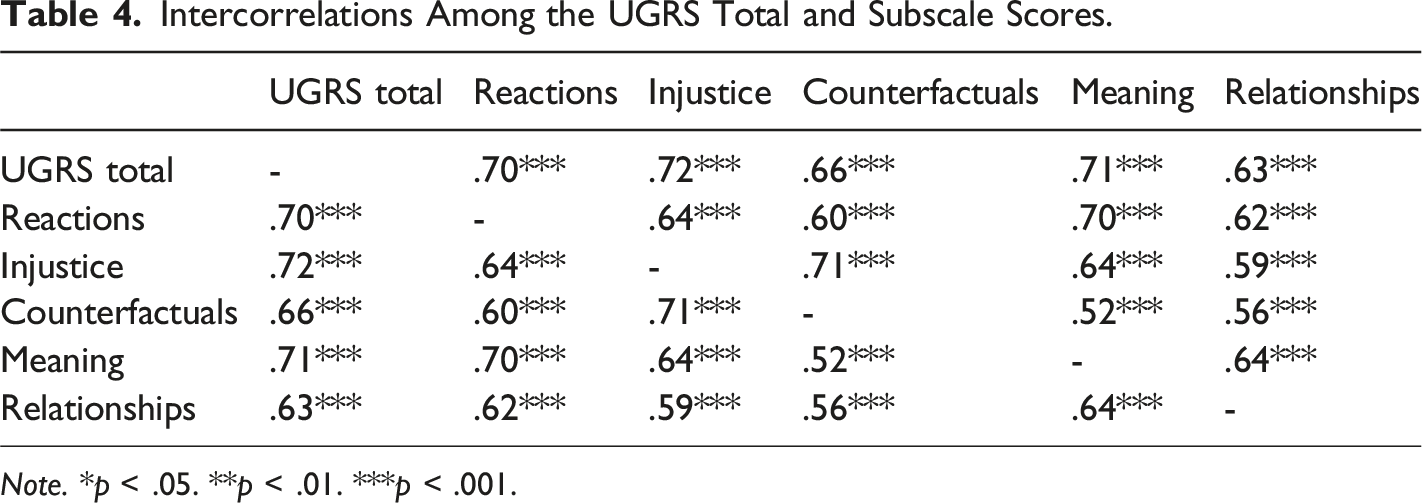
Note. *p < .05. **p < .01. ***p < .001.
Discussion
The primary goal of this study was to assess the psychometric properties of the Persian version of the UGRS, providing a reliable tool for evaluating grief-related rumination in the Iranian population. The study examined the factor structure, convergent validity, internal consistency, and test-retest reliability of this scale. The findings revealed high internal consistency, with both Cronbach’s alpha and the Omega coefficient at 0.92, which is consistent with the reliability reported for the Swedish, original, German, and Chinese versions of the scale (Doering et al., 2018; Eisma et al., 2014; Tang et al., 2019). To assess score stability, test-retest reliability was conducted, yielding a significant correlation coefficient of 0.85 between two administrations taken two weeks apart, indicating good reliability over time for the Persian version.
The results also support the construct validity of the Persian UGRS. Following prior research (Doering et al., 2018; Eisma et al., 2014; Tang et al., 2019; Araujo et al., 2023), two confirmatory factor analyses were conducted: one for a correlated five-factor model and another for a hierarchical model with a second-order factor. Both models showed acceptable fit according to nearly all fit indices, with the hierarchical model with a second-order factor demonstrating a slightly better fit. This suggests that the hierarchical model with a second-order factor is preferable for the Persian version of the scale. These findings are consistent with those of Eisma and colleagues (Eisma et al., 2014), who found similar fit indices for both models, although the correlated five-factor model performed slightly better in Dutch and English samples. The factor analysis results for the German version of the UGRS (Tang et al., 2019) align with Eisma et al. (Eisma et al., 2014), but the findings here are more in line with the Chinese (Tang et al., 2019) and Swedish (Sveen et al., 2019) versions, where the hierarchical model with a second-order factor showed better fit. The similarity between the Persian and Chinese versions in terms of the better fit of the hierarchical model may indicate shared cultural elements, such as collectivism or a focus on the interconnection of various aspects of life, which influence how grief rumination is experienced. For example, in both Iranian and Chinese cultures, there is a strong emphasis on family relationships and social obligations, which may lead to an integrated approach to processing grief. This cultural context may favor a hierarchical model that encompasses the different dimensions of grief rumination within a single framework.
Overall, these results indicate that the total score on this scale offers an overall measure of grief-related rumination, while each subscale captures distinct aspects of this concept. Therefore, the UGRS can be used to evaluate specific components of grief rumination, with the total score representing overall rumination. This conclusion is further supported by the moderate to high internal correlations among items on the Persian scale, and the moderate correlations between subscales, indicating that while the items address a related concept, they are not interchangeable.
Previous studies (Sveen et al., 2019; Araujo et al., 2023) and this study, it is clear that the subscales of rumination can be independently assessed. Although individually distinct, when combined, these elements offer a holistic perspective on grief rumination. This concept is theoretically characterized as a cognitive process that involves repetitive, self-focused contemplation regarding the causes and effects of loss, along with the associated emotional responses (Eisma et al., 2012). When examining this broader notion alongside the hierarchical model with a second-order factor of the UGRS, it becomes clear that the subscales ‘Injustice’ and ‘Counterfactual Thinking’ pertain to thoughts about the causes of grief, while ‘Reactions,’ ‘Meaning,’ and ‘Relationships’ are concerned with the effects of grief and the related emotional experiences. Therefore, the combination of these subscales contributes to a more thorough understanding of the broader grief rumination process (Araujo et al., 2023). The distinction between subscales related to the causes and effects of grief may reflect cultural beliefs about causality and destiny in the context of loss. In Iranian culture, where concepts of fate, destiny, and divine will play a significant role, the “Injustice” and “Counterfactual Thinking” subscales may be particularly relevant for understanding how individuals process the causes of grief. Conversely, the “Reactions,” “Meaning,” and “Relationships” subscales may capture culturally specific ways in which grief impacts an individual’s emotional and relational life, guided by religious and social frameworks. The moderate to high internal correlations among items on the Persian scale and the moderate correlations between subscales may reflect a cultural tendency in Iran to view grief as a multifaceted yet interconnected experience. This perspective is likely influenced by cultural and religious narratives that shape how grief is understood and managed. The interconnected nature of the subscales may indicate a holistic approach to grief, where cognitive, emotional, and relational aspects of grief are seen as related and part of a broader, unified experience. This conclusion is further supported by the moderate to high internal correlations among items on the Persian scale and the moderate correlations between subscales, indicating that while the items address a related concept, they are not interchangeable.
Regarding concurrent validity, both the overall UGRS score and its individual subscales displayed strong positive correlations with symptoms of complicated grief, anxiety, depression, and PTSD. This is consistent with previous research validating the scale (Doering et al., 2018; Eisma et al., 2014; Sveen et al., 2019; Tang et al., 2019). These findings support Ehring and Watkins’s (2008) theory that negative repetitive thinking, including rumination, is a transdiagnostic risk factor for various mental health disorders (Araujo et al., 2023). Experiencing intense distress is common after bereavement. Losing a loved one can be overwhelming, and even individuals who do not typically ruminate may find themselves caught up in repetitive thoughts about the causes, consequences, and emotions surrounding the loss as they try to comprehend what has occurred (Doering et al., 2018; Eisma et al., 2012; Araujo et al., 2023). This type of thinking, known as grief rumination, is often linked to poorer grief outcomes and is considered a risk factor for the development of depression, anxiety, complicated grief, and PTSD following such a loss (Araujo et al., 2023).
There was a notable positive correlation between grief rumination and symptoms of prolonged grief, which mirrors the findings of previous research (Eisma et al., 2014; Tang et al., 2019). This suggests that grief rumination remains a significant predictor of prolonged grief symptoms, even when accounting for various forms of psychopathology, background factors, depression, and anxiety. In other words, the more intense the grief rumination, the more severe the prolonged grief symptoms. This finding supports the notion that grief rumination is a distinct mechanism contributing to distress reactions in grief. Evidence indicates that grief rumination, along with other forms of negative repetitive thinking, serves as a transdiagnostic risk factor for a range of mental disorders (Ehring & Watkins, 2008; Eisma et al., 2014; Tang et al., 2019). The observed relationship between grief rumination and other psychopathological symptoms in this study reinforces this assertion. Furthermore, these results are consistent with previous studies that have shown grief rumination to be linked to various mental health issues following loss, including anxiety and depression (Eisma & Stroebe; 2017). Additional findings revealed that grief rumination was more strongly associated with maladaptive forms of ruminative thinking (e.g., negative rumination) than with more adaptive forms (e.g., reflective rumination), which corroborates earlier research (Eisma et al., 2014).
This study examines the known-groups validity of the Persian version of the UGRS and reveals that the level of grief rumination varies across different demographic and situational groups. Individuals with lower education levels, those who have lost a spouse or child, and those who have experienced loss due to suicide, accident, or homicide report higher levels of grief rumination. Additionally, women report more intense grief rumination than men. These findings are consistent with previous research and highlight the importance of considering demographic and situational factors in grief-related research and interventions (Ashouri et al., 2023; Ashouri & Yousefi, 2023; Yousefi & Ashouri, 2023).
However, this study has certain limitations, similar to other studies: Convenience sampling: The use of convenience sampling restricts the generalizability of the findings to the broader Iranian population. Use of self-report questionnaires: The study relied on self-report questionnaires administered online via websites and social media platforms, which might introduce response bias, as participants may not always provide fully accurate or complete responses. Reliance on self-report measures for convergent validity: The study exclusively used self-report measures to assess convergent validity, which might have influenced the results due to method effects. Another limitation of this study is the lack of precise data regarding the cause of death of the participants’ loved ones, particularly in relation to the COVID-19 pandemic. Instead, our focus was on the nature of the death (natural or unnatural). Given that previous researc (Eisma et al., 2021; Eisma & Tamminga, 2020) has indicated that losing loved ones during the COVID-19 pandemic may result in distinct grief experiences for families, the absence of this information could potentially influence the study’s findings. Therefore, it is recommended that future research considers the COVID-19 pandemic as a key variable to gain a more comprehensive understanding of its impact on the grief process. Suggestions for future research: Since this study was conducted on a general population, future research should consider including clinical samples to establish cutoff points for this scale within the Iranian population.
Despite these limitations, this study provides a valuable initial exploration of grief rumination in the Iranian context. The first study to assess the psychometric properties of the Utrecht UGRS (UGRS) in the Iranian population: This research represents the first study aimed at validating the UGRS in a Persian-speaking population, filling a significant gap in cross-cultural grief research. This effort not only holds scientific importance but also enables the use of a validated tool for assessing grief rumination within this cultural context. Strong validity and reliability of the Persian version of the UGRS: The study results demonstrated that the Persian version of the UGRS possesses suitable psychometric properties, including construct and convergent validity, making it a reliable tool for research related to grief in the Iranian community. These properties indicate the precision and accuracy of the instrument in measuring grief rumination. Utilization of a diverse sample: This study employed a diverse sample in terms of age, gender, and educational level, contributing to the generalizability of the results. This sample diversity enhances the value of the findings for various groups within the community and enables the broader application of the instrument.
Validation of the UGRS for the Iranian population has significant implications for grief research and clinical: This study examined the relationship between grief rumination and indicators of psychopathology, which can help distinguish between adaptive and maladaptive ruminative thoughts during the grief process (Doering et al., 2018; Araujo et al., 2023). Previous research has shown that psychological intervention and cognitive-behavioral therapy can reduce rumination and improve mental health following loss (Querstret & Cropley, 2013; Araujo et al., 2023). The importance of this issue is particularly felt during the pandemic, which created unique conditions and increased the risk of complicated grief (Nasri el al., 2023; Aliyaki et al., 2024; Yousefi & Jafari, 2023). In these circumstances, the need for valid tools to assess rumination and distinguish between beneficial and harmful aspects of repetitive thoughts after loss has become more critical for optimizing therapeutic interventions. Techniques such as exposure (Eisma & Stroebe, 2017) and behavioral activation (Eisma et al., 2015) have been suggested as effective therapeutic strategies to reduce rumination and improve the mental state of bereaved individuals.
Conclusion
In summary, this study has validated the Persian version of the UGRS for the Iranian population. The results indicate that the Persian UGRS is both reliable and valid, making it a useful tool for assessing grief-related rumination within the Iranian context. Factor analyses conducted in this study identified the hierarchical model with a second-order factor as the preferred model for the Persian version of the scale, aligning with findings from similar scales in different cultural contexts. The findings also highlight that this scale effectively measures various dimensions of grief-related rumination and shows significant associations with symptoms of psychological disorders such as complicated grief, anxiety, depression, and PTSD. These results underscore the importance of using validated tools for assessing rumination in specific conditions, such as during a pandemic, which has increased the risk of complicated grief. This study demonstrates the clinical and research significance of the Persian UGRS in enhancing our understanding of the role of rumination in mental health issues following loss and provides guidance for future research on the impact of this scale in clinical samples and diverse groups within the Iranian population.
Footnotes
Acknowledgements
The authors appreciate all the people who helped us with the planning of the study and the data collection and the men and women who voluntarily participated in this study.
Declaration of conflicting interests
The author(s) declared no potential conflicts of interest with respect to the research, authorship, and/or publication of this article.
Funding
This study benefited from the support of the Iran University of Medical Sciences by grant No 1401-4-90-24,596
Ethical Statement

Availability of data and Materials
The datasets generated during and/or analyzed during the current study are available from the corresponding author on reasonable request.