



Abstract
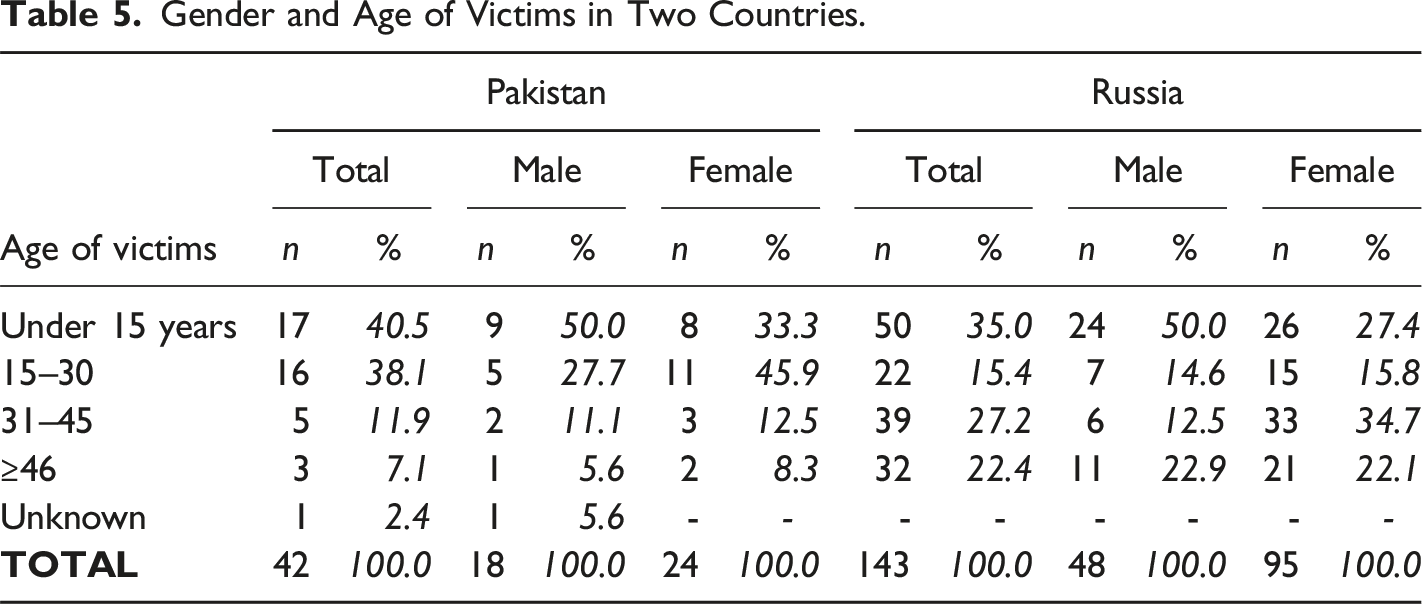
This study compares the features of homicide-suicide in Russia and Pakistan. To understand this, we conducted a content analysis of news reports about homicide-suicide published in Pakistani and Russian newspapers between March 2020 and May 2023. We identified 35 and 104 homicide-suicide cases in Pakistani and Russian media, respectively. Men were three to five times more likely to commit homicide-suicides than women (3.16: 1 in Russia; 4.83: 1 in Pakistan). Accounting for over 65.73% of all homicide-suicides, spousal homicide-suicides and filicide-suicide were the most common homicide-suicides in both regions. Filicide-suicides were more often done by Russian women and extra-family homicide-suicides by Pakistani women. Reasons for homicide-suicides in Pakistani women were divorce or separation and in Russian women – mental disorders. With the difference of homicide in the victims, Pakistani victims were aged 15–30 years, while Russian were 31–45 years and 46 years and older. There were more similarities in homicide-suicides than differences.
Introduction
Homicide-suicide is a malpractice that includes murder followed by the subsequent suicide of the perpetrator (Liem, 2010; Liem & Koenraadt, 2007; Satoh & Osawa, 2016). It can also be called “extended-suicide”, “murder-suicide” or “dyadic death” (Rouchy et al., 2020). Homicide-suicide may also entail multiple deaths at a time, which may occur within friendships, families, relatives and neighbourhood networks, leading to mental disease and emotionally traumatic situations, secondary victimization, and the disruption in social networks (Liem, 2010). In other terms, the most of the fatal homicide-suicide events happen in the family members or people who know well to one another; however, perpetrators are mostly the males and the victims appear often younger (Roma et al., 2012). This all indicates that the incidents of homicide-suicide have significant impact on the public health sphere and socio-political landscape.
The available empirical work on homicide-suicide has been focused on investigating whether it is a suicide-driven, primarily homicide-driven, or it is entirely a discrete type of violence (Eliason, 2009; Liem & Nieuwbeerta, 2010; Logan et al., 2008). Some quarters have, however, argued that the homicide-suicide stems from suicide, highlighting the history of suicidal thoughts or actions, planned nature of the attack, symptoms of depression, or the use of a suicide note (Liem & Roberts, 2009; Roma et al., 2012). These findings, to this end, have associated homicide-suicide incidents to suicidality and suicide.
Even though the unpleasant occurrences of homicide-suicide are rarely heard or reported, it is a noteworthy public health and social problem (Zimmerman & Fridel, 2020) that takes the attention of the local and national media that is newspapers, which give it an extensive coverage (Flynn et al., 2015). Subsequently, the style of media reporting of these unpleasantly violent incidents forms public understanding of such lethal events and their attitude towards offenders and victims (Allen & Nairn, 1997; Soothill et al., 2002; Stout et al., 2004).
This study, however, aims to compare rates, patterns, and types of homicide-suicide incidents in Pakistan and Russia to better understand their differences through press media reports. It is interesting to note that the findings of this study will shed light on homicide-suicide in the context of developing (Pakistan) and developed nations (Russia).
Methods
Newspaper Selection
First, we undertook eight major Pakistani English-language newspapers: daily Dawn, daily Express Tribune, daily The News International, daily Pakistan Observer, daily Pakistan Today, and daily The Nation. These newspapers are released on daily intervals in electronic as well as printed versions with different city editions. In the Russian Federation, however, we used 42 regional electronic media and all newspapers are in Russian: aif/incidents/criminal, Progorod, gaseta, kommersant, lenta, mirnov, mk, kp, petrovka-38, k-architekt/kriminalnye-novosti-rossii-svezhieto collect the cases of homicide-suicide published between March 2020 and May 2023.
Search Strategy
AF, AG, PZ (the contributing authors) undertook a very comprehensive search strategy for news reports on homicide-suicide published by the undertaken newspapers in this study. To underpin the search process, the said authors searched the electronic versions of the target newspapers.
Data Extraction
After identifying the relevant news reports, four authors (AG, PZ, RAM and AF) individually retrieved data from news reports at hand. The authors briskly assessed every single news report and extracted the most important information concerning homicide-suicide. Lastly, all the authors resolved relevant confusions or discrepancies which were found throughout vigorous data extraction practice.
Content Analysis
We systematically analysed the data at hand to identify the dominant types of homicide-suicide incidents, relationship between perpetrators and their victims, weapons and methods employed in the fatal incidents, and patterns concerning suicidal behaviour. This analysis, however, provides us with valuable observations, extent, and context of the violent events reported by selected newspapers across the undertaken time frame.
Inclusion and Exclusion Criteria
Laying the focus on the undertaken time frame for the study, we established a few inclusion-exclusion criteria to ensure the selection of relevant and appropriate news reports. Nevertheless, the former involves news specifically reporting on homicide and subsequent suicide jointly. However, news reports about homicide and suicide separately were not added for the analysis. Moreover, news reports hailing from countries other than Pakistan and Russia or about non-Pakistani and non-Russian individuals were also not considered to be included in this analysis. Additionally, we did not add other newspaper genres, such as editorials, letters to the editor, interviews, articles, book reviews, opinions and feature stories. Finally, the entertainment pages indicating the target events depicted on the television screens were also not included in the analysis.
Demographic Features of Homicide-suicide Offenders and Victims
In the sample from Pakistan there were 35 aggressors (29 man and 6 women) ranging in age from 24 to 48 years old (mean 34.8, SD 7.8), 42 victims (18 man and 24 women) respectively – from 2 to 50 years old (mean 24.8, SD 13.4); in the sample from Russian, there were 104 aggressors (79 man and 25 women) ranging in age from 17 to 86 years old (mean 41.1, SD 11.1), 143 victims (48 man and 95 women) respectively – from 0.1 to 84 years old (mean 29.2, SD 22.4).
Statistical Analysis
The data were analyzed using SPSS Version 10.0 (SPSS Inc. Chicago, IL, USA). The descriptive statistical data are given in mean values and standard deviations (SD) and in percentages. Continuous data were compared with an independent sample t test and categorical variables with Pearson chi-square (χ2). When one or several cells contained 5 subjects or less, a Fisher’s Exact test was used. All tests were performed in a two-tailed form.
Ethical Permission
This study used the data from newspapers, which are always publicly available and freely accessible. To this end, no direct permission was obtained for the study.
Data Analysis
Comparison of Weapons Used in the Homicide.
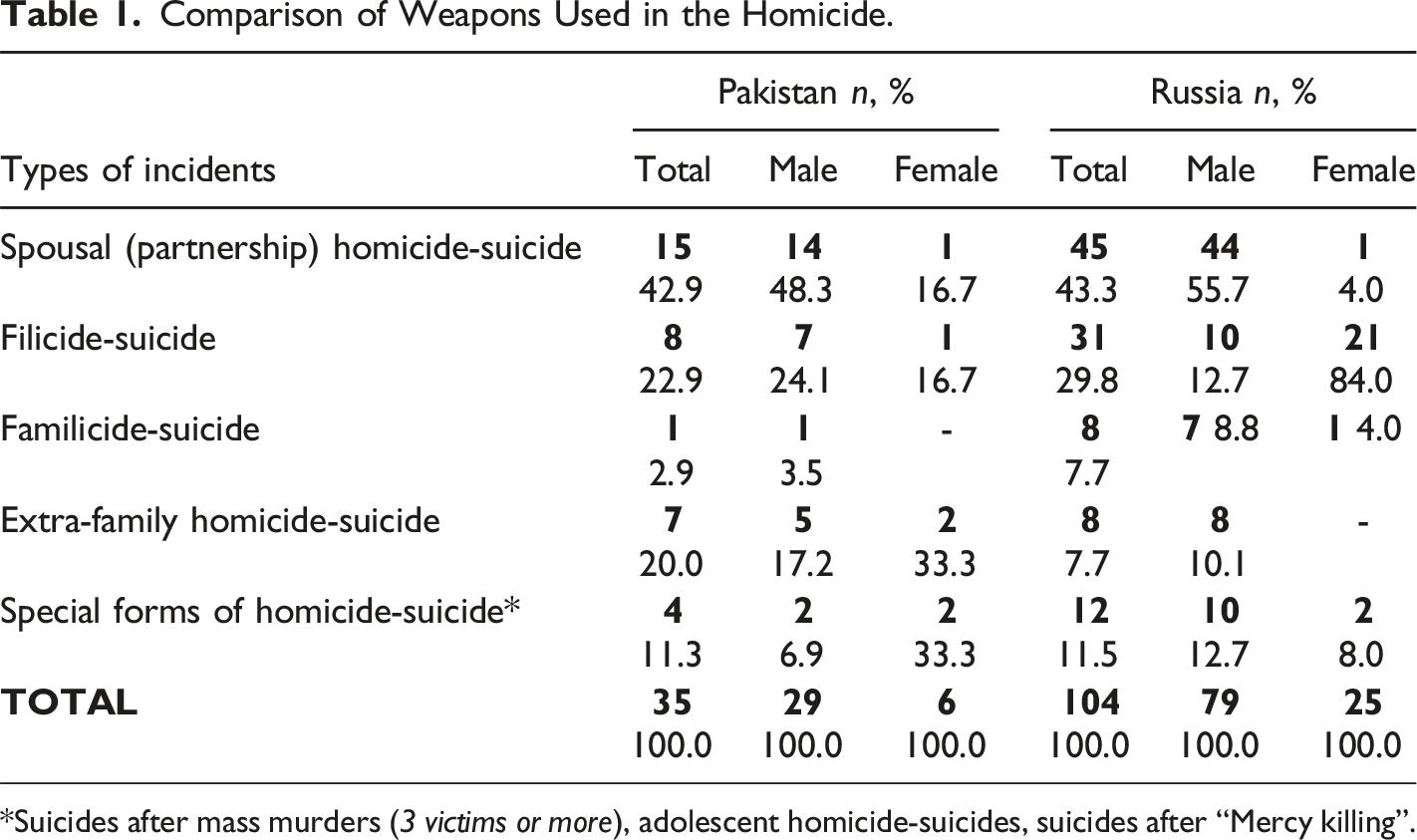
Suicides after mass murders (3 victims or more), adolescent homicide-suicides, suicides after “Mercy killing”.
As can be seen from Table 1, statistical differences are detected only for homicide-suicide done by women in two countries (χ2 = 15.275; df = 4, p = .004). Filicide-suicides were more often done by Russian women (84.0%; χ2 = 14.166; df = 1, p < .001), and extra-family homicide-suicide by women from Pakistan (33.3%; χ2 = 4.241; df = 1, p = .038). No other differences were identified, as were no cases of homicide-suicide with two or more victims (including mass homicides).
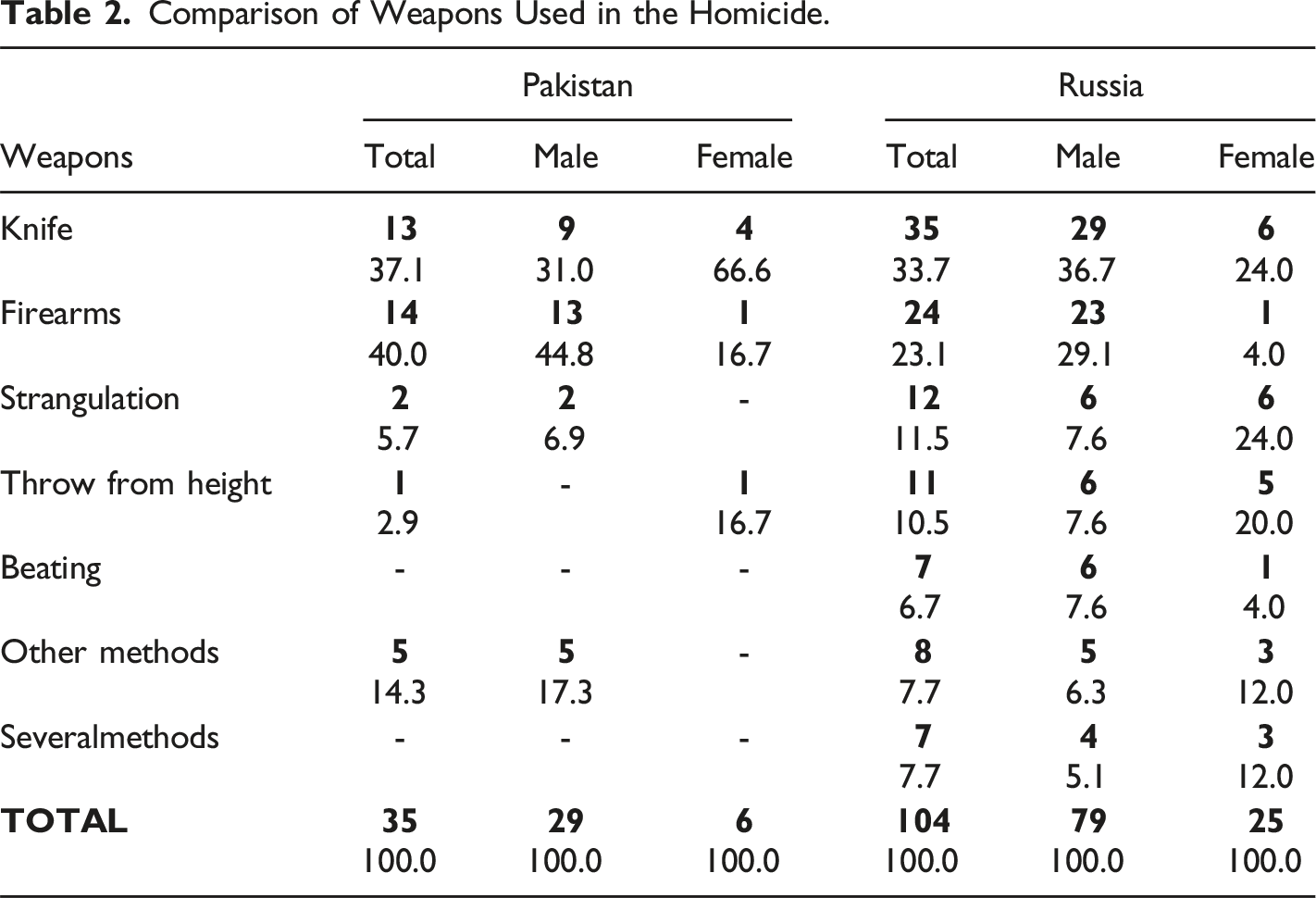
Comparison of Weapons Used in the Homicide.
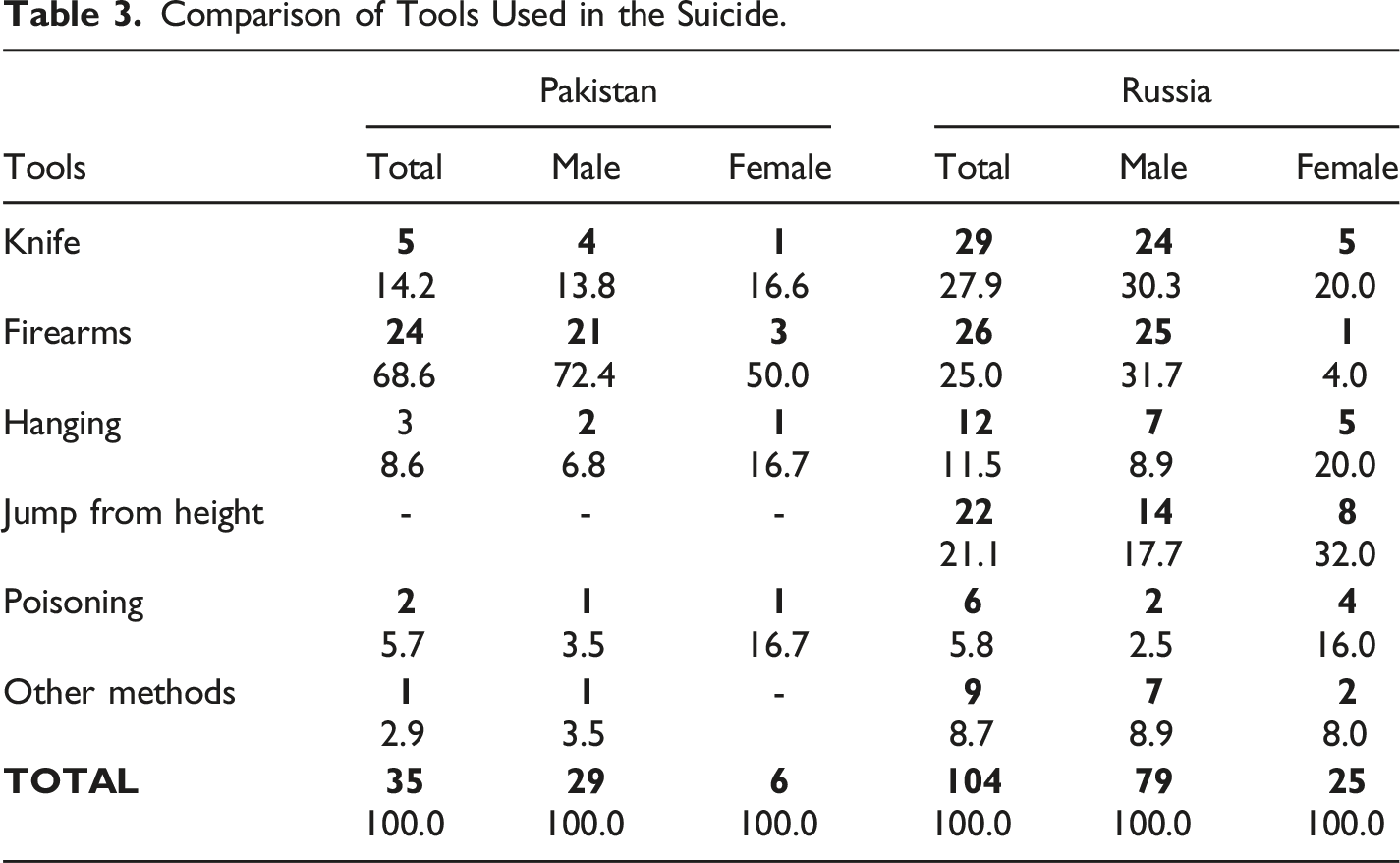
Comparison of Tools Used in the Suicide.
Causes of HS.
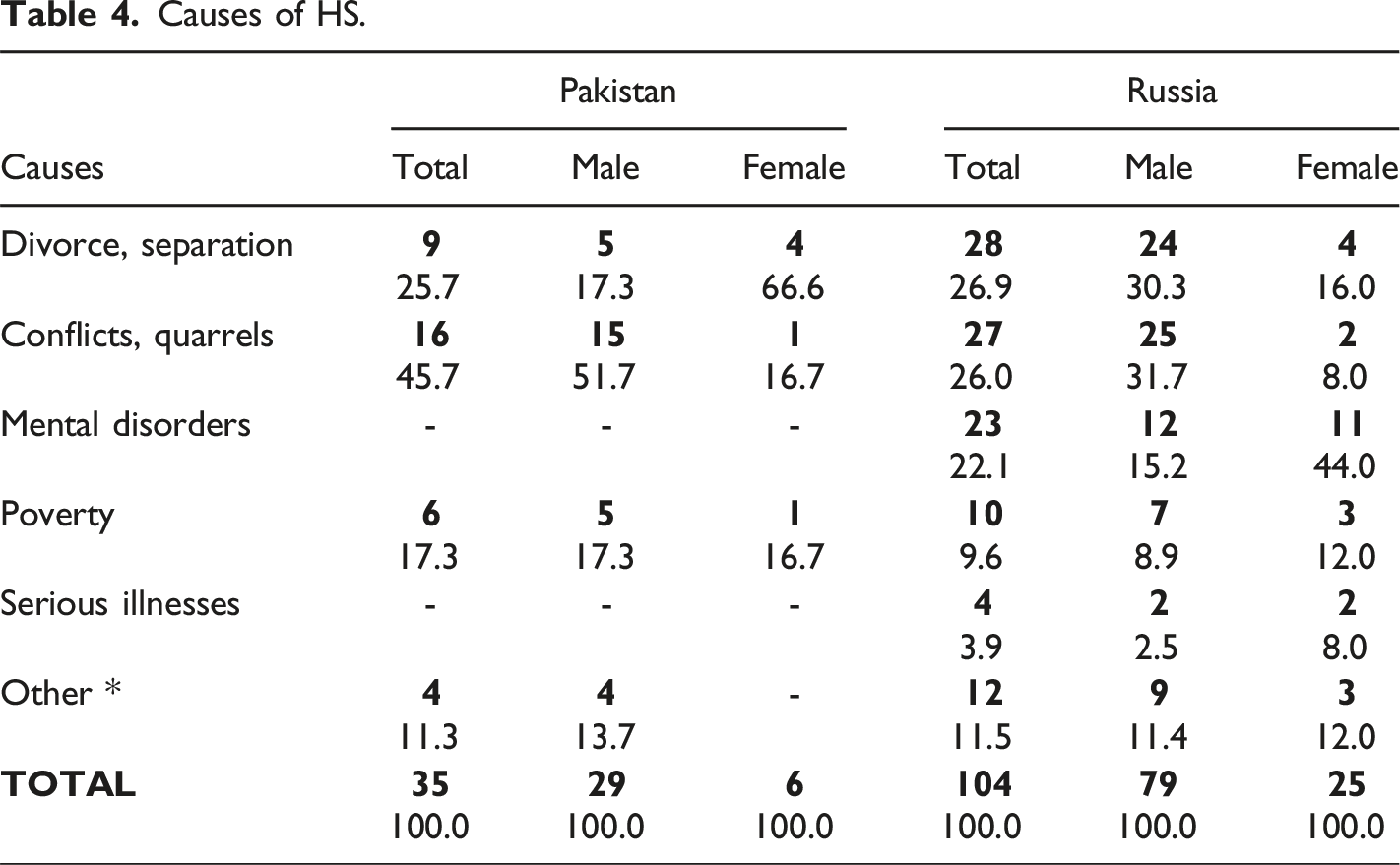
As can be seen from Table 4, the compared groups differ in their motives for committing homicide-suicide (χ2 = 13.693; df = 7, p = .017). Men (aggressors) from Russia were more likely to have mental disorders (15.2% vs. 0; χ2 = 6.613; df = 1, p = .010). In a group of women from Pakistan, compared with a similar Russian group, the causes of homicide-suicide were divorce or separation (66.6 vs. 16.0%; χ2 = 4.419; df = 1, p = .035), and in women from Russia – mental disorders (44.0% vs. 0; χ2 = 6.239; df = 1, p = .012).
Gender and Age of Victims in Two Countries.
Discussion
Although homicide-suicide incidents are rarely discussed or documented, they represent a significant public health and social issue (Zimmerman & Fridel, 2020). Newspapers, both local and national, pay close attention to these cases and provide in-depth coverage (Flynn et al., 2015).
The study of homicide-suicide in Pakistan and Russia reveals differences in the typological structure, gender and age groups of aggressors and victims, suicide weapons, and causes of homicide. Spousal homicide-suicide and filicide-suicides account for over 65%–73% of all homicides, with Russian women more likely to commit filicide-suicides and Pakistan women more likely to commit extra-family homicides. However, an analogy of the frequent cases of extra-familial homicide-suicide in Pakistan can be seen in an article from Turkey, in which their share is 40%, as well as victims <17 years of age (33.3%) (Dogan et al., 2010). Russian data are more consistent with publications from European countries and the USA (Flynn et al., 2015).
Homicide weapons were most often firearms and sharp objects. The leading causes of homicides were conflicts, divorces, and separations, with men from Russia more likely to have mental disorders. This finding goes in line with the findings of previous studies (Barraclough & Harris, 2002; Larchet et al., 2023; Leung & Joosse, 2023; Moskowitz et al., 2006; Saleva et al., 2007; Schwab-Reese & Peek-Asa, 2019). Also, the high proportion of murders with the help of piercing objects in the Russian Federation coincide in this aspect with studies in which firearms are not found at all (China) (Chan et al., 2003) or are not used so often (England, Wales) (Flynn et al., 2015). In this regard, cases from Pakistan, in which firearms predominate, fit into traditional ideas about homicide-suicide (Alexandri et al., 2022; Jordan & McNiel, 2021; Schwab-Reese & Peek-Asa, 2019; Zimmerman & Fridel, 2020).
Decreasing access to lethal means, such as knives and other weapons, has the potential to contribute to a reduction in such tragic events. Additionally, implementing and reinforcing legislative control over the sale of pesticides commonly used as household poisons would be a vital step in preventing these types of incidents and ensuring the safety of individuals and families.
However, the availability of such detrimental weapons may increase the possibility of being a triggering factor for not only the homicide-suicide or homicide (Milroy, 1995). This is further supported by a systematic review of population-based studies of homicide-suicide, which underscored the rates of homicide-suicide to be positively associated with the rate of homicides by firearms in studies from the United States (Jordan & McNiel, 2021; Schwab-Reese & Peek-Asa, 2019).
It is of note that when physical tools like a gun, knife, or pistol are used in a homicide, the victims may be able to flee because they can see that they are being killed. However, the majority of these occurrences occur in rural areas where residences are typically equipped with agricultural chemicals and insecticides, which can have suicidal effects (Hirsch & Cukrowicz, 2014), which is very dangerous (Milroy, 1995). On the other hand, in homicide cases, victims of poisoning are not informed that they are going to be poisoned, thus they do not have a chance to survive the ordeal.
The much more frequent (two-thirds) causes of homicide-suicide done by women in Pakistan on the grounds of divorce and separation are associated with significant differences in the rules of family law governing marital relations and the position of a woman after divorce (separation from a man).
The absence of mental disorders and serious somatic and neurological diseases among criminals in Pakistan is associated with the local (socio-cultural characteristics) mentality and possibly with the medical and psychiatric awareness of journalists. In Russia, this information is also not entirely complete, but nevertheless, it is reliably more often indicated in journalistic reports (Golenkov & Zotov, 2024).
The more frequent homicide-suicide of children by women in Russia is due to many reasons, including the presence of mental causes. However, the triggering factors behind separation between couples in Pakistan involve social and emotional problems alongside the external interference. Additionally, in recent years, there has been an alarming increase noticed in divorce rates in the country. As per a research report, a noteworthy increase in the divorce rate was avouched from January 1, 2019, to February 2022 (Muhammad Ilyas, 2022). To this end, marriage-related training should be provided, especially in rural areas. The media is also the most significant source of awareness against such misfits.
The predominance of jumping (falling) from heights after murders in the Russian population is explained, on the one hand, by the pathomorphosis of suicidal behavior. In the last decade, hanging as method of suicide has been mentioned in journalistic reports from Chuvashia (a region of Russia) much less often (64.4% vs. 45.6% in 2012–2021), and jumping from a height is more than twice as common (40.9% vs. 19.1%) (Kozlov et al., 2022). On the other hand, there is a connection between a suicidal fall from a height and the presence of mental (psychotic) disorders (Nielssen et al., 2010; Reisch et al., 2008). In Russia, as is known, there has been an accumulation of cases of suicide by falling from a height and the presence of mental disorders in suicidal people (Golenkov & Zotov, 2024). Surprisingly, in Pakistan there were no falls from heights and no mental disorders among aggressors.
Differences in the gender and age structure of victims can also be explained by the socio-cultural characteristics of countries. In Russia, spousal (partner) homicides clearly predominate among murders (Golenkov & Zotov, 2024).
The public’s perception of the growth in homicide-suicide instances is undoubtedly shaped by the increased coverage of events in the press media. It was customary to report offenses that might have serious consequences. Families need to obtain serious mental health treatment because they are becoming a bigger concern in provoking thoughts of murder and suicide, either together or independently. There is an urgent need for qualitative studies in the work of the media and Internet sources in matters of homicide-suicide cases (essential participation of mental health specialists as consultants and/or interviewers; maximum decrease in historical facts, refusal to show the passport data of the offenders and minimal analysis of the details of past crimes).
Also, the identification of depression in women, especially with young children (doing so-called child homicide-suicides), is vital, when most often a woman in a sick state of hopelessness kills her children (sometimes other family members), and then herself. Most probably, such moods develop at the stage of pregnancy, and criminal aggression arises in times of development of postpartum depression (6–8 weeks after childbirth). This highlights the need of mental health support system and the importance of an early intervention.
This study has some limitations, which include; (a) data were extracted from newspaper reports only; (b) news reports of homicide-suicide cases were included if they were published between March 2020 and May 2023; (c) news reports were selected with a focus on both homicide and suicide cases together; and finally; (d) only news reports were analyzed in the study, not any systematic psychological autopsy reports. Although our study has outlined some limitations, we firmly believe that the results of the study reflect a few imperative points, which may provide insights for policymakers in Russia and Pakistan for preventing the dreadful events of homicide-suicide in the near future.
However, it’s interesting to note that our study’s strength is based on the news material from several widely circulated and read newspapers from the selected regions; these newspapers are currently freely accessible online and have many city editions around the nations.
Conclusion
The study of homicide-suicide showed differences between the two countries in the typological structure, gender and age groups of aggressors and their victims, suicide weapons and causes of homicide-suicide. Pakistan and Russia did not differ significantly in murder weapons. In general, there were more similarities in homicide-suicide than differences. Many characteristics of homicide-suicide in the two countries correspond to global patterns.
Footnotes
Acknowledgments
None.
Declaration of Conflicting Interests
The author(s) declared no potential conflicts of interest with respect to the research, authorship, and/or publication of this article.
Funding
The author(s) received no financial support for the research, authorship, and/or publication of this article.

Author Biographies