



Abstract
Introduction
It is known that health problems are important traumatic experiences for both patients and their relatives (Marziliano et al., 2020). Cancer can be described as a more threatening and traumatic disease compared to other chronic illnesses due to its direct association with death, slow and silent progression, unclear etiology, increasing difficulty in controlling as it advances, unbearable pain, and social stigma/discrimination for individuals (WHO, 2020). Among women, breast cancer is one of the top five prevalent cancers worldwide and the mortality rate rises every year.
Breast amputation in particular may be a traumatic experience, often leading to a loss of self-worth. Proper medication, including chemotherapy, causes hair loss and a general worsening of one’s appearance (Michalczyk et al., 2022). In addition, breast loss (mastectomy), surgical chest scars, hair loss, and sexual dysfunction caused by chemotherapy sometimes result in anxiety, depression, despair, fear et al., which severely impact cancer survivors’ quality of life (King et al., 2024). Furthermore, gynecological cancers are also severe and potentially life-threatening illnesses and lead to great psychological distress for such patients, such as fear and anxiety of death, and worries about their future life, which can worsen patients’ quality of life and adherence to their treatment (Tonsing & Vungkhanching, 2018).
Cancer is one of the most important and dangerous stressors. However, it can also lead to positive changes in people’s lives. It also leads people to re-examine priorities, relationships, and themselves and provides opportunities for positive psychological change, such as post-traumatic growth (PTG) (Marziliano et al., 2020). Consequences of traumatic events also differ depending on the types of coping strategies (Sumi, 2014). Active-adaptive coping strategies have been reported as associated factors that can help cancer patients manage and reconstruct the crisis to achieve PTG in the diagnosis and treatment processes (Choi et al., 2014).
Moreover, psychological flexibility is another protective factor that leads to more adaptive responses to traumatic situations and better mental health outcomes across diverse contexts (Malo et al., 2022). It was found that higher psychological inflexibility is associated with greater post-traumatic stress disorder and other negative mental health outcomes (Stabbe et al., 2019). The study aims to examine the investigation of the mediation role of coping with stress in the relationship between psychological flexibility and posttraumatic growth in cancer patients.
Post- Traumatic Growth (PTG)
Experiences that are subjectively perceived as distressing or challenging and that cause potential mental and physical impairment or dysfunction, whether temporary or permanent, are defined as traumatic (Friedberg & Malefakis, 2022). While traumatic experiences typically have adverse effects on individuals, they can also lead to significant positive outcomes; such as shifts in priorities, finding meaning in life, enhancing relationships, and fostering a sense of personal empowerment (Shakespeare-Finch, 2003). These positive changes following trauma are often referred to as “perceived benefit,” “stress-related growth,” or “post-traumatic growth (PTG)” (Blickle et al., 2024). In essence, traumatic experiences have the potential to make an individual more resilient and stronger than they were before undergoing the trauma.
Despite experiencing significant psychological distress and decreased physical functioning due to breast cancer diagnosis and treatment, individuals gradually accept cancer as a distressing part of life (Seo, 2009). Michalczyk et al. (2022) observed positive changes in female cancer patients’ perspectives, such as an enhanced appreciation for life, relationships, and self-perception after cancer. This phenomenon, termed post-traumatic growth (PTG), encourages healthy behaviors, improves the quality of life, and helps alleviate depression among female cancer patients (Liu et al., 2020).
The ability to adapt to unpleasant situations and to recover quickly from trauma has been studied through the constructs of resilience, posttraumatic growth (PTG), and coping strategies (Brooks et al., 2020). Psychological inflexibility refers to the rigid attempts to control psychological responses of discomfort (e.g., thoughts, affect), to the detriment of values-guided actions (Tavakoli et al., 2019). In other words, when managing distressing emotions and thoughts, individuals with high levels of psychological inflexibility tend to avoid, minimize, or control their experiences and act inconsistently with their values.
Psychological Flexibility
Acceptance and Commitment Therapy (ACT) states that psychological inflexibility is a process that cuts across different psychological disorders (Hsu et al., 2023). The psychological flexibility model, which aligns with ACT, consists of six processes: cognitive defusion, acceptance, present moment awareness, self-as-context, values, and committed action. These processes correspond to six dimensions of psychology: emotion, cognition, attention, ego, motivation, and explicit behavior. By interrelating these components, individuals can develop psychologically flexible behaviors that are associated with reduced levels of stress, depression, anxiety, and negative emotions (Davis et al., 2020; Tyndall et al., 2020).
Psychological flexibility can be described as the ability to take purposeful actions that align with one’s personal goals and values, even when faced with challenging thoughts and emotions (Hayes et al., 2012). It is a broad and advanced capacity to effectively adapt and respond to the demands of diverse situations, while actively pursuing long-term goals. Dev et al. (2024) supported that psychological flexibility involves carefully selecting appropriate coping strategies that align with specific circumstances (Dev et al., 2024). On the other hand, psychological inflexibility refers to inflexible and rigid responses to inner experiences such as thoughts and feelings, which hinder well-being and interfere with pursuing valued actions (Kashdan et al., 2020). Consequently, psychological flexibility might partly influence outcomes by impacting the selection of coping behaviors, encouraging more open and less avoidant responses. This idea finds support in mediational modeling, which has revealed indirect effects of psychological flexibility on well-being and distress outcomes through its influence on coping strategies (Rueda & Valls, 2020).
Coping With Stress
Coping strategies play an effective role in the consequences of the traumatic events. Coping strategies can be broadly categorized into problem-focused approaches (such as addressing the situation or its root cause) and emotion-focused methods (like reinterpreting or creating distance) or as either approach-focused (directly dealing with the stressor) or avoidance-focused (maladaptively avoiding the stressor) (Thompson et al., 2018). Active coping strategies included maintaining a positive outlook towards the issue, leveraging social networks, receiving peer support, engaging in teamwork, self-reliance, negotiating problems, and self-care (Banerjee et al., 2021).
Additionally, Eissenstat et al.'s (2022) meta-analysis demonstrated that problem-solving coping strategies are more likely to assign significance to traumatic events, contributing to the development of PTG. Active and adaptive coping methods have been identified as factors linked to assisting cancer patients in managing and reconstructing their experiences, leading to the achievement of post-traumatic growth (PTG) during diagnosis and treatment (Choi et al., 2014). Coping strategies centered on problem-solving are preferred over those based on oppression or avoidance, particularly in the challenging context of cancer, given its unpredictable nature.
In summary, people with gynecological cancer diagnosis are exposed to different kinds of stress factors like death anxiety, breast loss (mastectomy), surgical chest scars, hair loss, and sexual dysfunction. Accordingly, they may have problems coping with stress. It is known that active strategies like problem-focused coping and active-relational coping are more functional to cope with stress and the level of psychological flexibility affects the choice of coping methods. High psychological inflexibility leads to the use of avoidance strategies. At the same time, active coping strategies are significantly associated with an increased likelihood of experiencing post-traumatic growth (PTG).
That’s why, it is thought that increasing psychological flexibility skills in cancer patients will increase the use of functional coping methods, so they experience more post-traumatic growth. This study aims to examine the mediating role of coping with stress in the relationship between psychological flexibility and post-traumatic growth in patients diagnosed with cancer.
Method
Participants
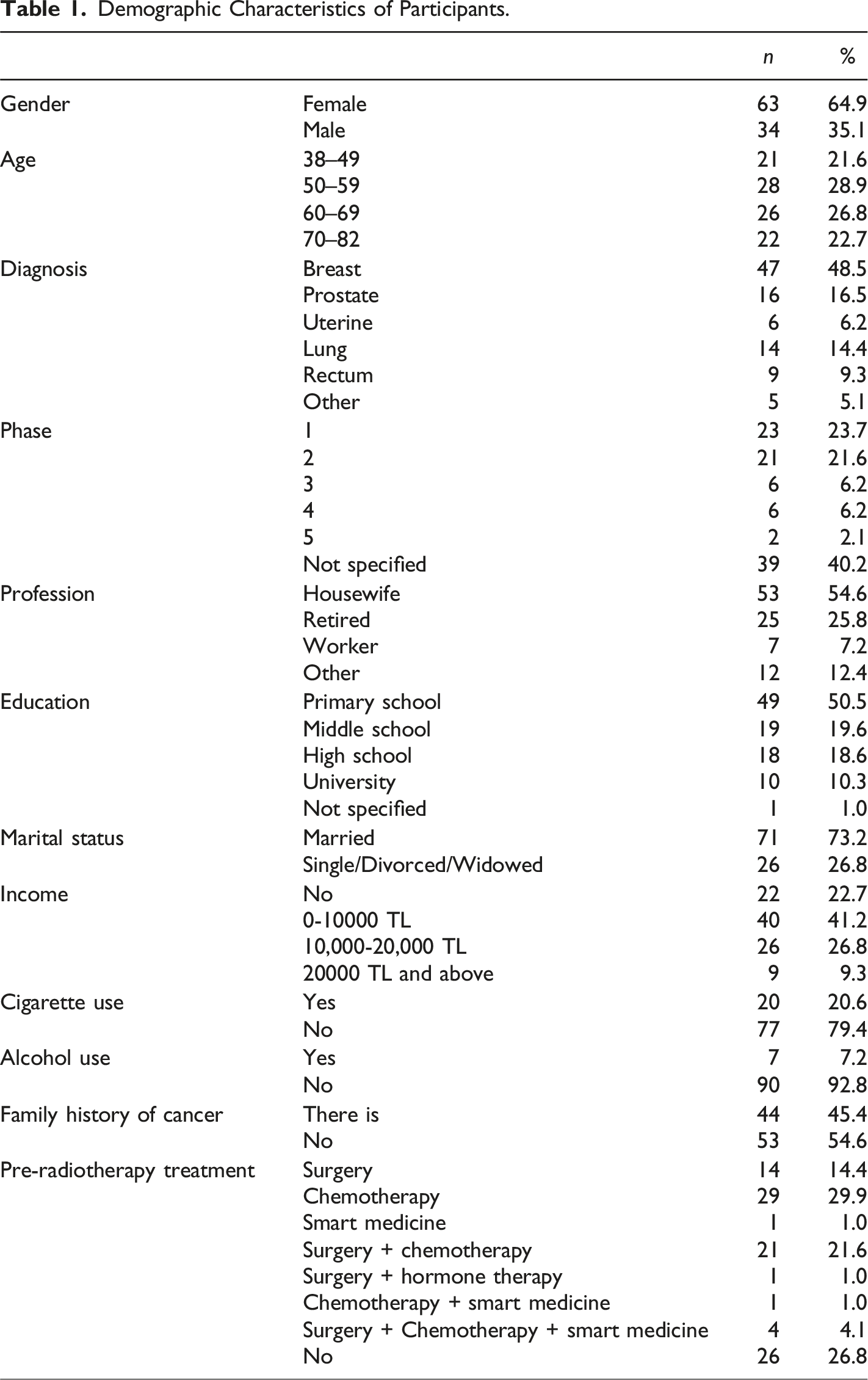
This study was conducted with 97 (63 women, 34 male) participants aged between 38 and 82 who are literate and diagnosed with breast cancer or gynecological cancers (endometrial, cervical, vulvar) undergoing radiotherapy planning at the Radiation Oncology Clinic of Zonguldak Bülent Ecevit University Hospital. The participants were selected through a random sampling method based voluntarily. All participants signed the written informed consent form. All scales were administered by assistant doctors working in the Radiation Oncology Clinic to individuals who met the inclusion criteria and agreed to participate voluntarily between April 2023 and August 2023.
Demographic Characteristics of Participants.
Ethics Approval
This study was performed by the APA Ethical Principles and its later amendments or comparable ethical standards. This study was accepted by the Non-Interventional Clinical Research Ethics Committee.
Measurement Tools
In this study, the Demographic Information Form, Psychological Flexibility Scale, Post-Traumatic Growth Inventory, and Coping Styles Scale were applied to the participants to assess various aspects related to their conditions.
Informed Consent Form
Cancer patients provided opt-in consent to participate in the study.
Demographic Information Form
This form comprises questions designed to gather information about the researchers’ age, gender, educational background, diagnosis et al.
Psychological Flexibility Scale (PFS)
It was developed by Francis et al. (2016) and a Turkish adaptation of it was carried out by Karakuş and Akbay (2020). The scale consists of 28 items and 5 sub-dimensions, utilizing a 7-point Likert scale. The sub-dimensions are categorized as Value and Value-Based Behavior (VVB), Being in the Moment (BM), Acceptance (A), Contextual Self (CS), and Dissociation (D). The lowest possible score that can be obtained from the scale is 28, while the highest is 196. Higher scores obtained from each sub-dimension imply higher psychological flexibility. The Cronbach’s alpha reliability coefficient of the scale is .79. Thus, it is considered that the Psychological Flexibility Scale is a valid and reliable measurement tool for assessing psychological flexibility in adult individuals in Turkey.28 In our study, the Cronbach’s alpha reliability coefficient was calculated to be α = 0.95. The Cronbach’s Alpha Internal Consistency Reliability Coefficients of the sub-dimensions are as follows: 0.95 for VVB, 0.83 for BM, 0.83 for A, 0.76 for CS, and 0.65 for D.
Post-Traumatic Growth Inventory (PTGI)
The Turkish adaptation of the Post-Traumatic Growth Inventory (PTGI) was carried out by Kağan et al. (2012) based on the original instrument developed by Tedeschi and Calhoun (1996). The inventory consists of three sub-dimensions: Changes in Self-Perception (CSP), Changes in Life Philosophy (CLP), and Changes in Relationships (CR). The items in the PTGI are responded to on a six-point Likert scale, ranging from “I have not experienced this change at all as a result of stressful events” (0 points) to “To a very great degree as a result of stressful events” (5 points). The total PTGI score, obtained by summing the scores from the three sub-dimensions, ranges from a minimum of 0 to a maximum of 105 points. A higher score on the PTGI suggests that an individual has experienced positive outcomes resulting from a traumatic situation (Kağan et al., 2012).
The Cronbach’s alpha reliability coefficient values were found to be 0.88 for CSP, 0.78 for CLP, 0.77 for CR, and 0.92 for all items combined. The Cronbach’s Alpha Internal Consistency Reliability Coefficient of the PTGI was calculated as 0.96 in our study. The Cronbach’s Alpha Internal Consistency Reliability Coefficients of its sub-dimensions were calculated as 0.95 for CSP, 0.86 for CLP, and 0.85 for CR.
Styles of Coping With Stress Scale (SCSS)
This scale, originally developed by Folkman and Lazarus (1980) as a 4-point Likert-type measurement tool, is known as the Ways of Coping Inventory. The Turkish reliability and validity studies for this scale were conducted using a 30-item form by Sahin and Durak (1995). The scale comprises 5 sub-factors: Helpless Approach (HA), Seeking Social Support (SSS), Self-Confident Approach (SCA), Submissive Approach (SA), and Optimistic Approach (OA). This scale, with its 30 questions and 5 sub-factors, encompasses two main coping styles: problem-focused/active and emotion-focused/passive.
The active sub-factors are SCA, OA, and SSS, while the passive ones are HA and SA. The lowest possible score from the scale is 30, while the highest is 120. The calculation of Cronbach’s alpha for internal consistency showed values ranging between 0.64–0.73 for HA, 0.47–0.72 for SA, 0.62–0.80 for SCA, 0.49–0.68 for OA, and 0.45–0.47 for SSS. In our study, the Cronbach’s Alpha Internal Consistency Reliability Coefficients were calculated as 0.93 for the SCA, 0.80 for HA, 0.72 for SA, 0.87 for OA, and 0.62 for the SSS sub-dimension.
Data Analysis
The data obtained from the participants were statistically analyzed using IBM SPSS Statistics 27, LISREL 8.80, and the SPSS PROCESS V4.2 macro plug-in. After the data were checked, demographic characteristics were first analyzed. Then descriptive statistics were applied and reported. Cronbach’s Alpha Internal Consistency Reliability Coefficient and Confirmatory Factor Analysis (CFA) methods were used to examine the reliability and validity of the scales. Moreover, correlation analysis and the SPSS PROCESS V4.2 macro plug-in Model were used to examine the mediation effect according to the research model. The mediation effects were interpreted using bootstrap confidence intervals and VAF values.
Results
CFA Model Fit Indices of Psychological Flexibility Scale, Post-traumatic Growth Inventory, and Styles of Coping With Stress Scale.
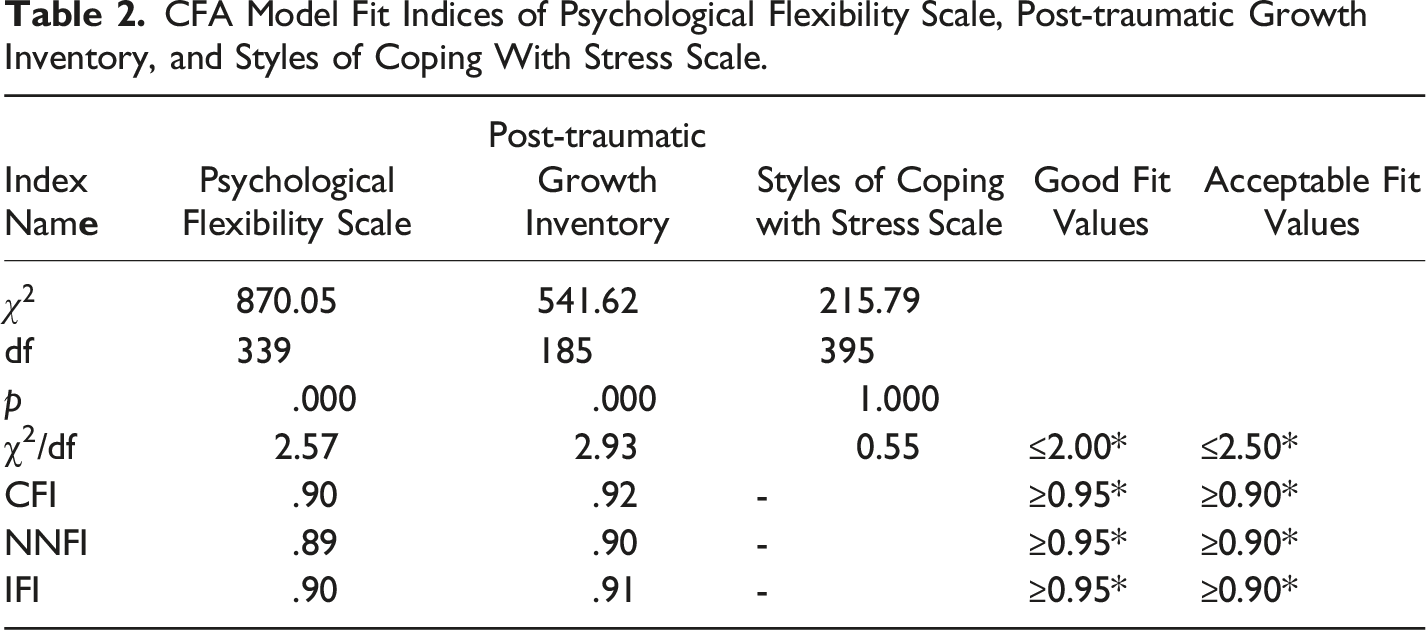
The CF analysis results confirmed that the Styles of Coping with Stress Scale had an excellent fit when examining the significance value (p) and χ2/df. The PFS and PTGI demonstrated acceptable fit values. Thus, it can be confidently concluded that the construct validity of the scales has been established.
The Relationship Between the Psychological Flexibility Scale, Post-traumatic Growth Inventory, and the Subscales of the Styles of Coping With Stress Scale.

Note: *p < .05, **p < .01, ***p < .001 Psychological Flexibility Scale (PFS); Post-traumatic Growth Inventory (PTGI); Styles of Coping with Stress Scale (SCSS); Self-confident approach (SCA); Helpless approach (HA); Submissive approach (SA); Optimistic approach (OA); Seeking of social support (SSS).
It was determined that there was a positive and moderate relationship r = .52 between the PFS and the PTGI. A significant positive relationship was found between the PFS, the PTGI, and the sub-dimensions of the SCSS, with varying degrees of strength.
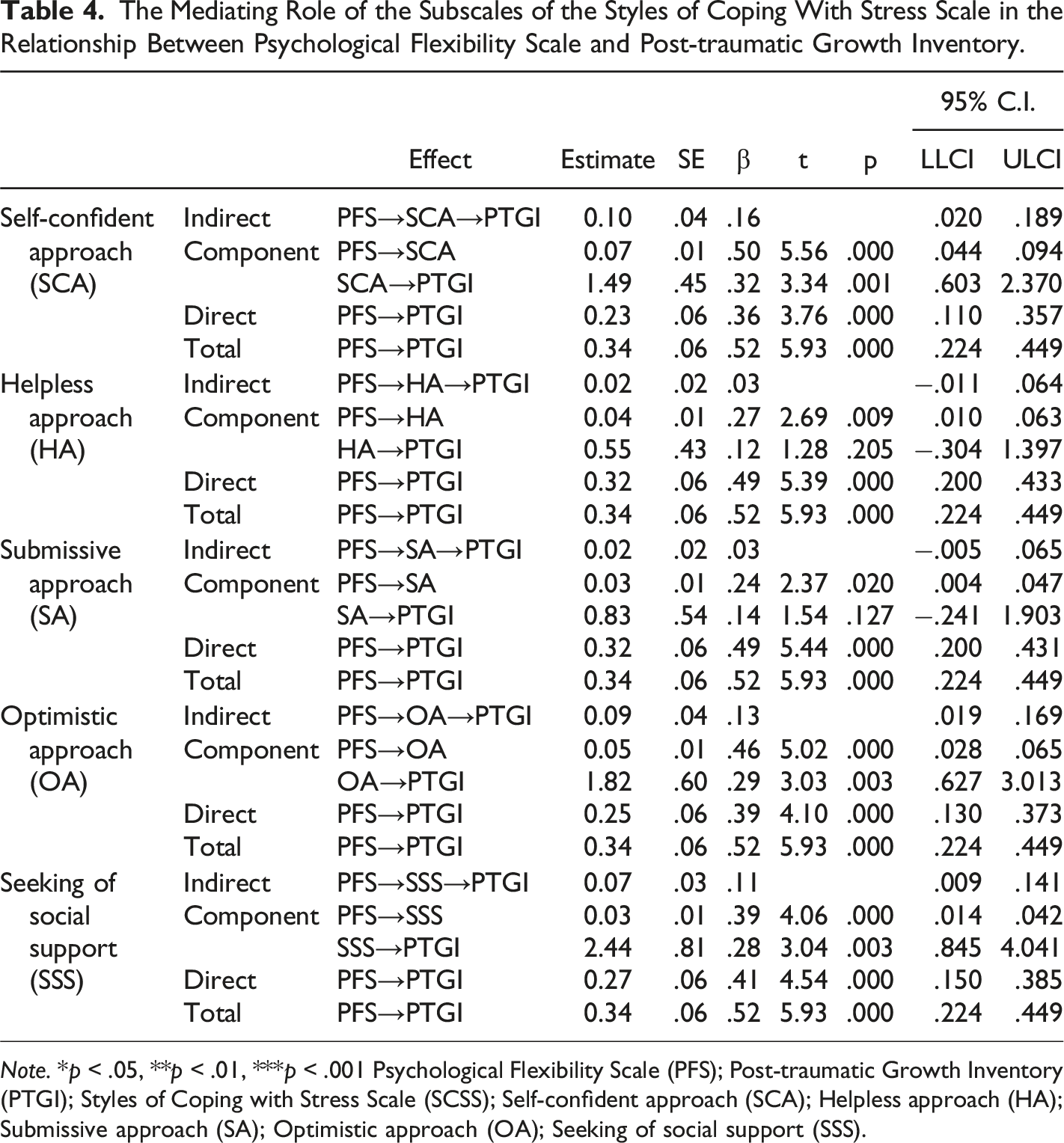
The Mediating Role of the Subscales of the Styles of Coping With Stress Scale in the Relationship Between Psychological Flexibility Scale and Post-traumatic Growth Inventory.
Note. *p < .05, **p < .01, ***p < .001 Psychological Flexibility Scale (PFS); Post-traumatic Growth Inventory (PTGI); Styles of Coping with Stress Scale (SCSS); Self-confident approach (SCA); Helpless approach (HA); Submissive approach (SA); Optimistic approach (OA); Seeking of social support (SSS).
When the mediation effects of the sub-dimensions of the SCSS were examined, it was seen that the HA and SA sub-dimensions did not meet the assumptions, p > .05. Based on this, it was determined that the two sub-dimensions did not have a mediating effect on the relationship between the psychological flexibility and the post-traumatic growth variables.
When examining the mediation effect of the SCA sub-dimension, it is observed that the total effect coefficient on the PFS and the PTGI was β = .52. This coefficient remained significant even when the mediator variable was included in the model, but it decreased to β = .36. The significance of the mediating role of the SCA variable was tested using Bootstrapping. The 95% CI results, [95% CI (.020–.189)], indicate that the values of the lower and upper confidence intervals do not include zero (0). Therefore, the fact that 95% CI results do not include zero (0) value, direct and indirect effects are significant, and the VAF value (VAF = Indirect effect/Total effect) is 0.31 indicates that the SCA sub-dimension of the SCSS has a partial mediating effect in the relationship between the PFS and the PTGI variables (see Figure 1). Beta Coefficients Regarding the Mediating Role of the Self-Confident Approach Sub-dimension of the Styles of Coping with Stress Scale in the Relationship between Psychological Flexibility Scale and Post-traumatic Growth Inventory Variables. * p <.05, ** p <.01, *** p <.001.
When examining the mediation effect of the OA sub-dimension, it is observed that the total effect coefficient on the PFS and the PTGI variable was β = .52. This coefficient remained significant even when the mediator variable was included in the model, but its effect coefficient decreased to β = .39. The significance of the mediating role of the OA variable was tested using Bootstrapping. The 95% CI results, [95% CI (.019–.169)] indicate that the values of the lower and upper confidence intervals do not include zero (0). Therefore, the fact that 95% CI results do not include zero (0) value, direct and indirect effects are significant, and the VAF value is 0.31 indicates that the OA sub-dimension of the SCSS has a partial mediating effect in the relationship between the PFS and the PTGI variables (see Figure 2). Beta Coefficients Regarding the Mediating Role of Optimistic Approach Sub-dimension of the Styles of Coping with Stress Scale in the Relationship between Psychological Flexibility Scale and Post-traumatic Growth Inventory Variables. * p <.05, ** p <.01, *** p <.001.
When examining the mediation effect of the SSS sub-dimension, it is observed that the total effect coefficient on the PFS and the PTGI variable was β = .52. This coefficient remained significant even when the mediator variable was included in the model, but its effect coefficient decreased to β = .41. The significance of the mediating role of the Seeking of social support variable was tested using Bootstrapping. The 95% CI results, [95% CI (.009–.141)] indicate that the values of the lower and upper confidence intervals do not include zero (0). Therefore, the fact that 95% CI results do not include zero (0) value, direct and indirect effects are significant, and the VAF value is 0.21 indicates that the SSS sub-dimension of the SCSS has a partial mediating effect in the relationship between the PFS and the PTGI variables (see Figure 3). Beta Coefficients Regarding the Mediating Role of Seeking Social Support Sub-dimension of the Styles of Coping with Stress Scale in the Relationship between Psychological Flexibility Scale and Post-traumatic Growth Inventory Variables. * p <.05, ** p <.01, *** p <.001.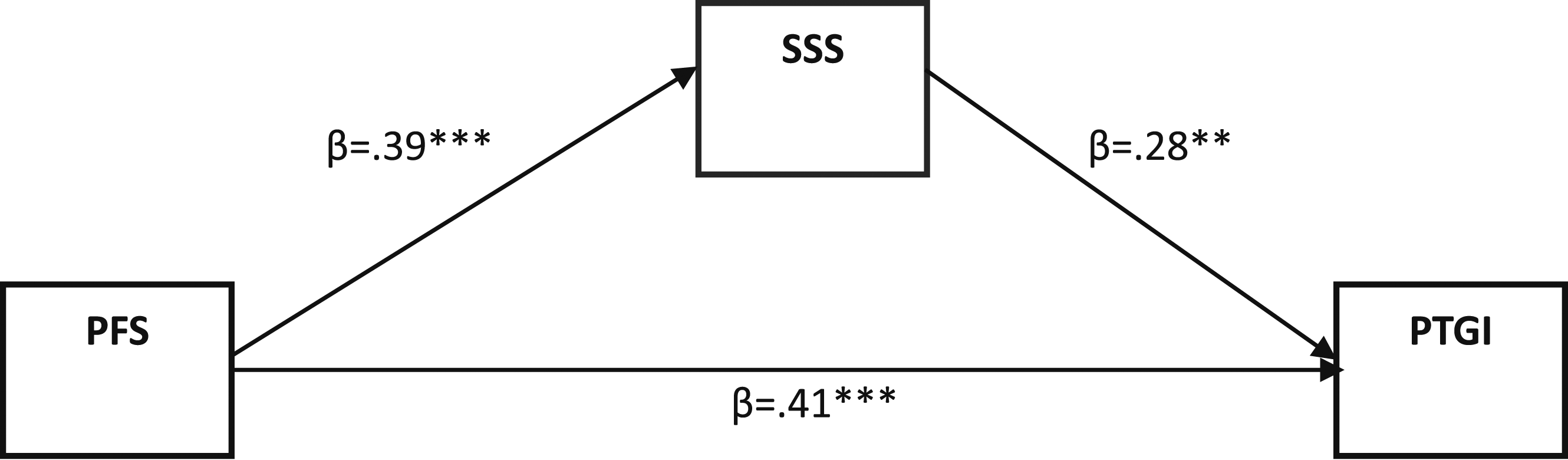
Discussion
In this study, the mediating role of coping with stress in the relationship between psychological flexibility and post-traumatic growth was examined. It was seen that as the psychological flexibility of the participants increases, their level of use of functional stress coping skills also increases and they show more post-traumatic growth. First of all, the correlations between variables were examined. It was seen that there was a positive and moderate relationship between the Psychological Flexibility Scale (PFS) and the Post-traumatic Growth Inventory (PTGI). Additionally, a significant positive relationship was found between the Psychological Flexibility Scale (PFS), the Post-traumatic Growth Inventory (PTGI), and the sub-dimensions of the Styles of Coping with Stress Scale (SCSS), with varying degrees of strength (see Table 2). It was seen that although all sub-dimensions of The SCSS had significantly positive relationships with the other variables, the Helpless Approach (HA) and Submissive Approach (SA) sub-dimensions did not meet the assumptions (see Table 3). It can be said that passive (negative) coping styles had significant but low-level relationships with other variables and they did not have mediator roles in the relationship between PFS and PTGI.
Dev et al. (2024) propose that psychological flexibility may not be a coping mechanism itself, but rather determines the type of coping mechanism individuals employ during stressful situations. Individuals with high levels of psychological flexibility are more likely to utilize approach coping strategies and minimize their use of avoidant coping strategies. On the other hand, individuals with low levels of psychological flexibility are more prone to rely on avoidant coping strategies and less likely to engage in approach coping strategies. Similarly, Macri and Rogge (2024) found that psychological flexibility indirectly reduces psychological distress by reducing the use of avoidant coping and increasing the use of approach coping strategies. The findings of this study were consistent with the literature. It was found that psychological flexibility contributes to the use of active coping styles (see Table 3).
Furthermore, in a study conducted by Eissenstat et al. (2024), it was found that coping strategies focused on problem-solving were associated with increased post-traumatic growth (PTG). On the other hand, avoidance-focused coping strategies were found to decrease PTG. Similarly, Pereira et al. (2024) suggested that PTG was primarily predicted by adaptive coping strategies such as active coping, instrumental support, positive reframing, and religious coping. Research has shown that being more adaptable and flexible in utilizing active coping strategies can reduce the likelihood of developing post-traumatic stress disorder (PTSD) after experiencing a traumatic event. The findings of this study supported the literature on the use of active coping styles. Showed a significantly positive relationship between post-traumatic growth (see Table 3).
The Mediation Role of Coping with Stress in the Relationship Between Psychological Flexibility and Posttraumatic Growth
Psychological flexibility can be seen as a broader ability to effectively respond to different situations and work towards long-term goals. It plays a key role in selecting appropriate coping strategies, including those that are more open and less avoidant. Therefore, it may impact outcomes by influencing the selection of coping behaviors.
Rueda and Valls (2020) provided that psychological flexibility has indirect effects on well-being and distress outcomes through coping strategies. Their findings suggest that psychological inflexibility increases anxiety and depression through the use of avoidant coping strategies, such as denial. On the other hand, acceptance, which represents the approach to coping, was found to mediate the relationship between psychological inflexibility and depression. Dev et al. (2024) also suggested that psychological inflexibility indirectly heightened psychological distress and reduced psychological wellbeing when individuals utilized an avoidant coping style. Studies showed that individuals with higher levels of psychological flexibility tend to cope better, exhibit acceptance, adjust more effectively to stressful life events, and experience improved well-being (Burton et al., 2016; Masuda et al., 2011). Consistent with the literature, this study showed that the active sub-factors of Styles of Coping with Stress Scale which are the self-confident approach, optimistic approach, and seeking social support partially mediated the relationship between psychological flexibility and posttraumatic growth (see Table 4).
Conclusion
Cancer treatment is a long-lasting and exhausting experience, both for the body and mind of the patient (Michalczyk et al., 2022). Most cancer patients experience fatigue, depression, sleep problems, cognitive impairment, distress, anxiety disorders, and reduced quality of life (de Mol et al., 2020; Erim et al., 2020). So, it can be said that cancer is one of the most traumatic experiences. While receiving a cancer diagnosis result in negative experiences for patients, there are also potential positive outcomes of it. For some cancer patients, the emotional distress associated with cancer allows them to focus on the spiritual aspects of their journey and offers them the opportunity for post-traumatic growth. Furthermore, many patients discover a new sense of meaning or purpose in their lives after going through this challenging experience (Seo et al., 2013).
In conclusion, this study found that psychological flexibility plays a significant role in promoting posttraumatic growth in cancer patients. Specifically, the active coping strategies of a self-confident approach, optimistic approach, and seeking social support mediated the relationship between psychological flexibility and posttraumatic growth. These findings highlight the importance of actively engaging with stress and utilizing adaptive coping strategies to enhance psychological well-being in cancer patients.
Study Limitations
It is important to acknowledge some limitations of this study. Firstly, the sample size was relatively small and consisted mainly of participants with breast or gynecological cancers undergoing radiotherapy planning. Therefore, the findings may not be generalizable to other cancer populations or treatment modalities. Moreover, the use of self-report measures may introduce response bias. Besides them, the number of participants at different stages of cancer is not evenly distributed. In future studies, equal numbers of participants at different cancer stages can be recruited and comparisons can be made between them. Future research should aim to replicate these findings with larger and more diverse samples to increase generalizability. Longitudinal studies could also provide insights into how coping strategies and psychological flexibility evolve in posttraumatic growth. Furthermore, qualitative research methods could be employed to gain a deeper understanding of individuals’ experiences and perceptions related to coping with stress and posttraumatic growth.
Clinical Implications
Overall, this study contributes valuable information regarding the role of coping strategies in facilitating posttraumatic growth among cancer patients. By identifying specific active coping mechanisms that mediate this relationship, healthcare professionals can develop targeted interventions aimed at enhancing psychological flexibility and promoting positive psychosocial outcomes for individuals.
Footnotes
Acknowledgements
The authors would like to thank participants for their participation in the study.
Author Contributions
B.H.B. and O.A. collected the data based on content areas, reaching a consensus on classifications. G.A. was a major contributor to writing the manuscript. All authors read and approved the final manuscript.
Declaration of Conflicting Interests
The author(s) declared no potential conflicts of interest with respect to the research, authorship, and/or publication of this article.
Funding
The author(s) received no financial support for the research, authorship, and/or publication of this article.
Ethical Statement

Data Availability Statement
The datasets analysed during the current study are available from the corresponding author on reasonable request.