



Abstract
The study was conducted in jute-growing areas of West Bengal (India) to explore the potential resource use efficiency for economic benefits of selected climate smart practices to marginal landholder farmers. Integrated crop management (ICM) practices as part of climate smart jute farming (CSJF) was practised by 170 randomly selected farmers in six villages. An estimation of cost of adoption, change in fibre yields, net returns and human development index (HDI) before and after ICM interventions was done. The mean HDI value increased by 38.85% and farm income by 31.5%. The net benefits of adaptation to climate smart jute technologies were estimated based on specific adaptation actions. Empirical scientific evidence of the study indicates that the livelihoods of marginal landholders can be improved using new crop varieties, changing planting dates and bringing necessary changes in other variable inputs for line sowing, intercropping, weeding, nutrients, water and retting.
Introduction
Globally, jute (Corchorus capsularis L. & Corchorus olitorius L.) is the second largest natural bast fibre produced, with an estimated average production of 3.4 million tonnes per year (FAOSTAT 2016). It is grown under a wide variation of climatic conditions mainly in developing countries like India, Bangladesh, Myanmar, Nepal, Taiwan, Thailand, Vietnam, Cambodia and Brazil. India is the single largest producer of jute goods in the world, contributing about 60% of the global production and providing employment to 4.85 million farm families, industrial workers and traders (Singh et al., 2018). The governments of India, China, Brazil and South Africa have been extensively promoting the development and use of jute for geotextiles. The total global market for geotextiles is expected to reach at least US$8.24 billion by 2020 (GVR, 2015). The cultivation of jute in India is mainly confined to the eastern and north-eastern region of the country. Indian states of West Bengal, Odisha, Bihar and Assam account for 98.41% area under jute cultivation, as well as 98.43% of total raw jute production. West Bengal alone accounts for 71% of area and 73.09% of total raw jute production. In the West Bengal, it is grown mainly in Murshidabad, Nadia, North 24 Parganas, Cooch Behar, Hooghly, Malda and Dakshin Dinajpur districts. There are 79 composite jute mills operating in India, of which 62 jute mills are located in West Bengal (MOT, 2016). The jute fibres are used to make products such as hessian cloths, sacking cloths, jute yarn, bags, twines, tarpaulins, shopping bags, geotextiles, floor mats, carpets, canvas, and so on.
Energy use, GHG emissions and carbon sequestration
The life cycle of jute fibre crop starts with its cultivation in field followed by its harvesting and water retting in ponds. Field preparation, weeding, chemical fertilizer, pesticides and herbicides are the major energy inputs used in cultivation of jute. The carbon footprint of the jute fibre scenario was estimated as 566 kg CO2- eq/t of jute (Singh et al., 2018). Life cycle assessment study also reveals that the most significant impact is carbon sequestration by green jute plants during the growth stages. On an average, as much as 0.97–2.8 t/ha of the left over above- and below-ground biomass of jute (leaves, stubbles and roots) is added annually to the soils under jute cultivation (Singh et al., 2018a). Approximately 4.88–5.30 t of CO2 gets sequestered per hectare of raw jute fibre production which is much higher than many tree species (Rajagopal and Sanyal, 2012; Singh et al., 2018a). As reported by the International Jute Study Group (IJSG, 2013), 1 ha of jute plants consumes about 15 MT CO2 and liberates 11 MT of O2 in only 120 days. Through cultivation on about approximately 0.75 million hectare area, India may reduce about approximately 12 million tonnes of CO2 from atmosphere every year which can be valued at approximately US$15 crores (Central Research Institute for Jute and Allied Fibres (CRIJAF), 2015). The certified emission reduction (CER) revenue per hectare from jute cultivation can benefit the jute growers.
The impacts of climate change on jute cultivation
In recent years, the impact of climatic variability is causing significant fluctuations in jute production and is likely to affect its yields in the long-term. Historical weather data of the last 100 years show a noticeable increase in ambient temperature and large variation in monsoon rainfall in the lower Indo-Gangetic Plain (IGP) region where jute is grown. An increase of 1.04°C in annual average surface air temperature has been recorded (Singh et al., 2017a), and by the 2050s, average ambient temperature is expected to rise by another approximately 2°C (MEF, 2004). The seasonal variation in rainfall is also likely to increase in the coming decades. Among the climatic factors, temperature and rainfall are the most dominating components for the growth of the jute plant. Jute is predominantly grown as a rain-fed crop and requires about 500 mm water for its growth and development. Over the last 40 years, rainfall deficit have been in the order of 40–50% from the 12th week (mid-March) to the 15th week (Singh, 2017). The uneven distribution of rainfall exposes jute to early season drought, a serious abiotic limiting factor inhibiting nutrient acquisition by roots and restricting jute production (Geethalakshmi et al., 2009). As found by the long-term fertilizer experiment in the jute–rice–wheat cropping system, increase in fertilizer nutrient input has made a significant contribution to the improvement of jute yields (Saha et al., 2000). Unfortunately, the increase in jute fibre production has been associated with a major decline in fertilizer nutrient use efficiency, especially nitrogen (N). The low nutrient use efficiency may be attributed to fertilizer overuse and high nutrient loss, resulting from inappropriate moisture availability and time of fertilizer application due to climatic factors. The decrease in natural water resources during jute harvesting time affect fibre quality, as large volume of clean and slow moving water (1:20:: plant:water) is required for appropriate retting (Majumdar et al., 2013). Retting is a process employing the action of microorganisms and moisture on plants to rot away much of the cellular tissues surrounding the bast-fibre bundles, and so facilitating separation of the fibre from the stem. Without proper retting, the jute industry has to remain content with the poor quality of fibre and this in turn adversely affects the jute products in the national and international markets. The worst affected are the jute cultivators as they are deprived of remunerative prices because of unstable market situation.
Trends in crop production
Jute farming is one of the most important sources of income for smallholders in jute-growing areas (approximately 7.5 lakh hectare) of India. However, profitability for small producers is often marginal due to average yields that are well below the potential of varieties grown under rainfed conditions. In West Bengal, average yields range from 18 q/ha to 20 q/ha of fibre jute, while those in research plots often average 30 q/ha and above. Jute fibre yields are low mainly due to poor resource use efficiency and adherence of traditional practices of farming. Weather also has tremendous influence on productivity, quality and market of jute fibres due to early flowering, outbreak of pests and diseases and shortage of water during early growth and post-harvest processing. There is a wide scope for improvement in production efficiency by adopting climate resilient technology for jute agriculture backed by an efficient natural resource management system. Some efforts have already been made to develop drought-tolerant varieties; advancement and modifications of sowing in areas with terminal heat stress, water saving and weed control methods; management of new pests and diseases; and location-specific intercropping systems with high sustainable yield index (SYI) (CRIJAF, 2015).
In this study, we explored the potential resource use efficiency for economic benefits of selected climate smart practices to smallholder farmers in the jute-growing area, by providing evidences of how climate smart jute farming (CSJF) practices improve crop yields and enhance farm income, compared to their respective conventional system.
Methodology
This study was conducted by the CRIJAF during the years 2017 and 2018, in six jute-growing villages of West Bengal (India; Figure 1). Jute–rice was the dominant cropping system in all sites. The mean annual rainfall was in the range of 1200–1400 mm with maximum average temperature of 35.7°C in May and minimum 12.1°C in January. A large proportion of farmers are marginal and subsistence landholders (82%) (DAC, 2018).
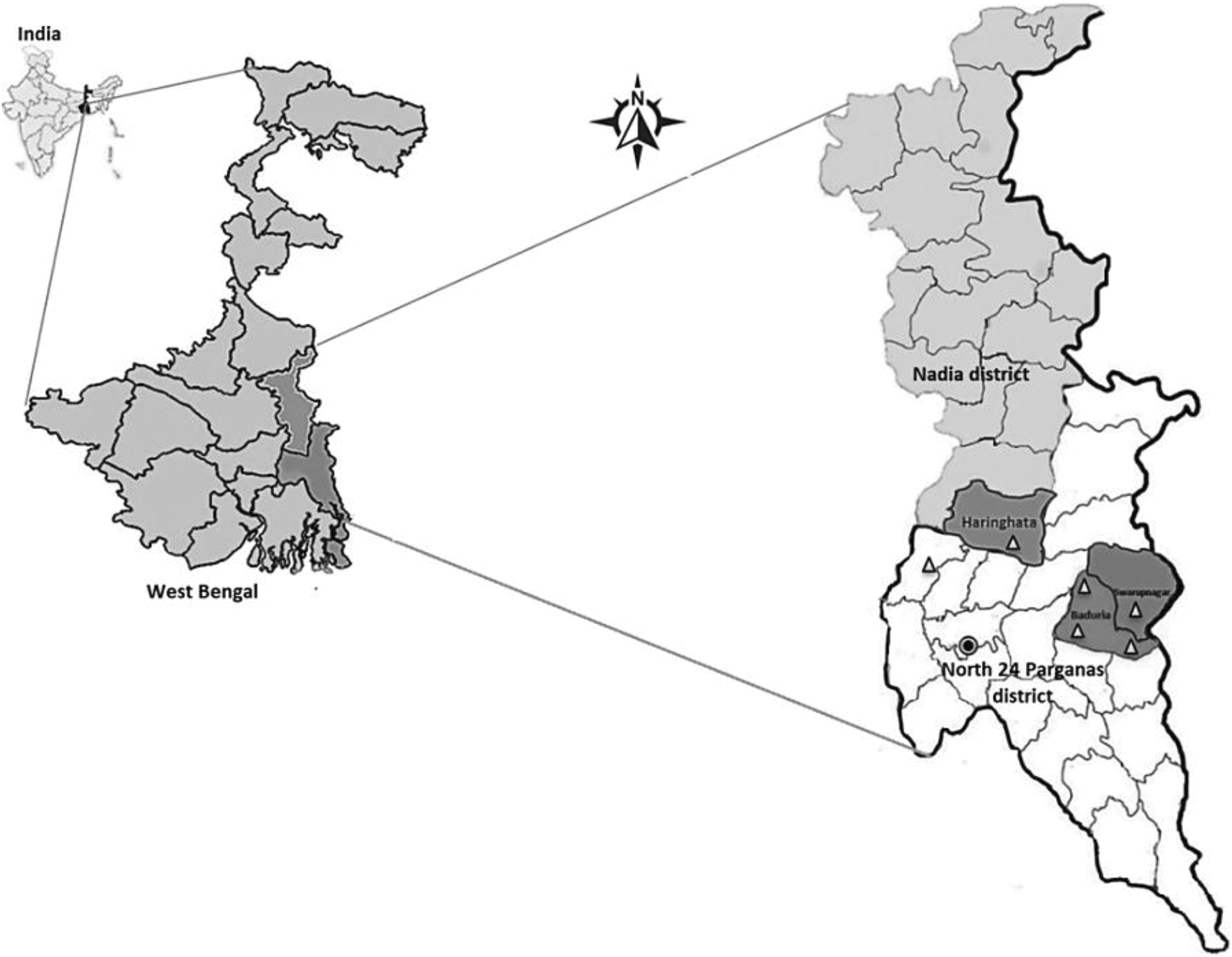
Study location in North 24 Parganas and Nadia district of West Bengal (India).
Resource use technology and data information
CSJF is a model of integrated crop management (ICM) for climate risk management in farming communities that promotes adaptation, builds resilience to climate stresses and enhances quality jute fibre production. ICM practices include early flowering resistant varieties, line sowing, mechanical weed control methods, soil test-based fertilizer management, new pests and diseases control and intercropping systems with high SYI. Researchers, local organizations and farmers collaborated to select the most appropriate technologies and institutional interventions based on research experiments and local conditions to enhance productivity, increase income and achieve climate resilience. The key focus of the CSJF model was to enhance climate literacy of farmers and local stakeholders and develop a climate resilient agricultural system by linking existing government tribal subplan (ST/SC) programmes. Promotion of ICM practices and technologies was one of the major components in the CSJFs. This approach revolved around seed, water, nutrients and some risk averting farm implements that helped farmers in reducing climatic risks in agriculture. These interventions are expected to increase jute fibre yields and farmers’ income in a sustainable way, improve input-use efficiency and help in minimizing climatic risks in agricultural production systems.
A survey was conducted with 170 randomly selected households in six villages (Table 1) of two districts of West Bengal (India). The survey included collection of information on households’ socio-economic characteristics, agriculture practices, available farm resources and farm income. Farmers in the study sites already had exposure to conventional jute farming practices such as weed and soil management, improved crop varieties and retting. During the survey, a list of ICM practices and technologies was prepared and farmers were asked to provide information on crop yields at the plot level before and after the demonstration of such ICM practices and technologies.
Summary of farm and socio-economic characteristics of villages under study.a
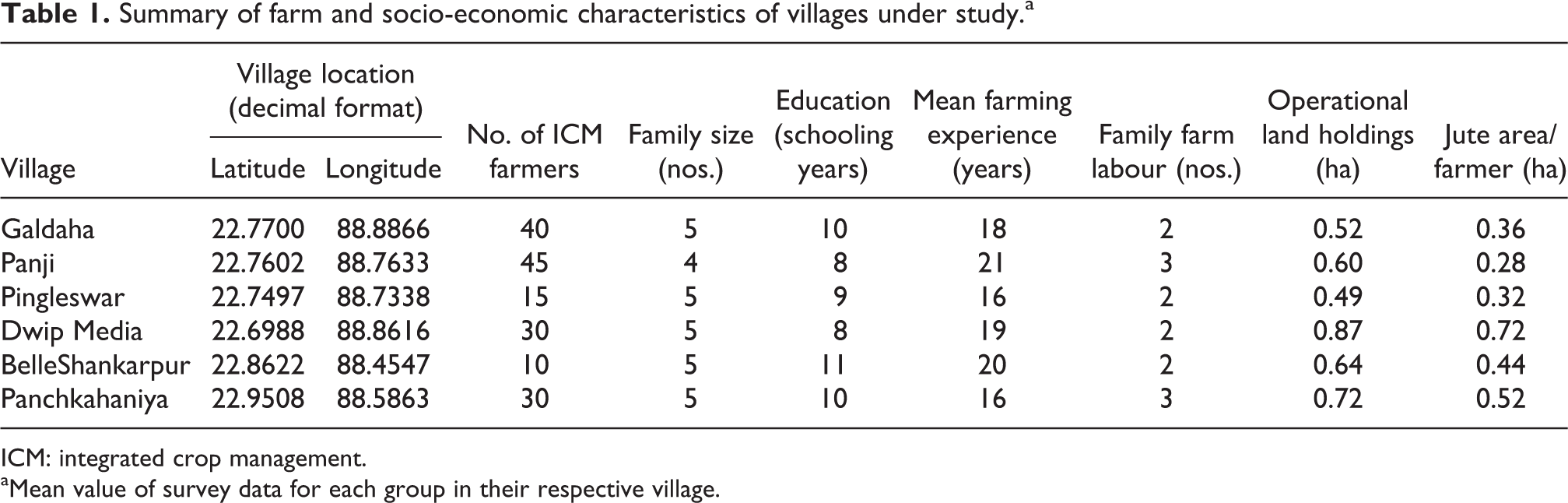
ICM: integrated crop management.
aMean value of survey data for each group in their respective village.
Financial performance: Cost and benefits
Economic analysis of ICM interventions was undertaken for selected practices and technologies. Based on the plot level input and output data before and after ICM interventions, an estimation of cost of adoption, change in yields, net returns and human development index (HDI) due to the implementation of particular ICM practice/technology in the jute crop was done. The cost of production of jute farmers included the cost of all inputs (e.g. seed, land preparation, sowing, intercultural operations, fertilizer, irrigation, pesticides, herbicides, farm yard manure, harvesting, retting, fibre extraction and labour wages (family and hired)) as used in the production process of jute fibres (Table 2). Net returns were calculated by deducting additional costs incurred for the implementation of ICM practices. These additional costs for farmers were considered as the cost of adoption.
Cost and benefit analysis of jute production (₹/ha).

ICM: integrated crop management; TI: total income; TC: total cost; BCR: benefit–cost ratio.
SYI for jute was computed using jute fibre yield in different villages according to the following equation:

where Y is the average yield, ‘SD’ is the standard deviation and Y max is the maximum observed yield from the year 2017 to 2018. To work out the variation in SYI due to various constraints under different villages, statistical models were used.
Formula for estimation methods of net return, benefit–cost ratio (BCR) and HDI are given as under.



Dimension index was used for calculation of life expectancy, education index and income index. Minimum and maximum value was taken from Human Development Report 2016 of India (UNDP, 2017)

Results
Impact of ICM technology
Gradual increase in cost of production due to changing socio-economic and climatic condition in rural India and decreasing resource use efficiency are adversely affecting the agriculture production to the maximum extent. To cope with such climate and economic changes, ICM packages for enhancing the nutrient use efficiency, improved crop varieties, line sowing and mechanical weed management, site specific pest and disease management, legume as intercrop and microbial retting were used in this study.
Improved jute varieties: Improved varieties (JRO 204) of tossa jute (C. olitorius) altered the predominance of the white jute (C. capsularis) area by incorporating the premature flowering resistance gene of African origin and improved the fibre productivity. The yield advantage was about 6 q/ha (conventional-23 q/ha, ICM-29 q/ha) due to its adoption in the study area (Table 3). This has resulted in additional return of ₹22,000/ha under ICM technology. During 2018, there was a pre-monsoon rain and in most of the study area jute seed could not be sown according to scheduled dates. The sowing was delayed by 15–20 days due to early monsoon (150–200 mm) and low air temperature during night (16–22°C) in March–April as compared to the year 2017 (rainfall: 20–25 mm and night temp: 20 - 25°C). In spite of delayed sowing, the yields of jute fibre were at par or even better at all the locations of the study.
Village-wise jute productivity and economic benefits under ICM and CP.
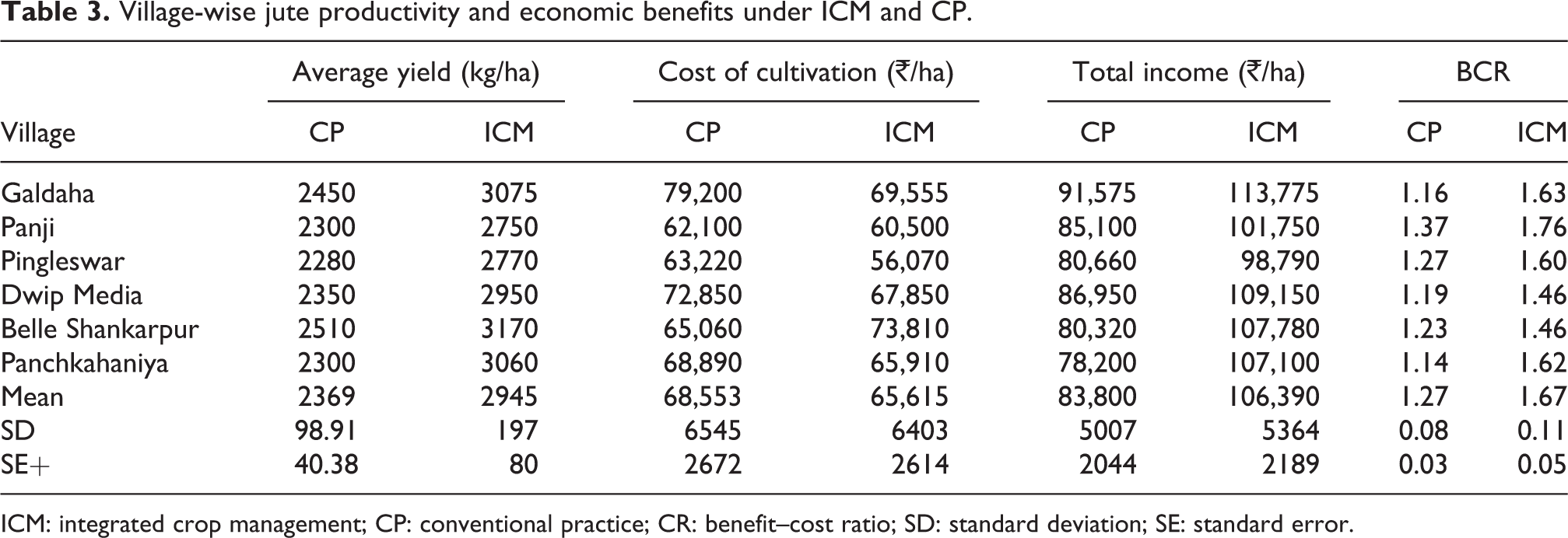
ICM: integrated crop management; CP: conventional practice; CR: benefit–cost ratio; SD: standard deviation; SE: standard error.
Line sowing and intercroping: Manually operated multi-row-seeder is ideal for line sowing (25 × 5 cm2) of jute both as sole crop and as intercrop (green gram) with an operational efficiency of 0.2 ha/h. Use of this seeder reduced the seed requirement to approximately 50% (4 kg/ha) and facilitated other intercultural operations at low cost. The green gram yield as intercrop was about 450–510 kg/ha which supplemented an additional income of at least ₹20,000/ha (Ghorai et al., 2016). The additional expenditure for intercrop was ₹7000/ha under ICM.
Inclusion of pulses as an intercrop in jute cultivation helped to enhance ground cover, thereby reducing dicot and sedge weeds up to 54% (Ghorai et al. 2015) and providing N for use by subsequent crops. The basal dose of nitrogen fertilizer (N) was applied according to the requirement of green gram (approximately 25 kg/ha) and top dressing of N (approximately 50 kg in two split doses) for the jute crop after harvesting of green gram (55–60 days after sowing) so that nodule formation could take place without any interference of excess N fertilizer. After harvesting of green gram pods, the plants were left in the field to decompose and help in improving the soil health. Thus, the jute–green gram intercropping system improves the jute farmer’s economy, provides protein security to the rural mass and takes care of soil health.
Mechanical weed management: Weed infestation is the most important constraint in jute production. The critical period of crop-weed competition is from 15 days to 60 days after sowing and yield loss varies from 52% to 70%. Weeding is predominantly done by use of manual labour. The nail weeder was used in this study for mechanical control of composite weed flora and conserving soil moisture without disturbing the intercrop plants. In ICM practices, the total labour requirement for weeding was less than 50% as compared to conventional jute farming. The overall reduction in the cost of weeding due to use of nail weeder was of ₹6200/ha (Table 2).
Nutrient and pest-disease management: The recommended dose of NPK fertilizer (80:40:40 kg/ha) along with 50% FYM (2.5 t/ha) was the best fertilizer treatment to maintain the soil fertility status with better yield. Application of neem-coated urea as a top dressing was more effective than only basal application as practised in conventional jute farming. Soil health card-based fertilizer application and integrated pest management (IPM) methods reduced the cost of fertilizer up to ₹410/ha.
Improved retting of jute: A talc-based microbial formulation (CRIJAF Sona) consisting of three strains of Bacillus pumilus was used for faster retting and quality jute fibre extraction in stagnant water. Retting was completed within 12–14 days as against 20–22 days by the conventional method. Fibre recovery increased by approximately 8% which is equivalent to 2.32 q/ha. This fibre recovery resulted in ₹8580/ha of additional income over conventional retting. The improvement in fibre grade quality was of about two grades (from TDN5 to TDN3).
SYI: The results of sustainability indices (SYI) revealed that ICM technology with line sowing, mechanical weeding, green gram as intercrop and use of microbial formulation for retting are important management practices in raw jute fibre production under changing climatic scenario as these significantly influenced the SYI and sustained the potential yield of jute (Table 4). The SYI of jute fibre varied from 0.87 to 0.99, indicating the minimum guaranteed yield that ranges from 87% to 99% of the maximum observed yield (3170 kg/ha) under the ICM system.
Improvement in HDI and sustainability index after ICM intervention.
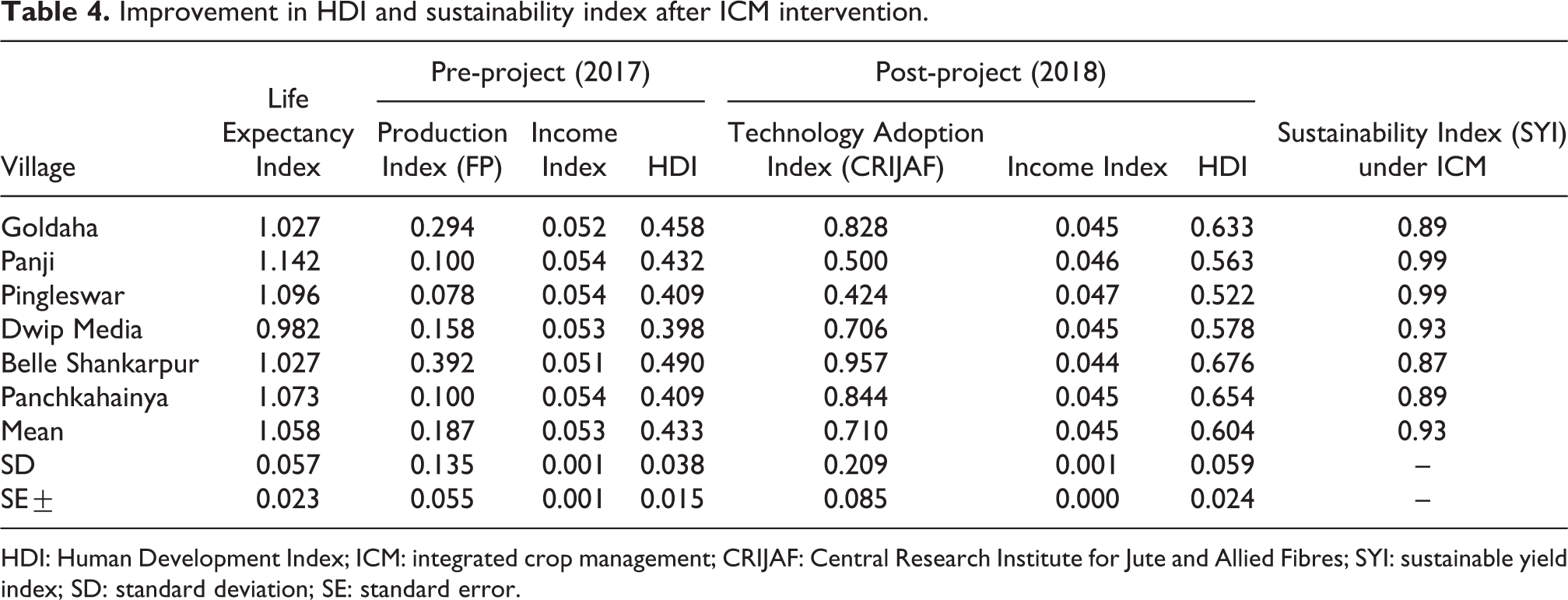
HDI: Human Development Index; ICM: integrated crop management; CRIJAF: Central Research Institute for Jute and Allied Fibres; SYI: sustainable yield index; SD: standard deviation; SE: standard error.
Human development index
The HDI is a summary measure for assessing progress in three basic dimensions of human development, that is, a long and healthy life, access to knowledge and a decent standard of living. The knowledge level of new farming techniques was measured during farm demonstrations (learning by doing) among the participating farmers. After 2 years of capacity building through training and field demonstration of ICM in jute farming, the mean HDI value increased from 0.435 to 0.604, that is, an increase of 38.85%. Village-wise progress of HDI of participating farmers is given in Table 4. The BCR of farm income also increased from 1.27 to 1.67, that is, 31.5% due to increase in jute production under ICM over conventional practices (Figure 2).
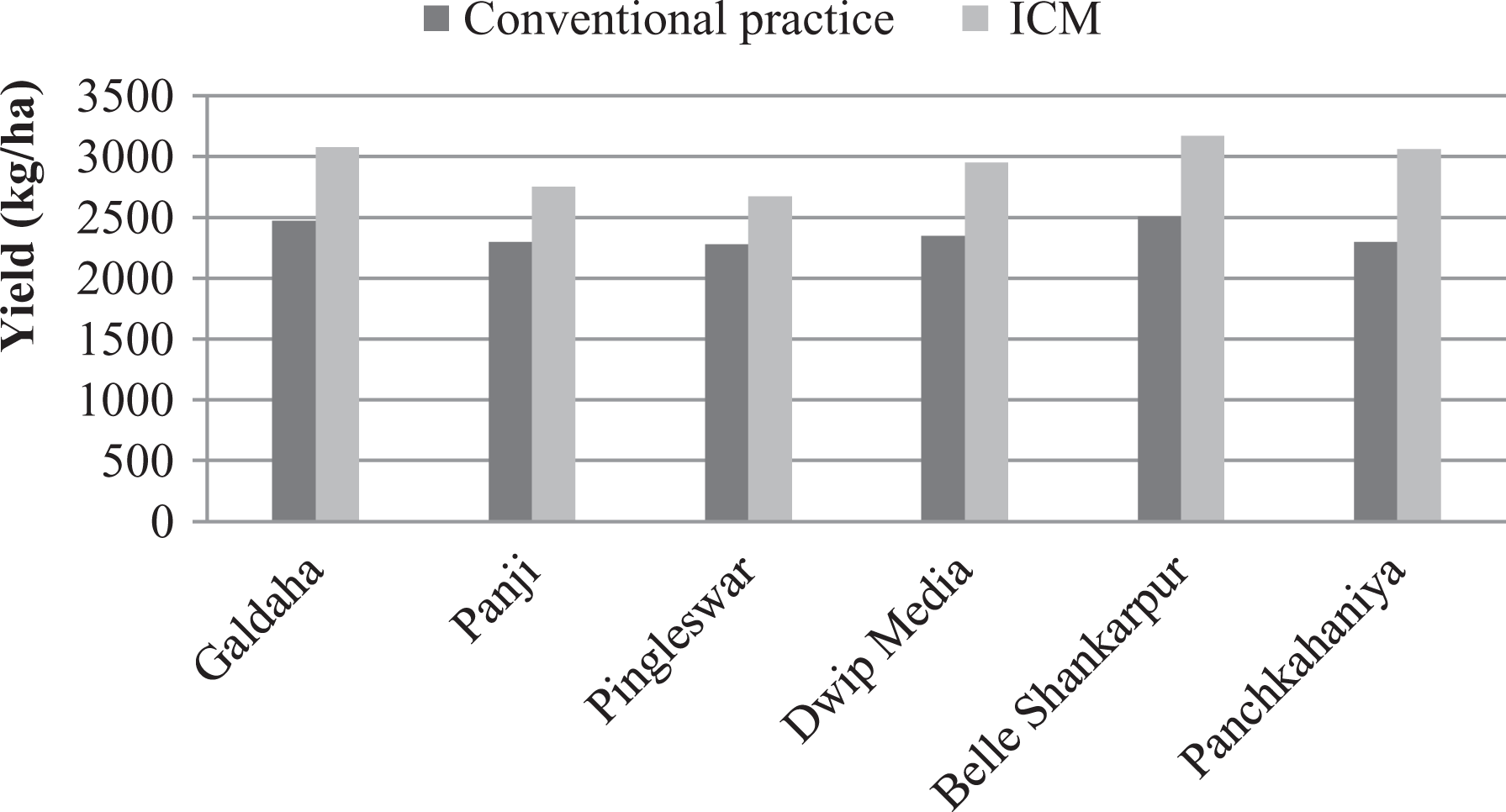
Production of jute fibre in conventional and ICM practices in different villages of West Bengal. ICM: integrated crop management.
Discussion
The climate smart farming approach in villages, which consists of adaptation planning and on-farm implementation, requires integration of technologies and services that are suitable for the local conditions (Aggarwal et al., 2018). In the jute-growing area, prevalence of frequent dry and wet weather conditions influences the fibre productivity and quality due to early flowering, outbreak of pests and diseases and shortage of water during retting. CSJF as a model of ICM for climate risk management in farmer’s fields has a high potential for scaling out promising climate resilient technologies that meet farmer’s needs and improve their productivity and income.
This study has revealed that existing farm resources, labour, land area, technological knowledge and institutions may present trade-offs and synergies on usage of ICM packages by jute-growing farmers. The majority of farmers in the study area use family labour, which can be constrained in jute farming due to the high requirement of labour in weeding and post-harvest activities. The application of high doses of fertilizer and pesticides and use of non-family labour requires more financial input. But such investment on small land holdings is not worthwhile (Morris et al., 2007).
Farmers who participated in the study found ICM an appropriate climate-resilient agriculture practice for their area. In the beginning of the study, more than 90% of the farmers were following conventional jute farming, that is, use of old variety seeds, broadcasting method of sowing, manual weeding, imbalanced use of fertilizer and pesticides, conventional retting in muddy water and so on. The average BCR of such jute farming was only 1.27. To improve the farm resource use efficiency and economic benefits, they have adopted ICM techniques of smart jute farming. After 2 years, the mean HDI value increased up to 38.85% and BCR was 1.67. The biggest benefit of using ICM was the reduction in labour cost and consistency of the jute yield across the fields. Similar results were observed in rice in Asian rice farms by adopting five ICM options (improved seeds, square planting, mechanical weeding and intermittent irrigation). The profit in rice farming increased due to reduction in the cost of cultivation and higher rice yield (Balasubramanian et al., 2005). On the contrary, implementation of ICM in rice farming involves higher inputs in labour and resources in Bangladesh (Alam et al., 2013).
Seeds of improved jute varieties helped the farmers in this study in sowing seed at different planting dates in a cropping season to adjust with the changing monsoon time and temperatures without the risk of early flowering. Inclusion of an N fixing crop (green gram) as an intercrop not only enhanced soil fertility but also helped in suppressing the weed growth (Campbell et al., 2011). Multiple attachments of tines and scrapers of the nail weeder gave a scope for removing a wide range of weeds and reduced labour cost up to 50% or even less (Ghorai et al., 2016). The nail weeder can also be used in making the line arrangement in broadcasted jute (conventional method). Soil test-based (soil health card) nutrient management and IPM economise the fertilizer and pesticide use with full advantage of enhancing the yield. Besides improving jute yield, it played a significant role in reducing the adverse impact of insect-pests and diseases on the quality and productivity of fibres. The microbial formulation (CRIJAF Sona) used for jute retting required less water (1:5) compared to the conventional method (1:20) and repeated retting can also done in the same water without compromising the fibre quality (Das et al., 2015). Higher fibre recovery and increase in income was mainly because of better quality fibre resulting from improved retting of jute plants with ‘CRIJAF Sona’ (Das et al., 2018).
The sustainability index (SYI) of the study revealed that ICM practices can provide minimum guaranteed yield that was obtained in terms of maximum observed yield of the area. The proximity of the SYI value to 1 indicates closeness to the ideal condition wherein the farm management practices can sustain the potential yield over years and the deviation from 1 indicates losses to sustainability (Singh et al., 1990). ICM practices of jute farming significantly influences the SYI and sustains the potential yield of jute fibre. Therefore, the climate smart ICM in jute farming may be defined as labour-saving technologies, efficient nutrient management and sustainable crop management practices. A similar scalable approach that integrates agronomic interventions, climate information services and farmers’ knowledge at local scales has been suggested for Asia, Africa and Latin America to illustrate different examples of the climate smart village approach in diverse agroecological settings (Aggarwal et al., 2018), but this is the first example of its application to jute farming.
Conclusions
It can be concluded that the ICM method described in this article is important as it significantly influenced the sustainability yield indices of jute fibres. The improved jute variety provided an opportunity to adjust the sowing time due to weather aberrations. Use of farm implements for sowing and weeding reduced the seed quantity and labour requirement by up to 50%. The green gram as an intercrop supplemented an additional income in addition to boosting soil fertility and overall farm income. Soil test-based fertilizer management, IPM and use of talc-based microbial formulation played a significant role in reducing the fertilizer, pesticides and retting water requirement without affecting the quality and productivity of fibres. ICM practices as part of CSJF not only upgraded the knowledge for its adoption but also increased the jute productivity, improved the farm income, generated family employment and contributed positively to the socio-economic condition of small and marginal farmers.
Footnotes
Acknowledgement
We are thankful to Department of Science and Technology (NRDMS Division), Ministry of Science and Technology, Government of India, for providing financial assistance under DST-NRDMS Project.
Declaration of conflicting interests
The author(s) declared no potential conflicts of interest with respect to the research, authorship, and/or publication of this article.
Funding
The author(s) received no financial support for the research, authorship, and/or publication of this article.
