




Abstract
Female farmers play an important role in rural economies, although they are not always statistically recorded. The aim of this article is to look beyond macro statistics and official figures provided for female farming at European Union level and try to provide a clearer picture of social and economic efficacy and transformation of the situation for women in agriculture at local level. In Greece, one-third of the agricultural holdings belong to female farmers according to the official statistics. However, the official national statistics which monitor women in agriculture give a macro description of the situation, prone to mistakes and obscure readings of the reality. For this purpose, a concerted effort is made to elaborate on the main characteristics of female farms and their transformations at local level through the past years reading beyond the official statistical data and delving into the field research. The above is accomplished by means of local key-informants and qualitative techniques in one of the most dynamic agricultural areas in Greece, and one that holds a percentage of female farms above the national figure. Research shows that the situation for female farmers has improved during the last decade, but they still face a constellation of problems along with social exclusion, especially in villages of the study area with particular cultural characteristics. All in all, it seems that local cultural standards and values affect the overall integration of women in agriculture despite all incentives and contemporary policies.
Introduction
Rural areas in the European Union (EU) exhibit great diversity on how they practise farming due to their socio-economic as well as their geographical and cultural structures. One of the most important tools to describe and analyse these differences is the statistics data repository; in fact, every scholar and policy debate at EU level starts with the discussion on what is out there or in other words, what do the statistics reveal about rural areas and farming. Lately, greater focus is given on figures regarding female farming and the performance of female farmers in several indicators–statistical figures. Towards this direction the question is whether macro data on female farm holders and on rural areas reveal the actual positioning of farm women and the transformation of their roles within a given rural society. The major goal of the present work is to provide a clearer picture of the cultural, social and the economical efficacy of women in agriculture today by looking beyond the macro statistics and official figures and delving into a micro level.
According to the latest official statistical data (Eurostat, 2016), the proportion of farms with a female head was higher than 10 years ago suggesting a gender transformation in agriculture, which is slightly different within the different countries. The average size of female farms in EU 1 is almost half (7.8 ha) compared to the average size of all EU farms. Their holdings in Czech Republic (70.2 ha), Luxembourg (46.3 ha) and Germany (45.7 ha) have the largest average size, while the smallest are in Cyprus (1.5 ha), Romania (2 ha) and Greece (3.2 ha). In most female farms, the owner’s age was over 55 years old, especially in countries such as Romania, Portugal and Cyprus, while in Germany, the majority of the female farmers were 25–34 years old. Women are managers on farms specializing in crop production, especially in Mediterranean countries (Italy, Greece and Cyprus) with a percentage of 85–90%, while in Ireland, United Kingdom and Luxembourg, the largest share of female farms is specialized in animal production. The vast majority of female farmers (95–98%) in Romania, Bulgaria, Greece and Cyprus have only practical experience, but in countries like Denmark, Luxembourg, Latvia and Estonia, 21–29% have complete agricultural education. Finally, a very small percentage of female farmers (4%) in EU (mainly in Denmark and Austria) had some other economic activity, such as agritourism and handicraft.
Women have been engaged in farming through their marriage to a farmer and not by choice, and even though their position in agriculture (according to the official statistics) has been improved at least in some EU countries (e.g. Hungary, Portugal, Romania, Greece, Bulgaria, etc.), several factors, combined with traditional structures of rural society, may still create barriers for women to enter and be engaged in agriculture. But either engaged by choice or by marriage, ideological factors influence their roles and they often submit to social norms (Wright and Annes, 2017). Amidst this complex socio-economic environment in the EU which is also characterized by the globalization and commercialization of agriculture, changes in the labour market and other structures bring several impacts (positive and negative) on women’s lives in rural areas (Khosrobeigi Bozchelouie, 2018; United Nations, 2008).
The debate on women’s role in agriculture in the developed countries began some decades ago, with an attempt to document the extent of women’s involvement in farm work. Later, studies emphasized the gender division of labour and the unequal gender relation within the family (Shortall, 2006). A great deal of research investigated women’s involvement in farm decision-making (Oldrup, 1999), their representation in farming organizations (Alston, 2003; Pini, 2002; Shortall, 2001) and incentives for women to get involved in farming (Brandth, 2002; Whatmore, 1993). Women’s off-farm employment has also been a research question in many studies and countries (Bock, 2004b; Kelly and Shortall, 2002).
Moreover, female farmers have different roles and occupations in the rural family and in the family holding (Zaridis et al., 2015). Their needs and interests are different too, strongly dependent on their age, level of education, size and composition of their families, age of their children, race and religion and so on (Bock, 2004a). On the one hand, women living and working in agriculture are considered to be among the most underprivileged entrepreneurs due to the traditional social structures, which constrain their personal and social development (Bock, 2010). On the other hand, women are appreciated as a significant labour force that plays a major role in preserving and promoting cultural heritage and traditional food culture in rural areas (Koutsou et al., 2003).
The position of women in agriculture and in rural areas in general has been one of the main issues of rural gender studies in Greece too (Charatsari and Papadaki-Klavdianou, 2017; Kasimis and Papadopoulos, 2001, 2013; Papadopoulos, 2006). According to the official statistics, Greece has many smallholdings, one-third of which has a female holder. Yet, despite their contribution to the family income, women have been treated as an invisible force, housekeepers and mothers and not as real farmers (Charatsari, 2014; Kazakopoulos and Gidarakou, 2003). Scholars have embedded a gender dimension to their studies of rural areas in Greece for a long time, albeit oriented at a specific geographical area. On the other hand, the Greek official statistics that monitor women in agriculture tend to give a macro description of the situation, which is sometimes prone to mistakes, and obscure readings of the reality. Such an approach underestimates the role of women in agriculture since their work is invisible, seasonal and usually part time and/or unpaid.
The aim of this research is to outline the real position of female farmers in Greece and particularly, in the Regional Unit of Xanthi of Eastern Macedonia and Thrace. In this area, the percentage of female farms is above the National figure. As discussed later (‘Research methods’ part of the article), this area has a very interesting sociocultural background that may provide valuable insight into the role of women in agriculture. More specifically, a large proportion of the population is Pomaki (a Muslim minority) and there are many villages where the residents are only Pomaki (the so-called Pomakochoria). Therefore, quite interesting facts may be added to our body of literature as these communities have special social characteristics. With this aim, the official statistics at national and regional (in the study area) level will be presented along with qualitative data from key-informants to shed light at a micro level on a set of indicators and questions about female farmers. More specifically, some of the most important questions that this article poses are as follows: What is the actual number of (the real) female farmers? What is the real farm size that female farmers hold and what do they grow? Has the position (economically and socially) of female farmers improved? How do social stereotypes affect women’s position in agriculture? What are the incentives for engaging more women in agriculture?
The rest of the article is structured as follows: firstly, the methodological framework used to investigate the position of female farmers is elaborated. The results of the statistical overview (macroanalysis) and the field research (microanalysis) are then presented. Finally, the critical points and some questions about the future are also given.
Research methods
The study area of the present work is the Prefecture of Xanthi located in the Region of East Macedonia and Thrace, at the Northeast parts of Greece (Figure 1). The above was selected since it constitutes one of the most dynamic rural areas of Greece. Employment in the primary sector accounts for 17.9% of the economically active population in 2011, which is above the country’s average (10%).
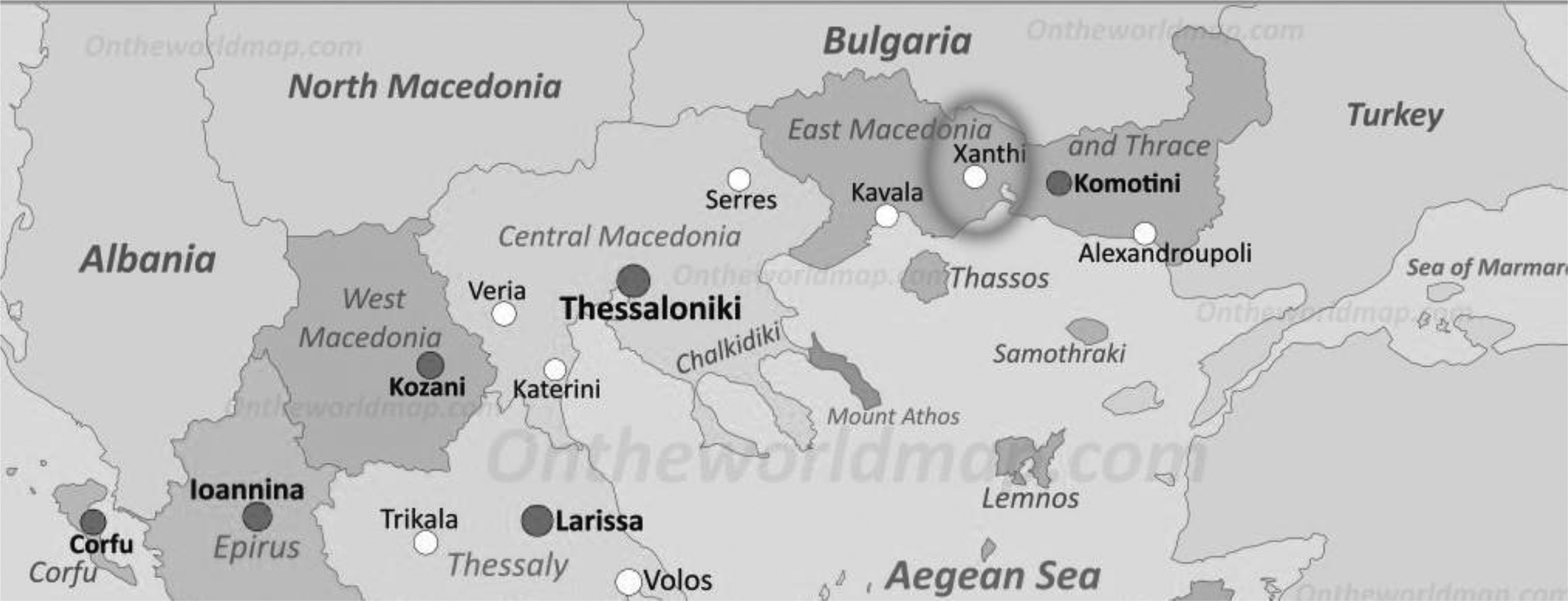
Map of research area (in cycle) vicinity with other parts of Northern Greece. Source: http://ontheworldmap.com.
It must also be noted at this point that the study area, apart from the important figures concerning agriculture, holds another very distinctive cultural characteristic. There is a proportion of the local population who are Pomaki (18.6%), mainly concentrated in rural areas near the Bulgarian border. The most important Pomak villages are as follows: Miki, Echinos, Kotili, Satres, Therme and Oreon, where the inhabitants apart from Greek, also speak other languages, such as Turkish or Pomakika or Bulgarian. Pomak society is a closed and conservative society where the separation of the two genders is strictly maintained. Women are considered to be inferior to men. Their position is in the home and they are referred to as only auxiliary hands. In addition, they are excluded from full education and many girls starting school do not even complete compulsory education (Gida, 2018).
Understanding gender relations in agriculture requires bringing together different sources of information and different methods of analysis (Quisumbing et al., 2014). In this respect, an integrated approach was adopted in the present study employing a mixed method that refers to both quantitative and qualitative data. Such a method allows one to understand not only what is happening in terms of official figures but also why this happened in terms of the real situation (Babbie, 2011).
Regarding the quantitative research, a data set recently published by the official statistics of the Greek Government and Eurostat depicts the profile of agriculture in the country as well as the basic figures for female farmers and their farms. This data set elaborates on the number of farms, their cultivated area, the age of farmers and their agricultural educational level and the allocation of labour in reference to gender. This macro approach makes it easier to compare Greece with other EU countries and provides a general picture. However, when the focus is turned to the micro level within the study area and in search for more sex disaggregated data, these are quite limited. For instance, no official, comparative data were found on the assets of the farm such as ownership of the land, type of crops, fixed and variable capital and other sociocultural dimensions such as incentives for engaging with farming, access to extension services and acceptance of female farmers within the local community.
Therefore, qualitative research was employed to understand the micro profile of female farms and farmers in the study area and understand their position in agriculture, the social stereotypes that might still exist, incentives and other social phenomena. In fact, the main goal was to provide answers to questions about how and why a situation occurs within the given local context (Iosifidis, 2017). The method used to collect the qualitative material was twofold. At first, five personal in-depth interviews were contacted separately with local experts/key-informants (see Table 1 for major characteristic profile) during spring 2019. The latter were indicated as experts having explicit and implicit knowledge on the position of female farmers in the study area. These experts have been involved in agricultural extension services for a long period of time in the area or in evaluation and co-financing of agricultural development programmes and even in supporting farmers in everyday problems. As a result, they could provide a historic background for every research question. Twenty questions were posed by these key-informants relating to the position of women in farming and generally in agriculture. Discussions were conducted in a friendly environment and lasted more than 3 h, not always following the same sequence of questions.
Key-informant’s expertise.
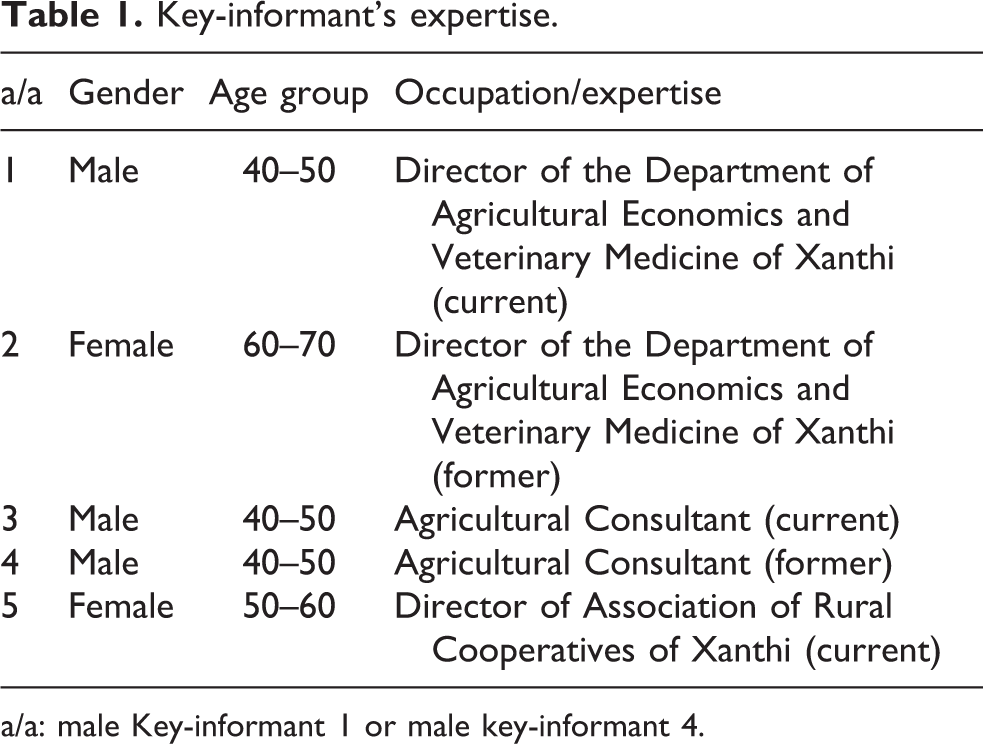
a/a: male Key-informant 1 or male key-informant 4.
After the separate in-depth interviews, one focus group discussion was contacted with all key-informants together to provide the research with some more input and clarify conflicting issues especially regarding the case of Pomak villages and the lack of official data. During this discussion, experts were given information retrieved by the researcher from the data set of the single payment applications submitted by farmers to the Greek payment authority of Common Agricultural Policy aid schemes (OPEKEPE) only for 1 year (2016). These data were discussed and evaluated by all and are embedded in the ‘Discussion and conclusion’ section. This twofold approach with the experts allowed us to have an invaluable insight to the conditions at local level, especially for the Pomak villages considering that it is quite difficult to find and talk to women living there, while contradictory statements can also exist.
After transcribing all five in-depth interviews as well as the focus group discussion, a discourse analysis was followed (Petrou, 2012). Codes and subcodes were created with manageable concepts, and at the same time, throughout the analysis, the codes/subcodes and the text were connected (Iosifidis, 2017). Finally, some codes and subcodes also appeared providing further data that were not originally foreseen, especially after the focus group discussion.
Research findings
Macroanalysis results on female farmers in Greece and in the study area
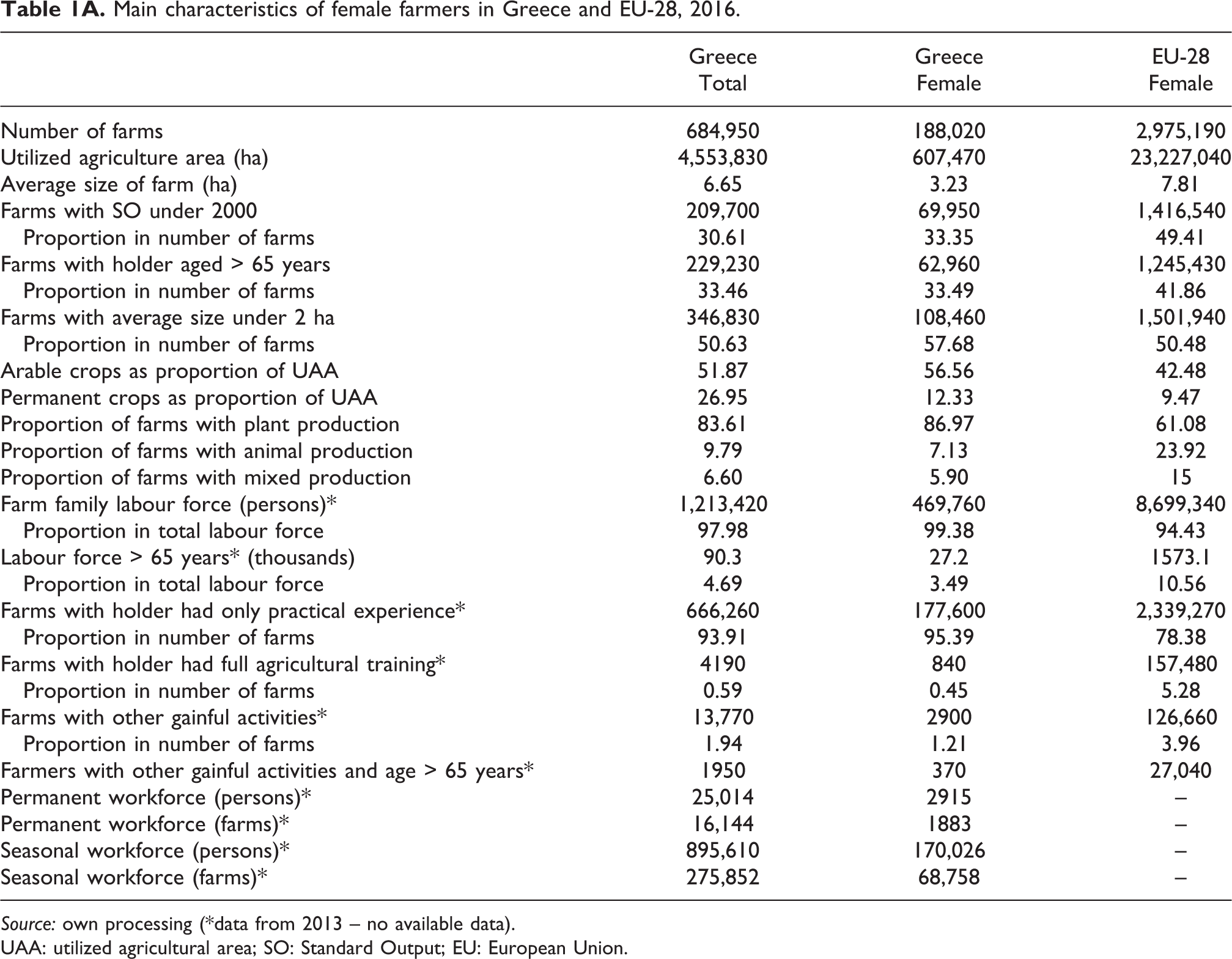
According to the latest (2016) official statistics in the EU-28, there were 10.4 million farms, which occupied 173,336 million ha of land (utilized agricultural area (UAA)). Almost one-third of EU farms was in Romania (32.7%), followed by Poland (13.5%), Italy (10.9%) and Spain (9%). Greece lies in the fifth place (6.5%) in terms of the number of farms in the EU, with a total number of 684,950 farms in 2016 and 4,533,000 ha of UAA, showing a decline 18.7% compared to the number of holdings in 2005 (Eurostat, 2016).
If the same figures are investigated from a gender perspective, it was observed that women today hold a 27.4% of the total number of farms in Greece (28.4% in EU) and they use 13.3% of the UAA. They have smaller farms (under 2 ha) and a great proportion is over 65 years old, with poor agricultural education/training (see Appendix 1). The great majority (95%) of female farmers have only practical experience of agronomy. Their farms are specialized in crops with low productive output such as cereals and general field crops. At the same time, a minority of younger female farmers (35–44 years old) perform some other gainful activity (in terms of pluriactivity) other than agriculture, especially agrotourism or handicraft (Eurostat, 2016).
Farming in Greece is a family activity. The above is supported by the fact that the family of the holder provides 98% of the total agricultural labour force, which in few cases is paid work. Similarly, among women who work in agriculture as a regular labour force, the proportion of the family labour was almost 100%. At this point, it must also be taken into account the fact that employment in agriculture compared with the other sectors of economic activities is more complex. In many countries, including Greece, the manager of the farm who decides on the rational use of inputs and takes the economic risk is the same person who owns the agricultural inputs of the holding (land, labour and capital). During the years 2005–2016, there has been an increase in the proportion of female farms, in the country, from 25.2% in 2005 to 27.5% in 2016 (188,020 farms). Although the absolute number of female holdings decreased, the proportion of them has increased due to smaller total number of holdings.
Focusing on the study area, the average size of the overall farm holdings is smaller (4.3 ha) than the national average, with reference to the official data in 2016 (see Appendix 1, Table 1A). The fragmentation of the agricultural land (in many scattered parcels) is one of the most crucial problems in the area. Another major problem in the area is irrigation of the land. According to the data, only 30.7% of the total agricultural land is irrigated, but female farms seem to be slightly in a better position with irrigated parcels reaching a percentage of 39.9%.
The ownership status of the parcels belonging to all farmers is also a complex figure to access. The majority is rented (67.1%), while 28.1% of them are owned and the rest is mixed. In female farms, the percentage of rented parcels is even higher (79.9%). Xanthi is characterized by significant agricultural potential and processing of its agricultural production (Iliopoulou and Stratakis, 2011). Energy crops occupied the largest share of the cultivated area (8.2%) and followed by maize (8%), livestock feed (7.4%), fallow (4.3%) and cotton (3%). Table 2 summarizes some macro figures for female and male farms in the study area and depicts a tough reality that female farms are facing.
Profile of female and male farms in the study area.
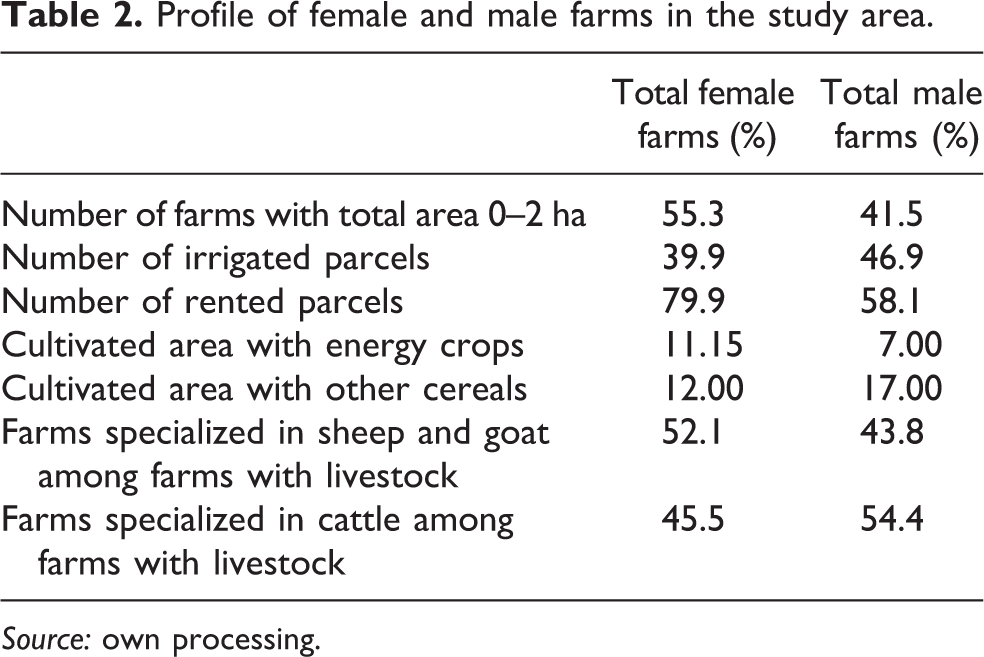
Source: own processing.
Further, an attempt was made to compare the aforementioned profile of female farms to that of 10 years ago to elaborate on the transformations that occurred in the study area through time. However, that was not possible due to the lack of gender-related data of that period, since it was not compulsory to register the gender of the aid recipient in the payment applications from which macro-level data were derived; hence, the mixed methods approach with the qualitative tools follows.
What does the microanalysis reveal about female farmers in the study area?
Position of women in agriculture
According to the in-depth interviews and the focus group discussion, the main outcome was that the overall position of women in agriculture has improved during the past 10 years. However, when going into more details, it was evident that some facts have changed whereas some others have remained the same (Figure 2). In a five-point scale 2 of agreement, key-informants agree that men are still not much involved in the rural household tasks and overall responsibilities of the rural family and that women still depend financially on them. It is still a common belief that agriculture is a male-dominated profession and women are an auxiliary staff and not the real farm heads. Only a very small percentage of farms, with a female farm head officially, are actually run by women. At this point, it must also be noted that during the focus group interview, the key informants were actively engaged in contradictory discussion. They finally agreed that a crucial factor transforming women’s position in agriculture was also the fact that women nowadays have more free time. The construction of support facilities in the region (e.g. nurseries schools) has provided female farmers with the opportunity to be actively engaged in agriculture and not only as auxiliary members depending on the time left after the children were taken care of and the household was managed. It remains to be seen whether such institutional changes will change the labour allocation within and outside the farm. In the mountainous parts of the study area (where the Pomak villages are located) with small fragmented agricultural land, women still do all the farm work, while men visit the services, purchase farm supplies and engage in public relations.
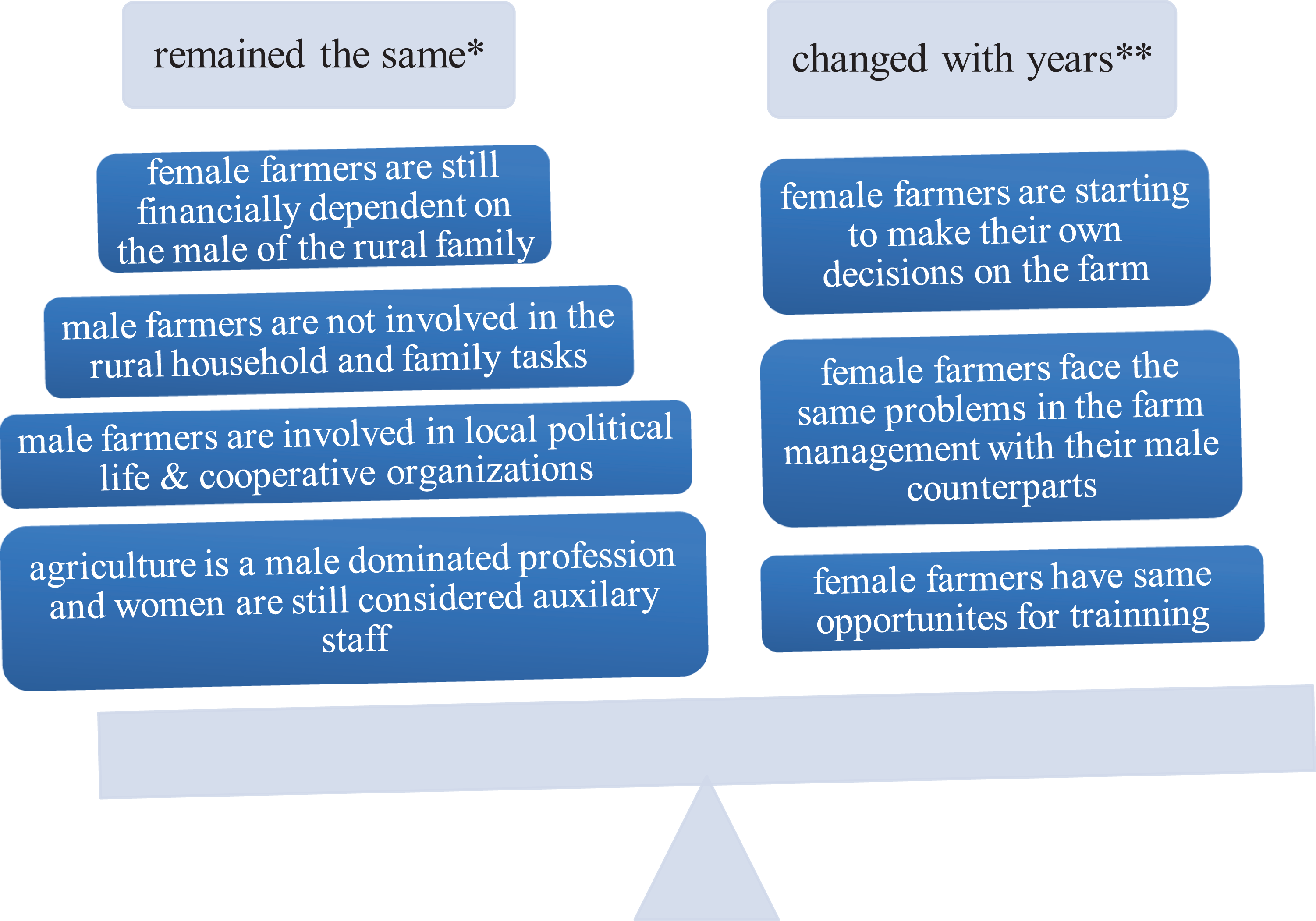
Conceptualization of qualitative data regarding the position of female farmers in the study area throughout the years. *Responses with average agreement < 2.5. **Responses with average agreement > 2.5.
Female farmers are still not actively involved in the political arena and the management of the local cooperative organizations. There is a common agreement (average 2.4 in the five-point scale of agreement) among the key-informants that gender still plays a role in the decision of who becomes president of the agricultural cooperative and who might be representing farmers in the political debates. The active participation of women in decision-making on the farm is a positive change during the years (key-informants average agreement is 2.4). What was also positively highlighted in the research was the fact that both male and female farmers have presently the same opportunities for training and access to agricultural extensions services (key-informants average agreement is 1.6), although they cannot still benefit from them due to several local constraints.
It is still evident that local amenities and services that influence the overall quality of life in the village influence the decision of women to engage in agriculture. Qualitative data revealed that women perceive agriculture as an inferior occupation and they also do not want to be engaged in it because they do not want to stay in the village. Additionally, the informants have noticed that there are only a handful of women who enter agriculture by choice, mostly the youngest one.
Social stereotypes and social exclusion
In the villages where the Pomaks are inhabited, there are various social stereotypes even today. Rigid social standards ground gender identities and expectations. In many cases, the existence of stereotypes is an obstacle in the development of female agricultural entrepreneurship. A typical example of this, as male key-informant 4 noted, is the dissolution of an agricultural cooperative that existed in one of the villages in the area due to these stereotypes. …a women’s cooperative was created in 2006 and the members said that they had been marginalised in the village. The locals thought that those women had a relationship with various foreign people as they came out to society. The other women in the village did not talk to them because their husbands did not let them do so, as they thought that they would be “seduced” by them.
The existence of a different social mechanism, such as religious authority, determines also the different roles within the rural family. As female key-informant 5 stated, the male is the one who always meets public servants for important issues and whereas the female member of the rural family stays in the farm, which complies with the Koran. Families in the Pomakochoria are mainly patriarchal and young people take very seriously the opinion of their father, who is the one who makes decisions about family and farm. As reported by male key-informant 3: ‘…Stereotypes exist mainly in the Pomakochoria. In general, there is a strong patriarchy. Even now there are young men, 30–35 years old, who say that they will discuss it with their father’.
In these areas, due to geomorphology, tobacco cultivation dominates, and women work mostly in the fields, as men are absent to work in other countries or on ships. According to male key-informant 1: …The characteristic image dominated in my mind when I travel to these villages is women working in the fields. In the past, men were engaged when they plow the fields with the mules. Now that the farmers are plowing with a tractor, women can pay someone else to plow their field. So, all the heavy work is done by the machine and everything else is done by women (planting, harvesting, etc.).
Incentives to engage women in agriculture
Even though there are several programmes in Greece (either national or EU funded) that provide incentives for women to engage in agriculture (Kazakopoulos and Gidarakou, 2003; Petrou and Koutsou, 2014), the key-informants argue – with contradicting opinions – on the actual contribution of these programmes in the study area. During the focus group discussion, key-informants argued about the real number of female farmers who entered agriculture due to the Young Farmer’s program. The overall number of young female farmers was 85 among 200 (42.5%) but this does not mean that all of them are really involved in agriculture. It is a common practice to declare the female family member as beneficiary of the programme, whereas the actual management is still done by the male.
However, everyone agrees that it will greatly help women to engage in agriculture if they are provided with better information on new crops and new production methods through training programmes. Male key-informant 1 says: […] in most of the meetings we organized in order to provide new techniques, women have difficulty in participating….it is always men that arrive to the meetings which take place in kafenia (cafes), with loud voices and jerky behaviors – not always interested in the process. While in training courses there was no problem and women attend them always participating in vivid discussions.
However, there are some factors contributing to women’s low access to extension services. According to the informants, women visit the farm advisor or the Director of Agricultural Economics or the Association of Rural Cooperatives, either alone (in a small percentage) or with their husband, to get information on direct payments, development programmes or new crops. As female key-informant 2 says: …Women come to the Department of Agricultural Economy on their own. Women today are not as they were a few years ago, they are awake. Twenty years ago, we used to go to the field or their home for inspection and the woman was hiding, leaving afraid. Today the woman first enters the office and then the man. Because the woman talks more and more nicely and that’s why more women participate in our funding programmes.
Finally, it was also observed that when it comes to educational programmes, the women of the villages wanted to attend, but they preferred to have a woman as a trainer rather than a man. The latter creates many obstacles to their access to extension services.
Discussion and conclusion
The above-mentioned analysis, though limited to a specific rural area, is rather representative of the Greek case in terms of the general profile of female farmers and their actual (or not) involvement in farming. In fact, not only is the reality rather different from what lies beneath the official figures, but also it is very difficult to document at a micro level all farm indicators with a gender perspective. Through the research findings it emerges that even though the position of women in agriculture has been improved, as there has been an increase in many statistical indicators, the proportion of real female farmers is still very low. Most of the women in the study area, who are declared as farm heads in the official statistics, are not really managing these farms; a finding highlighted in other Greek areas too (Koutsou et al., 2011) but also in other parts of the EU (Ball, 2020).
In Greece, the institution of the family is very strong, and mutual obligation associated with bonds of kinship and marriage is quite important and influences the overall position of women in agriculture. In fact, in the past, women found themselves in agriculture after marrying a farmer, instead of making an actual professional choice, as also reported for women in Scotland (Shortall and Sutherland, 2017).
The allocation of tasks within rural households is driven by social norms, which shape the intrahousehold division of labour (Fafchamps and Quisumbing, 2003). In some parts of the study area, especially those with cultural diversity, women work in the fields every day during the tobacco-growing period, and only in few cases, do they take over the whole management of the farm, a job appointed to the male of the family. This was also observed for the region by the research of Ribas-Mateos (2000). The same situation prevails in other countries too, such as Ireland, where women consider themselves as helpers and housewives due to these social-family norms and their presence on farms is regarded as contributory rather than empowering (Balaine, 2019). But also in the United Kingdom, there are consistent patterns to relational gender identities and men are considered as ‘farmers’ while women as ‘helpers’ (Price, 2010).
Another factor that influences the position of women in agriculture is patriarchal structures. Findings suggest that in this context the male is the head of the family farm, making the relevant decisions and he is also the farm’s public ‘face’ in services and communications, also observed by Brandth (2002). The presence of Pomaks in Xanthi affects the social stereotypes that prevail in the area. The girls in these patriarchal rural cultures are encouraged to learn skills that help them prepare for marriage and motherhood (Šikić-Mićanović, 2009). Subsequently, women tend to have lower educational skills and insufficient knowledge of the Greek language. Even today, women still adhere to patriarchal traditions and social norms, and the decisions are made mainly by the man (father, husband and son). These traditional structures of local society combined with the male status quo exclude women from the overall labour market not only in agriculture (Georgiadou et al., 2007). Women’s lower educational level in the area is a barrier in their ability to take part in educational programmes related to agronomical skills, also noted by Ragasa (2014). But even when they are willing to attend the seminars, Greek extension services unintentionally ignore gender aspects, such as the use of female educators/trainers that will be more trusted by the female farmers.
Apart from the extension services, it is essential to improve the provision of overall public services in rural areas to enable a greater participation of women in labour market by freeing up time from home–family care duties (European Commission, 2012). But women themselves should be able to develop their positive self-image and, in the process of economic, social and culture independence, they should be able to expand their boundaries beyond their households (Bhattarai and Pant, 2013).
As Safiliou (2006) noticed, women’s integration in farming can take place when some conditions are fulfilled at micro level: when they have access to and ownership of land, when they are actively engaged in agricultural training programmes, when male farmers actually trust the management of the farm to their female counterparts and finally when the local community accepts the new roles of women.
From the conceptualization of the findings of this research (Figure 3), it is clear that a constellation of actions should be taken to help women to be real farm heads and maintain viability of their farms. Thus, providing tailor-made incentives and improving women’s agricultural education is greatly necessary. Local leaders (religious and political), especially in minority communities, should understand the need for and benefits of supporting economic empowerment of rural women. Furthermore, women need suitable infrastructure and services that would enable them to balance family and working demands and to reduce the double burden of family caregiving tasks for them.

Conceptual presentation of research findings that affect real female farmers.
At macro level, to measure transformations in agriculture, sex-disaggregated data are needed. At the national level, the data are quite limited regarding the gender dimension and they are related mainly to the employment of women. There are no official data on women who manage farms, the crops or livestock of their holding, their economic size, the extent of their mechanization and the irrigation method that they employ, as well as their agricultural income. In addition, there are no data on the tenure status of cultivated area and the number of parcels. As women are more and more actively engaged in agriculture, it would be very useful to have available macro data that could, in addition to local field work data, contribute to a more comprehensive view of the actual transformations that are taking place.
Footnotes
Declaration of conflicting interests
The author(s) declared no potential conflicts of interest with respect to the research, authorship, and/or publication of this article.
Funding
The author(s) received no financial support for the research, authorship, and/or publication of this article.

Notes
Appendix 1
Main characteristics of female farmers in Greece and EU-28, 2016.
| Greece | Greece | EU-28 | |
|---|---|---|---|
| Total | Female | Female | |
| Number of farms | 684,950 | 188,020 | 2,975,190 |
| Utilized agriculture area (ha) | 4,553,830 | 607,470 | 23,227,040 |
| Average size of farm (ha) | 6.65 | 3.23 | 7.81 |
| Farms with SO under 2000€ | 209,700 | 69,950 | 1,416,540 |
| Proportion in number of farms | 30.61 | 33.35 | 49.41 |
| Farms with holder aged > 65 years | 229,230 | 62,960 | 1,245,430 |
| Proportion in number of farms | 33.46 | 33.49 | 41.86 |
| Farms with average size under 2 ha | 346,830 | 108,460 | 1,501,940 |
| Proportion in number of farms | 50.63 | 57.68 | 50.48 |
| Arable crops as proportion of UAA | 51.87 | 56.56 | 42.48 |
| Permanent crops as proportion of UAA | 26.95 | 12.33 | 9.47 |
| Proportion of farms with plant production | 83.61 | 86.97 | 61.08 |
| Proportion of farms with animal production | 9.79 | 7.13 | 23.92 |
| Proportion of farms with mixed production | 6.60 | 5.90 | 15 |
| Farm family labour force (persons)* | 1,213,420 | 469,760 | 8,699,340 |
| Proportion in total labour force | 97.98 | 99.38 | 94.43 |
| Labour force > 65 years* (thousands) | 90.3 | 27.2 | 1573.1 |
| Proportion in total labour force | 4.69 | 3.49 | 10.56 |
| Farms with holder had only practical experience* | 666,260 | 177,600 | 2,339,270 |
| Proportion in number of farms | 93.91 | 95.39 | 78.38 |
| Farms with holder had full agricultural training* | 4190 | 840 | 157,480 |
| Proportion in number of farms | 0.59 | 0.45 | 5.28 |
| Farms with other gainful activities* | 13,770 | 2900 | 126,660 |
| Proportion in number of farms | 1.94 | 1.21 | 3.96 |
| Farmers with other gainful activities and age > 65 years* | 1950 | 370 | 27,040 |
| Permanent workforce (persons)* | 25,014 | 2915 | – |
| Permanent workforce (farms)* | 16,144 | 1883 | – |
| Seasonal workforce (persons)* | 895,610 | 170,026 | – |
| Seasonal workforce (farms)* | 275,852 | 68,758 | – |
Source: own processing (*data from 2013 – no available data).
UAA: utilized agricultural area; SO: Standard Output; EU: European Union.