



Abstract
In recent years, the need for profound changes in agricultural practices has become increasingly acknowledged, and it has given rise to an intense, and rapidly intensifying, debate among experts and in the media. Before the general framework under which this debate currently unfolds become too set in stone, it would seem useful to devote some time to a reflexion on how discussions should be approached in order to have the best chance to result in practically workable, sustainable solutions. In a recent, provocative article, Amundson (2022) voiced very strong opinions in this respect. In particular, he criticizes the emergence in the general public of “we” visions about alternate forms of agriculture, he argues that key current stakeholders (i.e. farmers) imperatively have to be included in the discussions, and he opines that the debate should not attempt to solve “social wicked problems”, which tend to remain long-standing because no one can manage to solve them. In the present article, I propose an in-depth reflexion on these three aspects of the debate, and adopt very different perspectives than Amundson’s (2022). After decades of laboriously trying to get members of the general public engaged with soils and agricultural issues, “we” visions with which members of the public may come up need to be resolutely welcomed, carefully analyzed, and responded to, soon after they emerge. Furthermore, I argue that stakeholders who are currently in the agricultural sector may not necessarily be the most likely to eventually implement changes and therefore should not be allowed to sway the debate in a direction that suits them in the short run. Finally, I contend that the lack of willingness, or the reluctance, of decision-makers and the private sector to envisage fundamental changes, thereby giving the impression that some problems cannot be readily solved, should not constrain in any way the scope of the reflexion.
Keywords
Introduction
In recent years, claims that the global food system is ‘in crisis’ or ‘broken’ have become increasingly common (see, e.g. https://www.weforum.org/agenda/2018/01/our-food-system-is-broken-three-ways-to-fix-it/ and https://www.theguardian.com/environment /2018/nov/28/global-food-system-is-broken-say-worlds-science-academies). As listed by Giller et al. (2021), “such claims point to a wide variety of ills, from hunger, poverty and obesity; through industrial farming, over-dependence on chemical fertilizer and pesticides, poor quality (if not unsafe) food, environmental degradation, biodiversity loss, exploitative labor relations and animal welfare; to corporate dominance and a lack of resilience.” In the intensive, and rapidly intensifying, debate that has taken place on this broad range of topics, many contributors from different sources have been very vocal, and ideas of all kinds have surfaced to resolve the crisis. Terms, like soil quality, soil health, or “regenerative agriculture”, adopted in discussions, have not always been carefully defined and have been used by debate participants with different meanings, occasionally creating a significant level of confusion. It seems therefore useful to reflect on various aspects of the debate, before participants become too ensconced in their positions, and while they could still be redirected, if need be, toward a path that might turn out to be more fruitful in the long run. In particular, in the debate on alternative forms of agriculture, questions that should be reflected on are from where it would be optimal that ideas come, who should take an active role in the debate, and whether from the onset one should consider limitations to the scope of the discussions, for example by setting socio-economic constraints on what is feasible to achieve in practice.
The key encouragement for proposing such a reflexion in the present article came from the recent publication by the journal Biogeochemistry of a provocative opinion by Amundson (2022), who fustigates the way a recent wave of Hollywood documentaries approach soil-related issues and propose to deal with them more sustainably. A natural scientist “who must labor in the world of fact and reality”, Amundson makes a number of well-grounded points with which it would appear difficult to argue. At the same time, he also makes several statements about how the debate on alternate forms of agriculture should be carried out, which one might contend are far more questionable. To the extent that a discussion of these statements is relevant to agriculture as a whole, and not just to the disciplines of biogeochemistry or soil science, it seems worthwhile to review and analyze Amundson’s opinions in this broader context, and in a journal that, unlike Biogeochemistry, not only accepts comments, but, more importantly, reaches a wider audience. In that respect, the present perspective is resolutely meant to stimulate a healthy and constructive exchange of views. In the following, three different statements made by Amundson are described and discussed in detail.
Welcoming, or not, “we” visions from the general public
As an example of a typical Hollywood narrative about soils, Amundson summarizes as follows the story line of the 2020 documentary “Kiss the ground” (Figure 1), narrated by Woody Harrelson: “We” have, in the recent decades, abused soils through industrialized farming, creating or contributing to looming food and climate challenges. But wait! “We” can change this, and “we” can solve our food and climate challenges by getting back to some basics, regaining lost arts and knowledge from our agricultural past or from traditional practices. “There could be a way to eat food that heals the planet!” Soil is the answer! Pan to a shot of a smiling Woody Harrelson, then fade to black. THE END.
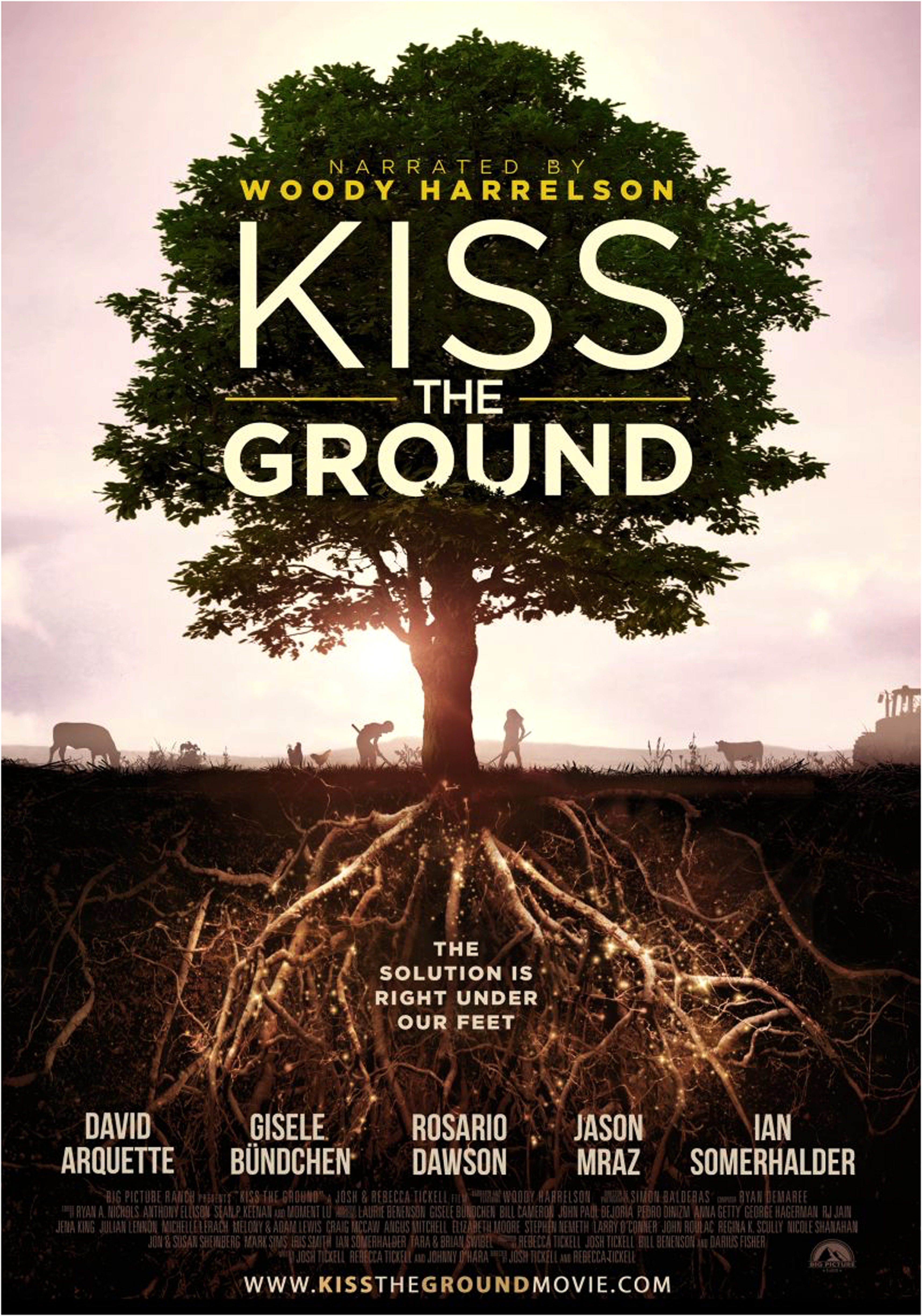
Poster of the movie “Kiss the ground.”
It is plainly evident from Amundson’s discussion that part of the resistance he feels toward this type of “we” narrative, generated by members of the public (i.e., outside the relatively small circle of specialists), is due to the fact that scientists, who know at a deep level the ins and outs of soils and agriculture, have lost the initiative in the framing of the story. He writes nostalgically: “In this unique era of societal interest in soil, the scientists who study soil should regain control of the narrative.”
There was a time, not too long ago, when the public at large had very limited awareness of soil-related issues and demonstrated little interest in measures that were advocated to curb the progressive degradation of soils. Since, as a result, limited financial resources were available to carry out research in the area, soil scientists used to lament about this bitterly and endeavored to change that state of affairs (e.g., Baveye et al., 2011). Part of the strategy in this respect focused on soil functions and on the role of soils in the delivery of ecosystem services, which afforded soil scientists a convenient way to communicate to the public and to decision-makers the crucial importance of soils to human societies, in particular for the production of the food on which humanity depends. Apparently, these efforts paid off to some extent, since now members of the public feel concerned enough about soils and agricultural practices that they are themselves coming up with clear directions about how they want soils to be managed and about what agriculture should produce. Wine making offers a vivid example of how things have evolved in this context. A much discussed 2008 report of the European Pesticides Action Network (PAN), according to which many wines from different countries contain inadmissibly high concentrations of pesticide and herbicide residues elicited reactions from the public that “we” should be able to drink wines that are not laden with toxic chemicals (e.g., https://www.euractiv.fr/section/sante-modes-de-vie/news/une-etude-revele-la-presence-de-residus-de-pesticides-dans-le-vin-fr/). In the media in particular, this realization has given rise to many statements that “we”, meaning society at large, should develop and promote ways to grow grapes and make wine differently. This has given a boost to local producers of organic and “natural” wines, and is currently convincing many traditional wine makers to shift gear as well. A similar quality-driven and health-conscious trend is manifest with respect to food in general, leading to a steady expansion of organic farming practices in many countries.
Since what scientists longed for, i.e., that the public at large would become informed about soil-related issues and take them to heart, has now, to a still modest but encouraging extent, become a reality, it would be utterly disingenuous on our part to ask for the genie to return in the lamp, so to speak. In that sense, I disagree strongly with the view expressed by Amundson when he writes that “[t]he parallel universe of warm and fuzzy views of soil is detrimental to our scientific profession and its reputation, adding a whiff of wackiness to our field as we work to integrate ourselves into the cutting edge of modern science, where our real future lies.” Lest they turn the tide back, soil scientists and agronomists need to welcome any “we” vision with which members of the public come up, regardless of how informed the latter are about the intricacies of soil processes and the details of current agricultural practices. From that perspective, rather than rejecting these “we” visions off-hand, our role as experts should be to critically review their meaningfulness, to analyze carefully the extent to which they could be achieved in practice, and to educate the public as to the merits or drawbacks of various approaches to that end. Warkentin (1999) came to a similar conclusion in terms of non-specialists making observations and gathering data about soils: “While we”, i.e., soil scientists, “may have the difficult role of maintaining quality control over this information, we should encourage inputs from all those interested in adding to and using soil science knowledge.”
The problem may be scientists’ response
Perhaps Amundson’s reluctance to accept that researchers would not be in charge of the narrative from the onset is motivated by the fact that, historically, the track record of soil scientists and agronomists when dealing with ideas emanating from the public appears to have been abysmal. Even when members of the public came up only with a “we” vision, and did not suggest any way to achieve it, presumably leaving to scientists the task to figure it out, the outcome has tended to be underwhelming. A recent example, related to the sequestration of carbon in soils, illustrates this situation well. In 2015, during the 21st annual international Conference of Parties (COP21) meeting in Paris (France), the then French minister of agriculture (an economist by training, turned politician) suggested that “we”, in the agricultural sector, could actually alleviate climate change. The reasoning behind this vision was that since global soils contain two to three times more carbon than the atmosphere, an annual growth rate of 0.4%, or 4‰ of the carbon content in the top 30– 40 cm of soils would halt the increase in CO2 concentration in the atmosphere related to human activities, and in particular to the consumption of fossil fuels. This “4 per 1000” proposal, as it came to be known, was inherently likely to please the agricultural sector who, after decades of being criticized as major polluters, could now be praised for their positive action regarding climate change. Politicians also welcomed the proposal since it meant that efforts to transition to renewable forms of energy could be downscaled or even halted, as agriculture, all alone, supposedly had the potential to save the day.
Researchers did not immediately point out as they should have, when the proposal was made, that several reports (Arrouays et al., 2002; Chenu et al., 2014; Lal, 2004) had previously demonstrated conclusively that carbon sequestration in soils could compensate only a relatively small fraction (<10%) of the CO2 released in the atmosphere via consumption of fossil fuels, a far cry from the full compensation alluded to by the “4 per 1000” proposal. With the exception of a short note by White and Davidson (2016) in a regional magazine, it took a while for mainstream scholarly journals to publish articles that called the soundness of the proposal into question. More than six years after the COP21, some researchers (e.g., Angers et al., 2022; Minasny et al., 2022) still argue that the “4 per 1000” proposal had merit, even though it is now widely acknowledged that the initial idea was unrealistic other than in a vaguely “aspirational” sense, and that carbon sequestration in soils could contribute credibly only in a very small measure to the fight against climate change (Berthelin et al., 2022a, 2022b; Janzen et al., 2022a, 2022b; Schlesinger, 2022). Clearly, the quality control of the original, flawed vision has not been adequate.
Encouragingly, some researchers have recently tried to react faster to ideas emanating from the public. For example, Giller et al. (2021) analyze in detail the meaning of the popular expression of “regenerative agriculture”, for which they consider that there has been a resurgence of interest in the last 5 years, as well as a clear “clarion call” from the public. Giller et al. argue that “these practices are generally promoted with little regard to context. Practices most often encouraged (such as no tillage, no pesticides or no external nutrient inputs) are unlikely to lead to the benefits claimed in all places.” Furthermore, they consider that “the resurgence of interest in Regenerative Agriculture represents a re-framing of what have been considered to be two contrasting approaches to agricultural futures, namely agroecology and sustainable intensification, under the same banner. This is more likely to confuse than to clarify the public debate.” Likewise, the recent article by Pulleman et al. (2022) analyzes the strong demand emanating from the public for “nature-based” agricultural practices that “stimulate soil biodiversity or beneficial soil organisms and enhance soil health.” Pulleman et al. (2022) review the origin of popular ideas on the role of soil biology in sustainable soil management, as well as their potential to address key global challenges related to agriculture. Three examples of such ideas are discussed: 1) a higher fungal:bacterial (F:B) biomass ratio favours soil carbon storage and nutrient conservation; (2) intensive agricultural practices lead to a decline in soil biodiversity with detrimental consequences for sustainable food production; (3) inoculation with arbuscular mycorrhizal fungi reduces agriculture's dependency on synthetic fertilizers. Pulleman et al. (2022) eventually reach the conclusion that “reading of the scientific literature shows that popular claims on the importance of high F:B ratios, soil biodiversity and the inoculation with beneficial microbes for soil health and sustainable agricultural production cannot be generalized and require careful consideration of limitations and possible trade-offs.”
The half-full-glass view of these different examples is that at least there was a reaction and a quality-control of sort. Granted, for the “4 per 1000” initiative, researchers’ reaction was slow and has not succeeded in curbing the hype generated by some of the actors involved, but more recently, as the article of Giller et al. (2021) and Pulleman et al. (2022) suggest, scientists seem to be reacting faster in some cases. In a number of instances, however, there has been no response whatsoever to the ideas proposed by the public, and quality control did not take place at all. There are several examples of that in the last few decades, but one of the most illustrative ones relates to what has become known as “biodynamics” or “biodynamic agriculture”, an approach that in recent years has steadily grown in popularity among farmers especially in Europe but also on several other continents.
Its origin dates back to 1924. A group of farmers, concerned about the direction agriculture was taking at the time and wanting to promote a vision of agriculture that would be drastically different, turned to apparently the only receptive ears they could find, those of a well-known philosopher, specialist of oriental spiritualism, by the name of Rudolf Steiner. He not only came up with a vision of an ecological and sustainable agriculture that would be in tune with the “influence of the cosmos on all life on Earth” (Pigott, 2021), but he also made detailed proposals on how to increase soil fertility without the use of mineral fertilizers or synthetic pesticides (Paull, 2011). Some of these proposals, relying for example on the use of cover crops, natural pest repellents, or the mechanical removal of weeds, make eminent sense and have since become mainstream in organic farming. Other proposals appear far more esoteric. One of these involved the burial for 6 months, in a corner of one’s field, of a cow horn filled with cow manure. Farmers were advised to carry out the burial in the evening. After the 6-month period, 100 g of the fermented manure were to be mixed with 25 to 35 l of fresh rainwater, and be constantly stirred for precisely one hour in such a way that the vortex so created could suck in “cosmic influences”. The resulting mixture was enough supposedly to spray a one-hectare field (corresponding to a mere 2.5 to 3.5 ml of spray per m2, containing only 0.01 g of manure on average).
Other proposals made by Steiner involved the requirement to plant and harvest according to the lunar calendar or to the position of various planets. To his credit, Steiner considered his proposals as tentative and recommended explicitly that they be tested experimentally, a program that his untimely death soon after (in 1925) prevented him from overseeing. In the absence of any interest from established scientists, who could have carried out this kind of careful analysis, no attempt was made, however, to determine which components of biodynamic agriculture had practical merit, and which ones did not. Even though there were, much later, some timid attempts to check selected components of biodynamic agriculture, the situation has not improved much over the last 96 years. Experience shows that among the thousands of farmers worldwide who have adopted biodynamic agriculture (and often advertise it as a significant warrant of quality of their products), they overwhelmingly feel that they have to adopt the entire program, including some of its more puzzling rituals, or else “it will not work”.
As these two examples of the “4 per 1000” proposal and biodynamic agriculture suggest, the problem with “we” visions about soils and agriculture that emanate from the public is not so much their emergence itself, but the way the scientific community has often been responding too slowly to them, or in some cases, has not responded at all. In the latter case, the public has sometimes come up by itself with strategies to achieve the visions and has evaluated them empirically, without the benefit of insight from experts. Had they been more directly involved, scientists could have made sure that as the “we” visions and the concrete steps being envisaged to achieve them were assessed, the process relied on tried-and-true principles of scientific inquiry. That means in particular that each component of a multi-component strategy, like biodynamics or the (also increasingly popular) permaculture, should be first assessed individually, independently of all other components. For example, experiments, involving proper control treatments, should have tried to determine what effect, if any, the mixture resulting from the dilution of fermented horn manure could have in and of itself on crops.
Educating the public about verifiability or falsifiability
A key requirement for this kind of evaluation to be possible, of course, is that hypotheses underlying each one of the proposed components be verifiable or at least, in a Popperian sense, falsifiable. There was a time in the 18th century, when God was thought by some agricultural “experts” to have a very direct effect on the fertility of soils and on agricultural productivity, so much so that the first two chapters of a popular agricultural treatise published in Paris in 1769, Froger’s Manuel d’Agriculture, dealt with God and piety (Bardet et al., 2000; Baveye, 2013). Research has fortunately evolved out of that unprovable perspective, but some of the proposals made by Steiner, relying on “spiritual and cosmic influences on crop growth” appear to similarly rest on effects that are not defined operationally and for which it would therefore be impossible to design any kind of direct experimental test.
To educate the public, and avoid debates getting badly off track, it seems crucial that scientists point out clearly and rapidly when proposals that are made are of an unprovable nature, or contradict a wealth of previous experimental observations. For example, if someone claimed that “cosmic influences”, like those advocated by Steiner, could make water flow uphill, it would seem indicated for soil physicists or hydrologists to point out firmly not only that for such a hypothesis to have scientific merit, these cosmic influences would have to be described precisely and their exact effect on water flow be spelled out, but also that a mass of accumulated evidence shows water to naturally flow downhill.
Experience in various contexts, and in particular in that of biodynamic agriculture, suggests that the window of opportunity in which scientists can have an influence on the course of events closes down relatively quickly. In the absence of any clear reaction by researchers, if farmers and vineyard owners try a new approach in its entirety for a few years and find that it “works”, it becomes very difficult afterwards to convince them to have a sound, scientific look at it, and to retain only the parts that do make sense. The whole thing becomes a question of faith, with only true believers allowed to comment on the approach, and the non-scientific climate that develops around it prohibits scientists from having much influence on it anymore. This message is particularly clear in the recent article of Pigott (2021), who concludes her starry-eyed account of biodynamic agriculture with the conclusion that “there can be much to learn from a touch of magic”. Scientists are bound to find this statement disturbing, if not downright depressing. Just as I find it disconcerting, whenever I go to a local wine maker who produces (very good) wine using the biodynamic approach, that he would ask me if I still do not “believe” in biodynamics: He is obviously convinced that he is privy to a much larger body of “truths” than what I can tap into with science, and that sooner or later, undoubtedly as I drink more of his wine, I will join the ranks of the faithful believers.
Beyond pointing out rapidly which proposals do not make sense from a scientific perspective, researchers should also try to educate the public about what it would take in practice to analyze rigorously the relative merits of novel agricultural practices. This should include clear information about the financial side of things.
Need for adequate funding
In defence of the soil scientists and agronomists who in the past have not readily endeavored to test experimentally the concrete, potentially verifiable or falsifiable proposals emanating from the public, a legitimate excuse is that research funding does not lend itself at all to this kind of prompt response. That may have been slightly less true 90 years ago, at a time when researchers in many countries were still automatically getting some amount of baseline funding to carry out their work every year. Even then, they had to prioritize how that funding would be used to best respond to societal needs, and this probably prevented them practically from delving into novel issues as long as they remained marginal in the public sphere. Under current conditions, where funding for research in soil science and agronomy is scanty and more often than not awarded exclusively on a competitive basis, the chances of getting money for research that is way off the beaten path and whose results are not virtually guaranteed are generally minuscule, so much so that most researchers may have to resubmit the same proposals several years in a row hoping that funding will eventually materialize. More likely, however, researchers may not consider it a wise investment of their time to even write grant proposals for that kind of work.
Possible solutions in that respect might involve the requirement that granting agencies set aside money for the assessment of public-inspired strategies to address some of their concerns. This funding could come straight from governmental allocations to scientific research. Another possible source of funding, already implemented in a number of states in the U.S., would be to set up some kind of small tax on agricultural commodities, so that money could be made available to researchers to carry out scientific experiments, in particular related to emerging forms of alternative agriculture.
Clearly, such funding must be reserved strictly to assess the soundness of proposals that by their very nature can be subjected to rigorous scientific testing, a condition that would from the onset preclude spending money on esoteric or metaphysical hypotheses that cannot be verified in any way. Also, as one of the reviewers of this article suggested very appropriately, companies selling products such as “biostimulants”, supposed to have magical effects on crop growth, should be required by law to cover entirely the cost of independent scientific testing and registration (which is not the case in most countries at present) prior to going to market.
Inclusion or not of “stakeholders”
Whenever the topic of the assessment of novel agricultural practices is raised, a question emerges rapidly about whether or not current stakeholders, in particular farmers, need to be intimately involved in the process from the start. In the wake of the so-called “post-normal” science movement, this question has often been answered in the affirmative lately, in order for science to achieve results that can be readily translated into policy-making (Peters and Besley, 2019). In the same spirit, there has been a strong push to encourage researchers to engage in “transdisciplinary” research. This concept encompasses efforts that involve academics from different unrelated disciplines as well as non-academic participants, belonging to various categories of stakeholders, to jointly create new knowledge and theory as they try to address a common question (Baveye et al. 2014; Scholz et al., 2000; Tress et al., 2005).
Many authors in the soil science and agriculture-related literatures have strongly argued in recent years in favor of transdisciplinary research (see, e.g., Powell and Broderick, 2011; Rodrigo-Comino et al., 2020; Wendroth et al., 2021). Some of their statements stress adamantly that stakeholders need to actively influence the direction of soil research: “future soil science research can only be successful if stakeholders are part of the research effort in transdisciplinary projects” (Keesstra et al., 2016), “scientists need to listen and learn the language, priorities and procedures of the business world to facilitate change” (Davies, 2017), “we call for improved research communication and greater stakeholder involvement to shape the future soils research agenda and ensure the sustainable use of soils across multiple areas of society” (Cimpoiasu et al., 2021). In this context, Amundson (2022) considers that the disconnect he sees “between an elite group of motivated citizens, and the people who manage the land that all these changes are intended to occur on, is an enormous blind spot—for both environmental advocates and many scientists—in terms of what can be realistically expected to change over decadal time frames.”
One problem with this heavy emphasis on the involvement of current stakeholders in the debate on the evolution of agricultural practices is the implicit assumption that these individuals will necessarily still be key actors in the sector once societally-desirable changes will have taken place “over decadal time frames”. That may not be the case at all, as history has shown repeatedly. In the nineteenth century, during the transition from horse-drawn carriages to automobiles, virtually none of the by then well-established manufacturers of horse-drawn carriages managed to survive the transition (Figure 2). By and large, the same thing happened again a few decades later, when a push from the oil industry caused a transition from electrical vehicles to ones with petrol engines, or, more recently, when environmental concerns in the last two decades prompted the reversed transition (and the appearance of new car manufacturers, like Tesla). In all these cases, new economic actors appeared and supplanted many, and in some instances all, of the old ones.

Example of advertisement for a horse-drawn carriage manufacturer, based in Bristol (U.K.), which was very popular in the 1870s and in 1880s, but did not succeed in transitioning to self-propelled cars, with either an electrical or petrol engine. After shifting its manufacturing to railway carriages, the company went out of business in 1924.
One could argue that a similar situation pertains nowadays to agriculture, as society is more and more calling for a radical change of direction in this sector. Farmers nowadays are more often than not embedded in a constraining socio-economic matrix tying them closely to seed-, fertilizers-, and pesticide producers, as wells as to distributors, to which they sell their products, all ties from which experience shows they have great difficulties extricating themselves. Swayed by the ‘bigger is better” sales pitch of equipment manufacturers, many farmers, at least in Europe and the Americas, have purchased exponentially larger and staggeringly more expensive machinery over the last few decades, in spite of a serious risk of compaction to which they expose their soils (e.g., Parvin et al., 2022). As a result, farmers often have enormous loans to repay, making it impossible for them to consider alternative forms of agriculture if they do not guarantee immediately the same level of financial return or preferably even a higher one.
From my experience, discussions with such farmers about the future of agriculture tend to zero in quickly on short-term economic concerns and on the need for extended government subsidies to the agricultural sector. Exchanges rarely if ever remain on the many other topics that should be addressed instead to help the transition to more ecological forms of agriculture. In this respect, I notice around me that in the case of, e.g., a switch to organic farming, cooperative farms, or the development of short-circuit distribution systems for vegetables and meat, newcomers with no or limited previous experience in agriculture, tend to be increasingly common, especially as a result of the Covid pandemic, which has made a lot of disgruntled young urbanites or suburbanites rethink their life and career choices, and encouraged them sometimes to move to the country side to start anew. Clearly, these “future stakeholders” who may be prompted into action when concrete, practical solutions that emerge appeal to them, cannot easily be included in present-day conversations.
In this context, contrary to Amundson’s views, one could argue that there is much value in technical discussions among experts about the future of agriculture, driven definitely by expectations of the general public (such as a desire to have alternatives to pesticide-laden food), but without automatically a direct involvement of current farmers. Once these discussions lead to concrete proposals, every effort should be made to communicate them to the widest possible audience, so that individuals who may be tempted to get into the action would have a chance to step up to the challenge. In particular, farmers who are willing and financially able to transition to forward-looking practices could be part of separate conversations on the steps that need to be taken, and on the assistance that is required in the process.
Are “social wicked problems” really insurmountable obstacles?
Another point made by Amundson, which one might consider very questionable, is related to “social Wicked Problems”. In his diatribe against “we” visions about soils, he attempts to dispel the perspective some films have promoted, that soils could serve as a “double silver bullet” to solve crucial problems related to food security or climate change. Film makers did not have to look very far to get such ideas since quite a few soil scientists and agronomists over the last two decades have been touting soils, and in particular the sequestration of carbon in them through a variety of means (e.g., addition of biochar, fresh organic residues, or rock dust), as “win-win” or even “win-win-win” solutions to mitigate climate change. Amundson is absolutely right when he points out, as others have done repeatedly in the last few years, that “we must be deeply intellectually honest about these problems — soil is NOT always, if ever, a «win-win» solution.” Indeed, one should never resort to hype about the potential of soils to “solve” specific issues that are of social concern, like hunger, climate change, or poverty, even when an excuse for doing so may be to try to make the public at large more appreciative of the importance of soils. Unfortunately, Amundson’s reasoning to get to this very sound observation appears to be based on a doubtful premise, namely that some “social Wicked Problems” are so complex that even if one tries to solve them, one cannot expect to be able to do so in a short timeframe, and as a result, these problems tend to become “long-standing”. It is from this particular vantage point, it seems, that he considers that soils should never be presented as a solution, let alone as “the” solution.
A case in point, for Amundson, of a “Wicked Problem” is that of poverty, and he quotes the Bible (e.g., in Deuteronomy: “For there never ceases to be poor in the land”) in support of the idea that it is not possible practically to alleviate poverty. In many ways, this is a very unfortunate example. At about the same time Amundson published his article, Gowdy (2022) came out with a remarkable new book, in which, among other topics, he describes in detail and documents carefully the extensive research carried out by anthropologists and archaeologists, who over the last 50 years have shown clearly that the existence of poverty and of economic inequalities, in the history of humanity, is a very recent occurrence, a short blip on the radar screen. In the 300,000 years since Homo Sapiens appeared, poverty has only manifested in the last 10,000 years, after the onset of agriculture. Before that, humans lived in small, very egalitarian groups of hunters-gatherers, some of which still subsist to this day. As these groups had no material possessions (the only thing they possessed was knowledge), and evidently catered equally to each and every one of their members, including those with sometimes severe handicaps, nobody could ever be identified in these groups as “rich” or “poor” by any metric.
Unless most of humanity gets wiped out by some conflict or a large-scale pandemic, return to hunter-gatherer societies is of course not in the cards. However, a number of economists have written at length about measures that could be taken to drastically reduce income and wealth inequalities, and largely alleviate, if not altogether eliminate, poverty (e.g., Deaton, 2013; Stiglitz, 2015). The fact that there is clearly no political will at the moment in most countries to address the question in earnest apparently encourages some to think that poverty is for all practical purposes an unsolvable “Wicked Problem”. One might be comforted in this opinion if one views poverty as an individual problem (e.g., due to laziness or lack of drive) and not as a societal one. However, one may also very well adopt the opposite perspective that poverty is an entirely solvable, societal issue and that one should strive to convince decision-makers of it. This second path is clearly the one that the Intergovernmental Panel on Climate Change (IPCC) has followed for years in relation to the climate change crisis, since each of its reports continues to try to educate politicians and the public at large about what needs to be done urgently to alleviate climate change, in spite of the manifest reluctance of most governments to do much in that sense.
To a large extent, one could argue that the same applies to the reflexion on alternate forms of agriculture. If the reflexion is constrained from the onset by the unwillingness of agribusiness and decision-makers to envisage drastic changes, it is likely that nothing will happen. It seems that for us, scientists, a far better way to proceed would be to consider that every aspect of agriculture is on the table, open to discussion without constraints, and that our role as scientists is to elaborate technically sound solutions and to communicate them to whoever, from any conceivable horizon, might be interested in implementing them.
Take-home message
The key message of this perspective article, implicitly, is that it is useful to reflect on the conditions under which the ongoing, crucial debate on alternate agricultural practices is taking place. The nature of the participants, the origin of the ideas being discussed, and limits imposed from the outset on the range of practices considered all potentially have a significant influence on the way the debate will evolve in the future. By discussing assumptions that are made concerning these different aspects, and by confronting contrasting viewpoints, one can hope to eventually reach a consensus on debating conditions that seem optimal. In this respect, it is anticipated that the reflexion initiated in these pages will be pursued in months and years to come, and will enable the direly needed debate on the future of agriculture to unfold in a context most conducive to generating sound responses to society’s questions in a timely manner.
Footnotes
Declaration of conflicting interests
The author declared no potential conflicts of interest with respect to the research, authorship, and/or publication of this article.
Funding
The author received no financial support for the research, authorship, and/or publication of this article.
