



Abstract
To achieve a more sustainable food system, it is necessary to shift toward more plant-based protein sources. Europe currently imports huge amounts of protein crops each year, mainly soy, which has adverse environmental and socioeconomic impacts. Therefore, there is a need to increase local production. Despite the numerous advantages associated with the cultivation of protein crops, the farmer adoption rate in Europe remains very low. This study aims to investigate farmers’ willingness to grow protein crops and the determinants of the willingness to adopt protein crops, using a standardized survey. In addition, selected protein crop farmers are interviewed to gain a deeper understanding of their motivations to grow these crops. Results indicate that risk aversion has a negative and environmental farming goals have a positive significant impact on the intention to adopt protein crops for food. Additionally, farmers with a larger farm size are more likely to adopt protein crops. The importance of these factors is also supported by the interviewed farmers. However, the latter further highlighted the importance of knowledge, profitability, consumer perceptions, and supportive policies. This study is one of the first studies exploring farmers’ perspectives on protein crop cultivation in Europe and can therefore serve as a foundation for future research and policy recommendations.
Introduction
In 2015, the United Nations introduced the Sustainable Development Goals in order to reach environmental, social, and economic sustainability worldwide by 2030. To achieve these goals, the transformation of our food system is crucial (Djekic et al., 2021). Especially the increased demand for protein, due to the growing population, causes additional challenges. As animal-derived protein have a negative impact on our environment and possibly on our health, intake of animal-derived protein should decrease and people should shift to a more plant-based diet (Godfray et al., 2018). Currently, Europe is using around 27 million tons of crude protein each year, of which 17 million tons have to be imported (European Commission, 2018). The most imported crop is soy coming from North- and South America (European Commission, 2018). These huge global soy imports lead to environmental and socioeconomic problems in exporting countries, such as deforestation and pollution of the living environment of local people (Boerema et al., 2016). Besides soy, Europe also imports large quantities of other oilseeds and pulses such as lentils, chickpeas, and dry beans (European Commission, Directorate-General for Agriculture and Rural Development, 2019). There is a need for locally produced protein crops in Europe, both for human consumption and animal feed. Crops with a crude protein content higher than 15% are considered as protein crops (European Commission, 2018). At the moment, Europe only produces around 2.6 million tons of soy and around 3.5 million tons of other protein crops (including field peas, broad beans, fava beans, and lupines) (European Commission, 2022). The need to become more self-sufficient with regard to protein crops used in food and feed, for our food system to become more sustainable, is further underlined in the European “Farm to Fork” strategy, which is part of the European “Green Deal” (European Commission, 2020).
The success of producing such European protein crops will depend on the willingness to cultivate protein crops by farmers. From a nutritional point of view, protein-rich pulses (e.g., chickpeas, lentils) and pseudo-cereals (e.g., quinoa) are promising crops (Marinangeli et al., 2017; Martínez-Villaluenga et al., 2020; Watson et al., 2017), but growing protein crops can have several advantages for both the farmer and the environment. Legumes fixate atmospheric nitrogen, resulting in a lower need for fertilizers and eventually also in improved soil quality and higher yields of the subsequent crop (Ferreira et al., 2021; Stagnari et al., 2017; Watson et al., 2017). Pseudo-cereals, such as quinoa and amaranth, are very tolerant to drought and poor soils (Alemayehu et al., 2015; Ruiz et al., 2014), lowering agricultural input requirements. Despite these advantages, the European production of legumes declined during the last decades (Magrini et al., 2016; Zander et al., 2016) and the commercial cultivation of some pseudo-cereals, including quinoa, is still in its infancy (Jacobsen, 2017). A potential hypothesis for the limited adoption of protein crops among farmers is that protein crops are riskier due to their sensitivity to biotic and abiotic stresses, resulting in lower yield stability compared to other crops (Reckling et al., 2020; Voisin et al., 2014; Zimmer et al., 2015). Additionally, the lower profitability of protein crops compared to for example cereals and the underestimation of the benefits associated with growing legumes and crop rotation in general may also contribute to the limited interest in protein crops in Europe (Zander et al., 2016).
A wide range of factors can influence farmers’ decisions to adopt sustainable practices, including dispositional factors, cognitive factors, social factors, sociodemographics, and farm characteristics (Dessart et al., 2019; Knowler and Bradshaw, 2007; Serebrennikov et al., 2020). According to the review from Serebrennikov et al. (2020), the effect of most sociodemographic variables and farm characteristics on the adoption of sustainable practices remains unclear and context-specific. Among the dispositional factors, risk tolerance/aversion and farming goals are most often identified as factors impacting the intention to adopt or adoption of sustainable practices (Dessart et al., 2019). Risk tolerance has been found to positively influence the intention to adopt or actual adoption of sustainable practices and protein crops in the Netherlands and Finland (Suvanto et al., 2020; Trujillo-Barrera et al., 2016). Since the cultivation of protein crops is often perceived as riskier by farmers (Reckling et al., 2020; Voisin et al., 2014; Zimmer et al., 2015), this factor should not be overlooked. According to Dessart et al. (2019), farmers who focus more on lifestyle and conservation goals are more likely to adopt sustainable practices, unlike farmers who focus more on financial goals. Furthermore, a lack of knowledge and information has been reported as the primary reason for Luxembourgish farmers’ reluctance to produce grain legumes (Zimmer et al., 2015). Therefore, the cognitive construct of perceived behavioral control could potentially play an important role in determining farmers’ interest in the adoption of protein crops. Finally, the perceived benefits of sustainable practices, both for the farmer himself and the environment, seem to be key drivers for farmers to adopt sustainable practices (Piñeiro et al., 2020).
The objective of this study is (1) to identify the drivers and barriers that influence farmers’ intentions to adopt protein crops and, (2) to get a more in-depth insight into the rationale behind the determinants of adoption. A mixed-methods approach, including a quantitative and qualitative part, was employed for this study. The quantitative study was conducted in Belgium, a country with a low level of protein crop production (9000 tons in 2023) compared to other European countries (e.g., Germany 646,000 tons in 2023, Denmark 111,000 tons in 2023, France 638,000 tons in 2023) (European Commission, 2022). According to the data from Departement Landbouw and Visserij (2023) the only protein crops that are grown in Flanders for human consumption are peas (14 farmers, 99 hectares), common beans (14 farmers, 69 hectares), fava beans (dry: 12 farmers, 26 hectares; fresh: 14 farmers, 22 hectares), chickpeas (6 farmers, 3 hectares), lentils (1 farmer, 2 hectares), lupines (3 farmers, 6 hectares), quinoa (12 farmers, 27 hectares), and soybeans (15 farmers, 21 hectares). The Flemish region was selected as a case study due to its current limited cultivation levels, which consequently holds potential for a substantial increase in protein crop production. However, for the qualitative part, data from Belgian farmers was complemented with data from Dutch farmers, since there is more protein crop expertise in the Netherlands. The adoption of sustainable practices and conservation agriculture, including the use of cover crops, has been studied extensively (Dessart et al., 2019; Knowler and Bradshaw, 2007; Serebrennikov et al., 2020), while the adoption of legumes has been studied to a lesser extent, mostly in developing countries (e.g., Dessalegn et al. (2022), Kamanga et al. (2014), Ojiewo et al. (2020), Waldman et al. (2016), Yap et al. (2016)). Research focusing specifically on farmers’ willingness to adopt protein crops for food in a European context is very limited. To our knowledge, only three studies have focused on the adoption of protein crops in Europe (Carof et al., 2019; Suvanto et al., 2020; Zimmer et al., 2015) underpinning the need for additional research. An in-depth understanding of farmers’ perceptions is highly important considering the changing agricultural and food landscape. Overall, this study seeks to provide a comprehensive understanding of farmers’ willingness to adopt protein crops by using a literature-underpinned model. The findings from this research can help inform policy decisions and strategies aimed at promoting the adoption of protein crops in the agricultural sector.
Materials and methods
Data collection
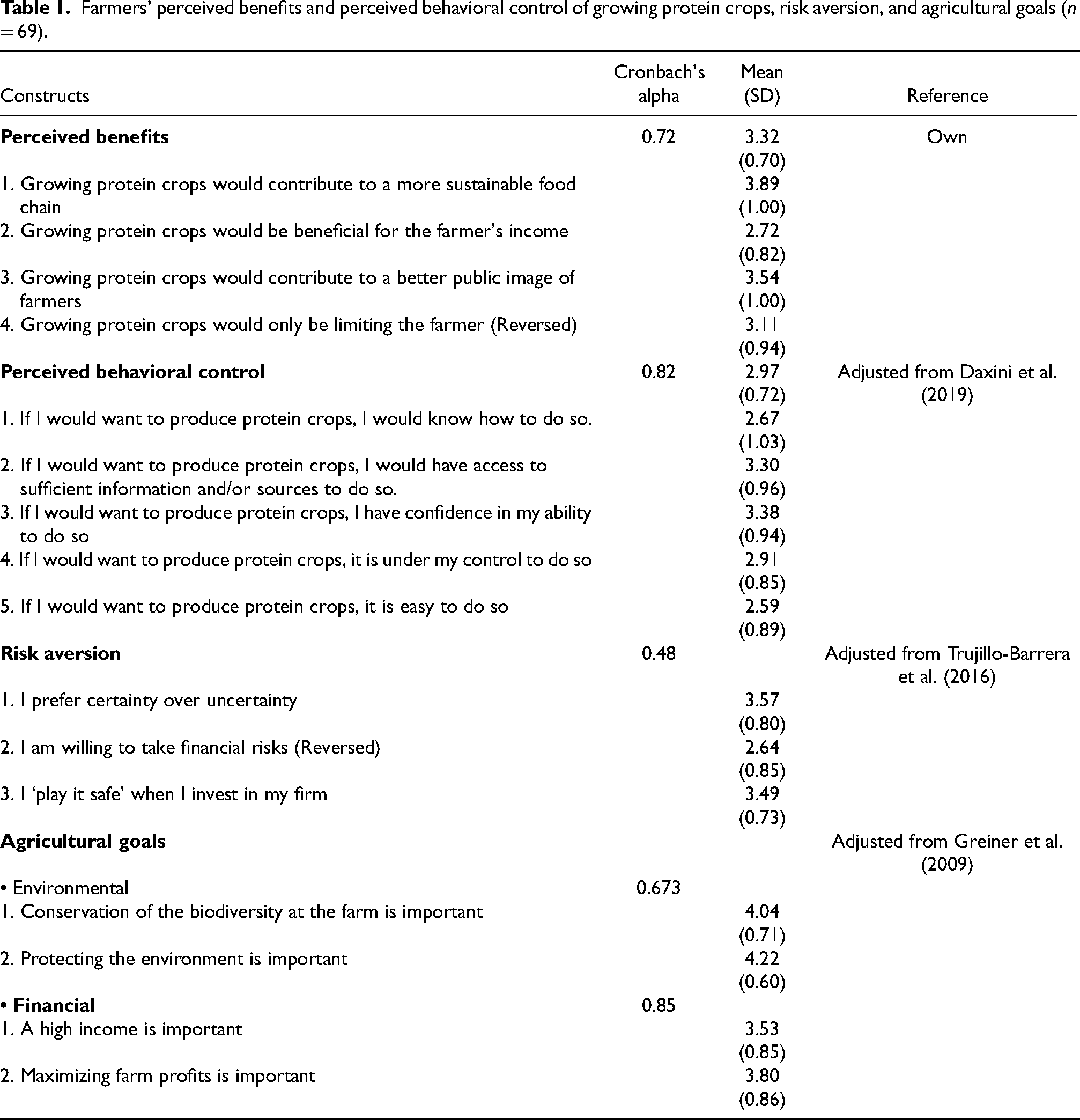
To better understand farmers’ willingness to adopt protein crops and current adoption in Belgium, a survey was developed using Qualtrics software (Qualtrics International Inc, United States). The first part of the survey consisted of farm characteristics, e.g., farming type, farm income, farm size, agricultural sector, and use of sustainable practices. Next, the survey examined which farmers already produce protein crops and if these crops are used for human food or animal feed. Their willingness to adopt protein crops in the future was explored using a 5-point scale ranging from (1) “very unlikely” to (5) “very likely.” Furthermore, farmers were asked about their interest in producing some specific legumes (lentils, chickpeas, fava beans) and a pseudo-cereal (quinoa). The next section dealt with farmers’ perceptions of protein crops. Perceived benefits statements and perceived behavioral control statements (Daxini et al., 2019) were evaluated using 5-point Likert scales. Farmers were also asked to indicate for which research field they would like to see more research (cultivation and technology, storage and processing, marketing, and other). Subsequently, general attitudes regarding risk aversion (Trujillo-Barrera et al., 2016) and agricultural goals (Greiner et al., 2009) were measured using 5-point Likert scales. All attitudinal statements and constructs are shown in Table 1. The framework employed in this survey is a derivative and refinement of the framework outlined in the systematic review study from Dessart et al. (2019) on farmers’ adoption of sustainable practices. Finally, sociodemographics (gender, age, education level, and annual turnover) were collected. Convenience sampling was used as a method to collect data. Farmers from each agricultural sector (livestock, arable farming, horticulture, etc.) were allowed to participate in the study. The online survey was distributed among farmers through email with the help of a local farmers’ organization in 2021. Moreover, to ensure representation from organic farmers, email addresses were sourced from a dedicated website for organic farming and were reached out to with the survey link. Several animal feed manufacturers were also approached, and they kindly agreed to forward the survey link to their suppliers. In total, approximately 300 emails were sent, encompassing a varied array of agricultural practitioners. To broaden the reach of the survey, information regarding the survey and the survey link were posted on an agricultural website. After deleting the surveys with too many unanswered questions (4) and surveys that were finished in less than 4 min (1), the final data set consisted of 69 respondents.
Farmers’ perceived benefits and perceived behavioral control of growing protein crops, risk aversion, and agricultural goals (n = 69).
Statistical analysis
IBM SPSS Statistics 27 was used for statistically analyzing data. Before starting with the analyses, several items were recoded (e.g., one item measuring the perceived benefits of growing protein crops was reversed so that a higher score corresponds to higher perceived benefits). Exploratory factor analysis (EFA) was used to identify underlying factors for the perceived benefits statements. To ensure the correlations between items in EFA, the KMO measure should be >0.5 and Bartlett's Test of Sphericity should be significant (<0.05). The Principal Component Analysis method was used. Items with communalities <0.3 were deleted and the EFA was repeated without them. Factors with an Eigenvalue larger than 1 were retained (Kaiser criterion). Finally, Cronbach's alpha was calculated to check for internal consistency of the factors. Only for the construct risk aversion a low Cronbach's alpha was found (0.48). However, this could be increased to 0.57 by deleting the third item, which can be considered acceptable when taking into account the low number of items (van Griethuijsen et al., 2015).
Descriptive analyses were performed to profile the respondents. Univariate analyses were chosen to identify differences in variables between groups. Independent samples t-test or Mann–Whitney U test, depending on the distribution of data, was performed to check for significant differences in, respectively, mean or mean ranks between adopters of protein crops (for food or feed) and non-adopters. Multiple regression analysis can be used to explain the relationship between independent variables and a dependent variable and to identify the importance of each independent variable (Hair et al., 2014). Hence, to identify key variables influencing the intention to adopt protein crops for food, a multiple linear regression was run. To evaluate the willingness to adopt protein crops for food, respondents who already produce these types of crops had to be removed from the dataset, resulting in a dataset of around 60 farmers. The effect of farmers’ crop-specific attitudes and general attitudes on the intention to adopt protein crops for human consumption was evaluated (Figure 1). The crop-specific attitudes include the variables of perceived behavioral control and perceived benefits, while the general farmer attitudes include risk aversion, environmental farming goals, and financial farming goals. The Kolmogorov–Smirnov test and Shapiro–Wilk test were used to check for normality of the standardized residuals. Both tests were not significant, meaning that the data is normally distributed. Furthermore, the independence of residuals was checked by using the Durbin–Watson test. The Durbin–Watson statistic was close to 2, therefore, no correlation between residuals could be observed. Multicollinearity between the different independent variables was assessed by looking at correlation coefficients, which have to be lower than 0.7, and by checking the variance inflation factor, which has to be lower than 10 (Hair et al., 2013). No problems with multicollinearity were identified. Finally, a second multiple linear regression analysis was run to identify which sociodemographics and farm characteristics have an influence on the intention to adopt protein crops for food. Therefore, the variables education level, age, production type, and farm size were used as independent variables. Before running the analysis, the same assumptions as for the first regression were checked. No assumptions were violated. The decision to run a separate regression analysis was made due to the limited size of the dataset.

Model used to examine farmers’ intentions to adopt protein crops.
Qualitative study
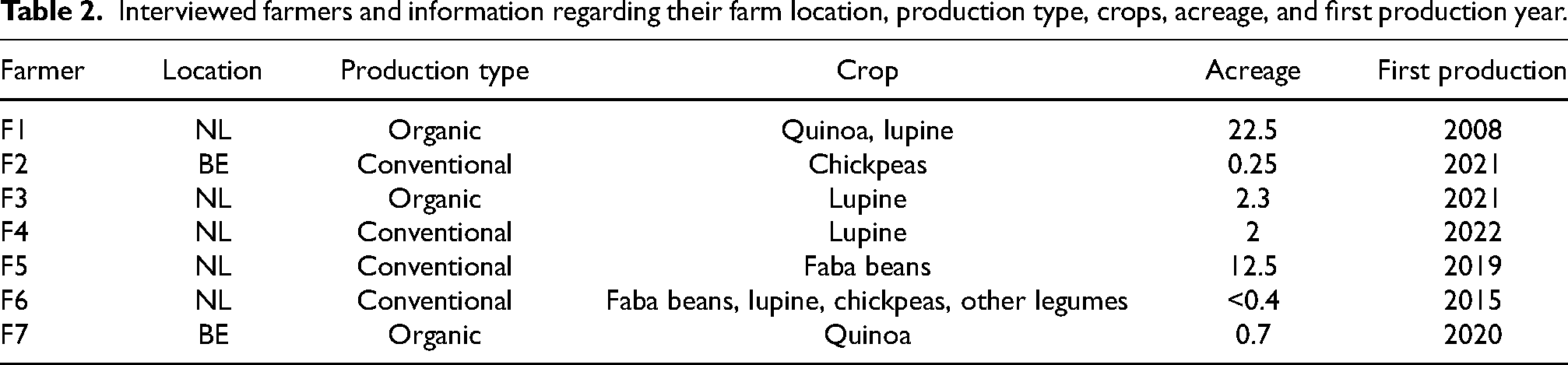
A more in-depth understanding of farmers’ incentives to start producing protein crops could be achieved by conducting semistructured interviews with open-ended and, if applicable, probing questions. The structure of the interview was based on the survey structure from the quantitative study. Online interviews with seven Dutch or Belgian farmers who are currently producing protein crops were conducted all by one researcher in 2022 through Microsoft Teams. Contact information of protein crop farmers was found online, e.g., on the website of an agricultural magazine, on the website of a producer's organization for protein crop producers in the Netherlands, and around 30 emails were sent. Moreover, snowball sampling was used. Seven farmers participated in the study. After seven interviews saturation was reached. Furthermore, the number of farmers who produce protein crops for food and were willing to get interviewed was limited due to the low cultivation levels in Belgium and the Netherlands, resulting in the decision to work with seven farmers. The goal of these interviews is to get a deeper understanding of the constructs used in the quantitative study, to identify factors that were potentially missing from the survey and to further explain farmers’ decisions to grow protein crops. Each interview had a duration of around 30 minutes. Information about the different participants can be found in Table 2. Videos from the interviews were transcribed and analyzed through thematic coding using NVivo Release 1.7. A combination of concept-driven and data-driven coding was used (Gibbs, 2007). A list of codes based on the constructs used in the quantitative analysis and supplemented with novel constructs was created in NVivo. The development of codes and coding was performed by the lead researcher; therefore, checking Intercoder reliability was unnecessary (Meixner et al., 2022). However, when uncertainty arose, additional consultation with fellow researchers was undertaken. Coding was used to report the results from the interviews in a structured way.
Interviewed farmers and information regarding their farm location, production type, crops, acreage, and first production year.
Results
Sociodemographics and farm characteristics
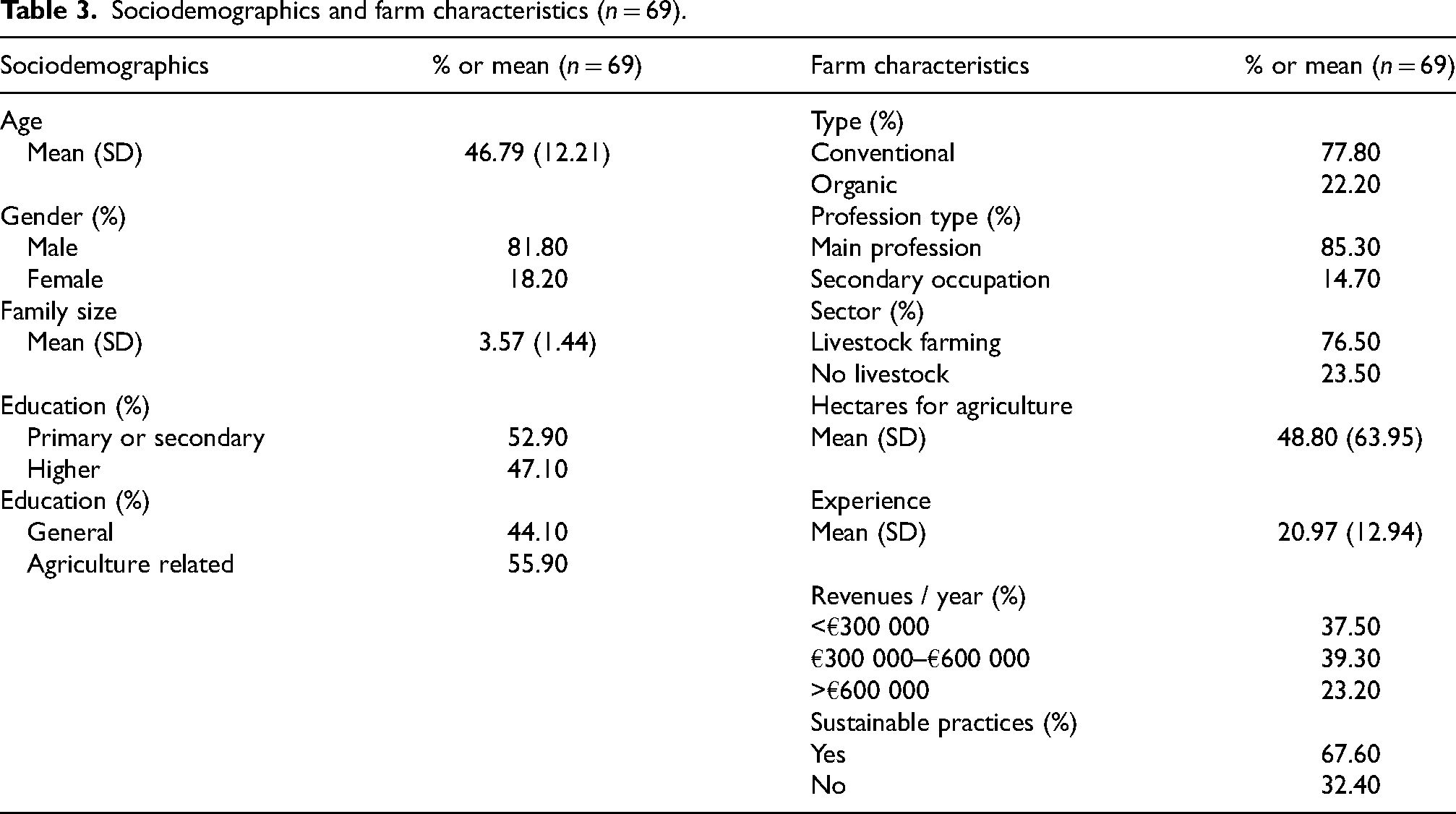
Sociodemographics and farm characteristics of the sample are shown in Table 3. The average age of the farmers was around 47 years. More males than females participated in the study, which could be expected since more males work in the agricultural sector. The average family size counts three to four people. The distribution of farmers between primary or secondary education and higher education is more or less balanced. This is also the case for general and agriculture-specific education. Most farmers practice conventional farming in comparison to organic farming, which is in line with the expectation considering the higher number of conventional farms. Agricultural work is most often the main profession. Only a small amount of farmers practice agriculture as a secondary occupation with yearly revenues of less than €25,000. A distinction was made between livestock farmers, potentially next to other activities, and farmers who do not hold livestock at all. Most of the respondents are livestock farmers, often combined with other agricultural activities (production of crops). The average area used for crop production is 49 hectares but varies a lot between farmers. The average farmer has an experience of 20 years. Yearly revenues are roughly evenly distributed among three categories (<€300,000, €300,000–€600,000, >€600,000). Finally, around 68% of the farmers claim that they already apply sustainable practices on their farm, while 32% does not. Precision agriculture techniques (39%), the use of alternatives for chemicals (e.g., herbicides) (33%), the production of innovative crops (25%), the production of nitrogen fixating crops (29%), and other sustainable practices (16%) are applied by the respondents.
Sociodemographics and farm characteristics (n = 69).
Adoption and willingness to adopt protein crops
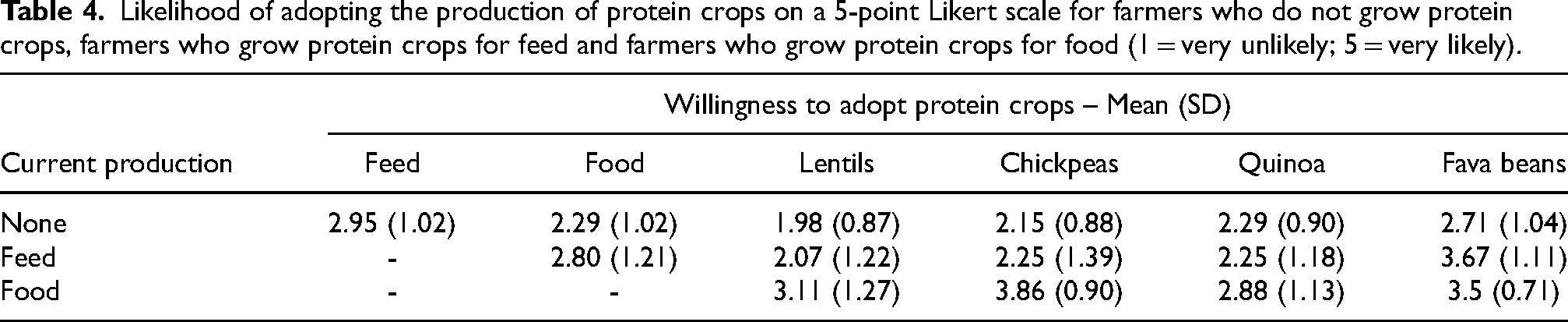
Sixty-two percent of the farmers are not yet producing protein crops, while 38% are. Of the protein crop farmers, the majority (17 out of 26 farmers) are producing protein crops for feed. Crops produced for animal feed are clover (9 farmers), alfalfa (4), lupine (1), soy (1), and other legumes like field peas (7). Fava beans (7), chickpeas (2), kidney beans (2), soy (1), and other types of beans and legumes (2) are produced for human food. Table 4 shows farmers’ willingness to adopt different types of protein crops. In general, farmers who do not produce protein crops, are less likely to adopt protein crops for food, compared to protein crops for animal feed. Farmers who are already growing protein crops for feed are more neutral toward protein crops for food. When measuring the likelihood to adopt specific crops, farmers seem to be only interested in producing fava beans. Respondents who are growing protein crops for food are overall more interested in the specific crops.
Likelihood of adopting the production of protein crops on a 5-point Likert scale for farmers who do not grow protein crops, farmers who grow protein crops for feed and farmers who grow protein crops for food (1 = very unlikely; 5 = very likely).
Farmers’ perceptions regarding protein crops, the need for more research and general attitudes toward risks and farming goals
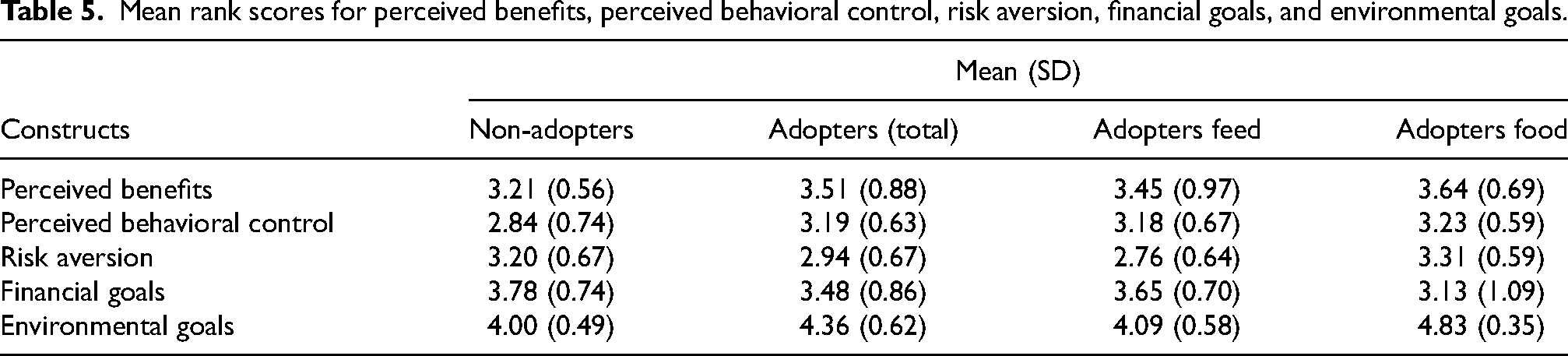
The mean rank score for every construct is given in Table 5. Adopters of protein crops (total) score significantly higher for the constructs’ perceived benefits (p = 0.036) and environmental goals (p = 0.006). The score for risk aversion is generally higher for farmers who do not produce protein crops than for farmers who produce protein crops for feed (p = 0.027). Furthermore, adopters of protein crops for food score higher for environmental goals in comparison to adopters for feed (p = 0.002). Finally, adopters of protein crops for food score higher for environmental goals (p < 0.001) and perceived benefits (p = 0.029) than non-adopters.
Mean rank scores for perceived benefits, perceived behavioral control, risk aversion, financial goals, and environmental goals.
Surprisingly, almost all respondents indicated that there is a need for more research in at least one of the following domains: (1) the cultivation of protein crops (88%), (2) storage and processing (64%), and (3) marketing (64%).
Determinants of the willingness to adopt protein crops for food
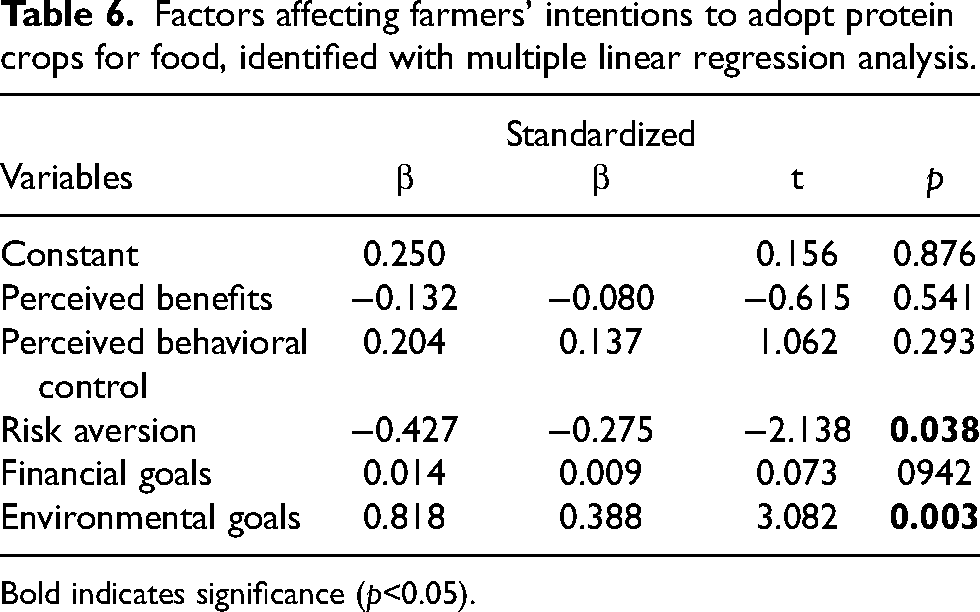
Multiple linear regression is conducted to identify which factors significantly influence farmers’ willingness to adopt protein crops for human food. The effect of the crop-specific and general attitudes is tested. Results are shown in Table 6. The model has an R2 of 0241 (adjusted R2 = 0.164), indicating that 24% of the variance in intention to adopt protein crops for food is explained by these variables. Thereby, risk aversion and environmental goals are identified as significant. Farmers who are less risk averse and score higher for environmental goals are more likely to adopt protein crops. The factor environmental goals have the highest impact on the intention.
Factors affecting farmers’ intentions to adopt protein crops for food, identified with multiple linear regression analysis.
Bold indicates significance (p<0.05).
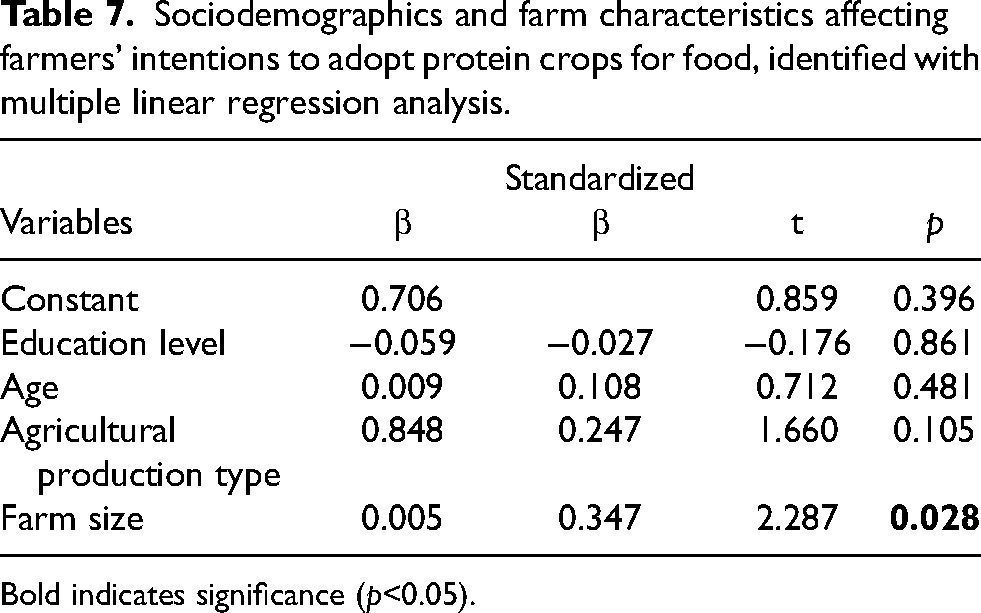
A second multiple linear regression is conducted to identify which sociodemographics and farm characteristics significantly influence farmers’ intentions to adopt protein crops for food. The farmer's education level, age, type of agricultural production, and size of the farm are used as independent variables (Table 7). The model has an R2 of 0229 (adjusted R2 = 0.151). Only the farm size (in hectares) is identified as significant. Farmers with a larger farm have a higher intention to adopt protein crops for food.
Sociodemographics and farm characteristics affecting farmers’ intentions to adopt protein crops for food, identified with multiple linear regression analysis.
Bold indicates significance (p<0.05).
An in-depth understanding of the factors influencing the willingness to adopt protein crops
All interviewed farmers produce protein crops. However, these crops are a relatively new addition to their existing produce. In general, these farmers seem to be likely to continue growing these crops in the next years. According to them, the major benefits of growing protein crops are related to soil health and biodiversity due to more crop rotation and the nitrogen fixating characteristics of legumes. They also mention that this can result in higher yields for the subsequent crop. One farmer (F1) also indicated that growing protein crops leads to more self-sufficiency and less import of foreign protein, and generates health benefits for humans related to consuming these protein crops. Farmers mentioned that many protein crops can be considered as difficult and time-intensive to produce, which is viewed as one of the major issues. Furthermore, protein crops are perceived as very sensitive to abiotic and biotic stresses, leading to unstable yields, by the interviewed farmers. Three farmers (F1-F3-F5) also indicated that the market for these types of crops is still limited. The majority of consumers are still not willing to pay a premium for locally produced protein (“Consumers must be willing to pay an honest price that corresponds to West-European wages and land prices. Our lupine will always be more expensive than lupine coming from Latin-America or Australia.”, F6; F1; F5). In addition, the interviewed farmers perceive some crops, for example, lupine, as relatively unknown to consumers, resulting in limited demand for food products containing these ingredients (“Unknown is unloved”, F3). Besides the consumers’ demand, there is also a limited demand from food processors for some of the protein crops due to the higher prices for locally produced crops and difficulties related to processing some of the crops, for example, lupine (F3, F5, F6). There is a consensus among protein crop farmers that the existing knowledge on cultivation is insufficient and not yet widespread. Multiple interviewed farmers already engage in collaborative knowledge sharing to enhance production and find it valuable. Overall, the interviewed farmers believe that increased awareness of protein crop production techniques and associated benefits could lead to a higher adoption rate. These farmers also pointed out that alternatives to traditional crops should be highlighted more often in agricultural education.
All interviewed farmers perceive the cultivation of protein crops as riskier compared to traditional crops. This is mainly due to the aforementioned limited knowledge on how to grow these crops, as well as their sensitivity to biotic and abiotic stresses. These seven protein crop farmers view themselves as pioneers and are open to experimenting with alternative crops (e.g., F3, “I am willing to become a bit of a pioneer. For me it is interesting to put a bit of extra effort into it and experiment, which is of course risky”). However, most of the farmers only produce protein crops on a small scale in order to minimize the risks. Only two farmers (F1 and F5) grow protein crops on more than 10 ha. Some participants think that farmers who stick to the traditional way of farming would not be likely to start growing protein crops (F1, F4, F7). In contrast, another farmer (F6) thinks that farmers are generally willing to change their farming practices but only if the financial rewards are sufficient. Personality traits such as openness and curiosity (F1, F4) were also identified as important factors that could further drive the adoption of protein crops. A Belgian farmer (F2) also mentioned that many farmers are not willing to grow protein crops due to the absence or limited amount of recognized plant protection chemicals.
All interviewed farmers expressed their concern about the environment and emphasized the importance of sustainable practices in their business management (e.g., F6, “I am happy when my soil stays fertile and if we can still grow crops for human consumption on this soil in 10, 100 and 1000 years”). Growing protein crops is mentioned as a favorable means of complementing their existing sustainable practices. Opinions regarding social goals are more mixed. While some farmers expressed a willingness to receive feedback from their surroundings and are open to learning from others, they also stated that they remain committed to their own objectives (F6, F7). However, other farmers perceive social goals as crucial, especially the opinion of society (F1; F4, “You are producing for the market and the society is the market so it is important to see in which direction the society is going”; F5). Farmer 2 mentioned that the decision to adopt protein crops was not influenced by financial objectives due to the current unpredictability of profits. Nevertheless, all participants agree that an increase in the profitability of protein crops would lead to higher adoption rates among farmers since the majority of farmers perceive the financial aspect as the most important one.
Finally, all interviewed farmers agree that policies can play a vital role in the shift toward more locally produced plant protein. However, they expressed that the government should not limit its focus to farmers alone, but should also promote changes in consumer behavior (F1, F4, F5). For instance by making animal-based products more expensive compared to plant-based alternatives (“If you would make meat more expensive, then you are automatically stimulating the production of legumes and other protein-rich products”, F5). Some farmers indicated the potential positive effect of subsidies on the cultivation of protein crops. While Belgian protein crop producers currently receive subsidies, Dutch farmers do not. Besides subsidies, the farmers propose that providing support to farmers in the form of knowledge dissemination and investing in further research on cultivation techniques, plant protection chemicals, and improved varieties would further increase adoption rates.
Discussion
Farmers’ attitudes toward protein crops and determinants of their willingness to adopt
The study found that the majority of respondents from the survey sample do not engage in the production of protein crops. Of those who do, the primary purpose of production is for animal feed, with a minority producing for human consumption. However, more than 10% of the respondents are growing protein crops for food, which is high compared to the low number of farmers growing protein crops in Flanders. A potential explanation for this overrepresentation of protein crop farmers could be the higher interest of these farmers to participate in protein crop related research. The limited number of protein crop farmers in Flanders was also confirmed when searching for participants to conduct the interviews. The intention of farmers to start growing protein crops is negative to neutral and can vary on whether the crop is intended for food or feed. This is similar to the findings of Lemken et al. (2017), who discovered that the majority of German farmers are not willing to try or lack the knowledge to try crop mixtures of legumes and cereals, while only a small amount of farmers were planning to try or already trying these crop mixtures. It is important to note that mixed cropping practices differ a lot from growing legumes as a stand-alone crop, with specific barriers and incentives, limiting the comparability of both studies. Despite the limited interest of farmers to locally grow protein crops, there is a huge market potential due to the increasing dietary shift toward more plant-based foods in Europe (Aschemann-Witzel et al., 2021). Furthermore, consumers also prefer locally produced food products and are sometimes even willing to pay a price premium for these products (Thøgersen, 2023; Yeh & Hirsch, 2023).
The quantitative study discovered that protein crop farmers perceive the benefits related to growing protein crops to be higher and value environmental farming goals as higher, compared to farmers who do not grow these types of crops. This is confirmed by the opinions of protein crop farmers during the interviews. Perceived benefits, such as replacing imported protein and positive effects on the yield of the subsequent crop, were previously identified as the main drivers to start growing protein crops (Carof et al., 2019). Our study also revealed that non-protein crop farmers were more risk averse in their farming practices compared to protein crop farmers for feed. During the interviews, protein crop farmers acknowledged the higher risks associated with growing protein crops but expressed an openness to experiment with these crops, indicating a lower degree of risk aversion compared to non-protein crop farmers. However, it was found that most farmers who grew protein crops did so on a small scale, which minimized their exposure to risks and also showed the negative effects of the generally risk-averse nature of farmers. This observation is consistent with previous studies by Suvanto et al. (2020) and Ghadim et al. (2005), which demonstrated that farmers with a higher degree of risk aversion were less likely to cultivate protein crops.
Only two attitudinal factors, environmental goals and risk aversion, were identified to affect the intention to adopt protein crops for food in the first regression. The importance of these two factors was confirmed during the farmer interviews. Previous research on the determinants to grow cover crops has also identified a significant positive effect of environmental goals (Schoolman and Arbuckle, 2022). To increase the production of protein crops for food in the future, policy-makers could invest in more farmer education and knowledge dissemination regarding environmentally sustainable practices and the environmental benefits related to growing protein crops. Additionally, a prior study confirmed a negative effect of risk aversion on the adoption of protein crops (Suvanto et al., 2020). The other factors, financial goals, perceived benefits, and perceived behavioral control were insignificant, even though these factors were identified as important during the interviews. Unfortunately, no previous research has looked into the effect of these factors on farmers’ intentions to adopt protein crops. During the interviews, farmers mentioned that they were not influenced by financial farming goals in their decision, although they are convinced that an increase in profitability of these crops would lead to overall higher adoption rates. A review study found mixed results for the lack of profitability as a barrier to adopting crop diversification, indicating that the effect of financial goals is not always significant in farmers’ decision-making (Brannan et al., 2023), supporting the results of the survey. However, they identified profitability more often as an enabler of adoption (Brannan et al., 2023), which underpins the results from the interviews. According to Magrini et al. (2016), farmers underestimate the profitability of legumes as they do not consider the benefits for subsequent crops. When the benefits of grain legumes are considered on the crop rotation level, rotations including grain legumes can be competitive with other rotations due to the lower fertilizer needs and thus reduced fertilizer costs, and the increased yields of the subsequent crop (Preissel et al., 2015). Perceived behavioral control has been identified both as significant and insignificant for the intention to adopt farm innovations in literature (Borges et al., 2019). Furthermore, perceived benefits have been pointed out as one of the most important drivers for farmers to adopt sustainable practices (Piñeiro et al., 2020). Previous research has identified the lack of knowledge and information regarding legume cultivation as one of the main reasons for farmers not to grow legumes (Zimmer et al., 2015). Farmers interviewed during the qualitative study also agreed that there needs to be more awareness and knowledge regarding protein crop cultivation and its associated benefits. Since knowledge has been identified as one of the main drivers of perceived behavioral control (Borges et al., 2014), this contradicts the findings from the survey. During the second regression analysis, only one farm characteristic was identified as positively significant, namely farm size. According to the review from Serebrennikov et al. (2020), the significance of farm size differed between studies. Esquivel et al. (2021) concluded that small-scale farmers are often limited by resource constraints (e.g., land and capital) to adopt more on-farm diversification. This could also potentially explain the positive effect of farm size on the intention to adopt protein crops that was found in this study. To increase protein crop adoption for human consumption, policy-makers could stimulate the development of farmer cooperatives, increase subsidies for protein crop production, etc., in order to eliminate resource constraints.
During the interviews other issues, such as the yield instability due to the susceptibility of these crops to biotic and abiotic stresses, and the limited demand from both consumers and industry, were also emphasized. This is also reflected in the fact that the surveyed farmers indicated the need for more research on cultivation and marketing. Previous research also identified the lack of suitable legume varieties and lack of market opportunities, resulting in the lack of economy of scale benefits, as major barriers to legume production (Brannan et al., 2023; Ferreira et al., 2021). The discrepancy between the growing market of plant based foods and the lack of market opportunities for certain protein crops could potentially be explained by the shortage of research for these crops, while on the other hand the shortage of research can be explained by the lack of market opportunities, resulting in a vicious circle (European Commission, Directorate-General for Agriculture and Rural Development, 2019). However, these challenges could be addressed by implementing more breeding programs and promoting the demand and consumption of legumes (Ferreira et al., 2021).
Limitations and opportunities for future research
Due to the challenges related to reaching farmers, relatively small quantitative and qualitative datasets were used for analysis. Nevertheless, this research gives a first insight into the factors affecting the (intended) adoption of protein crops and serves as an important foundation for future research. Data collection might be subjected to self-selection bias, which can be considered as an additional limitation to this research. While the majority of the survey's respondents did not currently cultivate protein crops, it is possible that farmers with a greater interest in protein crop production were more likely to participate. Additionally, the regression models used in this study only account for a small proportion of the explained variance in farmers’ intended adoption of protein crops, suggesting that using or adding other models and constructs may be necessary for a more comprehensive analysis. The independent variables from both regression analyses could be merged into one analysis to increase the explained variance. Unfortunately, this was not possible in this study due to the limited size of the dataset. The results from the qualitative interviews can potentially be used for future quantitative research on the topic. To gain a broader understanding of the perceptions of protein crop production in Europe, future studies could collect data from multiple countries. Furthermore, it would be interesting to assess the effect of training programs and/or knowledge dissemination regarding cultivation practices and benefits of the intention to adopt protein crops. Despite its limitations, this research provides valuable insights since this is one of the first studies looking into farmers’ perceptions regarding protein crop production in Europe, and could be used by policymakers to encourage the development of protein crop production in the future.
Conclusion
The present study aimed to assess the adoption and intention to adopt protein crops among farmers, as well as to identify factors influencing the intention to adopt protein crops for human consumption. Given their crucial role in the shift toward more locally produced plant-based protein, understanding farmers’ willingness to grow protein crops is essential. To this end, the study focused on the production of protein crops in Flanders, a region with relatively low protein crop production levels. The Flemish data was complemented by a limited number of interviews with Flemish and Dutch protein crop farmers. The results indicated that most surveyed farmers do not yet produce protein crops and have a negative to neutral intention to adopt them. The study also showed that general factors, risk aversion and environmental goals, have a higher impact on the intention to adopt protein crops for food, compared to crop-specific factors. Farmers who are more risk averse have a lower intention to adopt protein crops, while those who score higher for environmental farming goals have a higher intention. Additionally, the study showed that farmers with a larger farm are more likely to adopt protein crops for food. The most important benefits perceived by the interviewed farmers are related to soil health, biodiversity, and the potential positive effects on the yield of subsequent crops. However, farmers perceive protein crop production as challenging and time-consuming, with unstable yields due to abiotic and biotic stresses. The market for these crops is still limited due to low consumer demand and the industry's preference for cheaper protein sources. Farmers believe that increased awareness of protein crop production techniques and associated benefits could lead to a higher adoption rate at the farm level. Additionally, policy changes, including subsidies and knowledge dissemination, could encourage the shift toward more locally produced plant protein. Interviewed farmers also emphasized the importance of targeting industry and consumers to increase the demand for locally grown plant protein. Policy-makers should stimulate research regarding protein crop varieties and cultivation techniques, which in turn will convince more farmers to produce these crops. Currently, the amount of research regarding the adoption of protein crops in Europe is rather limited, underlining the importance of the present study and future research.
Footnotes
Acknowledgements
This project has received funding from the European Union's Horizon 2020 research and innovation program under grant agreement No 862957.
Declaration of conflicting interests
The author(s) declared no potential conflicts of interest with respect to the research, authorship, and/or publication of this article.
Funding
The author(s) disclosed receipt of the following financial support for the research, authorship, and/or publication of this article: This work was supported by the Horizon 2020 Framework Programme, (grant number 862957).
