



Abstract
Scientific collaboration networks connect researchers across institutions and academic disciplines. Agricultural research involves multiple stakeholders and academic disciplines to address increasingly complex and diverse research agendas. However, the dynamics of collaboration and the patterns of interaction in the agricultural sciences have been little investigated. Uruguay has a rich tradition in agricultural research, but little is known about the ways in which institutional and interdisciplinary collaboration occur and have evolved recently. This article uses relational data from projects documented in researchers’ vitas (CVs) to examine patterns of collaboration in agricultural research in Uruguay during the period 2000–2017. Collaboration networks were explored with social network analysis (SNA) resulting in networks involving varied institutions and academic disciplines. An inter-institutional network with a center and periphery structure is revealed with long-standing science and technology centers as the fundamental nodes. Interdisciplinary collaborations show diversification over time with more academic fields involved in research projects in the agricultural sciences. Joint research between agricultural sciences and other academic fields to address complex current phenomena could benefit from increasing connections with multiple fields in the environmental, social, and health sciences. The study shows the usefulness of SNA and research project data to improve the understanding of collaboration patterns in agricultural research.
Introduction
Research collaboration is an extended practice in most fields of science. Over time, collaboration among scientists has increased particularly at the international level (Schneegans et al., 2021). Among the factors contributing to this trend the most evident are the rise of science costs and the need to share expensive equipment, increased incentives for interdisciplinary work, and science commitment to address complex phenomena for which combined skills and research intersections are required. These factors are stimulated by specific science, technology and innovation (STI) policies as well as multiple ways of worldwide exchange in the form of research networks and platforms eased by digital technologies (Montoya et al., 2018). Collaboration has been mostly studied on the basis of coauthored research articles indexed in bibliographic databases. Instead, this article uses research projects to explore collaboration patterns analyzing data from researchers’ vitas (CVs).
Scientific collaboration networks bring together researchers who connect to each other through ties developed on the basis of concrete research purposes. Networks often cross institutional boundaries (Kyvik and Reymert, 2017) and increasingly bring together experts from distant science and technology fields to address topics related to sustainable development goals (Schneegans et al., 2021). Collaboration involves relationships for knowledge creation (Bozeman et al., 2013) regardless of the end product (articles, devices, patents) which may vary according to different academic fields and work styles (Halfon & Sovacool, 2023). Here we are concerned with research collaboration in agricultural sciences.
Agricultural research involves a variety of scientific disciplines aimed at improving agriculture's methods and products, controlling plant and animal diseases, promoting a sustainable use of environmental resources, providing quality foods and livelihoods for millions of people. It addresses global missions in line with sustainability as well as national and regional practical goals focused on contextualized problems. As systemic conceptions of agriculture prevail and agriculture's missions diversify overtime, connections and bridges among scientific fields are demanded. This implies not only life sciences working together, but also collaborating and developing common agendas with social and health-related scientific disciplines. The multifaceted nature of agricultural research and innovation also requires multistakeholder initiatives and transdisciplinary knowledge production to tackle complex topics as climate change effects, food security, or sustainability transitions.
Agricultural research is a central area of scientific inquiry in Uruguay with institutions devoted to agricultural sciences founded more than a century ago. Agriculture and processing of agricultural products provide significant amounts of resources with over 90% of Uruguay's land used for livestock and crop production. Agriculture contributes 7% of the GDP and considering associated processing industries the contribution reaches an average of 15% between 2015 and 2019 (Uruguay XXI, 2022). Agriculture accounts for more than 70% of exports (MGAP-DIEA, 2022). Based on two major institutional settings, the National Agricultural Research Center (INIA) and the University of the Republic (Udelar), agricultural research has been a major component of the agricultural innovation system. With a population of 3.4 million people, Uruguay's investment in agricultural R&D averages 1.4% of AgGDP involving over 380 full-time equivalent researchers (Stads et al., 2016) mainly concentrated in public institutions. However, there is scarce knowledge about the dynamics of knowledge exchange and collaborative practices in agricultural sciences. This article utilizes social network analysis (SNA) to examine the collaboration patterns of agricultural research in Uruguay. In so doing, it examines the collaborative networks emerging from research projects conducted from 2000 to 2017, a period in which Uruguayan science and technology were boosted by policies. By using projects instead of publications, this exploration attempts to overcome a common coverage bias that arises when using journals registered in bibliographic databases in which the output of Latin American agricultural sciences is underrepresented (Guerrero-Casado, 2017; Pranckutė, 2021).
Projects are the actual locus in which relational research activities take place for collaborative endeavors. Further, projects can enable the development of connections among researchers and other actors from agricultural sectors, policy and civil society in order to collectively address topics of a common interest. In line with this idea, the following question guided this study. What are the characteristics of interinstitutional and disciplinary networks that are revealed from collaborations in agricultural research projects?
Collaboration networks and agricultural research
Scientific knowledge production is intrinsically collaborative. Collaboration occurs between individual scientists, groups, institutions, or even sectors of activity with coauthorship comprising only a partial indicator (Katz & Martin, 1997) of a larger phenomenon. The essence of research collaboration is the merging and combination of human capital for the objective of producing knowledge (Bozeman et al., 2013). There is considerable evidence that technological possibilities encourage research collaboration now more than ever (Montoya et al., 2018) with increased attention to cross-fertilization of ideas for creatively addressing complex phenomena.
Collaboration networks are evident in many fields of sciences involving biomedical research, natural sciences, humanities, and social sciences. In fact, as the pandemic has shown science might be possible because scientific communities cooperate. In the agricultural sciences, interconnections among researchers and collaborative endeavors have been encouraged for decades by international cooperation institutions as the Inter-American Institute for Cooperation on Agriculture for instance, with a long-standing activity in Latin America, and worldwide research partnerships such as centers associated with the Consultative Group of International Agricultural Research to address major societal challenges and develop creative solutions to applied problems. Agriculture research for development programs has fostered articulations among multiple partners in research with development practitioners and policy agents aiming at increased food security or reduced poverty (Thornton et al., 2017). Monodisciplinary research is increasingly ineffective to address complex real-world situations and agricultural knowledge production benefits from genuine interdisciplinary research and dialogues with nonacademic agents (Bianco, 2020; Ingram et al., 2020). However, there is still little knowledge accumulated on the dynamics of collaboration and the patterns of interaction among disciplines in the agricultural sciences. Some recent studies focus on current challenges such as climate change effects on agriculture claiming for cross-collaboration in multidisciplinary teams (Abraham-Dukuma et al., 2020, Asseng et al., 2019, Middendorf et al., 2020), but collaboration and exchange are not always feasible and connection gaps exist, for example, between climate and pest management scientists (Young et al., 2019) threatening the understanding of pest responses to changing weather patterns. Further, sustainability transformations necessarily require the articulation of knowledge from diverse disciplines (El Bilali, 2020) and adequate assessments of new approaches to agriculture including machine learning and artificial intelligence applied to crop monitoring, intelligent irrigation, soil classifications, among others (Pallathadka et al., 2023).
In view of this dynamism, the study of collaboration in agricultural research appears as a topic of current interest for both science fundamental understanding and policy implications. SNA is a versatile tool to examine the systemic organization of research actors, their connectedness, and change overtime. It has been applied to analyze a variety of topics concerned with agricultural research and technology. SNA has been mostly used to analyze agricultural technology diffusion and adoption in different contexts (Aguilar-Gallegos et al., 2015; Filippini et al., 2020; Gava et al., 2017; Mohankumar et al., 2024; Ramírez, 2013; Wang et al. 2020), weather and market information flow among farmers (Simon et al., 2021), the development of farming approaches like precision agriculture (Aleixandre-Tudó et al., 2018), or the collaboration of multistakeholder partnerships in agricultural innovation for developing countries (Hermans et al., 2017; Vishnu et al., 2020). Some other studies developed SNA to study trends in specific crops as it is the case with rice in India (Kumar et al., 2020) and China (Sun and Yuan, 2020).
We are concerned with collaboration networks that connect researchers from different institutions, disciplines, and backgrounds in order to conduct joint research in the agricultural sciences. We are also interested in exploring the interactions between researchers and nonacademic agents participating in knowledge production as collaborators or co-producers. Research projects are the fundamental units for the organization of scientific knowledge production as they serve the purpose of organizing grants, design and conceptualize inquiries, and training human resources. We wish to contribute to the understanding of collaboration networks by exploring the ways in which institutions are connected, disciplines are bridged and skills combined on the basis of research projects. We also expect to provide new evidence on the use of SNA in the Latin American context where very few studies have been found (Guerrero-Ocampo and Díaz-Puente, 2023).
Methods and data
Vitas are a significant source of information for mapping research projects. A small but growing body of studies use CVs for the analysis of social networks in various scientific areas (Author et al., 2021; Mena-Chalco et al., 2014; Tatsch et al., 2022; Tomassini et al., 2021). Some studies have used CVs as sources of information to explore different dimensions of knowledge and technology production. These investigations point out various advantages of CVs as source of information, such as its wide national coverage, relatively standardized format, provision of longitudinal data on individuals’ performance in different areas of their professional lives, and the ability to diversify analysis to capture various formats of knowledge and technology production beyond traditional indicators like articles and patents (Bozeman, Dietz and Gaughan, 2001; Cañibano and Bozeman, 2009; Lee and Bozeman, 2005). However, the use of this source also presents limitations. The information contained within CVs varies in quality and completeness, often reflecting different emphases based on individual specialization and the intended purpose of the CV. Also, the veracity of the information is subject to variability as it is self-declared and may change over time, and there is a risk of data truncation, as CVs may not always be updated with the latest information. Finally, standardizing CV’s information often requires a significant amount of time.
The data source used in this research is the CVuy, a Uruguayan version of a standardized and automated platform based on the Latin American Curriculum Vitae (CV-LAC). The CVuy platform was launched in 2008 by the National Agency for Research and Innovation (ANII) for the purpose of evaluation to enter the National System of Researchers (SNI). Currently, its use has expanded beyond SNI applications and, by 2019, it had over 12,200 registered users including graduate students applying for scholarships and applicants for R&D funds administered by ANII. Data updates are mandatory in each call; therefore, most users update their data on a regular basis. To access the CVuy database, a MySQL database is created, and a PHP script is developed to extract data corresponding to our analysis categories. The data extraction process involved collecting collaboration information by integrating project details from researchers’ CVs. Data such as project title, summary, year, funding source, team size, and members information (names, institutional affiliation, and knowledge discipline) were collected and organized into variables. Data extraction and processing occurred in several stages. First, CV retrieval in HTML format was followed by the structuring of the dataset; then consolidation and cleanup involving the integration of projects and researchers’ data, the elimination of duplicates, and definition of the timeframe. Next, disambiguation of the textual data and coding into categories, particularly for the names of the institutions, was carried out using the OpenRefine tool. Finally, for network construction, nodes represent institutions or disciplines of researchers, forming aggregates derived from individual levels, and links are established based on reciprocal collaborations observed in team research projects. To establish the network links, we assumed reciprocity in collaborations.
The time frame covered 18 years from 2000 to 2017 involving 3916 research projects. The overall period was further divided into three to analyze the evolution: 2000–2005 (929 research projects), 2006–2011 (1635 research projects), and 2012–2017 (1352 research projects). The three periods were established following significant institutional and budget changes in the STI system. The main trait of the initial period is the scarcity of STI funds available at the national level. The turn of the century was marked by a profound economic and financial crisis that caused significant budget constraints in national funds allocated to science and technology (Baptista, 2016). Nonetheless, agricultural research was able to survive along the period aided by an IDB loan granted to the Ministry of Agriculture (INIA, 2007). In 2005, a new national government marks the initiation of a second period with the implementation of specific initiatives: a reorganization of the STI promotion system with the creation of the National Agency for Research and Innovation in charge of executing STI policies, the implementation of the first Uruguayan strategic plan for science, technology and innovation (GMI, 2010) and significant increase in the public budget for education and STI activities (DICYT-MEC 2012). Finally, a third period beginning in 2011 is characterized by successive decreases in public spending on STI in relation to GDP during 2012 and 2013 (ANII, 2015), particularly affecting agricultural science and technology from 2015 (Ricyt, 2023).
Collaboration networks were explored with SNA examining networks consisting of nodes (points) connected by edges (lines). According to Newman (2006), many systems of scientific interest can be represented as networks. The study of networks has experienced significant growth during the past two decades, driven by the availability of large-scale relational data, enabling the replication of real networks (Fonseca, 2015). This is the first analysis utilizing data from CVuy database to plot networks in agricultural research at the national level. In our networks, the nodes are either institutions or research disciplines based on the fields of science and technology classification (OCDE, 2007).
Network analysis metrics can be broadly categorized into those assessing network structure (topology) and those examining individual components within the network. Structural metrics include node and edge counts, average degree measuring the average number of connections per node, density indicating network completeness, and the giant component identifying the largest connected subnetwork (Scott, 2000). For individual component analysis, metrics like degree centrality (number of direct connections) and betweenness centrality (frequency of being on the shortest path between nodes) are used. Both metrics are used to understand the roles that nodes play in collaborations. For instance, a high degree centrality often indicates a position of power in relation to other nodes in the network, while high betweenness centrality is interpreted as having an influential role in communication flows within the network (Beltrán et al., 2015).
Results
Interinstitutional collaboration
Research team projects’ data registered in CVs show a network on the basis of inter-institutional collaborations during the overall period (2000–2017). This network is composed of researchers in 289 institutions (nodes) that report 880 collaborations (links) involving research projects. The network displays a single giant component (the largest subset of connected nodes) accounting for 84% of the global network. Figure 1(a) shows the extended network of collaborations, where a central core of collaborating institutions and a periphery can be observed. Figure 1(b) displays a subset of this network involving institutions with a higher intensity of collaborations. Further, both figures differentiate the type of institutions participating in the collaborations. The network is mostly dominated by collaborations between national and foreign science, technology, and innovation (STI) institutions (mainly universities and research centers) with scattered governmental institutions, social organizations, and business firms. The Ministry of Agriculture (MGAP) is the only nonacademic node with some presence in the network.
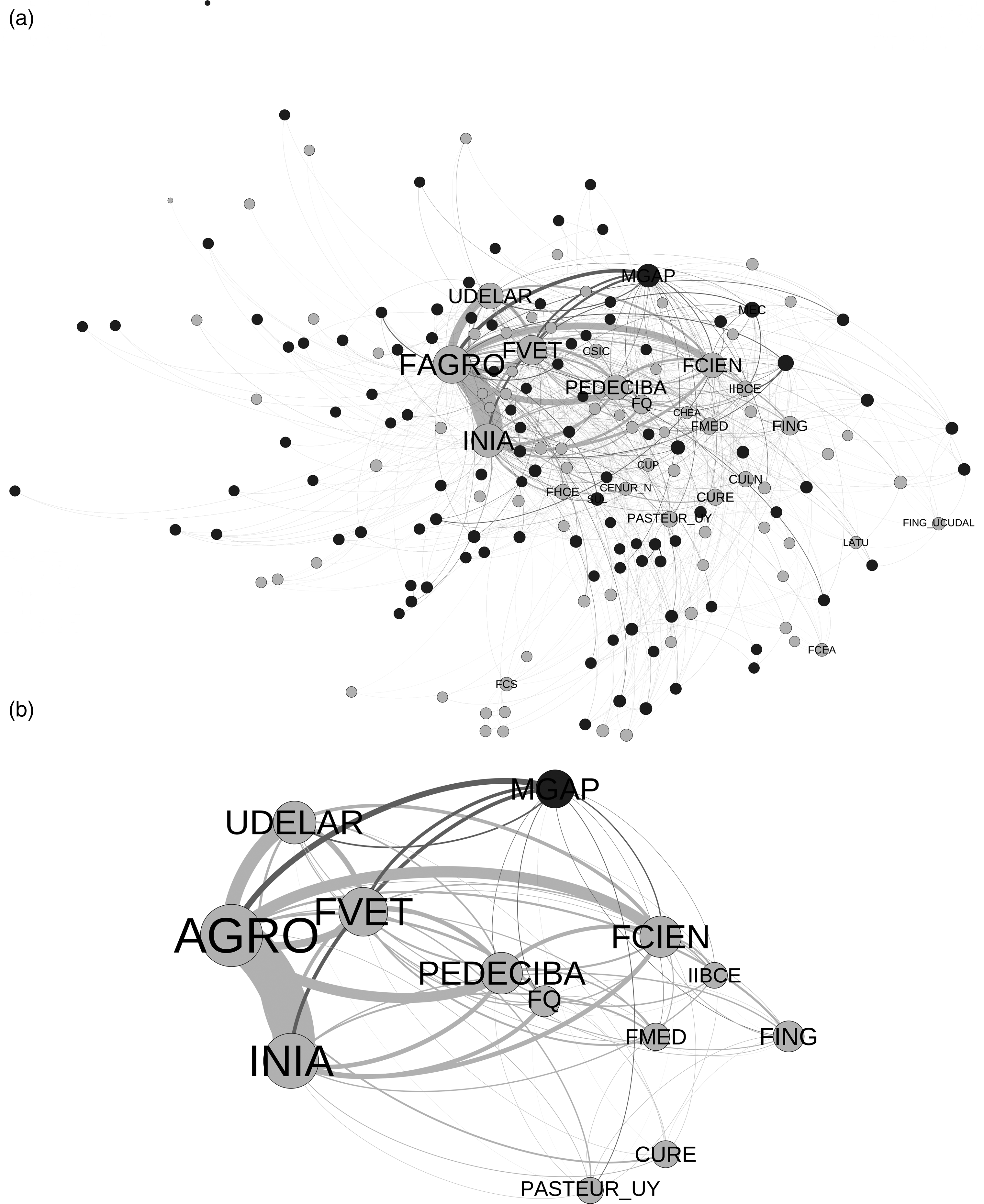
(a) Network of interinstitutional collaborations in research projects (2000–2017) degree greater than 2. (b) Network of interinstitutional collaborations in research projects (2000–2017) degree greater than 25.
Table 1 shows the progression of the network in three-time subperiods. The number of nodes and edges increase substantially from the first to the second period and show a smaller growth at the third period in line with the general traits of each subperiod. The first period is characterized by a reduced STI promotion system with a scarce budget at the national level. The second period is marked by the consolidation of national STI policies with the creation of new institutions such as National Agency for Research and Innovation and the National System of Researchers at and the creation of Masters and Doctorate programs in agricultural sciences at Udelar. Public spending on STI activities increased fivefold in this period including research grants and scholarship fundings (DICYT-MEC, 2012). During the third period, the budget growth declines and R&D spending in agricultural sciences decreases beginning in 2015 (Ricyt, 2023).
Main metrics of the interinstitutional network.

Incidence and power measures confirm the core–periphery structure of the collaboration network. Indicators in Table 2 show the strength and connectedness of main STI institutions. The degree centrality indicates the number of other institutions or organizations a node is connected with. This serves as a measure of power showing the influence of a node generating collaborations or direct exchanges with others. The College of Agriculture (FAGRO) at the national public university (Udelar) and INIA centralize connections with over 100 other entities in the network, throughout the overall period. The betweenness centrality indicates when a node is in the shortest path of other nodes. It is a measure of indirect power, influence or mediation often used to find out where the bridges in the network are created. In this sense, FAGRO appears as a crucial actor connecting different members of the network. Different from studies that apply SNA to analyze knowledge diffusion and adoption of particular technologies identifying processing industries (Gava et al., 2017) and input companies (Mohankumar et al., 2024) as central nodes in knowledge networks, we expected our findings to show very limited participation of firms in the network.
Main institutions according to incidence and power in the network (2000–2017).

Interdisciplinary collaborations
We further examined the collaboration patterns among academic disciplines in order to explore the relative connectedness of different academic fields. For this purpose, cognitive collaboration networks were built on the basis of the main disciplines of research project members. In this network the nodes are the researchers’ disciplines classified according to main fields of science and the links are the joint projects (Figure 2).
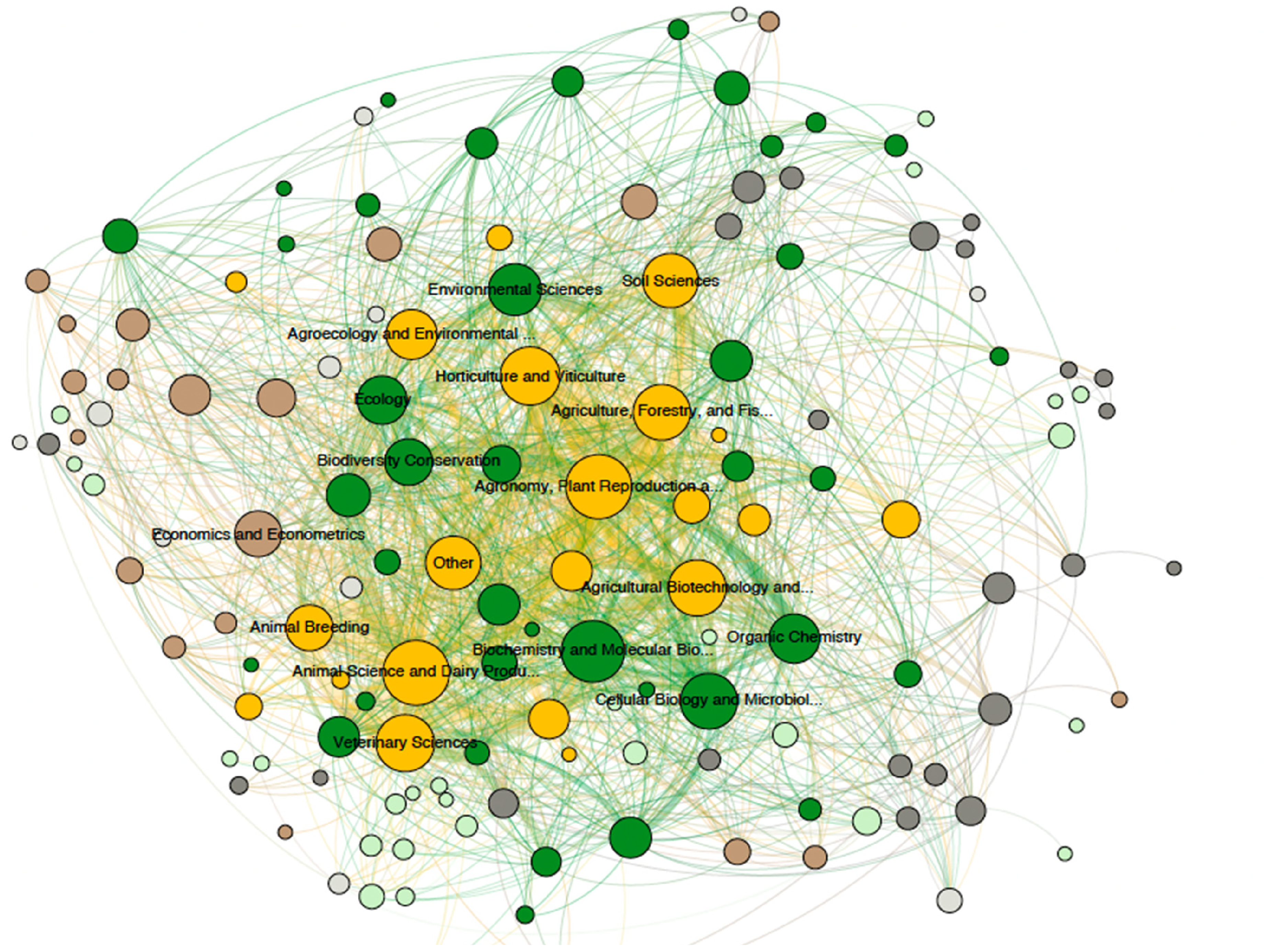
Network of interdisciplinary collaborations in research projects (2000–2017).
All structural indicators of the network show an increase in collaborations between disciplines, particularly a densification of the network over time. As seen in Table 3, the diversification of disciplines increases throughout the period with more fields of knowledge involved in research projects in the agricultural sciences. Likewise, the number of nodes and edges increase substantially from the first to the third period showing a growing size of the network of collaborations between disciplines. Furthermore, the average degree indicates that collaboration between diverse disciplines increases considerably with time. Figure 3 illustrates the evolution of selected fields of science in the network on the basis of their degree centrality throughout time subperiods. All fields exhibit greater degrees of collaboration toward the present. Interestingly, the participation of interdisciplinary social sciences decreases during the second subperiod while the field of economics, which was only insinuated at the turn of the century, begins a constant increase. This stronger interaction reveals the importance attributed to topics such as agricultural productivity and competitiveness, articulation in value chains, or farm management, among others, in agricultural research projects.
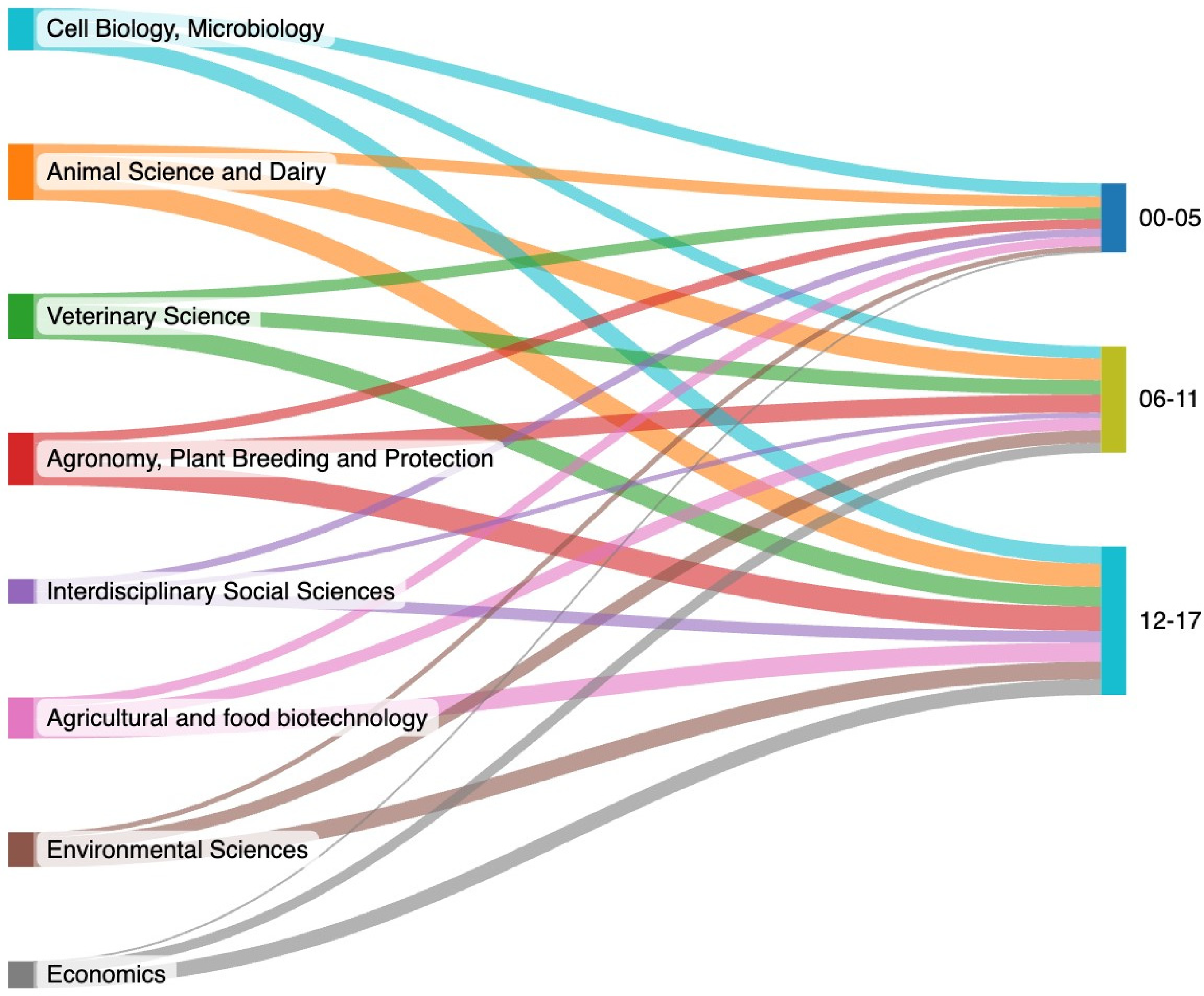
Evolution of selected fields in the network based on degree centrality: major fields of science.
Main metrics of the interdisciplinary collaborations network.

We further explored the participation of diverse fields within the environmental sciences in the network. Given the current importance of topics such as agricultural alterations as a consequence of climate modifications or sustainability transformations of food and farming systems which require articulation with sciences other than agricultural disciplines, we looked for collaborations involving environmental fields of science. Figure 4 highlights the presence of ecology, climate science, environmental engineering, and related fields in the overall network. Figure 5 shows the degree centrality evolution of selected environmental disciplines, evidencing their increased role in the collaboration network along time periods.
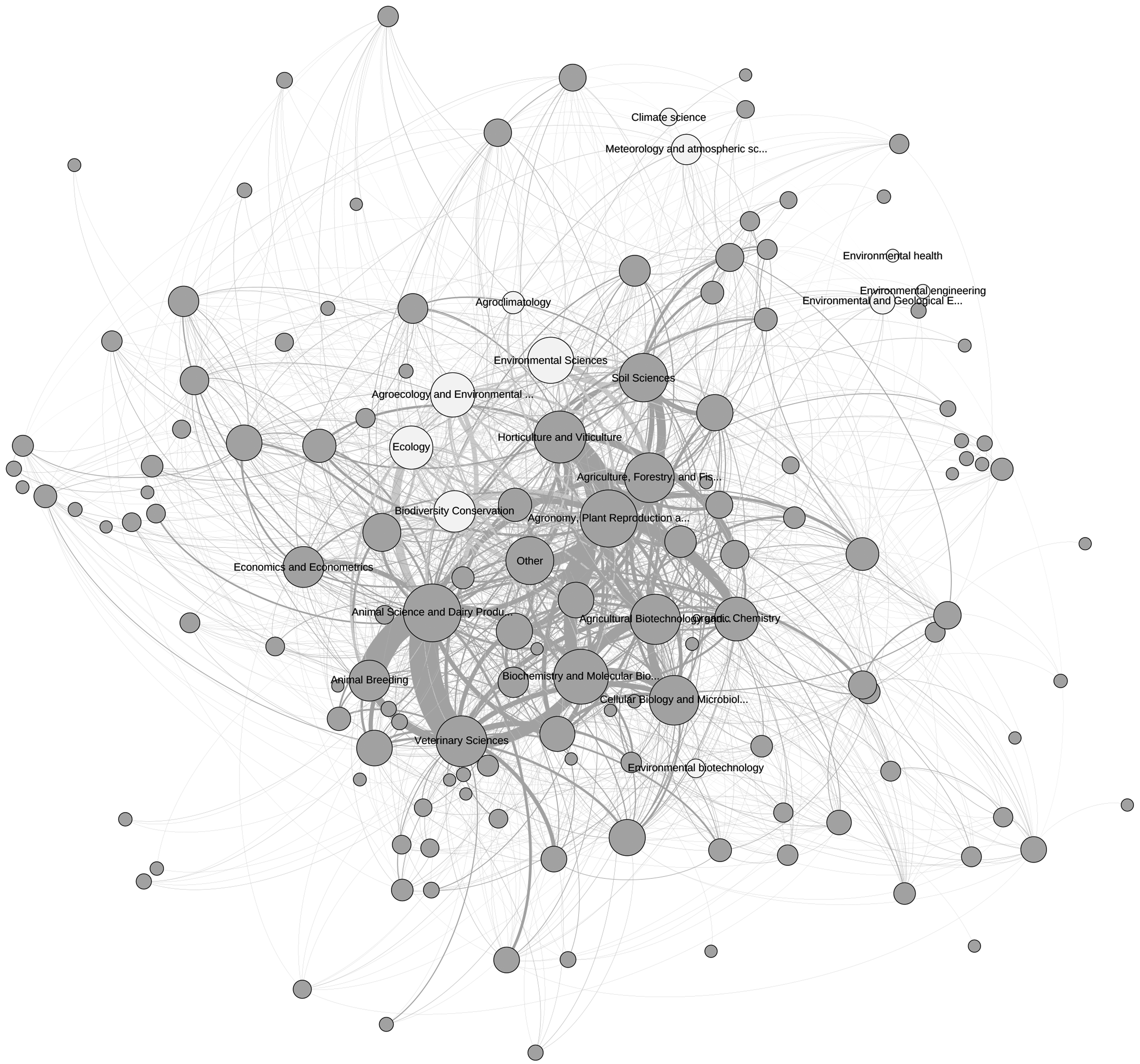
Network of interdisciplinary collaborations in research projects: environmental sciences (2000–2017).
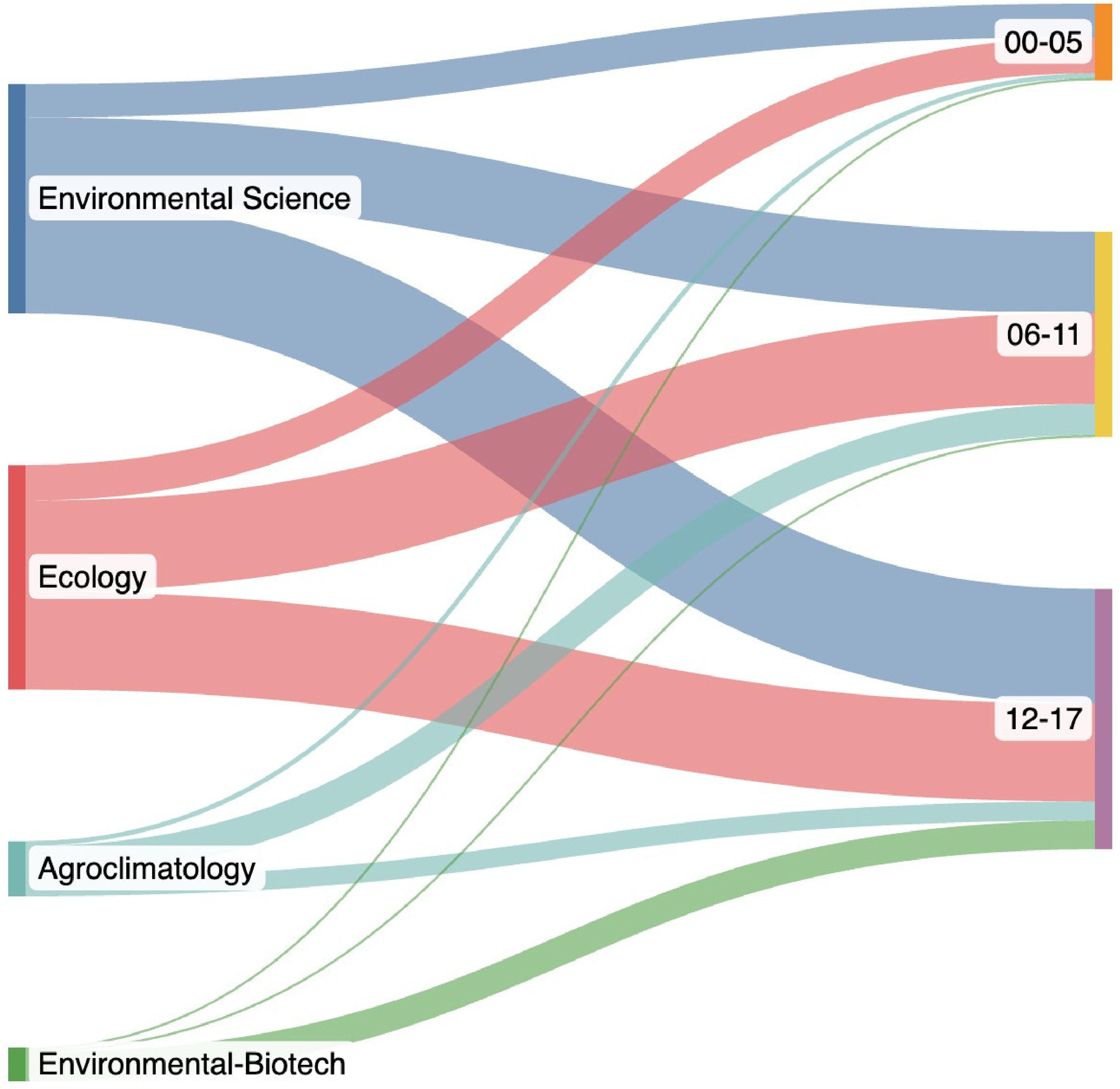
Evolution of selected fields in the network based on degree centrality: environmental disciplines.
Discussion
Collaboration patterns among institutions engaged in agricultural research showed a network dominated by a central core of STI nodes. Networks are more or less dense depending on the number of actors and their exchanges. In this case, the overall structure determines a low cohesion of the global network represented by a density measure of 0.021, meaning that a very low number of possible connections are actually occurring. In other words, many opportunities for information-carrying connections, knowledge flows, or resource exchange seem to be missed out within the overall network. However, on the basis of research projects, it is expected that inter-institutional collaborations may not be stable overtime. Collaboration between researchers in different institutions occurs during the duration of a research project and it might end with the accomplishment of the research. Project continuity provides greater opportunities for long standing collaboration between research groups, depending on funds availability.
The core–periphery structure of the network is reinforced by the fact that few institutions located at the center position show stronger ties of collaboration and peripheral institutions collaborate with less intensity. Three nodes with the largest number of collaborations are the same that keep the network integrated (FAGRO and FVET at Udelar and INIA). FAGRO appears as a fundamental bridge in the network reaching the highest scores of incidence and power indicators throughout the whole period. While this fact evidences the relative strength of the university setting in the knowledge network, it also shows the weak participation of other stakeholders in the collaborations. Other studies have stated the importance of multiple actors’ engagement in research dealing with uncertain contexts (Bogner and Dahlke, 2022), sustainability related research and innovation (Wilke and Pyka, 2024), and agricultural research for development (Hermans et al., 2017). In this sense, strengthening other nodes in the system could be beneficial for the overall collaboration network.
Further, in view of the socioeconomic importance of agriculture in Uruguay and an evident need for collaborations among multiple partners in research, production, and policy to address agricultural problems, the type of participant institutions was examined. Results evidenced that nonacademic agents involved in agriculture are poorly integrated into knowledge production processes. This is consistent with a central role of public sector institutions in agricultural research and occasional intervention of private production-related agents which has been traditional in most Latin American countries (Hartwich et al., 2008). This finding is in line with the results from a recent European study showing a strong public presence in several agricultural innovation networks (Guerrero-Ocampo et al., 2022) and may differ from the situation of United States where private agricultural research and development surpassed public investment in 2005 and has been growing steadily ever since (USDA, 2019). Whereas it is well accepted that interaction and collaboration with nonacademic agents can improve knowledge production (Ingram et al., 2020), the network composition seems biased toward STI institutions. Nonetheless, this result should be interpreted with caution in view of the CV-based source of information. The contribution of the productive sector in the research projects analyzed could be underestimated, given the academic orientation of the CVs. Additionally, like self-reported data, bias can be introduced based on the projects researchers choose to include on their CVs. Future studies may overcome this limitation by complementing CV data with questionnaires or qualitative interviews.
The changes in the topology of the collaboration network are parallel to the evolution of the Uruguayan STI promotion system (Table 1). That is, as the diversification of promotion and funding instruments increases the integration of actors into the network and their exchange becomes more dynamic. The size of the network increases along the subperiods beginning with 54 institutions in the first one and reaching 154 in the last period. Inter-institutional collaborations also increased from 88 to 536 links showing a considerable growth of connections, particularly from the first to the second subperiod. For this reason, density indicators are not suitable to evaluate the cohesion of the network since the values of density decrease due to the significant increase in the number of nodes. However, the average degree of collaboration increases indicating greater connections between the various institutions. On average, from the first to the second period, network nodes collaborate with at least 3 more institutions.
Overtime, the center–periphery structure gains stability. STI institutions capitalize research opportunities as they might jointly participate in funding calls, share specialized equipment, or engage in common agendas. They consolidate their own pattern of collaboration and increase the number of connections with nonacademic agents (government, social organizations, private labs, agribusiness, and cooperatives). Overall, the strongest ties are observed between FAGRO and INIA revealing frequent, long-standing research collaborations. Around them, a core of connected institutions with frequent collaborations suggests the continuity of research lines over time nurtured by information flows and exchanges. On the other hand, the network is expanded and enriched overtime by an increasing diversity of weak ties connecting multiple organizations from productive spheres and public policy. Except for the Ministry of Agriculture, the participation of nonacademic nodes in the network is however sporadic, resembling participation focused on specific issues involving their expertise or particular interests. Nonetheless, weak ties in a network might be determining factors for the introduction of novelties such as alternative cropping practices, technological niches, product diversifications, and so many others as well as for the transmission of information through the network.
Interdisciplinary collaborations are dynamic and progressive diversification of disciplines in the network is evidenced throughout the period under study. More academic fields get involved in the network from the first to the third subperiod with more direct connections between agricultural sciences and disciplines from other sciences. Collaboration across knowledge areas tend to increase the potentiality of research as new skills and methodologies are incorporated into project teams. Nonetheless, two core agricultural disciplines (dairy and animal science; agronomy, plant reproduction and protection) stand out as their increased degree centrality represent more direct collaborations with other disciplines throughout the period. Some natural sciences and especially environmental sciences gain presence in the network increasing their connectedness form the first to the third period. Differently, various social sciences disciplines collaborate more erratically except for the field of economics. Differences in academic styles may operate as barriers (Halfon & Sovacool, 2023) for successful integration of other fields of science in agricultural research collaboration networks. Continuity of collaborations can favor the development of better understandings, common languages and research agendas among fields of science to multiply interdisciplinary collaborations. As noted in a recent international report, research collaboration still needs to engage researchers with expertise in very distant sciences (Schneegans et al., 2021) in order to tackle sustainable development goals.
Multidisciplinary teams or interdisciplinary approaches to agricultural research are present in the network but most frequent forms of research collaboration occur between disciplines classified as agricultural sciences. Fields within the environmental sciences are gaining presence in the network enabling research to address complex contemporary issues such as food systems transformations (El Bilali, 2020), climate change effects on agriculture (Asseng et al., 2019) or ecosystems services. Social sciences have a role to play in collaboration projects contributing methods and skills to enable effective communication among different stakeholders, promote agricultural innovation, foster integral farm sustainability, or understanding the multidimensionality of agriculture, but still are not very well positioned within the collaboration network. In line with Bogner and Dahlke (2022) we believe that in order to foster transformations, science and technology policies should seriously incentivize participatory transdisciplinary research projects and more social scientists.
Conclusions
Research collaboration among institutions and academic disciplines has been explored on the basis of scientists’ participation on agricultural research projects. SNA and research project data have been useful to improve the understanding of collaboration patterns in agricultural research in Uruguay and can be replicated in other areas of knowledge production. CVs data extracted from a public Uruguayan platform have been suitable to identify collaboration networks and change overtime. Limitations from researchers’ self-reported data could hinder an accurate identification of all agents participating in research projects. Nevertheless, the complex nature of research oriented to agricultural problems may demand a stronger involvement of nonacademic agents in research. Currently the collaboration pattern is marked by very strong ties developed by a very few STI institutions. Further, while academic diversification has increased over time, connection gaps exist and fields of knowledge with obvious potential to contribute to agricultural research such as health and social sciences are still occasionally linked to the network. These results can guide science and technology policies in the promotion of both greater integration of agents and fields of sciences in order to improve and strengthen research collaboration.
Footnotes
Declaration of conflicting interests
The authors declared no potential conflicts of interest with respect to the research, authorship, and/or publication of this article.
Funding
The authors disclosed receipt of the following financial support for the research, authorship, and/or publication of this article: This work was supported by the Agencia Nacional de Investigación e Innovación (grant number FSDA_1_2017_1_143753).
