




Abstract
Different patterns of performance development exist in high level athletes (e.g., early entry and steady progression, late entry into high performance). Few investigations have evaluated the relationship between specific patterns of performance development and subsequent success. Three exploratory case studies are presented focused on three regions and two codes (football and hurling) within Gaelic games, tracking male players from either Under-14 or Under-18 through to Adult High Performance (AHP). Data for 1841 players were sourced from a convenience sample of archives. The most common pathway for AHP players to develop was through both Under-18 and Under-21 teams (18-21-AHP), although one quarter of both AHP hurlers and footballers followed an alternative pathway. Players who followed the 18-21-AHP pathway played significantly more games at AHP than some peers who had developed on an alternative pathway. Approximately 10% of hurlers on Under 14 development squads progressed to AHP; transition to Under-18 and Under-21 teams was significantly better for players on the Under 14 first team relative to the second team, however there was no significant difference in the proportion of Under-14 players from either team who progressed to AHP. One quarter of Under-18 players and one third of Under-21 players progressed to play AHP; significantly more Under-21 players with Under-18 experience progressed to AHP than Under-21 players without Under-18 experience. In addition to illustrating the prevalence of different patterns of performance development in Gaelic games, this study raises questions about the quality of - or blind spots within - the current talent development system.
Introduction
Optimising talent development systems requires a clear understanding of the pathways taken by athletes who ultimately reach elite performance (Gulbin, Weissensteiner, et al., 2013; Sedeaud et al., 2025). It is well established that youth success is an unreliable predictor of adult performance (Dugdale et al., 2021; Güllich, 2014; Platvoet et al., 2023). It is also clear that athletes may follow diverse routes to adult success, including early success, late blooming, or late entry to a sport (Gulbin, Weissensteiner, et al., 2013; Huxley et al., 2017; Rikken et al., 2026; Storm et al., 2012). However, little is known about the prevalence of these pathways or their relationship to adult attainment. This gap is particularly evident in Gaelic Games, where unique cultural and organisational features shape athlete development in ways that may not align with patterns reported in other sporting systems. Consequently, the central research question addressed in this study is: what patterns of performance development characterise players who progress to adult high performance (AHP) within Gaelic football and hurling?
Pathways to elite sport are influenced by numerous external and internal factors. Gulbin, Weissensteiner, et al. (2013) categorized developmental trajectories into three primary themes: pure ascent, whereby an athlete experiences an unbroken sequence of successes at each performance level with early selection and consistent upward progression; mixed ascent, whereby an athlete experiences both setbacks and accelerations; and mixed descent, whereby an athlete achieves early success but after stagnates or regresses and may fail to successfully transition to elite senior levels. While some players do follow the pure ascent trajectory, it is relatively rare. Boccia et al. (2023) reported that less than 6% of Under-16 (U16) Italian football players reached the senior national team, while Brustio et al., 2024 highlighted that 31.2% of elite women’s footballers had never been part of formal youth systems. Factors such as late specialization, alternative sporting experiences, and delayed physical and psychological maturation can all contribute to differing trajectories to eventual elite success (Brustio et al., 2024; Huxley et al., 2017); in particular, Brustio et al. (2024) highlighted the substantial proportion of elite athletes who are “late bloomers” and thus evade traditional early identification mechanisms. Considering such findings, Sedeaud et al. (2025) called for increased awareness and education about the complexity of talent development pathways amongst sport scientists, coaches and administrators working within talent development.
The complexity and prevalence of differing pathways to high performance sport is likely to depend on the specific culture of the sport and national context (Boccia et al., 2023; Brustio et al., 2024; Herrebrøden & Bjørndal, 2022; Storm et al., 2012). For example, the age at which a sport begins national level competition or representative teams, the degree of autonomy provided to coaches, or the extent to which an athlete can compete on multiple teams at once (e.g., club and school and regional team) is likely to influence athlete experiences and progression (Bjørndal and Ronglan, 2018). The variations in pathway effectiveness across sports and countries (Brustio et al., 2024; Herrebrøden & Bjørndal, 2022) further illustrates that talent development is highly contextual and should not rely on rigid, universalized models. As such, efforts to optimise talent development need to be based on context-specific data.
One context in which player development pathways have received limited investigation is Gaelic Games. These games, including hurling and Gaelic Football, are deeply embedded within Irish culture and society (Jackman et al., 2024; Lane et al., 2016). Despite their amateur status, Gaelic games command immense regional and national interest. Structurally, they are invasion-based games played on large rectangular pitches with 15 players per team, sharing characteristics with more globally recognized sports such as soccer, rugby, field hockey, and lacrosse. Beyond those structural similarities, these games have several distinctive characteristics which mean that findings from other sports and contexts may not apply. Unlike professional sports systems, Gaelic games are constrained by a strict regional allegiance policy, limiting players to representing their home county; this factor is likely to significantly impact talent development pathways. In particular, this amateur status and the organization’s primary emphasis on the local club rather than representative teams (Dempsey et al., 2020; Lane et al., 2023) has led to discussions on how promising young players might be best supported in their journeys to high performance (Dempsey et al., 2019).
The Gaelic Games Player Pathway (Dempsey et al., 2020) is modelled on the FTEM framework (Gulbin, Croser, et al., 2013). FTEM consists of four main phases: Foundation, Talent, Elite and Mastery. Each of the first three phases are in turn composed of between two and four sub-phases. The Foundation phase refers to general participation from childhood or introduction to the sport through to adult participation at sub-elite levels. Talent refers to participation in specific programmes designed to accelerate development towards high performance sport. The subphases within Elite refer to reaching high level representative sport (e.g., professional contract, international team) and achieving success at those levels, while Mastery – which few athletes attain – refers to sustained success at the highest level. Within the adaptation of FTEM for the Gaelic Games Player Pathway, the phases of Elite and Mastery are merged into a single High Performance category. Furthermore, Foundation Stage 3, which incorporates community club participation at youth and adult levels focused on participation in Gaelic Games as a means to an active lifestyle, is depicted as the central and largest focus of the pathway. This reduced focus on elite performance and the comparably greater emphasis on the community club for which even the highest performing continue to represent, is consistent with the organisation’s philosophy of ‘Club is Core’ (Dempsey et al., 2020; Lane et al., 2023). The four Talent phases of T1: Demonstration of Talent, T2: Verification of Talent, T3: Practice and Achievement and T4: Breakthrough and Reward represent the organisation’s efforts to scaffold the journey to high performance for players aged 13-23 years. However, the extent to which participation in each of these four phases is a typical part of the developmental pathway of high performing players has not been investigated.
The analysis of two Gaelic Games also offers an opportunity to explore how the demands of a sport influence player development pathways. Gaelic football may be described as a cross between rugby and soccer and, although skill is an essential component of the game (Barrett et al., 2025), football is seen as a more physical game than hurling. The latter sport places greater emphasis on skill (Collins et al., 2022; Reilly & Collins, 2008) and is more like field hockey and lacrosse. While previous research has examined player progression within different contexts, this study contrasts player progression between two sports with different technical demands from the same national context.
Although multiple developmental pathways have been identified in the histories of high-performing sportspeople (Gulbin, Weissensteiner, et al., 2013; Huxley et al., 2017; Storm et al., 2012), there is limited evidence describing how such pathways unfold within Gaelic Games, or how involvement at various age grades relates to later attainment. Given the scarcity of empirical analyses in this context, establishing an evidence-based understanding of player progression is an essential step toward optimising talent development structures. Accordingly, the objective of this study was to describe patterns of progression from underage representative squads through to AHP 1 within Gaelic football and hurling. The study was guided by the overarching research question: What patterns of performance development characterise players who progress to adult high performance (AHP) within Gaelic football and hurling?
To address this question, the study had three aims: (1) to characterise the developmental trajectories of players who had reached AHP and identify whether a dominant pathway exists 2 ; (2) to document progression rates from Under-18 (U18) and Under-21 (U21) to AHP, and to examine whether being selected at both U18 and U21 is associated with increased likelihood of progression; and (3) to document progression rates from Under-14 (U14) development squads and explore whether playing on the first or second U14 team is related to later attainment. Differences between football and hurling contexts, and between hurling counties, were also examined. Given the exploratory nature of this work and the absence of prior evidence suitable for deriving directional predictions, no a priori hypotheses were specified.
Method
Research Design
Due to the lack of information on player progression within inter-county 3 development squads and player appearances at adult level in Gaelic Games, an archival research design was adopted drawing upon existing databases. “Archival research entails analyzing data that were stored other than for academic research purposes” (Heng et al., 2018, p. 14). While archival data has been used to investigate a range of questions within the sport sciences (e.g., Boccia et al., 2021; Kearney & Hayes, 2018; Markwell et al., 2024), there has been limited commentary on the methodology associated with archival research within this domain (Demiris and Seifried, 2023). Ethical approval was obtained from the faculty research ethics committee.
Participant Sample
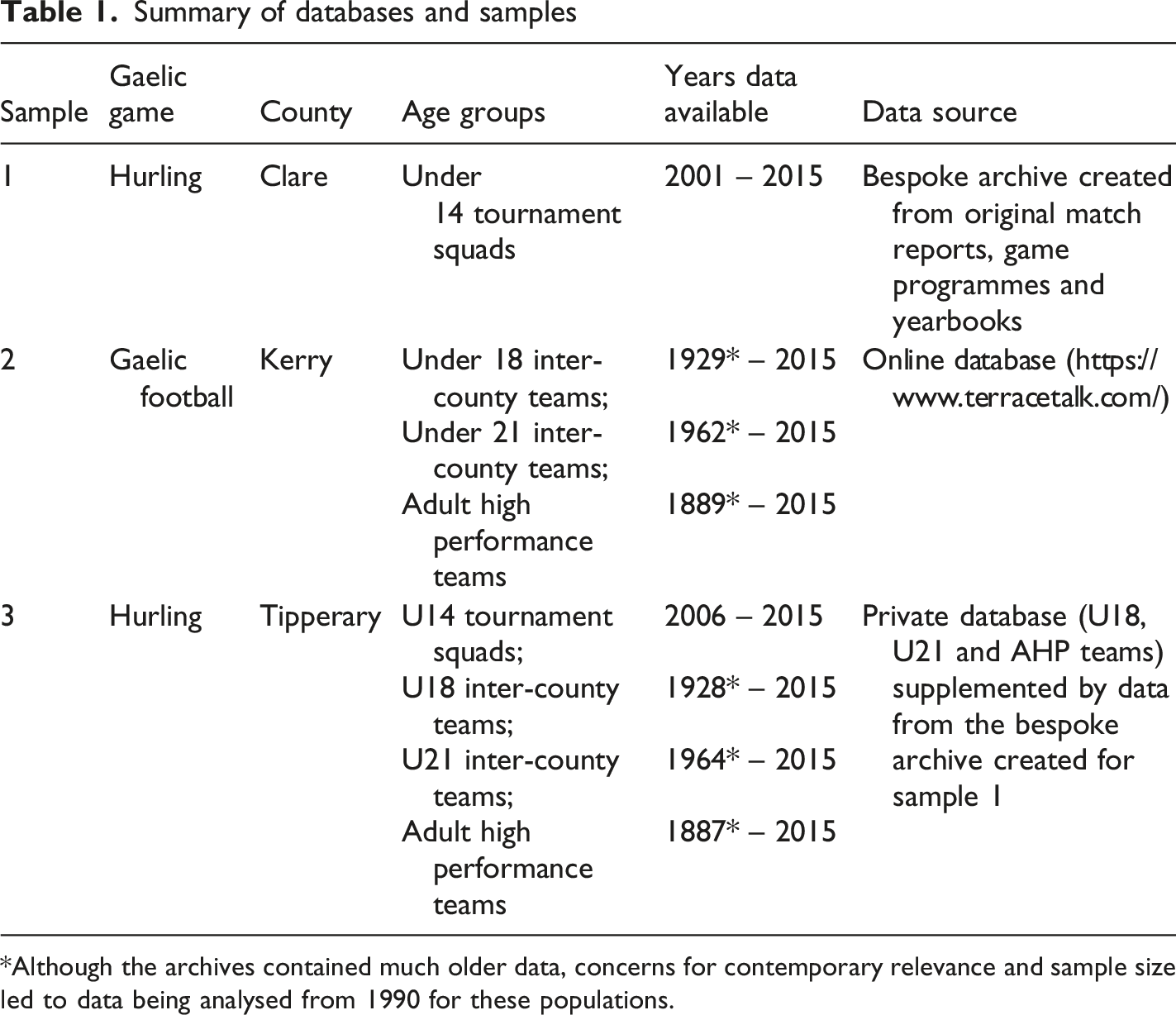
Summary of databases and samples
*Although the archives contained much older data, concerns for contemporary relevance and sample size led to data being analysed from 1990 for these populations.
Sample 1: Clare Hurlers
Initially, a bespoke archive was created for hurling teams from the county of Clare using match reports, game programmes and yearbooks from the Tony Forristal and Sonny Walsh Inter-County Under 14 (U14) hurling tournament 4 . Subsequently, a panel of current players and coaches was asked to identify which of these 376 players from the development squads had played in Under 18 (U18), Under 21 (U21) or AHP inter-county matches. To minimise recall bias, the panel included both current AHP players (who would have been members of those development squads) and coaches with extensive experience in the county development pathways and representative teams. To restrict the analysis to players who had the opportunity to compete at all three levels, and to facilitate comparisons with other samples, we restricted the analysis to individuals who played at least one game at U14 from 2001 to 2015.
Sample 2: Kerry Footballers
The second sample was obtained from an online database: https://www.terracetalk.com/. This database contains records of all players who have represented the Kerry men’s Gaelic football team at U18, U21 and AHP level, and the number of games played at each level. To restrict the analysis to players who had the opportunity to compete at all three levels, we limited the sample to individuals who had played at least one game at U18 (M; n = 501), U21 (n = 330) or AHP in the more prestigious Championship competition (n = 112) for Kerry between 1990 and 2015; analysis was restricted to the Championship competition to facilitate comparison with Sample 3 which only contained data on this competition. The accuracy of the database was confirmed by checking records against a second database under development by the Gaelic Athletic Association.
Sample 3: Tipperary Hurlers
The third sample was obtained from two sources. A privately held database which contained records of all players who had represented the Tipperary men’s hurling team at U18, U21 and AHP level (Championship competition), and the number of games played at each level, was made available to the research team. To restrict the analysis to players who had the opportunity to compete at AHP level, we limited the sample to individuals who had played at least one game at U18 (n = 415), U21 (n = 307) or AHP (n = 112) for Tipperary between 1990 and 2015. This dataset was supplemented with information on participation in the U14 intercounty hurling competition from the same collection of match programmes referred to for Sample 1. The progression of all players who were included on an U14 squad from 2006 5 -2015 was analysed. Players who were listed on an U14 squad from 2006-2015 were tracked through to U21 level; players who were listed on an U14 squad from 2006-2010 were tracked through to Senior level as they would have been at least 25 years old by the time of analysis and had a reasonable chance to make a Senior panel.
Data Quality
Data quality is a central concern within archival research, particularly regarding issues such as the accuracy of the initial recording and ‘survivorship bias’ (what material has and has not been recorded) (Demiris & Seifried, 2023). As detailed above, a number of steps were undertaken to maximise the quality of each archival dataset. For example, the complete set of game programmes for the Clare hurling teams were compiled (i.e., no missing years). Where available, second sources were used to confirm the dataset (e.g., match reports were checked for consistency with the game programmes for the Clare dataset; the Kerry football dataset was checked against a national archive under development by the Gaelic Athletic Association).
Data Screening and Analysis
Data was organized within customised Microsoft Excel spreadsheets. To capture obvious data entry errors, manual checks were conducted to ensure that first names and surnames had been entered in the correct columns, there were no duplicate players, that club names were spelled consistently across sources for Sample 3, or that players had not been entered under different versions of their names (e.g., Micheál versus Michael).
Basic descriptive statistics were used to summarise player progression and development trajectory distributions across the dataset. SPSS (Version 29.0.2.0) was used to conduct inferential statistical tests. Chi-squared Goodness of Fit tests were used to establish if one developmental trajectory was more common than another. Chi-squared Tests of Independence were used to compare the prevalence of different development trajectories between different contexts (e.g., Sample 2 AHP Kerry footballers versus Sample 3 AHP Tipperary hurlers); where the expected frequency was less than five for any contingency table, Fisher’s Exact test was applied instead of the Chi-squared Test of Independence. Where Chi-squared tests were applied, Cohen’s w provided a measure of effect size for 2 × 2 contingency tables, with values of 0.1, 0.3 and 0.5 indicating small, moderate and large effect sizes, respectively; Cramer’s V provided a measure of effect size with larger contingency tables. Holm-Bonferroni corrections were applied to the p-values where multiple comparisons were made (Holm, 1979). As inspection of the histograms, Shapiro-Wilk tests and review of zskewness and zkurtosis (Field, 2009) indicated that the number of appearances data was not normally distributed, Kruskal-Wallis tests were used to compare the number of appearances made by players who had progressed to the AHP team through the various development trajectories. Where there were significant differences, Mann Whitney U tests were used to identify which pathways differed with the Holm-Bonferroni correction (Holm, 1979) applied for multiple comparisons. A measure of effect size was provided by r (Field, 2009), with values of 0.1, 0.3 and 0.5 indicating small, medium and large effect sizes respectively.
As the analysis was conducted on the maximal sample of archival data that could be obtained, Sensitivity Power Analyses (Ditroilo et al., 2025) were performed using G*Power Version 3.1.9.7 (Faul et al., 2007) with alpha set to 0.05, power to 0.95, and the sample size and degrees of freedom based on the specific contingency table. Adopting a conservative approach, a power of 0.95 was specified rather than the conventional 0.80 due to the exploratory nature of the investigation. For comparisons focused on the larger samples of U18 and U21 players, detectable effect sizes for Chi-squared tests of independence ranged from 0.15 to 0.23. For comparisons within the smaller samples of AHP players, detectable effect sizes for the Chi-squared Goodness of Fit tests ranged from 0.38 to 0.39.
Results
Retrospective Analysis of Adult High Performance Players
The retrospective analysis of player development trajectories is illustrated in Figure 1 for Sample 2 Kerry footballers (a) and Sample 3 Tipperary hurlers (b). The most common trajectory to AHP amongst Kerry footballers was U18-U21-AHP with 76% of players following this route, χ
2
(3, 112) = 157.3, p < 0.001, w = 1.19. Most of the remaining players (14%) played U21 and AHP only. For Tipperary hurlers, the retrospective analysis revealed that the most common trajectory to senior level was again U18-U21-AHP, with 76% of players representing the county at each of U18, U21 and AHP, χ
2
(3,112) = 159.21, p < 0.001, w = 1.19. Most of the remaining players (16%) played U21 and AHP only. A chi-squared test of independence indicated no difference in the proportion of players pursuing each trajectory between the Kerry footballers and Tipperary hurlers, χ
2
(3, 224) = 0.62, p = 0.892, w = 0.05. Proportion of players following each pathway to Adult High Performance level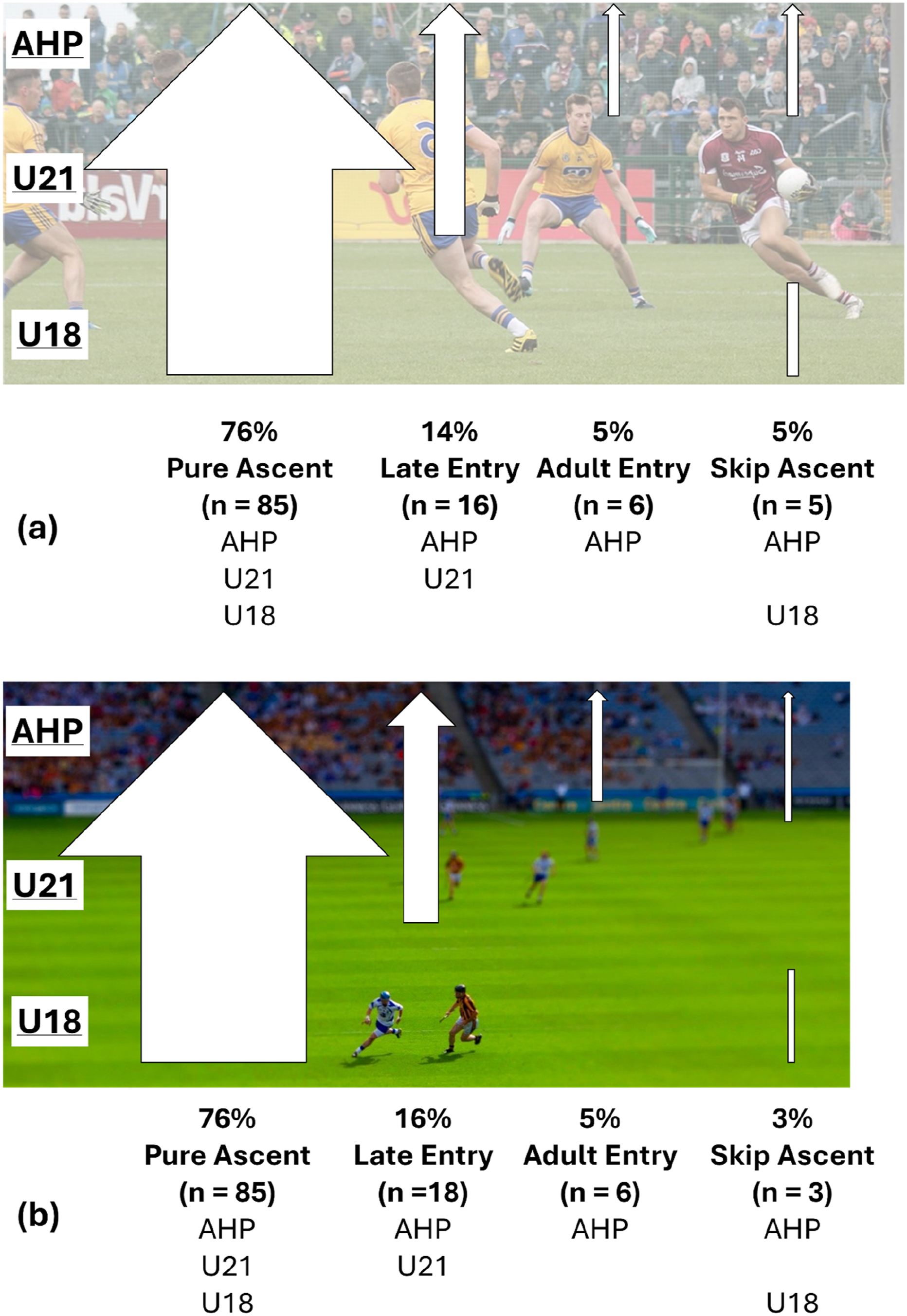
Figure 2 illustrates that for Sample 2 (Kerry footballers), a Kruskal-Wallis test revealed a significant difference in the number of games played at AHP by players progressing through the different trajectories, H (3, 112) = 19.72, p ≤ 0.001. Follow up Mann-Whitney U tests revealed that players on the AHP-only trajectory (Mdn = 3, IQR = 3) played significantly fewer AHP games than players on the U18-U21-AHP trajectory (Mdn = 17, IQR = 69; z = 4.107, p ≤ 0.001, r = 0.34); there were no other significant differences The number of games played at Adult High Performance level is influenced by the developmental trajectory taken by players.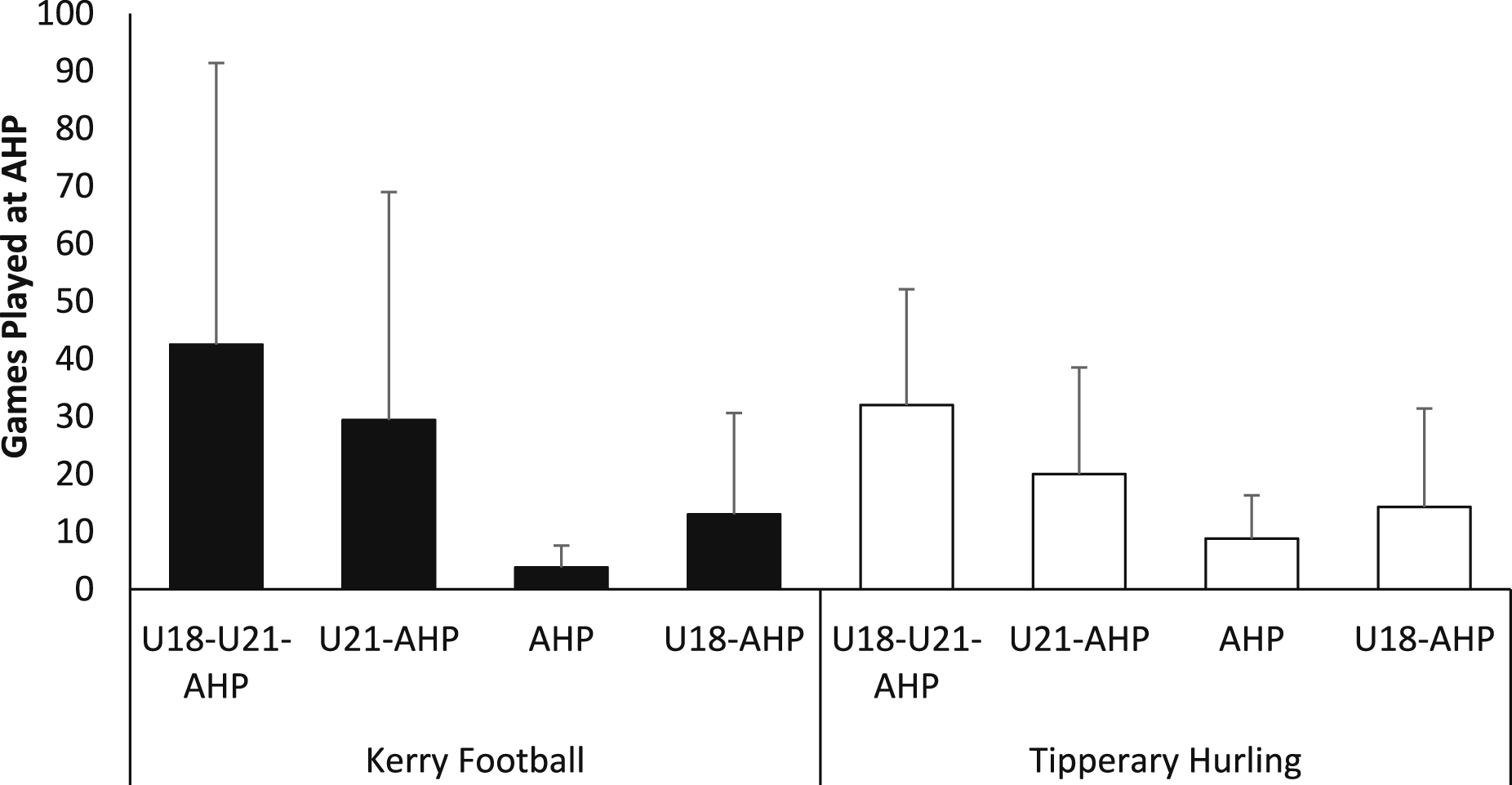
Due to the low sample size for the U18-AHP trajectory (n = 3), only the differences between the U18-U21-AHP, AHP and U21-AHP trajectories were compared for Sample 3 (Tipperary hurlers). A Kruskal-Wallis test revealed a significant difference in the number of games played at Senior level by hurlers progressing through the different trajectories (Figure 2), H (2, 112) = 17.94, p ≤ 0.001. Follow up Mann-Whitney U tests revealed that players on the U18-U21-AHP trajectory (Mdn = 26, IQR = 26) played significantly more AHP games than players on the AHP (Mdn = 6.5, IQR = 15; z = 3.301, p ≤ 0.001, r = 0.35) and U21-AHP (Mdn = 12.5, IQR = 19; z = 2.992, p = 0.006, r = −0.29) trajectories.
Prospective Analysis of U18 and U21 Players
The prospective analysis (Figure 3(a)) revealed that between 1990 and 2015, 501 players made an appearance for the Kerry U18 team (Sample 2). Of these, 256 (51%) progressed to play for an U21 team while 93 (19%) went on to play at least one championship game for the Kerry AHP team. Between 1990 and 2015, 415 players made an appearance for the Tipperary U18 team (Sample 3). Of these, 229 (55%) progressed to play for an U21 team while 97 (23%) went on to play at least one championship game for the Tipperary AHP team. Despite the difference in the technical demands of the sports, comparing the transition rates between Sample 2 Kerry football and Sample 3 Tipperary hurling revealed no significant differences for the transition from U18 to U21 (χ
2
(1, 916) = 1.52, p = 0.436, w = 0.04), U21 to AHP (χ
2
(1, 916) = 0.44, p = 0.507, w = 0.03), or U18 to AHP (χ
2
(1, 637) = 3.20, p = 0.222, w = 0.06). Transition rates from Under 18 and Under 21 to Adult High Performance teams.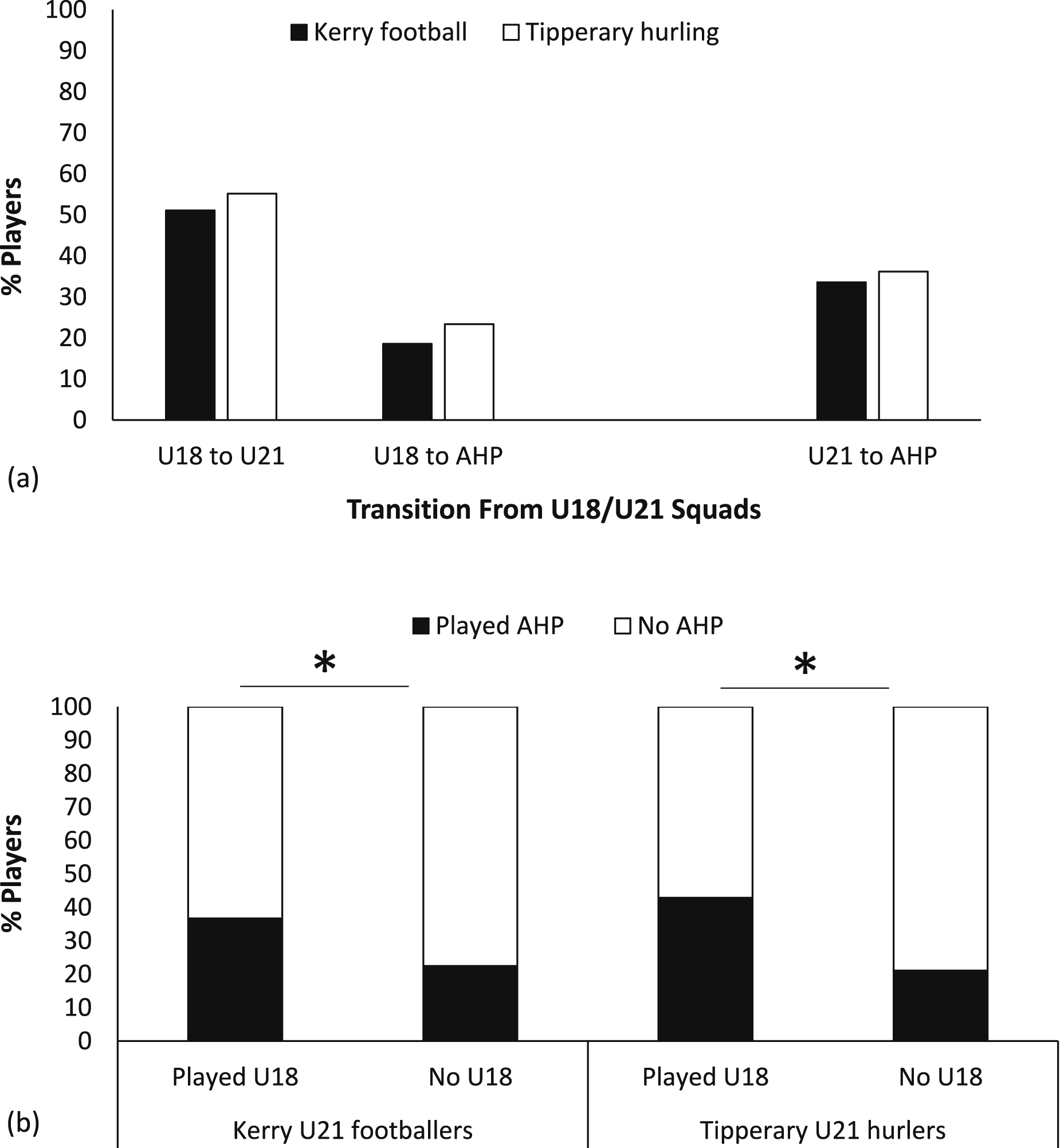
Players who had appeared on both an U18 team and an U21 team were more likely to appear on an AHP team than players who had only appeared on an U21 team for both Sample 2 Kerry football and Sample 3 Tipperary hurling (Figure 3(b)). Three hundred and thirty footballers made an appearance at U21 level for Kerry between 1990 and 2015. Of these, 259 (79%) had made an appearance at U18 level. Significantly more players who appeared at both U21 and U18 level (37%) made at least one championship appearance for the Kerry AHP team compared to U21 players who had not made an appearance at U18 level (23%), χ 2 (1, 330) = 4.99, p = 0.05, w = 0.12. Similarly, 307 Tipperary hurlers made an appearance at U21 level between 1990 and 2015. Of these, 121 (69%) had made an appearance at U18 level. Significantly more players who had appeared at both U18 and U21 level (43%) made at least one championship appearance for the Tipperary AHP team compared to U21 players who had not made an appearance at U18 (21%); χ 2 (1, 307) = 13.6, p < 0.001, w = 0.21.
Prospective Analysis of U14 Players
Three hundred and twelve Tipperary players (Sample 3) appeared on an U14 panel between 2006 and 2015; of these, 81 (26%) progressed to play on an U18 team and 47 (15%) played on an U21 team. To ensure that players had sufficient time to transition to AHP teams, only players from the 2006-2010 U14 panels were analysed for transition to AHP; 10 players (8%) from these U14 squads played at least one AHP championship game. For players from County Clare (Sample 1), 376 players appeared on an U14 panel between 2006 and 2015; of these, 211 (56%) progressed to play on an U18 team and 95 (25%) played on an U21 team. In order to ensure that players had sufficient time to transition to AHP teams, only players from the 2006-2010 U14 panels were analysed for transition to AHP; 19 players (14%) from these U14 squads played at least one AHP championship game. Chi-squared tests of independence indicated that Clare U14 squad members were more likely than Tipperary U14 squad members to make an U18 (χ 2 (1, 688) = 63.5, p < 0.001, w = 0.30) and an U21 team (χ 2 (1, 688) = 10.8, p = 0.002, w = 0.13), but there was no significant difference between the counties in terms of the likelihood of making an AHP team (χ 2 (1, 260) = 1.8, p = 0.181, w = 0.08).
Both Clare (Sample 1) and Tipperary (Sample 3) entered two teams into an U14 inter-county hurling competition from 2010, denoted here as the higher tier A team and the second tier B team. Chi-squared tests revealed that playing on the A team at U14 was associated with a significantly higher percentage of players progressing to the U18 team for both counties: Sample 1 Clare: χ
2
(1, 283) = 19.8, p < 0.001, w = 0.26; Sample 3 Tipperary: χ
2
(1, 240) = 13.4, p < 0.001, w = 0.24 (Figure 4). Playing on the A team rather than the B team at U14 was associated with a higher number of players progressing to the U21 team in Sample 1 Clare (χ
2
(1, 283) = 13.1, p < 0.001, w = 0.22) but not in Sample 3 Tipperary: χ
2
(1, 240) = 3.0, p = 0.167, w = 0.11). Membership of either the A team or the B team at U14 was not associated with a higher percentage of players progressing to AHP (Sample 1 Clare: χ
2
(1, 283) = 0.84, p = 0.400, w = 0.05; Sample 3 Tipperary: Fisher’s Exact Test N = 240, p = 1.0). Percentage of players from the A or B team at U14 who made an appearance for representative teams at subsequent levels.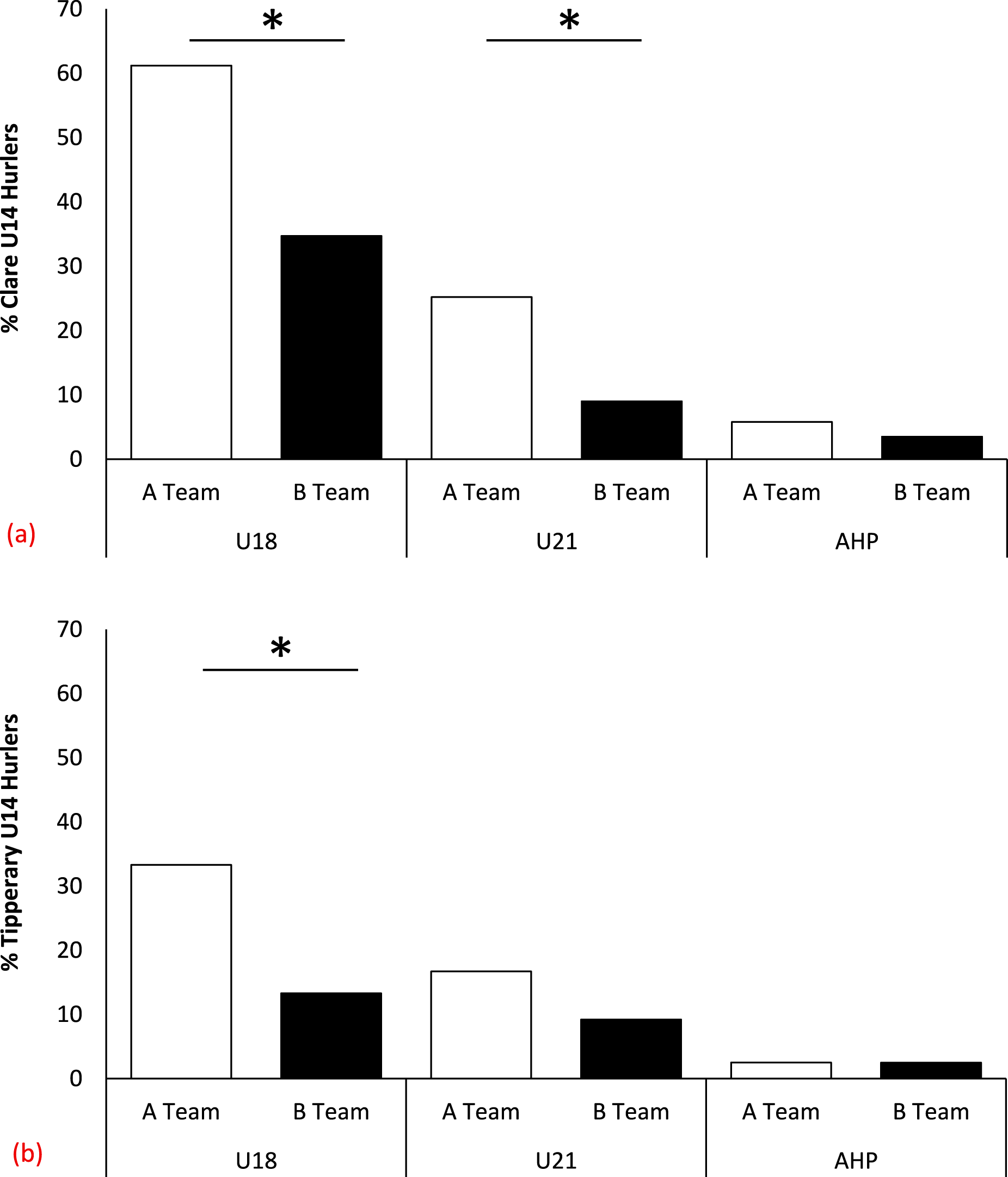
Discussion
This study examined the transition routes experienced by Gaelic Games players across three counties and two codes. The findings highlighted a dominant developmental pathway that encompassed both U18 and U21 levels en route to AHP, while also revealing the considerable variation in player journeys. A conversion rate of approximately 10% was observed for hurlers from Under 14 development squads progressing to play at least one game at AHP. The results further provide a fine-grained analysis of transitions within the talent development system. Players on the U14 first team were significantly more likely to progress to both U18 and U21 levels than those on the second team. However, the proportion of players from either U14 team who ultimately reached AHP did not differ significantly. Additionally, U21 players with prior U18 experience were significantly more likely to progress to AHP than U21 players without such experience.
Consistent with similar studies in both professional football and other invasion games (Boccia et al., 2023; Brustio et al., 2024; Herrebrøden & Bjørndal, 2022), the most frequently observed route to AHP involved a transition through both U18 and U21 teams. Individuals who progressed via this route of U18 to U21 to AHP not only had a higher likelihood of making a senior squad but also accrued more appearances than peers who took some alternative routes. This finding is consistent with the suggestion that structured developmental environments may enhance players’ readiness to transition to senior level (Herrebrøden & Bjørndal, 2022), but causal conclusions cannot be drawn from the current data. In addition, approximately one quarter of all players who reached AHP followed an alternative route, in some instances by-passing U18 and/or U21 altogether. While not the majority, this sizeable minority is consistent with demonstrations that development is not uniformly linear (Baker et al., 2024; Gulbin, Weissensteiner, et al., 2013; Rikken et al., 2026). Such variability highlights the importance of maintaining multiple viable pathways within the system to ensure that late developers or players with disrupted trajectories are not prematurely excluded (Brustio et al., 2024; Sweeney et al., 2023; Verbeek et al., 2025).
The prospective analysis identified a conversion rate from U14 development squads to AHP of 8-14%; this conversion rate is consistent with international data which would suggest that early detection and inclusion in development programmes is a weak predictor for transition to AHP, especially when selection is predicated on performance at this juncture (Boccia et al., 2023; Dugdale et al., 2021; Verbeek et al., 2025). This conversion rate is also consistent with the limited number of places available on an AHP panel each year. This latter finding also extends previous research which has typically not differentiated between performance levels within talent development systems. Players assigned to “A” (first choice) teams within U14 development squad structures were more likely to progress to U18 and U21 levels than their “B team” counterparts, however this advantage did not extend to AHP. Given the rarity of achieving AHP status, caution is required in interpreting the finding in relation to AHP. The difference in initial progression may have multiple contributing factors. In the first instance, A team members may receive (consciously or unconsciously) greater attention, playing opportunities and coaching than B team members due to expectancy effects on the part of the coaches. Well-established in domains as diverse as classrooms and courtrooms (Solomon & Buscombe, 2013), expectancy effects refer to the way in which the expectations of influential individuals can set up a series of reactions from the learner which ultimately influence their developmental outcomes. That is, expectancy effects describe how initial judgements can become self-fulfilling prophecies (Merton, 1948). Within sport, research suggests that such expectancy effects are common, influence the experience of the athlete (e.g., the quality of feedback received) and that coaches are relatively inflexible in their perceptions of athlete potential (Hancock et al., 2013; Solomon, 2010). These potentially powerful initial biases may in part arise due to transient physical advantages of early developers (Cumming, 2018; Fitzgerald et al., 2025). The disconnect between early identification and long-term success and the potency of expectancy effects challenges the validity of early performance-based selection (Güllich et al., 2023) and further emphasises the importance of “fluid and flexible pathways” (Verbeek et al., 2025, p. 13) within talent development systems.
While the conversion rate from U14 to AHP was in line with results from other sports (Boccia et al. (2023); Dugdale et al. (2021); Verbeek et al. (2025)), the proportion of AHP players who had been members of an U18 team was somewhat higher than has previously been reported (Cripps et al., 2015; Güllich et al., 2023). In a broad systematic review spanning multiple team and individual sports, Güllich et al. (2023) reported that 60% of national championship level AHP athletes had previously competed in junior national championships. Similarly in Australian rules football, the closest comparable sport to Gaelic Games within the literature, Cripps et al. (2015) reported that only 50% of AHP players had been members of U16 and/or U18 development squads. In contrast, almost 80% of players in both Gaelic football and hurling in the current study had been members of U18 squads. In addition, U21 players with experience at U18 were more likely to progress to AHP than players without this experience. Several explanations may account for the prominent position of U18 representation. The cultural significance (Lane et al., 2016) and community emphasis (Dempsey et al., 2020) in Gaelic Games might reduce the likelihood of talent selection processes missing players with the motivation and potential to reach high-performance. Furthermore, the geographical restriction that ties athletes to their native county may also contribute to a higher proportion of AHP players gaining representative honours at the U18 level (Dempsey et al., 2019). U18 also represents a major transition from development-focused to performance-focused coaching where players are exposed to televised national competition (O’Mahony et al., 2025). Thus, participating at U18 may be associated with particular developmental advantages, although additional research is required to explore this hypothesis. Alternatively, the absence of AHP players who have not been members of U18 panels maybe a less favourable reflection on the talent development systems in these regions, potentially reflecting a selection bias against players who develop outside established underage pathways. Further research is required to determine whether this pattern reflects genuinely effective talent detection processes or whether it points to structural biases that limit opportunities for athletes who develop outside the traditional underage system.
A unique feature of Gaelic Games is the coexistence of two prominent codes, hurling and Gaelic football, within the one organisation (Donnelly et al., 2024). Although the sports differ markedly in their psychomotor demands – hurling being generally regarded as the more technically complex discipline (Collins et al., 2022; Reilly & Collins, 2008) – the present analysis yielded broadly similar transition patterns across the two codes. This finding suggests that the developmental trajectories observed in this study may not be driven solely by sport-specific technical requirements. Nevertheless, caution is warranted in interpreting this finding given the exploratory nature of the work and the limited regional comparison. Furthermore, when contrasting the differing progression rates of hurlers in Clare (Sample 1) and Tipperary (Sample 3), the observed disparities indicate that contextual factors may be associated with differences in early-stage transitions, even when these do not result in higher conversion to AHP. Such factors may include participation depth, coaching infrastructure, or the degree of school-club integration. Future research is required to identify which of these contributors exert the strongest influence so that county organisations can design targeted interventions to support more equitable and effective player progression.
A review of underage talent academy structures within Gaelic Games (Cuthbert et al., 2018; Dempsey et al., 2019) has highlighted the need to move away from early performance-based selection and towards environments that are broad, inclusive, and developmentally oriented. The Gaelic Games Player Pathway (Dempsey et al., 2020) which resulted from the aforementioned review emphasises supporting the wider player base rather than prioritising early high performers. The present findings reinforce the value of maintaining broad participation during the early stages of development. However, the challenge now lies in the effective enactment of the Gaelic Games Player Pathway, particularly in addressing well-documented issues such as maturation bias (Fitzgerald et al., 2025) and expectancy effects (Solomon & Buscombe, 2013) that may influence selection and retention decisions.
The success of the pathway is likely to depend on sustained investment in high-quality coach education, alongside robust oversight and evaluation of how pathway principles are implemented across clubs, schools, and counties. In particular, the current analysis suggests the need to understand whether the high proportion of AHP players with U18 experience reflects genuinely effective identification or whether it highlights a developmental blind spot. For coaches and administrators aiming to provide fluid and flexible player development pathways, this pattern should be interpreted as an invitation to review the design of developmental opportunities for older adolescents, not only those entering at the earliest age grades. Such a review would consider how players with potential are identified at later ages and ensure that late entrants receive the specific supports required to bridge the experiential gap with peers who have been in the system longer.
Study Limitations
This exploratory study relied on archival data which, while valuable for mapping long term outcomes, may miss some context as to why some players didn’t reach AHP (e.g., factors such as pursuing another sport at an AHP level). In addition, as we had access to data on total appearances only, we may have missed other important features of the pathway’s players took (e.g., a 10-year gap between playing U21 and AHP). Further research should incorporate qualitative and longitudinal tracking of players' journeys, ideally with the aid of a national database. Such a national approach will also overcome the restriction that this analysis was undertaken on available data for particular geographic regions and may not be nationally representative. It would also provide a larger sample size which is particularly important in relation to understanding pathways to AHP; given how few players achieve the highest representative level, there were small subgroups in relation to several pathways (see Figures 1, and 4) which reduces statistical power and increases the caution with which these results should be interpreted.
The development of a national database would also remove the need to retrospectively account for player progression, as was the case with sample 1. As described in the method section, several steps were taken to minimise recall bias. While the broad similarity between the results for Sample 1, in which retrospective identification was used, and Sample 3, which was developed from primary sources (e.g., match reports), is supportive of the accuracy of the process, the retrospective identification of player progression in Sample 1 remains a limitation. A further limitation was the inconsistent information available from different archives; for example, data was not available for the same years from different databases, while in some archives the recorded data captured appearances in different types of competitions (i.e., League versus the more prestigious Championship) and other archives did not. Finally, the constraints underpinning the development of, and the development structures available to female players are likely to be different to male players (Runswick et al., 2024). Future research should focus on the trajectories and consequences of those trajectories for female players.
Conclusion
This exploratory study should prompt reflection by coaches and games development staff working within Gaelic Games academies. While a dominant developmental trajectory through U18 and U21 existed within the present sample, approximately one in four AHP players reached senior level through alternative routes. Approximately 10% of players at U14 level progressed to appearing in at least one competitive game at AHP. Selection at U18 was associated with subsequent progression to AHP. As exploratory research, all potential effects identified in this paper need to be confirmed in a future study with adequate error control. Nonetheless, the pattern suggested by these findings reinforces the need for adaptive and inclusive development systems that prioritise long term player progression over early success.
Footnotes
Acknowledgments
Funding
The authors received no financial support for the research, authorship, and/or publication of this article.
Declaration of conflicting interests
Philip Kearney serves in an unpaid role on the Gaelic Games Player & Coach Development Advisory Group. As part of his role with Setanta College, Robert Mulcahy advises several counties on their talent development structures.
Data Availability Statement
The anonymised dataset relating to Sample 1 (Clare hurlers) is available from the corresponding author (PK) upon reasonable request. The dataset relating to Sample 2 (Kerry footballers) is publicly available at  . The dataset relating to Sample 3 (Tipperary hurlers) is not publicly available due to restrictions imposed by the data owner, who has not granted permission for external sharing.