




Abstract
Currently, research that examines mediation within independent police oversight agencies are quite scarce. The few studies that analyze this process focus on civilian satisfaction. This study adds to existing research by determining which subject officer characteristic is linked to mediation selection. Specifically, the characteristics examined are the officer’s race, gender, and years of service. Intersections of police characteristics are also examined. Quantitative methods is employed to analyze CCRB data covering the years of 2007 to 2012. Chi-square tests and independent sample t-test are used to uncover bivariate relationships. Binary Logistic regression was used to control for some of the police characteristics and to test for interactions. The overall objective of mediation is to strengthen police ties with the community. Revealing possible correlates of mediation selection may help authorities allocate resources to the proper channels, thus, ultimately helping the police improve their relationship with the public.
Keywords
Introduction
Police misconduct in the United States has existed since the early formation of US law enforcement. Since the 1960s, in response to growing public concerns, most US cities have established some form of civilian oversight agency to investigate police complaints and regulate police behavior. Independent police oversight complaint agencies cover approximately 80% of the largest American cities to serve ∼1/3 of the overall US population (Perino, 2004). Proponents of these agencies view them as an effective and inexpensive method to resolve citizen complaints. Furthermore, advocates believe that this approach promotes police accountability and strengthens the public’s confidence in the police (Littlejohn, 1981).
Most civilian oversight agencies investigate allegations of force, abuse of authority, discourtesy, and offensive language. Possible punishments for substantiated cases range from no punishment (a warning), loss of vacation time, suspension, and termination (Walker, 1997). Several of these agencies offer mediation as an alternative to the investigation process. In mediation, the complaining party and the subject officer participate in a face-to-face meeting to resolve a complaint. The meeting is facilitated by a neutral mediator and concludes when both parties agree that a resolution has been reached (Walker et al., 2002; Maguire and Corbett, 1991; Maxwell, 1994). Mediation is a voluntary process that allows for a safe environment where both the complainant and the subject officer can voice their concerns about an unpleasant encounter (Folberg and Taylor, 1984). The objective of this process focuses on conflict resolution rather than punishment. The statements made by the complainant and subject officer cannot be used in legal proceedings, thus allowing for a free and open dialogue (Walker et al., 2002).
Currently, research that examines mediation within independent police oversight agencies is quite scarce, and the few studies that have analyzed this process focus on civilian satisfaction. This emphasis on civilian satisfaction is much needed, as it provides insight into the effectiveness of mediation; however, studies have yet to identify predictors of mediation selection. In efforts to address a gap in the mediation literature, this study builds upon existing research by determining subject officer characteristics that are associated with complainants who reject or accept mediation participation within civilian oversight agencies. Specifically, this study seeks to uncover, ‘What subject officer characteristic (s) is linked to mediation selection?’ The study examines the officer’s race, gender, and years of service as possible determinants. In an attempt to gain insight into possible predictors of mediation selection, this research considers literature examining possible fragmentations in police personality. Quantitative methods are employed to analyze CCRB data covering the years of 2007–2012. Chi-square and independent sample t-tests are used to evaluate bivariate relationships. Furthermore, binary logistic regression was used to control for several police characteristics and to test for interactions.
This study is important because identifying correlates of mediation selection within civilian oversight agencies may ultimately help to strengthen the relationship between the public and police. Acts of police misconduct have been prevalent since the formation of the police force in the United States. Some officers defy the codes of police conduct and engage in behaviors that violate the rights of citizens. Furthermore, since the 1960s, media outlets have propelled the issue of police brutality and misconduct into the forefront of America’s consciousness (Kapperler et al., 1998); stories of police misconduct still receive extensive coverage today, and some accounts of police misconduct have led to public outrage. Often, narratives of police brutality and corruption overshadow accounts of effective police work. Negative experiences with officers, whether direct or vicarious, affect police legitimacy and hamper the ability of the police to work with civilians (Rengifo and Slocum, 2019). The police need the cooperation of civilians to perform their duties, which include making arrests (Zamble and Annelsley, 1987). Mediation, which has been demonstrated in studies as a successful form of conflict resolution (Soler, 2010; Walker et al., 2002), allows for the complainant and subject officer to understand each other’s perspective following an unpleasant encounter. This process also allows for the complainant to receive an apology from the subject officer. Overall, the objective of mediation is to strengthen police ties with the community. Revealing potential correlates of mediation selection, particularly group differences in subject officer characteristics, may help authorities allocate resources to the proper channels, which may ultimately help the police improve their relationship with the public. Furthermore, because the mediation process is also used in citizen complaint agencies outside of the United States, the results of this study may have implications for police oversight agencies in other countries.
Literature review
Mediation studies
Internationally, there is growing interest in the use of mediation within civilian oversight agencies; however, few studies have examined this process (Goldsmith and Lewis, 2000; Smith, 2004; Walker et al., 2002). Researchers from the United States and the United Kingdom have evaluated mediation in this context. Research shows that complainants who participate in mediation are more satisfied with this process compared to those who partake in the traditional complaint process. Studies have also demonstrated that complainants prefer to receive an apology from the subject officer rather than have this officer penalized for violating police regulations (Prenzler and Ronken, 2001). For instance, in a United Kingdom study, Marguire and Corbett (1991) evaluated opinions on mediation and its outcomes among police officers and civilians. The study demonstrated that more than half of the complainants were interested in meeting with the subject officers directly in hopes of receiving an explanation and apology. The officers interviewed in the study were less enthusiastic about the prospect of meeting with civilians to potentially resolve complaints (Maguire and Corbett, 1991). In another United Kingdom study, Hill et al. also found that complainants were receptive to the mediation process. Moreover, the research shows that most of the complainants (72%) believed that the mediation process helped them understand the opposing party’s point of view.
Walker et al. (2002) made significant contributions to mediation research by compiling data from all US mediation programs within civilian oversight agencies. The study revealed that mediation programs were used to resolve only a very small percent of the complaint cases within their agencies. The study also uncovered the following factors that led to mediation program failure: police opposition, a lack of complainant incentives for participation, a lack of understanding of the mediation process, and insufficient resources. Regarding the factors linked to successful mediation programs, the study showed programs that strongly relied on public support of the police were the most successful.
A study by Soler (2010) examined CCRB’s mediation department and the effect of mediation on the subject officers and civilians. Utilizing Chi square and survival and probability hazards analysis, he measured the impact of mediation participation and uncovered a lower rate of complaint recidivism for officers who participated in mediation. Furthermore, the results showed that a majority of the complainants and subject officers held favorable views of the process.
The outcomes of studies that examine characteristics linked to victim-offender mediation selection may provide some insight into the predictors of mediation selection within civilian oversight agencies. Victim-offender mediation is a process that allows victims to meet with their offender in a structured setting. The process centers on victim healing, offender accountability, and restoring the incurred losses (Umbreit et al., 2004). A few studies on victim offender mediation showed that victims considered the race of their offenders when choosing to select or reject mediation (Gehm, 1990; Wyrick and Costanzo, 1999), and that victims were influenced by conditional factors, such as how they felt about their offenders. Research has shown that people who chose not to participate in mediation were afraid of confronting their offenders (Coats and Gehm, 1985) and had negative attitudes toward them (Umbreit, 1988).
Based on Umbreit’s assessment of victim-offender mediation selection, it can be inferred that one’s attitude toward the police may influence the decision to mediate. As mediation is optional and completely voluntary, it can be assumed that civilians may be more willing to partake in mediation if they are comfortable directly conversing with officers and feel that a resolution may arise through this interaction. More importantly, how the police treat civilians may affect the complainants’ willingness to speak with subject officers regarding displeasing encounters. Research demonstrates that the type of contact civilians have with the police influences their attitudes toward them (Chuerprakobkit and Bartsch, 2001; Tyler, 1990; Wortley et al., 1997). The next section will showcase several studies that examine the definition of police personality as well as possible fragmentations in police personality. The outcomes of these studies may provide some insight into determinants of mediation selection within civilian oversight agencies.
Fragmentations in police personality
There is a popular consensus that both negative and positive aspects of police work shape an officer’s personality. The term ‘police personality’ is used to identify similar traits among police officers based on their experiences. Kelly (1955) defined personality as ‘an abstraction of the activity of a person and our subsequent generalization of this abstraction to all matters of his relationship to other persons, known and unknown, as well as to anything else that may seem particularly valuable (p. 695)’. Furthermore, Kelly (1955) suggests that police personality is shaped by the collective experiences of officers. It should be noted that there is much debate among scholars over the definition and formation of ‘police personality’ (Gould, 2000). Some scholars believe that police personality is shaped by the officer’s innate personality type, suggesting that certain individuals seek out this profession. Other scholars favor the idea that police personality is shaped by police experience and predisposing traits. In theory, police personality shapes police attitudes, approaches to police work, and interactions with the public (Twersky-Glasner, 2005).
There is a general assumption among some Americans that police officers are cynical, aggressive, highly suspicious and have traits of authoritarianism (Twersky-Glasner, 2005). Some researchers have concluded that authoritarianism is a trait found in most officers (Carlson et al., 1975; Jones, 1984). Authoritarian individuals are defined as having ‘a rigid adherence to conventional middle-class values, a preoccupation with power and status, and a general hostility toward people unlike themselves’ (Jones 1984: 20). A key component of an ‘authoritarian personality’ is prejudice (Cochran, 1975). Cochran (1975) also states that not all police officers elicit aspects of an ‘authoritarian personality’, but they all have certain elements of it.
Officers with higher levels of authoritarianism are prone to a preoccupation with power, maintain a general hostility toward civilians, and develop prejudices toward those who do not exude middle class values. For instance, Brown and Willis (1985) found that officers who worked in poorer areas demonstrated higher levels of authoritarianism. Historically, citizens have associated various negative stereotypes with police personnel, including perspectives that align with aggression, suspicion, and authoritarianism (Turner, 2003). Some studies have revealed that high levels of authoritarianism are related to hostile police attitudes and unacceptable police conduct, which include but are not limited to the negative treatment of civilians (Genz and Lestor, 1976). The degree of negative treatment experienced by civilians during a police encounter may influence their choice to participate in mediation. Furthermore, studies show that the type of contact civilians have with officers influences their attitudes toward the police (Chuerprakobkit and Bartsch, 2001; Tyler, 1990; Wortley et al., 1997).
Some studies have isolated specific police demographics and situational factors to determine if they are predictors of police behavior. The following section covers possible predictors of police attitudes.
Race of the Officer
Currently, only a few studies have examined the race of police officers & police personality; the studies that do examine race focus on the marginality and discrimination experienced by black officers, specifically, the interactions between black and white officers, and the history of black inclusion within law enforcement agencies (Sun and Payne, 2004).
Some race-related studies focus on the police’s view toward the enforcement of legal regulations, order maintenance practices, and community policing initiatives. For instance, in his study, Sun (2003) found that black officers used less discretion and held more positive views toward legal restrictions. Leinen’s study (1984) examined the experiences of African-American officers and their attitudes toward order maintenance practices. He used intensive interviews from 46 black officers, in addition to a variety of magazines, books, periodicals, and journals. Leinen remarked that some African-American officers believe that they are more effective than their white counterparts when performing order-maintenance duties. These officers believe that they have a better understanding of the needs of African-Americans; furthermore, they feel that they are better able to manage conflict without resorting to strict police actions (Leinen, 1984). Black officers also indicated that their white counterparts are more hostile toward black civilians; they feel that white officers are more sensitive to the possibility that black citizens will inflict harm onto others. Similarly, Sun and Payne (2004) examined the behavioral differences between black and white police officers, with a focus on how they handle interpersonal conflicts. They demonstrated that black officers exercised more authority compared to white officers; however, black officers carried out more supportive activities in predominantly African-American neighborhoods (Sun and Payne, 2004). Paoline et al. (2000) also found that non-white officers had more positive views toward order maintenance and community policing compared to white officers. Moreover, non-whites had less favorable opinions toward aggressive patrol.
In sum, studies that consider the officer’s race as a possible predictor of police attitudes have generated several conclusions. Both black and white officers are shaped by a police socialization process, which begins during their time at the academy and through field training, and continues through their time on the force (Barlow and Barlow, 2002; Cashmore, 1991; Leinen, 1984). This socialization process results in some black officers having attitudes and behaviors that are more aligned with police culture, and they consequently share similar views to their white counterparts. Although blacks are assimilated into the white-dominated police culture, they are not entirely homogeneous. Moreover, some citizens believe that officers, regardless of their race, assume a united front and are defined by their police officer identities (Weitzer, 2010). Some scholars note that problems arising from police-citizen encounters stem not from the officer’s ethnic subculture, but rather the police subculture (Weitzer, 2010). Although black officers utilize more coercive manners when dealing with the public, they appear to be more accepting of community-oriented policing duties, order maintenance duties, and seem to relate better with minority civilians (Leinen, 1984).
Gender of the Officer
Prior to the 1970s, police forces were almost exclusively comprised of white males, many of whom possessed similar traits (Miller at el., 1999). Some police scholars suggest that regardless of gender, officers are subjected to both a formal and informal police socialization process and assume a united police personality. Therefore, women adhere to the masculine occupational subculture in order to be socially accepted in their profession. Some scholars imply that both male and female officers share similar psychological characteristics and occupational behaviors; thus, their attitudes toward civilians should be similar (Crank, 2004; Martin, 1999).
An alternative perspective suggests that gender does shape occupational attitudes, in that men and women have distinctive sets of attitudes because they have been socialized to perform different gender roles (Garcia, 2003). Garcia (2003) affirms that male officers tend to favor rules in occupational practices, have strong law enforcement orientations, and do not prioritize order-maintenance practices. As for women, Garcia implies that they are more inclined to have a broader role orientation (law enforcement and order maintenance) and be more supportive of strategies that focus on domestic violence. Acker (1992) notes that women are required by their peer groups to behave according to organizational norms, which are male-dominated, whereas society expects them to maintain gender role stereotypes.
Few studies have examined the impact of gender on police attitudes. Paoline et al. (2000) found that women had less favorable attitudes toward aggressive patrol compared to men, but the difference was very slight. In another study, Sun (2003) examined several police characteristics and their potential relationship to job-related attitudes. Using OLS regression, the study found that females tend to have a broader role orientation than men; therefore, women have a more diverse approach to policing. Similarly, Schafter's (2002) study found that gender was a predictor of community policing attitudes among officers; specifically, women had more favorable views of the practice. The results showed that women scored higher when asked how they would feel about receiving assignments to work as community policing officers, and how much of an impact they felt that community policing would have on a neighborhood. However, it should be noted that some studies have shown no gender-related differences in opinions on community policing initiatives (Haar, 2001; Paoline et. al, 2000; Winfree et al., 1996).
In sum, as noted in the aforementioned studies, attitudinal differences between male and female officers are not consistent. Therefore, it can be assumed that gender has no effect on police-civilian interactions.
Police years of service
Few studies have examined years of police service as a possible predictor of authoritarianism. High levels of authoritarianism are linked to hostile police attitudes and unacceptable police conduct, which include but are not limited to negative treatment of civilians (Genz and Lestor, 1976). Laguna et al. (2010) investigated the presence of authoritarianism traits in officers, specifically examining the difference between experienced (over a year) and inexperienced (0 to 11 months) officers. This study revealed that more experienced officers possessed stronger authoritarianism traits (e.g. cynicism, anger, & antisocial practices). Conversely, a study by Paoline et al. (2000) did not support this finding. In their study on police culture, the researchers looked at the possible effects of certain characteristics on traditional police values. The study showed that more experienced officers had less favorable views toward selective enforcement (e.g., using discretion). They also had more positive perceptions of civilians, and they held more favorable views toward order maintenance and community policing strategies; however, these differences were very small. The researchers suggest that positive perceptions of civilians may be influenced by beat assignments, as more experienced officers have seniority and are able to select their stations. Overall, studies examining years of police service as a possible predictor of police attitudes have shown mixed results.
The aim of this exploratory study is to fill a gap in the mediation literature by examining predictors of mediation selection in civilian oversight agencies. Specifically, this study seeks to uncover, ‘What subject officer characteristic (s) is linked to mediation selection?’ This study examines the officer’s race, gender, and years of service. Interactions of police characteristics are tested to uncover additional determinants of this practice. Ideally, identifying predictors of mediation selection may help agencies to allocate their resources toward the proper channels to improve police-civilian relations. The following sections present the methods and results of the paper.
Methods
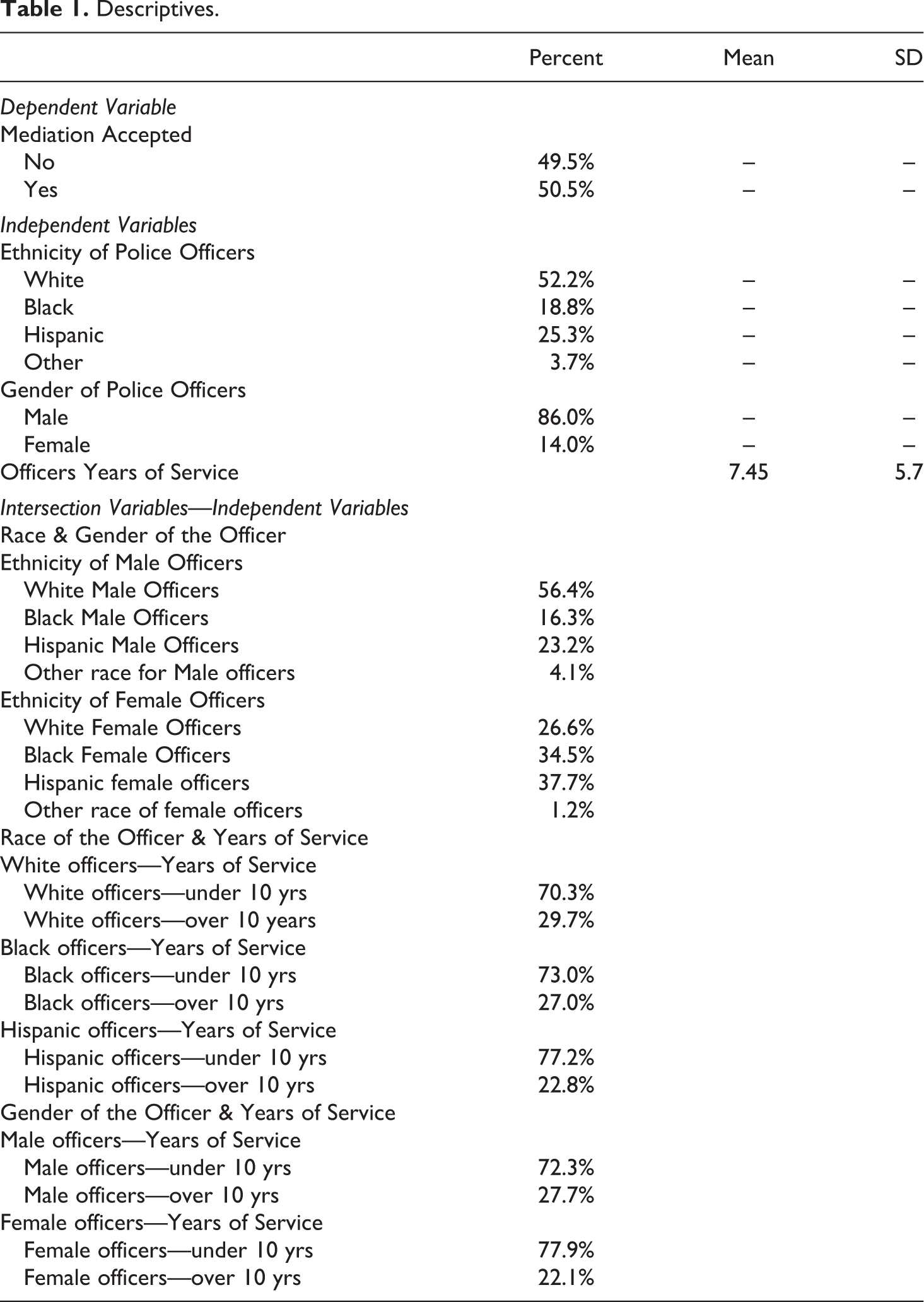
The data for this research were obtained directly from the New York City Civilian Complaint Review Board and compiled using information taken from the Complaint Tracking System (CTS), a computer software system where in which CCRB investigators input case-related data. Some of the information was obtained through correspondence with citizens, either via telephone or in person. Demographic characteristics and service information pertaining to the officers accused of misconduct were retrieved from an internal CCRB database and then added to CTS. The CCRB cases used in this study cover a period of 5 years, from 2007 to 2012. The inclusion criteria consist of the following: if the citizen was offered mediation and if the citizen resided in New York City. Based on the inclusion criteria, the final sample size comprised 6,328 cases. The following section details the descriptive statistics of the variables used in this study and how these variables were operationalized. Table 1 displays this information.
Descriptives.
Dependent variable
‘Accepted Mediation’, is the dependent variable of this study, and it measures the citizen’s decision to participate or not in CCRB’s mediation process. The variable was coded ‘1’ if a citizen chose to participate and ‘0’ if they did not select mediation. Approximately 50.5% of cases chose to partake in the process, and 49.5% chose not to participate.
Independent variables
This study examines various police characteristics in an effort to determine whether these factors influence mediation selection. Studies have demonstrated that certain demographic and external factors related to police officers may influence their treatment of civilians (Genz and Lestor, 1976). Prior research has also considered race, gender, and years of police service as possible determinants of attitudinal differences among officers. Furthermore, research that examines contact with the police shows that the nature of contact civilians have with officers (positive or negative) influences their attitudes toward law enforcement (Chuerprakobkit and Bartsch, 2001; Tyler, 1990; Wortley et al., 1997). This study suggests that subject officer attitudes impact a complainant’s willingness to participate in mediation within independent civilian oversight agencies. This perspective is drawn from the results of studies examining victim-offender mediation, a process that is very similar to mediation within civilian oversight agencies. The following variables are examined in this study: race of the officer; police officer years of service, and gender of the officer.
Race of the Officer
The survey cohort consists of 52.2% white officers, 18.8% black officers, 25.3% Hispanic officers, and 3.7% of officers classified as another race.
Officer Years of Service
In this survey, the mean officer years of service is 7.45 years, with a standard deviation of 5.7 years.
Gender of Officer
The survey cohort contains 86% male officers and 14% female officers.
Intersections of officer characteristics were created to gain more insight into factors linked to mediation. Collins (1998) defines intersectionality as a way of understanding cross-cutting interests. Moreover, she states that the examination of intersections brings to life distinctive group experiences or histories. This study examines the following intersections: Ethnicity of Male Officers; Ethnicity of Female Officers; White Officer Year of Service; Black Officer Years of Service; Hispanic Officer Years of Service; Male Officer Years of Service; and Female Officer Years of Service.
Ethnicity of Male Officers: In this survey, 56.4% of the male officers were white, 16.3% were black, 23.2% were Hispanic, and 4.1% were of another race.
Ethnicity of Female Officer: In this survey, 26.6% of the female officers were white, 34.5% were black, 37.7% were Hispanic, and ∼1.2% were of other races.
White Officer Years of Service: Among White officers in this survey, 70.3% served under 10 years, while 29.7% served 10 years or more.
Black Officer Years of Service: Among Black officers, 73% served under 10 years, while 27% served 10 or more years.
Hispanic Officer Years of Service: Among Hispanic officers, 77.2% served for under 10 years, while 22.8% served over 10 or more.
Male Officer Years of Service: In this survey, among the male officers, 72.3% worked for the police force for under 10 years, while 27.7% of male officers served over 10 years.
Female Officer Years of Service: Among female officers, 77.9% served under 10 years, while 22.1% worked for the police force for 10 years or more.
Results
Bivariate analysis
Bivariate analysis was employed to uncover predictors of mediation selection. Table 2 displays the relationship between the characteristics of the subject officers (race, gender, and officer years of service) and mediation. With regard to officer characteristics, chi-square test revealed no significant differences when considering mediation selection and the gender of the officer (Χ2 (1, N = 4805) = 1.351, p = .245) or officer years of service (t(4815) = .070, p = .944). However, there was statistical significance when considering the race of the officer and mediation selection (Χ2 (3, N = 6327) = 96.681, p = .00). The results show that complainants whose police encounters involved white officers were less likely to mediate compared to encounters with officers of other races. Specifically, when the officer was white, 51.9% of complainants selected mediation. When the officer was black, Hispanic, or Asian, the percentage of complainants who accepted mediation was 56.3%, 55.4% and 56.5%, respectively.
The bivariate relationship between the characteristics of the officers accused of misconduct and mediation selection.

* p < .05, **p < .01, ***p < .001
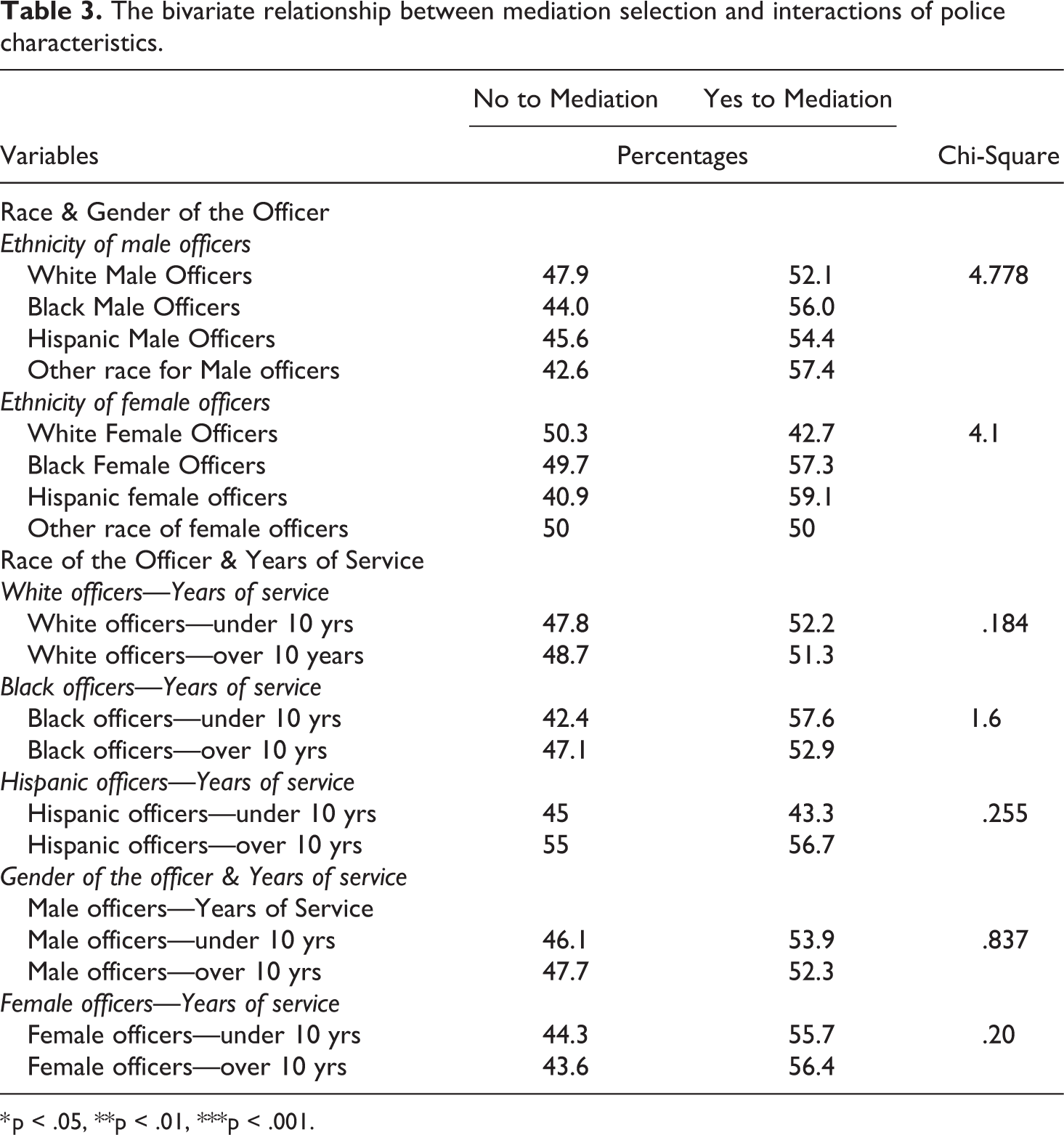
Table 3 displays the results of the intersection of officer characteristics and mediation selection. The study found no statistical significance between these variables and mediation selection, as follows: Ethnicity of Male Officer (Χ2 [3, N = 4131] = 4.778, p = .189); Ethnicity of Female Officer (Χ2 [3, N = 673] = 4.102, p = .251); White Officer Years of Service (Χ2 [1, N = 2509] = .184, p = .668); Black Officer Years of Service (Χ2 [1, N = 904] = 1.604, p = .205); Hispanic Officer Years of Service (Χ2 [1, N = 1214] = .255, p = .614); Male Officer Years of Service (Χ2 [1, N = 4132] = .837, p < .360); and Female Officer Years of Service (Χ2 [1, N = 673] = .020, p = .888).
The bivariate relationship between mediation selection and interactions of police characteristics.
* p < .05, **p < .01, ***p < .001.
Multivariate analysis
Binary logistic regression was used to test for a relationship between officer race and mediation selection, while also controlling for several other police characteristics and interactions. Given the dichotomous outcome of the dependent variable (Accept Mediation [0,1]), logistic regression was employed because it does not assume a normal linear distribution.
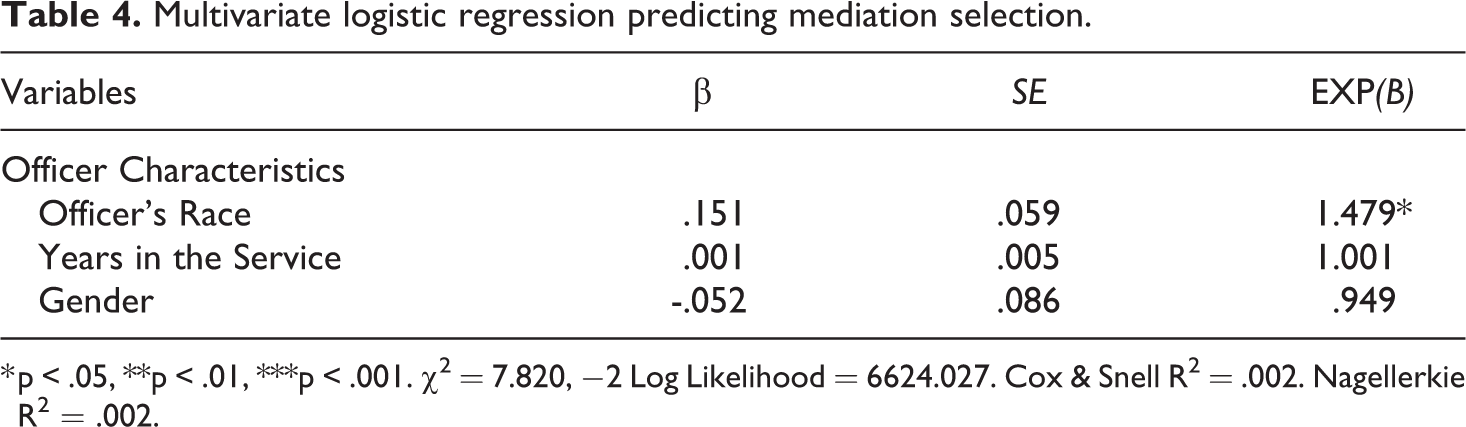
Table 4 lists the first multivariate model, which tests the impact of the variable ‘Race of the Officer’ and other subject officer variables on the likelihood to select mediation. This model was necessary to explore the officer’s race variable while controlling for other officer characteristics. A dichotomous variable (non-white officer/white officer [0,1]) was created to identify significant differences in mediation selection; white subject officer served as the reference group. For the variable ‘Gender of Officer’, male was also used as the reference category. Officer Years of Service is a continuous measurement. The results show that Officer Years of Service and Gender of Officer had no effect on mediation selection. The model also shows that when other police officer characteristics are controlled for, the race of the officer remains statistically significant (Exp(B) = 1.479), indicating that the variable ‘Race of the Officer’ has a relationship with mediation selection. Civilians who filed complaints against non-white subject officers were 48% more likely to accept mediation than complainants who had white subject officers, after controlling for other variables.
Multivariate logistic regression predicting mediation selection.
* p < .05, **p < .01, ***p < .001. χ2 = 7.820, −2 Log Likelihood = 6624.027. Cox & Snell R2 = .002. Nagellerkie R2 = .002.
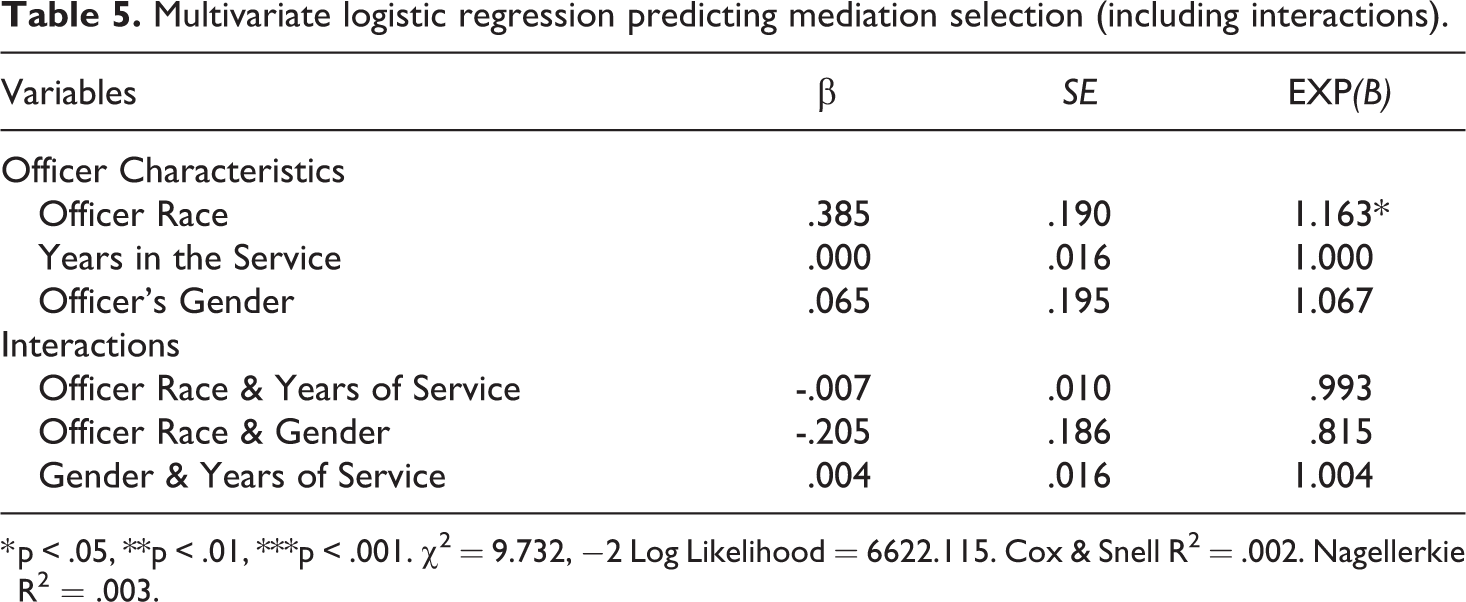
Table 5 shows the second multivariate model that tests subject officer race while controlling for other subject officer variables and interactions. The following interactions were tested: Race of the Officer & Officer Years of Service; Race of the Officer & Gender of Officer; and Gender of Officer & Officer Years of Service. None of the interactions were statistically significant, and neither officer years of service nor gender had an impact on mediation selection. The relationship between race and mediation selection remains statistically significant in this model (Exp (B) = 1.163). The results demonstrate that individuals who filed complaints against black and Hispanic officers were 16% more likely to select mediation compared to whites. It should be noted that the magnitude of the effect was reduced when the interaction terms were included in the model.
Multivariate logistic regression predicting mediation selection (including interactions).
* p < .05, **p < .01, ***p < .001. χ2 = 9.732, −2 Log Likelihood = 6622.115. Cox & Snell R2 = .002. Nagellerkie R2 = .003.
Discussion
Currently, there is a lack of studies that examine mediation within independent civilian police oversight agencies. The few studies that focus on predictors of mediation selection center on the degree of complainant satisfaction. This study adds to existing research by examining officer characteristics with potential links to mediation selection. This research pulls from studies that explore fragmentations in police personality to provide better insight into possible outcomes. Uncovering correlates of mediation selection may help agencies designate their resources toward initiatives that promote and strengthen police-community relations.
With regard to ‘officer years of service’, prior studies have shown that this variable is not a true predictor of differences in police attitudes (Laguana at el., 2010; Paoline et al., 2000). Specifically, research that examines a link between authoritarianism and years of service has produced mixed results. This study demonstrated that an officer’s years of service had no impact on mediation selection. Furthermore, the interaction of ethnicity and years of service, as well as gender and years of service, were found not to be predictors of mediation selection.
The results of this study demonstrate that an officer’s gender is not a determinant of mediation selection. Furthermore, the interaction of race and gender is not a predictor of mediation selection. It is possible that female officers have fully integrated into the male-dominated police culture. This finding is in concordance with studies that examine fragmentations in police personality. Overall, the literature shows that gender is not a true predictor of police attitudes, as the findings are mixed. In other words, there is no differential treatment of civilians when examining the behaviors of male and female officers.
The variable ‘Race of the Officer’ was found to be a predictor of mediation selection. This study reveals that, overall, complainants were less likely to select mediation when the subject officer is white. It should be noted that in the two multivariate models, a statistically significant relationship remained between the race of the officer and mediation selection. Historically, officers have been predominantly white (Sun and Payne, 2004), and it is likely that the public may still envision nearly all officers to be part of this racial group, as minorities have only recently had a significant presence in the police force. As of 2014, white officers made up 54% of NYPD (Cohen and Fredericks, 2014). Although the definition of police personality is not clearly defined, several works have identified negative personality traits associated with the police, such as cynicism, aggression, and some traits of authoritarianism (Jones, 1984; Twersky-Glasner, 2005). Studies examining fragmentations in police personality have revealed that white officers tend to be less supportive of order-maintenance duties and community policing practices compared to their non-white counterparts. The overall objective of community policing practices is to improve police-community relations (& Leinen, 1984; Paoline, 2000; Sun and Payne, 2004). It can be assumed that citizens who file complaints against white subject officers are less likely to select mediation because they perceive officers in a negative light and want to avoid contact with them. It is also possible that these complainants avoid meeting with officers to discuss unpleasant encounters because they have had negative direct or vicarious police experiences.
There are several limitations in this study. A direct link was not made between police personality and mediation selection at civilian oversight agencies. I relied on observations made from several studies that have extensively evaluated victim-offender mediation programs. Although this form of mediation shares similarities with mediation at independent civilian police oversight agencies, there are no studies that examine whether police attitudes influence complainant desires to mediate. Future research should attempt to examine if a direct link exists, possibly using a qualitative approach. A qualitative study should also attempt to determine why complainants are more likely to accept or reject mediation. Lastly, the study is limited by the type of police variables tested. This research analyzed the officer’s gender, years of service, and race; however, there may be other potential external or situational factors tied to police attitudes, as well as other demographic or personality traits that may influence mediation selection. Future studies should attempt to evaluate additional police characteristics.
Community policing initiatives may help to promote mediation within civilian oversight agencies. These initiatives involve cooperation with community leaders, organizations, and residents, while also employing alternative methods of social control, rather than crime-fighting mechanisms alone. There is greater emphasis placed on the selective use of arrest, and for officers to be guided by the preferences of the community. There is also a focus on crime prevention and victim assistance. Building a good rapport with members of the community is an essential component to community policing (Mastrofski et al., 1995).
It is important to note that minority groups file a disproportionate number of allegations against the police (Smith and Holmes, 2003). There has been long-standing tension between the police and minority groups in the United States dating back to slavery, and these tensions remain prevalent today. Recent studies also show that African-Americans, both males & females, are more likely than whites to report adversarial contact with the police; this includes being stopped, questioned, searched, and experiencing verbal and physical abuse by the police (Browning et al., 1994; Flanagan and Vaughn, 1996).
An increase in sensitivity/diversity training for all officers (regardless of race) may help to reduce the number of complaints against officers, encourage mediation, and ultimately assist in improving the relationship between the public and police. Sensitivity/diversity training encourages awareness of internal prejudices with the goal of making the trainee more sensitive to others (Hennessy et al., 2001). Trust and understanding of different cultures, races, and religious backgrounds is essential for effective law enforcement, as police come into contact with diverse ethnic and cultural groups (Damoah, 2013). Communication is one of the most essential components of law enforcement (Hennessy et al, 2001). In his research, Hennessy notes that, in the United States, 93% of police work involves one-on-one communication. Sensitivity/diversity training would give officers the opportunity to learn how to better communicate with individuals from different cultures. By understanding different cultures, police-civilian encounters could improve and become less problematic (Shusta et al., 2008).
A 1995 study by Hendricks and Brown, which evaluated various police training institutions, found that prolonged exposure to cultural diversity issues often caused officers to have fewer prejudicial biases. Thus, sensitivity/diversity training may help to deconstruct the negative values associated with police culture, and it may help to humanize the individuals that the police encounter on a daily basis. Moreover, positive officer encounters through community policing initiatives may improve the public’s perceptions of the police, including the views that some people have toward white officers, who have historically symbolized the US police force. Although the history of policing in the United States may be unique to this country, other countries with citizen complaint agencies that utilize mediation programs may benefit from the results of this study. As the United Kingdom becomes more ethnically and racially diverse, community policing initiatives, increased sensitivity training, and showcasing mediation to the general public may help to improve police-community relations.
Research suggests that mediation fulfills the objectives of complainants better than investigative practices (Walker et al., 2002). Complainants who chose mediation also report higher degrees of satisfaction with the process compared to those who decide to investigate their complaint (Corbett, 1991; Holland, 1996; Walker et al., 2002). Some studies report that mediation allows complainants to feel as if they have regained the power that they lost during their encounter with the police (Corbett, 1991; Holland, 1996). Furthermore, research shows that complainants have a better understanding of the police after participating in mediation (Walker et al., 2002). The foundation of mediation is built on the restorative justice model. Increased visibility of mediation programs may inspire more people to mediate their complaint.
Footnotes
Declaration of conflicting interests
The author(s) declared no potential conflicts of interest with respect to the research, authorship, and/or publication of this article.
Funding
The author(s) received no financial support for the research, authorship, and/or publication of this article.
