



Abstract
Many scholars assume that policy performance determines popular support for political systems. Yet in the wake of recent economic crises, patterns of performance and regime support have diverged in many countries, and popular perceptions of performance often fail to reflect the actual quality of governance. To resolve these paradoxes, I draw on recent scholarship on regime support and procedural fairness. I show that strong voice (the ability of citizens to influence political outcomes and a key element of procedural justice in democracies) influences regime support in a way not accounted for in this literature: by moderating the relationship between policy performance and perceptions of performance. These findings show that people will evaluate equivalent outcomes more favorably if they are produced using fair procedures. As performance has long been shown to positively influence support, procedural justice has an additional, indirect influence on people’s attitudes toward political systems.
A cursory glance yields cases from across the globe where chasms exist between government performance and popular perceptions of it. In the run-up to the 2016 presidential election in the United States, Donald Trump was able to convince many that the country was in terminal decline, despite a robust recovery. Violent antigovernment protests have erupted once again in Chile, even as the country was feted for its accomplishments in economic and social development. Prior to his death, Venezuelans took to the streets to defend the regime of Hugo Chávez, even as his government’s authoritarian leanings and staggering incompetence became undeniable. In Europe, Greek and Spanish voters crushed under the weight of unfolding economic catastrophe and the inflexibility of European institutions, rebelled against establishment parties by voting for populist movements SYRIZA and Podemos. Meanwhile, voters in France and Portugal, equally harmed by the crisis, rejected outsiders and maintained support for their political systems.
Why so many discrepancies? Since Lipset (1963, ch. 3), many scholars have assumed that policy performance is the primary cause of system support and perceptions of legitimacy. Although this scholarship has made great contributions, it is less able to explain cases in which support and performance do not match, or where similar failures of governance produce radically different changes in systemic support.
Thankfully, several scholars have derived from the study of organizational justice a relatively simple argument that individuals evaluate organizations not only on the quality of the decisions they make, but also on how they make those decisions. Adding to a wave of recent scholarship inspired by this notion, I argue that when democratic procedures fail to empower their citizens, those citizens will turn against political systems over even the most modest failures. Conversely, citizens who perceive democratic politics as granting them control of their fates will remain loyal, even in the face of economic and social turmoil.
This article continues to develop and expand this new framework in three ways. First, it refines and advances existing theories of procedural justice and regime support. It does this both by synthesizing existing theory into a unified framework, and by focusing on a new element of procedural justice: opportunities for citizens to influence political outcomes in legally binding ways, which I call “strong voice.” Second, it identifies additional mechanisms by which procedural issues can influence support. Recent scholarship has found that procedural justice can influence support directly, and by moderating the effect of policy performance evaluations and national-level economic factors on support. In this piece, I argue that procedural justice has a further effect on regime support: changing how individuals evaluate policy outcomes in the first place. When procedures are just, people will more favorably evaluate outcomes (or be more forgiving of failures) than if they are not. In other words, identical government performance can result in radically divergent subjective evaluations of performance, depending on the fairness of regime processes. A chart of this new framework of support, with existing works and relationships to be tested here marked, is presented in Figure 1.
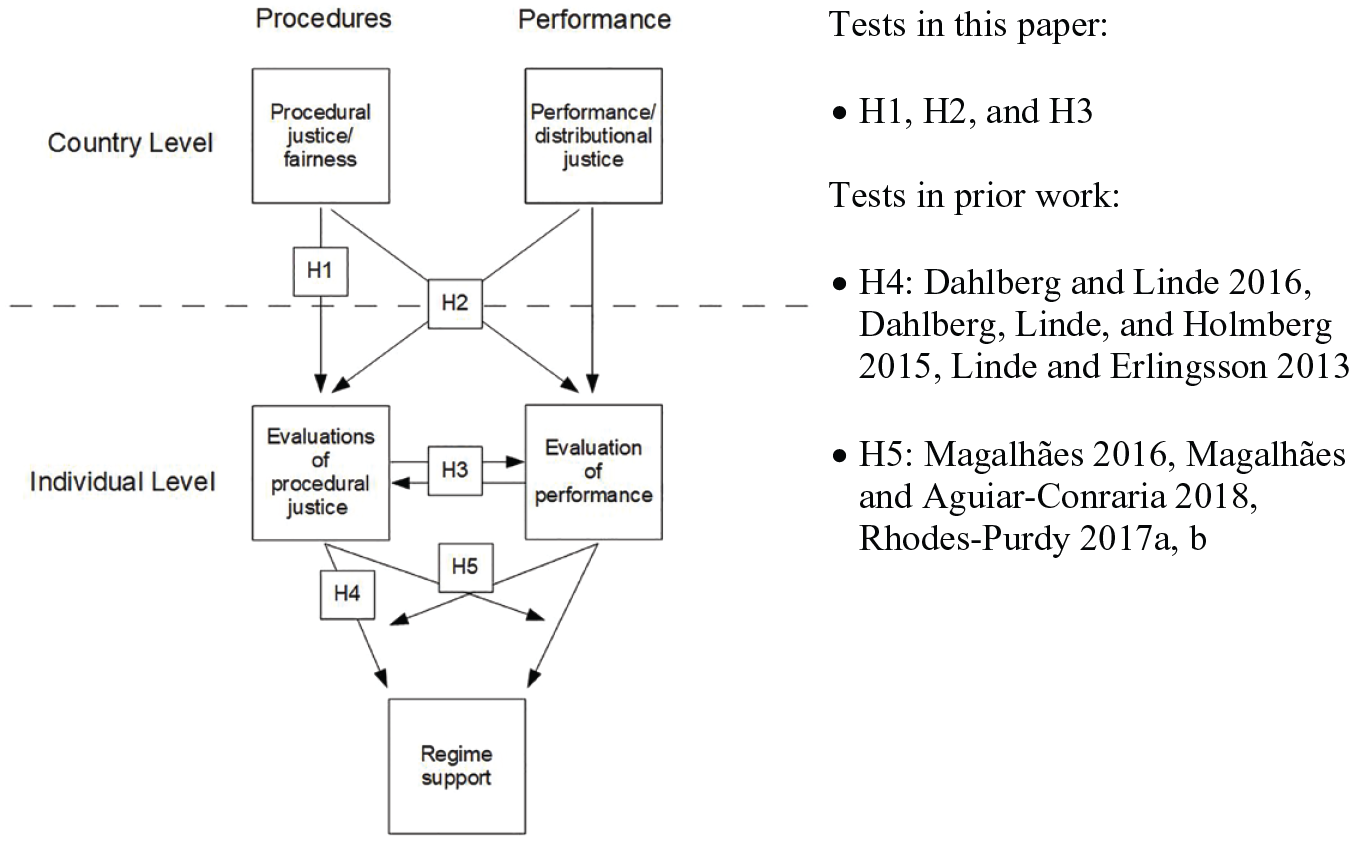
Relationship Chart.
The final contribution made here is to expand this framework beyond its roots in European politics to the Americas. I use data from the 2012 wave of the AmericasBarometer (Latin American Public Opinion Project, LAPOP) study, 1 and experimental data collected through Amazon.com’s Mechanical Turk (Mturk) platform in the United States. I use LAPOP data to estimate the parameters of a simultaneous structural equation model (SEM) to evaluate the influence of perceived strong voice (operationalized as regime-based efficacy, RBE) on perceived performance (H3). I also analyze experimental data from the United States to test the effect of procedural justice (operationalized here as strong voice) on evaluations of policy performance, both directly (H2) and as mediated through RBE (H1).
Defining Regime Support
Before going any further, it is necessary to define what I mean by regime support. The main source of confusion here is whether regime support is an example of “diffuse” or “specific” support. Easton (1975: 436) used the term specific support to refer to concrete empirical objects such as actual policies, leaders, and so on; he theorized that this type of support would vary considerably as circumstances changed. He saw diffuse support as pertaining to more abstract elements of the political system. Easton explicitly included the regime in this category. However, later scholars (e.g. Klingemann, 1999; Norris, 1999c) departed from this schema, by cleaving the regime into two parts: the underlying regime ideals (i.e. belief in/commitment to democratic ideals) and regime performance, conceptualized as the actions taken under the aegis of a continuing political order. The former remains an element of diffuse support, while the latter (often measured using the common “satisfaction with the way democracy works” indicator) is seen as more akin to the specific support which accrues to policies and politicos. This can cause confusion when works addressing “regime support” or “support for democracy” are not clear about which of these constitutive dimensions they address.
The confusion lies in the fact that the regime (or political system) lies in the borderlands that separate clearly concrete objects (individuals, policies) from clearly abstract ones (values, ideals, and identifications). As a result, I avoid taking a priori sides in this debate, conceptualizing regime support broadly as general positive or negative evaluation of the political system. I fully expect both utilitarian concerns that usually pertain to specific objects, and normative issues that go with diffuse objects, to simultaneously shape this general attitude.
The Study of Regime Support: A Brief Overview
Until recently, utilitarian concerns regarding performance dominated the study of regime support. This performance-centric approach gained prominence just as interest in political support was beginning to peak. In the 1970s, scholars from disparate fields noticed the increasing alienation of citizens in the developed democracies, and as often happens when an issue rapidly gains salience, many analysts sought to apply their bodies of work to explaining the unfolding erosion of support. Crozier et al. (1975) argued that increasingly demanding and fragmented civil societies were overwhelming the capacities of democratic states, thus leading to a process of political decay (Huntington, 1965) and a potential collapse in support. Rational choice theorists 2 concurred, refining these theories with more sophisticated methodological tools, including econometrics and formal models.
Pharr and Putnam (2000) made an almost diametrically opposing argument. Building on theories of social capital (Putnam, 1993, 1995), which held that a vibrant civil society was necessary for democracies to function properly, Pharr and Putnam (2000) argued that a decline, rather than an increase, in participation and civil society activism was the culprit. Norris (1992a, 2002), arguing against both camps, found that as expectations rose among an expanding group of “critical citizens,” governance became less satisfying even without any decline in performance. In a similar vein, institutionalists theorized that consensual and majoritarian institutional constellations could interact with an individuals’ social and political position (specifically, one’s membership in a political or partisan minority) to influence support, an argument dubbed “the losers’ hypothesis” (Anderson and Guillory, 1997; Anderson and Singer, 2008; Norris, 1999b).
Most of the newly committed partisans of the debates over declining legitimacy in the developed world had one thing in common: they had internalized the assumption that government performance, or outputs, determined support. These analysts did not totally ignore processes; the losers’ hypothesis, for example, has a clear role for procedures. Yet, they all placed procedures far back in the causal chain, retaining causal primacy for performance. Furthermore, these scholars tended to embrace a relatively straightforward utilitarian assumption that voters would respond to personal benefits (Lewis-Beck, 1985), macroeconomic trends (Dettrey, 2013; Ferejohn, 1986; Kinder and Kiewiet, 1981), or both, with some cognitive distortions and departures from pure rationality (Jones, 1999).
While the literature on regime support has largely assumed a fairly straightforward relationship between performance and individual perceptions of it, work on retrospective (or economic) voting has painted a more complex picture of that relationship. Scholars have found a plethora of cognitive biases, heuristics, and emotional dynamics that can mar individual perceptions of objective performance (see Anderson (2007) and Healy and Malhotra (2013) for in-depth reviews of this literature). For example, individual perceptions may be influenced by local economic conditions (Healy and Lenz, 2017), emotional state (Huber et al., 2012), and partisanship (Bartels, 2002). While this scholarship helps us understand how individual voters evaluate performance and, accordingly, how they vote, it provides less leverage on the paradox of interest here. There is no obvious situation in which the biases and distortions studied by economic voting scholars would influence entire polities to stray from reality; it seems more likely that in the aggregate, the biases would cancel out. In other words, partisans of the opposition may be more critical of the economy, but that would be offset by government loyalists’ irrational exuberance.
These works all improved our understanding of regime attitudes and performance evaluations. Yet frameworks such as those described earlier provide less leverage in cases like those mentioned in the introduction where there are obvious discrepancies between performance and support.
Strong Voice, Efficacy, and Organizational Justice
Part of the reason why the performance-centric approach has been so enduring, despite its limitations, is a lack of clear alternatives. Whatever its faults, the assumption of a more-or-less utilitarian and rational public evaluating regimes based on governance provided something that no other paradigm could: a place to begin, with some support in the existing literature. This was exacerbated by the fact that individuals often lack information about political procedures, and therefore, may cite specific performance outcomes to illustrate procedural failure; for example, citizens explaining their lack of support may cite high prices, not only because of the economic pain they bring, but because (in their view) such problems would not be allowed to continue in states that were truly responsive to citizens’ needs and wishes (Schaffer, 2010).
However, this dearth of variety was illusory; one needed only to look outside the discipline of political science to find one. The organizational justice, procedural justice, and justice judgment literatures from social psychology have for decades developed a comprehensive approach to the study of individuals’ attitudes toward hierarchical decision-making bodies to which they are subject. This literature has been applied to the study of a wide variety of organizational settings, including economic firms, 3 and defendants and plaintiffs in courts (e.g. Thibaut and Walker, 1975). In addition, Tom Tyler’s work on legitimacy (e.g. Jackson et al., 2012; Levi et al., 2009; Lind and Tyler, 1988; Tyler, 2006a, 2006b; Tyler and Jackson, 2014) applies theories of procedural justice to political behavior, finding repeatedly that individuals are more likely to voluntarily comply with the law and accept the legal authority of the courts and police (e.g. Hough et al., 2013, 2010) if they believe they are treated fairly, and if they believe those institutions are morally upstanding enough to command obedience.
Only recently has the study of regime support begun to make use of this body of work. Dahlberg and Holmberg (2014) and Dahlberg et al. (2015) find that impartiality and effectiveness raises support for bureaucracy, which in turn improves satisfaction with democracy. Several recent studies have found that corruption (or the perception of it) erodes perceptions of procedural justice and thus regime support (Anderson and Tverdova, 2003; Erlingsson et al., 2014; Kestilä-Kekkonen and Söderlund, 2017; Linde and Erlingsson, 2013; Van der Meer and Hakhverdian, 2016). Dahlberg and Linde (2016) find that procedural justice perceptions ameliorate the gap in support between winners and losers proposed by the loser’s hypothesis as discussed earlier. Finally, Rhodes-Purdy (2017a, 2017b), Magalhães (2016), and Magalhães and Aguiar-Conraria (2019) find that procedural justice moderates the influence of economic outcomes on support, while Linde and Peters (2018) find that fair procedures build systemic support, which gives political authorities greater latitude to pursue necessary but unpopular policies.
The story explaining the importance of procedural justice goes something like this: hierarchical organizations are defined as structures of people that allow individuals at higher levels the right to compel obedience (through punishments, incentives, and expulsion) from those below. The ability to compel conformity to an overarching, organizational-level program is a powerful tool for enabling collective action: free riders can be punished, individuals with distinct preferences can coordinate, disputes can be decisively settled, and so on.
Yet this benefit comes with costs, or at least risks. Individuals submit to these limitations on their freedom of action under the assumption that the organization will consider and protect their interests, and act in the interests of the group. Many readers will no doubt have anticipated the darker alternative scenario: that those individuals at the top of the hierarchy will instead substitute their own interests for those of the collective. The organizational justice paradigm views attitudes toward such organizations as an attempt by individuals to evaluate whether they are at risk of exploitation (Cropanzano and Ambrose, 2002). An organization that respects the needs of all its members, and acts in the interest of the group, is said to be just. Injustice occurs when those at the lower levels of the hierarchy are ignored, disrespected, or harmed by self-interested actions on the part of leaders.
Research in organizational justice has identified two broad factors that individuals use when forming attitudes (i.e. the potential for exploitation) toward hierarchical organizations: procedural justice and distributive justice. This schema is similar to the distinction between democratic inputs and outputs made by Scharpf (1997). Distributive justice is similar to what we call performance in the context of politics: are group benefits distributed fairly, and does the specific individual benefit from the distribution? Procedural justice refers to how decisions are made, separate from the content of the decisions. If the rules and practices governing how group decisions are made are viewed as unfair, 4 individuals will form negative attitudes toward their organizations, even if most decisions end up favorable. Earlier work treated these as two distinct, largely independent dimensions. More recent studies (Cropanzano and Ambrose, 2002; Folger and Cropanzano, 2001; Lind, 2001; Van Den Bos et al., 2001) have recognized that, while both dimensions matter, they are far less independent and separable than earlier scholars assumed, because both involve evaluation of the same ultimate goal: to avoid subsuming oneself beneath a collective that will eventually exploit one’s cooperative behavior for someone else’s benefit.
As a result of this unity of purpose, the dimensions of support interact with one another in several ways. First, there is a primacy effect, a form of anchoring which holds that the first piece of significant information about organizational justice will color evaluations of all subsequent pieces (Lind et al., 2001). Another, arguably more crucial example, is substitutability (Daly and Tripp, 1996; Lind, 2001; Qin et al., 2015; Van Den Bos et al., 2001): individuals will infer the fairness of a distributive outcome based on the procedure that produced it, or vice versa, depending upon which piece of information comes first. In other words, people assume that just procedures will produce just outcomes, and vice versa. An individual presented with an unjust outcome, lacking information or understanding of the procedure that produced it, will assume that the procedure was also unjust. Likewise, the justice of decisions will influence perceptions of the justice of decision-making processes.
Finally, each factor has an affective influence on the other. Simply put, negative outcomes will cause less distress and anxiety if individuals feel the procedures producing those outcomes are just; the reverse is also true (Brockner et al., 1994; Brockner and Wiesenfeld, 1996; McFarlin and Sweeney, 1992; Orpen, 1994). The result is that, when perceptions of justice on one dimension are high, perceived injustices in the other dimension will not produce a severe deterioration of one’s general attitude toward the organization. The theoretical interpretation of this affective influence is somewhat unclear, although I will advance a specific justification for it in the context of the democratic state presently. For the moment, it is sufficient to note that this finding has broad and consistent support in studies of organizational justice.
Organizational Justice and the Democratic State
While the proposition that intrinsic characteristics of decision-making procedures would influence how individuals evaluate those procedures is intuitively appealing, it cannot shed light on the issue here without further elaboration. What characteristics matter? What do democracies need to do if they are to convince the citizens they govern of their justice and fairness? On these questions, the social psychology literature on organizational justice has serious limitations. Researchers have identified several features, some of which were mentioned briefly in an earlier section (e.g. transparency, impartiality, etc.), that influence organizational attitudes. Yet the organizations studied most frequently by these researchers (especially business firms) are essentially authoritarian (Anderson, 2017). While firms and courts may vary considerably in their responsiveness to “voice” (Hirschman, 1970), virtually none share power with members on the lowest rungs of the organizational ladder in the way that democratic states do. In short, democratic states are qualitatively distinct from the organizations to which theories of organizational justice have been applied, and thus are likely subject to a distinct set of evaluation criteria.
Although liberal democratic theory often sees democracy as merely a means to an end (and an unreliable one at that), other branches of democratic theory have elucidated the intrinsic value of democratic politics. These works differ considerably in the details, but they converge on the argument that active self-governance is essential for the development of human morality and psychology (Held, 2007; Macpherson, 1977; Mill, 2009; Pateman, 1970; Plamenatz, 1963; Rousseau, 2002). Exactly how democratic engagement exerts this influence is not always clear. Mechanisms are often expressed in terms sufficiently fanciful and divorced from the reality of modern politics that, at first blush, they can seem ill-suited for the scientific study of politics altogether (Duncan and Lukes, 1963: 156).
Yet more empirically grounded research is, in fact, quite consistent with the insights of developmental democratic theory. Psychological studies of self-efficacy and self-determination motivation (Angyal, 1941; DeCharms, 1968; Deci, 1971, 1975; Deci et al., 1999; Deci and Ryan, 1985, 2000; White, 1959) have amassed a considerable body of evidence showing that human beings have a profound need to exert influence and control over their environments. Individuals who believe themselves able to control their environments, and who thus see outcomes as contingent on their behaviors and choices, will generally exhibit psychological health, well-being, and positive affect. Conversely, a perception of oneself as a victim of capricious fate is associated with a variety of distresses, particularly anxiety (Kahn et al., 1980; Orpen, 1994; Walker, 2001). Individuals’ perception of their self-determination is, in part, contextually determined; different situations provide different opportunities for people to shape their environments. In short, a surgeon who feels empowered when confronting a leaky heart valve may feel at the mercy of cruel fate when confronted with a leaky faucet. Relating this back to politics and democracy, this is consistent with studies in external or regime-based efficacy, which hold that individuals can and do gauge the extent to which their political choices and behavior can influence government decisions (Campbell et al., 1954; Craig et al., 1990; Finkel, 1987; Madsen, 1987).
Summary
The previous discussion drew together several disparate scholarly threads. As such a bit of summation is required before relating this discussion directly to the issue of regime support. First, I presented findings from the study of organizational justice that held that both performance and procedural justice influence attitudes toward organizations, of which regime support is one. Procedural justice is a multifaceted concept, but here I focus on its most characteristically democratic aspect: strong voice. Strong voice is defined as the extent to which regime institutions, procedures, and practices are influenced by the behavior and choices of citizens. The term derives from two sources: first, Hirschman’s concept of voice, meaning the ability of those low in a hierarchy to be heard by those above. But the concept of interest here is something a bit more than voice, as it implies an ability of citizens to be more than heard, but to actually influence the course of politics. Following Barber (1984) and his use of the term “strong” to augment democracy, I include the term “strong” to indicate that this concept refers to legally binding mechanisms for translating citizen preferences into political outcomes.
Public opinion studies of self-efficacy show that citizens can and do respond to the level of strong voice granted to them by the political system, although their perceptions are not totally accurate and may be influenced by values, beliefs, and cognitive biases and distortions. In other words, we can operationalize perceptions of strong voice as RBE. This leads to our first testable hypothesis:
H1: Strong voice will positively affect regime-based efficacy (RBE).
The effect of strong voice does not stop here. Studies of organizational justice consistently find that individuals use information about procedural justice (defined by strong voice in the democratic context) when evaluating performance. The substitutability and primacy concepts described earlier suggest that people widely assume that just procedures are likely to produce just outcomes. This leads to two additional hypotheses:
H2: Respondents evaluating equally just outcomes will express higher support for a decision-making process if that process provides strong voice.
H3: RBE will positively affect perceived performance.
Hypotheses 2 and 3 do not specify two separate causal relationships; they merely represent two distinct empirical implications of the substitutability principle discussed earlier. I specify both because each lends itself to a different and complementary methodological technique, as I discuss in a later section. Although this article focuses on how strong voice and RBE influence performance evaluations, existing work shows conclusively that by so doing, these factors will indirectly shape regime support. Direct tests of the effects of these factors on support using LAPOP data and the experimental data from the United States are included in the Supplemental Appendix.
I should note here that H2 and H3 have been tested before, if only in part and with a different theoretical perspective. Esaiasson and colleagues (Esaiasson et al., 2017, 2019; Esaiasson and Öhberg, 2019), using dozens of experiments, find that satisfaction with an outcome is far more important to determining acceptance of that outcome than responsiveness, a close cousin of strong voice. Although H2 and H3 may appear to contradict Esaiasson’s findings, they are in fact consistent with them, although reconciling them requires a reinterpretation of why outcome satisfaction appeared to drive results. Esaiasson argues that individuals, wishing to bring their views in line with normative beliefs about responsiveness, are biased in their evaluations of procedures based on outcomes. The procedural justice framework used here would agree that outcomes will dominate the effect of procedures, but only if citizens have more information regarding the former. If, as is frequently the case, citizens lack information or understanding of which outcomes should be preferred, procedural characteristics can bias outcome evaluations. In other words, a theory based on information substitutability rather than bias can explain Esaiasson’s findings while allowing the possibility that procedures can matter in many circumstances.
Methods and Findings
Study 1: MTurk Experiment
I begin by testing H1 and H2. It is difficult to test the influence of procedural or institutional factors with observational data. Large-N studies, with individuals nested within institutional environments, can certainly be performed, but the results are often marred by the complex way institutions interact with one another to produce unexpected effects. This problem is exacerbated by the fact that strong voice can result from a potentially infinite number of institutional constellations; political systems can be made more or less responsive to the demands of their citizens in any number of ways.
Given this, a sounder analytical strategy is to use experiments, with the researcher varying the level of strong voice and performance by design. I conducted just such an analysis using Amazon.com’s Mturk platform. Although some researchers have expressed skepticism of Mturk (mostly due to self-selection and the skewed demographics of its users), Mturk samples tend to be more representative of the general population than other convenience sample pools, and users are often more engaged and conscientious than student samples (Levay et al., 2016; Mullinix et al., 2015).
For this experiment,
5
I asked 592 respondents to evaluate a public decision-making process in an unnamed municipality. The city was given a federal grant to spend on health care infrastructure. Respondents were told that two choices were available: to build a series of clinics, or a single hospital. The hospital would benefit only those residents who lived nearby (in a relatively wealthy area), whereas the clinics would benefit everyone. These represent high and low distributional justice, respectively. A subsequent paragraph described two procedures by which the decision was made: one maximally participatory (a series of town hall meetings, where ordinary citizens made the decision directly), and one actively anti-participatory (the municipal government overturned the town halls’ decisions). The text of the high distributional justice/high procedural justice treatment is included below; text that changed based on treatment level is bolded:
Bold text indicates text that changed depending on treatment level. Table 1 below summarizes the differences in treatments:
Text Differences by Treatment.
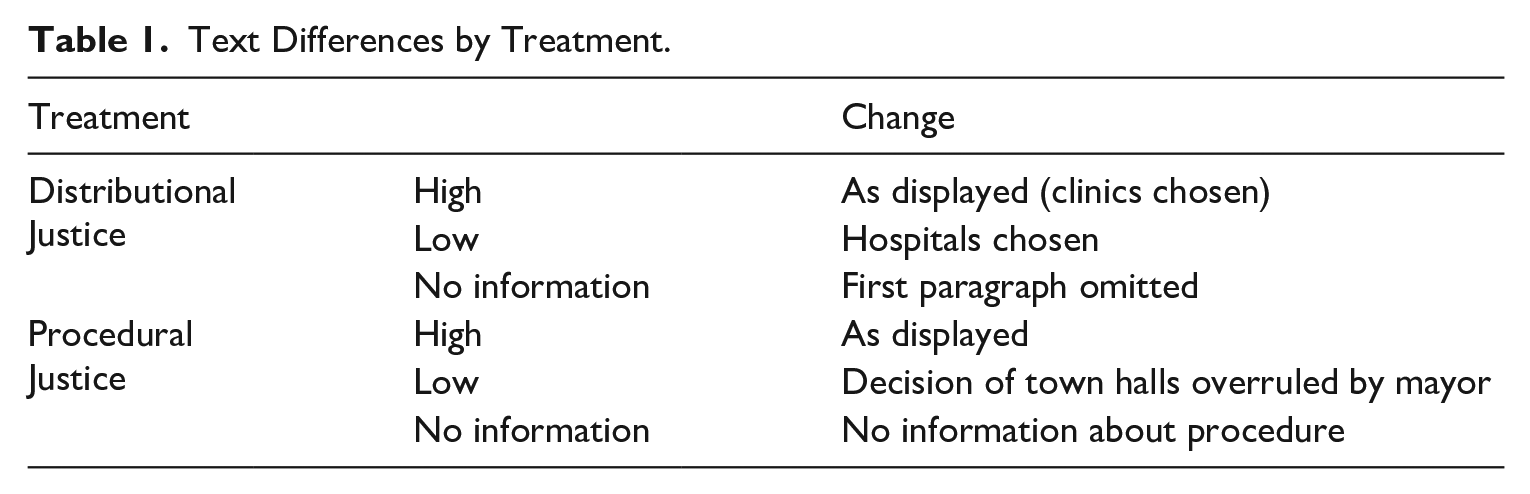
The information about both dimensions of justice was intermingled to prevent primacy effects from skewing the results, but respondents were made aware of the distributional outcome first; in other words, the study design was, where bias was unavoidable, biased against the theory I propose here. Each treatment variable (distributional justice and procedural justice) had an additional level, in which respondents were denied information about one of the dimensions (i.e. were not told about the unequal utilization of hospital and clinics or were not told about the procedure used to make the decision; in the no information, distributional justice treatment, the actual outcome was randomized to account for any bias toward hospitals or clinics participants might have). This created eight treatment levels (no respondents were assigned to “no information” on both dimensions, as that would have provided respondents no basis whatsoever on which to evaluate the municipality).
Measuring Procedural and Distributional Justice
I then asked the respondents a series of questions evaluating the outcome (perceived distributional justice, PDJ), the process (perceived procedural justice, PPJ), and their general attitude toward the unnamed municipality (support). PPJ is, like RBE, an evaluation of the strong voice offered by a decision-making process. I use a different term here because RBE is an evaluation that pertains to the evaluator, and thus has a host of emotional and psychological dynamics that may not be present when a person evaluates a decision-making process that does not directly affect him or her. That said, these questions were closely modeled on existing and extensively validated questions for regime support and performance used by LAPOP, or in the case of PPJ, on questions used in the ANES and other studies for external efficacy.
I then used Confirmatory Factor Analysis (CFA), which assumed that each question was influenced by a single unobserved (latent) variable, either PDJ, PPJ, or support. Results are presented in Table 2 below.
Measurement Model Estimation Results for MTurk Experiment Data.

CFI: comparative fit index; RMSEA: root mean square error of approximation; SE: standard error.
Note: Chi-square: 51.94 (p = 0.000), RMSEA = .049, CFI = .995.
All estimates indicate that the model specifications are appropriate. All factor loadings are quite large, and statistically detectable. Model fit, however, was originally only acceptable, and to improve fit I relaxed several measurement error terms, based on modification indices. Once those were relaxed, these statistics indicate excellent fit, according to the thresholds set out by Hu and Bentler (1999). The chi-square is significant, but that is nearly always true with a large sample size. The RMSEA is below .5, the CFI is above .98, and the SRMS is below .3, as required for good model fit. Hu and Bentler suggest that two different categories of fit statistic must meet the relevant threshold for good model fit; here we have three that do so.
Methods and Results
With a well-validated CFA model in hand, I used linear prediction to obtain predicted factor scores for PPJ, PDJ, and support. I then separately regressed PDJ and PPJ on the experimental treatments using Ordinary Least Squares (OLS), then graphed the predicted means of both variables by treatment level. According to H1, we would expect respondents in the participatory treatment to evaluate the process more positively than those in the low category, controlling for outcome. Figure 2 presents the predicted means of each treatment on the procedural justice evaluations. Each dependent variable had a grand mean of zero (by construction); a predicted mean with a 95% confidence interval that includes zero indicates that the relevant combination of treatment levels had a predicted mean statistically indistinguishable from the grand mean of that variable.

Predicted Mean of Perceived Performance and Procedural Justice by Treatment.
As the figure shows, procedures that provide strong voice had a substantial, positive effect on PPJ, across all levels of the outcome treatment; specifically, moving from low to high levels of procedural justice dramatically increased PPJ across all levels of distributional justice. This is significant because it directly contradicts the performance-above-all focus of the support literature, which argues that most people care only or predominantly about distributional issues. Instead, we see here that no situation in which procedural justice is poor produces a positive (i.e. above the grand mean) evaluation of PPJ, even when the distributional outcome is undeniably just. Indeed, when procedural justice is low, distributional justice had virtually no influence at all on attitudes toward the process. One additional element of this figure provides a transition to our next hypothesis: when distributional justice is high, there was no difference between high procedural justice treatment and the treatment wherein the respondent had no information about procedures at all.
Why the lack of any effect of process-related information? The substitutability principle suggests that respondents did, in fact, have information; rather than getting it from the prompt, they simply inferred it from the justice of the outcome. H2, which directly codified substitutability into a testable hypothesis, is further supported by the analysis presented in the right-hand graph on Figure 2.
The results here resemble those presented earlier. This is remarkable, because here respondents are explicitly directed to evaluate outcomes, not procedures. The experimentally fixed distributional justice level certainly has an influence here: evaluation of performance is below the grand mean for the “low” outcome treatment, even when procedural justice was high. Yet again, in the low procedural justice treatment, outcome barely matters; evaluations are uniformly low. This completely contradicts the rationalist, utilitarian view of support so common in the literature, but is consistent with the organizational justice framework put forth here. It is also inconsistent with Esaiasson’s normative bias theory; if normative bias were driving results, we would expect PPJ to be higher than the grand mean when distributional justice is high. It is not that respondents are ignoring the information provided to them in the outcome treatment (it does, after all, have an effect). Rather, they are supplementing the provided information with their own inferences, based on procedural characteristics.
Although these results are consistent with the framework developed here, the evidence they provide is incomplete. It is not possible to evaluate the interplay of attitudes like subjective performance and RBE using a convenience sample with a necessarily brief questionnaire. One cannot directly fix or randomize such attitudes; one cannot make valid inferences about a population (due to the lack of a random sample); and because RBE and subjective performance mutually influence each other as suggested by H3, we would require prohibitively expansive (not to mention expensive) questionnaires to fully specify and identify such a simultaneous equation model. Given this, observational data from available survey projects are a more appropriate resource for testing H3.
Study 2: LAPOP Analysis
I use the 2012 wave of the AmericasBarometer survey from the LAPOP to test H3. The LAPOP study was chosen both due to the availability of acceptable indicators of the necessary concepts, and to extend the procedural justice framework of support beyond the developed world (and especially Europe). This study included data from the 18 majority Spanish- and Portuguese-speaking countries in Latin America. To test H3, I specified a fixed-effects multilevel simultaneous equation model where RBE and subjective performance mutually influence one another.
Measuring RBE and Performance
LAPOP has the advantage over other regional surveys of including a large number of indicators of regime performance that have been validated extensively (Booth and Seligson, 2009; Rhodes-Purdy, 2017a, 2017b). The survey also includes measures of RBE that have been studied and validated on other large surveys (Craig et al., 1990). Since measurement error is likely with such abstract concepts, I specify a SEM to manage its influence. SEM analysis involves specifying two parts of a model. First is a measurement model, analogous to a CFA, where latent variables influence observed indicators (questions). I specify three latent variables: Regime support, regime performance, and RBE. Results from this measurement model estimation are presented in Table 3. 6
Measurement Model Results, LAPOP.
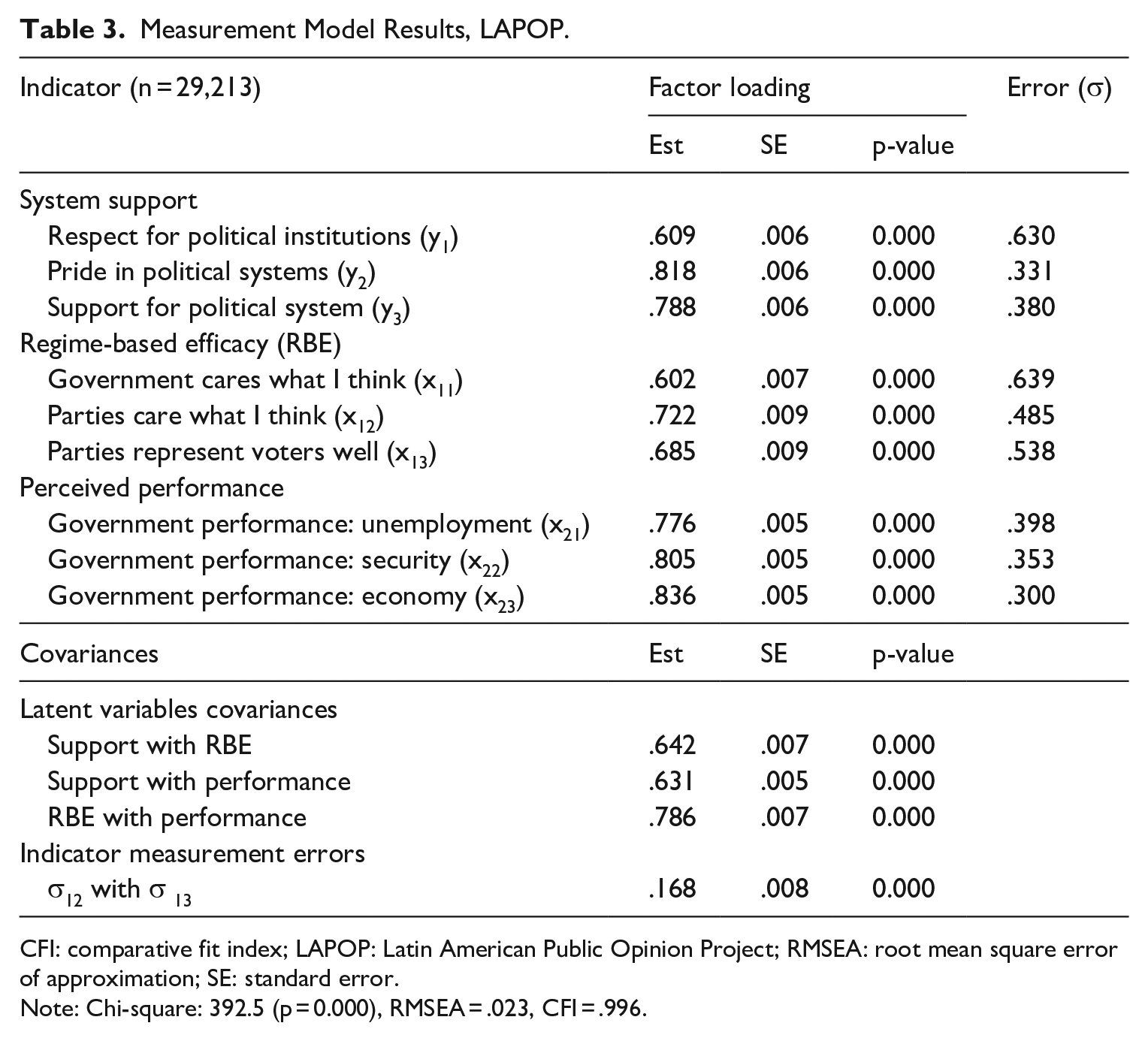
CFI: comparative fit index; LAPOP: Latin American Public Opinion Project; RMSEA: root mean square error of approximation; SE: standard error.
Note: Chi-square: 392.5 (p = 0.000), RMSEA = .023, CFI = .996.
This measurement model indicates excellent fit. Both the RMSEA and CFI are well above the thresholds for good model fit, and all loading estimates are significantly different from zero. These data appear to be valid measures of the concepts they are assumed to be influenced by, and the concepts themselves do appear to be distinct concepts and not simply slightly different versions of one another.
Study 2: Methods and Results
With the measurement model specified, I then specified the structural portion of the SEM, or the part that concerns associations between variables; this is analogous to a standard regression model. In this case, their model is complicated by the fact that RBE and performance are assumed to mutually influence one another. To estimate such a simultaneous SEM, it is necessary to include instruments, or predictors that effect one dependent variable but not the other, in order to identify the model. To do so, I selected a suite of instruments from the LAPOP data that would likely influence only RBE or performance, but not both. Those instruments are listed in Table 4, below.
List of Identifying Variables/Instruments for SSEM Analysis.
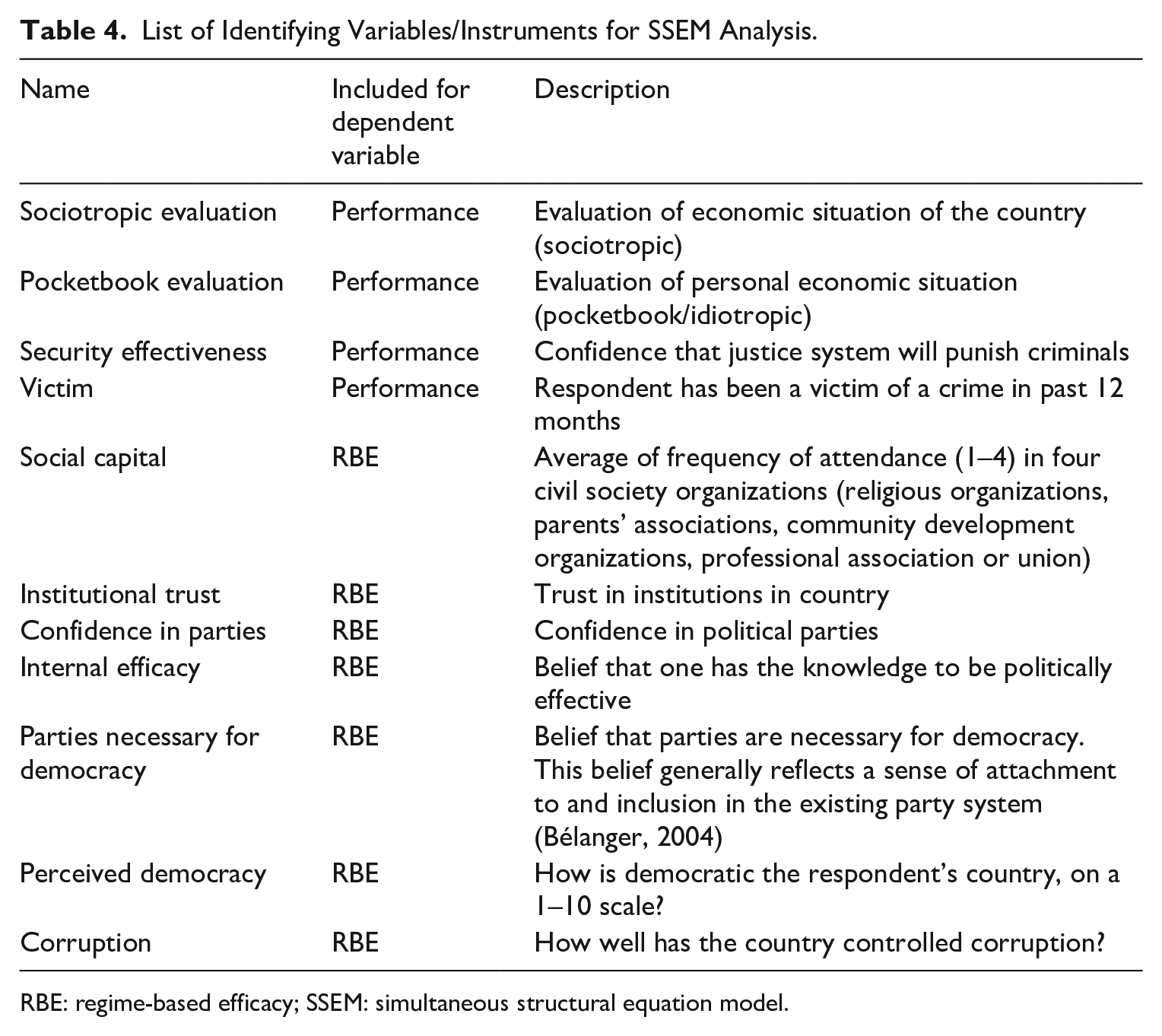
RBE: regime-based efficacy; SSEM: simultaneous structural equation model.
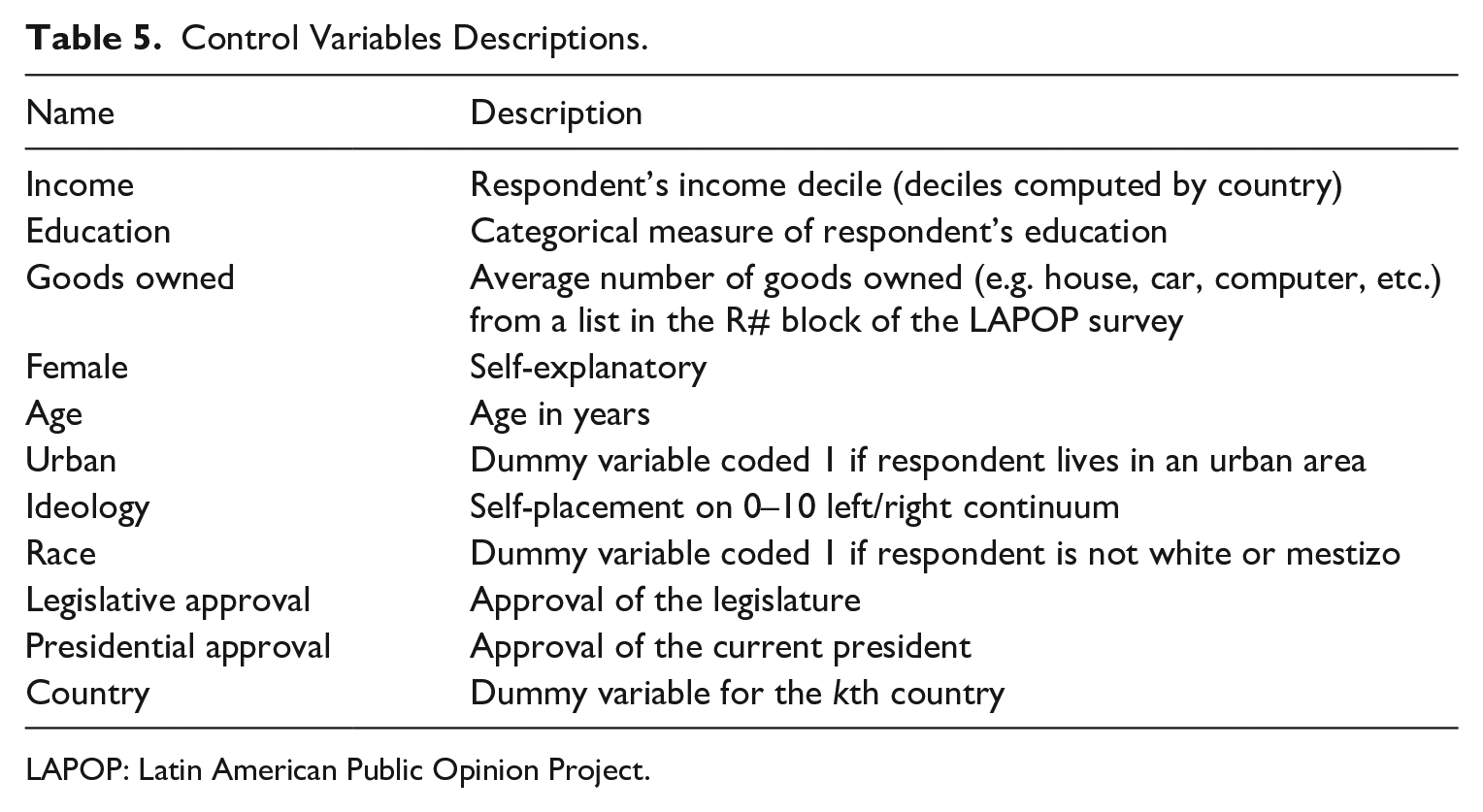
In addition to the instruments, I also included a suite of control variables. A list of variables with descriptions is included in Table 5.
Control Variables Descriptions.
LAPOP: Latin American Public Opinion Project.
With these variables specified, I estimated the parameters of the following equations, 7 using the simultaneous SEM estimator in MPLUS: 8
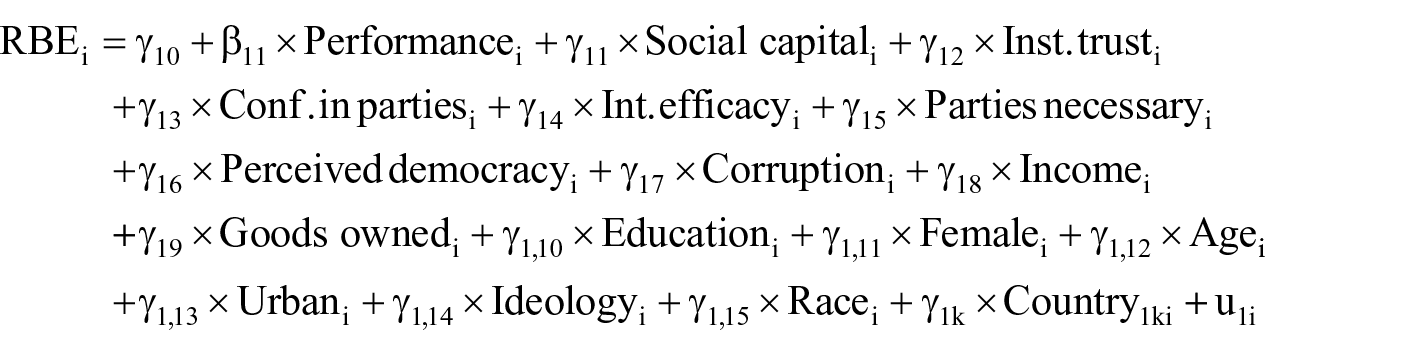
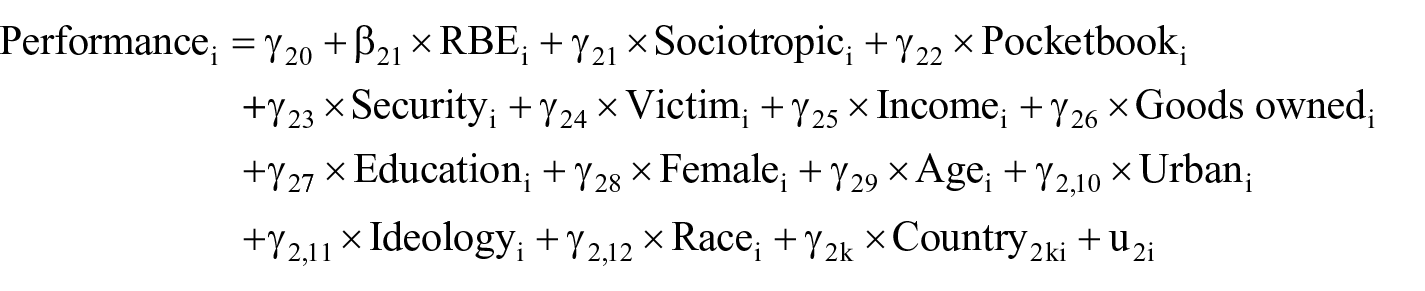
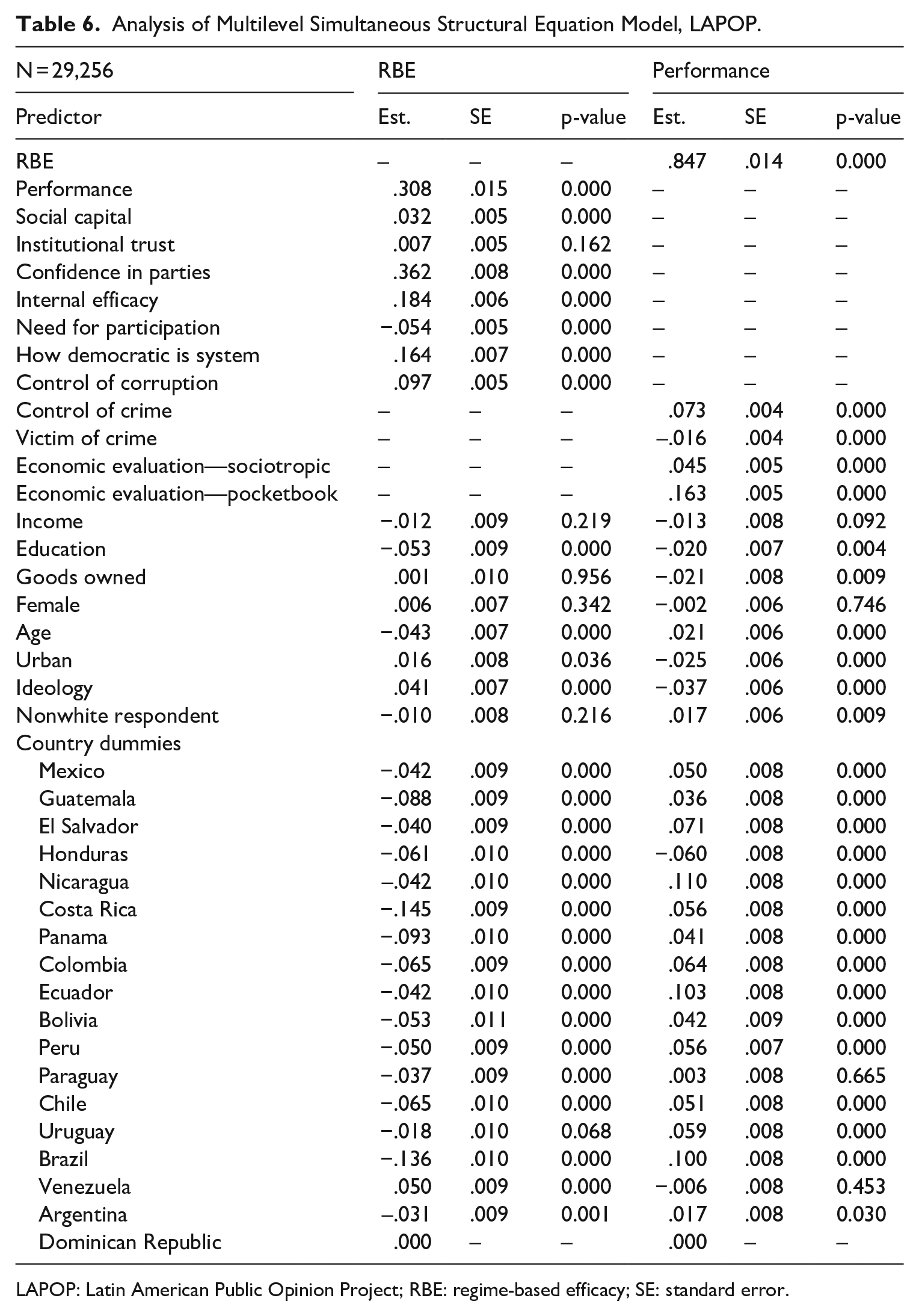
Results are presented in Table 6, below.
Analysis of Multilevel Simultaneous Structural Equation Model, LAPOP.
LAPOP: Latin American Public Opinion Project; RBE: regime-based efficacy; SE: standard error.
These results are consistent with the experimental findings presented in the previous section, which showed that strong voice and performance mutually influence one another. Those data showed the influence of the organizational variable (strong voice) on the individual-level perceptions of the other dimension of organizational justice (performance evaluation). Here, we have evidence that subjective perceptions of each dimension influence the other. The coefficients for both RBE and performance perceptions are significant and substantively large. The standardized coefficients (.600 and .466, respectively) show that moving from two standard deviations below the mean to two above results in an average increase of roughly 60% of perceived performance’s range.
It should be noted that specifying and estimating simultaneous structural equation models is tricky. The standard SEM maximum likelihood estimator has desirable properties, but only under conditions (including correct specification) that are not typically met (at least not completely) in applied research. As a robustness check, I also used instrumental variable regression analysis on predicted scores; see the Supplemental Appendix for details. These results were robust to both the change of method, as well as the selection of instruments. Furthermore, confidence in these results is reinforced by consistent results from earlier experimental analyses.
Summary of Results
The results of both the experimental and observational studies conducted across two continents and using different measures and methods, strongly comport with one another, and with the hypotheses specified earlier. These data strongly suggest that individual perceptions of regime performance are deeply influenced by attitudes regarding procedural justice, especially as manifested in strong voice. At the same time, they are consistent with findings (e.g. Esaiasson et al., 2019) that might appear to falsify my theory. Performance can and does influence procedural evaluations, but not due to bias or a desire for normative consistency, but because of information availability. Esaiasson’s findings can be explained by the fact that, in his analyses, outcome favorability is usually known whereas procedural characteristics may not be. This is true even when procedures are defined by the researcher for maximum justice value: when such procedures produce bad outcomes, participants may assume that the procedures failed, or were hijacked by powerful social groups (as several of my experimental subjects in the high procedural justice, low distributional justice treatment level suggested in e-mails sent to me after the experiment). In the real world, outcome information is often much murkier. How can one tell if the economy is thriving, or if crime is increasing, or how the state of the job market is really doing? There are so many gray areas here that procedural characteristics (not to mention loyalty to leader and party, as the economic voting literature has noted) have ample room to shape such evaluations.
Conclusion
This article joins a chorus, very recently rising, declaring that decades of conventional wisdom on regime support have been wrong: procedures do matter, after all. All the findings here are consistent with a framework, inspired by democratic theory and organizational justice, which specifies numerous points at which procedural variables, especially strong voice (and its subjective evaluation,RBE), influence regime support. The primary takeaway from these findings is that one must always consider the influence of procedures, even when analyzing shifts in systemic attitudes that have a clear economic trigger. The lingering legacy of the 2008 financial crisis to which I alluded earlier is a prime example. The crisis has triggered a wave of anti-systemic politics around the world, and the timing of these movements lays their immediate cause bare. Yet, even here, political variables are at work in the background, altering mass responses to the crisis. This work suggests that severity of popular reactions to 2008 crisis may very well be disproportionate to actual economic harms, being exacerbated by the shortcomings of liberal democracy. Furthermore, what looks like a relatively simple linear relationship between governance and regime support could, in fact, be part of a feedback loop, and a vicious one at that: a serious economic shock can do more than erode support. It could also lead individuals, especially those with only a weak understanding of the intricacies of the political system, to infer that such a devastating blow could never occur in a system controlled by the people it failed to protect. In other words, governance failures can lead to a collapse of RBE, which would in turn amplify the vicious cycle.
Supplemental Material
sj-docx-1-psx-10.1177_0032321720903813 – Supplemental material for Procedures Matter: Strong Voice, Evaluations of Policy Performance, and Regime Support
Supplemental material, sj-docx-1-psx-10.1177_0032321720903813 for Procedures Matter: Strong Voice, Evaluations of Policy Performance, and Regime Support by Matthew Rhodes-Purdy in Political Studies
Footnotes
Acknowledgements
Thanks to Kurt Weyland, Fernando Rosenblatt, and Stephen M. Utych for giving extensive feedback on this article, and in the case of Professor Utych, on the design of the experiment. He thanks the Latin American Public Opinion Project (LAPOP) and its major supporters (the United States Agency for International Development, the Inter-American Development Bank, and Vanderbilt University) for making the data available.
Declaration of conflicting interests
The author(s) declared no potential conflicts of interest with respect to the research, authorship, and/or publication of this article.
Funding
The author(s) disclosed receipt of the following financial support for the research, authorship, and/or publication of this article: Funding for this research was provided by Boise State University.

Supplementary information
Figure A1: Analysis of the Effect of Experimental Treatments on Support. Table A1: Comparison of Summary Statistics. Table A2: Tests for Proportionality. Table A3: Regression Estimation of Experimental Model. Table A4: Mediation Analyses. Table A5: Instrumental Variable Model Estimation, Full. Table A6: Instrumental Variable Model Estimation, Reduced.
Notes
Author Biography
References
Supplementary Material
Please find the following supplemental material available below.
For Open Access articles published under a Creative Commons License, all supplemental material carries the same license as the article it is associated with.
For non-Open Access articles published, all supplemental material carries a non-exclusive license, and permission requests for re-use of supplemental material or any part of supplemental material shall be sent directly to the copyright owner as specified in the copyright notice associated with the article.
